Rhythmic
Activities
♫ GROUP 1 ♫
Objectives
At the end of the report, we will be able to:

• know all about dance and rhythmic activities
• distinguish the different rhythmic activities covered
in P.E. 2

• deepen our knowledge regarding the Philippine
Folk Dances

• have a short quiz right after the presented topics
Rhythmic Activities
It refers to bodily
responses to any type of
rhythmic accompaniment
that will provide leeway to
the people to satisfy their
need for self-expression.
All
About
dance
Dance
Is a rhythmic and
expressive
body
movements,
usually
coordinated into a pattern and
adopted
to
musical
accompaniment.
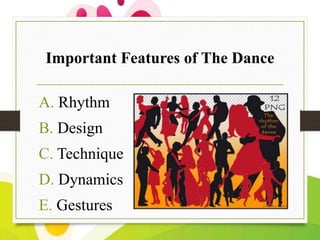
Important Features of The Dance
A. Rhythm

B. Design
C. Technique

D. Dynamics
E. Gestures
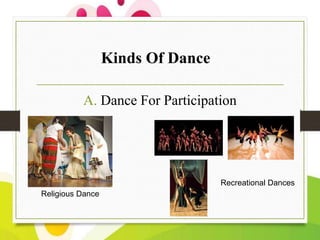
Kinds Of Dance
A. Dance For Participation

Recreational Dances
Religious Dance
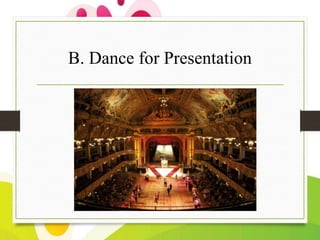
B. Dance for Presentation
Rhythmic Activities for
Physical Education 2
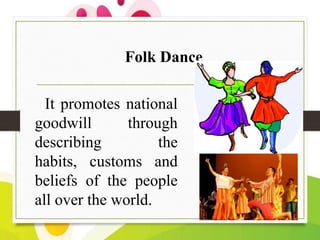
Folk Dance
It promotes national
goodwill
through
describing
the
habits, customs and
beliefs of the people
all over the world.
Social Dance
It give opportunity to develop
the
individual’s
ability
to
communicate, mingle and socialized
with other people. It is also prepare
the person to basic dance
steps, positions, movements and
rhythms.
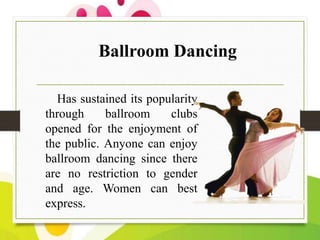
Ballroom Dancing
Has sustained its popularity
through
ballroom
clubs
opened for the enjoyment of
the public. Anyone can enjoy
ballroom dancing since there
are no restriction to gender
and age. Women can best
express.
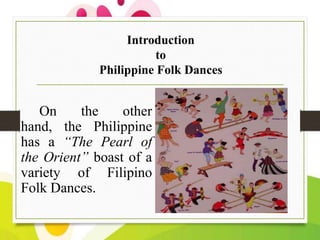
Introduction
to
Philippine Folk Dances

On
the
other
hand, the Philippine
has a “The Pearl of
the Orient” boast of a
variety of Filipino
Folk Dances.
WHAT ARE FOLK DANCES ?
Traditional dances of a certain land which
were evolved naturally and spontaneously in
connection and experiences of the people. The
traditional dances handed down from
generation to generation that describe the
traditions, beliefs, occupations and ways of life
and characteristics of people living in a certain
place through body movements.
Values Derived from Studying
Philippine Folk Dances

1. Strengthen patriotism and Nationalism
2. Appreciate the aesthetic value of
Philippine folk dances
3. Preserve the Filipino heritage through
folk dancing
4. Promote the Filipino culture through
folk dancing
5.Gain health posture through graceful
and rhythmic coordination of body
movement.
6. Provide a healthy form of relaxation
and recreation.
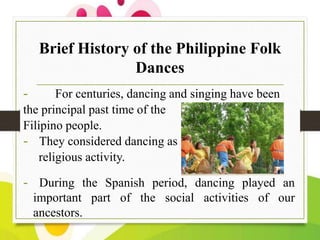
Brief History of the Philippine Folk
Dances
-

For centuries, dancing and singing have been
the principal past time of the
Filipino people.
- They considered dancing as
religious activity.

- During the Spanish period, dancing played an
important part of the social activities of our
ancestors.
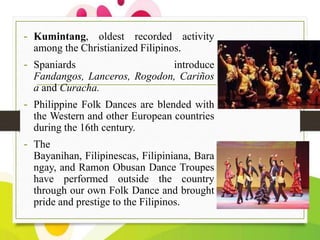
- Kumintang, oldest recorded activity
among the Christianized Filipinos.

- Spaniards

introduce
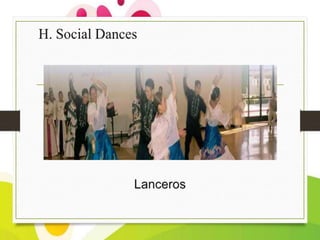
Fandangos, Lanceros, Rogodon, Cariños
a and Curacha.

- Philippine Folk Dances are blended with
the Western and other European countries
during the 16th century.

- The
Bayanihan, Filipinescas, Filipiniana, Bara
ngay, and Ramon Obusan Dance Troupes
have performed outside the country
through our own Folk Dance and brought
pride and prestige to the Filipinos.
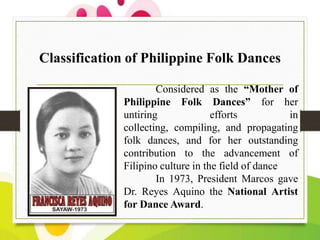
Classification of Philippine Folk Dances
Considered as the “Mother of
Philippine Folk Dances” for her
untiring
efforts
in
collecting, compiling, and propagating
folk dances, and for her outstanding
contribution to the advancement of
Filipino culture in the field of dance
In 1973, President Marcos gave
Dr. Reyes Aquino the National Artist
for Dance Award.
Classification of Philippine folk dances
according to Dr. Reyes :

1. Geographical Location
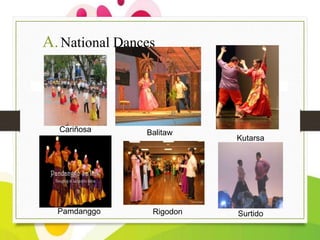
A. National Dances

Cariñosa

Pamdanggo

Balitaw

Rigodon

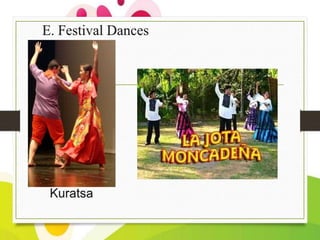
Kutarsa

Surtido
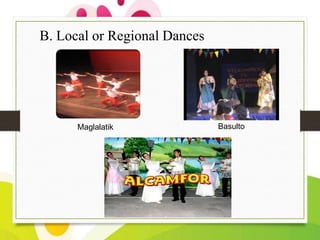
B. Local or Regional Dances

Maglalatik

Basulto
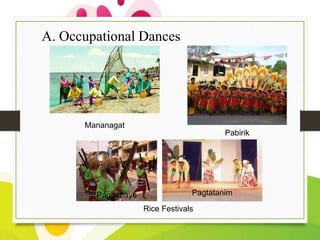
A. Occupational Dances

Mananagat
Pabirik

Pagbabayo

Pagtatanim
Rice Festivals
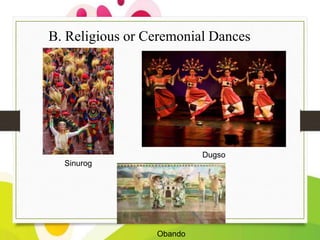
B. Religious or Ceremonial Dances

Dugso
Sinurog

Obando
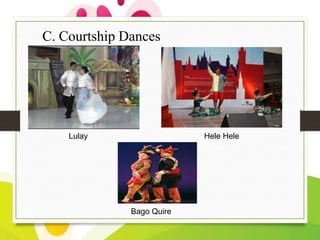
C. Courtship Dances

Lulay

Hele Hele

Bago Quire
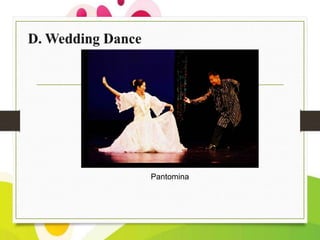
Pantomina
5 Groups Classification of Dances
Found In the Philippines
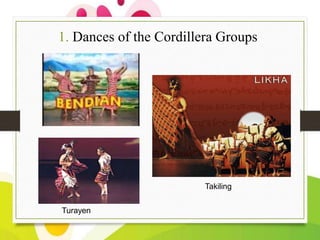
1. Dances of the Cordillera Groups

Takiling
Turayen
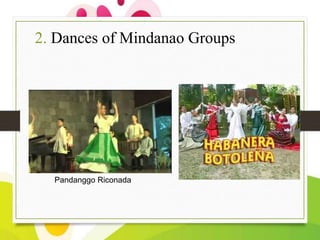
2. Dances of Mindanao Groups

Pandanggo Riconada
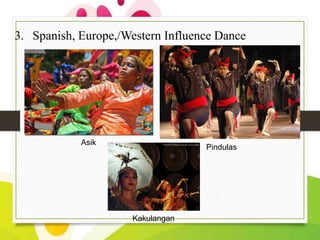
3. Spanish, Europe,/Western Influence Dance

Asik

Pindulas

Kakulangan
4. Dance of the Countryside

Binislakan

Binasuan

Gayong-gayong
5. Dances for the Lesser Known Group

Kadal Tajo
Kadal Blelah
Characteristics of Philippine
Folk Dances
1.
2.
3.
4.
5.

Dancers stand apart
Partner stay apart at 6’ away
There is a little, if any, bodily contact.
Most dancers are in long formation.
Most of the Dancers are done by pairs
or couples.
6. Hand movements play an important
part.

7. Most dances begin and end with
“saludo”
8. Dance from the Lowlands have
more foreign elements than those
found in the uplands.
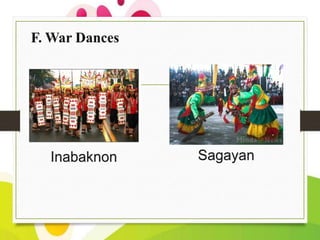
9. War dances are found among nonChristian tribes.
Do’s in Folk Dancing
1. Dance in natural, simple and direct
manner.

2. Dance with ease and smoothness.
3. Use the proper costumes for dance
4. Follow directions and dance
instruction as closely as possible.

5. Dance with feeling and expression.

Rhythmic Activities
  • 1.
  • 2.
    Objectives At the endof the report, we will be able to: • know all about dance and rhythmic activities • distinguish the different rhythmic activities covered in P.E. 2 • deepen our knowledge regarding the Philippine Folk Dances • have a short quiz right after the presented topics
  • 3.
    Rhythmic Activities It refersto bodily responses to any type of rhythmic accompaniment that will provide leeway to the people to satisfy their need for self-expression.
  • 4.
  • 5.
    Dance Is a rhythmicand expressive body movements, usually coordinated into a pattern and adopted to musical accompaniment.
  • 6.
    Important Features ofThe Dance A. Rhythm B. Design C. Technique D. Dynamics E. Gestures
  • 7.
    Kinds Of Dance A.Dance For Participation Recreational Dances Religious Dance
  • 8.
    B. Dance forPresentation
  • 9.
  • 10.
    Folk Dance It promotesnational goodwill through describing the habits, customs and beliefs of the people all over the world.
  • 11.
    Social Dance It giveopportunity to develop the individual’s ability to communicate, mingle and socialized with other people. It is also prepare the person to basic dance steps, positions, movements and rhythms.
  • 12.
    Ballroom Dancing Has sustainedits popularity through ballroom clubs opened for the enjoyment of the public. Anyone can enjoy ballroom dancing since there are no restriction to gender and age. Women can best express.
  • 13.
    Introduction to Philippine Folk Dances On the other hand,the Philippine has a “The Pearl of the Orient” boast of a variety of Filipino Folk Dances.
  • 14.
    WHAT ARE FOLKDANCES ? Traditional dances of a certain land which were evolved naturally and spontaneously in connection and experiences of the people. The traditional dances handed down from generation to generation that describe the traditions, beliefs, occupations and ways of life and characteristics of people living in a certain place through body movements.
  • 15.
    Values Derived fromStudying Philippine Folk Dances 1. Strengthen patriotism and Nationalism 2. Appreciate the aesthetic value of Philippine folk dances 3. Preserve the Filipino heritage through folk dancing
  • 16.
    4. Promote theFilipino culture through folk dancing 5.Gain health posture through graceful and rhythmic coordination of body movement. 6. Provide a healthy form of relaxation and recreation.
  • 17.
    Brief History ofthe Philippine Folk Dances - For centuries, dancing and singing have been the principal past time of the Filipino people. - They considered dancing as religious activity. - During the Spanish period, dancing played an important part of the social activities of our ancestors.
  • 18.
    - Kumintang, oldestrecorded activity among the Christianized Filipinos. - Spaniards introduce Fandangos, Lanceros, Rogodon, Cariños a and Curacha. - Philippine Folk Dances are blended with the Western and other European countries during the 16th century. - The Bayanihan, Filipinescas, Filipiniana, Bara ngay, and Ramon Obusan Dance Troupes have performed outside the country through our own Folk Dance and brought pride and prestige to the Filipinos.
  • 19.
    Classification of PhilippineFolk Dances Considered as the “Mother of Philippine Folk Dances” for her untiring efforts in collecting, compiling, and propagating folk dances, and for her outstanding contribution to the advancement of Filipino culture in the field of dance In 1973, President Marcos gave Dr. Reyes Aquino the National Artist for Dance Award.
  • 20.
    Classification of Philippinefolk dances according to Dr. Reyes : 1. Geographical Location
  • 21.
  • 22.
    B. Local orRegional Dances Maglalatik Basulto
  • 24.
  • 25.
    B. Religious orCeremonial Dances Dugso Sinurog Obando
  • 26.
  • 27.
  • 32.
    5 Groups Classificationof Dances Found In the Philippines
  • 33.
    1. Dances ofthe Cordillera Groups Takiling Turayen
  • 34.
    2. Dances ofMindanao Groups Pandanggo Riconada
  • 35.
    3. Spanish, Europe,/WesternInfluence Dance Asik Pindulas Kakulangan
  • 36.
    4. Dance ofthe Countryside Binislakan Binasuan Gayong-gayong
  • 37.
    5. Dances forthe Lesser Known Group Kadal Tajo Kadal Blelah
  • 38.
    Characteristics of Philippine FolkDances 1. 2. 3. 4. 5. Dancers stand apart Partner stay apart at 6’ away There is a little, if any, bodily contact. Most dancers are in long formation. Most of the Dancers are done by pairs or couples.
  • 39.
    6. Hand movementsplay an important part. 7. Most dances begin and end with “saludo” 8. Dance from the Lowlands have more foreign elements than those found in the uplands. 9. War dances are found among nonChristian tribes.
  • 40.
    Do’s in FolkDancing 1. Dance in natural, simple and direct manner. 2. Dance with ease and smoothness. 3. Use the proper costumes for dance 4. Follow directions and dance instruction as closely as possible. 5. Dance with feeling and expression.