MODERN
DANCE
PHILIPPINE
Rising from the rubbles of WWII and freed from
American domination, the Filipinos surged in creativity. The
’50 and ’60s saw dance revival and choreographic
invention.
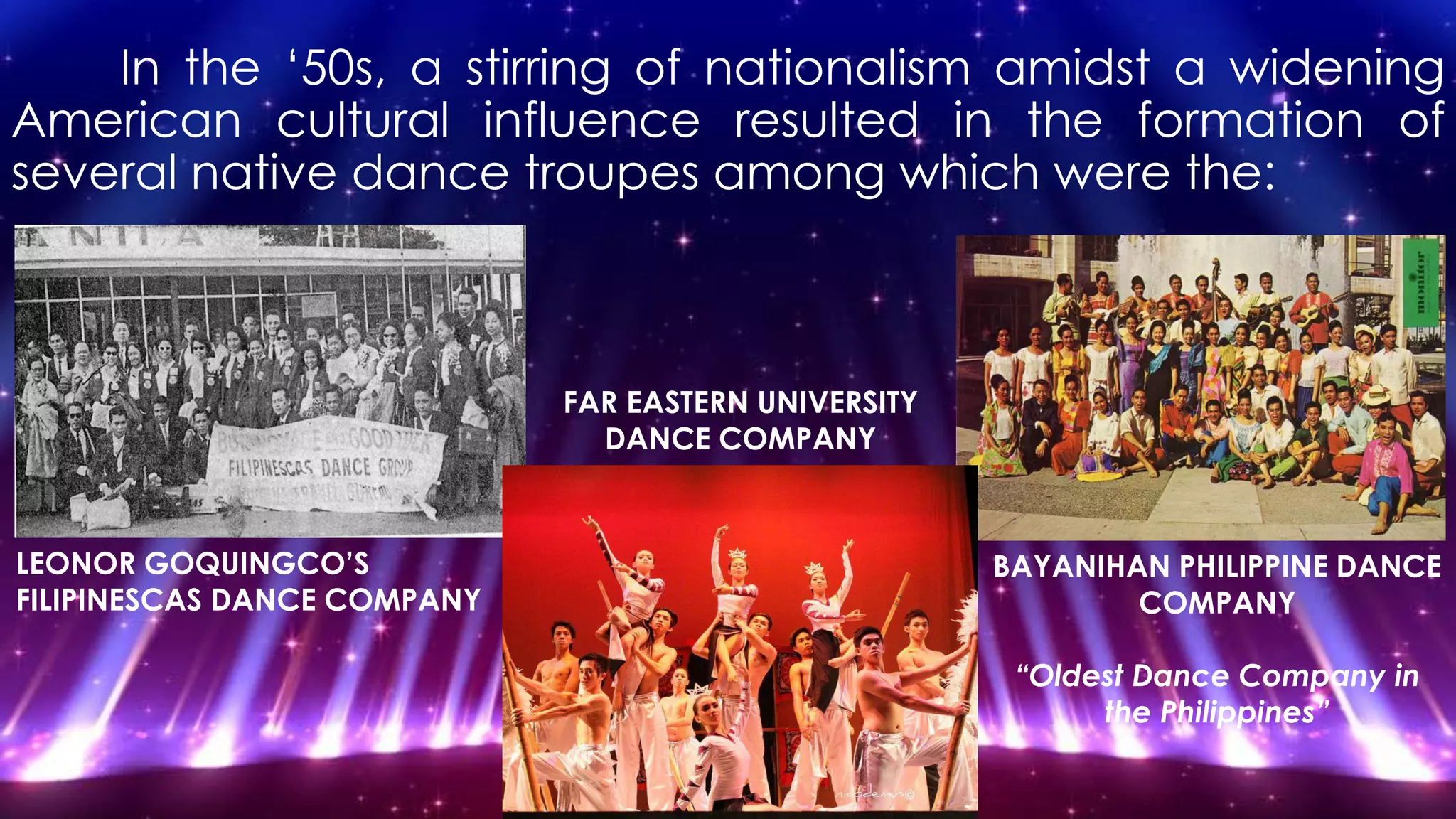
In the ‘50s, a stirring of nationalism amidst a widening
American cultural influence resulted in the formation of
several native dance troupes among which were the:
LEONOR GOQUINGCO’S
FILIPINESCAS DANCE COMPANY
BAYANIHAN PHILIPPINE DANCE
COMPANY
“Oldest Dance Company in
the Philippines”
FAR EASTERN UNIVERSITY
DANCE COMPANY
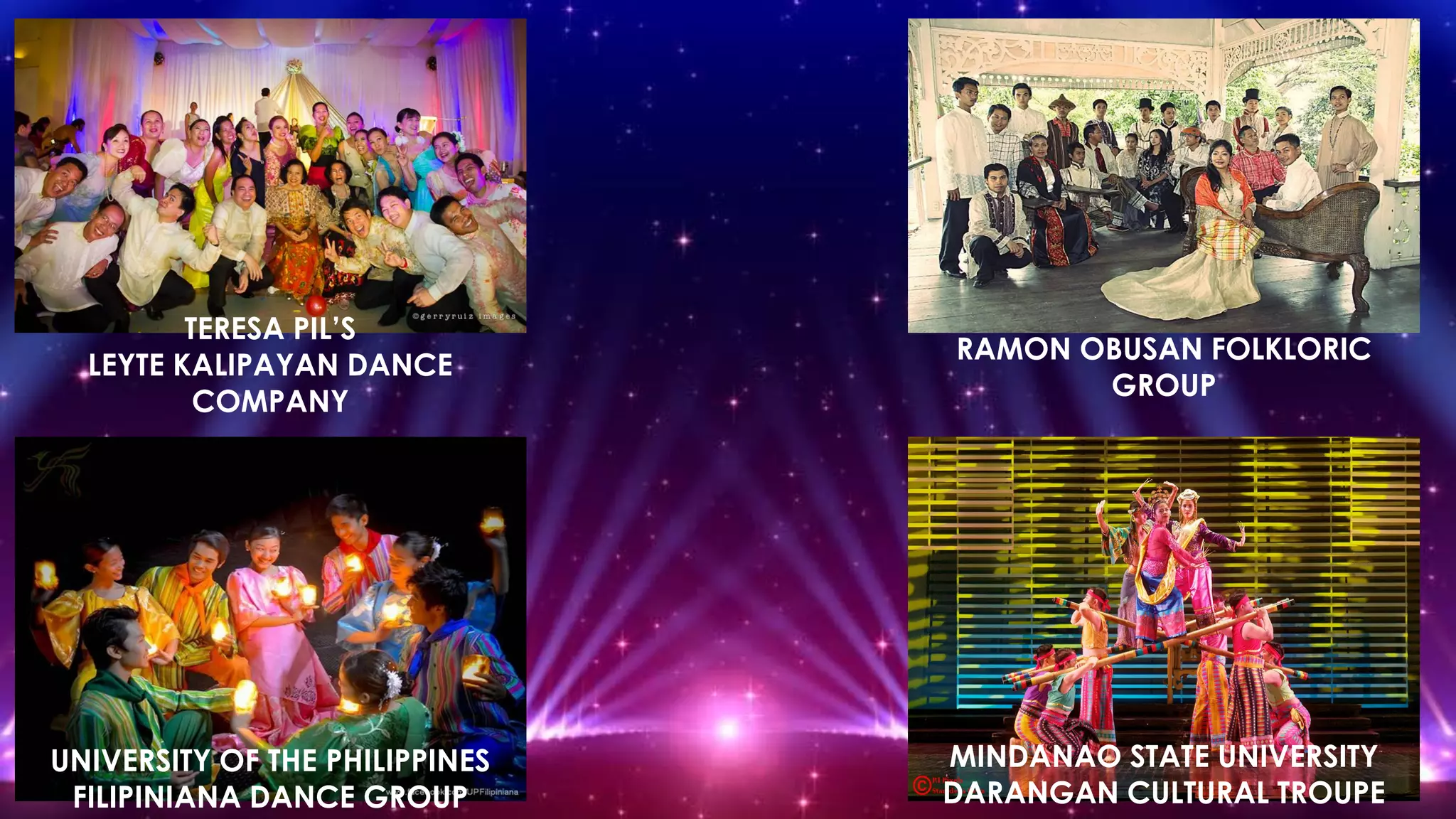
TERESA PIL’S
LEYTE KALIPAYAN DANCE
COMPANY
UNIVERSITY OF THE PHILIPPINES
FILIPINIANA DANCE GROUP
RAMON OBUSAN FOLKLORIC
GROUP
MINDANAO STATE UNIVERSITY
DARANGAN CULTURAL TROUPE
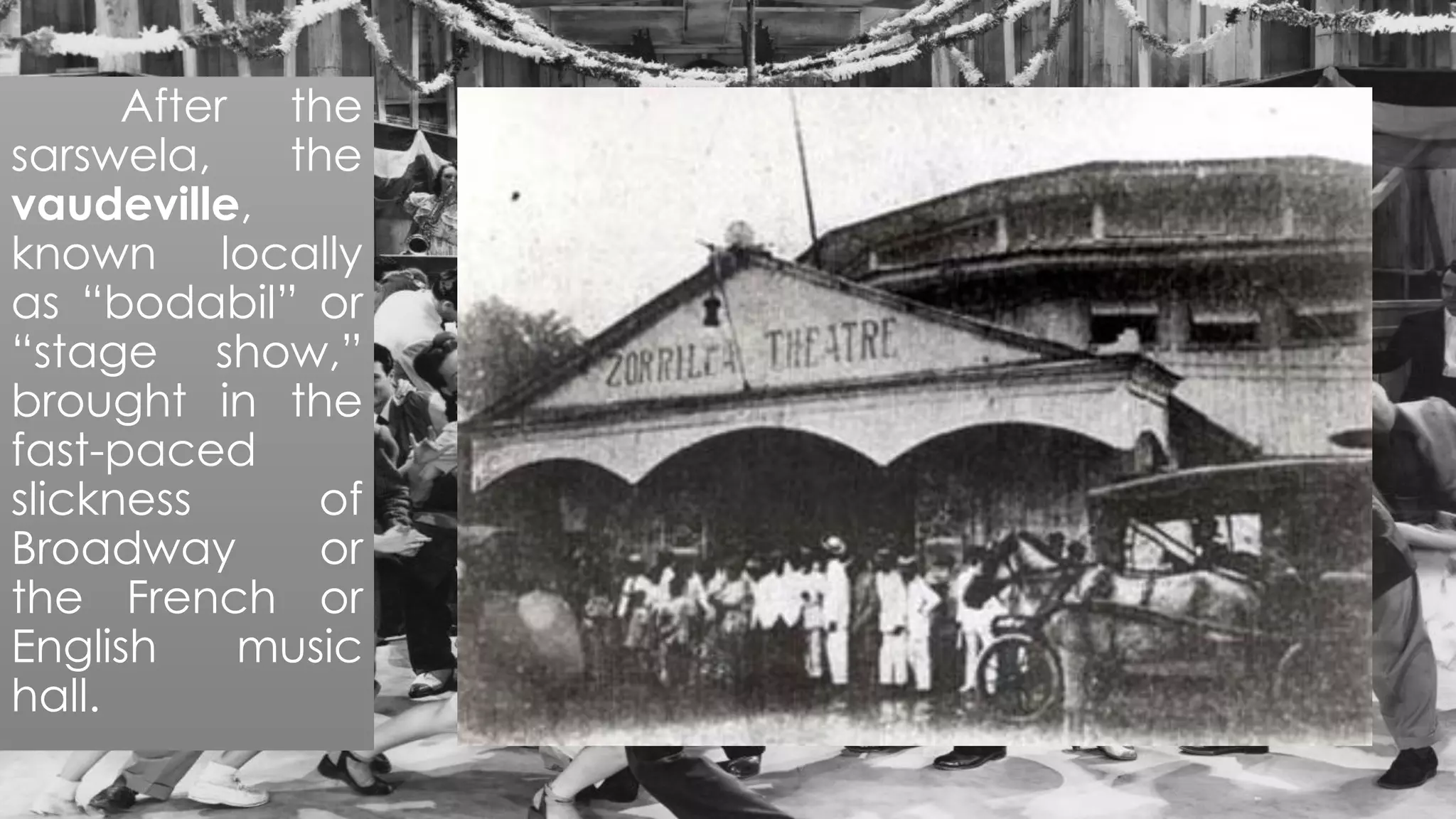
After the
sarswela, the
vaudeville,
known locally
as “bodabil” or
“stage show,”
brought in the
fast-paced
slickness of
Broadway or
the French or
English music
hall.
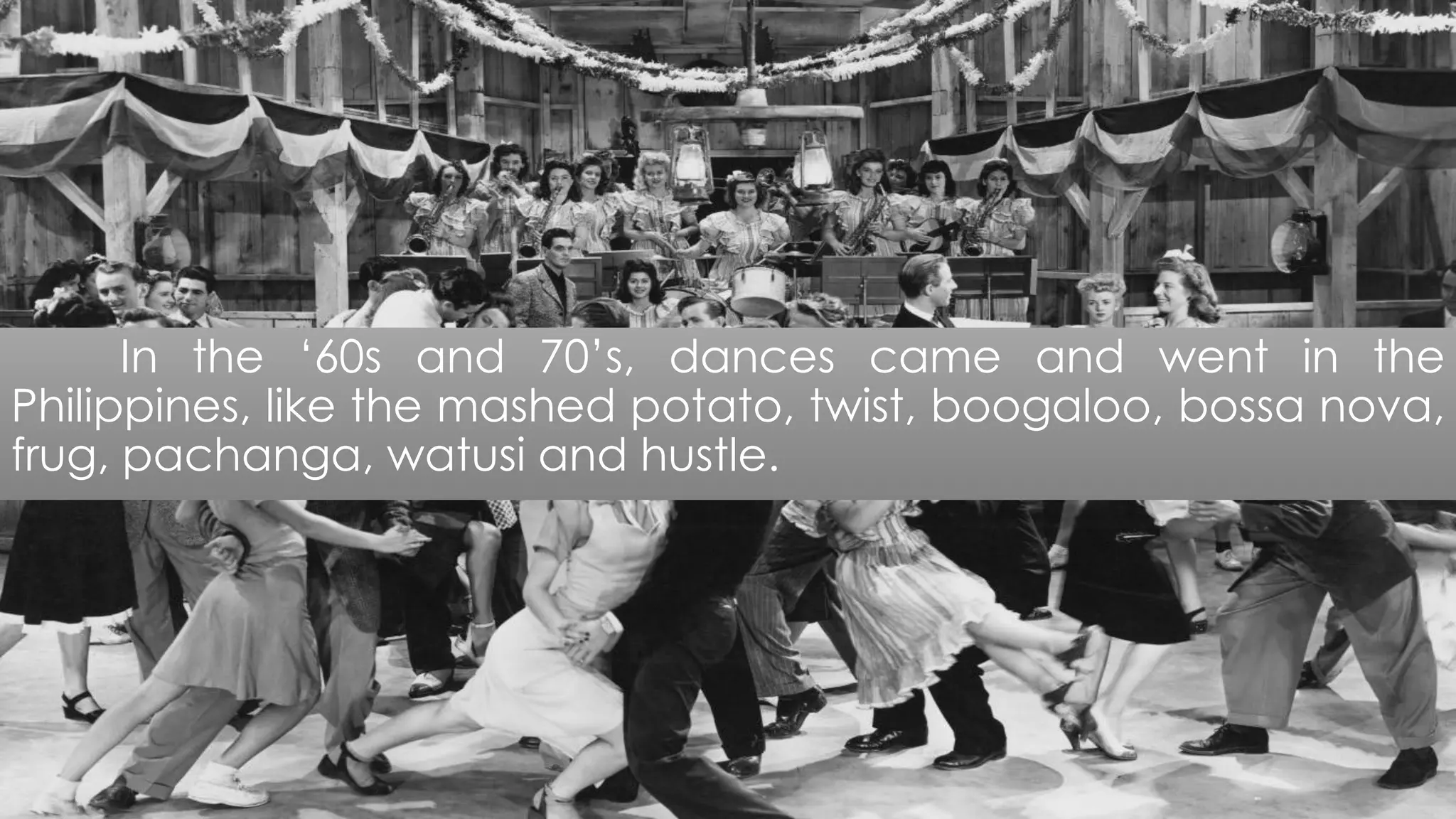
In the ‘60s and 70’s, dances came and went in the
Philippines, like the mashed potato, twist, boogaloo, bossa nova,
frug, pachanga, watusi and hustle.
In the idiom of jazz, Douglas Nierras and his Powerdance
are the most prominent, following the groups Hotlegs, of Julie
Borromeo, Metropolitan Dance Theater, etc.
The new groups are Whiplash and several others dancing
for television. They have graced the shows of Vilma Santos, Nora
Aunor and Sharon Cuneta, following up those of Pilita Corrales,
Nida Blanca and Nestor de Villa in their time.
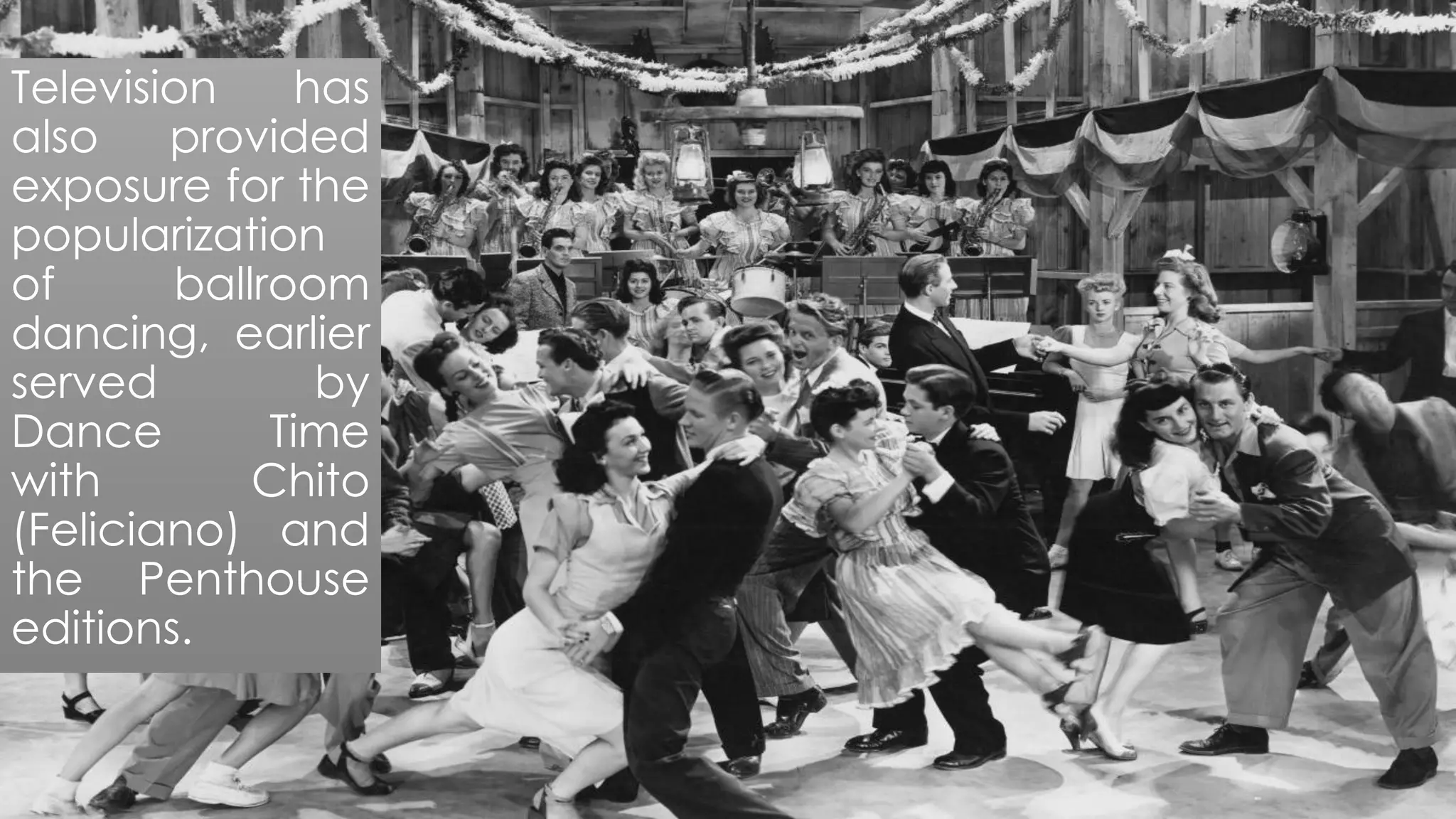
Television has
also provided
exposure for the
popularization
of ballroom
dancing, earlier
served by
Dance Time
with Chito
(Feliciano) and
the Penthouse
editions.
The Dance Sports Council has also helped standardize
dance competitions and dance instructions. The Old and
new dance forms are the boogie-woogie, rock ‘n roll,
mashed potato, twist, boogaloo, bossa nova, frug,
pachanga, watusi, hustle, lambada, swing, hip-hop and the
free-for-all disco-dancing.
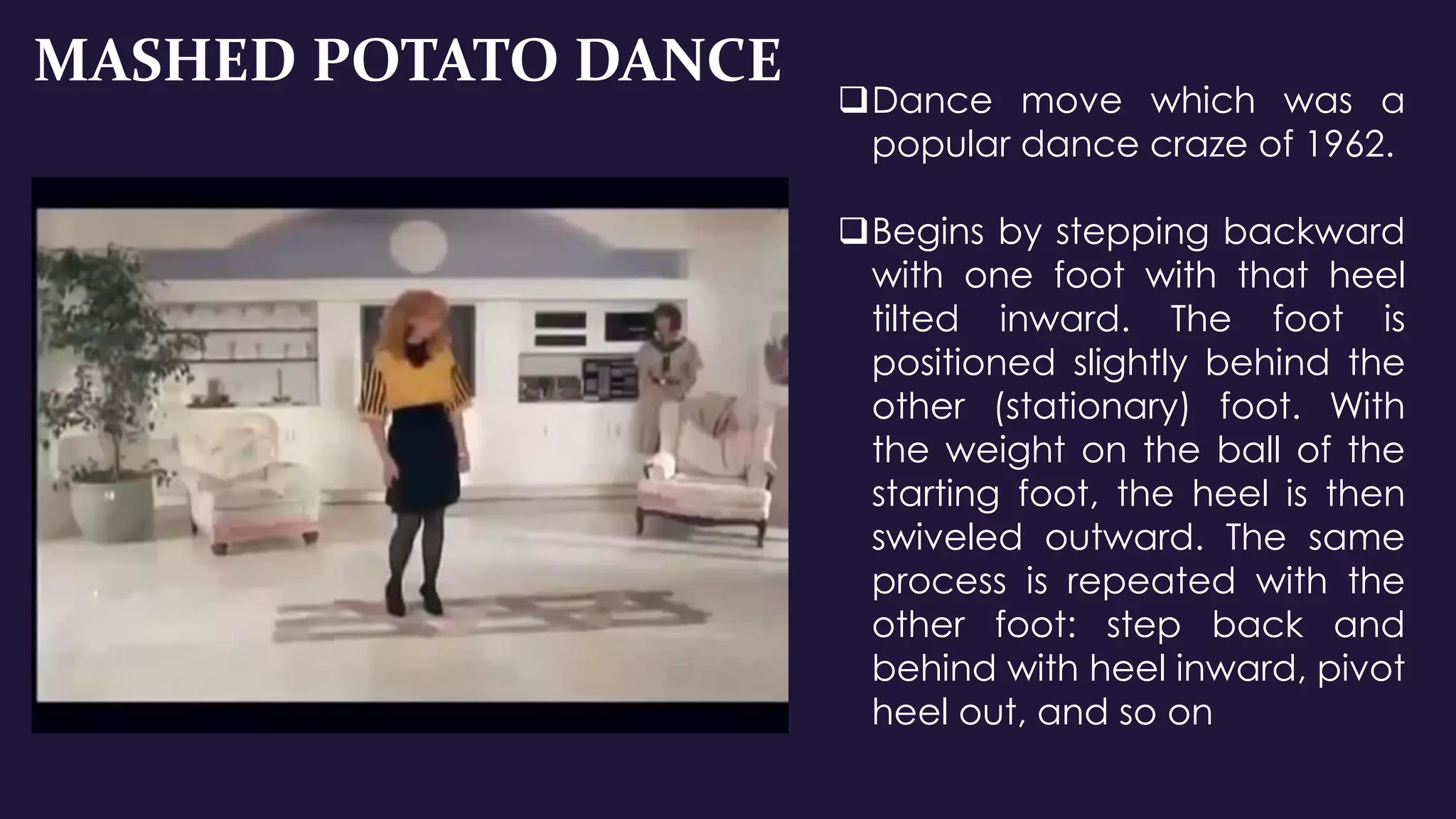
MASHED POTATO DANCE
Dance move which was a
popular dance craze of 1962.
Begins by stepping backward
with one foot with that heel
tilted inward. The foot is
positioned slightly behind the
other (stationary) foot. With
the weight on the ball of the
starting foot, the heel is then
swiveled outward. The same
process is repeated with the
other foot: step back and
behind with heel inward, pivot
heel out, and so on
TWIST DANCE Performed by standing with the
feet approximately shoulder
width apart. The torso may be
squared to the knees and hips,
or turned at an angle so one
foot is farther forward than the
other. The arms are held out
from the body, bent at the
elbow. The hips, torso, and legs
rotate on the balls of the feet as
a single unit, with the arms
staying more or less stationary.
The feet grind back and forth
on the floor, and the dance
can be varied in speed,
intensity, and vertical height as
necessary.
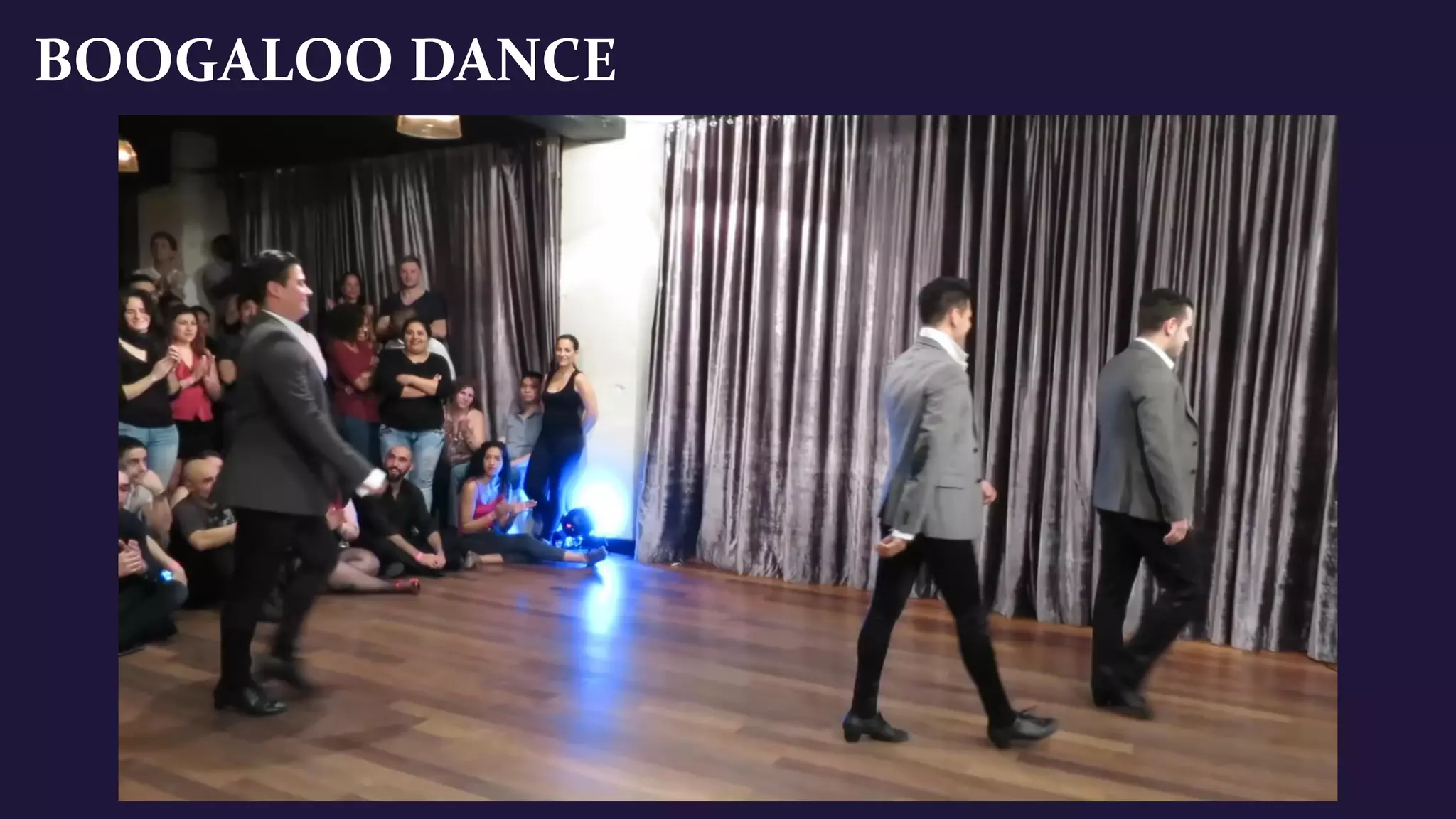
BOOGALOO DANCE
BOSSA NOVA DANCE
PACHANGA DANCE
WATUSI DANCE
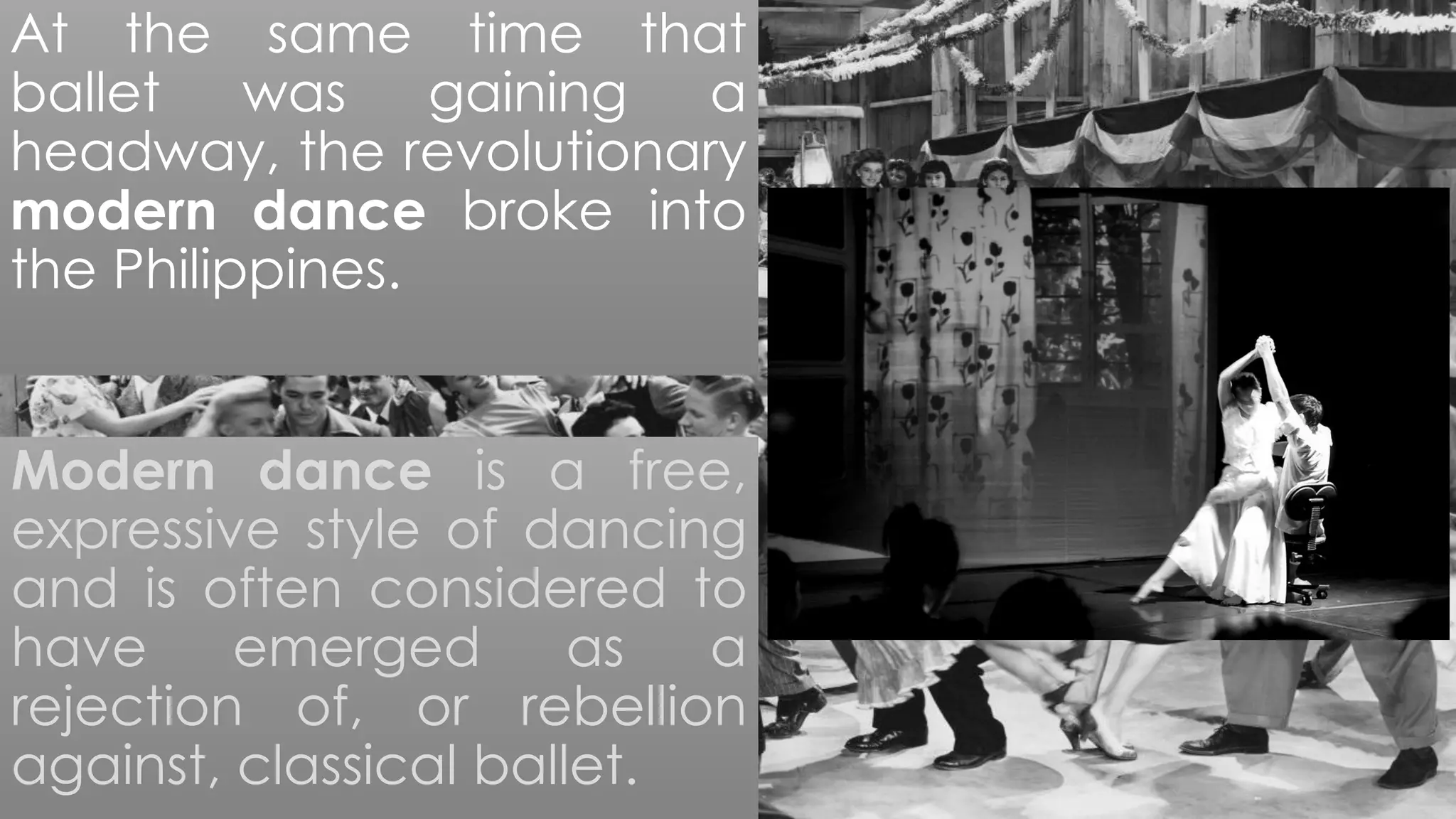
At the same time that
ballet was gaining a
headway, the revolutionary
modern dance broke into
the Philippines.
Modern dance is a free,
expressive style of dancing
and is often considered to
have emerged as a
rejection of, or rebellion
against, classical ballet.
American
popular dances
were followed by
European classical
ballet due to the
visiting of different
performing dance
troupes in the
country.
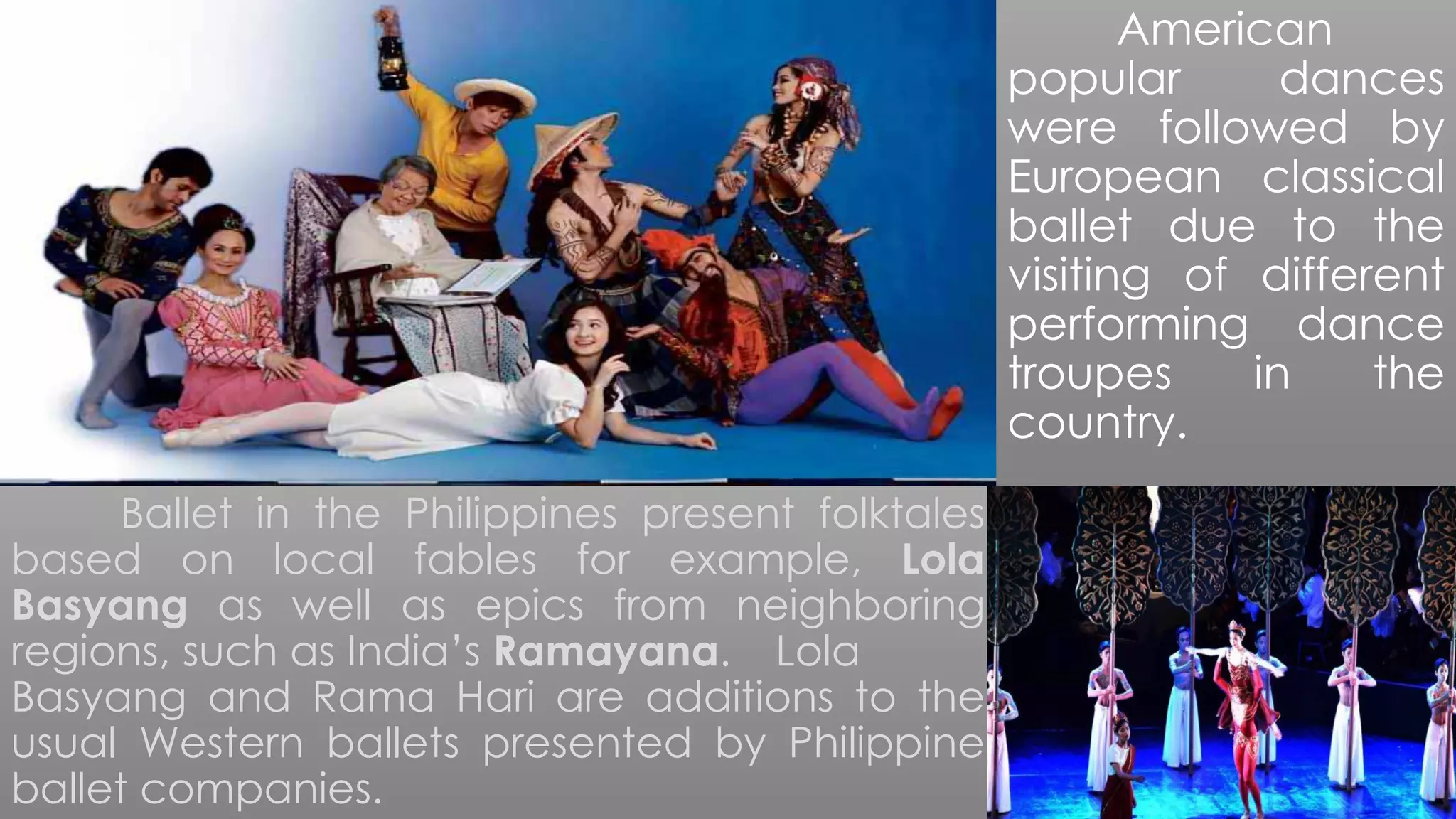
Ballet in the Philippines present folktales
based on local fables for example, Lola
Basyang as well as epics from neighboring
regions, such as India’s Ramayana. Lola
Basyang and Rama Hari are additions to the
usual Western ballets presented by Philippine
ballet companies.
In dance education, physical education departments
continue to teach dance (mostly folk) from the grade school
to college level. Dance degree programs are offered at
University of the Philippines and De la Salle University.
During the leisure time Filipinos can be found dancing more.
This include the battalas (choreographed skirmishes) in the moro-
moro or comedia that still exist.
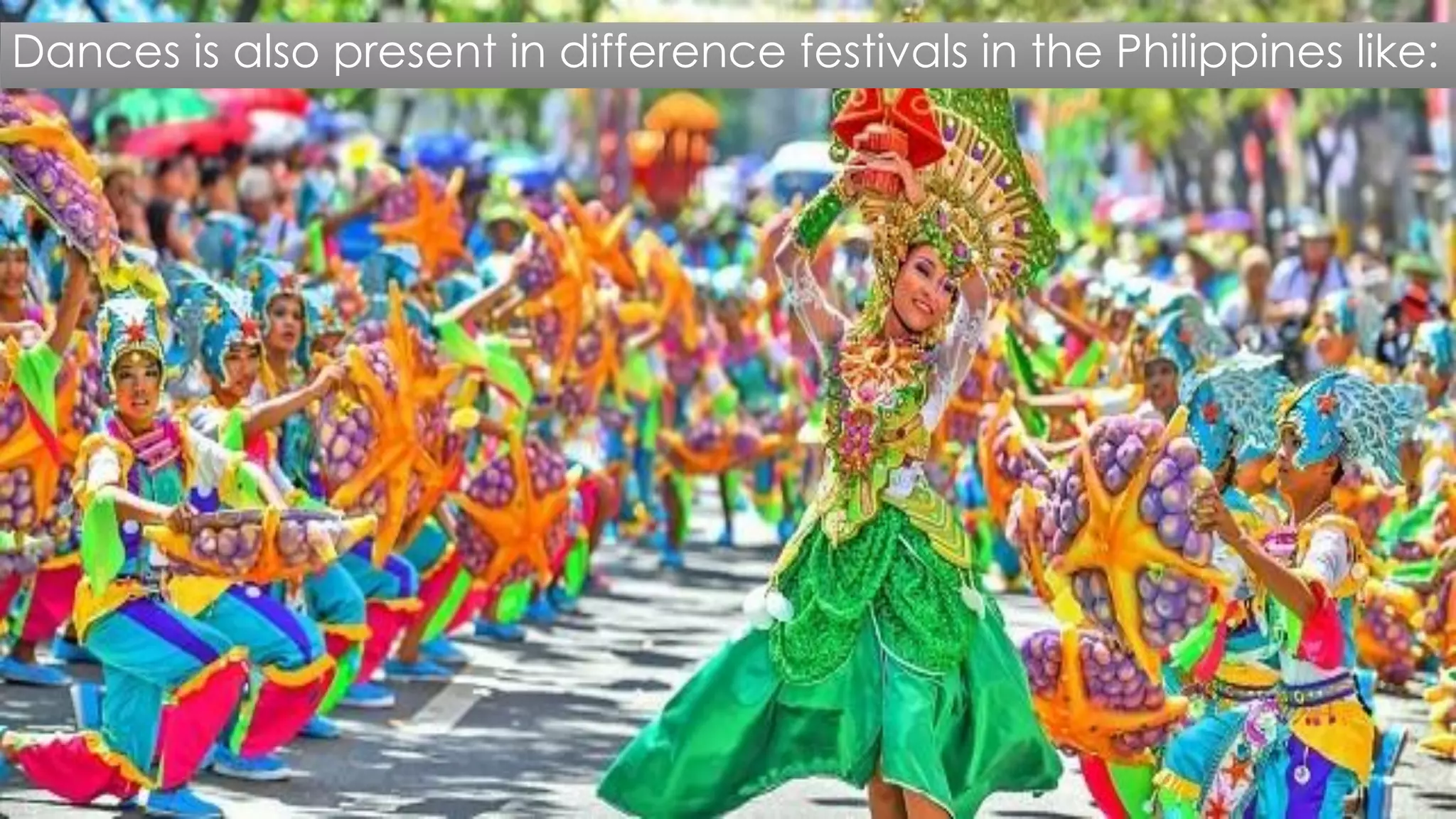
Dances is also present in difference festivals in the Philippines like:
Sinulog
Dinagyang
Karakol
Sayaw sa Obando
FILIPINO
DANCERS
FAMOUS
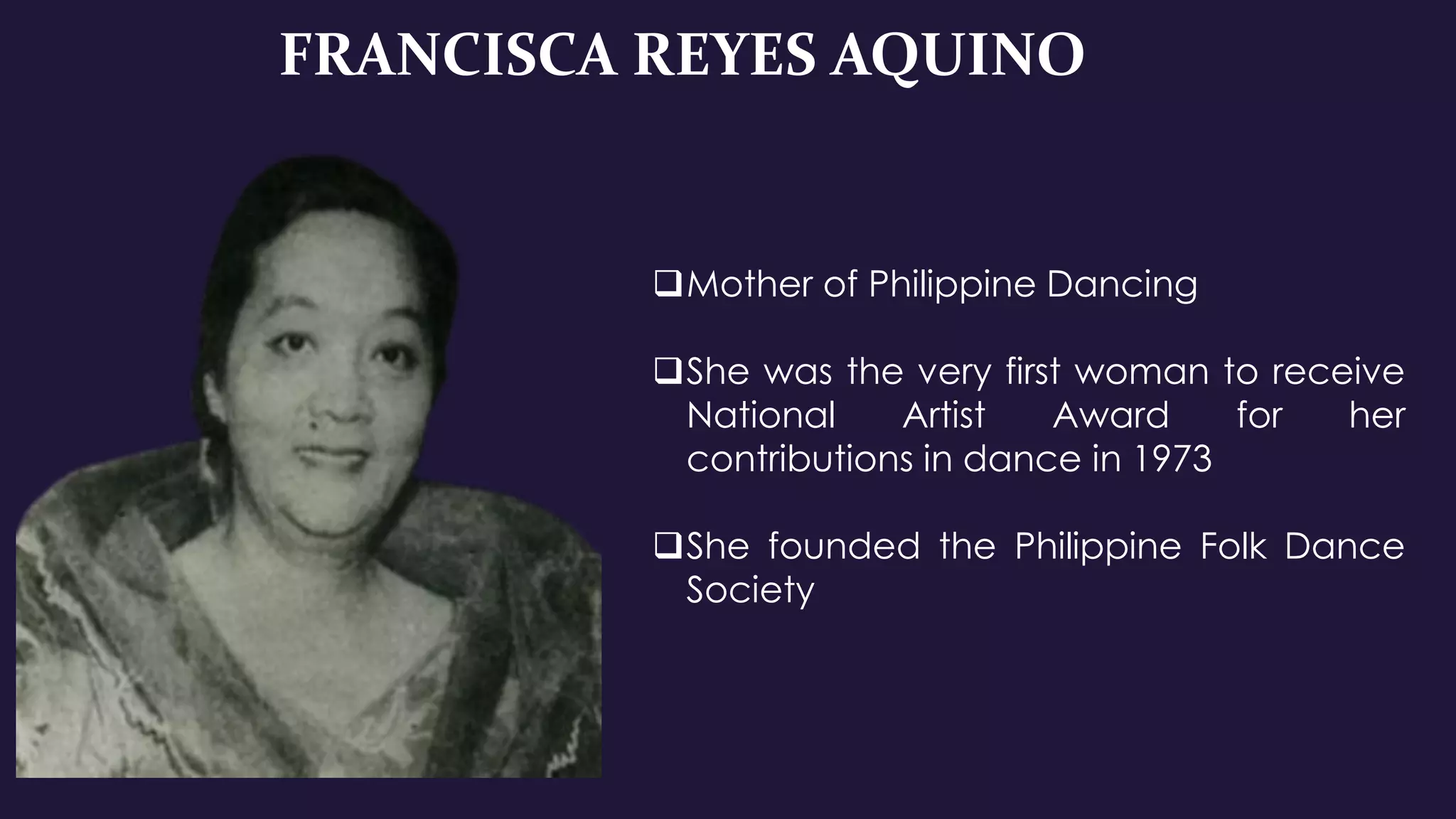
FRANCISCA REYES AQUINO
Mother of Philippine Dancing
She was the very first woman to receive
National Artist Award for her
contributions in dance in 1973
She founded the Philippine Folk Dance
Society
LEONOR OROSA-GOQUINGCO
Mother of Philippine Theater Dance
She was known as “Trailblazer”
She founded the Filipinescas Dance
Company
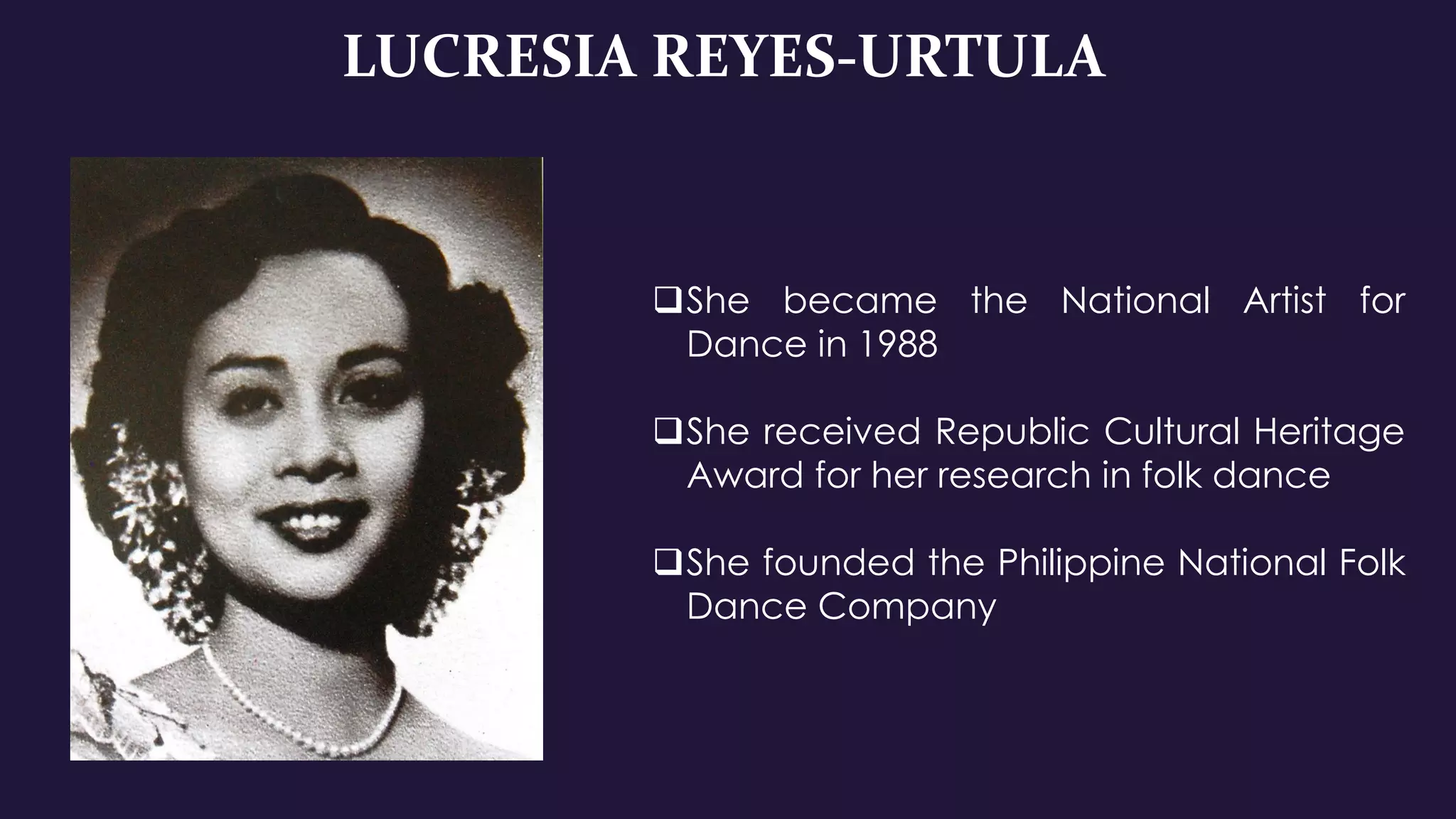
LUCRESIA REYES-URTULA
She became the National Artist for
Dance in 1988
She received Republic Cultural Heritage
Award for her research in folk dance
She founded the Philippine National Folk
Dance Company
REMEDIOS DE OTEYZA
In 1947 she founded her own ballet school in
Manila, called Classic Ballet Academy.
She was also the boss of the ballet group
Hariraya Ballet Company.
She was a choreographer for the Cultural
Center of the Philippines (CCP).
She was known for her abstract neo-classical
ballet performances. At the end of her career
she taught at the CCP Dance School and the
ballet Foundation of the Philippines.
MODERN
DANCE
PHILIPPINE
Dance in the Philippines during Modern Period

Dance in the Philippines during Modern Period

  • 1.
  • 2.
    Rising from therubbles of WWII and freed from American domination, the Filipinos surged in creativity. The ’50 and ’60s saw dance revival and choreographic invention.
  • 3.
    In the ‘50s,a stirring of nationalism amidst a widening American cultural influence resulted in the formation of several native dance troupes among which were the: LEONOR GOQUINGCO’S FILIPINESCAS DANCE COMPANY BAYANIHAN PHILIPPINE DANCE COMPANY “Oldest Dance Company in the Philippines” FAR EASTERN UNIVERSITY DANCE COMPANY
  • 4.
    TERESA PIL’S LEYTE KALIPAYANDANCE COMPANY UNIVERSITY OF THE PHILIPPINES FILIPINIANA DANCE GROUP RAMON OBUSAN FOLKLORIC GROUP MINDANAO STATE UNIVERSITY DARANGAN CULTURAL TROUPE
  • 5.
    After the sarswela, the vaudeville, knownlocally as “bodabil” or “stage show,” brought in the fast-paced slickness of Broadway or the French or English music hall.
  • 6.
    In the ‘60sand 70’s, dances came and went in the Philippines, like the mashed potato, twist, boogaloo, bossa nova, frug, pachanga, watusi and hustle.
  • 7.
    In the idiomof jazz, Douglas Nierras and his Powerdance are the most prominent, following the groups Hotlegs, of Julie Borromeo, Metropolitan Dance Theater, etc.
  • 8.
    The new groupsare Whiplash and several others dancing for television. They have graced the shows of Vilma Santos, Nora Aunor and Sharon Cuneta, following up those of Pilita Corrales, Nida Blanca and Nestor de Villa in their time.
  • 9.
    Television has also provided exposurefor the popularization of ballroom dancing, earlier served by Dance Time with Chito (Feliciano) and the Penthouse editions.
  • 10.
    The Dance SportsCouncil has also helped standardize dance competitions and dance instructions. The Old and new dance forms are the boogie-woogie, rock ‘n roll, mashed potato, twist, boogaloo, bossa nova, frug, pachanga, watusi, hustle, lambada, swing, hip-hop and the free-for-all disco-dancing.
  • 11.
    MASHED POTATO DANCE Dancemove which was a popular dance craze of 1962. Begins by stepping backward with one foot with that heel tilted inward. The foot is positioned slightly behind the other (stationary) foot. With the weight on the ball of the starting foot, the heel is then swiveled outward. The same process is repeated with the other foot: step back and behind with heel inward, pivot heel out, and so on
  • 12.
    TWIST DANCE Performedby standing with the feet approximately shoulder width apart. The torso may be squared to the knees and hips, or turned at an angle so one foot is farther forward than the other. The arms are held out from the body, bent at the elbow. The hips, torso, and legs rotate on the balls of the feet as a single unit, with the arms staying more or less stationary. The feet grind back and forth on the floor, and the dance can be varied in speed, intensity, and vertical height as necessary.
  • 13.
  • 14.
  • 15.
  • 16.
  • 17.
    At the sametime that ballet was gaining a headway, the revolutionary modern dance broke into the Philippines. Modern dance is a free, expressive style of dancing and is often considered to have emerged as a rejection of, or rebellion against, classical ballet.
  • 18.
    American popular dances were followedby European classical ballet due to the visiting of different performing dance troupes in the country. Ballet in the Philippines present folktales based on local fables for example, Lola Basyang as well as epics from neighboring regions, such as India’s Ramayana. Lola Basyang and Rama Hari are additions to the usual Western ballets presented by Philippine ballet companies.
  • 19.
    In dance education,physical education departments continue to teach dance (mostly folk) from the grade school to college level. Dance degree programs are offered at University of the Philippines and De la Salle University.
  • 20.
    During the leisuretime Filipinos can be found dancing more. This include the battalas (choreographed skirmishes) in the moro- moro or comedia that still exist.
  • 21.
    Dances is alsopresent in difference festivals in the Philippines like:
  • 22.
  • 23.
  • 24.
  • 25.
  • 26.
  • 27.
    FRANCISCA REYES AQUINO Motherof Philippine Dancing She was the very first woman to receive National Artist Award for her contributions in dance in 1973 She founded the Philippine Folk Dance Society
  • 28.
    LEONOR OROSA-GOQUINGCO Mother ofPhilippine Theater Dance She was known as “Trailblazer” She founded the Filipinescas Dance Company
  • 29.
    LUCRESIA REYES-URTULA She becamethe National Artist for Dance in 1988 She received Republic Cultural Heritage Award for her research in folk dance She founded the Philippine National Folk Dance Company
  • 30.
    REMEDIOS DE OTEYZA In1947 she founded her own ballet school in Manila, called Classic Ballet Academy. She was also the boss of the ballet group Hariraya Ballet Company. She was a choreographer for the Cultural Center of the Philippines (CCP). She was known for her abstract neo-classical ballet performances. At the end of her career she taught at the CCP Dance School and the ballet Foundation of the Philippines.
  • 31.