CASE
PRESENTATION
THE INTEGRATIVE
CARE OF A PATIENT
WITH TYPE II
DIABETES MELLITUS
Pushpa Sengupta
CSUSM
MSN Cohort-9
OBJECTIVES
• Describe the epidemiology of Diabetes Mellitus .
• Explain the pathophysiology of Diabetes mellitus.
• Identify the risk factors for Diabetes.
• List the possible differential diagnosis.
• Incorporate evidence-based CAM into the care plan of a
diabetic patient.
• Analyze a case presentation of a 45-year-old male diagnosed
with diabetes mellitus.
Demographics
A 45-year-old Asian male working in a software company
with a sedentary lifestyle presents to the clinic with
fatigue and generalized weakness, increased frequency of
urination and always feeling hungry.
History
 Apparently healthy, married for last 18 years.
 Personal history of hypertension & hyperlipidemia
diagnosed 2 years back.
 Does smoke ½ pack daily, drinks alcohol socially or
on weekends in moderate amount.
 Family hx significant for diabetes, hypertension and
hyperlipidemia in his mother and diabetes in his
siblings. Father expired due to GB syndrome.
Present the patient
List of medications:
 Metoprolol 50 mg P.O. BID.
 Atorvastatin 40 mg P.O. daily.
 Vit-D 5000 units daily.
Use of CAM (after initial visit)
 Started taking Fenugreek 1 tspful in the morning on empty stomach. (3
months ago)
 Started to drink 30 oz of Bitter gourd juice daily ( not so consistent due to
bitter taste).
 Recommended change in diet, exercise or yoga daily (advised on initial
visit)
Review of systems: (Subjective)
 Middle aged male with complaints of generalized weakness and fatigue most of
the day.
 Always feeling hungry.
 Denies weight loss, constipation, diarrhea.
 Denies shortness of breath, chest pain, numbness or tingling in the extremities.
 Does state increased frequency of urination and drinking almost 2 gallons of
water.
 Feels depressed as he has low energy.
Physical Examination (Objective)
Physical exam reveals Ht-5ft 8 inches; weight 175 lbs, bmi-26.6. Abd girth-40
inches
BP-130/80, HR-88/min. Labs: HgbA1C- 6.2%; 3 months later 7.4%;
Urine positive for Glucose.
PHYSICAL EXAMINATION
• General: Well groomed. Sitting in comfortable position.
• Skin: PWD, no pallor, no lesions noted.
• Head: Normocephalic, atraumatic.
• Eyes: PERRLA, conjunctivae pink, EOMI, fundoscopic exam: WNL.
• Ear: Canals clear, TMs & bone landmarks normal, hearing normal.
• Nares: atraumatic, patent.
• Throat/Mouth: Mouth moist, tongue midline, normal rise of soft palate,
posterior pharynx clear, tonsil 1+.
• Neck: Supple, FROM, no lymphadenopathy, trachea midline.
• Chest/Resp: CTA, RRR, no murmur, rub, or gallop.
• Abd: soft, BS x 4, no tenderness noted on palpation.
• Musculoskeletal: Moves all extremities. No joint deformity, good pulses.
• Neuro: A/O x4, GCS 15, CNII-XII intact, no focal neuro deficits.
Microfilament test intact.
Assessment
Diagnosis: Type II Diabetes Mellitus
Differential Diagnosis:
oDiabetes Insipidus.
oStress Hyperglycemia
oDiabetes secondary to drugs, hormonal excess or pancreatic disease.
Medication: Started on Metformin 500 mg P.O. BID.
Diagnostic: Will recheck HgbA1C and lipid panel in 3 months.
Plan: Educated on 40/30/30 diet plan.
oLow CHO, low fat diet, to include more vegetables and low sweetened fruits in
diet.
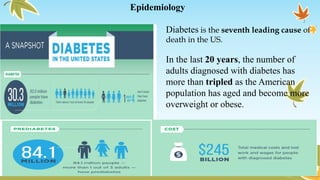
Diabetes is the seventh leading cause of
death in the US.
Epidemiology
In the last 20 years, the number of
adults diagnosed with diabetes has
more than tripled as the American
population has aged and become more
overweight or obese.
Epidemiology: Racial and Ethnic Differences/Cost.
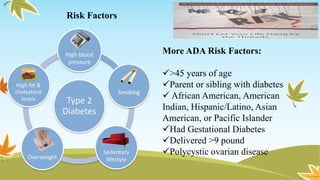
Risk Factors
More ADA Risk Factors:
>45 years of age
Parent or sibling with diabetes
 African American, American
Indian, Hispanic/Latino, Asian
American, or Pacific Islander
Had Gestational Diabetes
Delivered >9 pound
Polycystic ovarian disease
Pathophysiology
Insulin
• Promotes glucose
transport from
bloodstream across cell
membrane to
cytoplasm of cell.
• Decreases glucose in
the bloodstream
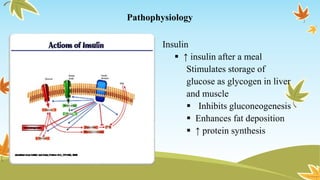
Pathophysiology
Insulin
 ↑ insulin after a meal
Stimulates storage of
glucose as glycogen in liver
and muscle
 Inhibits gluconeogenesis
 Enhances fat deposition
 ↑ protein synthesis
Multiorgan Regulation of Blood Glucose
Signs & Symptoms
Diagnostics
Fasting plasma glucose (FPG)
• Specimen collected after 8 hours w/ no caloric intake
• Value over 126 mg/dl indicates DM Type 2 (ADA, 2016)
Two-hour plasma glucose (2-h PG)
• Patient consumes 75 grams of anhydrous glucose
• Value of 200 mg/dl indicates DM Type 2 (ADA, 2016)
A1C (glycosylated hemoglobin)
• Attachment of glucose to hemoglobin molecules in red blood cell over time
(120 days)
• Value greater than 6.5% indicates DM Type 2 (ADA, 2016)
Therapeutic intervention goals
• Optimize blood glucose control.
• Decrease BMI.
• Increase physical activity.
• Medicate as appropriate.
• Reduce risk of complications.
• Identify organ-system complications/treat comorbidities.
Therapeutic interventions
• Diet and exercise (obesity management)
• Weight Management
• Oral hypoglycemic such as biguanides, sulfonylureas, meglitinides, alpha-
glucosidase inhibitors
• Insulin which improves glycemic control and decreases need for glucose-
lowering medications
Treatment of T2DM Based on Pathophysiology
Antihyperglycemic agents for T2DM: Recommendations
CAM Therapies useful in management of T2 DM
1. Life style changes, cessation of smoking, and sleep hygiene.
2. Addition of exercises in daily regimen in any form.
3. Low CHO, low fat, increased proteins like pulses,
chickpeas beans and dietary fibers such as oats, beans and
Psyllium lower glucose levels.
4. Moderate alcohol consumption.
5. Mediterranean diet has shown less requirements of
diabetic medications.
7. Meditation, Yoga, CBT, Reiki, and Naturopathy.
8. Ayurvedic/TCM herbs like coccina cordifolia, fenugreek, cinnamon, milk thistle,
momordica charantia, Touchi, have shown to lower glucose levels (Rakel, 2018;
Wang, Wang & Chan 2013).
9. Supplements like Vit D, Alpha-Lipoic acid, Omega 3 fatty acids, magnesium,
chromium, Vit E, Antioxidants, and L Carnitine have found to be useful (Rakel,
Return to the patient:
• What did you try:
Patient on initial encounter was given a chance to control his blood glucose
by diet, cessation of smoking, and inclusion of exercises as he was a prediabetic.
• What didn’t work:
The initial advice did not work in spite of patient trying certain things like
control of diet portion, eating healthy and inclusion of exercises as patient was
not compliant on a daily basis due to stress of work.
• What worked:
So patient had to be started on oral antihypoglycemic like Metformin
which brought his HgbA1C levels under control along with diet and exercise.
Return to the patient:
• Current Plan
 Continue oral antihypoglycemic, antihypertensive and statin medications.
 Emphasis on diet was done, nutritional consult was set up with dietician.
 Emphasis on exercise was done, patient joined a yoga club and is walking
daily (Pal et al., 2017)
 Trying to quit smoking by using nicorette gum.
 Patient wanted to restart bitter gourd juice daily and fenugreek, was allowed
(Wang, Wang & Chan, 2013)
• Future Plan
 Maintenance of HgbA1C levels below 7%.
Summary
• Diabetes is a worldwide problem, and 1 out of 2 people do not
know they have diabetes.
• Diabetes is a progressive metabolic disorder and becomes a life
long chronic disease with multiple complications if not
controlled and can lead to CAD, kidney failure, stroke, and
loss of limbs.
• It can be prevented early by modifying lifestyle, avoiding
smoking, eating healthy, inclusion of exercise in daily living,
maintaining healthy weight and healthy mind to stay healthy
lifelong.
Reference
• American Diabetes Association. (2016). Classification and diagnosis of diabetes. Diabetes care 2016, 39(1). doi:
10.2337/dc16-S005
• Centers for Disease Control and Prevention. (2018). National diabetes statistics report, 2018. Retrieved from
http://www.cdc.gov/diabetes/pubs/statsreport14/national-diabetes-report-web.pdf
• McCance, K. L., & Huether, S. E. (2014). Pathophysiology: The biologic basis for disease in adults and children (7th ed.). St.
Louis, MO: Elsevier Mosby
• Nair, R. (2016). Emphasis of Naturopathy in the Management of Type 2 Diabetes Mellitus. Journal of Medical Science and
Clinical Research, 04(12), 14987-14993
• Pal, D. K., Bhalla, A., Bammidi, S., Telles, S., Kohli, A., Kumar, S., ... & Malik, N. (2017). Can Yoga-Based Diabetes
Management Studies Facilitate Integrative Medicine in India Current Status and Future Directions. Integrative Medicine
International, 4(3-4), 125-141.
• Rakel, D. (2018) Integrative medicine (4th Ed.). Elsevier Saunders: Philadelphia.
• Wang Z, Wang J, Chan P. Treating Type 2 Diabetes Mellitus with Traditional Chinese and Indian Medicinal Herbs. Evidence-
based Complementary and Alternative Medicine: eCAM. 2013; 2013:343594. doi:10.1155/2013/343594.

Case study presentation on DM-II (1).pptx

  • 1.
    CASE PRESENTATION THE INTEGRATIVE CARE OFA PATIENT WITH TYPE II DIABETES MELLITUS Pushpa Sengupta CSUSM MSN Cohort-9
  • 2.
    OBJECTIVES • Describe theepidemiology of Diabetes Mellitus . • Explain the pathophysiology of Diabetes mellitus. • Identify the risk factors for Diabetes. • List the possible differential diagnosis. • Incorporate evidence-based CAM into the care plan of a diabetic patient. • Analyze a case presentation of a 45-year-old male diagnosed with diabetes mellitus.
  • 3.
    Demographics A 45-year-old Asianmale working in a software company with a sedentary lifestyle presents to the clinic with fatigue and generalized weakness, increased frequency of urination and always feeling hungry. History  Apparently healthy, married for last 18 years.  Personal history of hypertension & hyperlipidemia diagnosed 2 years back.  Does smoke ½ pack daily, drinks alcohol socially or on weekends in moderate amount.  Family hx significant for diabetes, hypertension and hyperlipidemia in his mother and diabetes in his siblings. Father expired due to GB syndrome.
  • 4.
    Present the patient Listof medications:  Metoprolol 50 mg P.O. BID.  Atorvastatin 40 mg P.O. daily.  Vit-D 5000 units daily. Use of CAM (after initial visit)  Started taking Fenugreek 1 tspful in the morning on empty stomach. (3 months ago)  Started to drink 30 oz of Bitter gourd juice daily ( not so consistent due to bitter taste).  Recommended change in diet, exercise or yoga daily (advised on initial visit)
  • 5.
    Review of systems:(Subjective)  Middle aged male with complaints of generalized weakness and fatigue most of the day.  Always feeling hungry.  Denies weight loss, constipation, diarrhea.  Denies shortness of breath, chest pain, numbness or tingling in the extremities.  Does state increased frequency of urination and drinking almost 2 gallons of water.  Feels depressed as he has low energy. Physical Examination (Objective) Physical exam reveals Ht-5ft 8 inches; weight 175 lbs, bmi-26.6. Abd girth-40 inches BP-130/80, HR-88/min. Labs: HgbA1C- 6.2%; 3 months later 7.4%; Urine positive for Glucose.
  • 6.
    PHYSICAL EXAMINATION • General:Well groomed. Sitting in comfortable position. • Skin: PWD, no pallor, no lesions noted. • Head: Normocephalic, atraumatic. • Eyes: PERRLA, conjunctivae pink, EOMI, fundoscopic exam: WNL. • Ear: Canals clear, TMs & bone landmarks normal, hearing normal. • Nares: atraumatic, patent. • Throat/Mouth: Mouth moist, tongue midline, normal rise of soft palate, posterior pharynx clear, tonsil 1+. • Neck: Supple, FROM, no lymphadenopathy, trachea midline. • Chest/Resp: CTA, RRR, no murmur, rub, or gallop. • Abd: soft, BS x 4, no tenderness noted on palpation. • Musculoskeletal: Moves all extremities. No joint deformity, good pulses. • Neuro: A/O x4, GCS 15, CNII-XII intact, no focal neuro deficits. Microfilament test intact.
  • 7.
    Assessment Diagnosis: Type IIDiabetes Mellitus Differential Diagnosis: oDiabetes Insipidus. oStress Hyperglycemia oDiabetes secondary to drugs, hormonal excess or pancreatic disease. Medication: Started on Metformin 500 mg P.O. BID. Diagnostic: Will recheck HgbA1C and lipid panel in 3 months. Plan: Educated on 40/30/30 diet plan. oLow CHO, low fat diet, to include more vegetables and low sweetened fruits in diet.
  • 8.
    Diabetes is theseventh leading cause of death in the US. Epidemiology In the last 20 years, the number of adults diagnosed with diabetes has more than tripled as the American population has aged and become more overweight or obese.
  • 9.
    Epidemiology: Racial andEthnic Differences/Cost.
  • 10.
    Risk Factors More ADARisk Factors: >45 years of age Parent or sibling with diabetes  African American, American Indian, Hispanic/Latino, Asian American, or Pacific Islander Had Gestational Diabetes Delivered >9 pound Polycystic ovarian disease
  • 11.
    Pathophysiology Insulin • Promotes glucose transportfrom bloodstream across cell membrane to cytoplasm of cell. • Decreases glucose in the bloodstream
  • 12.
    Pathophysiology Insulin  ↑ insulinafter a meal Stimulates storage of glucose as glycogen in liver and muscle  Inhibits gluconeogenesis  Enhances fat deposition  ↑ protein synthesis
  • 13.
  • 14.
  • 15.
    Diagnostics Fasting plasma glucose(FPG) • Specimen collected after 8 hours w/ no caloric intake • Value over 126 mg/dl indicates DM Type 2 (ADA, 2016) Two-hour plasma glucose (2-h PG) • Patient consumes 75 grams of anhydrous glucose • Value of 200 mg/dl indicates DM Type 2 (ADA, 2016) A1C (glycosylated hemoglobin) • Attachment of glucose to hemoglobin molecules in red blood cell over time (120 days) • Value greater than 6.5% indicates DM Type 2 (ADA, 2016)
  • 16.
    Therapeutic intervention goals •Optimize blood glucose control. • Decrease BMI. • Increase physical activity. • Medicate as appropriate. • Reduce risk of complications. • Identify organ-system complications/treat comorbidities.
  • 17.
    Therapeutic interventions • Dietand exercise (obesity management) • Weight Management • Oral hypoglycemic such as biguanides, sulfonylureas, meglitinides, alpha- glucosidase inhibitors • Insulin which improves glycemic control and decreases need for glucose- lowering medications
  • 18.
    Treatment of T2DMBased on Pathophysiology
  • 19.
    Antihyperglycemic agents forT2DM: Recommendations
  • 20.
    CAM Therapies usefulin management of T2 DM 1. Life style changes, cessation of smoking, and sleep hygiene. 2. Addition of exercises in daily regimen in any form. 3. Low CHO, low fat, increased proteins like pulses, chickpeas beans and dietary fibers such as oats, beans and Psyllium lower glucose levels. 4. Moderate alcohol consumption. 5. Mediterranean diet has shown less requirements of diabetic medications. 7. Meditation, Yoga, CBT, Reiki, and Naturopathy. 8. Ayurvedic/TCM herbs like coccina cordifolia, fenugreek, cinnamon, milk thistle, momordica charantia, Touchi, have shown to lower glucose levels (Rakel, 2018; Wang, Wang & Chan 2013). 9. Supplements like Vit D, Alpha-Lipoic acid, Omega 3 fatty acids, magnesium, chromium, Vit E, Antioxidants, and L Carnitine have found to be useful (Rakel,
  • 21.
    Return to thepatient: • What did you try: Patient on initial encounter was given a chance to control his blood glucose by diet, cessation of smoking, and inclusion of exercises as he was a prediabetic. • What didn’t work: The initial advice did not work in spite of patient trying certain things like control of diet portion, eating healthy and inclusion of exercises as patient was not compliant on a daily basis due to stress of work. • What worked: So patient had to be started on oral antihypoglycemic like Metformin which brought his HgbA1C levels under control along with diet and exercise.
  • 22.
    Return to thepatient: • Current Plan  Continue oral antihypoglycemic, antihypertensive and statin medications.  Emphasis on diet was done, nutritional consult was set up with dietician.  Emphasis on exercise was done, patient joined a yoga club and is walking daily (Pal et al., 2017)  Trying to quit smoking by using nicorette gum.  Patient wanted to restart bitter gourd juice daily and fenugreek, was allowed (Wang, Wang & Chan, 2013) • Future Plan  Maintenance of HgbA1C levels below 7%.
  • 23.
    Summary • Diabetes isa worldwide problem, and 1 out of 2 people do not know they have diabetes. • Diabetes is a progressive metabolic disorder and becomes a life long chronic disease with multiple complications if not controlled and can lead to CAD, kidney failure, stroke, and loss of limbs. • It can be prevented early by modifying lifestyle, avoiding smoking, eating healthy, inclusion of exercise in daily living, maintaining healthy weight and healthy mind to stay healthy lifelong.
  • 24.
    Reference • American DiabetesAssociation. (2016). Classification and diagnosis of diabetes. Diabetes care 2016, 39(1). doi: 10.2337/dc16-S005 • Centers for Disease Control and Prevention. (2018). National diabetes statistics report, 2018. Retrieved from http://www.cdc.gov/diabetes/pubs/statsreport14/national-diabetes-report-web.pdf • McCance, K. L., & Huether, S. E. (2014). Pathophysiology: The biologic basis for disease in adults and children (7th ed.). St. Louis, MO: Elsevier Mosby • Nair, R. (2016). Emphasis of Naturopathy in the Management of Type 2 Diabetes Mellitus. Journal of Medical Science and Clinical Research, 04(12), 14987-14993 • Pal, D. K., Bhalla, A., Bammidi, S., Telles, S., Kohli, A., Kumar, S., ... & Malik, N. (2017). Can Yoga-Based Diabetes Management Studies Facilitate Integrative Medicine in India Current Status and Future Directions. Integrative Medicine International, 4(3-4), 125-141. • Rakel, D. (2018) Integrative medicine (4th Ed.). Elsevier Saunders: Philadelphia. • Wang Z, Wang J, Chan P. Treating Type 2 Diabetes Mellitus with Traditional Chinese and Indian Medicinal Herbs. Evidence- based Complementary and Alternative Medicine: eCAM. 2013; 2013:343594. doi:10.1155/2013/343594.

Editor's Notes

  • #12  The metabolic defects underlying type 2 diabetes are a triad of insulin resistance, pancreatic cell dysfunction, and impaired hepatic glucose production.Many organs play an important role in contributing to insulin resistance and chronic hyperglycemia associated with Type 2 diabetes. Genetic and environmental factors together have also resulted in changes of the genes throughout generations and altered the pathophysiologic mechanism of Type 2 diabetes. Research has shown that some of the genes that are responsible for Type 2 diabetes are those that code for beta-cell mass, beta-cell function, proinsulin and insulin molecular structure, insulin receptors, hepatic synthesis of glucose, glucagon synthesis, and cellular response to insulin stimulation (McCance & Huether, 2014). People who undergo genetic changes to beta cell dysfunction develop Type 2 diabetes. Insulin is a polypeptide, produced by the islet of Langerhans located in the pancreas, that allows glucose circulating in the blood to enter the body’s cells. Without insulin glucose is unable to enter the cell, which deprives the cell of energy to carry out basic cellular functions, which leads to systemic repercussions. Changes in the insulin signaling pathway like changes in insulin molecule, high amounts of insulin antagonists, insulin receptor downregulation, abnormal or decreased activation of post receptor kinases, and changes in glucose transporter proteins lead to insulin resistance (Wilcox, 2005). Obesity also plays a major role in insulin resistance through a different mechanism: adipose tissue which produces adipokines. In obese people, peroxisome proliferator-activated receptor gamma is expressed more in adipose cells leading to increased serum levels of leptin and resistin and decreased levels of adiponectin. These changes in adipokines does affect the hypothalamic and pancreatic function and on the tissues. Increased levels of serum fatty acids and intracellular deposits of triglycerides and cholesterol in obese people lead to certain changes that interfere with intracellular insulin signaling, reduced tissue response to insulin, and further changes in insulin incretin and glucagon secretion, and the promotion of inflammation. Inflammatory cytokines like TNF-α, IL-6 are released from intra-abdominal adipocytes through post receptor mechanisms which induce insulin resistance and leads to the development of fatty liver, atherosclerosis, and dyslipidemia. In skeletal muscle and hepatocytes, changes in oxidative phosphorylation in cellular mitochondria results in insulin resistance. Obesity is also related to hyperinsulinemia and reduced insulin receptor density.
  • #14 Blood glucose levels are impacted in a variety of ways. Overnight and between meals, the brain (and nervous system) are obligate glucose consumers. Constancy of glycemia is maintained by hepatic glucose production, which is modulated by insulin, which restrains glucose production. With consumption of meals, glucose is absorbed from the intestine. Muscle is responsible for over 80% of postprandial glucose (PPG) uptake and utilization. Muscle and adipose tissue glucose uptake are stimulated by insulin. Thus, insulin is the principal regulator of blood glucose levels.
  • #15 Elevated Blood Glucose 3P’s Polyuria Polydipsia Polyphagia Fatigue Headaches Blurry Vision