MEDICAL ERRORS
Dr. Hisham Abid Aldabbagh
MSc. Internal Medicine
Kingdom of Saudi Arabia
Ministry of Health
Directorate of Health
Affairs in Gurayat
Gurayat General Hospital
Defining Medical Errors
Can J Surg. 2005
• Medical errors represent a serious public health problem
and pose a threat to patient safety.
• Medical errors can occur anywhere in the health care
system:
In hospitals, clinics, surgery centres, doctors' offices,
nursing homes, pharmacies, and patients' homes.
• Medical Errors can involve medicines, surgery, diagnosis,
equipment, or lab reports.
• An unintended act (either of omission or commission)
• One that does not achieve its intended outcome
• The failure of a planned action to be completed as intended
(an error of execution)
• The use of a wrong plan to achieve an aim (an error of
planning)
• A deviation from the process of care that may or may not
cause harm to the patient.
• Patient harm from medical error can occur at the individual or
system level.
•Medical error—the third leading cause of death in the US
BMJ 2016
• Medical error is not included on death certificates or in rankings
of cause of death.
• The death list is created using death certificates filled out by
physicians, funeral directors, medical examiners, and coroners.
However, a major limitation of the death certificate is that it
relies on assigning an International Classification of Disease (ICD)
code to the cause of death. As a result, causes of death not
associated with an ICD code, such as human and system factors,
are not captured.
PreventiveDiagnostic
• Failure to provide
prophylactic treatment
• Inadequate monitoring or
follow-up of treatment
 Error or delay in diagnosis
 Failure to employ indicated tests
 Use of outmoded tests or investigations
 Failure to act on results of monitoring or testing
Other Treatment
• Failure of communication
• Equipment failure
• Other system failure
 Error in the performance of an operation, procedure, or therapy
 Error in administering the treatment
 Error in the dose or method of using a drug
 Avoidable delay in treatment or in responding to an abnormal test
 Inappropriate (not indicated) care
Types of Medical Errors
How common are medical errors?
• Medical errors are, frankly, rampant. A recent
study estimates that “communication breakdowns,
diagnostic errors, poor judgment, and inadequate skill” as
well as systems failures in clinical care result in between
200,000 to 400,00 lives lost per year.
• This means that if medical error was a disease, it would be
the third leading cause of death in the United States.
Some Facts
• 440,000 patients die every year from preventable medical
errors. [Journal of Patient Safety]
• Preventable medical errors cost USA tens of billions of dollars a
year. [Institute of Medicine]
• One in three patients who are admitted to the hospital will
experience a medical error. [Health Affairs]
• Studies of wrong site, wrong surgery, wrong patient procedures
show that “never events” are happening at an alarming rate of
up to 40 times per week in U.S. hospitals. [Archives of Surgery ]
Data and statistics, WHO 2017
• European data show that medical errors and health-care
related adverse events occur in 8% to 12% of
hospitalizations.
• Infections associated with health care affect an estimated 1
in 20 hospital patients on average every year (estimated at
4.1 million patients).
• 23% of European patients are affected by medical error,
18% experienced a serious medical error in a hospital and
11% to have been prescribed wrong medication.
• Evidence on medical errors shows that 50% to 70.2% of
such harm can be prevented through comprehensive
systematic approaches to patient safety.
• Statistics show that strategies to reduce the rate of adverse
events in the European Union alone would lead to the
prevention of more than 750 000 harm-inflicting medical
errors per year, leading in turn to over 3.2 million fewer
days of hospitalization, 260 000 fewer incidents of
permanent disability, and 95 000 fewer deaths per year.
Studying these
mistakes and
learning how to
prevent, monitor,
and respond to
them, however,
has changed the
standards of
care.
We learn most from
our painful
mistakes.
Mistakes can injure
patients and land
physicians in legal
and professional
trouble.
By working to eliminate common medical errors,
physicians can protect patients, protect themselves from lawsuits, and help
lower the cost of their professional liability insurance premiums.
At the local hospital,
the care that he and
his children received
was inadequate, even
by standards in those
days.
In 1976, Dr. Jim
Styner, an orthopedic
surgeon, crashed his
small plane into a
cornfield in
Nebraska, sustaining
serious injuries.
His wife was killed,
and 3 of their 4
children were
critically injured
His family's tragedy and the medical mistakes that followed gave birth to Advanced
Trauma Life Support (ATLS) and changed the standard of care in the first hour after
trauma.
• .
The American
Society of
Anesthesiologists
responded with a
program to
standardize
anesthesia care and
patient monitoring
and in 1985 created
the Anesthesia
Patient Safety
Foundation.
Judy was 39 years old
when she went to the
hospital for a
hysterectomy. After
she died on the
operating table,
autopsy revealed that
the anesthesiologist
had placed the
endotracheal tube in
her esophagus, not
her trachea
Standard practices now include the use of pulse oximetry and end-tidal carbon dioxide
monitoring for anesthetized patients.
The push for electronic monitoring systems for patients under anesthesia caused anesthesia-
related deaths to plummet from about 1 in 10,000 to 1 in 200,000 in less than 2 years.
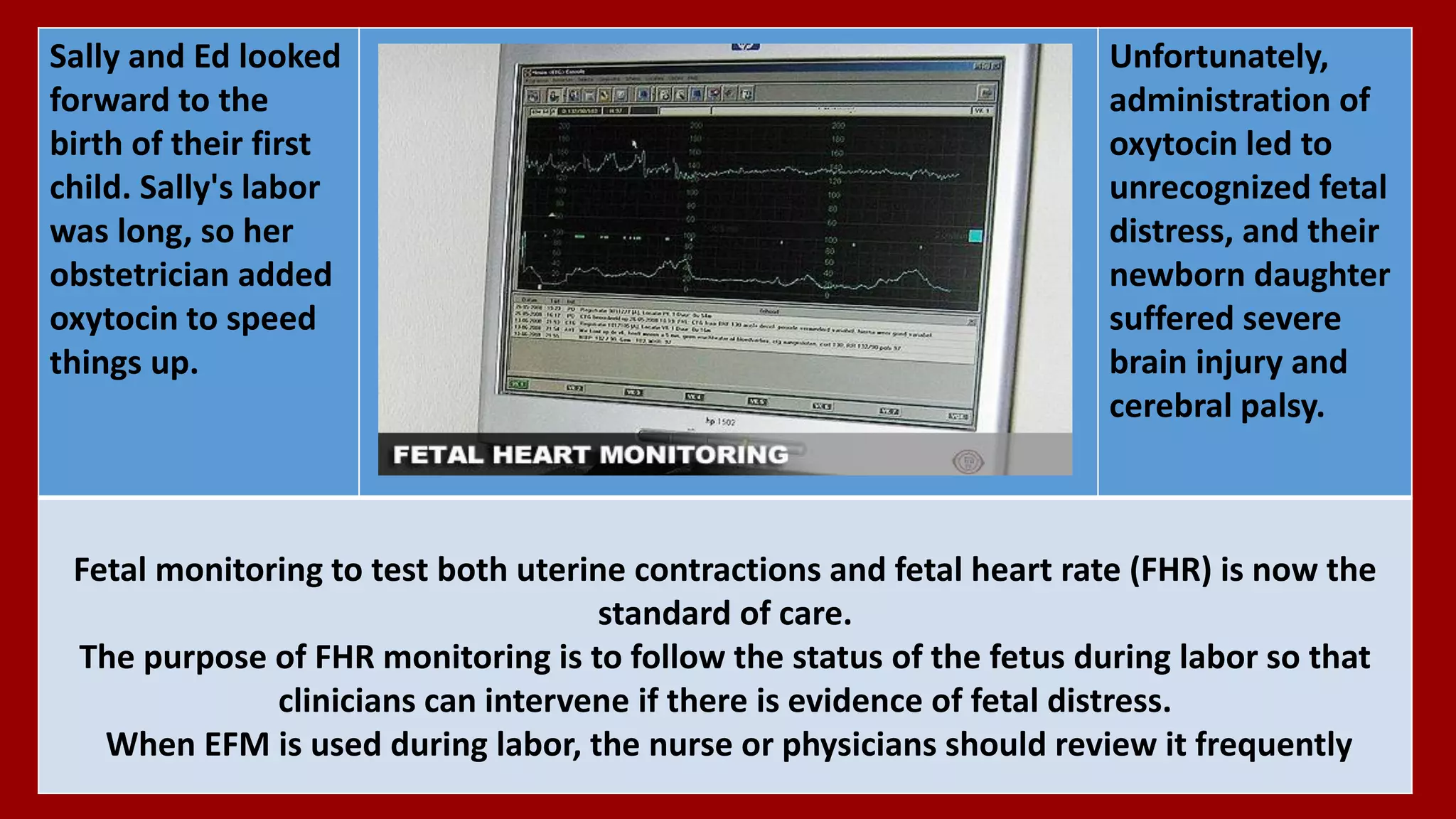
Unfortunately,
administration of
oxytocin led to
unrecognized fetal
distress, and their
newborn daughter
suffered severe
brain injury and
cerebral palsy.
Sally and Ed looked
forward to the
birth of their first
child. Sally's labor
was long, so her
obstetrician added
oxytocin to speed
things up.
Fetal monitoring to test both uterine contractions and fetal heart rate (FHR) is now the
standard of care.
The purpose of FHR monitoring is to follow the status of the fetus during labor so that
clinicians can intervene if there is evidence of fetal distress.
When EFM is used during labor, the nurse or physicians should review it frequently
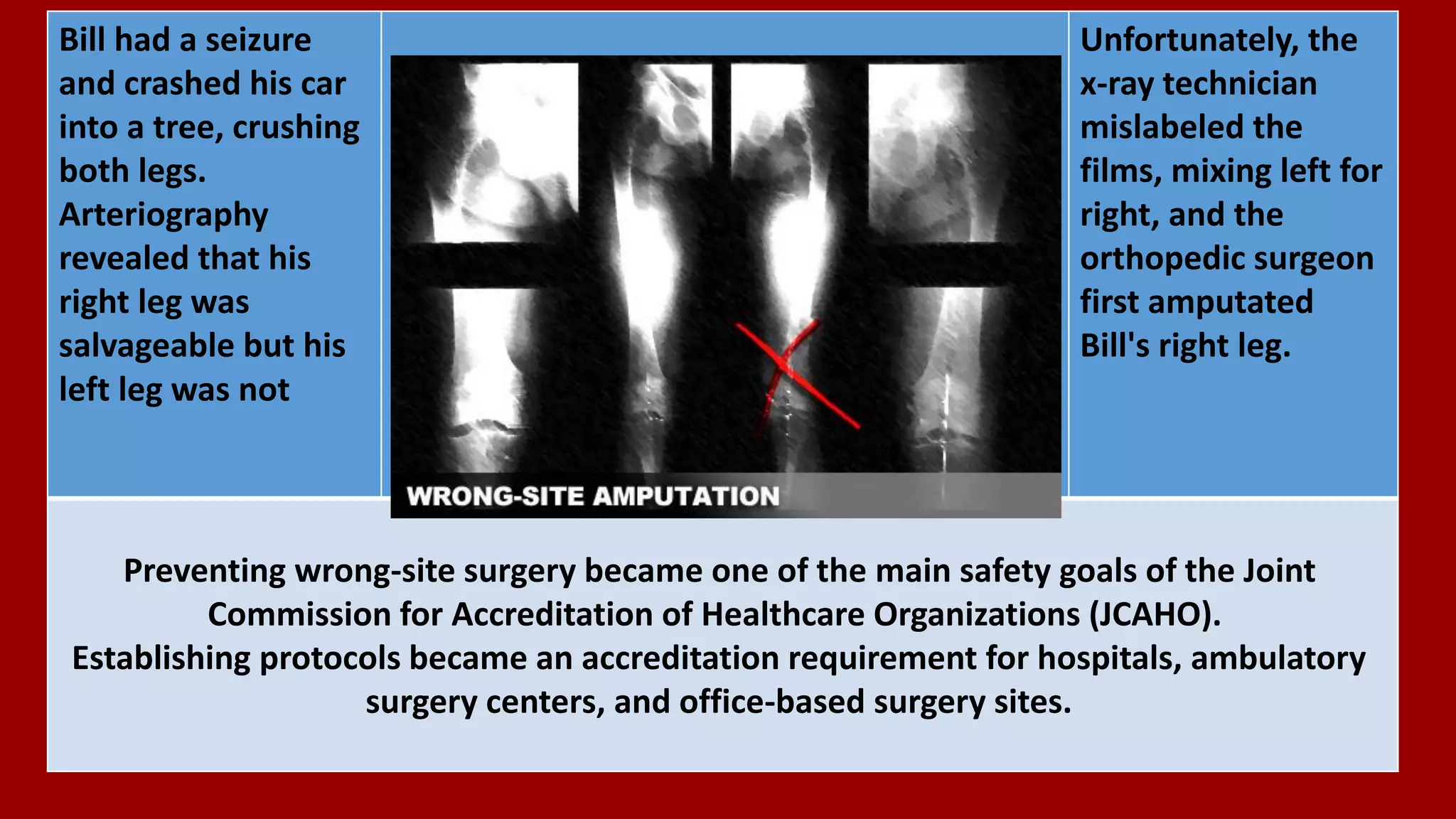
Unfortunately, the
x-ray technician
mislabeled the
films, mixing left for
right, and the
orthopedic surgeon
first amputated
Bill's right leg.
Bill had a seizure
and crashed his car
into a tree, crushing
both legs.
Arteriography
revealed that his
right leg was
salvageable but his
left leg was not
Preventing wrong-site surgery became one of the main safety goals of the Joint
Commission for Accreditation of Healthcare Organizations (JCAHO).
Establishing protocols became an accreditation requirement for hospitals, ambulatory
surgery centers, and office-based surgery sites.
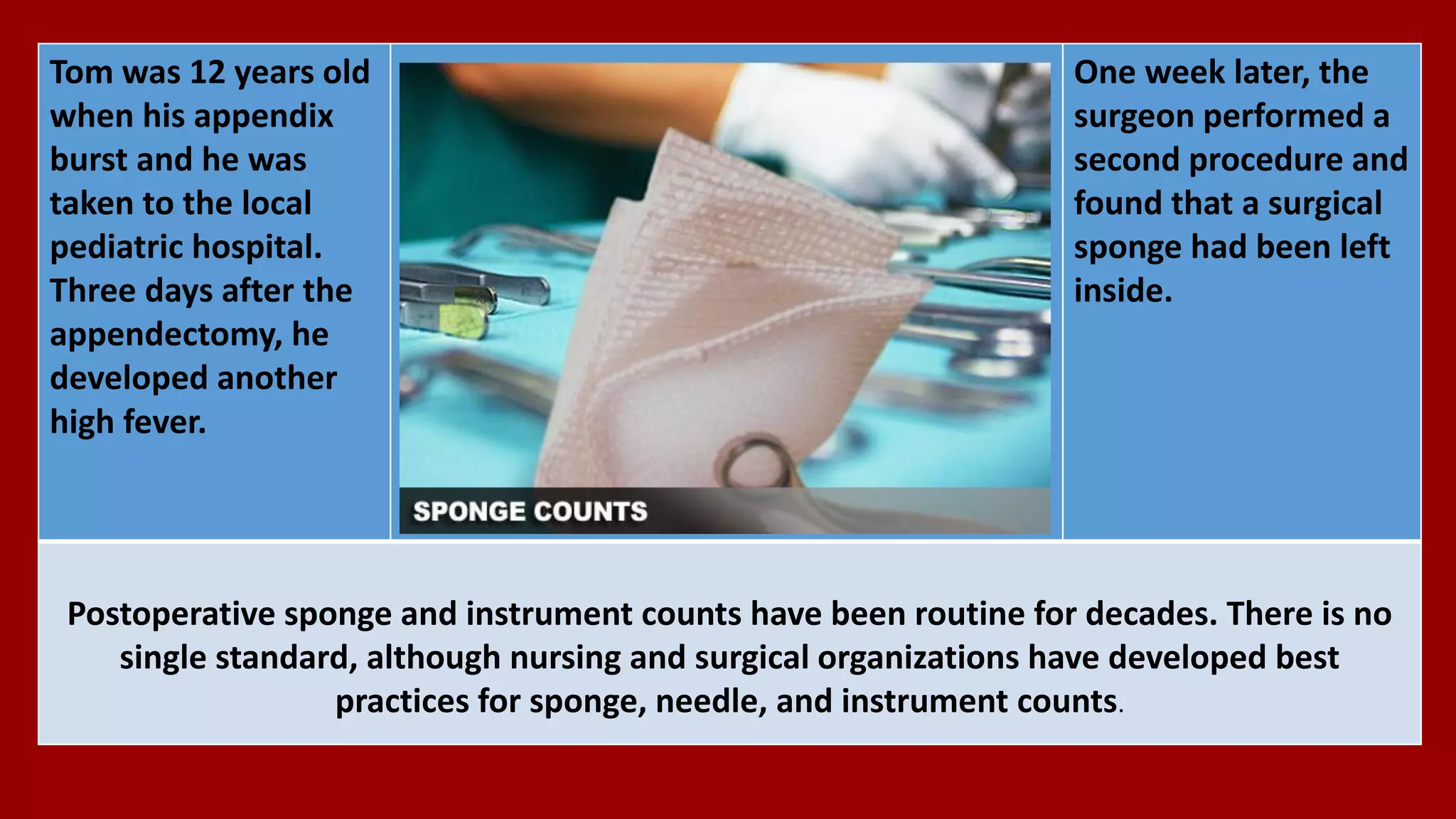
One week later, the
surgeon performed a
second procedure and
found that a surgical
sponge had been left
inside.
Tom was 12 years old
when his appendix
burst and he was
taken to the local
pediatric hospital.
Three days after the
appendectomy, he
developed another
high fever.
Postoperative sponge and instrument counts have been routine for decades. There is no
single standard, although nursing and surgical organizations have developed best
practices for sponge, needle, and instrument counts.
No one had asked her
about medication
allergies.
As a young child, Betty
had been given
penicillin, turned blue,
and was rushed to the
hospital.
She was 15 when she
got strep throat, was
given penicillin, and
died.
Strategies to address the problem include adding visible prompts in consistent and
prominent locations listing patient allergies, eliminating the practice of writing drug
allergens on allergy arm bracelets, and making the allergy reaction selection a
mandatory entry in the organization's order-entry systems
In the emergency
department, her
nurse made a
mathematical error
and administered too
much intravenous
potassium.
Within an hour, Linda
was dead.
Linda wasn't doing
well in her first
trimester.
The nausea and
vomiting left her
severely dehydrated
and with a low
potassium level.
In the 1980s and 1990s, patient safety groups drew attention to the need for removal of
concentrated potassium chloride vials from patient care areas.
Potassium is now added to IVs by the manufacturer and is labeled.
Additional safety strategies include using premixed solutions, segregating potassium from
other drugs and using warning labels, prohibiting the dispensing of vials for individual
patients, and performing double-checks with a pharmacist.
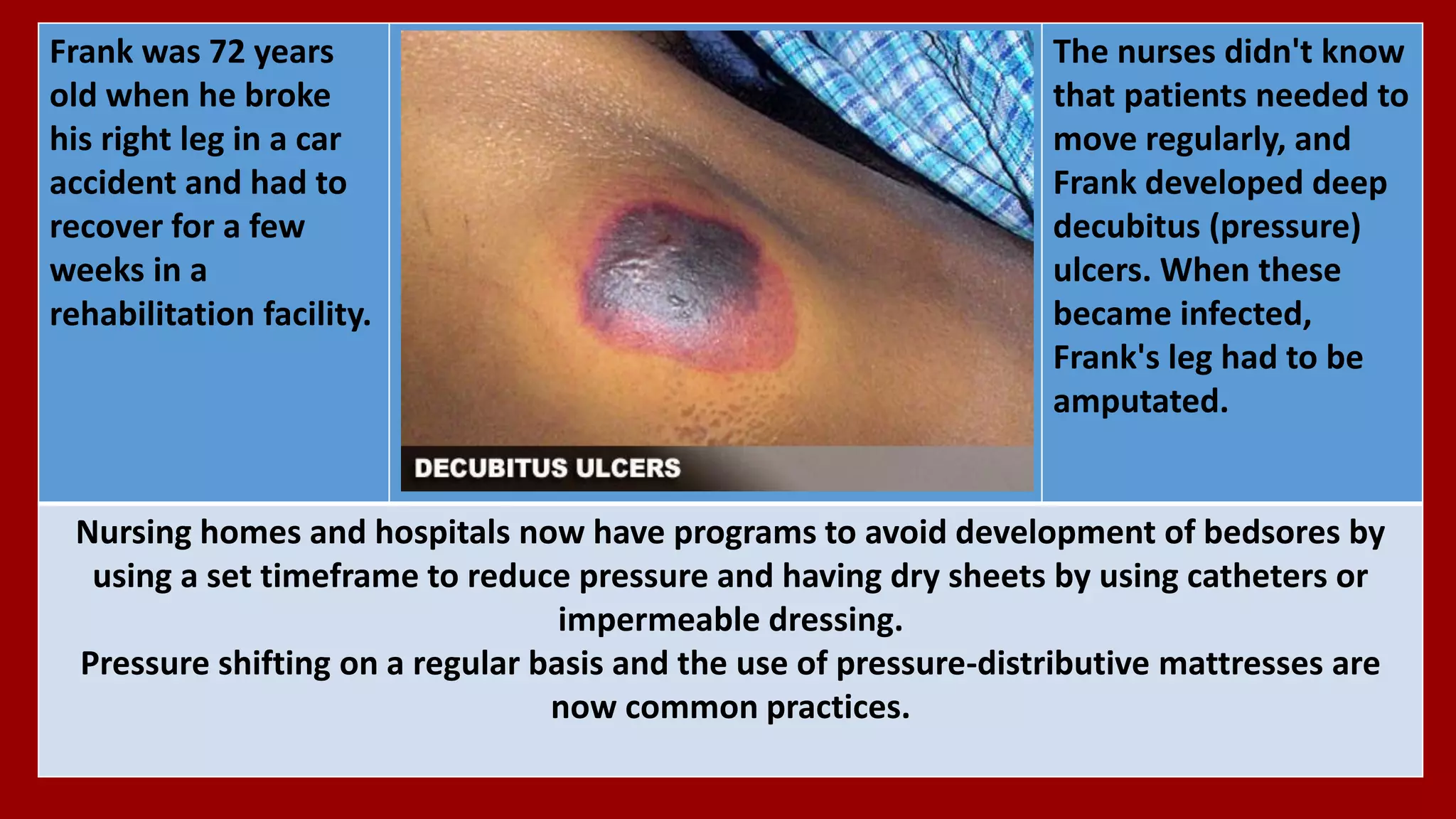
The nurses didn't know
that patients needed to
move regularly, and
Frank developed deep
decubitus (pressure)
ulcers. When these
became infected,
Frank's leg had to be
amputated.
Frank was 72 years
old when he broke
his right leg in a car
accident and had to
recover for a few
weeks in a
rehabilitation facility.
Nursing homes and hospitals now have programs to avoid development of bedsores by
using a set timeframe to reduce pressure and having dry sheets by using catheters or
impermeable dressing.
Pressure shifting on a regular basis and the use of pressure-distributive mattresses are
now common practices.
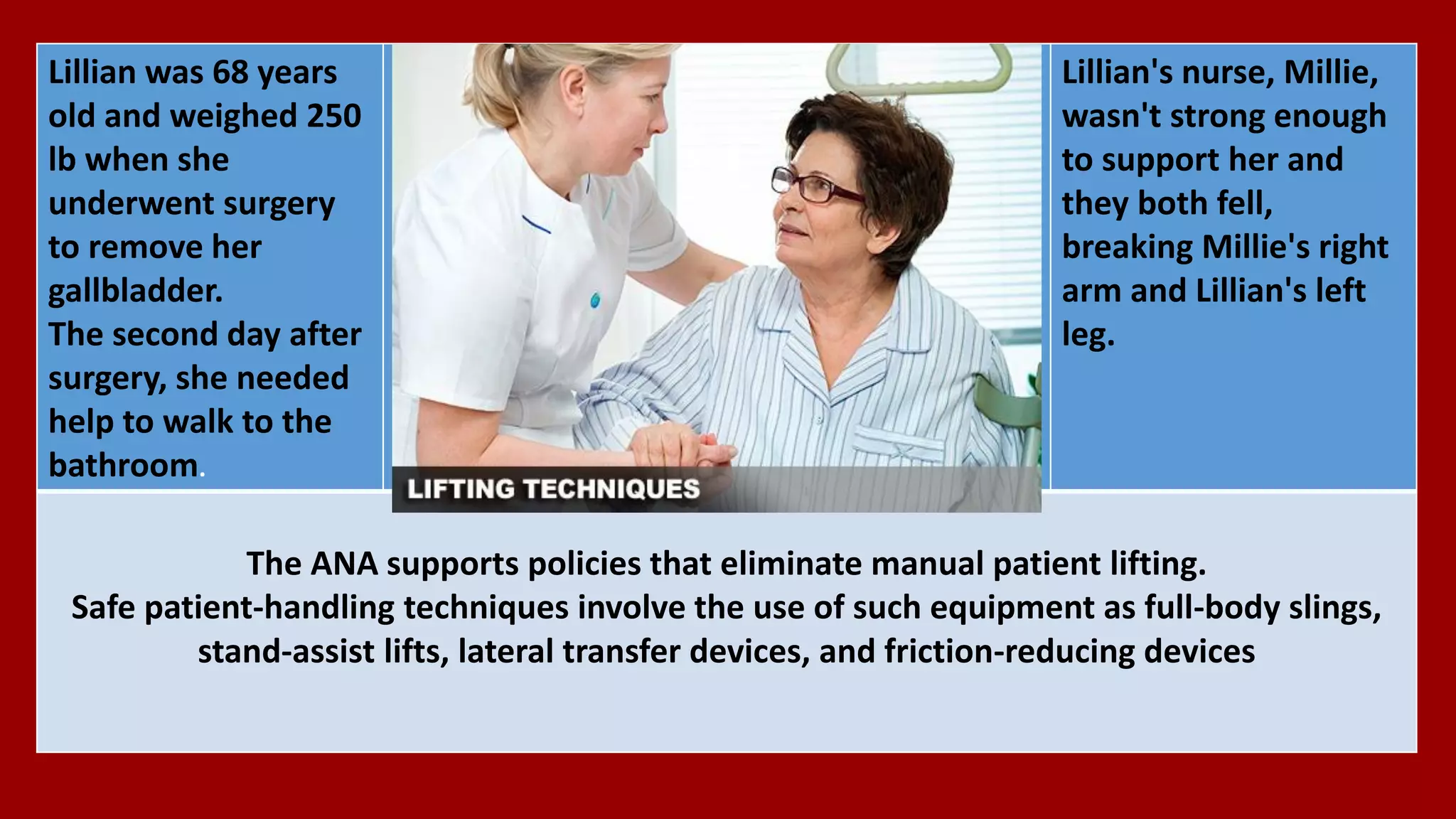
Lillian's nurse, Millie,
wasn't strong enough
to support her and
they both fell,
breaking Millie's right
arm and Lillian's left
leg.
Lillian was 68 years
old and weighed 250
lb when she
underwent surgery
to remove her
gallbladder.
The second day after
surgery, she needed
help to walk to the
bathroom.
The ANA supports policies that eliminate manual patient lifting.
Safe patient-handling techniques involve the use of such equipment as full-body slings,
stand-assist lifts, lateral transfer devices, and friction-reducing devices
By the time it was
diagnosed,
the cancer had
progressed beyond
cure.
When Christy was 42
years old, her doctor
discovered a large lump
in her left breast.
The lump should have
been evident during
Christy's 2 previous
annual examinations if
they had been
complete
Breast examinations by the physician, teaching of techniques for breast self-examination,
and recommendation of mammograms are now the standard of care.
These are but a few examples of medical mistakes that have led to patient injuries or
death -- and have led further to changes in the way physicians practice medicine.
Recognizing that all of these mistakes could have been prevented, medical academies
have developed guidelines for prevention and treatment of many diseases.
What are the 10 things that can kill a patient in the hospital?
• #1. Misdiagnosis. The most common type of medical error.
A wrong diagnosis can result in delay in treatment, sometimes
with deadly consequences.
• #2. Unnecessary treatment. Thousands of people receive
unnecessary treatment that cost them their lives.
• #3. Unnecessary tests and deadly procedures. Studies show
that $700 billion is spent every year on unnecessary tests and
treatments, it can also be deadly.
• #4. Medication mistakes. Over 60% of hospitalized
patients miss their regular medication while they are in the
hospital. On average, 6.8 medications are left out per
patient.
• Wrong medications are given to patients; a 2006 Institute
of Medicine report estimated that medication error injure
1.5 million Americans every year
• #5. “Never events”. Operating on wrong limb or the wrong
patient.
• Food meant to go into stomach tubes go into chest tubes
• Air bubbles go into IV catheters, resulting in strokes.
• Sponges, wipes, and even scissors are left in people’s
bodies after surgery.
• These are all “never events”, meaning that they should
never happen, but they do, often with deadly
consequences.
• #6. Uncoordinated care. If you’re going to the hospital,
chances that you won’t be taken care of by your regular
doctor, but by the doctor on call.
• You’ll probably see several specialists, who scribble notes in
charts but rarely coordinate with each other.
• You may end up with two of the same tests, or medications
that interfere with each other.
• There could be lack of coordination between your doctor
and your nurse, which can also results in confusion and
medical error.
• #7. Health care associated infections. According to
the Centers for Disease Control, hospital-acquired
infections affect 1.7 million people every year.
• These include pneumonias, infections around the site of
surgery, urinary infections from catheters, and bloodstream
infections from IVs.
• Such infections often involve bacteria that are resistant to
many antibiotics, and can be deadly (the CDC estimates
nearly 100,000 deaths due to them every year), especially
to those with weakened immune systems
• #8. Not-so-accidental “accidents”. Every year, 500,000 patients
fall while in the hospital.
• As many “accidents” occur due to malfunctioning medical
devices. Defibrillators don’t shock; hip implants stop working;
pacemaker wires break.,…..
• They happen for 1 in 100 people.
• #9. Missed warning signs. When patients get worse, there is
usually a period of minutes to hours where there are warning
signs. Unfortunately, these warning signs are frequently
missed, so that by the time they are finally noticed, there could
have been irreversible damage.
• #10. Going home—not so fast. Studies show that 1 in 5
Medicare patients return to the hospital within 30 days of
discharge from the hospital.
• This could be due to patients being discharged before they are
ready, without understanding their discharge information,
without adequate follow-up, or if there are complications with
their care.
• The transition from hospital to home is one of the most
vulnerable times, and miscommunication and
misunderstanding can kill a patient after getting home from
the hospital too.
Golden professional principles
If We Don’t Own Our Errors, We Are
Destined To Repeat Them
In Medicine, Honesty Is Truly The Best
Policy
Ongoing Message
Always Reactivate Your Interest and Efforts in
Eliminating Medical Errors
Thanking You
Email: dr.hishamdabbagh@gmail.com
Email: haldabag@moh.gov.sa
Mobile: 00966536715868
Dear Colleagues, Please,
Medical errors....

Medical errors....

  • 1.
    MEDICAL ERRORS Dr. HishamAbid Aldabbagh MSc. Internal Medicine Kingdom of Saudi Arabia Ministry of Health Directorate of Health Affairs in Gurayat Gurayat General Hospital
  • 2.
    Defining Medical Errors CanJ Surg. 2005 • Medical errors represent a serious public health problem and pose a threat to patient safety. • Medical errors can occur anywhere in the health care system: In hospitals, clinics, surgery centres, doctors' offices, nursing homes, pharmacies, and patients' homes. • Medical Errors can involve medicines, surgery, diagnosis, equipment, or lab reports.
  • 3.
    • An unintendedact (either of omission or commission) • One that does not achieve its intended outcome • The failure of a planned action to be completed as intended (an error of execution) • The use of a wrong plan to achieve an aim (an error of planning) • A deviation from the process of care that may or may not cause harm to the patient. • Patient harm from medical error can occur at the individual or system level.
  • 4.
    •Medical error—the thirdleading cause of death in the US BMJ 2016 • Medical error is not included on death certificates or in rankings of cause of death. • The death list is created using death certificates filled out by physicians, funeral directors, medical examiners, and coroners. However, a major limitation of the death certificate is that it relies on assigning an International Classification of Disease (ICD) code to the cause of death. As a result, causes of death not associated with an ICD code, such as human and system factors, are not captured.
  • 5.
    PreventiveDiagnostic • Failure toprovide prophylactic treatment • Inadequate monitoring or follow-up of treatment  Error or delay in diagnosis  Failure to employ indicated tests  Use of outmoded tests or investigations  Failure to act on results of monitoring or testing Other Treatment • Failure of communication • Equipment failure • Other system failure  Error in the performance of an operation, procedure, or therapy  Error in administering the treatment  Error in the dose or method of using a drug  Avoidable delay in treatment or in responding to an abnormal test  Inappropriate (not indicated) care Types of Medical Errors
  • 6.
    How common aremedical errors? • Medical errors are, frankly, rampant. A recent study estimates that “communication breakdowns, diagnostic errors, poor judgment, and inadequate skill” as well as systems failures in clinical care result in between 200,000 to 400,00 lives lost per year. • This means that if medical error was a disease, it would be the third leading cause of death in the United States.
  • 8.
    Some Facts • 440,000patients die every year from preventable medical errors. [Journal of Patient Safety] • Preventable medical errors cost USA tens of billions of dollars a year. [Institute of Medicine] • One in three patients who are admitted to the hospital will experience a medical error. [Health Affairs] • Studies of wrong site, wrong surgery, wrong patient procedures show that “never events” are happening at an alarming rate of up to 40 times per week in U.S. hospitals. [Archives of Surgery ]
  • 9.
    Data and statistics,WHO 2017 • European data show that medical errors and health-care related adverse events occur in 8% to 12% of hospitalizations. • Infections associated with health care affect an estimated 1 in 20 hospital patients on average every year (estimated at 4.1 million patients). • 23% of European patients are affected by medical error, 18% experienced a serious medical error in a hospital and 11% to have been prescribed wrong medication.
  • 10.
    • Evidence onmedical errors shows that 50% to 70.2% of such harm can be prevented through comprehensive systematic approaches to patient safety. • Statistics show that strategies to reduce the rate of adverse events in the European Union alone would lead to the prevention of more than 750 000 harm-inflicting medical errors per year, leading in turn to over 3.2 million fewer days of hospitalization, 260 000 fewer incidents of permanent disability, and 95 000 fewer deaths per year.
  • 11.
    Studying these mistakes and learninghow to prevent, monitor, and respond to them, however, has changed the standards of care. We learn most from our painful mistakes. Mistakes can injure patients and land physicians in legal and professional trouble. By working to eliminate common medical errors, physicians can protect patients, protect themselves from lawsuits, and help lower the cost of their professional liability insurance premiums.
  • 12.
    At the localhospital, the care that he and his children received was inadequate, even by standards in those days. In 1976, Dr. Jim Styner, an orthopedic surgeon, crashed his small plane into a cornfield in Nebraska, sustaining serious injuries. His wife was killed, and 3 of their 4 children were critically injured His family's tragedy and the medical mistakes that followed gave birth to Advanced Trauma Life Support (ATLS) and changed the standard of care in the first hour after trauma.
  • 13.
    • . The American Societyof Anesthesiologists responded with a program to standardize anesthesia care and patient monitoring and in 1985 created the Anesthesia Patient Safety Foundation. Judy was 39 years old when she went to the hospital for a hysterectomy. After she died on the operating table, autopsy revealed that the anesthesiologist had placed the endotracheal tube in her esophagus, not her trachea Standard practices now include the use of pulse oximetry and end-tidal carbon dioxide monitoring for anesthetized patients. The push for electronic monitoring systems for patients under anesthesia caused anesthesia- related deaths to plummet from about 1 in 10,000 to 1 in 200,000 in less than 2 years.
  • 14.
    Unfortunately, administration of oxytocin ledto unrecognized fetal distress, and their newborn daughter suffered severe brain injury and cerebral palsy. Sally and Ed looked forward to the birth of their first child. Sally's labor was long, so her obstetrician added oxytocin to speed things up. Fetal monitoring to test both uterine contractions and fetal heart rate (FHR) is now the standard of care. The purpose of FHR monitoring is to follow the status of the fetus during labor so that clinicians can intervene if there is evidence of fetal distress. When EFM is used during labor, the nurse or physicians should review it frequently
  • 15.
    Unfortunately, the x-ray technician mislabeledthe films, mixing left for right, and the orthopedic surgeon first amputated Bill's right leg. Bill had a seizure and crashed his car into a tree, crushing both legs. Arteriography revealed that his right leg was salvageable but his left leg was not Preventing wrong-site surgery became one of the main safety goals of the Joint Commission for Accreditation of Healthcare Organizations (JCAHO). Establishing protocols became an accreditation requirement for hospitals, ambulatory surgery centers, and office-based surgery sites.
  • 16.
    One week later,the surgeon performed a second procedure and found that a surgical sponge had been left inside. Tom was 12 years old when his appendix burst and he was taken to the local pediatric hospital. Three days after the appendectomy, he developed another high fever. Postoperative sponge and instrument counts have been routine for decades. There is no single standard, although nursing and surgical organizations have developed best practices for sponge, needle, and instrument counts.
  • 17.
    No one hadasked her about medication allergies. As a young child, Betty had been given penicillin, turned blue, and was rushed to the hospital. She was 15 when she got strep throat, was given penicillin, and died. Strategies to address the problem include adding visible prompts in consistent and prominent locations listing patient allergies, eliminating the practice of writing drug allergens on allergy arm bracelets, and making the allergy reaction selection a mandatory entry in the organization's order-entry systems
  • 18.
    In the emergency department,her nurse made a mathematical error and administered too much intravenous potassium. Within an hour, Linda was dead. Linda wasn't doing well in her first trimester. The nausea and vomiting left her severely dehydrated and with a low potassium level. In the 1980s and 1990s, patient safety groups drew attention to the need for removal of concentrated potassium chloride vials from patient care areas. Potassium is now added to IVs by the manufacturer and is labeled. Additional safety strategies include using premixed solutions, segregating potassium from other drugs and using warning labels, prohibiting the dispensing of vials for individual patients, and performing double-checks with a pharmacist.
  • 19.
    The nurses didn'tknow that patients needed to move regularly, and Frank developed deep decubitus (pressure) ulcers. When these became infected, Frank's leg had to be amputated. Frank was 72 years old when he broke his right leg in a car accident and had to recover for a few weeks in a rehabilitation facility. Nursing homes and hospitals now have programs to avoid development of bedsores by using a set timeframe to reduce pressure and having dry sheets by using catheters or impermeable dressing. Pressure shifting on a regular basis and the use of pressure-distributive mattresses are now common practices.
  • 20.
    Lillian's nurse, Millie, wasn'tstrong enough to support her and they both fell, breaking Millie's right arm and Lillian's left leg. Lillian was 68 years old and weighed 250 lb when she underwent surgery to remove her gallbladder. The second day after surgery, she needed help to walk to the bathroom. The ANA supports policies that eliminate manual patient lifting. Safe patient-handling techniques involve the use of such equipment as full-body slings, stand-assist lifts, lateral transfer devices, and friction-reducing devices
  • 21.
    By the timeit was diagnosed, the cancer had progressed beyond cure. When Christy was 42 years old, her doctor discovered a large lump in her left breast. The lump should have been evident during Christy's 2 previous annual examinations if they had been complete Breast examinations by the physician, teaching of techniques for breast self-examination, and recommendation of mammograms are now the standard of care.
  • 22.
    These are buta few examples of medical mistakes that have led to patient injuries or death -- and have led further to changes in the way physicians practice medicine. Recognizing that all of these mistakes could have been prevented, medical academies have developed guidelines for prevention and treatment of many diseases.
  • 23.
    What are the10 things that can kill a patient in the hospital? • #1. Misdiagnosis. The most common type of medical error. A wrong diagnosis can result in delay in treatment, sometimes with deadly consequences. • #2. Unnecessary treatment. Thousands of people receive unnecessary treatment that cost them their lives. • #3. Unnecessary tests and deadly procedures. Studies show that $700 billion is spent every year on unnecessary tests and treatments, it can also be deadly.
  • 24.
    • #4. Medicationmistakes. Over 60% of hospitalized patients miss their regular medication while they are in the hospital. On average, 6.8 medications are left out per patient. • Wrong medications are given to patients; a 2006 Institute of Medicine report estimated that medication error injure 1.5 million Americans every year
  • 25.
    • #5. “Neverevents”. Operating on wrong limb or the wrong patient. • Food meant to go into stomach tubes go into chest tubes • Air bubbles go into IV catheters, resulting in strokes. • Sponges, wipes, and even scissors are left in people’s bodies after surgery. • These are all “never events”, meaning that they should never happen, but they do, often with deadly consequences.
  • 26.
    • #6. Uncoordinatedcare. If you’re going to the hospital, chances that you won’t be taken care of by your regular doctor, but by the doctor on call. • You’ll probably see several specialists, who scribble notes in charts but rarely coordinate with each other. • You may end up with two of the same tests, or medications that interfere with each other. • There could be lack of coordination between your doctor and your nurse, which can also results in confusion and medical error.
  • 27.
    • #7. Healthcare associated infections. According to the Centers for Disease Control, hospital-acquired infections affect 1.7 million people every year. • These include pneumonias, infections around the site of surgery, urinary infections from catheters, and bloodstream infections from IVs. • Such infections often involve bacteria that are resistant to many antibiotics, and can be deadly (the CDC estimates nearly 100,000 deaths due to them every year), especially to those with weakened immune systems
  • 28.
    • #8. Not-so-accidental“accidents”. Every year, 500,000 patients fall while in the hospital. • As many “accidents” occur due to malfunctioning medical devices. Defibrillators don’t shock; hip implants stop working; pacemaker wires break.,….. • They happen for 1 in 100 people. • #9. Missed warning signs. When patients get worse, there is usually a period of minutes to hours where there are warning signs. Unfortunately, these warning signs are frequently missed, so that by the time they are finally noticed, there could have been irreversible damage.
  • 29.
    • #10. Goinghome—not so fast. Studies show that 1 in 5 Medicare patients return to the hospital within 30 days of discharge from the hospital. • This could be due to patients being discharged before they are ready, without understanding their discharge information, without adequate follow-up, or if there are complications with their care. • The transition from hospital to home is one of the most vulnerable times, and miscommunication and misunderstanding can kill a patient after getting home from the hospital too.
  • 30.
    Golden professional principles IfWe Don’t Own Our Errors, We Are Destined To Repeat Them In Medicine, Honesty Is Truly The Best Policy
  • 31.
    Ongoing Message Always ReactivateYour Interest and Efforts in Eliminating Medical Errors Thanking You Email: dr.hishamdabbagh@gmail.com Email: haldabag@moh.gov.sa Mobile: 00966536715868 Dear Colleagues, Please,