3 SCHOOLS OF THOUGHTS
AND 13 CRITISISMS:
A REVIEW OF LITERATURE
HASSAN SHAHZAD
IHRM | MS-EM FURC
WHY DO SOME FIRMS
OUTPERFORMS OTHER ?
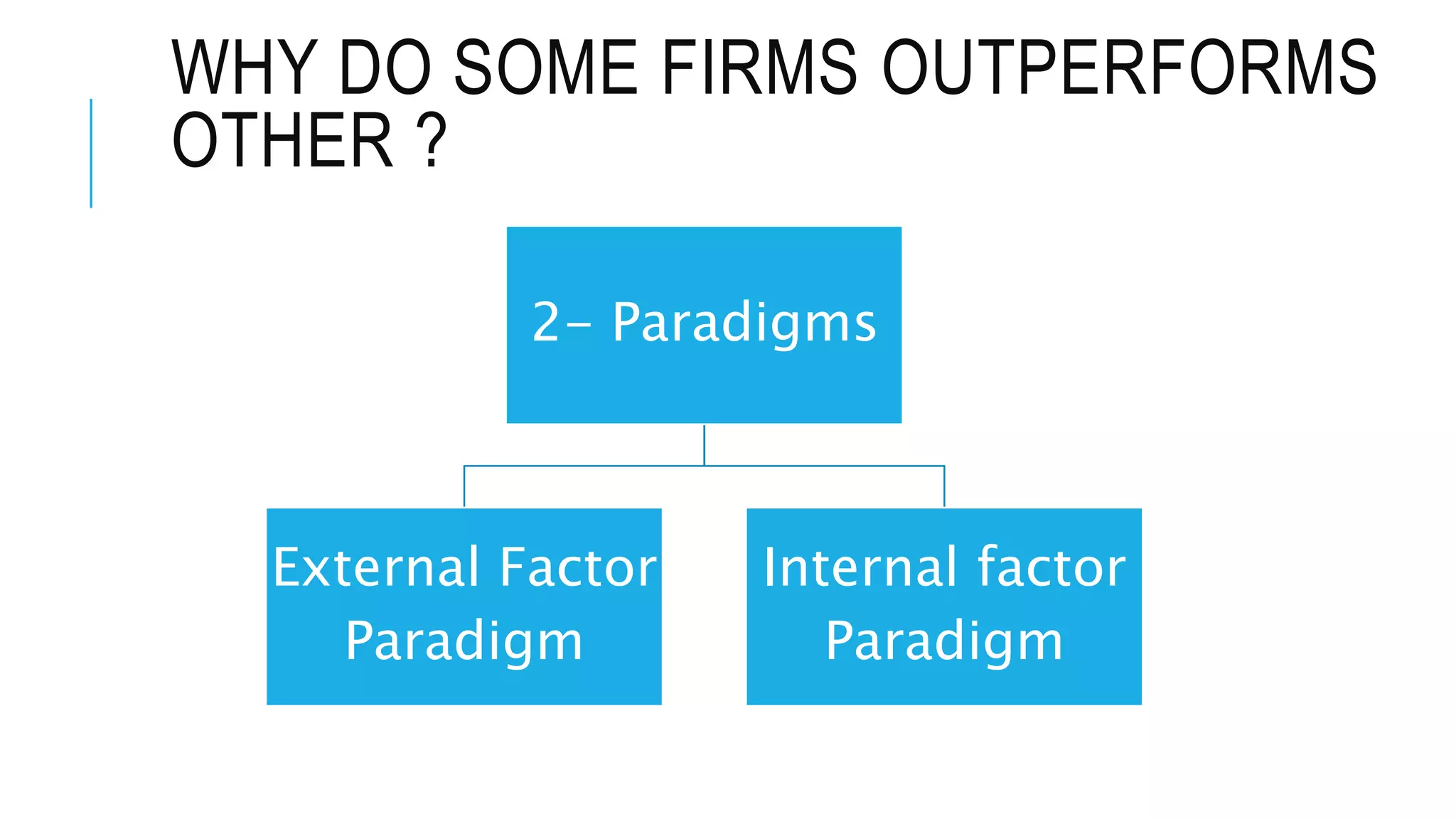
WHY DO SOME FIRMS OUTPERFORMS
OTHER ?
2- Paradigms
External Factor
Paradigm
Internal factor
Paradigm
WHAT SOURCES ARE LIKELY TO BE
SOURCE OF SUCCESS?
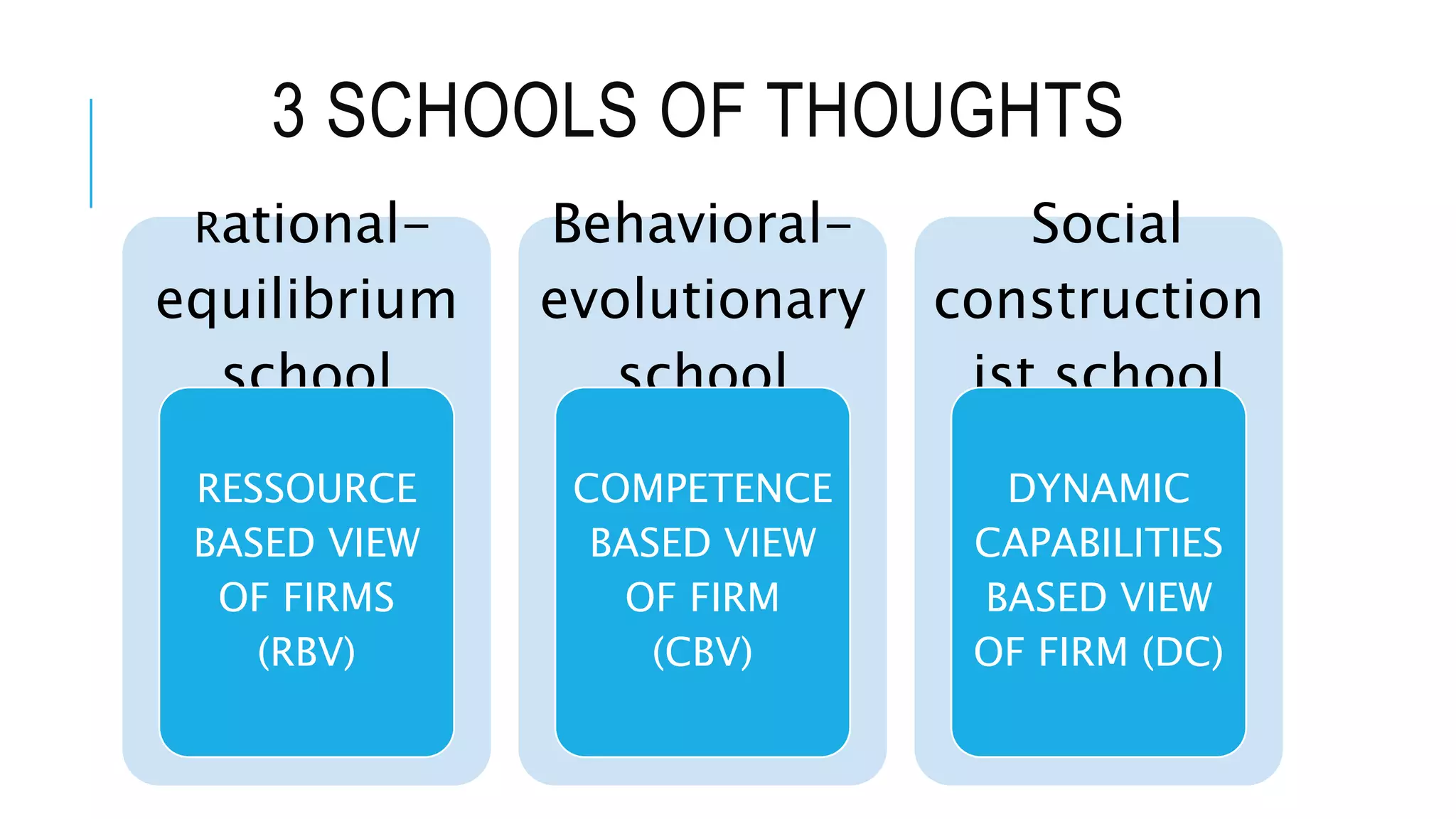
3 SCHOOLS OF THOUGHTS
Rational-
equilibrium
school
RESSOURCE
BASED VIEW
OF FIRMS
(RBV)
Behavioral-
evolutionary
school
COMPETENCE
BASED VIEW
OF FIRM
(CBV)
Social
construction
ist school
DYNAMIC
CAPABILITIES
BASED VIEW
OF FIRM (DC)
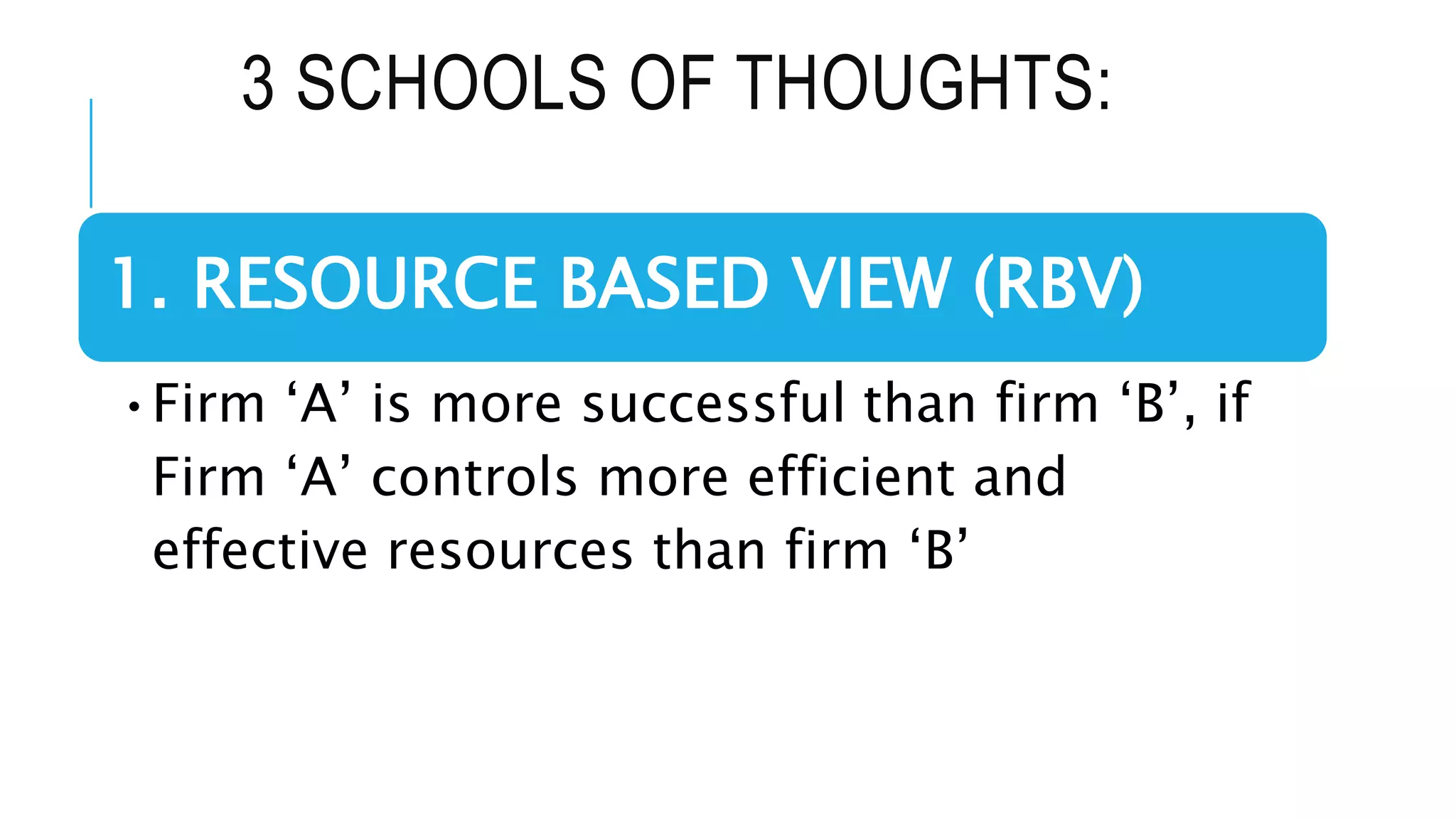
3 SCHOOLS OF THOUGHTS:
1. RESOURCE BASED VIEW (RBV)
•Firm ‘A’ is more successful than firm ‘B’, if
Firm ‘A’ controls more efficient and
effective resources than firm ‘B’
3 SCHOOLS OF THOUGHTS:
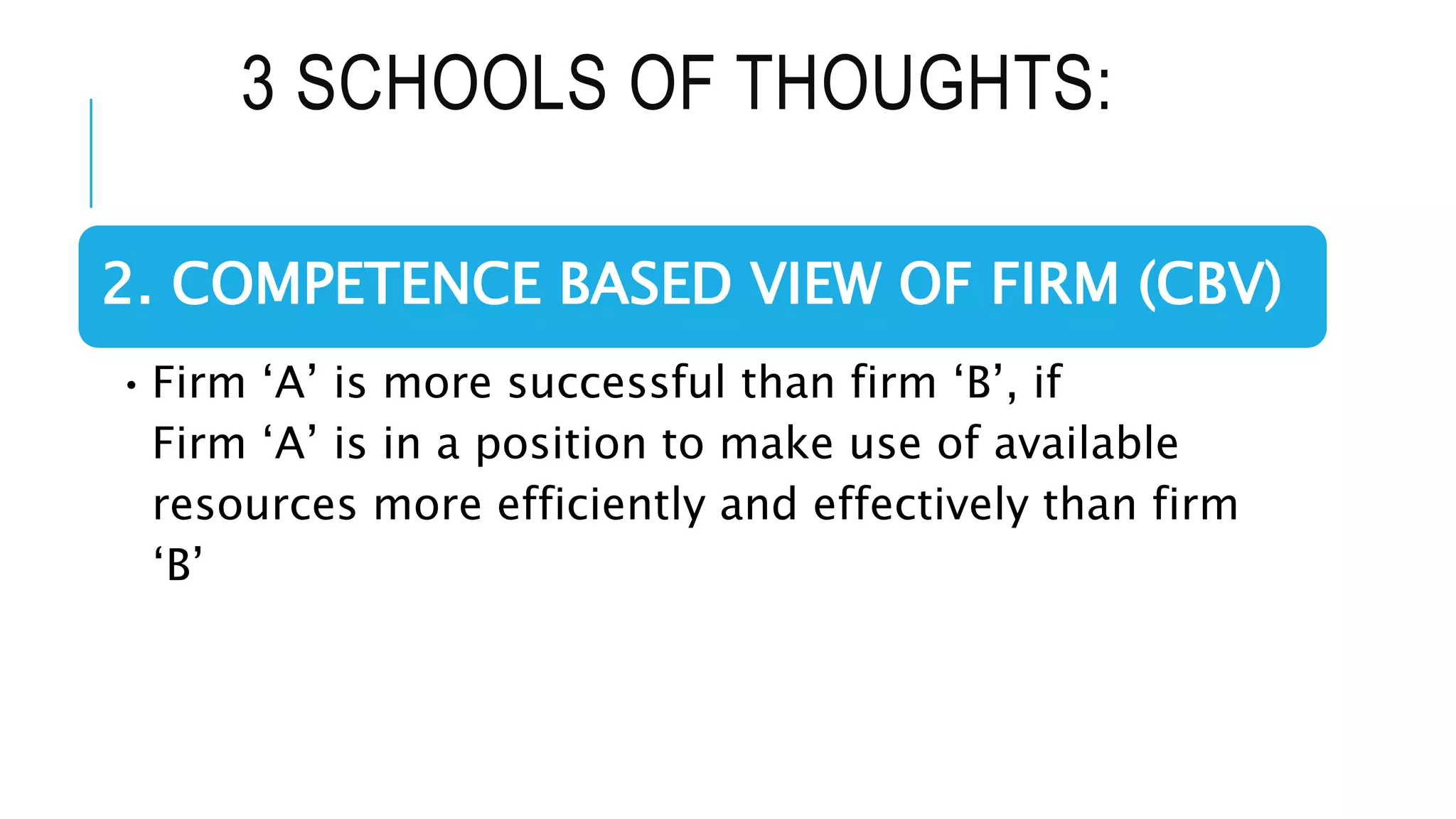
2. COMPETENCE BASED VIEW OF FIRM (CBV)
•Firm ‘A’ is more successful than firm ‘B’, if
Firm ‘A’ is in a position to make use of available
resources more efficiently and effectively than firm
‘B’
3 SCHOOLS OF THOUGHTS:
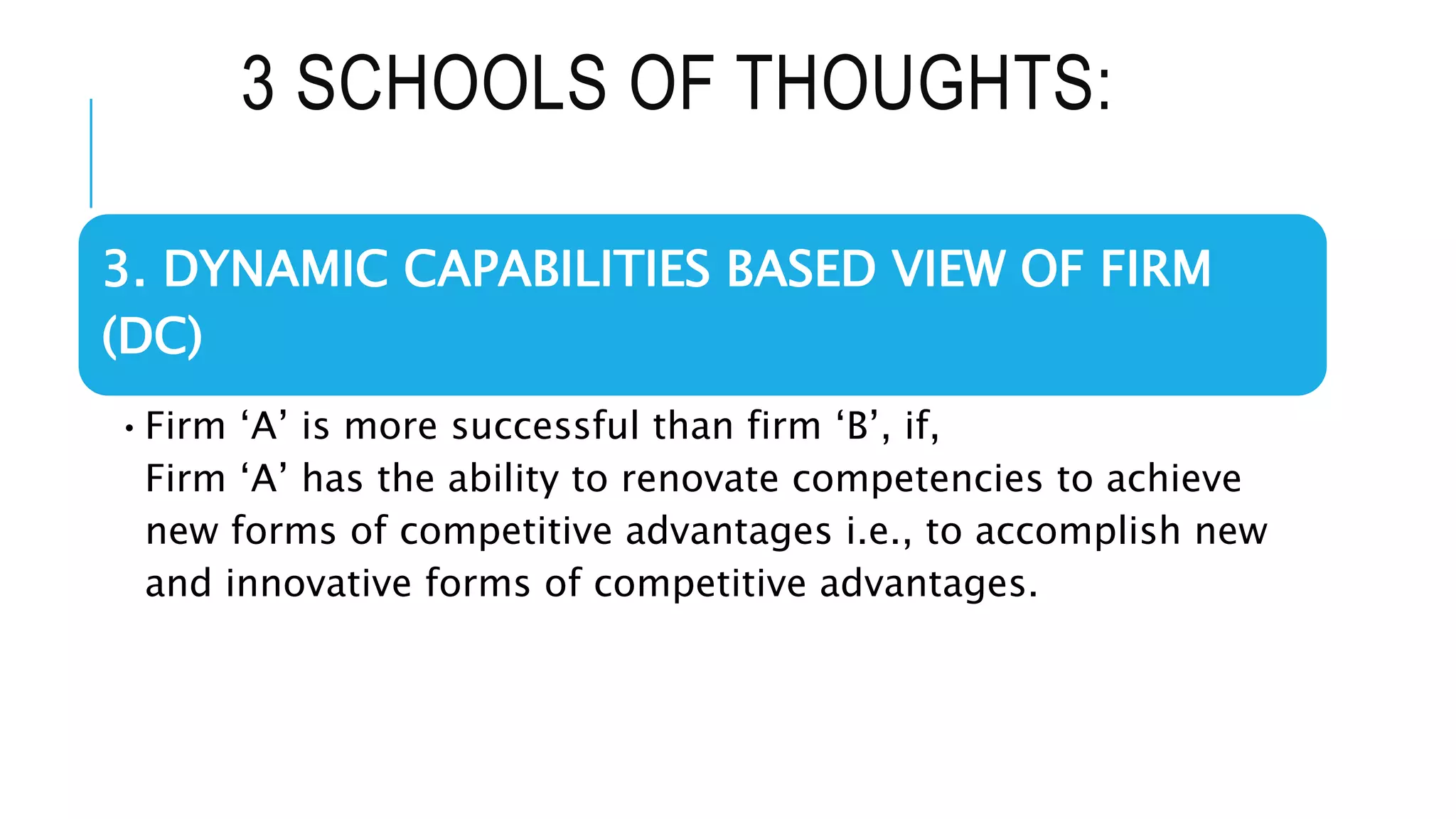
3. DYNAMIC CAPABILITIES BASED VIEW OF FIRM
(DC)
•Firm ‘A’ is more successful than firm ‘B’, if,
Firm ‘A’ has the ability to renovate competencies to achieve
new forms of competitive advantages i.e., to accomplish new
and innovative forms of competitive advantages.

THE RESOURCE BASED
VIEW (RBV)
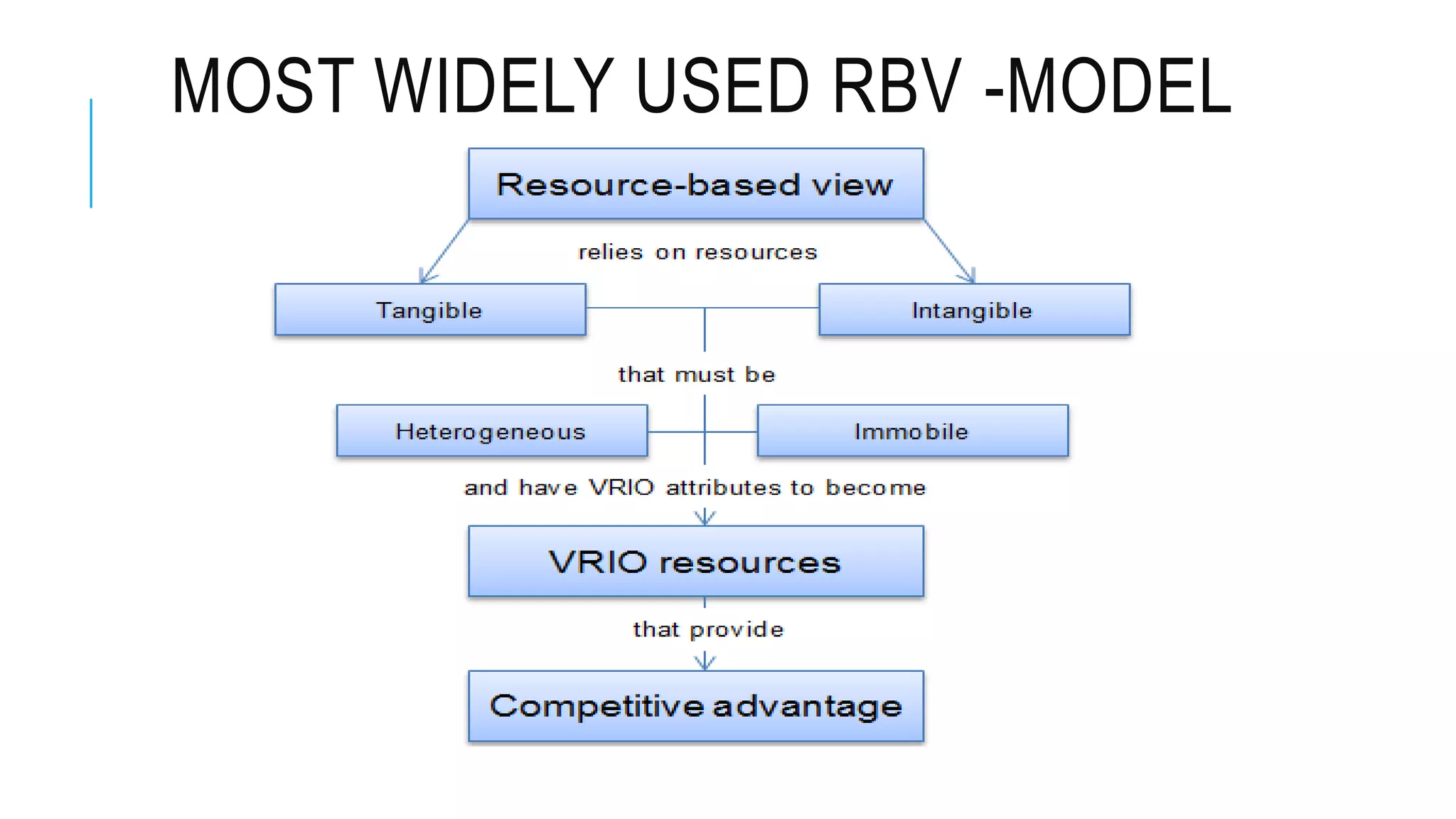
MOST WIDELY USED RBV -MODEL
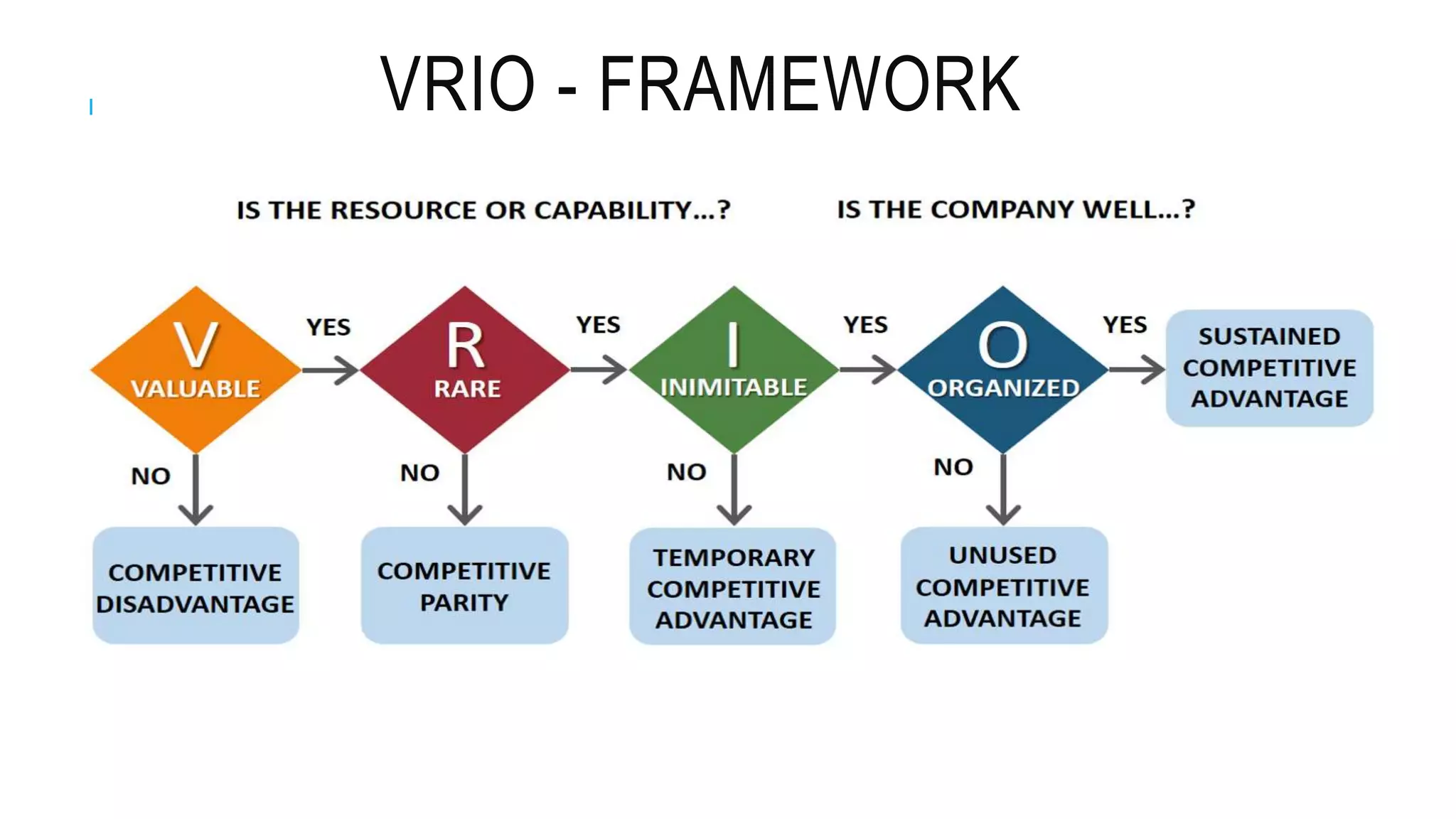
VRIO - FRAMEWORK
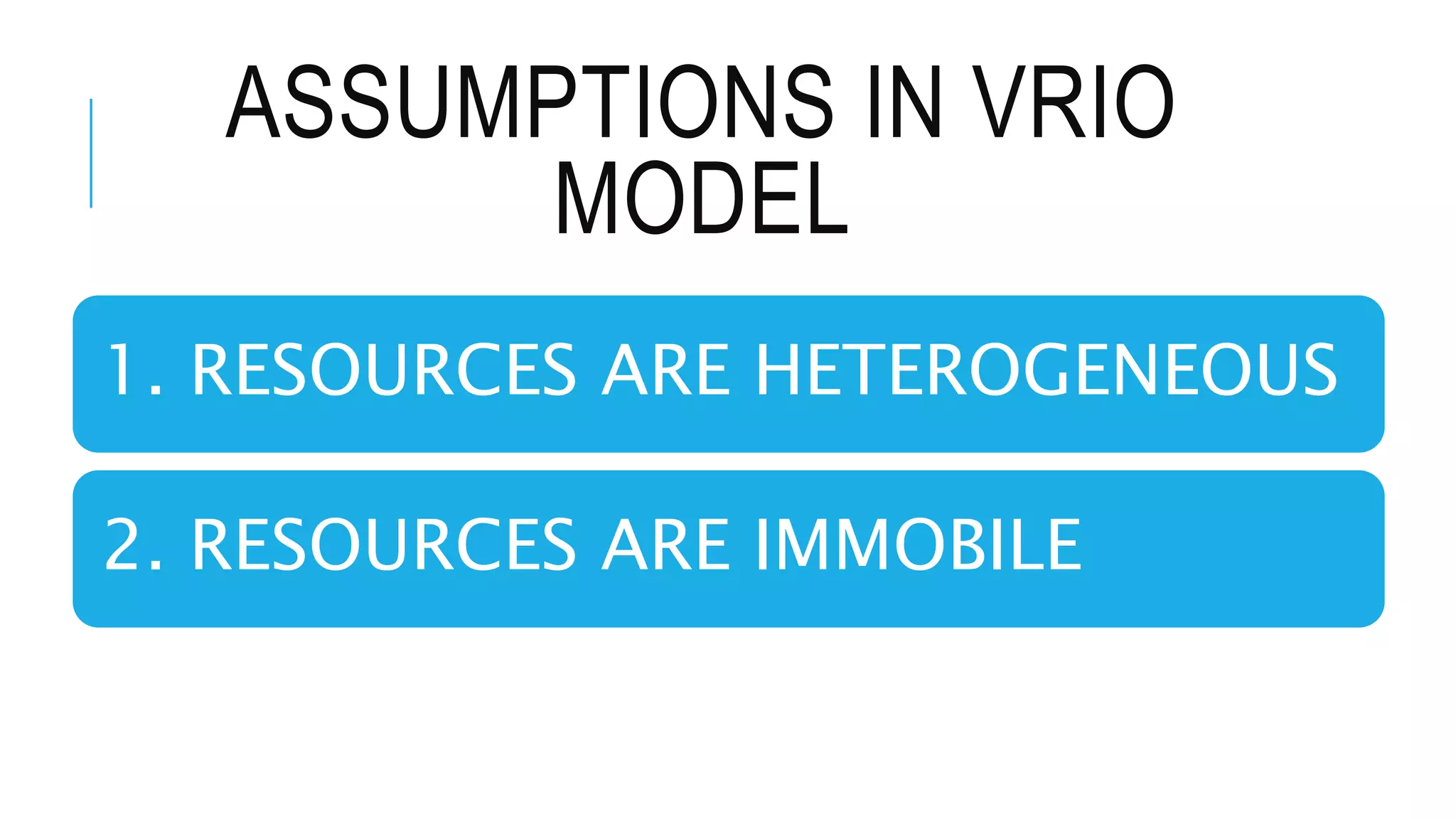
ASSUMPTIONS IN VRIO
MODEL
1. RESOURCES ARE HETEROGENEOUS
2. RESOURCES ARE IMMOBILE
CRITICISM
ON RBV
1
3
13 CRITICISMS
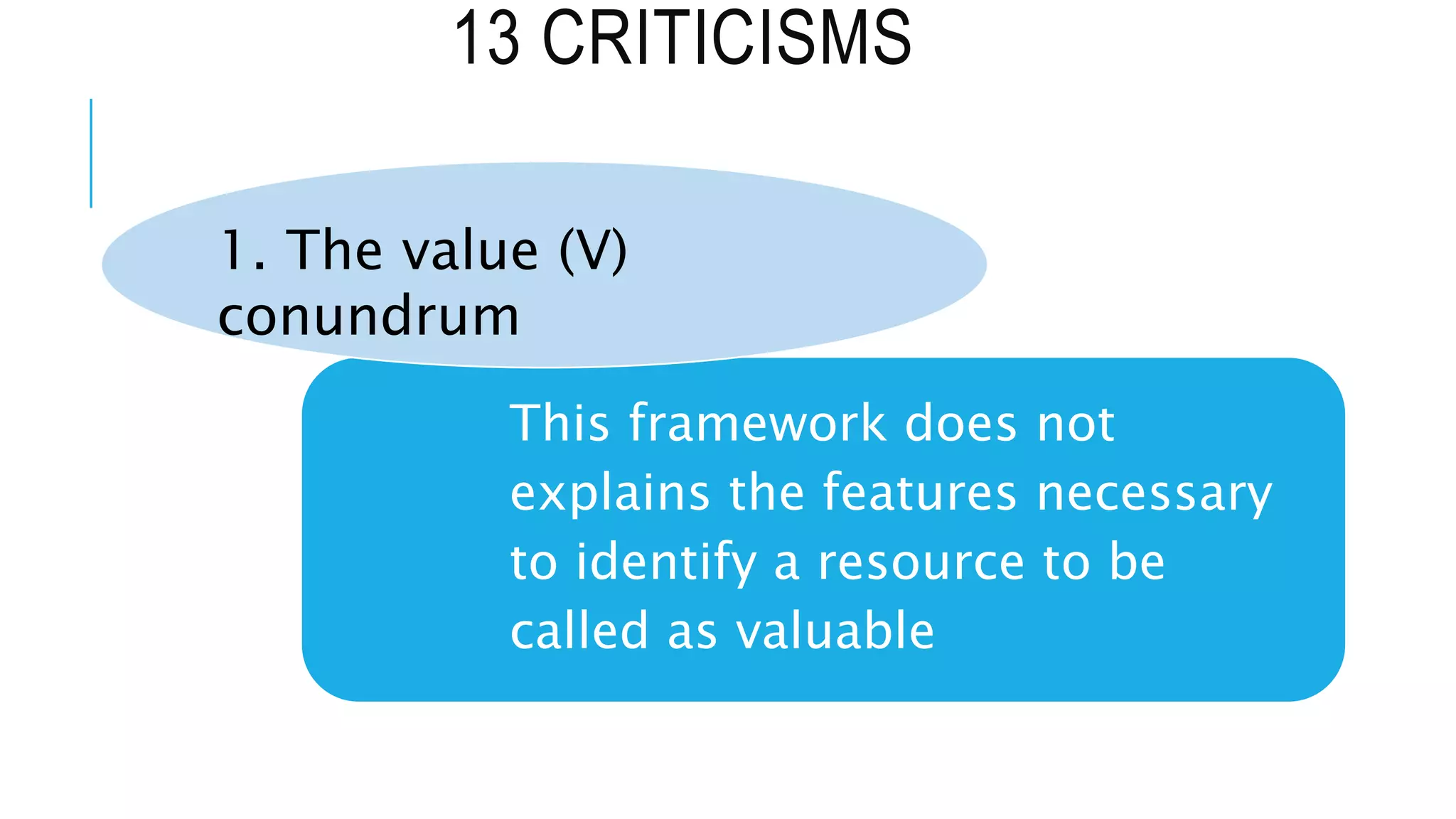
This framework does not
explains the features necessary
to identify a resource to be
called as valuable
1. The value (V)
conundrum
13 CRITICISMS
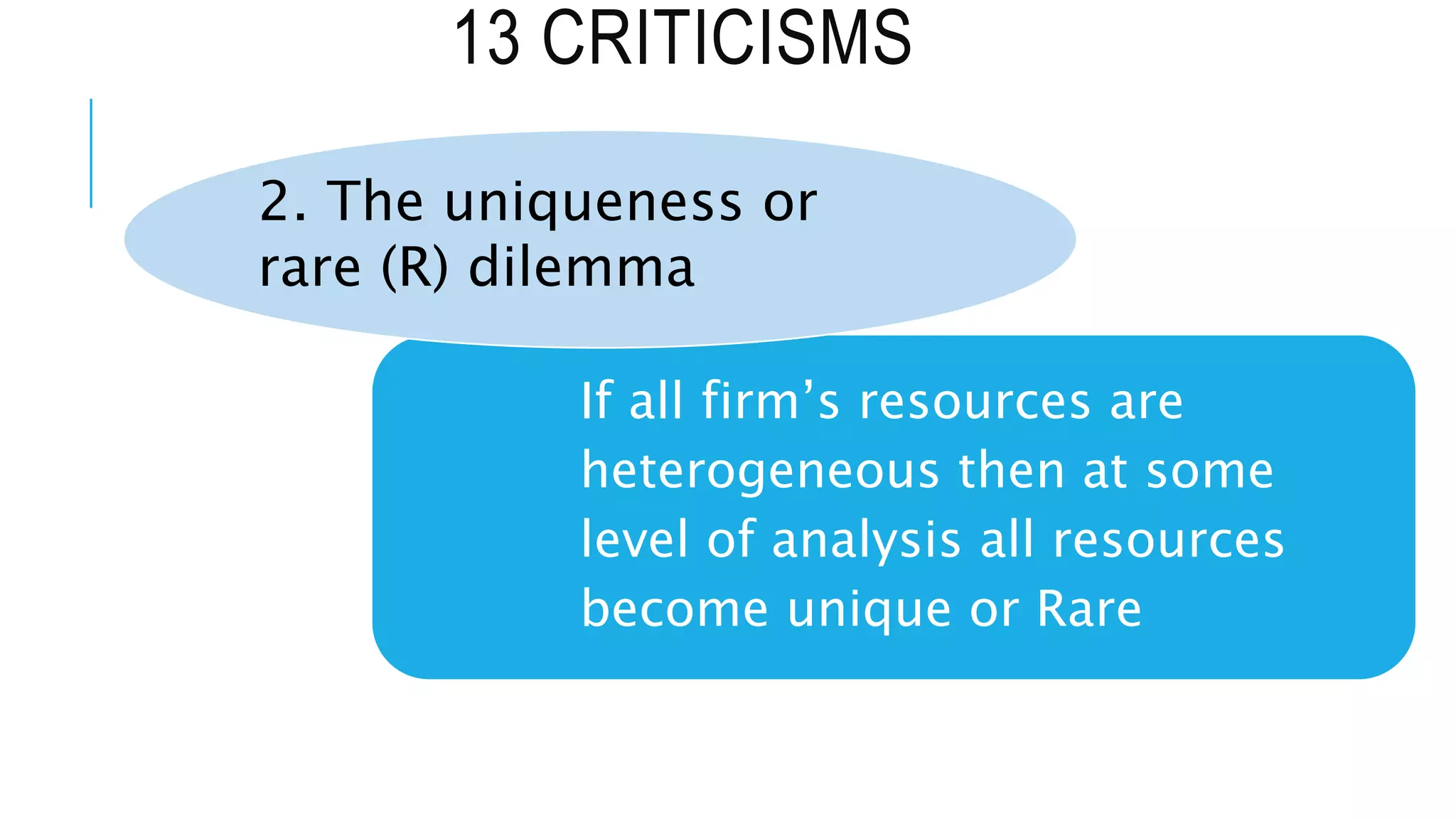
If all firm’s resources are
heterogeneous then at some
level of analysis all resources
become unique or Rare
2. The uniqueness or
rare (R) dilemma
13 CRITICISMS
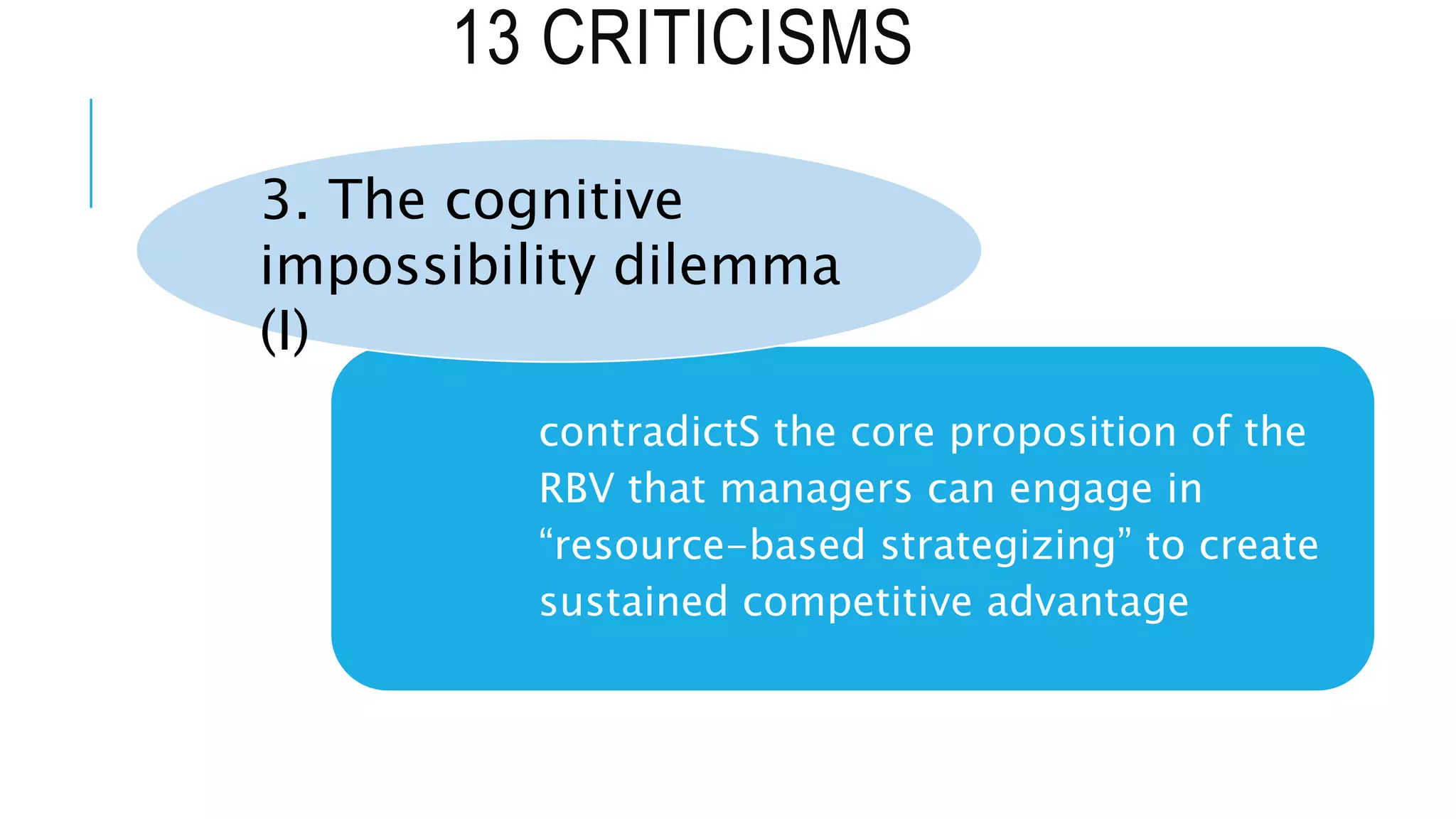
contradictS the core proposition of the
RBV that managers can engage in
“resource-based strategizing” to create
sustained competitive advantage
3. The cognitive
impossibility dilemma
(I)
13 CRITICISMS
all the firms can apply
competencies and capabilities
to produce the same output
4. The Organization(O)
dilemma
13 CRITICISMS
Researchers attempting to empirically
test the core proposition of the RBV
should identify, ex ante the resources
that will have strategic value ex post
5. The Tautology
problem
13 CRITICISMS
The ex post analysis provide
limited insight into the
circumstances that will prevail in
the future
6. The static problem
13 CRITICISMS
How the resources of a firm, various
processes and complementary
resources helps in contributing to the
overall success and competitive
advantage of that firm is unexplained
7. The absence of a chain of
causality
13 CRITICISMS
Assumes that every embedded resource can
only create strategic value in that specific firm,
while it is in fact very possible that a given
resource can create even more strategic value
when becoming embedded in another firm
8. Asymmetry in
assumptions regarding
SFMs
13 CRITICISMS
Unable to explicitly explain the complex
processes, the practicing of which, the
firm will be able to accumulate and
maintain the valuable resources
9. Accumulation of strategic
resources
13 CRITICISMS
Instead of being a bundle of
resources, resources are treated
as singular distinct items
10. Synergetic effect of a
bundle of resources
13 CRITICISMS
VRIO framework provides no such
prescriptions for practitioners
who want to implement this
theory inside any firm
11. Un-implementable in
practice
13 CRITICISMS
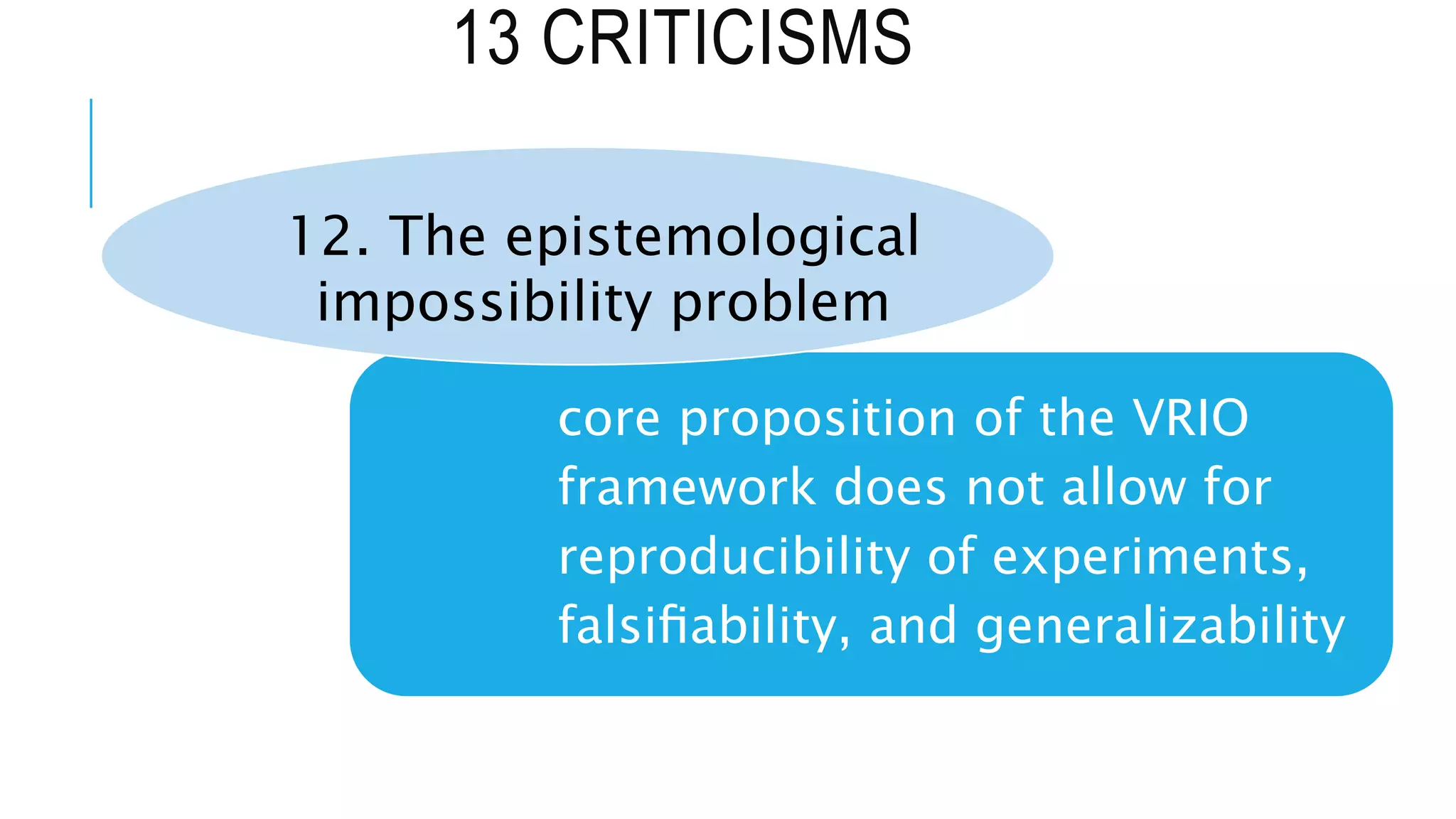
core proposition of the VRIO
framework does not allow for
reproducibility of experiments,
falsifiability, and generalizability
12. The epistemological
impossibility problem
13 CRITICISMS
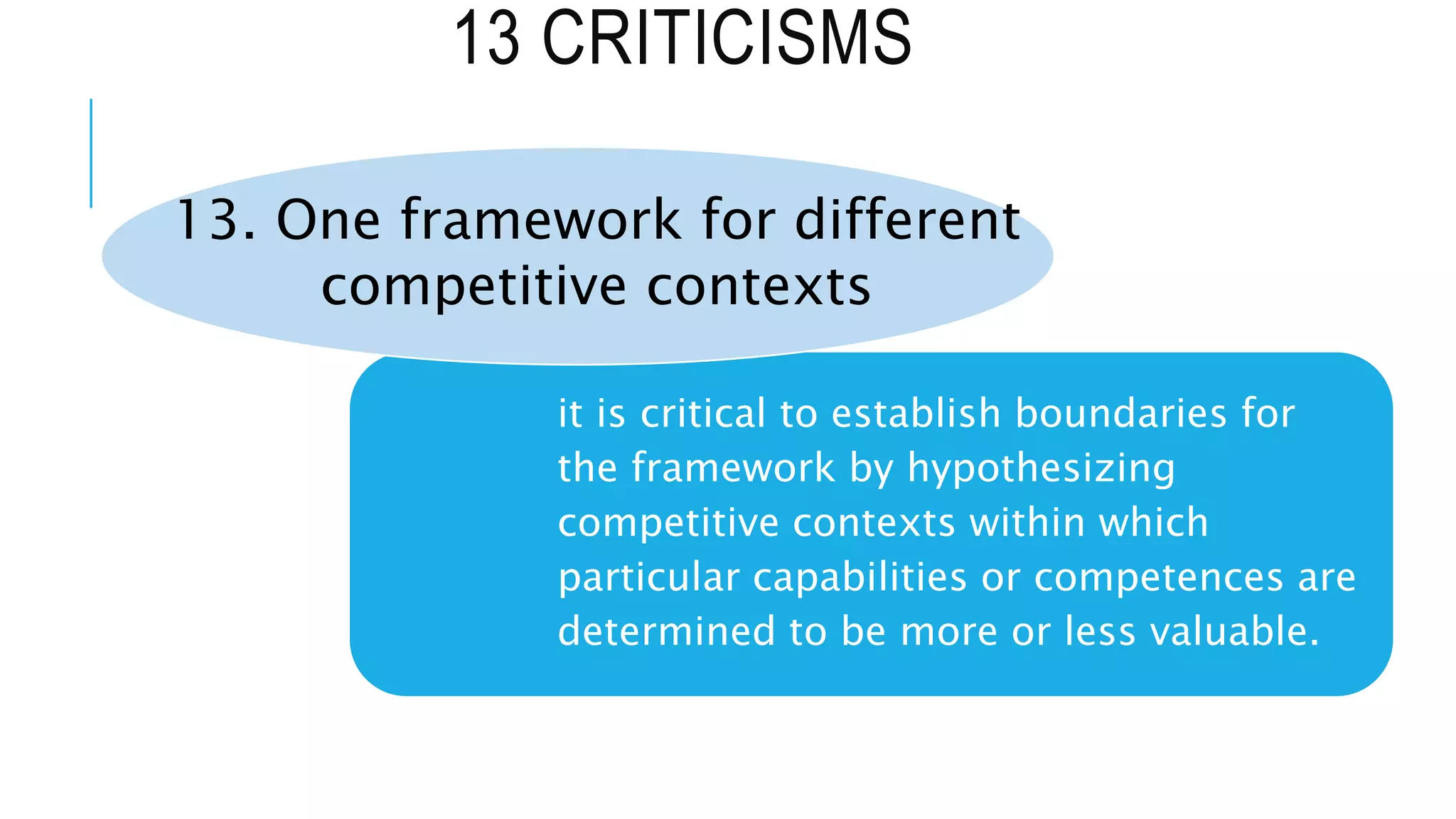
it is critical to establish boundaries for
the framework by hypothesizing
competitive contexts within which
particular capabilities or competences are
determined to be more or less valuable.
13. One framework for different
competitive contexts
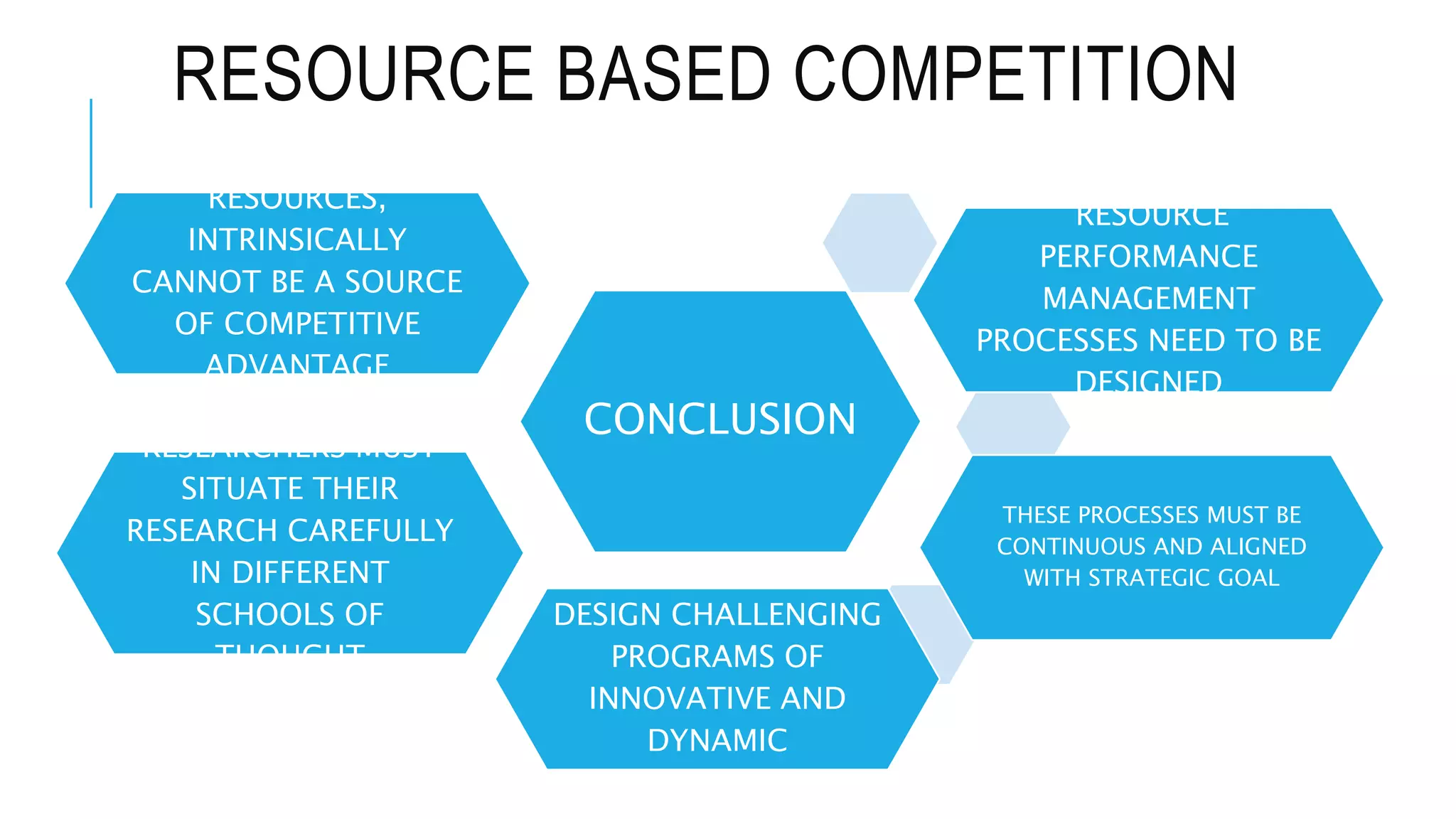
RESOURCE BASED COMPETITION
CONCLUSION
RESOURCES,
INTRINSICALLY
CANNOT BE A SOURCE
OF COMPETITIVE
ADVANTAGE
RESOURCE
PERFORMANCE
MANAGEMENT
PROCESSES NEED TO BE
DESIGNED
THESE PROCESSES MUST BE
CONTINUOUS AND ALIGNED
WITH STRATEGIC GOALTHE MANAGERS MUST
DESIGN CHALLENGING
PROGRAMS OF
INNOVATIVE AND
DYNAMIC
CAPABILITIES
RESEARCHERS MUST
SITUATE THEIR
RESEARCH CAREFULLY
IN DIFFERENT
SCHOOLS OF
THOUGHT
QUESTIONS PLEASE!
END OF PRESENTATION
THANK YOU

Resource Based view (RBV) and 13 Criticisms

  • 1.
    3 SCHOOLS OFTHOUGHTS AND 13 CRITISISMS: A REVIEW OF LITERATURE HASSAN SHAHZAD IHRM | MS-EM FURC
  • 2.
    WHY DO SOMEFIRMS OUTPERFORMS OTHER ?
  • 3.
    WHY DO SOMEFIRMS OUTPERFORMS OTHER ? 2- Paradigms External Factor Paradigm Internal factor Paradigm
  • 4.
    WHAT SOURCES ARELIKELY TO BE SOURCE OF SUCCESS?
  • 5.
    3 SCHOOLS OFTHOUGHTS Rational- equilibrium school RESSOURCE BASED VIEW OF FIRMS (RBV) Behavioral- evolutionary school COMPETENCE BASED VIEW OF FIRM (CBV) Social construction ist school DYNAMIC CAPABILITIES BASED VIEW OF FIRM (DC)
  • 6.
    3 SCHOOLS OFTHOUGHTS: 1. RESOURCE BASED VIEW (RBV) •Firm ‘A’ is more successful than firm ‘B’, if Firm ‘A’ controls more efficient and effective resources than firm ‘B’
  • 7.
    3 SCHOOLS OFTHOUGHTS: 2. COMPETENCE BASED VIEW OF FIRM (CBV) •Firm ‘A’ is more successful than firm ‘B’, if Firm ‘A’ is in a position to make use of available resources more efficiently and effectively than firm ‘B’
  • 8.
    3 SCHOOLS OFTHOUGHTS: 3. DYNAMIC CAPABILITIES BASED VIEW OF FIRM (DC) •Firm ‘A’ is more successful than firm ‘B’, if, Firm ‘A’ has the ability to renovate competencies to achieve new forms of competitive advantages i.e., to accomplish new and innovative forms of competitive advantages.

  • 9.
  • 10.
    MOST WIDELY USEDRBV -MODEL
  • 11.
  • 12.
    ASSUMPTIONS IN VRIO MODEL 1.RESOURCES ARE HETEROGENEOUS 2. RESOURCES ARE IMMOBILE
  • 13.
  • 14.
    13 CRITICISMS This frameworkdoes not explains the features necessary to identify a resource to be called as valuable 1. The value (V) conundrum
  • 15.
    13 CRITICISMS If allfirm’s resources are heterogeneous then at some level of analysis all resources become unique or Rare 2. The uniqueness or rare (R) dilemma
  • 16.
    13 CRITICISMS contradictS thecore proposition of the RBV that managers can engage in “resource-based strategizing” to create sustained competitive advantage 3. The cognitive impossibility dilemma (I)
  • 17.
    13 CRITICISMS all thefirms can apply competencies and capabilities to produce the same output 4. The Organization(O) dilemma
  • 18.
    13 CRITICISMS Researchers attemptingto empirically test the core proposition of the RBV should identify, ex ante the resources that will have strategic value ex post 5. The Tautology problem
  • 19.
    13 CRITICISMS The expost analysis provide limited insight into the circumstances that will prevail in the future 6. The static problem
  • 20.
    13 CRITICISMS How theresources of a firm, various processes and complementary resources helps in contributing to the overall success and competitive advantage of that firm is unexplained 7. The absence of a chain of causality
  • 21.
    13 CRITICISMS Assumes thatevery embedded resource can only create strategic value in that specific firm, while it is in fact very possible that a given resource can create even more strategic value when becoming embedded in another firm 8. Asymmetry in assumptions regarding SFMs
  • 22.
    13 CRITICISMS Unable toexplicitly explain the complex processes, the practicing of which, the firm will be able to accumulate and maintain the valuable resources 9. Accumulation of strategic resources
  • 23.
    13 CRITICISMS Instead ofbeing a bundle of resources, resources are treated as singular distinct items 10. Synergetic effect of a bundle of resources
  • 24.
    13 CRITICISMS VRIO frameworkprovides no such prescriptions for practitioners who want to implement this theory inside any firm 11. Un-implementable in practice
  • 25.
    13 CRITICISMS core propositionof the VRIO framework does not allow for reproducibility of experiments, falsifiability, and generalizability 12. The epistemological impossibility problem
  • 26.
    13 CRITICISMS it iscritical to establish boundaries for the framework by hypothesizing competitive contexts within which particular capabilities or competences are determined to be more or less valuable. 13. One framework for different competitive contexts
  • 27.
    RESOURCE BASED COMPETITION CONCLUSION RESOURCES, INTRINSICALLY CANNOTBE A SOURCE OF COMPETITIVE ADVANTAGE RESOURCE PERFORMANCE MANAGEMENT PROCESSES NEED TO BE DESIGNED THESE PROCESSES MUST BE CONTINUOUS AND ALIGNED WITH STRATEGIC GOALTHE MANAGERS MUST DESIGN CHALLENGING PROGRAMS OF INNOVATIVE AND DYNAMIC CAPABILITIES RESEARCHERS MUST SITUATE THEIR RESEARCH CAREFULLY IN DIFFERENT SCHOOLS OF THOUGHT
  • 28.
  • 29.