BY:-
HASANAIN G. KHUDHAIR ( hasanain.ghaleb@gmail.com)
MAYS SALIM MAHDI
ZAHRAA SALMAN YAAS
KERBALA UNIVERSITY / COLLEGE OF MEDICINE
DEPARTMENT OF SURGERY
10-9-2017
polytrauma
polytrauma
Objective:
1-defenition
2-epidemiology
3-etiology
4-pathophysiology
5-type of shock in polytrauma
6-Mangment
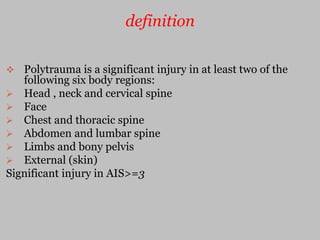
definition
 Polytrauma is a significant injury in at least two of the
following six body regions:
 Head , neck and cervical spine
 Face
 Chest and thoracic spine
 Abdomen and lumbar spine
 Limbs and bony pelvis
 External (skin)
Significant injury in AIS>=3
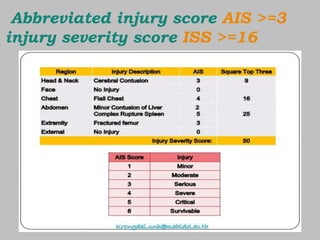
Abbreviated injury score AIS >=3
injury severity score ISS >=16
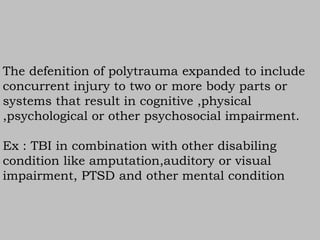
The defenition of polytrauma expanded to include
concurrent injury to two or more body parts or
systems that result in cognitive ,physical
,psychological or other psychosocial impairment.
Ex : TBI in combination with other disabiling
condition like amputation,auditory or visual
impairment, PTSD and other mental condition
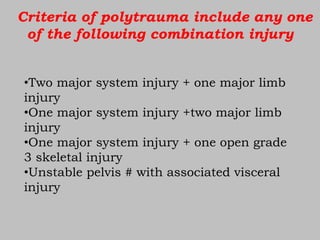
Criteria of polytrauma include any one
of the following combination injury
•Two major system injury + one major limb
injury
•One major system injury +two major limb
injury
•One major system injury + one open grade
3 skeletal injury
•Unstable pelvis # with associated visceral
injury
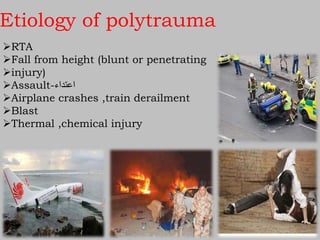
Etiology of polytrauma
RTA
Fall from height (blunt or penetrating
injury)
Assault-‫اعتداء‬
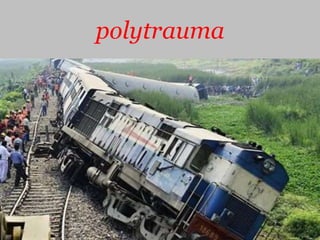
Airplane crashes ,train derailment
Blast
Thermal ,chemical injury
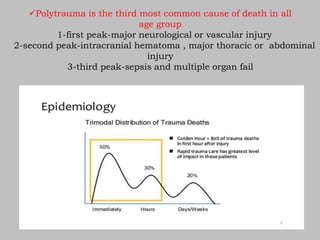
Polytrauma is the third most common cause of death in all
age group.
1-first peak-major neurological or vascular injury
2-second peak-intracranial hematoma , major thoracic or abdominal
injury
3-third peak-sepsis and multiple organ fail
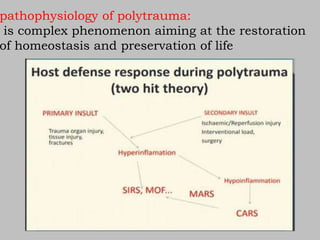
pathophysiology of polytrauma:
is complex phenomenon aiming at the restoration
of homeostasis and preservation of life
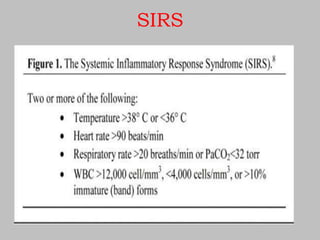
SIRS
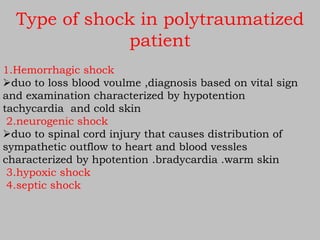
Type of shock in polytraumatized
patient
1.Hemorrhagic shock
duo to loss blood voulme ,diagnosis based on vital sign
and examination characterized by hypotention
tachycardia and cold skin
2.neurogenic shock
duo to spinal cord injury that causes distribution of
sympathetic outflow to heart and blood vessles
characterized by hpotention .bradycardia .warm skin
3.hypoxic shock
4.septic shock
Phases of trauma care
1.prehospital care
2.emergency department
3.Rehabilitation
Prehospital care:
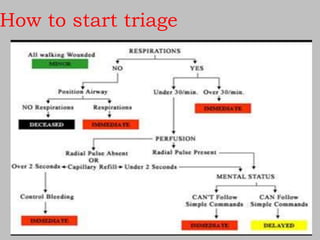
TRIAGE
Sorting and allocation of treatment to patient
according the urgency of their need for care Should be
performed rapidly
How to start triage
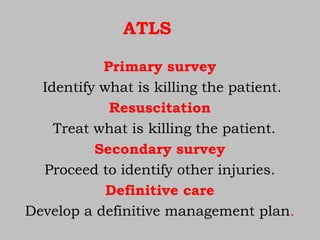
ATLS
Primary survey
Identify what is killing the patient.
Resuscitation
Treat what is killing the patient.
Secondary survey
Proceed to identify other injuries.
Definitive care
Develop a definitive management plan.
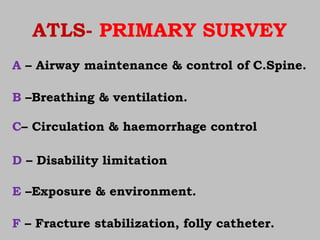
ATLS- PRIMARY SURVEY
A – Airway maintenance & control of C.Spine.
B –Breathing & ventilation.
C– Circulation & haemorrhage control
D – Disability limitation
E –Exposure & environment.
F – Fracture stabilization, folly catheter.
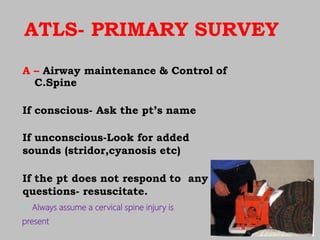
ATLS- PRIMARY SURVEY
A – Airway maintenance & Control of
C.Spine
If conscious- Ask the pt’s name
If unconscious-Look for added
sounds (stridor,cyanosis etc)
If the pt does not respond to any
questions- resuscitate.
 Always assume a cervical spine injury is
present
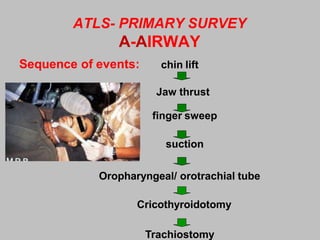
ATLS- PRIMARY SURVEY
A-AIRWAY
Sequence of events: chin lift
Jaw thrust
finger sweep
suction
Oropharyngeal/ orotrachial tube
Cricothyroidotomy
Trachiostomy
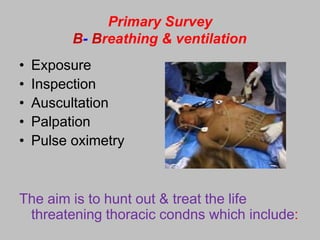
Primary Survey
B- Breathing & ventilation
• Exposure
• Inspection
• Auscultation
• Palpation
• Pulse oximetry
The aim is to hunt out & treat the life
threatening thoracic condns which include:
Primary Survey
B- Breathing & ventilation
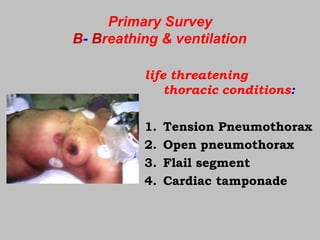
life threatening
thoracic conditions:
1. Tension Pneumothorax
2. Open pneumothorax
3. Flail segment
4. Cardiac tamponade
Primary Survey
B- Breathing & ventilation
Tension pneumothorax
C/F Respiratory distress
Tracheal deviation
Diminished breath sounds
Distended neck veins
Immediate needle thoracocentesis thro’
2ndintercostal space in mid clavicular
line reqd.
Primary Survey
B- Breathing & ventilation
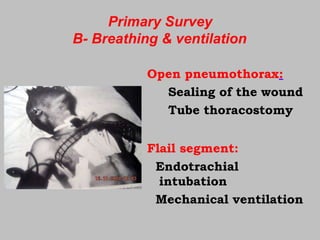
Open pneumothorax:
Sealing of the wound
Tube thoracostomy
Flail segment:
Endotrachial
intubation
Mechanical ventilation
Primary Survey
B- Breathing & ventilation
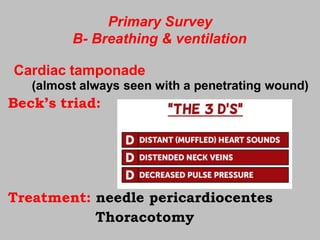
Cardiac tamponade
(almost always seen with a penetrating wound)
Beck’s triad:
Treatment: needle pericardiocentes
Thoracotomy
ATLS- Primary Survey
C- Circulation and hemorrhage control
Assessment of blood loss
External or obvious
Internal or covert
chest
abdomen
pelvis
limbs
Resuscitation
Arrest bleeding
Obtain vascular access
ATLS- Primary Survey
C- Circulation and hemorrhage control
Adults- 2 lit of Ringer lact soln as initial fluid
challenge
Children- 20mg/kg of body wt
Response to initial fluid challenge:
• Immediate & sustained return of vital
signs.
• Transient response with later
deterioration
• No improvement.
ATLS- Primary Survey
C- Circulation and hemorrhage control
Immediate responders-<20% blood loss
Bleeding ceases
spontaneously
Transient responders-
bleeding within body
cavities
Surgical intervention reqd.
Non responders- <40%of blood vol lost require
immediate surgery
Continued IV fluids detrimental
ATLS- Primary Survey
C- Circulation and hemorrhage control
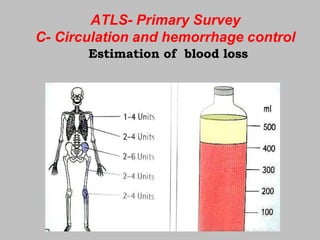
Estimation of blood loss
ATLS- Primary Survey
D- Disability limitation
C.N.S.
Rapid assessment
of motor & sensory
functions
AVPU
A.-Alert
V.-Responds to
Voice
P.-Responds to
Pain
U.-Unresponsive
Pupil.-Size and
reaction
ATLS- Primary Survey
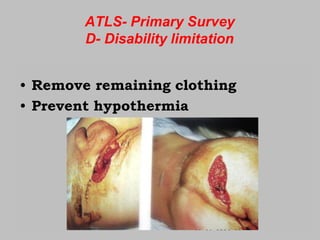
D- Disability limitation
• Remove remaining clothing
• Prevent hypothermia
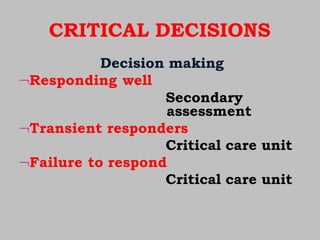
CRITICAL DECISIONS
Decision making
Responding well
Secondary
assessment
Transient responders
Critical care unit
Failure to respond
Critical care unit
Secondary survey (ATLS)
• History
• Examination
• Investigation
Secondary survey (ATLS)
HEAD
NECK
THORAX
ABDOMIN
SPINAL INJURY
Polytrauma

Polytrauma

  • 1.
    BY:- HASANAIN G. KHUDHAIR( hasanain.ghaleb@gmail.com) MAYS SALIM MAHDI ZAHRAA SALMAN YAAS KERBALA UNIVERSITY / COLLEGE OF MEDICINE DEPARTMENT OF SURGERY 10-9-2017 polytrauma
  • 2.
  • 3.
  • 4.
    definition  Polytrauma isa significant injury in at least two of the following six body regions:  Head , neck and cervical spine  Face  Chest and thoracic spine  Abdomen and lumbar spine  Limbs and bony pelvis  External (skin) Significant injury in AIS>=3
  • 5.
    Abbreviated injury scoreAIS >=3 injury severity score ISS >=16
  • 6.
    The defenition ofpolytrauma expanded to include concurrent injury to two or more body parts or systems that result in cognitive ,physical ,psychological or other psychosocial impairment. Ex : TBI in combination with other disabiling condition like amputation,auditory or visual impairment, PTSD and other mental condition
  • 7.
    Criteria of polytraumainclude any one of the following combination injury •Two major system injury + one major limb injury •One major system injury +two major limb injury •One major system injury + one open grade 3 skeletal injury •Unstable pelvis # with associated visceral injury
  • 8.
    Etiology of polytrauma RTA Fallfrom height (blunt or penetrating injury) Assault-‫اعتداء‬ Airplane crashes ,train derailment Blast Thermal ,chemical injury
  • 9.
    Polytrauma is thethird most common cause of death in all age group. 1-first peak-major neurological or vascular injury 2-second peak-intracranial hematoma , major thoracic or abdominal injury 3-third peak-sepsis and multiple organ fail
  • 10.
    pathophysiology of polytrauma: iscomplex phenomenon aiming at the restoration of homeostasis and preservation of life
  • 11.
  • 12.
    Type of shockin polytraumatized patient 1.Hemorrhagic shock duo to loss blood voulme ,diagnosis based on vital sign and examination characterized by hypotention tachycardia and cold skin 2.neurogenic shock duo to spinal cord injury that causes distribution of sympathetic outflow to heart and blood vessles characterized by hpotention .bradycardia .warm skin 3.hypoxic shock 4.septic shock
  • 13.
    Phases of traumacare 1.prehospital care 2.emergency department 3.Rehabilitation Prehospital care: TRIAGE Sorting and allocation of treatment to patient according the urgency of their need for care Should be performed rapidly
  • 14.
  • 15.
    ATLS Primary survey Identify whatis killing the patient. Resuscitation Treat what is killing the patient. Secondary survey Proceed to identify other injuries. Definitive care Develop a definitive management plan.
  • 16.
    ATLS- PRIMARY SURVEY A– Airway maintenance & control of C.Spine. B –Breathing & ventilation. C– Circulation & haemorrhage control D – Disability limitation E –Exposure & environment. F – Fracture stabilization, folly catheter.
  • 17.
    ATLS- PRIMARY SURVEY A– Airway maintenance & Control of C.Spine If conscious- Ask the pt’s name If unconscious-Look for added sounds (stridor,cyanosis etc) If the pt does not respond to any questions- resuscitate.  Always assume a cervical spine injury is present
  • 18.
    ATLS- PRIMARY SURVEY A-AIRWAY Sequenceof events: chin lift Jaw thrust finger sweep suction Oropharyngeal/ orotrachial tube Cricothyroidotomy Trachiostomy
  • 19.
    Primary Survey B- Breathing& ventilation • Exposure • Inspection • Auscultation • Palpation • Pulse oximetry The aim is to hunt out & treat the life threatening thoracic condns which include:
  • 20.
    Primary Survey B- Breathing& ventilation life threatening thoracic conditions: 1. Tension Pneumothorax 2. Open pneumothorax 3. Flail segment 4. Cardiac tamponade
  • 21.
    Primary Survey B- Breathing& ventilation Tension pneumothorax C/F Respiratory distress Tracheal deviation Diminished breath sounds Distended neck veins Immediate needle thoracocentesis thro’ 2ndintercostal space in mid clavicular line reqd.
  • 22.
    Primary Survey B- Breathing& ventilation Open pneumothorax: Sealing of the wound Tube thoracostomy Flail segment: Endotrachial intubation Mechanical ventilation
  • 23.
    Primary Survey B- Breathing& ventilation Cardiac tamponade (almost always seen with a penetrating wound) Beck’s triad: Treatment: needle pericardiocentes Thoracotomy
  • 24.
    ATLS- Primary Survey C-Circulation and hemorrhage control Assessment of blood loss External or obvious Internal or covert chest abdomen pelvis limbs Resuscitation Arrest bleeding Obtain vascular access
  • 25.
    ATLS- Primary Survey C-Circulation and hemorrhage control Adults- 2 lit of Ringer lact soln as initial fluid challenge Children- 20mg/kg of body wt Response to initial fluid challenge: • Immediate & sustained return of vital signs. • Transient response with later deterioration • No improvement.
  • 26.
    ATLS- Primary Survey C-Circulation and hemorrhage control Immediate responders-<20% blood loss Bleeding ceases spontaneously Transient responders- bleeding within body cavities Surgical intervention reqd. Non responders- <40%of blood vol lost require immediate surgery Continued IV fluids detrimental
  • 27.
    ATLS- Primary Survey C-Circulation and hemorrhage control Estimation of blood loss
  • 28.
    ATLS- Primary Survey D-Disability limitation C.N.S. Rapid assessment of motor & sensory functions AVPU A.-Alert V.-Responds to Voice P.-Responds to Pain U.-Unresponsive Pupil.-Size and reaction
  • 29.
    ATLS- Primary Survey D-Disability limitation • Remove remaining clothing • Prevent hypothermia
  • 30.
    CRITICAL DECISIONS Decision making Respondingwell Secondary assessment Transient responders Critical care unit Failure to respond Critical care unit
  • 31.
    Secondary survey (ATLS) •History • Examination • Investigation
  • 32.