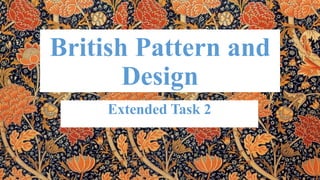
British Pattern and
Design
Extended Task 2
Part 1 – Create a research page on The Bloomsbury Group
and the contemporary ‘Bloomsbury Canvas Wallpaper’s’.
Part 2 – Analysis of William Morris’ ‘Strawberry Thief’
Part 3 – Create a small design inspired by the Bloomsbury
collection and William Morris’ designs that could be
repeated into a pattern.
Part 4 - Create your own wallpaper design using potato
printing.
Part 5 – Evaluation of your wallpaper design.
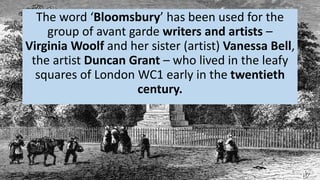
The word ‘Bloomsbury’ has been used for the
group of avant garde writers and artists –
Virginia Woolf and her sister (artist) Vanessa Bell,
the artist Duncan Grant – who lived in the leafy
squares of London WC1 early in the twentieth
century.
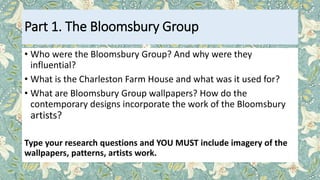
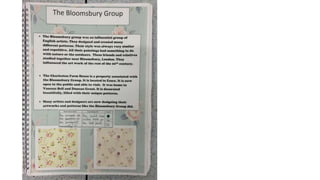
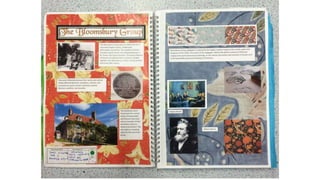
Part 1. The Bloomsbury Group
• Who were the Bloomsbury Group? And why were they
influential?
• What is the Charleston Farm House and what was it used for?
• What are Bloomsbury Group wallpapers? How do the
contemporary designs incorporate the work of the Bloomsbury
artists?
Type your research questions and YOU MUST include imagery of the
wallpapers, patterns, artists work.
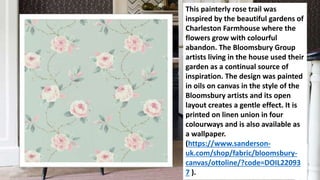
This painterly rose trail was
inspired by the beautiful gardens of
Charleston Farmhouse where the
flowers grow with colourful
abandon. The Bloomsbury Group
artists living in the house used their
garden as a continual source of
inspiration. The design was painted
in oils on canvas in the style of the
Bloomsbury artists and its open
layout creates a gentle effect. It is
printed on linen union in four
colourways and is also available as
a wallpaper.
(https://www.sanderson-
uk.com/shop/fabric/bloomsbury-
canvas/ottoline/?code=DOIL22093
7 ).
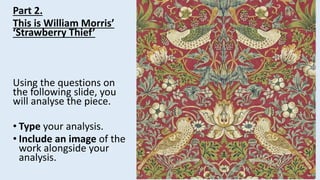
Part 2.
This is William Morris’
‘Strawberry Thief’
Using the questions on
the following slide, you
will analyse the piece.
• Type your analysis.
• Include an image of the
work alongside your
analysis.
Part 3. Create a design inspired by Bloomsbury
Group and William Morris for a repetative print.
• You must use the research into Bloomsbury Group and
Morris to influence your designs. Think of natural
forms (floral patterns, birds, leaves).
• You will need to draw this design into your sketchbook
in a 15x15cm square border. Please title this page as
‘Wallpaper Design’.
• This can be pencil drawn in basic outlines.
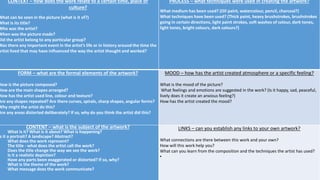
CONTEXT – how does the work relate to a certain time, place or
culture?
What can be seen in the picture (what is it of?)
What is its title?
Who was the artist?
When was the picture made?
Did the artist belong to any particular group?
Was there any important event in the artist’s life or in history around the time the
artist lived that may have influenced the way the artist thought and worked?
PROCESS – what techniques were used in creating the artwork?
What medium has been used? (Oil paint, watercolour, pencil, charcoal?)
What techniques have been used? (Thick paint, heavy brushstrokes, brushstrokes
going in certain directions, light paint strokes, soft washes of colour, dark tones,
light tones, bright colours, dark colours?)
FORM – what are the formal elements of the artwork?
How is the picture composed?
How are the main shapes arranged?
How has the artist used line, colour and texture?
Are any shapes repeated? Are there curves, spirals, sharp shapes, angular forms?
Why might the artist do this?
Are any areas distorted deliberately? If so, why do you think the artist did this?
MOOD – how has the artist created atmosphere or a specific feeling?
What is the mood of the picture?
What feelings and emotions are suggested in the work? (Is it happy, sad, peaceful,
lively does it create an anxious feeling?)
How has the artist created the mood?
CONTENT – what is the subject of the artwork?
 What is it? What is it about? What is happening?
s it a portrait? A landscape? Abstract?
 What does the work represent?
 The title - what does the artist call the work?
 Does the title change the way we see the work?
 Is it a realistic depiction?
 Have any parts been exaggerated or distorted? If so, why?
 What is the theme of the work?
 What message does the work communicate?
LINKS – can you establish any links to your own artwork?
What connections are there between this work and your own?
How will this work help you?
What can you learn from the composition and the techniques the artist has used?

Part 4. Create your wallpaper design using
potato printing.
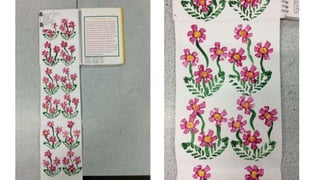
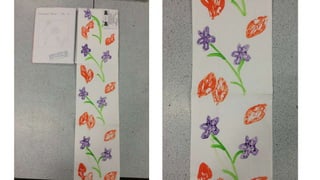
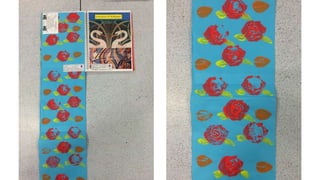
• Using a minimum of three sheets of paper you will create a
wallpaper design that can be folded and pulled down from your
book in a concertina style. This will allow the work to have a long
length (like a roll of wallpaper).
• You will create a print using a potato. You must consider health
and safety when creating your potato stamp and ideally have an
adult supervise you.
• You will need to carve into the potato using a knife or sharp tool
to reveal your chosen pattern/design.
• This will then be printed into a repetitive pattern onto the paper.
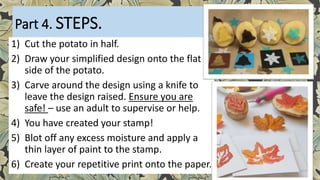
Part 4. STEPS.
1) Cut the potato in half.
2) Draw your simplified design onto the flat
side of the potato.
3) Carve around the design using a knife to
leave the design raised. Ensure you are
safe! – use an adult to supervise or help.
4) You have created your stamp!
5) Blot off any excess moisture and apply a
thin layer of paint to the stamp.
6) Create your repetitive print onto the paper.
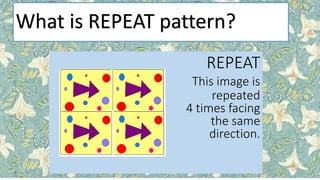
What is REPEAT pattern?
REPEAT
This image is
repeated
4 times facing
the same
direction.
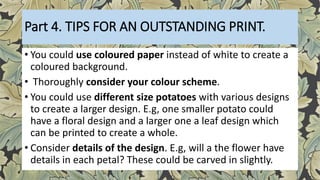
Part 4. TIPS FOR AN OUTSTANDING PRINT.
• You could use coloured paper instead of white to create a
coloured background.
• Thoroughly consider your colour scheme.
• You could use different size potatoes with various designs
to create a larger design. E.g, one smaller potato could
have a floral design and a larger one a leaf design which
can be printed to create a whole.
• Consider details of the design. E.g, will a the flower have
details in each petal? These could be carved in slightly.
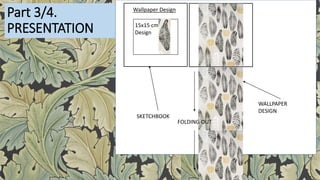
Part 3/4.
PRESENTATION
Wallpaper Design
15x15 cm
Design
SKETCHBOOK
WALLPAPER
DESIGN
FOLDING OUT
Part 5. Evaluation of Wallpaper design.
• What was the theme for the project? How did you interpret and develop
this theme?
• What did you have to achieve on the project? Have you achieved the
objectives? How?
• What artists did you look at?
• What tools, materials and techniques have you used? How have you used
these? (in class and through homework’s)
• How have your skills developed in the project?
• Explain how you have used shape, pattern, colour and composition
• Did you encounter any problems throughout the project? If so when? And
how could you ensure these are avoided if you were to do it again?
• Describe what you are pleased with and why?
• Explain how you could develop the work and how?

British Pattern and Design

  • 1.
  • 2.
    Part 1 –Create a research page on The Bloomsbury Group and the contemporary ‘Bloomsbury Canvas Wallpaper’s’. Part 2 – Analysis of William Morris’ ‘Strawberry Thief’ Part 3 – Create a small design inspired by the Bloomsbury collection and William Morris’ designs that could be repeated into a pattern. Part 4 - Create your own wallpaper design using potato printing. Part 5 – Evaluation of your wallpaper design.
  • 3.
    The word ‘Bloomsbury’has been used for the group of avant garde writers and artists – Virginia Woolf and her sister (artist) Vanessa Bell, the artist Duncan Grant – who lived in the leafy squares of London WC1 early in the twentieth century.
  • 4.
    Part 1. TheBloomsbury Group • Who were the Bloomsbury Group? And why were they influential? • What is the Charleston Farm House and what was it used for? • What are Bloomsbury Group wallpapers? How do the contemporary designs incorporate the work of the Bloomsbury artists? Type your research questions and YOU MUST include imagery of the wallpapers, patterns, artists work.
  • 5.
    This painterly rosetrail was inspired by the beautiful gardens of Charleston Farmhouse where the flowers grow with colourful abandon. The Bloomsbury Group artists living in the house used their garden as a continual source of inspiration. The design was painted in oils on canvas in the style of the Bloomsbury artists and its open layout creates a gentle effect. It is printed on linen union in four colourways and is also available as a wallpaper. (https://www.sanderson- uk.com/shop/fabric/bloomsbury- canvas/ottoline/?code=DOIL22093 7 ).
  • 8.
    Part 2. This isWilliam Morris’ ‘Strawberry Thief’ Using the questions on the following slide, you will analyse the piece. • Type your analysis. • Include an image of the work alongside your analysis.
  • 9.
    Part 3. Createa design inspired by Bloomsbury Group and William Morris for a repetative print. • You must use the research into Bloomsbury Group and Morris to influence your designs. Think of natural forms (floral patterns, birds, leaves). • You will need to draw this design into your sketchbook in a 15x15cm square border. Please title this page as ‘Wallpaper Design’. • This can be pencil drawn in basic outlines.
  • 10.
    CONTEXT – howdoes the work relate to a certain time, place or culture? What can be seen in the picture (what is it of?) What is its title? Who was the artist? When was the picture made? Did the artist belong to any particular group? Was there any important event in the artist’s life or in history around the time the artist lived that may have influenced the way the artist thought and worked? PROCESS – what techniques were used in creating the artwork? What medium has been used? (Oil paint, watercolour, pencil, charcoal?) What techniques have been used? (Thick paint, heavy brushstrokes, brushstrokes going in certain directions, light paint strokes, soft washes of colour, dark tones, light tones, bright colours, dark colours?) FORM – what are the formal elements of the artwork? How is the picture composed? How are the main shapes arranged? How has the artist used line, colour and texture? Are any shapes repeated? Are there curves, spirals, sharp shapes, angular forms? Why might the artist do this? Are any areas distorted deliberately? If so, why do you think the artist did this? MOOD – how has the artist created atmosphere or a specific feeling? What is the mood of the picture? What feelings and emotions are suggested in the work? (Is it happy, sad, peaceful, lively does it create an anxious feeling?) How has the artist created the mood? CONTENT – what is the subject of the artwork?  What is it? What is it about? What is happening? s it a portrait? A landscape? Abstract?  What does the work represent?  The title - what does the artist call the work?  Does the title change the way we see the work?  Is it a realistic depiction?  Have any parts been exaggerated or distorted? If so, why?  What is the theme of the work?  What message does the work communicate? LINKS – can you establish any links to your own artwork? What connections are there between this work and your own? How will this work help you? What can you learn from the composition and the techniques the artist has used? 
  • 11.
    Part 4. Createyour wallpaper design using potato printing. • Using a minimum of three sheets of paper you will create a wallpaper design that can be folded and pulled down from your book in a concertina style. This will allow the work to have a long length (like a roll of wallpaper). • You will create a print using a potato. You must consider health and safety when creating your potato stamp and ideally have an adult supervise you. • You will need to carve into the potato using a knife or sharp tool to reveal your chosen pattern/design. • This will then be printed into a repetitive pattern onto the paper.
  • 12.
    Part 4. STEPS. 1)Cut the potato in half. 2) Draw your simplified design onto the flat side of the potato. 3) Carve around the design using a knife to leave the design raised. Ensure you are safe! – use an adult to supervise or help. 4) You have created your stamp! 5) Blot off any excess moisture and apply a thin layer of paint to the stamp. 6) Create your repetitive print onto the paper.
  • 13.
    What is REPEATpattern? REPEAT This image is repeated 4 times facing the same direction.
  • 14.
    Part 4. TIPSFOR AN OUTSTANDING PRINT. • You could use coloured paper instead of white to create a coloured background. • Thoroughly consider your colour scheme. • You could use different size potatoes with various designs to create a larger design. E.g, one smaller potato could have a floral design and a larger one a leaf design which can be printed to create a whole. • Consider details of the design. E.g, will a the flower have details in each petal? These could be carved in slightly.
  • 15.
    Part 3/4. PRESENTATION Wallpaper Design 15x15cm Design SKETCHBOOK WALLPAPER DESIGN FOLDING OUT
  • 19.
    Part 5. Evaluationof Wallpaper design. • What was the theme for the project? How did you interpret and develop this theme? • What did you have to achieve on the project? Have you achieved the objectives? How? • What artists did you look at? • What tools, materials and techniques have you used? How have you used these? (in class and through homework’s) • How have your skills developed in the project? • Explain how you have used shape, pattern, colour and composition • Did you encounter any problems throughout the project? If so when? And how could you ensure these are avoided if you were to do it again? • Describe what you are pleased with and why? • Explain how you could develop the work and how?