Learning Objectives:
•To explore the origin of COLLAGE TECHINQUE.
•To begin working on a collage plan – SURREALIST
DREAMSCAPE by finding, collecting and arranging magazine
images.
•To consider the key elements of background, mid-ground
and foreground.
Homework:
•Extended project 2 – HYBRID INSECTS
Due: 26th April
Collage derives its name from
the French verb coller, to glue.
The work of art is made by
gluing things to the surface.
WHAT IS COLLAGE?
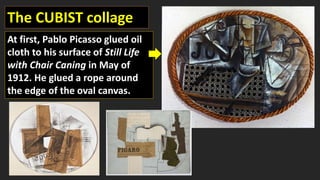
The CUBIST collage
At first, Pablo Picasso glued oil
cloth to his surface of Still Life
with Chair Caning in May of
1912. He glued a rope around
the edge of the oval canvas.
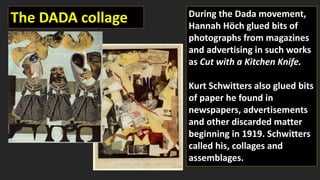
The DADA collage During the Dada movement,
Hannah Höch glued bits of
photographs from magazines
and advertising in such works
as Cut with a Kitchen Knife.
Kurt Schwitters also glued bits
of paper he found in
newspapers, advertisements
and other discarded matter
beginning in 1919. Schwitters
called his, collages and
assemblages.
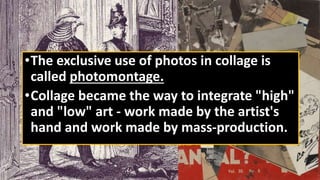
•The exclusive use of photos in collage is
called photomontage.
•Collage became the way to integrate "high"
and "low" art - work made by the artist's
hand and work made by mass-production.
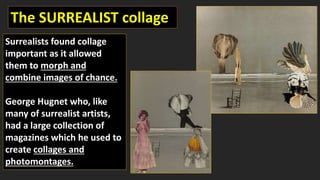
The SURREALIST collage
Surrealists found collage
important as it allowed
them to morph and
combine images of chance.
George Hugnet who, like
many of surrealist artists,
had a large collection of
magazines which he used to
create collages and
photomontages.
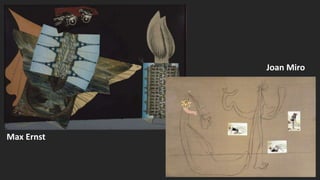
Max Ernst
Joan Miro
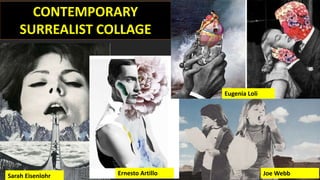
CONTEMPORARY
SURREALIST COLLAGE
Sarah Eisenlohr Joe WebbErnesto Artillo
Eugenia Loli
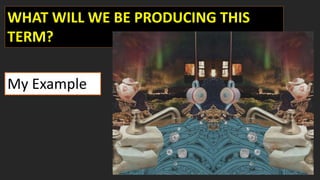
WHAT WILL WE BE PRODUCING THIS
TERM?
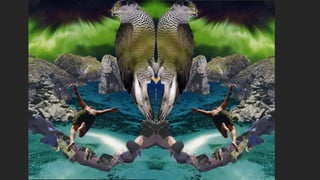
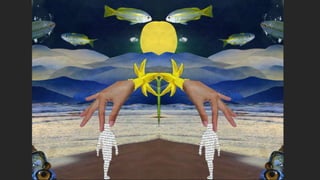
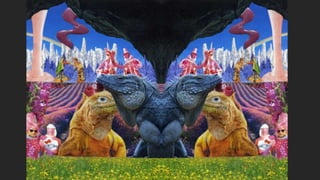
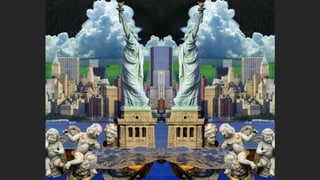
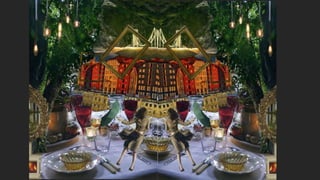
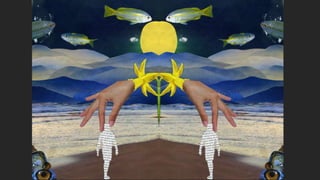
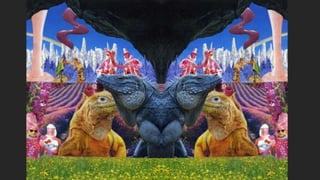
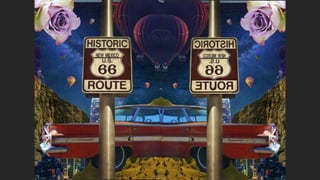
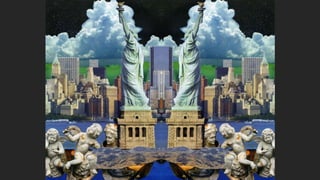
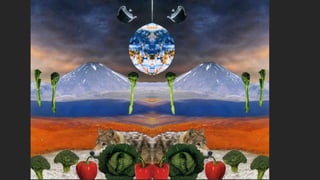
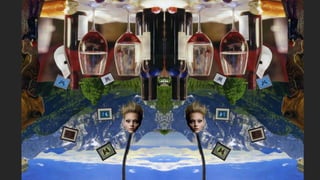
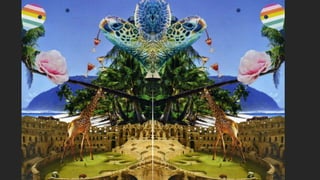
My Example
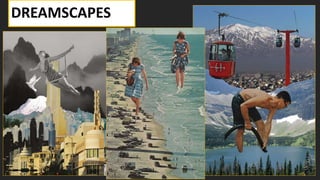
DREAMSCAPES
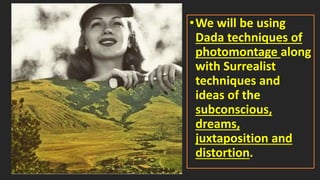
•We will be using
Dada techniques of
photomontage along
with Surrealist
techniques and
ideas of the
subconscious,
dreams,
juxtaposition and
distortion.
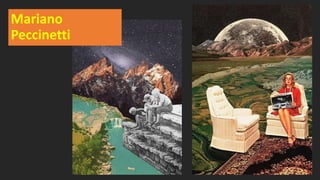
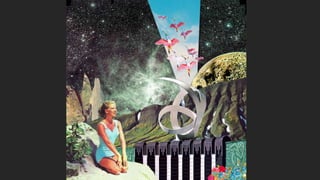
Mariano
Peccinetti
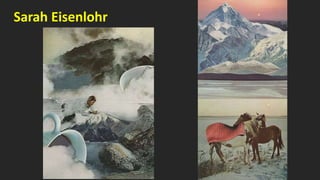
Sarah Eisenlohr
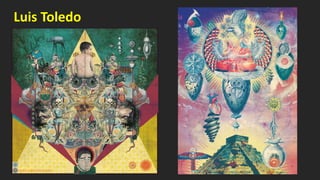
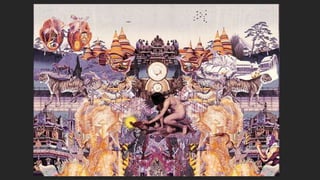
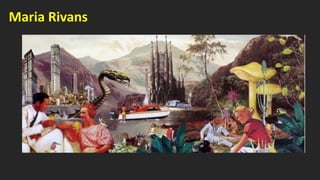
Luis Toledo
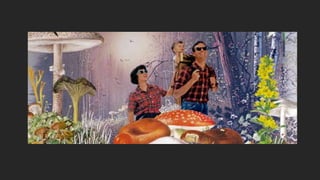
Maria Rivans
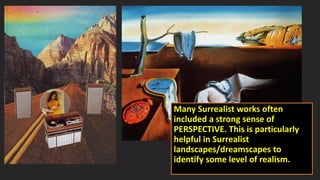
Many Surrealist works often
included a strong sense of
PERSPECTIVE. This is particularly
helpful in Surrealist
landscapes/dreamscapes to
identify some level of realism.
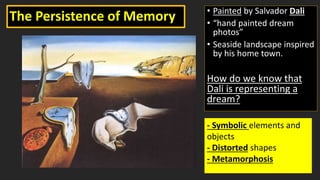
• Painted by Salvador Dali
• “hand painted dream
photos”
• Seaside landscape inspired
by his home town.
How do we know that
Dali is representing a
dream?
The Persistence of Memory
- Symbolic elements and
objects
- Distorted shapes
- Metamorphosis
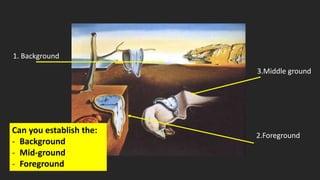
2.Foreground
3.Middle ground
1. Background
Can you establish the:
- Background
- Mid-ground
- Foreground
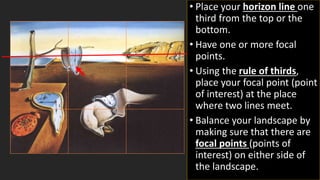
• Place your horizon line one
third from the top or the
bottom.
• Have one or more focal
points.
• Using the rule of thirds,
place your focal point (point
of interest) at the place
where two lines meet.
• Balance your landscape by
making sure that there are
focal points (points of
interest) on either side of
the landscape.
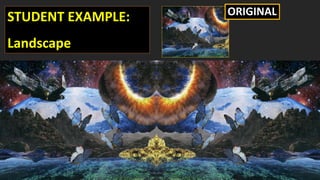
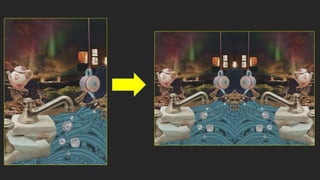
STUDENT EXAMPLE:
Landscape
ORIGINAL
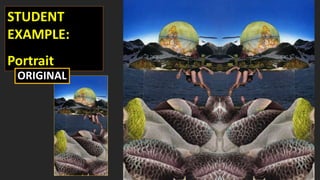
STUDENT
EXAMPLE:
Portrait
ORIGINAL
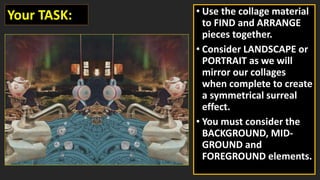
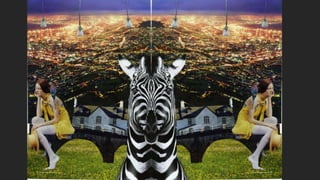
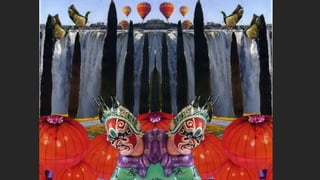
• Use the collage material
to FIND and ARRANGE
pieces together.
• Consider LANDSCAPE or
PORTRAIT as we will
mirror our collages
when complete to create
a symmetrical surreal
effect.
• You must consider the
BACKGROUND, MID-
GROUND and
FOREGROUND elements.
Your TASK:
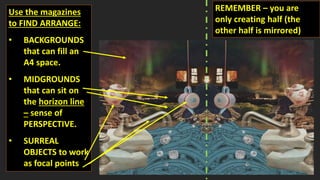
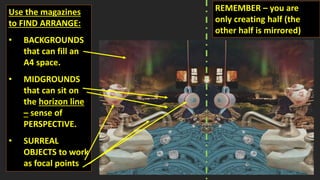
Use the magazines
to FIND ARRANGE:
• BACKGROUNDS
that can fill an
A4 space.
• MIDGROUNDS
that can sit on
the horizon line
– sense of
PERSPECTIVE.
• SURREAL
OBJECTS to work
as focal points
REMEMBER – you are
only creating half (the
other half is mirrored)
Learning Objectives:
•To begin working on the collage outcome.
•Using FOUND and PLANNED images from magazines to cut
and arrange onto a4 paper.
•To consider the background element to begin with.
SELF-ASSESSMENT
Looking at the Evaluation consider the following…
• Have you written reflectively and honestly about your work?
• Have you thoroughly explained the process of how the work
was made?
• Have you discussed strengths of the work and any changes
you would make?
• Have you referred to any artists and how they may have
inspired your work?
STUDENT EXAMPLES:
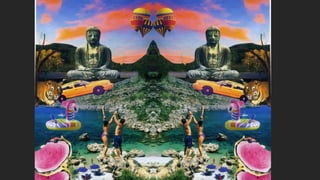
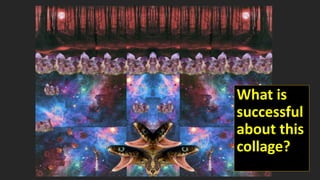
What is successful about this collage?
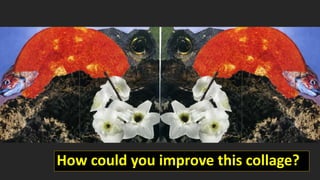
How could you improve this collage?
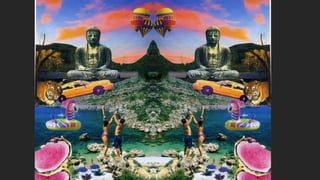
What is
successful
about this
collage?
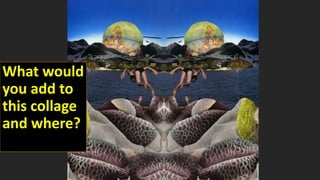
What would
you add to
this collage
and where?
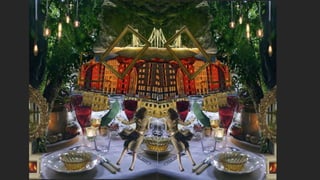
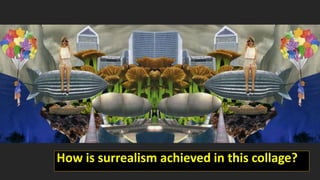
How is surrealism achieved in this collage?
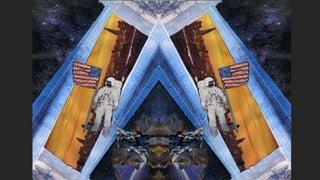
How is
this
collage
different?
Use the magazines
to FIND ARRANGE:
• BACKGROUNDS
that can fill an
A4 space.
• MIDGROUNDS
that can sit on
the horizon line
– sense of
PERSPECTIVE.
• SURREAL
OBJECTS to work
as focal points
REMEMBER – you are
only creating half (the
other half is mirrored)
• There is a BACKGROUND,
MIDGROUND and
FOREGROUND.
• There are a number od FOCAL
POINTS.
• High levels of SURREALISM –
DISTORTION, JUXTAPOSITION,
METAMORPHOSIS.
• Objects on the MIRROR LINE
have been considered to create
an interesting reflection.
• Pieces of collage are SEAMLESS.
• Objects are cut out NEATLY to
look SEAMLESS
Collage CHECKLIST:
•Using collage material you will find images and
backgrounds to begin arranging the composition of your
dreamscape.
•DO NOT stick anything down this lesson.
•Your collage material will be placed in an envelope to be
kept.
•Follow your plan and ensure HIGH LEVELS OF
SURREALISM.
Your TASK:
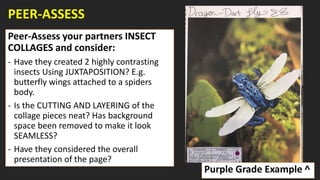
PEER-ASSESS
Peer-Assess your partners INSECT
COLLAGES and consider:
- Have they created 2 highly contrasting
insects Using JUXTAPOSITION? E.g.
butterfly wings attached to a spiders
body.
- Is the CUTTING AND LAYERING of the
collage pieces neat? Has background
space been removed to make it look
SEAMLESS?
- Have they considered the overall
presentation of the page?
Purple Grade Example ^
HOMEWORK
•To complete the extended project – hybrid
insects. Available on ZDrive.
Due: Monday 29th Feb
•Using collage material you will find images and
backgrounds to begin arranging the composition of your
dreamscape.
•DO NOT stick anything down this lesson.
•Your collage material will be placed in an envelope to be
kept.
•Follow your plan and ensure HIGH LEVELS OF
SURREALISM.
Your TASK:
HOMEWORK
•To complete the extended project –
Automatism
Due: Wed 13th April
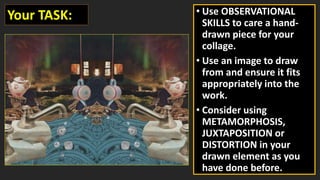
• Use OBSERVATIONAL
SKILLS to care a hand-
drawn piece for your
collage.
• Use an image to draw
from and ensure it fits
appropriately into the
work.
• Consider using
METAMORPHOSIS,
JUXTAPOSITION or
DISTORTION in your
drawn element as you
have done before.
Your TASK:
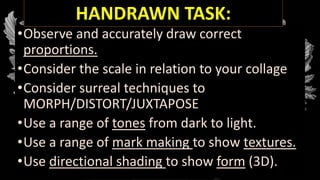
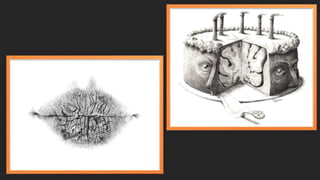
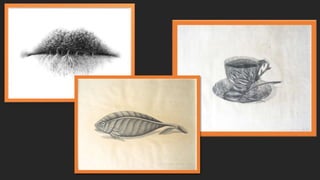
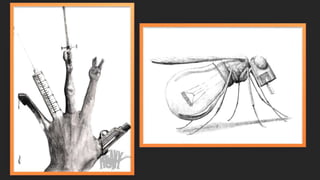
•Observe and accurately draw correct
proportions.
•Consider the scale in relation to your collage
•Consider surreal techniques to
MORPH/DISTORT/JUXTAPOSE
•Use a range of tones from dark to light.
•Use a range of mark making to show textures.
•Use directional shading to show form (3D).
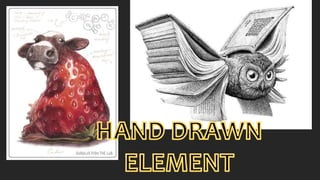
HANDRAWN TASK:
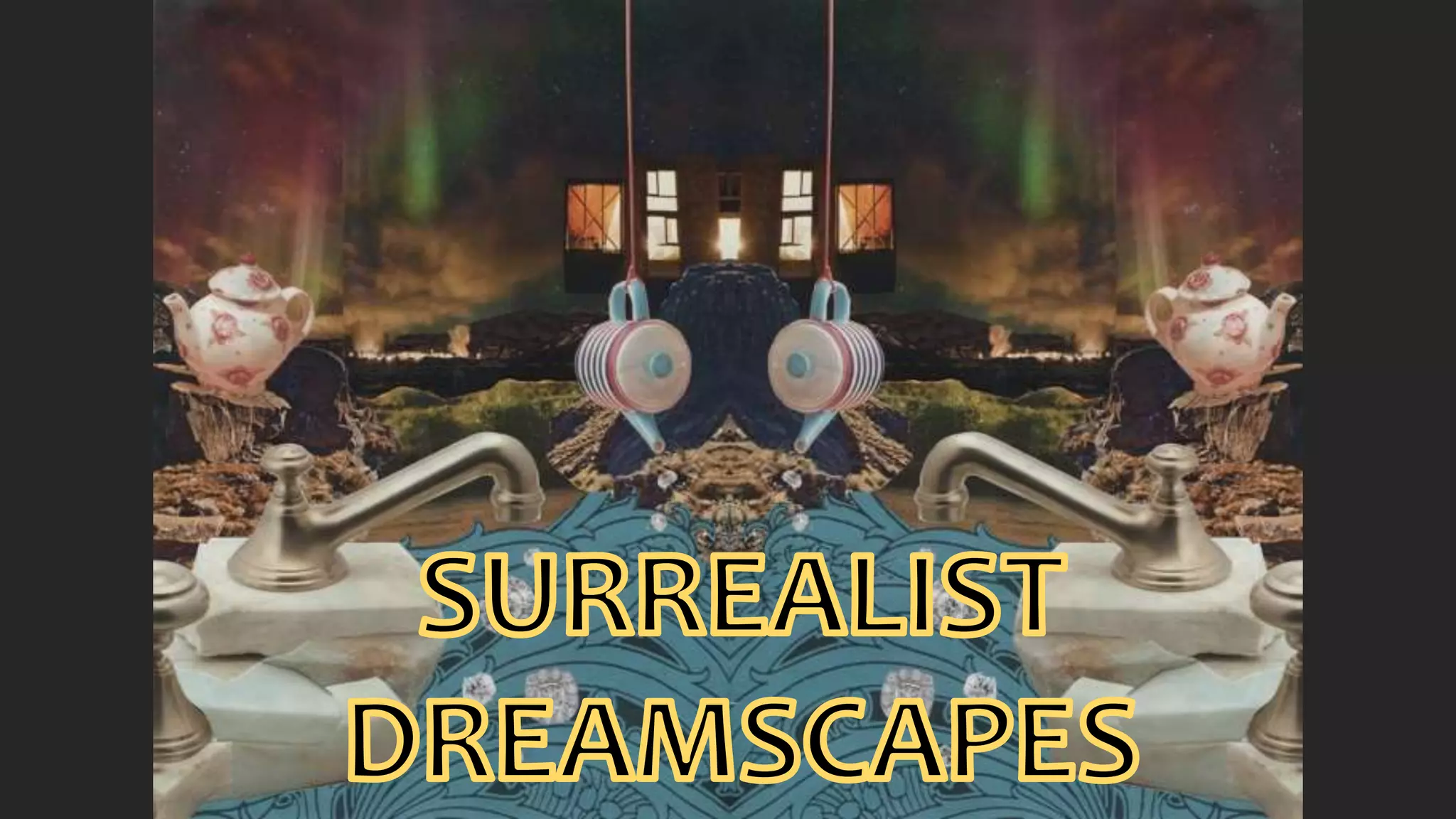
Surrealist Dreamscapes

Surrealist Dreamscapes

  • 2.
    Learning Objectives: •To explorethe origin of COLLAGE TECHINQUE. •To begin working on a collage plan – SURREALIST DREAMSCAPE by finding, collecting and arranging magazine images. •To consider the key elements of background, mid-ground and foreground.
  • 3.
    Homework: •Extended project 2– HYBRID INSECTS Due: 26th April
  • 4.
    Collage derives itsname from the French verb coller, to glue. The work of art is made by gluing things to the surface. WHAT IS COLLAGE?
  • 5.
    The CUBIST collage Atfirst, Pablo Picasso glued oil cloth to his surface of Still Life with Chair Caning in May of 1912. He glued a rope around the edge of the oval canvas.
  • 6.
    The DADA collageDuring the Dada movement, Hannah Höch glued bits of photographs from magazines and advertising in such works as Cut with a Kitchen Knife. Kurt Schwitters also glued bits of paper he found in newspapers, advertisements and other discarded matter beginning in 1919. Schwitters called his, collages and assemblages.
  • 7.
    •The exclusive useof photos in collage is called photomontage. •Collage became the way to integrate "high" and "low" art - work made by the artist's hand and work made by mass-production.
  • 8.
    The SURREALIST collage Surrealistsfound collage important as it allowed them to morph and combine images of chance. George Hugnet who, like many of surrealist artists, had a large collection of magazines which he used to create collages and photomontages.
  • 9.
  • 10.
    CONTEMPORARY SURREALIST COLLAGE Sarah EisenlohrJoe WebbErnesto Artillo Eugenia Loli
  • 11.
    WHAT WILL WEBE PRODUCING THIS TERM? My Example
  • 12.
  • 13.
    •We will beusing Dada techniques of photomontage along with Surrealist techniques and ideas of the subconscious, dreams, juxtaposition and distortion.
  • 14.
  • 16.
  • 18.
  • 20.
  • 22.
    Many Surrealist worksoften included a strong sense of PERSPECTIVE. This is particularly helpful in Surrealist landscapes/dreamscapes to identify some level of realism.
  • 23.
    • Painted bySalvador Dali • “hand painted dream photos” • Seaside landscape inspired by his home town. How do we know that Dali is representing a dream? The Persistence of Memory - Symbolic elements and objects - Distorted shapes - Metamorphosis
  • 24.
    2.Foreground 3.Middle ground 1. Background Canyou establish the: - Background - Mid-ground - Foreground
  • 25.
    • Place yourhorizon line one third from the top or the bottom. • Have one or more focal points. • Using the rule of thirds, place your focal point (point of interest) at the place where two lines meet. • Balance your landscape by making sure that there are focal points (points of interest) on either side of the landscape.
  • 26.
  • 27.
  • 35.
    • Use thecollage material to FIND and ARRANGE pieces together. • Consider LANDSCAPE or PORTRAIT as we will mirror our collages when complete to create a symmetrical surreal effect. • You must consider the BACKGROUND, MID- GROUND and FOREGROUND elements. Your TASK:
  • 37.
    Use the magazines toFIND ARRANGE: • BACKGROUNDS that can fill an A4 space. • MIDGROUNDS that can sit on the horizon line – sense of PERSPECTIVE. • SURREAL OBJECTS to work as focal points REMEMBER – you are only creating half (the other half is mirrored)
  • 38.
    Learning Objectives: •To beginworking on the collage outcome. •Using FOUND and PLANNED images from magazines to cut and arrange onto a4 paper. •To consider the background element to begin with.
  • 39.
    SELF-ASSESSMENT Looking at theEvaluation consider the following… • Have you written reflectively and honestly about your work? • Have you thoroughly explained the process of how the work was made? • Have you discussed strengths of the work and any changes you would make? • Have you referred to any artists and how they may have inspired your work?
  • 40.
    STUDENT EXAMPLES: What issuccessful about this collage?
  • 41.
    How could youimprove this collage?
  • 42.
  • 43.
    What would you addto this collage and where?
  • 44.
    How is surrealismachieved in this collage?
  • 45.
  • 60.
    Use the magazines toFIND ARRANGE: • BACKGROUNDS that can fill an A4 space. • MIDGROUNDS that can sit on the horizon line – sense of PERSPECTIVE. • SURREAL OBJECTS to work as focal points REMEMBER – you are only creating half (the other half is mirrored)
  • 61.
    • There isa BACKGROUND, MIDGROUND and FOREGROUND. • There are a number od FOCAL POINTS. • High levels of SURREALISM – DISTORTION, JUXTAPOSITION, METAMORPHOSIS. • Objects on the MIRROR LINE have been considered to create an interesting reflection. • Pieces of collage are SEAMLESS. • Objects are cut out NEATLY to look SEAMLESS Collage CHECKLIST:
  • 62.
    •Using collage materialyou will find images and backgrounds to begin arranging the composition of your dreamscape. •DO NOT stick anything down this lesson. •Your collage material will be placed in an envelope to be kept. •Follow your plan and ensure HIGH LEVELS OF SURREALISM. Your TASK:
  • 63.
    PEER-ASSESS Peer-Assess your partnersINSECT COLLAGES and consider: - Have they created 2 highly contrasting insects Using JUXTAPOSITION? E.g. butterfly wings attached to a spiders body. - Is the CUTTING AND LAYERING of the collage pieces neat? Has background space been removed to make it look SEAMLESS? - Have they considered the overall presentation of the page? Purple Grade Example ^
  • 64.
    HOMEWORK •To complete theextended project – hybrid insects. Available on ZDrive. Due: Monday 29th Feb
  • 65.
    •Using collage materialyou will find images and backgrounds to begin arranging the composition of your dreamscape. •DO NOT stick anything down this lesson. •Your collage material will be placed in an envelope to be kept. •Follow your plan and ensure HIGH LEVELS OF SURREALISM. Your TASK:
  • 66.
    HOMEWORK •To complete theextended project – Automatism Due: Wed 13th April
  • 68.
    • Use OBSERVATIONAL SKILLSto care a hand- drawn piece for your collage. • Use an image to draw from and ensure it fits appropriately into the work. • Consider using METAMORPHOSIS, JUXTAPOSITION or DISTORTION in your drawn element as you have done before. Your TASK:
  • 69.
    •Observe and accuratelydraw correct proportions. •Consider the scale in relation to your collage •Consider surreal techniques to MORPH/DISTORT/JUXTAPOSE •Use a range of tones from dark to light. •Use a range of mark making to show textures. •Use directional shading to show form (3D). HANDRAWN TASK: