Downloaded 37 times

![ The first components, knowledge and feeling are not expressive of
attitudes. Only this component through which attitudes can be
inferred.
The conative component, is indicative of the an individual’s tendency
to behave [act or not to act (to buy or not to buy)] in a particular
manner with respect to the attitude object (product/service offering,
brand etc.).](https://image.slidesharecdn.com/tri-componentattitudemodel-181021171426/85/Tri-component-attitude-model-4-320.jpg)
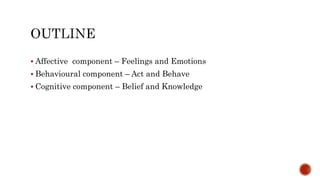

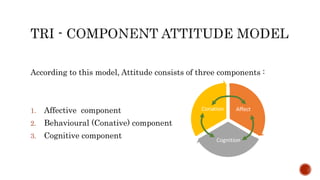
The document discusses the model of consumer attitudes, which consists of three components: affective, behavioral, and cognitive. It highlights how these components influence feelings about products and the purchase decision-making process, being shaped by personal experiences and information sources. These attitudes, evaluated as likes or dislikes, affect future buying behavior and are reflected in emotional states stored in memory.


