Basics of Attitude
Attitude refers to a person's mindset, beliefs, and behaviors towards a
particular situation or individual.
It greatly influences one's approach to challenges, relationships, and
productivity.
Ka by Kusuma Kusuma
The Nature of Attitude
Attitude refers to the psychological tendency that is expressed by evaluating a particular entity with some
degree of favor or disfavor. It can be shaped by various factors such as personal experiences, social
norms, and cultural influences.
These evaluations can influence an individual's thoughts, emotions, and behaviors, making attitudes a
crucial aspect of understanding human nature and decision-making processes.
Models of Attitude and Marketing
Implications
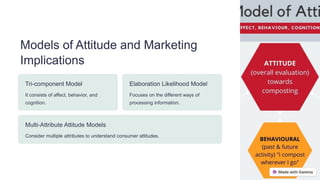
Tri-component Model
It consists of affect, behavior, and
cognition.
Elaboration Likelihood Model
Focuses on the different ways of
processing information.
Multi-Attribute Attitude Models
Consider multiple attributes to understand consumer attitudes.
Tri component model of attitude
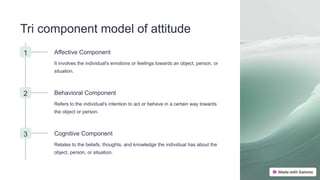
1 Affective Component
It involves the individual's emotions or feelings towards an object, person, or
situation.
2 Behavioral Component
Refers to the individual's intention to act or behave in a certain way towards
the object or person.
3 Cognitive Component
Relates to the beliefs, thoughts, and knowledge the individual has about the
object, person, or situation.
Multi Attribute Attitude Models
Favorable vs. Unfavorable
Multi-attribute attitude models assess the
favorable and unfavorable attributes associated
with a product or brand.
By examining these attributes, marketers can
understand how consumers form attitudes and
make purchasing decisions.
Weighted Attributes
Consumers assign different weights to various
product attributes based on personal
preferences and experiences.
Understanding these weighted attributes allows
marketers to tailor their strategies to meet
consumer needs effectively.
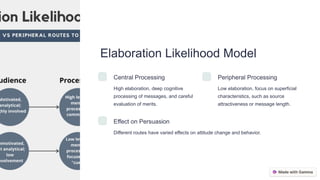
Elaboration Likelihood Model
Central Processing
High elaboration, deep cognitive
processing of messages, and careful
evaluation of merits.
Peripheral Processing
Low elaboration, focus on superficial
characteristics, such as source
attractiveness or message length.
Effect on Persuasion
Different routes have varied effects on attitude change and behavior.
Attitude
Different Perspectives
Attitudes can manifest as
positive or negative based on
individual experiences and
beliefs.
Confidence and Attitude
Confidence can significantly
influence attitude and behavior
in various personal and
professional contexts.
Social and
Environmental Impact
Attitudes can be shaped by
environmental and social
factors, impacting decision-
making and actions.
Attitude in Marketing
Customer
Satisfaction
Measuring and
increasing customer
satisfaction is crucial
for a positive brand
attitude.
Emotional Appeal
Creating emotional
connections through
marketing campaigns
influences consumer
attitudes.
Brand Loyalty
Fostering strong
brand loyalty relies on
shaping positive
attitudes toward the
brand.
Perceived Value
Consumers' attitudes
about the perceived
value of a product
affect purchasing
decisions.
Attitude Formation
1
Direct Experience
Personal encounters and interactions
2
Social Learning
Observing and imitating others' attitudes
3
Media Influence
Television, internet, and social media
Attitude in Marketing
Internet Users
Approximately 70 million internet users have a negative attitude towards a
certain brand, impacting its online reputation.
Purchase Decisions
45% of consumers have reported that a positive attitude towards a
product significantly influences their purchase decisions.

Basics-of-Attitude.pptx attitude meaning introduction characters

  • 1.
    Basics of Attitude Attituderefers to a person's mindset, beliefs, and behaviors towards a particular situation or individual. It greatly influences one's approach to challenges, relationships, and productivity. Ka by Kusuma Kusuma
  • 2.
    The Nature ofAttitude Attitude refers to the psychological tendency that is expressed by evaluating a particular entity with some degree of favor or disfavor. It can be shaped by various factors such as personal experiences, social norms, and cultural influences. These evaluations can influence an individual's thoughts, emotions, and behaviors, making attitudes a crucial aspect of understanding human nature and decision-making processes.
  • 3.
    Models of Attitudeand Marketing Implications Tri-component Model It consists of affect, behavior, and cognition. Elaboration Likelihood Model Focuses on the different ways of processing information. Multi-Attribute Attitude Models Consider multiple attributes to understand consumer attitudes.
  • 4.
    Tri component modelof attitude 1 Affective Component It involves the individual's emotions or feelings towards an object, person, or situation. 2 Behavioral Component Refers to the individual's intention to act or behave in a certain way towards the object or person. 3 Cognitive Component Relates to the beliefs, thoughts, and knowledge the individual has about the object, person, or situation.
  • 5.
    Multi Attribute AttitudeModels Favorable vs. Unfavorable Multi-attribute attitude models assess the favorable and unfavorable attributes associated with a product or brand. By examining these attributes, marketers can understand how consumers form attitudes and make purchasing decisions. Weighted Attributes Consumers assign different weights to various product attributes based on personal preferences and experiences. Understanding these weighted attributes allows marketers to tailor their strategies to meet consumer needs effectively.
  • 6.
    Elaboration Likelihood Model CentralProcessing High elaboration, deep cognitive processing of messages, and careful evaluation of merits. Peripheral Processing Low elaboration, focus on superficial characteristics, such as source attractiveness or message length. Effect on Persuasion Different routes have varied effects on attitude change and behavior.
  • 7.
    Attitude Different Perspectives Attitudes canmanifest as positive or negative based on individual experiences and beliefs. Confidence and Attitude Confidence can significantly influence attitude and behavior in various personal and professional contexts. Social and Environmental Impact Attitudes can be shaped by environmental and social factors, impacting decision- making and actions.
  • 8.
    Attitude in Marketing Customer Satisfaction Measuringand increasing customer satisfaction is crucial for a positive brand attitude. Emotional Appeal Creating emotional connections through marketing campaigns influences consumer attitudes. Brand Loyalty Fostering strong brand loyalty relies on shaping positive attitudes toward the brand. Perceived Value Consumers' attitudes about the perceived value of a product affect purchasing decisions.
  • 9.
    Attitude Formation 1 Direct Experience Personalencounters and interactions 2 Social Learning Observing and imitating others' attitudes 3 Media Influence Television, internet, and social media
  • 10.
    Attitude in Marketing InternetUsers Approximately 70 million internet users have a negative attitude towards a certain brand, impacting its online reputation. Purchase Decisions 45% of consumers have reported that a positive attitude towards a product significantly influences their purchase decisions.