Educational Platform
on Soils: EduSoils
Yuxin Tong
Natalia Rodriguez Eugenio
Background
 Education is strategically important to
understand the impacts of unsustainable use of soils
on food security, climate change, human health and
well-being.
 Education and awareness-raising are key pillars
of the Global Soil Partnership (Pillar 2).
 A soil education programme is needed for
capacity building of key stakeholders and for
decision making (Pillar 2).
• The GSP has been making great efforts to develop
the capacities of different stakeholders in a face-to-
face way on:
• Digital Soil Mapping
• SOC mapping
• Soil Salinity
• E-learning platforms help information reach a wider
range of stakeholders
• It is included in the Pillar 2 Implementation Plan
Background
Background
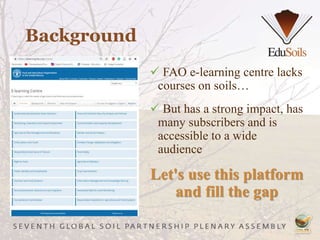
 FAO e-learning centre lacks
courses on soils…
 But has a strong impact, has
many subscribers and is
accessible to a wide
audience
Let's use this platform
and fill the gap
Objective
 By leveraging the benefits of the FAO e-learning
platform, the Global Soil Partnership proposes a
series of courses on soil-related issues to
complement the current catalogue.
 EduSoils aims to be a common platform, linked
to the FAO Soils Portal, where many existing
resources can be found.
Description
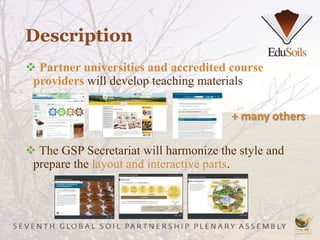
 Partner universities and accredited course
providers will develop teaching materials
 The GSP Secretariat will harmonize the style and
prepare the layout and interactive parts.
+ many others
Description
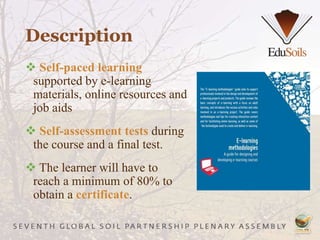
 Self-paced learning
supported by e-learning
materials, online resources and
job aids
 Self-assessment tests during
the course and a final test.
 The learner will have to
reach a minimum of 80% to
obtain a certificate.
Target audience
 Wide variety of courses aimed at different
audiences: professionals, students at different
levels, from basic level to postgraduate, researchers,
farmers and land users, politicians and government
technicians.
 The courses are also intended for those who do not
work directly in the area but are interested in
adding new knowledge and learning about soil-
related topics.
Development and
management
 Located in the FAO corporate e-learning platform
 The GSP Secretariat will facilitate the technical
assistance in cooperation with interested tutors.
 Quality and pedagogical adaptation must to be
ensure (ITPS and Pillar 2 WG)
 The courses will be available at least once a year
and at least in the six UN official languages.
Outputs
 Wide range of soil-related topics:
1. Soil laboratory practices;
2. Soil fertility management;
3. Sustainable Soil Management practices;
4. Soil mapping and monitoring
5. Soil pollution assessment and management.
 New courses will be added as key partners
provide educational materials
EduSoils
Working to make soil education
available to all
EduSoils

EduSoils

  • 1.
    Educational Platform on Soils:EduSoils Yuxin Tong Natalia Rodriguez Eugenio
  • 2.
    Background  Education isstrategically important to understand the impacts of unsustainable use of soils on food security, climate change, human health and well-being.  Education and awareness-raising are key pillars of the Global Soil Partnership (Pillar 2).  A soil education programme is needed for capacity building of key stakeholders and for decision making (Pillar 2).
  • 3.
    • The GSPhas been making great efforts to develop the capacities of different stakeholders in a face-to- face way on: • Digital Soil Mapping • SOC mapping • Soil Salinity • E-learning platforms help information reach a wider range of stakeholders • It is included in the Pillar 2 Implementation Plan Background
  • 4.
    Background  FAO e-learningcentre lacks courses on soils…  But has a strong impact, has many subscribers and is accessible to a wide audience Let's use this platform and fill the gap
  • 5.
    Objective  By leveragingthe benefits of the FAO e-learning platform, the Global Soil Partnership proposes a series of courses on soil-related issues to complement the current catalogue.  EduSoils aims to be a common platform, linked to the FAO Soils Portal, where many existing resources can be found.
  • 6.
    Description  Partner universitiesand accredited course providers will develop teaching materials  The GSP Secretariat will harmonize the style and prepare the layout and interactive parts. + many others
  • 7.
    Description  Self-paced learning supportedby e-learning materials, online resources and job aids  Self-assessment tests during the course and a final test.  The learner will have to reach a minimum of 80% to obtain a certificate.
  • 8.
    Target audience  Widevariety of courses aimed at different audiences: professionals, students at different levels, from basic level to postgraduate, researchers, farmers and land users, politicians and government technicians.  The courses are also intended for those who do not work directly in the area but are interested in adding new knowledge and learning about soil- related topics.
  • 9.
    Development and management  Locatedin the FAO corporate e-learning platform  The GSP Secretariat will facilitate the technical assistance in cooperation with interested tutors.  Quality and pedagogical adaptation must to be ensure (ITPS and Pillar 2 WG)  The courses will be available at least once a year and at least in the six UN official languages.
  • 10.
    Outputs  Wide rangeof soil-related topics: 1. Soil laboratory practices; 2. Soil fertility management; 3. Sustainable Soil Management practices; 4. Soil mapping and monitoring 5. Soil pollution assessment and management.  New courses will be added as key partners provide educational materials
  • 11.
    EduSoils Working to makesoil education available to all

Editor's Notes

  • #7 The “E-learning methodologies” guide aims to support professionals involved in the design and development of e-learning projects and products. The guide reviews the basic concepts of e-learning with a focus on adult learning, and introduces the various activities and roles involved in an e-learning project. The guide covers methodologies and tips for creating interactive content and for facilitating online learning, as well as some of the technologies used to create and deliver e-learning
  • #8 The “E-learning methodologies” guide aims to support professionals involved in the design and development of e-learning projects and products. The guide reviews the basic concepts of e-learning with a focus on adult learning, and introduces the various activities and roles involved in an e-learning project. The guide covers methodologies and tips for creating interactive content and for facilitating online learning, as well as some of the technologies used to create and deliver e-learning