A Generic Policy and Implementation
Model to Address Soil Erosion
Lal Manavado
Senior Advisor, Norwegian Directorate of Health, Norway
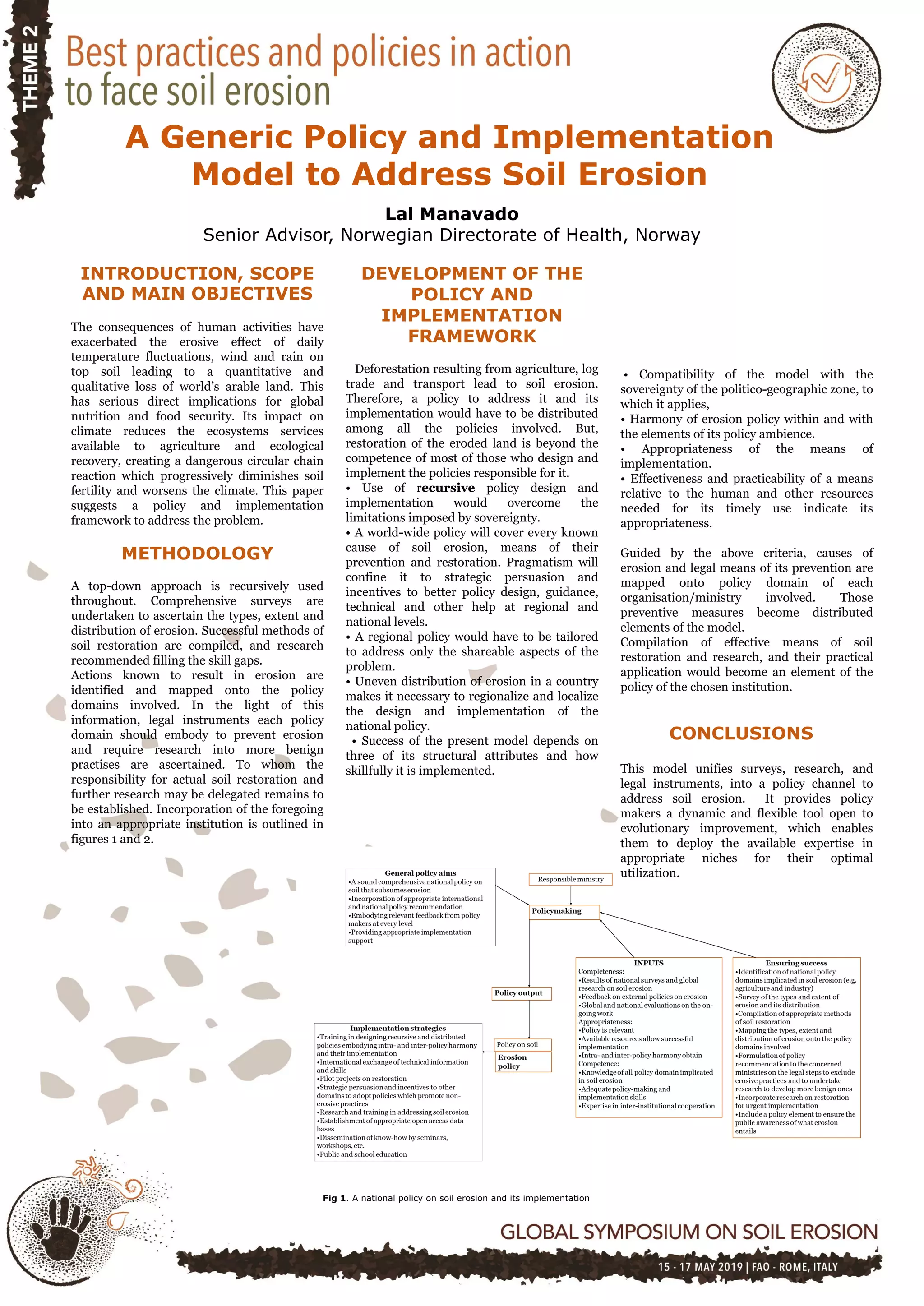
Fig 1. A national policy on soil erosion and its implementation
INTRODUCTION, SCOPE
AND MAIN OBJECTIVES
The consequences of human activities have
exacerbated the erosive effect of daily
temperature fluctuations, wind and rain on
top soil leading to a quantitative and
qualitative loss of world’s arable land. This
has serious direct implications for global
nutrition and food security. Its impact on
climate reduces the ecosystems services
available to agriculture and ecological
recovery, creating a dangerous circular chain
reaction which progressively diminishes soil
fertility and worsens the climate. This paper
suggests a policy and implementation
framework to address the problem.
METHODOLOGY
A top-down approach is recursively used
throughout. Comprehensive surveys are
undertaken to ascertain the types, extent and
distribution of erosion. Successful methods of
soil restoration are compiled, and research
recommended filling the skill gaps.
Actions known to result in erosion are
identified and mapped onto the policy
domains involved. In the light of this
information, legal instruments each policy
domain should embody to prevent erosion
and require research into more benign
practises are ascertained. To whom the
responsibility for actual soil restoration and
further research may be delegated remains to
be established. Incorporation of the foregoing
into an appropriate institution is outlined in
figures 1 and 2.
DEVELOPMENT OF THE
POLICY AND
IMPLEMENTATION
FRAMEWORK
Deforestation resulting from agriculture, log
trade and transport lead to soil erosion.
Therefore, a policy to address it and its
implementation would have to be distributed
among all the policies involved. But,
restoration of the eroded land is beyond the
competence of most of those who design and
implement the policies responsible for it.
• Use of recursive policy design and
implementation would overcome the
limitations imposed by sovereignty.
• A world-wide policy will cover every known
cause of soil erosion, means of their
prevention and restoration. Pragmatism will
confine it to strategic persuasion and
incentives to better policy design, guidance,
technical and other help at regional and
national levels.
• A regional policy would have to be tailored
to address only the shareable aspects of the
problem.
• Uneven distribution of erosion in a country
makes it necessary to regionalize and localize
the design and implementation of the
national policy.
• Success of the present model depends on
three of its structural attributes and how
skillfully it is implemented.
• Compatibility of the model with the
sovereignty of the politico-geographic zone, to
which it applies,
• Harmony of erosion policy within and with
the elements of its policy ambience.
• Appropriateness of the means of
implementation.
• Effectiveness and practicability of a means
relative to the human and other resources
needed for its timely use indicate its
appropriateness.
Guided by the above criteria, causes of
erosion and legal means of its prevention are
mapped onto policy domain of each
organisation/ministry involved. Those
preventive measures become distributed
elements of the model.
Compilation of effective means of soil
restoration and research, and their practical
application would become an element of the
policy of the chosen institution.
CONCLUSIONS
This model unifies surveys, research, and
legal instruments, into a policy channel to
address soil erosion. It provides policy
makers a dynamic and flexible tool open to
evolutionary improvement, which enables
them to deploy the available expertise in
appropriate niches for their optimal
utilization.

A Generic Policy and Implementation Model to Address Soil Erosion

  • 1.
    A Generic Policyand Implementation Model to Address Soil Erosion Lal Manavado Senior Advisor, Norwegian Directorate of Health, Norway Fig 1. A national policy on soil erosion and its implementation INTRODUCTION, SCOPE AND MAIN OBJECTIVES The consequences of human activities have exacerbated the erosive effect of daily temperature fluctuations, wind and rain on top soil leading to a quantitative and qualitative loss of world’s arable land. This has serious direct implications for global nutrition and food security. Its impact on climate reduces the ecosystems services available to agriculture and ecological recovery, creating a dangerous circular chain reaction which progressively diminishes soil fertility and worsens the climate. This paper suggests a policy and implementation framework to address the problem. METHODOLOGY A top-down approach is recursively used throughout. Comprehensive surveys are undertaken to ascertain the types, extent and distribution of erosion. Successful methods of soil restoration are compiled, and research recommended filling the skill gaps. Actions known to result in erosion are identified and mapped onto the policy domains involved. In the light of this information, legal instruments each policy domain should embody to prevent erosion and require research into more benign practises are ascertained. To whom the responsibility for actual soil restoration and further research may be delegated remains to be established. Incorporation of the foregoing into an appropriate institution is outlined in figures 1 and 2. DEVELOPMENT OF THE POLICY AND IMPLEMENTATION FRAMEWORK Deforestation resulting from agriculture, log trade and transport lead to soil erosion. Therefore, a policy to address it and its implementation would have to be distributed among all the policies involved. But, restoration of the eroded land is beyond the competence of most of those who design and implement the policies responsible for it. • Use of recursive policy design and implementation would overcome the limitations imposed by sovereignty. • A world-wide policy will cover every known cause of soil erosion, means of their prevention and restoration. Pragmatism will confine it to strategic persuasion and incentives to better policy design, guidance, technical and other help at regional and national levels. • A regional policy would have to be tailored to address only the shareable aspects of the problem. • Uneven distribution of erosion in a country makes it necessary to regionalize and localize the design and implementation of the national policy. • Success of the present model depends on three of its structural attributes and how skillfully it is implemented. • Compatibility of the model with the sovereignty of the politico-geographic zone, to which it applies, • Harmony of erosion policy within and with the elements of its policy ambience. • Appropriateness of the means of implementation. • Effectiveness and practicability of a means relative to the human and other resources needed for its timely use indicate its appropriateness. Guided by the above criteria, causes of erosion and legal means of its prevention are mapped onto policy domain of each organisation/ministry involved. Those preventive measures become distributed elements of the model. Compilation of effective means of soil restoration and research, and their practical application would become an element of the policy of the chosen institution. CONCLUSIONS This model unifies surveys, research, and legal instruments, into a policy channel to address soil erosion. It provides policy makers a dynamic and flexible tool open to evolutionary improvement, which enables them to deploy the available expertise in appropriate niches for their optimal utilization.