Web Engineering
Respected to:
Subhenur Latif
Senior Lecturer, CSE
Daffodil International University
Welcome to our
Presentation
Topic
Group Members:
•Md.jobayar Siddique (131-15-2436)
•Shah md. Sultanul arafin(131-15-2216)
•Md.Delwar Hossain (131-15-2352)
•Fahamida yasmin(131-15-2568)
•Mousumi Akter (131-15-2189)
Contents
• Introduction
• Characteristics
• Components
• Application
• Real Time Operating System
• Challenges
• Embedded Software Development Tools
• Application
• Future Trends
• Conclusion
Introduction(Cont.)
WHAT ARE EMBEDDED SYSTEMS ?
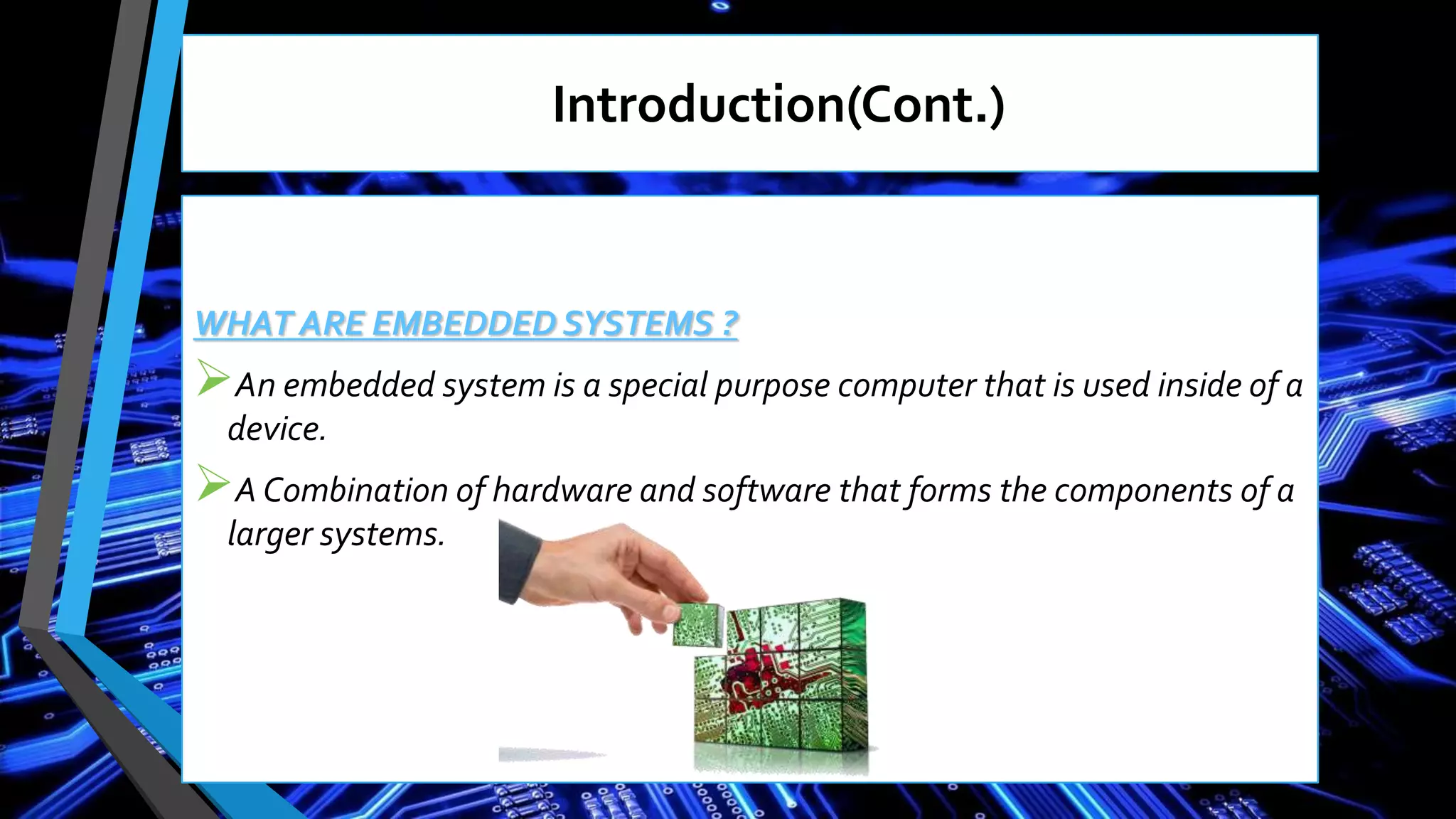
An embedded system is a special purpose computer that is used inside of a
device.
A Combination of hardware and software that forms the components of a
larger systems.
The term ‘embedded systems’ is quite a complex one. These smart systems can
take decisions in different conditions.
In embedded systems, the hardware is normally unique to a given application.
Computer chips are embedded into the control electronics to manage the product
functionality.
Introduction
Characteristics
• *They compute results in real time ,without any delay.
• *They are low cost
• *They use little power
• *They are small in size
COMPONENTS
1.Embedded hardware :-It mainly consists of a microcontroller with various
peripheral IC’s.
2.Embedded RTO’S :-All intelligent devices that perform complex functions
have an embedded operating system inside.
3.Device drivers :-The software that acts as a glue between the operating
system and the peripheral device is called the device driver
(contd.)
4. Communication stacks :-If the embedded device is capable of communicating to
the external world,it has a communication software stack running on the top of
operating system.
5. Embedded application :-It performs the predefined function of the embedded
device.
COMPONENTS
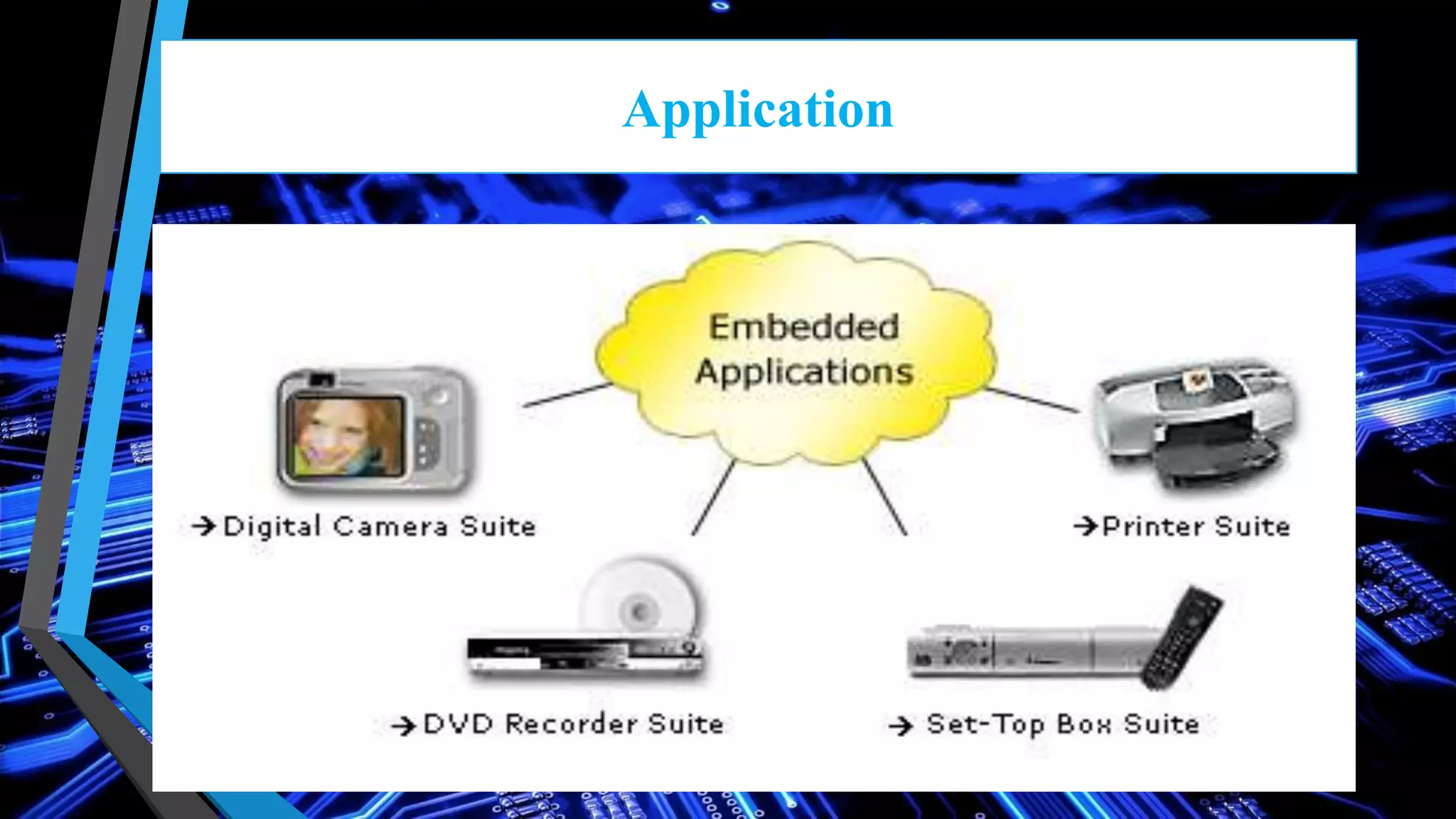
Application
RealTime Operating System
• The concept of real time operating systems is inseparable from when we talk
about embedded systems. A real time operating system is built for specific
applications and guarantees response to an external event within a specified time
constraint. For example, when you suddenly apply brakes to your car to avoid an
accident, the intelligent gadget responds immediately.
CHALLENGES
Precise engineering and design.
Low in cost.
High performance.
Careful selection of chips.
Efficiency.
In short, the challenge is to provide affordable, highly integrated
devices meeting stringent requirements for safety, security,
reliability, availability and at the same time keeping the cost low.
Embedded Software DevelopmentTools
• Host and target machines: The system that you ship may or may not have a
keyboard, a screen, a disk drive and the other peripherals necessary for programming.
It may not have enough memory to run a programming editor.
• Therefore most programming work for embedded systems is done on host- a
computer system on which all the programming tools run.
• Some people use the word ‘work-station’ instead of ‘host’..
• Cross-compilers:
• Cross-assemblers and tool chains:
• Linker/Locator for Embedded Software:
• Address resolution
• Locating program components properly:
• Locator places segments in memory:
• Execution out of RAM:
Embedded Software DevelopmentTools
Application
• Automatic teller machines (ATM):
• Cellular telephones and telephones switches:
• Household appliances:
• Inertial guidance systems in aircraft and missiles:
• Multifunction wristwatches:
• Medical equipment:
• Factory automation:
• Personal digital assistants:
• Programmable logic controllers:
• Audio/visual equipment:
• Personal computer peripheral office equipment:
• Communication equipment:
FutureTrends
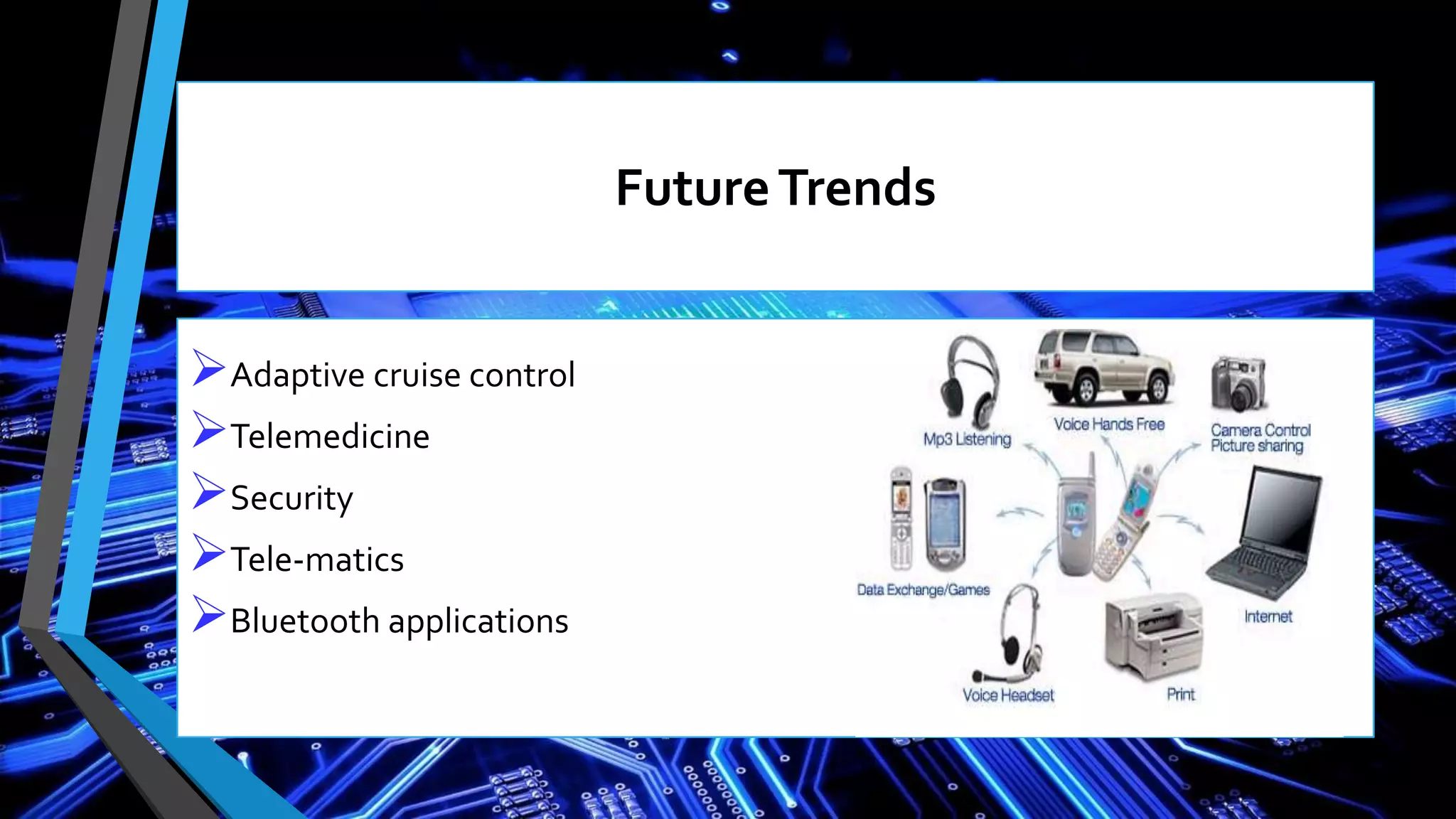
Adaptive cruise control
Telemedicine
Security
Tele-matics
Bluetooth applications
CONCLUSION
The world of embedded systems is a dreamer’s paradise with
unlimited possibilities.
It make controlling all the systems around just by a simple gesture
and the things respond to you as if it was some magic.
As microprocessors are becoming smaller and cheaper, more and
more products are becoming ‘smart’ with microprocessors embedded
in them.
Thank You
Questions?

Web Engineering

  • 1.
    Web Engineering Respected to: SubhenurLatif Senior Lecturer, CSE Daffodil International University
  • 2.
  • 3.
  • 4.
    Group Members: •Md.jobayar Siddique(131-15-2436) •Shah md. Sultanul arafin(131-15-2216) •Md.Delwar Hossain (131-15-2352) •Fahamida yasmin(131-15-2568) •Mousumi Akter (131-15-2189)
  • 5.
    Contents • Introduction • Characteristics •Components • Application • Real Time Operating System • Challenges • Embedded Software Development Tools • Application • Future Trends • Conclusion
  • 6.
    Introduction(Cont.) WHAT ARE EMBEDDEDSYSTEMS ? An embedded system is a special purpose computer that is used inside of a device. A Combination of hardware and software that forms the components of a larger systems.
  • 7.
    The term ‘embeddedsystems’ is quite a complex one. These smart systems can take decisions in different conditions. In embedded systems, the hardware is normally unique to a given application. Computer chips are embedded into the control electronics to manage the product functionality. Introduction
  • 8.
    Characteristics • *They computeresults in real time ,without any delay. • *They are low cost • *They use little power • *They are small in size
  • 9.
    COMPONENTS 1.Embedded hardware :-Itmainly consists of a microcontroller with various peripheral IC’s. 2.Embedded RTO’S :-All intelligent devices that perform complex functions have an embedded operating system inside. 3.Device drivers :-The software that acts as a glue between the operating system and the peripheral device is called the device driver (contd.)
  • 10.
    4. Communication stacks:-If the embedded device is capable of communicating to the external world,it has a communication software stack running on the top of operating system. 5. Embedded application :-It performs the predefined function of the embedded device. COMPONENTS
  • 11.
  • 12.
    RealTime Operating System •The concept of real time operating systems is inseparable from when we talk about embedded systems. A real time operating system is built for specific applications and guarantees response to an external event within a specified time constraint. For example, when you suddenly apply brakes to your car to avoid an accident, the intelligent gadget responds immediately.
  • 13.
    CHALLENGES Precise engineering anddesign. Low in cost. High performance. Careful selection of chips. Efficiency. In short, the challenge is to provide affordable, highly integrated devices meeting stringent requirements for safety, security, reliability, availability and at the same time keeping the cost low.
  • 14.
    Embedded Software DevelopmentTools •Host and target machines: The system that you ship may or may not have a keyboard, a screen, a disk drive and the other peripherals necessary for programming. It may not have enough memory to run a programming editor. • Therefore most programming work for embedded systems is done on host- a computer system on which all the programming tools run. • Some people use the word ‘work-station’ instead of ‘host’..
  • 15.
    • Cross-compilers: • Cross-assemblersand tool chains: • Linker/Locator for Embedded Software: • Address resolution • Locating program components properly: • Locator places segments in memory: • Execution out of RAM: Embedded Software DevelopmentTools
  • 16.
    Application • Automatic tellermachines (ATM): • Cellular telephones and telephones switches: • Household appliances: • Inertial guidance systems in aircraft and missiles: • Multifunction wristwatches: • Medical equipment: • Factory automation: • Personal digital assistants: • Programmable logic controllers: • Audio/visual equipment: • Personal computer peripheral office equipment: • Communication equipment:
  • 17.
  • 18.
    CONCLUSION The world ofembedded systems is a dreamer’s paradise with unlimited possibilities. It make controlling all the systems around just by a simple gesture and the things respond to you as if it was some magic. As microprocessors are becoming smaller and cheaper, more and more products are becoming ‘smart’ with microprocessors embedded in them.
  • 19.