Bill Nichols –
Swedish film critic
and theoretician
best known for his
pioneering work as
founder of the
contemporary
study of
documentary film.
He suggests there
are 6 modes of
documentary.
Poetic mode –
Expository mode –
Observational mode –
Participatory mode –
Reflexive mode –
Performative mode –
Poetic Mode
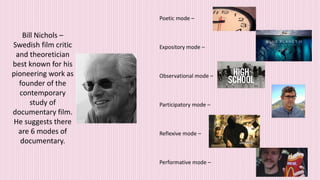
This when it shows a certain mood or tone
thought the cinematography rather then a
voice or person in front of the camera, they
are often associated with music.
An example of this can be the documentary
– ‘time’ which is a sequence of different time
lapses.
Expository Mode
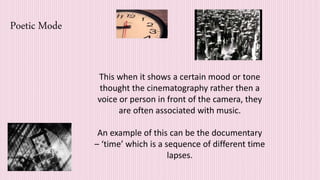
This is when there is the use of voiceovers or
subtitles to the viewers to show a point of view
or and argument.
An example of this could be Blue planet, David
Attenborough does a voice over for the
documentaries which informs the viewers what
may be happening.
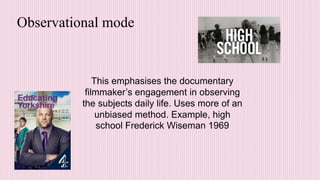
Observational mode
This emphasises the documentary
filmmaker’s engagement in observing
the subjects daily life. Uses more of an
unbiased method. Example, high
school Frederick Wiseman 1969
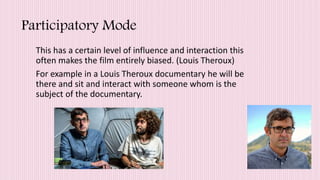
Participatory Mode
This has a certain level of influence and interaction this
often makes the film entirely biased. (Louis Theroux)
For example in a Louis Theroux documentary he will be
there and sit and interact with someone whom is the
subject of the documentary.
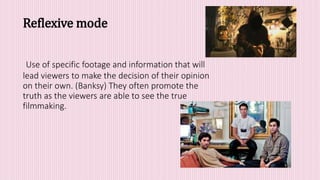
Use of specific footage and information that will
lead viewers to make the decision of their opinion
on their own. (Banksy) They often promote the
truth as the viewers are able to see the true
filmmaking.
Reflexive mode
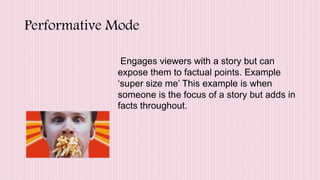
Performative Mode
Engages viewers with a story but can
expose them to factual points. Example
‘super size me’ This example is when
someone is the focus of a story but adds in
facts throughout.

6 modes of Documentary

  • 1.
    Bill Nichols – Swedishfilm critic and theoretician best known for his pioneering work as founder of the contemporary study of documentary film. He suggests there are 6 modes of documentary. Poetic mode – Expository mode – Observational mode – Participatory mode – Reflexive mode – Performative mode –
  • 2.
    Poetic Mode This whenit shows a certain mood or tone thought the cinematography rather then a voice or person in front of the camera, they are often associated with music. An example of this can be the documentary – ‘time’ which is a sequence of different time lapses.
  • 3.
    Expository Mode This iswhen there is the use of voiceovers or subtitles to the viewers to show a point of view or and argument. An example of this could be Blue planet, David Attenborough does a voice over for the documentaries which informs the viewers what may be happening.
  • 4.
    Observational mode This emphasisesthe documentary filmmaker’s engagement in observing the subjects daily life. Uses more of an unbiased method. Example, high school Frederick Wiseman 1969
  • 5.
    Participatory Mode This hasa certain level of influence and interaction this often makes the film entirely biased. (Louis Theroux) For example in a Louis Theroux documentary he will be there and sit and interact with someone whom is the subject of the documentary.
  • 6.
    Use of specificfootage and information that will lead viewers to make the decision of their opinion on their own. (Banksy) They often promote the truth as the viewers are able to see the true filmmaking. Reflexive mode
  • 7.
    Performative Mode Engages viewerswith a story but can expose them to factual points. Example ‘super size me’ This example is when someone is the focus of a story but adds in facts throughout.