How is our agriculture today?
Todays growing awareness:
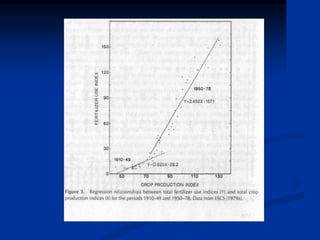
 Increased cost of and dependence on external
inputs of chemical and energy
 Decline in soil productivity, from soil erosion
and nutrient loss
 Contamination of surface and groundwater
from fertilizer and pesticides
 Hazards to human and animal health and to
food quality from agrochemicals
How is our agriculture today?
● Application of inorganic fertilizer
 Soil Low efficiency
 structure degradation
 Micro nutrient depletion
 Limitation of natural resources
 Expensive prices
 Pollution
● Application of pesticides
♦
♦
♦
♦
♦
♦
♦
easier ways to suppress insect and
often be subsided and promoted
more resistance insects
need higher dosages every time
killing the predators as well
pollution (soil, water, air)
entering food chains
disease
 Superior seed
 Providing higher productivity
 More responsive to inorganic fertilizers
 Genetic erosion
 Vulnerable to insect and diseases
Why modern agriculture is not
sustainable?
 In modern agriculture development, ‘raising
the production’ is often given the primary
attention
When the upper limit of productivity is
exceeded, the agroecosystem may
degrade and collapse
Why modern agriculture is not
sustainable?
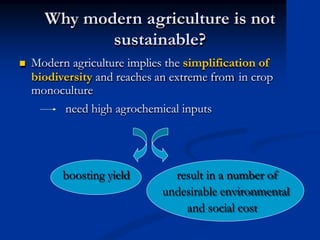
 Modern agriculture implies the simplification of
biodiversity and reaches an extreme from
monoculture
in crop
need high agrochemical inputs
boosting yield result in a number of
undesirable environmental
and social cost
Modern agroecosystems are unstable, having
problems such as pest, soil
pollution of water
degradation
system
and
 The introduction of new technology
has greatly increased short term
productivity,
may lowered
sustainability
but in the long term
the stability,
and equity of the total
agricultural system
Challenge of producing an economically
viable crop, while preserving the integrity
local, regional and global environment:
of
need the applicaton of ecological theory
to farm management
(Agroecology is a scientific methodology
which regards agroecosystem)

Sust agric 2 ho 2015

  • 1.
    How is ouragriculture today?
  • 2.
    Todays growing awareness: Increased cost of and dependence on external inputs of chemical and energy  Decline in soil productivity, from soil erosion and nutrient loss  Contamination of surface and groundwater from fertilizer and pesticides  Hazards to human and animal health and to food quality from agrochemicals
  • 3.
    How is ouragriculture today? ● Application of inorganic fertilizer  Soil Low efficiency  structure degradation  Micro nutrient depletion  Limitation of natural resources  Expensive prices  Pollution
  • 5.
    ● Application ofpesticides ♦ ♦ ♦ ♦ ♦ ♦ ♦ easier ways to suppress insect and often be subsided and promoted more resistance insects need higher dosages every time killing the predators as well pollution (soil, water, air) entering food chains disease
  • 6.
     Superior seed Providing higher productivity  More responsive to inorganic fertilizers  Genetic erosion  Vulnerable to insect and diseases
  • 7.
    Why modern agricultureis not sustainable?  In modern agriculture development, ‘raising the production’ is often given the primary attention When the upper limit of productivity is exceeded, the agroecosystem may degrade and collapse
  • 8.
    Why modern agricultureis not sustainable?  Modern agriculture implies the simplification of biodiversity and reaches an extreme from monoculture in crop need high agrochemical inputs boosting yield result in a number of undesirable environmental and social cost
  • 9.
    Modern agroecosystems areunstable, having problems such as pest, soil pollution of water degradation system and  The introduction of new technology has greatly increased short term productivity, may lowered sustainability but in the long term the stability, and equity of the total agricultural system
  • 10.
    Challenge of producingan economically viable crop, while preserving the integrity local, regional and global environment: of need the applicaton of ecological theory to farm management (Agroecology is a scientific methodology which regards agroecosystem)