Downloaded 15 times
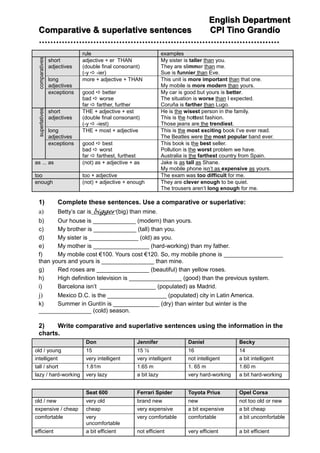
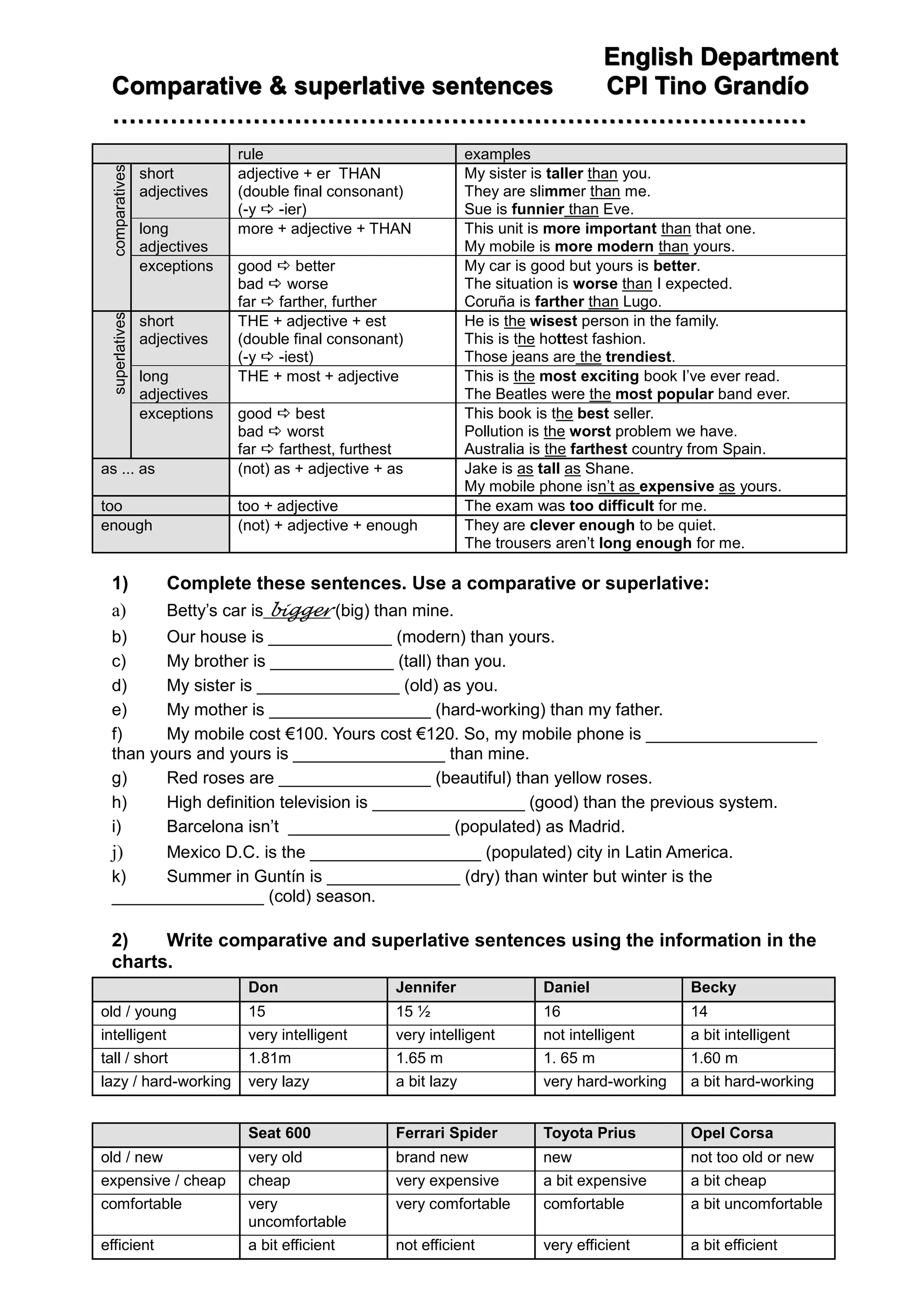

This document provides rules and examples for forming comparative and superlative sentences in English. Comparative sentences use "er/ier" or "more" to compare two things, while superlative sentences use "est" or "most" to compare three or more things. It includes examples comparing adjectives like tall, modern, important. There are also exceptions for adjectives like good, bad, far. The document concludes with exercises asking the reader to form comparative and superlative sentences based on charts of information.


