
CALCIUM
Deena Binti Roslee
Ferunica Eging
Noor Albannia Natasya Binti
Jabi
Suhana Binti Jaabi
WE WILL LEARN
ABOUT.....
•
What is calcium ?
•
The Ca Cycle
•
Importance of Ca cycle
•
Forms of Ca in soil
•
Factors affecting the avaibility of Ca in soil
•
Sources of Ca
•
Forms of Ca in plant
•
Function of Ca in plant
•
Visual deficiency Symptoms
Calcium ?
•
Atomic number 20.
•
Secondary macronutrient for plant
•
Ca is a soft grey alkaline earth metal.
•
Leach able nutrient
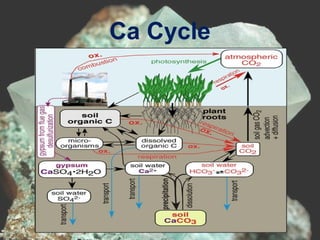
The Ca Cycle?
•
It is one of the mineral cycle in the earth
•
It shows how calcium is extracted from earth
and enter living organism.
•
It also show how it is returned to earth
Ca Cycle
Importance of Ca Cycle
•
Improves water penetration
•
Helps to maintain chemical balance in the
soil
•
Reduce soil salinity
•
Neutralizes cell acids
Forms of Ca in Soil
•
In acid, humid regions soils, Ca2+
and Al3+
dominate the CEC
•
The exchangeable and solutions
Ca are dynamic equilibrium and
plant available forms.
Factors Affecting Avaibility of Ca
in Soil
•
Total Ca supply
•
Soil pH; when pH is higher free Ca
accumulates in the soil solution, Ca tend
to form insoluble compound with P.
•
CEC; higher CEC increase capacity of soil
to hold Ca and therefore Higher Ca
avaibility
•
% of Ca+2
saturation on CEC
•
Type of soil clay
•
Ratio of solution Ca to another Cation
sources of Ca
•
The primary sources are liming materials
such as CaCO3, CaMg(CO3)2, and others
applied to neutralize soil acidity
•
Ca is present in several fertilizer materials
including: triple superphosphate (12-14%
Ca)
•
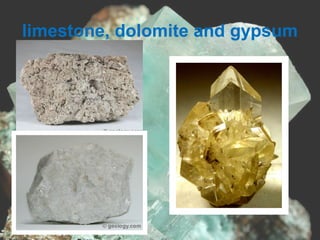
Sedimentary rock; Gypsum, limestone,
dolomite, liquid calcium
•
Rock and shells in oceans floor
limestone, dolomite and gypsum
Forms of Ca in plant
•
Plant absorb Ca+2
from the soil solution,
where mass flow and root interception
are the primary mechanisms of Ca
transport to root surface.
•
Ca deficiency is uncommon but can occur
in highly leached, unlimited acid soils.
Function of Ca in Plant
•
Ca+2
is essential for translocation of
carbohydrates and nutrients
•
Ca+2
moved with transpiration of water in the
xylem due to mobility.
•
Essential for cell division and cell elongation
•
Strengthen cell wall structure ; it forms
calcium pectate compounds which gives stability
to cell walls and bind cells together.
•
Affects fruits quality.
Deficiency
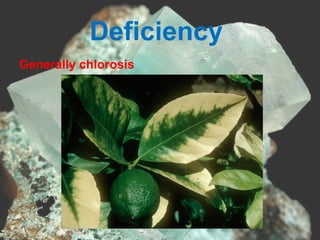
Generally chlorosis
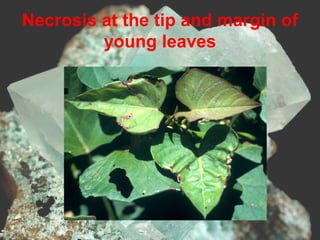
Necrosis at the tip and margin of
young leaves
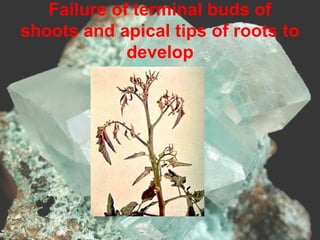
Failure of terminal buds of
shoots and apical tips of roots to
develop
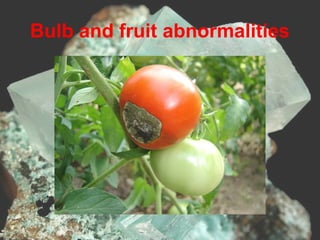
Bulb and fruit abnormalities
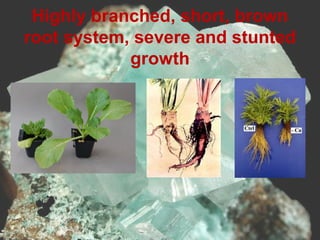
Highly branched, short, brown
root system, severe and stunted
growth
Toxicity
•
Difficult for other nutrients uptake due to
high soil pH.
•
Suffer deficiencies of other nutrients, such
as phosphorus, potassium, magnesium,
boron,copper, iron, or zinc.
THANK YOU

secondary macronutrient : Calcium

  • 1.
    CALCIUM Deena Binti Roslee FerunicaEging Noor Albannia Natasya Binti Jabi Suhana Binti Jaabi
  • 2.
    WE WILL LEARN ABOUT..... • Whatis calcium ? • The Ca Cycle • Importance of Ca cycle • Forms of Ca in soil • Factors affecting the avaibility of Ca in soil • Sources of Ca • Forms of Ca in plant • Function of Ca in plant • Visual deficiency Symptoms
  • 3.
    Calcium ? • Atomic number20. • Secondary macronutrient for plant • Ca is a soft grey alkaline earth metal. • Leach able nutrient
  • 4.
    The Ca Cycle? • Itis one of the mineral cycle in the earth • It shows how calcium is extracted from earth and enter living organism. • It also show how it is returned to earth
  • 5.
  • 6.
    Importance of CaCycle • Improves water penetration • Helps to maintain chemical balance in the soil • Reduce soil salinity • Neutralizes cell acids
  • 7.
    Forms of Cain Soil • In acid, humid regions soils, Ca2+ and Al3+ dominate the CEC • The exchangeable and solutions Ca are dynamic equilibrium and plant available forms.
  • 8.
    Factors Affecting Avaibilityof Ca in Soil • Total Ca supply • Soil pH; when pH is higher free Ca accumulates in the soil solution, Ca tend to form insoluble compound with P. • CEC; higher CEC increase capacity of soil to hold Ca and therefore Higher Ca avaibility • % of Ca+2 saturation on CEC • Type of soil clay • Ratio of solution Ca to another Cation
  • 9.
    sources of Ca • Theprimary sources are liming materials such as CaCO3, CaMg(CO3)2, and others applied to neutralize soil acidity • Ca is present in several fertilizer materials including: triple superphosphate (12-14% Ca) • Sedimentary rock; Gypsum, limestone, dolomite, liquid calcium • Rock and shells in oceans floor
  • 10.
  • 12.
    Forms of Cain plant • Plant absorb Ca+2 from the soil solution, where mass flow and root interception are the primary mechanisms of Ca transport to root surface. • Ca deficiency is uncommon but can occur in highly leached, unlimited acid soils.
  • 13.
    Function of Cain Plant • Ca+2 is essential for translocation of carbohydrates and nutrients • Ca+2 moved with transpiration of water in the xylem due to mobility. • Essential for cell division and cell elongation • Strengthen cell wall structure ; it forms calcium pectate compounds which gives stability to cell walls and bind cells together. • Affects fruits quality.
  • 14.
  • 15.
    Necrosis at thetip and margin of young leaves
  • 16.
    Failure of terminalbuds of shoots and apical tips of roots to develop
  • 17.
    Bulb and fruitabnormalities
  • 18.
    Highly branched, short,brown root system, severe and stunted growth
  • 19.
    Toxicity • Difficult for othernutrients uptake due to high soil pH. • Suffer deficiencies of other nutrients, such as phosphorus, potassium, magnesium, boron,copper, iron, or zinc.
  • 20.