TOURISM PRODUCT
TOURISM PRODUCT
As in all industries and business, a product is put together or manufactured for sale to
the general public. In order to develop and sell a product, a company or organization
must know what potential buyers really want. It is of little benefit to produce a
beautiful product that nobody wants to buy.
* The tourism product too must meet the needs of potential buyers.
Tourist product is intangible. When a tourist, guided by his motivations and the image
of the tourist destination, decides on a trip somewhere outside his usual place of
residence or work, he is buying a tourist product - a promise that will soon become a
memory once he returns home.
When one buys a trip to destinations, one does so in expectation of a memorable
experience. The experience at the airport or bus station upon arrival in the destination
is part of the tourist product. The quality of transportation and the behavior of the
driver and other aspects of transport services all form part of the experience in the
destination. They are important components of the tourist product.
The residents' attitude towards visitors and tourists forms part of the tourist product,
of the tourist experience.
As in all industries and business, a product is put
together or manufactured for sale to the general
public. In order to develop and sell a product, a
company or organization must know what potential
buyers really want. It is of little benefit to produce a
beautiful product that nobody wants to buy
The tourism product too must meet the needs of
potential buyers…………………………………………………………
TOURISM PRODUCT
• The tourism product too must meet the
needs of potential buyers.
• Tourist product is intangible. When a tourist,
guided by his motivations and the image of
the tourist destination, decides on a trip
somewhere outside his usual place of
residence or work, he is buying a tourist
product - a promise that will soon become a
memory once he returns home.
 When one buys a trip to destinations, one does
so in expectation of a memorable experience.
The experience at the airport or bus station upon
arrival in the destination is part of the tourist
product. The quality of transportation and the
behavior of the driver and other aspects of
transport services all form part of the experience
in the destination. They are important
components of the tourist product.
 The residents' attitude towards visitors and
tourists forms part of the tourist product, of the
tourist experience.
EXPLANATION
 The facilities and services of the accommodation establishment, shopping
places , restaurants, food, local tours and security are all part of the tourist
product.
 The carnival and festival, tourist spot, accessibility experiences are all
parts of the total tourist experience.
 There are tourist markets for every tourist product or combination of
tourist products. Tourist destinations, therefore, should improve their
tourist product if they want to attract high spending, discriminating
tourists. They should know their markets and supply what they want.
Some countries will have a much more varied product than others. This can
be illustrated by comparing such countries as India with one like the Republic
of the Maldives. The former has an enormous variation of natural tourism
resources, while the letter is mainly dependent on the sole resource of
island/water sports/beach. Nevertheless, the Maldives is an international
recognized tourist destination. It has exploited its main resources by
attraction a specific type of tourist.
Even if a destination already possesses natural tourism resources, it needs
infrastructures and superstructure to exploit those. It is of no benefit to have
a wonderful destination in a place that people cannot reach or where there
are no service or facilities. A destination needs adequate man-made facilities.
The combination of infrastructure, superstructure and the natural resources
of the country go to make up the tourism product. If any of these elements
are below standard, the product will be affected and difficult to sell. So it is
important to exploit the natural scenic beauties and actual destination
forecast and also earns money and foreign exchange.
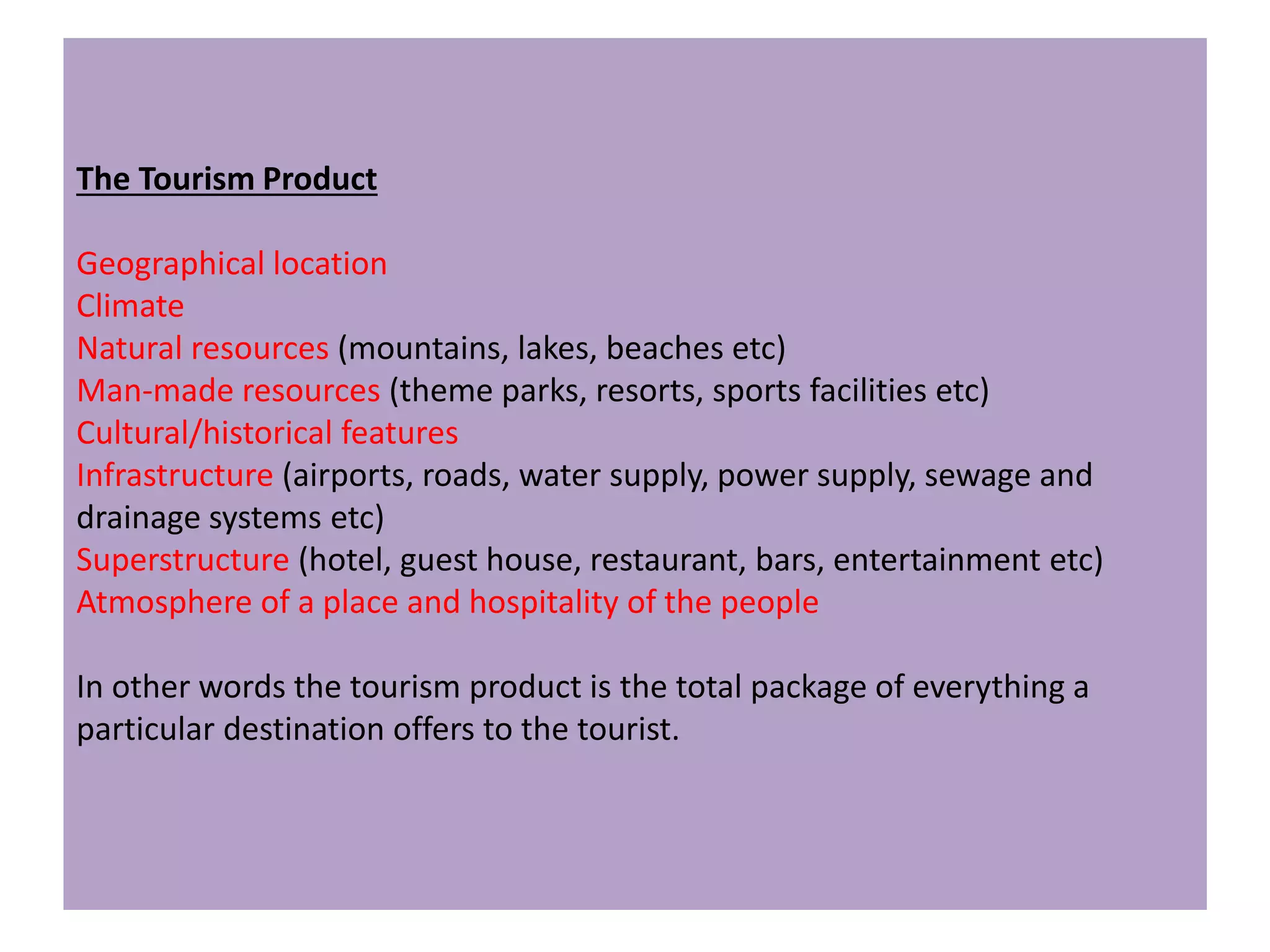
The Tourism Product
Geographical location
Climate
Natural resources (mountains, lakes, beaches etc)
Man-made resources (theme parks, resorts, sports facilities etc)
Cultural/historical features
Infrastructure (airports, roads, water supply, power supply, sewage and
drainage systems etc)
Superstructure (hotel, guest house, restaurant, bars, entertainment etc)
Atmosphere of a place and hospitality of the people
In other words the tourism product is the total package of everything a
particular destination offers to the tourist.
The Tourism Sector
The tourism sector is a coming together of various suppliers of services to
offer people a complete tourist experience. It is made up, therefore, of
providers of transport, board and lodging together with a range of activities
designed to satisfy the tourist’s needs.
Normally the tourism sector comprises both the government (public sector)
and the business community (private sector). They combine to give the
tourists a satisfactory holiday.
The public sector is usually involved with:
Policymaking
Statistics analysis
Planning and development
Licensing and regulation
Training and human resource development
The Tourism Sector
The tourism sector is a coming together of various suppliers of services to offer
people a complete tourist experience. It is made up, therefore, of providers of
transport, board and lodging together with a range of activities designed to satisfy
the tourist’s needs.
Normally the tourism sector comprises both the government (public sector) and
the business community (private sector). They combine to give the tourists a
satisfactory holiday.
The public sector is usually involved with:
Policymaking
Statistics analysis
Planning and development
Licensing and regulation
Training and human resource development
The private sector :
The private sector provides all the services, which the tourist might require.
These providers of services are commercial operations and try to make profit
from the tourist.
Some of the services provided by these commercial enterprises include:
Transport (air, sea and land)
Accommodation
Food and beverages
Entertainments/activities, as well as many others
In general, the public sectors plans and guides tourism development and the
private sector provides the end product.
Components of Tourism
There are three basic components of tourism, which are also known as 3, A’s of tourism:
Accessibility (Reach ability/Transportation): - Accessibility means reach ability to the place of
destination through various means of transportation. Transportation should be regular,
comfortable, economical and safe. Today there are various means of transportation like airlines,
railways, surface (road transportation) and water transportation. The transportation should be
there for all kinds of tourists and destinations.
Accommodation: - It is a place where tourists can find food and shelter provided he/she is in a fit
position to pay for it. There are various types of accommodation from a seven star deluxe hotel
to a normal budget class hotel.
Attraction (Locale): - It is considered as the most important basic component of tourism.
Attraction means anything that creates a desire in any person to travel in a specific tourist
destination or attraction.
Locale is another basic component of tourism. The locale may be used to include the holiday
destination and what it offers to the tourist. The holiday destination may offer natural attractions.
It is considered as the most important basic component of tourism. Fashion is an important factor
in the demand for various tourist attractions and amenities. The tourist who visits a particular
place for its natural beauty may decide to visit some other attractions due to a change in fashion.
Basic Components
Accessibility Accommodation Attraction
Air
Railway
Road
Sea
Hotels
Motels
Inns
Guest Hotels
Youth Hotels
Resort Hotels
Circuit Hotels
Heritage Hotels
Farm Houses
Camping Sites & etc.
Monuments
Pilgrimage
Museums
Zoo
Rivers
Beaches
Art Galleries
Hill Stations
Natural Attractions
Man-made Lakes & etc.
There are certain elements or ingredients of tourism. They are
the fundamental to attractions of tourism. They are :
Pleasing weather Scenic attractions Historical and cultural
factors
Accessibility Amenities Accommodation
Safety and security Age Gender (male or female)
Qualification Hospitality by most population Money
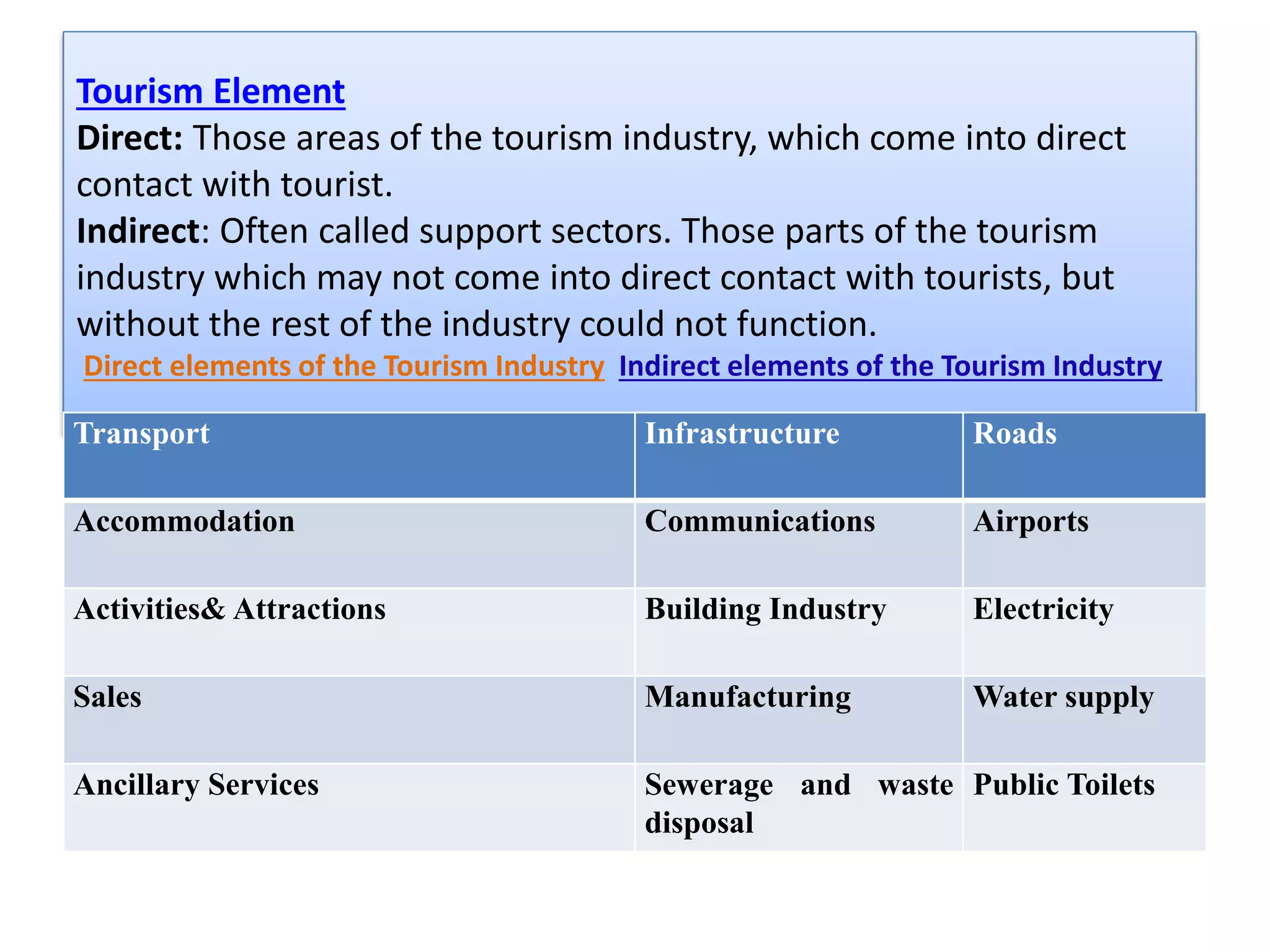
Tourism Element
Direct: Those areas of the tourism industry, which come into direct
contact with tourist.
Indirect: Often called support sectors. Those parts of the tourism
industry which may not come into direct contact with tourists, but
without the rest of the industry could not function.
Direct elements of the Tourism Industry Indirect elements of the Tourism Industry
Transport Infrastructure Roads
Accommodation Communications Airports
Activities& Attractions Building Industry Electricity
Sales Manufacturing Water supply
Ancillary Services Sewerage and waste
disposal
Public Toilets
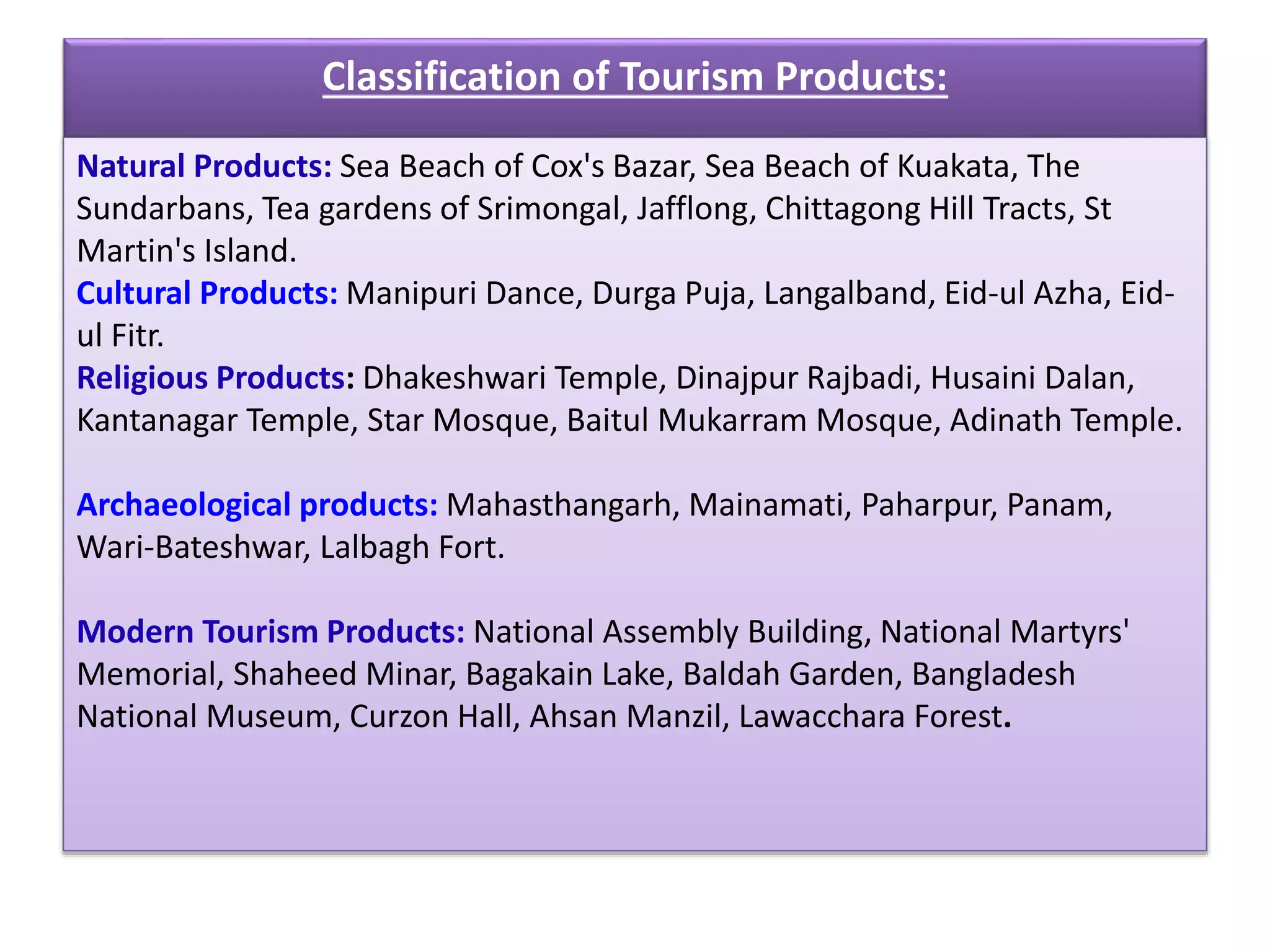
Classification of Tourism Products:
Natural Products: Sea Beach of Cox's Bazar, Sea Beach of Kuakata, The
Sundarbans, Tea gardens of Srimongal, Jafflong, Chittagong Hill Tracts, St
Martin's Island.
Cultural Products: Manipuri Dance, Durga Puja, Langalband, Eid-ul Azha, Eid-
ul Fitr.
Religious Products: Dhakeshwari Temple, Dinajpur Rajbadi, Husaini Dalan,
Kantanagar Temple, Star Mosque, Baitul Mukarram Mosque, Adinath Temple.
Archaeological products: Mahasthangarh, Mainamati, Paharpur, Panam,
Wari-Bateshwar, Lalbagh Fort.
Modern Tourism Products: National Assembly Building, National Martyrs'
Memorial, Shaheed Minar, Bagakain Lake, Baldah Garden, Bangladesh
National Museum, Curzon Hall, Ahsan Manzil, Lawacchara Forest.

Tourism product (1)

  • 1.
  • 2.
    TOURISM PRODUCT As inall industries and business, a product is put together or manufactured for sale to the general public. In order to develop and sell a product, a company or organization must know what potential buyers really want. It is of little benefit to produce a beautiful product that nobody wants to buy. * The tourism product too must meet the needs of potential buyers. Tourist product is intangible. When a tourist, guided by his motivations and the image of the tourist destination, decides on a trip somewhere outside his usual place of residence or work, he is buying a tourist product - a promise that will soon become a memory once he returns home. When one buys a trip to destinations, one does so in expectation of a memorable experience. The experience at the airport or bus station upon arrival in the destination is part of the tourist product. The quality of transportation and the behavior of the driver and other aspects of transport services all form part of the experience in the destination. They are important components of the tourist product. The residents' attitude towards visitors and tourists forms part of the tourist product, of the tourist experience.
  • 3.
    As in allindustries and business, a product is put together or manufactured for sale to the general public. In order to develop and sell a product, a company or organization must know what potential buyers really want. It is of little benefit to produce a beautiful product that nobody wants to buy The tourism product too must meet the needs of potential buyers………………………………………………………… TOURISM PRODUCT
  • 4.
    • The tourismproduct too must meet the needs of potential buyers. • Tourist product is intangible. When a tourist, guided by his motivations and the image of the tourist destination, decides on a trip somewhere outside his usual place of residence or work, he is buying a tourist product - a promise that will soon become a memory once he returns home.
  • 5.
     When onebuys a trip to destinations, one does so in expectation of a memorable experience. The experience at the airport or bus station upon arrival in the destination is part of the tourist product. The quality of transportation and the behavior of the driver and other aspects of transport services all form part of the experience in the destination. They are important components of the tourist product.  The residents' attitude towards visitors and tourists forms part of the tourist product, of the tourist experience.
  • 6.
    EXPLANATION  The facilitiesand services of the accommodation establishment, shopping places , restaurants, food, local tours and security are all part of the tourist product.  The carnival and festival, tourist spot, accessibility experiences are all parts of the total tourist experience.  There are tourist markets for every tourist product or combination of tourist products. Tourist destinations, therefore, should improve their tourist product if they want to attract high spending, discriminating tourists. They should know their markets and supply what they want.
  • 7.
    Some countries willhave a much more varied product than others. This can be illustrated by comparing such countries as India with one like the Republic of the Maldives. The former has an enormous variation of natural tourism resources, while the letter is mainly dependent on the sole resource of island/water sports/beach. Nevertheless, the Maldives is an international recognized tourist destination. It has exploited its main resources by attraction a specific type of tourist. Even if a destination already possesses natural tourism resources, it needs infrastructures and superstructure to exploit those. It is of no benefit to have a wonderful destination in a place that people cannot reach or where there are no service or facilities. A destination needs adequate man-made facilities. The combination of infrastructure, superstructure and the natural resources of the country go to make up the tourism product. If any of these elements are below standard, the product will be affected and difficult to sell. So it is important to exploit the natural scenic beauties and actual destination forecast and also earns money and foreign exchange.
  • 8.
    The Tourism Product Geographicallocation Climate Natural resources (mountains, lakes, beaches etc) Man-made resources (theme parks, resorts, sports facilities etc) Cultural/historical features Infrastructure (airports, roads, water supply, power supply, sewage and drainage systems etc) Superstructure (hotel, guest house, restaurant, bars, entertainment etc) Atmosphere of a place and hospitality of the people In other words the tourism product is the total package of everything a particular destination offers to the tourist.
  • 9.
    The Tourism Sector Thetourism sector is a coming together of various suppliers of services to offer people a complete tourist experience. It is made up, therefore, of providers of transport, board and lodging together with a range of activities designed to satisfy the tourist’s needs. Normally the tourism sector comprises both the government (public sector) and the business community (private sector). They combine to give the tourists a satisfactory holiday. The public sector is usually involved with: Policymaking Statistics analysis Planning and development Licensing and regulation Training and human resource development
  • 10.
    The Tourism Sector Thetourism sector is a coming together of various suppliers of services to offer people a complete tourist experience. It is made up, therefore, of providers of transport, board and lodging together with a range of activities designed to satisfy the tourist’s needs. Normally the tourism sector comprises both the government (public sector) and the business community (private sector). They combine to give the tourists a satisfactory holiday. The public sector is usually involved with: Policymaking Statistics analysis Planning and development Licensing and regulation Training and human resource development
  • 11.
    The private sector: The private sector provides all the services, which the tourist might require. These providers of services are commercial operations and try to make profit from the tourist. Some of the services provided by these commercial enterprises include: Transport (air, sea and land) Accommodation Food and beverages Entertainments/activities, as well as many others In general, the public sectors plans and guides tourism development and the private sector provides the end product.
  • 12.
    Components of Tourism Thereare three basic components of tourism, which are also known as 3, A’s of tourism: Accessibility (Reach ability/Transportation): - Accessibility means reach ability to the place of destination through various means of transportation. Transportation should be regular, comfortable, economical and safe. Today there are various means of transportation like airlines, railways, surface (road transportation) and water transportation. The transportation should be there for all kinds of tourists and destinations. Accommodation: - It is a place where tourists can find food and shelter provided he/she is in a fit position to pay for it. There are various types of accommodation from a seven star deluxe hotel to a normal budget class hotel. Attraction (Locale): - It is considered as the most important basic component of tourism. Attraction means anything that creates a desire in any person to travel in a specific tourist destination or attraction. Locale is another basic component of tourism. The locale may be used to include the holiday destination and what it offers to the tourist. The holiday destination may offer natural attractions. It is considered as the most important basic component of tourism. Fashion is an important factor in the demand for various tourist attractions and amenities. The tourist who visits a particular place for its natural beauty may decide to visit some other attractions due to a change in fashion.
  • 13.
    Basic Components Accessibility AccommodationAttraction Air Railway Road Sea Hotels Motels Inns Guest Hotels Youth Hotels Resort Hotels Circuit Hotels Heritage Hotels Farm Houses Camping Sites & etc. Monuments Pilgrimage Museums Zoo Rivers Beaches Art Galleries Hill Stations Natural Attractions Man-made Lakes & etc.
  • 14.
    There are certainelements or ingredients of tourism. They are the fundamental to attractions of tourism. They are : Pleasing weather Scenic attractions Historical and cultural factors Accessibility Amenities Accommodation Safety and security Age Gender (male or female) Qualification Hospitality by most population Money
  • 15.
    Tourism Element Direct: Thoseareas of the tourism industry, which come into direct contact with tourist. Indirect: Often called support sectors. Those parts of the tourism industry which may not come into direct contact with tourists, but without the rest of the industry could not function. Direct elements of the Tourism Industry Indirect elements of the Tourism Industry Transport Infrastructure Roads Accommodation Communications Airports Activities& Attractions Building Industry Electricity Sales Manufacturing Water supply Ancillary Services Sewerage and waste disposal Public Toilets
  • 16.
    Classification of TourismProducts: Natural Products: Sea Beach of Cox's Bazar, Sea Beach of Kuakata, The Sundarbans, Tea gardens of Srimongal, Jafflong, Chittagong Hill Tracts, St Martin's Island. Cultural Products: Manipuri Dance, Durga Puja, Langalband, Eid-ul Azha, Eid- ul Fitr. Religious Products: Dhakeshwari Temple, Dinajpur Rajbadi, Husaini Dalan, Kantanagar Temple, Star Mosque, Baitul Mukarram Mosque, Adinath Temple. Archaeological products: Mahasthangarh, Mainamati, Paharpur, Panam, Wari-Bateshwar, Lalbagh Fort. Modern Tourism Products: National Assembly Building, National Martyrs' Memorial, Shaheed Minar, Bagakain Lake, Baldah Garden, Bangladesh National Museum, Curzon Hall, Ahsan Manzil, Lawacchara Forest.