Emulsion detectors provide high-precision tracking of charged particles using photographic emulsion. They have three key properties:
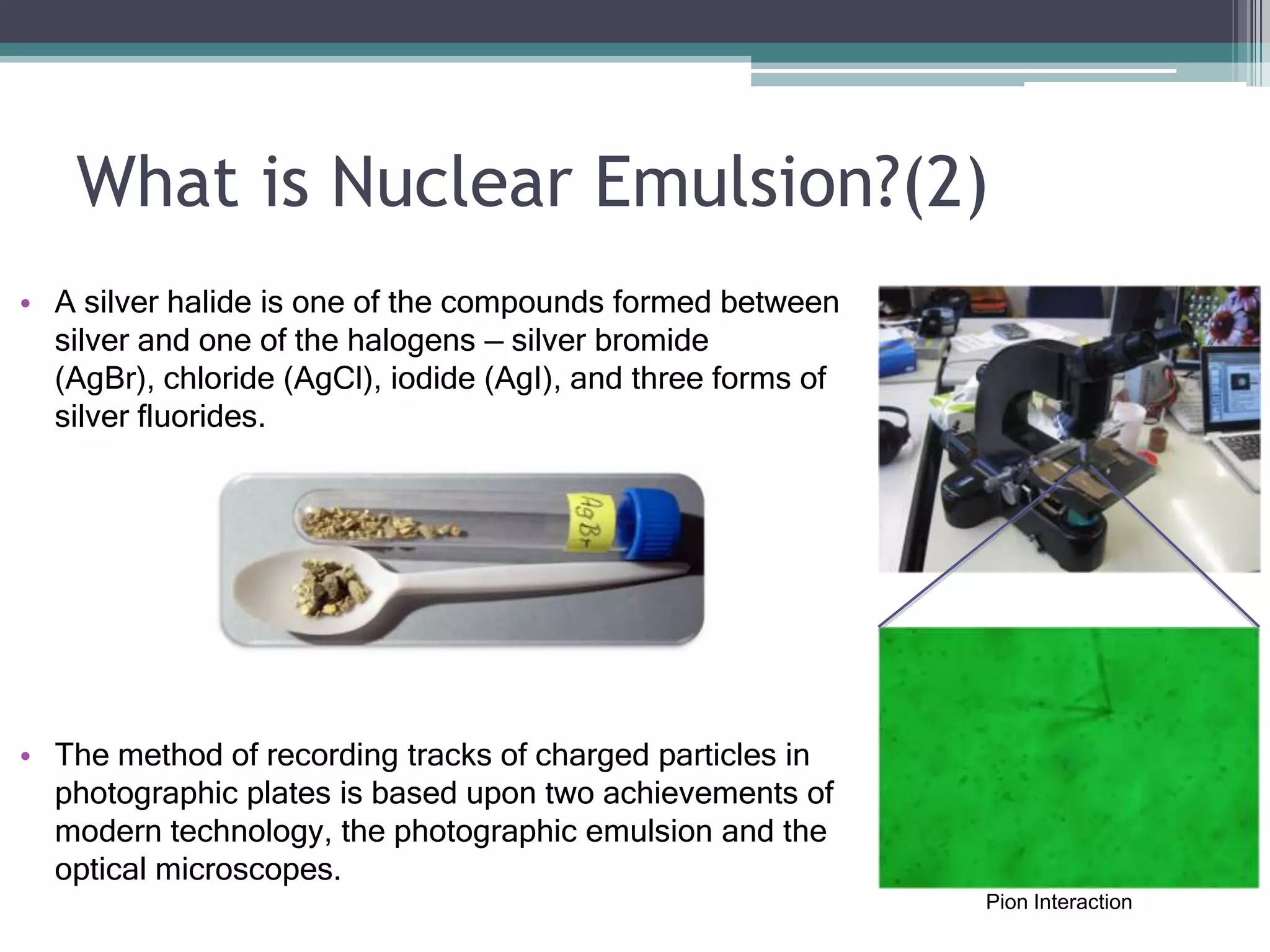
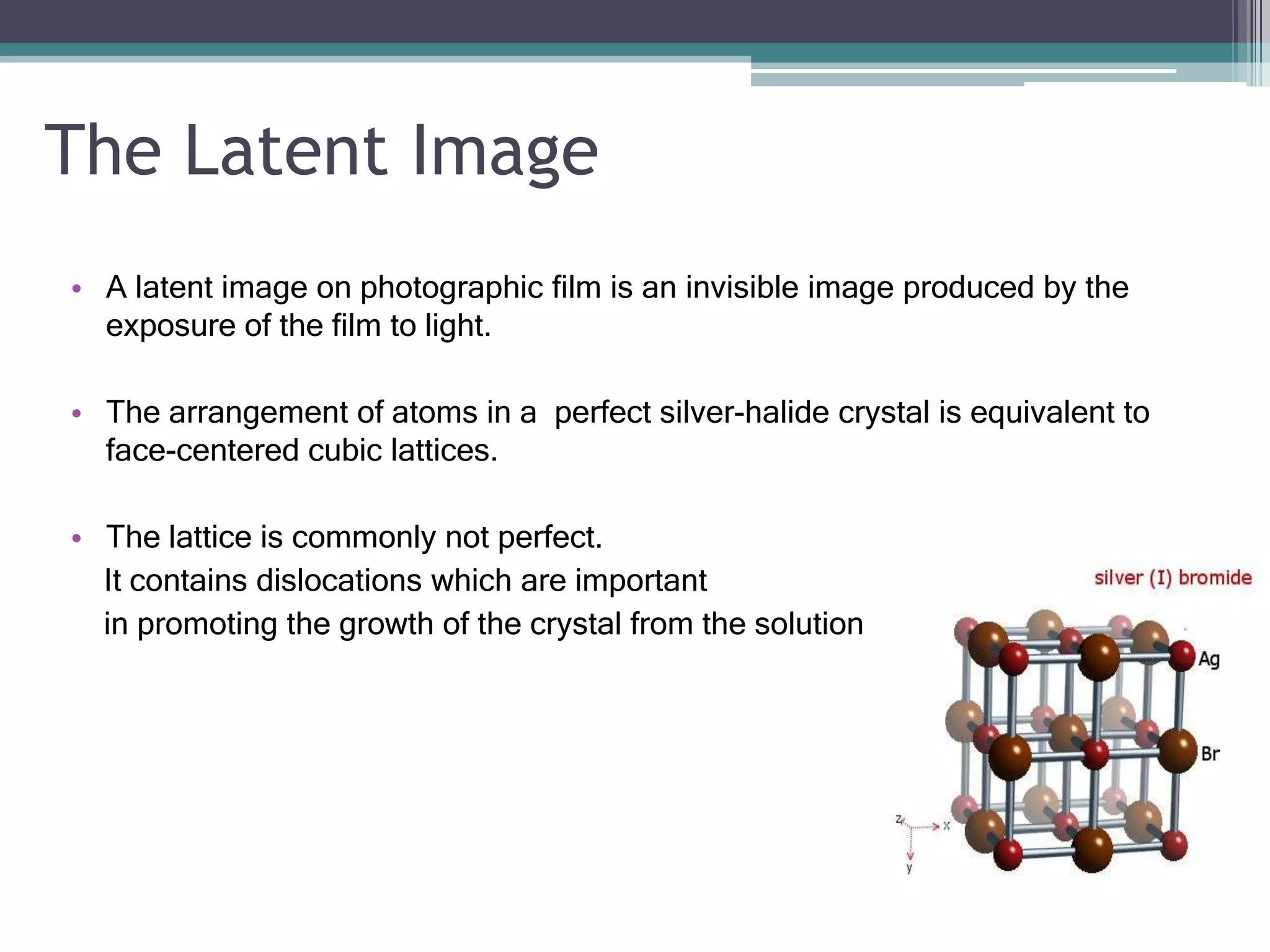
1. Nuclear emulsion consists of silver halide crystals in a gelatin base that can track particles with sub-micron resolution.
2. When developed, the emulsion reveals particle tracks as black silver grains, allowing reconstruction of interaction vertices and particle identification via grain density.
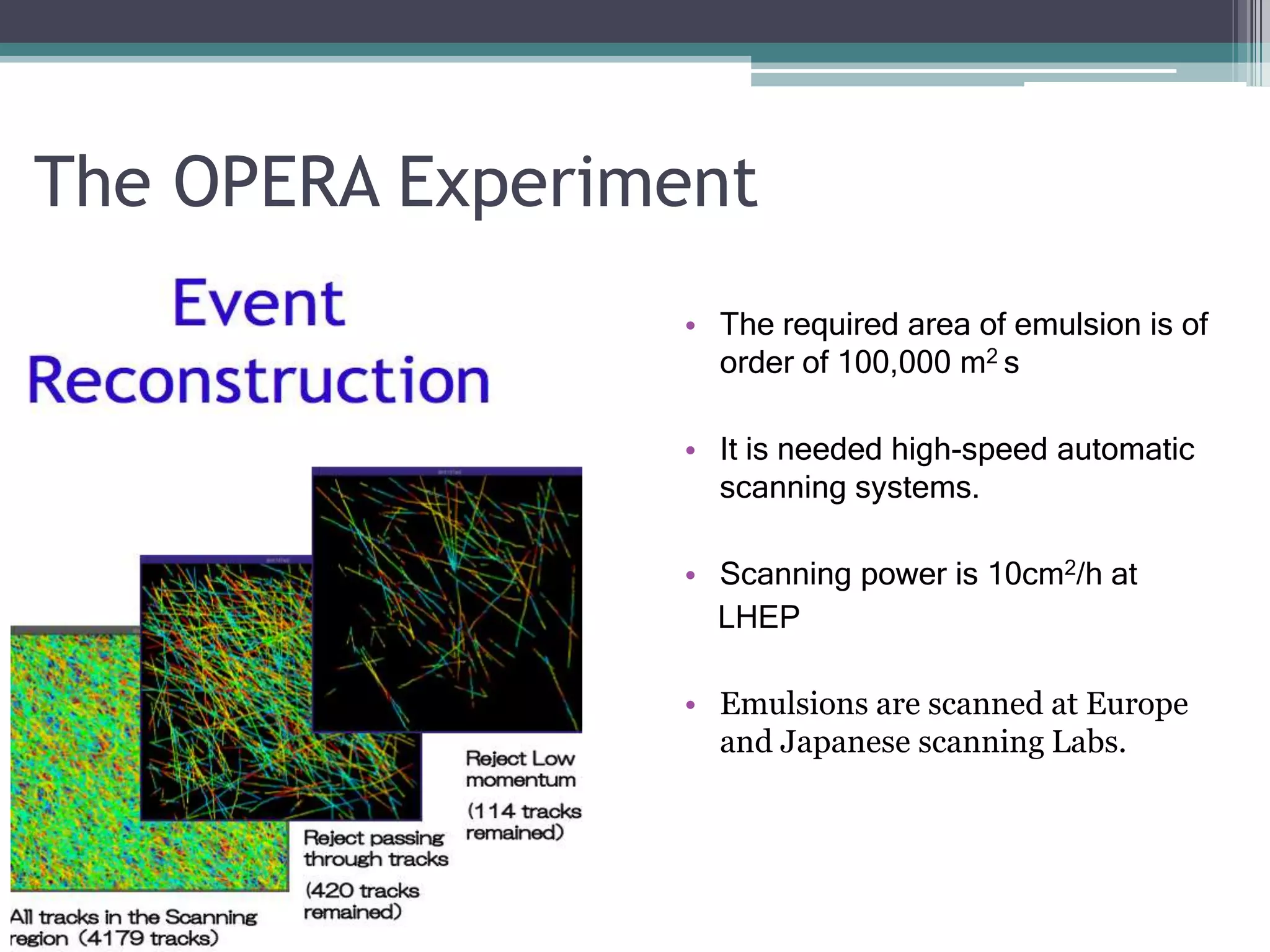
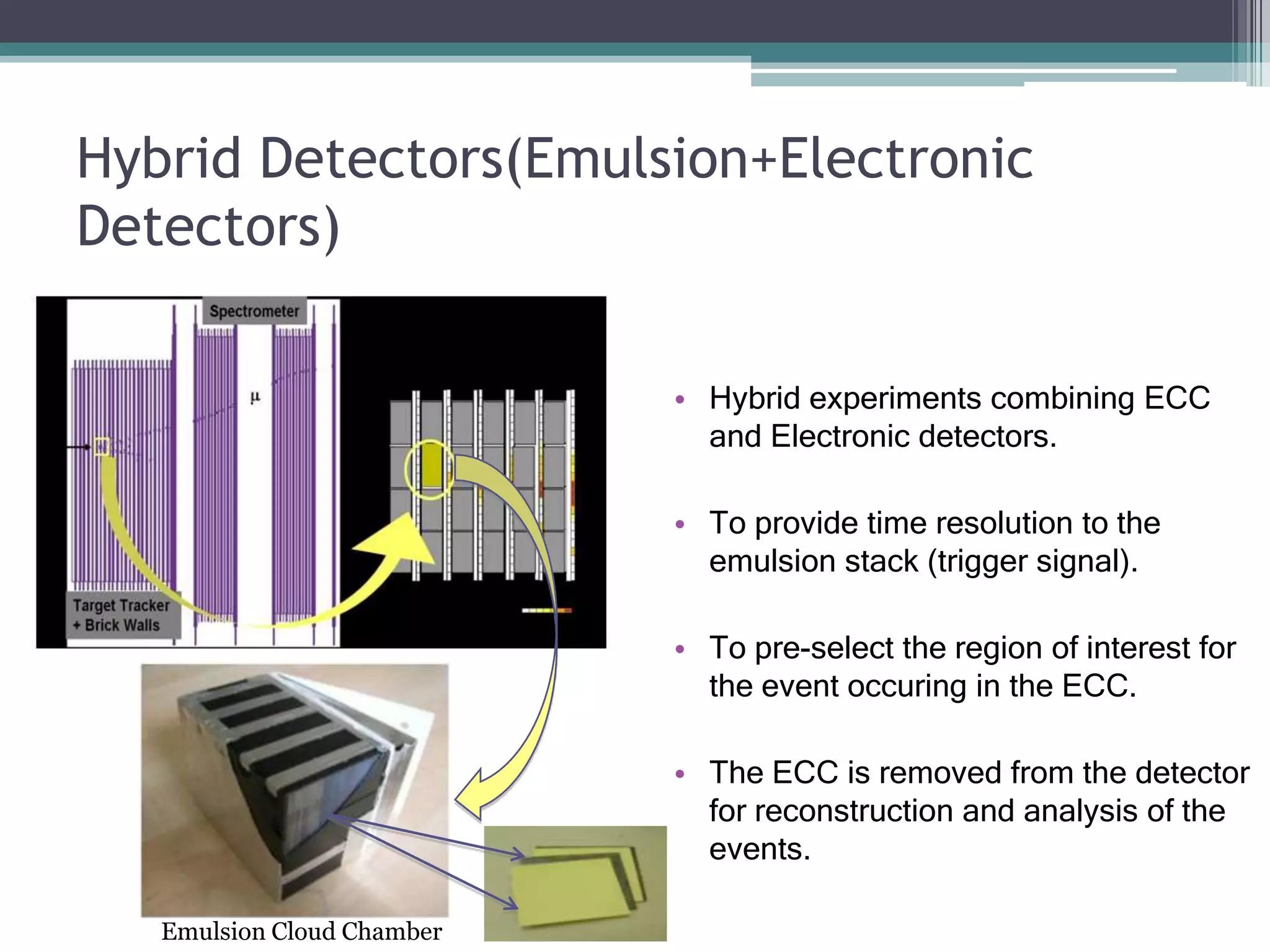
3. Automated scanning systems have been developed to rapidly digitize emulsion plates and reconstruct tracks for high-energy physics experiments like OPERA, which used emulsions to observe tau neutrino interactions.




















![Vibe Coding vs. Spec-Driven Development [Free Meetup]](https://cdn.slidesharecdn.com/ss_thumbnails/vibecodingvsspecdrivendevelopment-251209105622-43f455e7-thumbnail.jpg?width=640&height=640&fit=bounds)


