
Mismatched
What’s wrong with the way we recognize patterns?

Robert Stribley
Associate Experience Director, Razorfish

#patterns
How many political parties are there in the United
States?
How many political parties are there in the United
States?
How many colors are there?
How many genders are there?
How many forms of sexual orientation are there?
How many races are there?
How many states are there?
We’re poor tolerators of
ambiguity
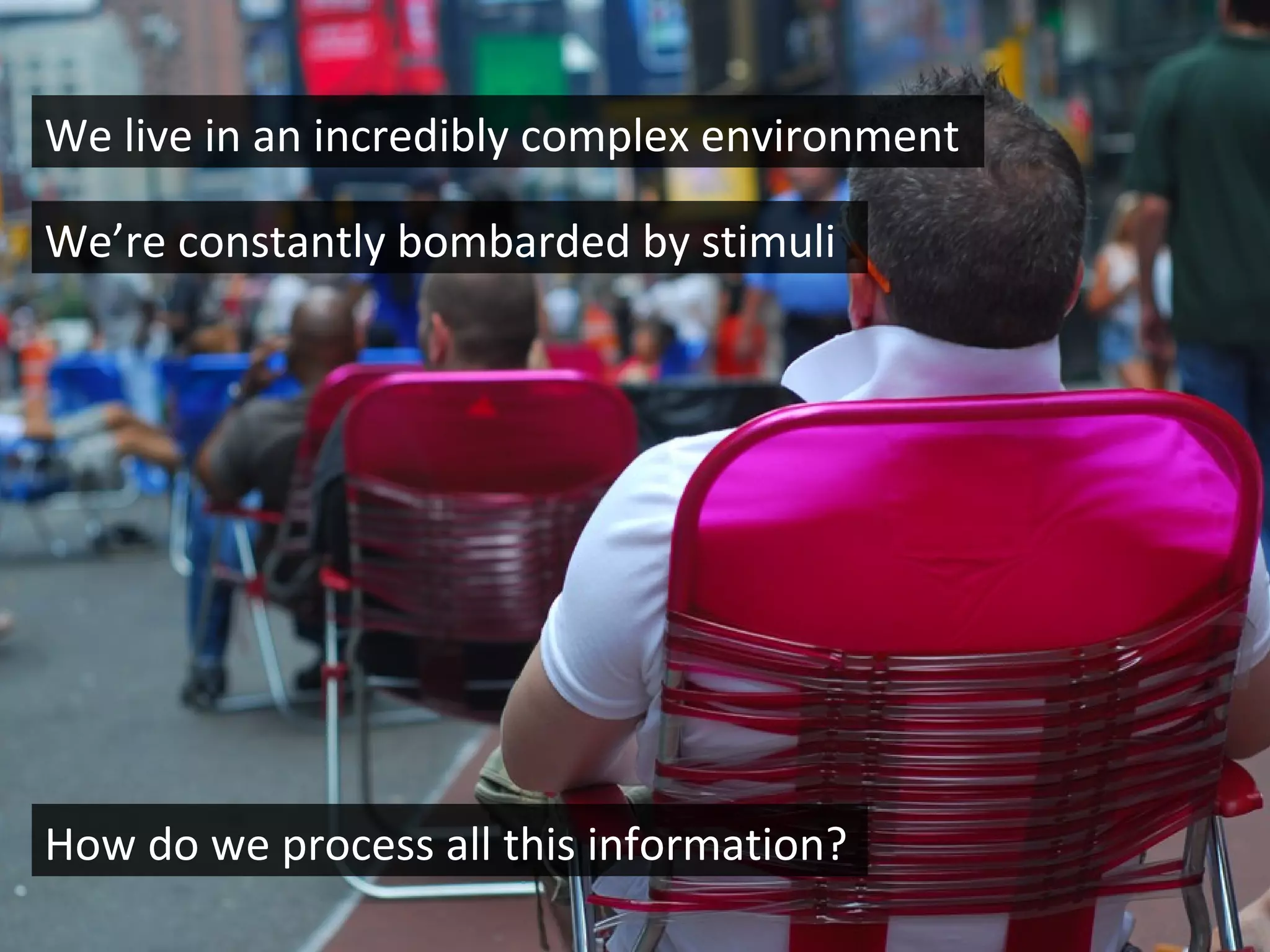
We live in an incredibly complex environment
We’re constantly bombarded by stimuli

How do we process all this information?
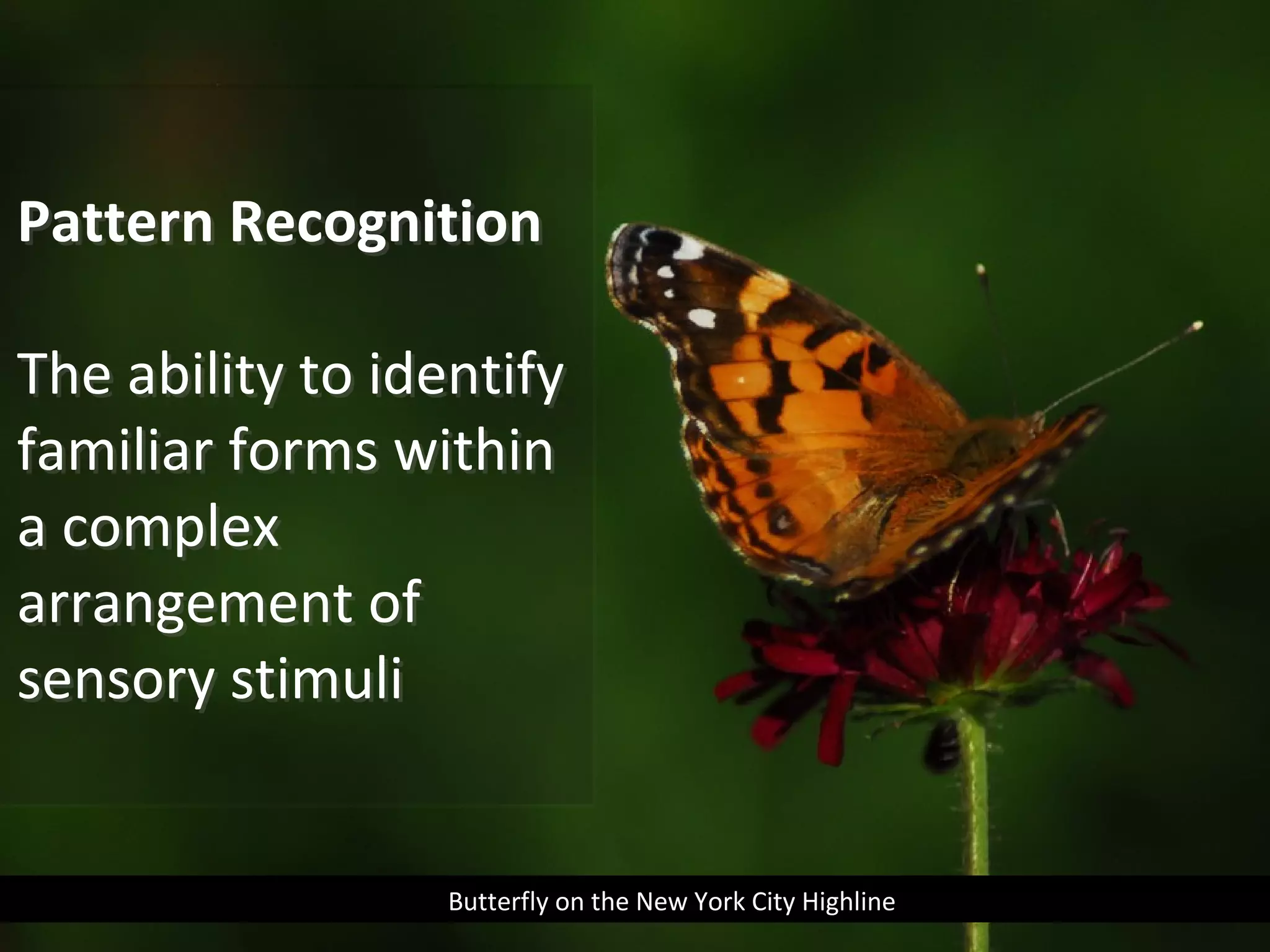
Pattern Recognition
The ability to identify
familiar forms within
a complex
arrangement of
sensory stimuli

Butterfly on the New York City Highline
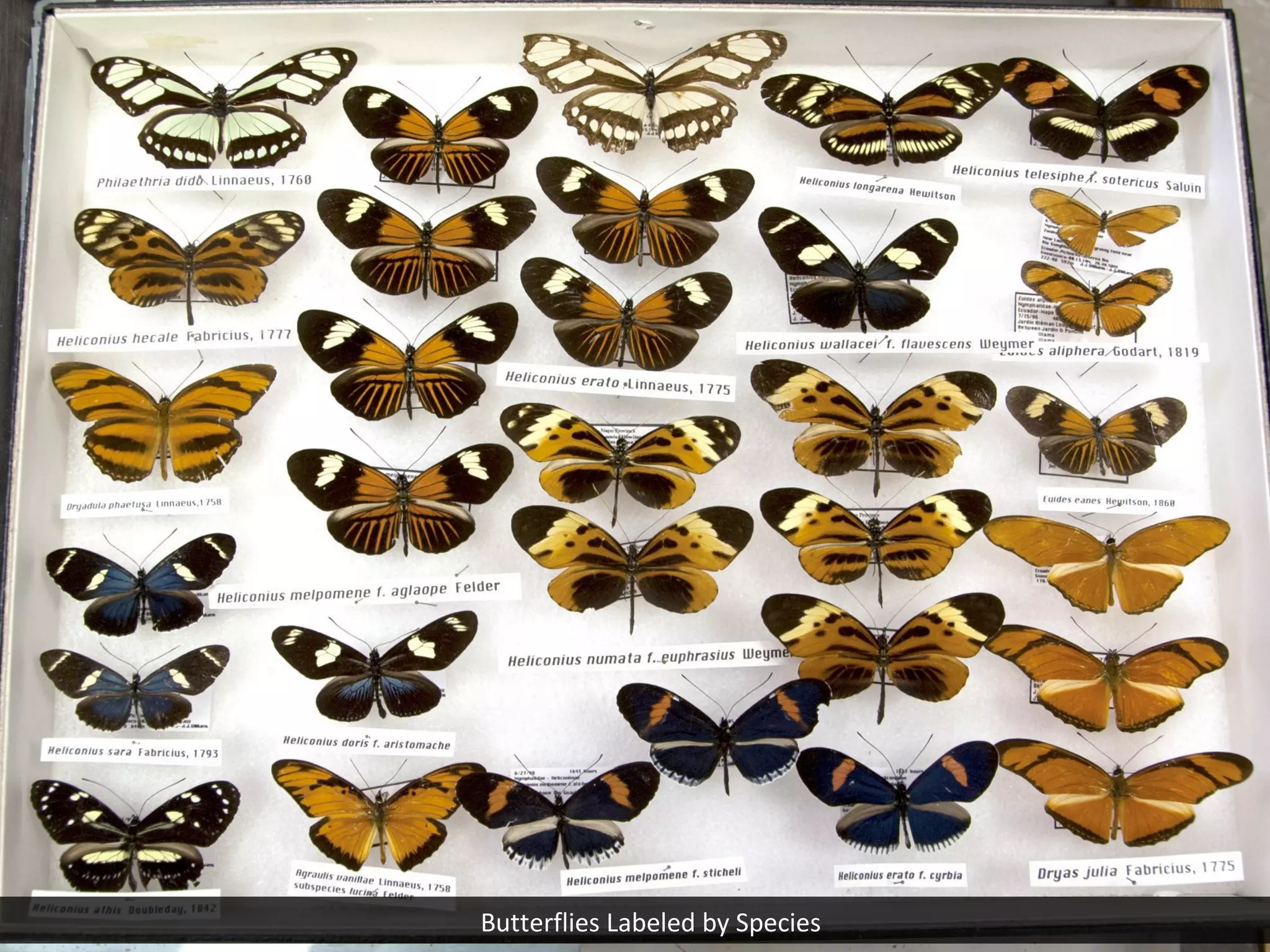
Butterflies Labeled by Species
Some examples of pattern recognition
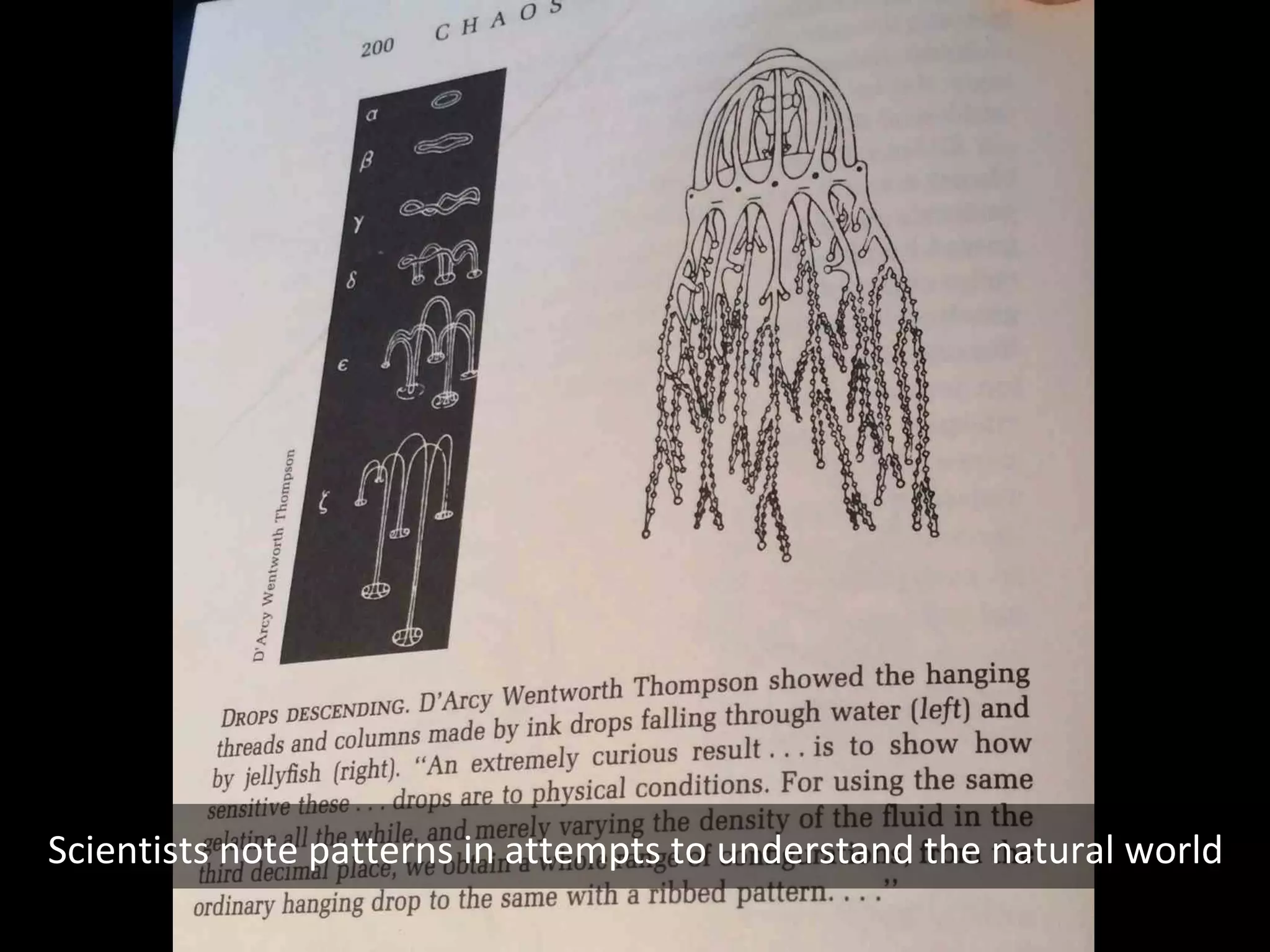
Scientists note patterns in attempts to understand the natural world
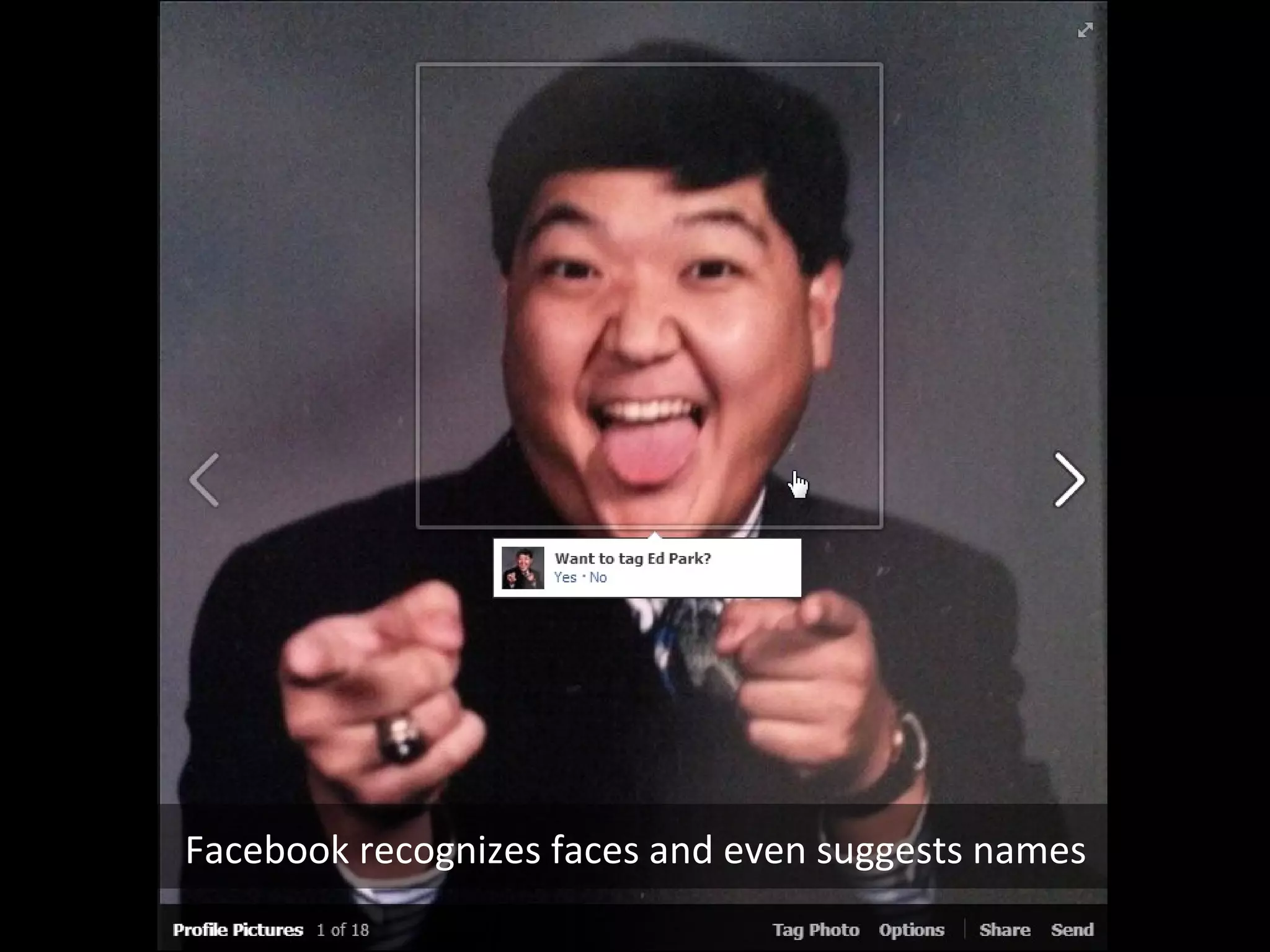
Facebook recognizes faces and even suggests names
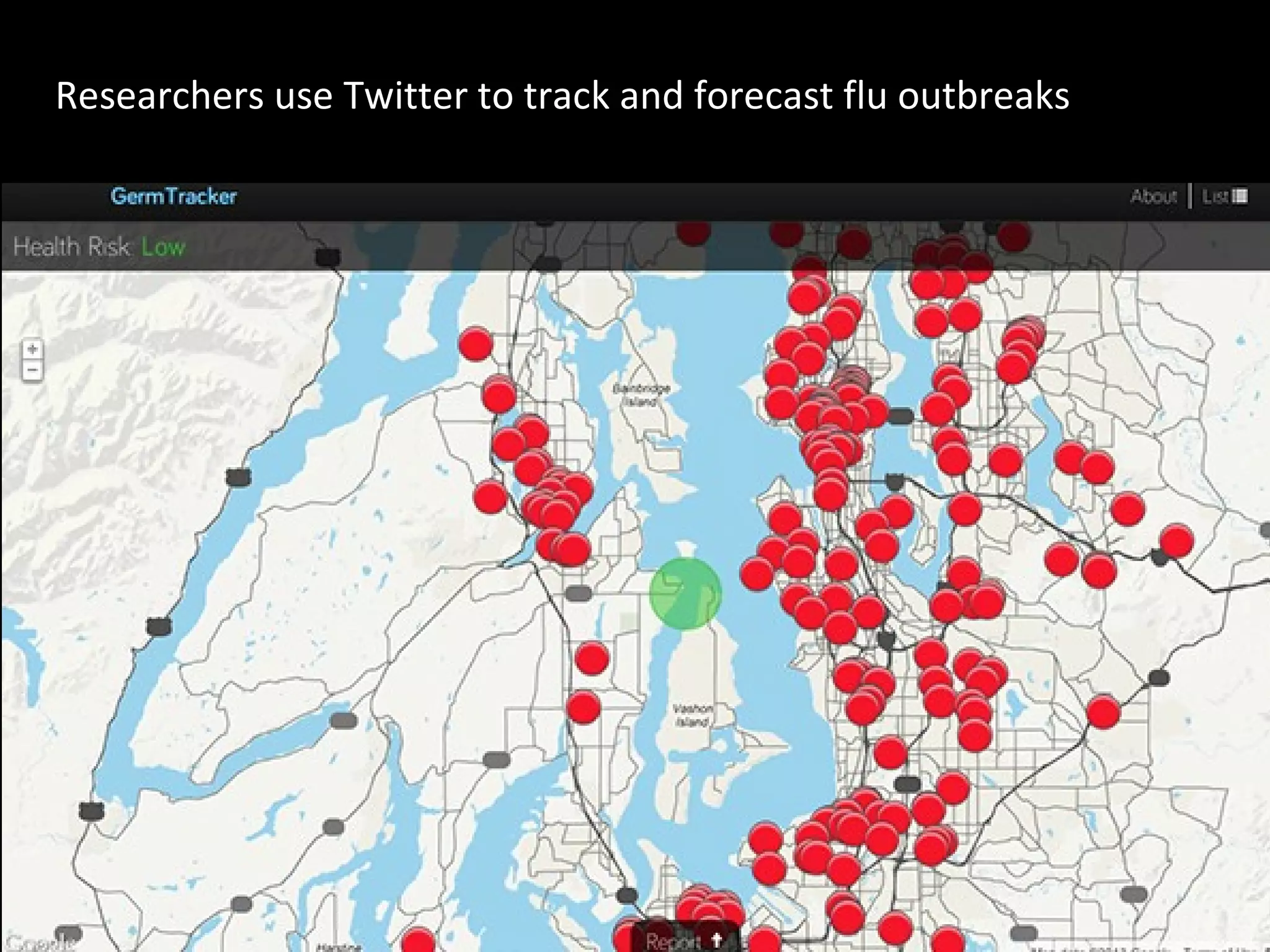
Researchers use Twitter to track and forecast flu outbreaks
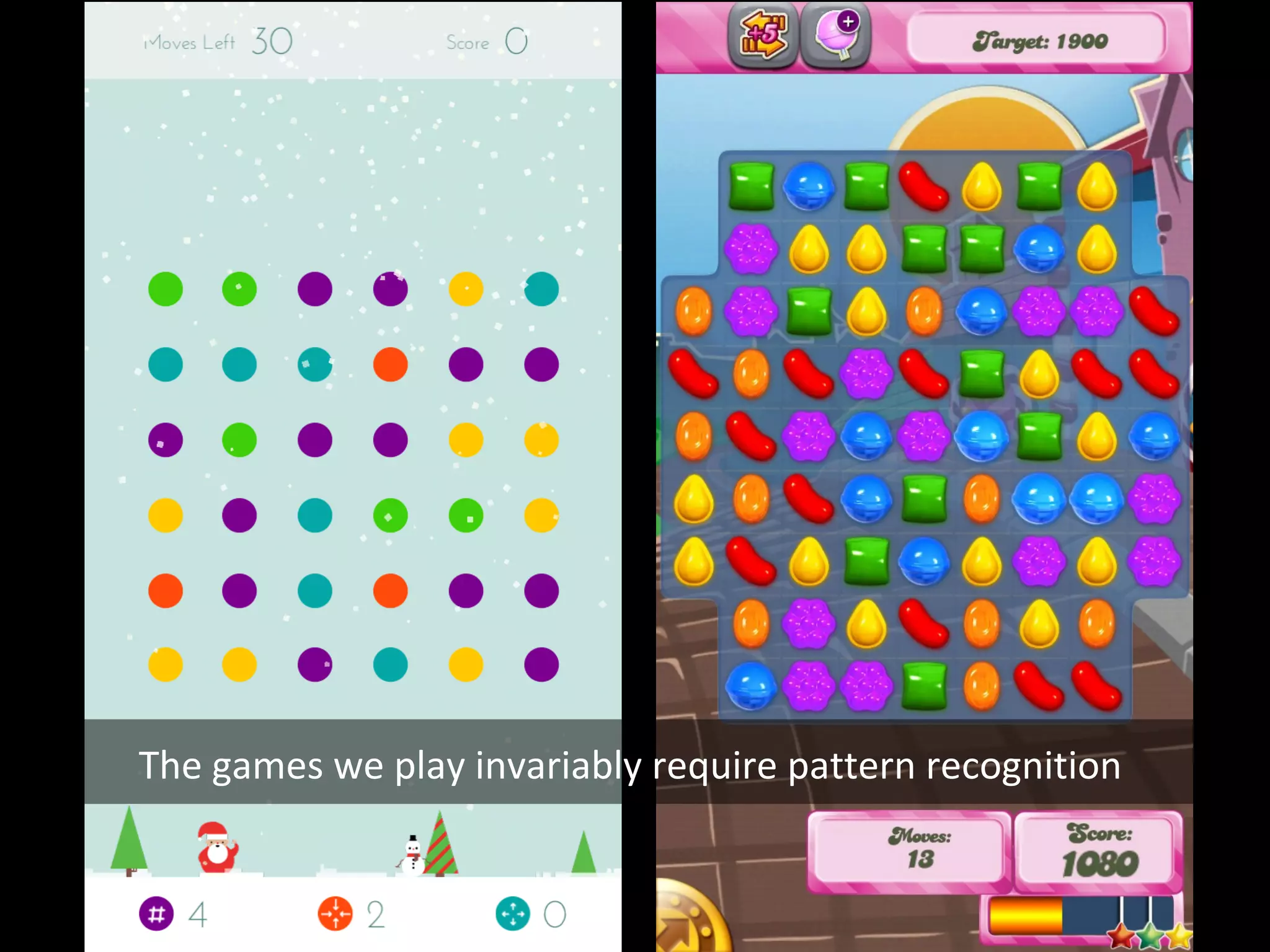
The games we play invariably require pattern recognition
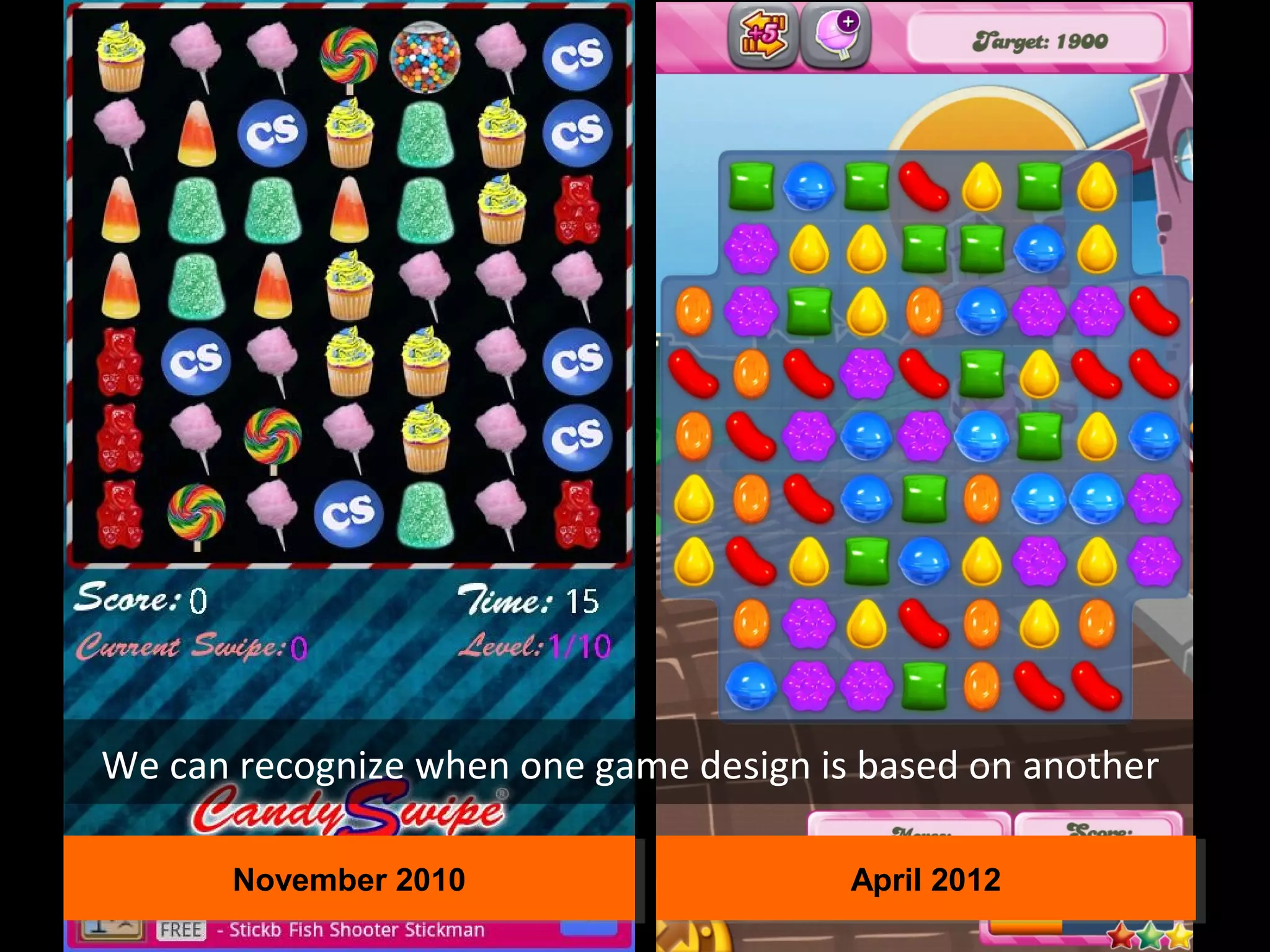
We can recognize when one game design is based on another
November 2010
November 2010

April 2012
April 2012
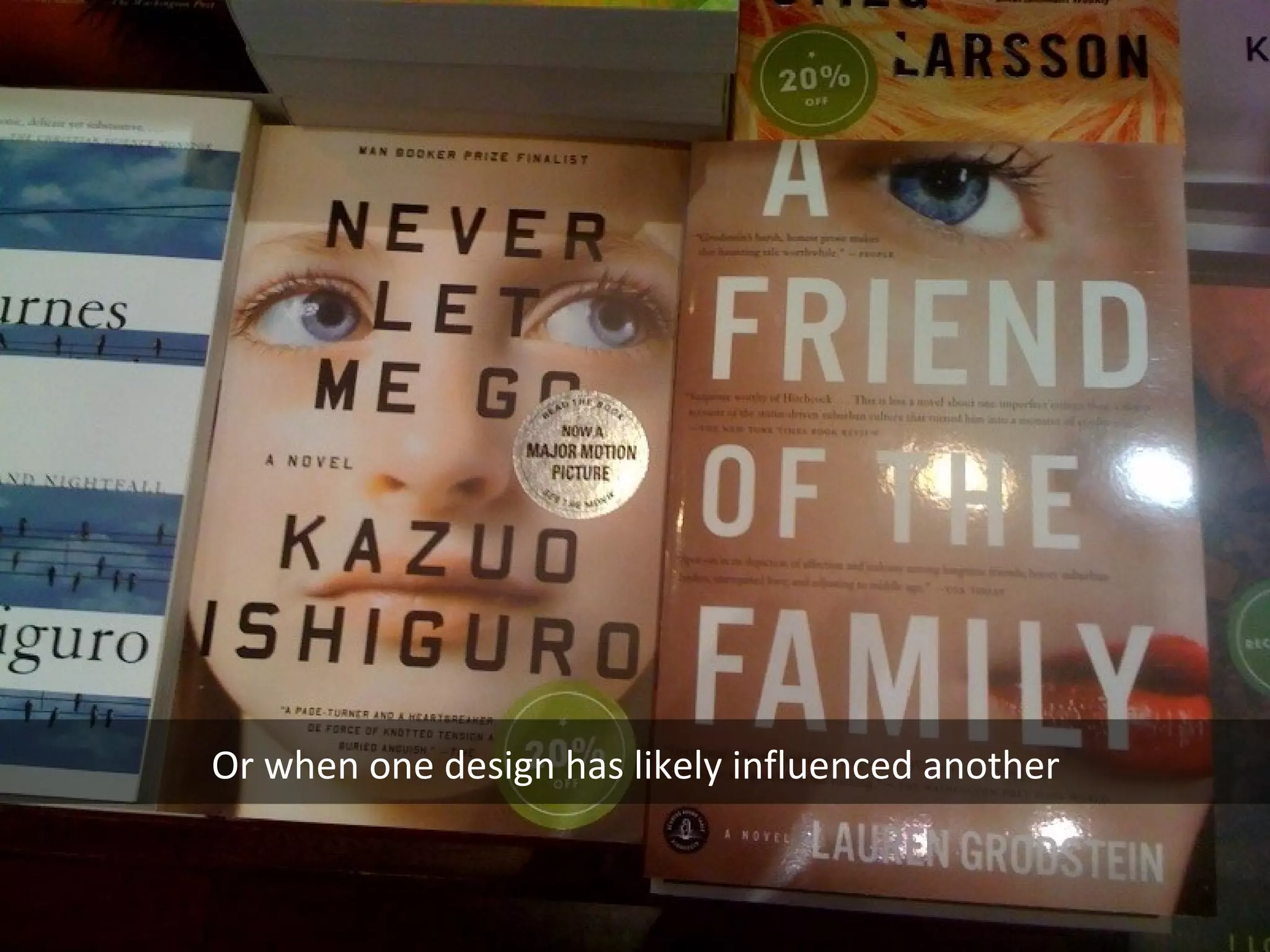
Or when one design has likely influenced another
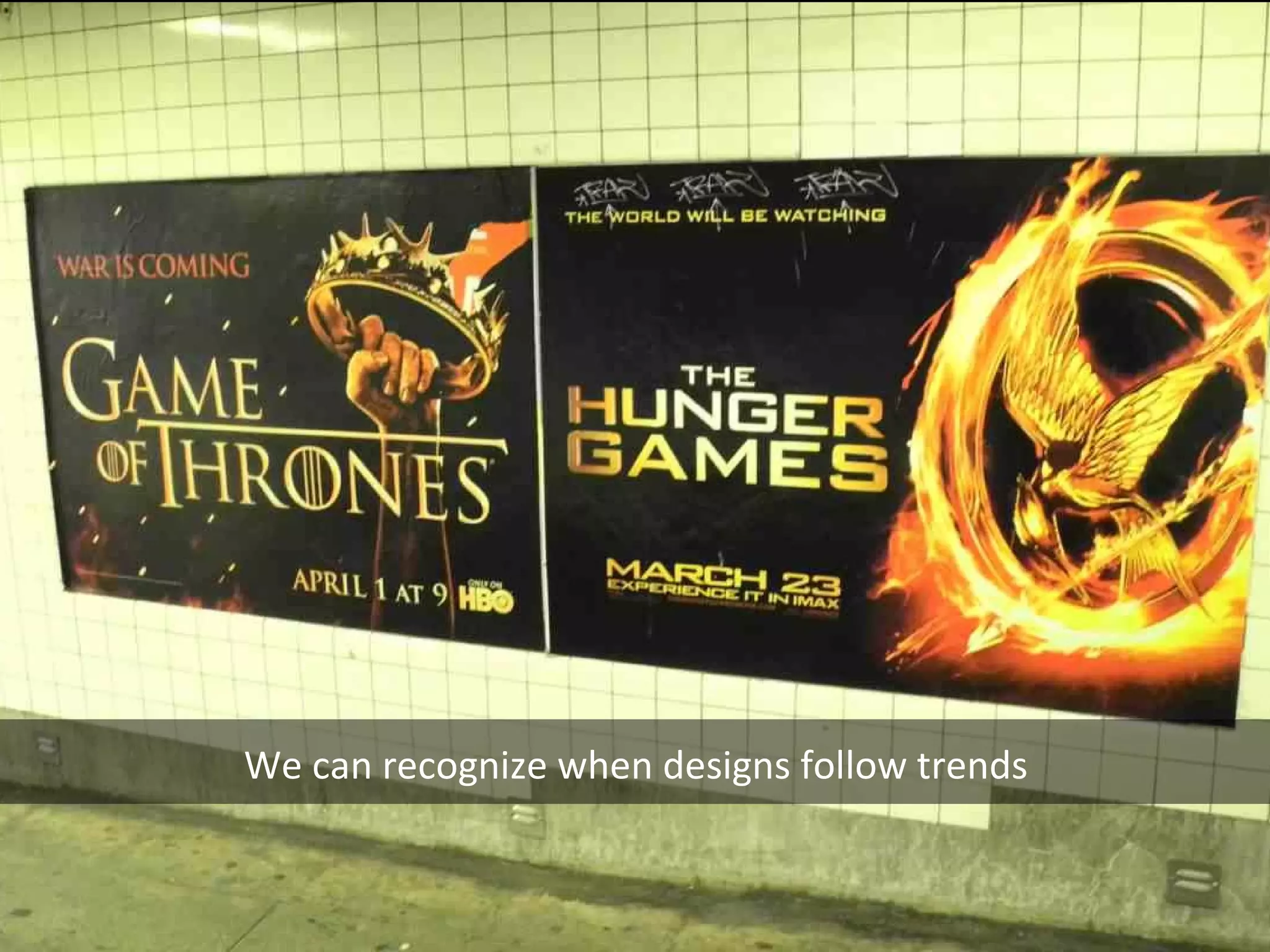
We can recognize when designs follow trends
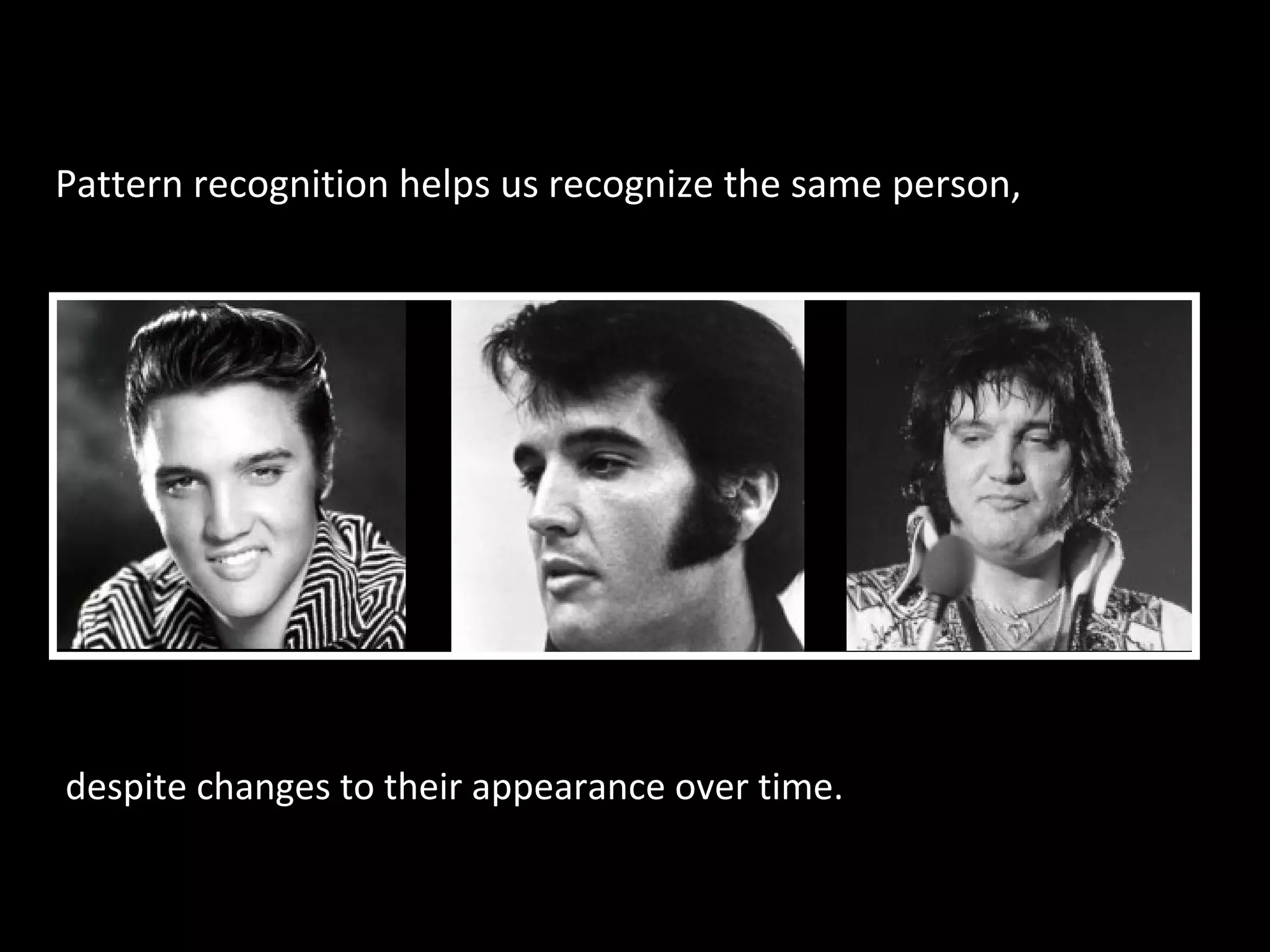
Pattern recognition helps us recognize the same person,

despite changes to their appearance over time.
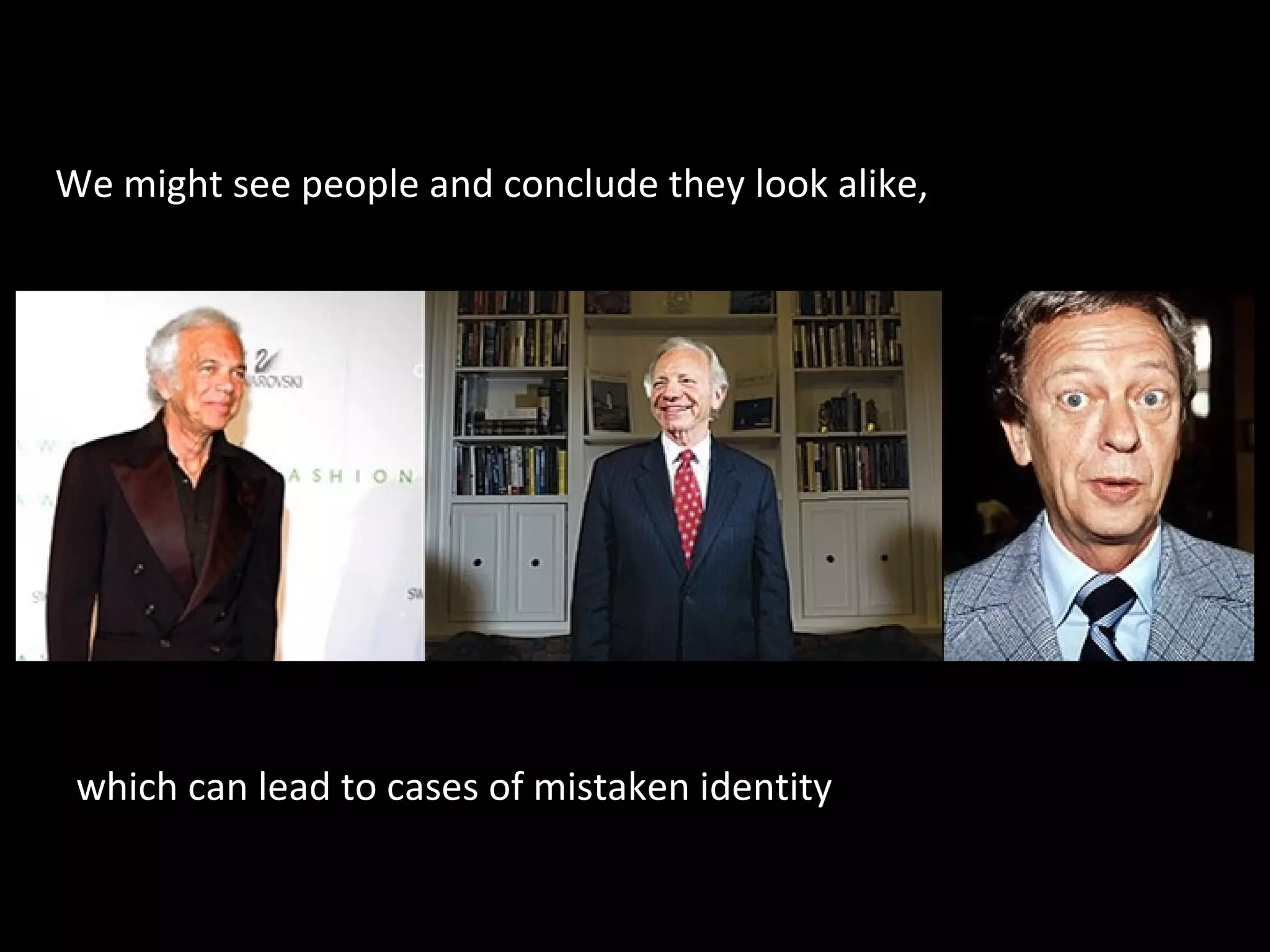
We might see people and conclude they look alike,

which can lead to cases of mistaken identity
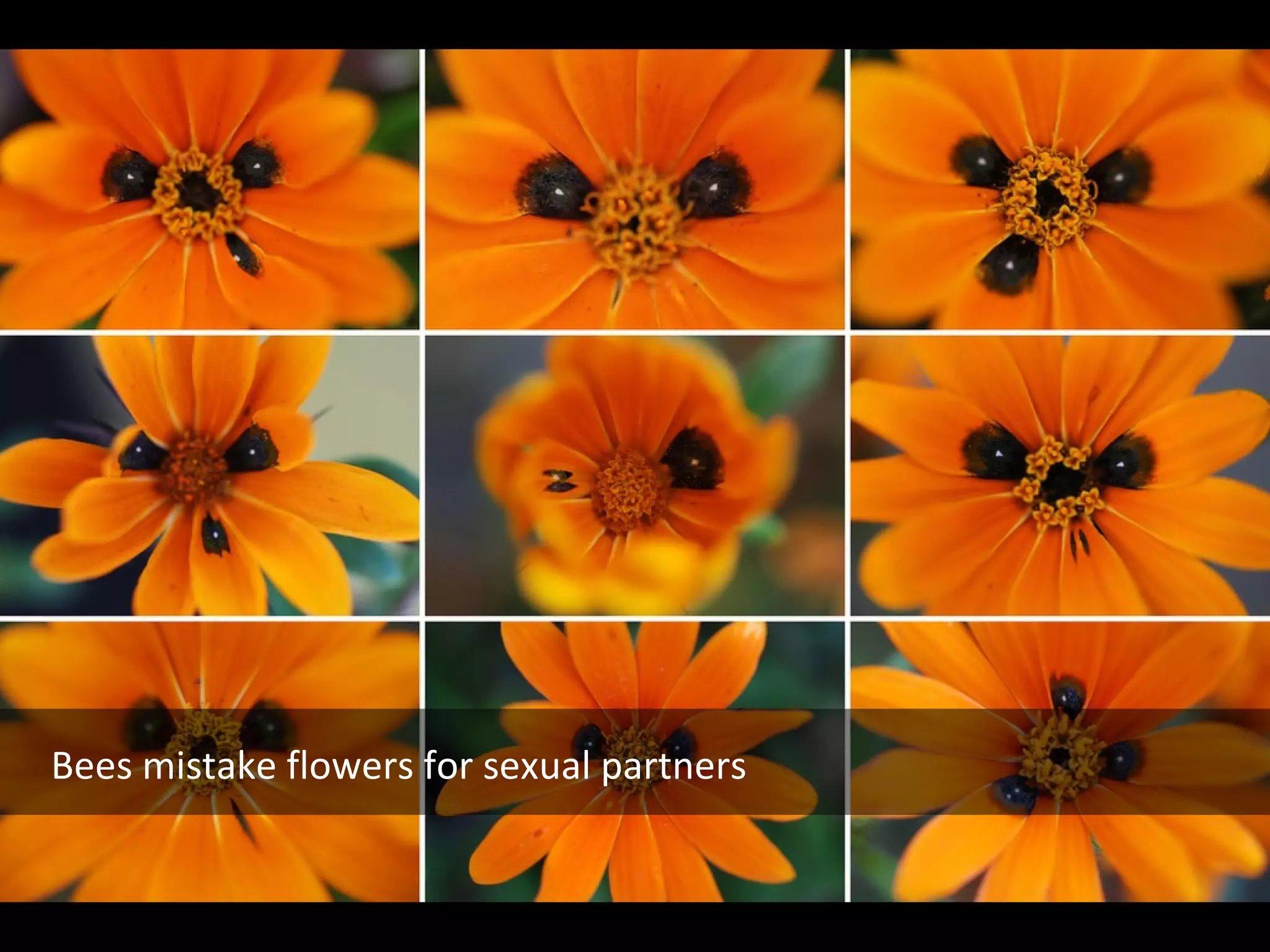
Bees mistake flowers for sexual partners
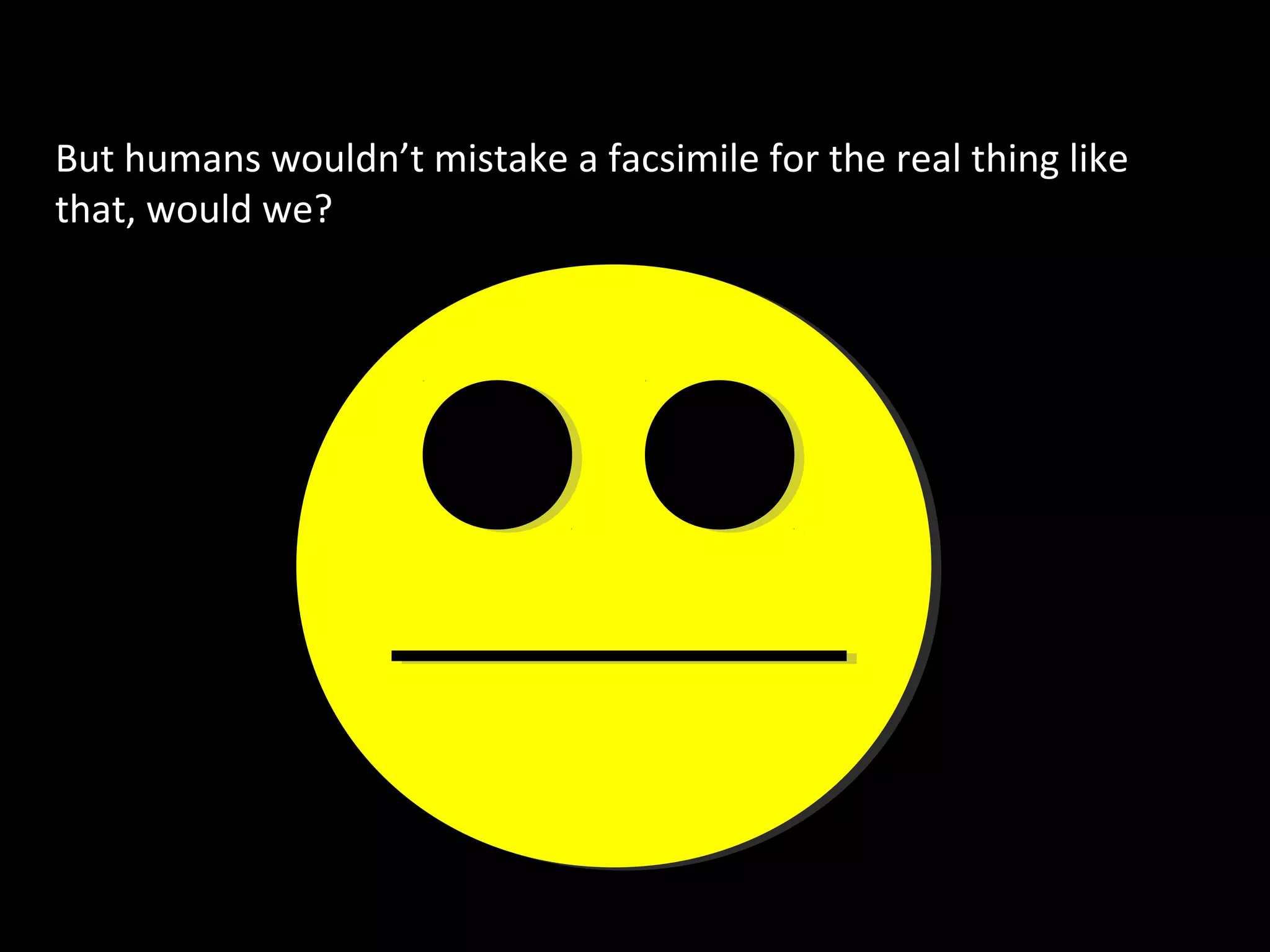
But humans wouldn’t mistake a facsimile for the real thing like
that, would we?
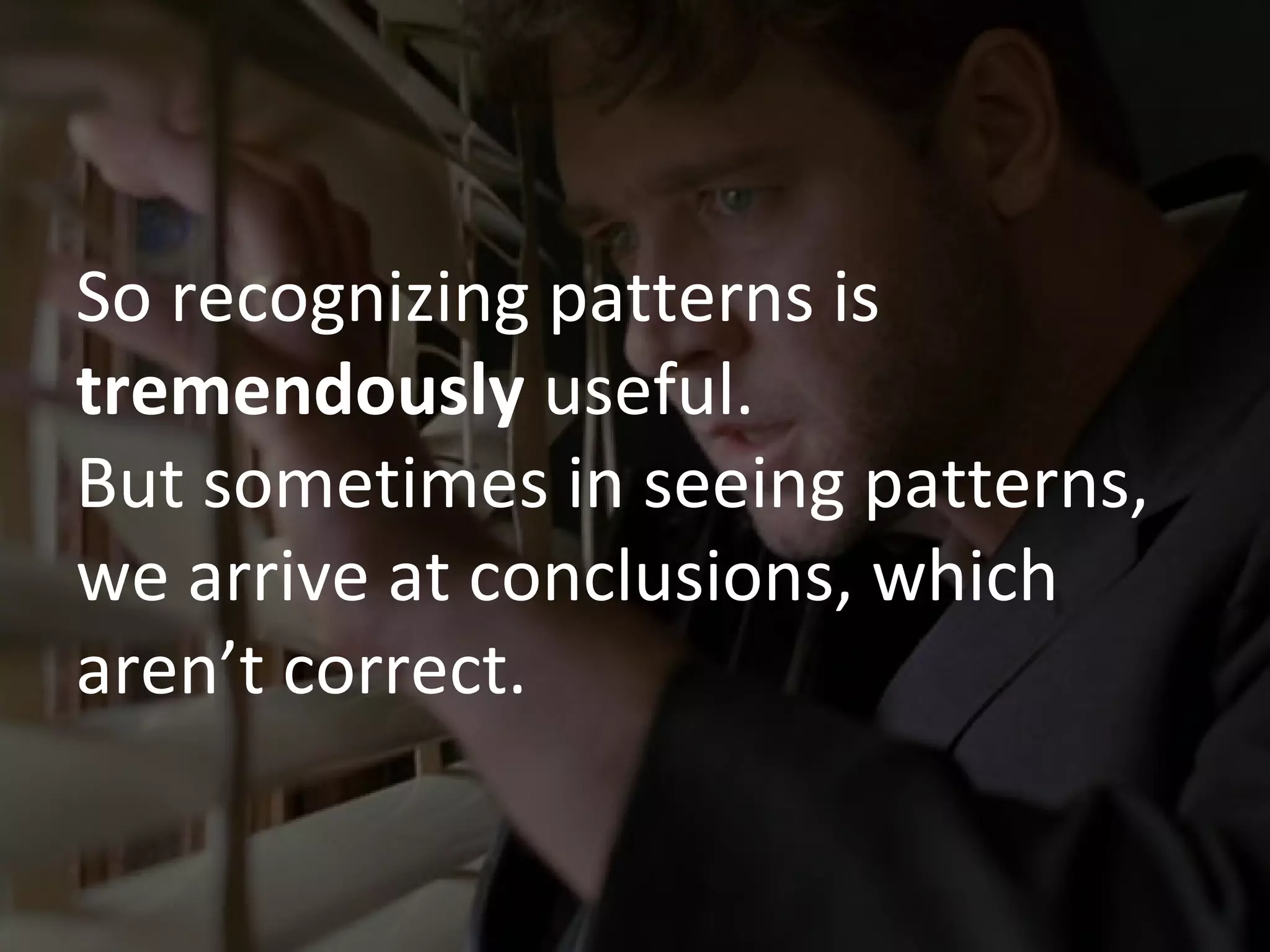
So recognizing patterns is
tremendously useful.
But sometimes in seeing patterns,
we arrive at conclusions, which
aren’t correct.
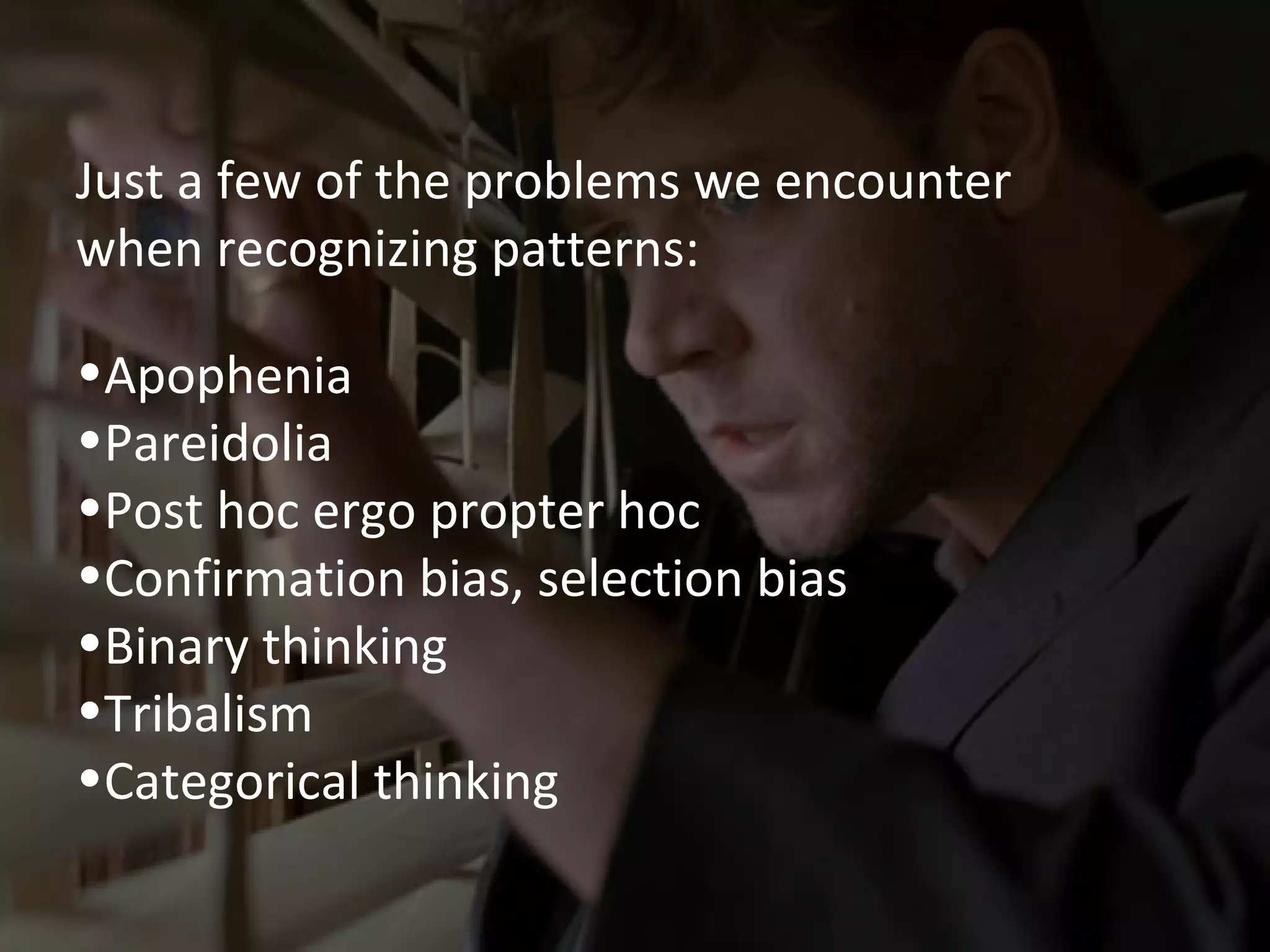
Just a few of the problems we encounter
when recognizing patterns:
•Apophenia
•Pareidolia
•Post hoc ergo propter hoc
•Confirmation bias, selection bias
•Binary thinking
•Tribalism
•Categorical thinking
Categorical thinking?
What’s wrong with categorical
thinking?
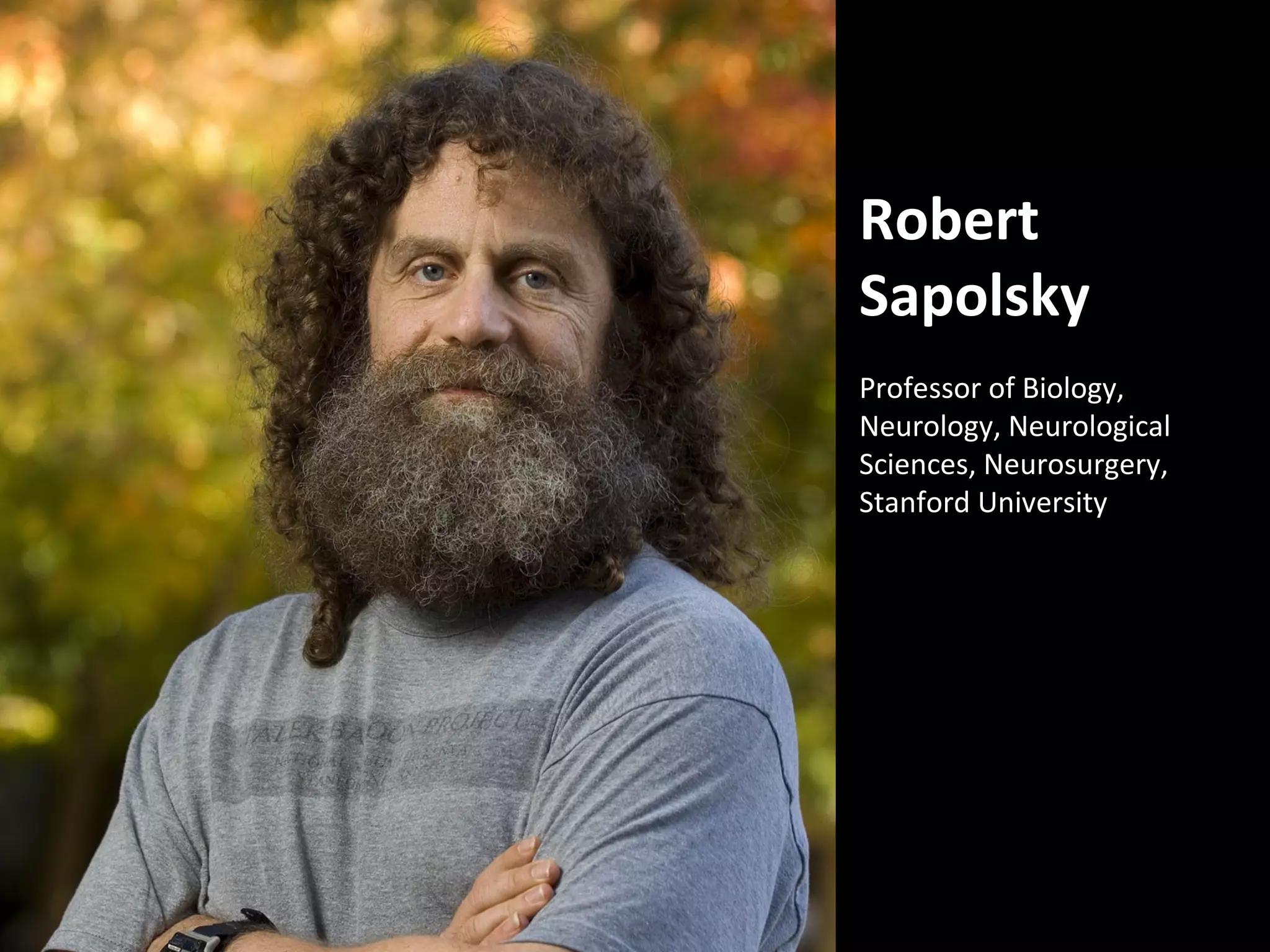
Robert
Sapolsky
Professor of Biology,
Neurology, Neurological
Sciences, Neurosurgery,
Stanford University
“We think in categories. We take
things that are in continua and we
break them into categories. And
we label those categories. And we
do that in various settings because
it could be extremely useful.”
– Sapolsky
UX people: Think card sort, think taxonomy, think site map
"Fall into categorical thinking and
you can do unspeakable damage
in the realm of science that
makes difference."
– Sapolsky
*and in life and in design
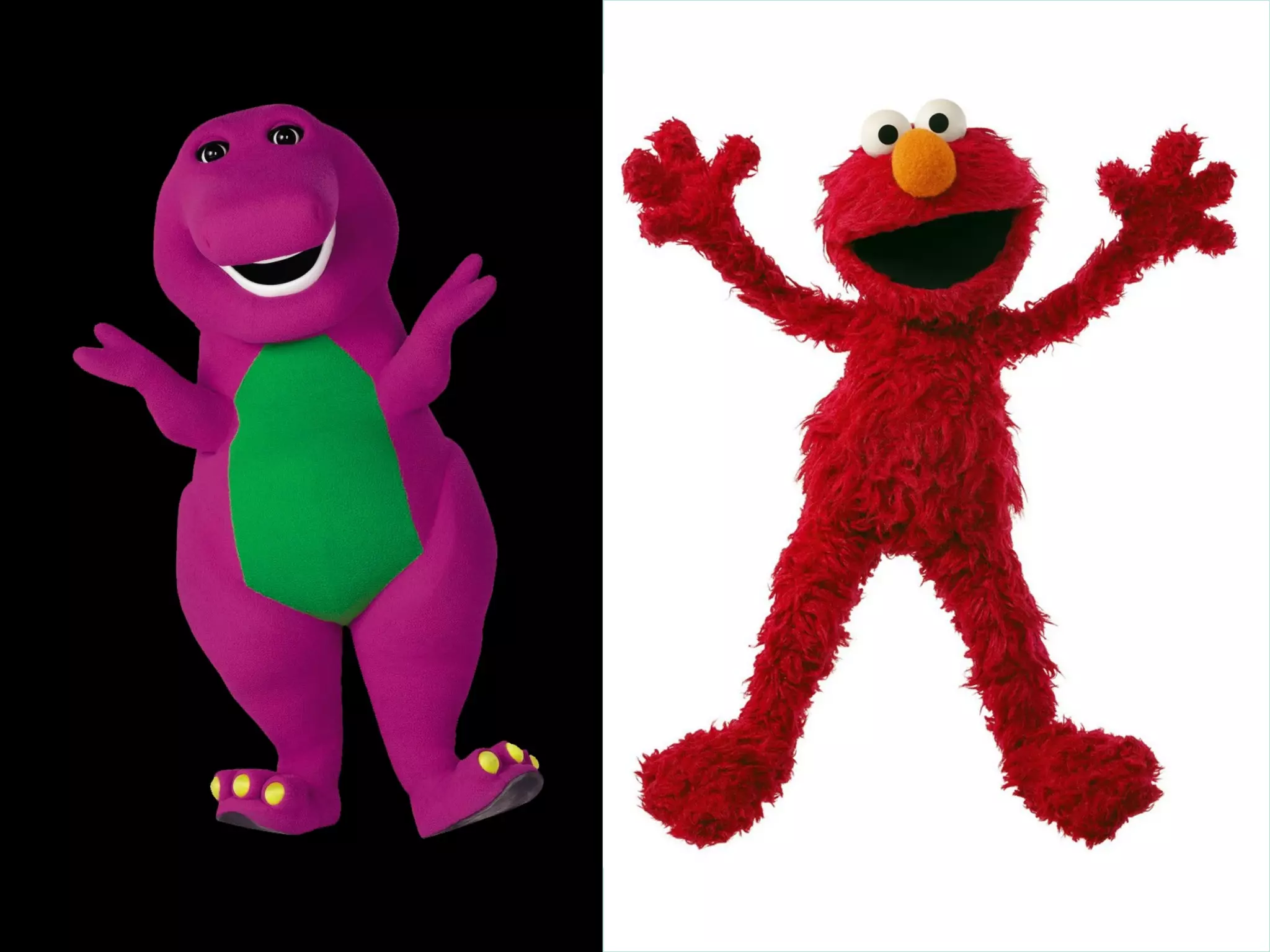
1. Focus on categories and we
can overlook distinctions
within categories.
2. Focus on boundaries and we
can overlook similarities
between items.
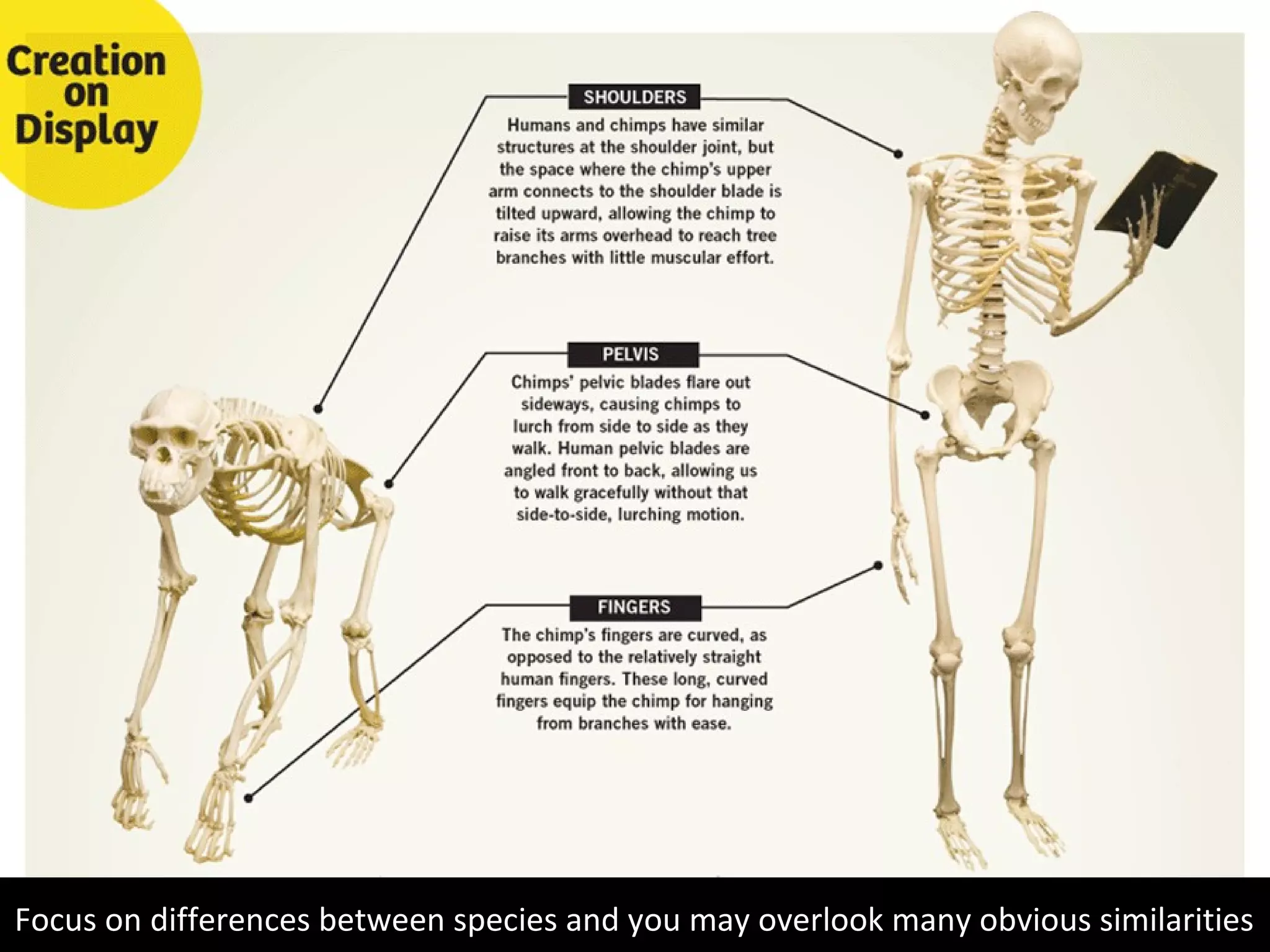
Man V. Ape

Focus on differences between species and you may overlook many obvious similarities
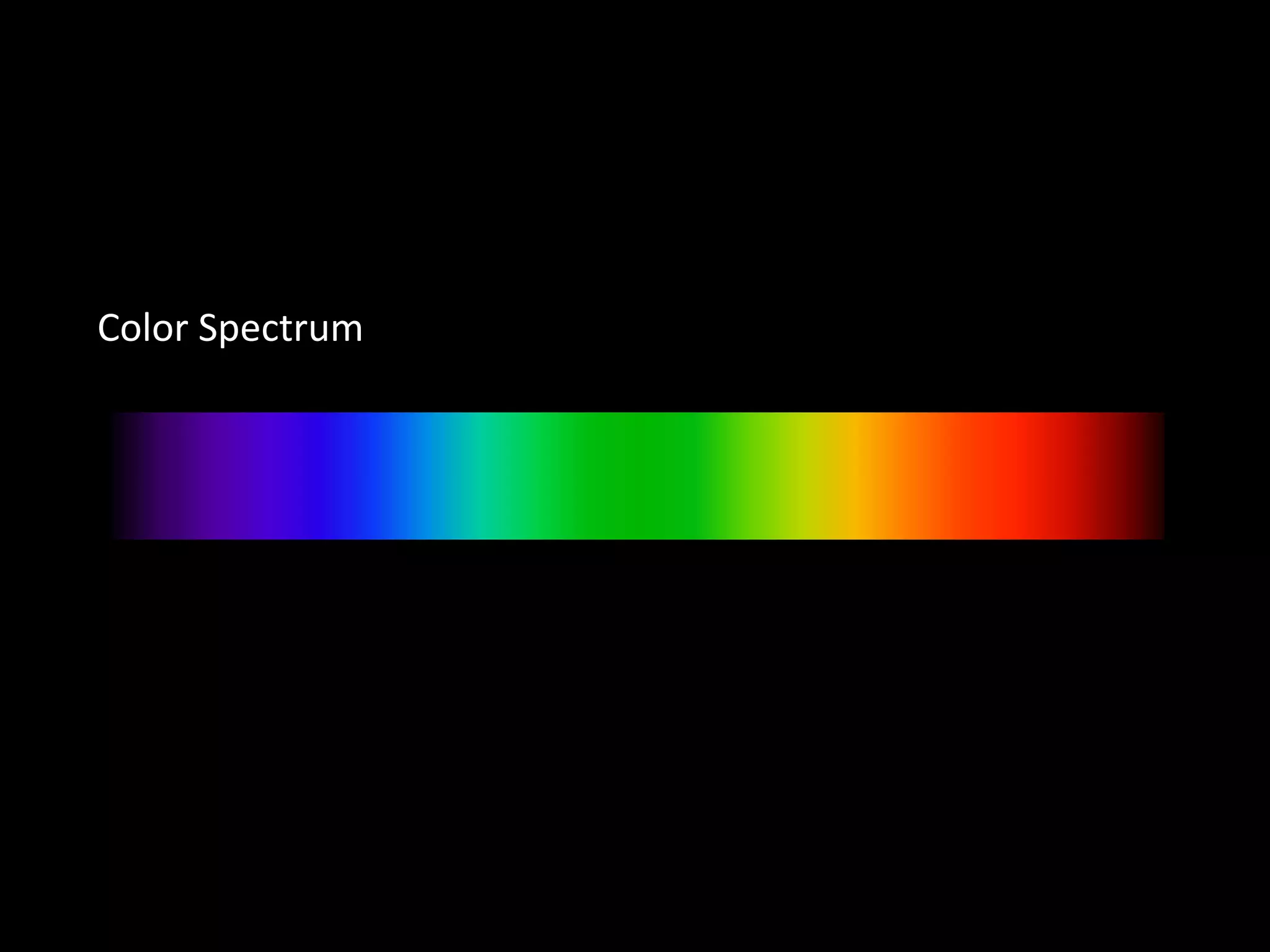
Color Spectrum
3. Focus on boundaries and
we can miss the big
picture.
All we see are categories.
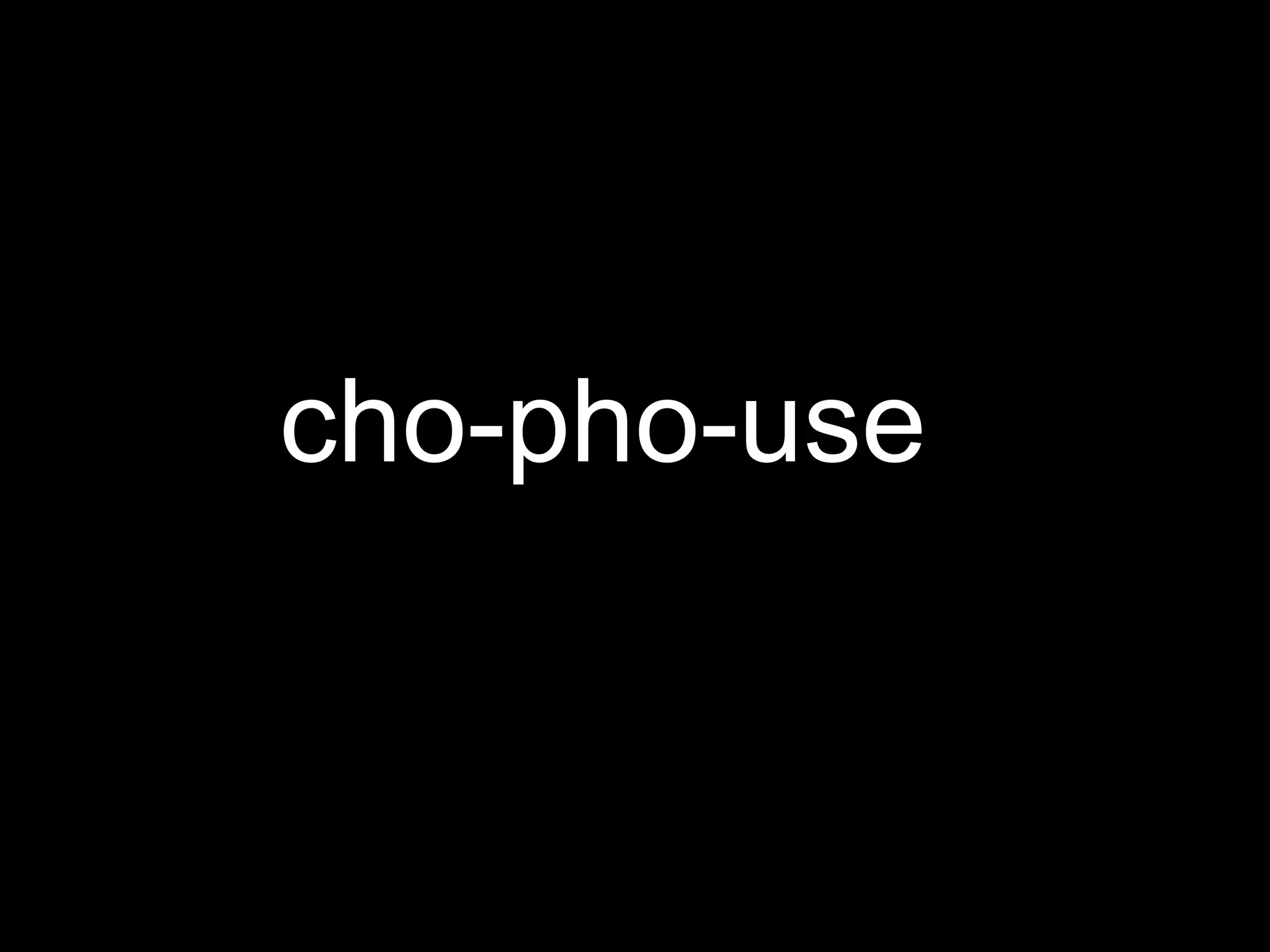
cho-pho-use
chophouse
What are some solutions?
1.
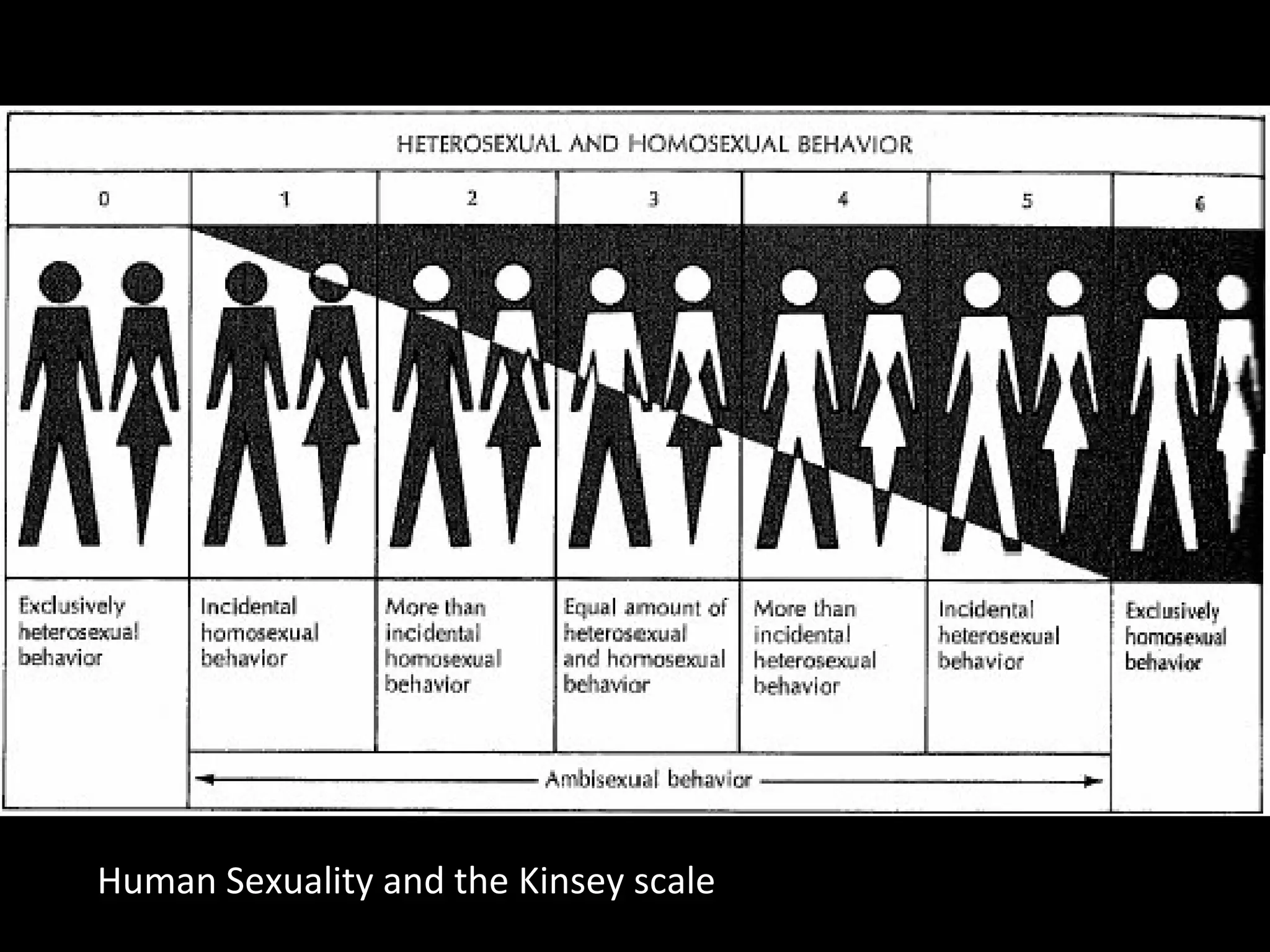
Spectrums can be more accurate
than limited categories.
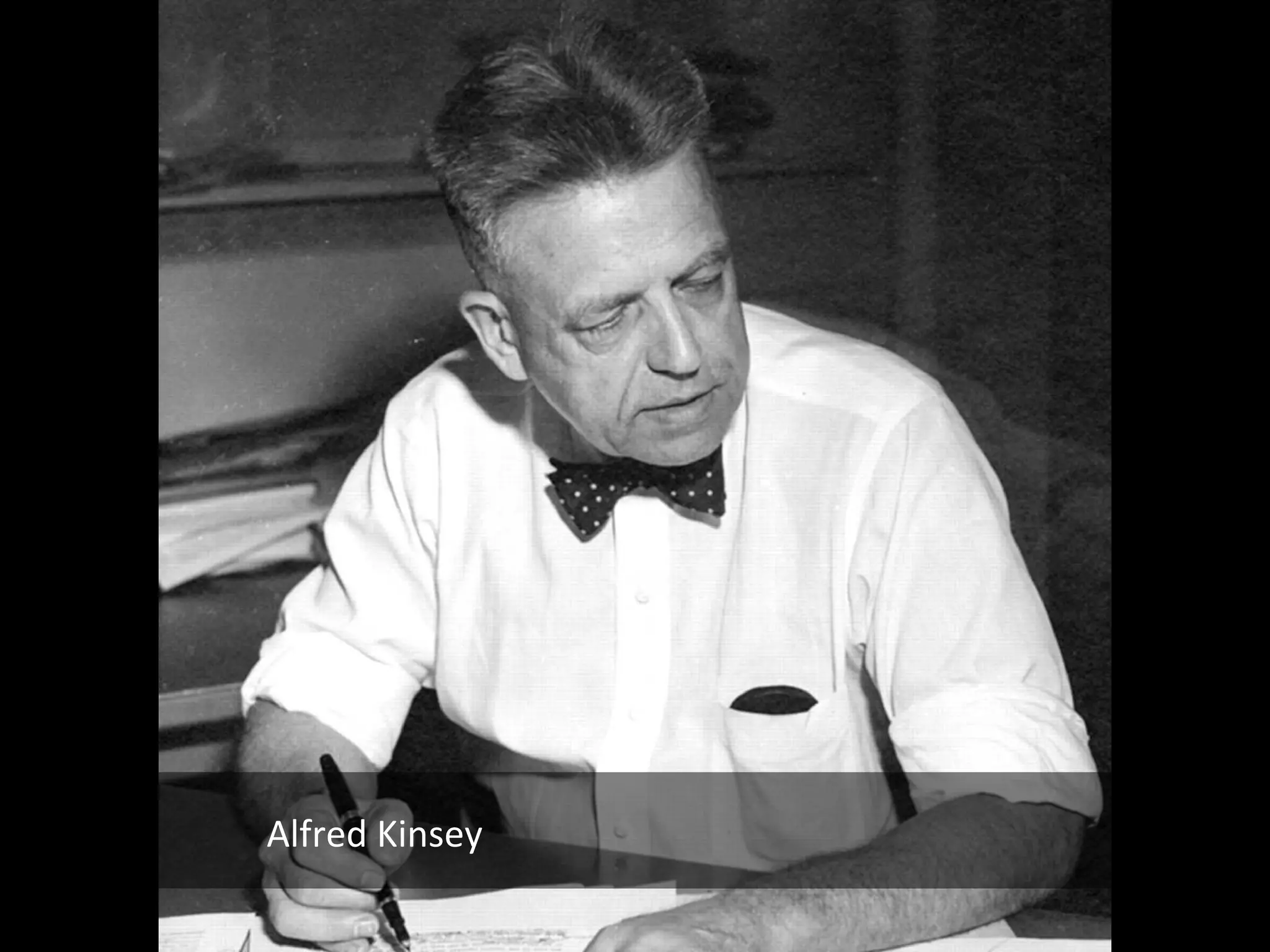
Alfred Kinsey
Human Sexuality and the Kinsey scale
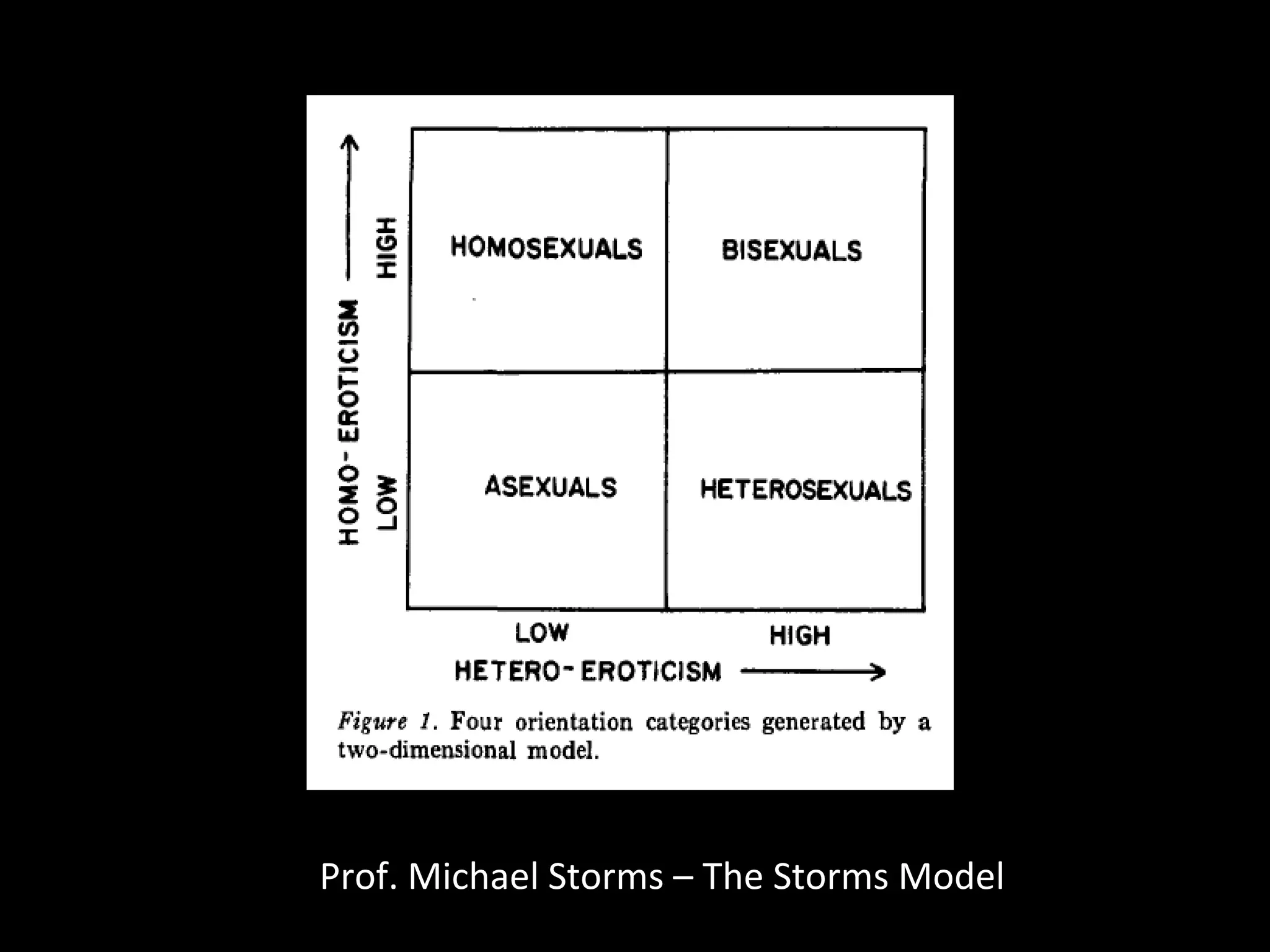
Prof. Michael Storms – The Storms Model
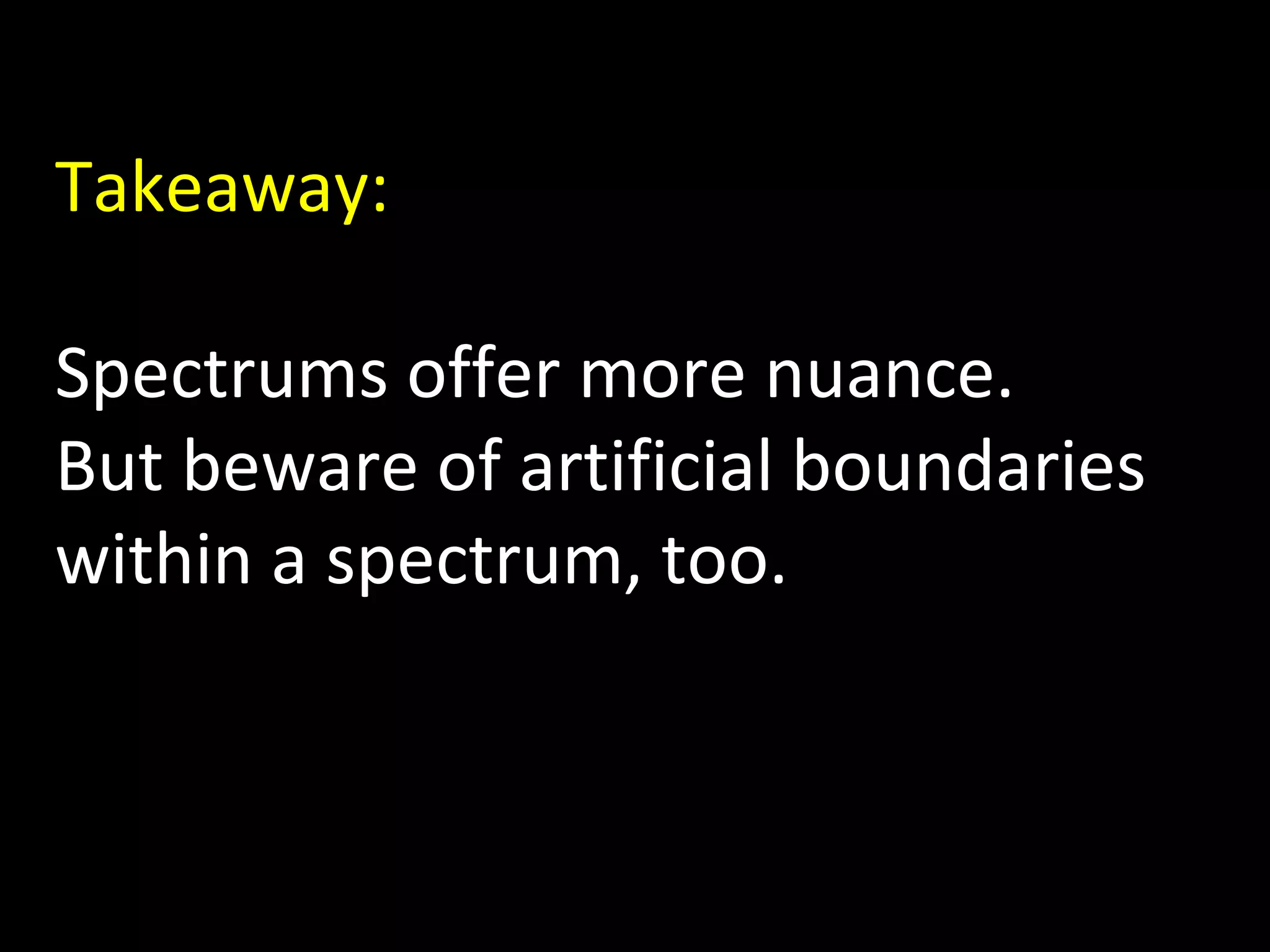
Takeaway:
Spectrums offer more nuance.
But beware of artificial boundaries
within a spectrum, too.
2.
It’s OK to classify things in multiple
categories.
Employ flexible categorization
systems
1.Flexible taxonomies
2.Crowd-sourced tagging
3.Machine-based tagging
Takeaway:
Recognize and highlight
connections between things in
different categories
3.
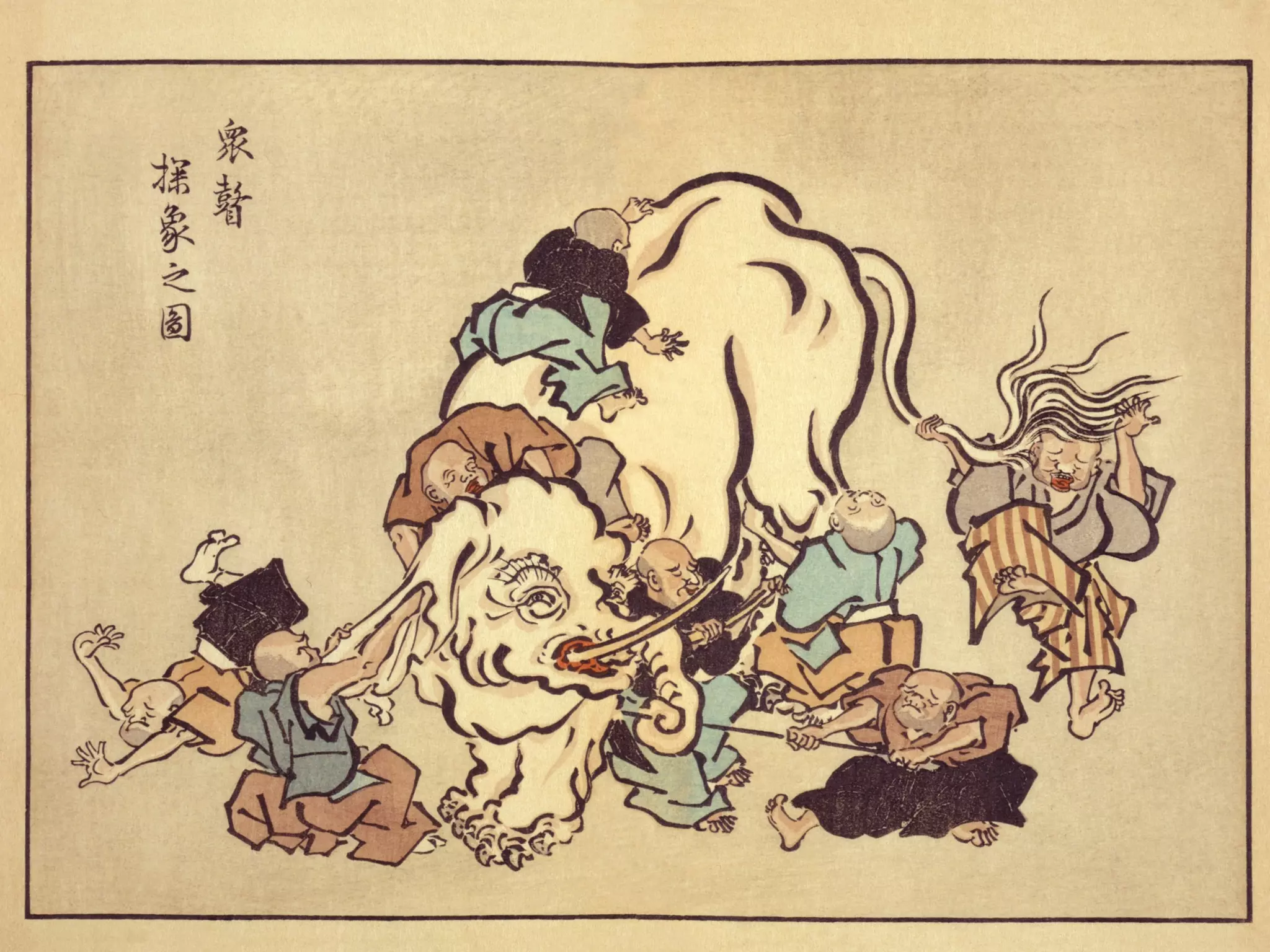
Stay alert to field bias to see the
full picture
• We tend to categorize in ways which
reflect our training or background
• A biologist, a geneticist, and an
endocrinologist might answer the same
question in different ways
• They present categorical solutions which
reflect their language and cultural
differences
We encounter the same issue
when working with different
departments within an
organization
Takeaway:
Encourage communication among
departments, between users and
stakeholders.
• We can’t operate as human beings without
recognizing patterns.
• Categorization can be a helpful thing.
• Until it isn’t. Then it can be damaging.
• Or it can make information difficult to process
and navigate.
• So approach recognizing patterns with nuance.
Enjoy ambiguity
Thank you
Robert Stribley
@stribs
This presentation on Slideshare: www.slideshare.com/stribs
My tumblr about pattern recognition: stribs.tumblr.com
For Further Study
•Biology & Human Behavior: The Neurological Origins of Individuality
– Professor Robert Sapolsky, The Great Courses
•Chaos – James Gleick
•First Principle: Disambiguation – Rachel Lovinger, Contents
Magazine
•Stochasticity – Radio Lab, WNYC, Season 6, Episode 1
Special thanks to Amy Stack, Rachel Lovinger and Jason Scott for their
feedback on this presentation.
Dedicated to my wife, Amy Stack.

Mismatched: What's Wrong With the Way We Recognize Patterns

Editor's Notes

  • #2 Mismatched: What’s Wrong With the Way We Recognize Patterns? – Presented at SXSW 2014 – By Robert Stribley, Associate Experience Director, Razorfish #patterns
  • #3 There are at least 35 major and minor political parties in the United States, plus any number of independents http://en.wikipedia.org/wiki/List_of_political_parties_in_the_United_States#Parties_with_federal_representation
  • #4 What do these questions have in common? What's the difference among these questions?
  • #5 We are poor tolerators of ambiguity.
  • #6 “Popped Collar” - Photo by Robert Stribley, Times Square, New York, NY Photo: Flickr.com/stribs
  • #7 Butterfly on the New York City Highline Photo: Flickr.com/stribs
  • #8 But it’s not enough for us to say that something’s a butterfly. We recognize there are many different types of butterflies.
  • #9 And we label them down to the species and sub-species level. Butterflies at the American Museum of Natural History’s Butterfly Conservatory.  Photo: Flickr.com/stribs
  • #10 Some examples of pattern recognition
  • #11 Diagram by biologist D’Arcy Wentworth Thompson showing the similarity between ink drops falling through water and the shape of a jellyfish. Included in Chaos by James Gleick.
  • #12 Facebook recognizes faces now and sometimes even suggests names of those depicted
  • #13 Google Flu Trends does something very similar based on user searches
  • #14 The minimalist Dots at left and the colorful, cluttered Candy Crush Saga at right.
  • #15 Candy Crush Saga at right and CandySwipe its predecessor at left. http://www.snopes.com/politics/business/candycrush.asp
  • #16 Taken from my tumblr, Pattern Recognition - http://stribs.tumblr.com
  • #17 Remarkably similar posters for Game of Thrones and The Hunger Games. Taken from my tumblr, Pattern Recognition - http://stribs.tumblr.com
  • #18 Various stages of Elvis
  • #19 From left to right: Designer Ralph Lauren, Senator Joe Lieberman, actor Don Knotts
  • #20 Nature takes advantage of pattern recognition to enable pollination
  • #21 A face? Or 3 circles and a straight line?
  • #22 Image: Russell Crowe as John Nash in A Beautiful Mind
  • #23 For more on issues with recognizing patterns, check out this excellent episode of RadioLab on Stochasticity: http://www.radiolab.org/story/91684-stochasticity/
  • #24 What’s wrong with categorical thinking?
  • #25 Professor Robert Sapolsky
  • #26 As information architect we utilize activities like card sorts and deliverables like taxonomies and site maps in order to neatly categorize content
  • #27 Categorical thinking can do damage
  • #28 If we focus on categories, we can overlook important distinctions between items in those categories.
  • #29 Barney or Elmo?
  • #30 Ralph Lauren, Joe Lieberman, Don Knotts: Not all the same.
  • #31 If we focus too much on the boundaries, we can overlook similarities between items
  • #32 Visual from Answers in Genesis, a Creationist organization - answersingenesis.org
  • #33 We impose artificial boundaries to the color spectrum. This can make discussing concepts of color difficult across cultures. Similarly when we categorize people it’s easy to overlook their human similarities
  • #34 If we focus on boundaries, we can miss the big picture. We get lost in the categories.
  • #35 Sapolsky’s example
  • #36 Sapolsky’s example
  • #37 Some solutions
  • #38 Spectrums can be more accurate than limited categories It’s OK to classify things in multiple categories Stay alert to field bias to see the full picture
  • #39 Spectrums can be more accurate than limited categories.
  • #40 Kinsey
  • #41 Helping to understand human sexuality as more than simply binary
  • #42 Diagram: Prof. Michael Storms – The Storms model
  • #43 The Storms model – As Scattergram
  • #44 Spectrums offer more nuance. But beware of artificial boundaries within a spectrum, too.
  • #45 It’s OK to classify things in multiple categories.
  • #46 Mercedes card sort example Another example: Filtering music events by Free, Family, Outdoors
  • #47 Taxonomies can be flexible but still authoritative Machine-based tagging or “entity extraction” allows for previously unexposed relationships to be highlighted, more nuanced ways of categorizing information
  • #48 Recognize and highlight connections between things in different categories
  • #49 Stay alert to field bias to see the full picture
  • #50 Understanding this led E.O. Wilson to “Consilience,” the understanding that we can properly understand the world around us by synthesizing various bodies of knowledge.
  • #51 Blind monks examining an elephant – image from Wikimedia They may all be correct or partially correct
  • #52 Remember our examples from Mercedes?
  • #53 Encourage communication among departments, between users and stakeholders.
  • #54 Photo by Plastic Robot/Christopher Stribley - Maya Hayuk mural at Houston & Bowery, New York, NY - http://www.mayahayuk.com
  • #55 Enjoy ambiguity
  • #56 Thank you!
  • #57 Some resources