Ext.Direct
Lets you work faster
by writing less code


  AARON CONRAN, SENCHA
Ext.Direct
Remoting
Remoting
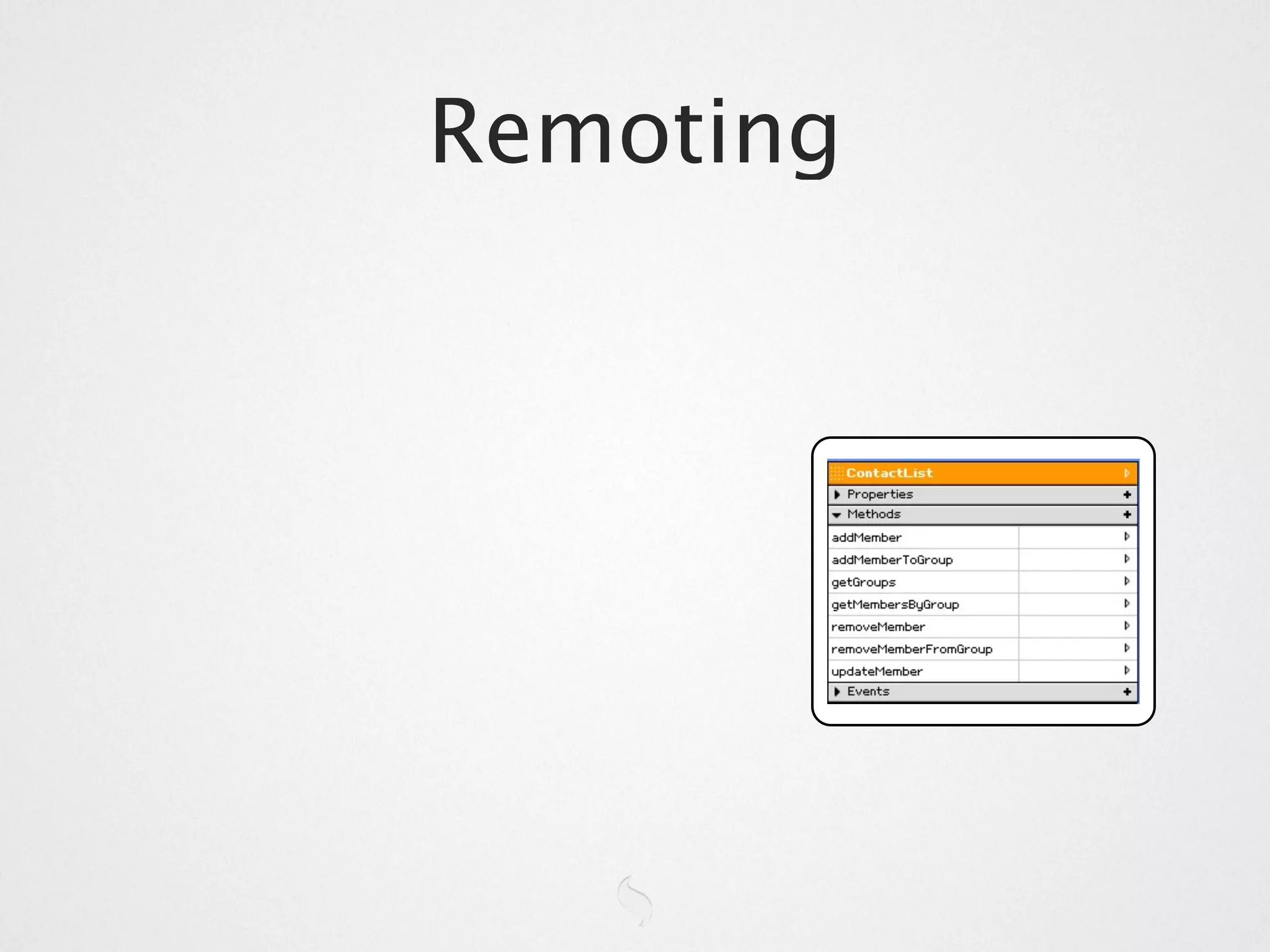
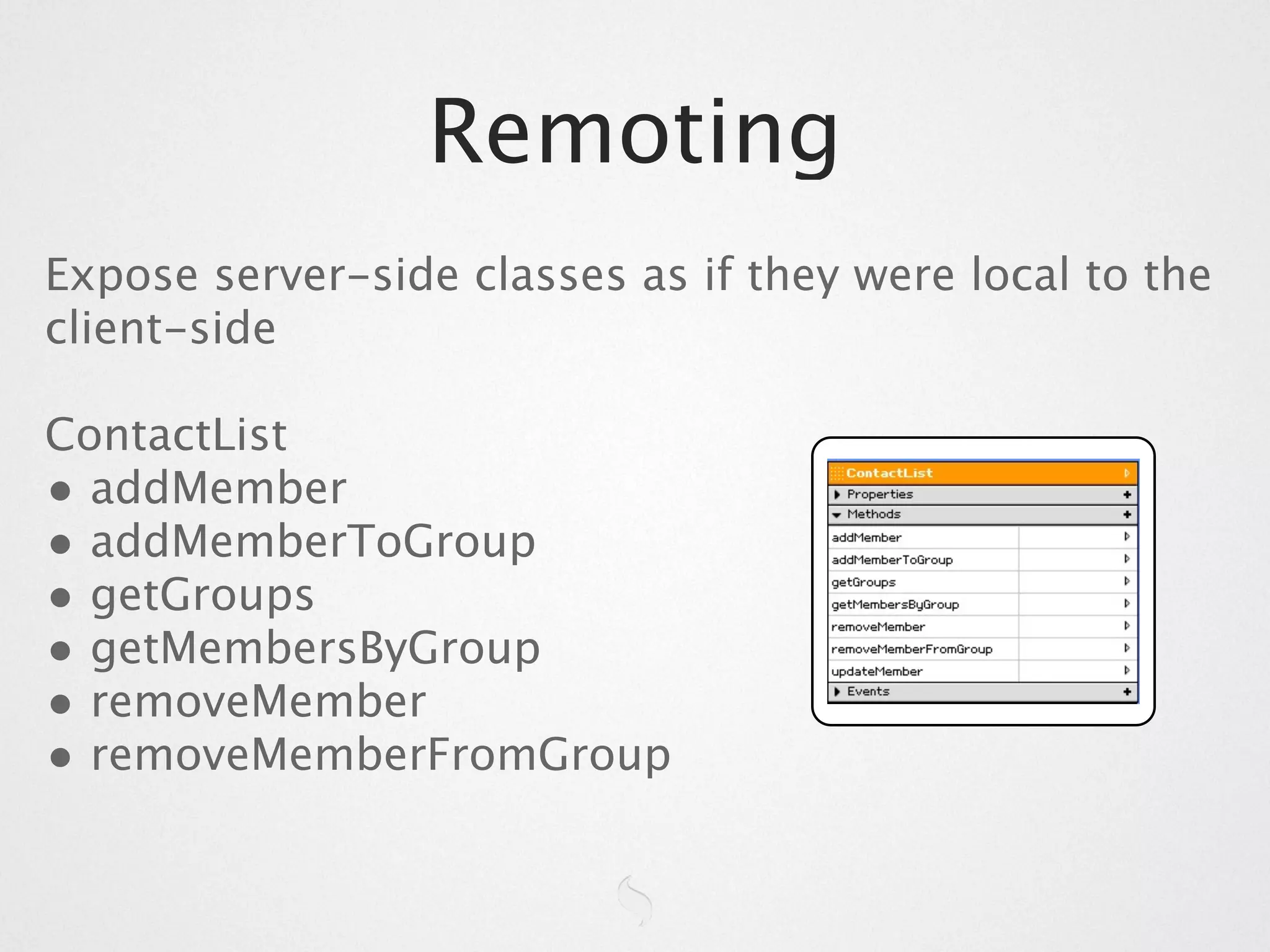
Expose server-side classes as if they were local to the
client-side

ContactList
• addMember
• addMemberToGroup
• getGroups
• getMembersByGroup
• removeMember
• removeMemberFromGroup
Lack of Boiler Plate
          automatically
          handled
          automatically
          handled
Lack of Boiler Plate
• Ajax Request    automatically
• Invoke page     handled
• JSON encoding   automatically
• JSON decoding   handled
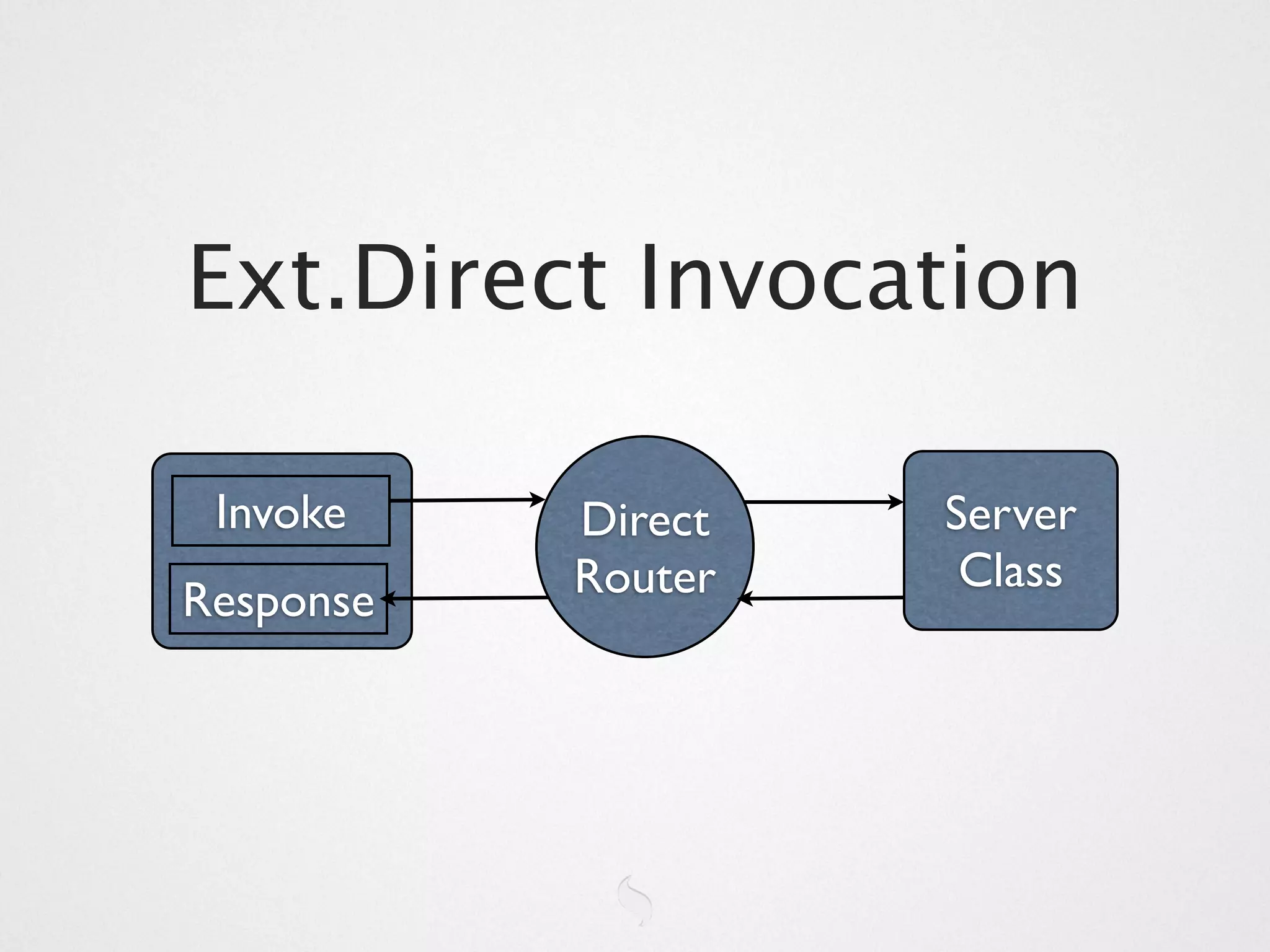
Ext.Direct Invocation

 Invoke    Direct   Server
           Router    Class
Response
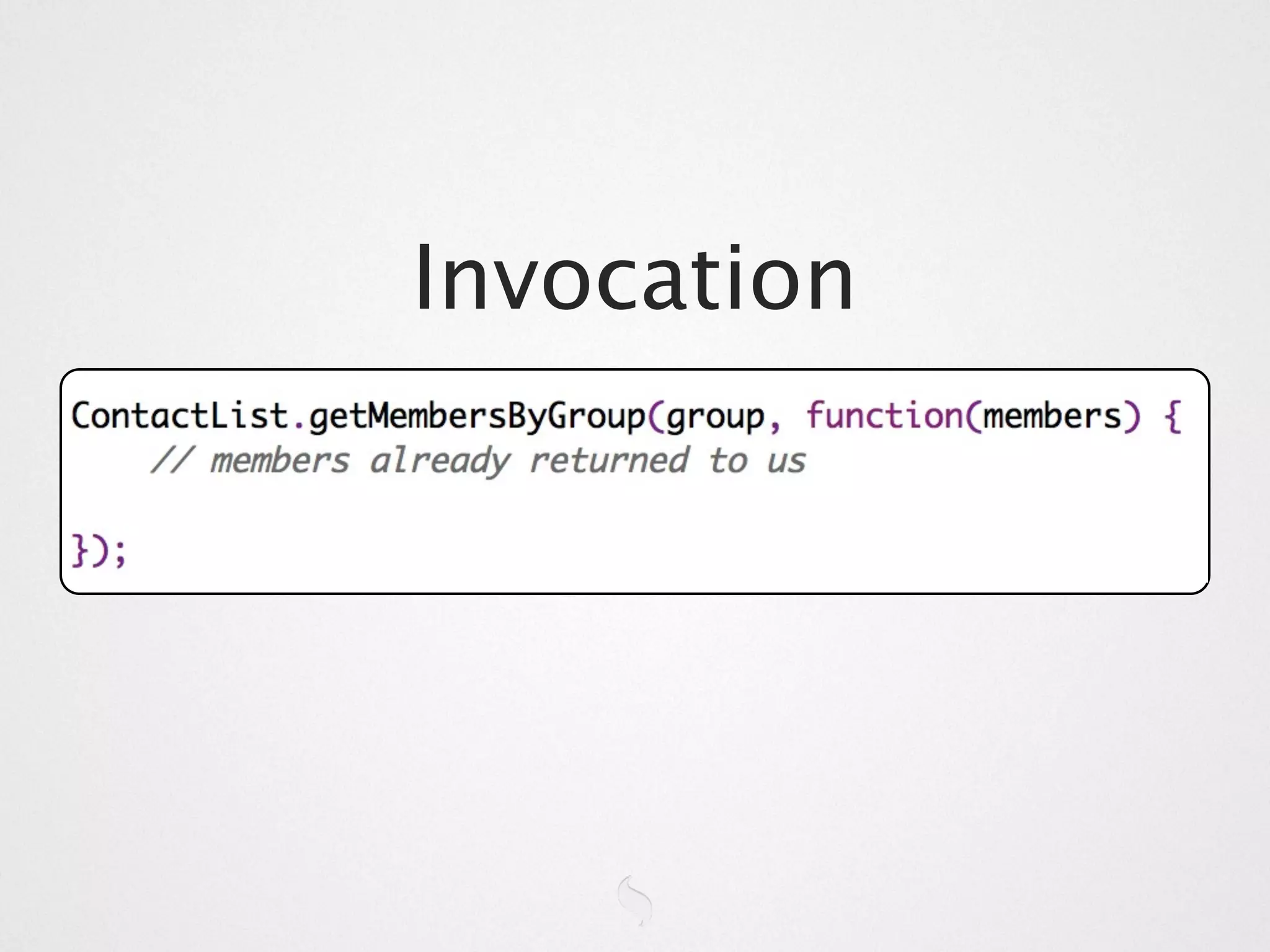
Invocation
Server-side agnostic
Implementations
• PHP
• Java
• C#
• Ruby
• ColdFusion
• Python
• Perl
Benefits
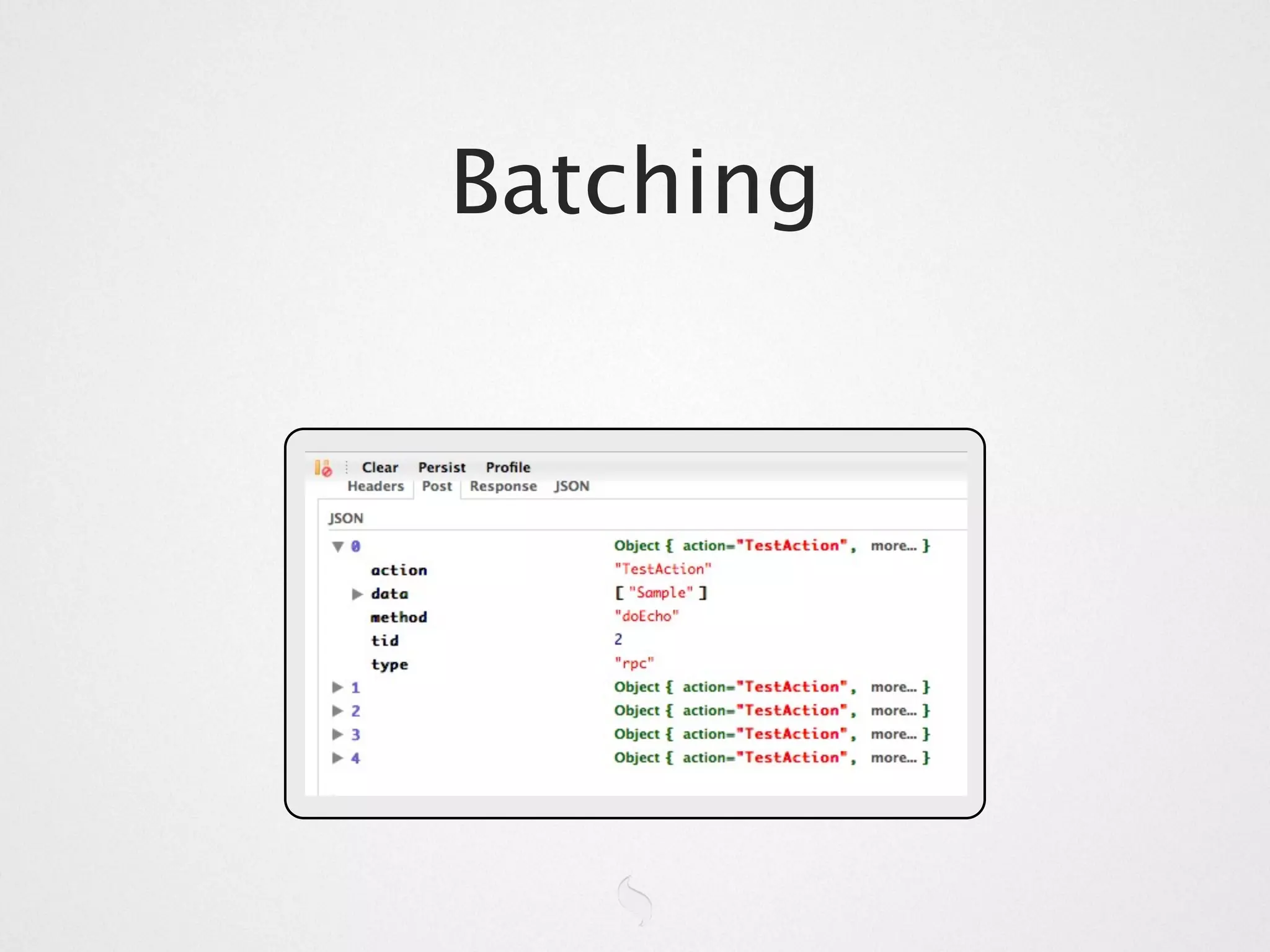
Batching
Batching
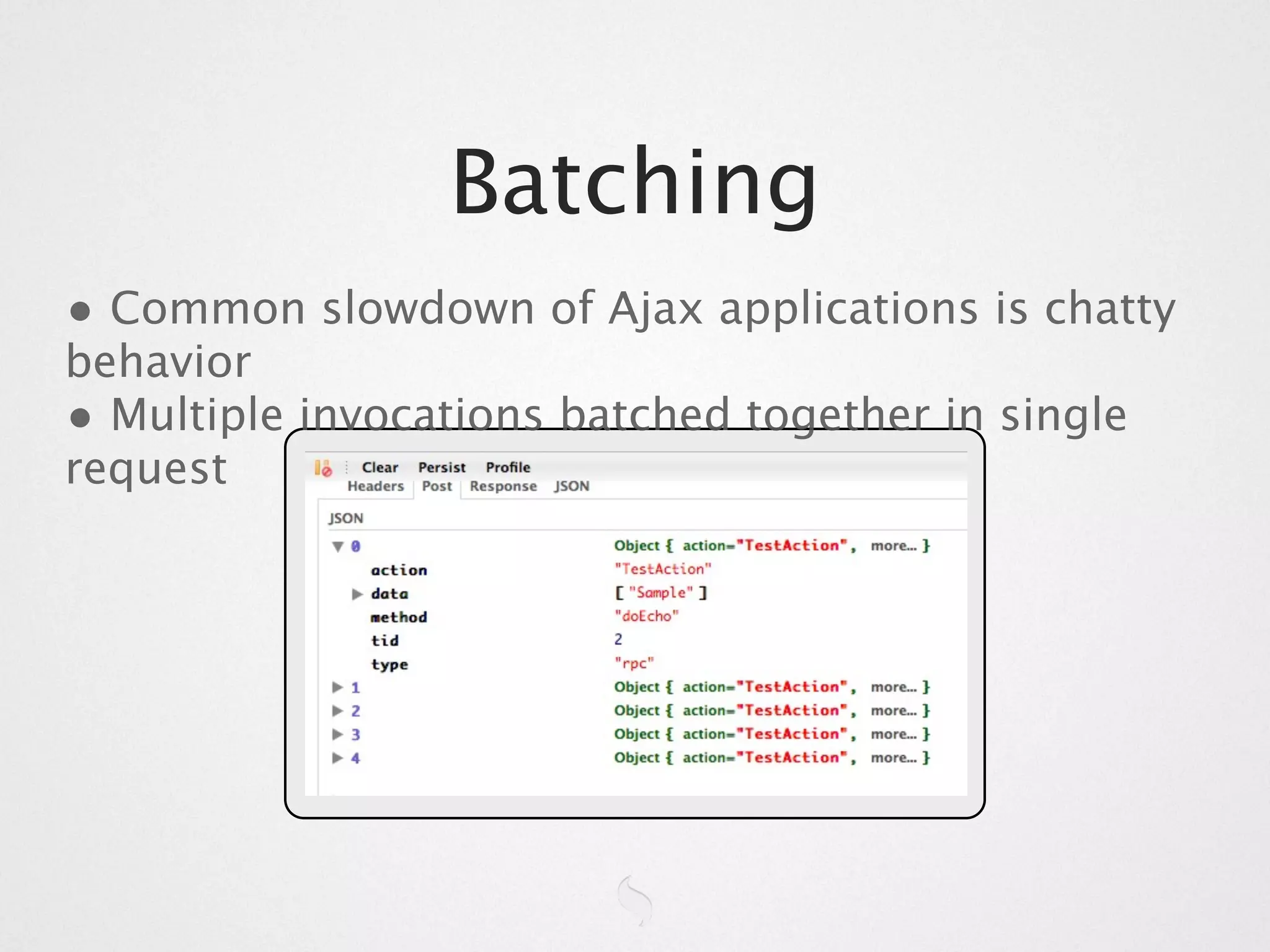
• Common slowdown of Ajax applications is chatty
behavior
• Multiple invocations batched together in single
request
Centralized Router
Centralized Router
• Improves Debugging
• Allows centralized security
policies
Compatible
Compatible
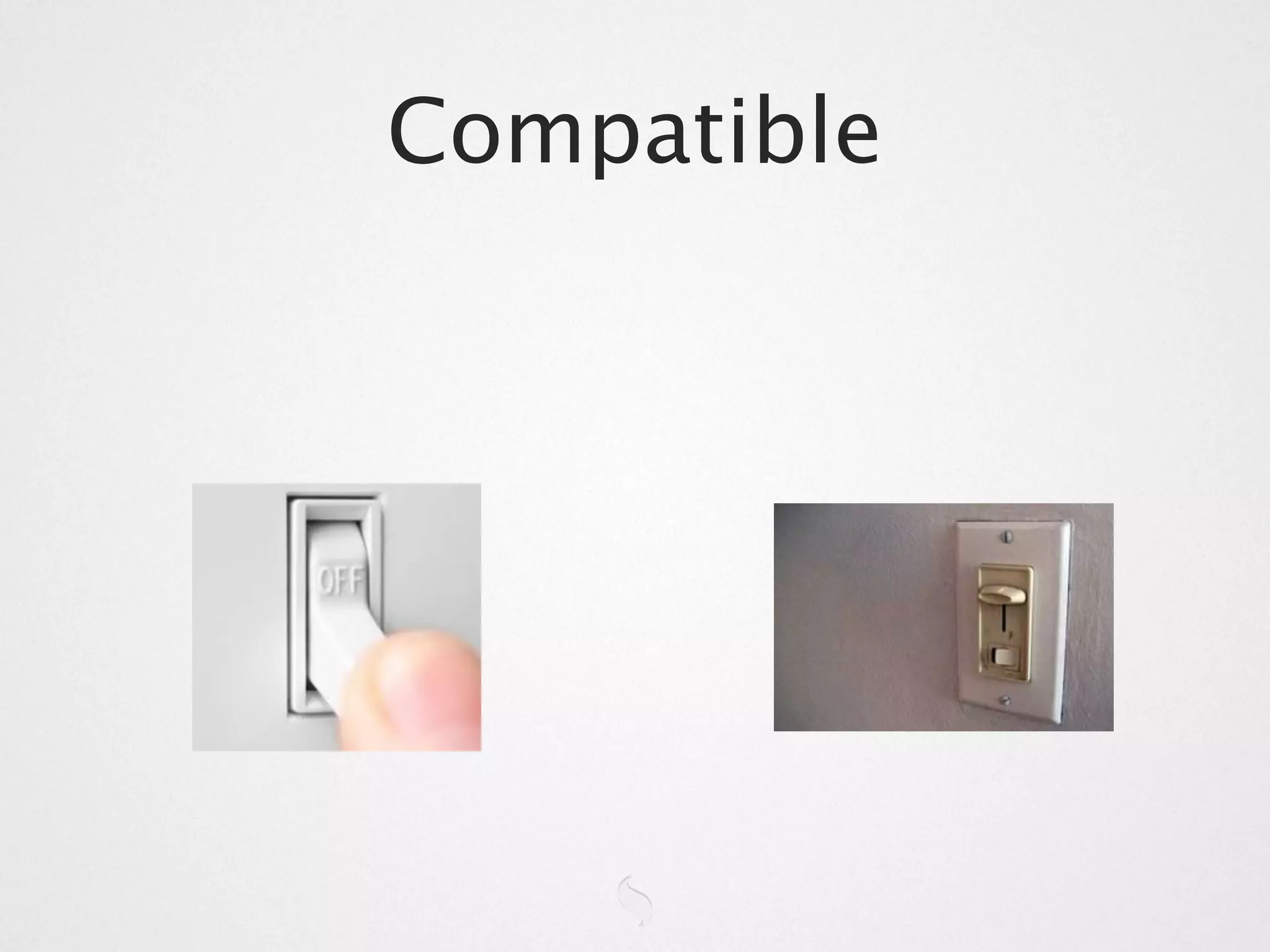
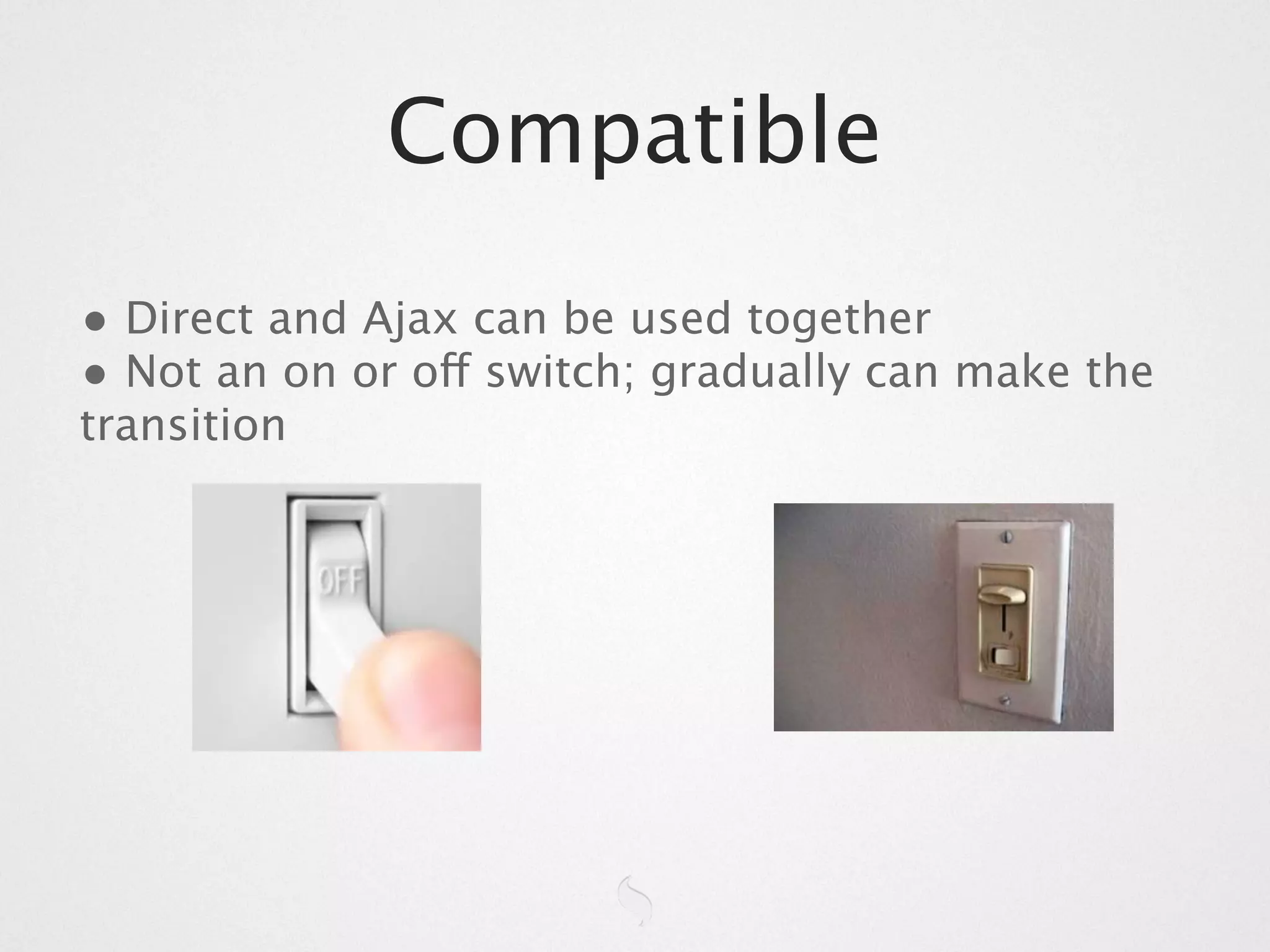
• Direct and Ajax can be used together
• Not an on or off switch; gradually can make the
transition
How it works
Setting up Direct
Setting up Direct
• Download and install a Server-side Stack
• Configure remotable methods
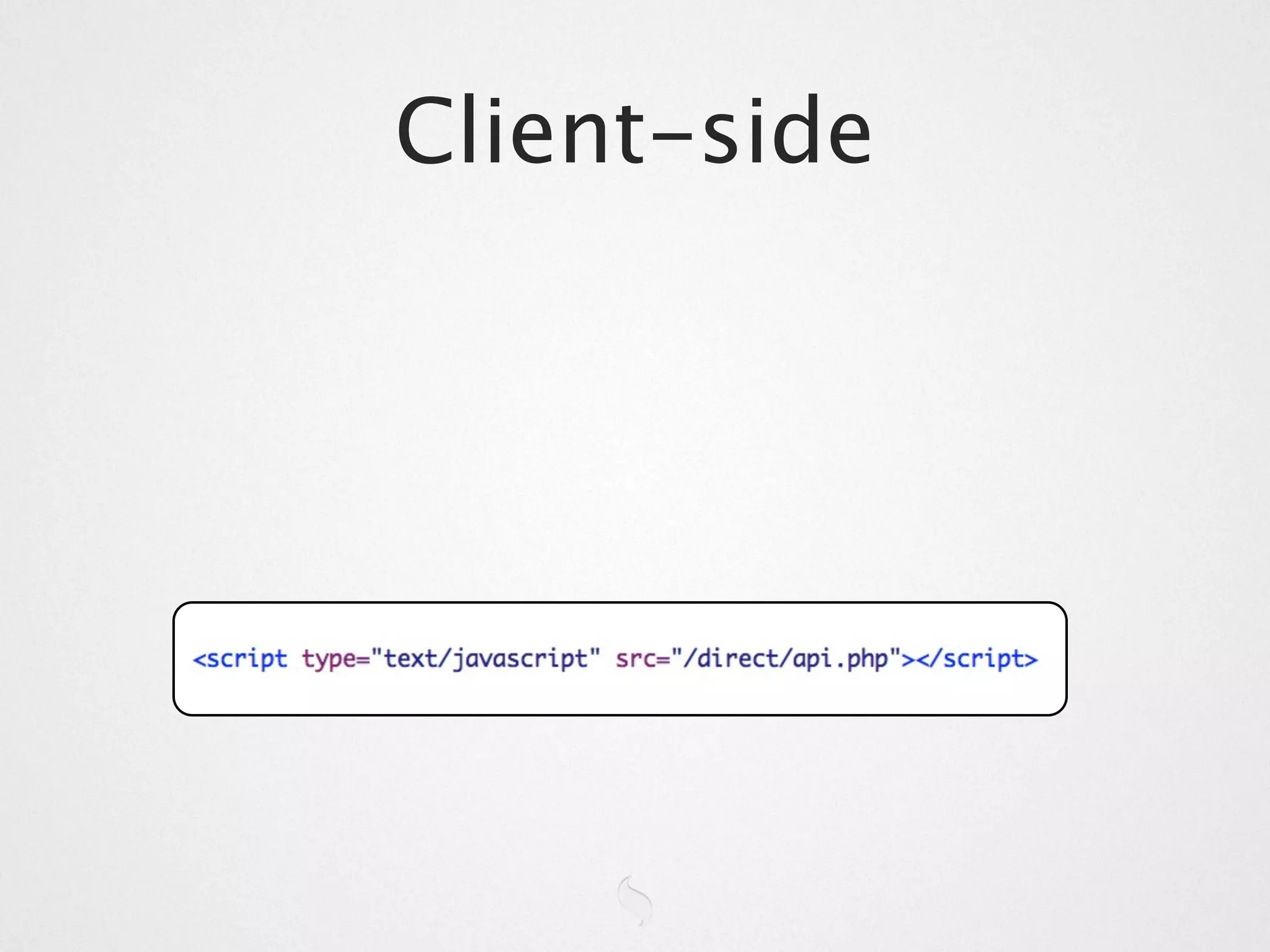
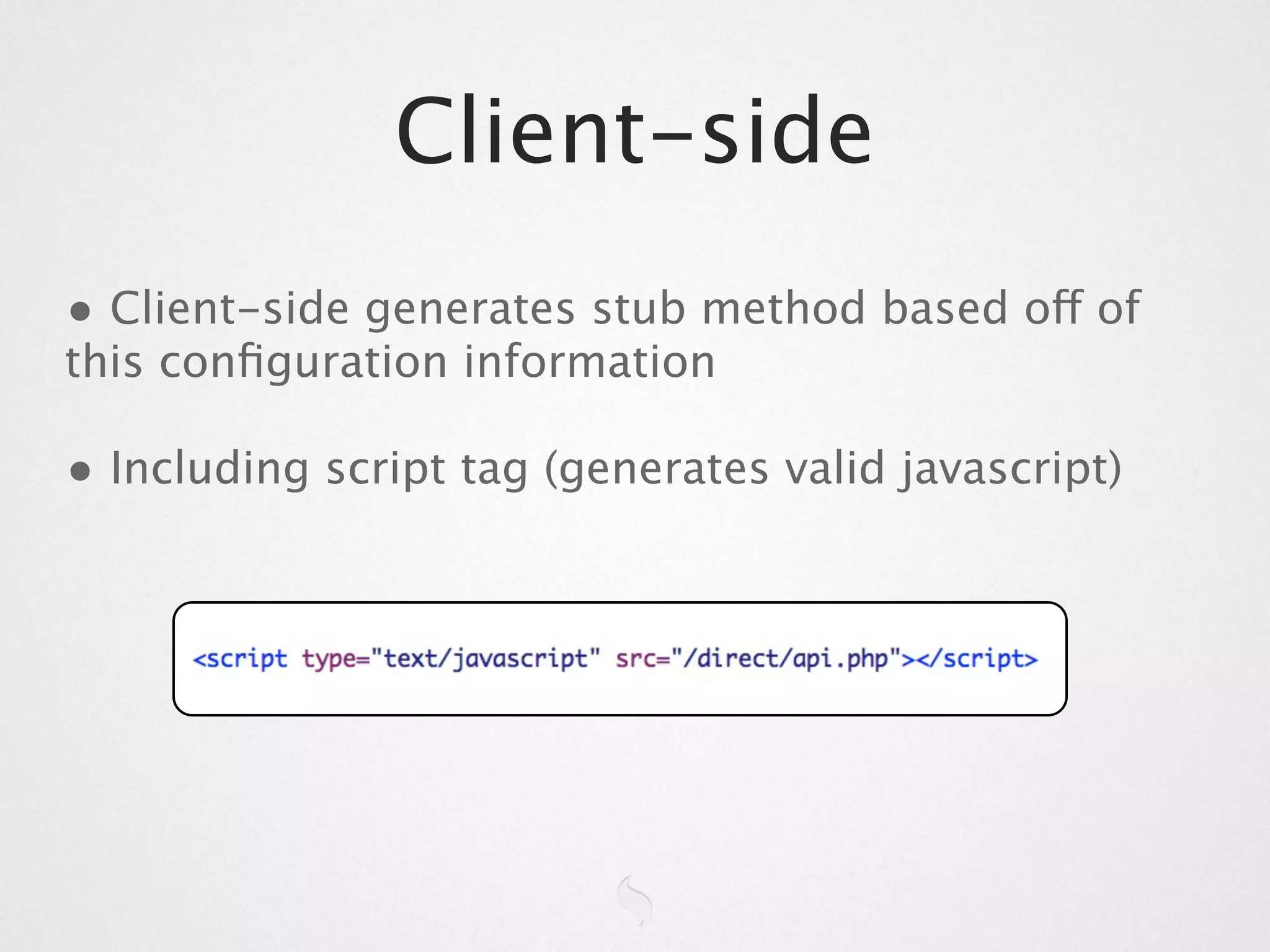
• Include API via script tag
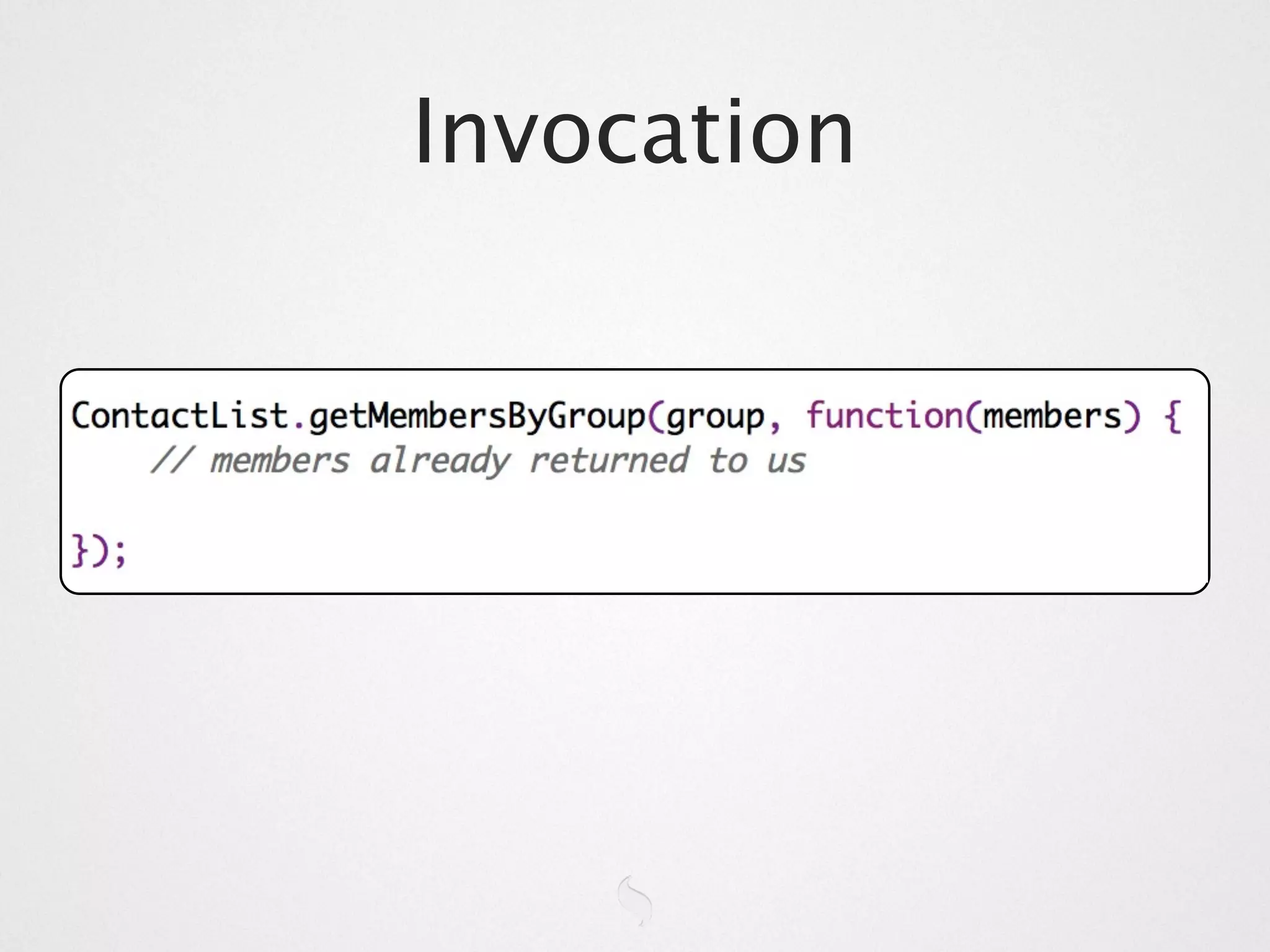
• Invoke client-side stubs
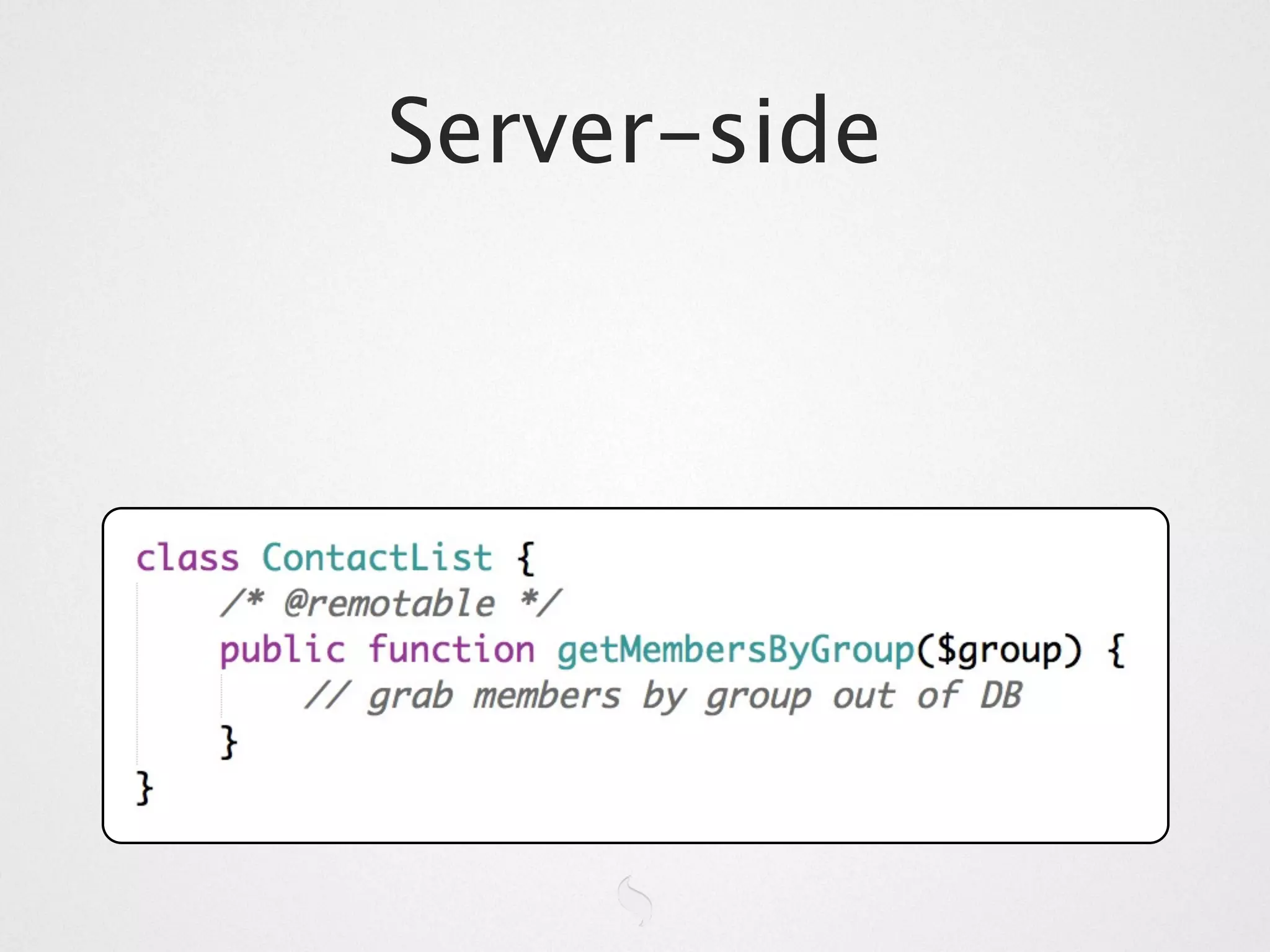
Server-side


/* @remotable */
public function getMembersByGroup($group) {
   // grab members by group out of DB
}
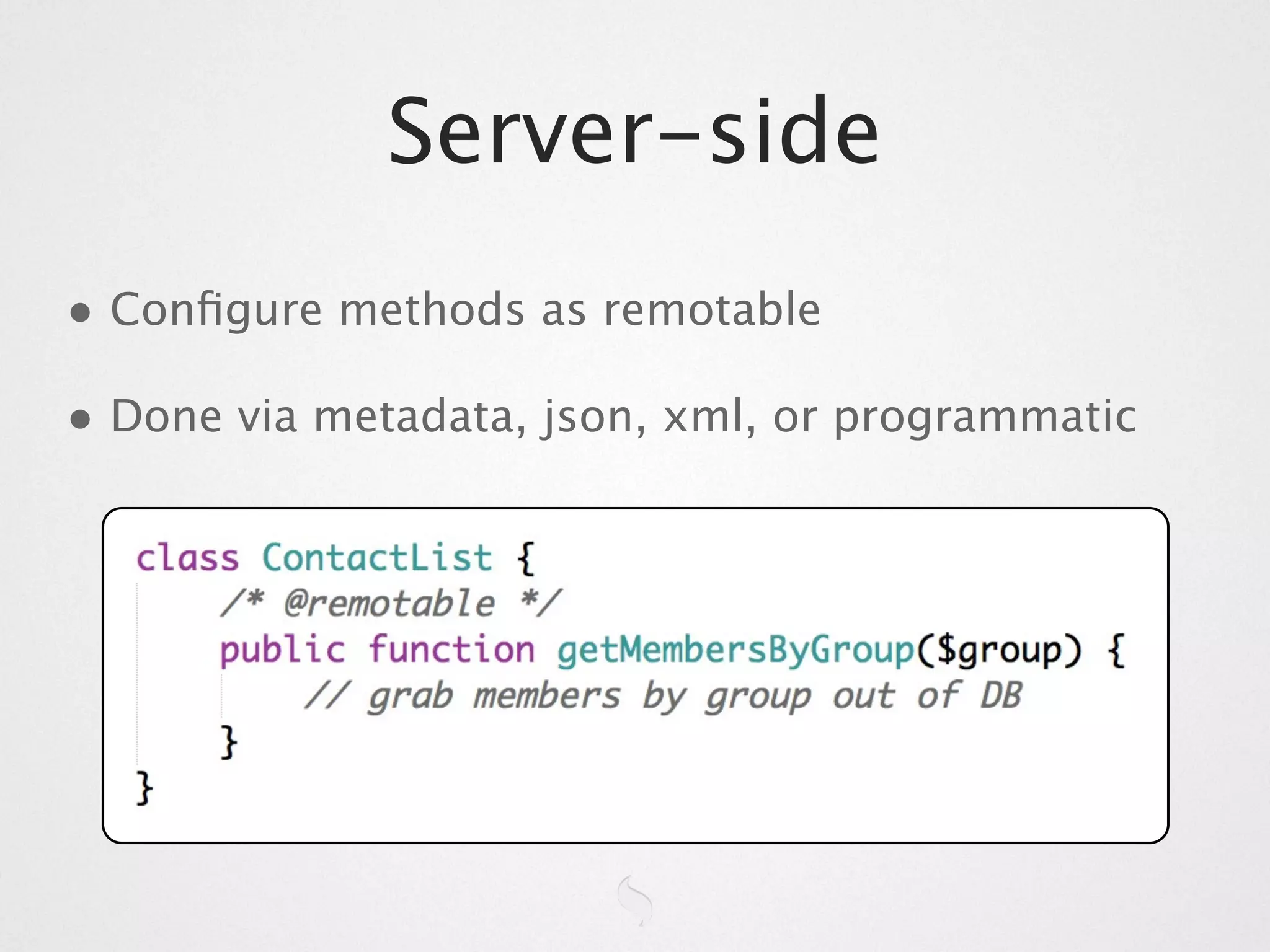
Server-side
• Configure methods as remotable
• Done via metadata, json, xml, or programmatic

   /* @remotable */
   public function getMembersByGroup($group) {
      // grab members by group out of DB
   }
Client-side
Client-side
• Client-side generates stub method based off of
this configuration information

• Including script tag (generates valid javascript)
Invocation
Magic
Magic
When client-side stubs are invoked within a
certain threshold of time, they are batched
together and sent over an Ajax request

Direct handles invoking the appropriate
callback
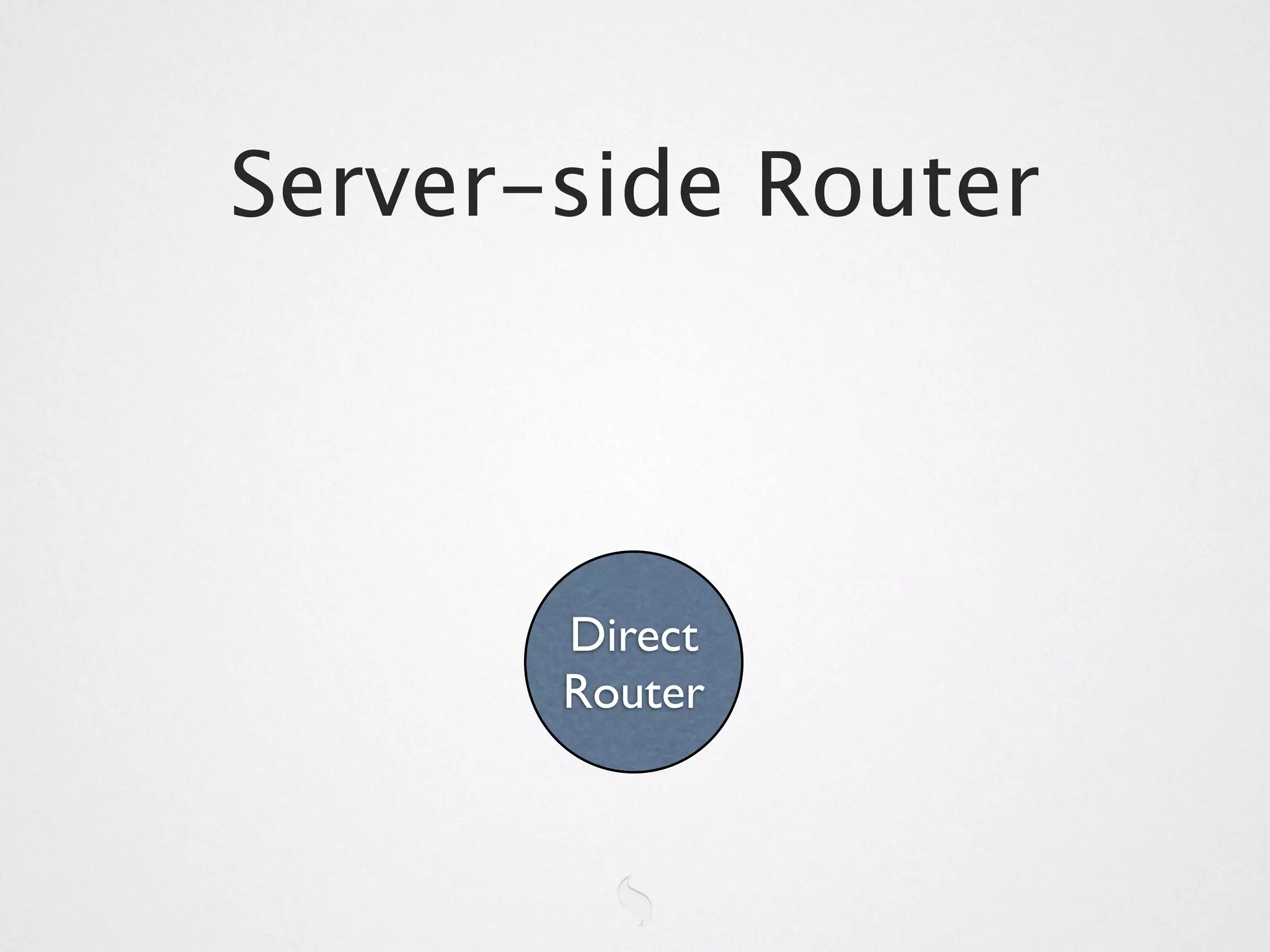
Server-side Router


       Direct
       Router
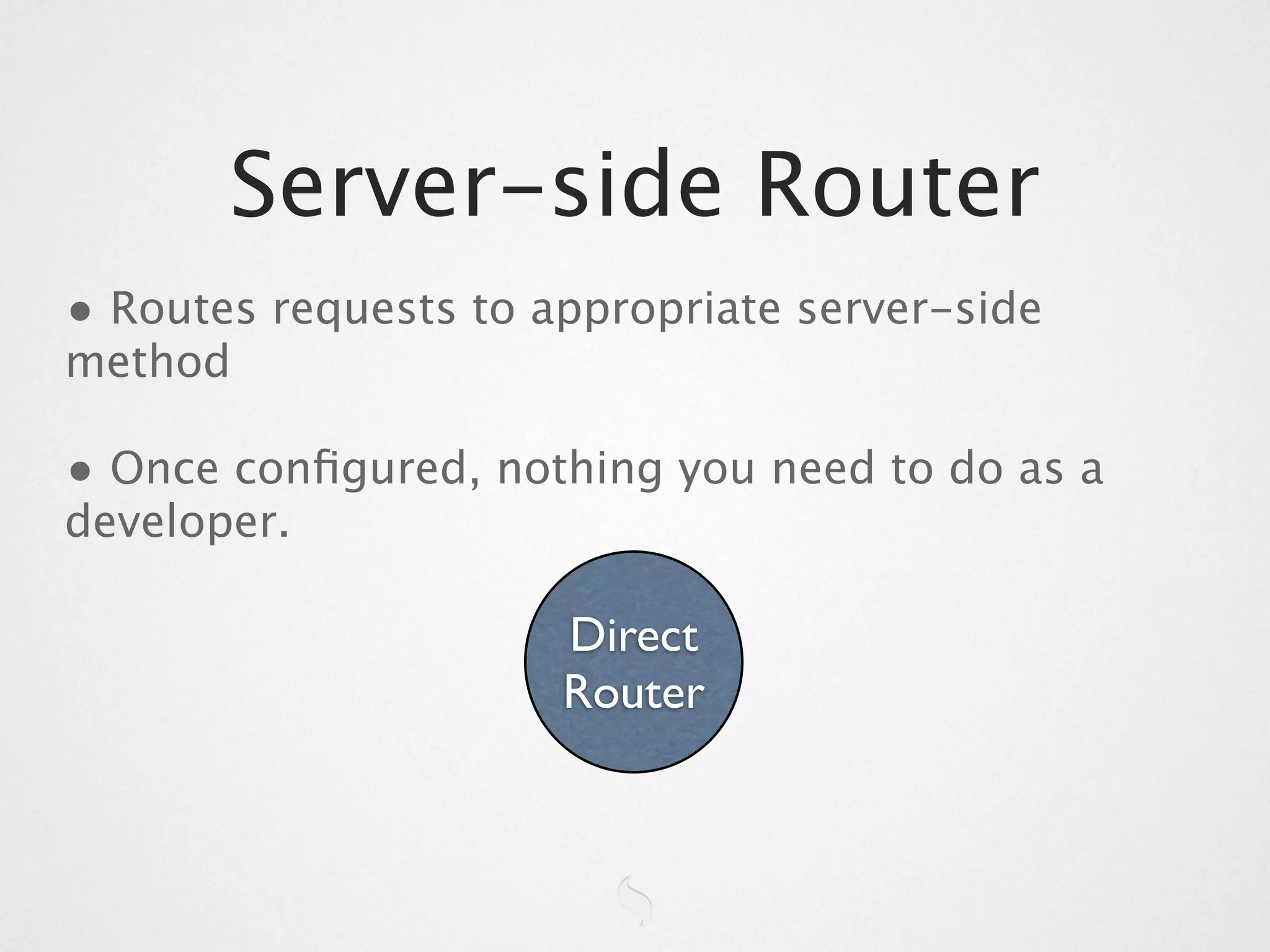
Server-side Router
• Routes requests to appropriate server-side
method

• Once configured, nothing you need to do as a
developer.

                      Direct
                      Router
Implementing a Stack
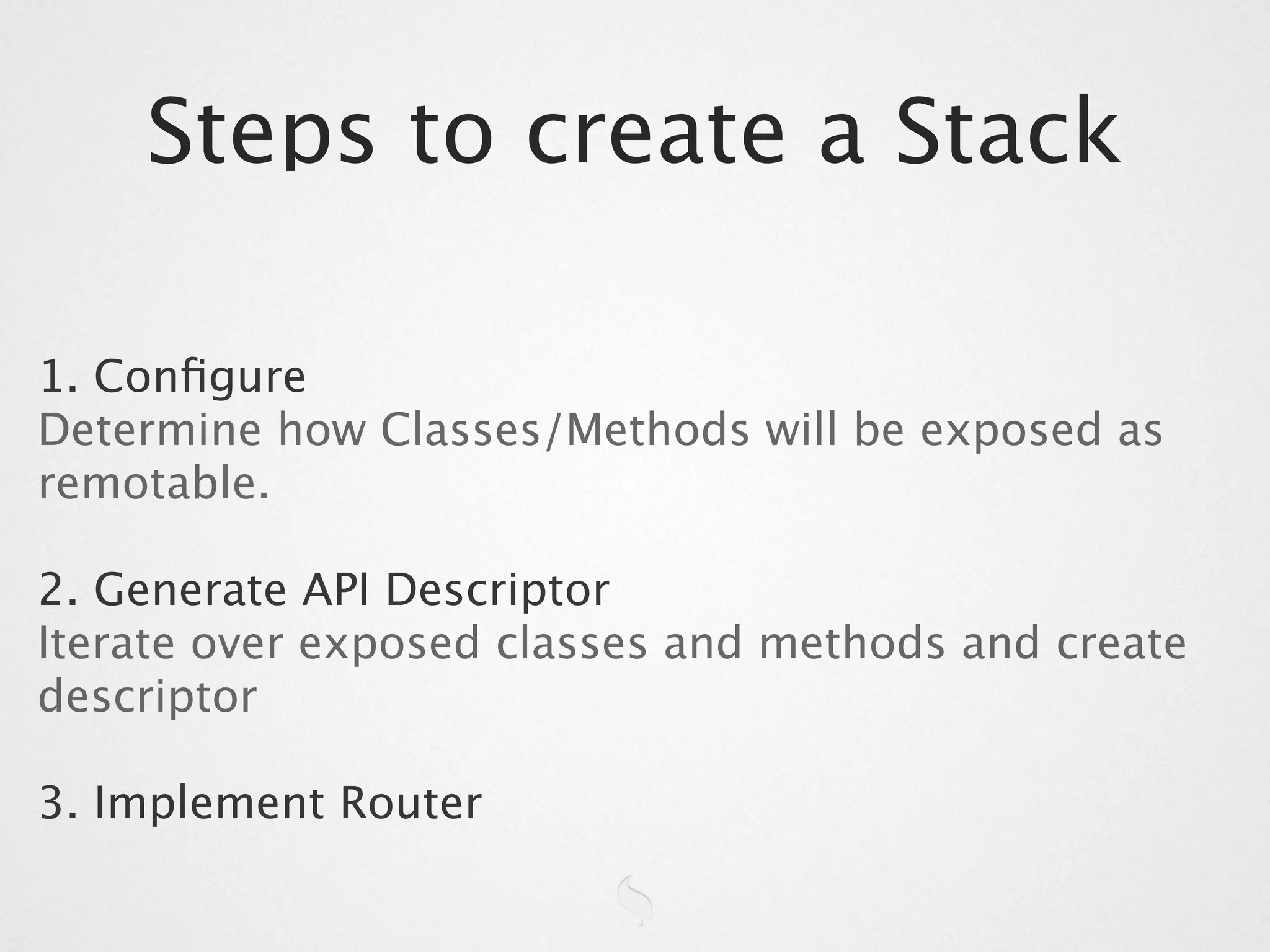
Steps to create a Stack

1. Configure
Determine how Classes/Methods will be exposed as
remotable.

2. Generate API Descriptor
Iterate over exposed classes and methods and create
descriptor

3. Implement Router
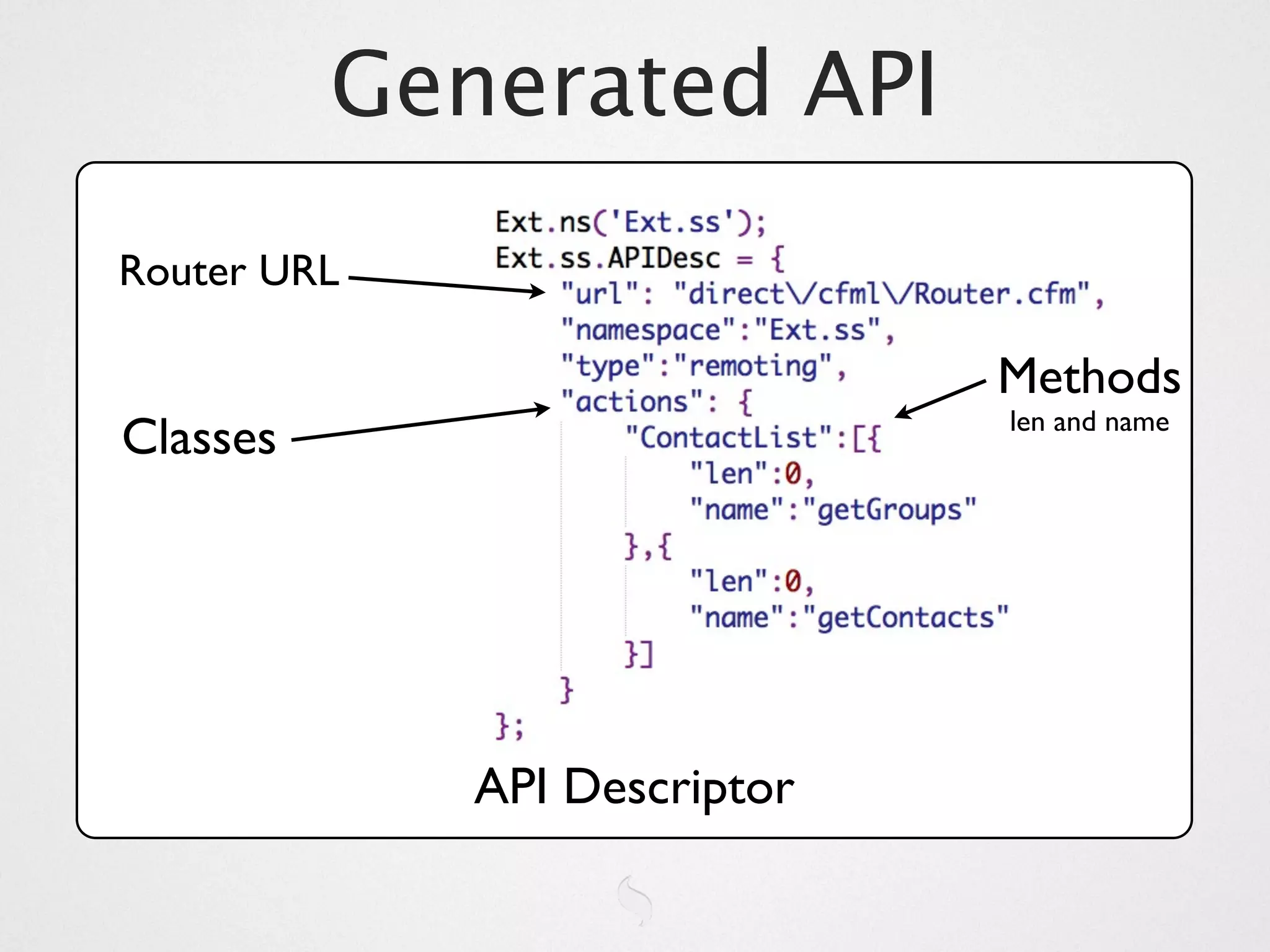
Generated API
Router URL

                              Methods
                              len and name
Classes


             API Descriptor
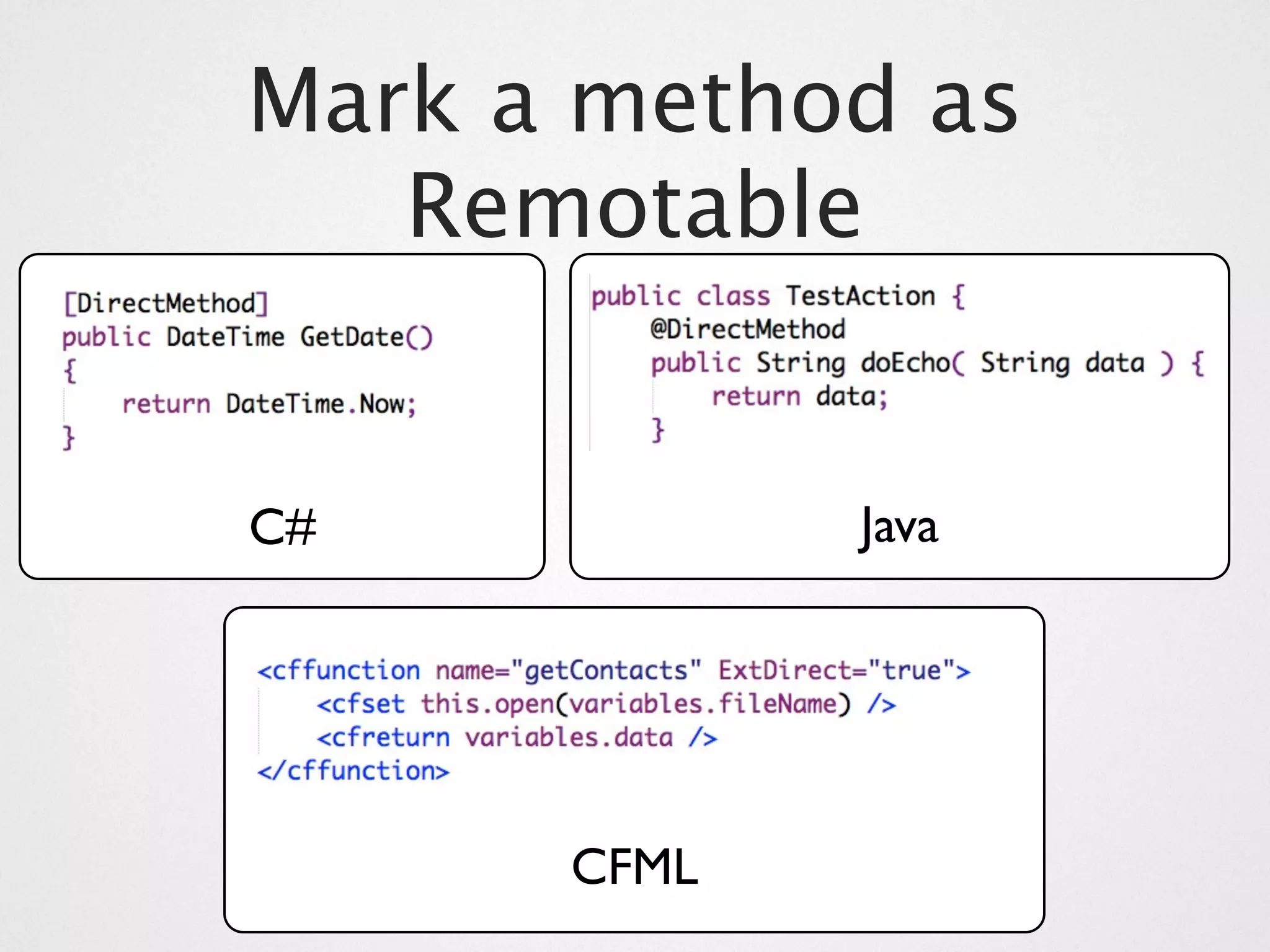
Mark a method as
   Remotable


C#           Java


      CFML
CFML Stack
CFML Stack


Let’s go over the basics of
how to implement a stack
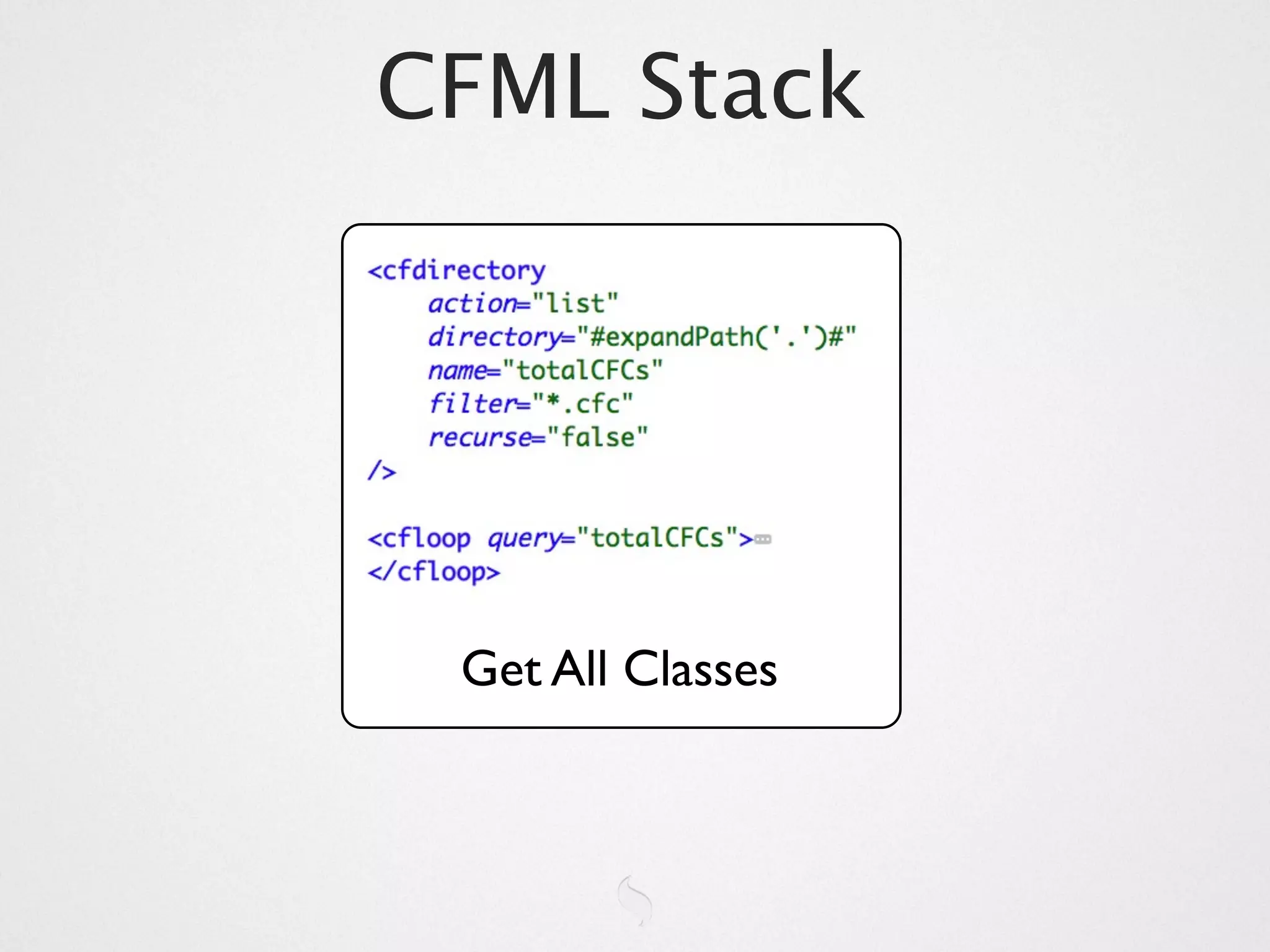
CFML Stack


 Get All Classes
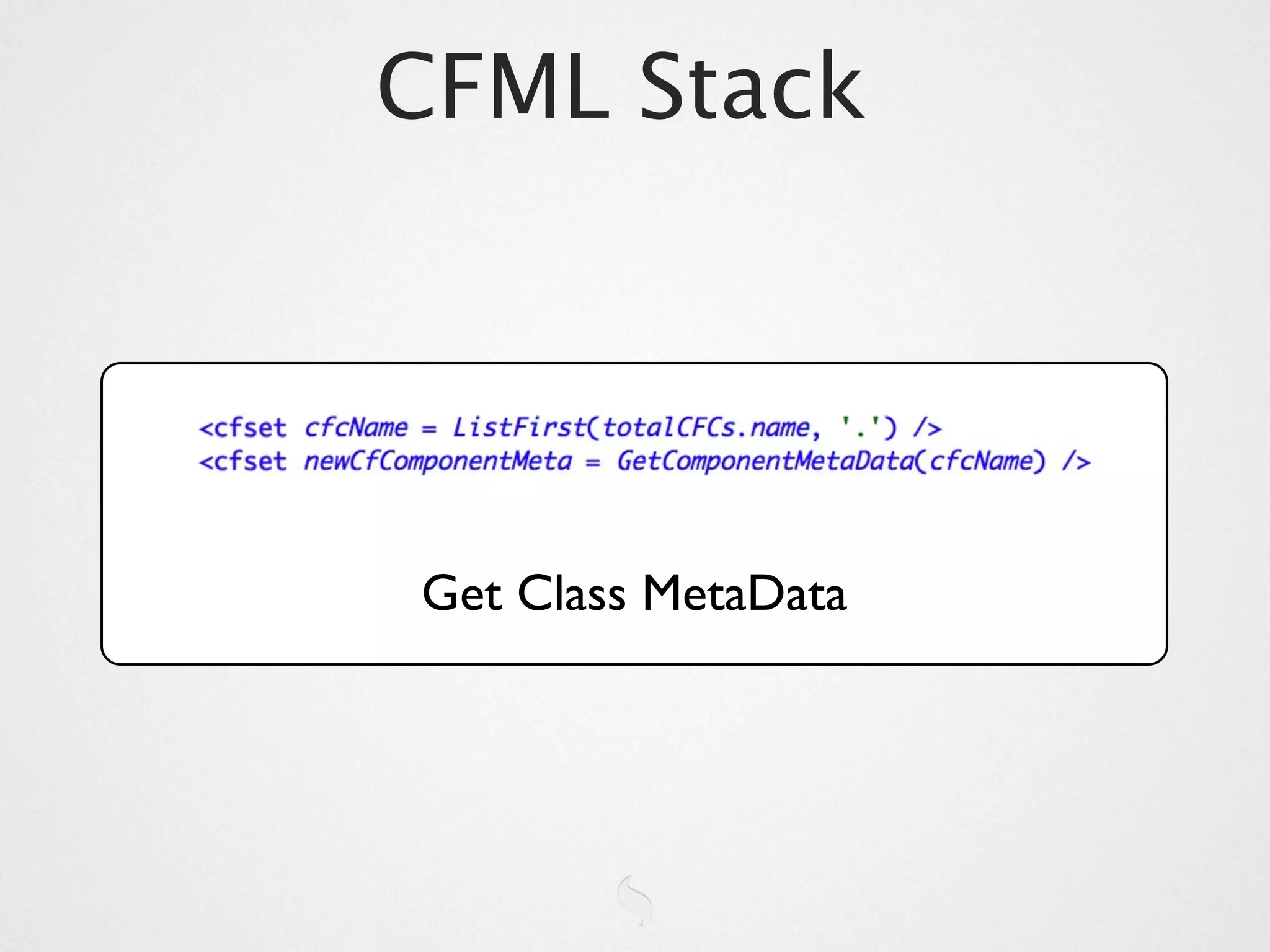
CFML Stack


Get Class MetaData
CFML Stack


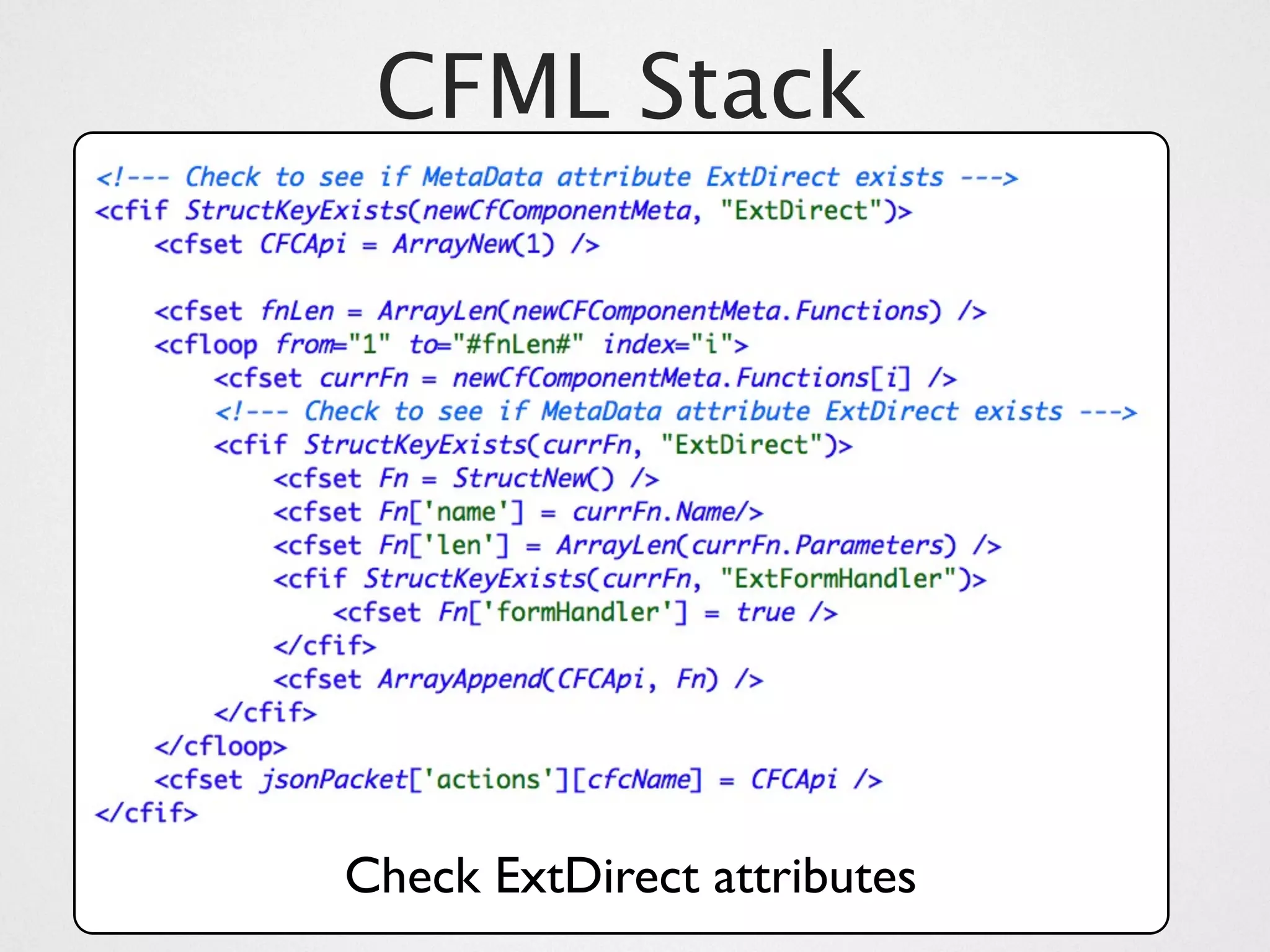
Check ExtDirect attributes
CFML Stack


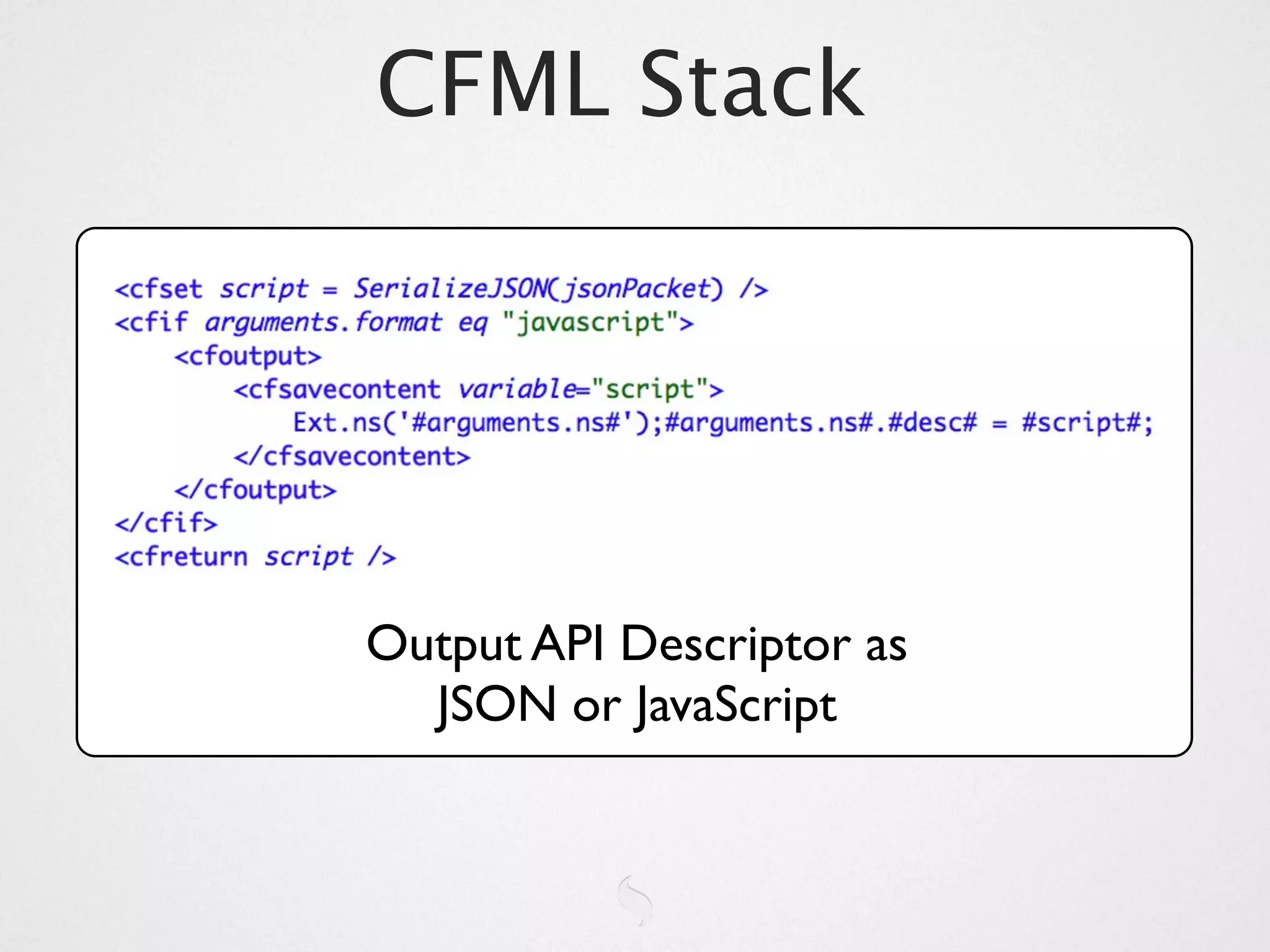
Output API Descriptor as
  JSON or JavaScript
CFML Stack
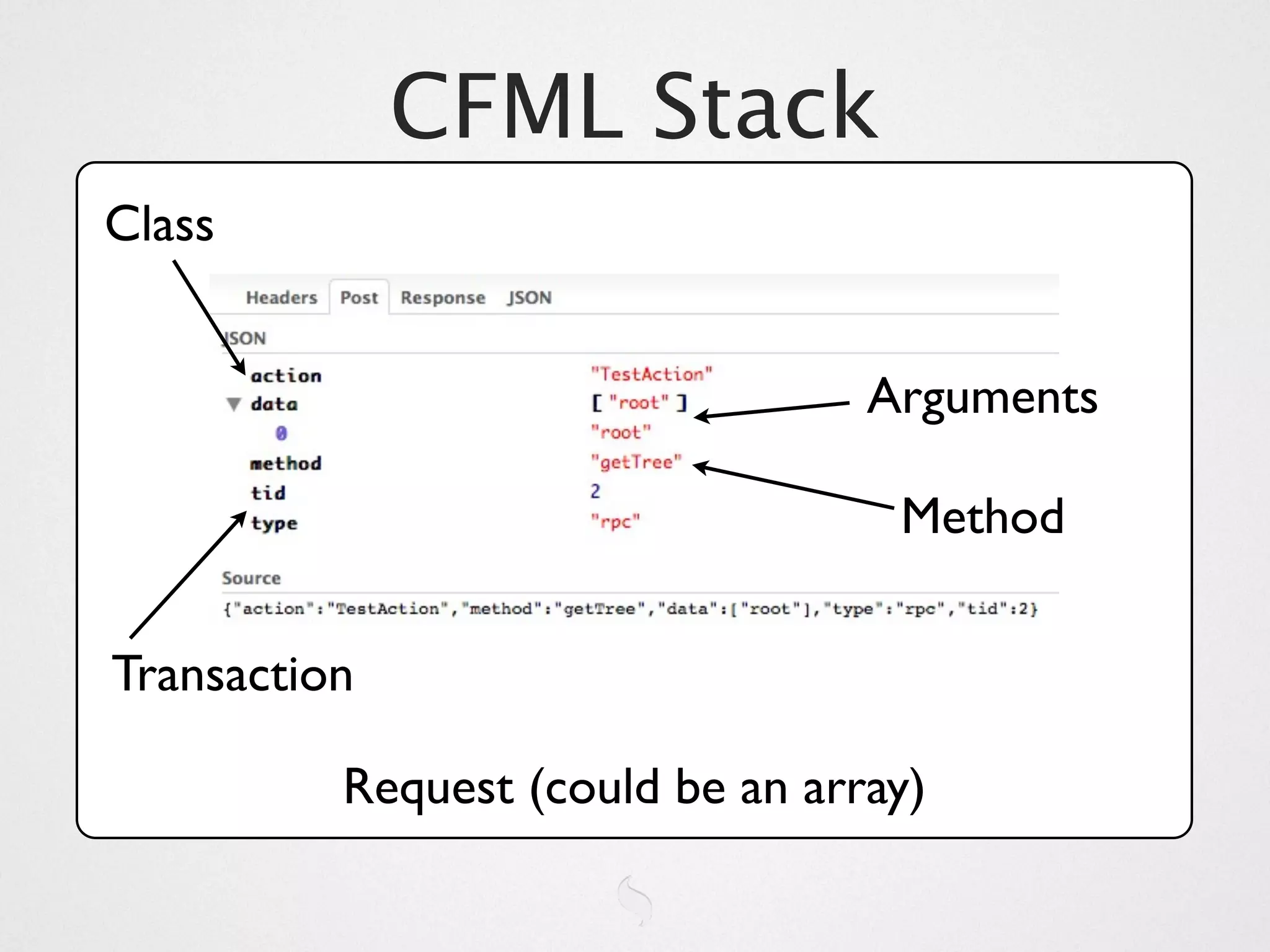
Class


                                  Arguments

                                   Method


Transaction

          Request (could be an array)
CFML Stack


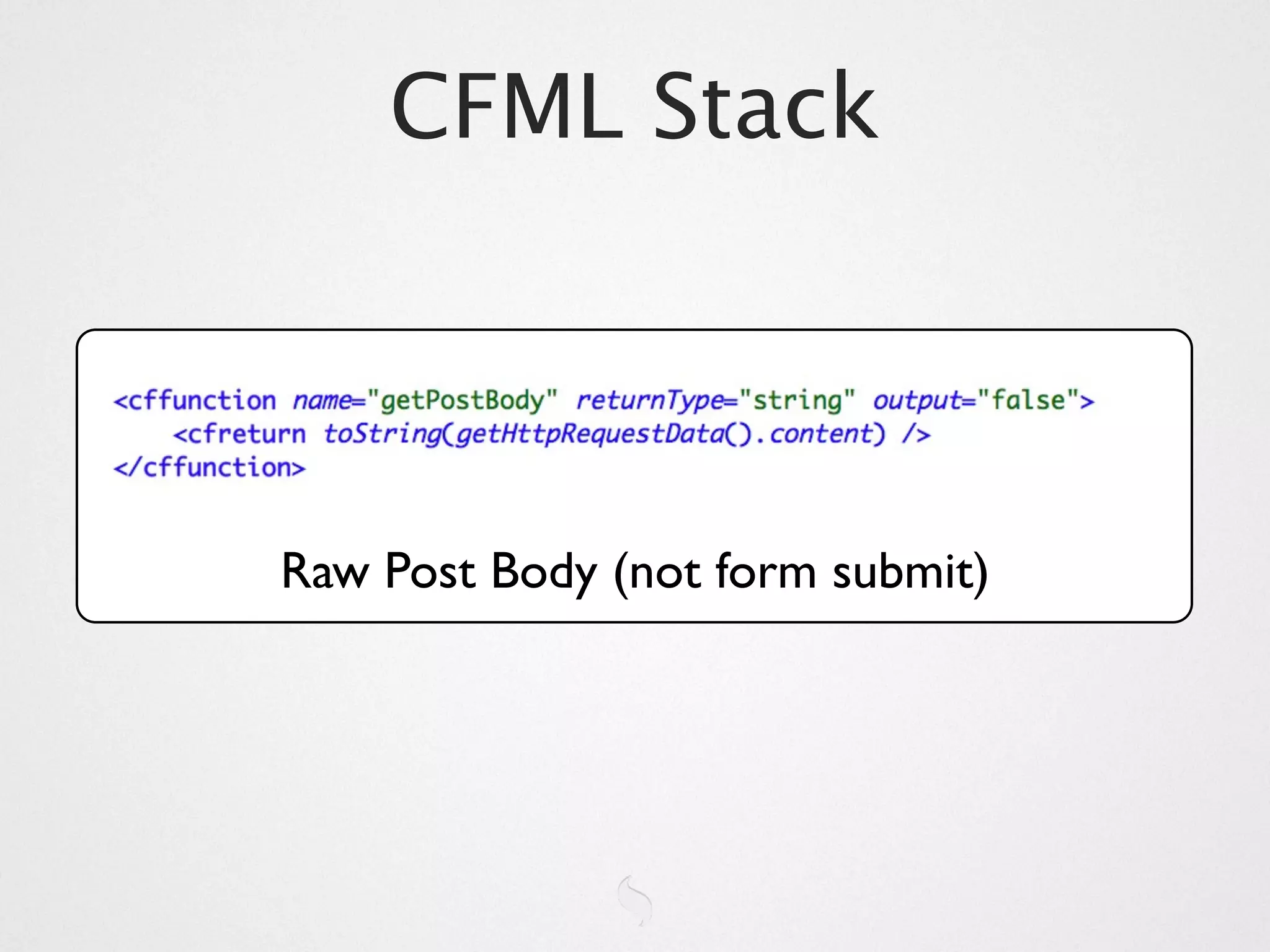
Raw Post Body (not form submit)
CFML Stack


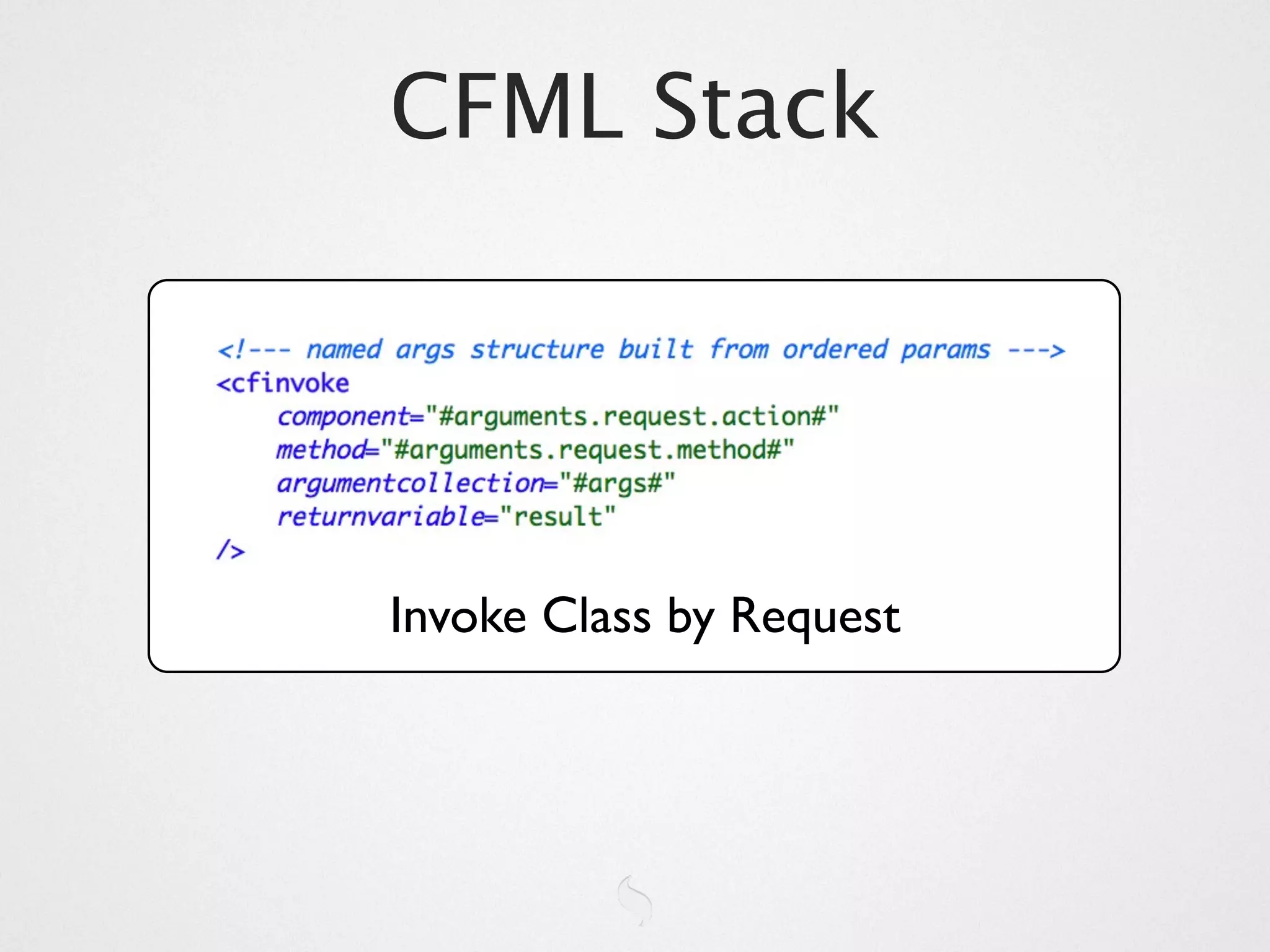
Invoke Class by Request
CFML Stack

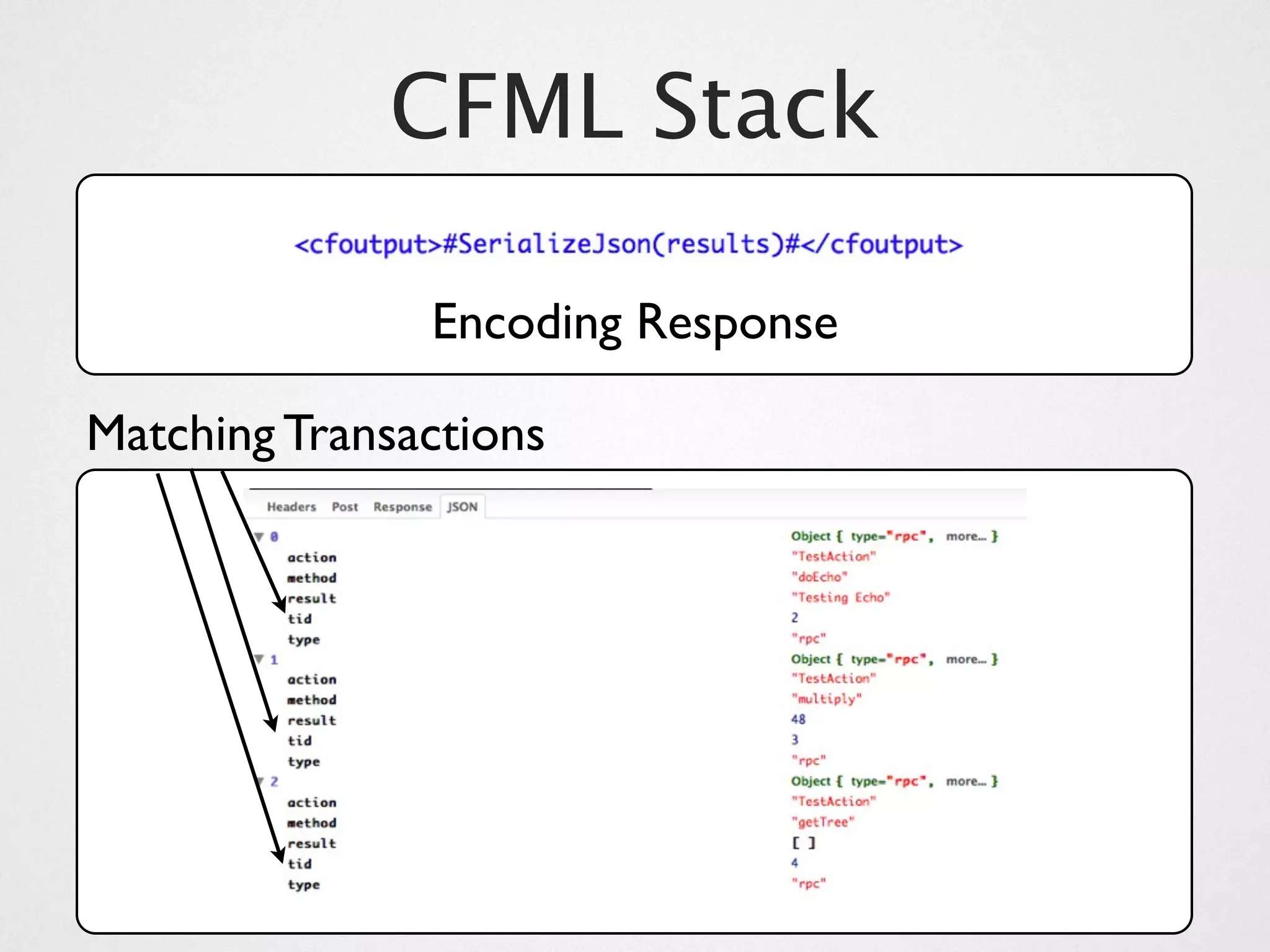
               Encoding Response

Matching Transactions
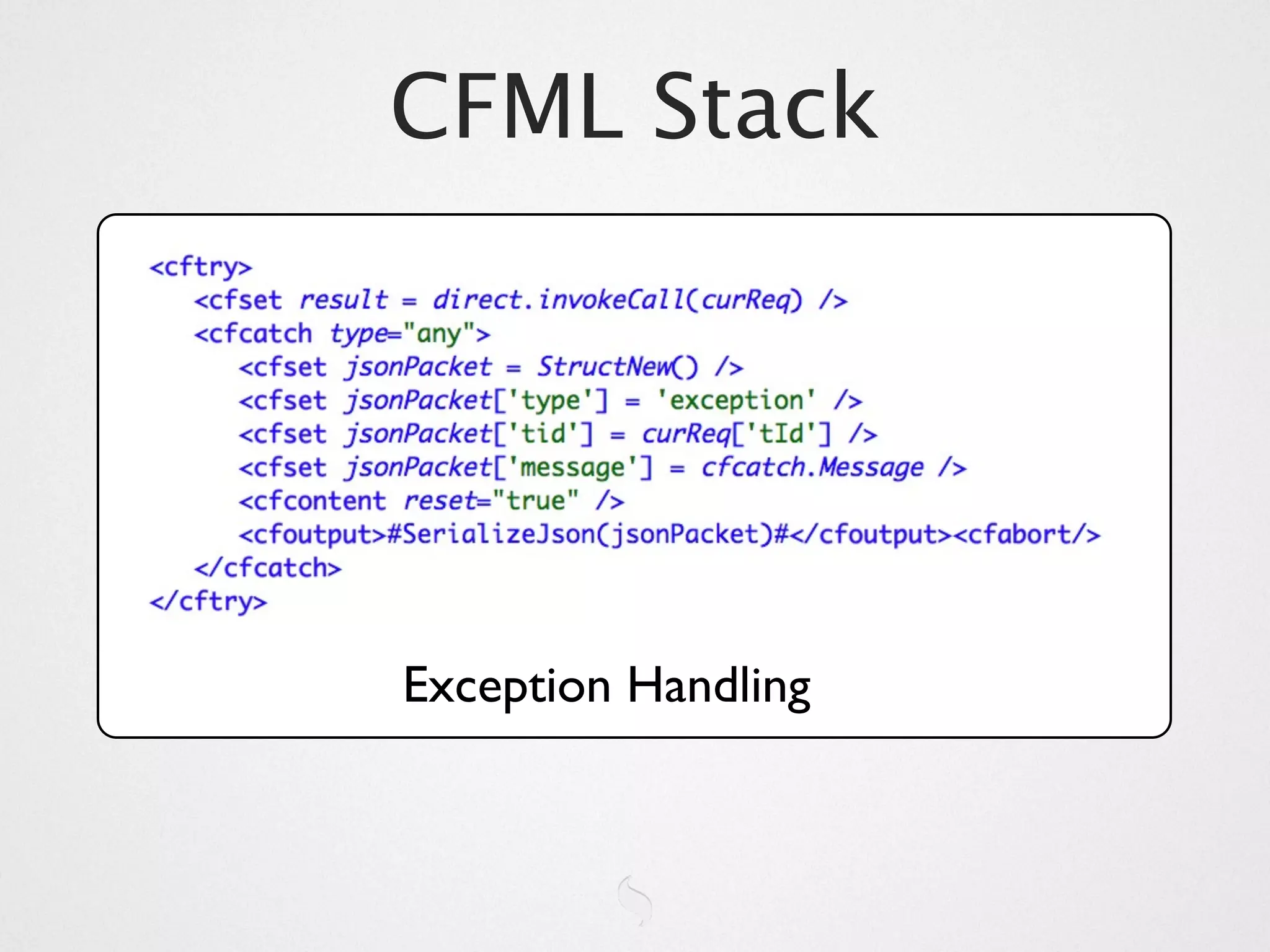
CFML Stack


Exception Handling
Additional
Additional

File Uploads -
formHandler
Error Handling - Debug
Mode
Long Running Requests
Caching API Descriptors
Caching Class Instances
Direct Specification

http://www.sencha.com/products/js/direct.php
Additional Resources
• Ext.Direct
http://www.sencha.com/products/direct/

• Ext JS Direct Forums
http://www.sencha.com/forum/forumdisplay.php?47-
Ext.Direct

• Ext.Direct Pack
http://www.sencha.com/products/js/download.php
Reference implementations: PHP, .NET, Ruby & CFML
Questions?

Advanced Server Integration with Data and Direct

Editor's Notes

  • #3 Good afternoon everyone and thanks for joining us at SenchaCon. I'm here today to tell you about Ext.Direct and how it can help you to write your applications quicker and with less effort. Ext.Direct allows you to seamlessly invoke server-side methods as if they were local to the browser. This lets you focus on the business aspects of your application rather than writing boiler plate Ajax code. Direct is capable of integrating with all server-side platforms and already has implementations for the most popular languages and frameworks in use today. First we're going to take a look at the most commonly used patterns to interact with your server via Ajax and compare it to using Direct. Then I'll show you how Direct works and how you can use both of these techniques in conjunction with one another so that you can gradually transition to using Direct.
  • #51 So what if a server-side stack doesn’t already exist for your language/framework?
  • #52 So what if a server-side stack doesn’t already exist for your language/framework?
  • #53 So what if a server-side stack doesn’t already exist for your language/framework?
  • #55 First see whats required in the API Descriptor
  • #56 First see whats required in the API Descriptor
  • #57 First see whats required in the API Descriptor
  • #58 First see whats required in the API Descriptor
  • #59 First see whats required in the API Descriptor
  • #60 First see whats required in the API Descriptor
  • #61 First see whats required in the API Descriptor
  • #62 First see whats required in the API Descriptor
  • #63 So lets see how we can remote some methods and generate a descriptor like this