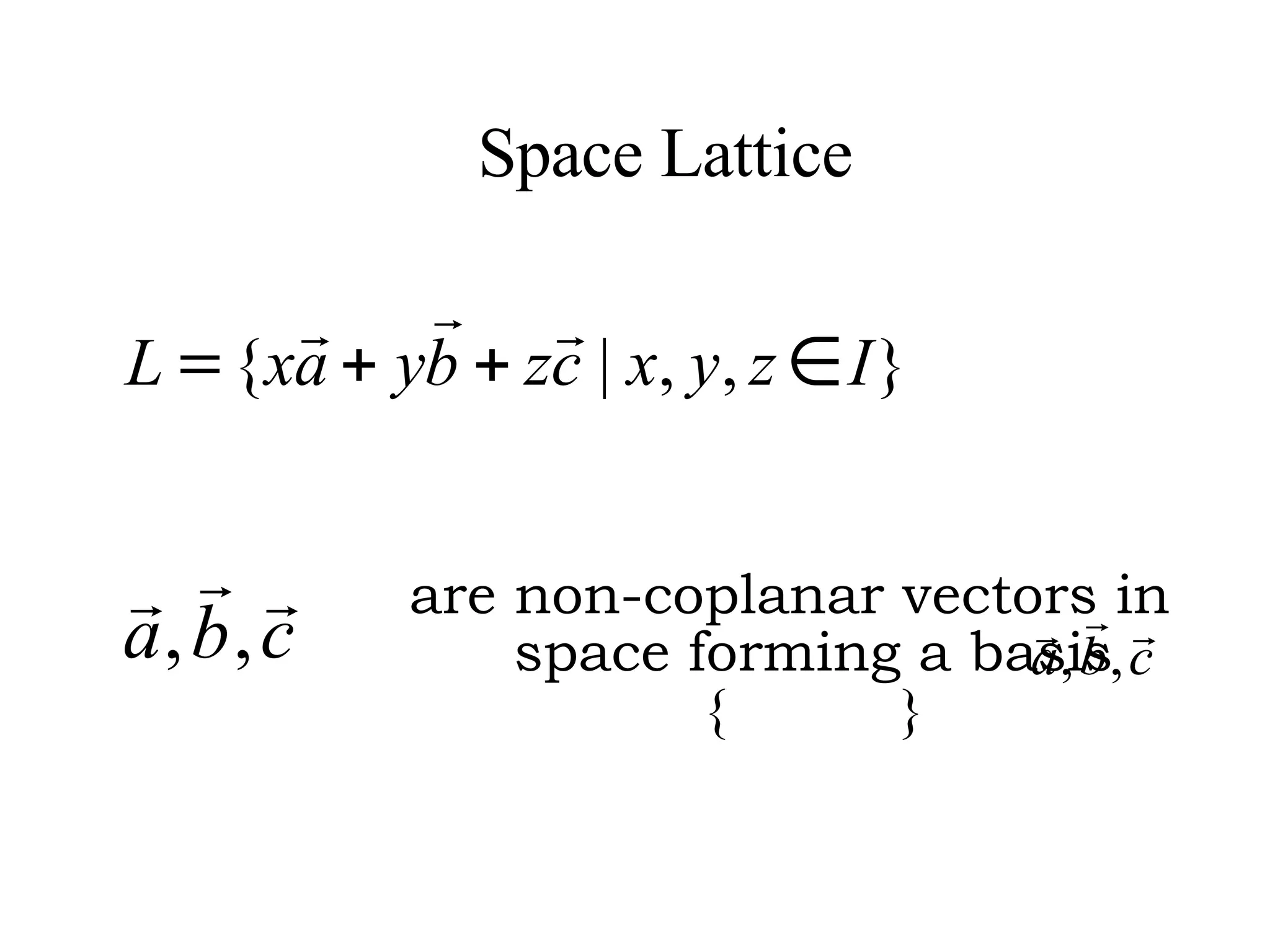
Space Lattice are non-coplanar vectors in space forming a basis {  }
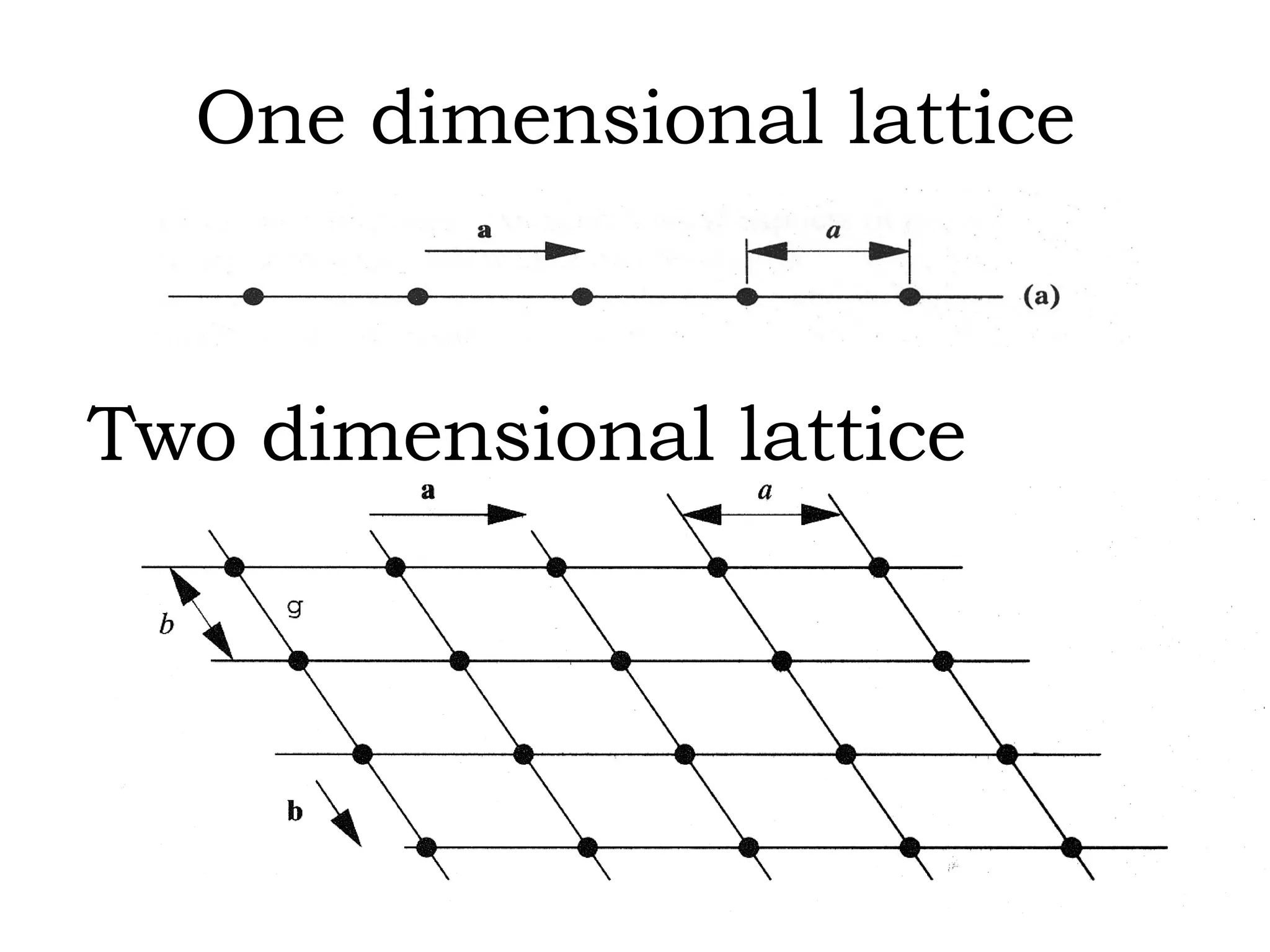
One dimensional lattice Two dimensional lattice
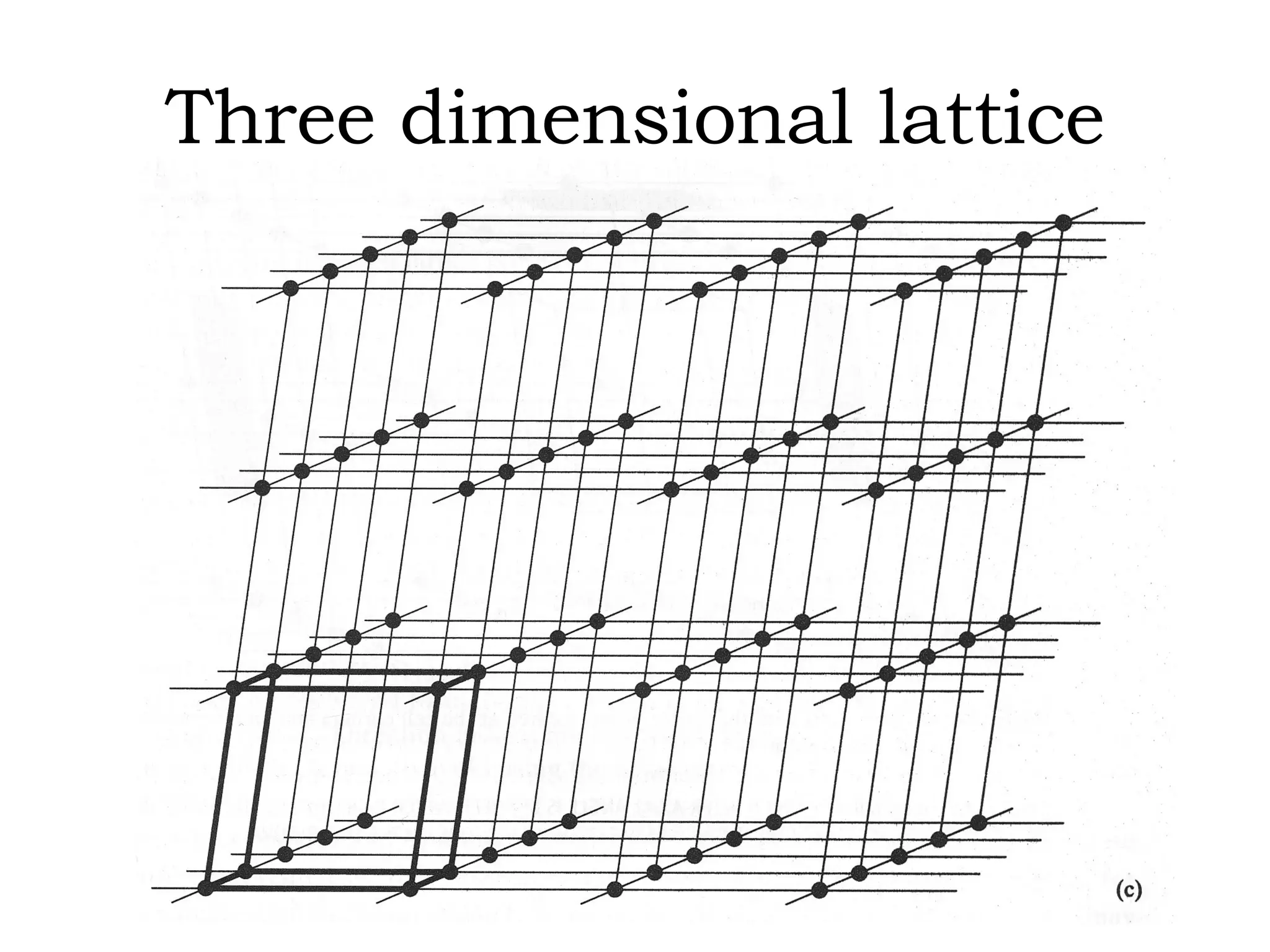
Three dimensional lattice
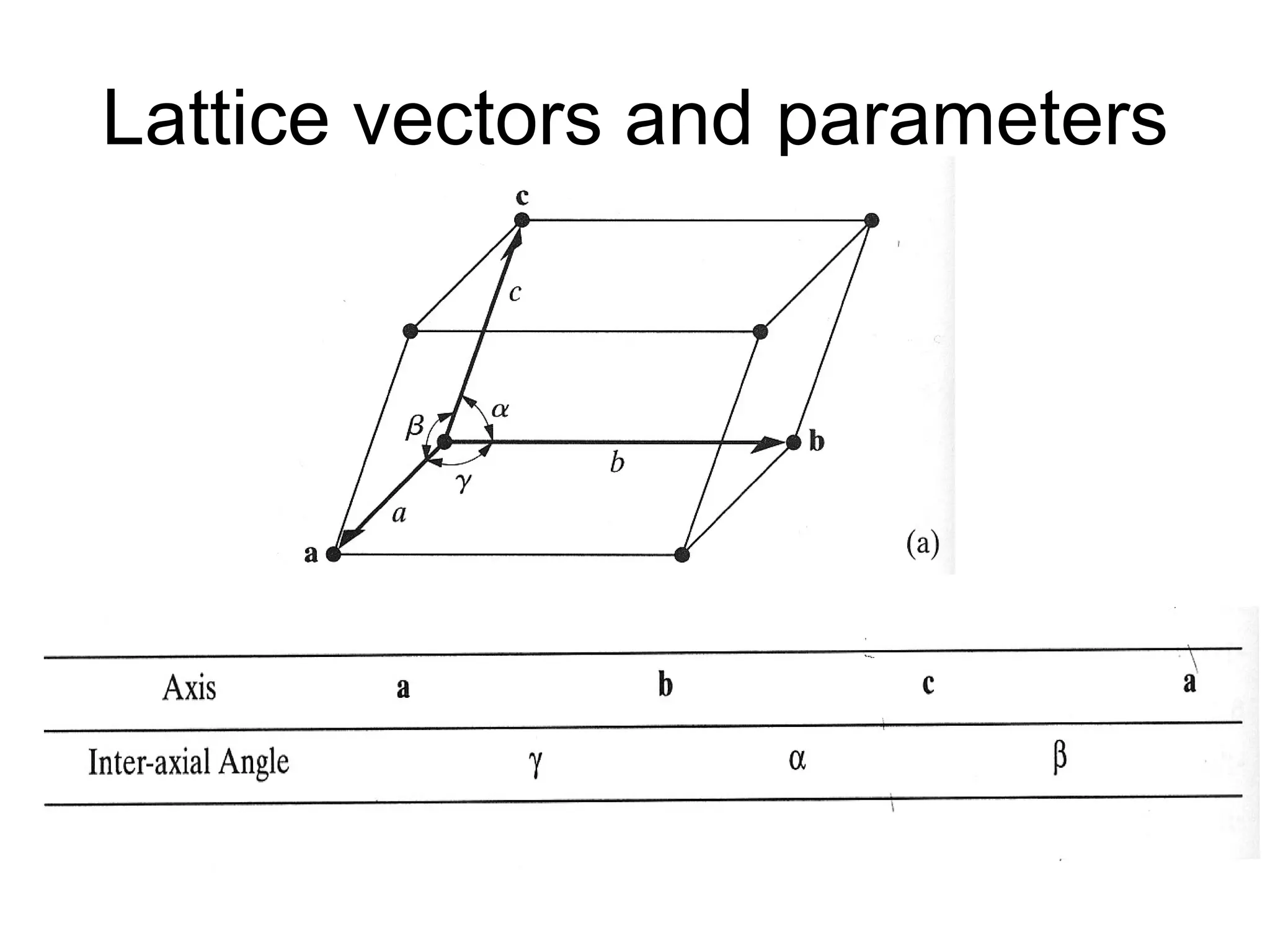
Lattice vectors and parameters
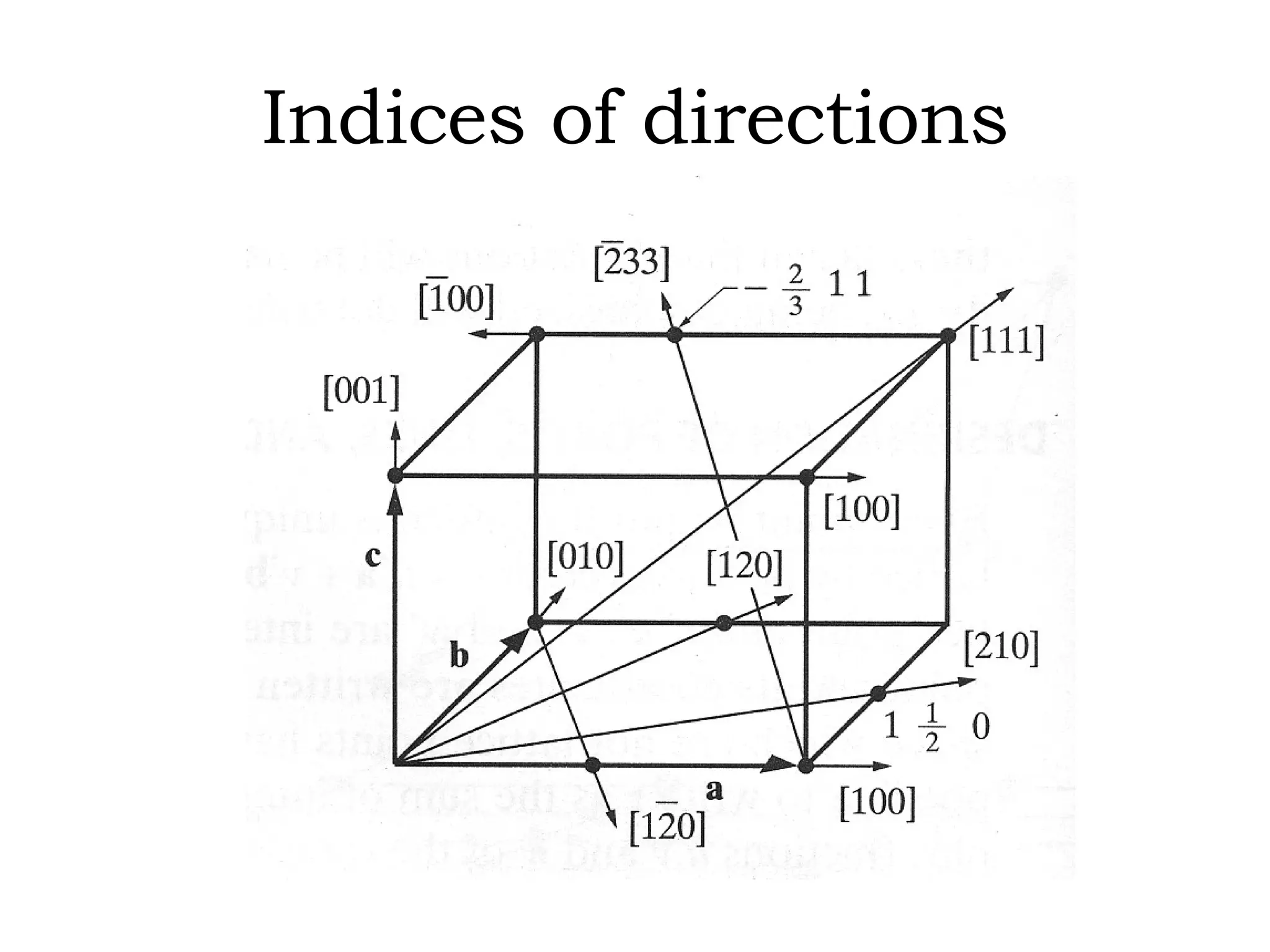
Indices of directions
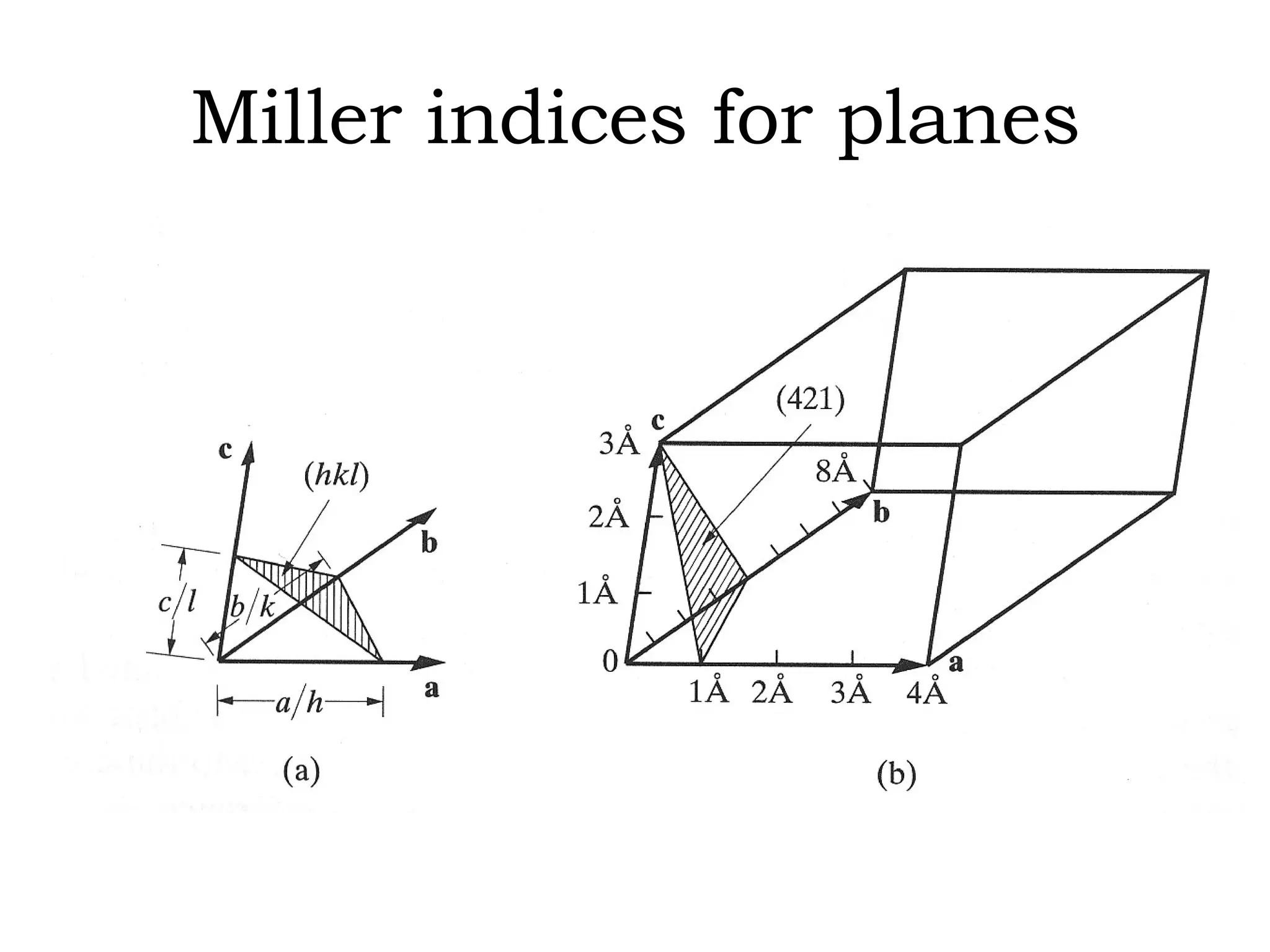
Miller indices for planes
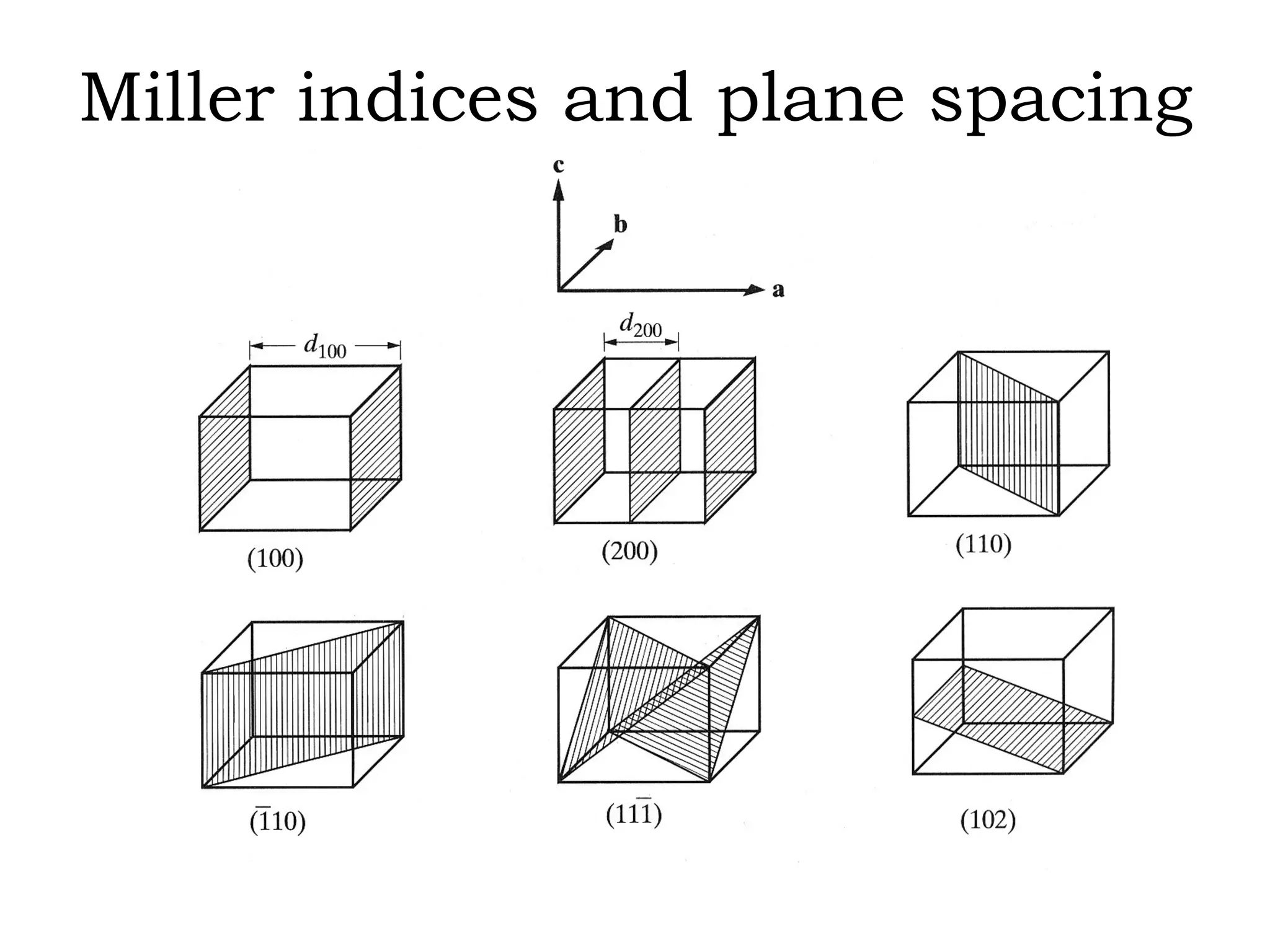
Miller indices and plane spacing
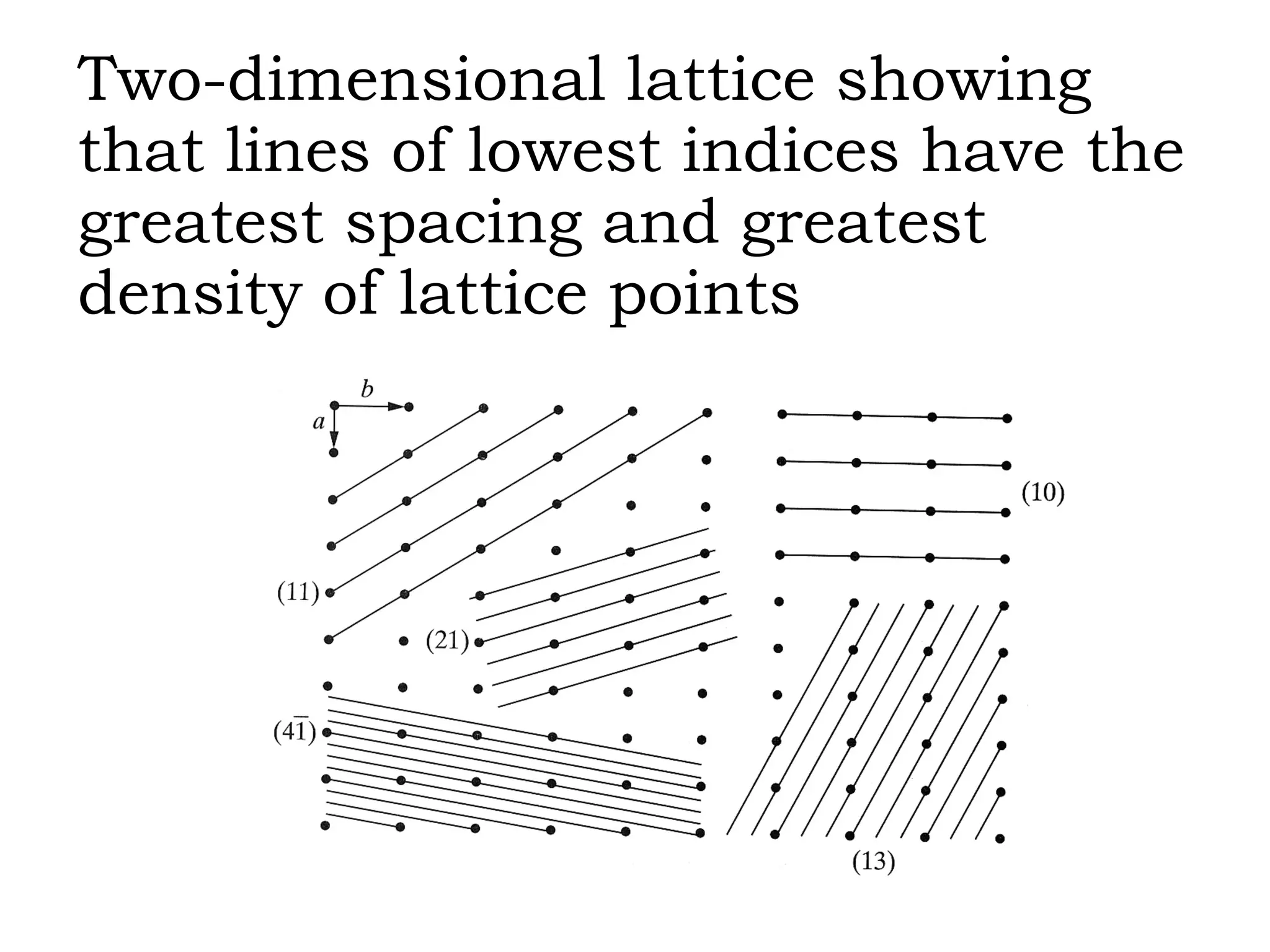
Two-dimensional lattice showing that lines of lowest indices have the greatest spacing and greatest density of lattice points
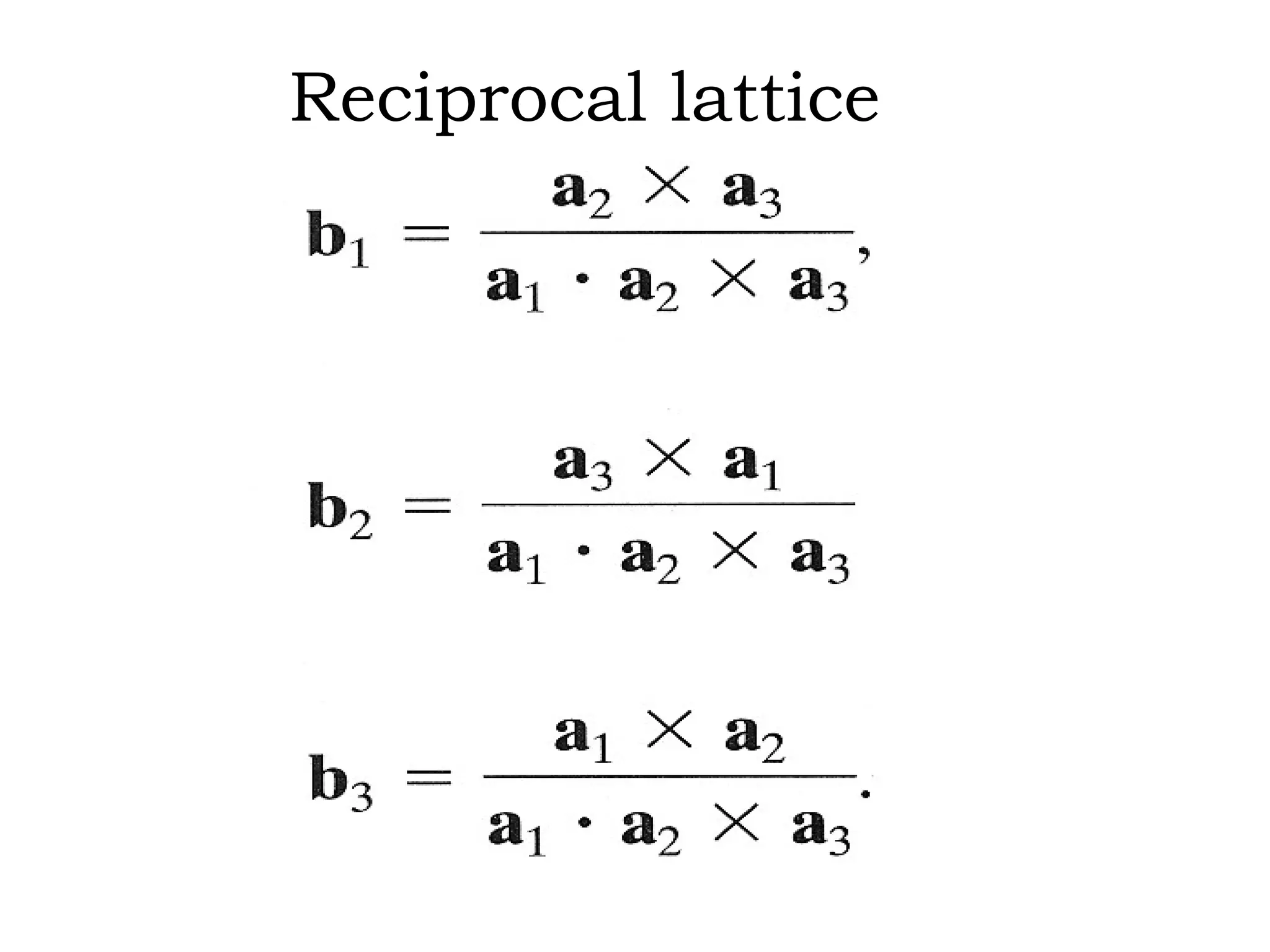
Reciprocal lattice
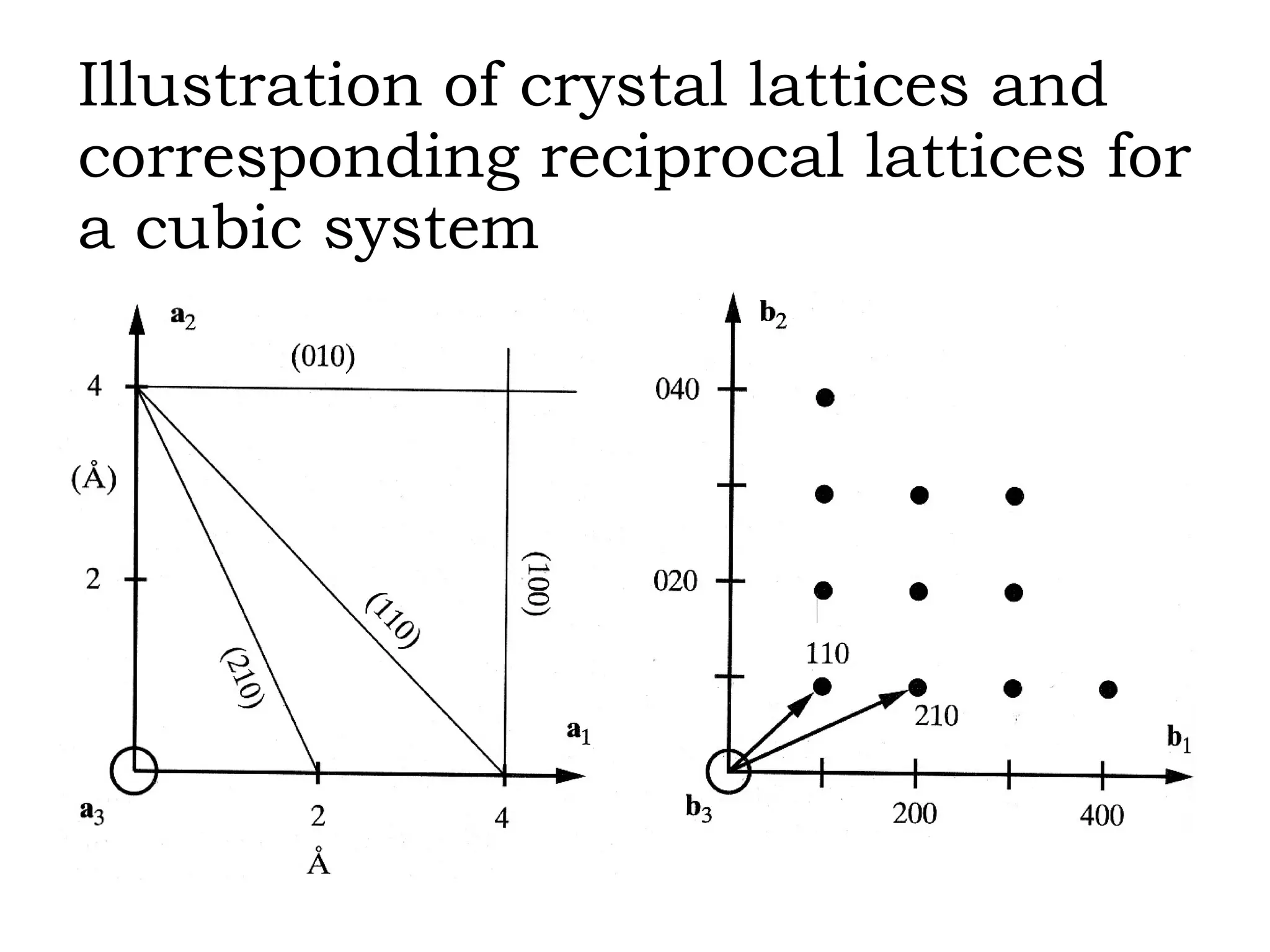
Illustration of crystal lattices and corresponding reciprocal lattices for a cubic system
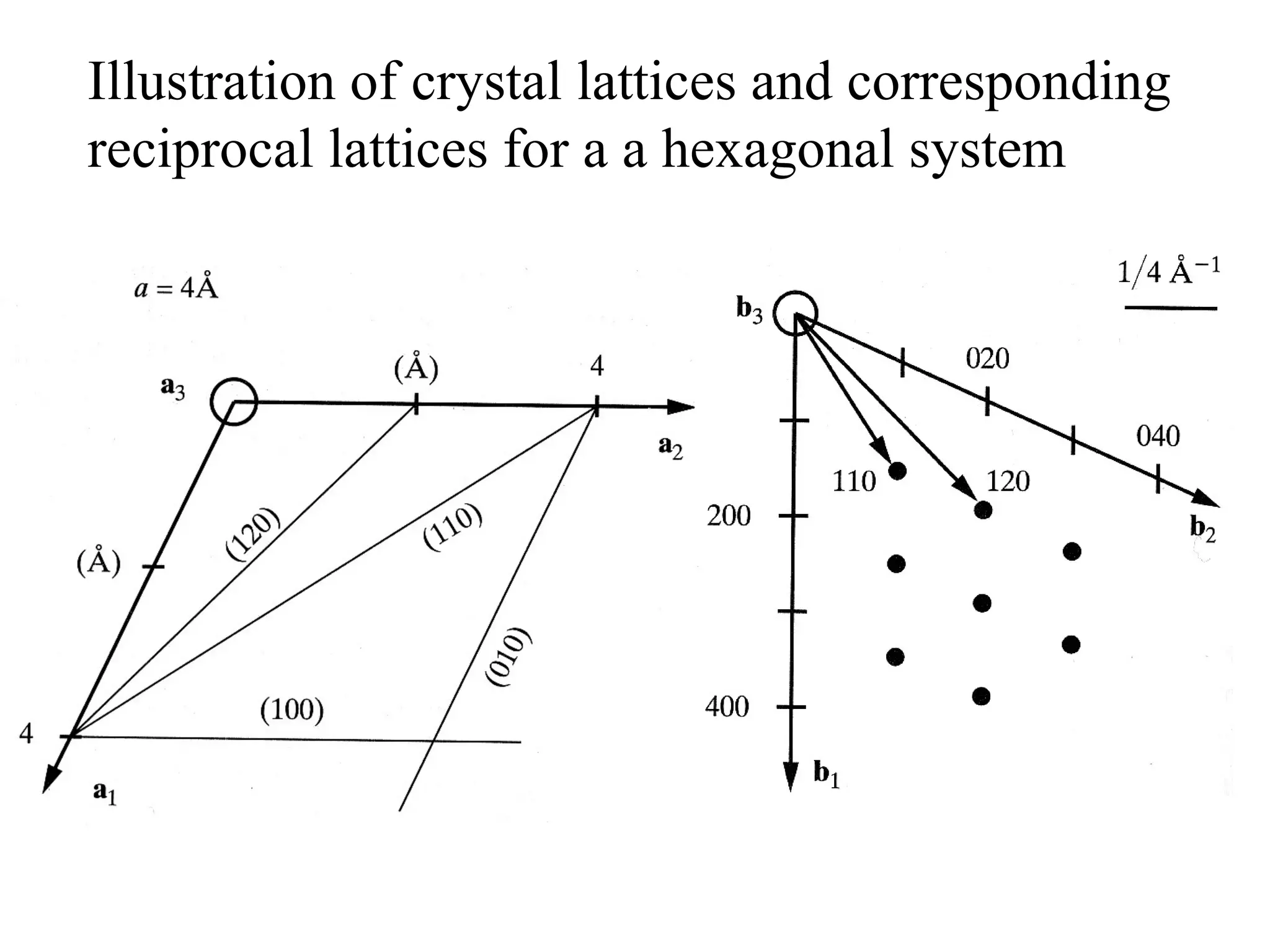
Illustration of crystal lattices and corresponding reciprocal lattices for a a hexagonal system
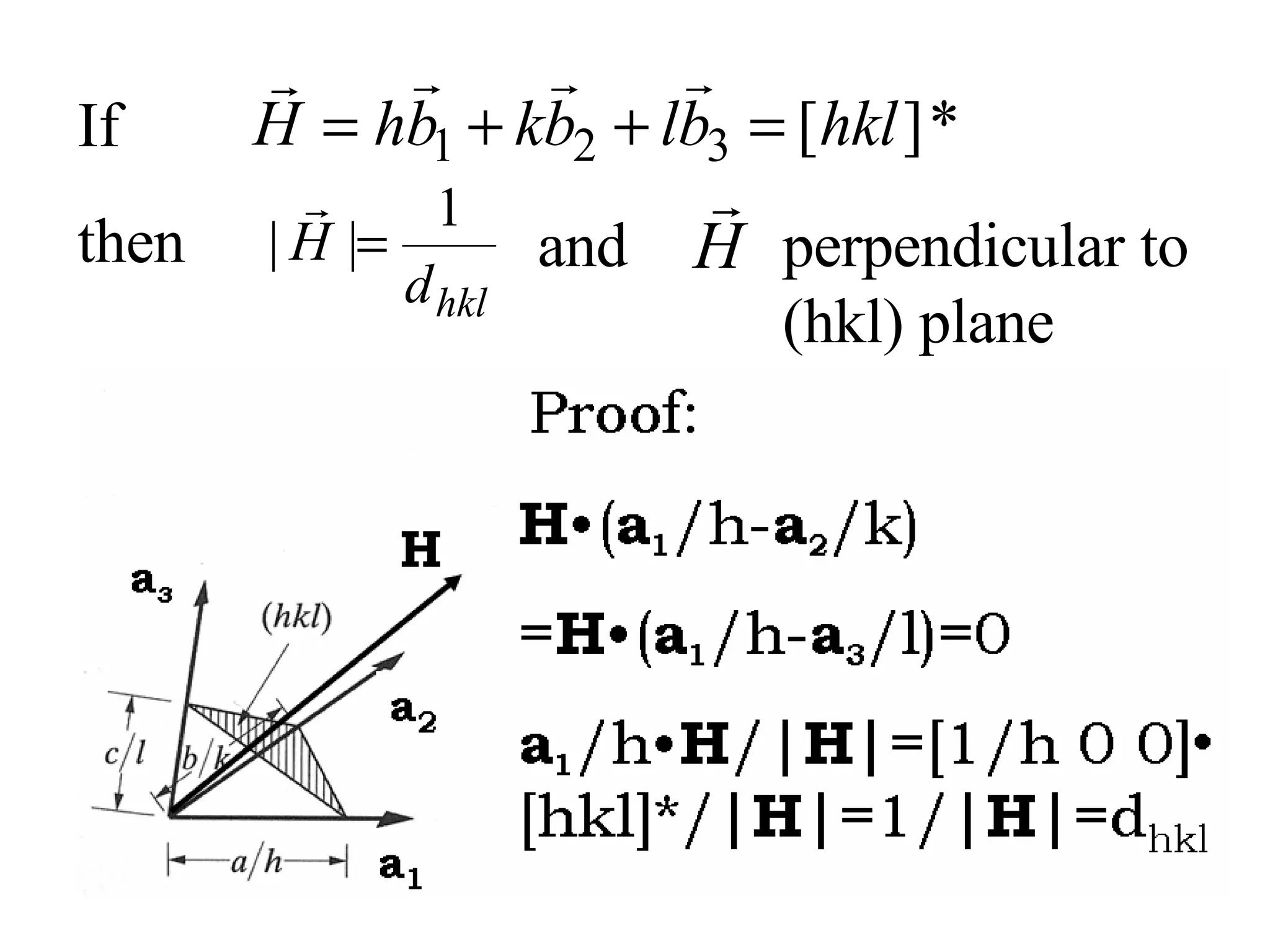
If then and perpendicular to (hkl) plane
If then and perpendicular to (hkl) plane Proof: H • ( a 1 /h- a 2 /k) = H • ( a 1 /h- a 3 /l)=0 a 1 /h• H /| H |=[1/h 0 0] •  [hkl]*/| H |=1/| H |=d hkl H a 1 a 2 a 3
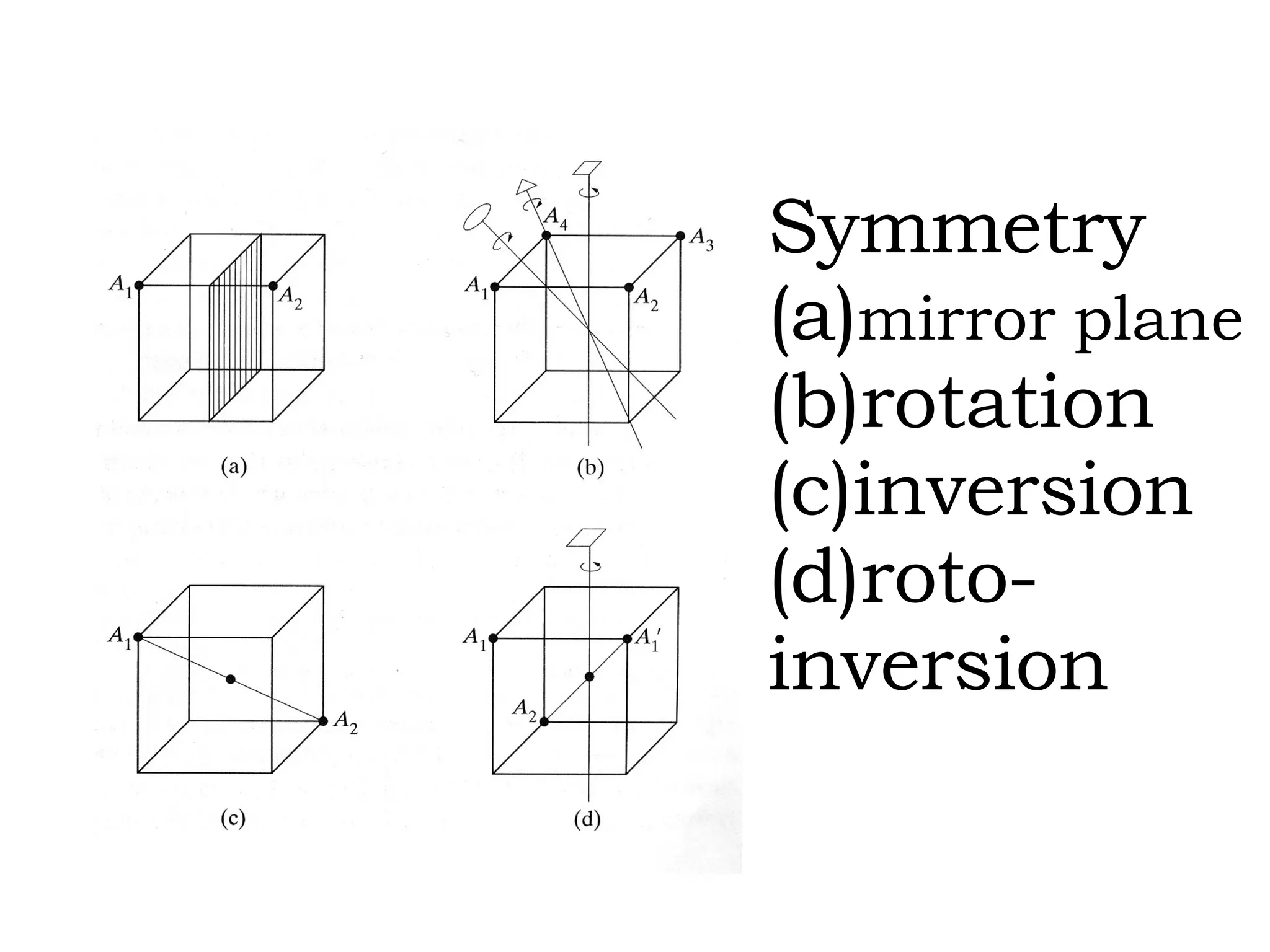
Symmetry (a) mirror   plane (b)rotation (c)inversion (d)roto-  inversion
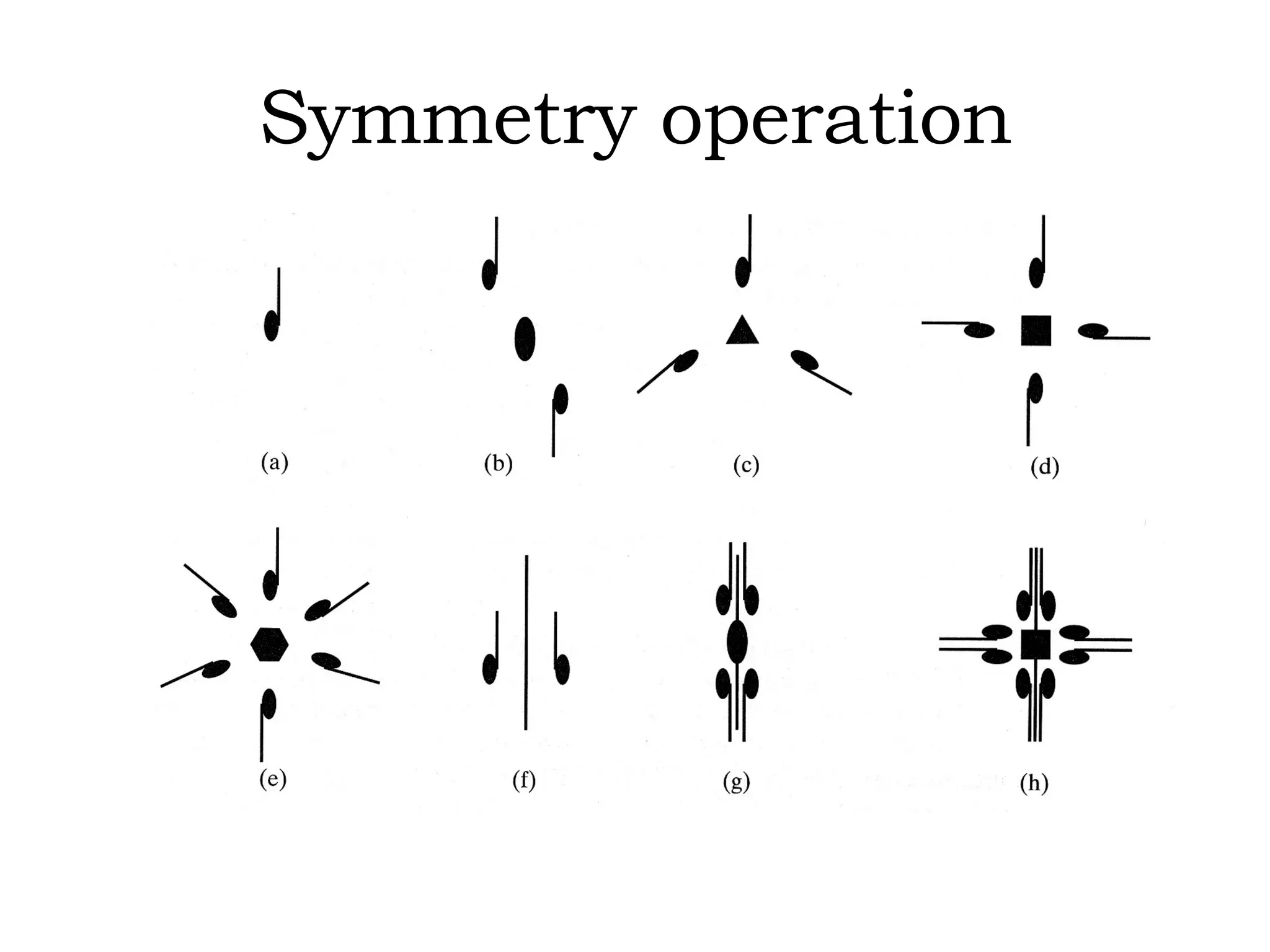
Symmetry operation
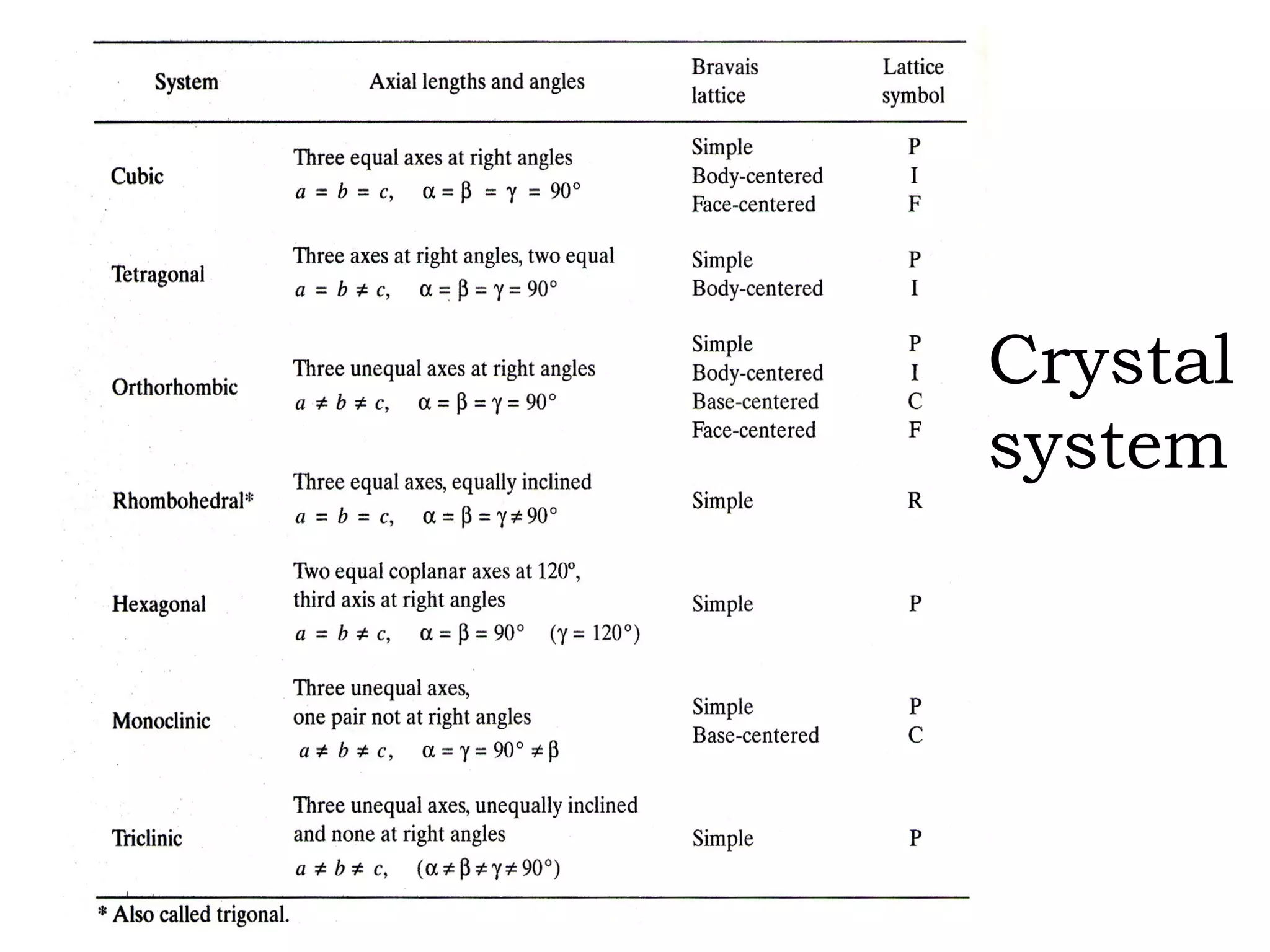
Crystal system
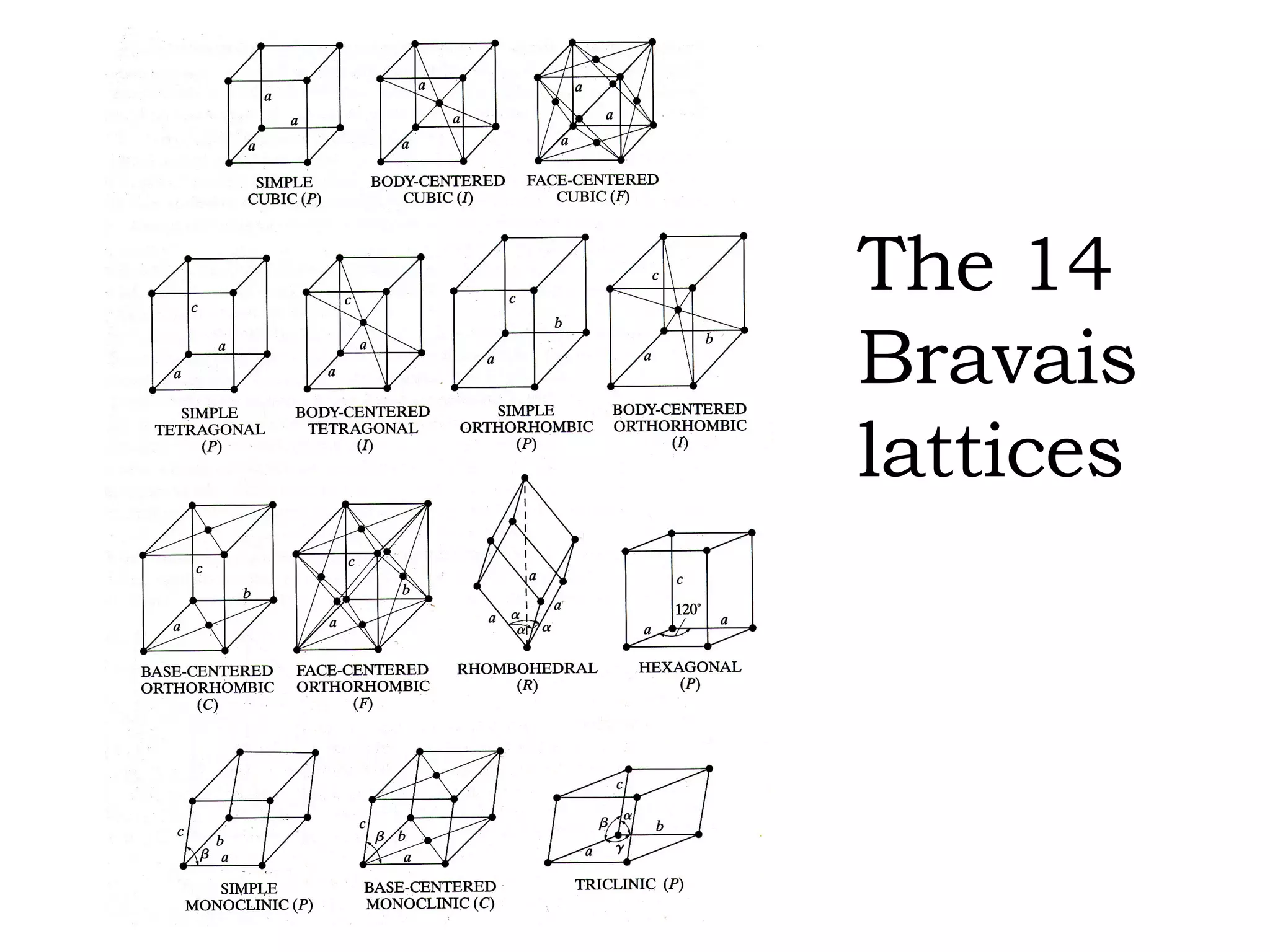
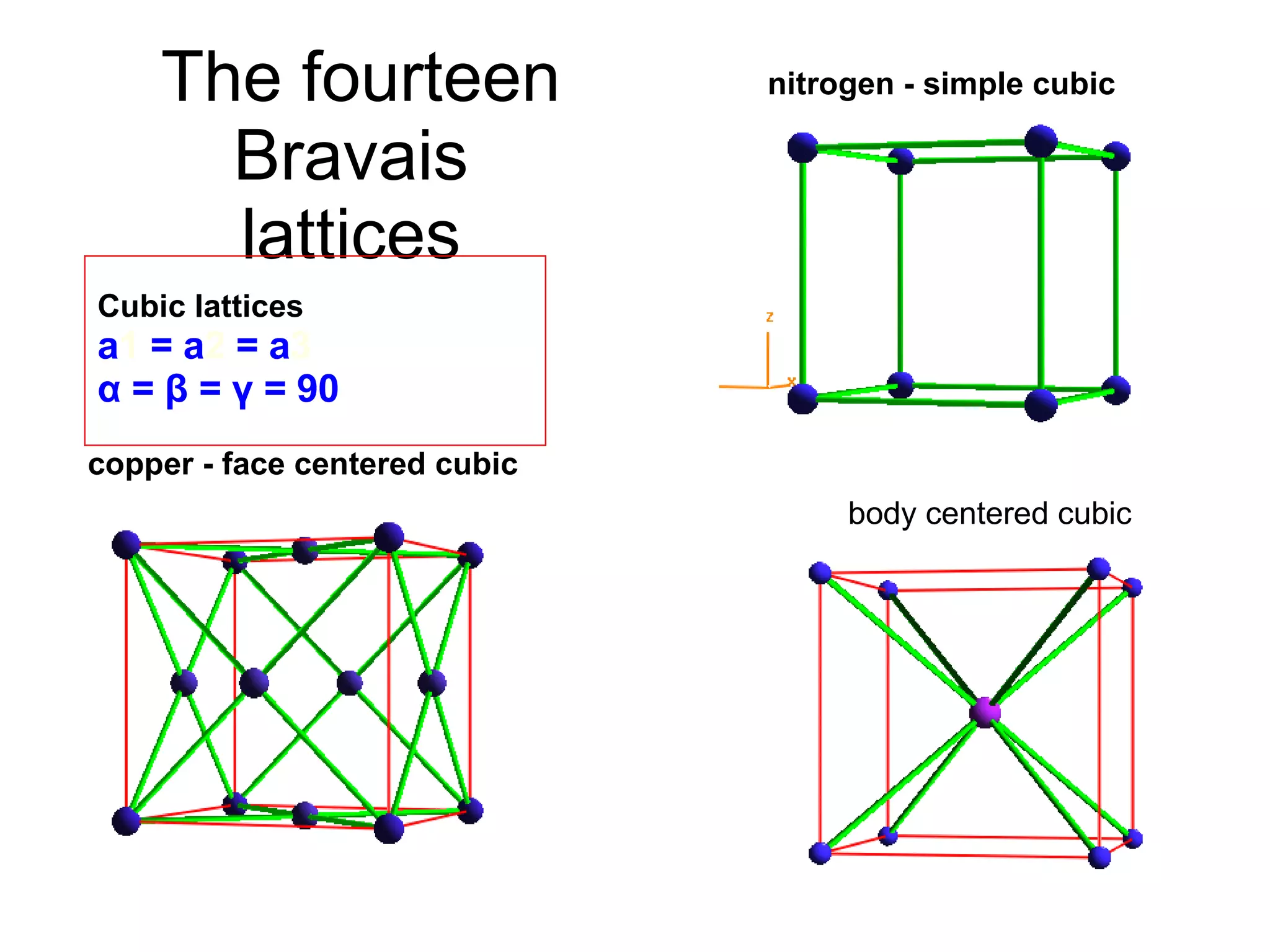
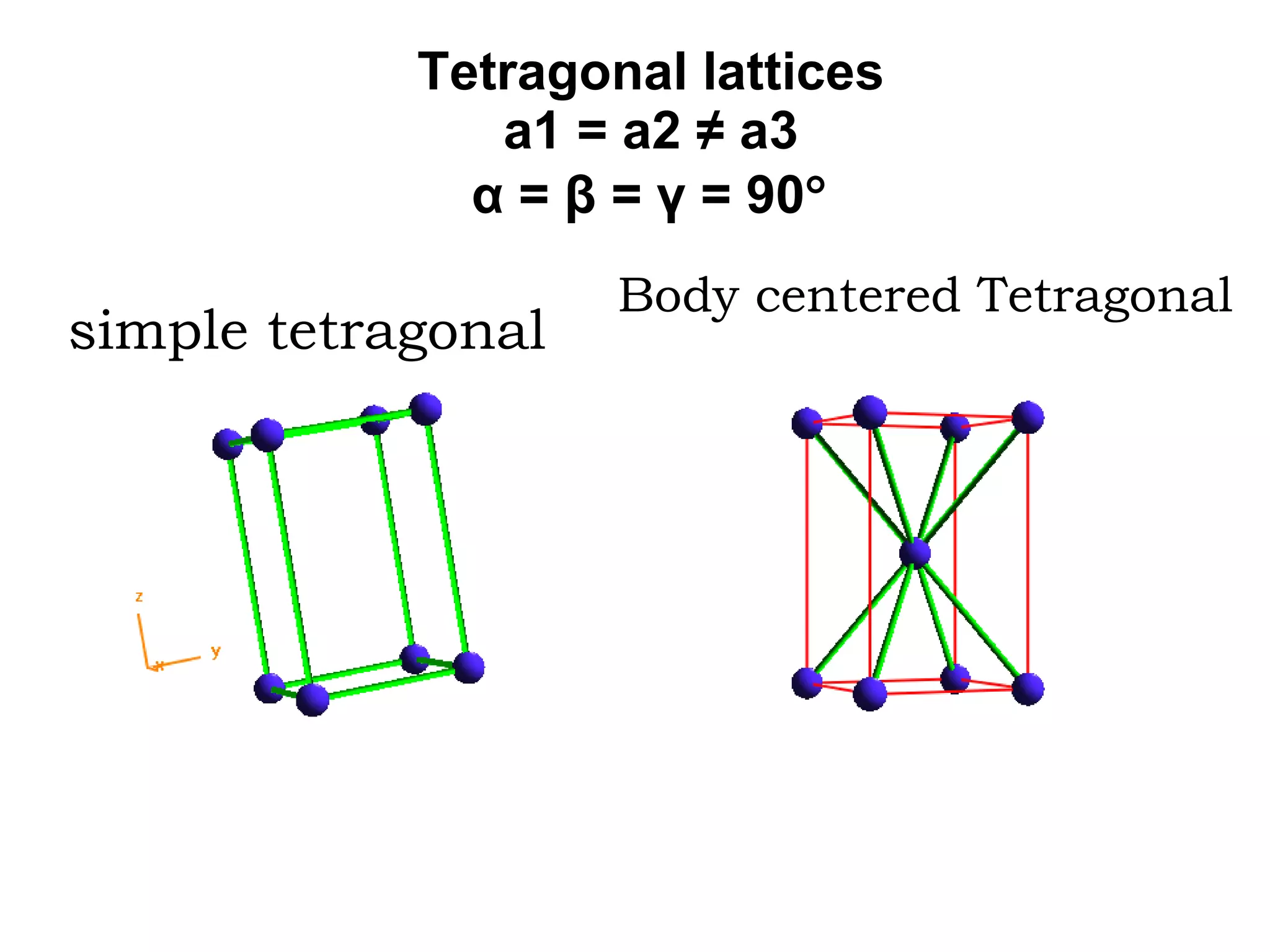
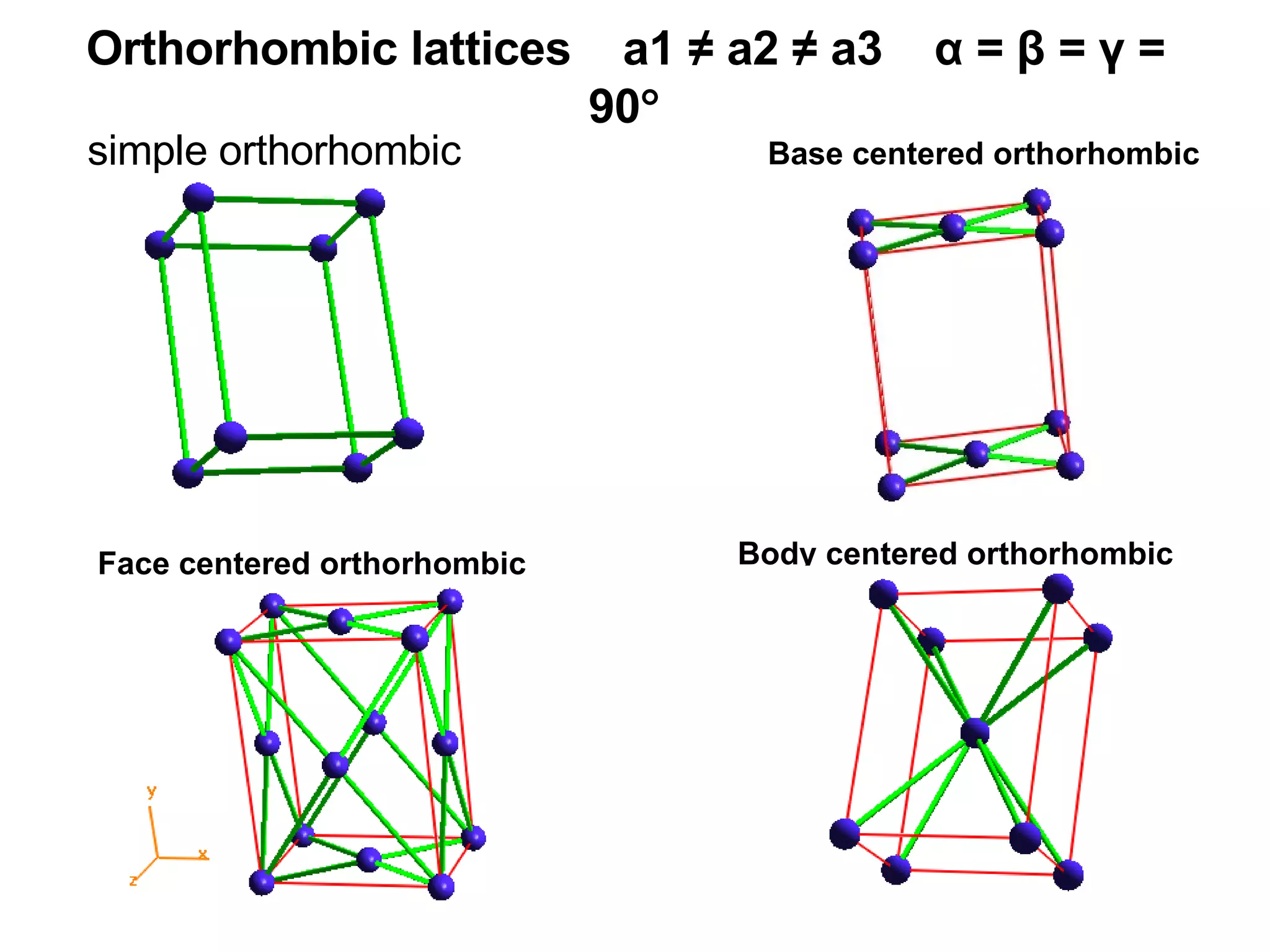
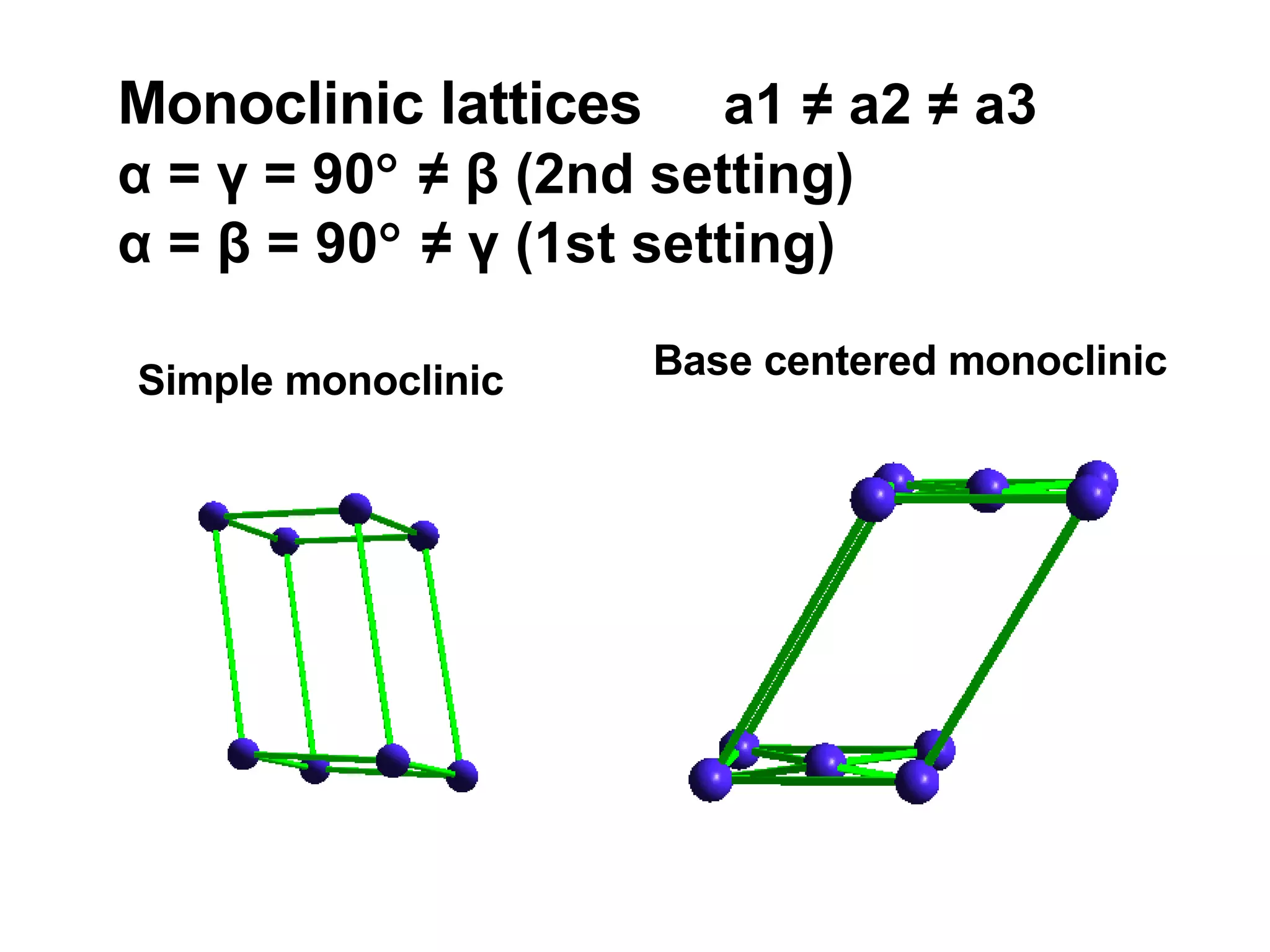
The 14 Bravais lattices
The fourteen Bravais  lattices  Simple cubic lattices nitrogen - simple cubic copper - face centered cubic body centered cubic  Cubic lattices   a 1  = a 2  = a 3 α = β = γ = 90 o
Tetragonal lattices a1 = a2 ≠ a3 α = β = γ = 90  simple tetragonal   Body centered Tetragonal
Orthorhombic lattices  a1 ≠ a2 ≠ a3  α = β = γ = 90  simple orthorhombic   Base centered orthorhombic Body centered orthorhombic Face centered orthorhombic
Monoclinic lattices  a1 ≠ a2 ≠ a3  α = γ = 90   ≠ β (2nd setting) α = β = 90   ≠ γ (1st setting)      Simple monoclinic Base centered monoclinic
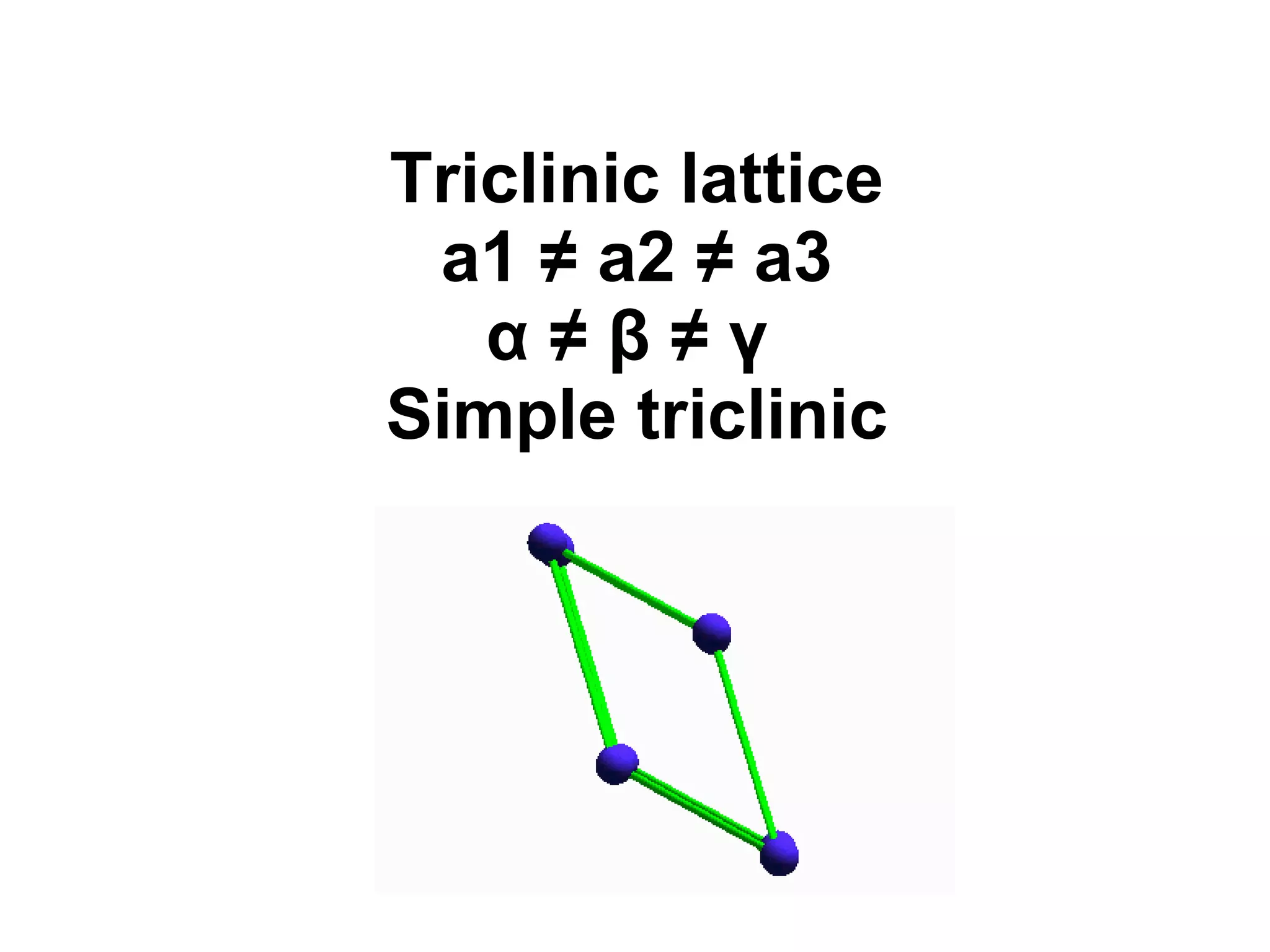
Triclinic lattice a1 ≠ a2 ≠ a3 α ≠ β ≠ γ  Simple triclinic
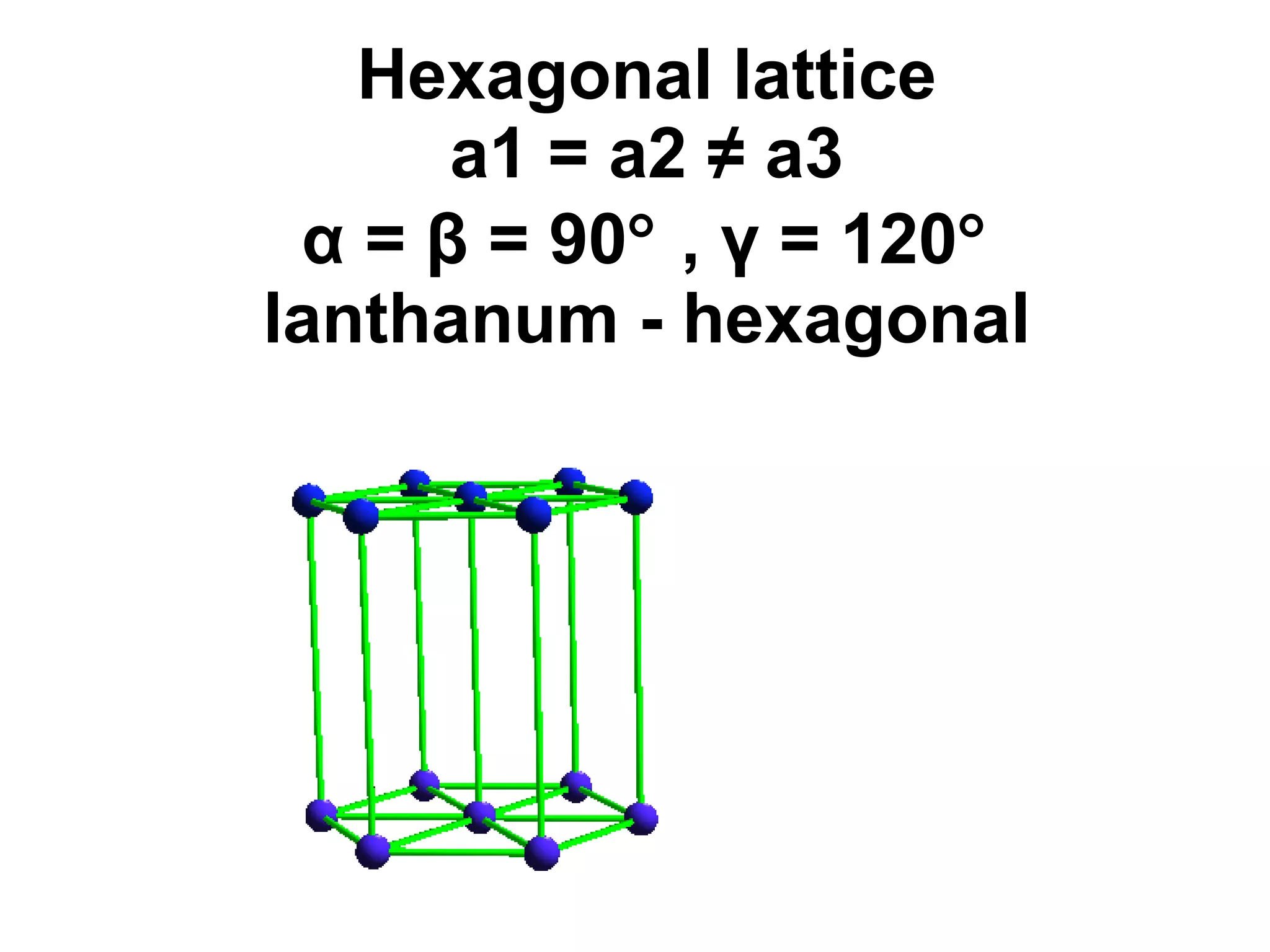
Hexagonal lattice a1 = a2 ≠ a3 α = β = 90   , γ = 120  lanthanum - hexagonal
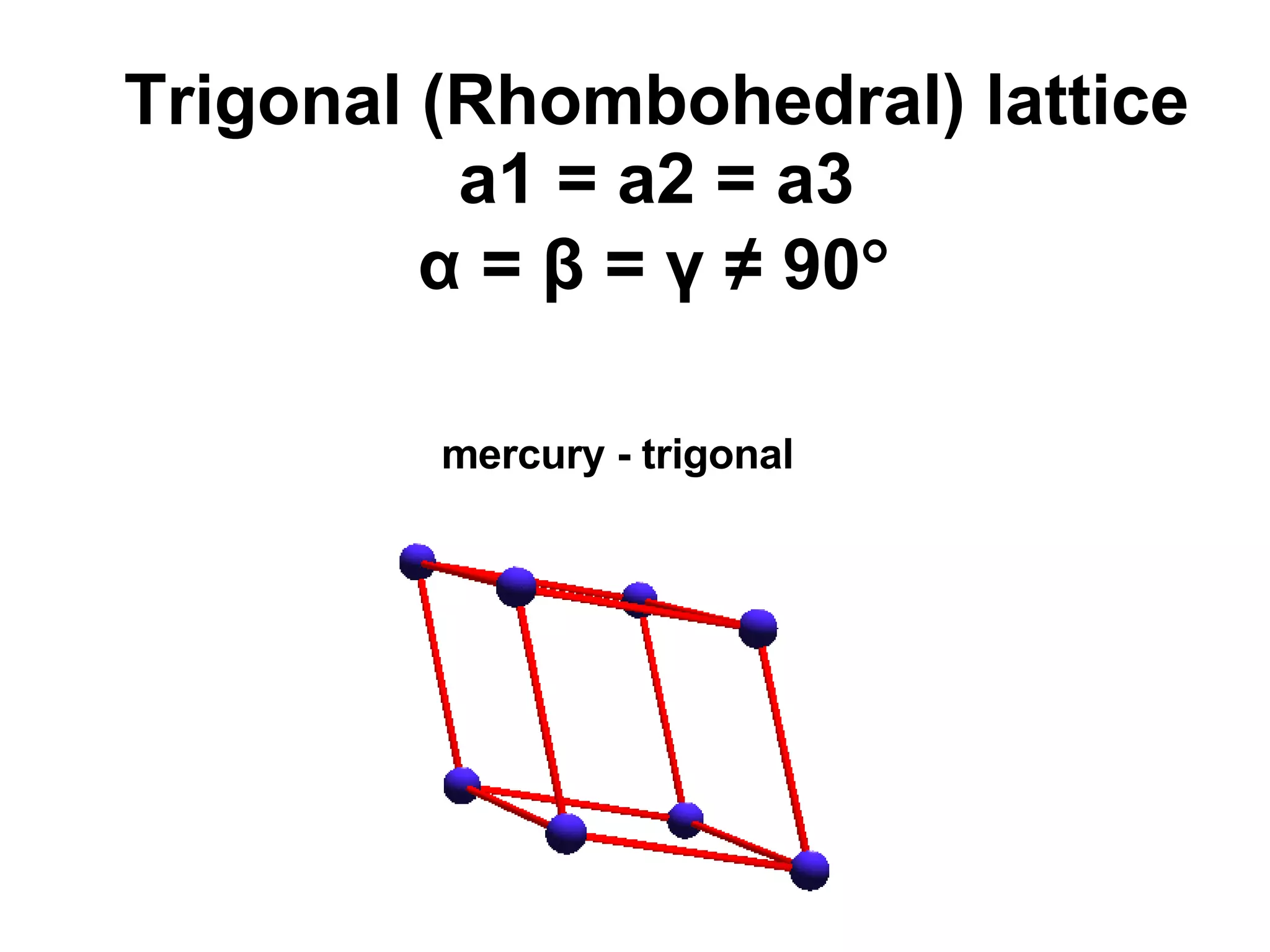
Trigonal (Rhombohedral) lattice a1 = a2 = a3 α = β = γ ≠ 90  mercury - trigonal
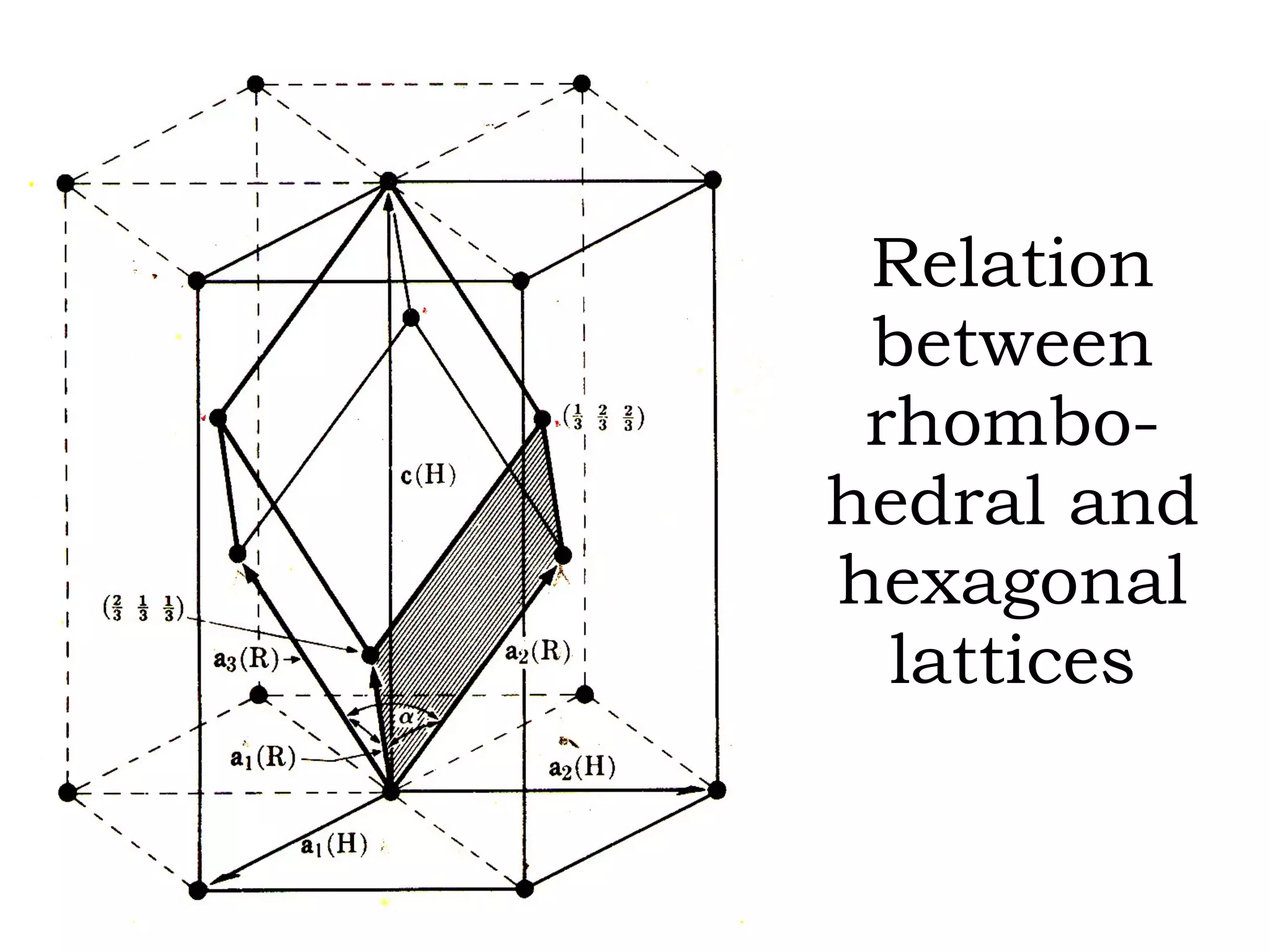
Relation between rhombo-hedral and hexagonal lattices
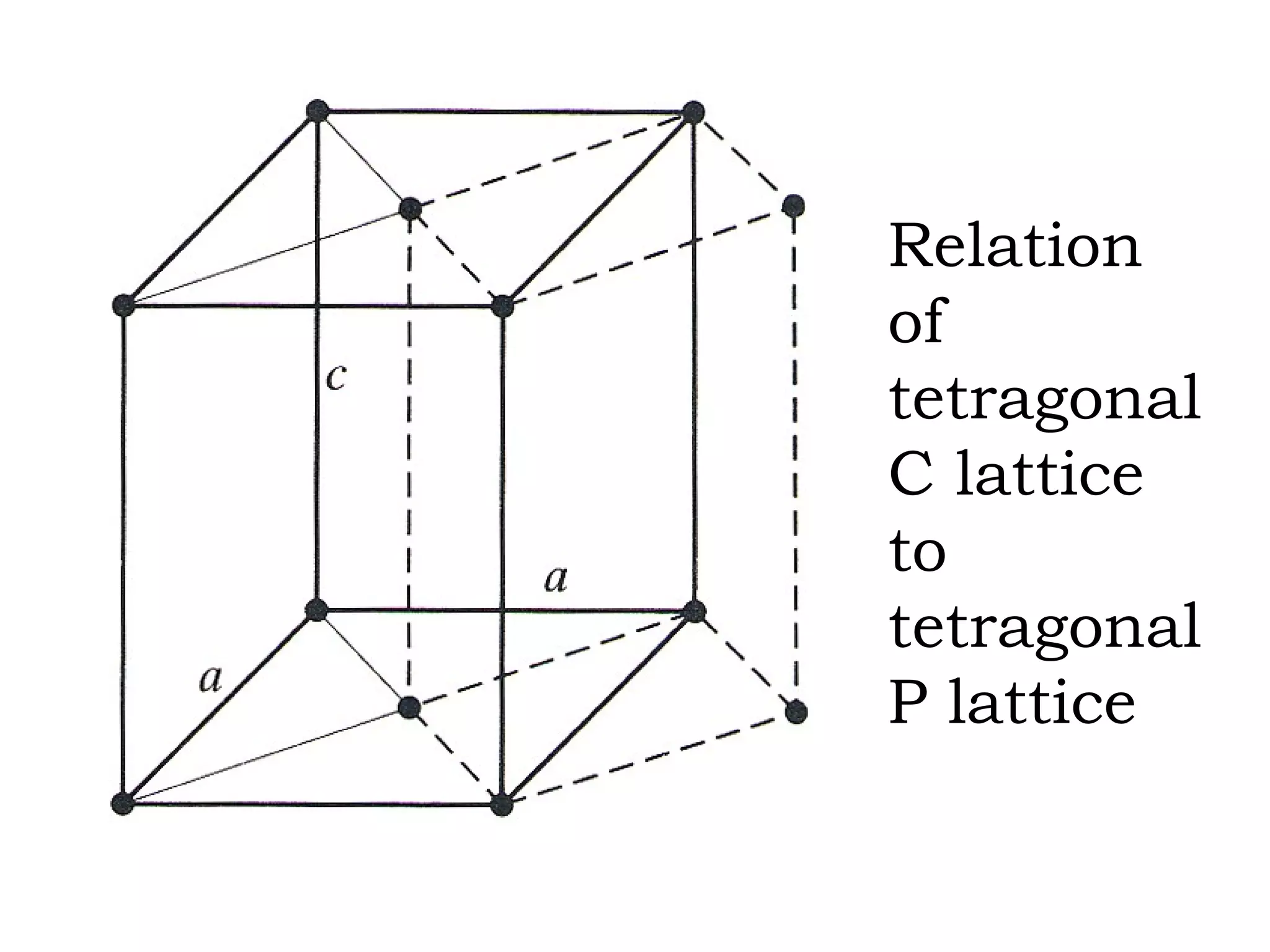
Relation of tetragonal C lattice to tetragonal P lattice
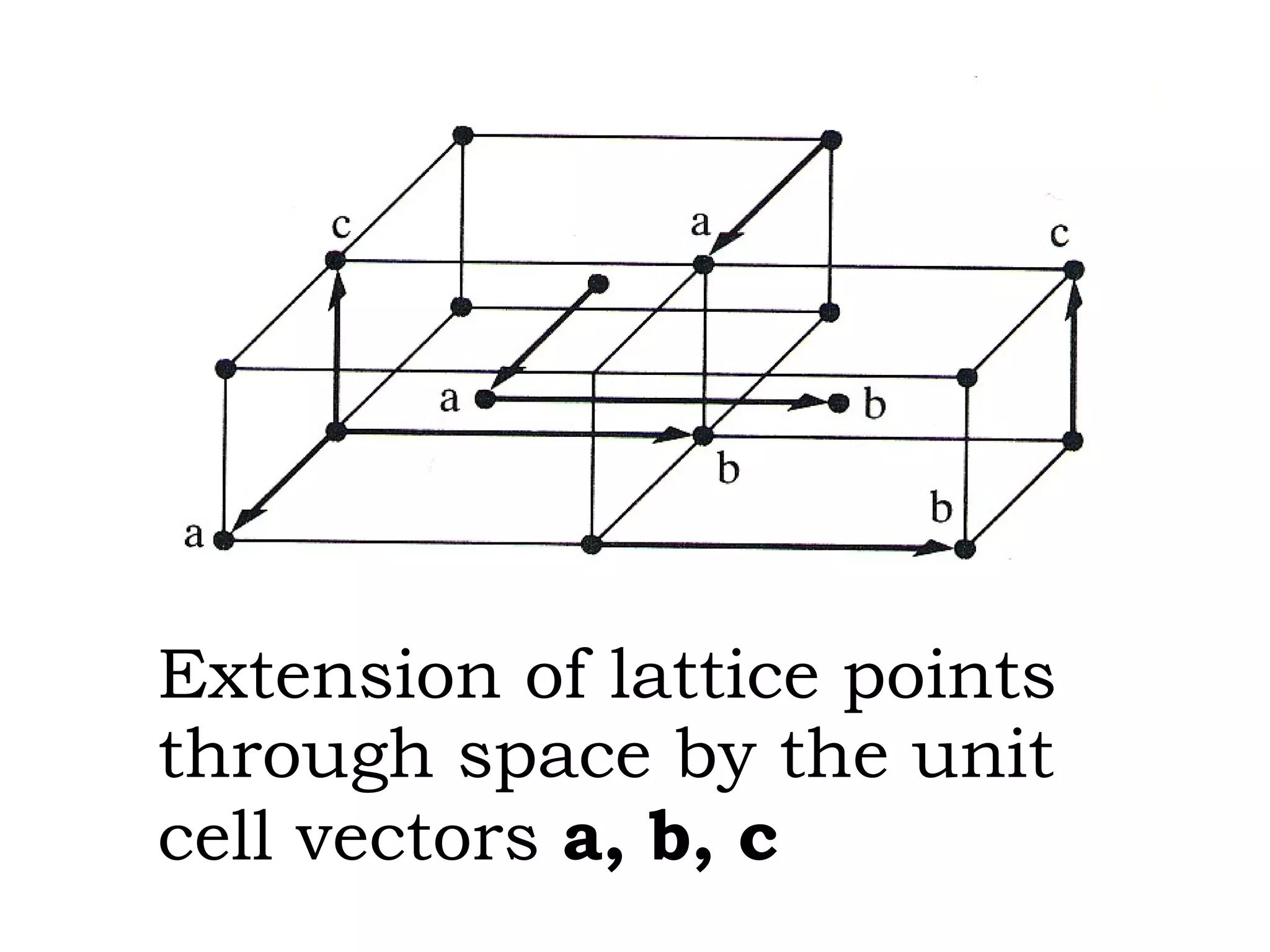
Extension of lattice points through space by the unit cell vectors  a, b, c
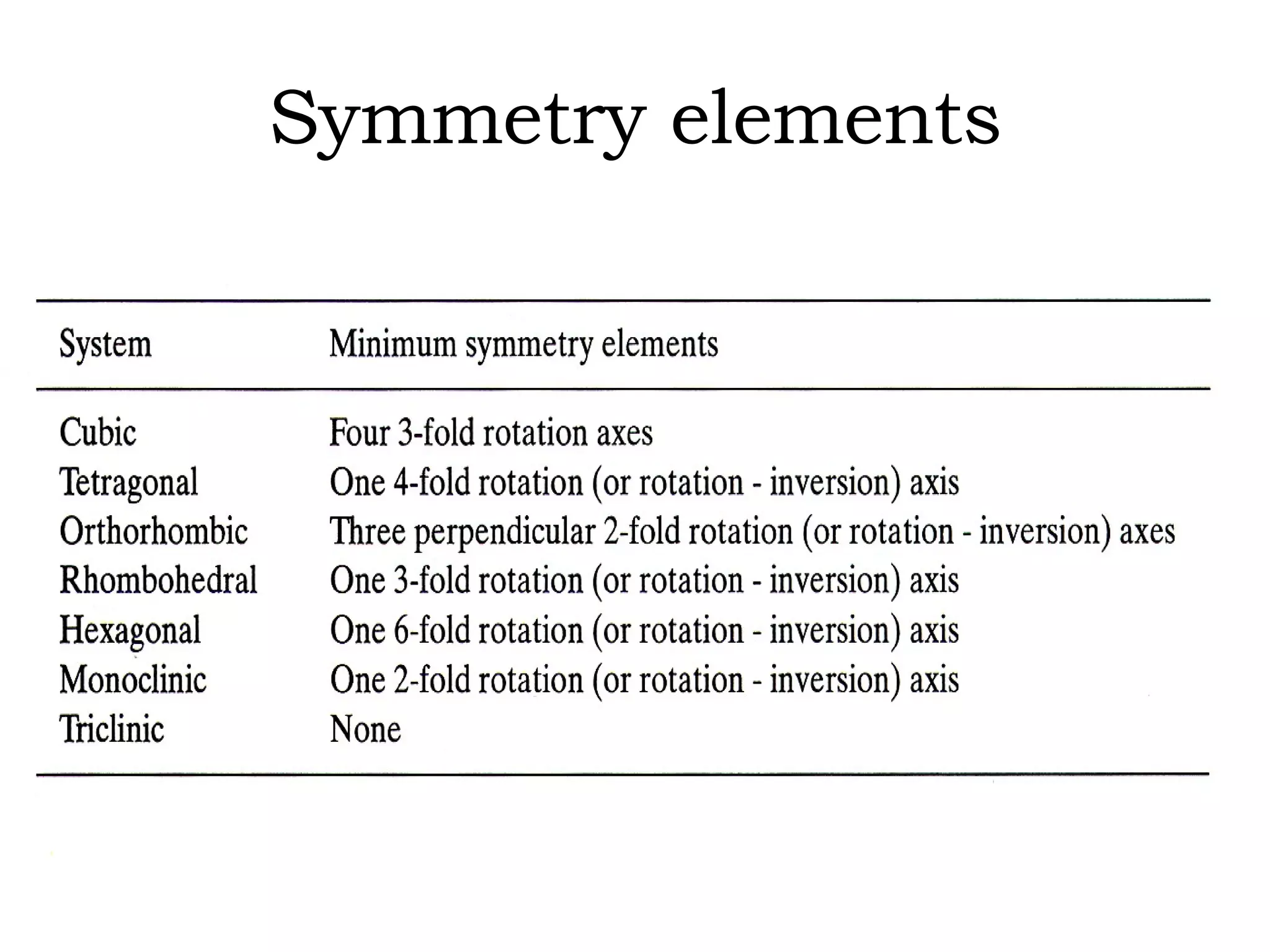
Symmetry elements
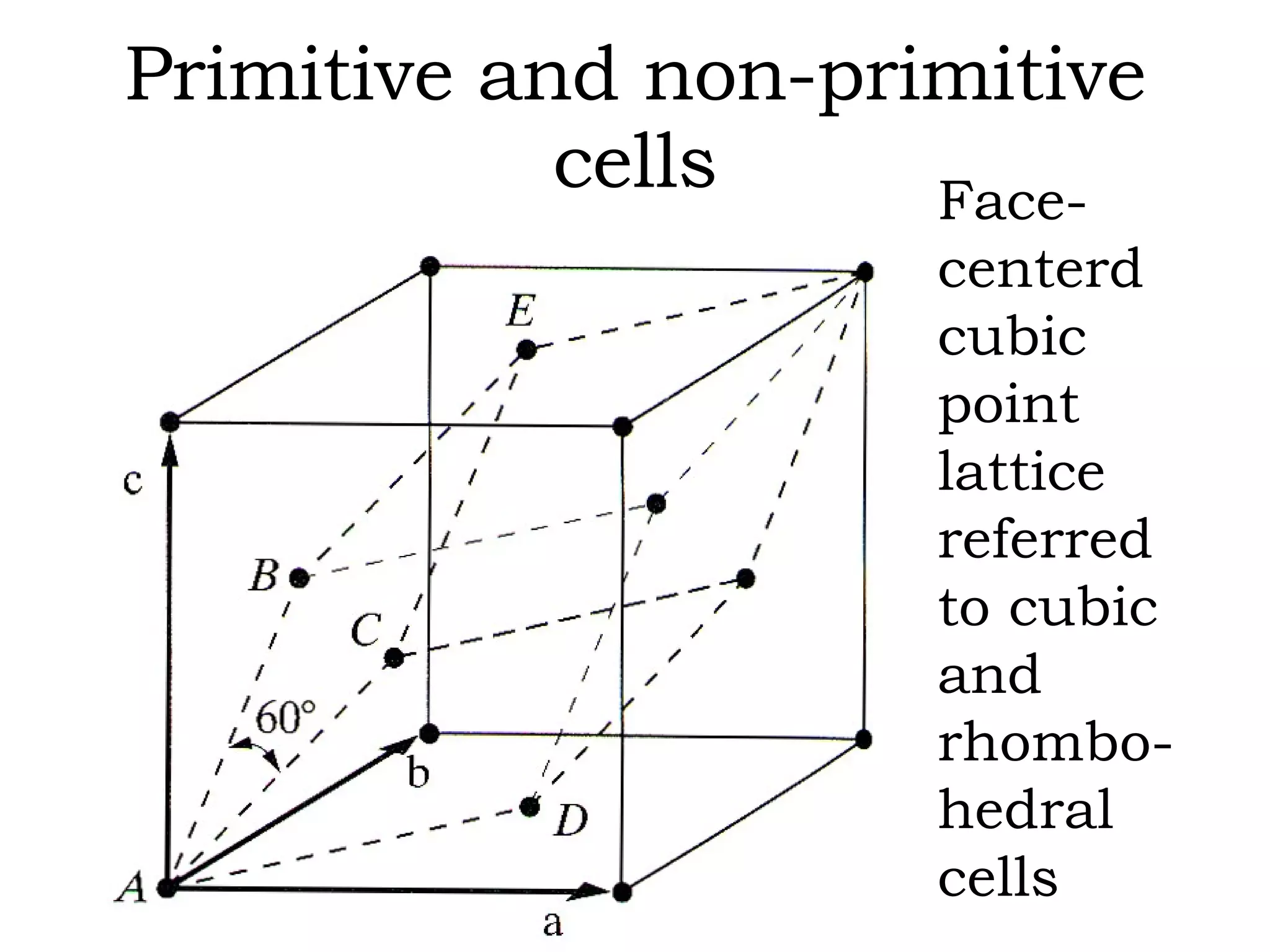
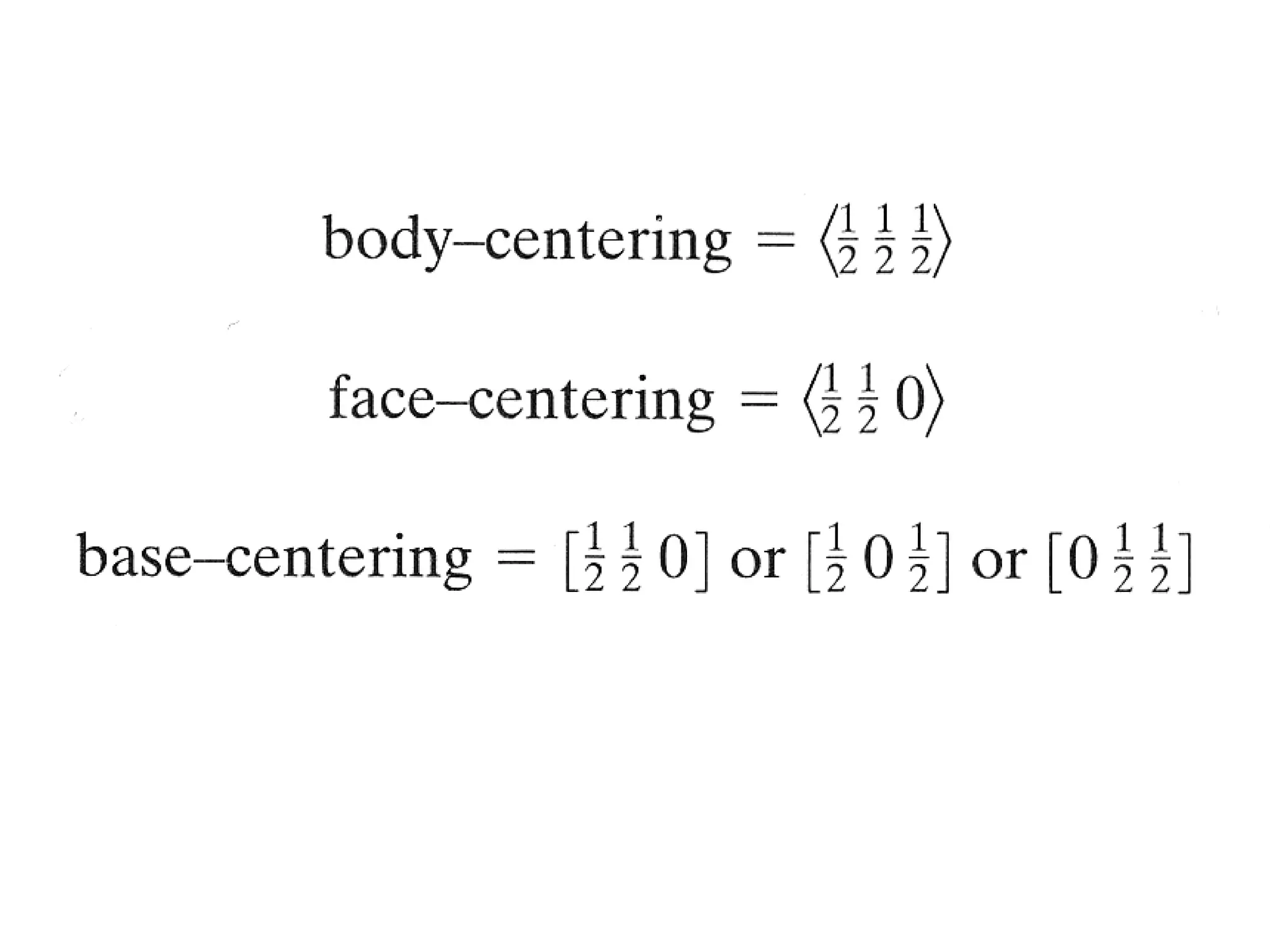
Primitive and non-primitive cells Face-centerd cubic point lattice referred to cubic and rhombo-hedral cells
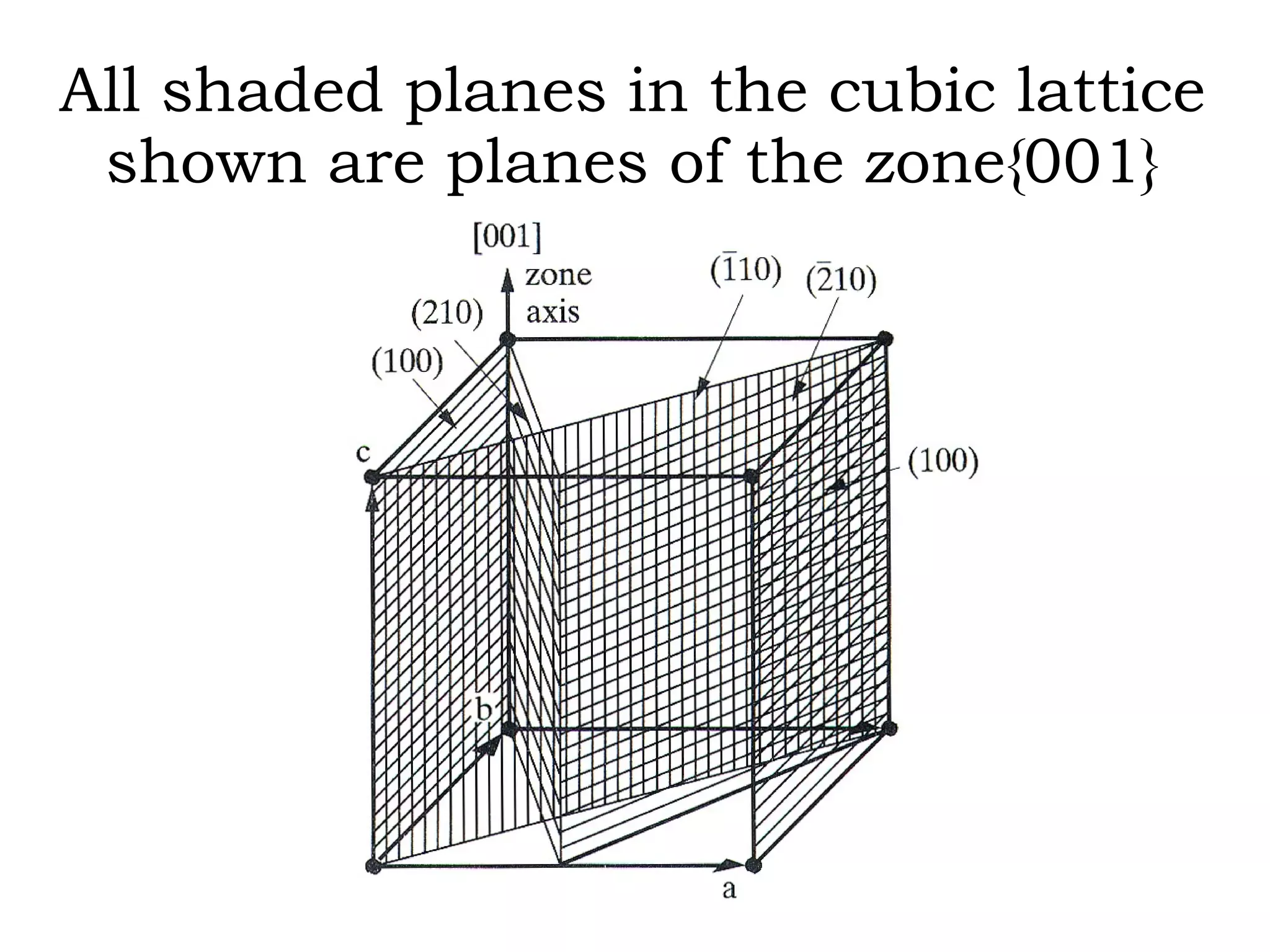
All shaded planes in the cubic lattice shown are planes of the zone{001}
Zone axis [uvw] Zone plane (hkl) then hu+kv+wl=0 Two zone planes (h 1 k 1 l 1 ) and (h 2 k 2 l 2 ) then zone axis [uvw]=
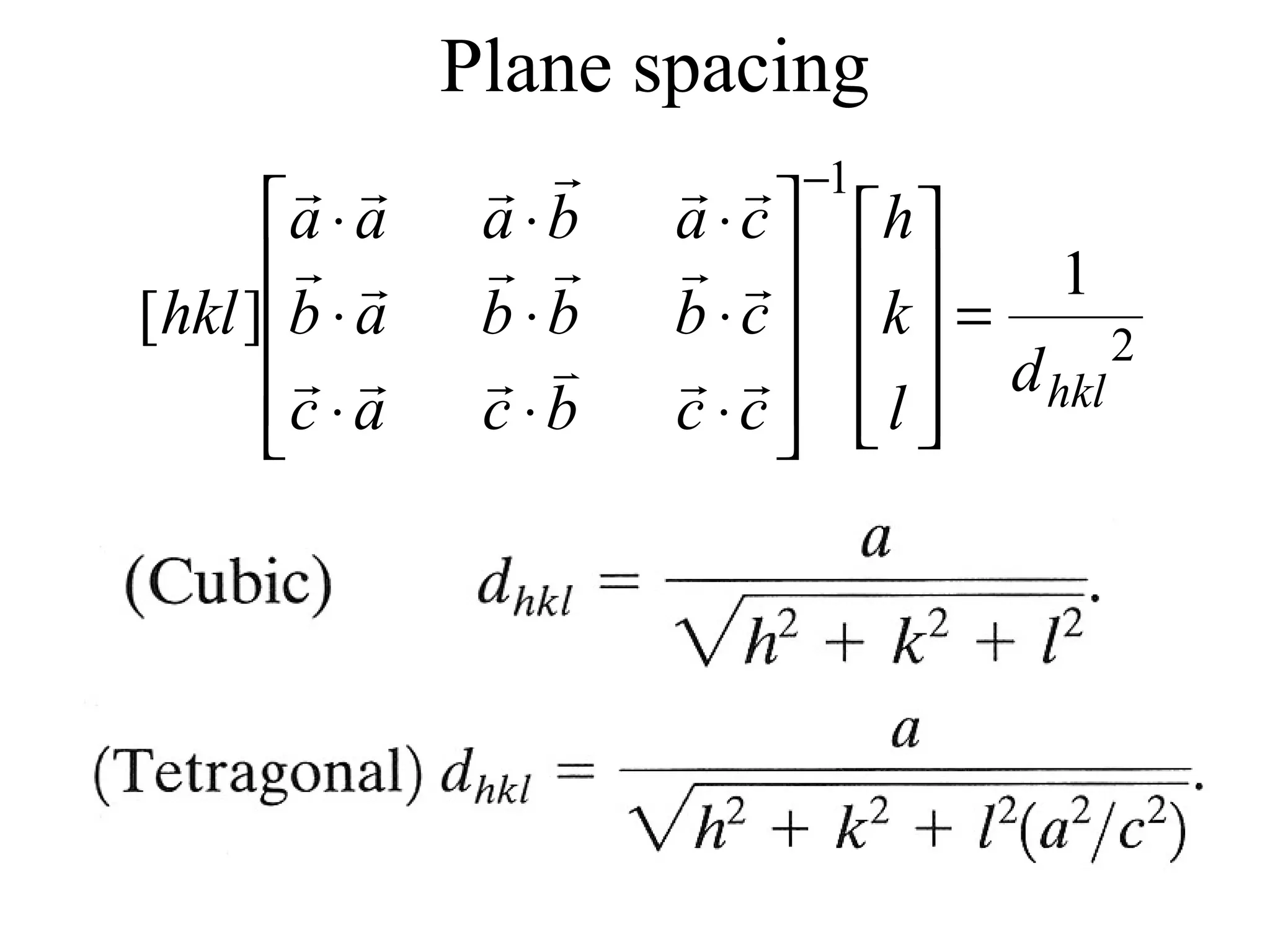
Plane spacing
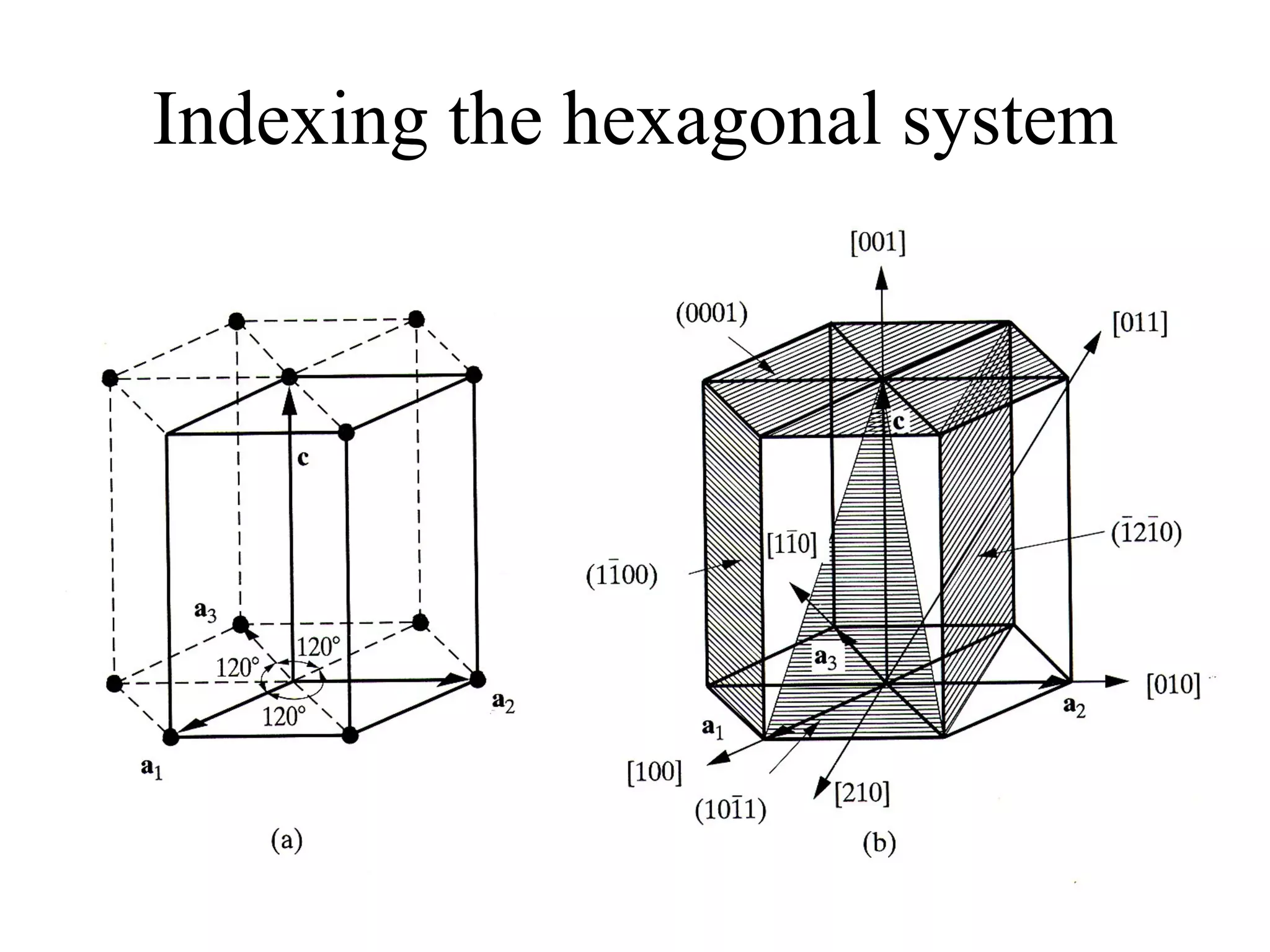
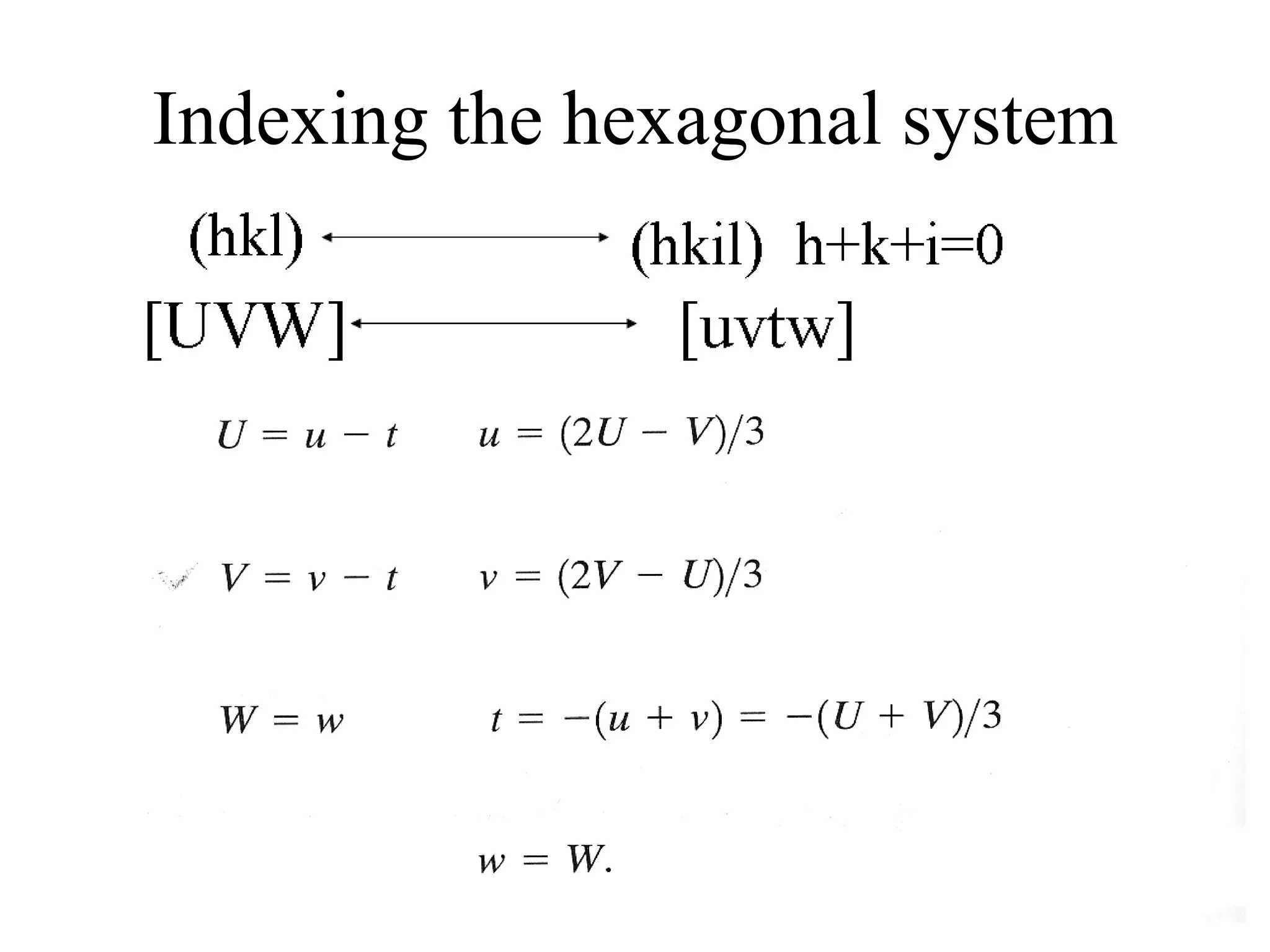
Indexing the hexagonal system
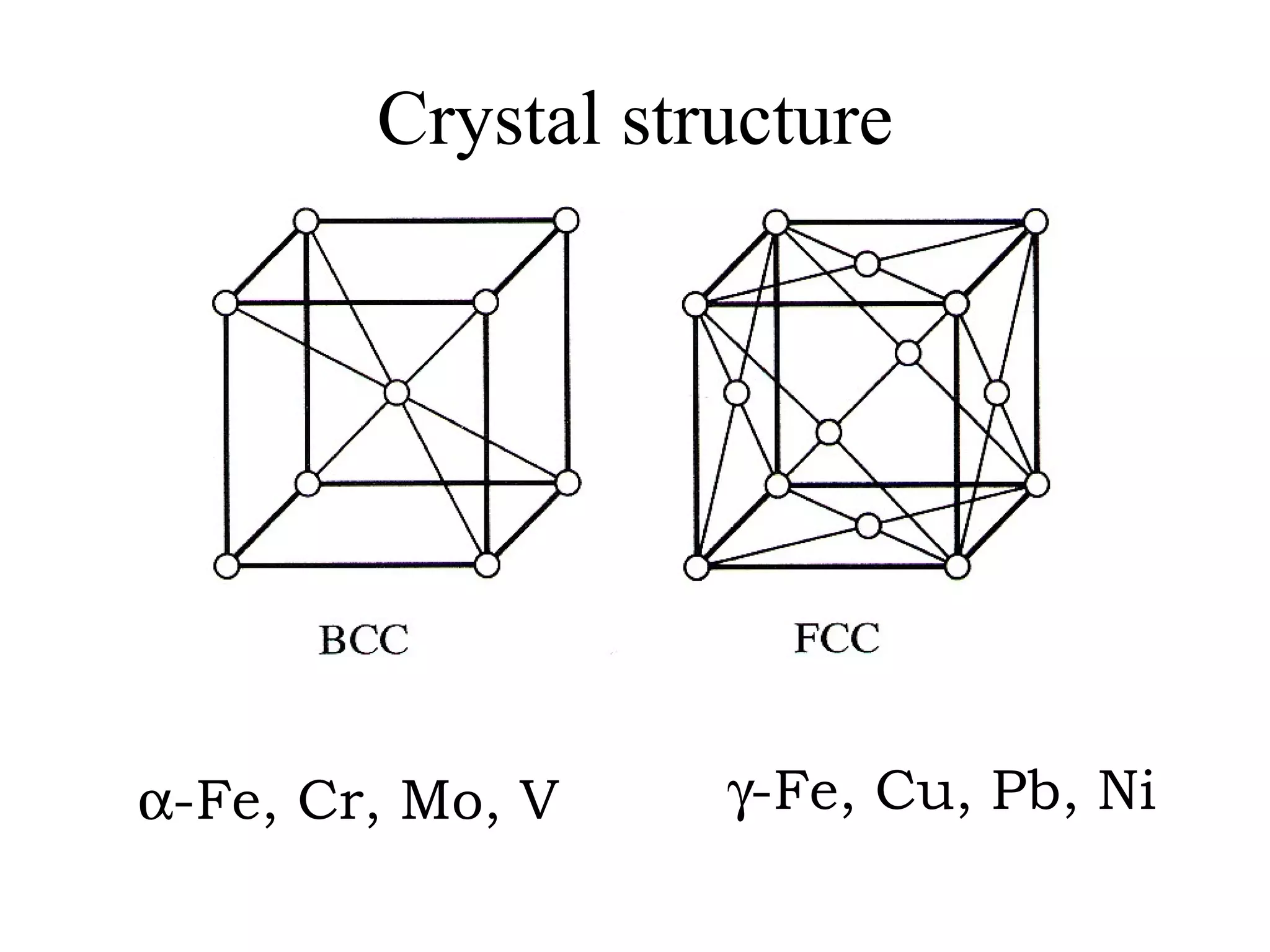
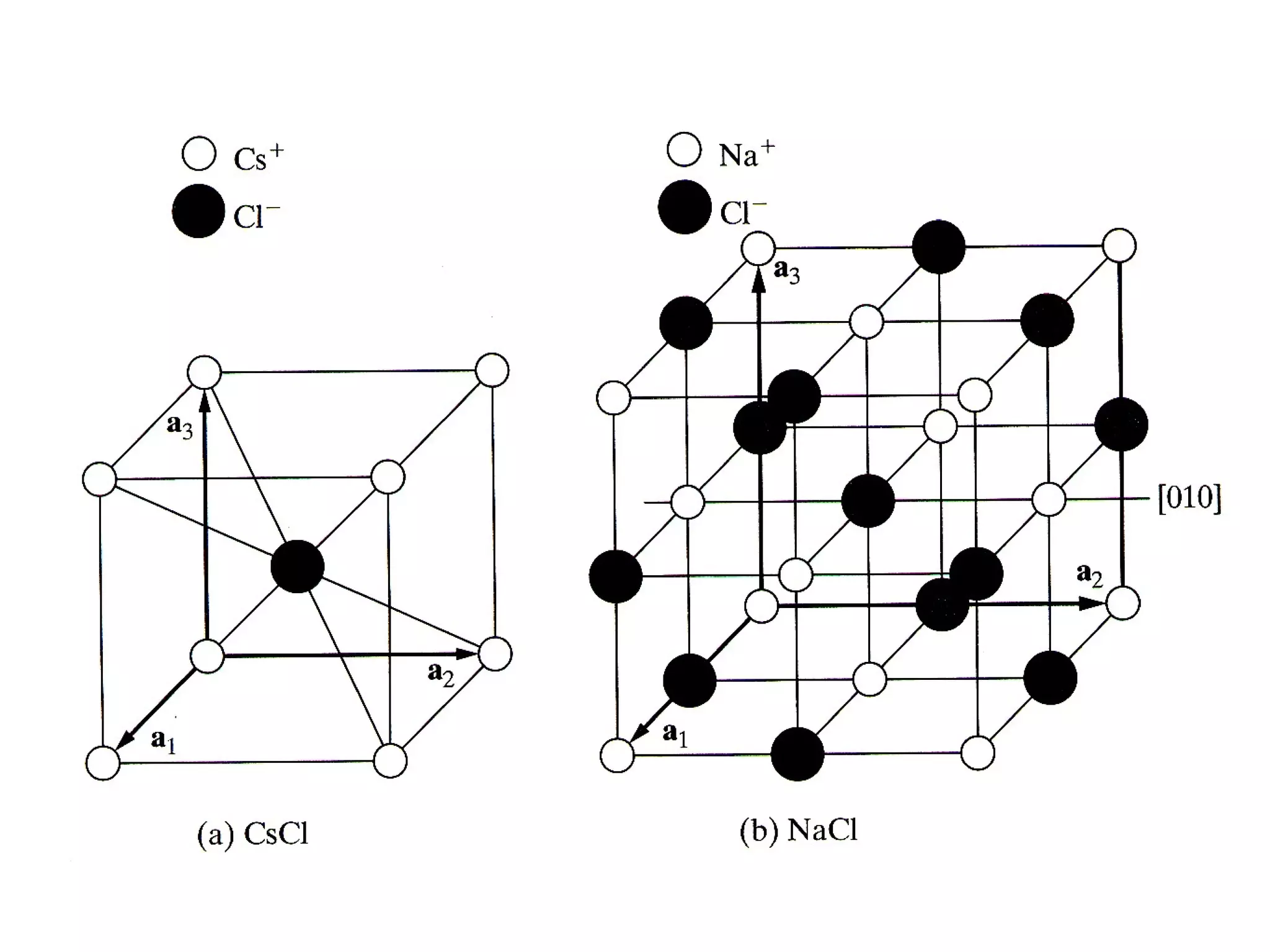
Crystal structure  -Fe, Cr, Mo, V  -Fe, Cu, Pb, Ni
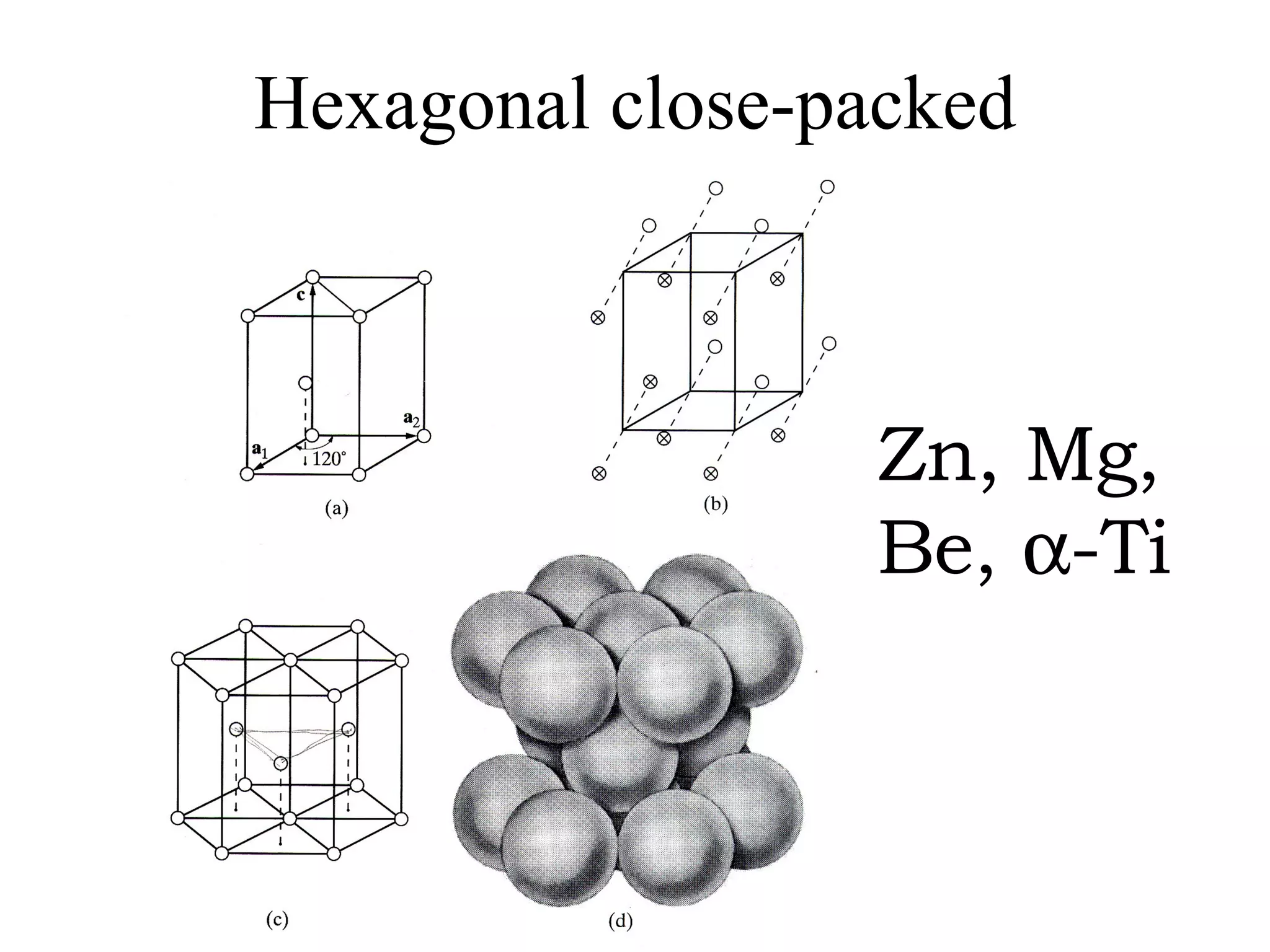
Hexagonal close-packed Zn, Mg, Be,   -Ti
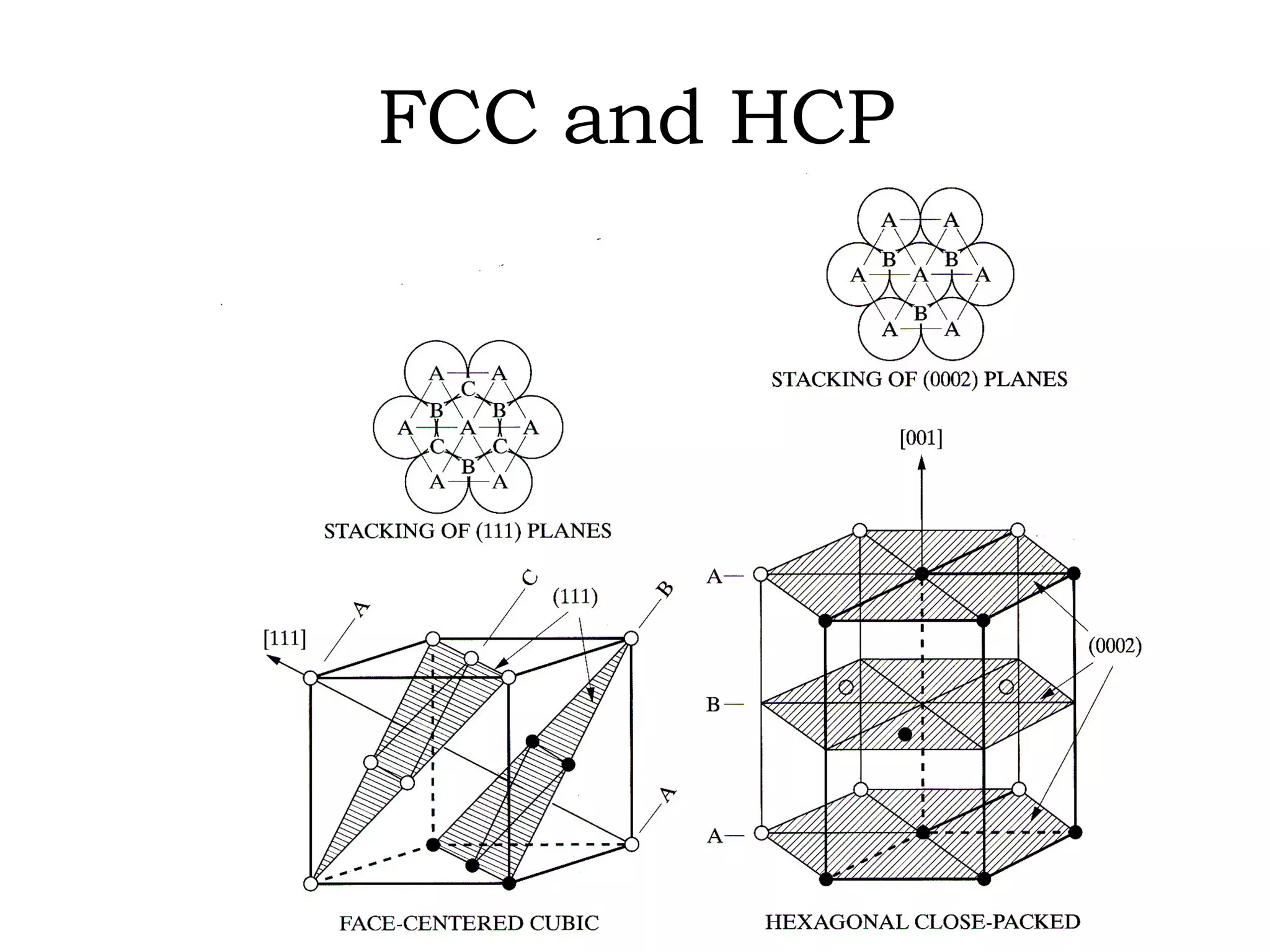
FCC and HCP
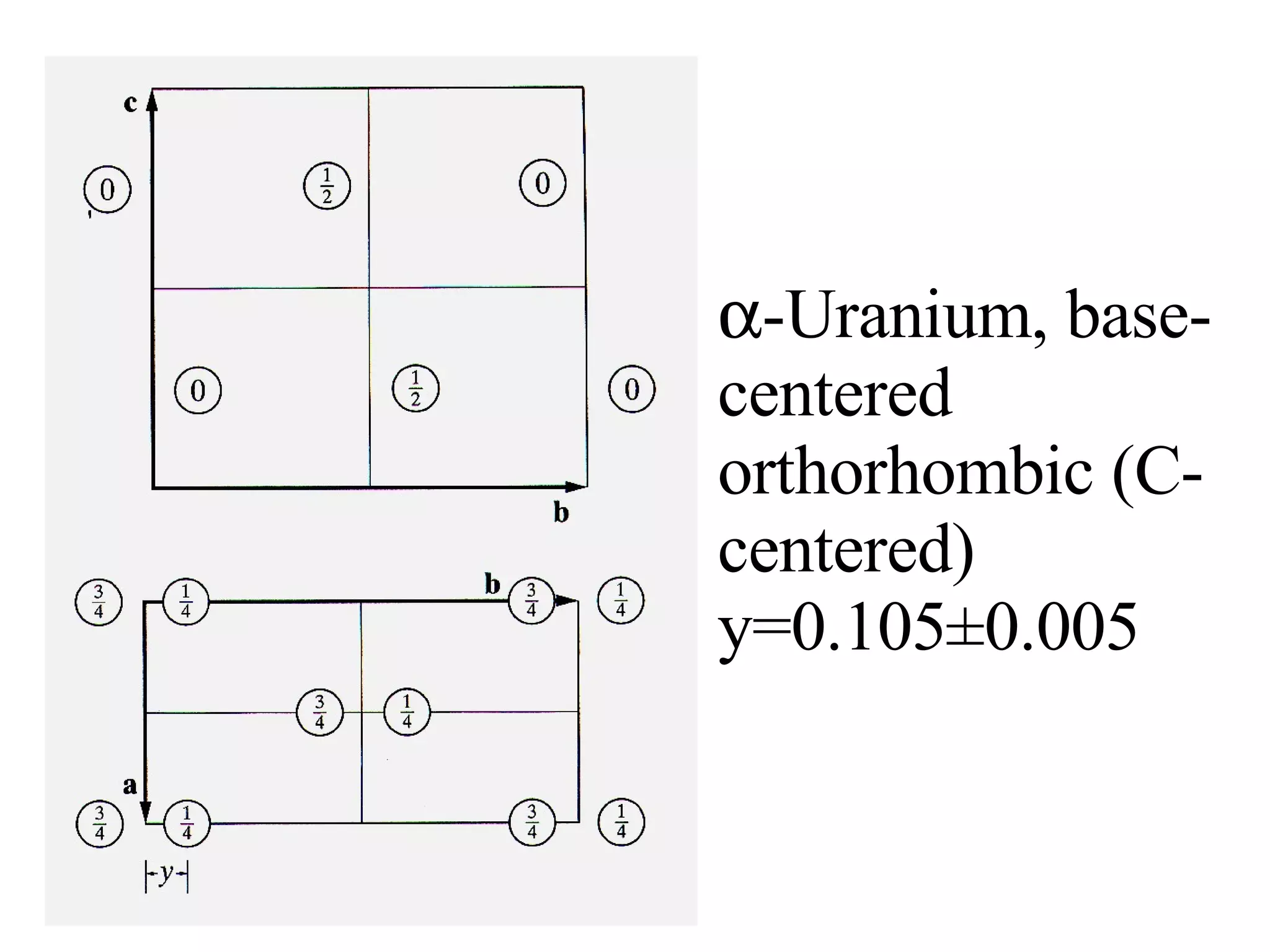
 -Uranium, base-centered orthorhombic (C-centered) y=0.105±0.005


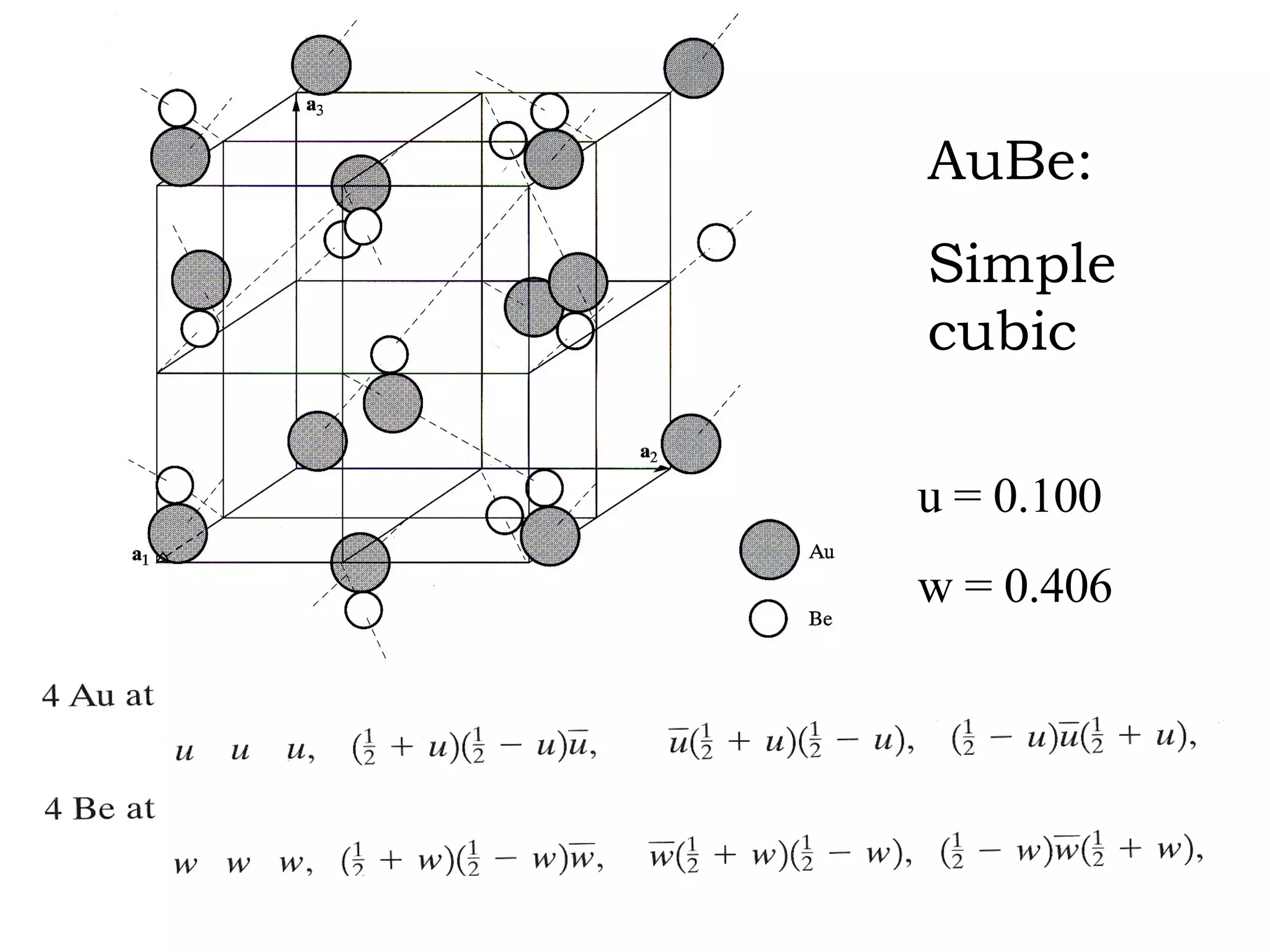
AuBe: Simple cubic u = 0.100 w = 0.406
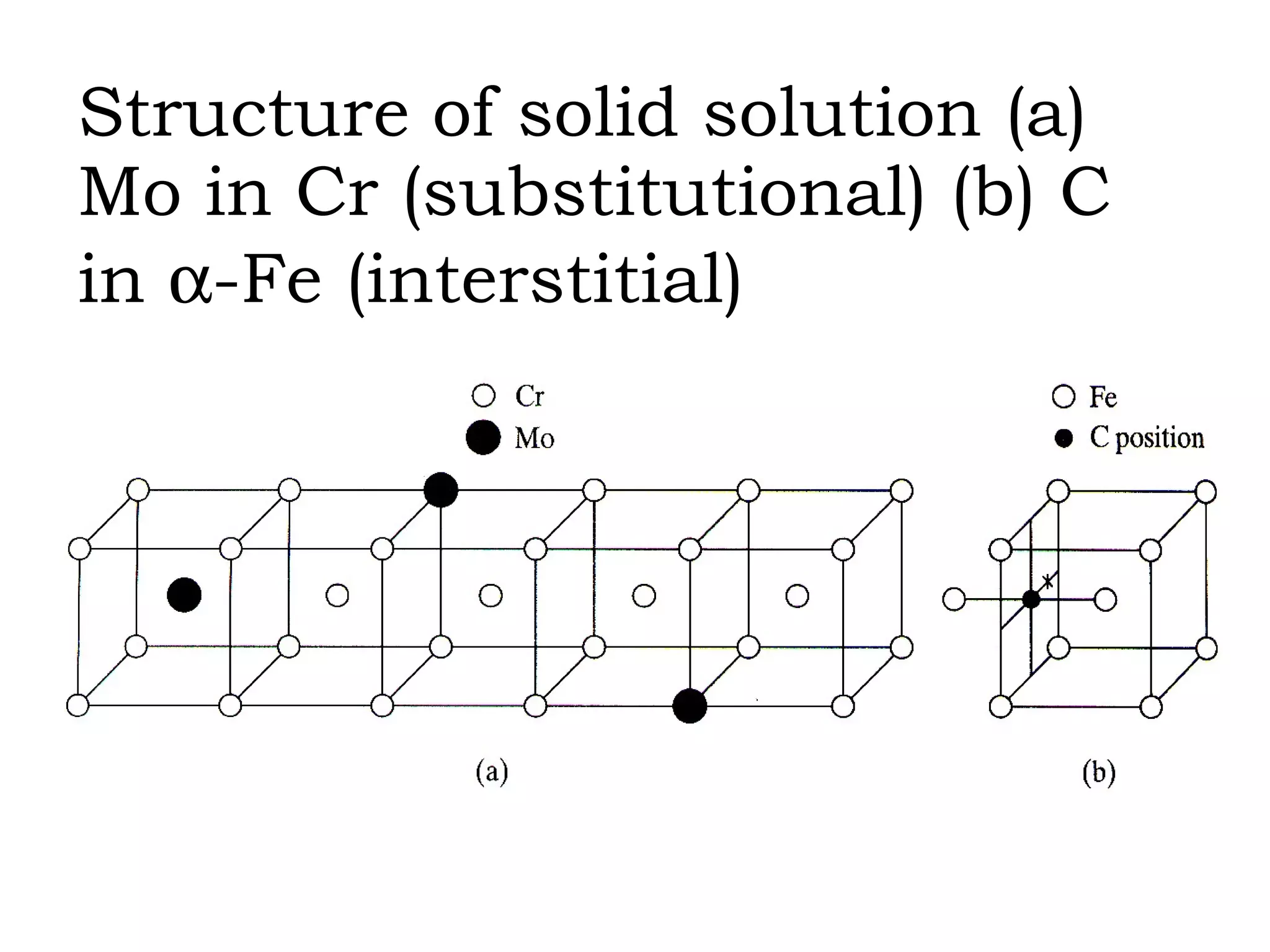
Structure of solid solution (a) Mo in Cr (substitutional) (b) C in   -Fe (interstitial)
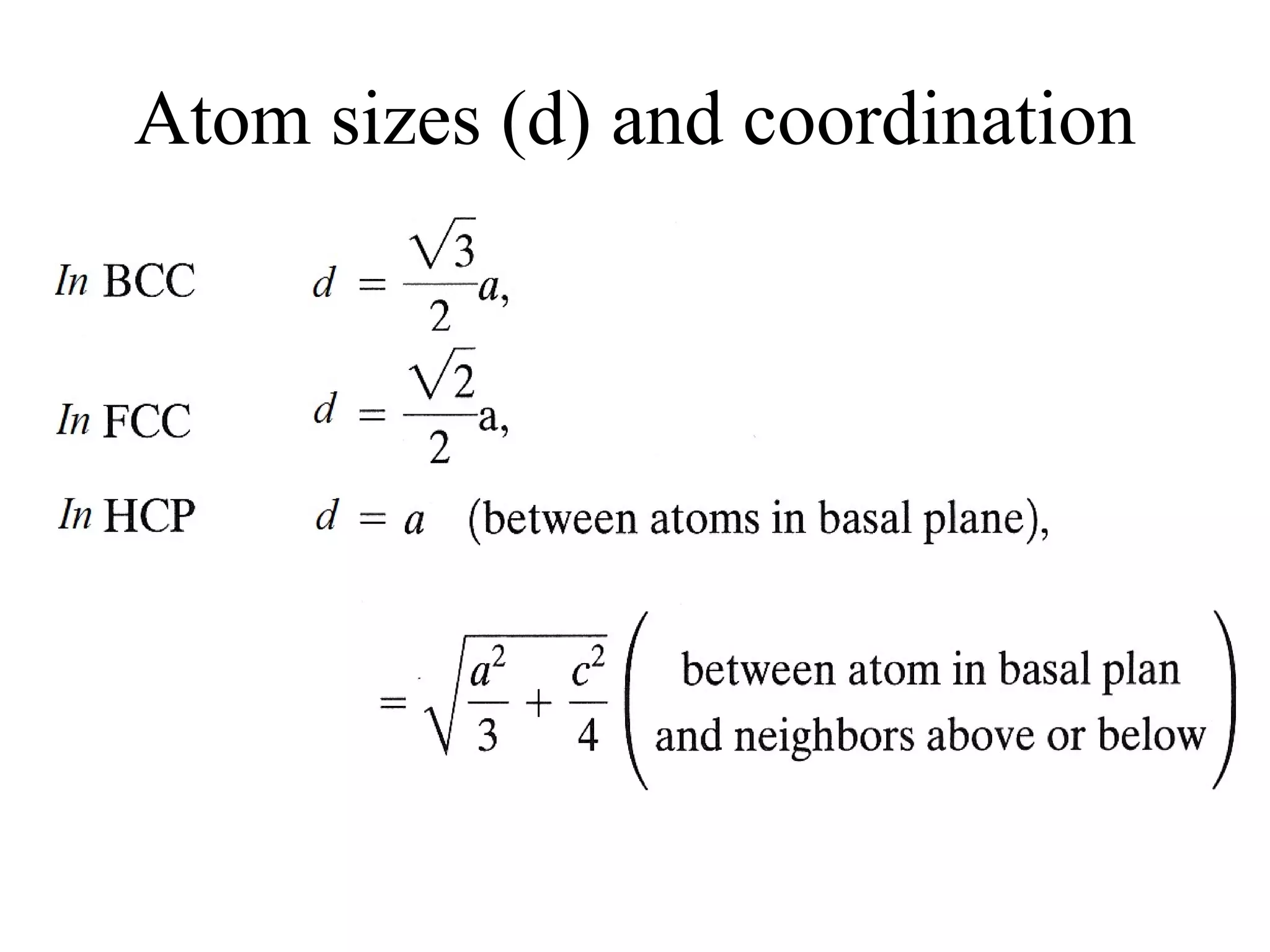
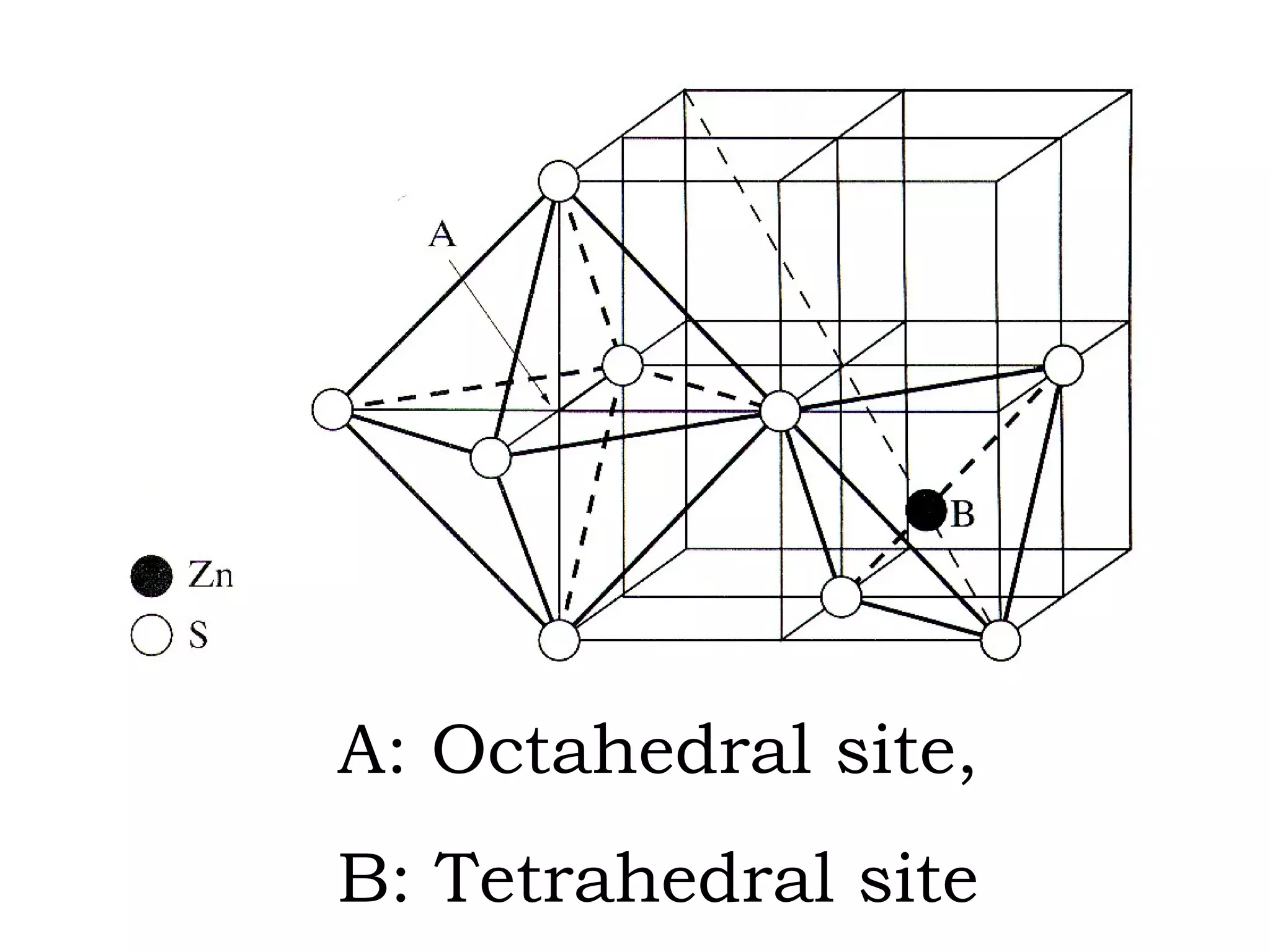
Atom sizes (d) and coordination
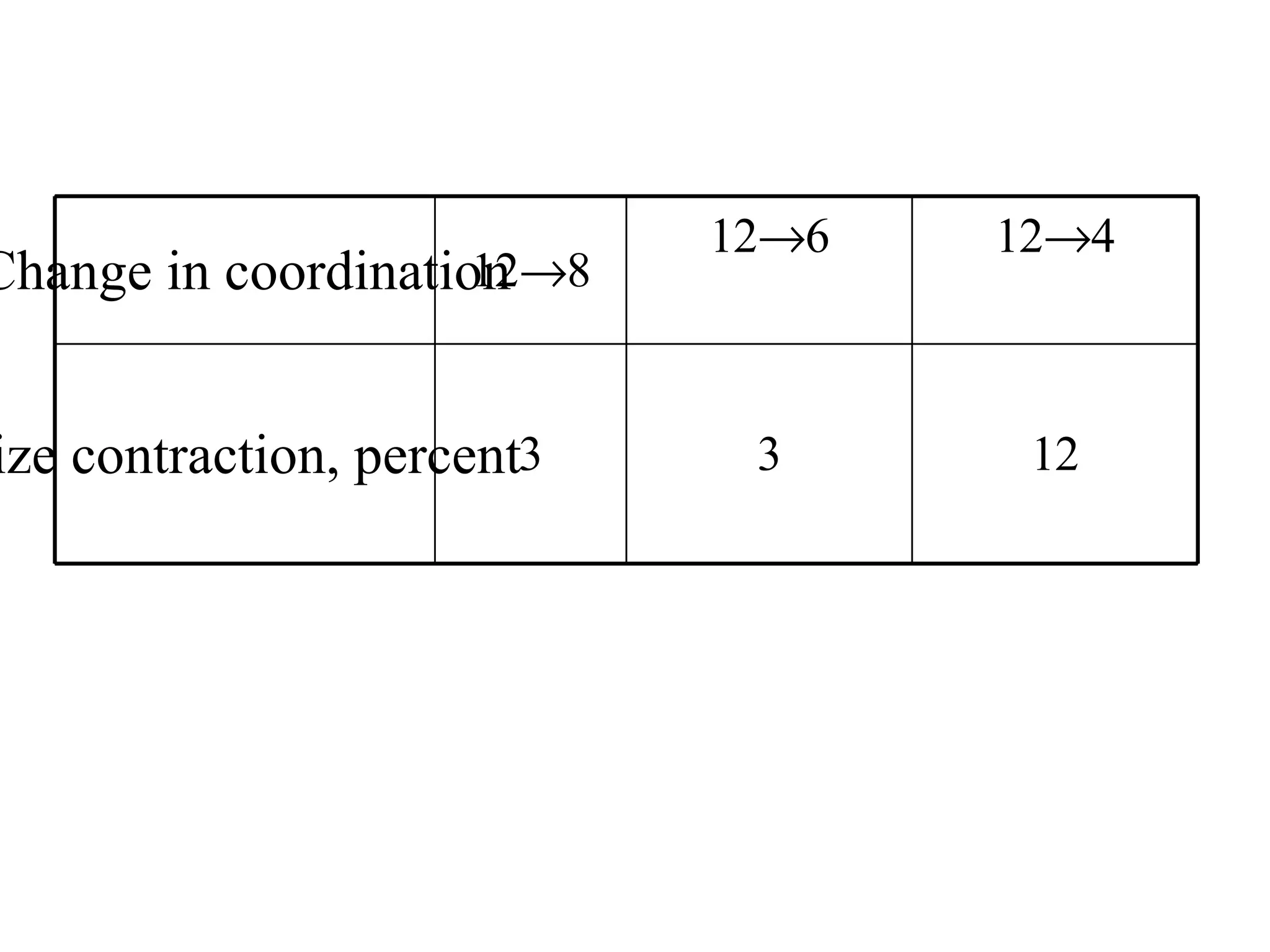
Change in coordination 12  8 12  6 12  4 size contraction, percent 3 3 12
A: Octahedral site,  B: Tetrahedral site
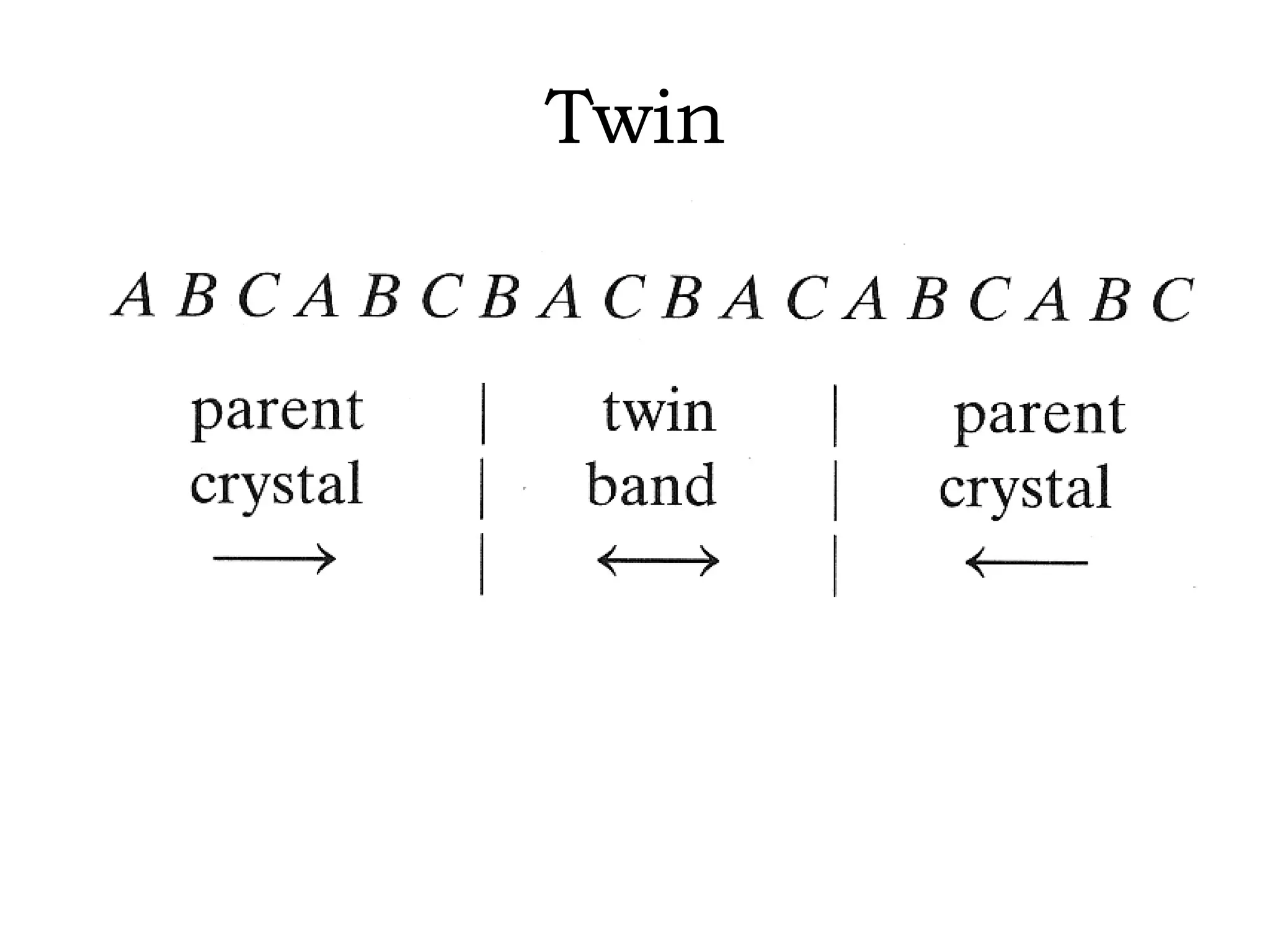
Twin
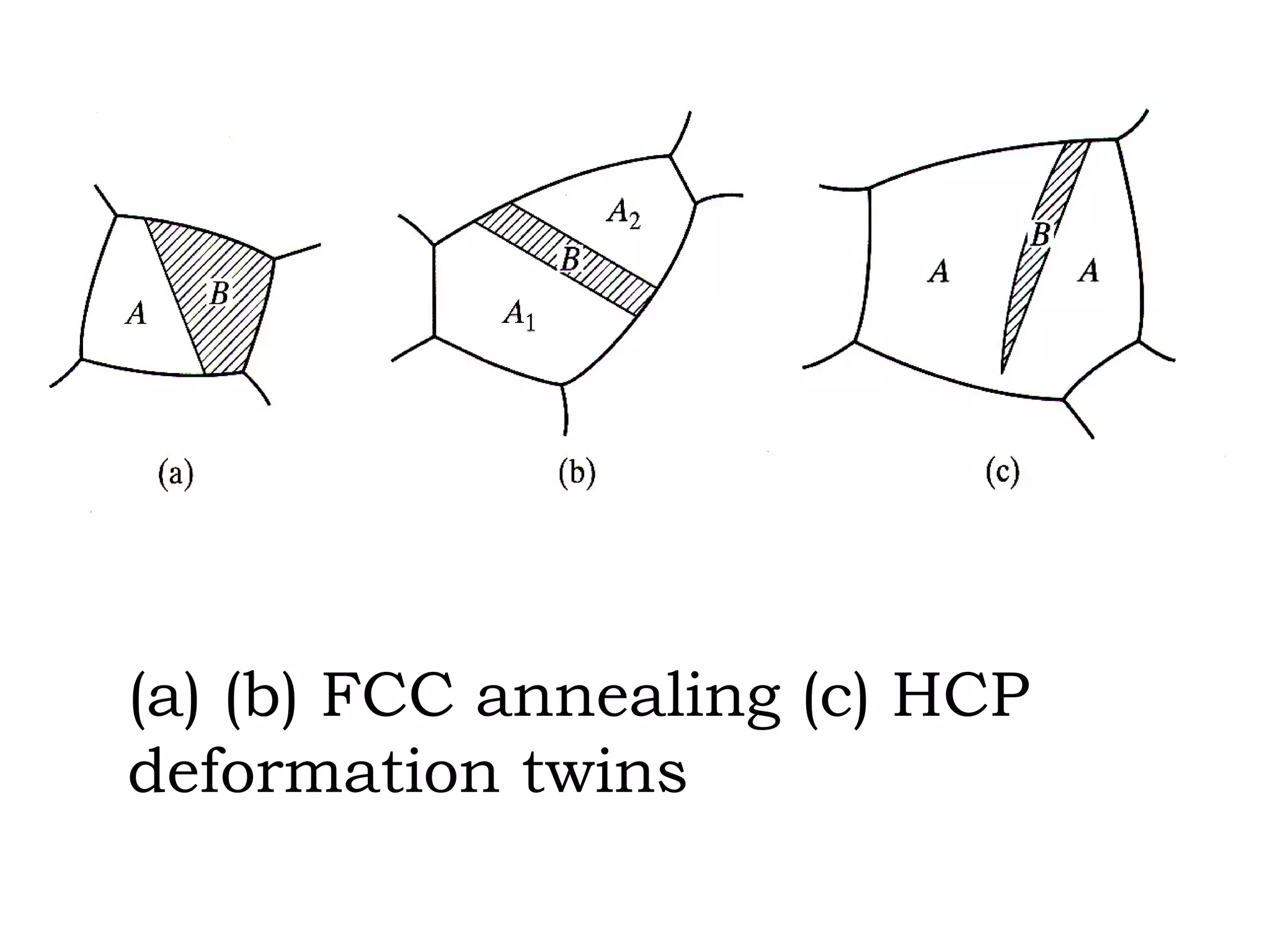
(a) (b) FCC annealing (c) HCP deformation twins
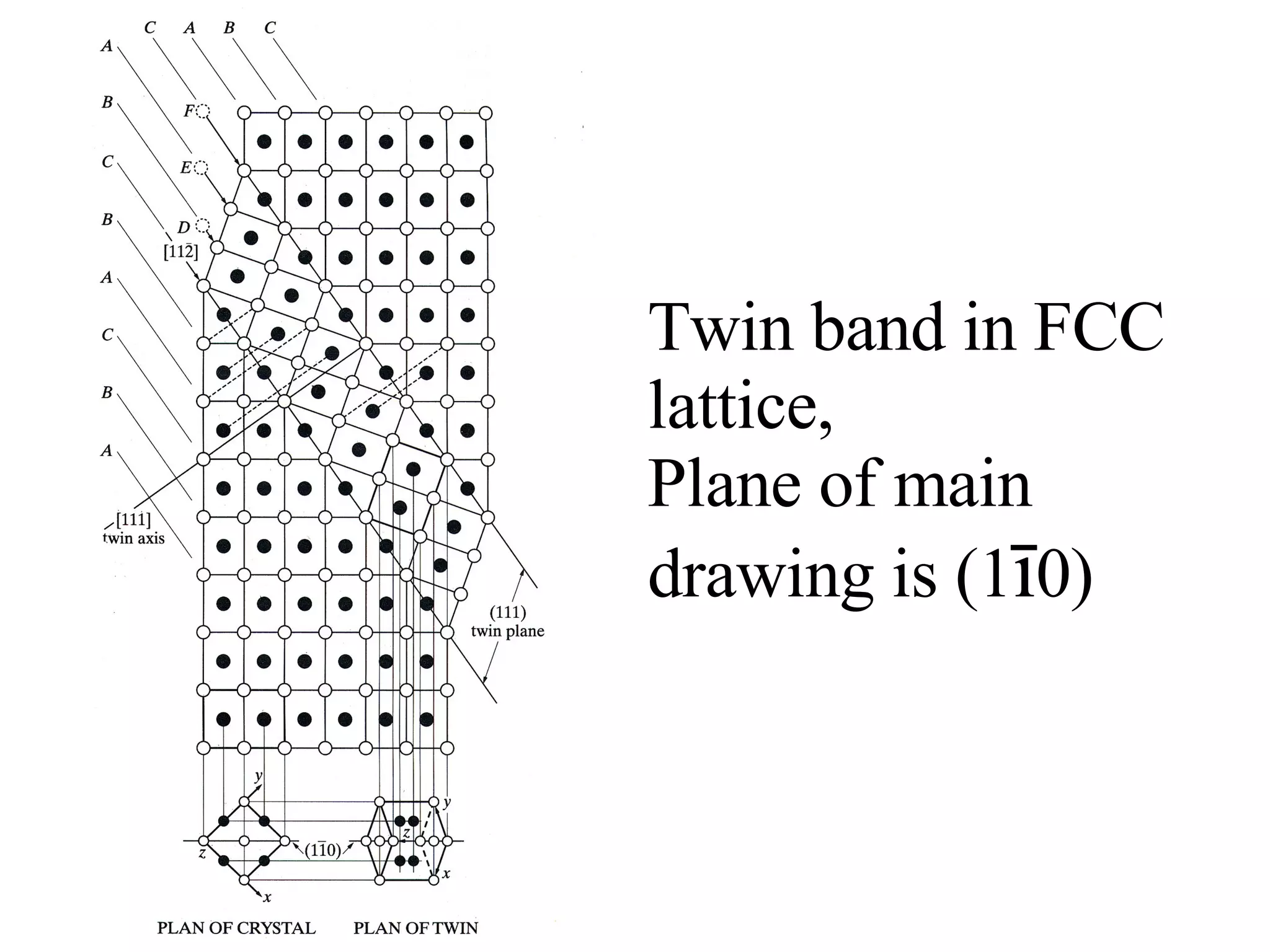
Twin band in FCC lattice, Plane of main drawing is (1 ī 0)
Homework assignment Problem 2-6  Problem 2-8  Problem 2-9  Problem 2-10
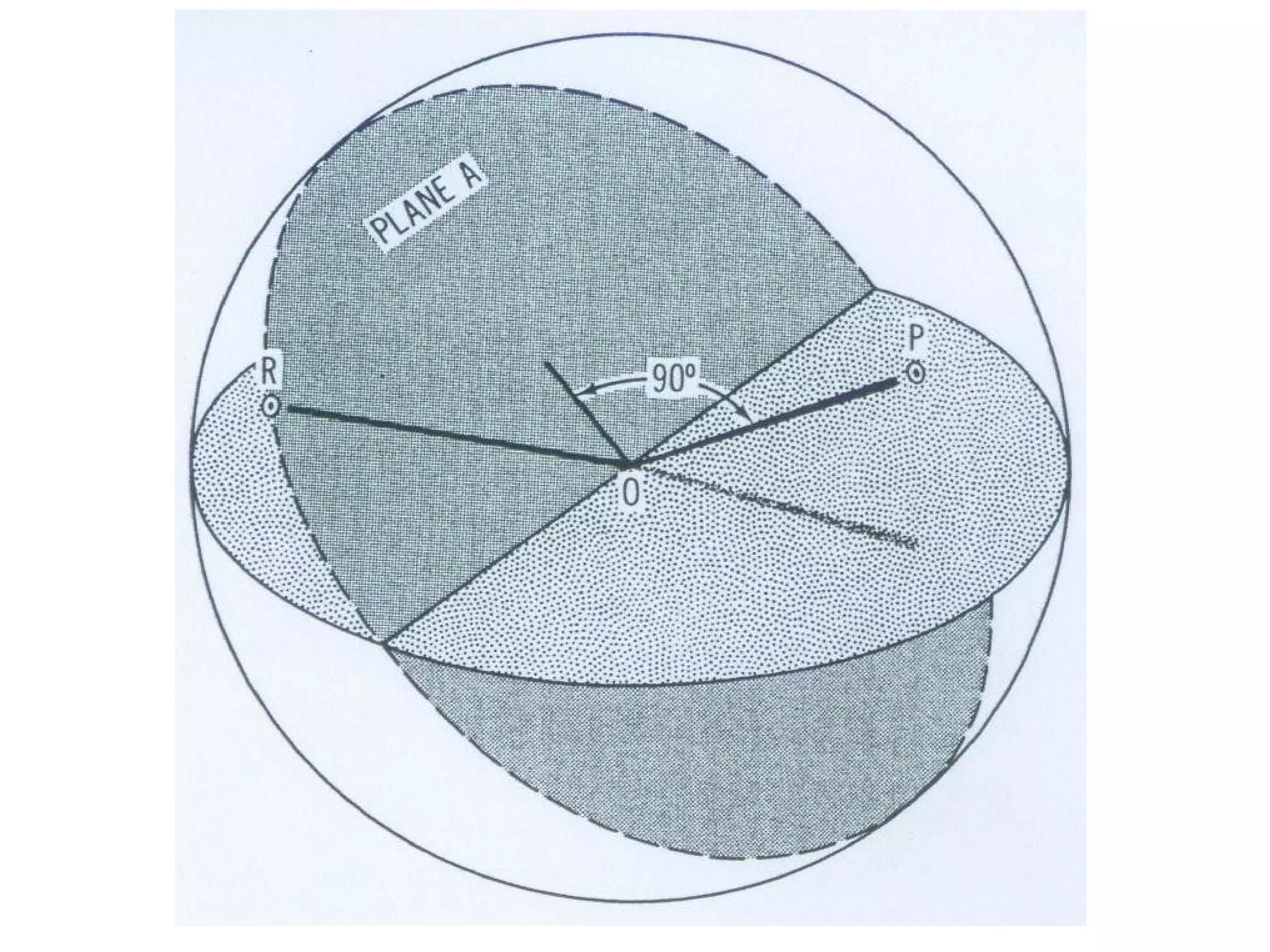
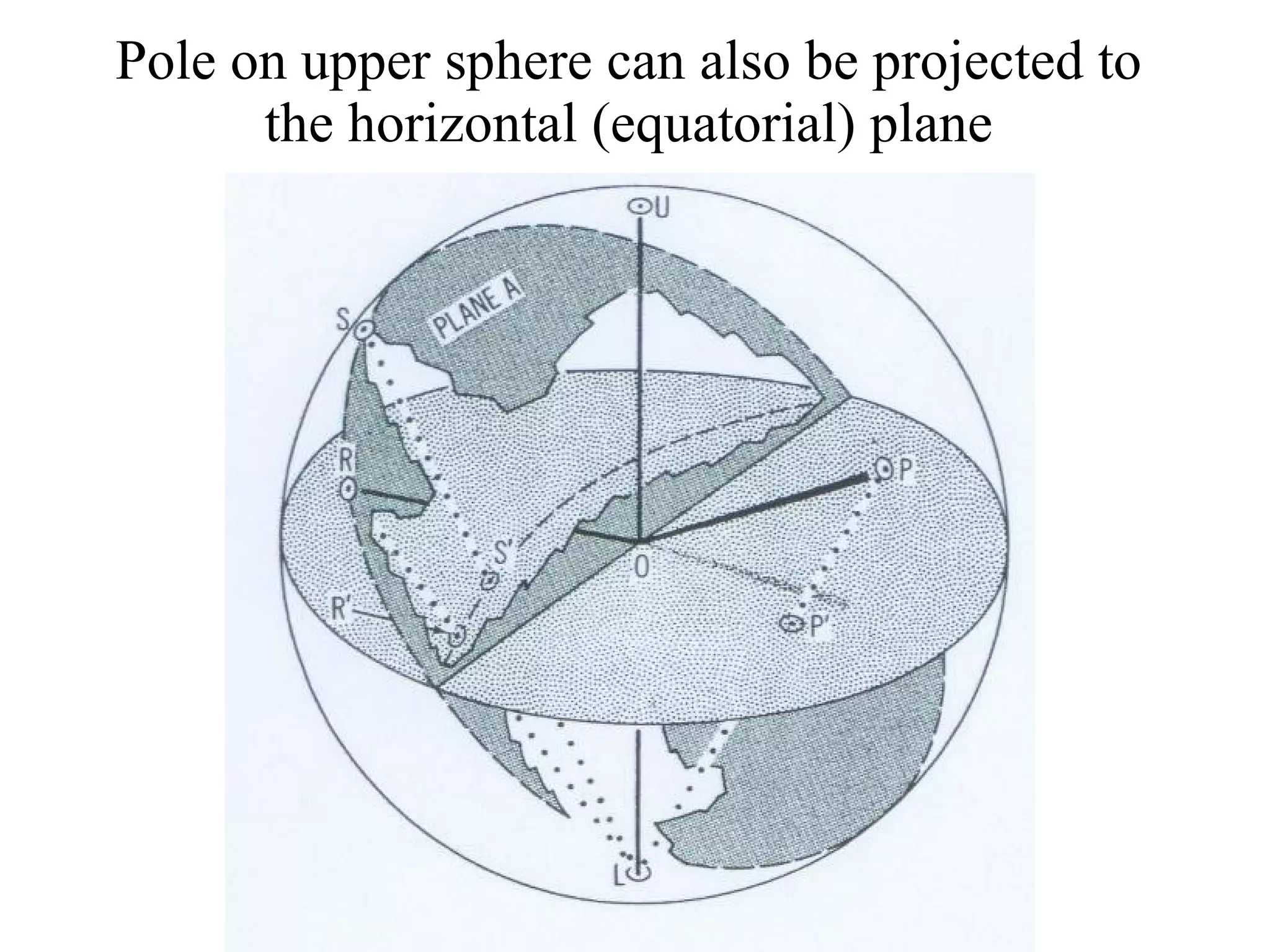
Stereographic  projection *Any plane passing the center of the reference sphere intersects the sphere in a trace called great circle * A plane can be represented by its great circle or pole, which is the intersection of its plane normal with the reference sphere
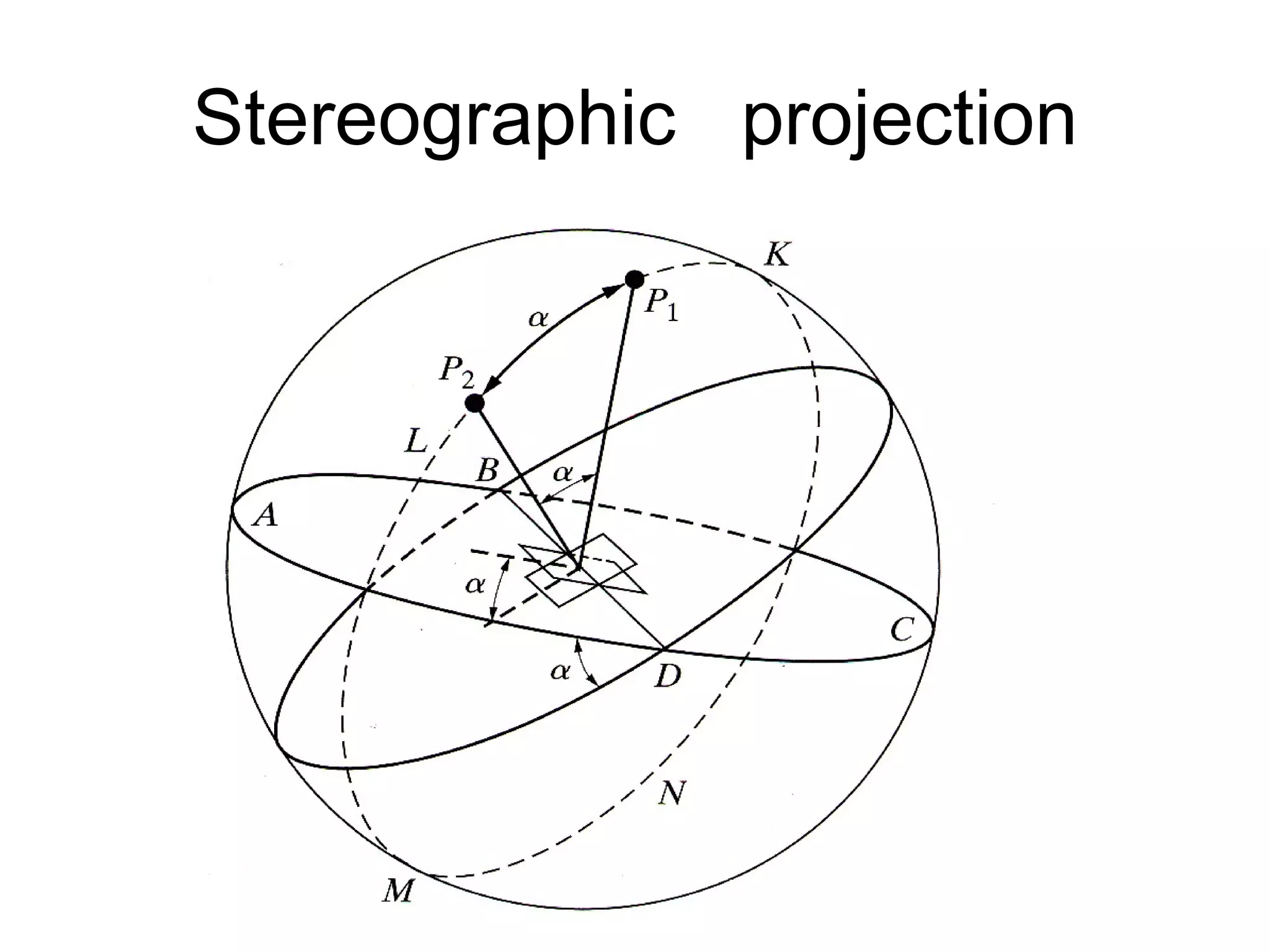
Stereographic  projection
 
Pole on upper sphere can also be projected to the horizontal (equatorial) plane
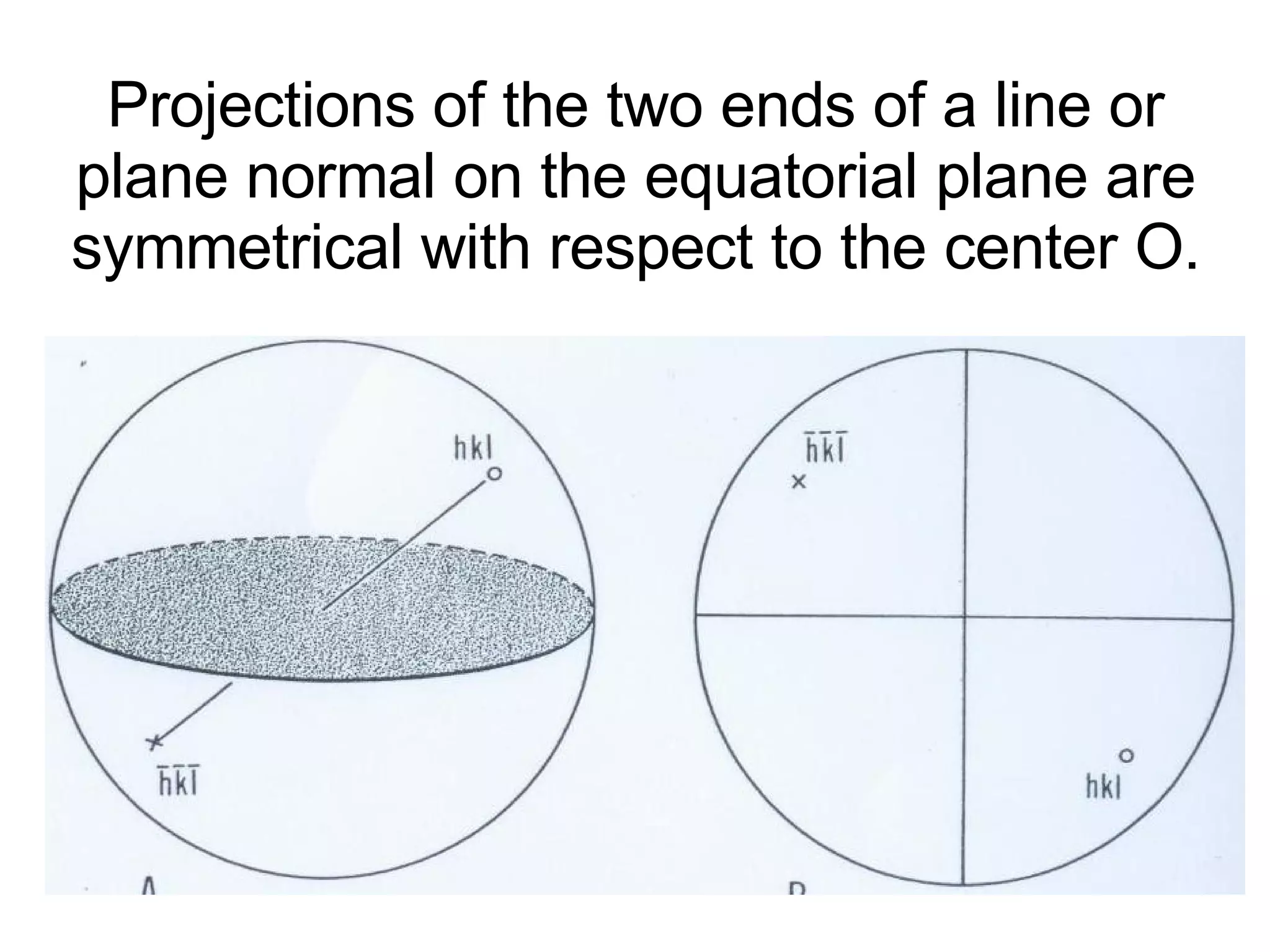
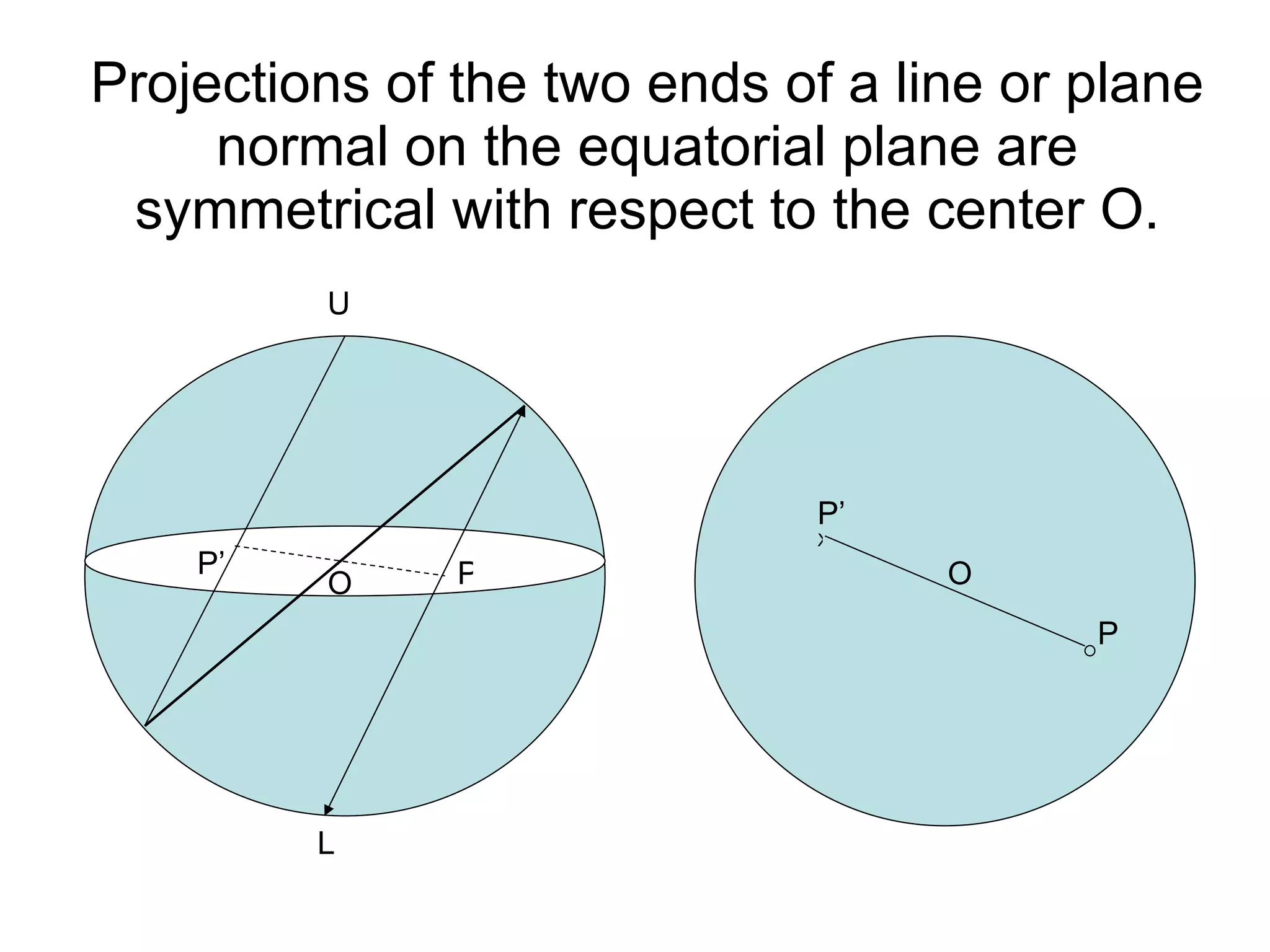
Projections of the two ends of a line or plane normal on the equatorial plane are symmetrical with respect to the center O.
Projections of the two ends of a line or plane normal on the equatorial plane are symmetrical with respect to the center O. U L P P’ P P’ X O O
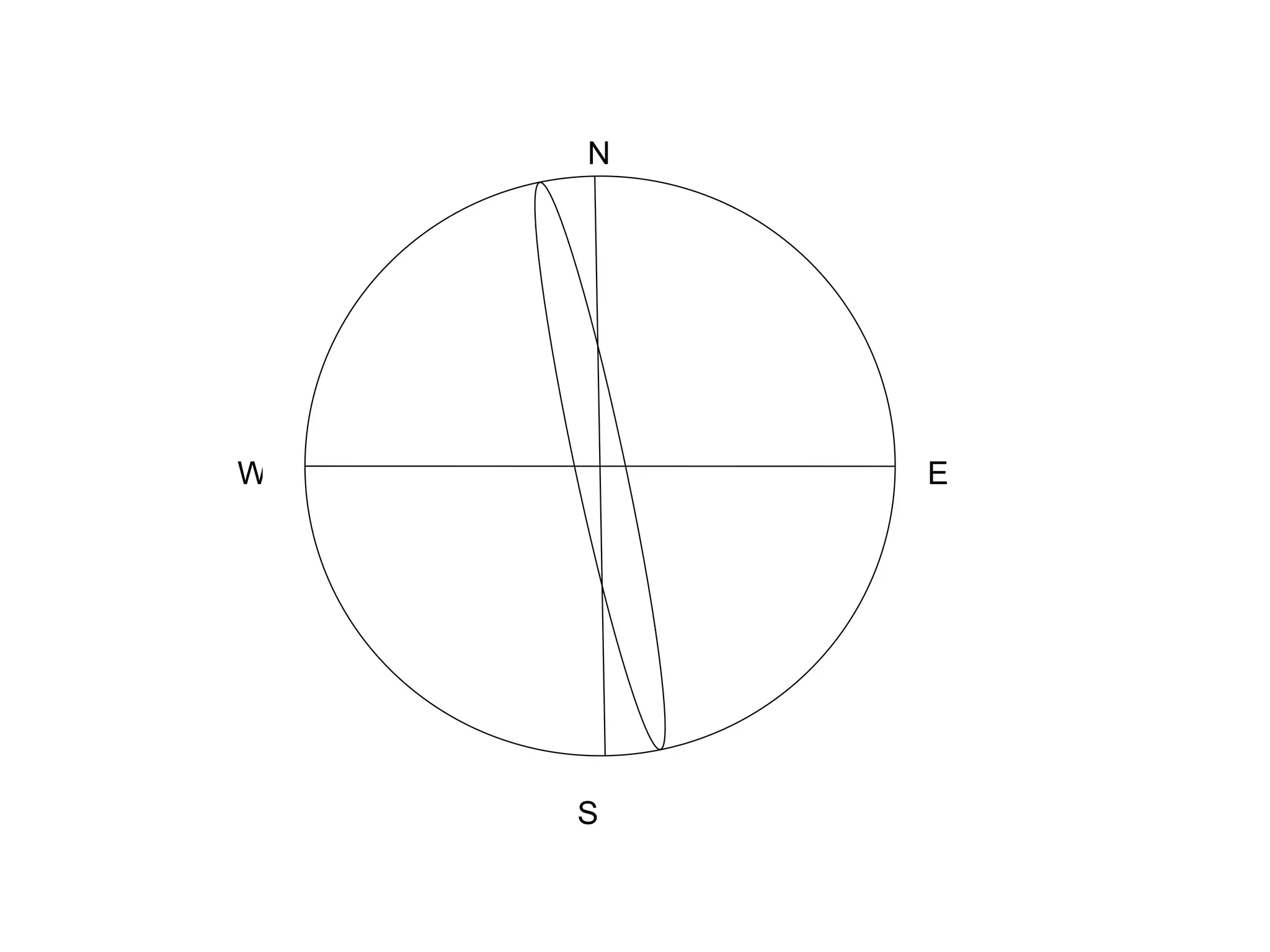
A great circle representing a plane is divided to two half circles, one in upper reference sphere, the other in lower sphere Each half circle is projected as a trace on the equatorial plane The two traces are symmetrical with respect to their associated common diameter
N S E W
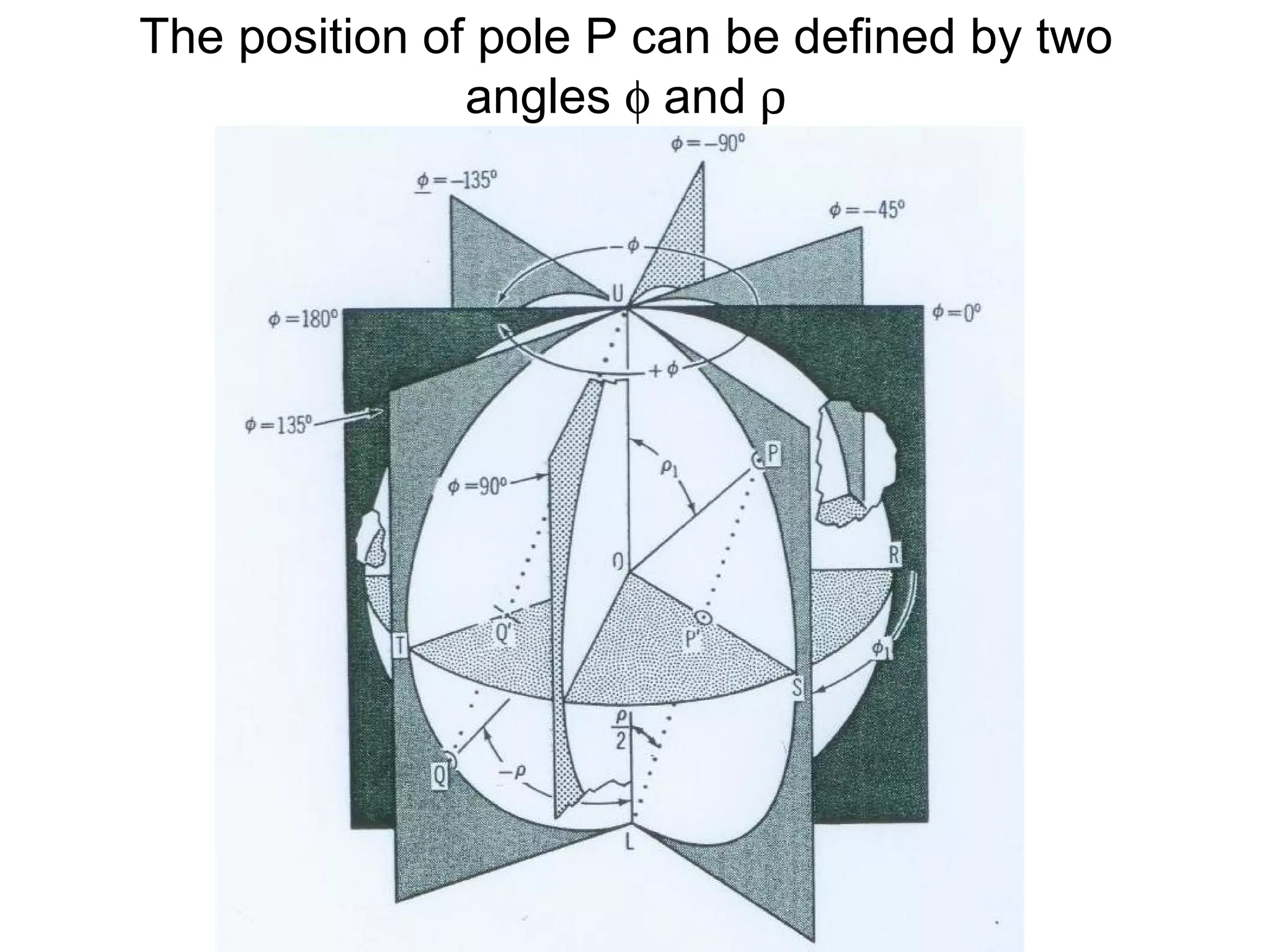
The position of pole P can be defined by two angles    and  
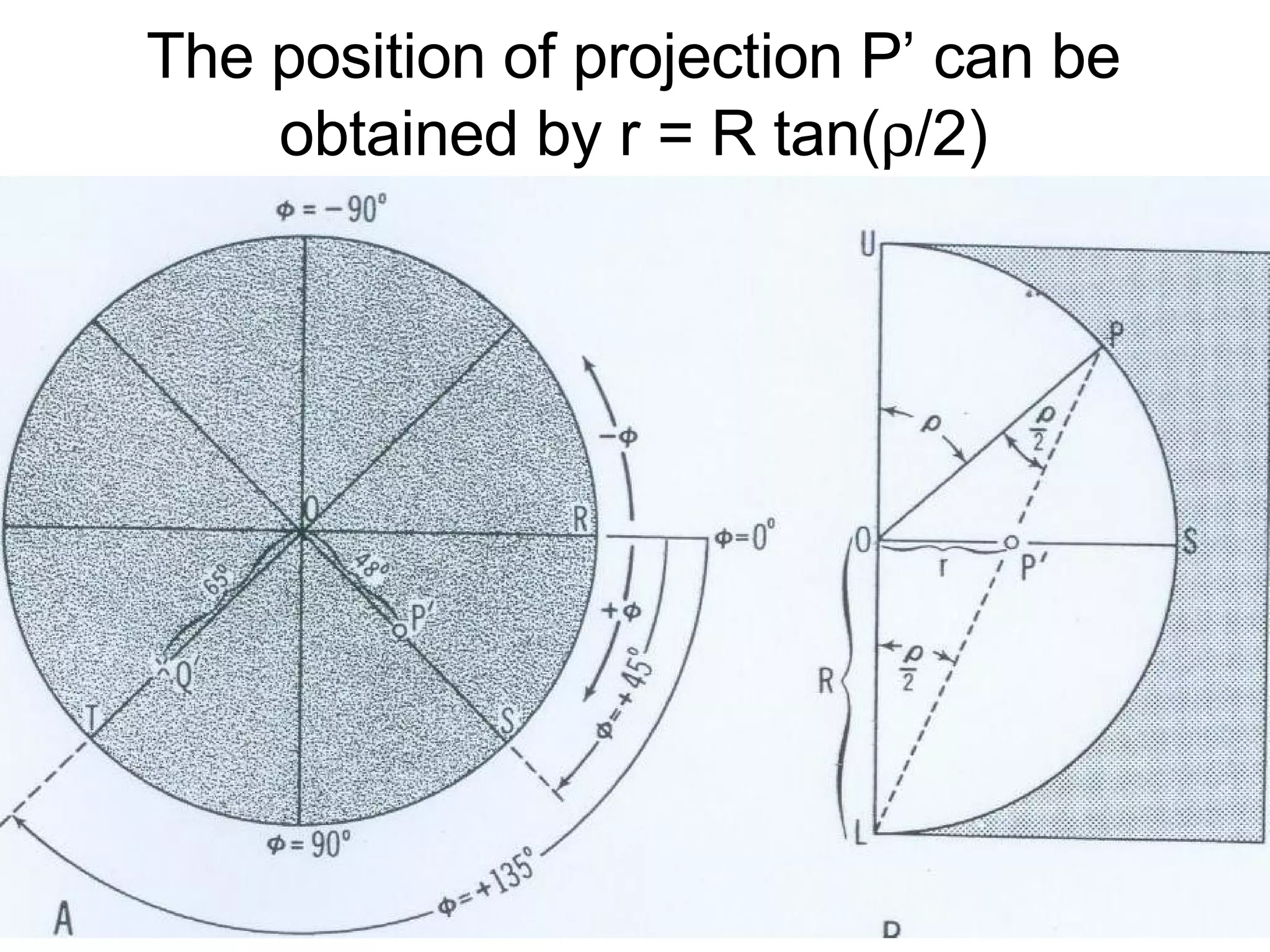
The position of projection P’ can be obtained by r = R tan(  /2)
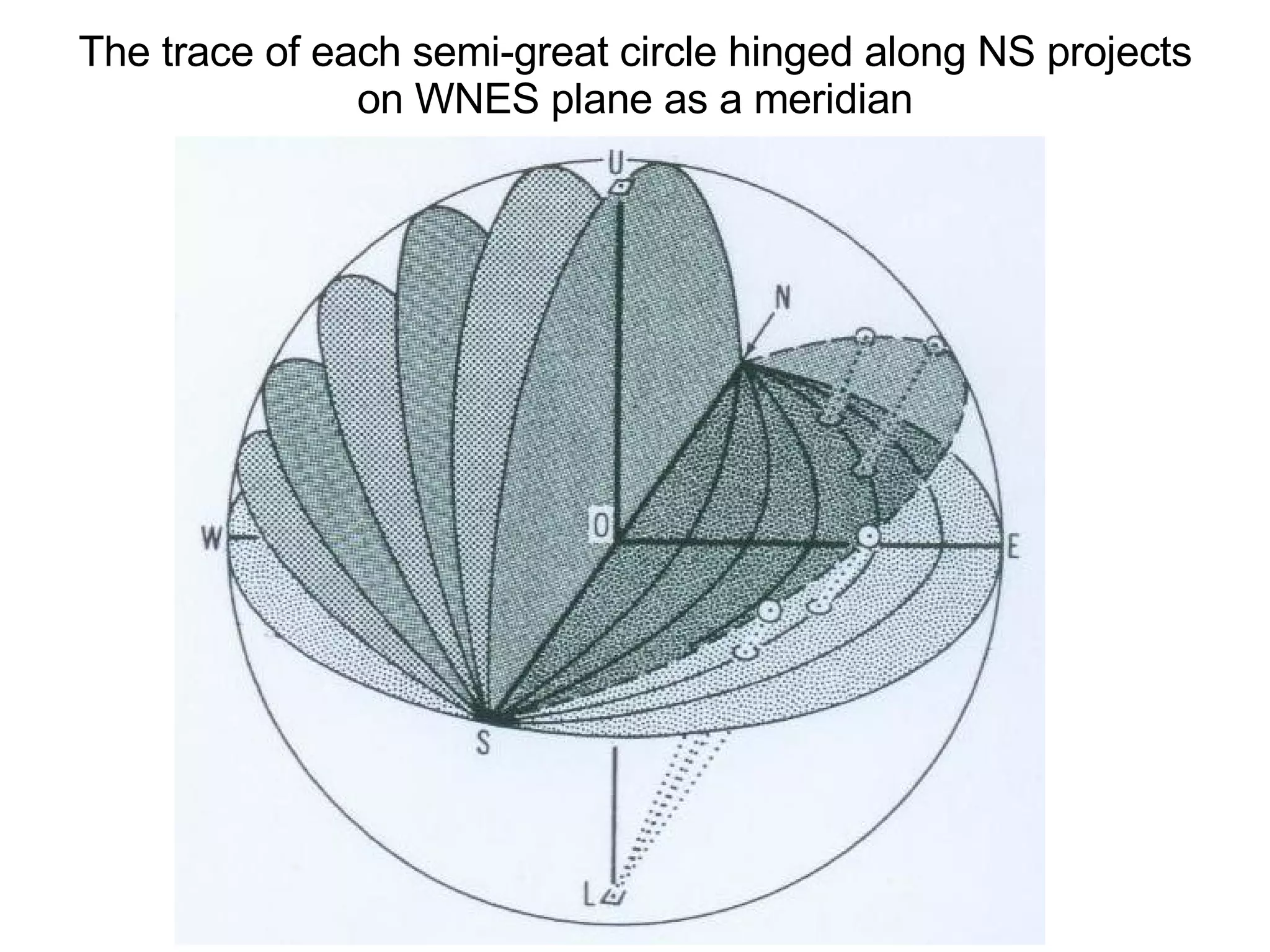
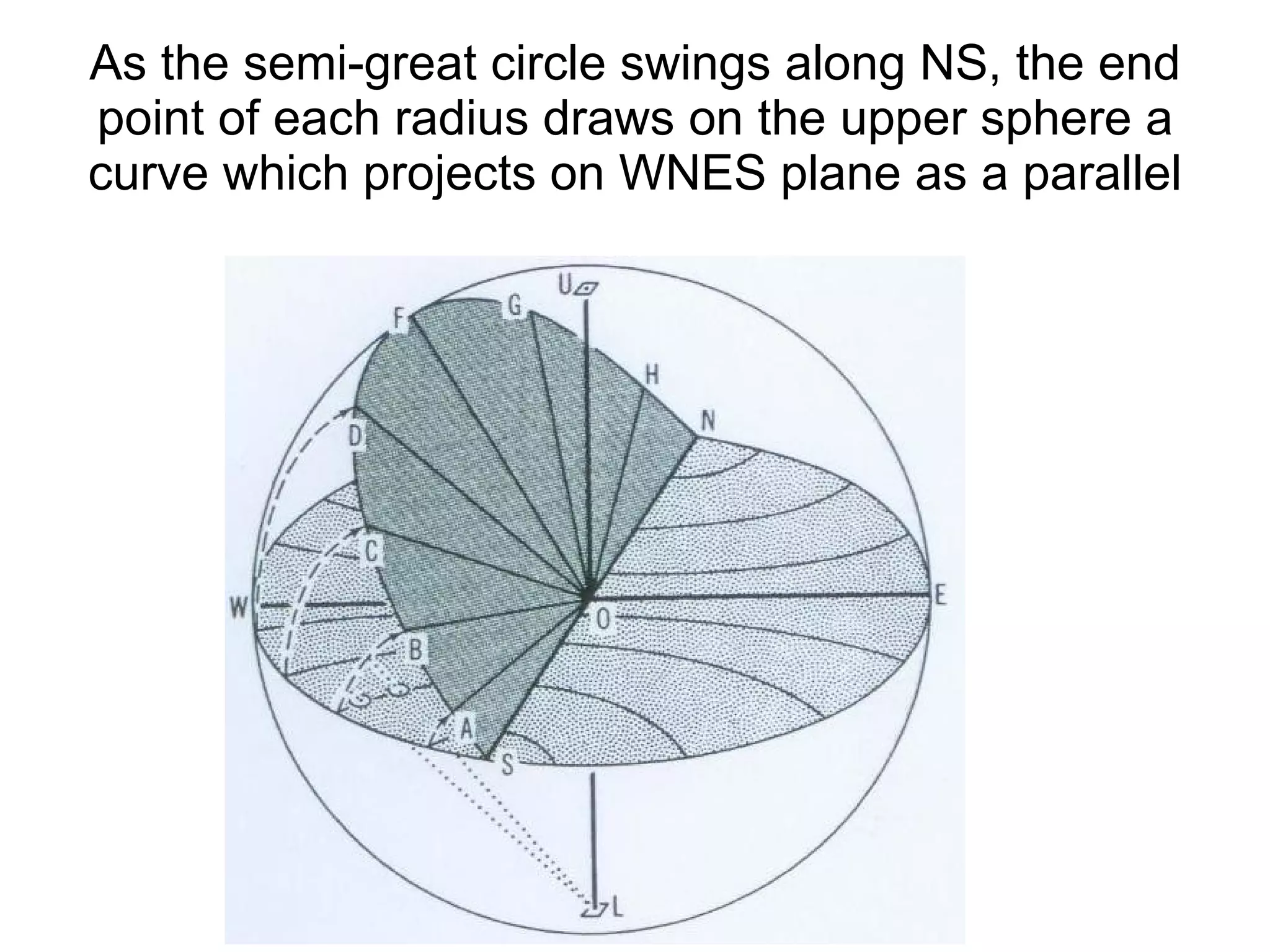
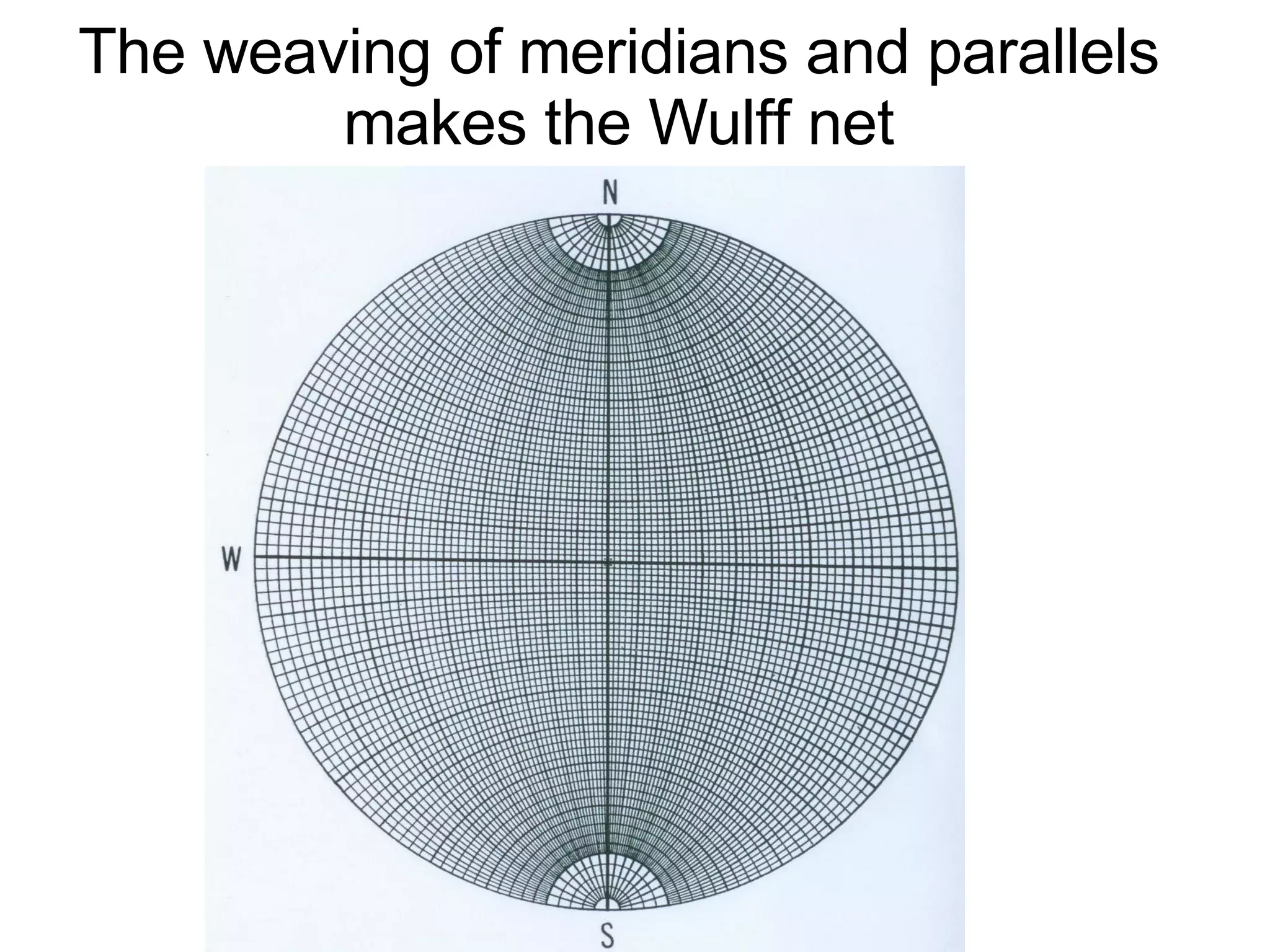
The trace of each semi-great circle hinged along NS projects on WNES plane as a meridian
As the semi-great circle swings along NS, the end point of each radius draws on the upper sphere a curve which projects on WNES plane as a parallel
The weaving of meridians and parallels makes the Wulff net
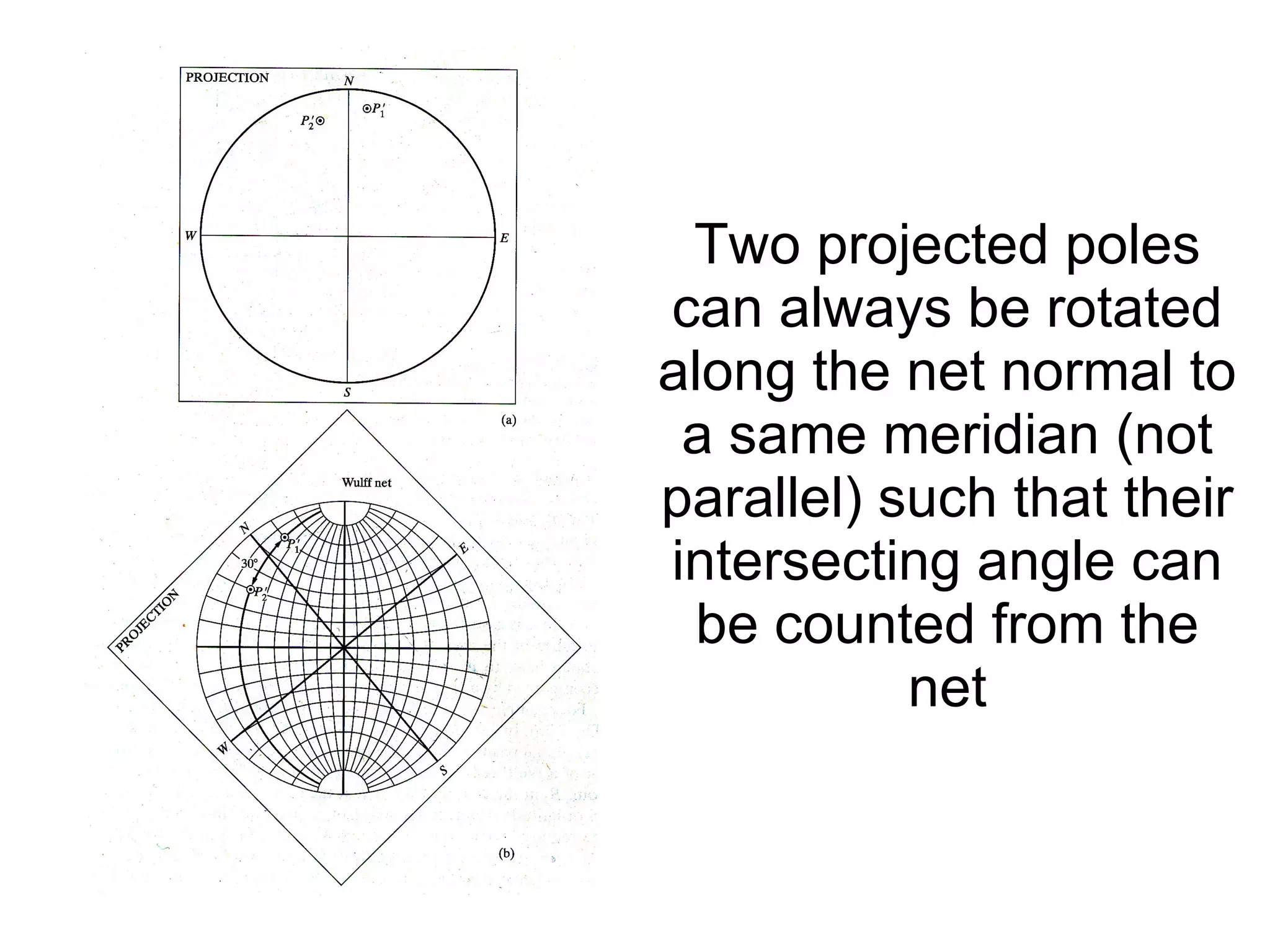
Two projected poles can always be rotated along the net normal to a same meridian (not parallel) such that their intersecting angle can be counted from the net
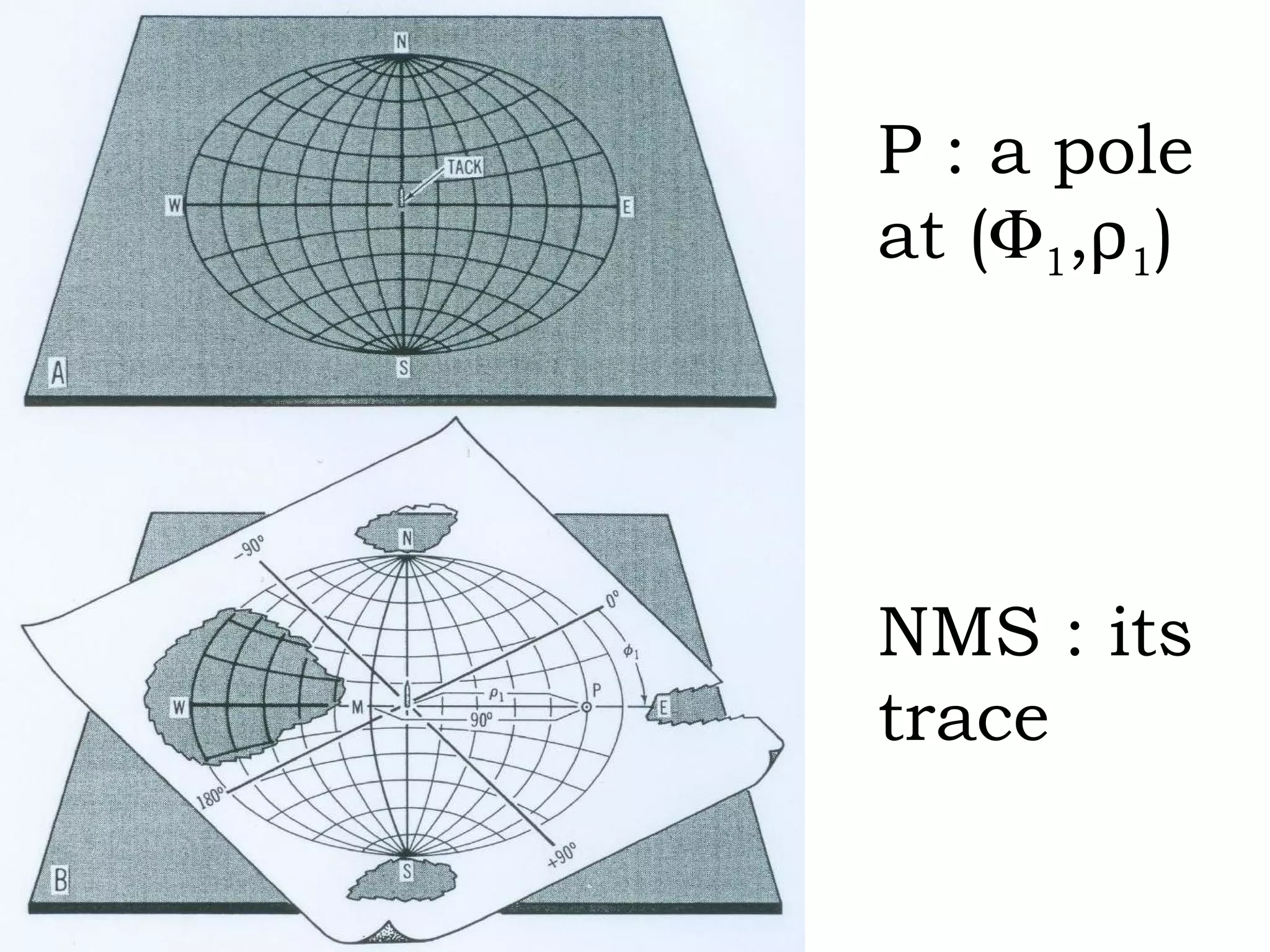
P : a pole at (  1 ,  1 )  NMS : its trace
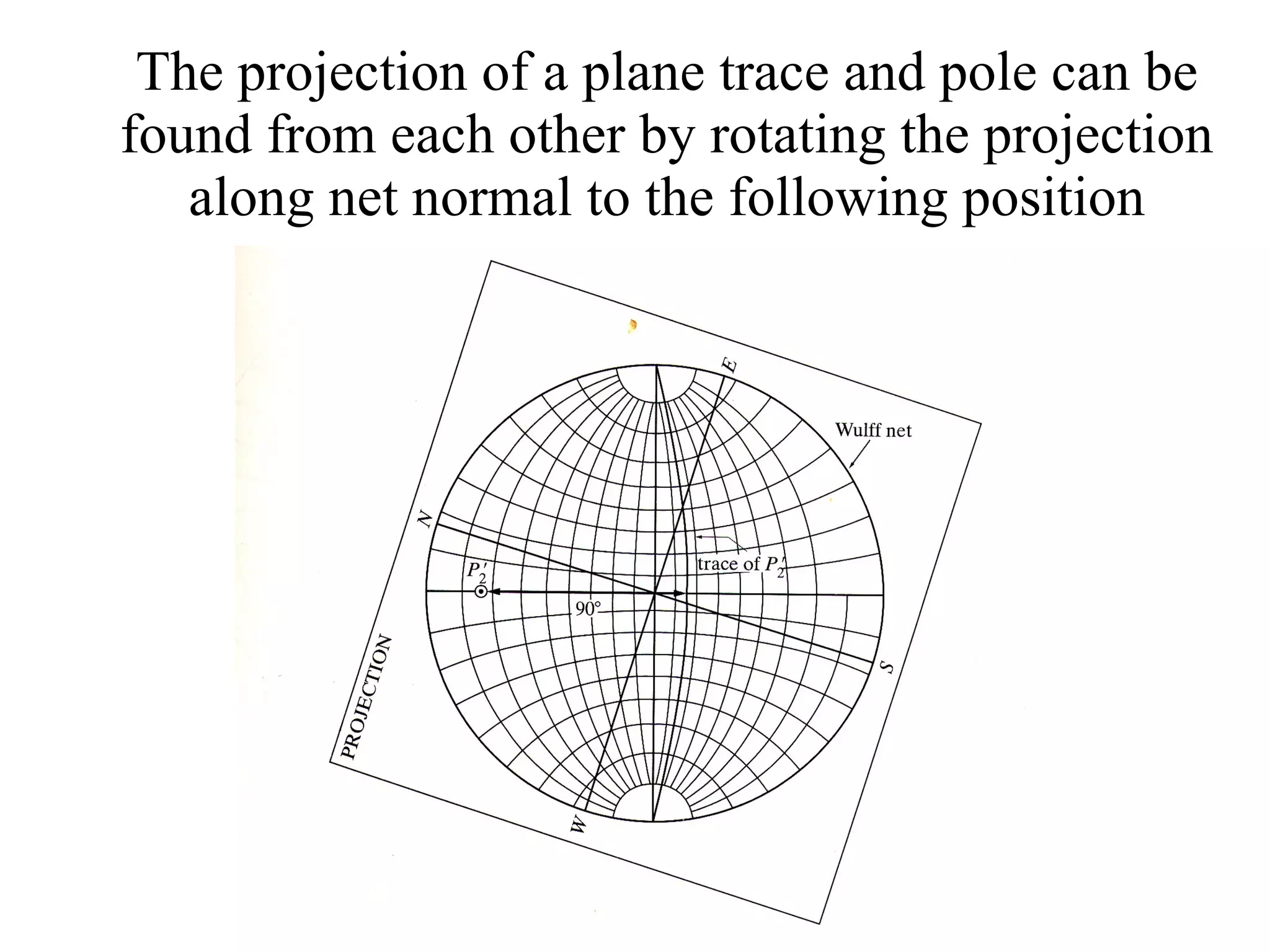
The projection of a plane trace and pole can be found from each other by rotating the projection along net normal to the following position
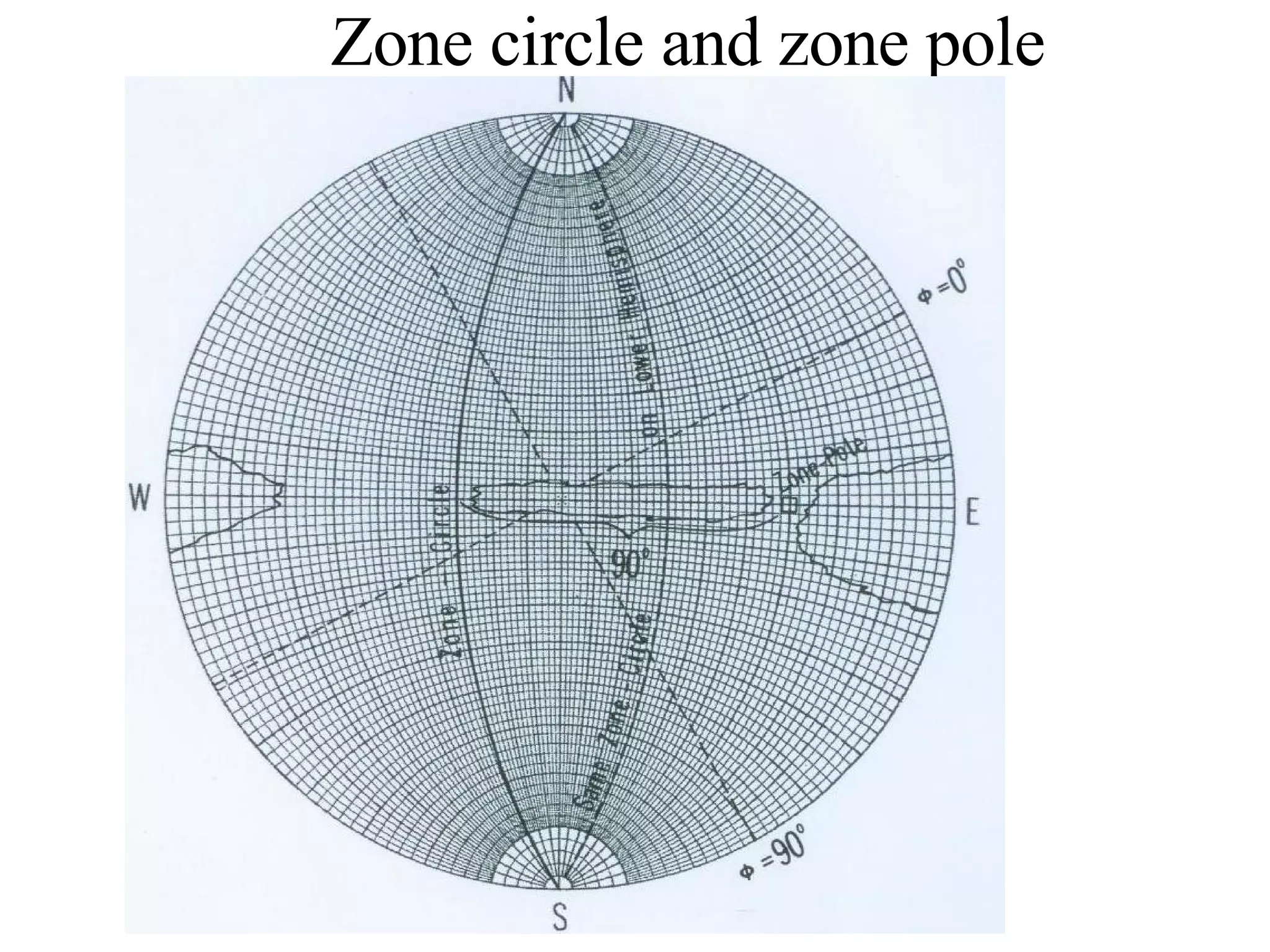
Zone circle and zone pole
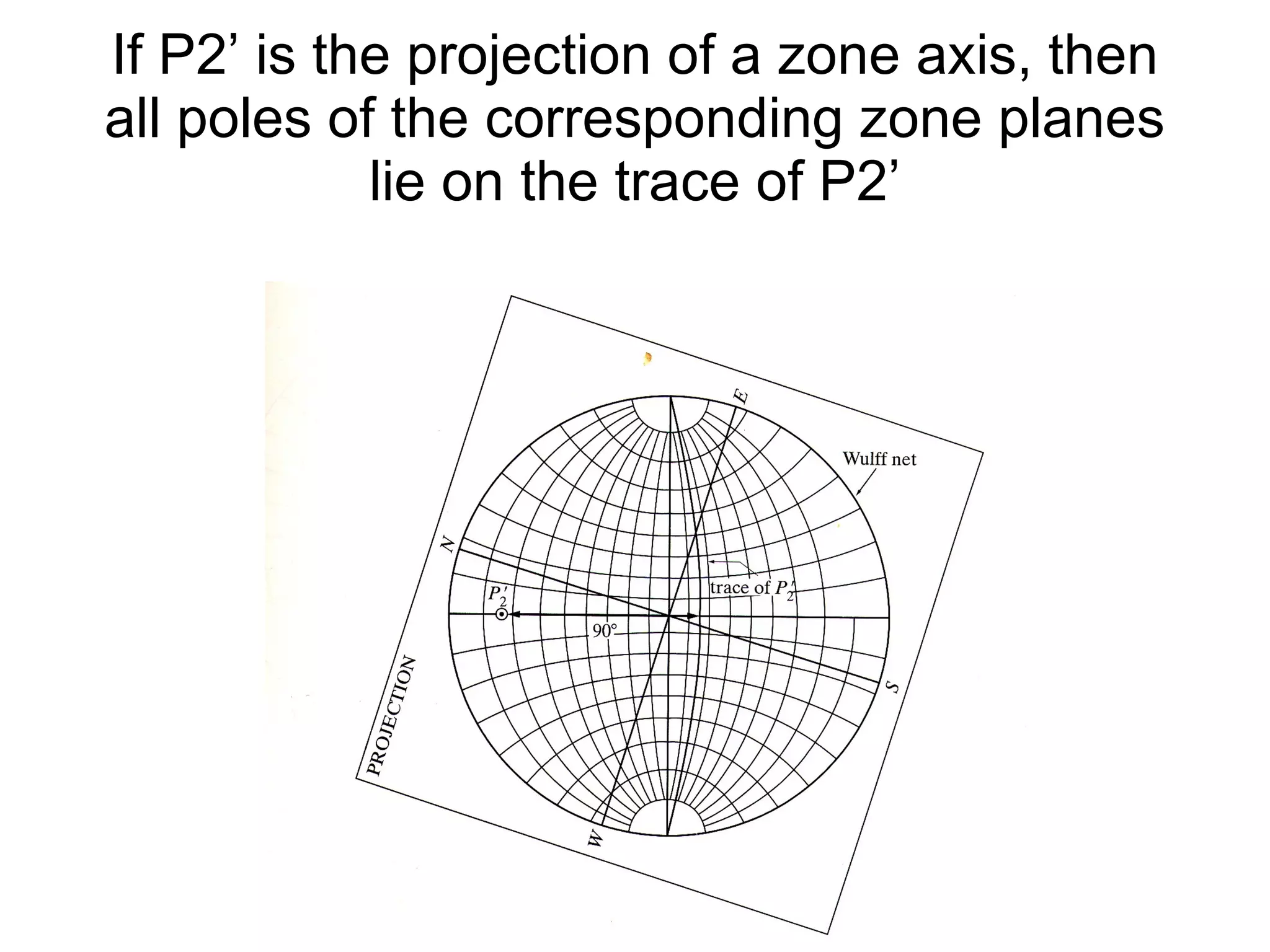
If P2’ is the projection of a zone axis, then all poles of the corresponding zone planes lie on the trace of P2’
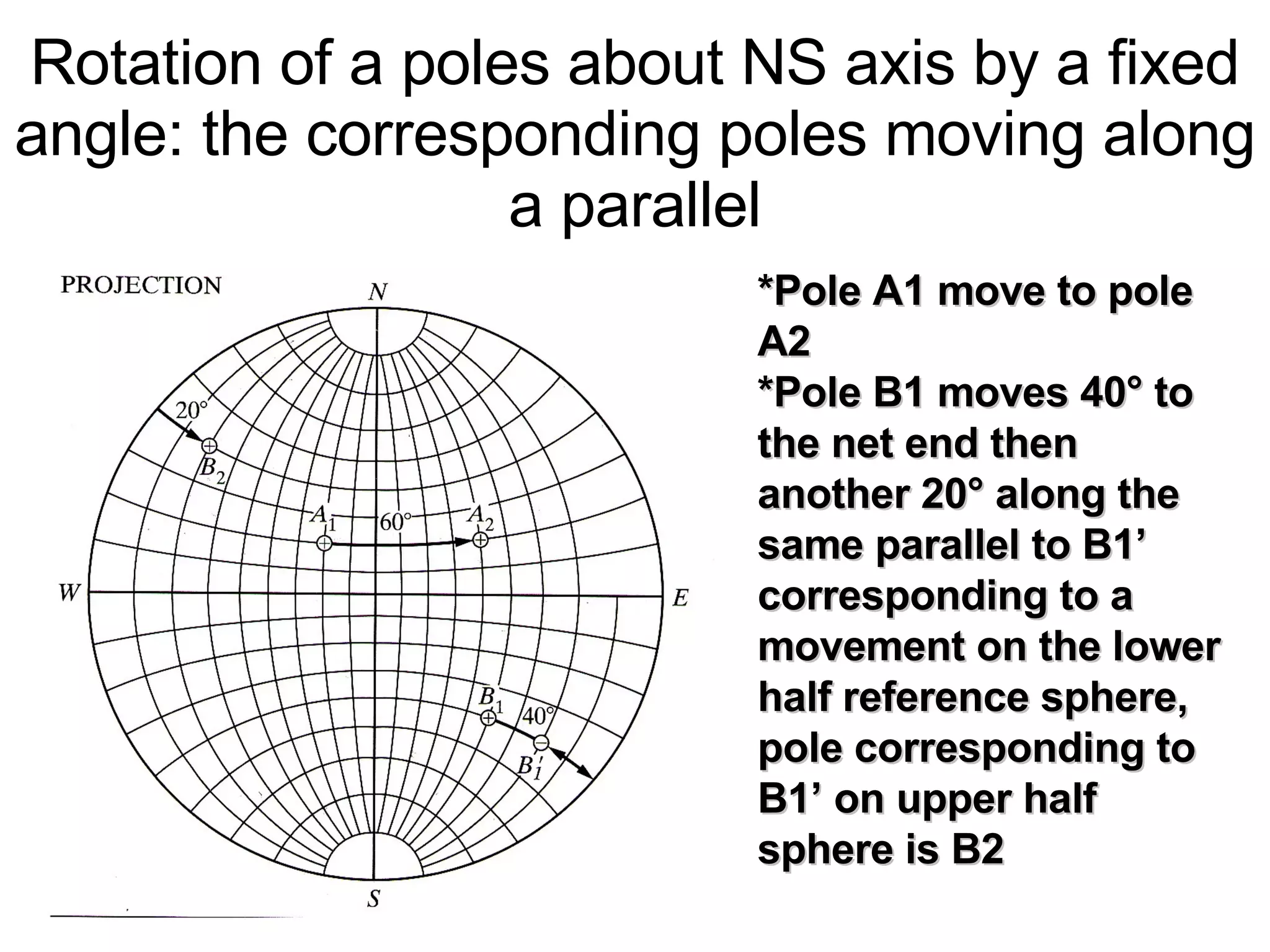
Rotation of a poles about NS axis by a fixed angle: the corresponding poles moving along a parallel *Pole A1 move to pole A2 *Pole B1 moves 40 °  to the net end then another 20 °  along the same parallel to B1’ corresponding to a movement on the lower half reference sphere, pole corresponding to B1’ on upper half sphere is B2
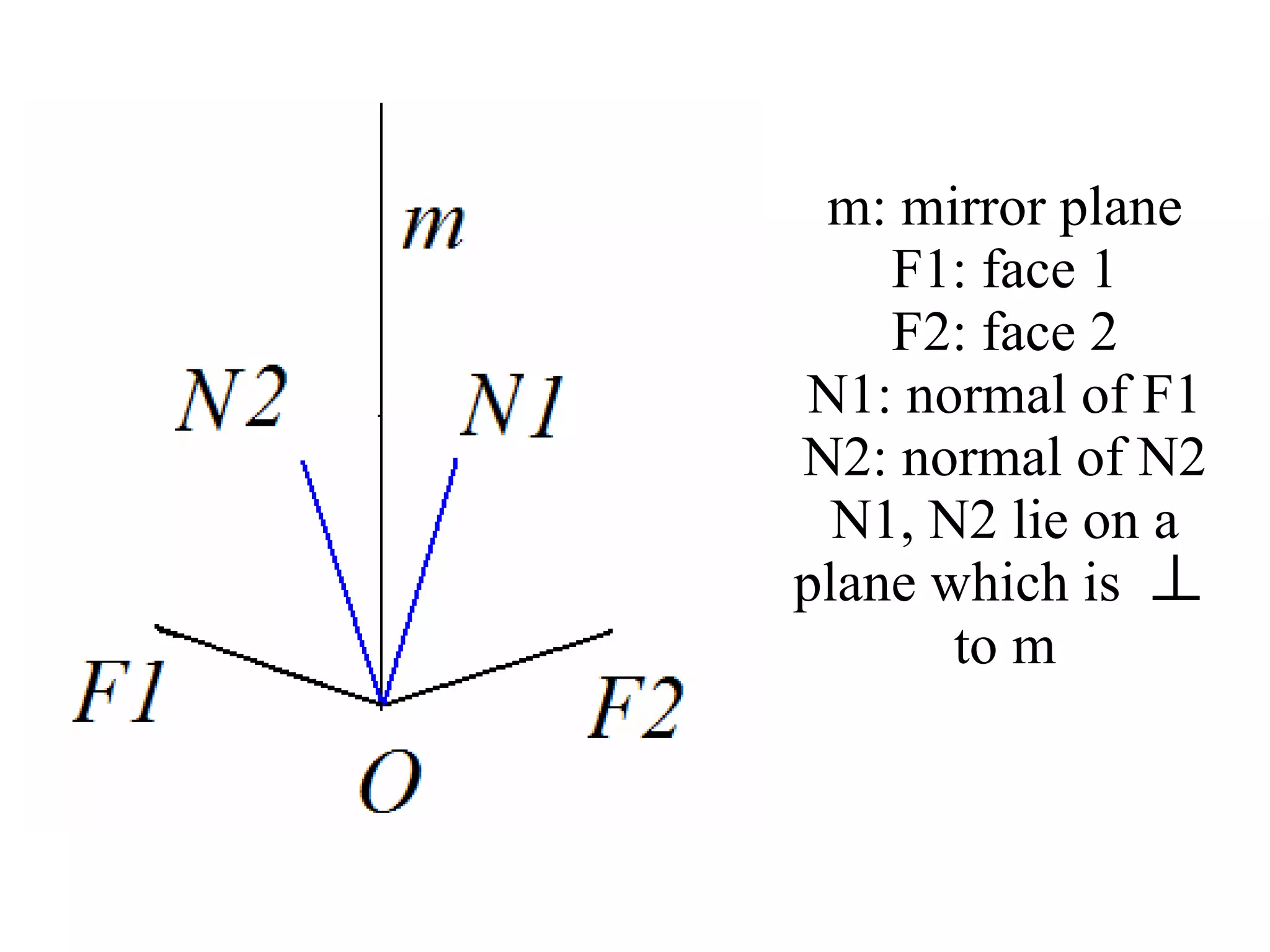
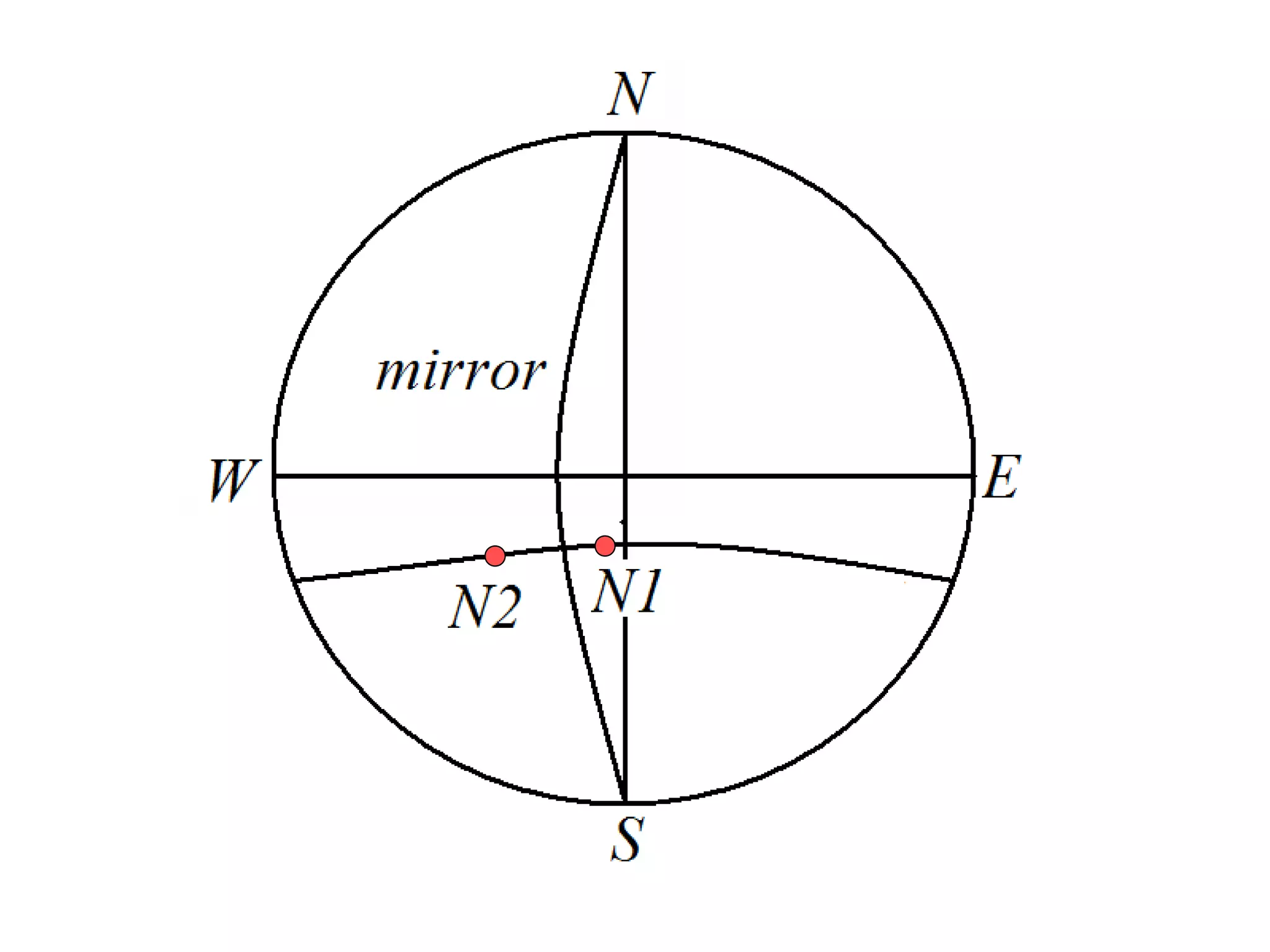
m: mirror plane F1: face 1 F2: face 2 N1: normal of F1 N2: normal of N2 N1, N2 lie on a plane which is  丄 to m
 
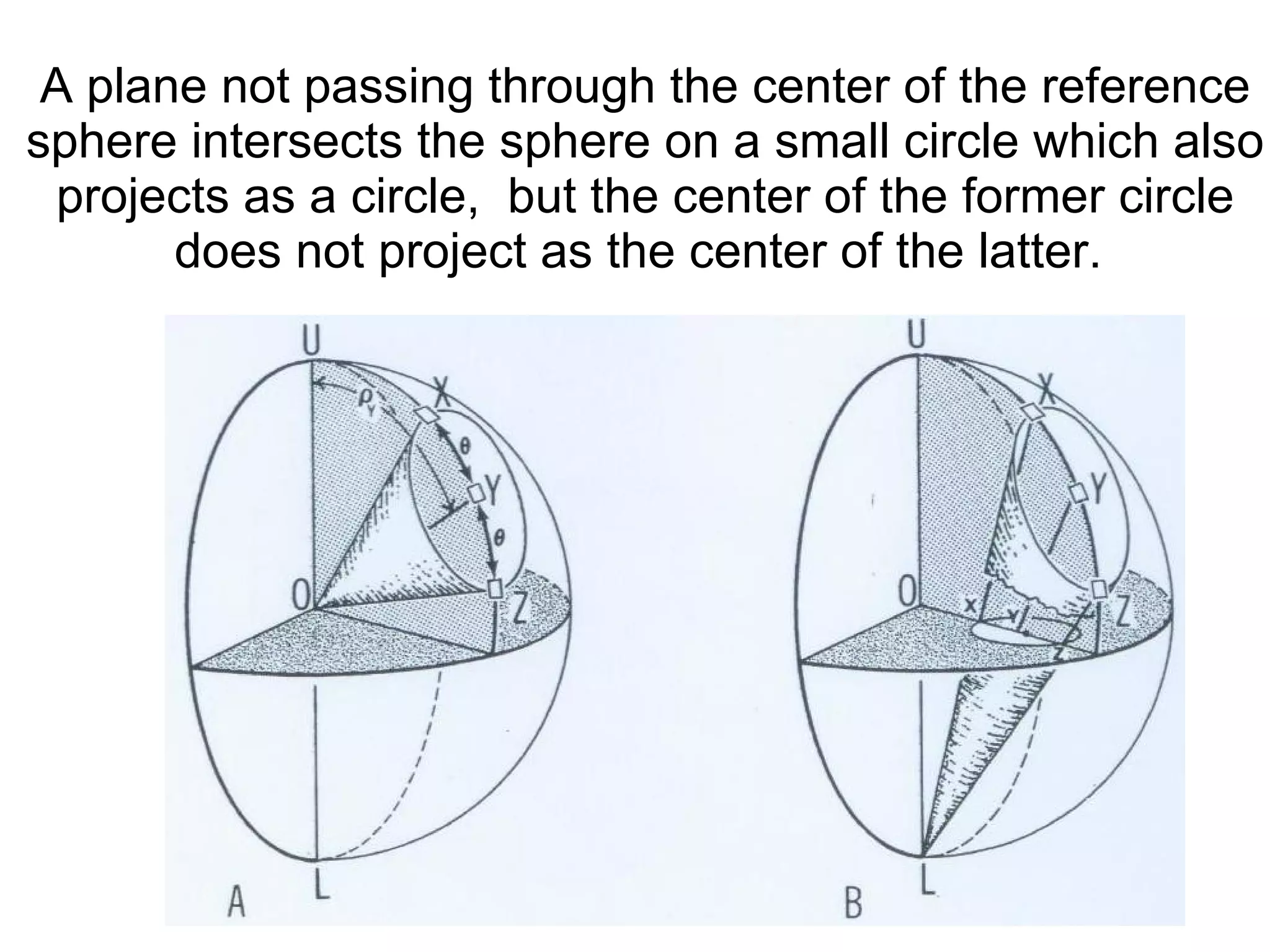
A plane not passing through the center of the reference sphere intersects the sphere on a small circle which also projects as a circle,  but the center of the former circle does not project as the center of the latter.
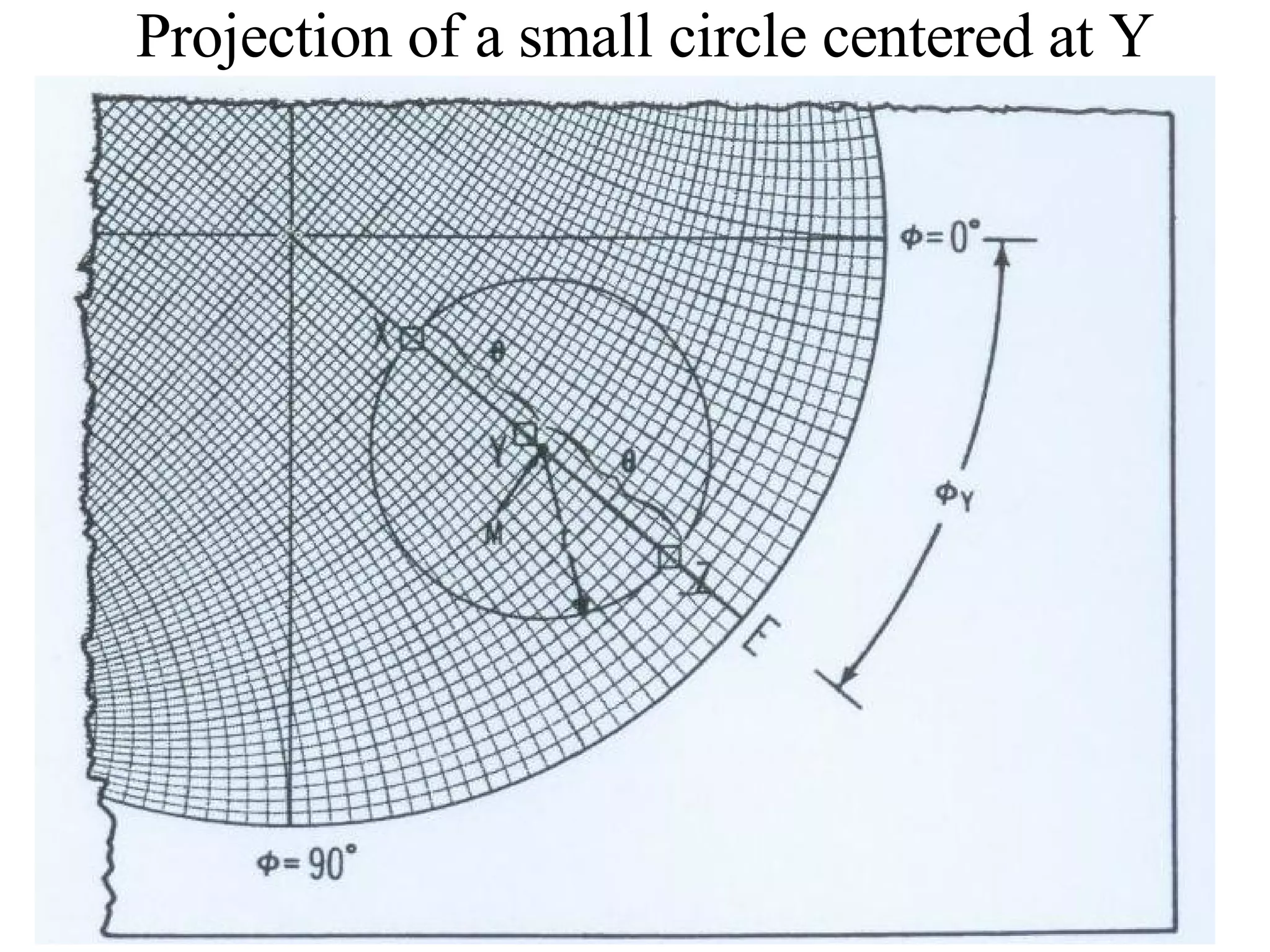
Projection of a small circle centered at Y
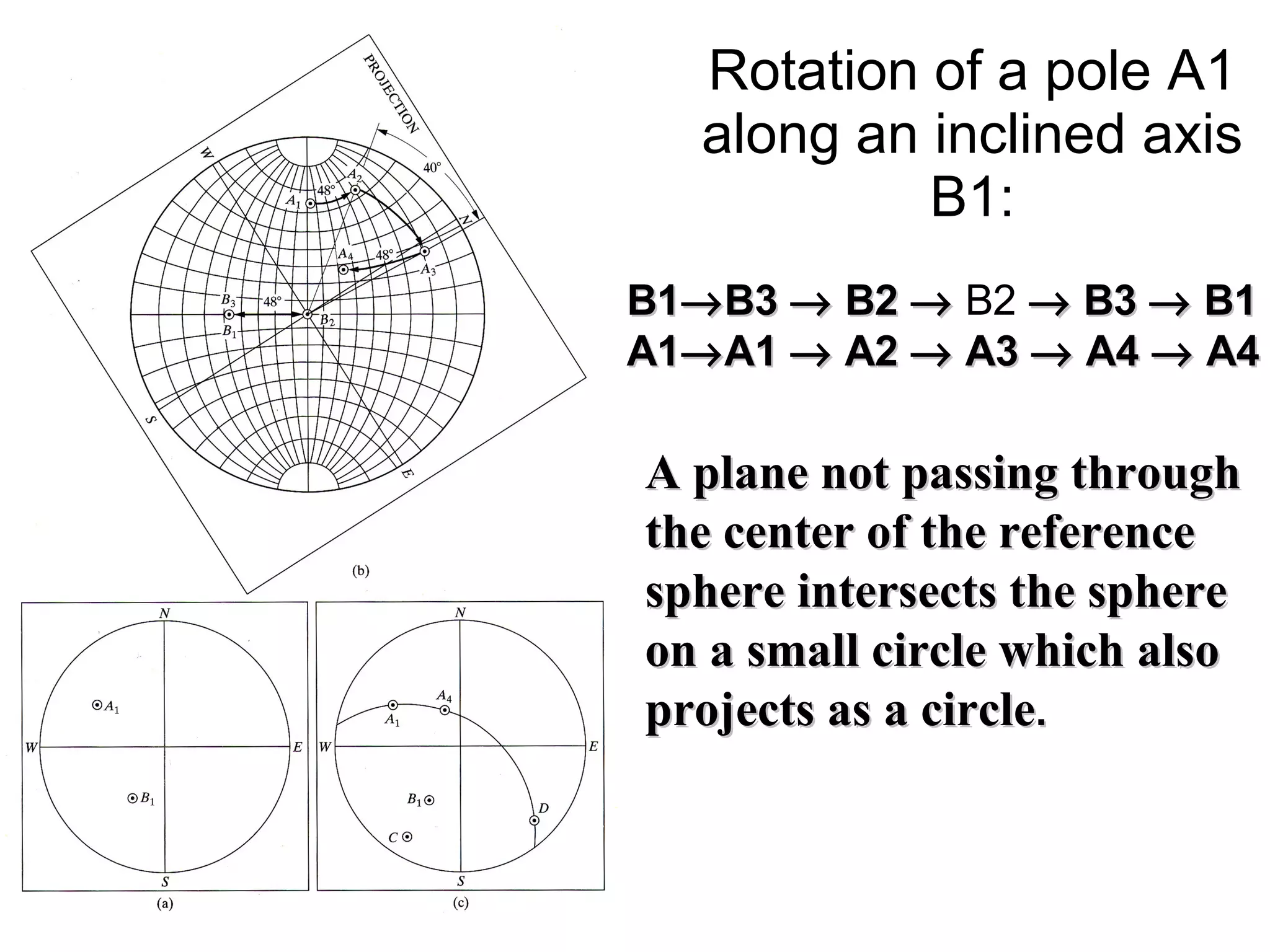
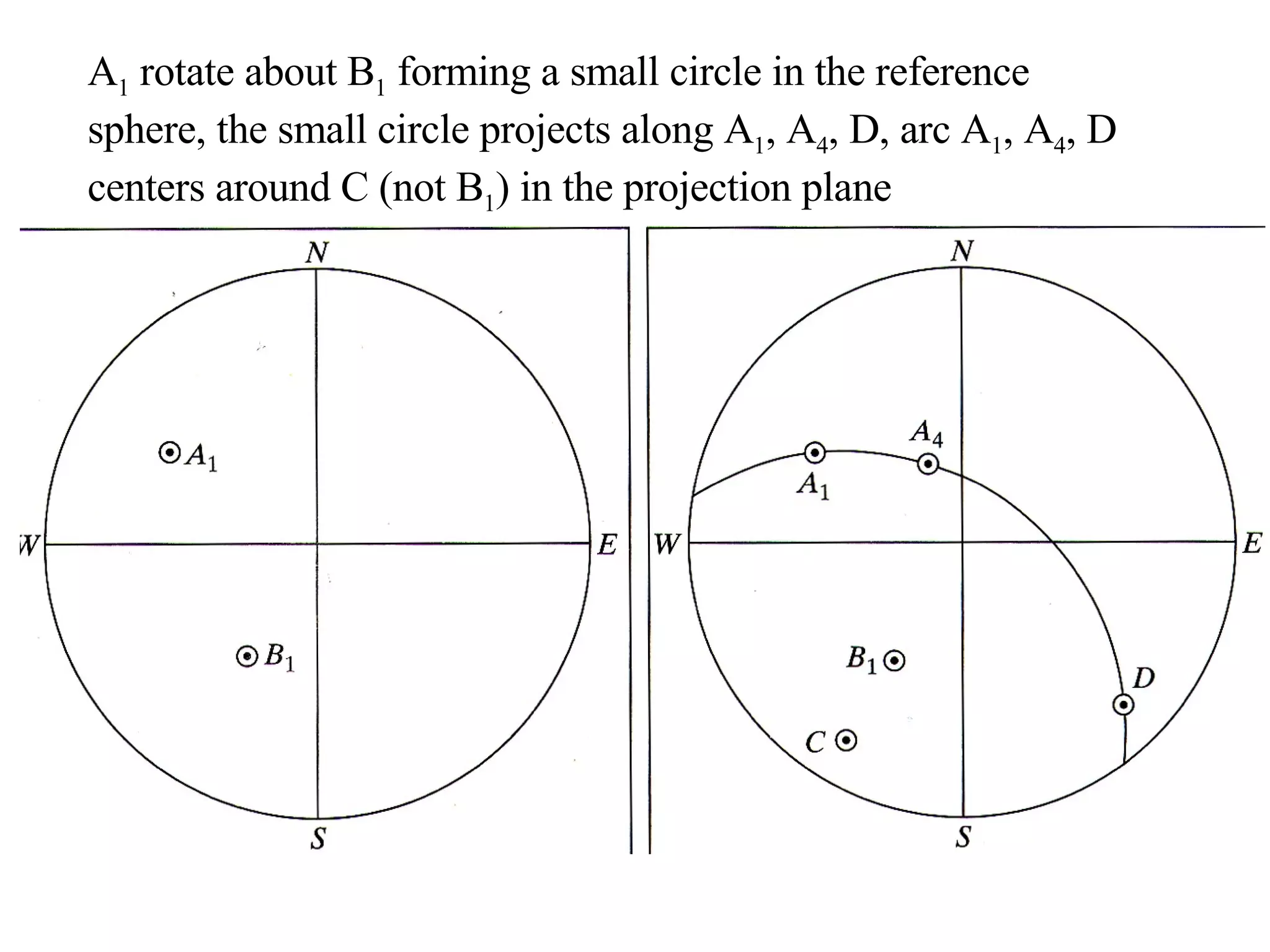
Rotation of a pole A1 along an inclined axis B1: B1  B3     B2    B2     B3     B1 A1  A1     A2     A3     A4    A4 A plane not passing through the center of the reference sphere intersects the sphere on a small circle which also projects as a circle .
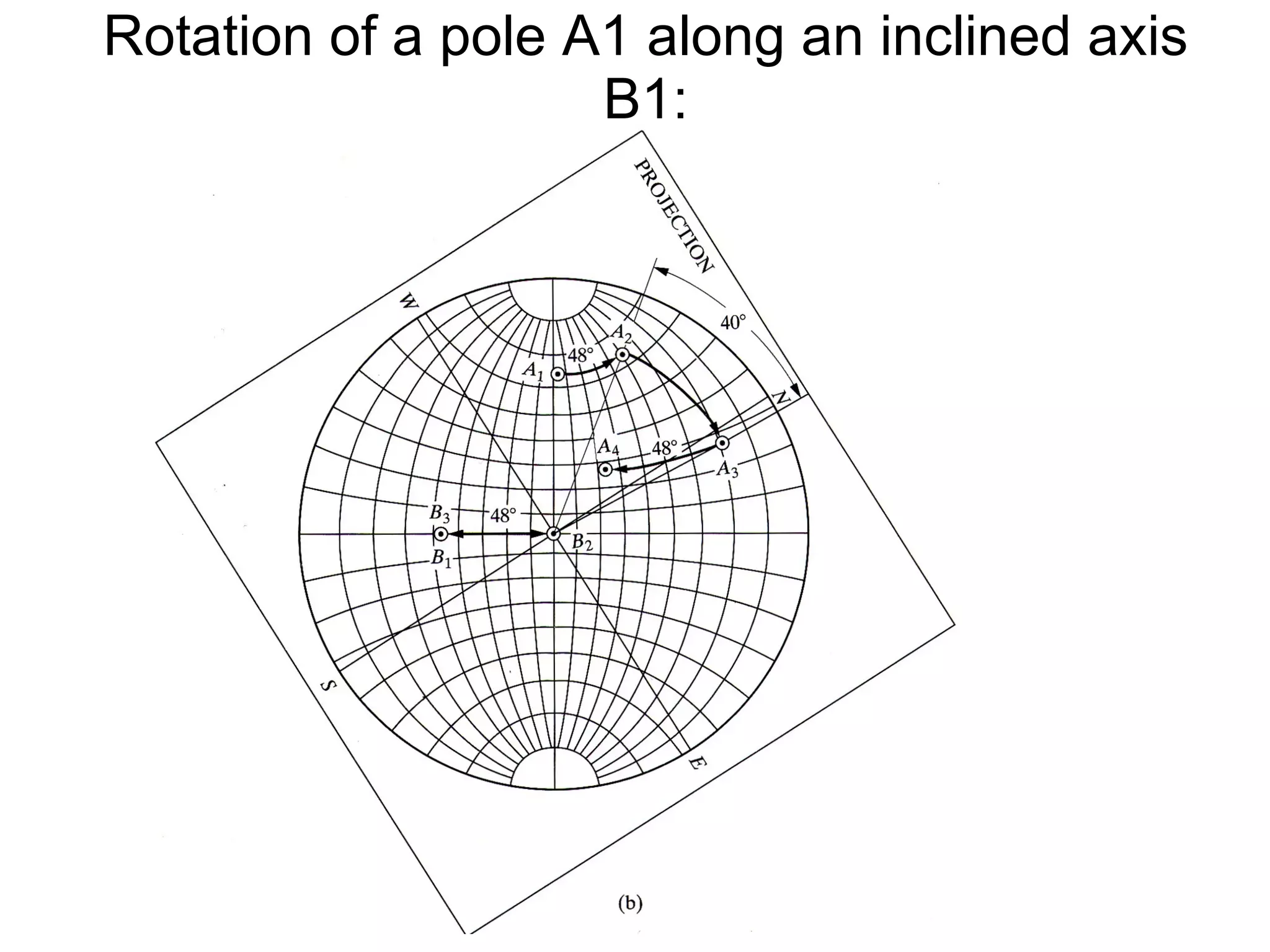
Rotation of a pole A1 along an inclined axis B1:
A 1  rotate about B 1  forming a small circle in the reference sphere, the small circle projects along A 1 , A 4 , D, arc A 1 , A 4 , D centers around C (not B 1 ) in the projection plane
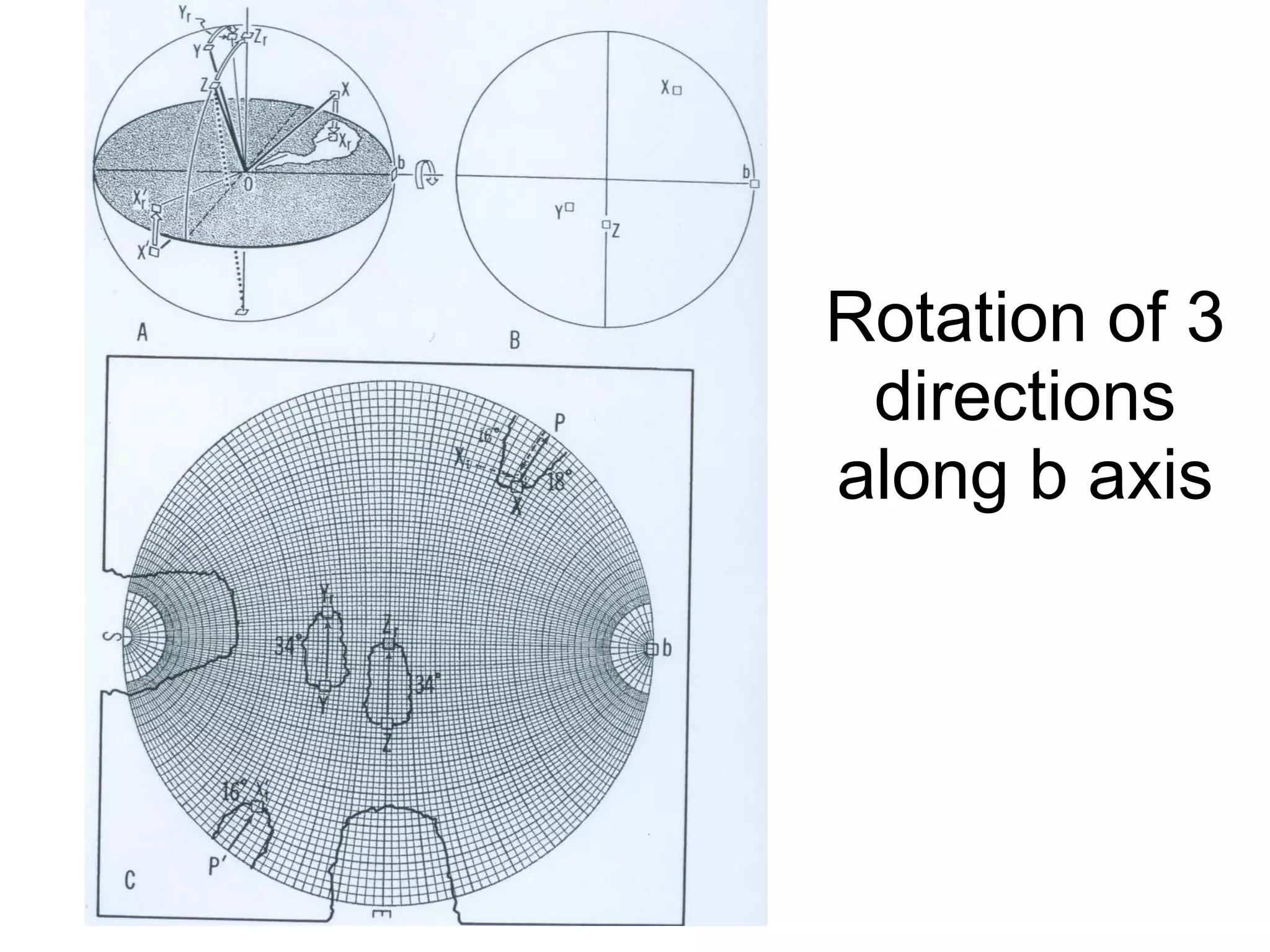
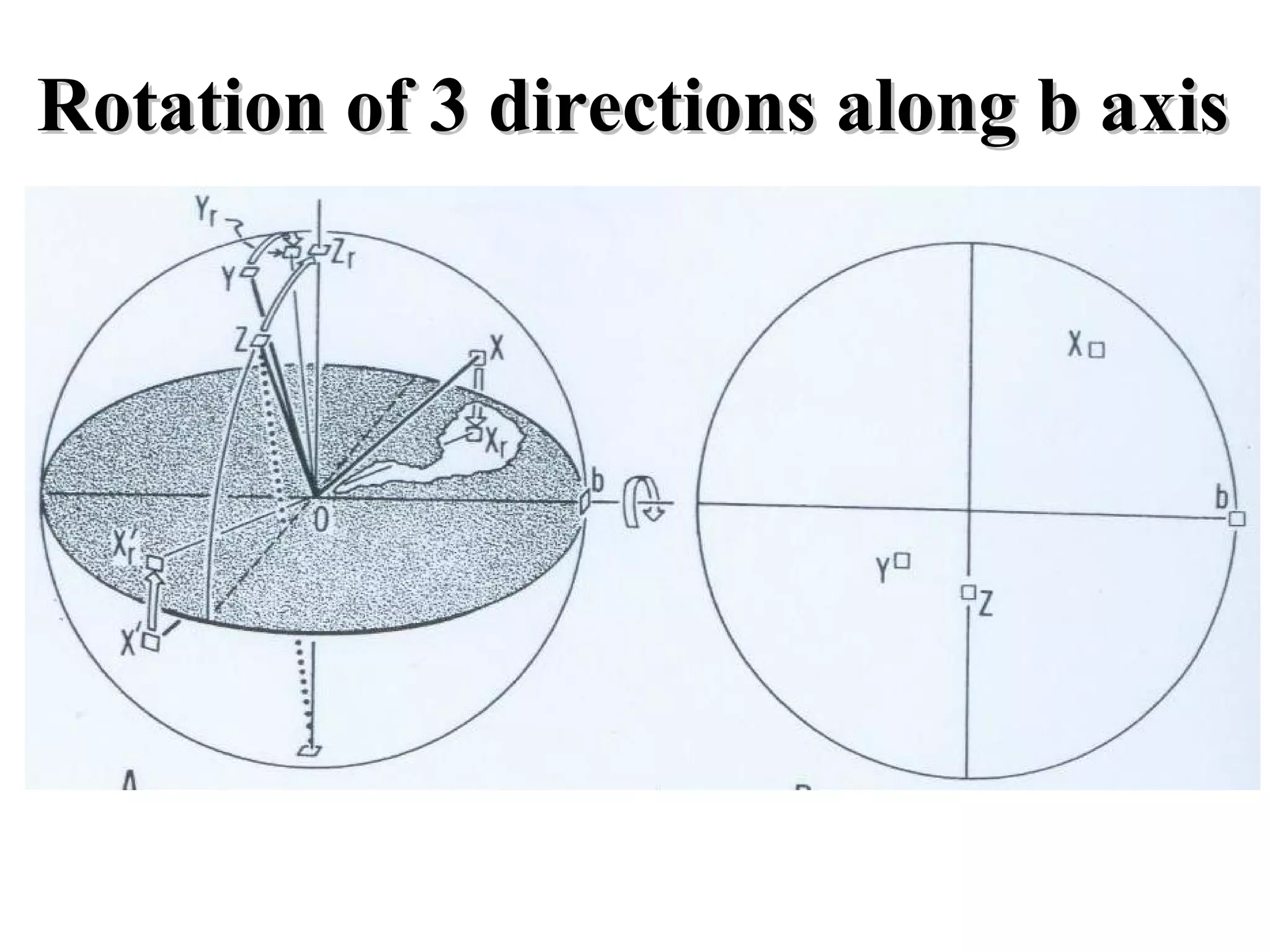
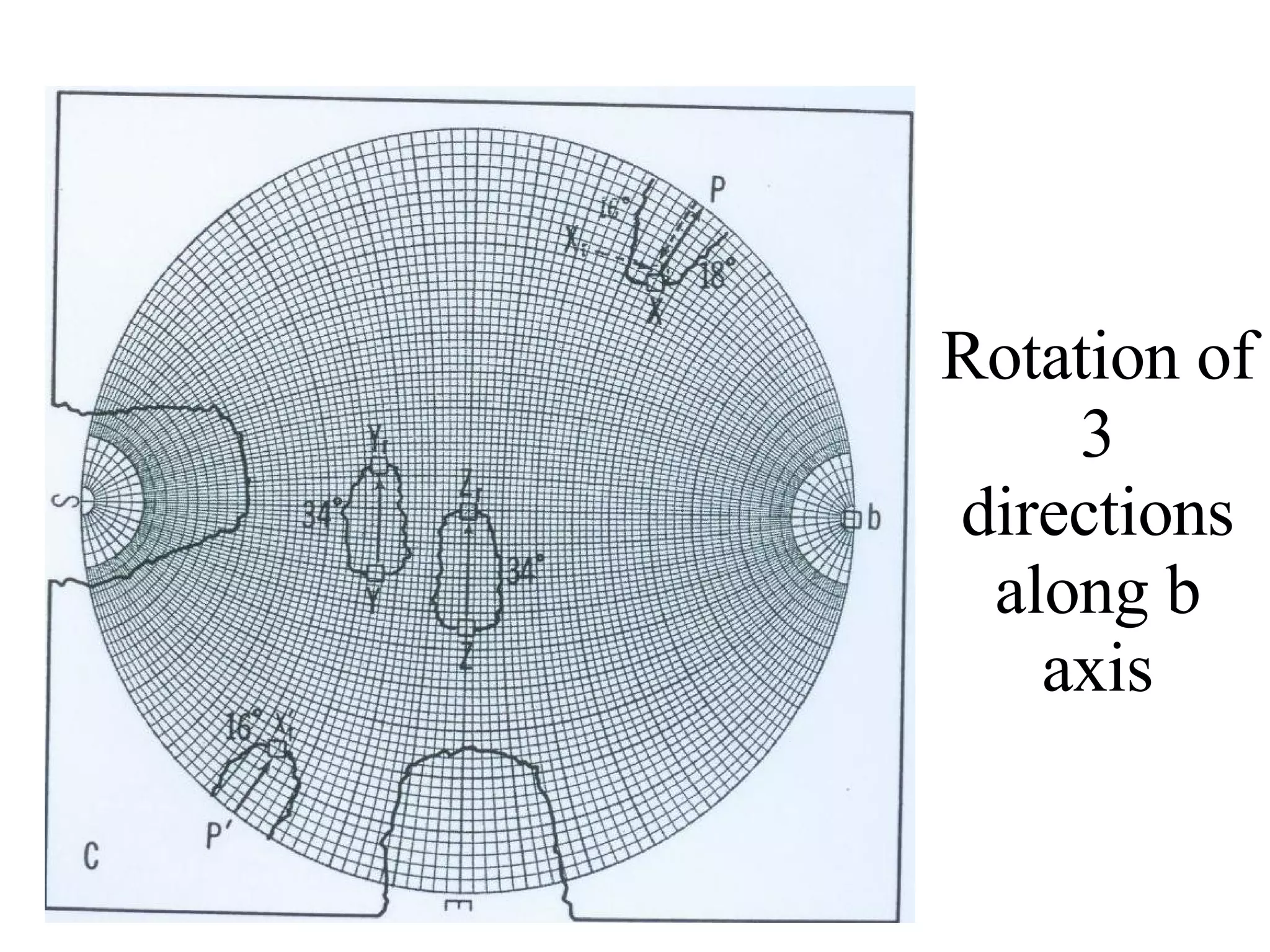
Rotation of 3 directions along b axis
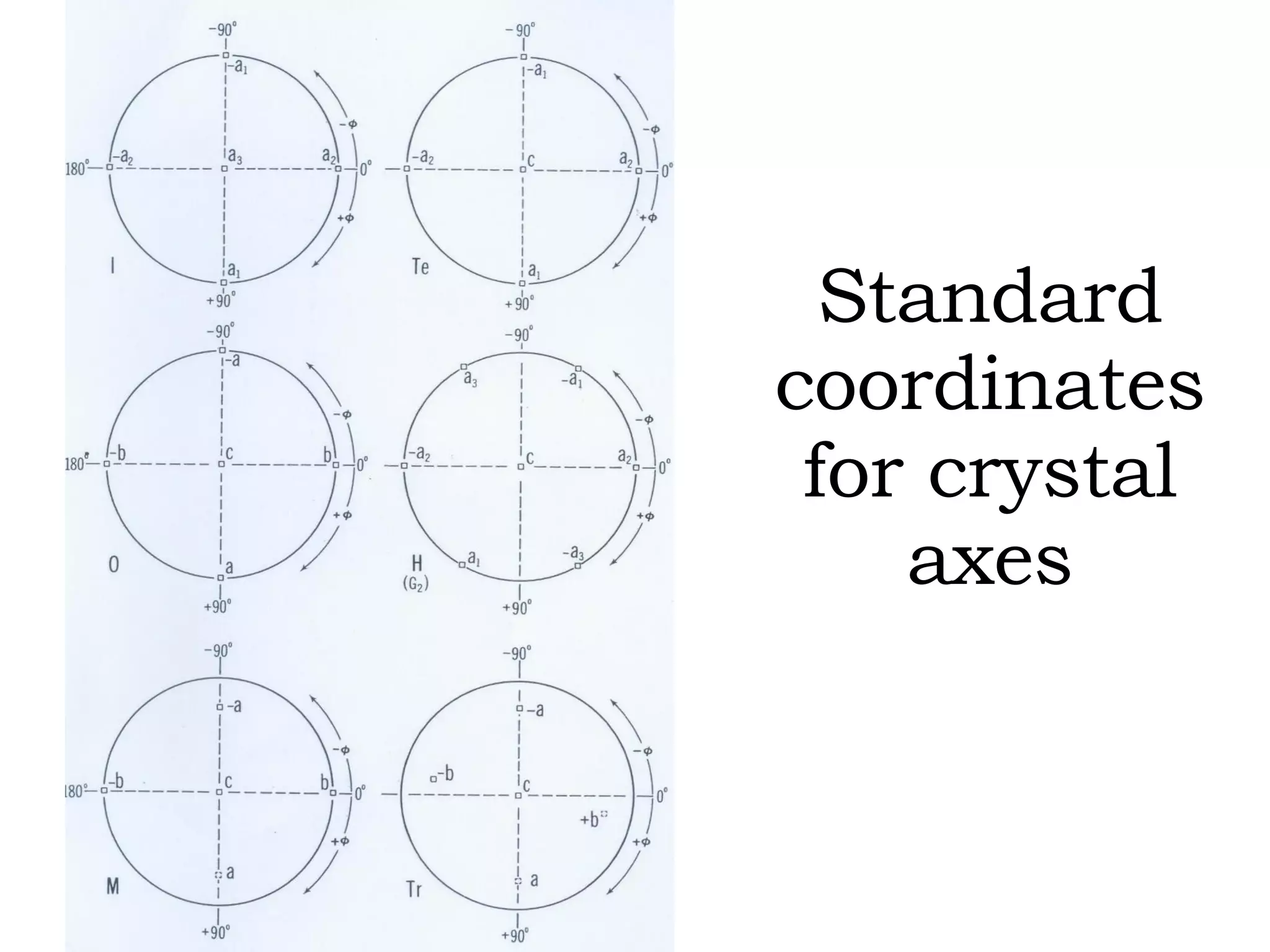
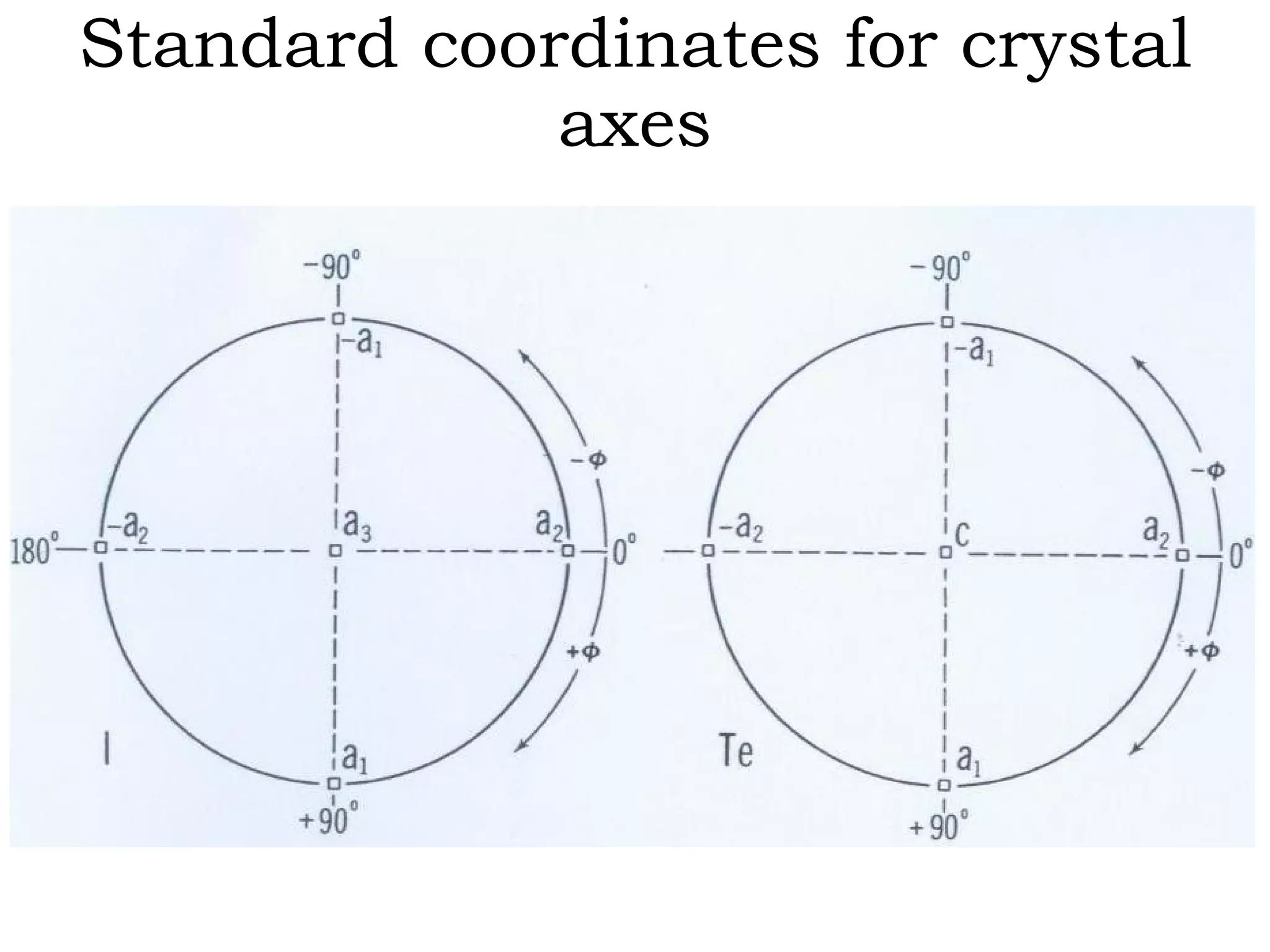
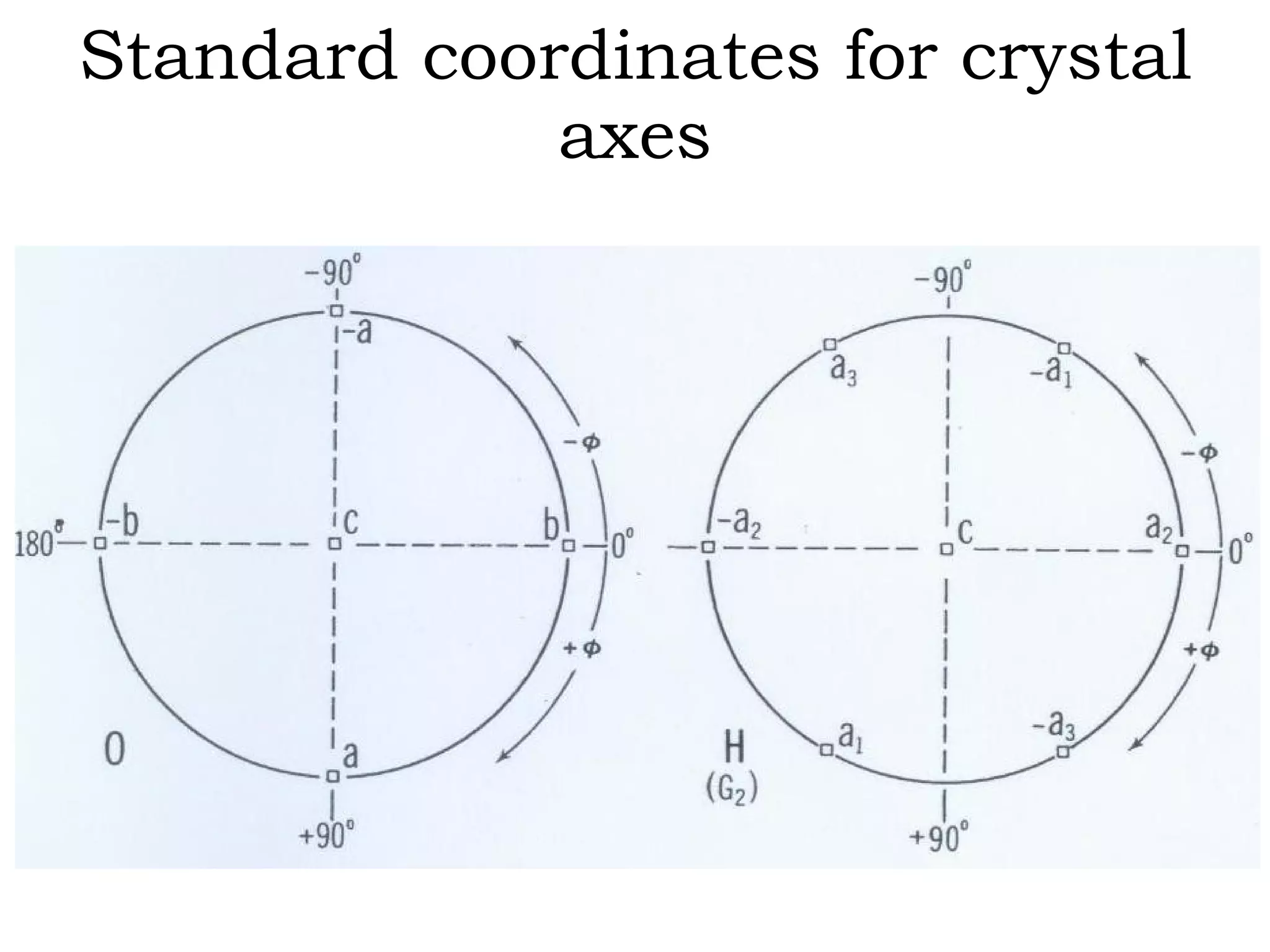
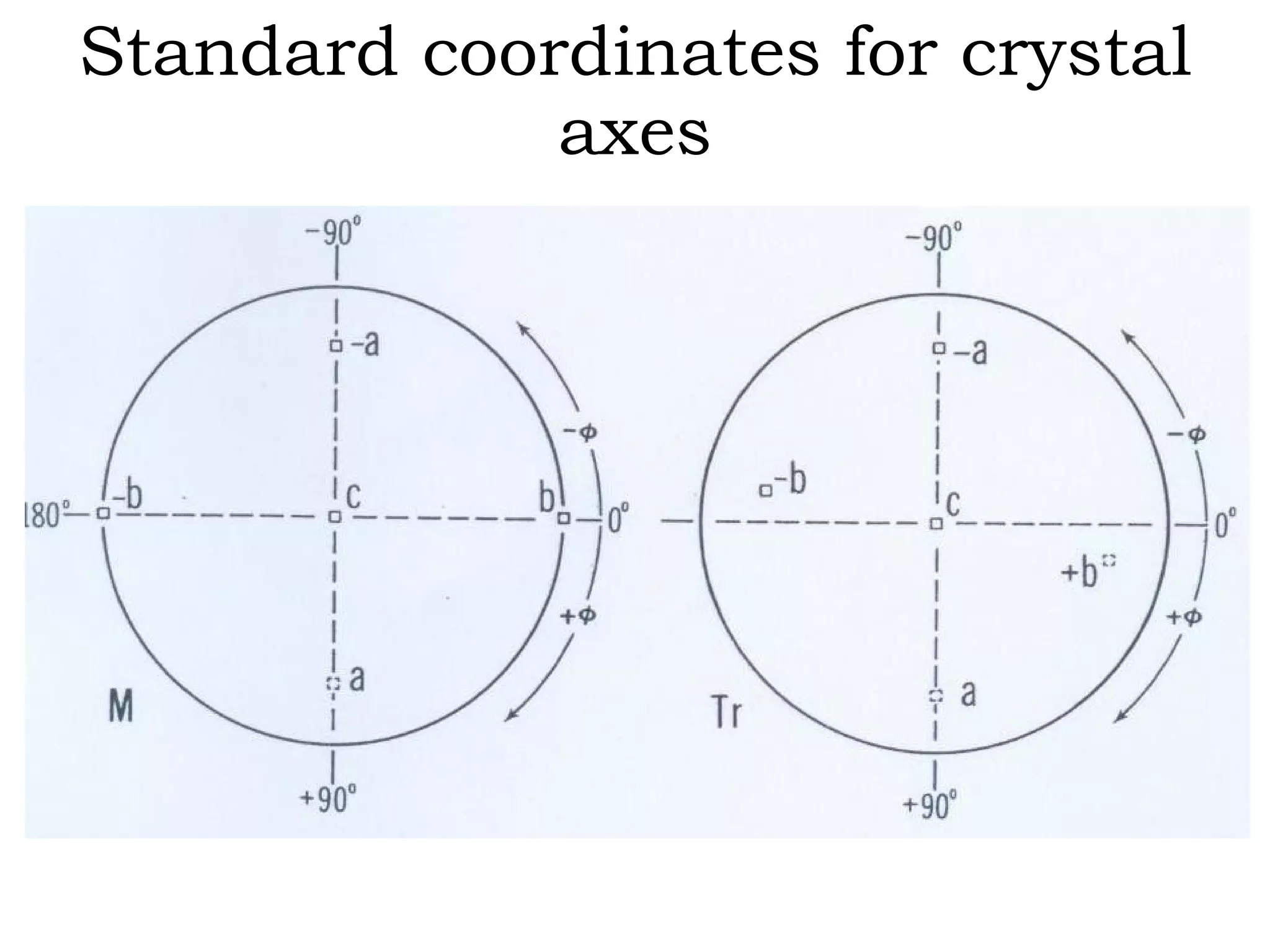
Standard coordinates for crystal axes
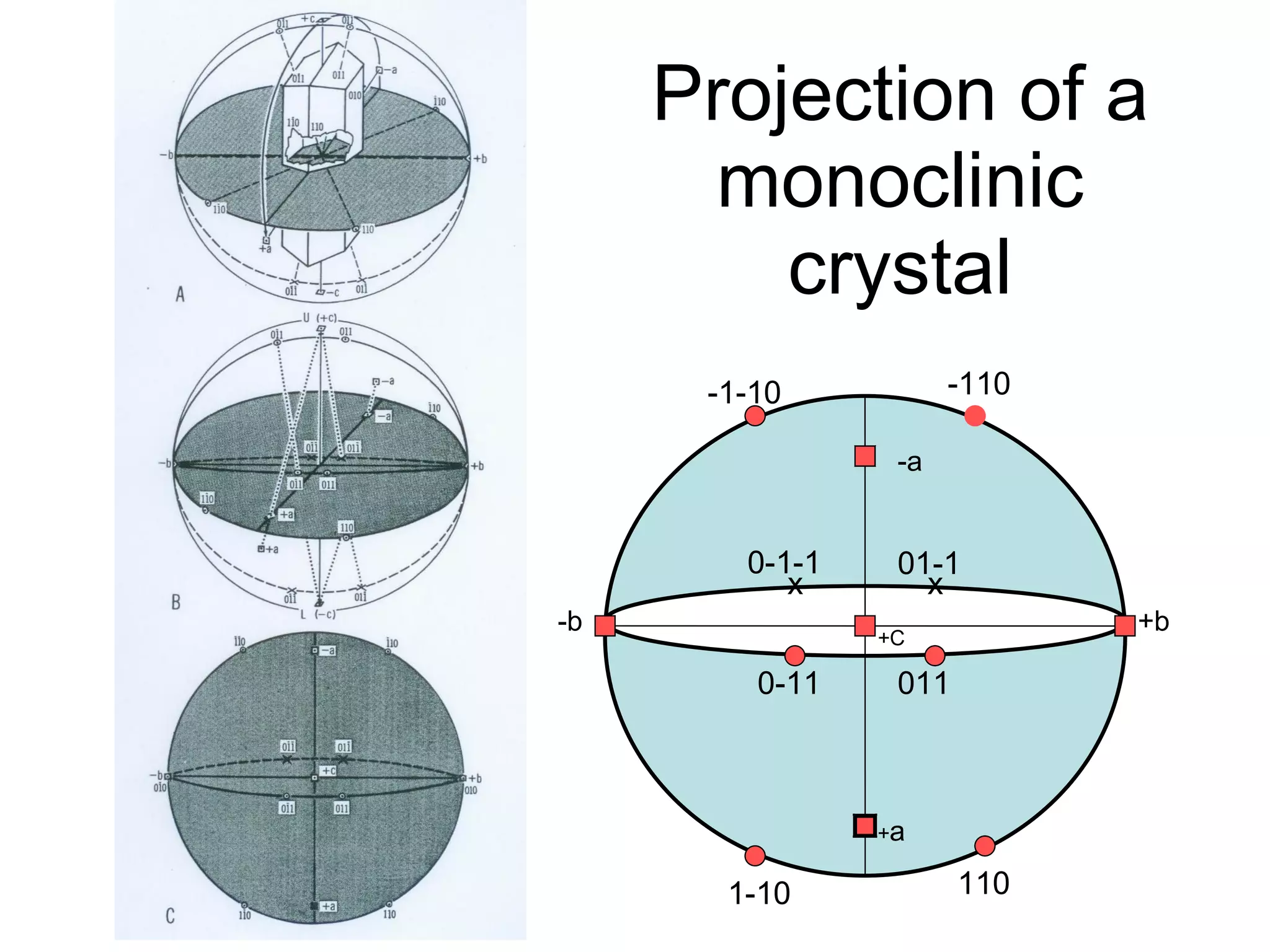
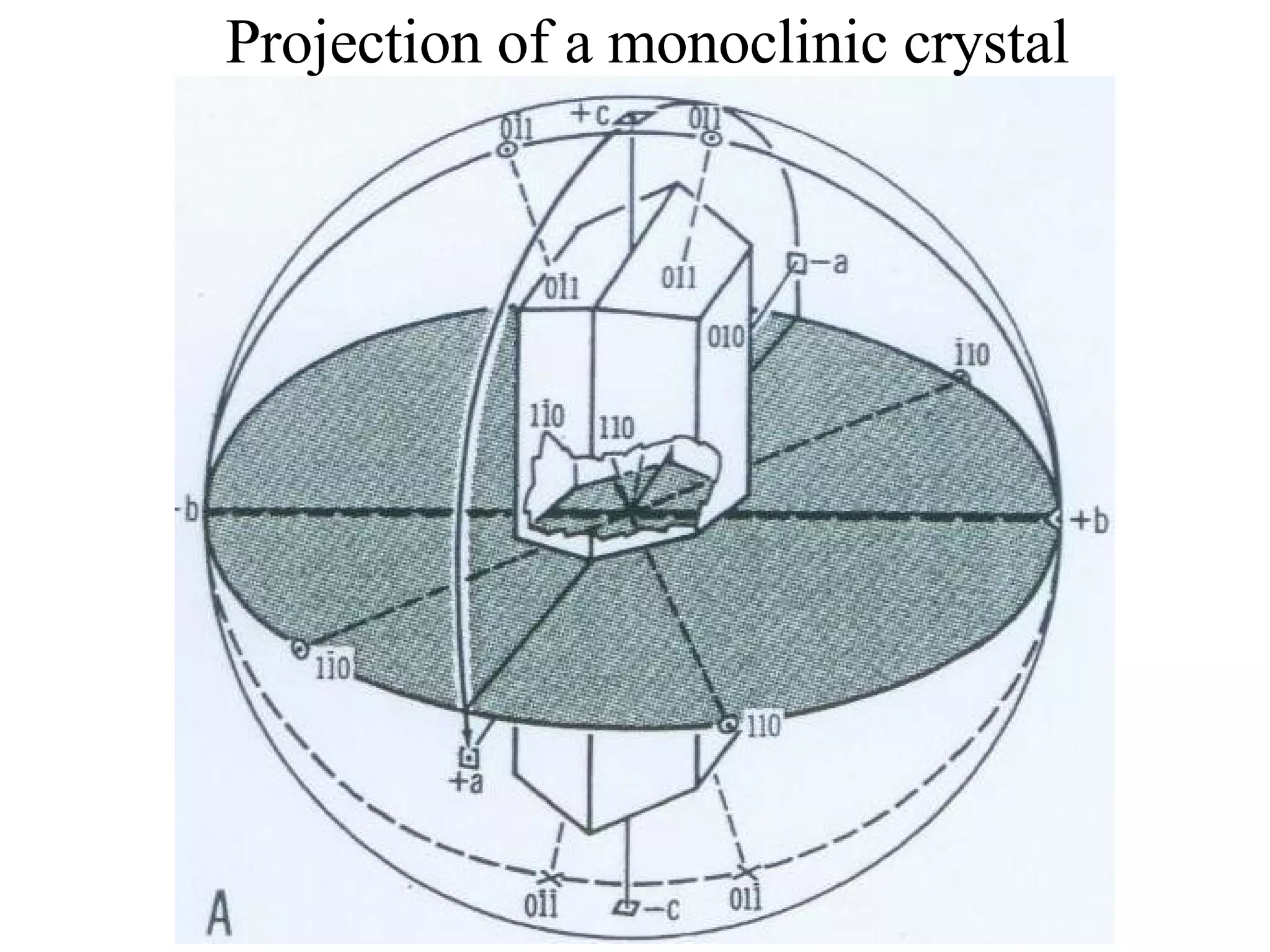
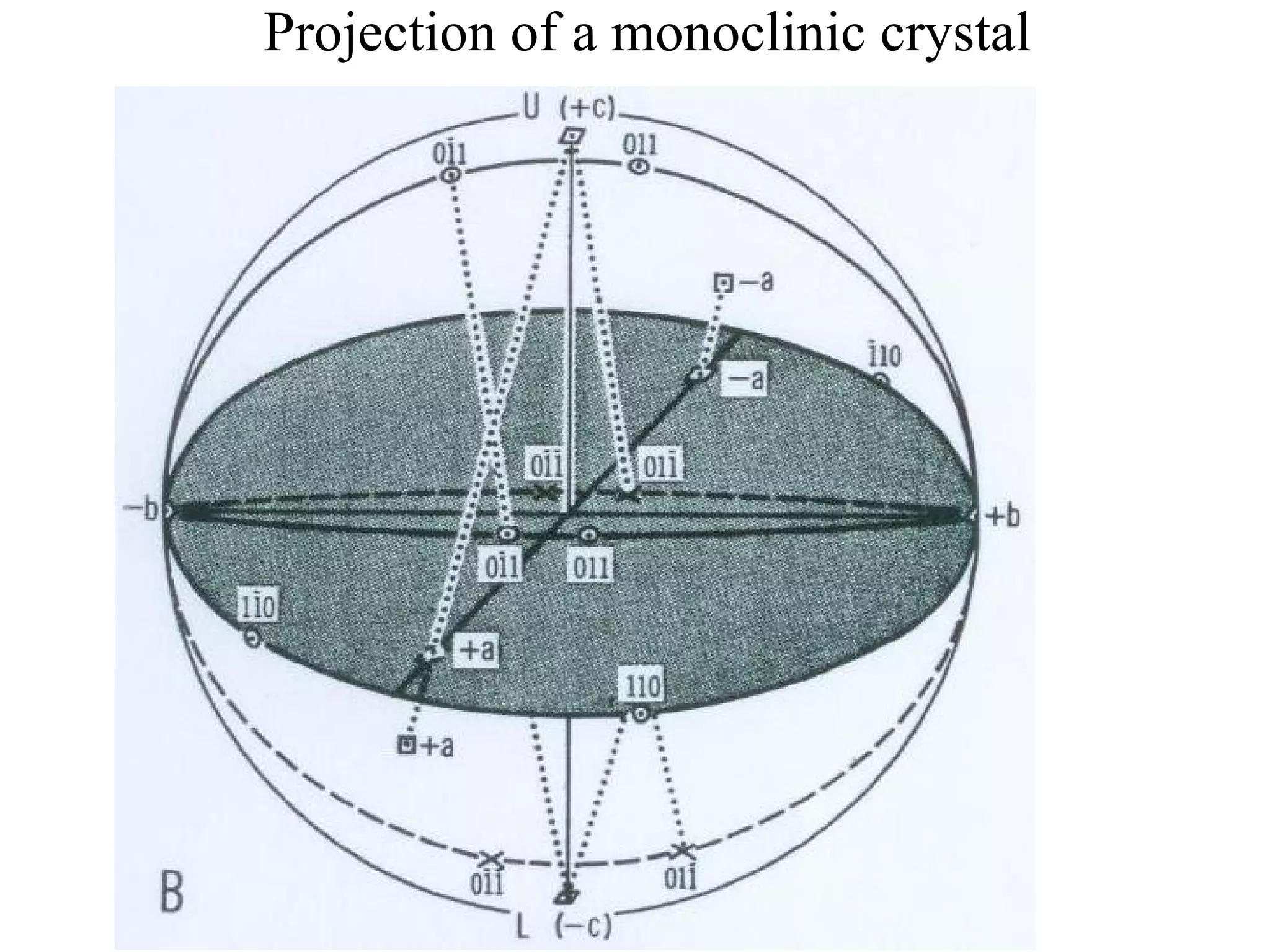
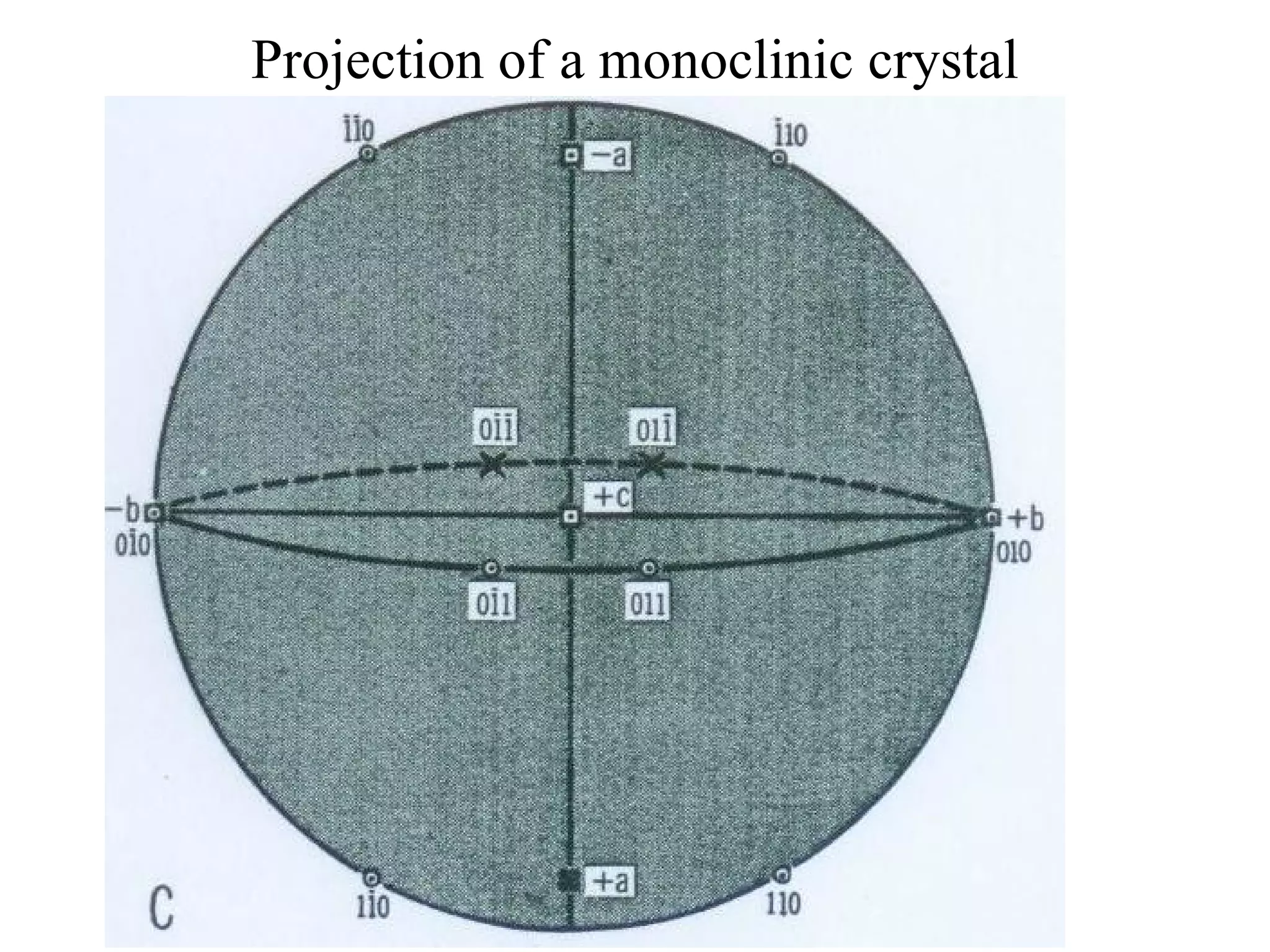
Projection of a monoclinic crystal +C -b +b -a + a x x 011 0-1-1 01-1 0-11 -110 -1-10 110 1-10
Projection of a monoclinic crystal
(a) Zone plane (stippled) (b) zone circle with zone axis ā, note [100] • [0xx]=0
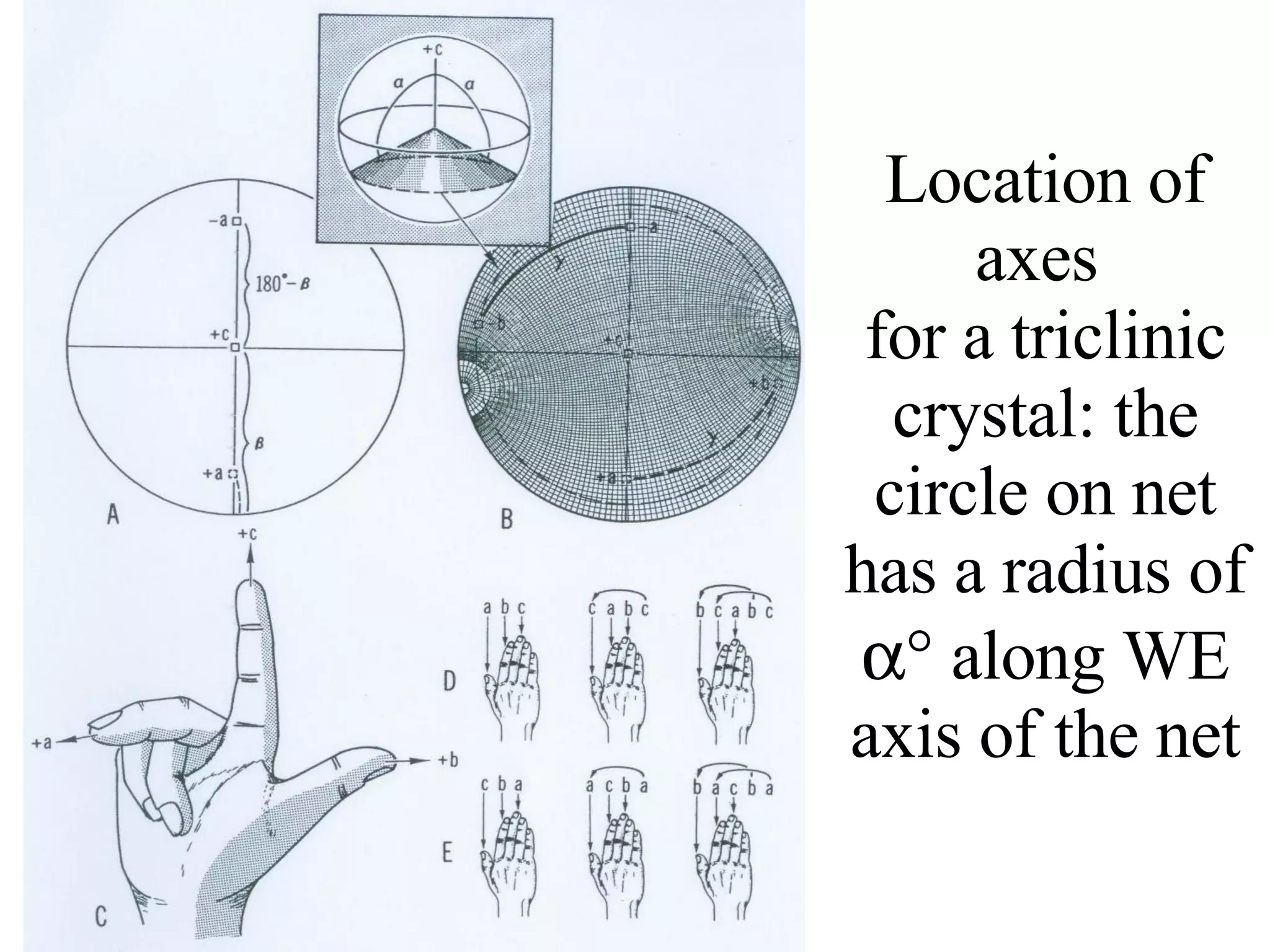
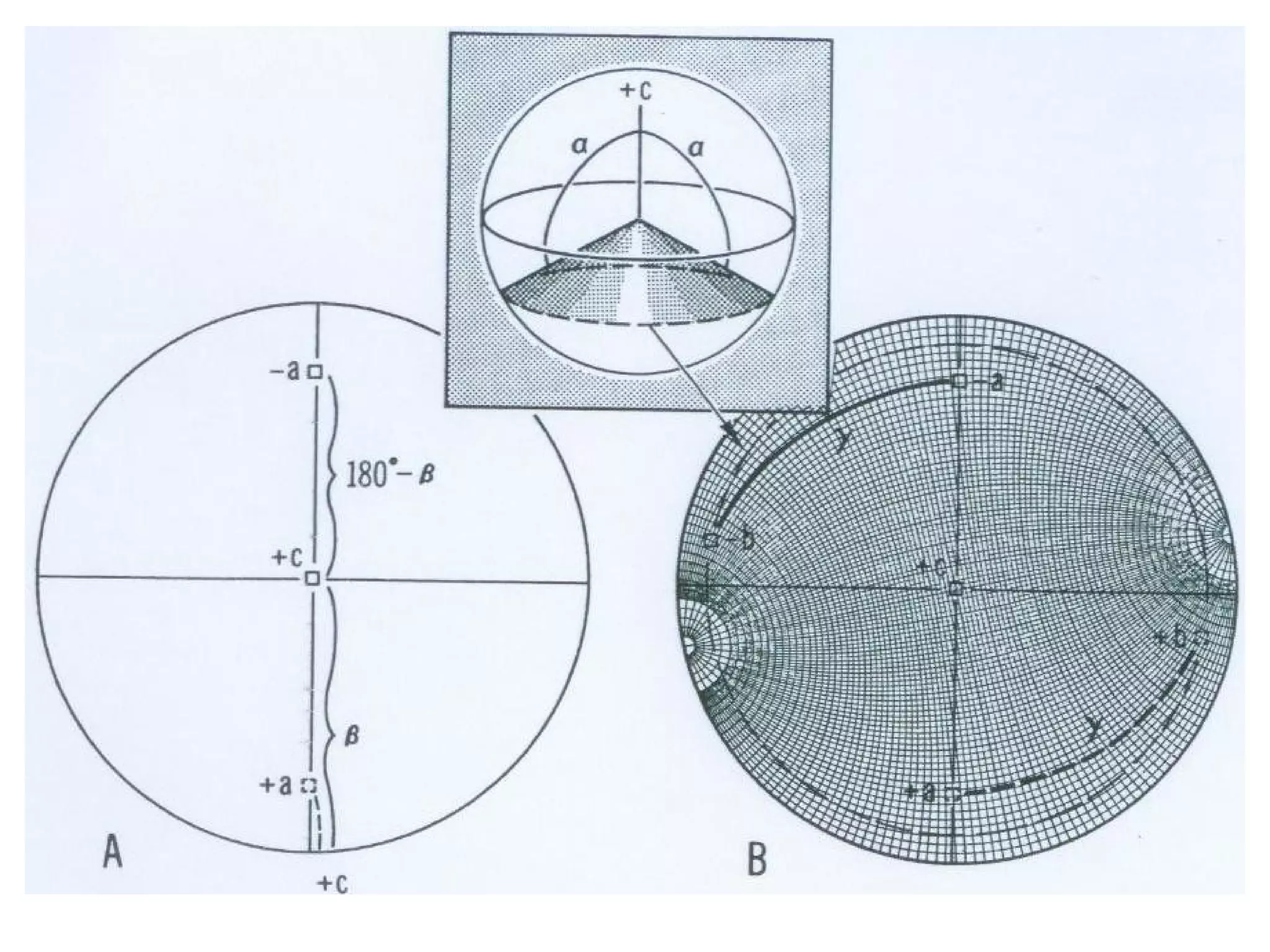
Location of axes  for a triclinic crystal: the circle on net has a radius of    along WE axis of the net
 
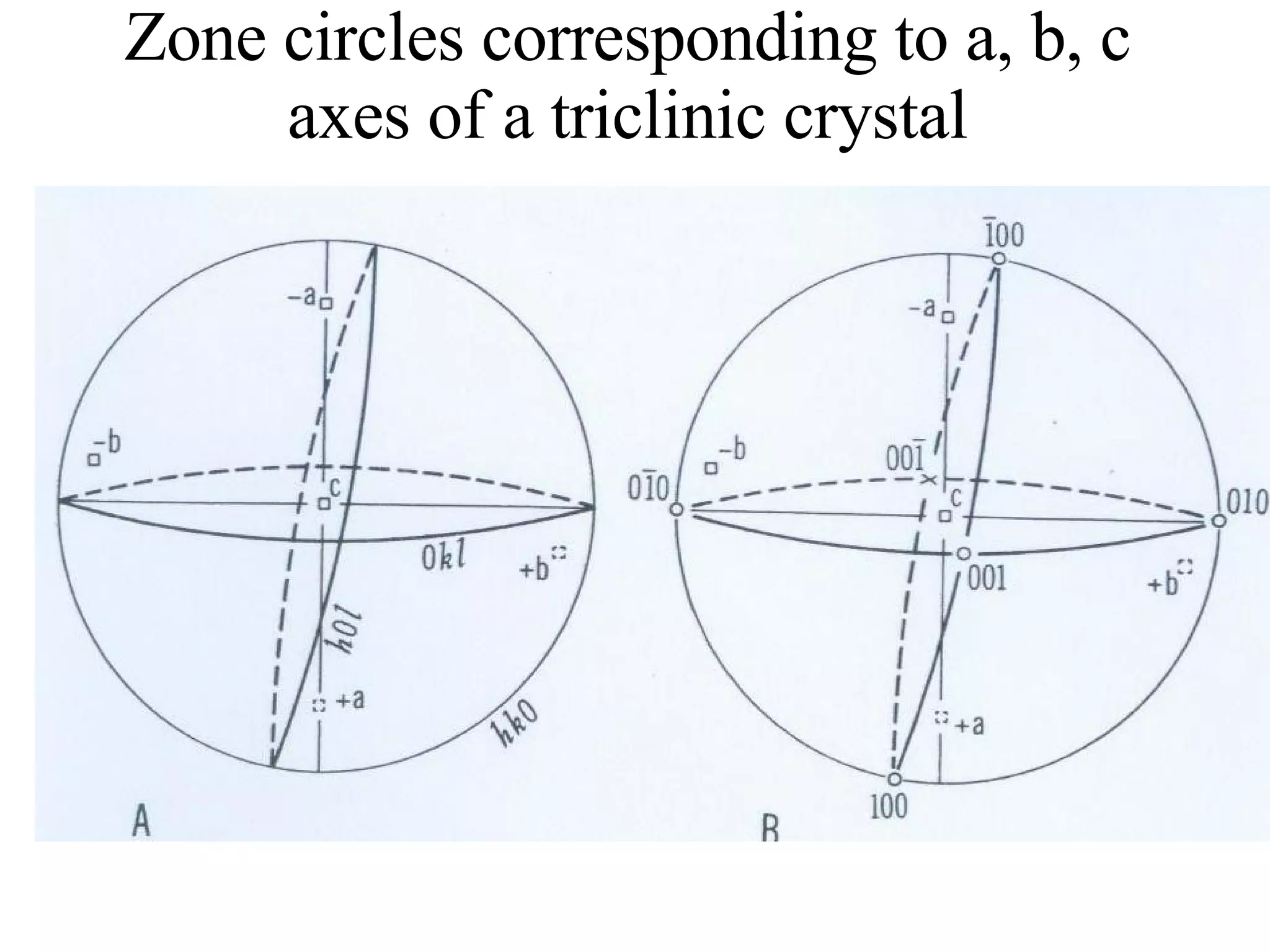
Zone circles corresponding to a, b, c axes of a triclinic crystal
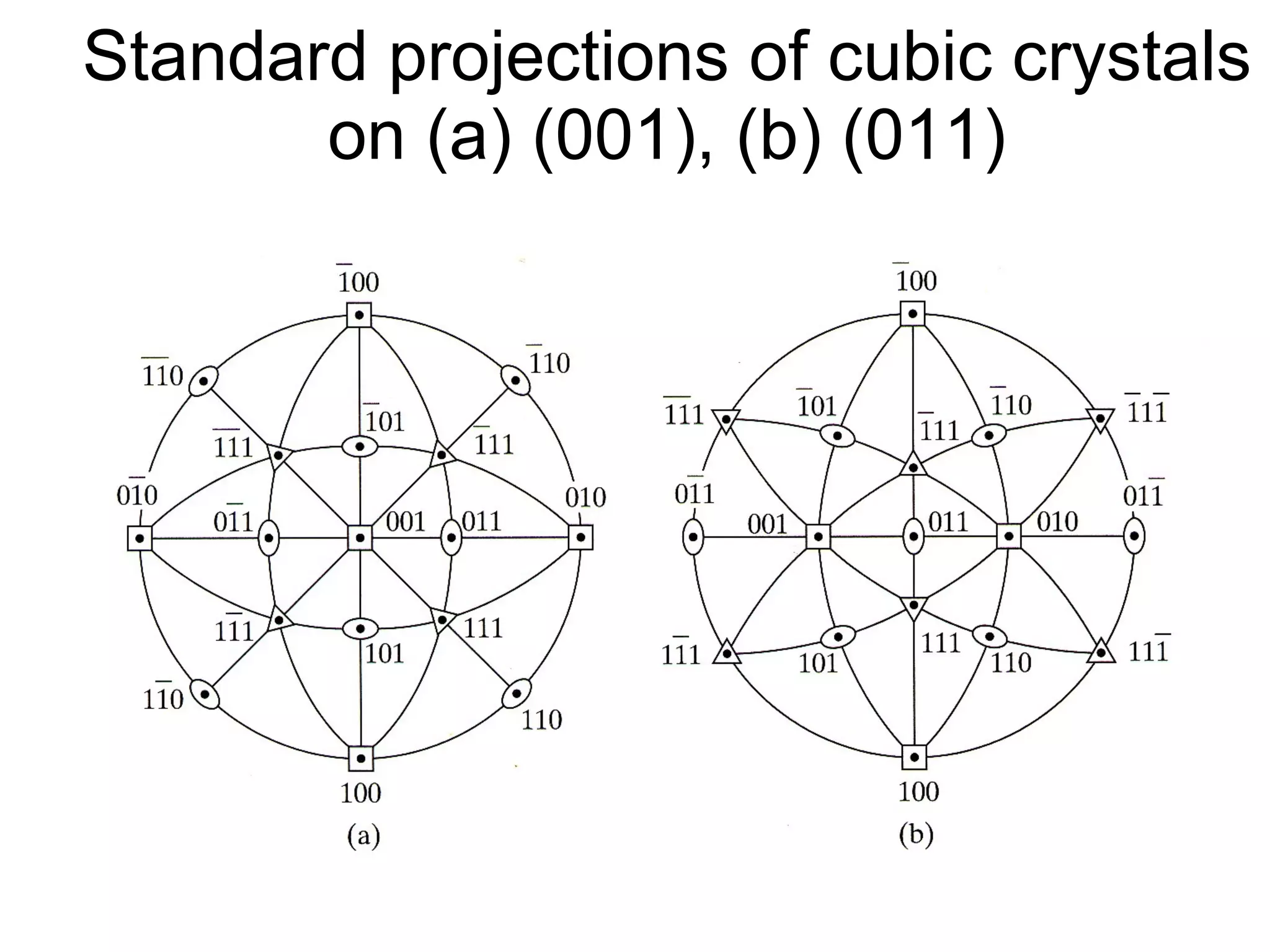
Standard projections of cubic crystals on (a) (001), (b) (011)
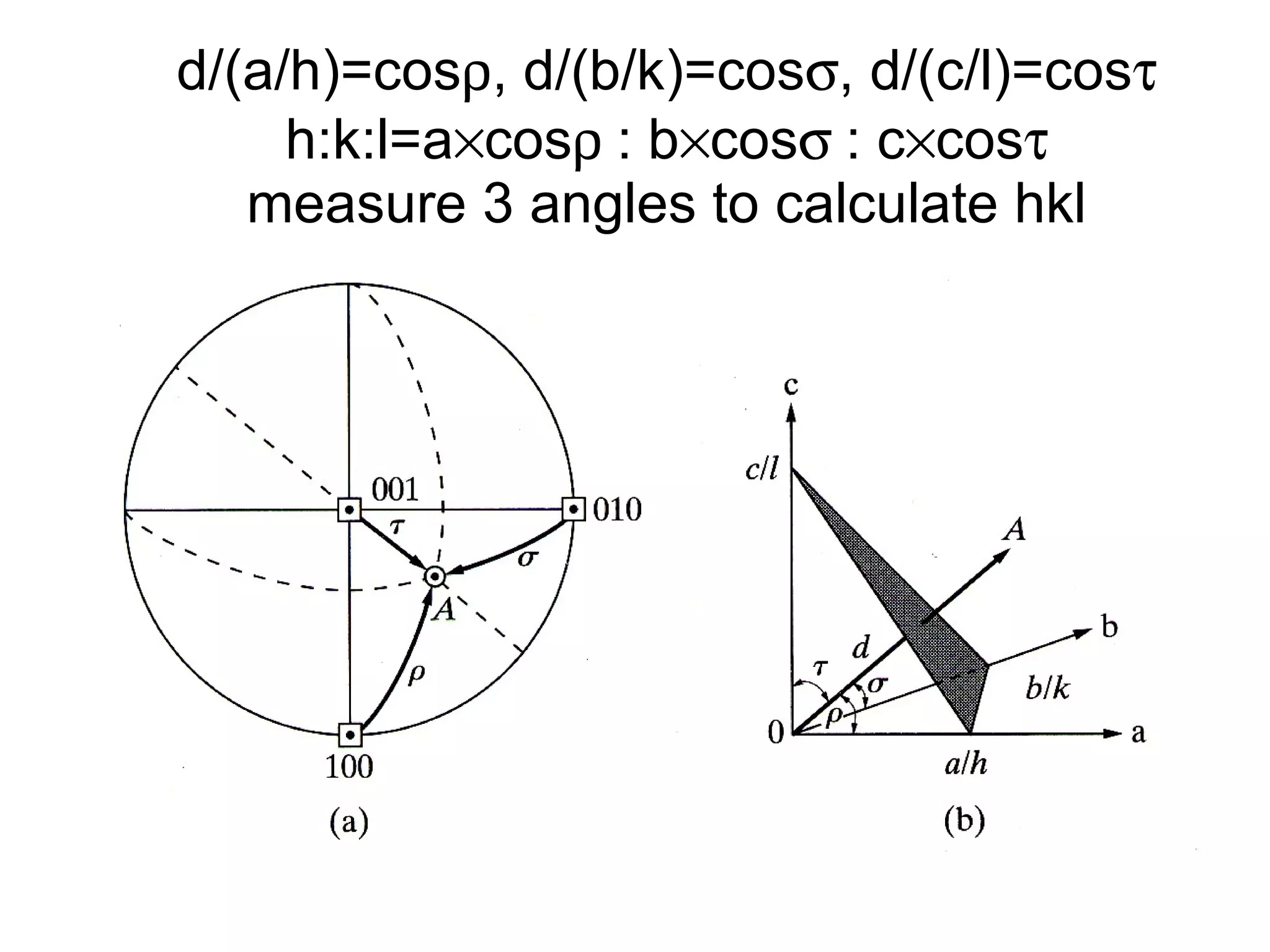
d/(a/h)=cos  , d/(b/k)=cos  , d/(c/l)=cos  h:k:l=a  cos  : b  cos  : c  cos  measure 3 angles to calculate hkl
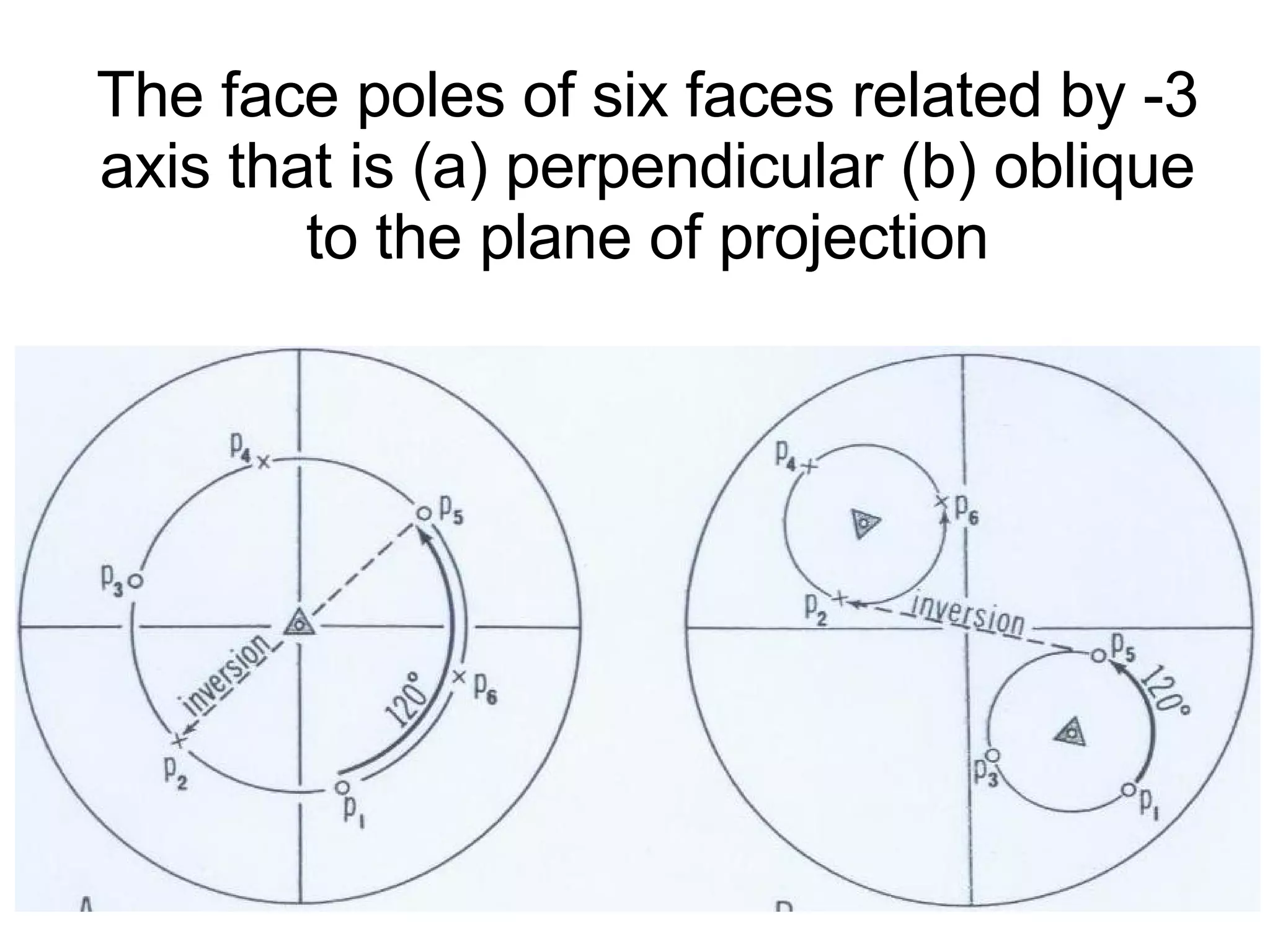
The face poles of six faces related by -3 axis that is (a) perpendicular (b) oblique to the plane of projection

972 B3102005 Cullity Chapter 2