Presenters Parkersburg High School Robin Stout, Physical Science Teacher Nathan Alfred, Biology Teacher
Overview 1. Anticipation Guide  2. 21st Century Skills  3. WV Standards 4. Issue Oriented Science 5. IAPS 6. SGI 7. Develop your own issue
Anticipation Guide
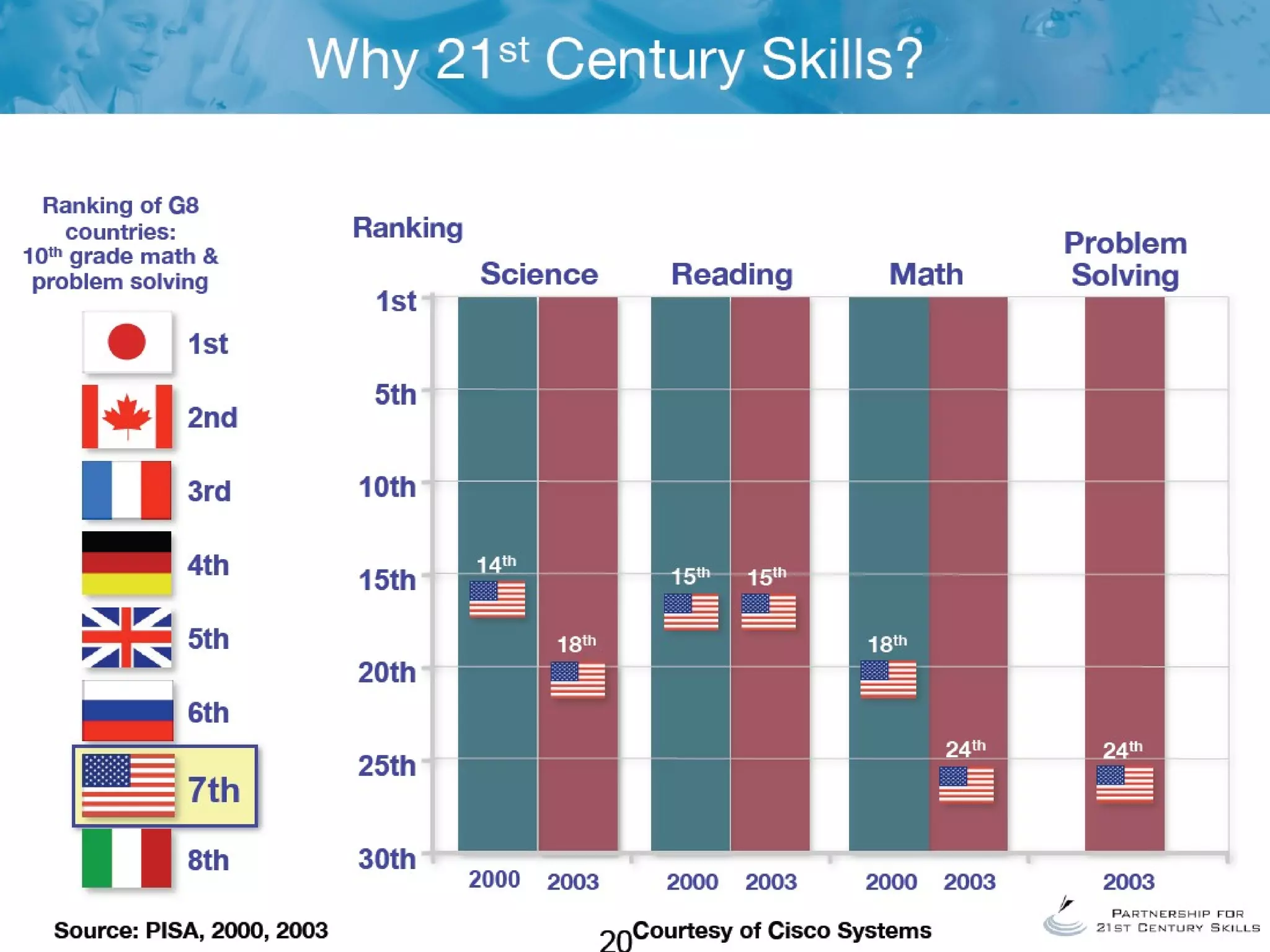
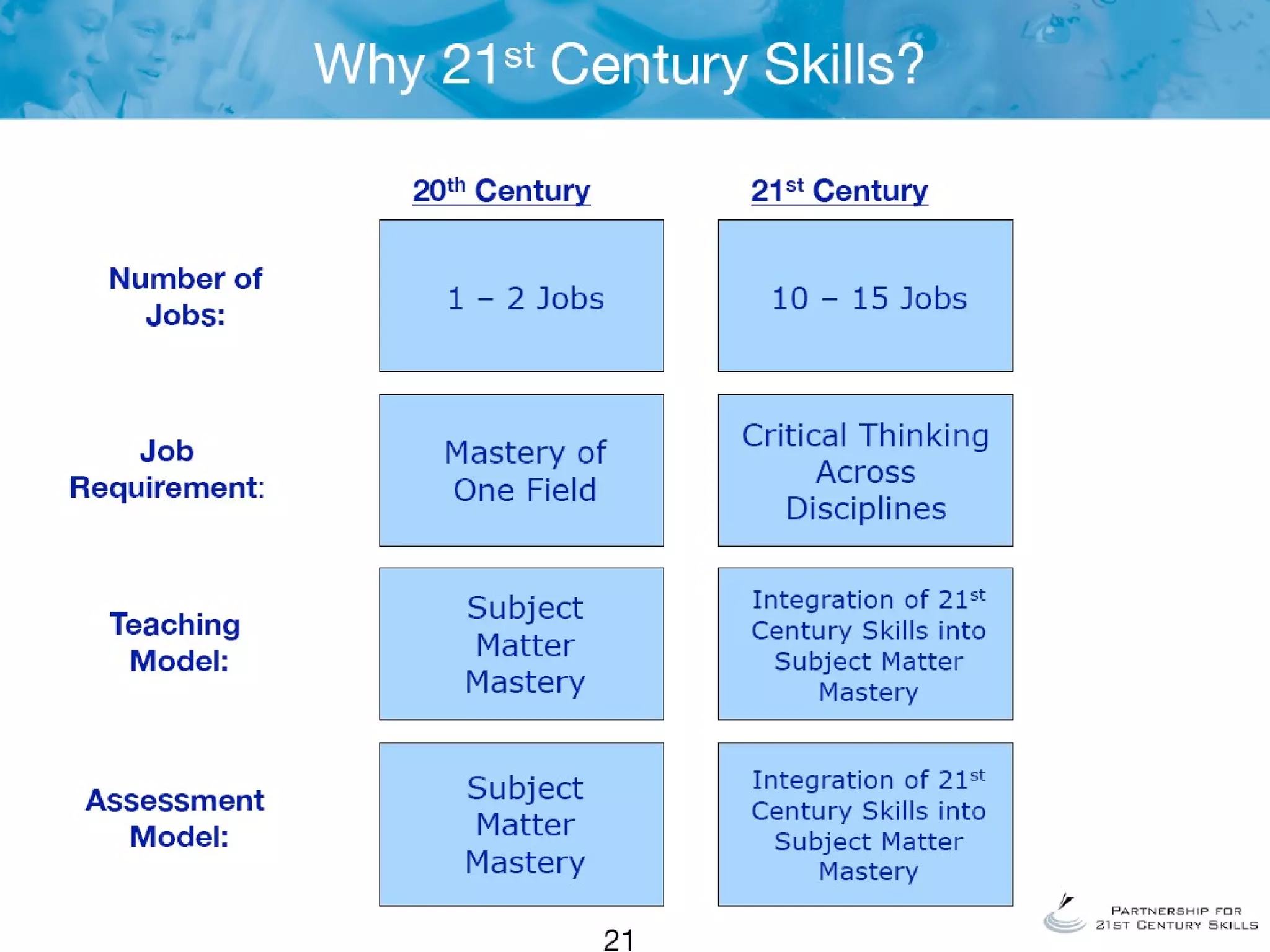
Did You Know?
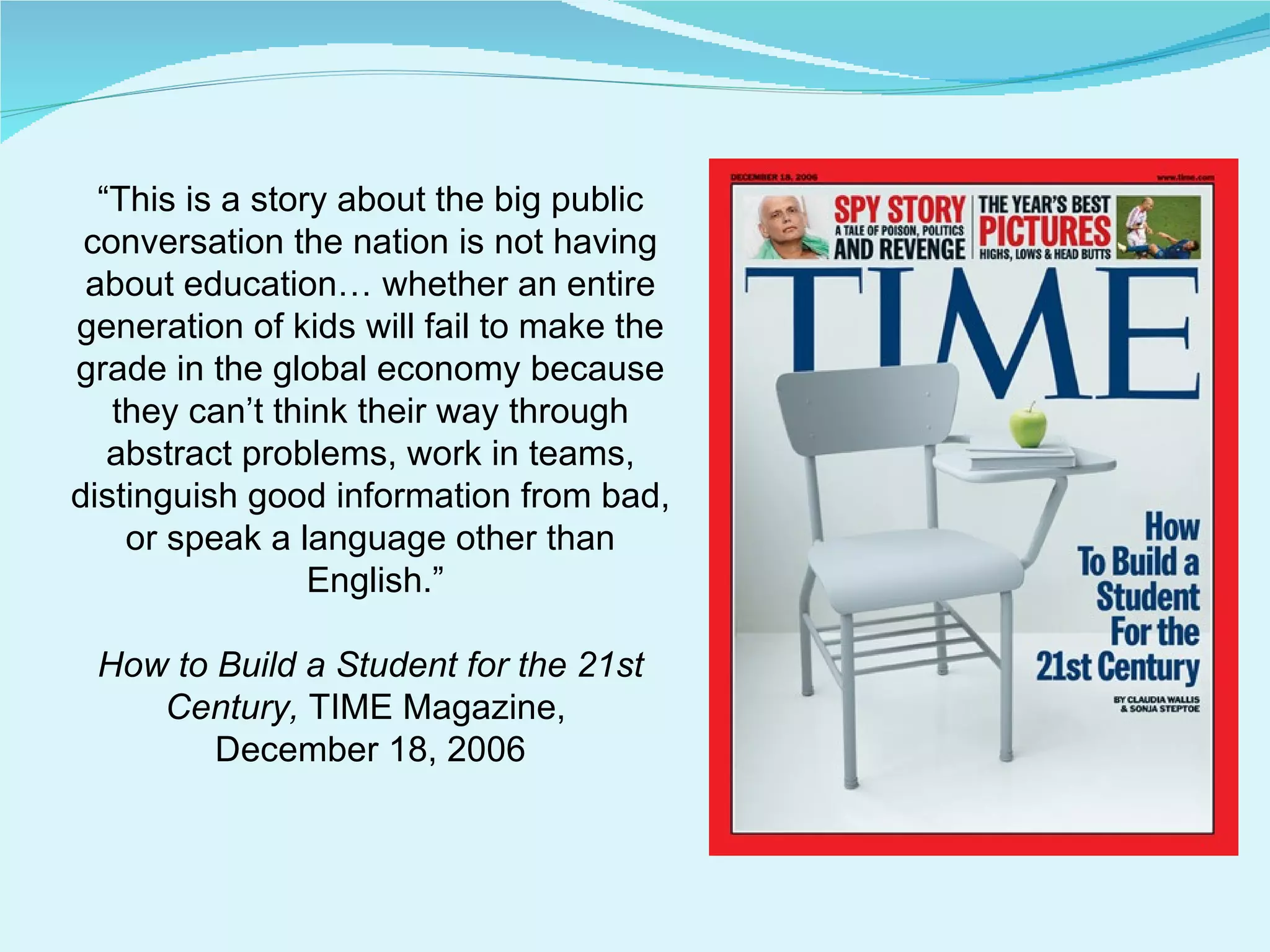
“ This is a story about the big public conversation the nation is not having about education… whether an entire generation of kids will fail to make the grade in the global economy because they can’t think their way through abstract problems, work in teams, distinguish good information from bad, or speak a language other than English.” How to Build a Student for the 21st Century,  TIME Magazine,  December 18, 2006
 
 
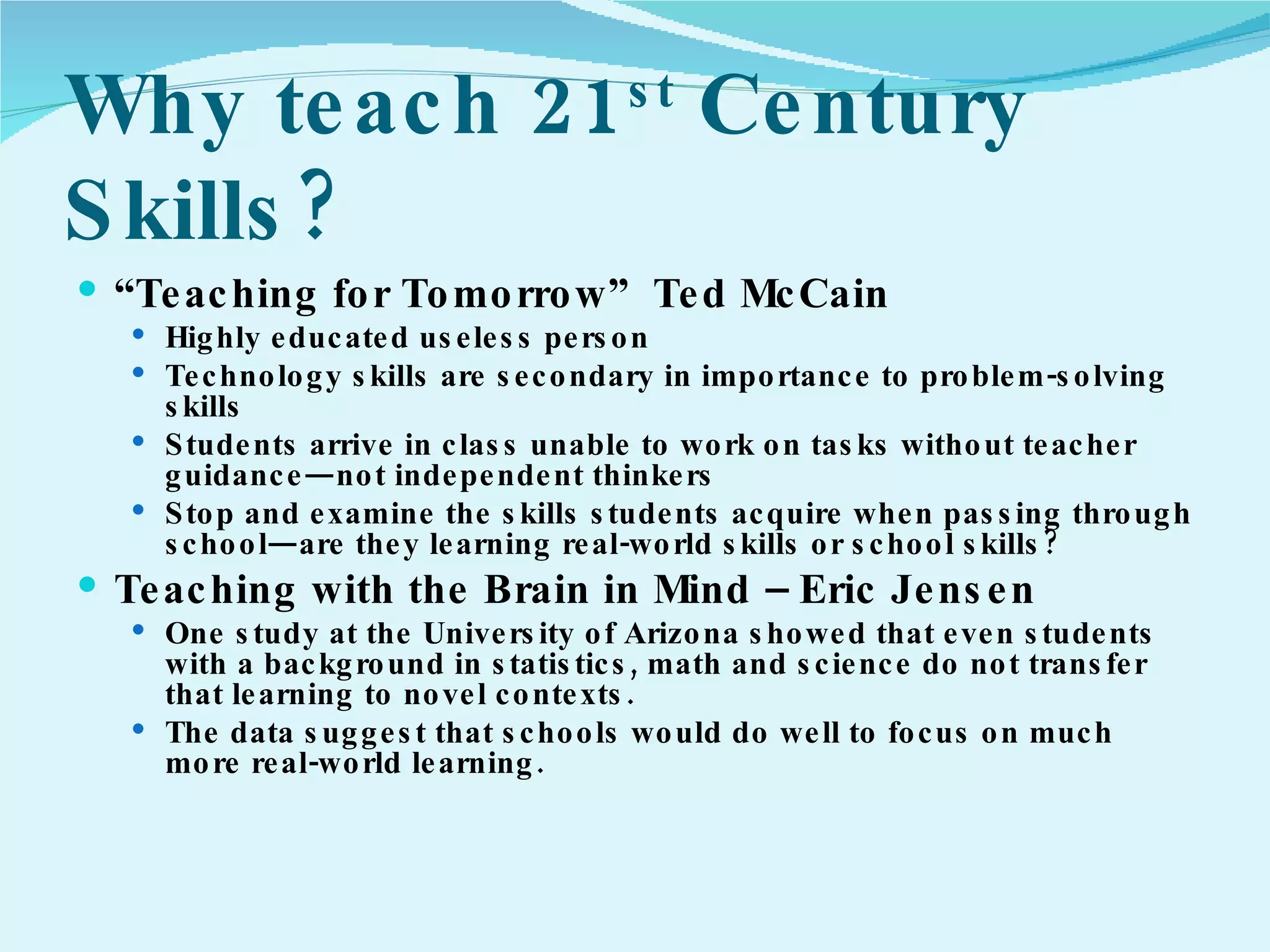
Why teach 21 st  Century Skills? “ Teaching for Tomorrow”  Ted McCain Highly educated useless person Technology skills are secondary in importance to problem-solving skills Students arrive in class unable to work on tasks without teacher guidance—not independent thinkers Stop and examine the skills students acquire when passing through school—are they learning real-world skills or school skills? Teaching with the Brain in Mind – Eric Jensen One study at the University of Arizona showed that even students with a background in statistics, math and science do not transfer that learning to novel contexts.  The data suggest that schools would do well to focus on much more real-world learning.
Digital natives in the classroom  "OUR STUDENTS HAVE CHANGED RADICALLY," is the observation of Marc Prensky in his article Digital natives, digital immigrants. ( Prensky, October 2001 .) Today's students and young workers are part of a cohort he calls "Digital Natives." Raised on MTV, video games, e-mail, the Web and instant messaging, Digital Natives have developed cognitive thinking patterns that differ from previous generations. As a result, the challenge facing educational designers is to recognize these cognitive differences and to develop learning offerings that are appropriate to their cognitive learning patterns.
Digital natives in the classroom  But Digital Immigrants typically have very little appreciation for these new skills that the Natives have acquired and perfected through years of interaction and practice. These skills are almost totally foreign to the Immigrants, who themselves learned – and so choose to teach – slowly, step-by-step, one thing at a time, individually, and above all, seriously. “My students just don’t _____ like they used to,” Digital Immigrant educators grouse. I can’t get them to ____ or to ____. They have no appreciation for _____ or _____ . (Fill in the blanks, there are a wide variety of choices.)
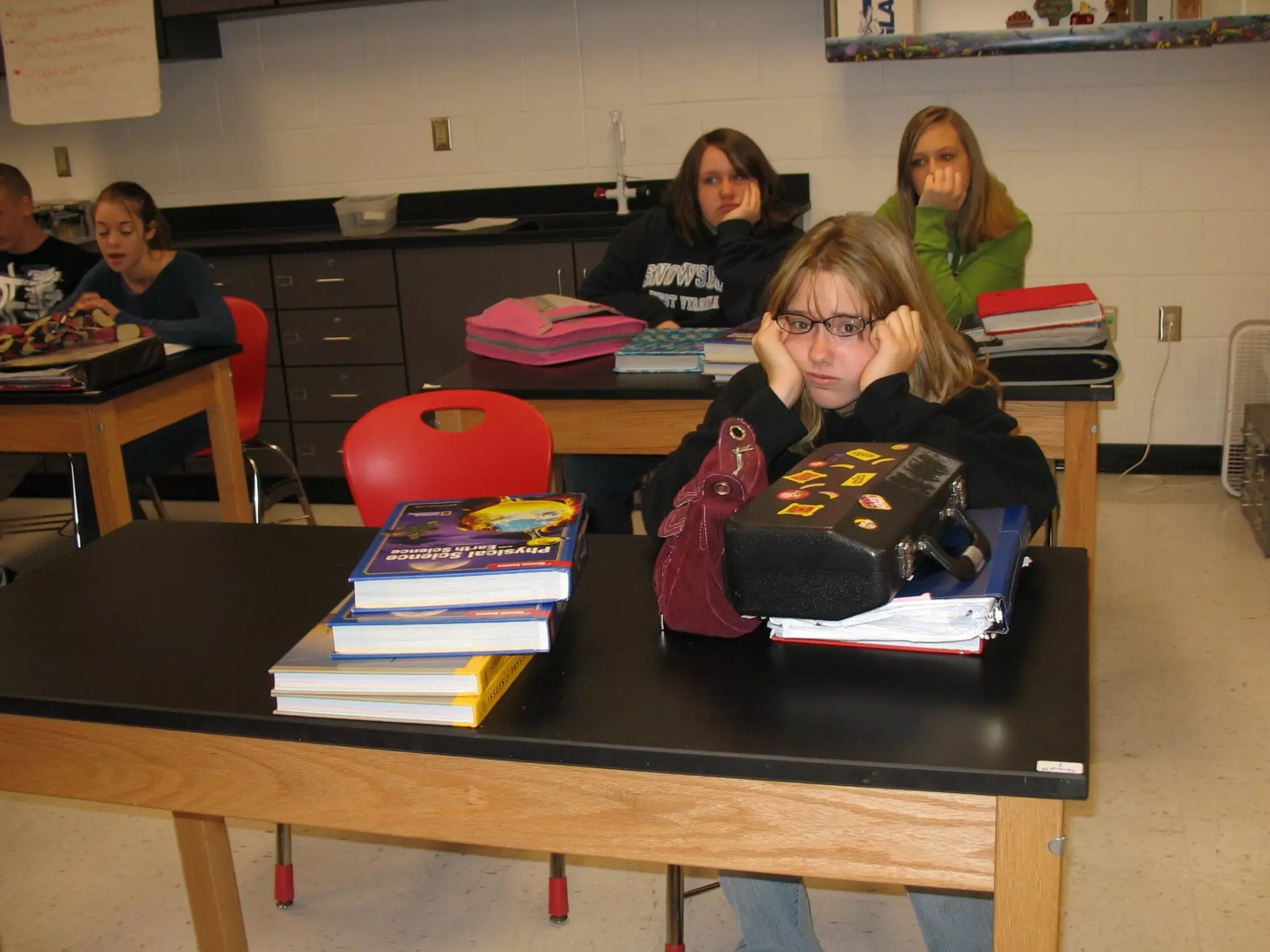
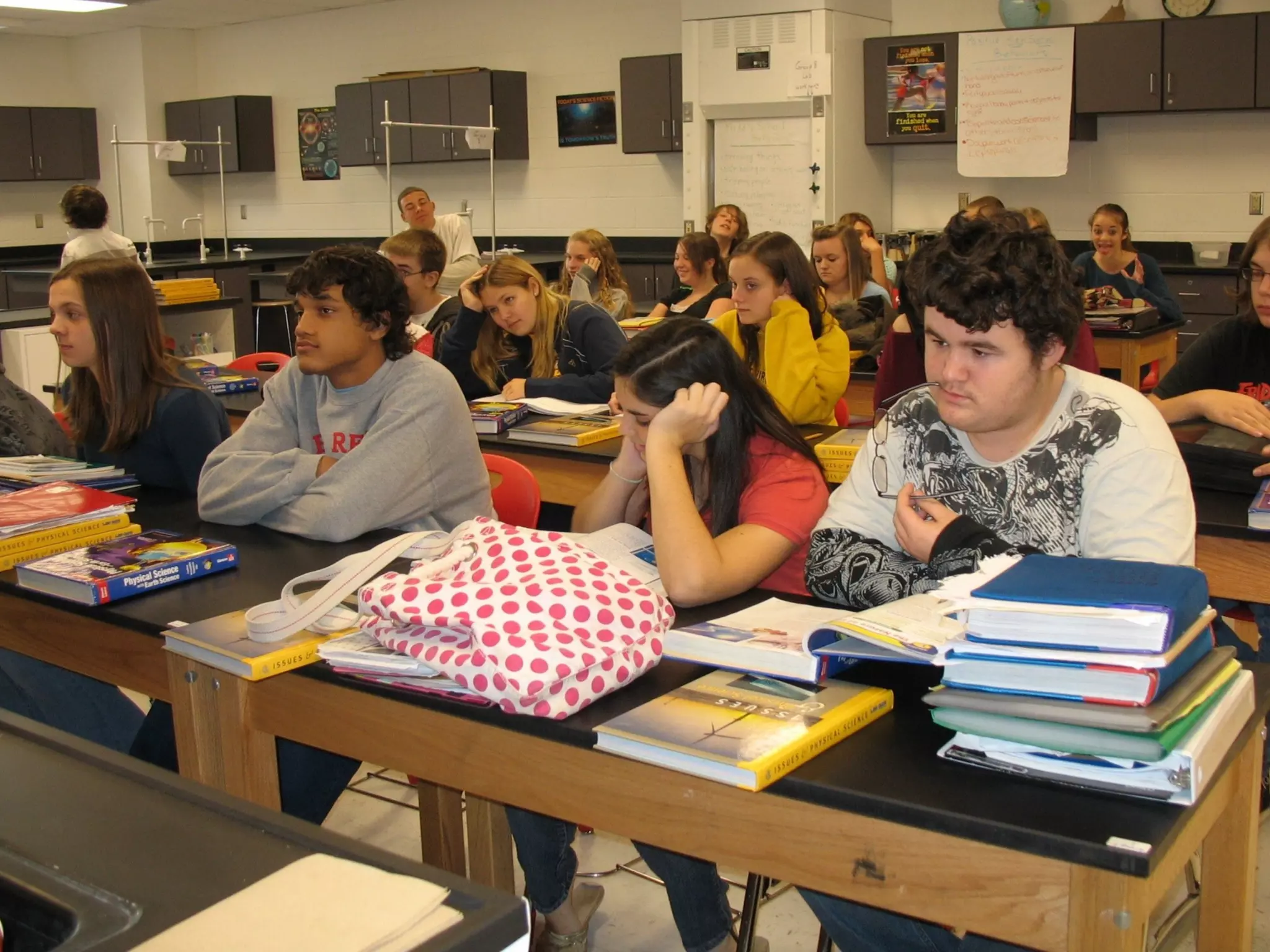
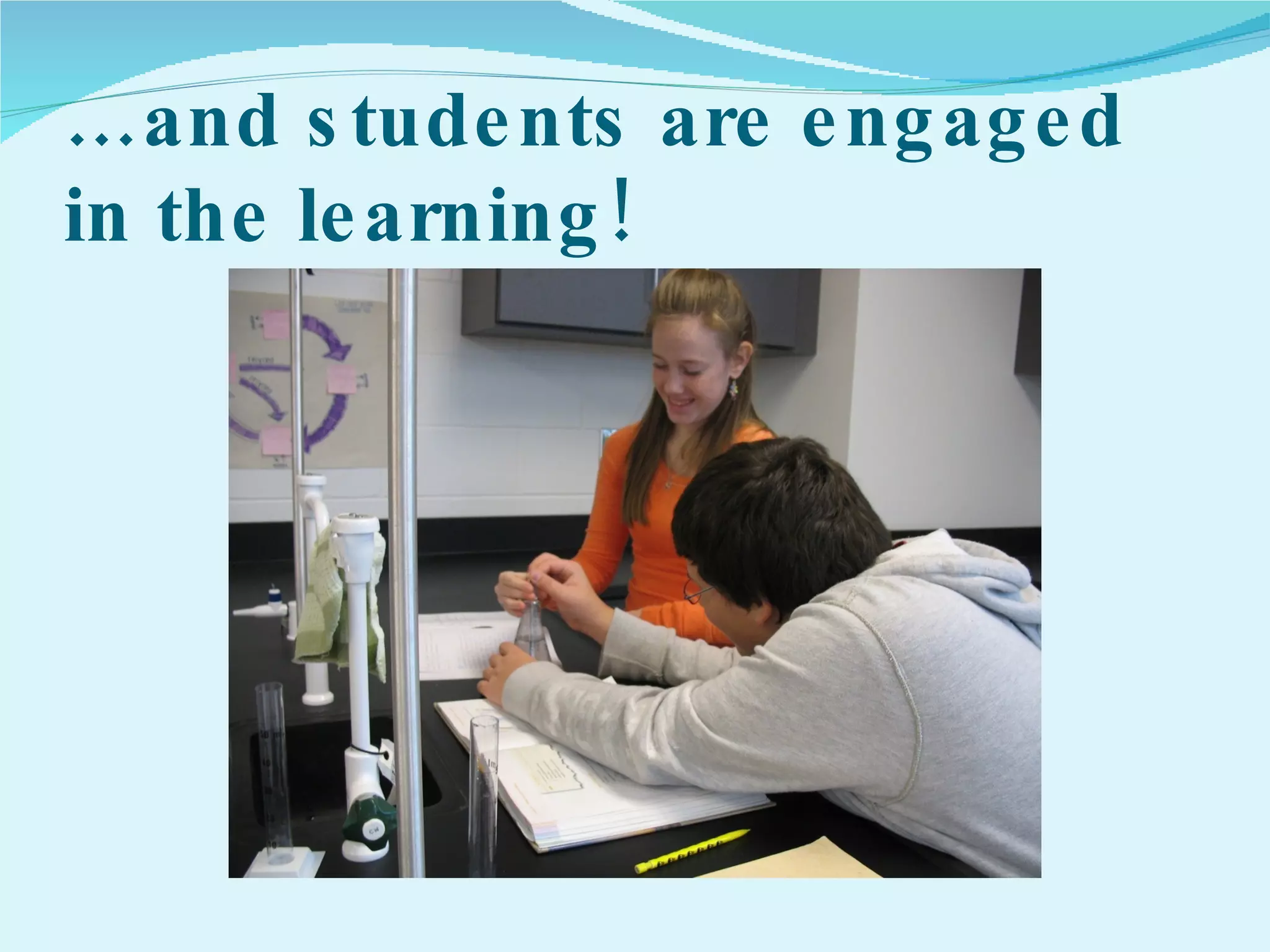
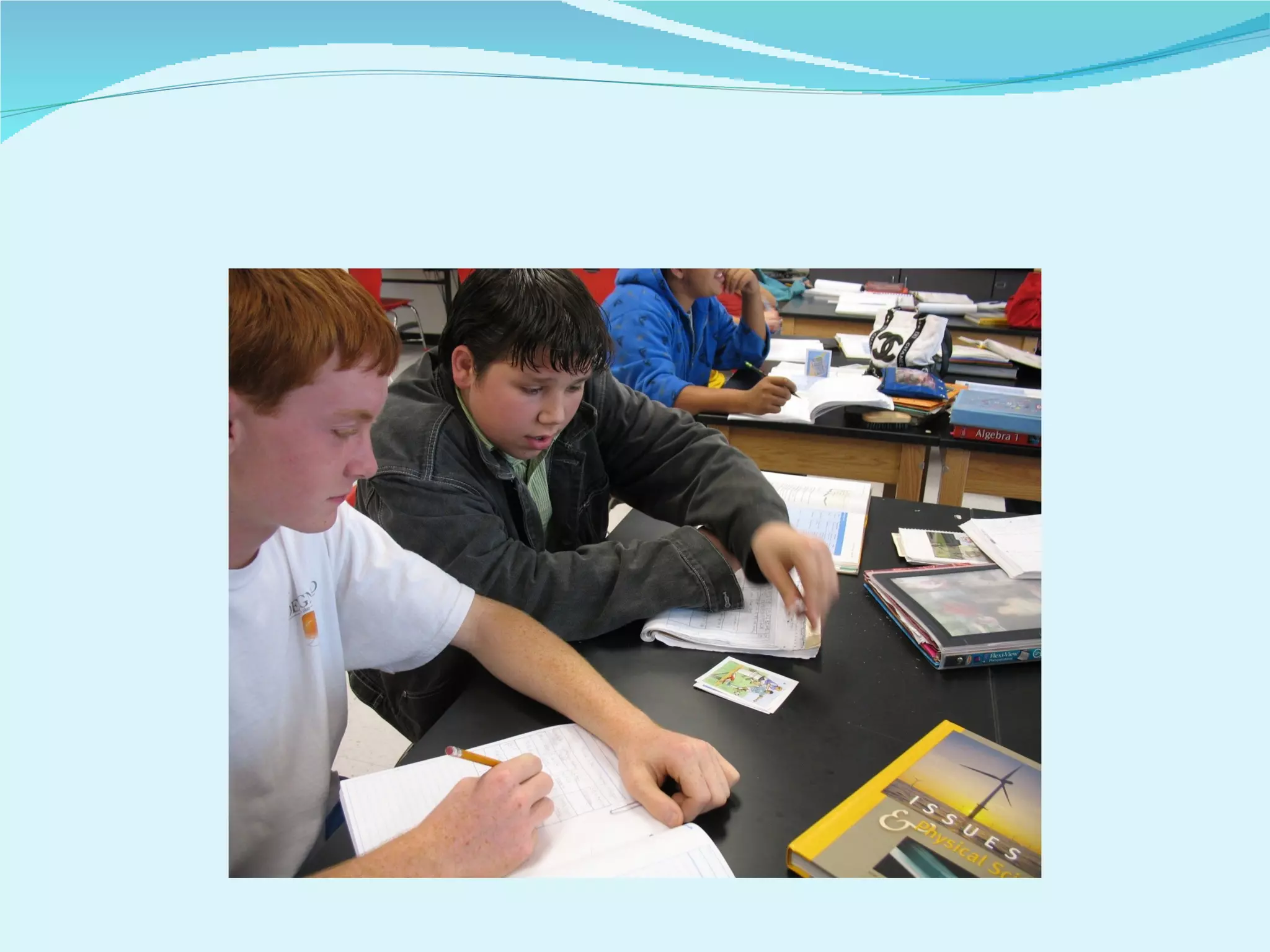
Does your classroom ever look like this?
 
Using issues can help you reach these digital natives and help them succeed in the 21 st  Century. …and WV has added 21 st  Century Skills to our Content Standards!
The Partnership of 21 st  Century Learning In 2005, WV became the second state in the nation to join this partnership.  MISSION STATEMENT Serve as a catalyst to position 21st century skills at the center of US K-12 education by building collaborative partnerships among education, business, community and government leaders.
What are 21 st  Century Skills? WV Content Standards Related to 21 st  Century Skills There are 3 broad areas: Information and Communication Skills Thinking and Reasoning Skills Personal and Workplace Productivity Skills
How can using issues help you teach 21 st  Century Skills? Using issues that are relevant to students’ lives can be motivating and enjoyable additions to the science classroom. Most importantly, they can be used to further students understanding of the role of scientific principles and evidence in making informed personal and societal decisions. Using issues integrates the sciences and integrates science with other subjects, portraying a realistic view of how science contributes to solving problems and of the role of science in careers. Using issues makes real-world connections and shows students how science is useful in daily life.
The goals of issue-oriented science are:  to engage students in the process of learning science to encourage students to use scientific evidence to make decisions to help educate tomorrow's citizens about the application of science to everyday life.  … similar to the goals of 21 st  Century learning!
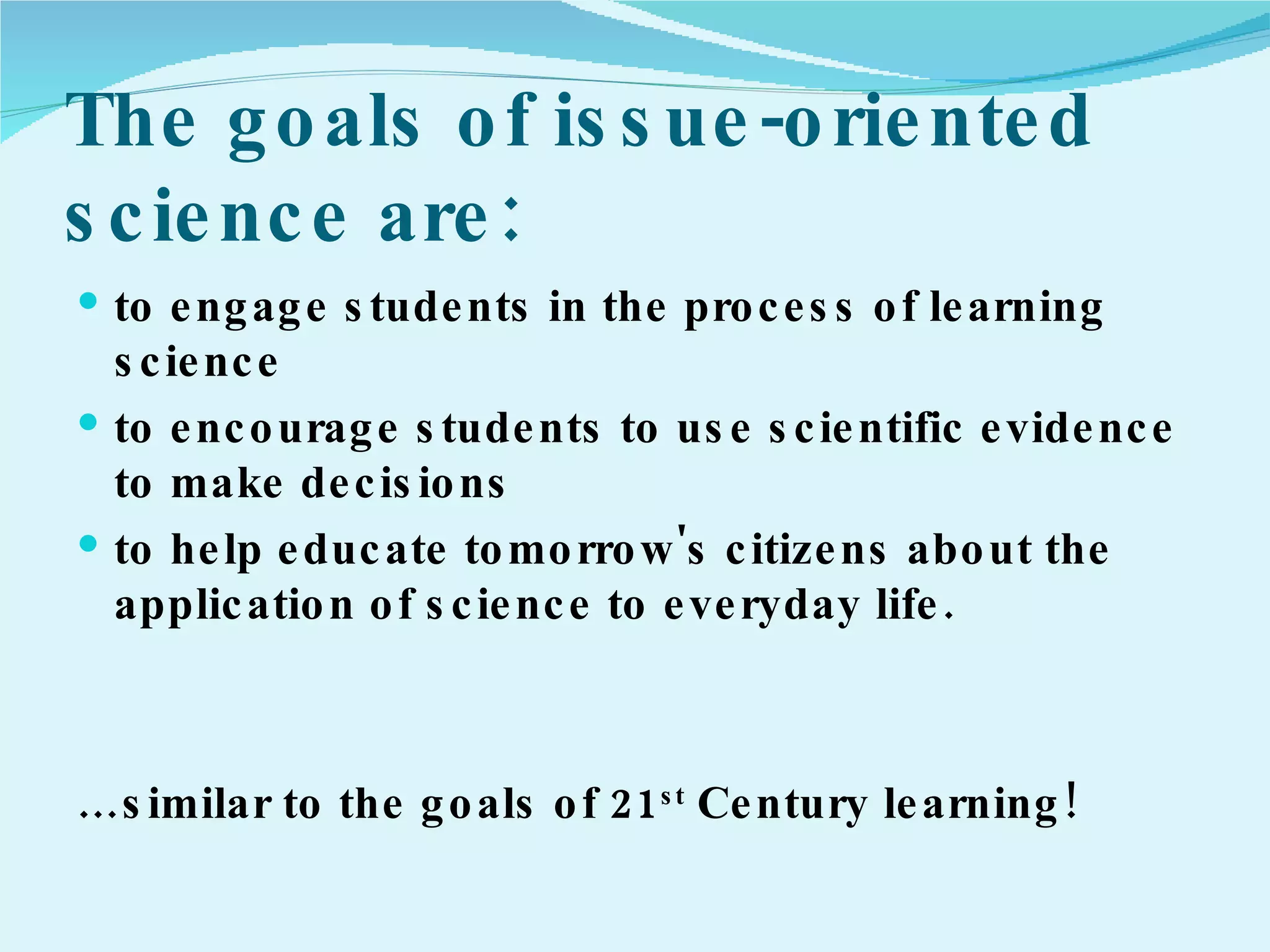
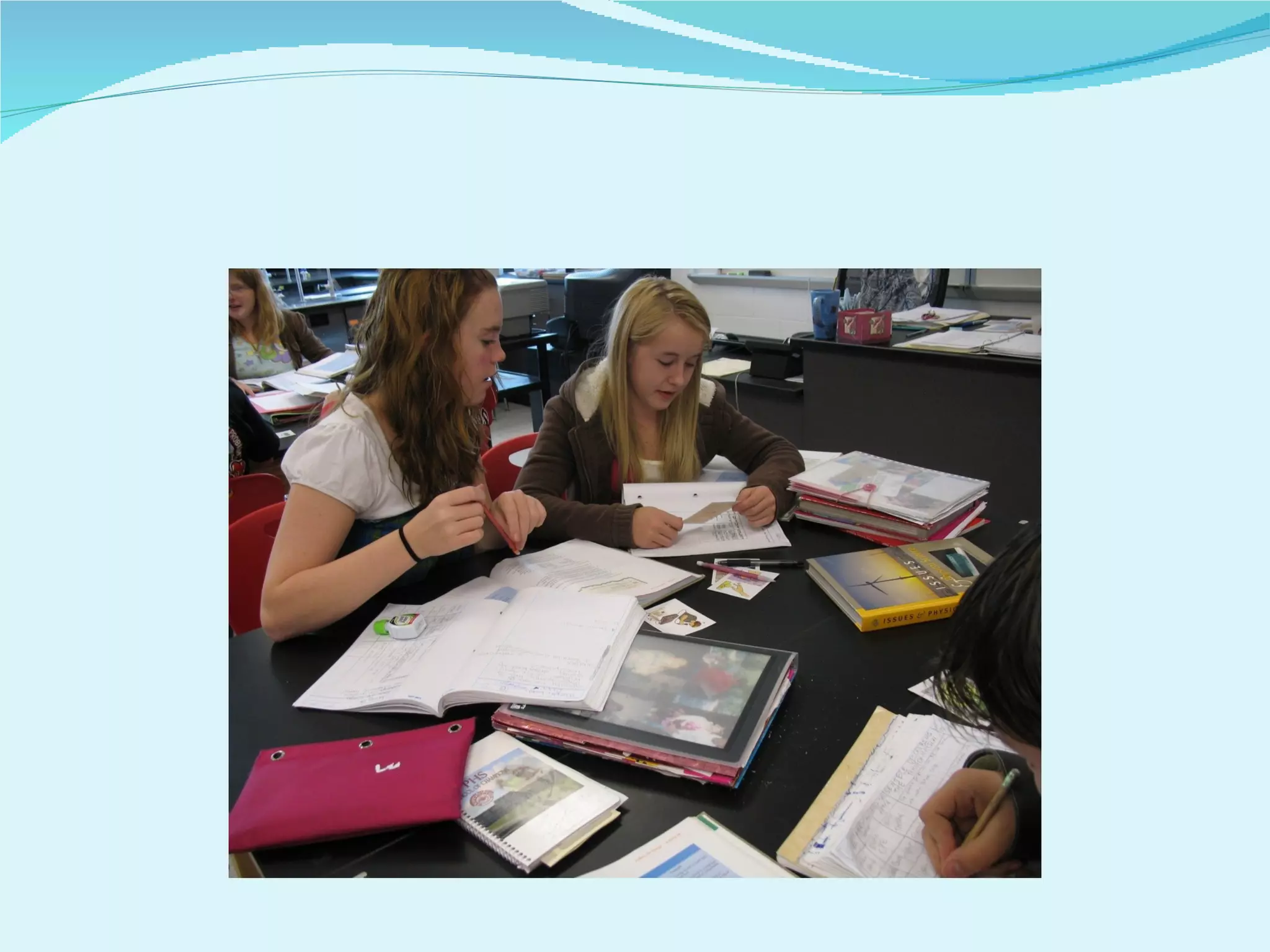
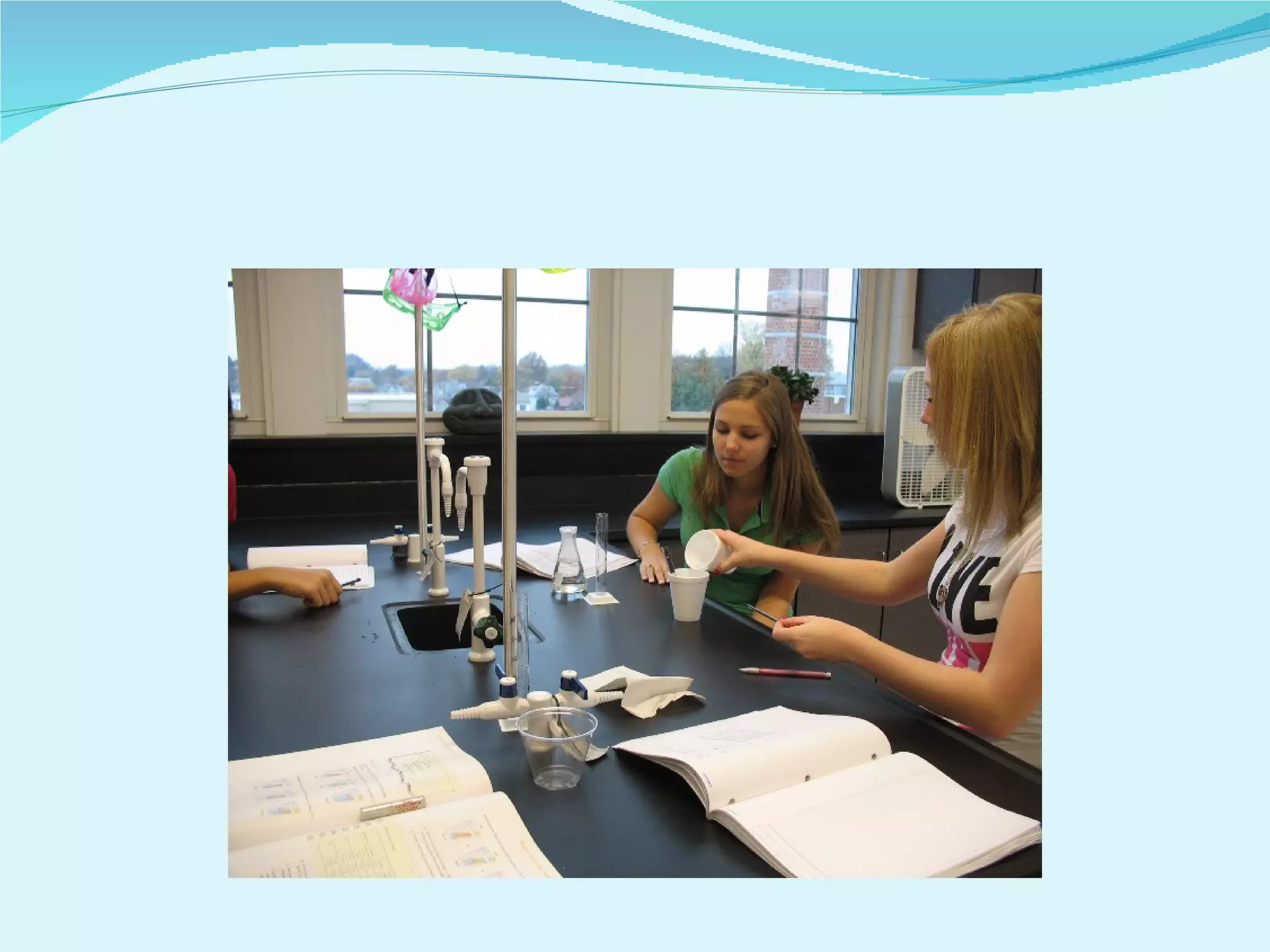
… and students are engaged in the learning!


In Wood County we have implemented the use of SEPUP in some classrooms SEPUP is Science Education for Public Understanding Program Lab-aids Kit based Issue oriented Not our only resource The weakness of SEPUP is its lack of imbedded use of technology…we can fix that!
SEPUP selects issues that: require an understanding of important scientific concepts and processes require an application of evidence are interesting and accessible to diverse groups of students are complex enough to foster discussion and debate The issue is not an add-on, but is woven into the curriculum and the issues and content are closely related.
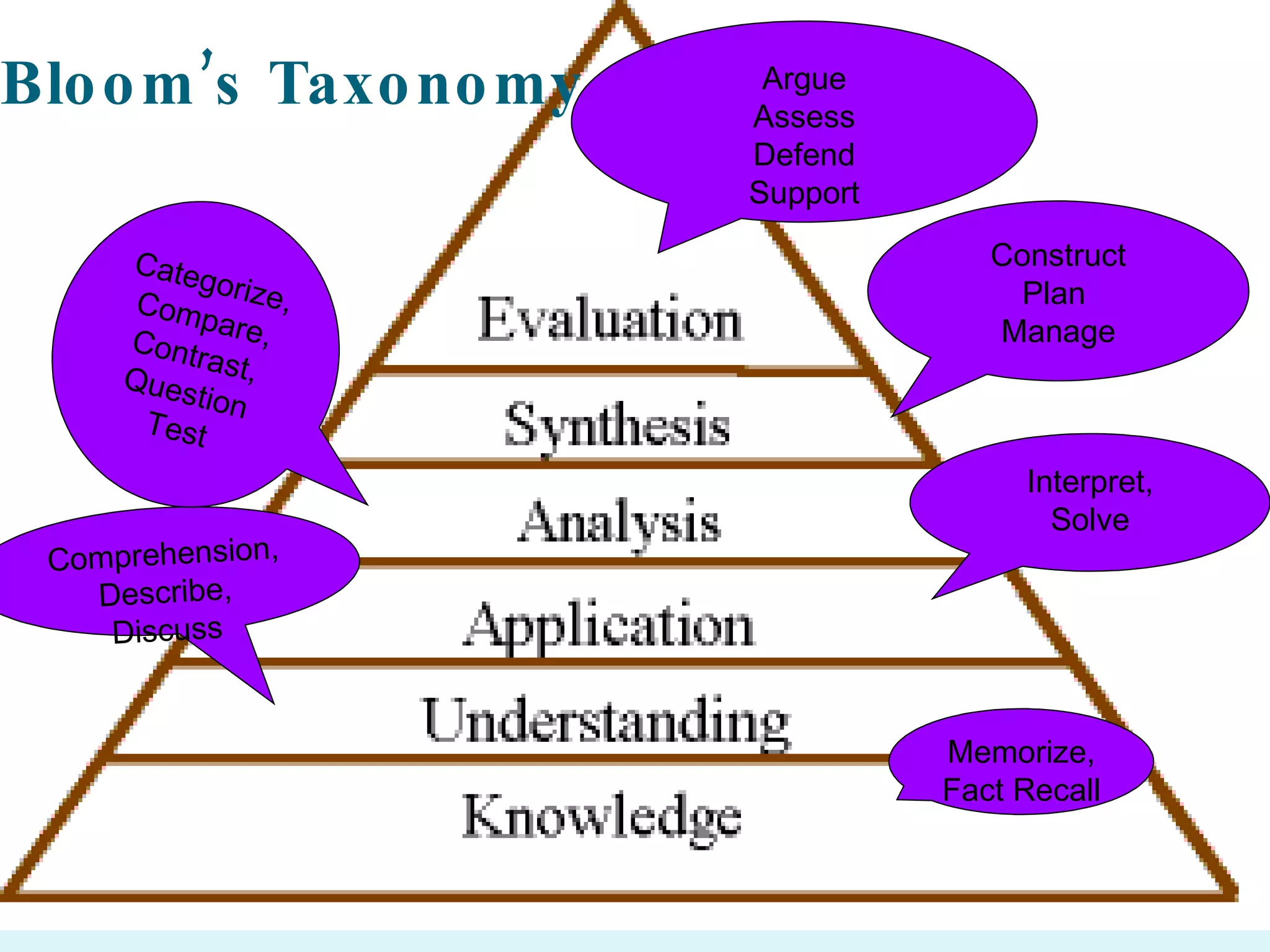
Bloom’s Taxonomy Memorize, Fact Recall Comprehension, Describe, Discuss Interpret, Solve Categorize, Compare, Contrast, Question Test Construct Plan  Manage Argue Assess Defend Support
Science in Global Issues (SGI) West Virginia Life Science and Biology Standards The Issues Preview of Future Curriculums
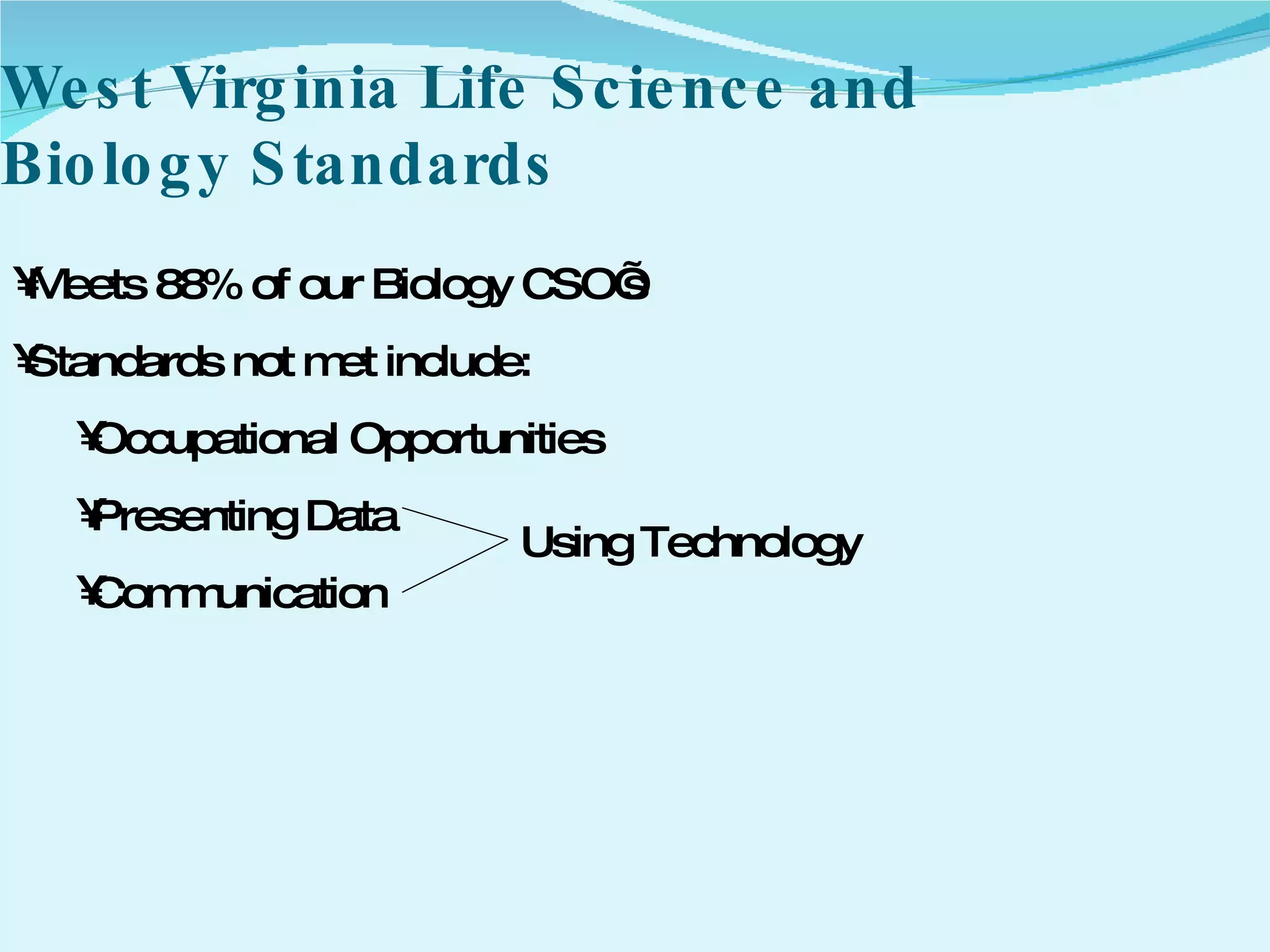
West Virginia Life Science and Biology Standards Meets 88% of our Biology CSO’s Standards not met include:  Occupational Opportunities  Presenting Data Communication Using Technology
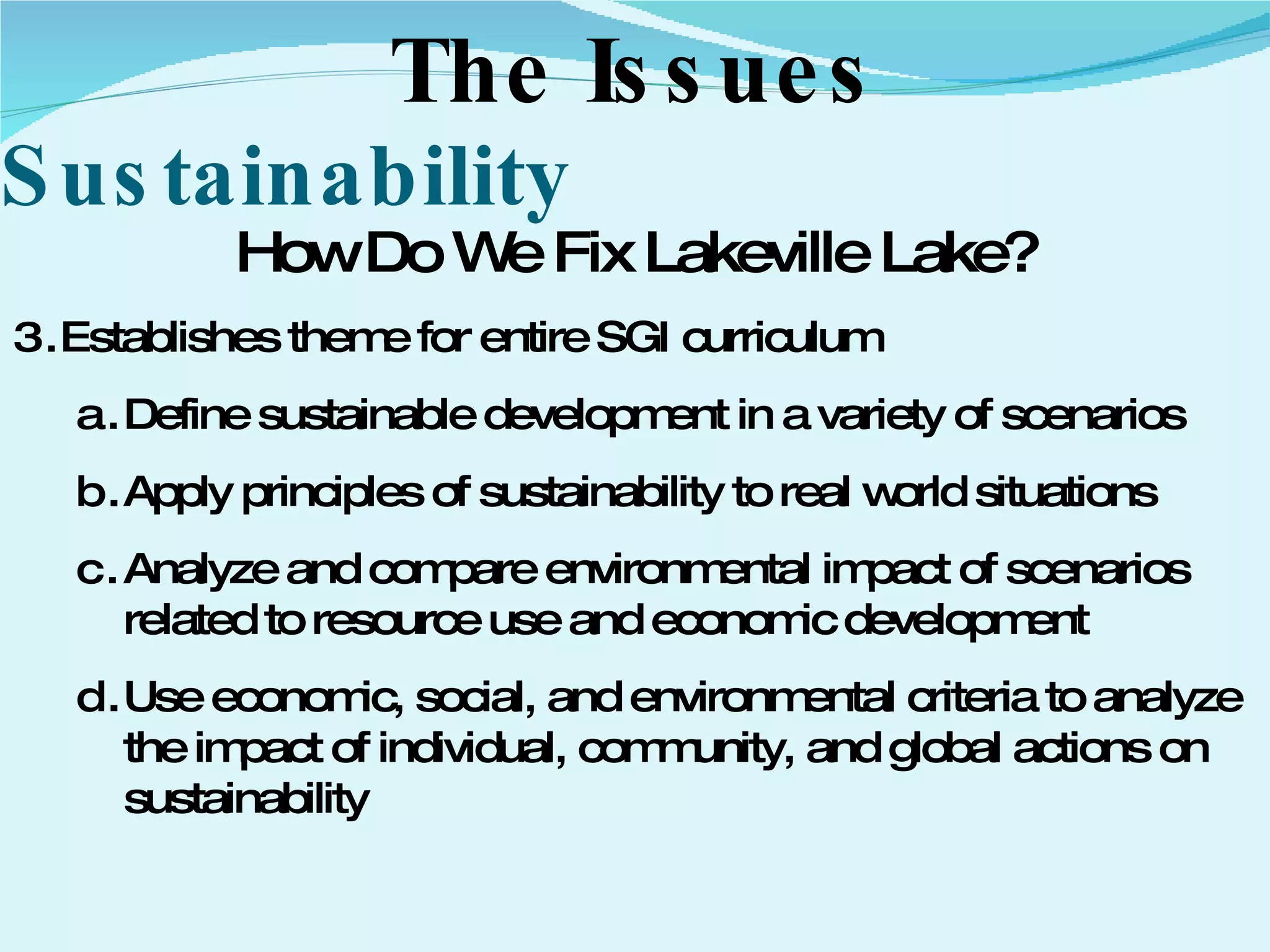
Sustainability The Issues How Do We Fix Lakeville Lake? Establishes theme for entire SGI curriculum  Define sustainable development in a variety of scenarios Apply principles of sustainability to real world situations Analyze and compare environmental impact of scenarios related to resource use and economic development Use economic, social, and environmental criteria to analyze the impact of individual, community, and global actions on sustainability
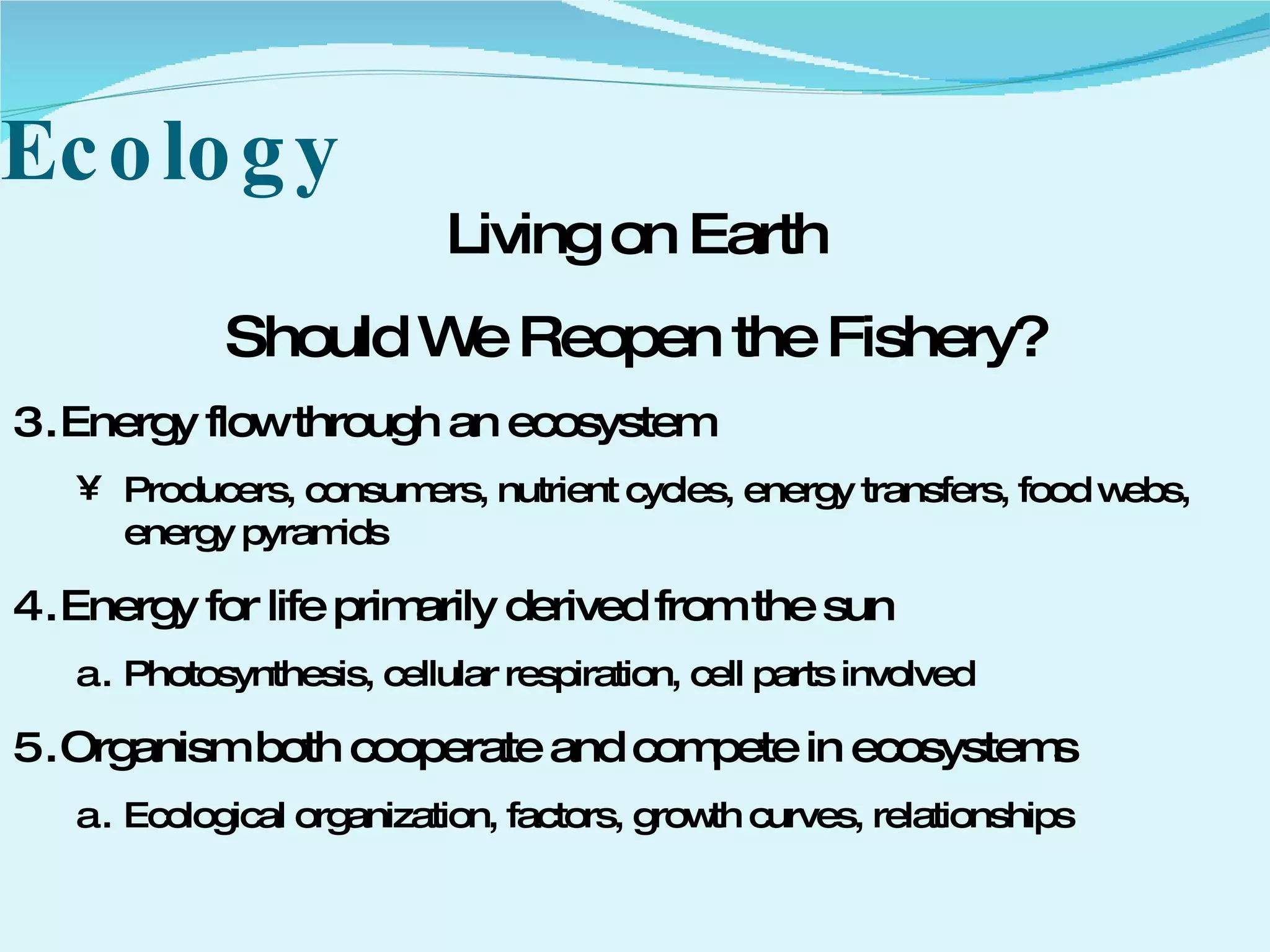
Ecology Living on Earth Should We Reopen the Fishery? Energy flow through an ecosystem Producers, consumers, nutrient cycles, energy transfers, food webs, energy pyramids Energy for life primarily derived from the sun Photosynthesis, cellular respiration, cell parts involved Organism both cooperate and compete in ecosystems Ecological organization, factors, growth curves, relationships
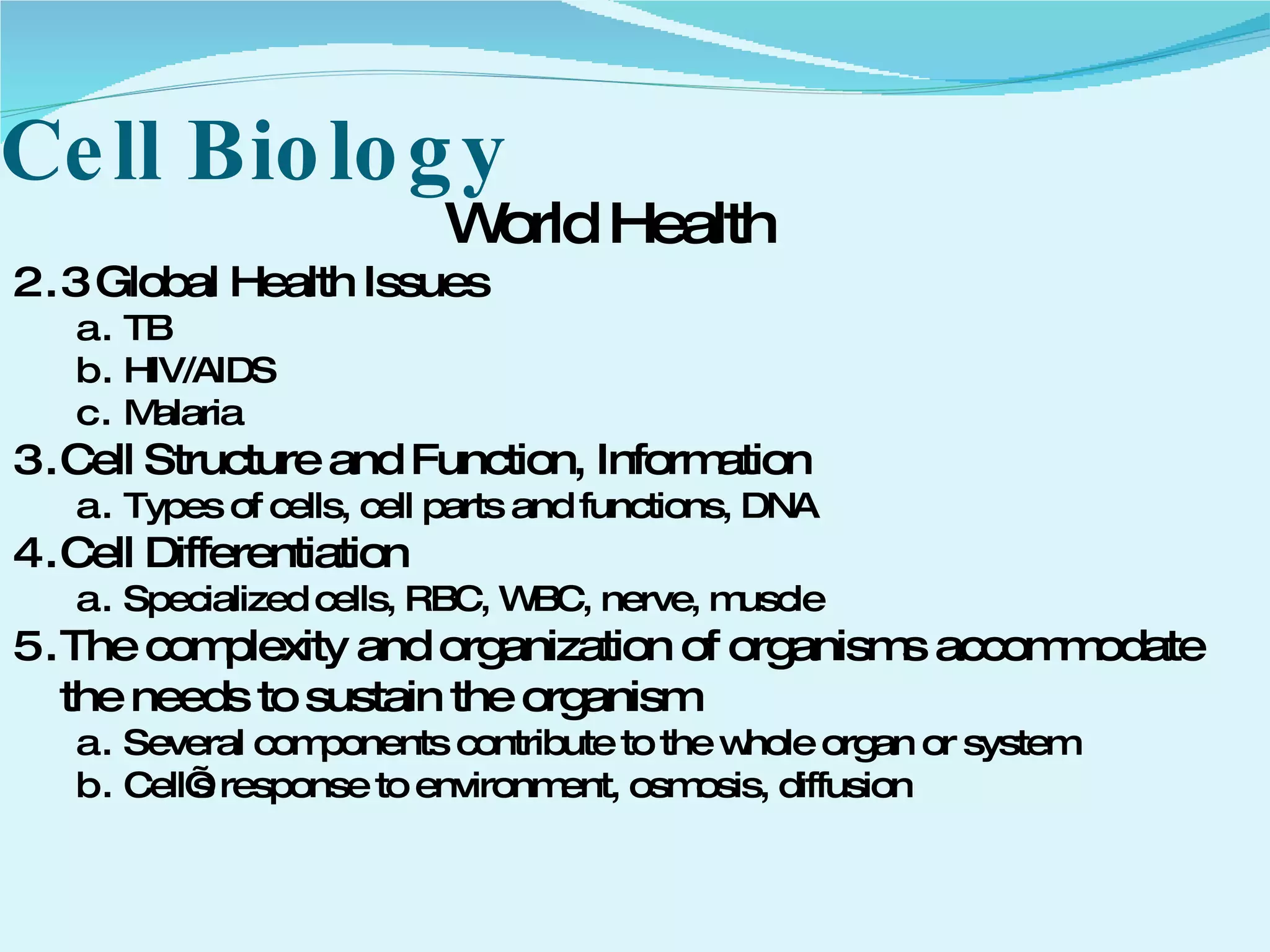
Cell Biology World Health 3 Global Health Issues TB HIV/AIDS Malaria Cell Structure and Function, Information Types of cells, cell parts and functions, DNA Cell Differentiation Specialized cells, RBC, WBC, nerve, muscle The complexity and organization of organisms accommodate the needs to sustain the organism Several components contribute to the whole organ or system Cell’s response to environment, osmosis, diffusion
Genetics and Evolution
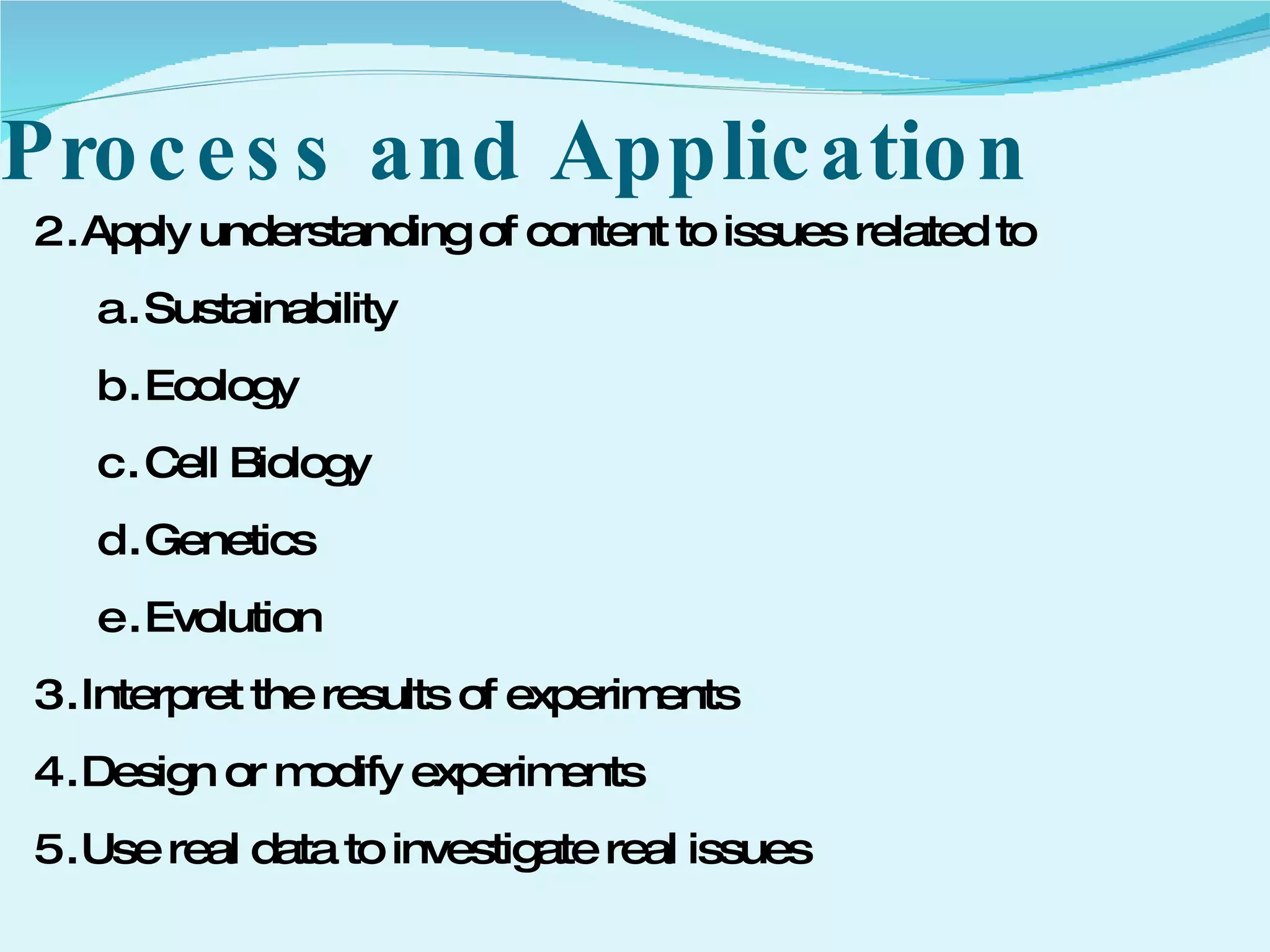
Process and Application Apply understanding of content to issues related to  Sustainability Ecology Cell Biology Genetics Evolution Interpret the results of experiments  Design or modify experiments Use real data to investigate real issues
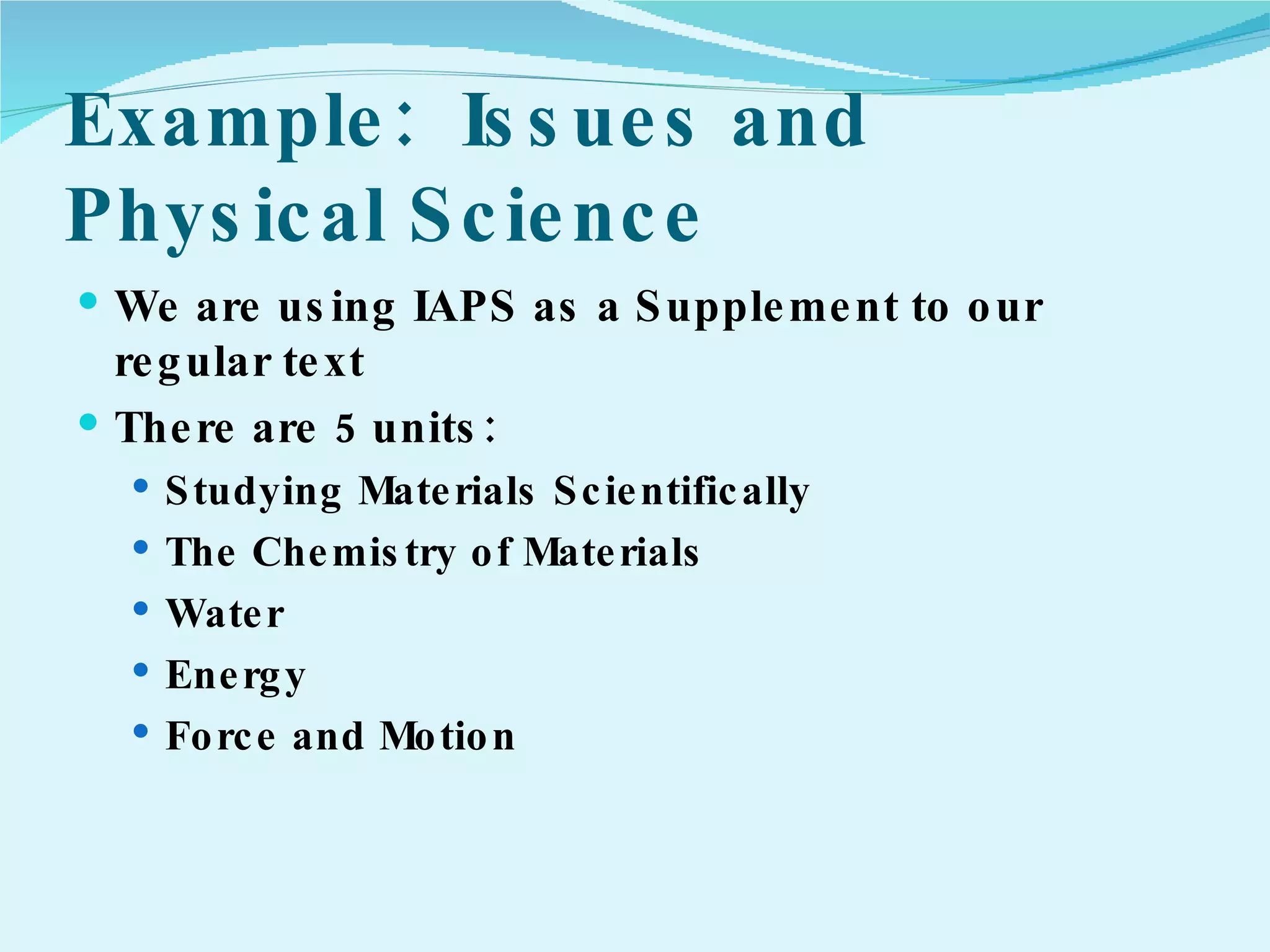
Example:  Issues and Physical Science We are using IAPS as a Supplement to our regular text There are 5 units: Studying Materials Scientifically The Chemistry of Materials Water Energy Force and Motion
Unit A:  Studying Materials Scientifically Good way to introduce lab safety Begins with an unidentified mixture Some key concepts include:  Lab safety, chemical and physical properties, separation of substances in mixtures, conductivity, reactivity, writing lab procedures, hazardous wastes at home, measurement of mass, volume, calculation of density. In the culminating activity, students pose as the safety director and evaluate product safety and effectiveness of several window-cleaning products as they consider the trade-offs of selecting a cleaner for a hospital setting.
Unit B:  The Chemistry of Materials Students learn how the molecular structure of a material affects its chemical and physical properties. Students learn about the product life cycle of glass, aluminum and plastic. They learn about elements and the periodic table and model molecules of polymers.  The investigate chemical reactions.  They produce circuit boards which generate waste.  They must determine the best way to dispose of the waste and make recommendations. The culminating activity is to recommend a computer purchase for a school, selecting from 4 proposals.  Their must defend their choice after considering many factors, including the environmental impact of the life cycle of the computer chosen.
Unit C:  Water Students investigate Willow Grove’s water supply.  They learn about biological and chemical risks in drinking water, water treatment, they learn about the particulate theory of matter and how properties of substances are related to the structures of their molecules, they learn about acid-base neutralization, testing and treating wastewater. In the culminating activity, they make recommendations to the home owner’s association  for improving water safety in Willow Grove.
Unit D:  Energy The opening scenario is about a fictional device…a solar charger for a cell-phone.  Students consider ways energy is transferred and transformed in their daily lives. The students learn about types of energy, transfer and transformation of energy, heat and temperature, conduction and insulation, Calories, chemical reactions, renewable and non-renewable energy source, how chemical reactions create energy, electricity, energy efficiency, solar energy. In the culminating activity students are presented with fictional scenarios of families who want to reduce their home energy costs.  Using their knowledge of energy concepts, they conduct an economic analysis and make energy-saving recommendations that meet the needs of the family.
Unit E: Force and Motion In this unit students learn how forces affect the motion of an object.  The first activity is one in which students are comparing vehicles. They learn to measure speed, interpret motion graphs, study collisions, acceleration, inertia, study Newton’s Laws of Motion, study braking distance, and crash-testing and fatal accidents. In the culminating activity they write a letter to the U. S. senate Committee for Highway Safety explaining their position on whether cars should be required by law to have standardized safety features such as their mass, bumper height and front-end and roof stiffness.
Using Your Own Issues Good Issues: Require knowledge and understanding of important scientific concepts and processes Require an application of relevant scientific evidence Relate to scientific concepts and processes appropriate to grade level and subject matter
Using Your Own Issues Engage diverse groups of learners Are complex enough to foster discussion and debate Have more than one solution or response Illustrate how science helps to make an informed decision
Activity:  How could you use these issues to teach science? Should you throw your old computer into the trash? What can you do to reduce the risk of getting food poisoning? Which car would you buy if your primary concern was safety in a crash? Should we put in a dam for hydroelectric power?  
Other considerations You might also include issues that: Are in the news Are especially relevant to the age group Illuminate the difference between the evidence that science can provide and the social aspects of the decision
Websites for additional help: http://pbl-online.org/ http://wise.berkeley.edu/ http://www.edutopia.org/project-learning
What If?
Contact Information Parkersburg High School 304-420-9595 Robin Stout   [email_address] Nathan Alfred   njalfred@access.k12.wv.us

Using Issues To Teach 21st Century Skills In Science

  • 1.
  • 2.
    Presenters Parkersburg HighSchool Robin Stout, Physical Science Teacher Nathan Alfred, Biology Teacher
  • 3.
    Overview 1. AnticipationGuide 2. 21st Century Skills 3. WV Standards 4. Issue Oriented Science 5. IAPS 6. SGI 7. Develop your own issue
  • 4.
  • 5.
  • 6.
    “ This isa story about the big public conversation the nation is not having about education… whether an entire generation of kids will fail to make the grade in the global economy because they can’t think their way through abstract problems, work in teams, distinguish good information from bad, or speak a language other than English.” How to Build a Student for the 21st Century, TIME Magazine, December 18, 2006
  • 7.
  • 8.
  • 9.
    Why teach 21st Century Skills? “ Teaching for Tomorrow” Ted McCain Highly educated useless person Technology skills are secondary in importance to problem-solving skills Students arrive in class unable to work on tasks without teacher guidance—not independent thinkers Stop and examine the skills students acquire when passing through school—are they learning real-world skills or school skills? Teaching with the Brain in Mind – Eric Jensen One study at the University of Arizona showed that even students with a background in statistics, math and science do not transfer that learning to novel contexts. The data suggest that schools would do well to focus on much more real-world learning.
  • 10.
    Digital natives inthe classroom "OUR STUDENTS HAVE CHANGED RADICALLY," is the observation of Marc Prensky in his article Digital natives, digital immigrants. ( Prensky, October 2001 .) Today's students and young workers are part of a cohort he calls "Digital Natives." Raised on MTV, video games, e-mail, the Web and instant messaging, Digital Natives have developed cognitive thinking patterns that differ from previous generations. As a result, the challenge facing educational designers is to recognize these cognitive differences and to develop learning offerings that are appropriate to their cognitive learning patterns.
  • 11.
    Digital natives inthe classroom But Digital Immigrants typically have very little appreciation for these new skills that the Natives have acquired and perfected through years of interaction and practice. These skills are almost totally foreign to the Immigrants, who themselves learned – and so choose to teach – slowly, step-by-step, one thing at a time, individually, and above all, seriously. “My students just don’t _____ like they used to,” Digital Immigrant educators grouse. I can’t get them to ____ or to ____. They have no appreciation for _____ or _____ . (Fill in the blanks, there are a wide variety of choices.)
  • 12.
    Does your classroomever look like this?
  • 13.
  • 14.
    Using issues canhelp you reach these digital natives and help them succeed in the 21 st Century. …and WV has added 21 st Century Skills to our Content Standards!
  • 15.
    The Partnership of21 st Century Learning In 2005, WV became the second state in the nation to join this partnership. MISSION STATEMENT Serve as a catalyst to position 21st century skills at the center of US K-12 education by building collaborative partnerships among education, business, community and government leaders.
  • 16.
    What are 21st Century Skills? WV Content Standards Related to 21 st Century Skills There are 3 broad areas: Information and Communication Skills Thinking and Reasoning Skills Personal and Workplace Productivity Skills
  • 17.
    How can usingissues help you teach 21 st Century Skills? Using issues that are relevant to students’ lives can be motivating and enjoyable additions to the science classroom. Most importantly, they can be used to further students understanding of the role of scientific principles and evidence in making informed personal and societal decisions. Using issues integrates the sciences and integrates science with other subjects, portraying a realistic view of how science contributes to solving problems and of the role of science in careers. Using issues makes real-world connections and shows students how science is useful in daily life.
  • 18.
    The goals ofissue-oriented science are: to engage students in the process of learning science to encourage students to use scientific evidence to make decisions to help educate tomorrow's citizens about the application of science to everyday life. … similar to the goals of 21 st Century learning!
  • 19.
    … and studentsare engaged in the learning!
  • 20.
  • 21.
  • 22.
  • 23.
    In Wood Countywe have implemented the use of SEPUP in some classrooms SEPUP is Science Education for Public Understanding Program Lab-aids Kit based Issue oriented Not our only resource The weakness of SEPUP is its lack of imbedded use of technology…we can fix that!
  • 24.
    SEPUP selects issuesthat: require an understanding of important scientific concepts and processes require an application of evidence are interesting and accessible to diverse groups of students are complex enough to foster discussion and debate The issue is not an add-on, but is woven into the curriculum and the issues and content are closely related.
  • 25.
    Bloom’s Taxonomy Memorize,Fact Recall Comprehension, Describe, Discuss Interpret, Solve Categorize, Compare, Contrast, Question Test Construct Plan Manage Argue Assess Defend Support
  • 26.
    Science in GlobalIssues (SGI) West Virginia Life Science and Biology Standards The Issues Preview of Future Curriculums
  • 27.
    West Virginia LifeScience and Biology Standards Meets 88% of our Biology CSO’s Standards not met include: Occupational Opportunities Presenting Data Communication Using Technology
  • 28.
    Sustainability The IssuesHow Do We Fix Lakeville Lake? Establishes theme for entire SGI curriculum Define sustainable development in a variety of scenarios Apply principles of sustainability to real world situations Analyze and compare environmental impact of scenarios related to resource use and economic development Use economic, social, and environmental criteria to analyze the impact of individual, community, and global actions on sustainability
  • 29.
    Ecology Living onEarth Should We Reopen the Fishery? Energy flow through an ecosystem Producers, consumers, nutrient cycles, energy transfers, food webs, energy pyramids Energy for life primarily derived from the sun Photosynthesis, cellular respiration, cell parts involved Organism both cooperate and compete in ecosystems Ecological organization, factors, growth curves, relationships
  • 30.
    Cell Biology WorldHealth 3 Global Health Issues TB HIV/AIDS Malaria Cell Structure and Function, Information Types of cells, cell parts and functions, DNA Cell Differentiation Specialized cells, RBC, WBC, nerve, muscle The complexity and organization of organisms accommodate the needs to sustain the organism Several components contribute to the whole organ or system Cell’s response to environment, osmosis, diffusion
  • 31.
  • 32.
    Process and ApplicationApply understanding of content to issues related to Sustainability Ecology Cell Biology Genetics Evolution Interpret the results of experiments Design or modify experiments Use real data to investigate real issues
  • 33.
    Example: Issuesand Physical Science We are using IAPS as a Supplement to our regular text There are 5 units: Studying Materials Scientifically The Chemistry of Materials Water Energy Force and Motion
  • 34.
    Unit A: Studying Materials Scientifically Good way to introduce lab safety Begins with an unidentified mixture Some key concepts include: Lab safety, chemical and physical properties, separation of substances in mixtures, conductivity, reactivity, writing lab procedures, hazardous wastes at home, measurement of mass, volume, calculation of density. In the culminating activity, students pose as the safety director and evaluate product safety and effectiveness of several window-cleaning products as they consider the trade-offs of selecting a cleaner for a hospital setting.
  • 35.
    Unit B: The Chemistry of Materials Students learn how the molecular structure of a material affects its chemical and physical properties. Students learn about the product life cycle of glass, aluminum and plastic. They learn about elements and the periodic table and model molecules of polymers. The investigate chemical reactions. They produce circuit boards which generate waste. They must determine the best way to dispose of the waste and make recommendations. The culminating activity is to recommend a computer purchase for a school, selecting from 4 proposals. Their must defend their choice after considering many factors, including the environmental impact of the life cycle of the computer chosen.
  • 36.
    Unit C: Water Students investigate Willow Grove’s water supply. They learn about biological and chemical risks in drinking water, water treatment, they learn about the particulate theory of matter and how properties of substances are related to the structures of their molecules, they learn about acid-base neutralization, testing and treating wastewater. In the culminating activity, they make recommendations to the home owner’s association for improving water safety in Willow Grove.
  • 37.
    Unit D: Energy The opening scenario is about a fictional device…a solar charger for a cell-phone. Students consider ways energy is transferred and transformed in their daily lives. The students learn about types of energy, transfer and transformation of energy, heat and temperature, conduction and insulation, Calories, chemical reactions, renewable and non-renewable energy source, how chemical reactions create energy, electricity, energy efficiency, solar energy. In the culminating activity students are presented with fictional scenarios of families who want to reduce their home energy costs. Using their knowledge of energy concepts, they conduct an economic analysis and make energy-saving recommendations that meet the needs of the family.
  • 38.
    Unit E: Forceand Motion In this unit students learn how forces affect the motion of an object. The first activity is one in which students are comparing vehicles. They learn to measure speed, interpret motion graphs, study collisions, acceleration, inertia, study Newton’s Laws of Motion, study braking distance, and crash-testing and fatal accidents. In the culminating activity they write a letter to the U. S. senate Committee for Highway Safety explaining their position on whether cars should be required by law to have standardized safety features such as their mass, bumper height and front-end and roof stiffness.
  • 39.
    Using Your OwnIssues Good Issues: Require knowledge and understanding of important scientific concepts and processes Require an application of relevant scientific evidence Relate to scientific concepts and processes appropriate to grade level and subject matter
  • 40.
    Using Your OwnIssues Engage diverse groups of learners Are complex enough to foster discussion and debate Have more than one solution or response Illustrate how science helps to make an informed decision
  • 41.
    Activity: Howcould you use these issues to teach science? Should you throw your old computer into the trash? What can you do to reduce the risk of getting food poisoning? Which car would you buy if your primary concern was safety in a crash? Should we put in a dam for hydroelectric power?  
  • 42.
    Other considerations Youmight also include issues that: Are in the news Are especially relevant to the age group Illuminate the difference between the evidence that science can provide and the social aspects of the decision
  • 43.
    Websites for additionalhelp: http://pbl-online.org/ http://wise.berkeley.edu/ http://www.edutopia.org/project-learning
  • 44.
  • 45.
    Contact Information ParkersburgHigh School 304-420-9595 Robin Stout [email_address] Nathan Alfred njalfred@access.k12.wv.us