Aztecs – Chapter 8

For the Good of the People
The Story
• Moctezuma was known as “The Great
  Speaker” to the Aztec people
• He was to interpret signs from the sky about
  what may happen in the future
• He made all of his decisions as the emperor
  based on the movements in the heavens
• Moctezuma noticed some bad omens
  – The water turned blood red, and there was
    something flaming shooting across the night sky
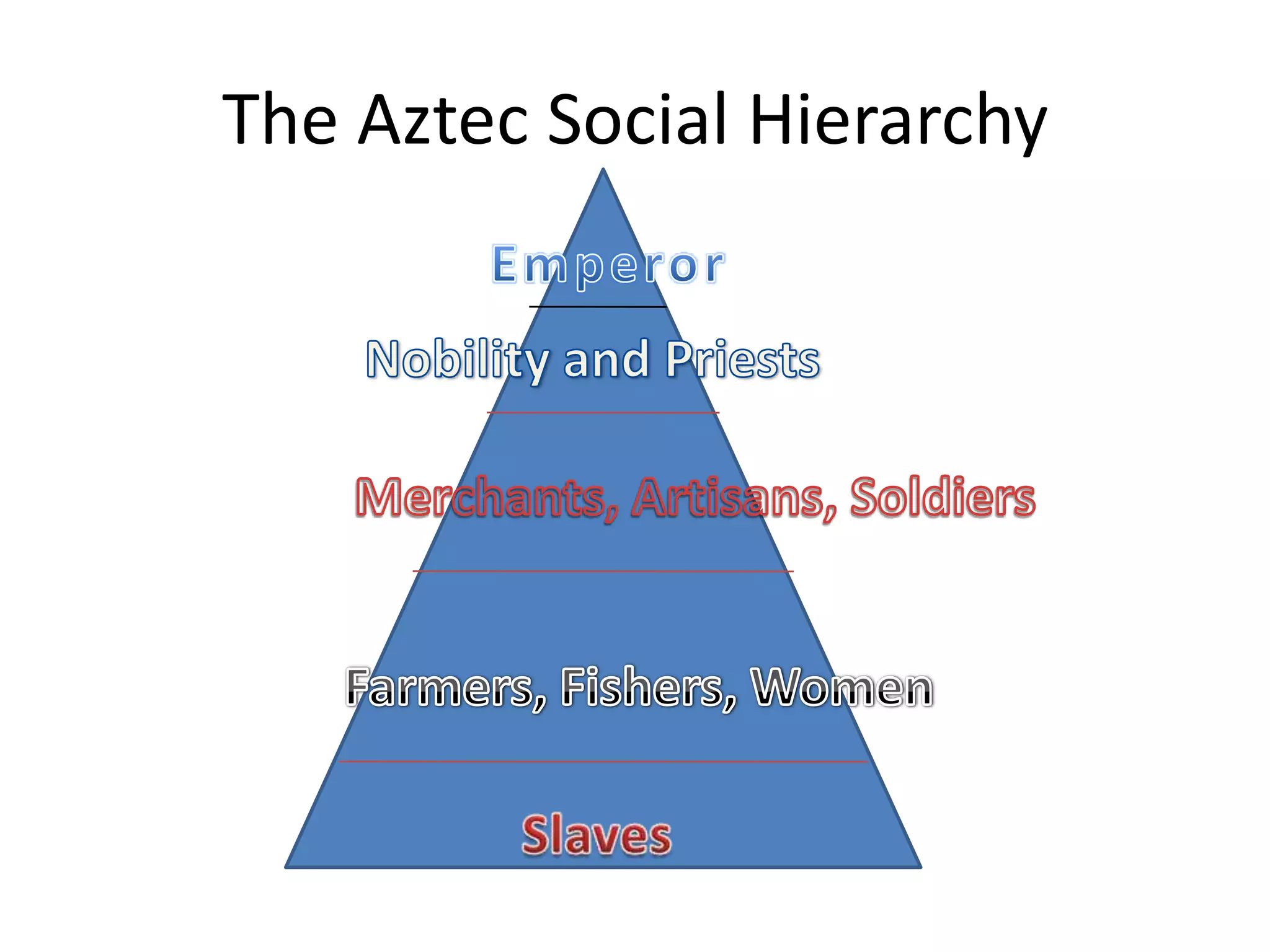
The Aztec Social Hierarchy
• A person’s position in society was determined
  by what class you were born into
• Unlike in the Renaissance feudalism hierarchy,
  people here could work their way into a
  higher level of the social hierarchy
Role of the Emperor
• The emperor was at the top of the Aztec
  hierarchy
• His title was Huey Tlatoani which means
  “Great Speaker”
• The emperor was treated as a god, even
  though the people knew he was human
• The Aztecs obeyed everything he said and
  showered him with gifts and priveleges
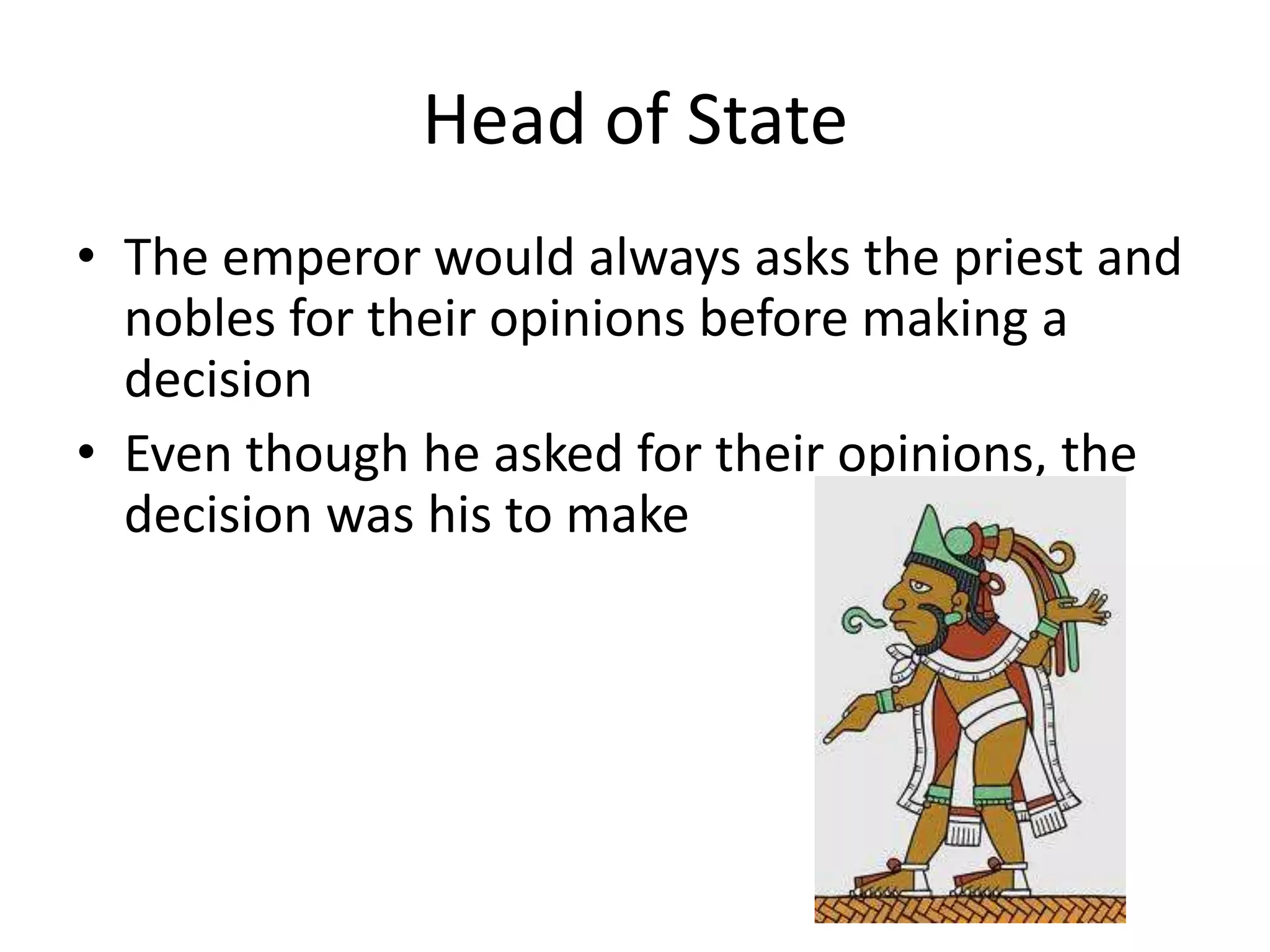
Commander of the Army
• The emperor had to be a skilled warrior to lead
  the Aztec army
• He had to know how to be strategic and how to
  be an effective leader
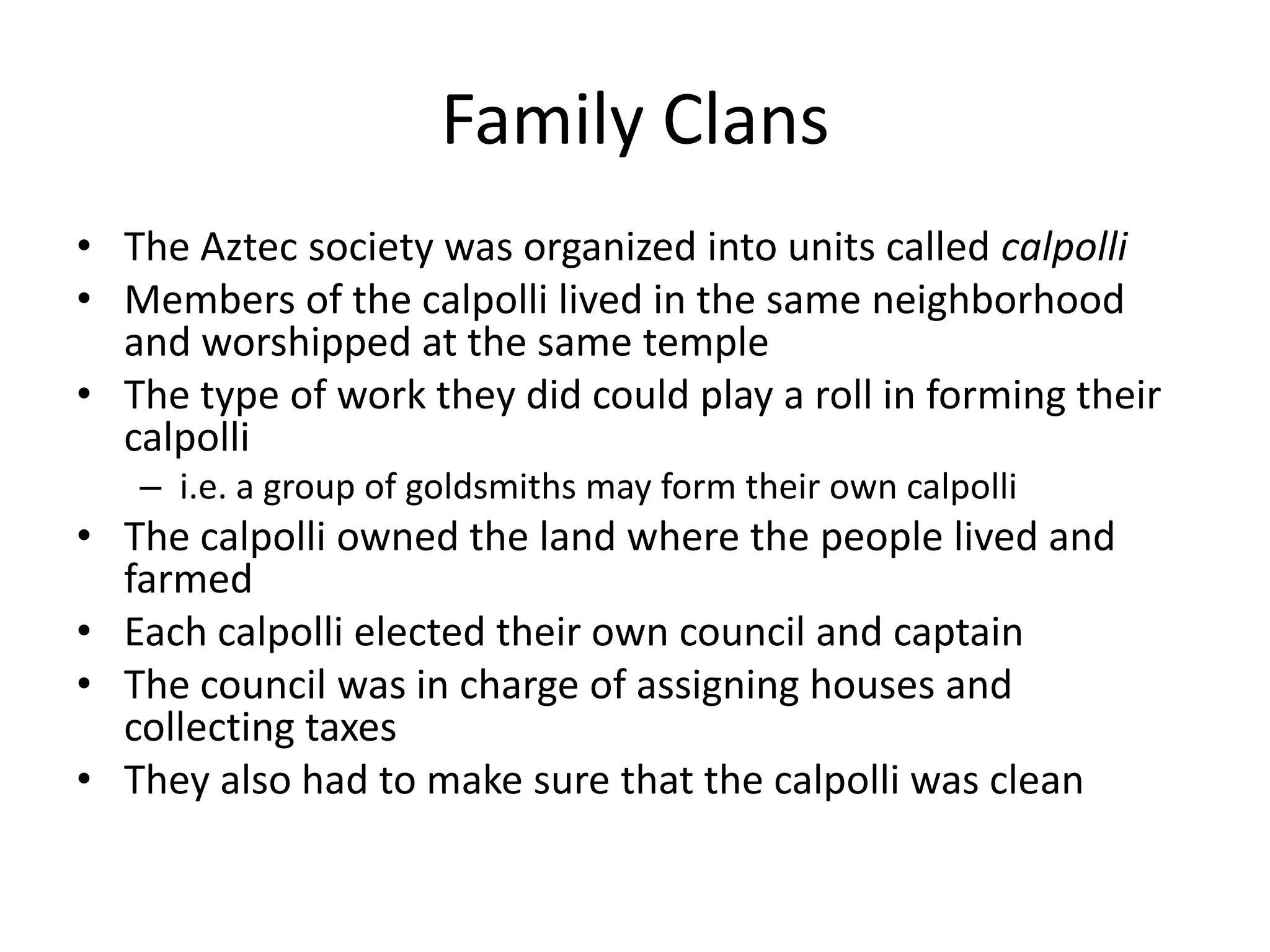
Head of State
• The emperor would always asks the priest and
  nobles for their opinions before making a
  decision
• Even though he asked for their opinions, the
  decision was his to make
Family Clans
• The Aztec society was organized into units called calpolli
• Members of the calpolli lived in the same neighborhood
  and worshipped at the same temple
• The type of work they did could play a roll in forming their
  calpolli
   – i.e. a group of goldsmiths may form their own calpolli
• The calpolli owned the land where the people lived and
  farmed
• Each calpolli elected their own council and captain
• The council was in charge of assigning houses and
  collecting taxes
• They also had to make sure that the calpolli was clean
Merchants
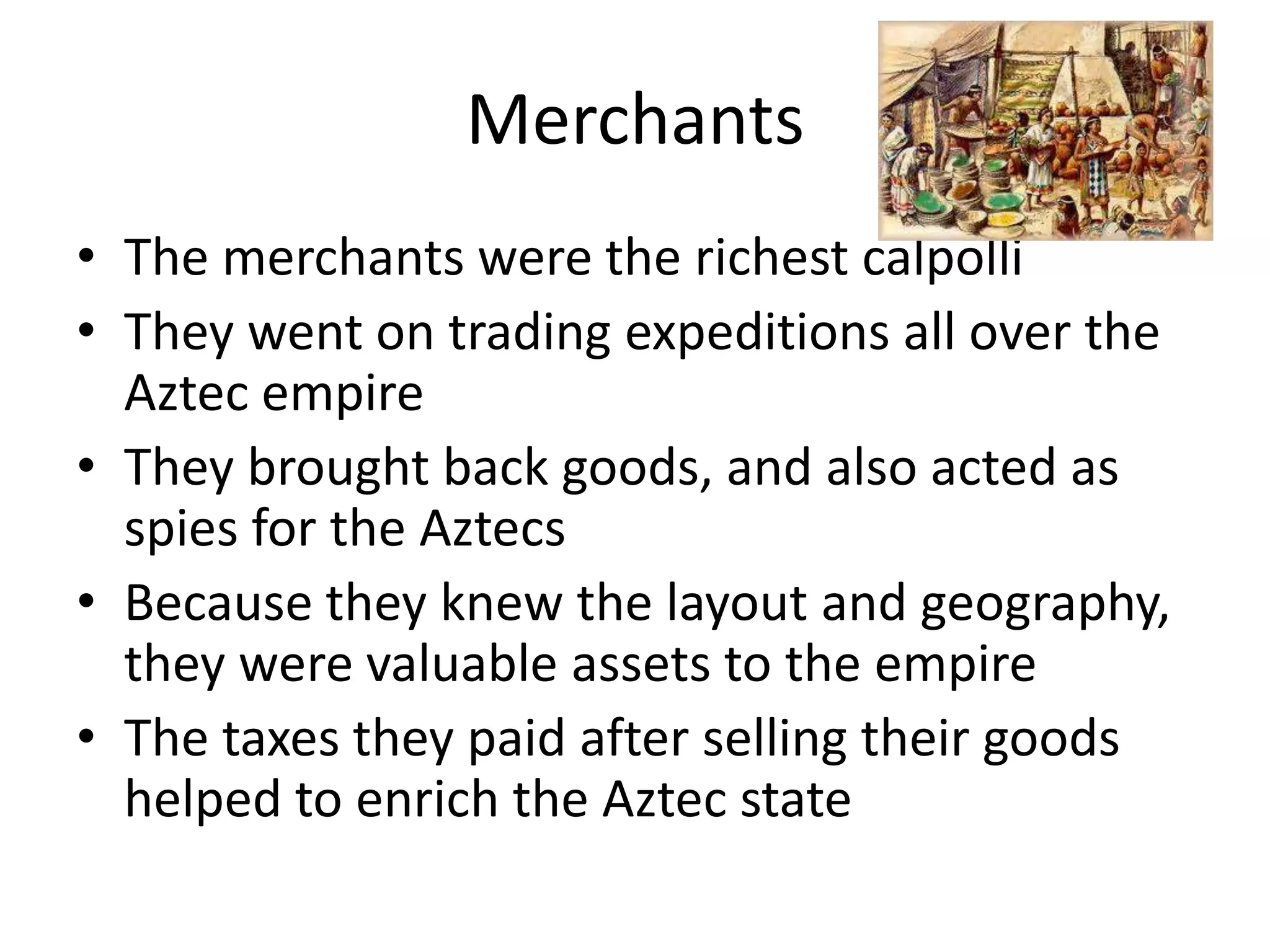
• The merchants were the richest calpolli
• They went on trading expeditions all over the
  Aztec empire
• They brought back goods, and also acted as
  spies for the Aztecs
• Because they knew the layout and geography,
  they were valuable assets to the empire
• The taxes they paid after selling their goods
  helped to enrich the Aztec state
Farmers
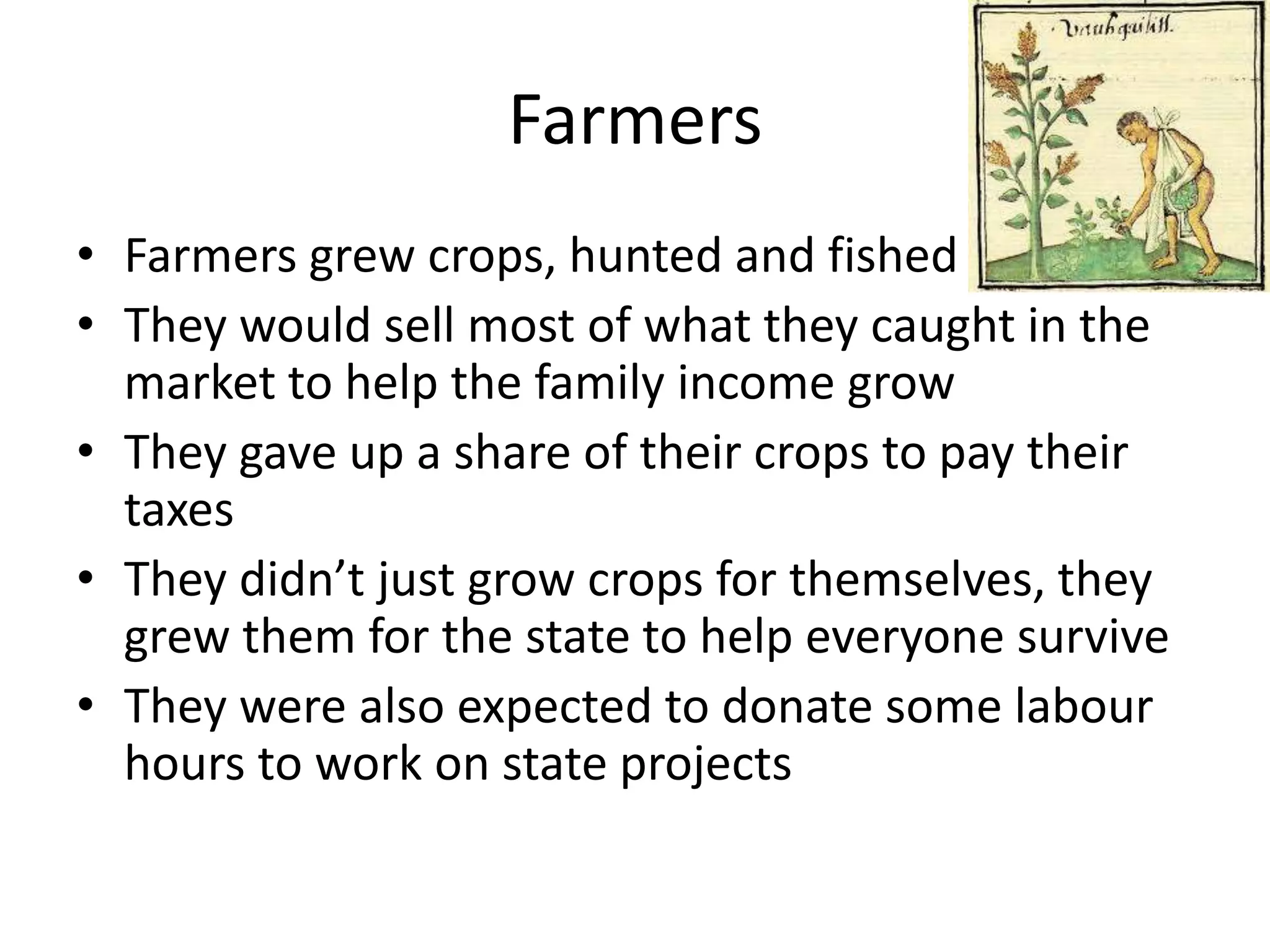
• Farmers grew crops, hunted and fished
• They would sell most of what they caught in the
  market to help the family income grow
• They gave up a share of their crops to pay their
  taxes
• They didn’t just grow crops for themselves, they
  grew them for the state to help everyone survive
• They were also expected to donate some labour
  hours to work on state projects
Artisans
• They were responsible for making the finer things
  in the Aztec empire
  – I.e. fashionable clothes, art…
• They were skilled craft workers
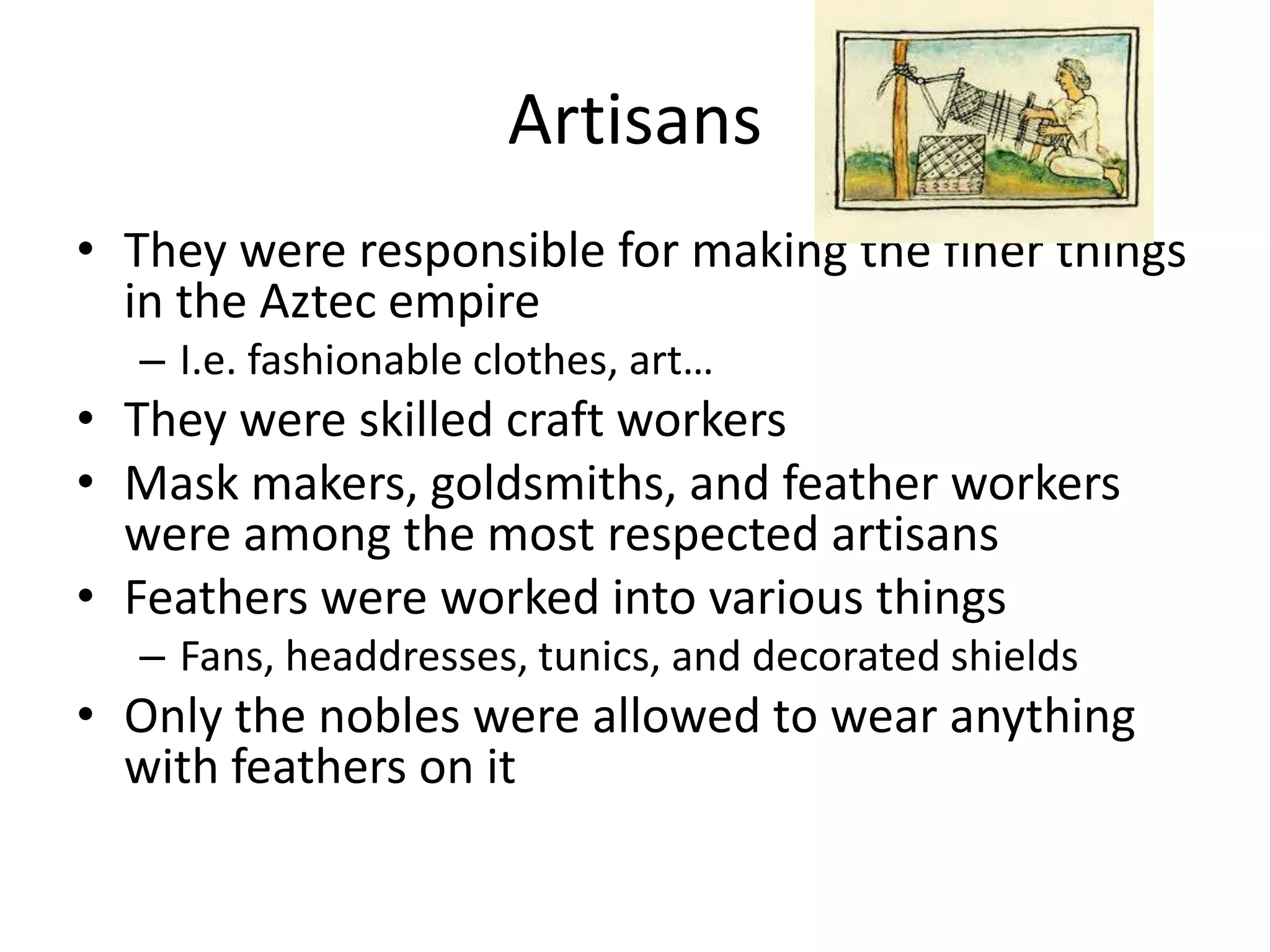
• Mask makers, goldsmiths, and feather workers
  were among the most respected artisans
• Feathers were worked into various things
  – Fans, headdresses, tunics, and decorated shields
• Only the nobles were allowed to wear anything
  with feathers on it
Signs of Status
• There were three ways to indicate you status
  in society for the Aztecs
  – 1. Clothing
  – 2. Jewlery
  – 3. Location and size of house
Moving up in Society
• The best way to move up in the Aztec society
  was through success in battle
• The Aztecs did not want to kill their enemies,
  rather, they wanted to capture them to
  sacrifice them to the gods.
• If a warrior took four prisoners, he would be
  eligible to move up in society
  – i.e. If the warrior was a commoner, he would be
    able to become nobility
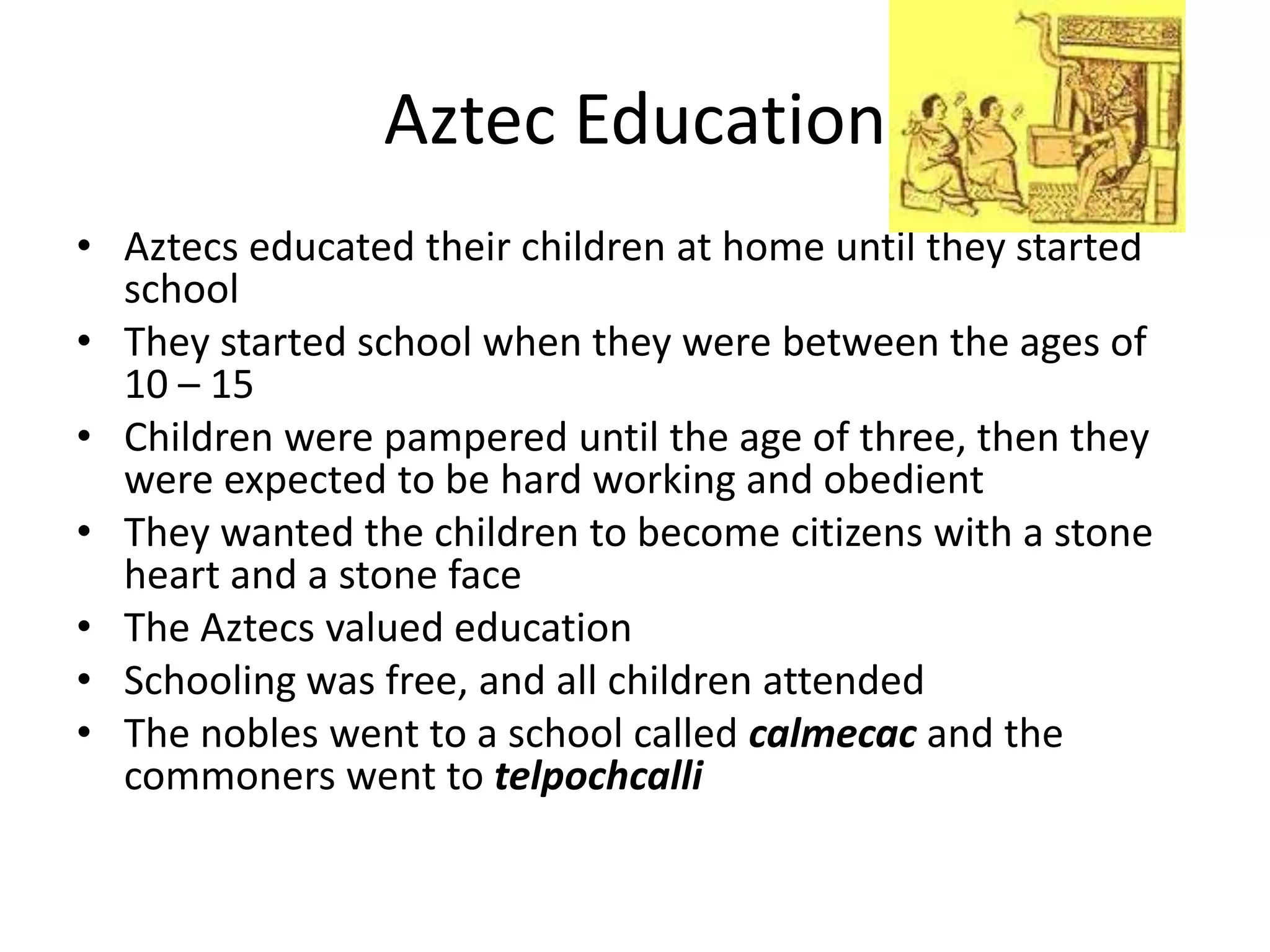
Aztec Education
• Aztecs educated their children at home until they started
  school
• They started school when they were between the ages of
  10 – 15
• Children were pampered until the age of three, then they
  were expected to be hard working and obedient
• They wanted the children to become citizens with a stone
  heart and a stone face
• The Aztecs valued education
• Schooling was free, and all children attended
• The nobles went to a school called calmecac and the
  commoners went to telpochcalli
Aztec Citizenship
• The society was focused on producing citizens
  who would contribute to the community
• The children were taught how to be good
  citizens in school
• Go to page 187 and copy the “Virtues of the
  Ideal Aztec Citizen” chart
Laws and Lawmaking
• They had a system of written laws
• Their legal system was a powerful tool used to
  maintain order in the society
• It reminded people of their responsibilities as
  citizens
• The law judged nobles harder if they broke a
  law because they are supposed to be good
  examples for everyone in society
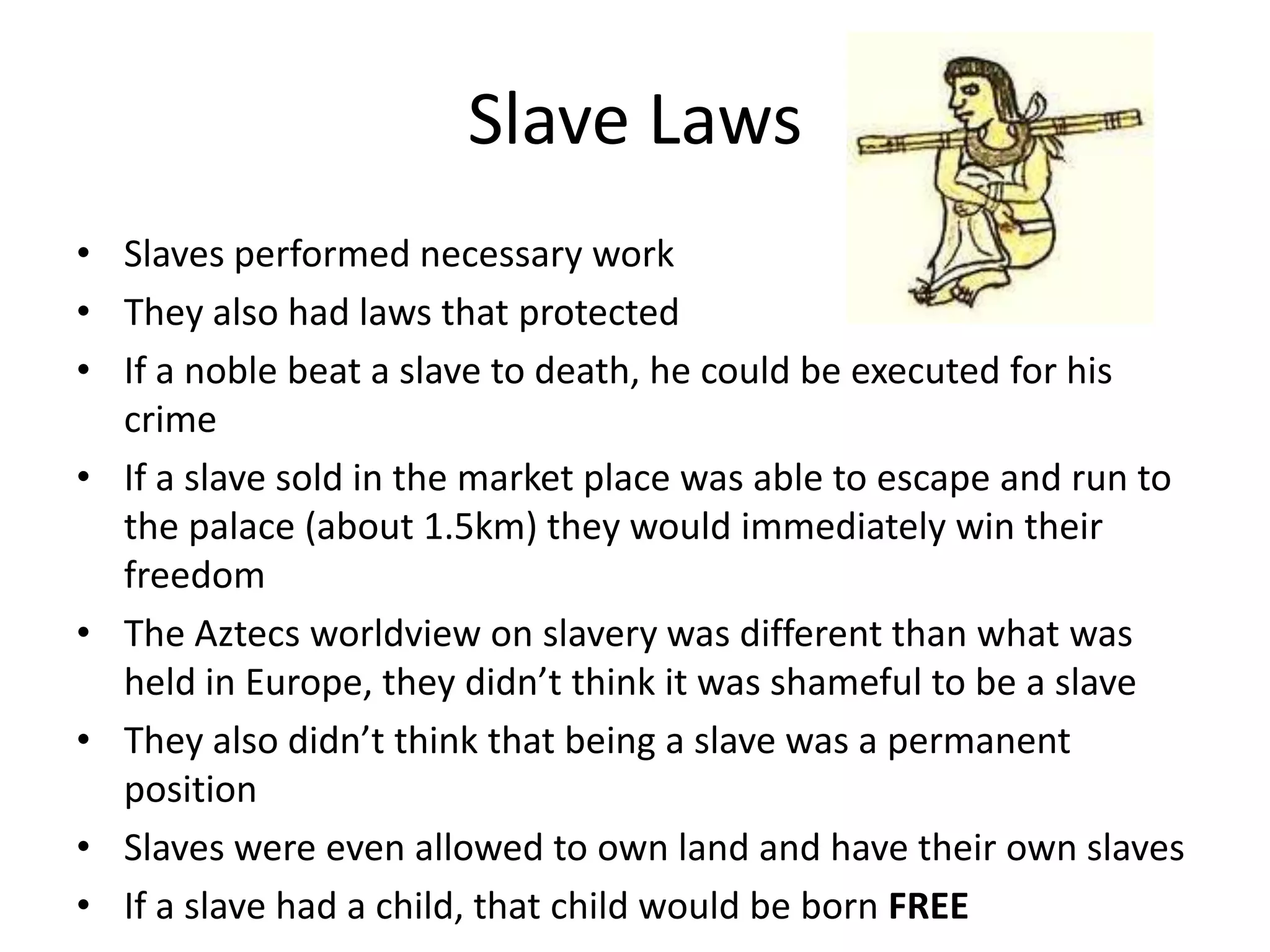
Slave Laws
• Slaves performed necessary work
• They also had laws that protected
• If a noble beat a slave to death, he could be executed for his
  crime
• If a slave sold in the market place was able to escape and run to
  the palace (about 1.5km) they would immediately win their
  freedom
• The Aztecs worldview on slavery was different than what was
  held in Europe, they didn’t think it was shameful to be a slave
• They also didn’t think that being a slave was a permanent
  position
• Slaves were even allowed to own land and have their own slaves
• If a slave had a child, that child would be born FREE

Chapter 8 notes

  • 1.
    Aztecs – Chapter8 For the Good of the People
  • 2.
    The Story • Moctezumawas known as “The Great Speaker” to the Aztec people • He was to interpret signs from the sky about what may happen in the future • He made all of his decisions as the emperor based on the movements in the heavens • Moctezuma noticed some bad omens – The water turned blood red, and there was something flaming shooting across the night sky
  • 3.
  • 4.
    • A person’sposition in society was determined by what class you were born into • Unlike in the Renaissance feudalism hierarchy, people here could work their way into a higher level of the social hierarchy
  • 5.
    Role of theEmperor • The emperor was at the top of the Aztec hierarchy • His title was Huey Tlatoani which means “Great Speaker” • The emperor was treated as a god, even though the people knew he was human • The Aztecs obeyed everything he said and showered him with gifts and priveleges
  • 6.
    Commander of theArmy • The emperor had to be a skilled warrior to lead the Aztec army • He had to know how to be strategic and how to be an effective leader
  • 7.
    Head of State •The emperor would always asks the priest and nobles for their opinions before making a decision • Even though he asked for their opinions, the decision was his to make
  • 8.
    Family Clans • TheAztec society was organized into units called calpolli • Members of the calpolli lived in the same neighborhood and worshipped at the same temple • The type of work they did could play a roll in forming their calpolli – i.e. a group of goldsmiths may form their own calpolli • The calpolli owned the land where the people lived and farmed • Each calpolli elected their own council and captain • The council was in charge of assigning houses and collecting taxes • They also had to make sure that the calpolli was clean
  • 9.
    Merchants • The merchantswere the richest calpolli • They went on trading expeditions all over the Aztec empire • They brought back goods, and also acted as spies for the Aztecs • Because they knew the layout and geography, they were valuable assets to the empire • The taxes they paid after selling their goods helped to enrich the Aztec state
  • 10.
    Farmers • Farmers grewcrops, hunted and fished • They would sell most of what they caught in the market to help the family income grow • They gave up a share of their crops to pay their taxes • They didn’t just grow crops for themselves, they grew them for the state to help everyone survive • They were also expected to donate some labour hours to work on state projects
  • 11.
    Artisans • They wereresponsible for making the finer things in the Aztec empire – I.e. fashionable clothes, art… • They were skilled craft workers • Mask makers, goldsmiths, and feather workers were among the most respected artisans • Feathers were worked into various things – Fans, headdresses, tunics, and decorated shields • Only the nobles were allowed to wear anything with feathers on it
  • 12.
    Signs of Status •There were three ways to indicate you status in society for the Aztecs – 1. Clothing – 2. Jewlery – 3. Location and size of house
  • 13.
    Moving up inSociety • The best way to move up in the Aztec society was through success in battle • The Aztecs did not want to kill their enemies, rather, they wanted to capture them to sacrifice them to the gods. • If a warrior took four prisoners, he would be eligible to move up in society – i.e. If the warrior was a commoner, he would be able to become nobility
  • 14.
    Aztec Education • Aztecseducated their children at home until they started school • They started school when they were between the ages of 10 – 15 • Children were pampered until the age of three, then they were expected to be hard working and obedient • They wanted the children to become citizens with a stone heart and a stone face • The Aztecs valued education • Schooling was free, and all children attended • The nobles went to a school called calmecac and the commoners went to telpochcalli
  • 15.
    Aztec Citizenship • Thesociety was focused on producing citizens who would contribute to the community • The children were taught how to be good citizens in school • Go to page 187 and copy the “Virtues of the Ideal Aztec Citizen” chart
  • 16.
    Laws and Lawmaking •They had a system of written laws • Their legal system was a powerful tool used to maintain order in the society • It reminded people of their responsibilities as citizens • The law judged nobles harder if they broke a law because they are supposed to be good examples for everyone in society
  • 17.
    Slave Laws • Slavesperformed necessary work • They also had laws that protected • If a noble beat a slave to death, he could be executed for his crime • If a slave sold in the market place was able to escape and run to the palace (about 1.5km) they would immediately win their freedom • The Aztecs worldview on slavery was different than what was held in Europe, they didn’t think it was shameful to be a slave • They also didn’t think that being a slave was a permanent position • Slaves were even allowed to own land and have their own slaves • If a slave had a child, that child would be born FREE