What is Biology ?


Biology  is the study
         of life

                        1
SO… WHAT IS LIFE
   Life is defined by a list of characteristics
    organisms must possess to be considered
    living.

   All living organisms contain the same life
    functions although their means of
    achieving them may be different

                                                   2
Life Functions
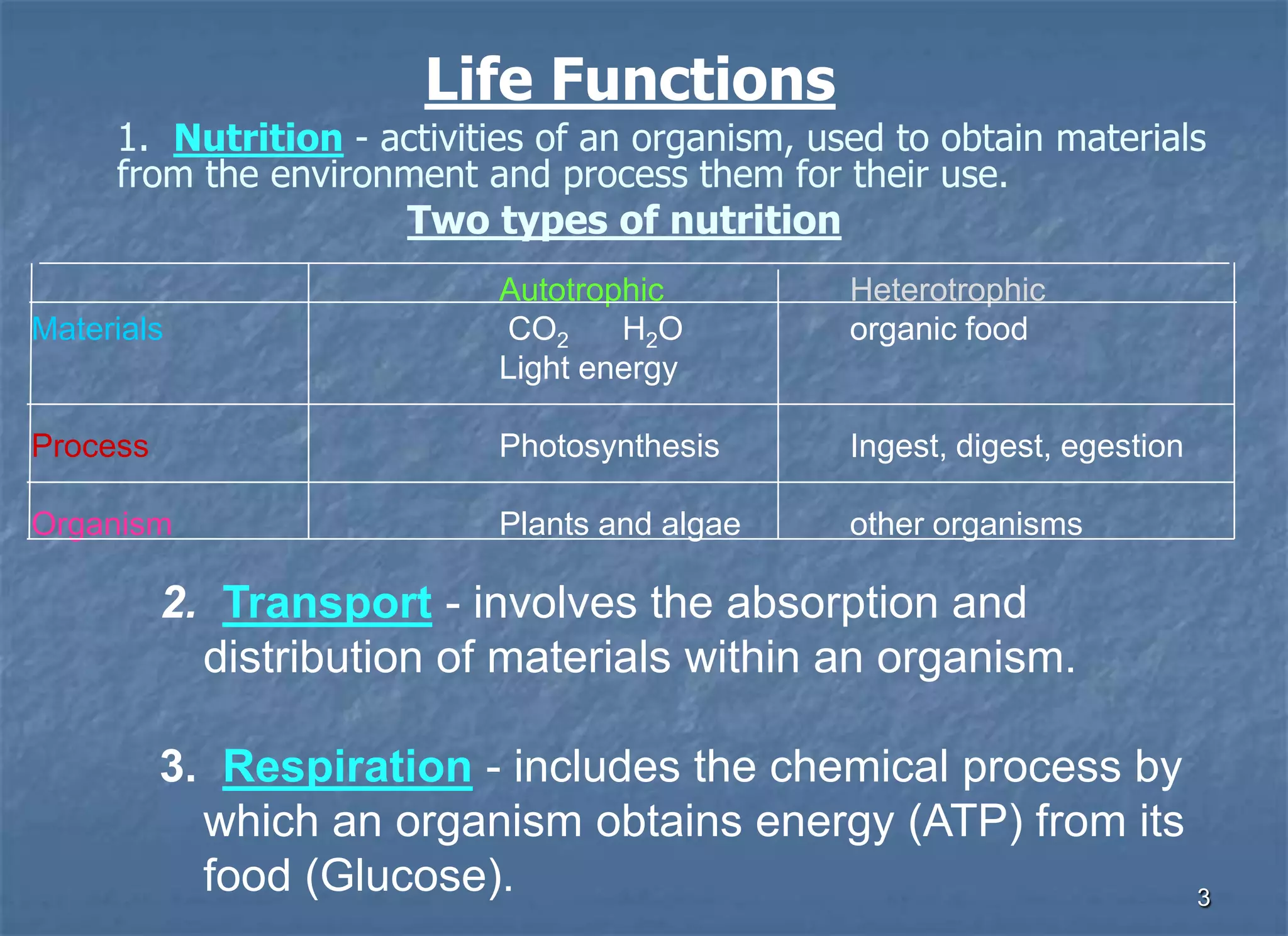
     1. Nutrition - activities of an organism, used to obtain materials
     from the environment and process them for their use.
                     Two types of nutrition
                            Autotrophic          Heterotrophic
Materials                   CO2     H 2O         organic food
                            Light energy

Process                     Photosynthesis       Ingest, digest, egestion

Organism                    Plants and algae     other organisms

          2. Transport - involves the absorption and
            distribution of materials within an organism.

          3. Respiration - includes the chemical process by
            which an organism obtains energy (ATP) from its
            food (Glucose).                                 3
Life Functions
4. Excretion - the removal of wastes produced
by cells during metabolic activities.

5. Synthesis - includes the chemical activities by
   which an organism builds larger molecules from
   smaller ones. (to Make)

6. Regulation - involves the control and
  coordination of various activities in an organism.
  (Nervous system and Endocrine system play a
  role)
                                                       4
Life Functions

   7. Growth - increases in cell size and/or
    cell numbers.

   8. Reproduction - production of new
    individuals. A species survival depends on
    reproduction. An individual’s life does not.


                                                5
II. Important Terms

1. Metabolism - refers to all the life functions
   needed to sustain life. Does not include
   reproduction

2. Homeostasis - the maintenance of a stable
   internal environment. (Regulation helps to achieve
   Homeostasis)

• Your body systems are constantly adjusting to
  maintain homeostasis.


                                                        6
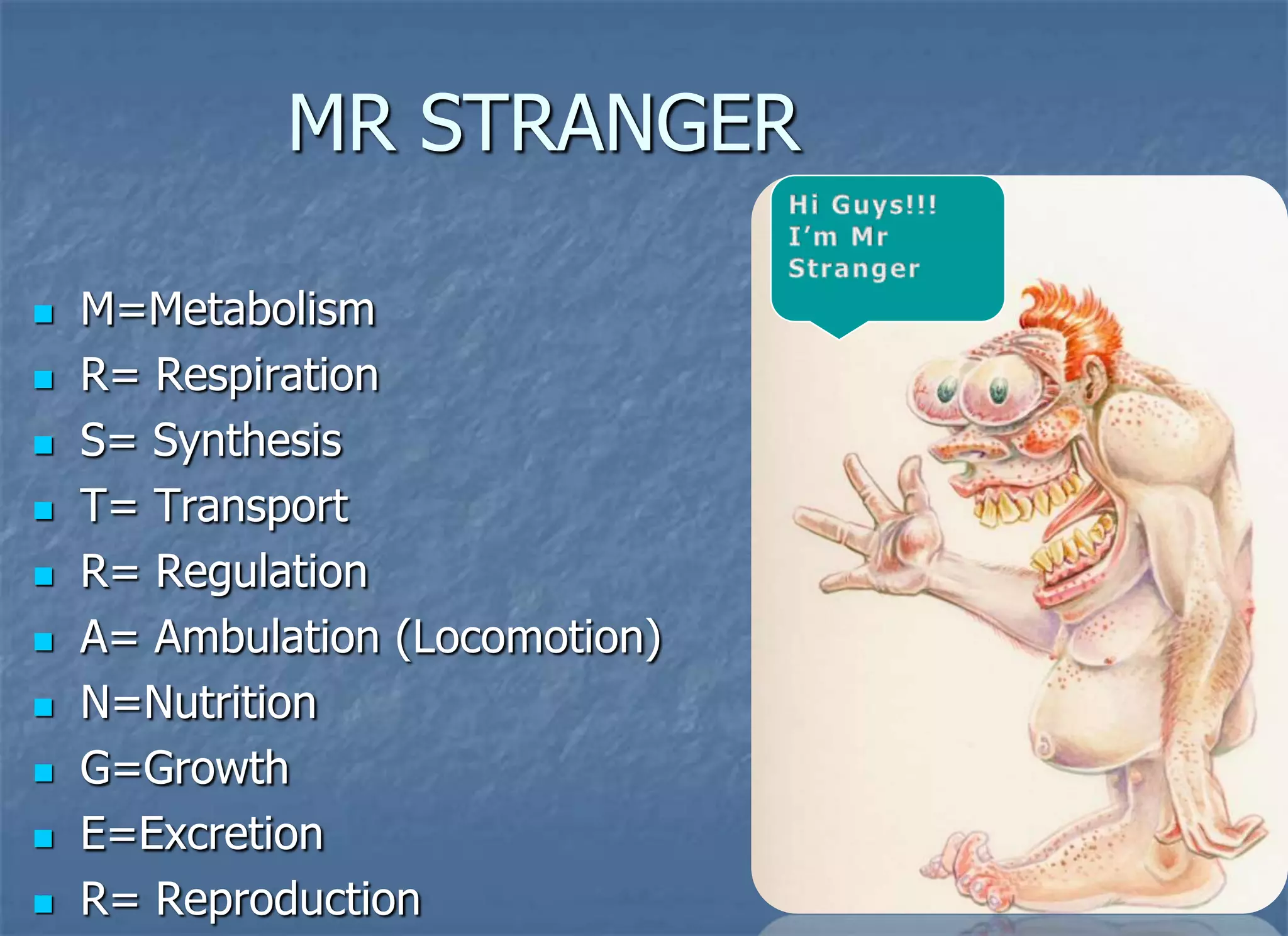
MR STRANGER

   M=Metabolism
   R= Respiration
   S= Synthesis
   T= Transport
   R= Regulation
   A= Ambulation (Locomotion)
   N=Nutrition
   G=Growth
   E=Excretion
   R= Reproduction              7

Unit 1 life functions

  • 1.
    What is Biology? Biology is the study of life 1
  • 2.
    SO… WHAT ISLIFE  Life is defined by a list of characteristics organisms must possess to be considered living.  All living organisms contain the same life functions although their means of achieving them may be different 2
  • 3.
    Life Functions 1. Nutrition - activities of an organism, used to obtain materials from the environment and process them for their use. Two types of nutrition Autotrophic Heterotrophic Materials CO2 H 2O organic food Light energy Process Photosynthesis Ingest, digest, egestion Organism Plants and algae other organisms 2. Transport - involves the absorption and distribution of materials within an organism. 3. Respiration - includes the chemical process by which an organism obtains energy (ATP) from its food (Glucose). 3
  • 4.
    Life Functions 4. Excretion- the removal of wastes produced by cells during metabolic activities. 5. Synthesis - includes the chemical activities by which an organism builds larger molecules from smaller ones. (to Make) 6. Regulation - involves the control and coordination of various activities in an organism. (Nervous system and Endocrine system play a role) 4
  • 5.
    Life Functions  7. Growth - increases in cell size and/or cell numbers.  8. Reproduction - production of new individuals. A species survival depends on reproduction. An individual’s life does not. 5
  • 6.
    II. Important Terms 1.Metabolism - refers to all the life functions needed to sustain life. Does not include reproduction 2. Homeostasis - the maintenance of a stable internal environment. (Regulation helps to achieve Homeostasis) • Your body systems are constantly adjusting to maintain homeostasis. 6
  • 7.
    MR STRANGER  M=Metabolism  R= Respiration  S= Synthesis  T= Transport  R= Regulation  A= Ambulation (Locomotion)  N=Nutrition  G=Growth  E=Excretion  R= Reproduction 7