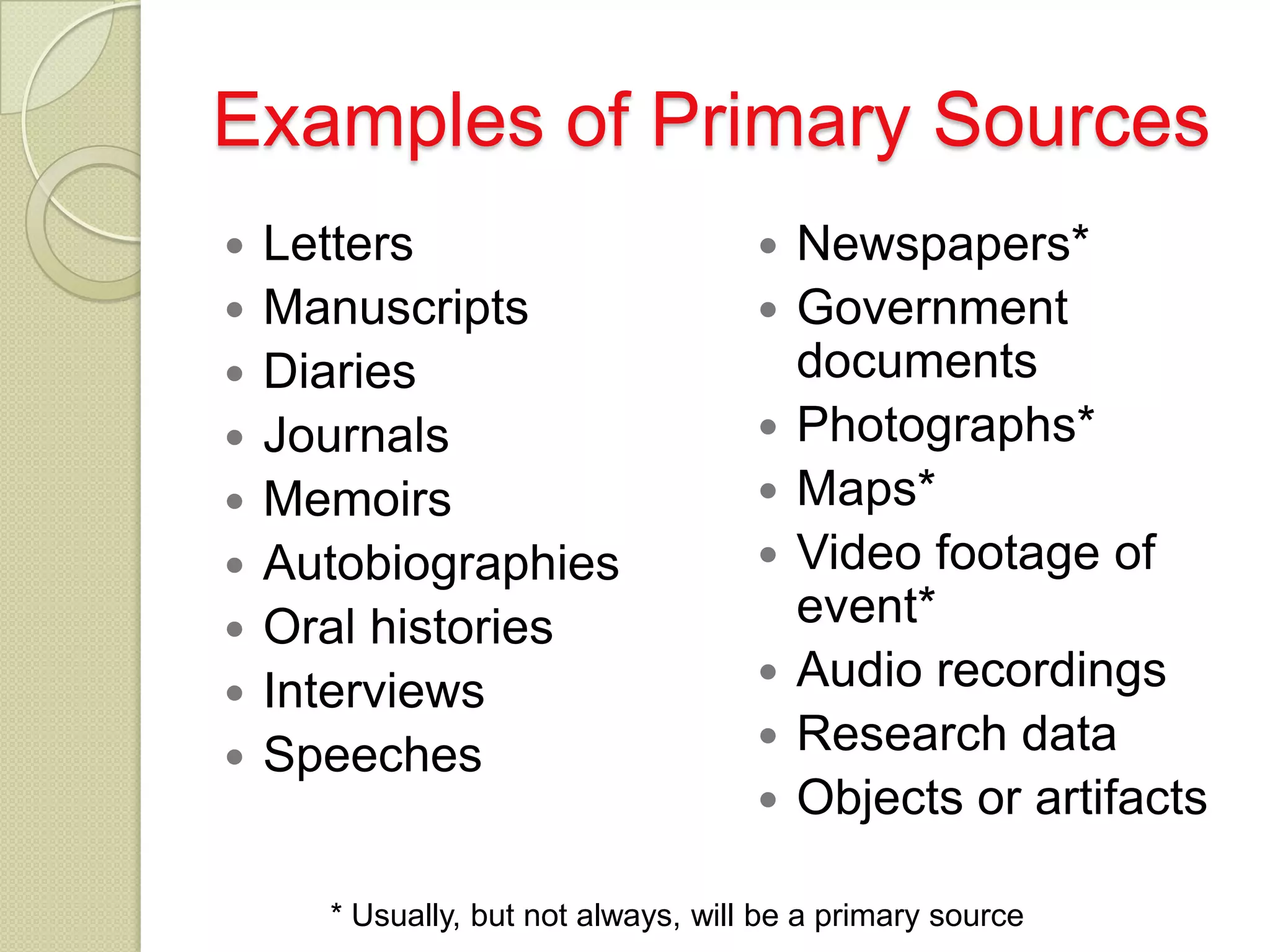
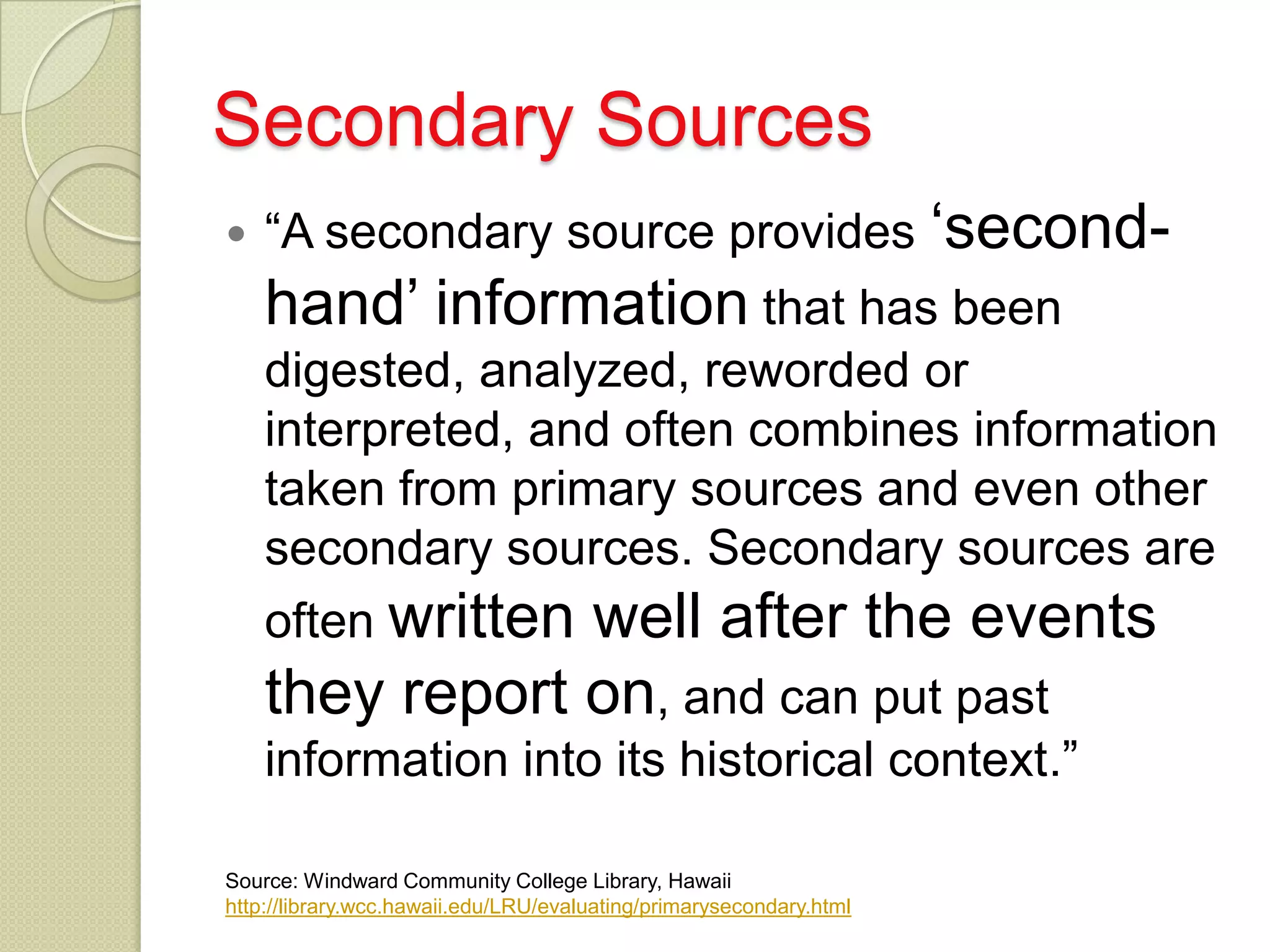
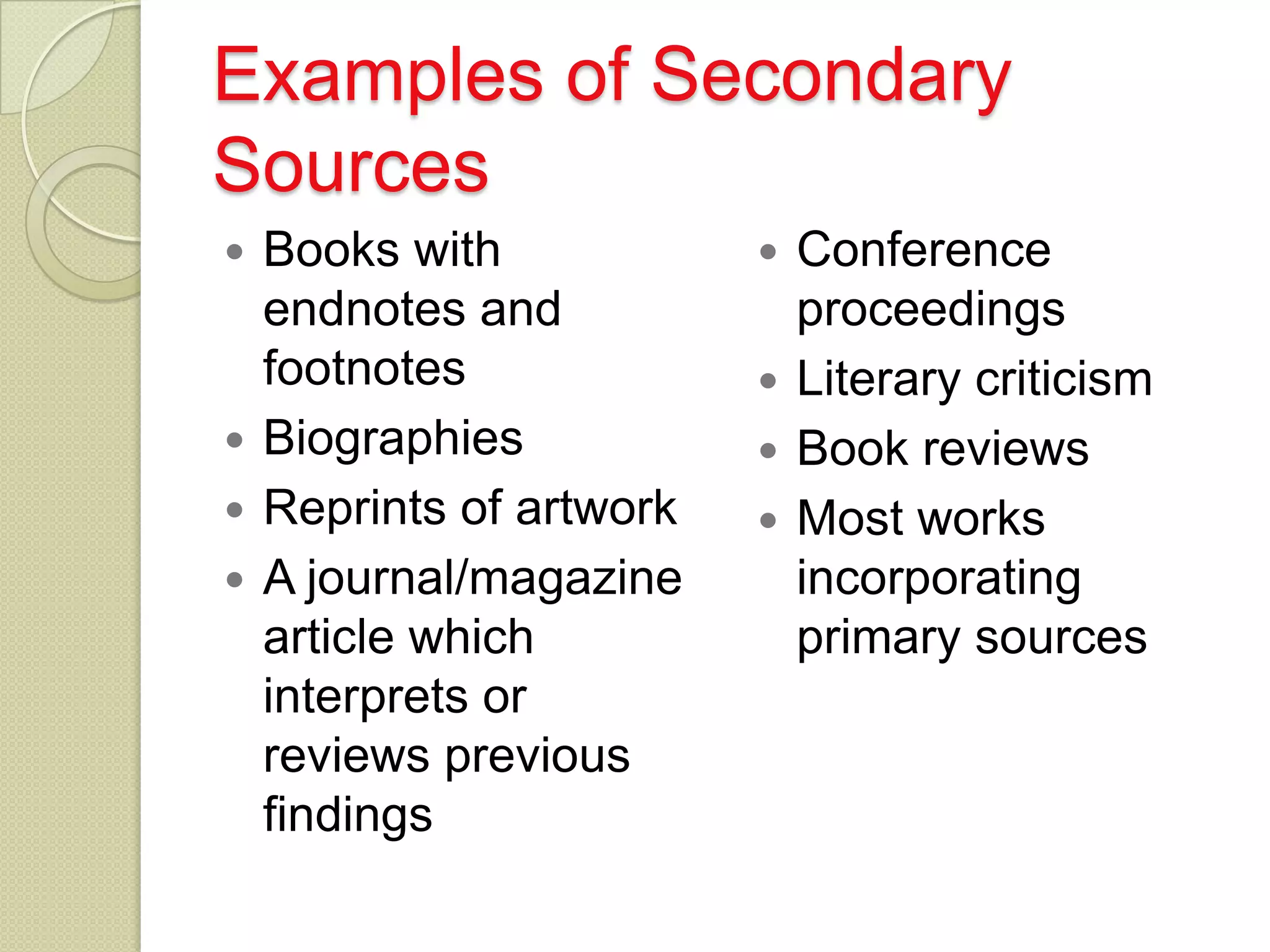
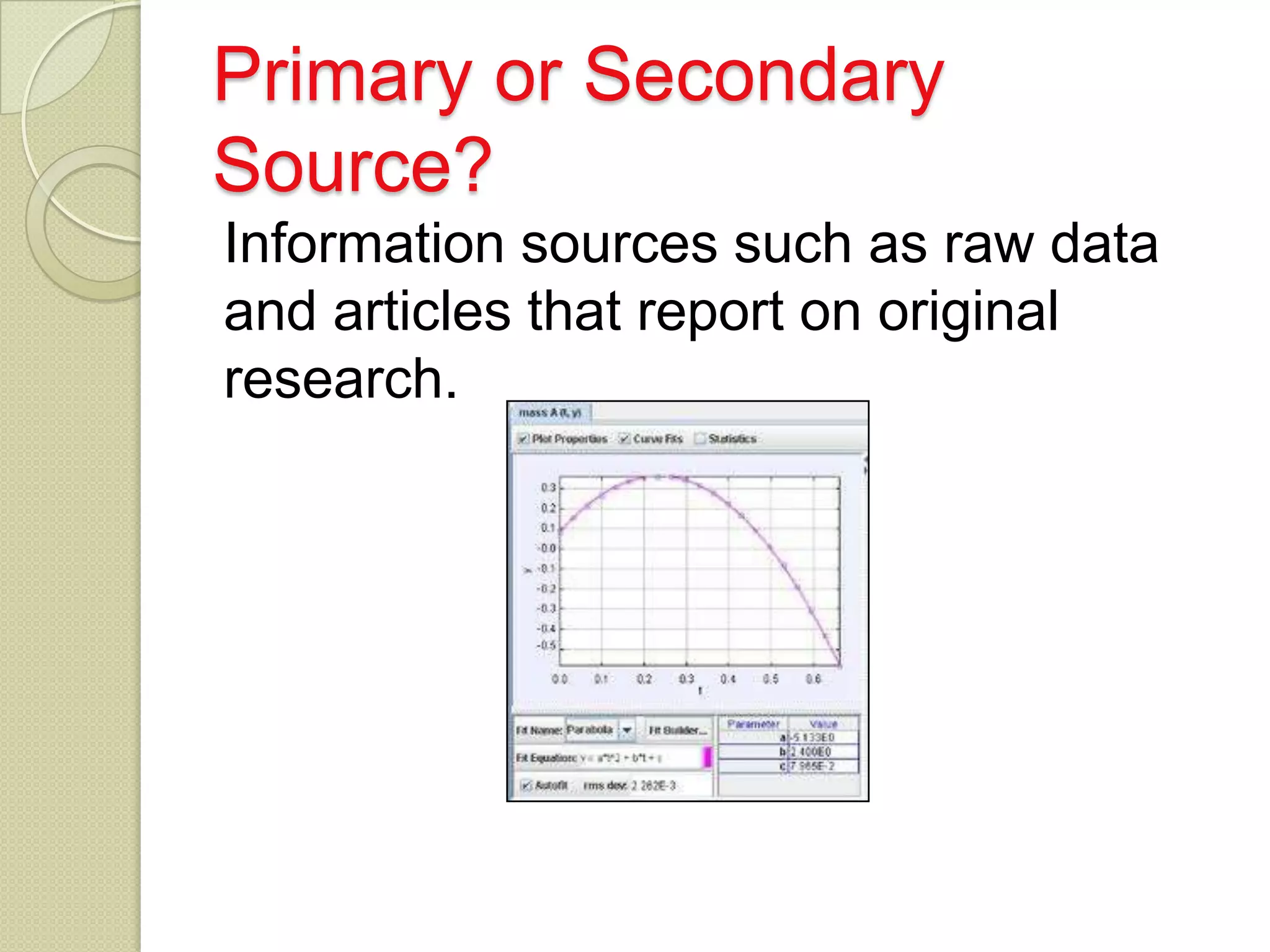
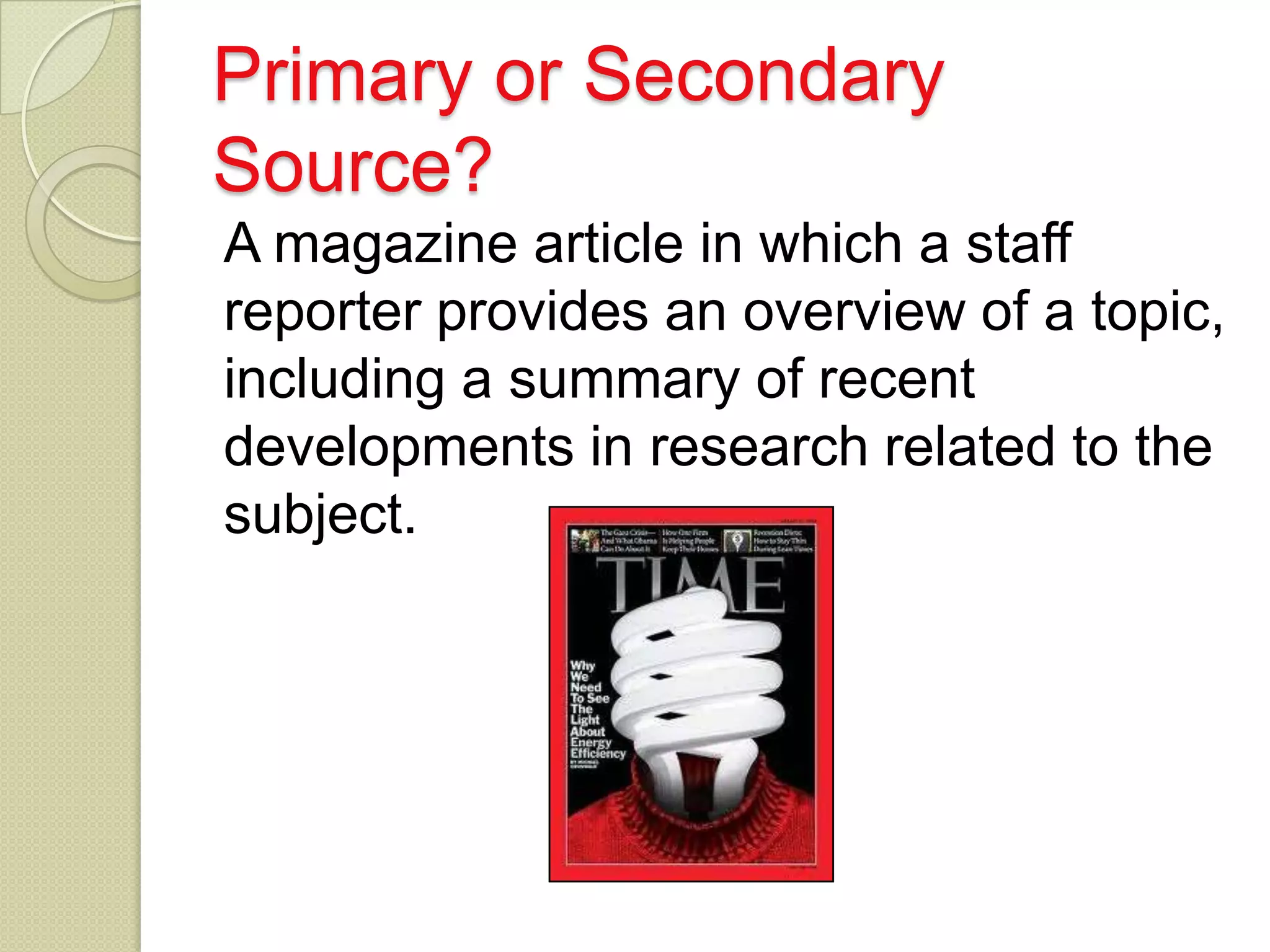
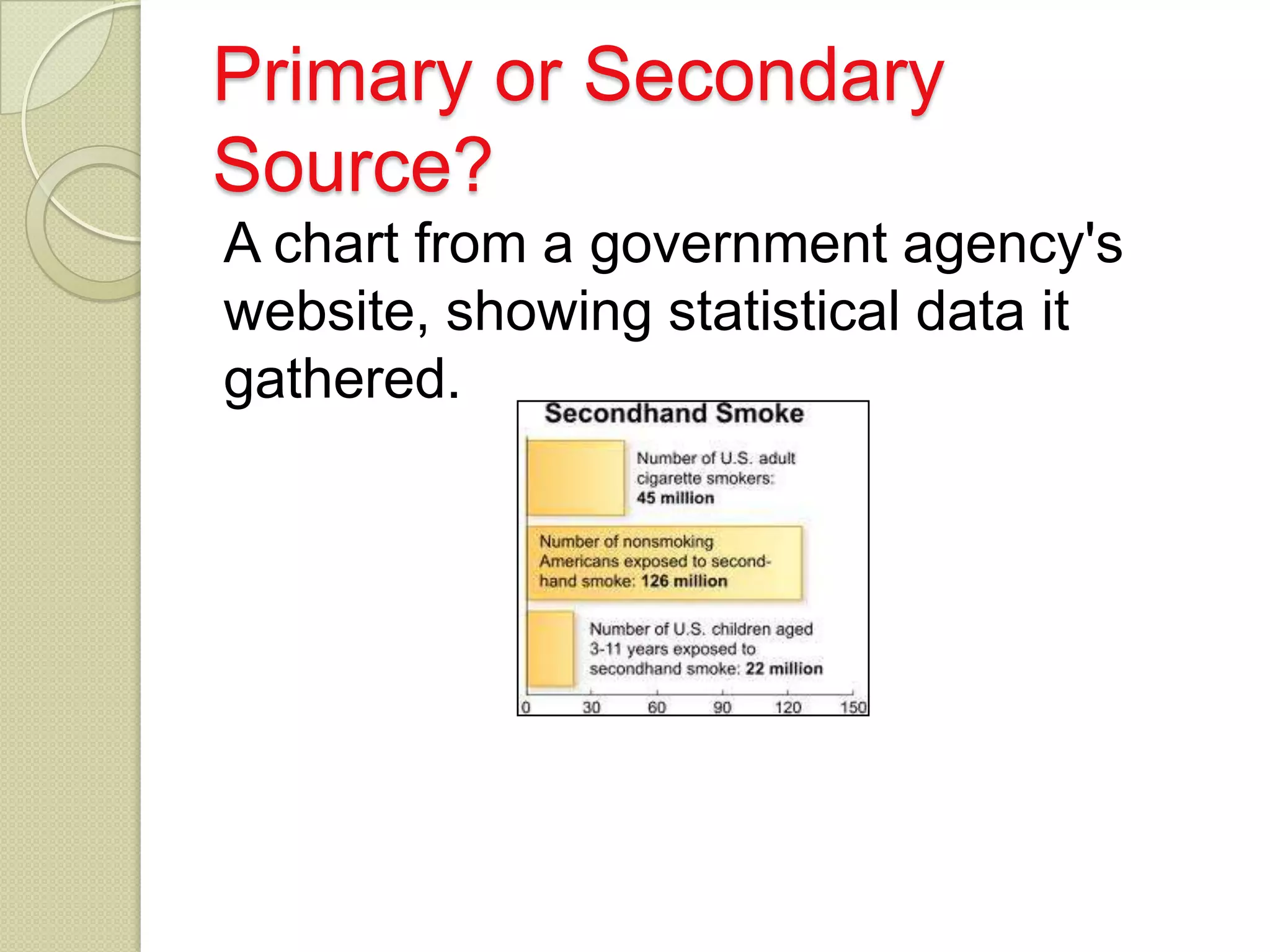
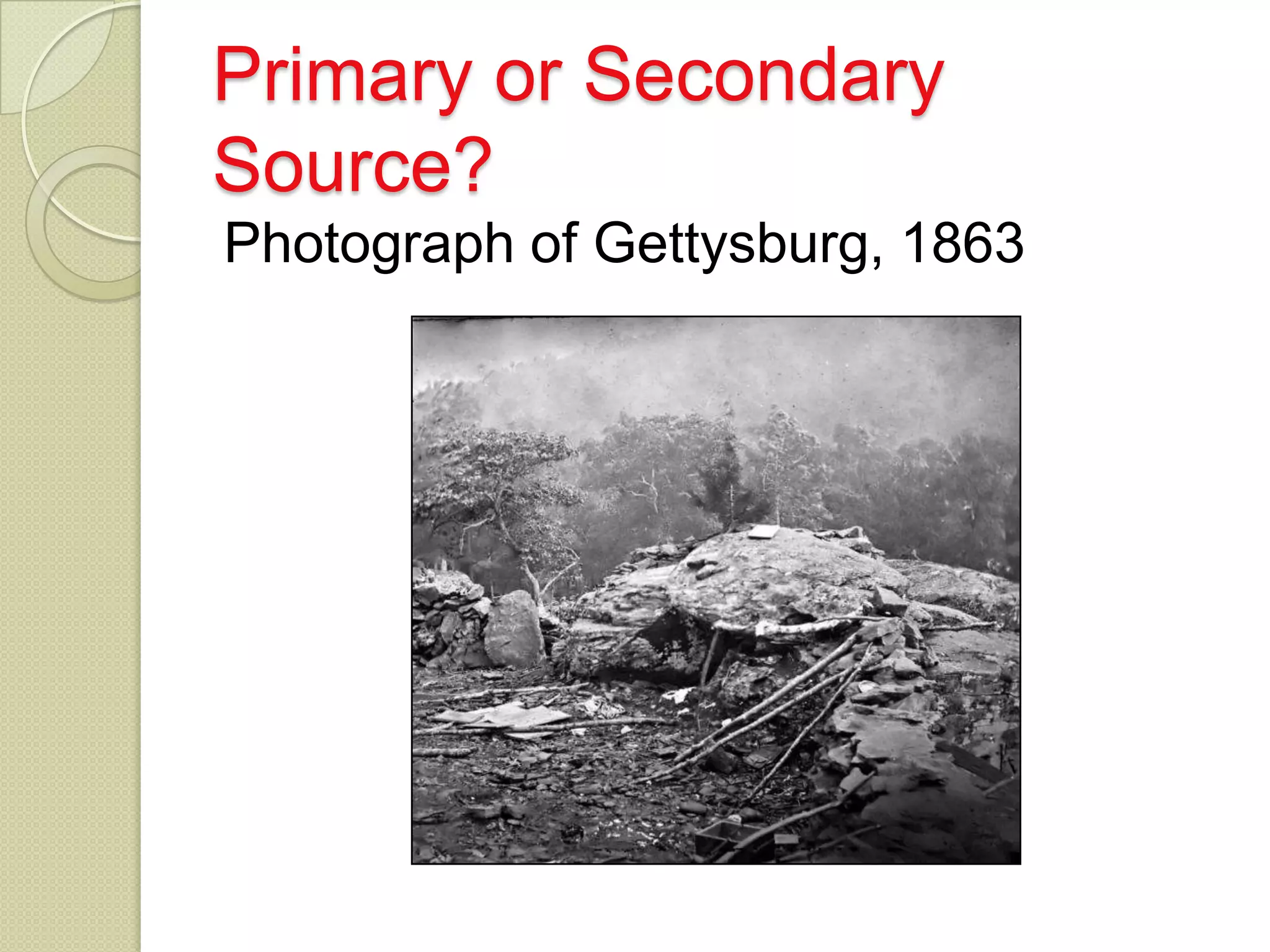
The document discusses the differences between primary and secondary sources. Primary sources are original materials created during or shortly after an event by direct participants or observers, such as letters, diaries, oral histories, government documents, photographs, and artifacts. Secondary sources are accounts created after an event that interpret and analyze primary sources, such as books, articles, documentaries, and reference works. Examples are provided of both primary and secondary sources to illustrate the distinction. A series of questions then tests the reader's ability to identify whether examples given are primary or secondary sources.