Material created at the time history was being made.

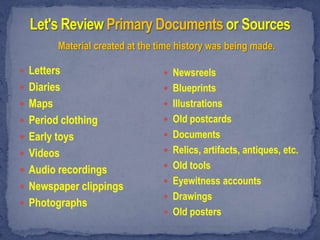
 Letters                          Newsreels
 Diaries                          Blueprints
 Maps                             Illustrations
 Period clothing                  Old postcards
 Early toys                       Documents

 Videos                           Relics, artifacts, antiques, etc.
                                   Old tools
 Audio recordings
                                   Eyewitness accounts
 Newspaper clippings
                                   Drawings
 Photographs
                                   Old posters
1    2    3    4    5
6    7    8    9    10
11   12   13   14   15
16   17   18   19   20
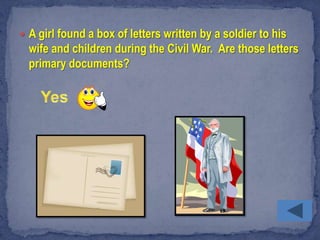
 A girl found a box of letters written by a soldier to his
  wife and children during the Civil War. Are those letters
  primary documents?
 My grandmother found a diary written by a daughter of a
  Civil War soldier dated from 1863-1865. She talked about
  what the war was like in South Carolina. Is that a primary
  document?
 I went to visit my grandmother. She gave me a chest. The
  chest was filled with her childhood items. She told me that
  she loved her things. When I opened it, I found her toys,
  some photographs and her birth certificate. Are those
  things primary documents?
 I went to the library and found a newspaper written in 2005
  about the first Native American tribes. Is that newspaper a
  primary document?
 My sister and I went to the museum in town. We saw
  posters and buttons for the Governor’s race from 1980. Are
  those a primary documents?
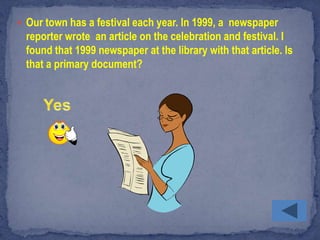
 Our town has a festival each year. In 1999, a newspaper
  reporter wrote an article on the celebration and festival. I
  found that 1999 newspaper at the library with that article. Is
  that a primary document?
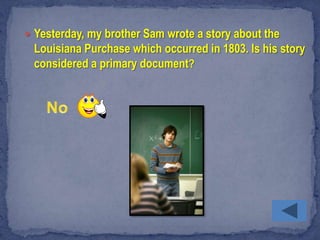
 Yesterday, my brother Sam wrote a story about the
 Louisiana Purchase which occurred in 1803. Is his story
 considered a primary document?
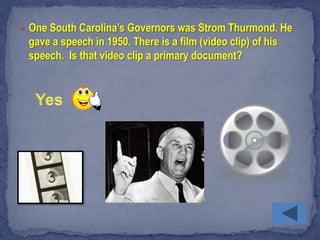
 One South Carolina’s Governors was Strom Thurmond. He
 gave a speech in 1950. There is a film (video clip) of his
 speech. Is that video clip a primary document?
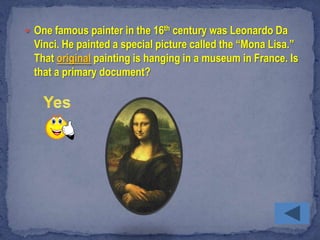
 One famous painter in the 16th century was Leonardo Da
  Vinci. He painted a special picture called the “Mona Lisa.”
  That original painting is hanging in a museum in France. Is
  that a primary document?
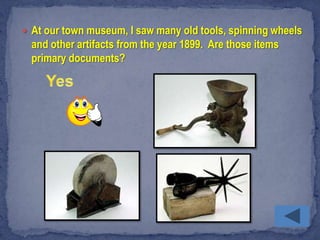
 At our town museum, I saw many old tools, spinning wheels
  and other artifacts from the year 1899. Are those items
  primary documents?
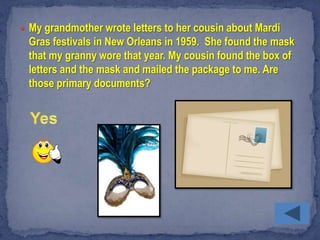
 My grandmother wrote letters to her cousin about Mardi
  Gras festivals in New Orleans in 1959. She found the mask
  that my granny wore that year. My cousin found the box of
  letters and the mask and mailed the package to me. Are
  those primary documents?
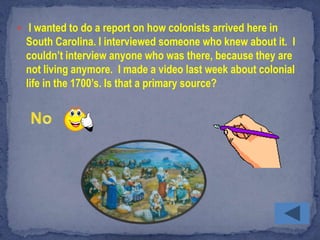
 I wanted to do a report on how colonists arrived here in
  South Carolina. I interviewed someone who knew about it. I
  couldn’t interview anyone who was there, because they are
  not living anymore. I made a video last week about colonial
  life in the 1700’s. Is that a primary source?
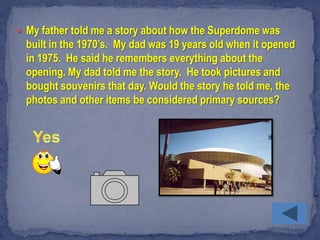
 My father told me a story about how the Superdome was
  built in the 1970’s. My dad was 19 years old when it opened
  in 1975. He said he remembers everything about the
  opening. My dad told me the story. He took pictures and
  bought souvenirs that day. Would the story he told me, the
  photos and other items be considered primary sources?
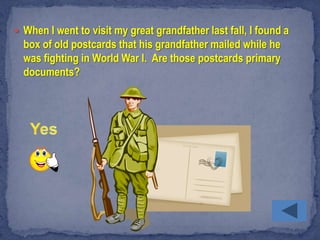
 When I went to visit my great grandfather last fall, I found a
  box of old postcards that his grandfather mailed while he
  was fighting in World War I. Are those postcards primary
  documents?
 A month ago, I read a book about the Civil War. I enjoyed
  learning about the Civil War very much. I had to make a
  report, so I wrote my research paper on how the Civil War
  began in 1861. Is my report considered a primary
  document?
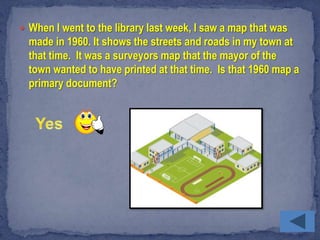
 When I went to the library last week, I saw a map that was
  made in 1960. It shows the streets and roads in my town at
  that time. It was a surveyors map that the mayor of the
  town wanted to have printed at that time. Is that 1960 map a
  primary document?
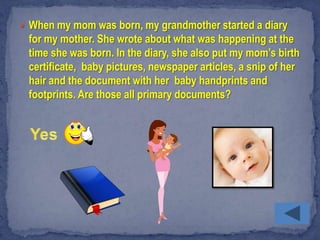
 When my mom was born, my grandmother started a diary
 for my mother. She wrote about what was happening at the
 time she was born. In the diary, she also put my mom’s birth
 certificate, baby pictures, newspaper articles, a snip of her
 hair and the document with her baby handprints and
 footprints. Are those all primary documents?
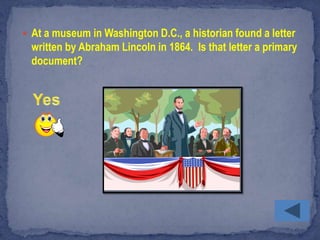
 At a museum in Washington D.C., a historian found a letter
  written by Abraham Lincoln in 1864. Is that letter a primary
  document?
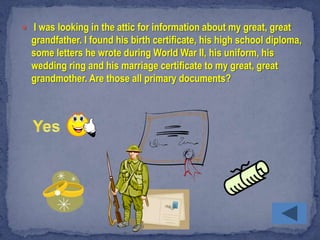
 I was looking in the attic for information about my great, great
  grandfather. I found his birth certificate, his high school diploma,
  some letters he wrote during World War II, his uniform, his
  wedding ring and his marriage certificate to my great, great
  grandmother. Are those all primary documents?
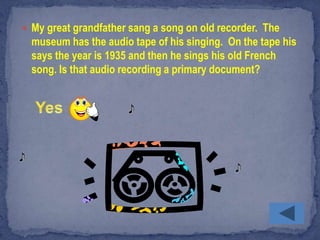
 My great grandfather sang a song on old recorder. The
  museum has the audio tape of his singing. On the tape his
  says the year is 1935 and then he sings his old French
  song. Is that audio recording a primary document?
Primary and Secondary Sources Quiz

Primary and Secondary Sources Quiz

  • 2.
    Material created atthe time history was being made.  Letters  Newsreels  Diaries  Blueprints  Maps  Illustrations  Period clothing  Old postcards  Early toys  Documents  Videos  Relics, artifacts, antiques, etc.  Old tools  Audio recordings  Eyewitness accounts  Newspaper clippings  Drawings  Photographs  Old posters
  • 4.
    1 2 3 4 5 6 7 8 9 10 11 12 13 14 15 16 17 18 19 20
  • 5.
     A girlfound a box of letters written by a soldier to his wife and children during the Civil War. Are those letters primary documents?
  • 6.
     My grandmotherfound a diary written by a daughter of a Civil War soldier dated from 1863-1865. She talked about what the war was like in South Carolina. Is that a primary document?
  • 7.
     I wentto visit my grandmother. She gave me a chest. The chest was filled with her childhood items. She told me that she loved her things. When I opened it, I found her toys, some photographs and her birth certificate. Are those things primary documents?
  • 8.
     I wentto the library and found a newspaper written in 2005 about the first Native American tribes. Is that newspaper a primary document?
  • 9.
     My sisterand I went to the museum in town. We saw posters and buttons for the Governor’s race from 1980. Are those a primary documents?
  • 10.
     Our townhas a festival each year. In 1999, a newspaper reporter wrote an article on the celebration and festival. I found that 1999 newspaper at the library with that article. Is that a primary document?
  • 11.
     Yesterday, mybrother Sam wrote a story about the Louisiana Purchase which occurred in 1803. Is his story considered a primary document?
  • 12.
     One SouthCarolina’s Governors was Strom Thurmond. He gave a speech in 1950. There is a film (video clip) of his speech. Is that video clip a primary document?
  • 13.
     One famouspainter in the 16th century was Leonardo Da Vinci. He painted a special picture called the “Mona Lisa.” That original painting is hanging in a museum in France. Is that a primary document?
  • 14.
     At ourtown museum, I saw many old tools, spinning wheels and other artifacts from the year 1899. Are those items primary documents?
  • 15.
     My grandmotherwrote letters to her cousin about Mardi Gras festivals in New Orleans in 1959. She found the mask that my granny wore that year. My cousin found the box of letters and the mask and mailed the package to me. Are those primary documents?
  • 16.
     I wantedto do a report on how colonists arrived here in South Carolina. I interviewed someone who knew about it. I couldn’t interview anyone who was there, because they are not living anymore. I made a video last week about colonial life in the 1700’s. Is that a primary source?
  • 17.
     My fathertold me a story about how the Superdome was built in the 1970’s. My dad was 19 years old when it opened in 1975. He said he remembers everything about the opening. My dad told me the story. He took pictures and bought souvenirs that day. Would the story he told me, the photos and other items be considered primary sources?
  • 18.
     When Iwent to visit my great grandfather last fall, I found a box of old postcards that his grandfather mailed while he was fighting in World War I. Are those postcards primary documents?
  • 19.
     A monthago, I read a book about the Civil War. I enjoyed learning about the Civil War very much. I had to make a report, so I wrote my research paper on how the Civil War began in 1861. Is my report considered a primary document?
  • 20.
     When Iwent to the library last week, I saw a map that was made in 1960. It shows the streets and roads in my town at that time. It was a surveyors map that the mayor of the town wanted to have printed at that time. Is that 1960 map a primary document?
  • 21.
     When mymom was born, my grandmother started a diary for my mother. She wrote about what was happening at the time she was born. In the diary, she also put my mom’s birth certificate, baby pictures, newspaper articles, a snip of her hair and the document with her baby handprints and footprints. Are those all primary documents?
  • 22.
     At amuseum in Washington D.C., a historian found a letter written by Abraham Lincoln in 1864. Is that letter a primary document?
  • 23.
     I waslooking in the attic for information about my great, great grandfather. I found his birth certificate, his high school diploma, some letters he wrote during World War II, his uniform, his wedding ring and his marriage certificate to my great, great grandmother. Are those all primary documents?
  • 24.
     My greatgrandfather sang a song on old recorder. The museum has the audio tape of his singing. On the tape his says the year is 1935 and then he sings his old French song. Is that audio recording a primary document?