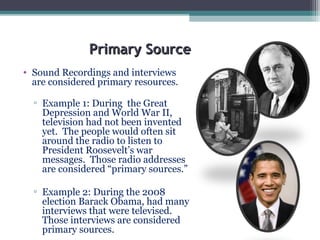
This document defines and provides examples of primary and secondary sources. Primary sources are original materials created during the time being studied, such as diaries, autobiographies, speeches, historical documents, photographs, recordings, and letters. Secondary sources are materials created after the event as interpretations or analyses of primary sources, such as biographies, textbooks, encyclopedias, newspaper or magazine articles analyzing past events, and oral histories. Primary sources provide direct insight from participants, while secondary sources provide context and interpretation from later authors.