h"p://echa.europa.eu/addressing-­‐chemicals-­‐of-­‐concern/substances-­‐of-­‐poten8al-­‐concern/svhc-­‐roadmap-­‐to-­‐2020-­‐implementa8on	
  
h"p://echa.europa.eu/addressing-­‐chemicals-­‐of-­‐concern/substances-­‐of-­‐poten8al-­‐concern/svhc-­‐roadmap-­‐to-­‐2020-­‐implementa8on	
  
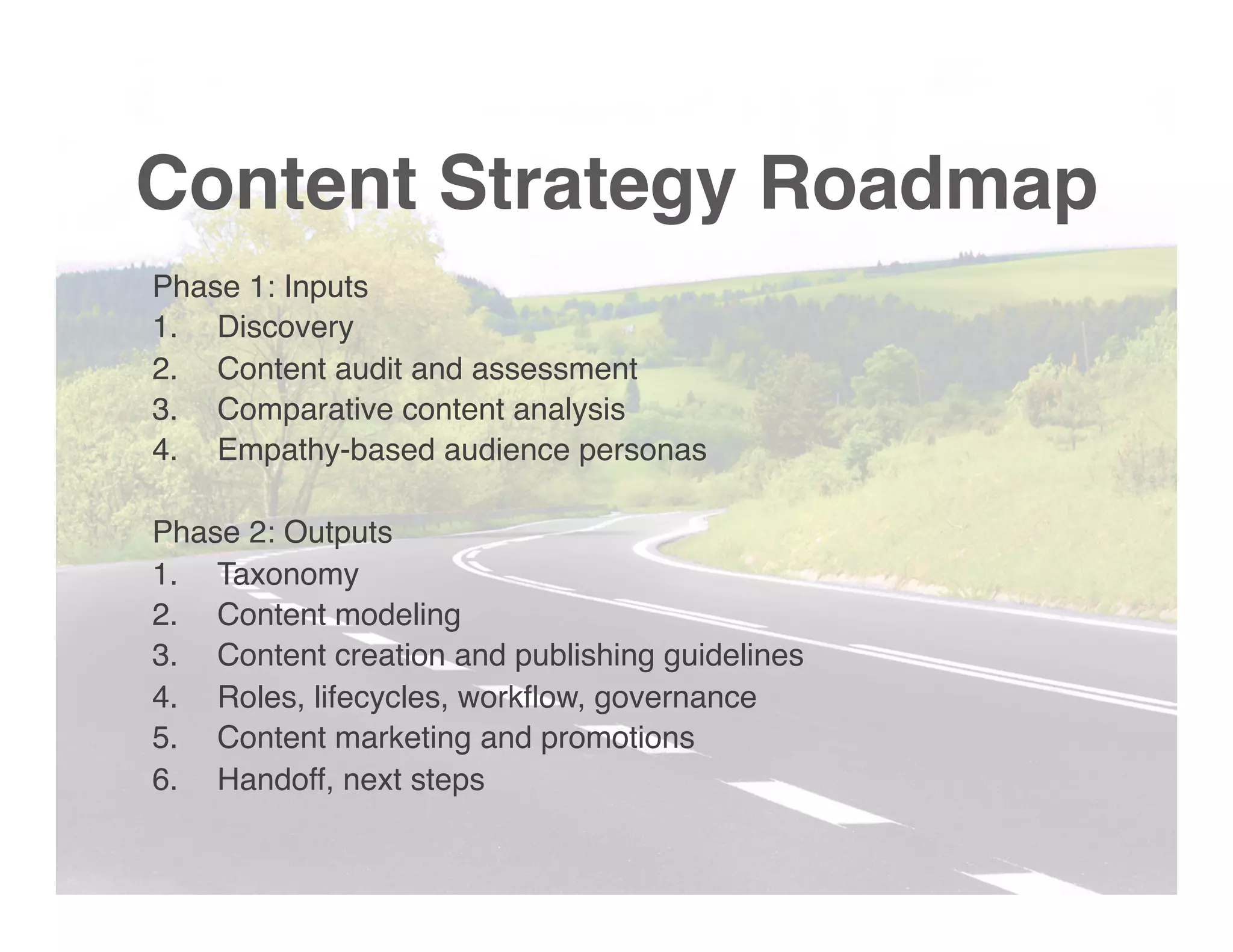
Content Strategy Roadmap
Phase 1: Inputs
1.  Discovery
2.  Content audit and assessment
3.  Comparative content analysis
4.  Empathy-based audience personas
Phase 2: Outputs
1.  Taxonomy
2.  Content modeling
3.  Content creation and publishing guidelines
4.  Roles, lifecycles, workflow, governance
5.  Content marketing and promotions
6.  Handoff, next steps
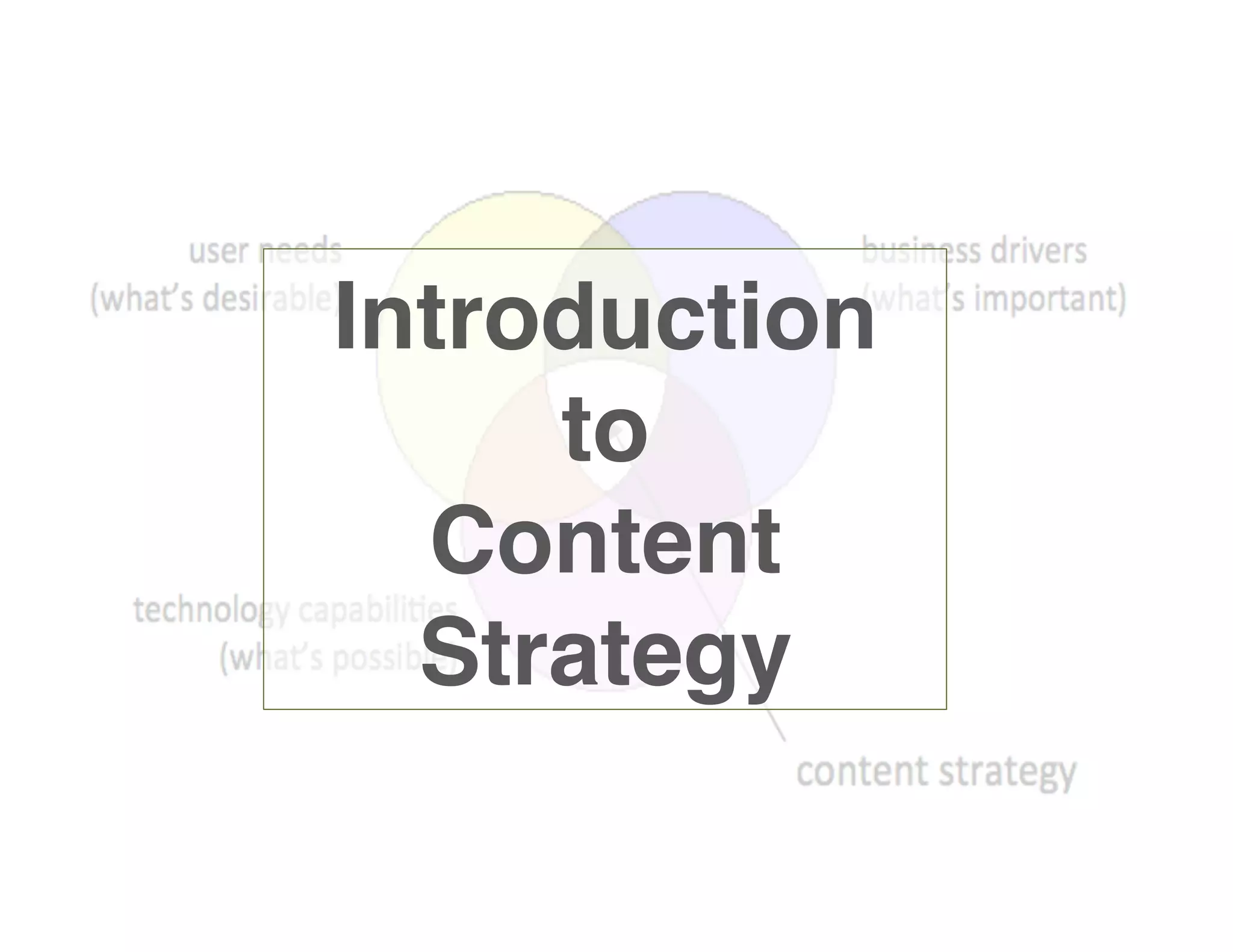
Introduction 

to 

Content
Strategy
Get the right content
to the right person
for the right action
For all associations,
the number one challenge
to membership growth is
“difficulty in communicating value or
benefit.”

—2014 Membership Marketing Benchmarking
Report
http://www.marketinggeneral.com/resources/benchmark-report/
Goals
•  Drive member value
•  Increase satisfaction
•  Increase usage of our programs, products,
services, resources, and tools
•  Who, what, when, where, why, and
how of publishing content online

•  A strategic statement tying content to
business goals 

•  The people, processes, and power to
execute that statement
Policies and guidelines
+
Audience understanding
+
Business knowledge
=
11	
  
Content is…
Event
Product
Class
Program
Research
Content strategy is…
Event strategy
Product strategy
Class strategy
Program strategy
Research strategy
Content is…
My Event
My Product
My Class
My Program
My Research
15	
  
“Every pixel has an owner.”
– Paul Ford, former web editor 

at Harper’s magazine
“It is difficult to get a man
to understand something, 

when his salary depends upon 

his not understanding it.”
– Upton Sinclair, 1935
18	
  
h"p://www.amazon.com/Have-­‐Always-­‐Done-­‐That-­‐Way/dp/184728857X/	
  
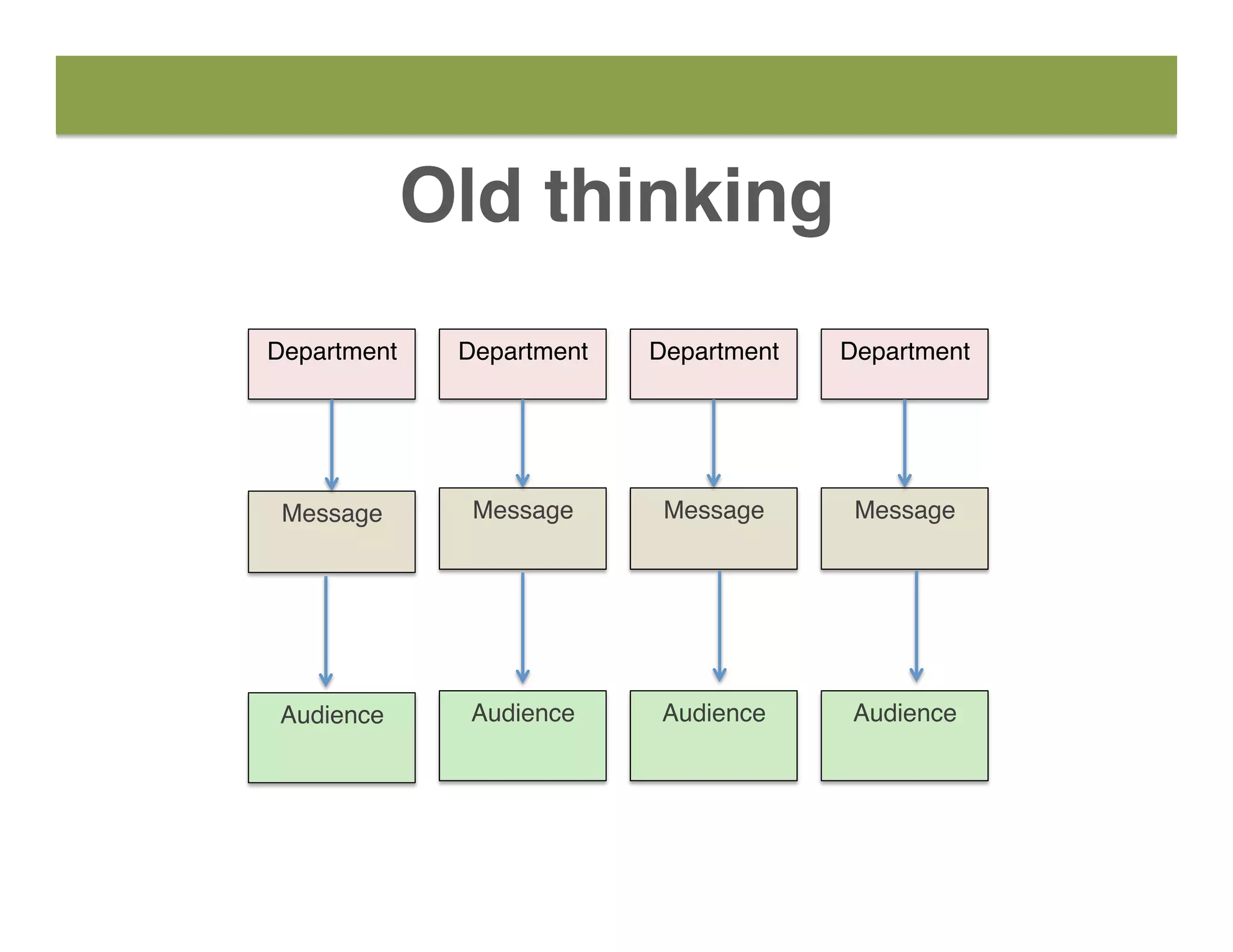
Department
Message
Audience
Department
Message
Audience
Department
Message
Audience
Department
Message
Audience
Old thinking
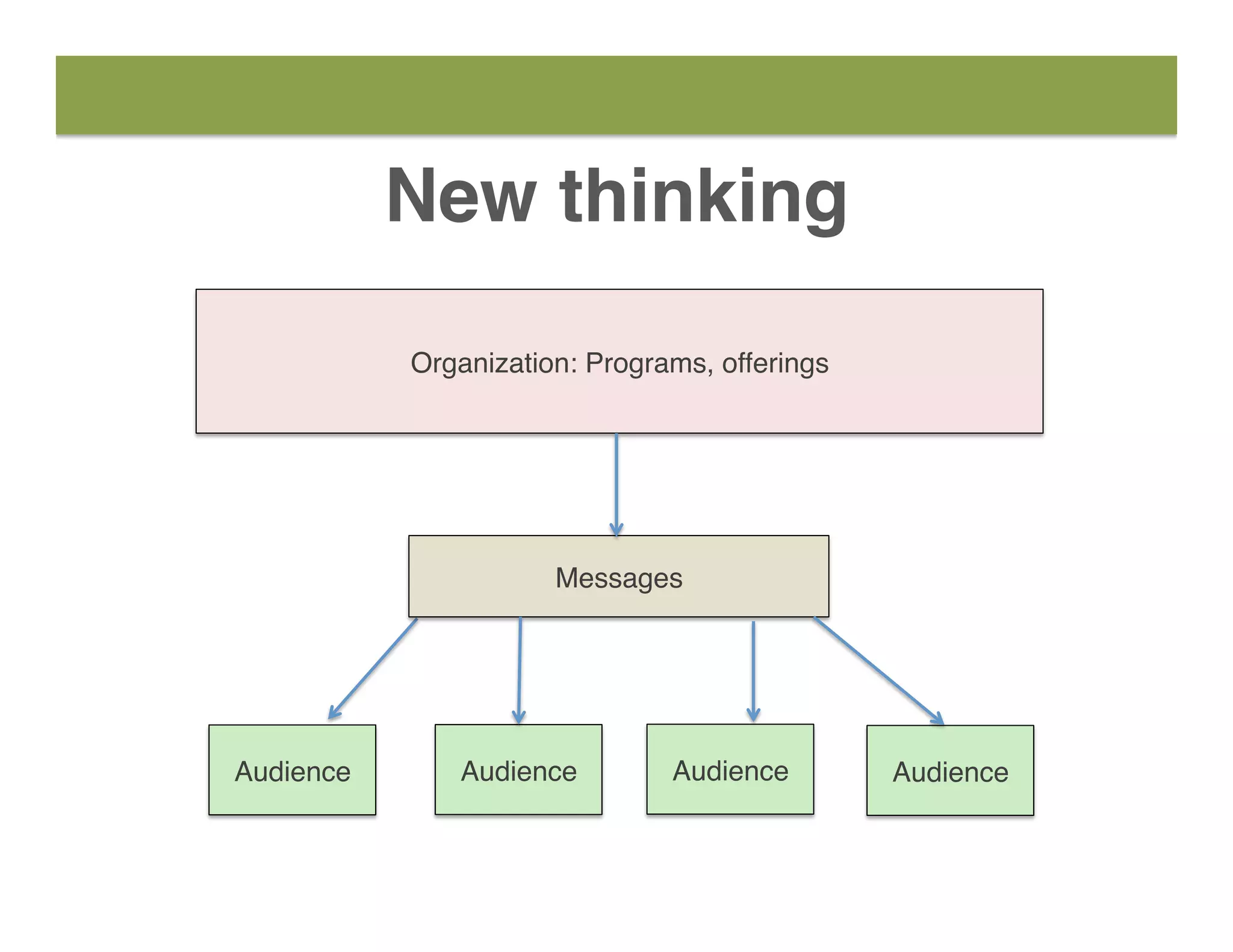
Organization: Programs, offerings
Audience
Messages
Audience Audience Audience
New thinking
21	
  
22	
  
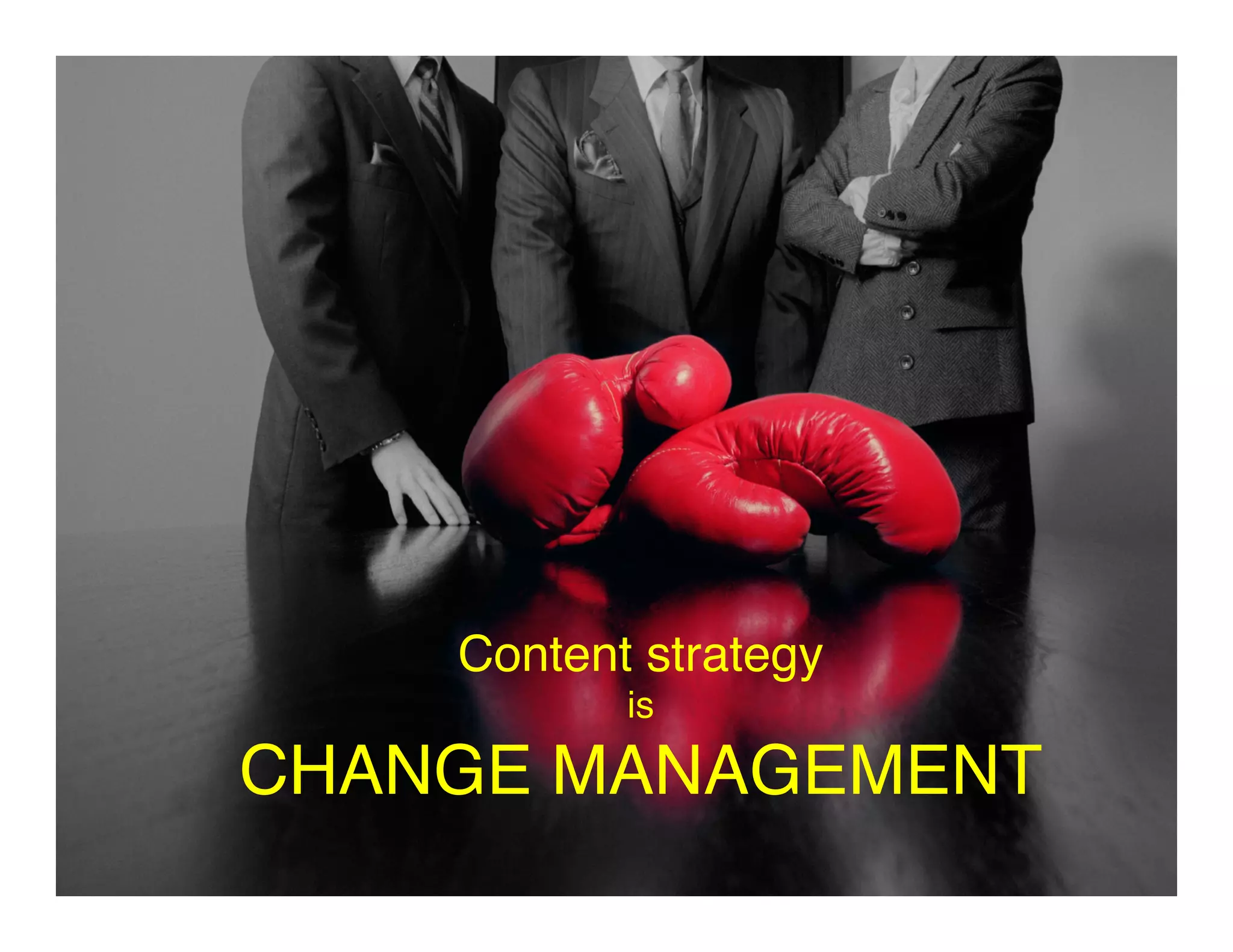
Content strategy 

is

CHANGE MANAGEMENT	
  
Discovery
h"p://www.amnh.org/exhibi8ons/permanent-­‐exhibi8ons/discovery-­‐room	
  
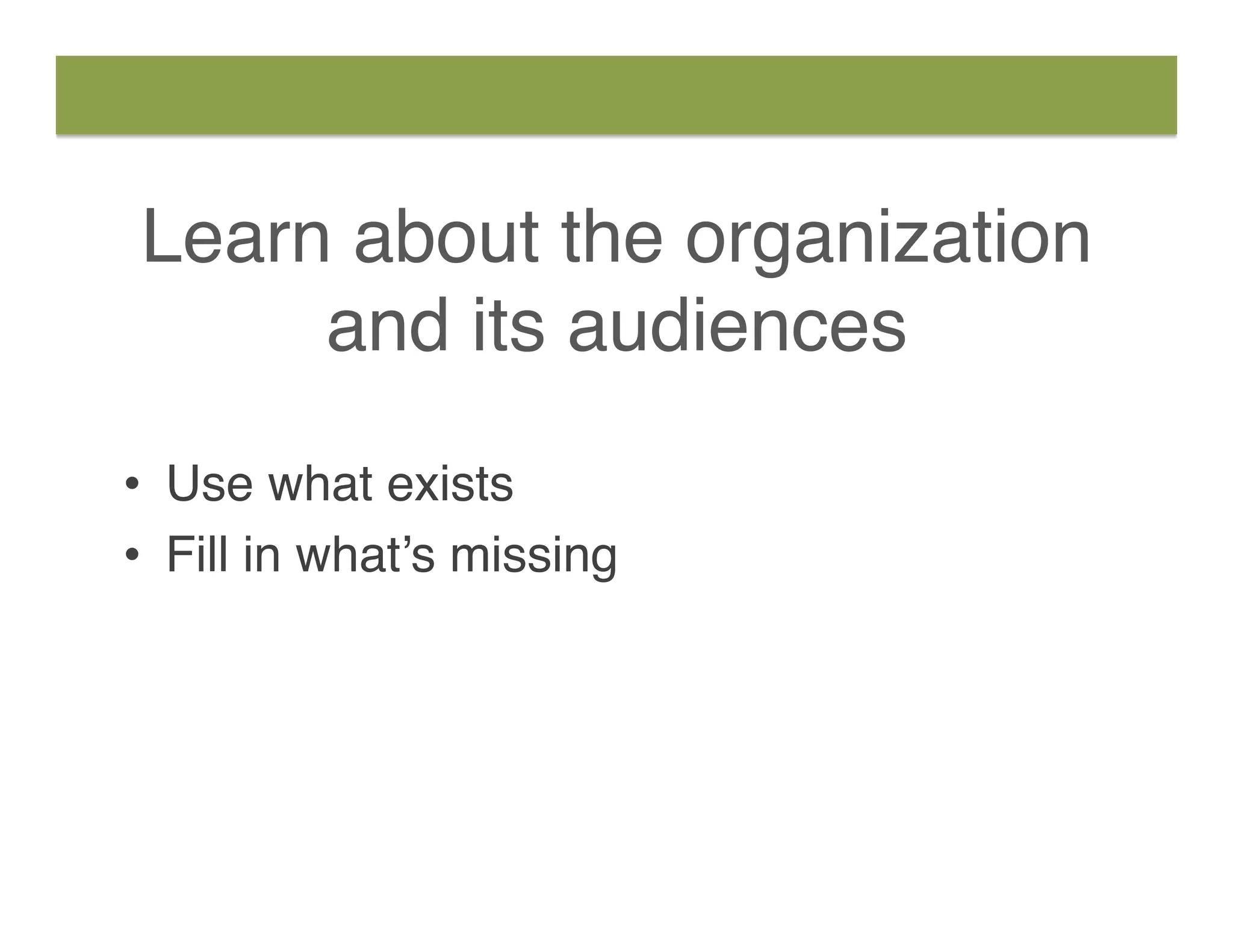
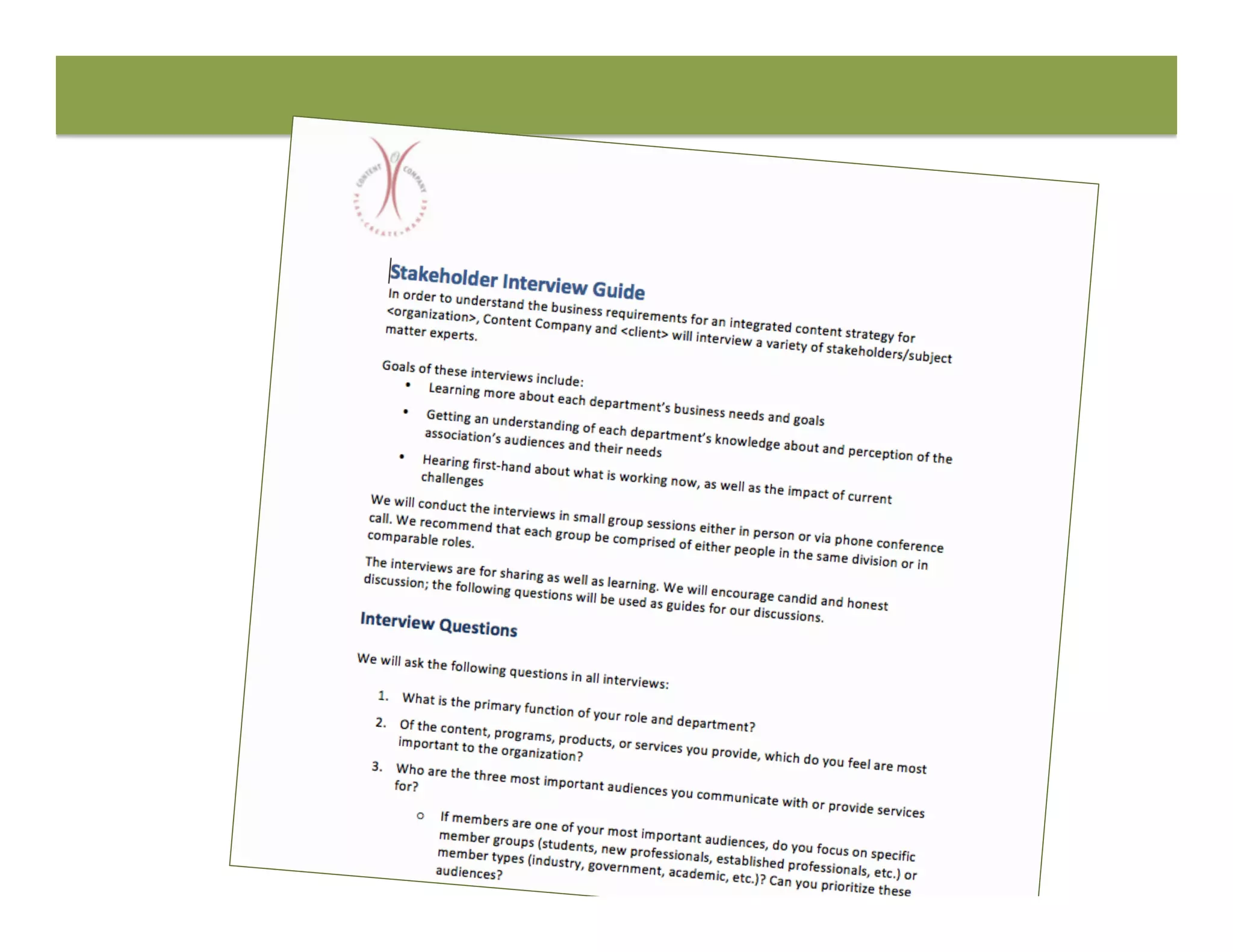
Learn about the organization
and its audiences
•  Use what exists
•  Fill in what’s missing
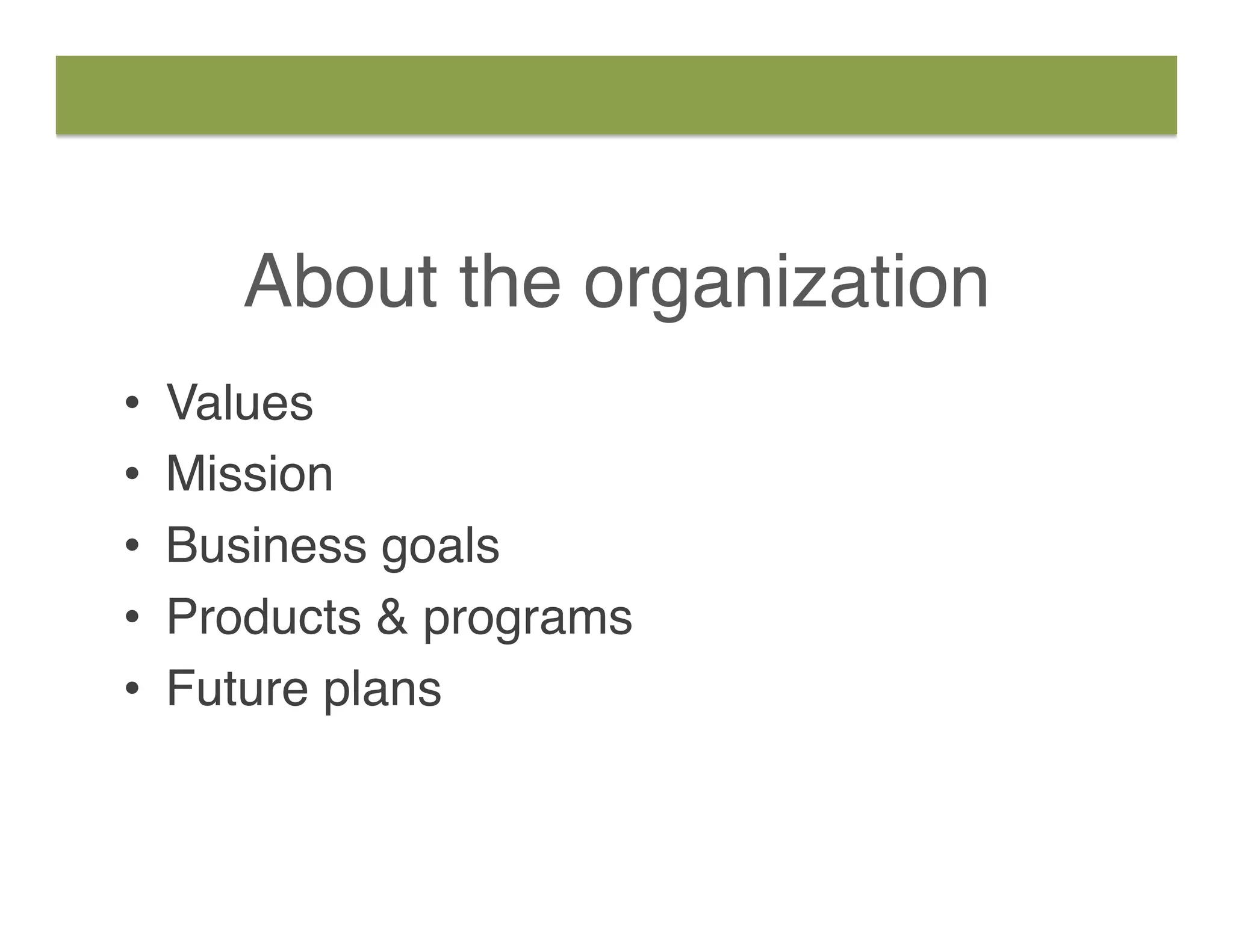
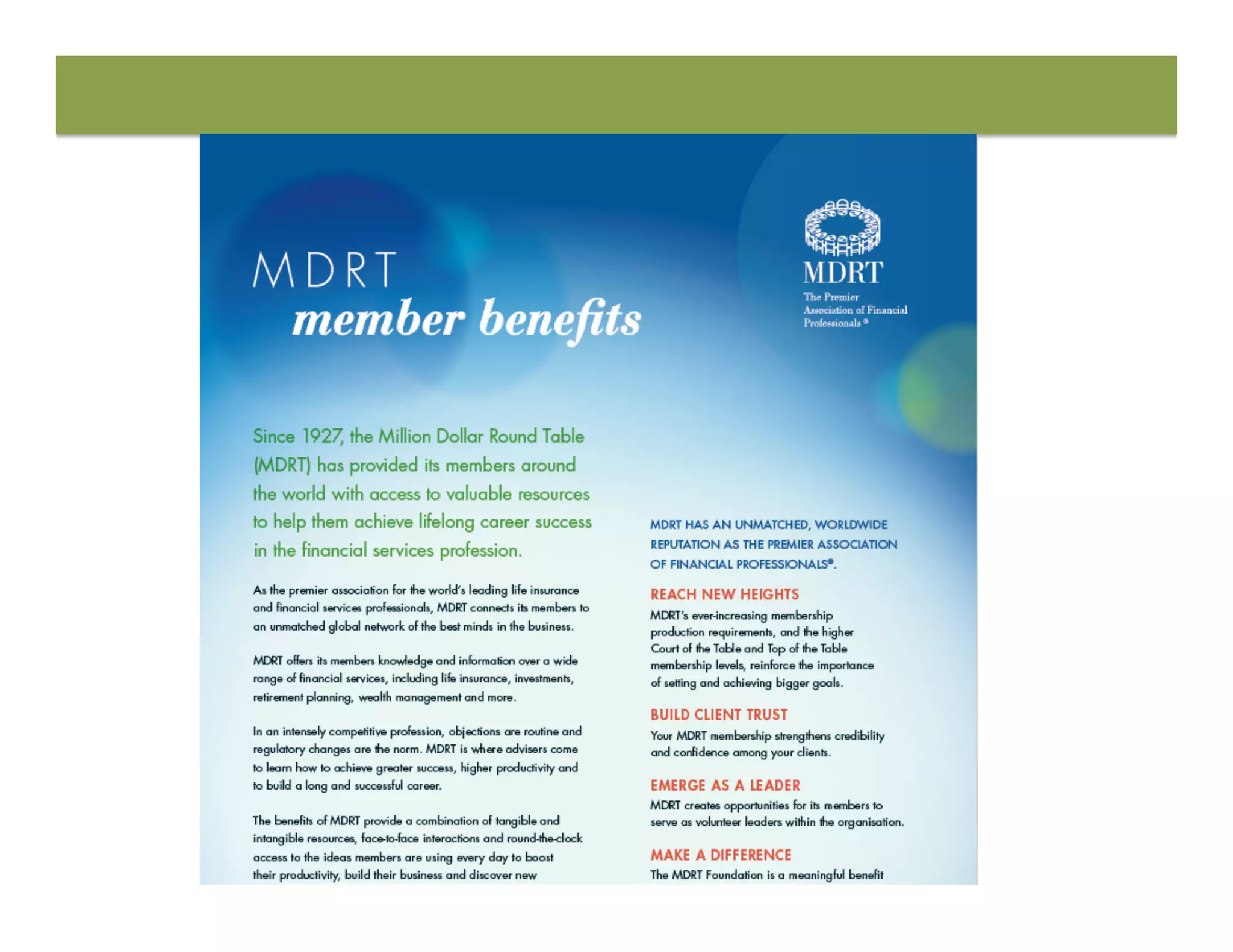
About the organization
•  Values
•  Mission
•  Business goals
•  Products & programs
•  Future plans
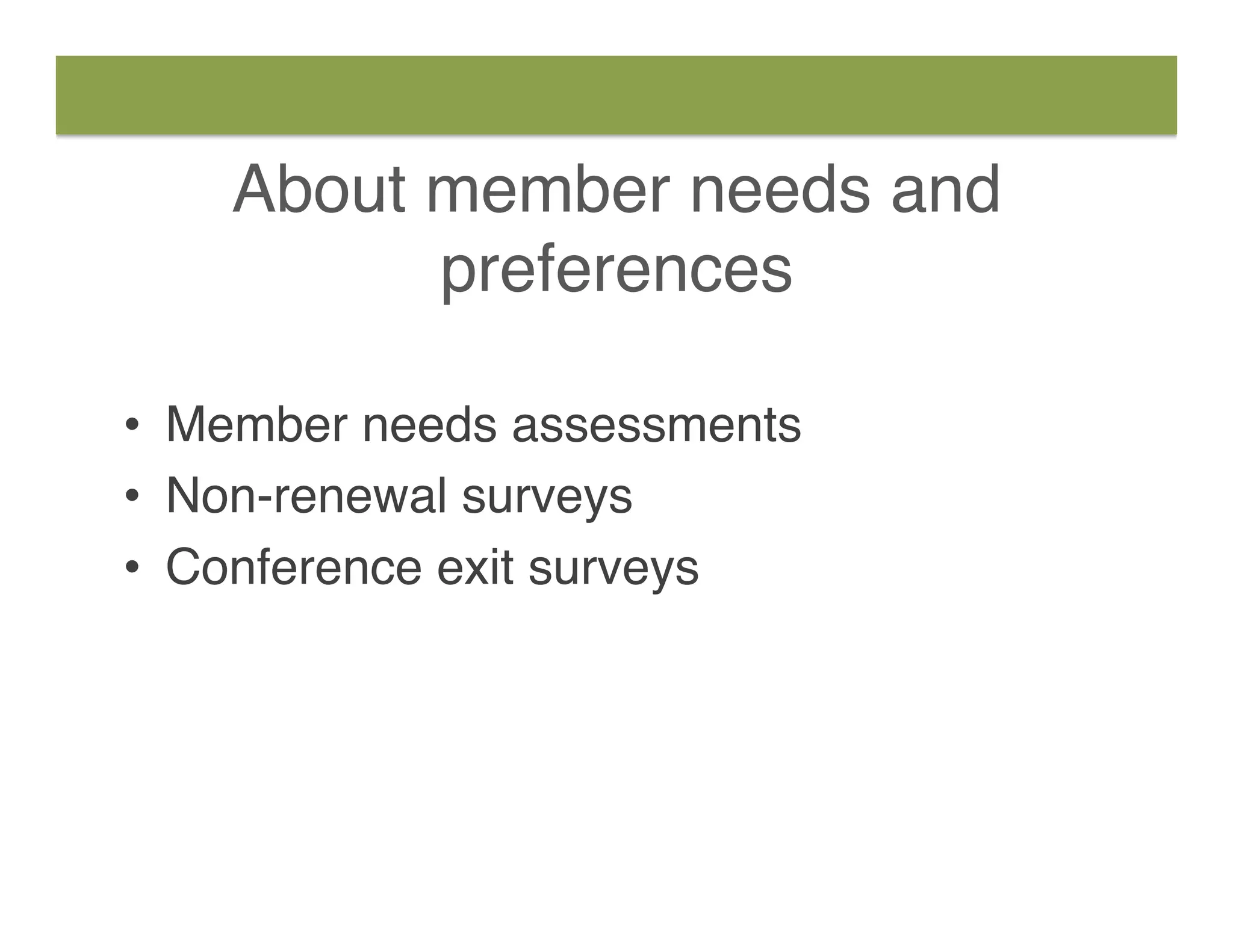
About member needs and
preferences
•  Member needs assessments
•  Non-renewal surveys
•  Conference exit surveys
•  Interviews
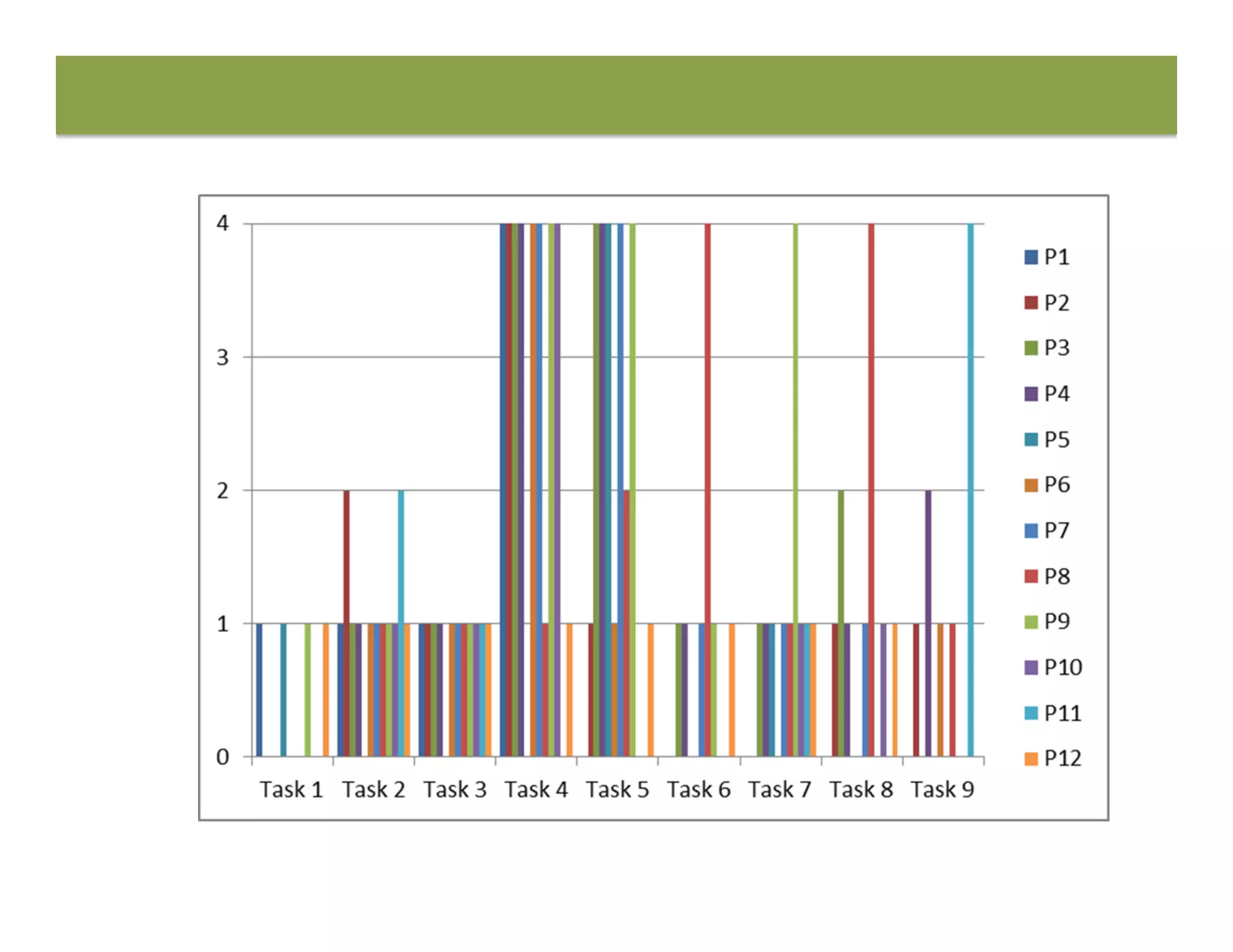
•  Behavior surveys
•  Usability testing
•  Field visits
Supplement
h"ps://www.flickr.com/photos/xoques/3758640007	
  
Strategy Statement
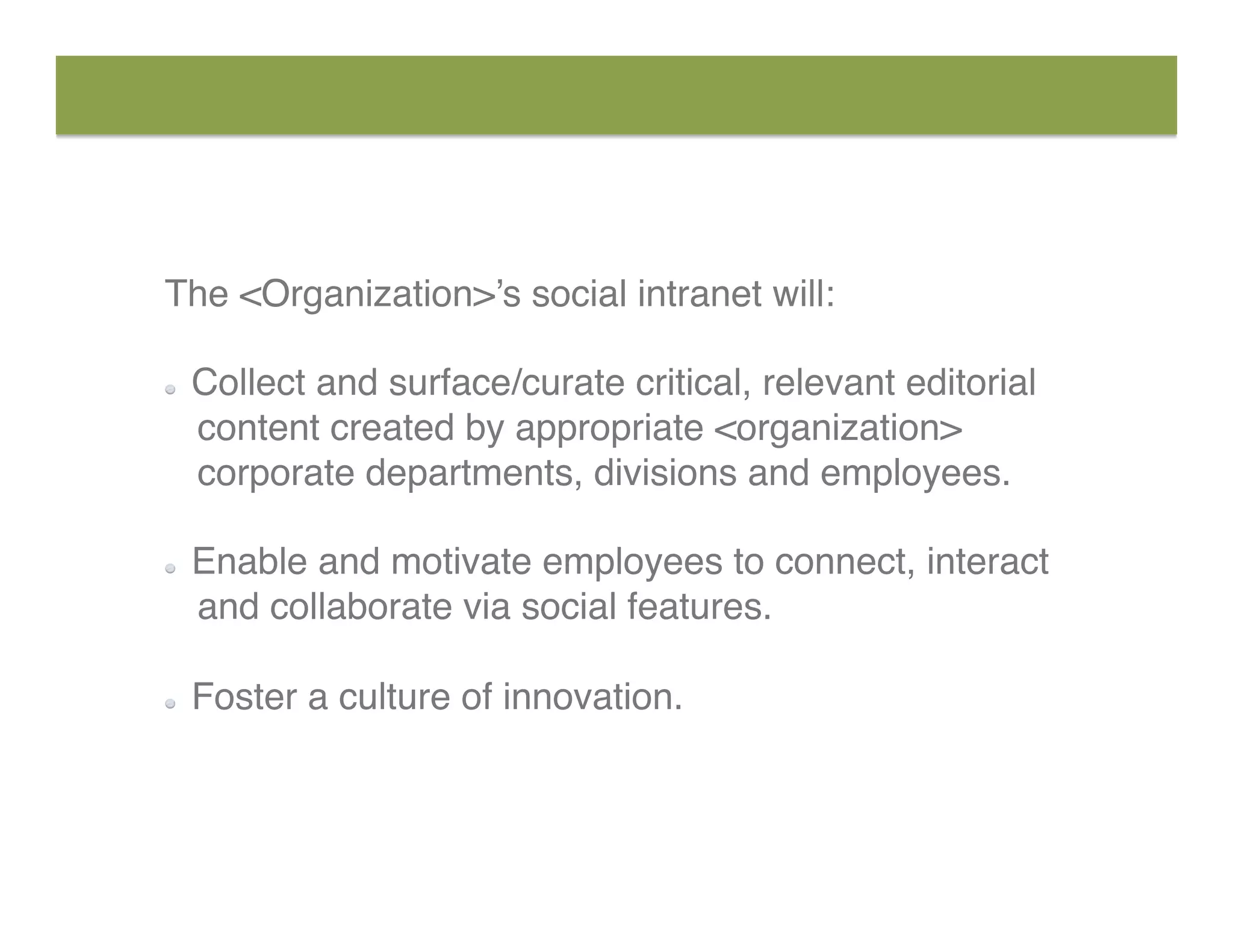
The <Organization>’s social intranet will:

  Collect and surface/curate critical, relevant editorial
content created by appropriate <organization>
corporate departments, divisions and employees.

  Enable and motivate employees to connect, interact
and collaborate via social features.

  Foster a culture of innovation.
We will develop and maintain content that
helps people practice and enjoy the arts.
To reduce customer service center costs, we
will provide user-facing, task-based support
content that makes our professional
customers feel confident when configuring
products for their clients.
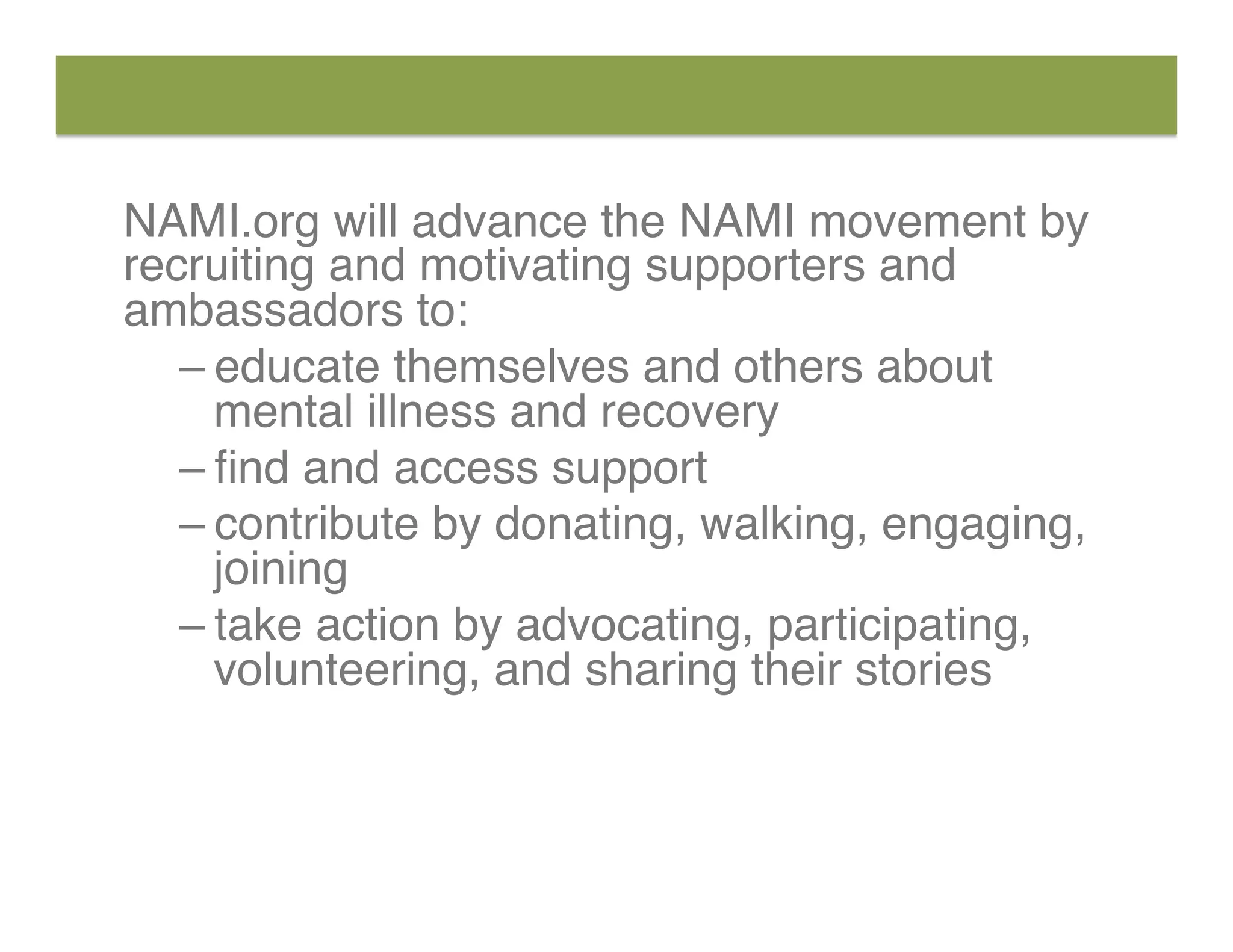
NAMI.org will advance the NAMI movement by
recruiting and motivating supporters and
ambassadors to:
– educate themselves and others about
mental illness and recovery
– find and access support
– contribute by donating, walking, engaging,
joining
– take action by advocating, participating,
volunteering, and sharing their stories
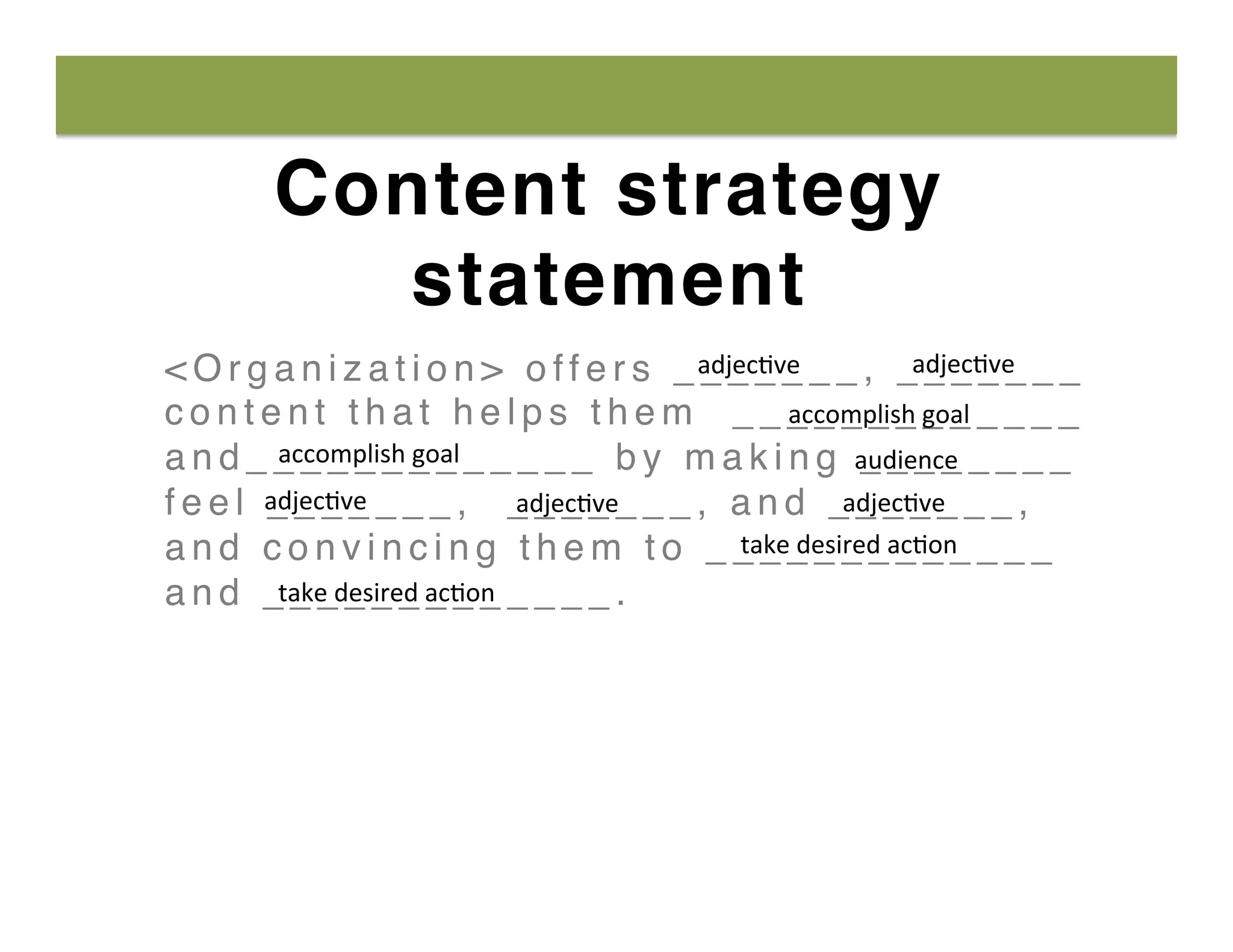
Content strategy
statement
< O r g a n i z a t i o n > o f f e r s _ _ _ _ _ _ _ , _ _ _ _ _ _ _
c o n t e n t t h a t h e l p s t h e m _ _ _ _ _ _ _ _ _ _ _ _ _
a n d _ _ _ _ _ _ _ _ _ _ _ _ _ b y m a k i n g _ _ _ _ _ _ _ _
f e e l _ _ _ _ _ _ _ , _ _ _ _ _ _ _ , a n d _ _ _ _ _ _ _ ,
a n d c o n v i n c i n g t h e m t o _ _ _ _ _ _ _ _ _ _ _ _ _
a n d _ _ _ _ _ _ _ _ _ _ _ _ _ .
adjec8ve	
   adjec8ve	
  
accomplish	
  goal	
  
accomplish	
  goal	
   audience	
  
adjec8ve	
   adjec8ve	
  adjec8ve	
  
take	
  desired	
  ac8on	
  
take	
  desired	
  ac8on	
  
Exercise #1:

Create a strategy
statement
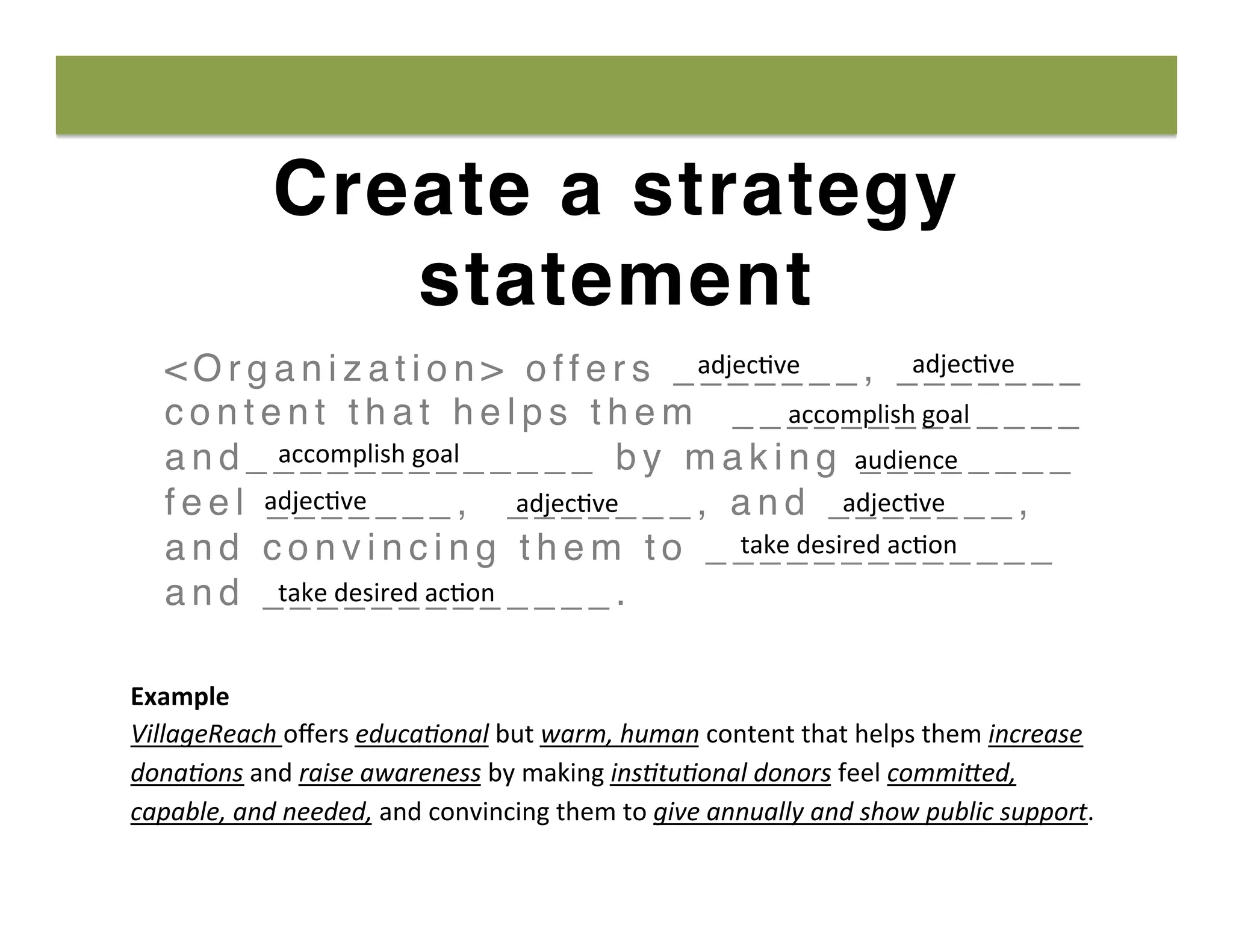
Create a strategy
statement
< O r g a n i z a t i o n > o f f e r s _ _ _ _ _ _ _ , _ _ _ _ _ _ _
c o n t e n t t h a t h e l p s t h e m _ _ _ _ _ _ _ _ _ _ _ _ _
a n d _ _ _ _ _ _ _ _ _ _ _ _ _ b y m a k i n g _ _ _ _ _ _ _ _
f e e l _ _ _ _ _ _ _ , _ _ _ _ _ _ _ , a n d _ _ _ _ _ _ _ ,
a n d c o n v i n c i n g t h e m t o _ _ _ _ _ _ _ _ _ _ _ _ _
a n d _ _ _ _ _ _ _ _ _ _ _ _ _ .
adjec8ve	
   adjec8ve	
  
accomplish	
  goal	
  
accomplish	
  goal	
   audience	
  
adjec8ve	
   adjec8ve	
  adjec8ve	
  
take	
  desired	
  ac8on	
  
Example	
  
VillageReach	
  offers	
  educa-onal	
  but	
  warm,	
  human	
  content	
  that	
  helps	
  them	
  increase	
  
dona-ons	
  and	
  raise	
  awareness	
  by	
  making	
  ins-tu-onal	
  donors	
  feel	
  commi6ed,	
  
capable,	
  and	
  needed,	
  and	
  convincing	
  them	
  to	
  give	
  annually	
  and	
  show	
  public	
  support.	
  
take	
  desired	
  ac8on	
  
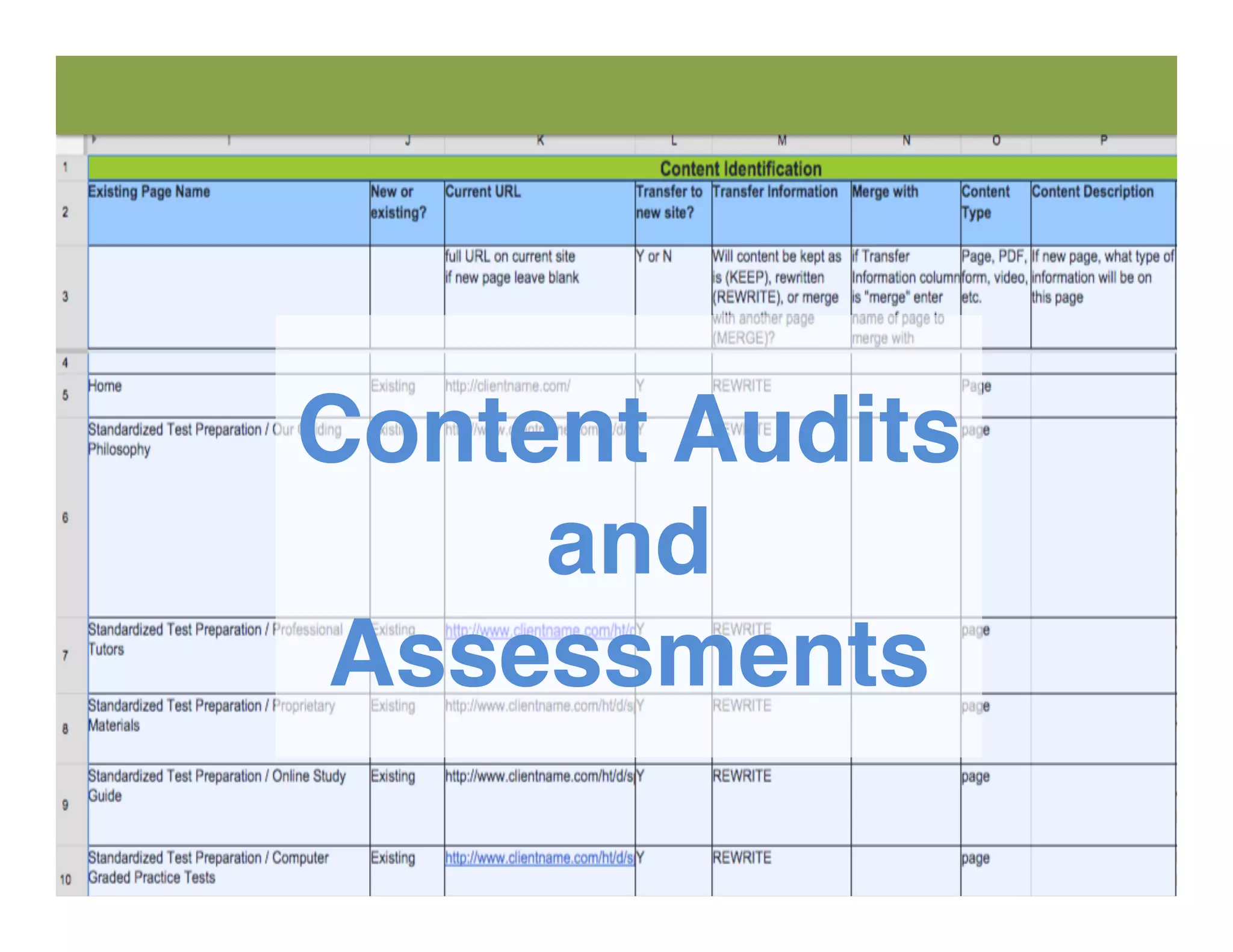
Content Audits
and
Assessments
Step 1:
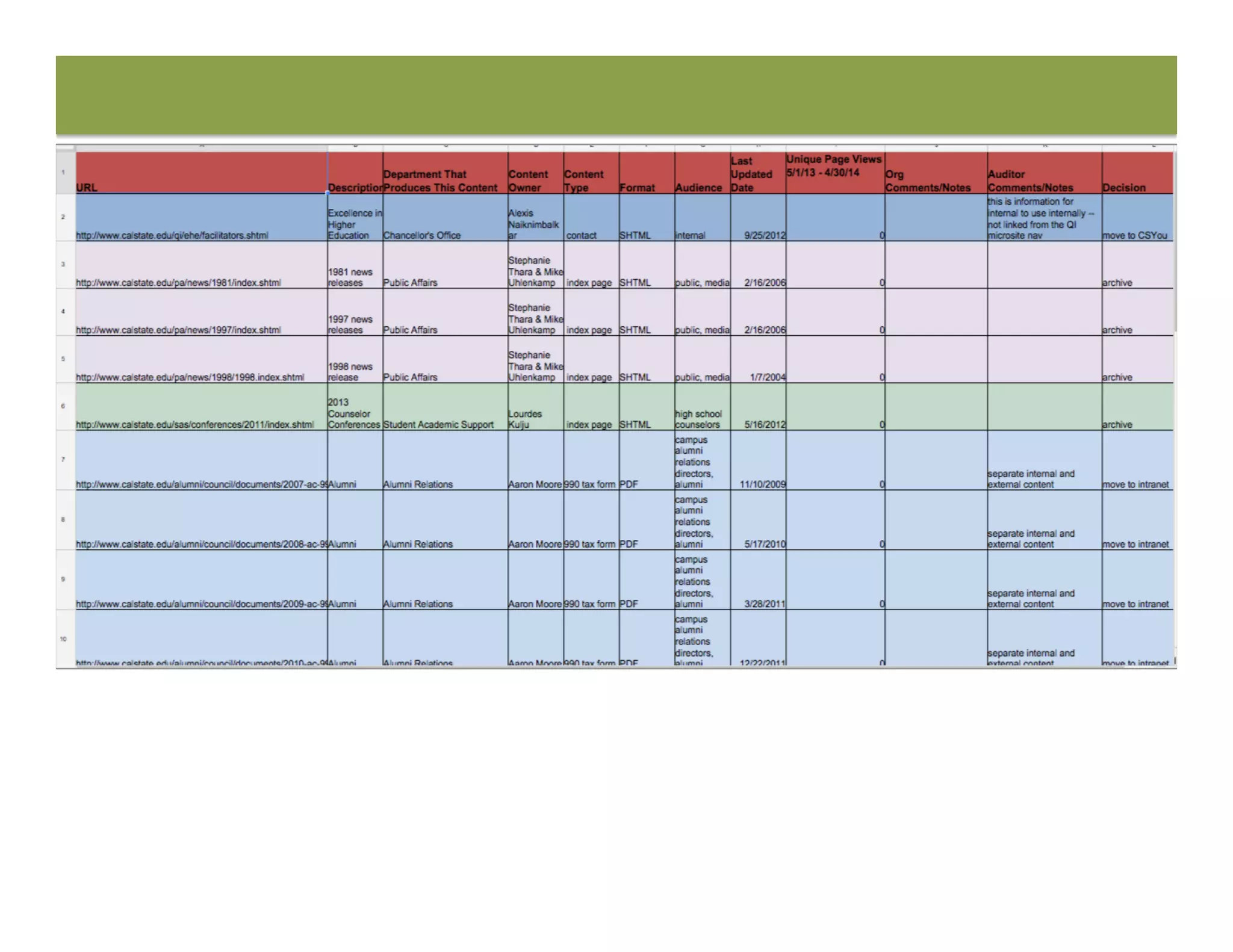
Content inventory
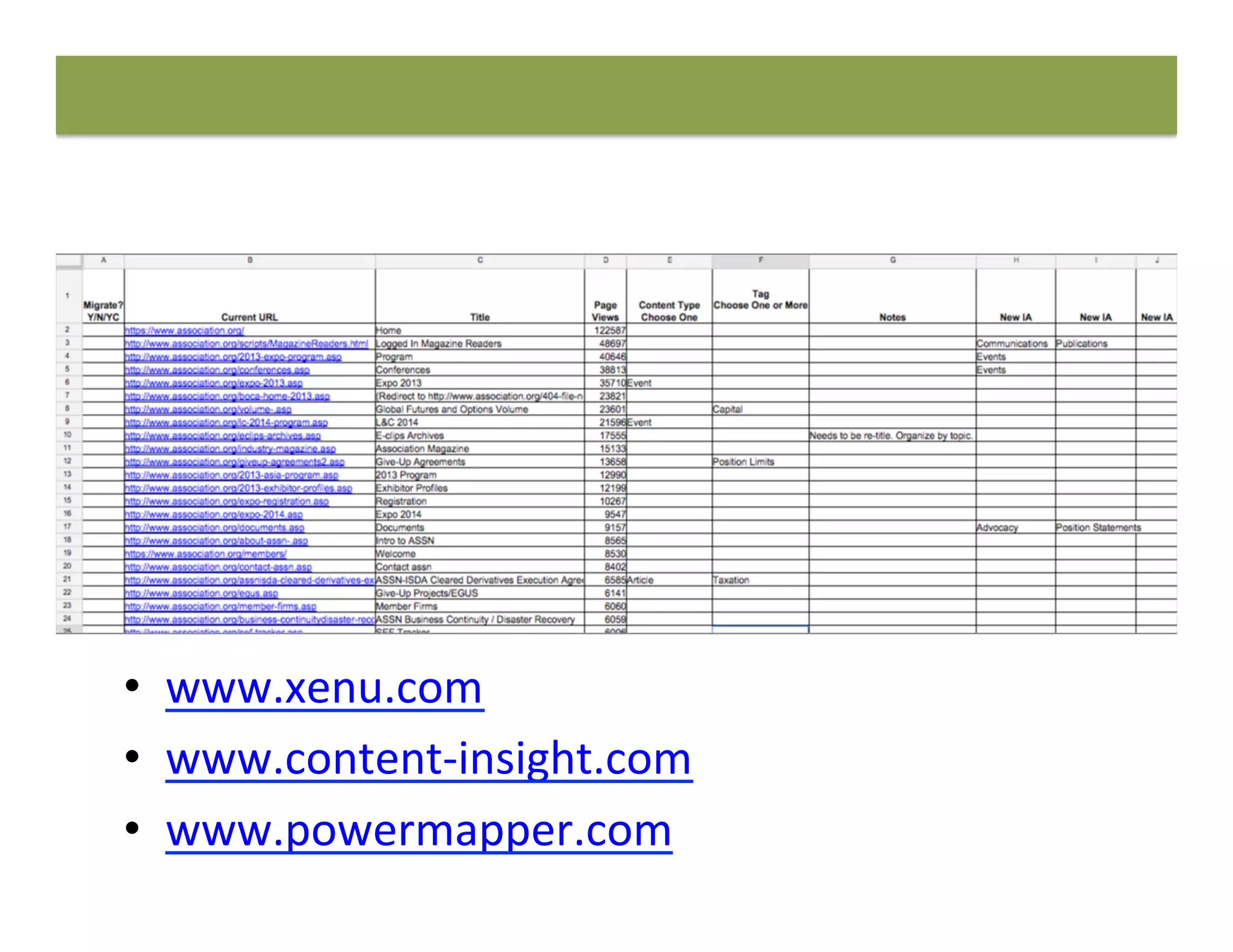
•  www.xenu.com	
  
•  www.content-­‐insight.com	
  
•  www.powermapper.com	
  	
  
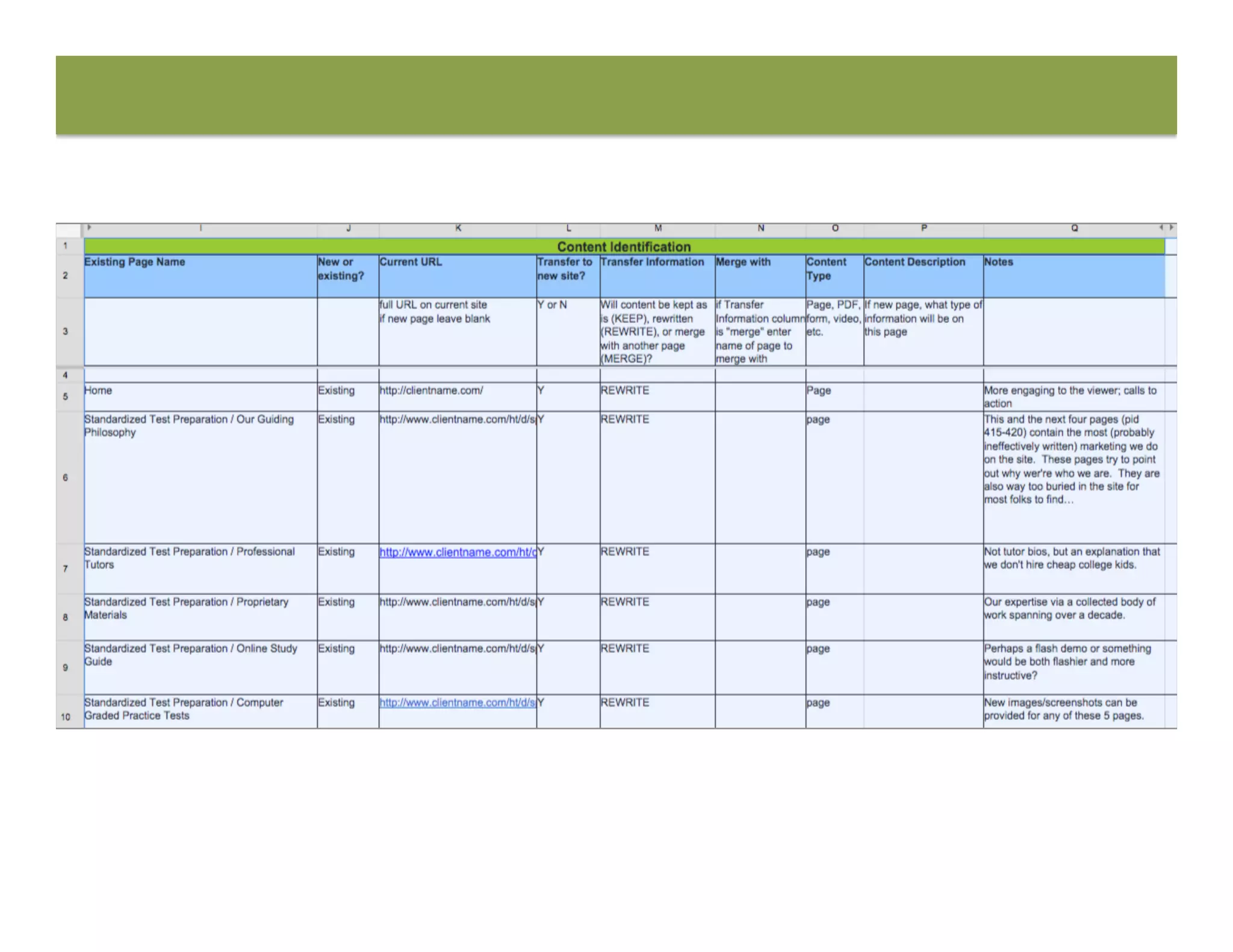
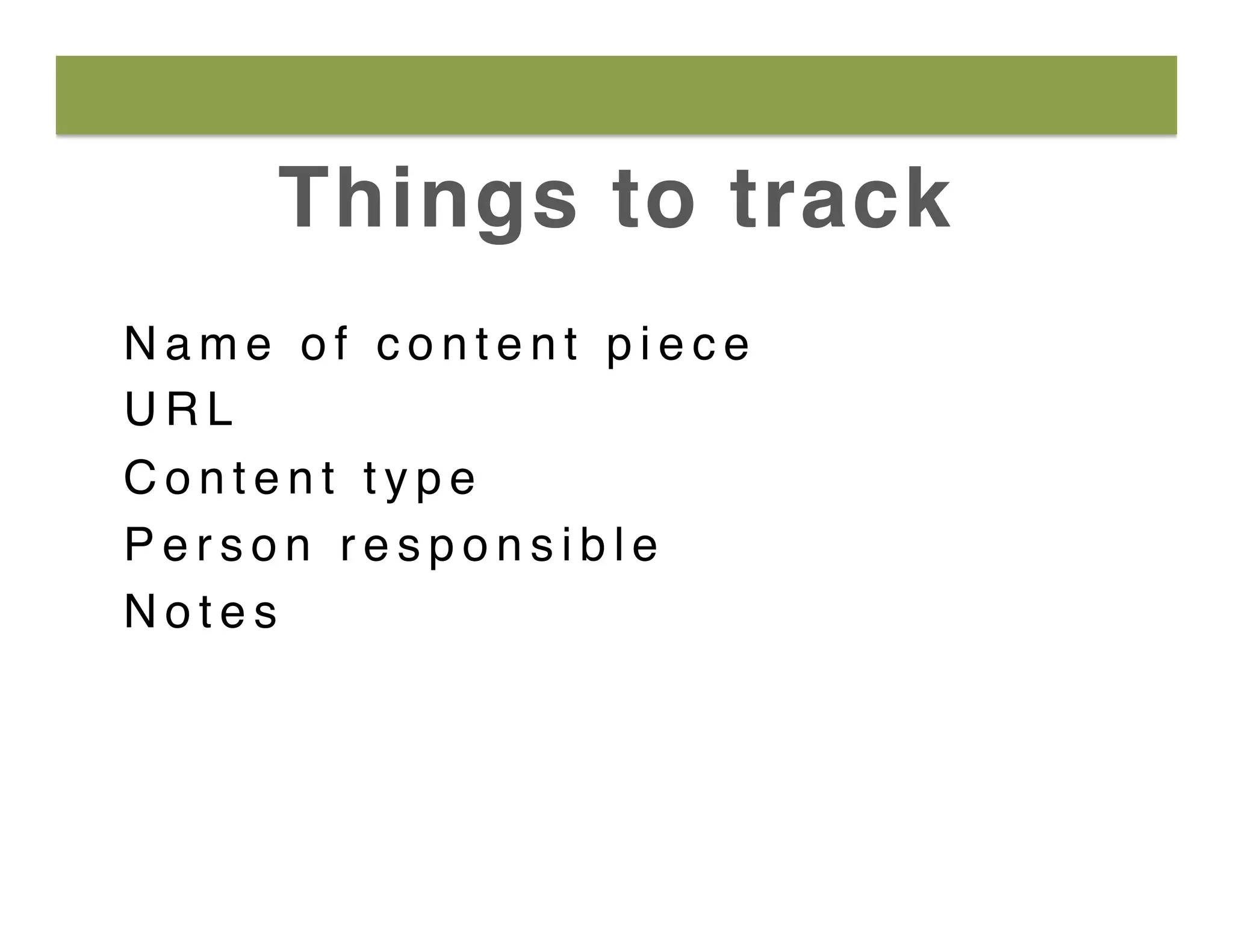
Things to track
N a m e o f c o n t e n t p i e c e
U R L
C o n t e n t t y p e
P e r s o n r e s p o n s i b l e
N o t e s
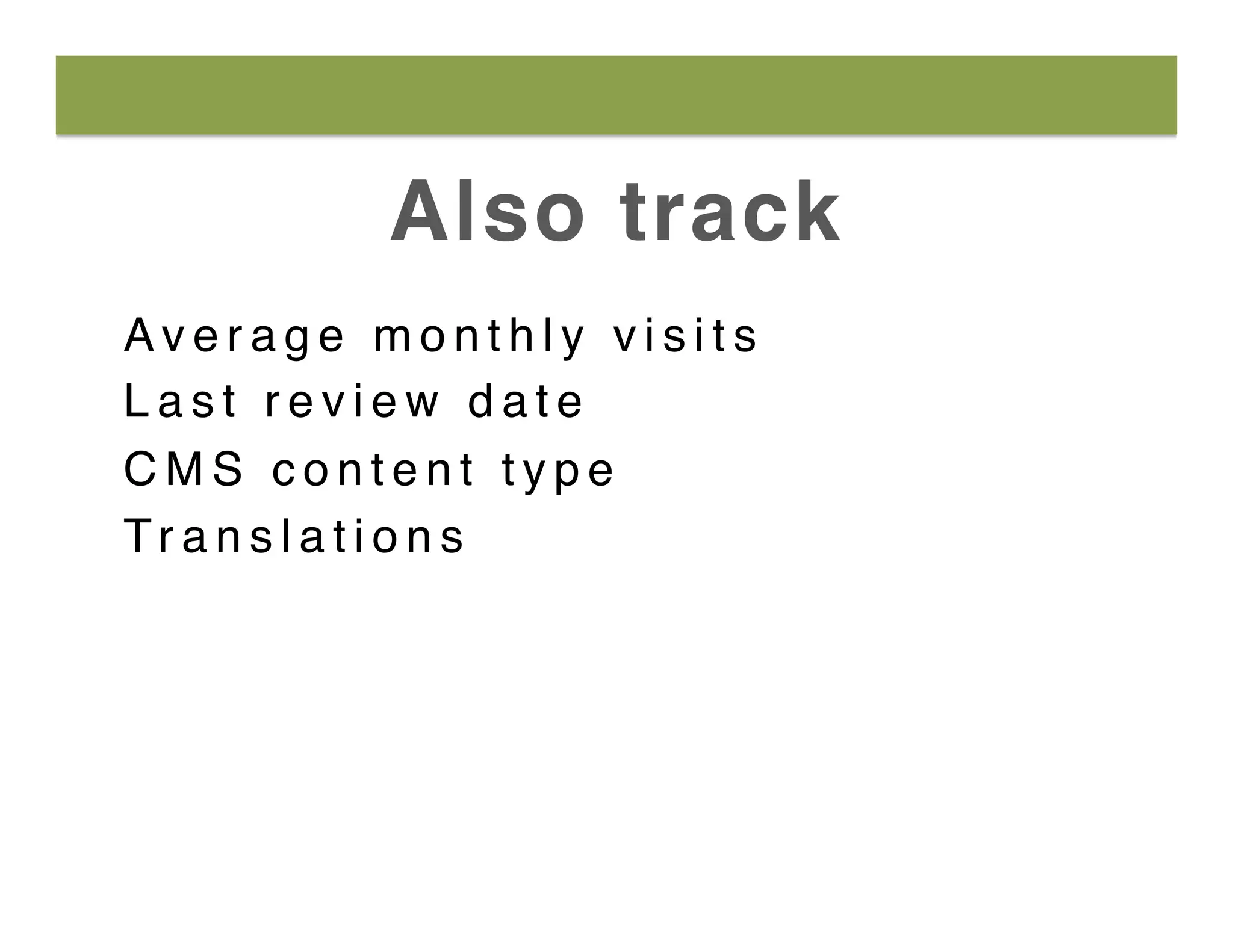
Also track
A v e r a g e m o n t h l y v i s i t s
L a s t r e v i e w d a t e
C M S c o n t e n t t y p e
Tr a n s l a t i o n s
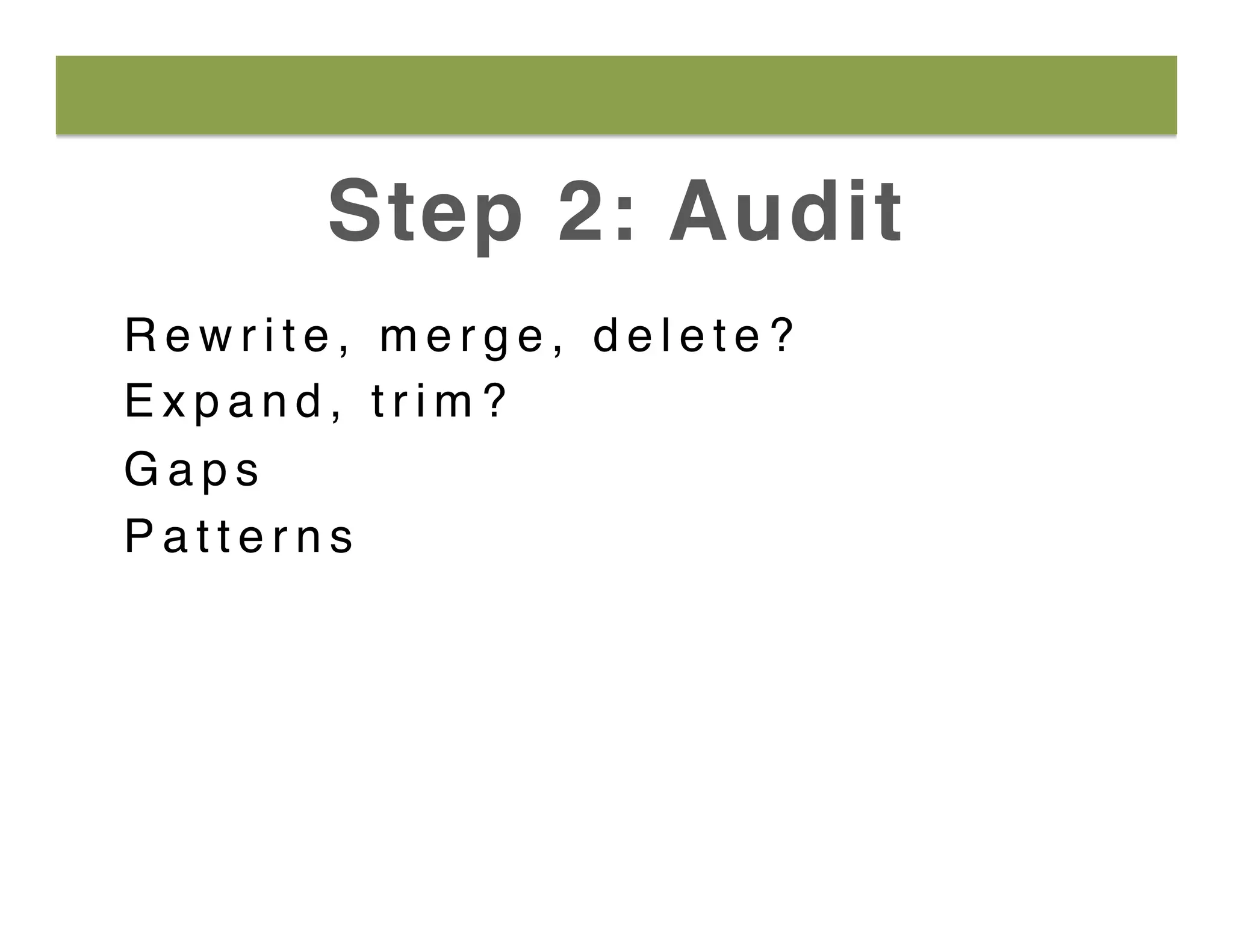
Step 2: Audit
R e w r i t e , m e r g e , d e l e t e ?
E x p a n d , t r i m ?
G a p s
P a t t e r n s
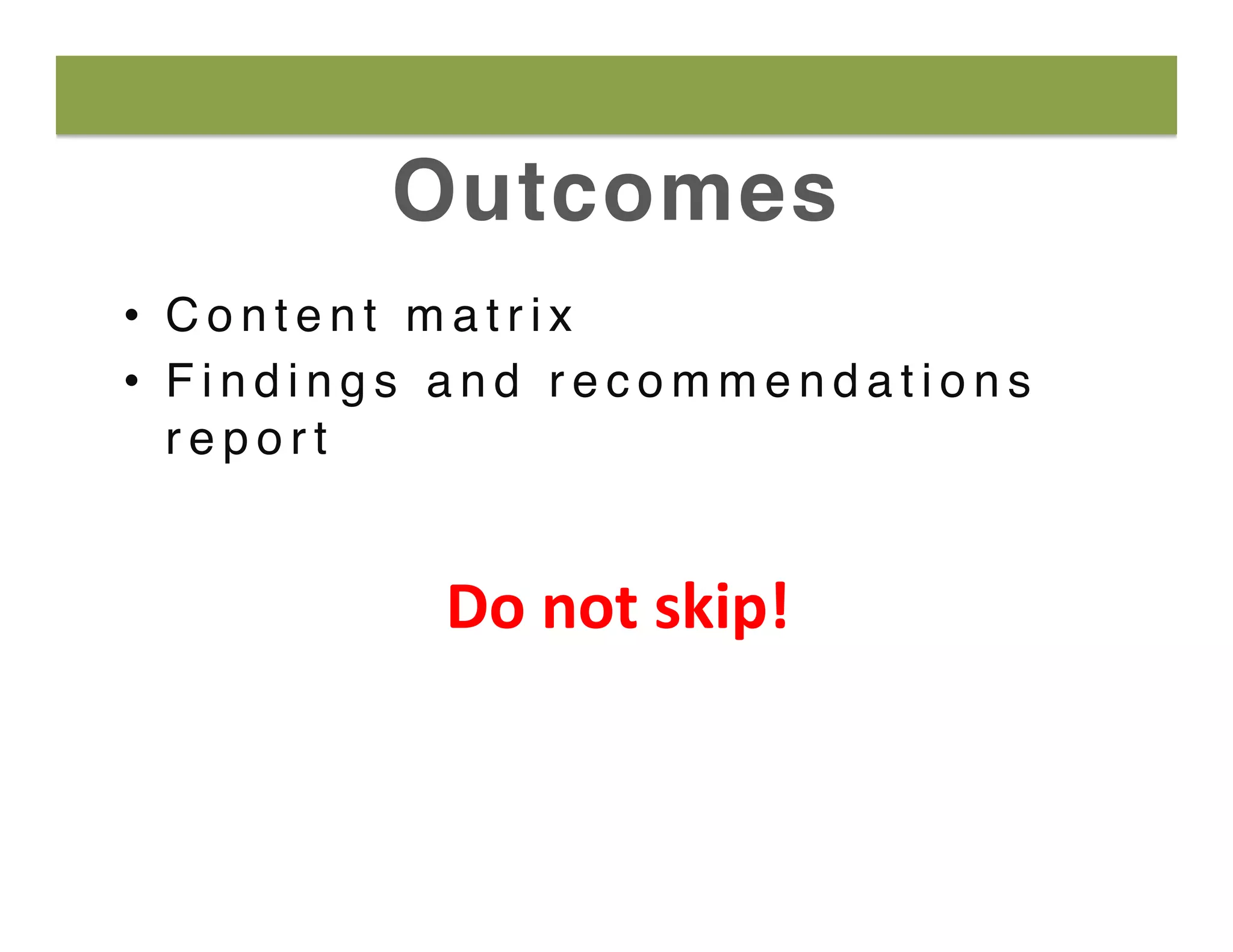
Outcomes
•  C o n t e n t m a t r i x
•  F i n d i n g s a n d r e c o m m e n d a t i o n s
r e p o r t
Do	
  not	
  skip!	
  
Comparative 

Content 

Analysis
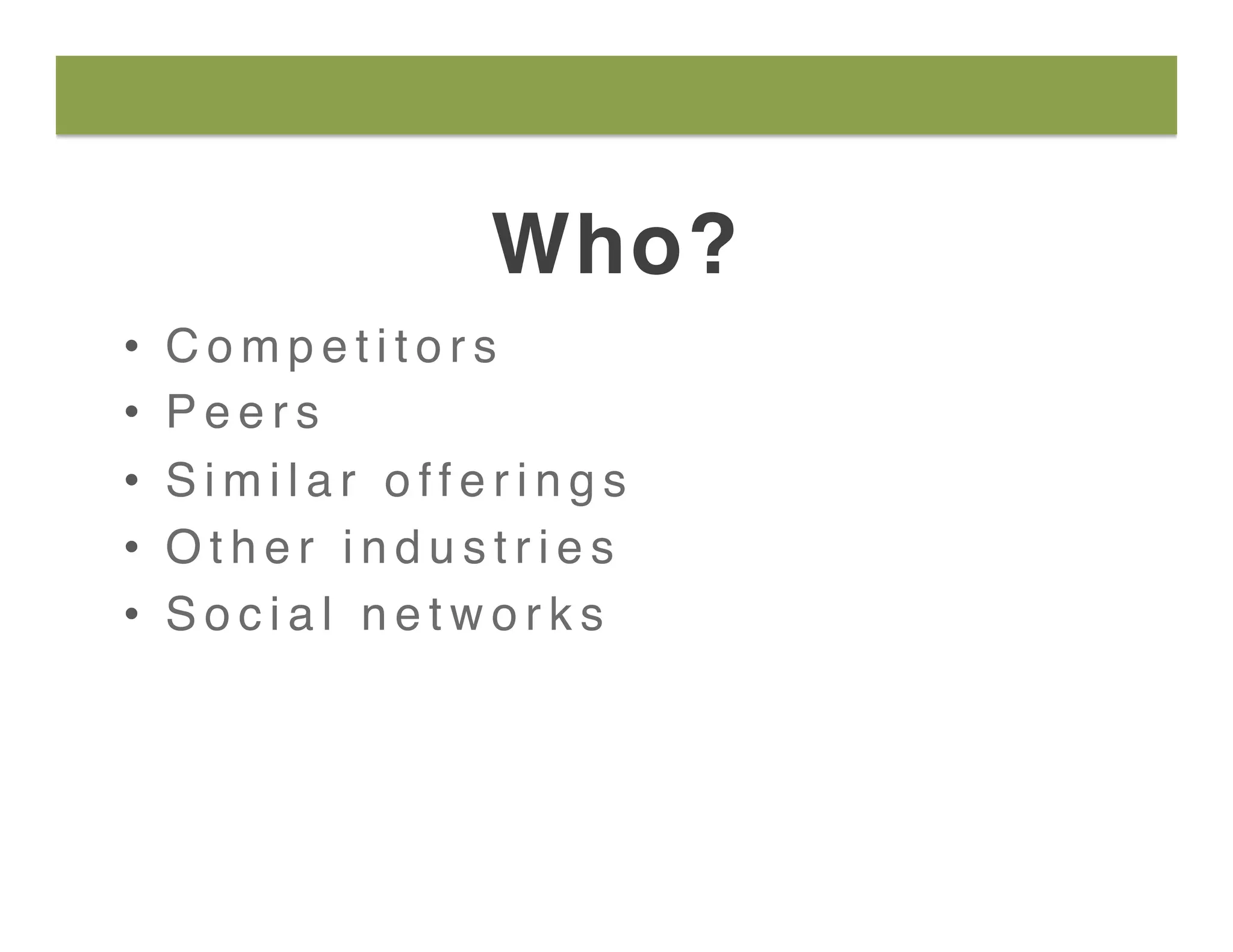
Who?
•  C o m p e t i t o r s
•  P e e r s
•  S i m i l a r o f f e r i n g s
•  O t h e r i n d u s t r i e s
•  S o c i a l n e t w o r k s
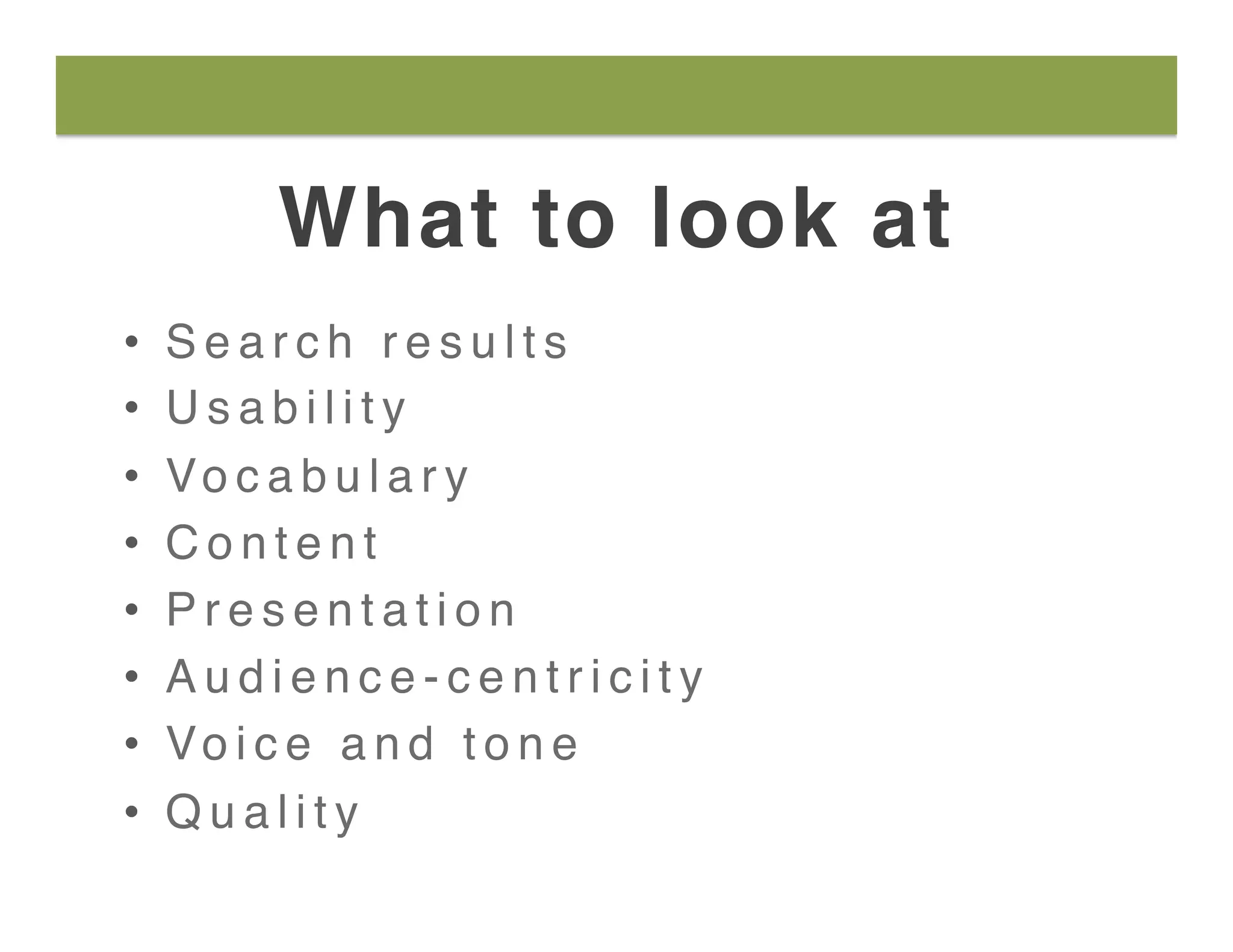
What to look at
•  S e a r c h r e s u l t s
•  U s a b i l i t y
•  Vo c a b u l a r y
•  C o n t e n t
•  P r e s e n t a t i o n
•  A u d i e n c e - c e n t r i c i t y
•  Vo i c e a n d t o n e
•  Q u a l i t y
Outcome
Comparative audit findings report
  Formal report
  Presentation
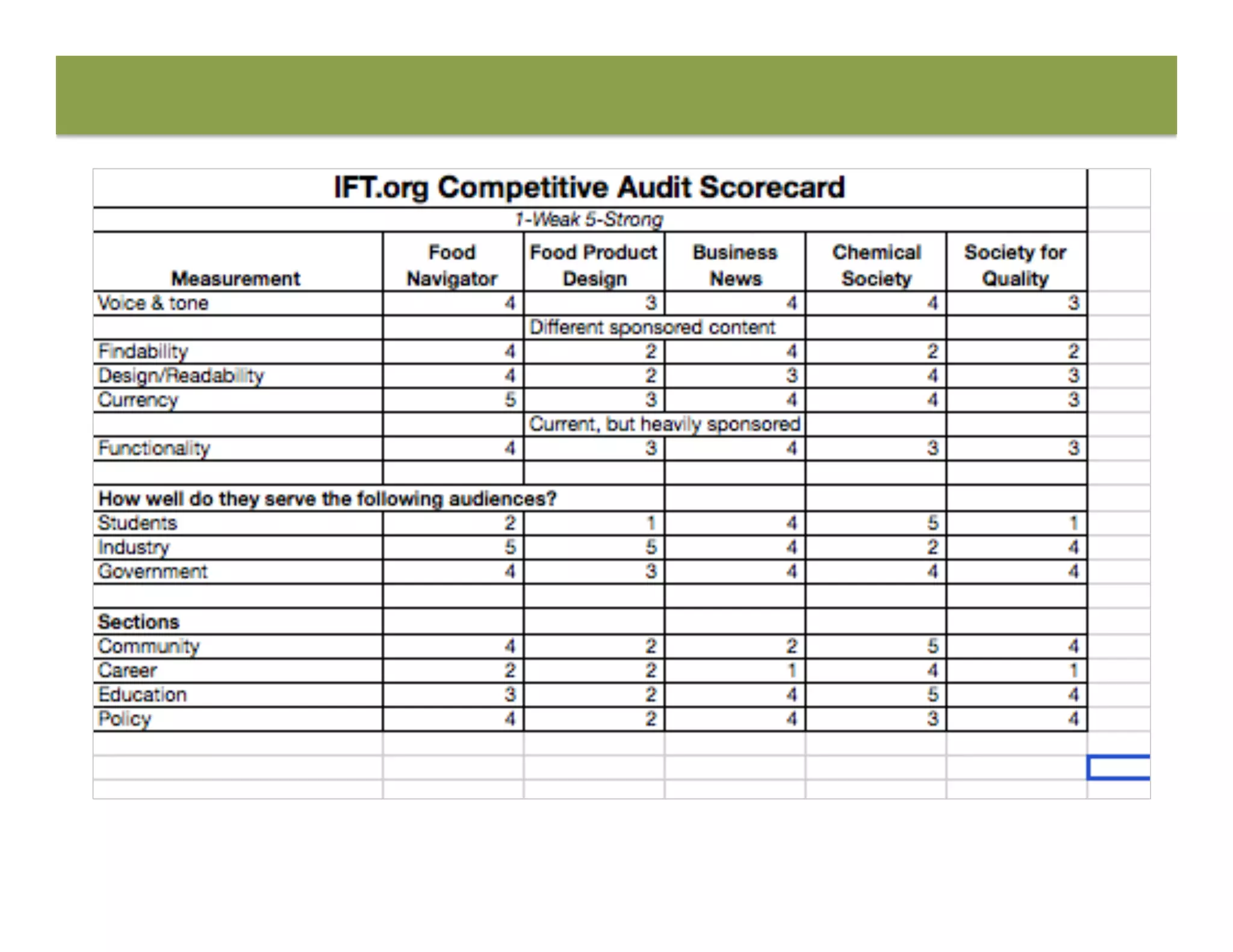
  Scorecard spreadsheet
  SWOT analysis
59
[bt]Ç	
  
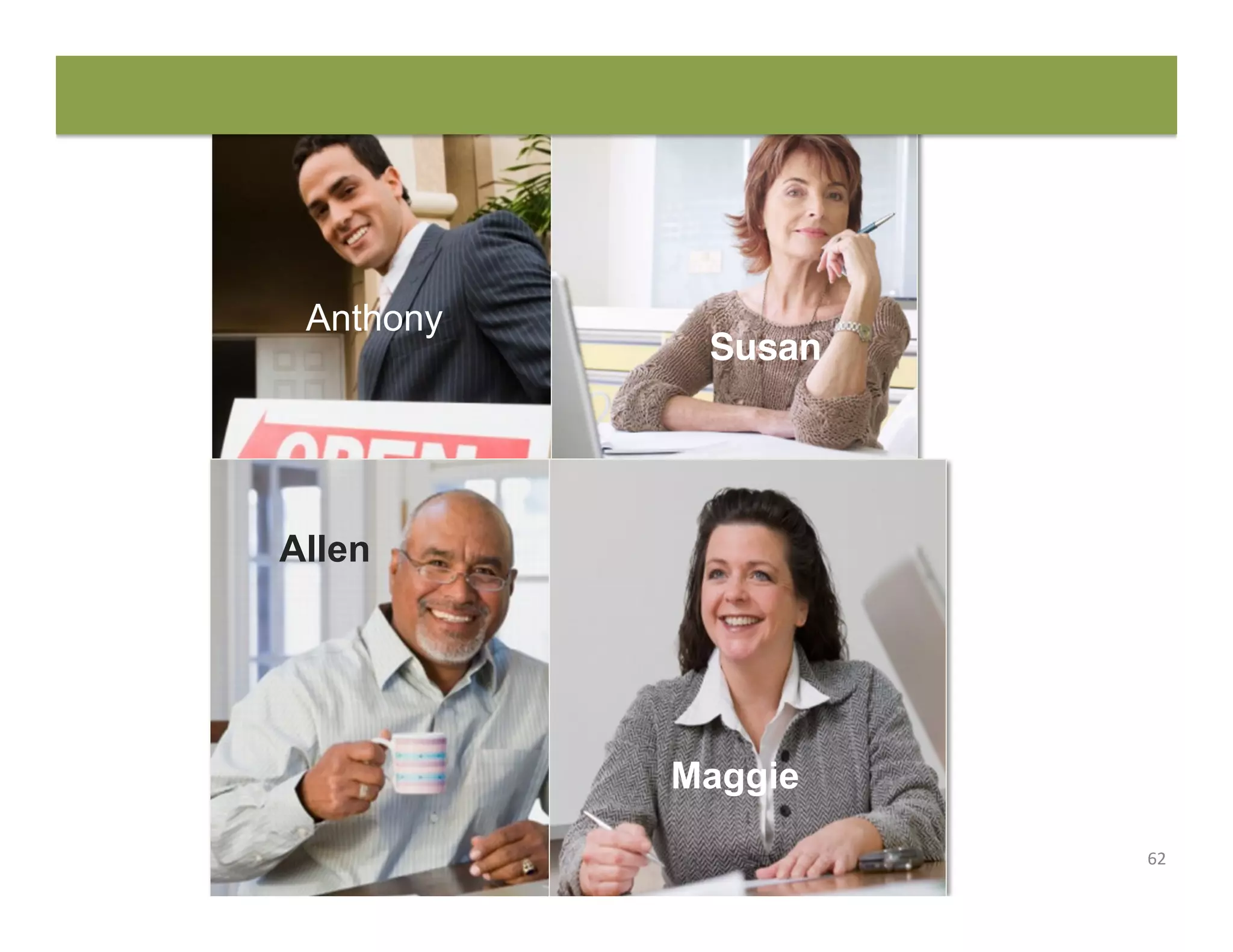
Empathy-Based Audience
Personas
h"p://www.tagheuer.com/int-­‐en/company/ceo-­‐speech	
  
•  Shared focus on the audience

•  Shared understanding of the
audience
61	
  
h"p://www.slideshare.net/est3ban/empathybased-­‐personas-­‐gaining-­‐a-­‐deeper-­‐understanding-­‐of-­‐your-­‐audience-­‐presen	
  
62	
  
Anthony
Susan
Allen
Maggie
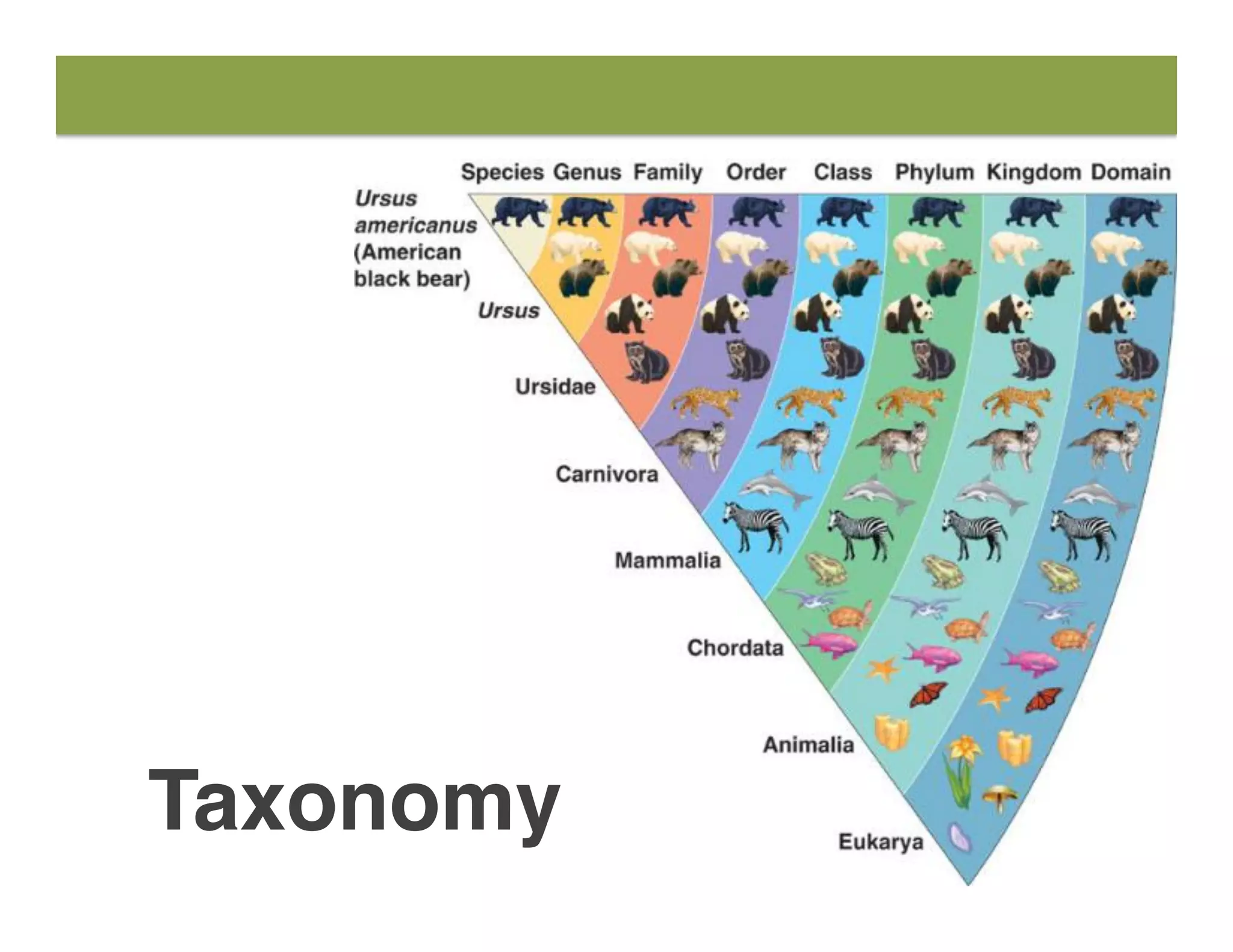
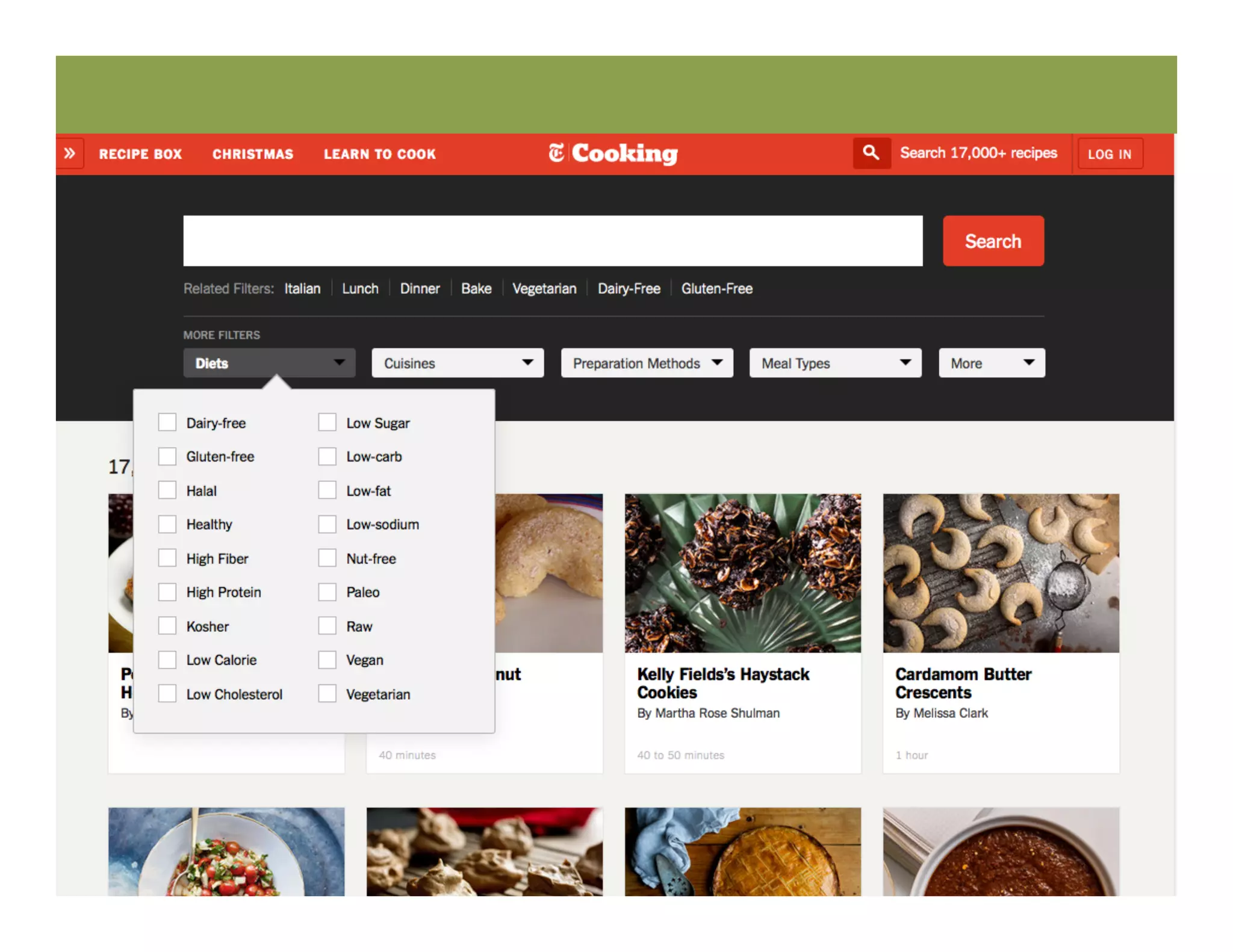
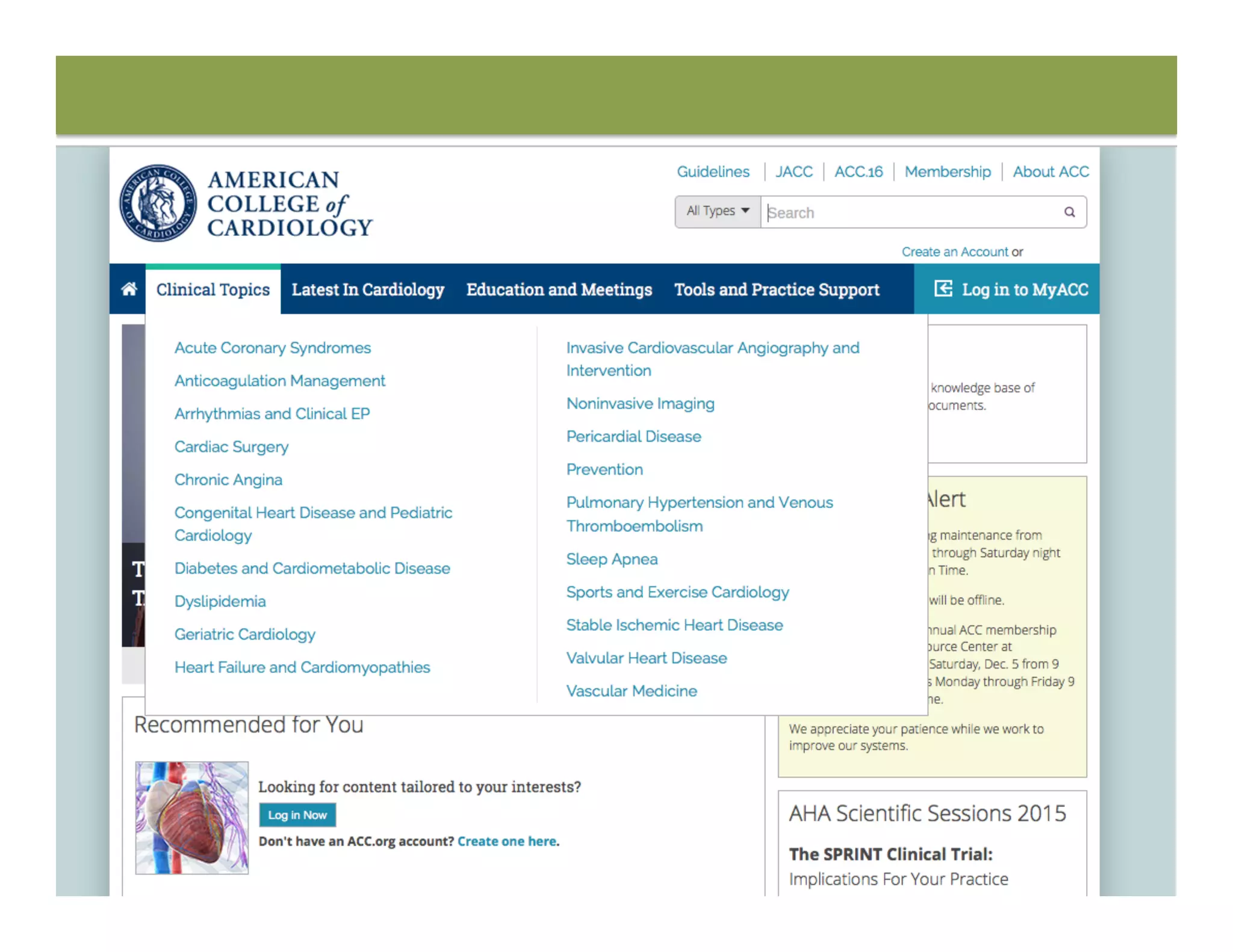
Taxonomy
•  What Is It?
–  A set of terms (controlled vocabulary) and content
attributes (metadata) that can be applied to content 
items 
–  The underlying data structure of the website
•  Why Use It?
–  Helps describe and categorize content items

–  Creates relationships among content items

–  Helps make content items findable through navigation
and search
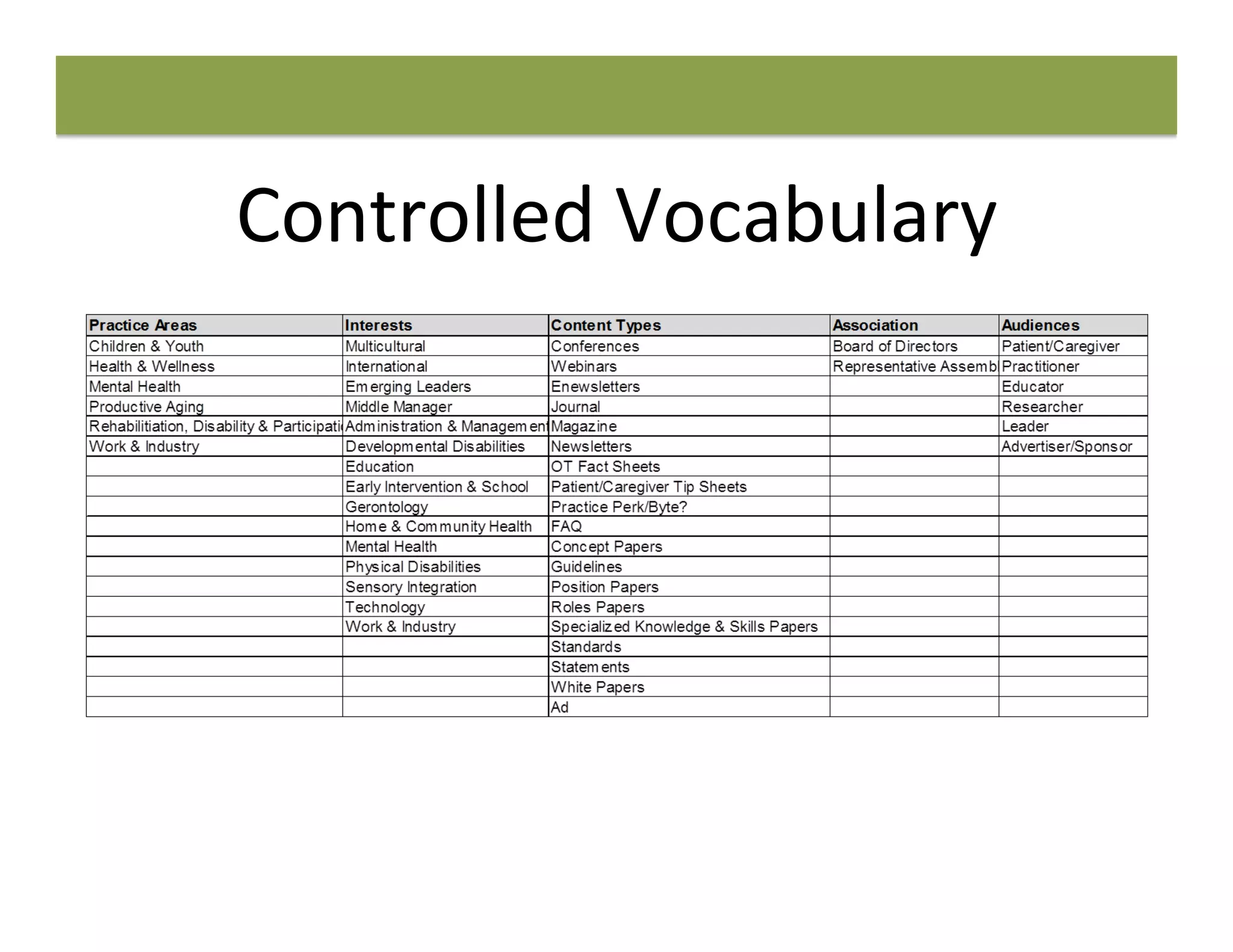
Controlled	
  Vocabulary	
  	
  
≈	
  
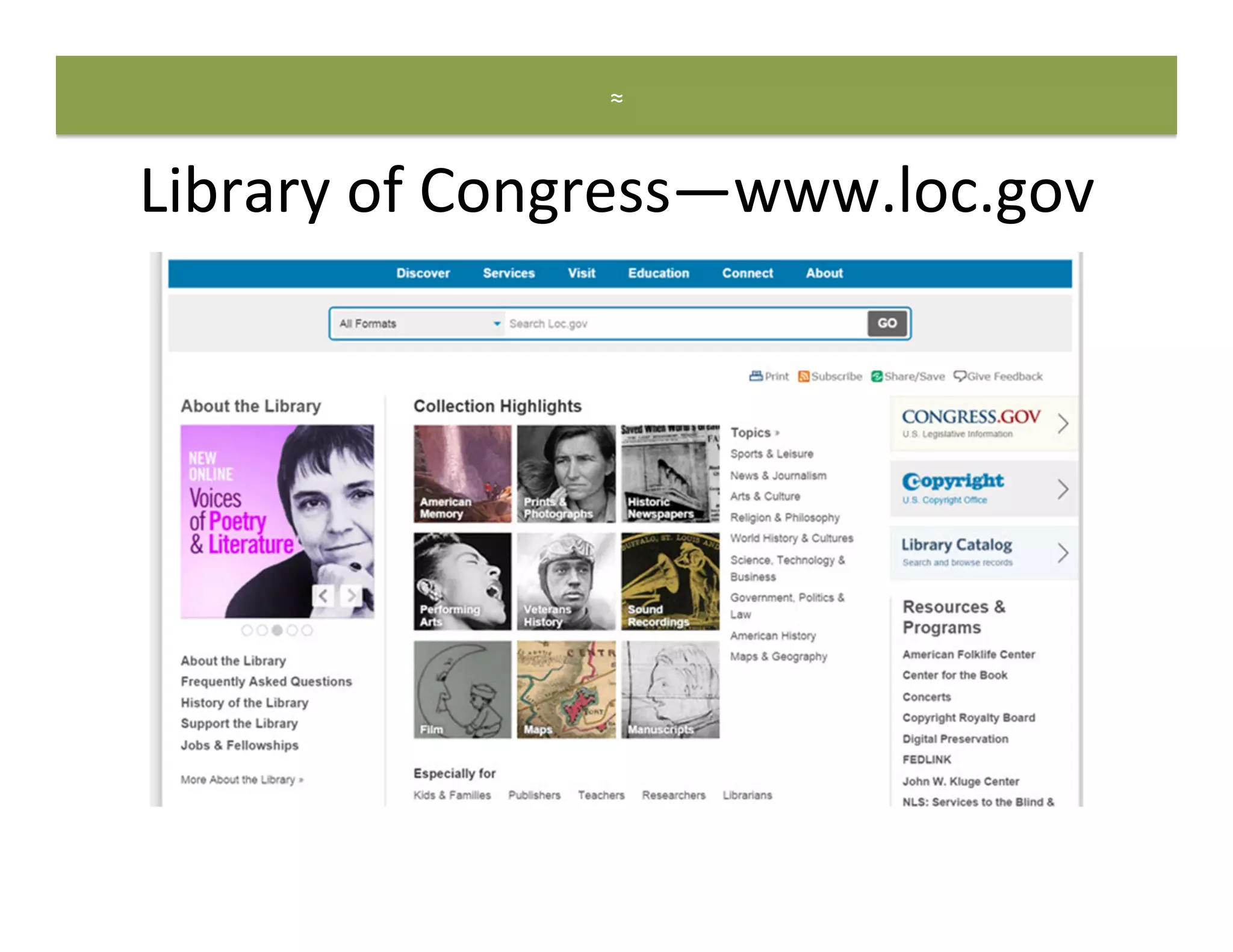
Library	
  of	
  Congress—www.loc.gov	
  
≈	
  
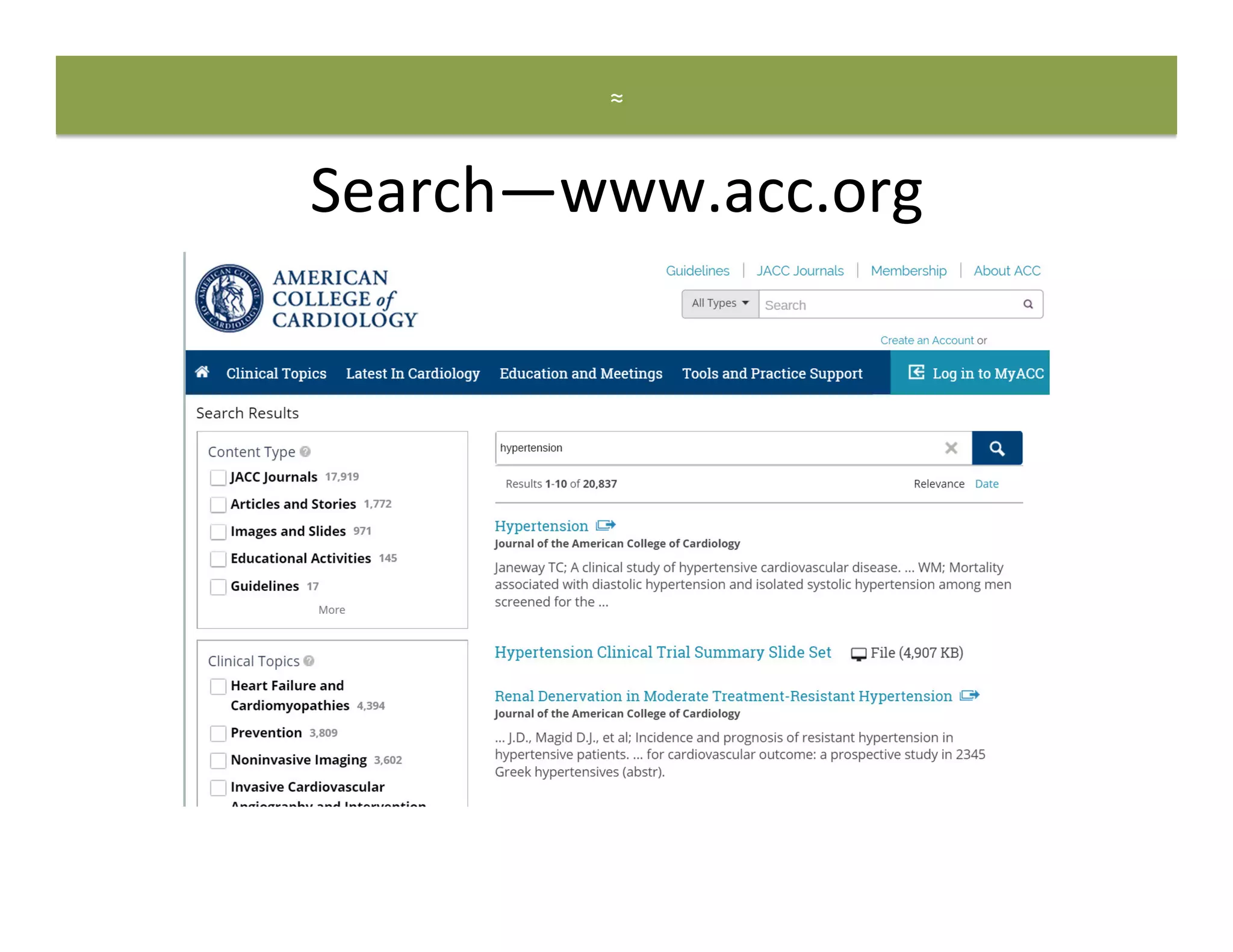
Search—www.acc.org	
  
≈	
  
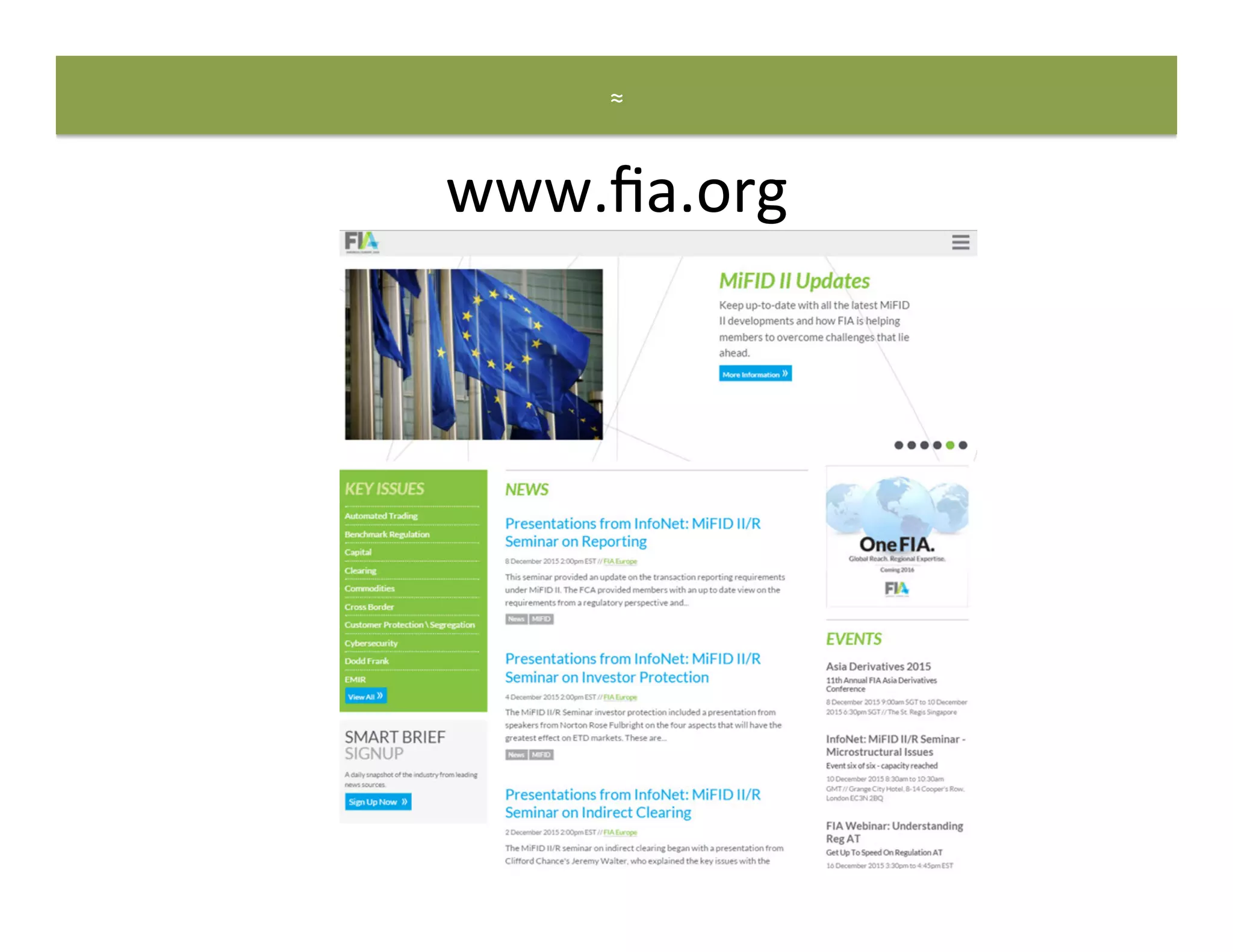
www.fia.org	
  
Outcomes
•  Agree on controlled vocabulary
•  Validate with users
•  Determine who will tag content
•  Plan to review/add/remove terms
periodically
Taxonomy Exercise
What’s in the bag?
Image:	
  wikipedia	
  
Content
Modeling
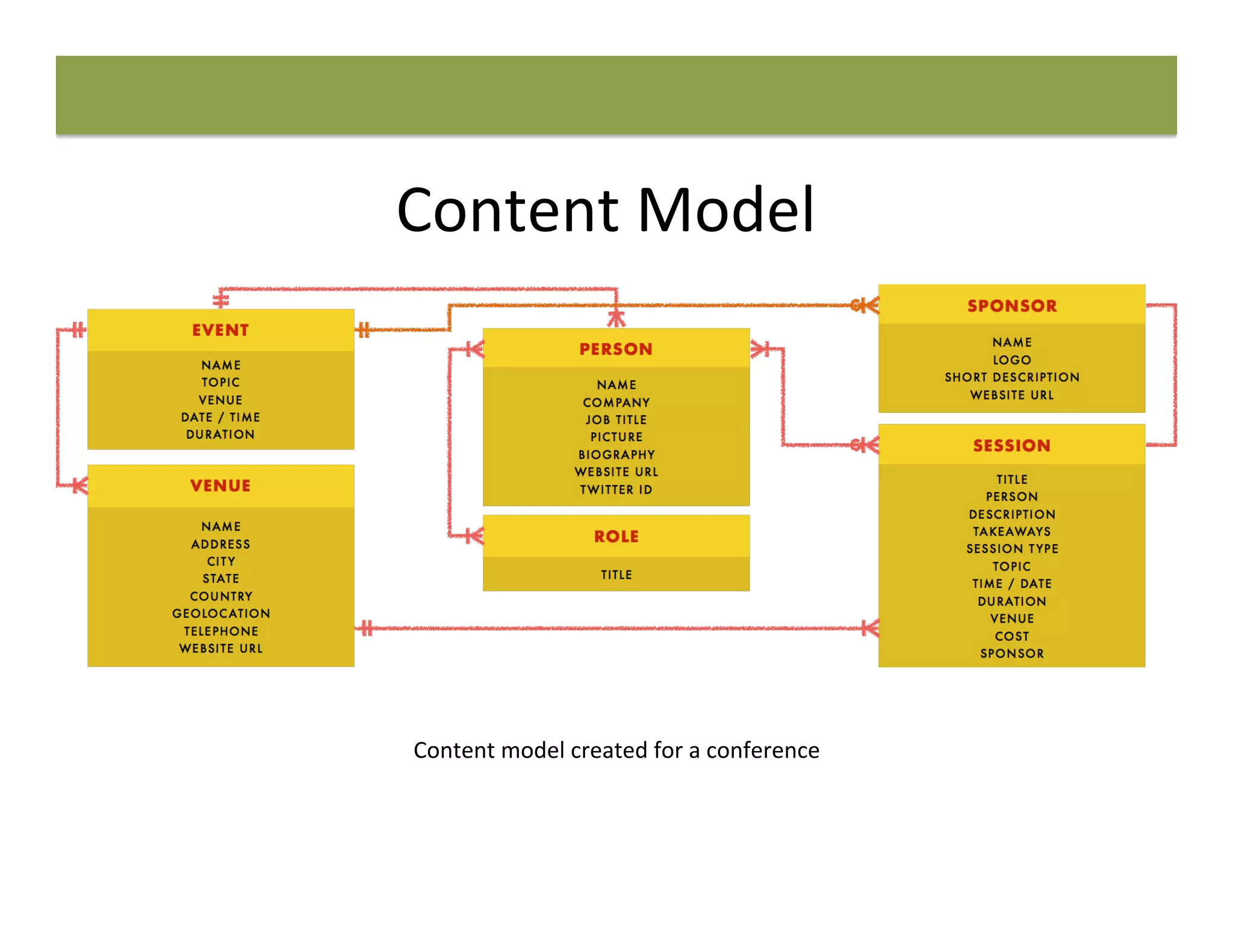
Content	
  Model	
  
Content	
  model	
  created	
  for	
  a	
  conference	
  
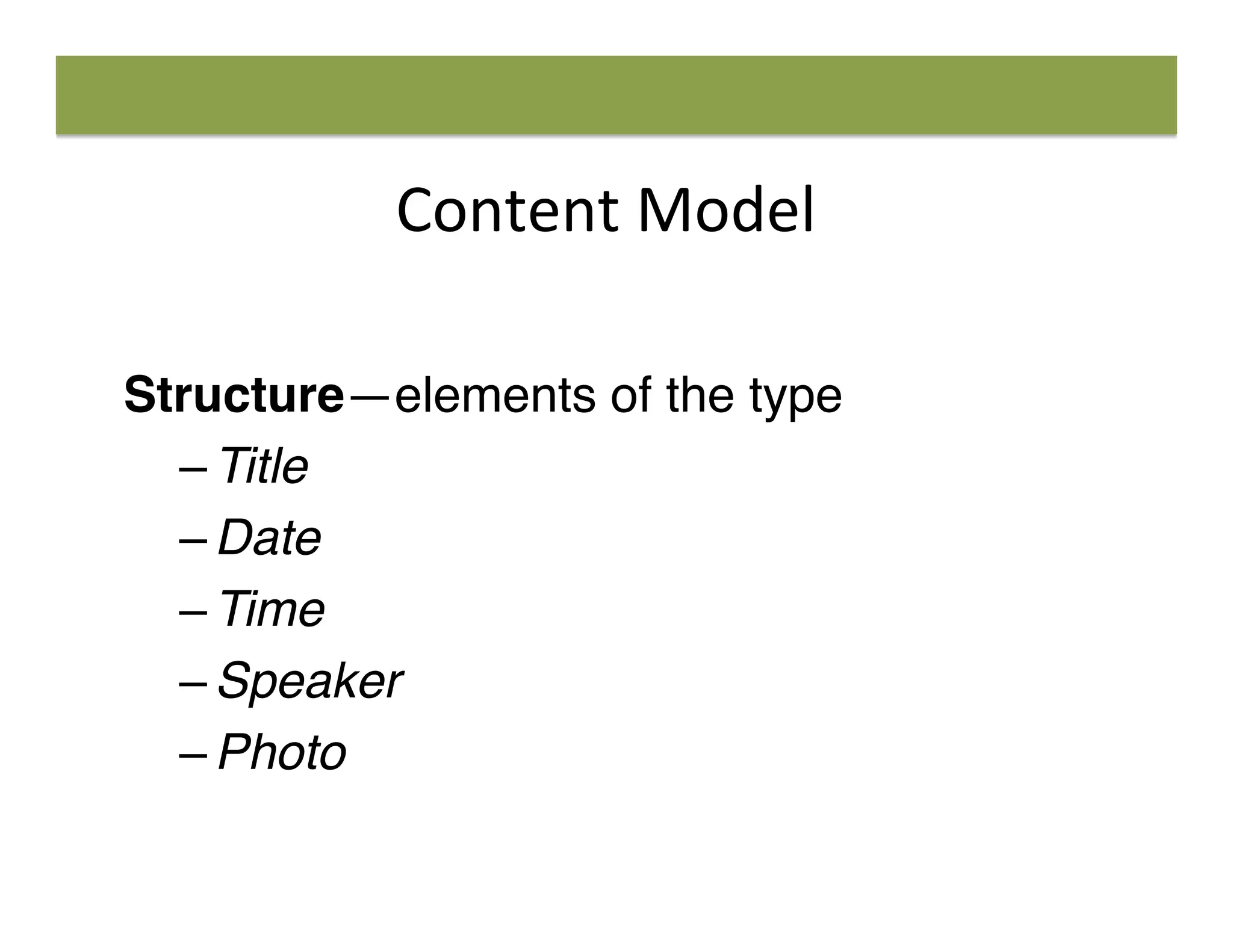
Structured	
  Content	
  
Information or content that
has been broken down
and classified using metadata
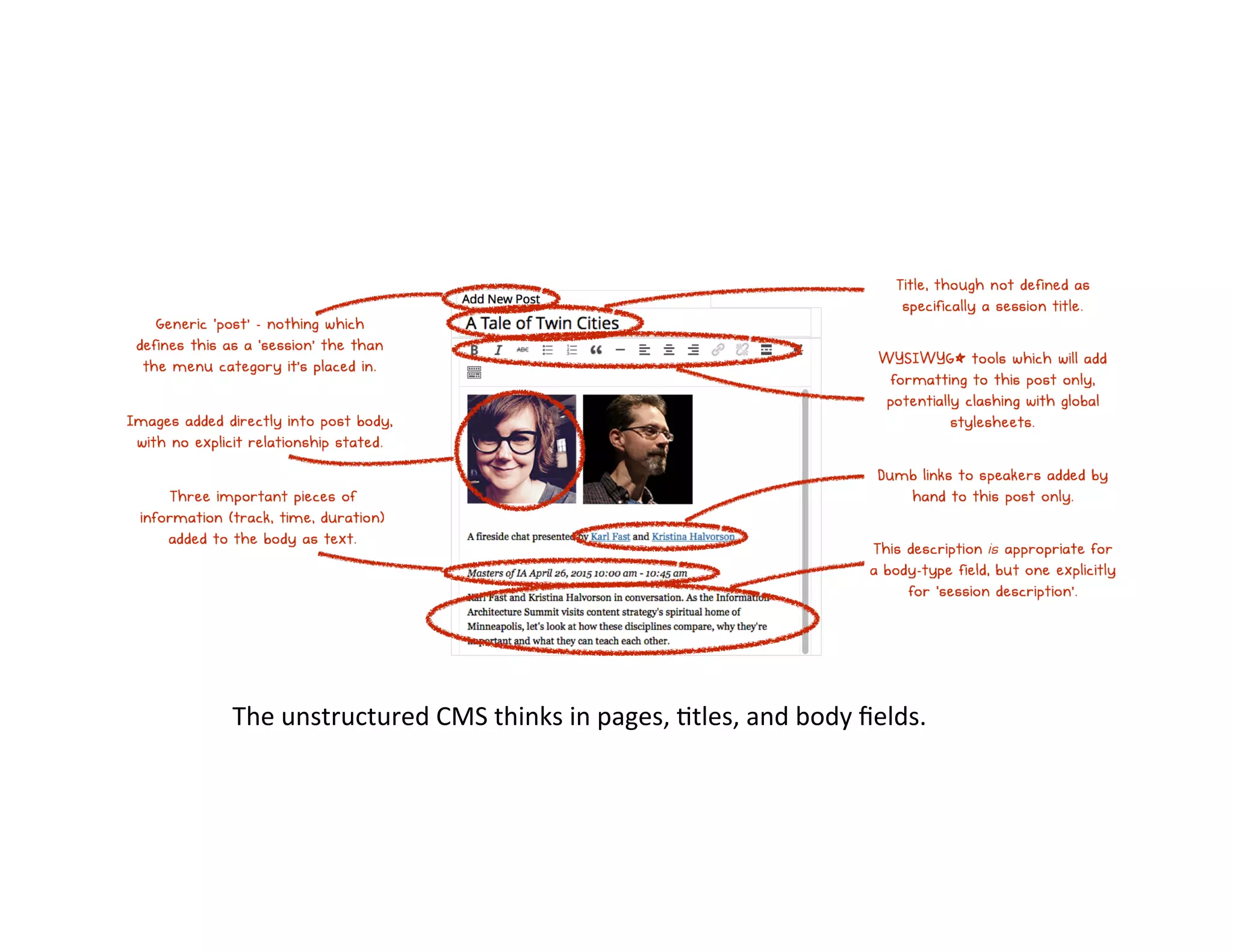
The	
  unstructured	
  CMS	
  thinks	
  in	
  pages,	
  8tles,	
  and	
  body	
  fields.	
  
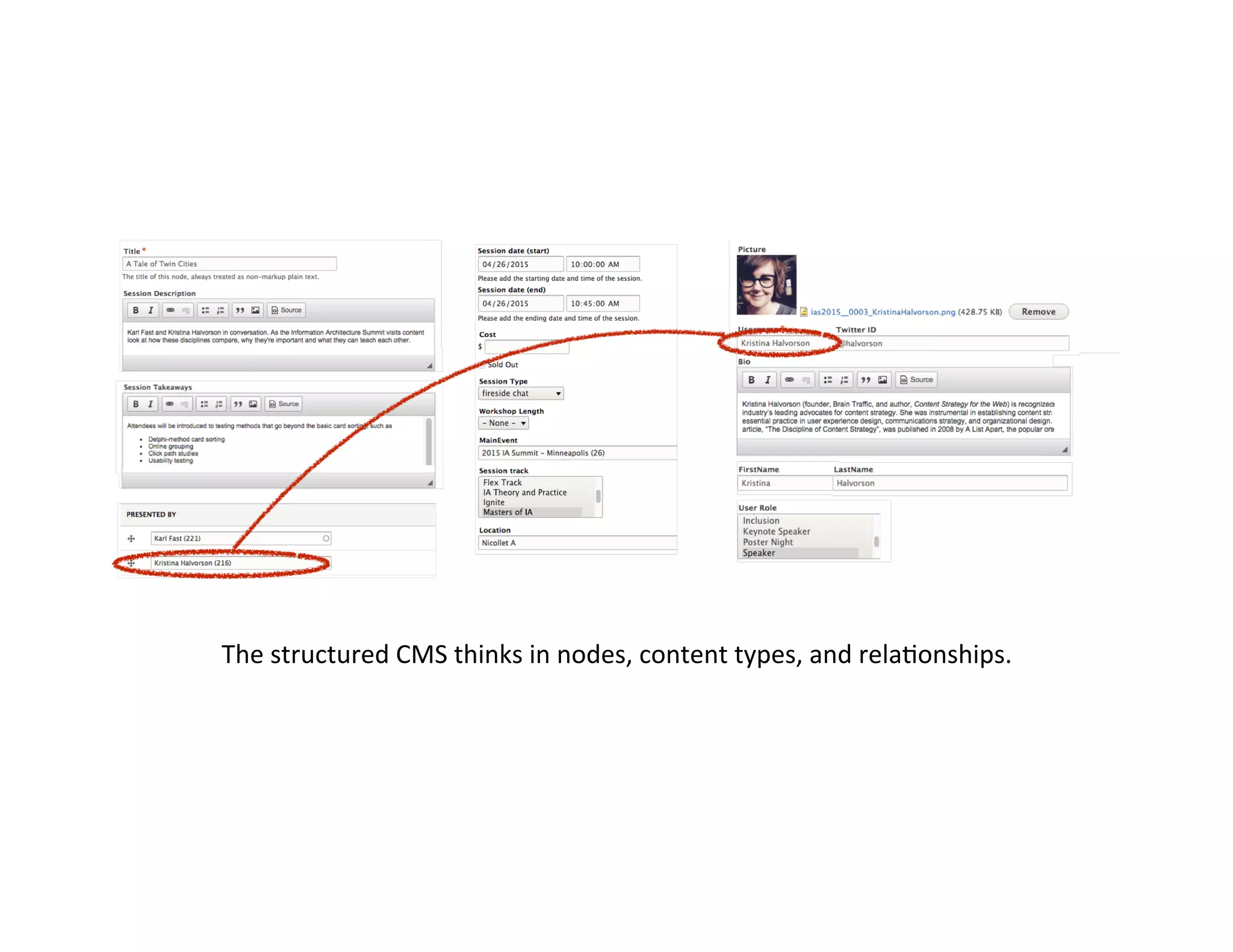
The	
  structured	
  CMS	
  thinks	
  in	
  nodes,	
  content	
  types,	
  and	
  rela8onships.	
  
“In a sense, content models are perhaps the truest
form of bottom-up information architecture: by
determining what types of chunks are important and
how to link them, we make the answers embedded
in our content ‘rise to the surface.’”

—Louis Rosenfeld & Peter Morville
Information Architecture for the World Wide Web
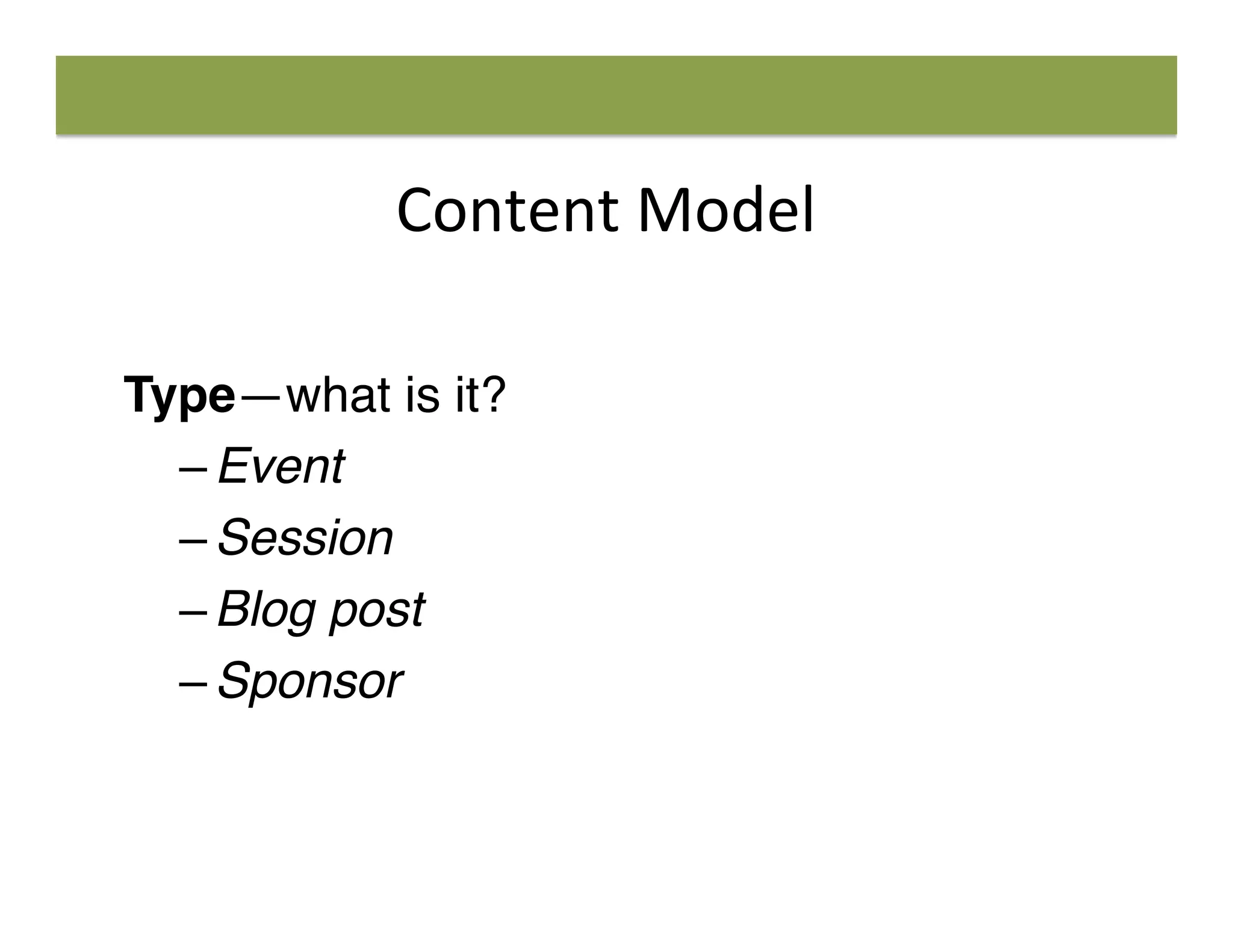
Content	
  Model	
  
Type—what is it?
– Event
– Session
– Blog post
– Sponsor
Content	
  Model	
  
Structure—elements of the type
– Title
– Date
– Time
– Speaker
– Photo
Content	
  Model	
  
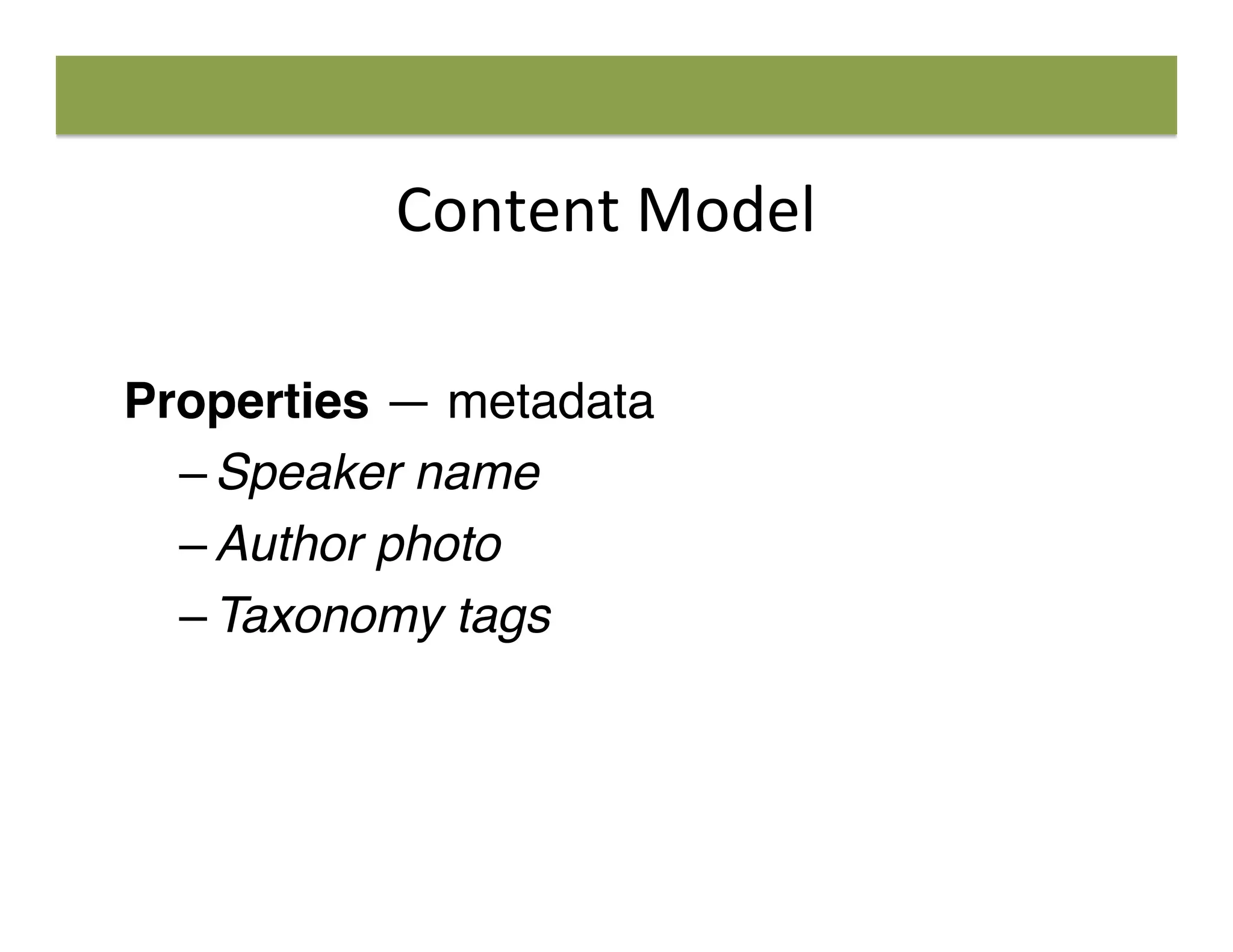
Properties — metadata
– Speaker name
– Author photo
– Taxonomy tags
Content	
  Model	
  
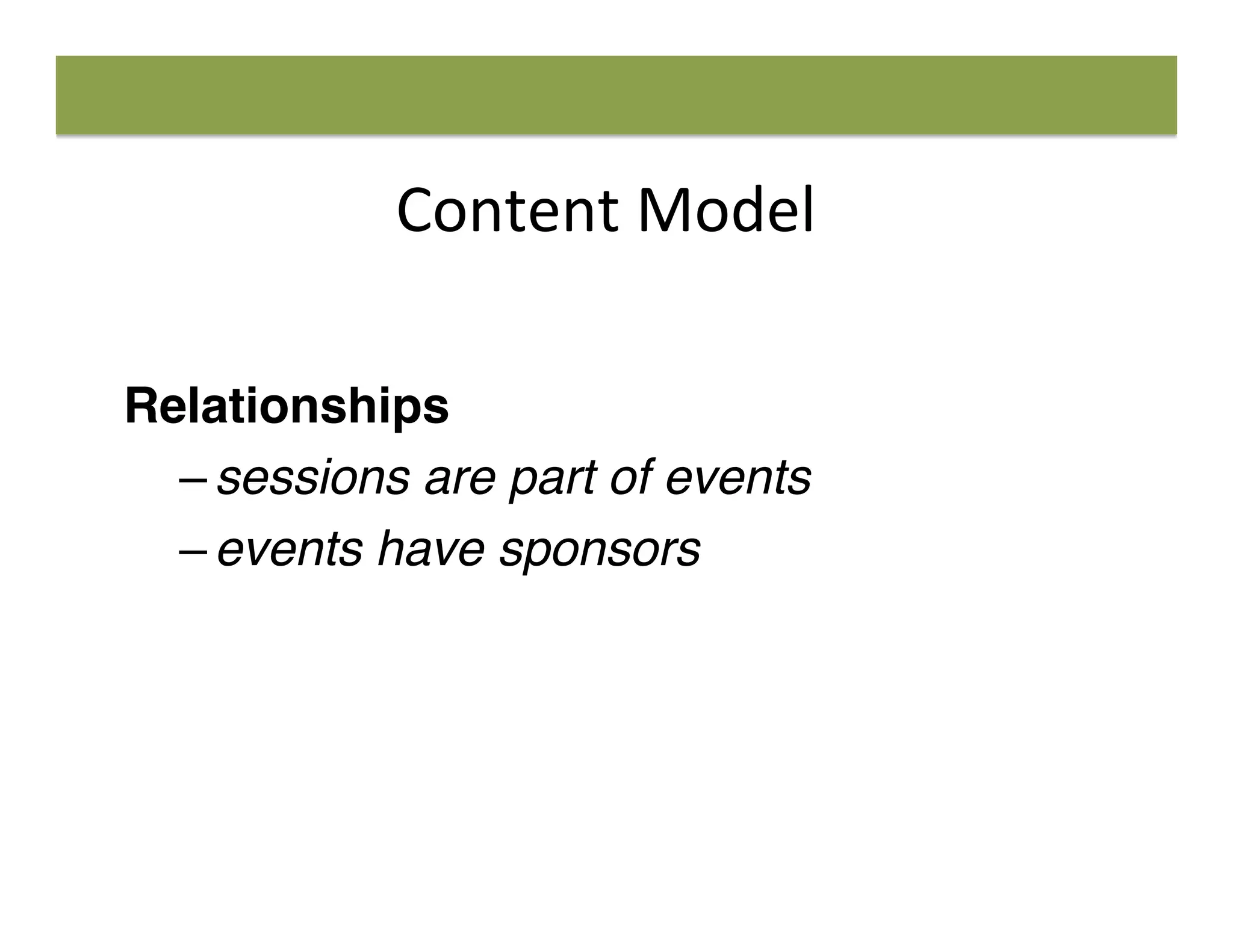
Relationships
– sessions are part of events
– events have sponsors
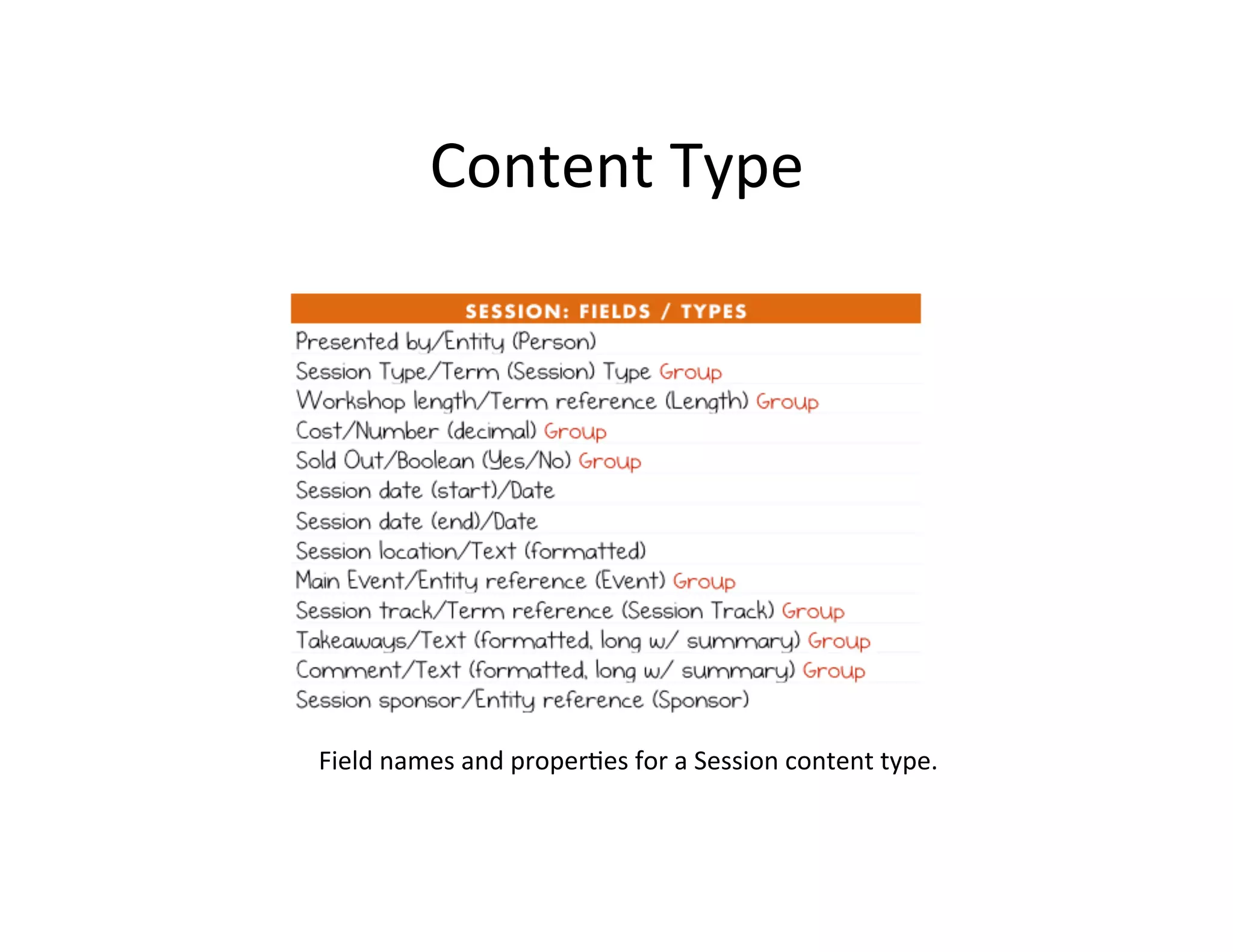
Content	
  Type	
  
Field	
  names	
  and	
  proper8es	
  for	
  a	
  Session	
  content	
  type.	
  
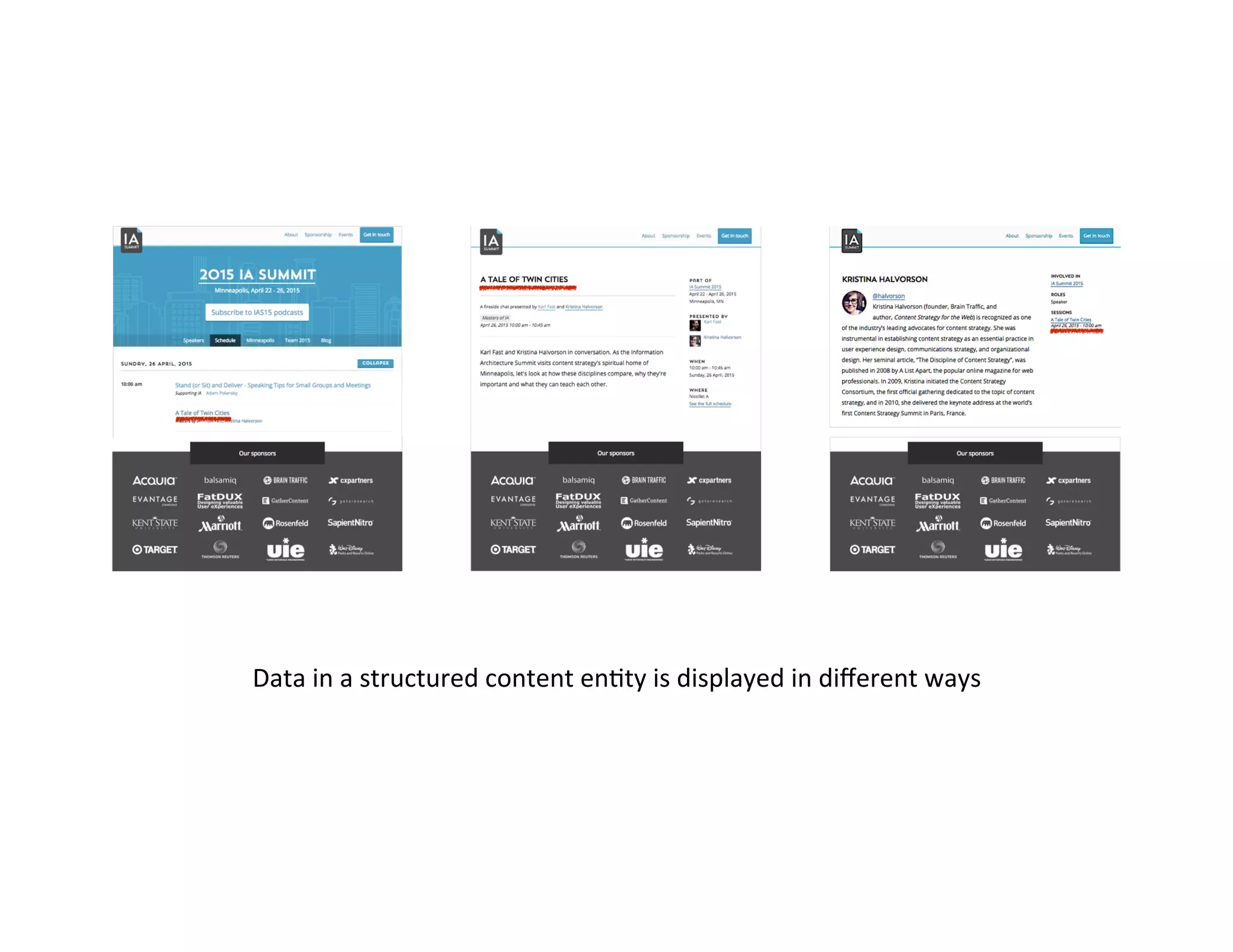
Data	
  in	
  a	
  structured	
  content	
  en8ty	
  is	
  displayed	
  in	
  different	
  ways	
  
Content Creation
Possibly	
  remove	
  
Effective content
•  Is focused on the reader
•  Has a goal
•  Helps the reader do a task
•  Is relevant, timely, useful
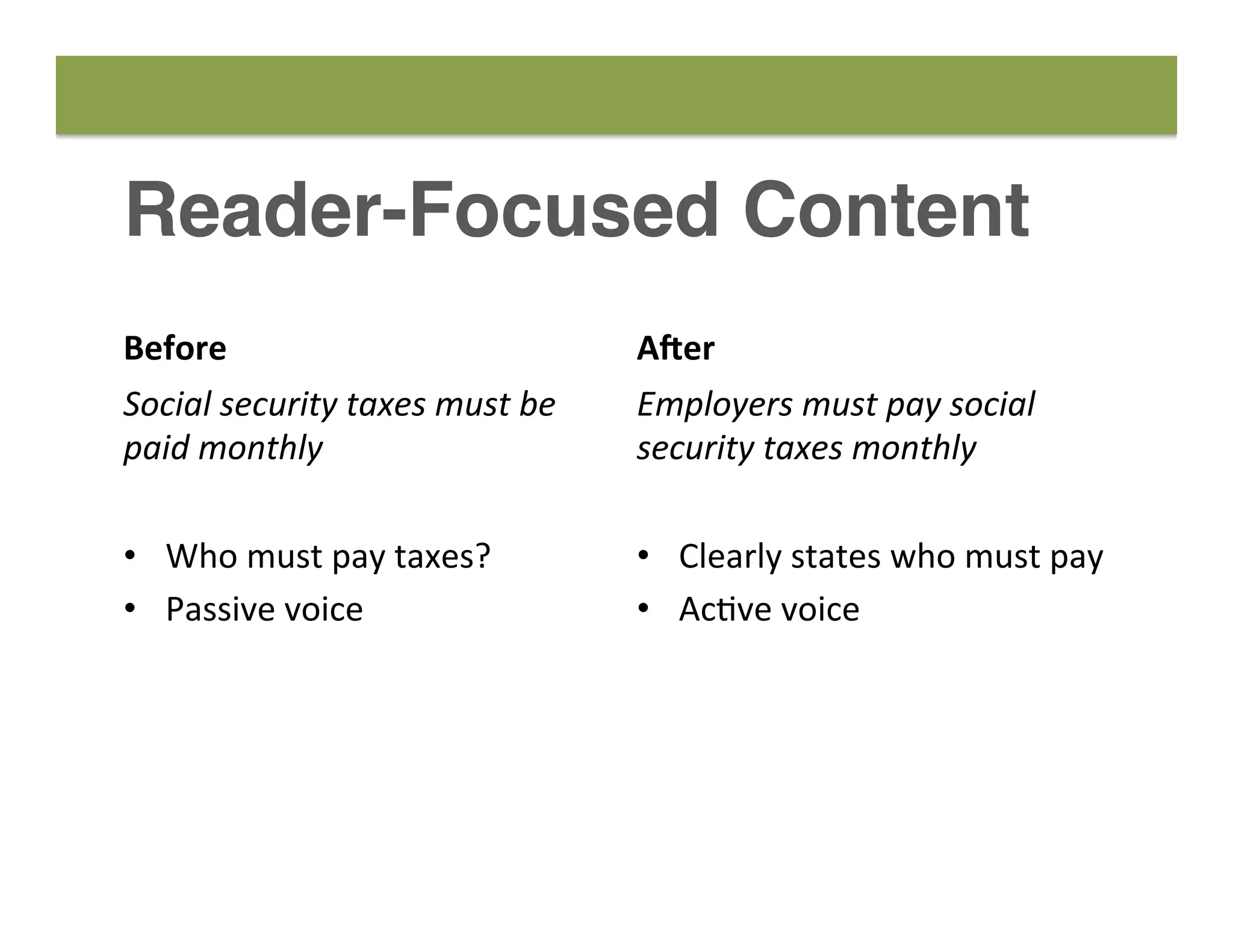
Reader-Focused Content
Before	
  
Social	
  security	
  taxes	
  must	
  be	
  
paid	
  monthly	


•  Who	
  must	
  pay	
  taxes?	
  
•  Passive	
  voice	
  
A5er	
  
Employers	
  must	
  pay	
  social	
  
security	
  taxes	
  monthly	


•  Clearly	
  states	
  who	
  must	
  pay	
  
•  Ac8ve	
  voice	
  
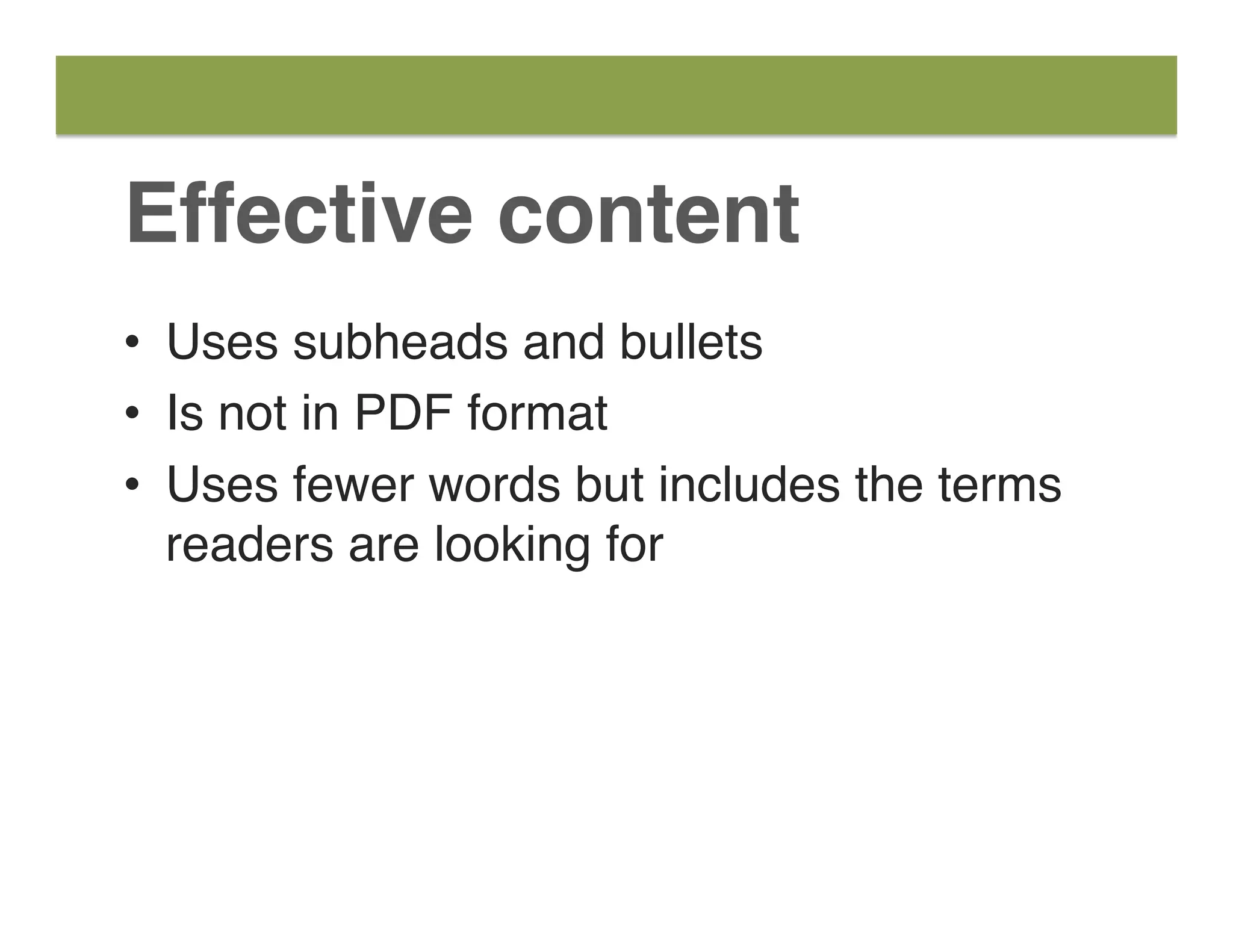
Effective content
•  Uses subheads and bullets
•  Is not in PDF format
•  Uses fewer words but includes the terms
readers are looking for
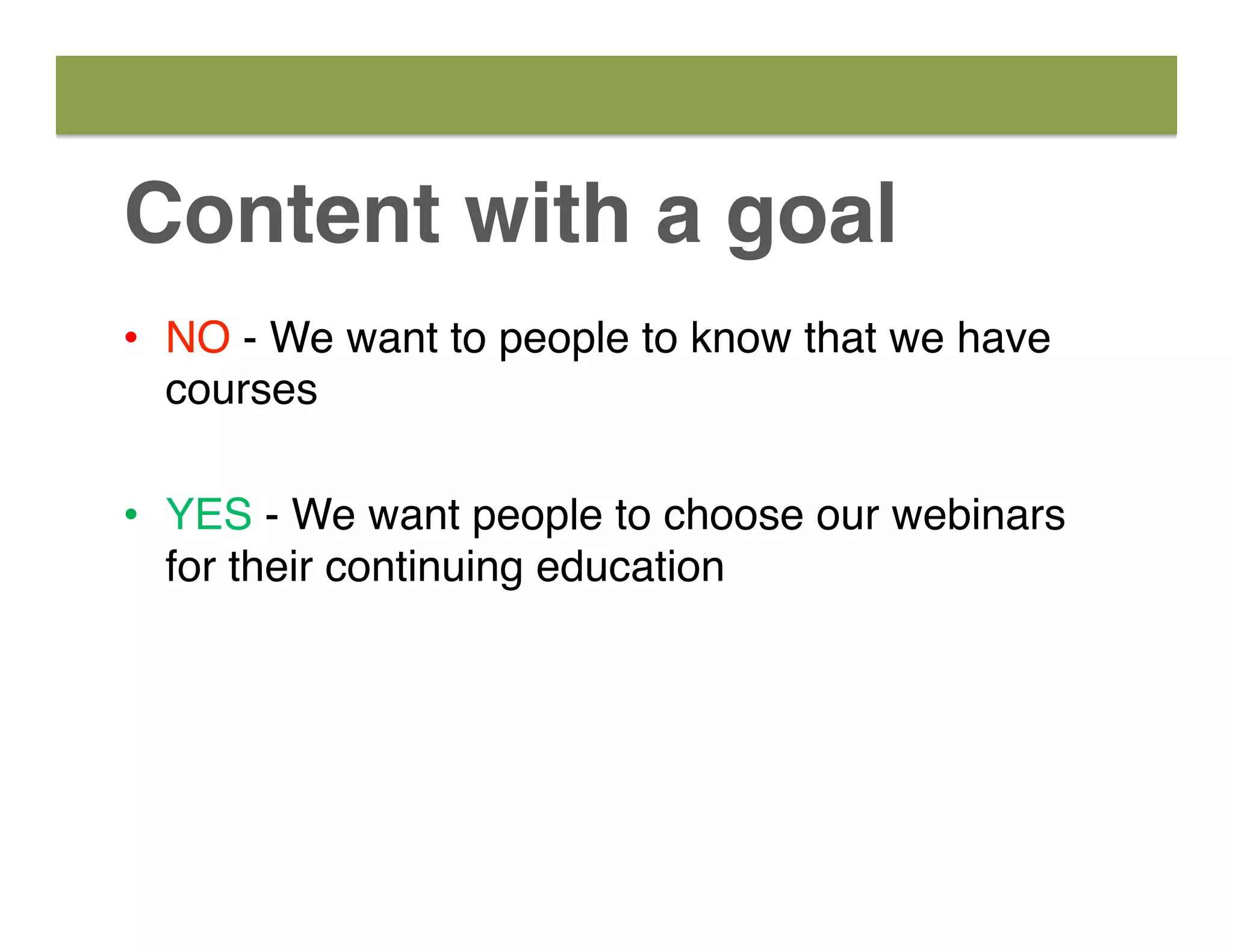
Content with a goal
•  NO - We want to people to know that we have
courses
•  YES - We want people to choose our webinars
for their continuing education
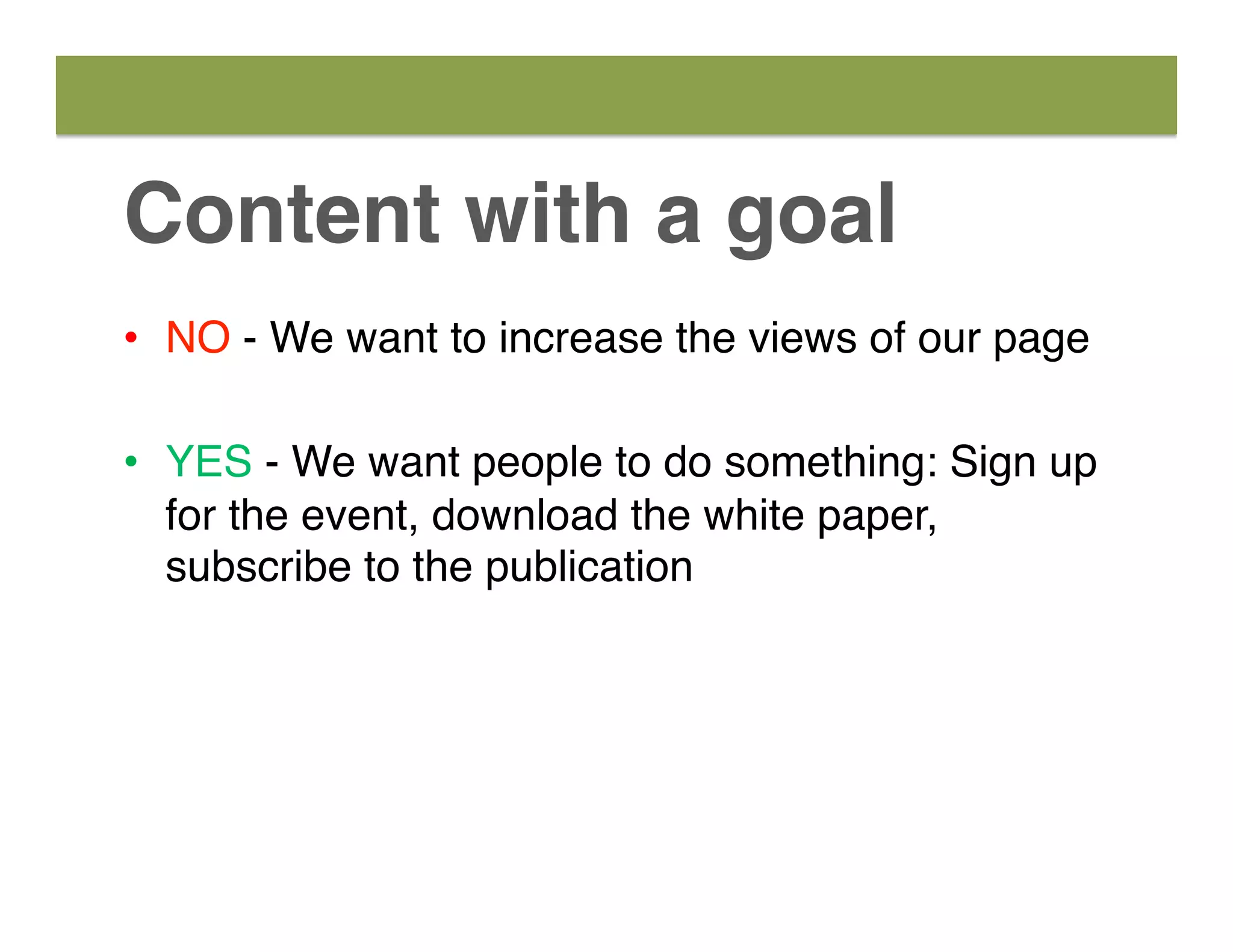
Content with a goal
•  NO - We want to increase the views of our page
•  YES - We want people to do something: Sign up
for the event, download the white paper,
subscribe to the publication
Help reader do something
•  Who am I talking to? (Have a
conversation)
•  What do they want to achieve?
•  What brings those people to my site 

or app? What are their top tasks? Top
questions?
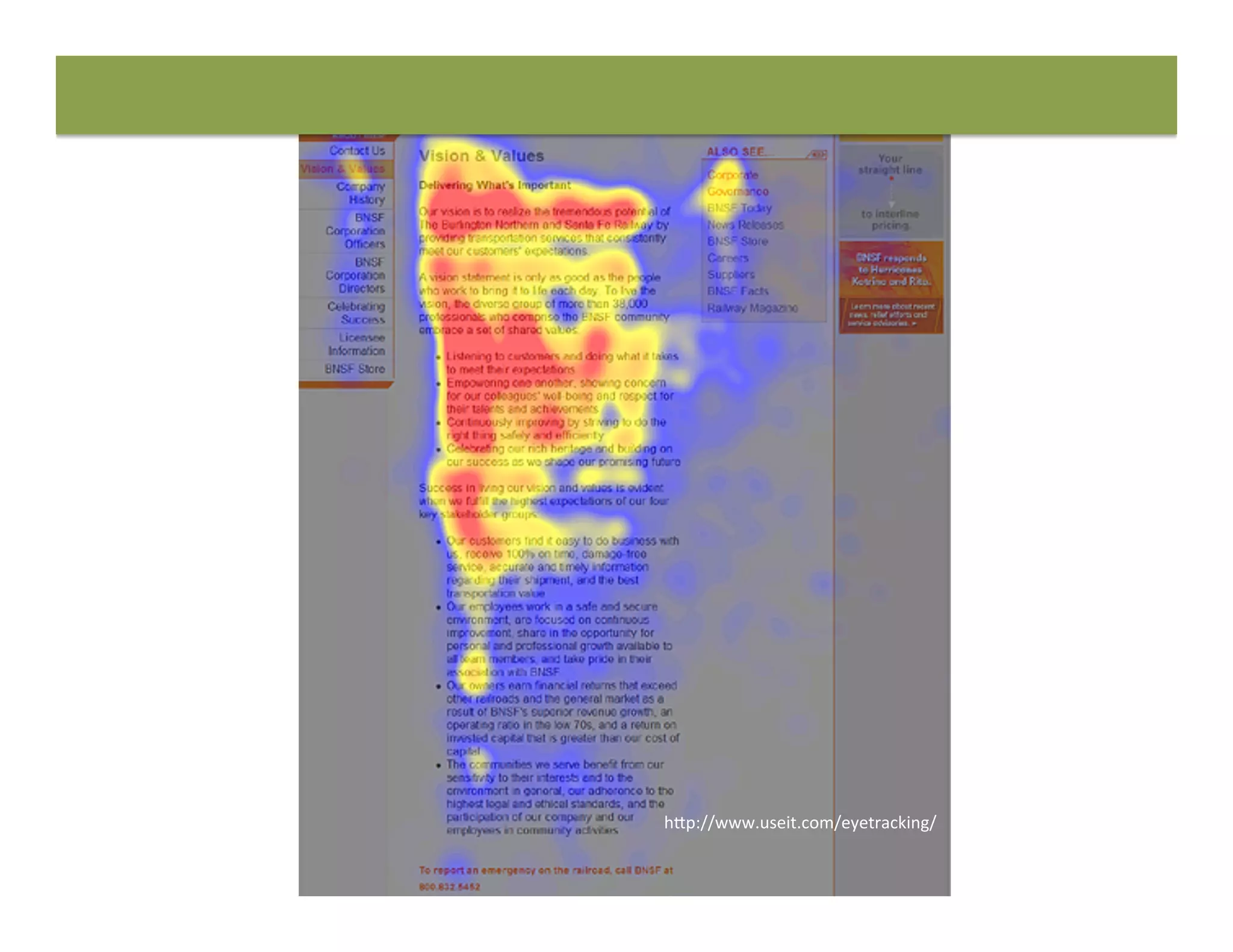
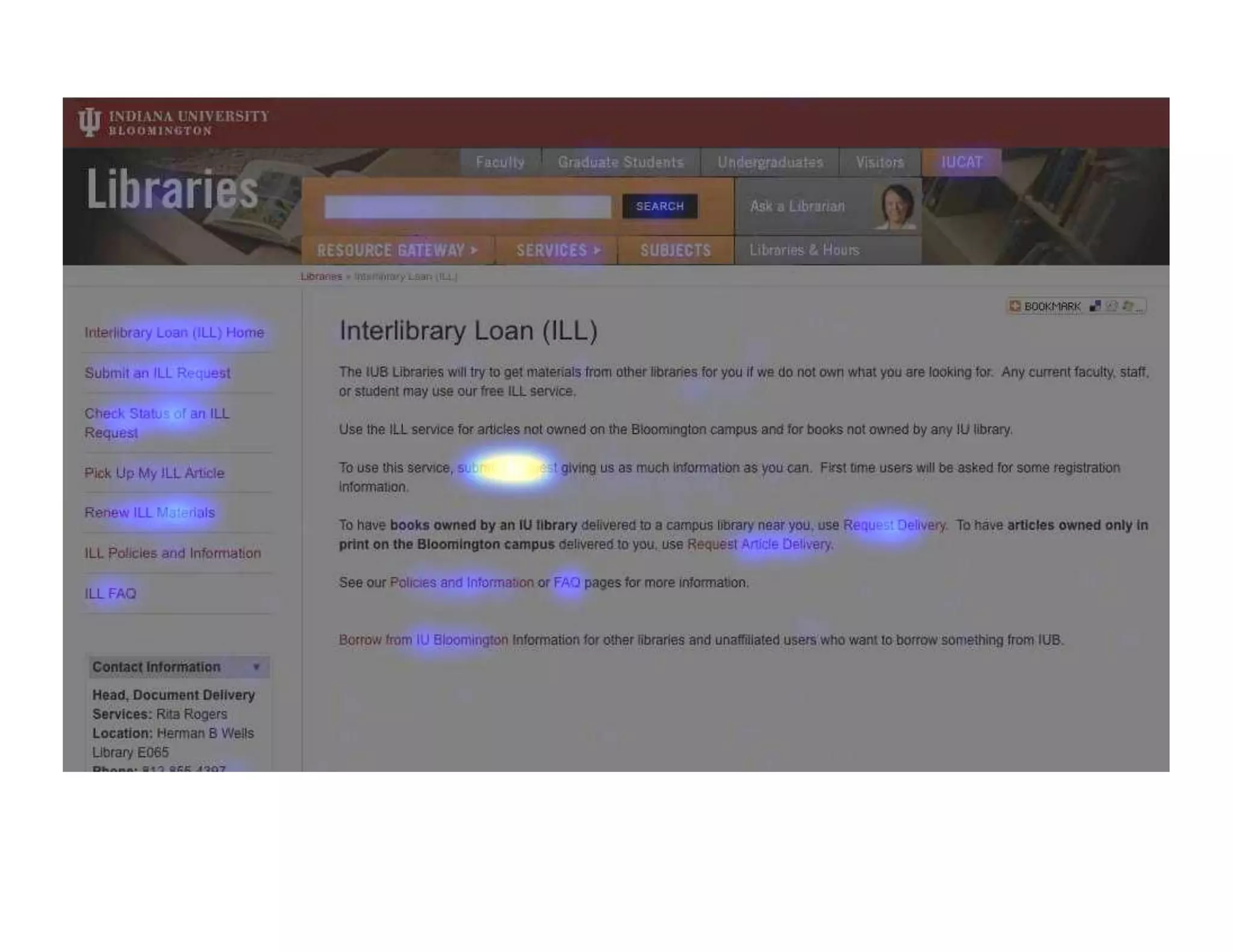
h"p://www.useit.com/eyetracking/	
  
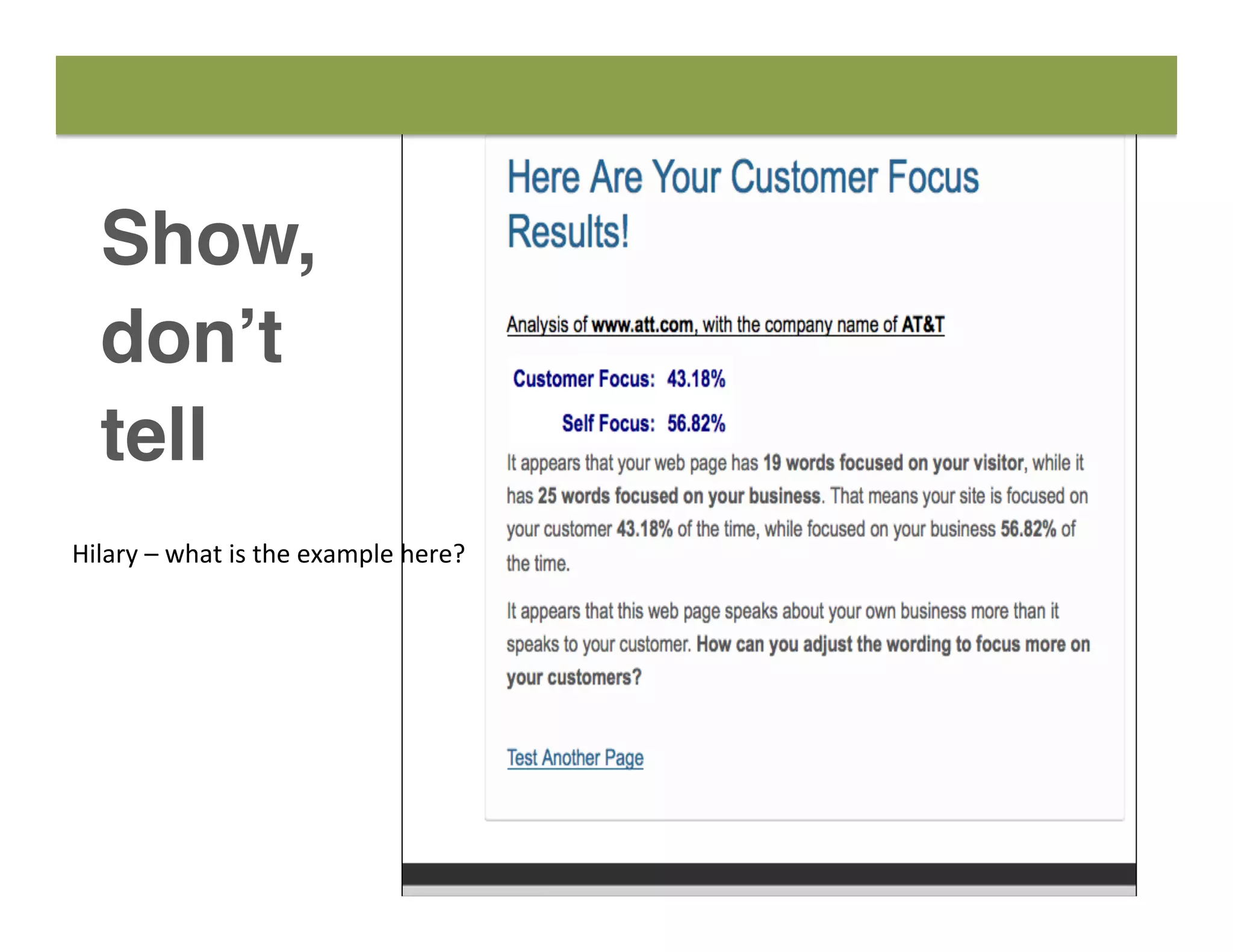
Show,
don’t
tell
Hilary	
  –	
  what	
  is	
  the	
  example	
  here?	
  
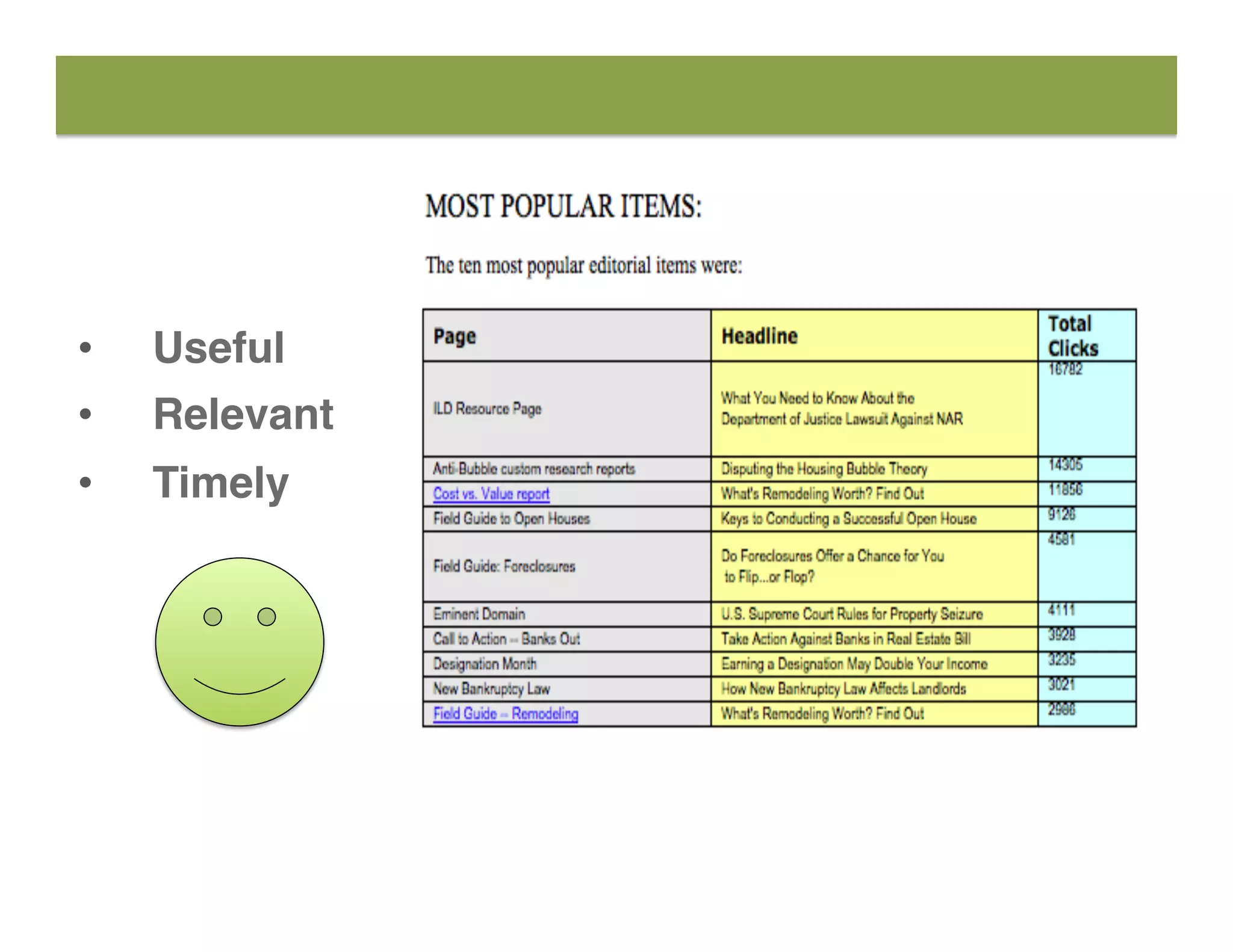
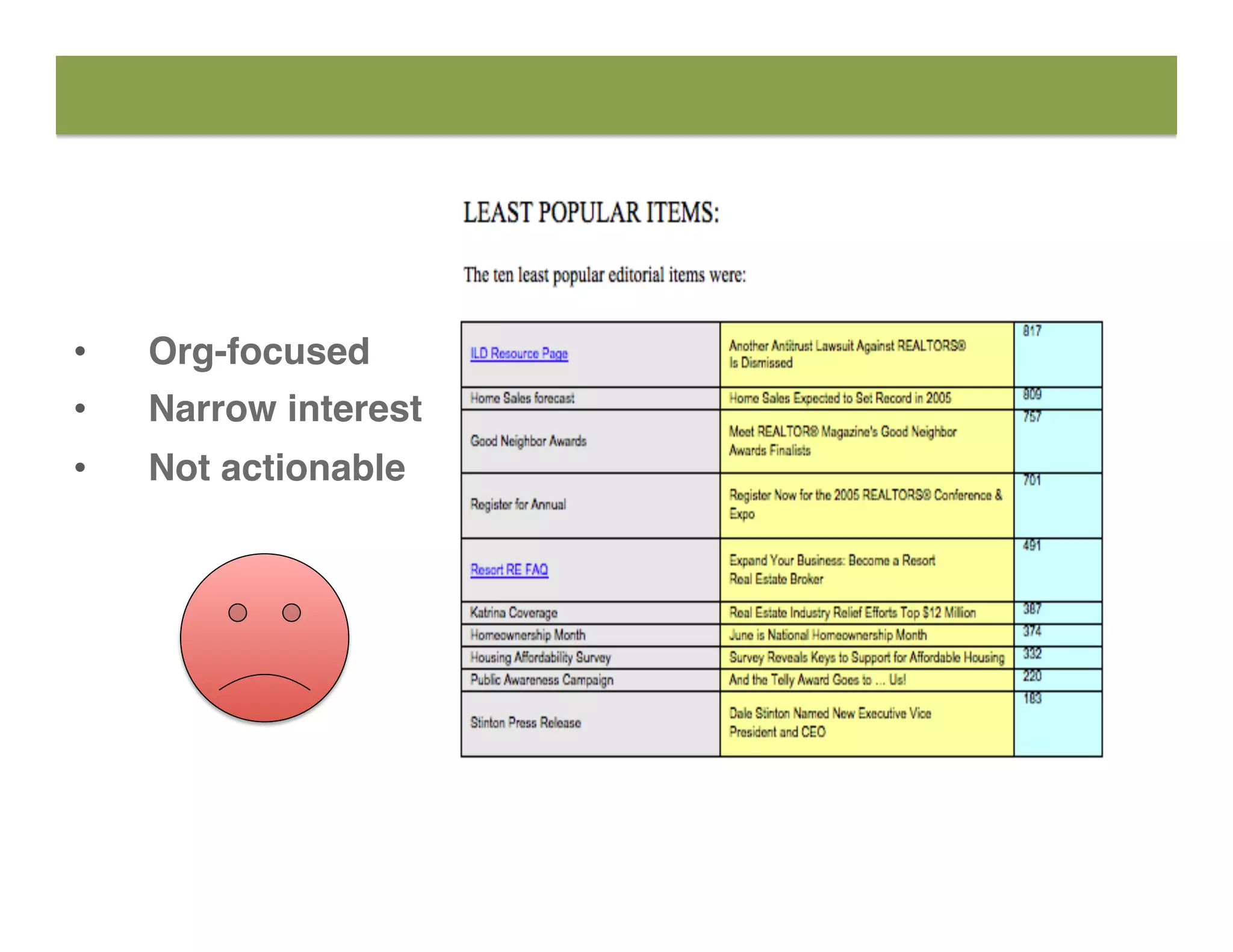
•  Useful
•  Relevant
•  Timely
•  Org-focused
•  Narrow interest
•  Not actionable
CREATING	
  EFFECTIVE	
  CONTENT	
  
Core	
  Model	
  
Get	
  more	
  info	
  on	
  this	
  
h"ps://gathercontent.com/resources/webinar-­‐the-­‐core-­‐model	


h"p://alistapart.com/ar8cle/the-­‐core-­‐model-­‐designing-­‐inside-­‐out-­‐for-­‐be"er-­‐results	
  	
  
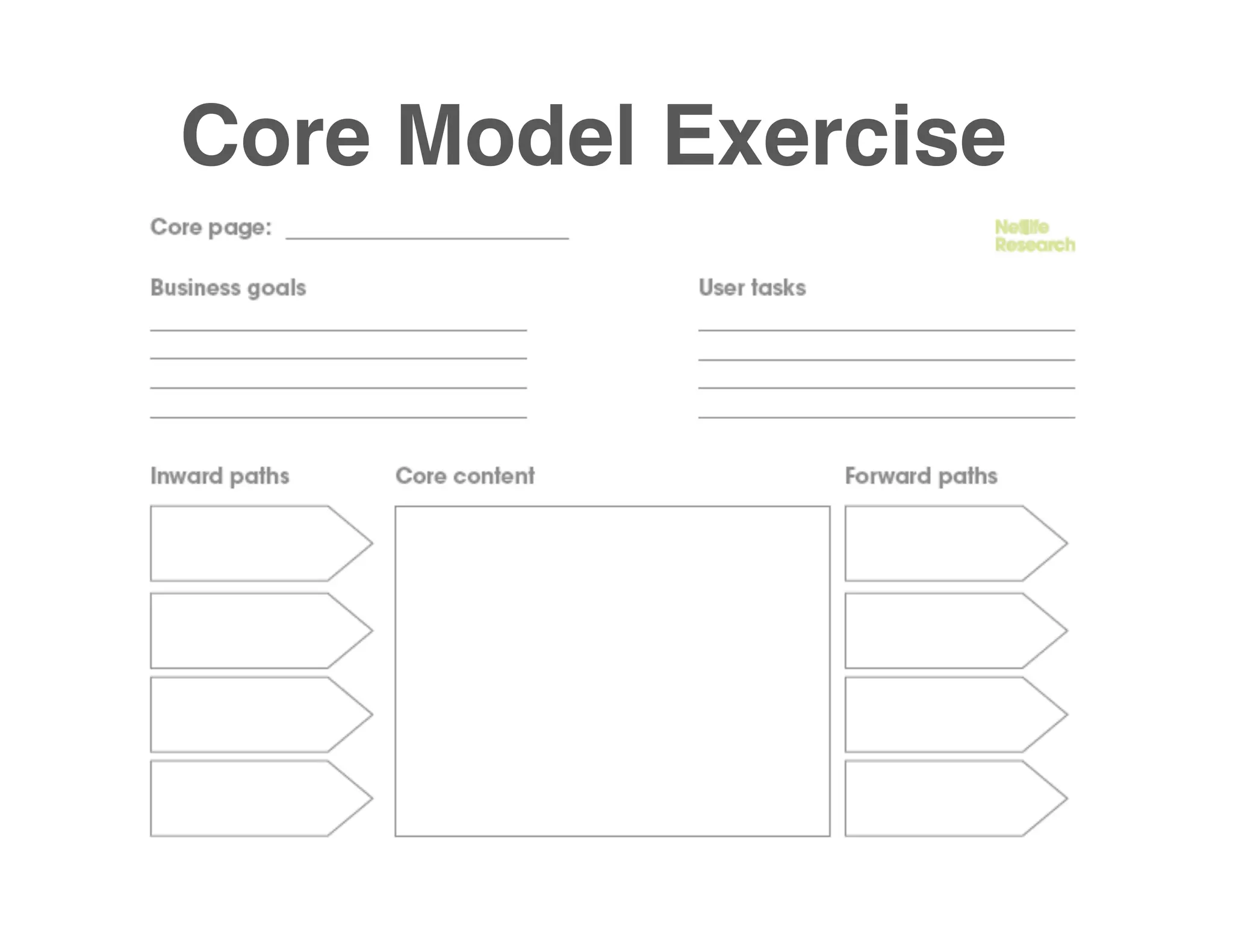
•  Designing	
  your	
  website	
  from	
  the	
  inside	
  out,	
  
with	
  focus	
  on	
  the	
  core	
  tasks	
  users	
  need	
  to	
  
accomplish	


•  Ensures	
  that	
  we’re	
  thinking	
  about	
  user	
  needs	
  
all	
  the	
  way	
  through	
  the	
  website	
  design	
  
process	
  
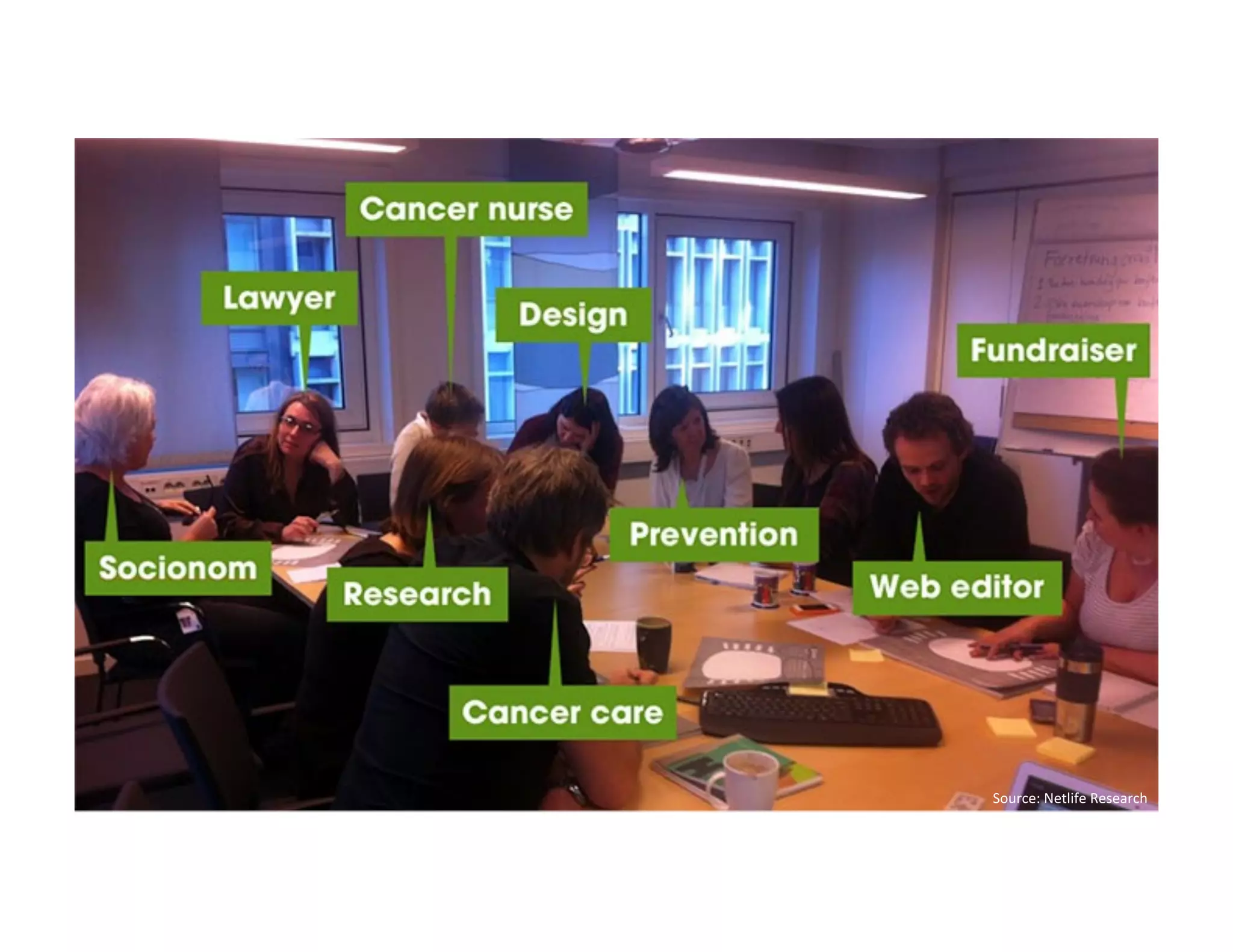
Core	
  Model	
  
Source:	
  Netlife	
  Research	
  
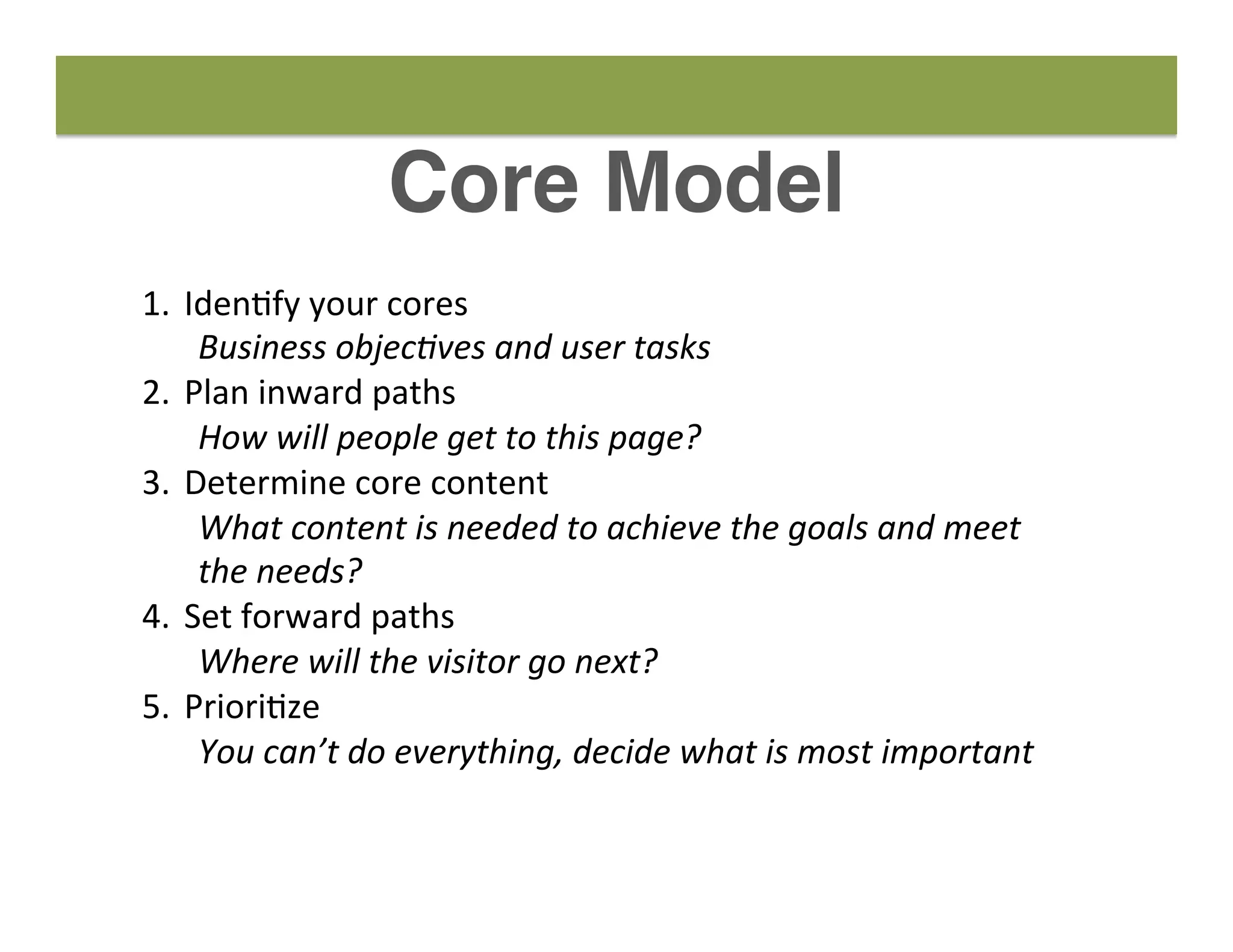
Core Model
1.  Iden8fy	
  your	
  cores	
  
Business	
  objec-ves	
  and	
  user	
  tasks	
  
2.  Plan	
  inward	
  paths	
  
How	
  will	
  people	
  get	
  to	
  this	
  page?	
  
3.  Determine	
  core	
  content	
  
What	
  content	
  is	
  needed	
  to	
  achieve	
  the	
  goals	
  and	
  meet	
  
the	
  needs?	
  
4.  Set	
  forward	
  paths	
  
Where	
  will	
  the	
  visitor	
  go	
  next?	
  
5.  Priori8ze	
  
You	
  can’t	
  do	
  everything,	
  decide	
  what	
  is	
  most	
  important	
  
Core Model Exercise
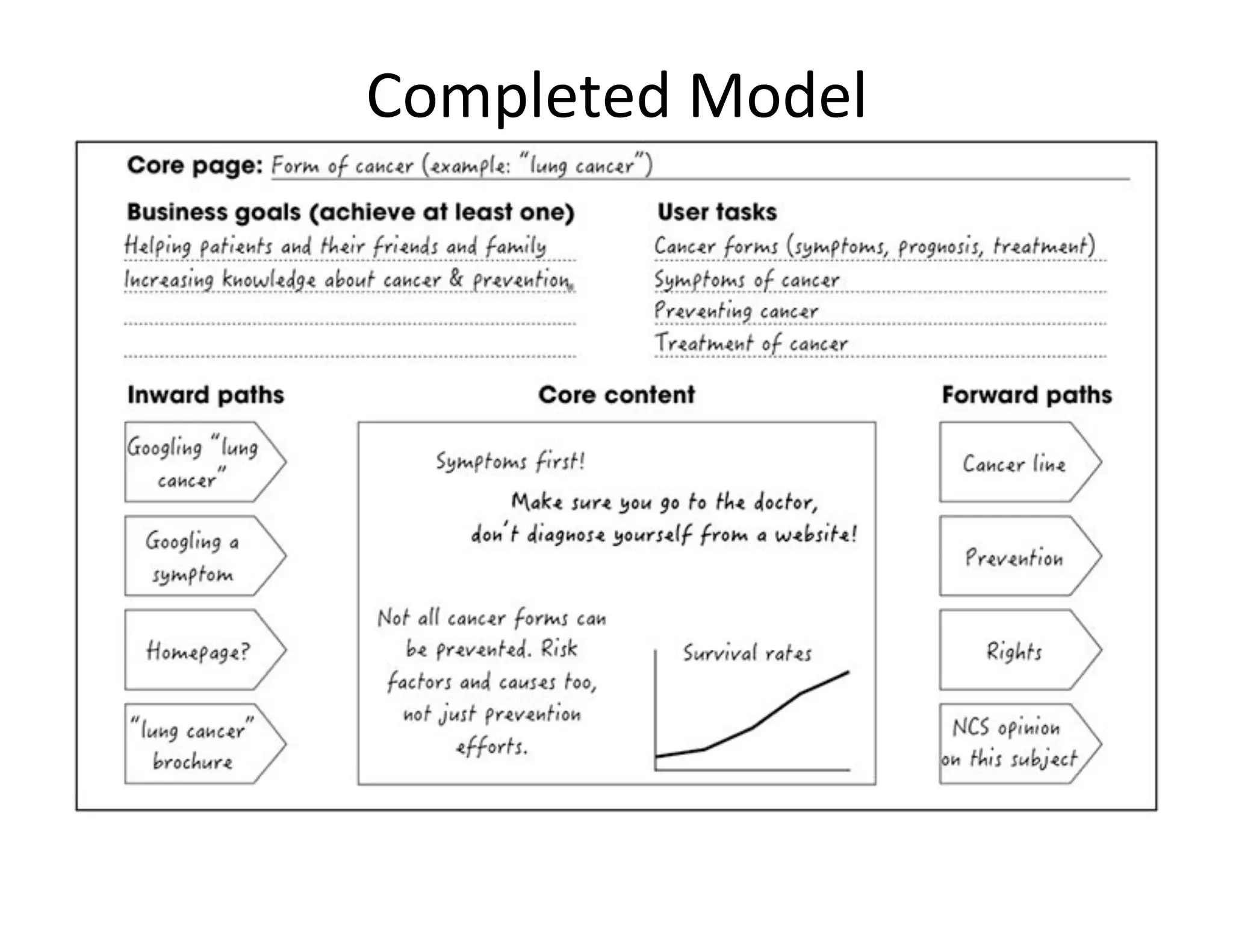
Completed	
  Model	
  
Roles, Workflow,
Lifecycle,
Governance
Roles on a digital team
•  Content strategist
•  Project manager
•  Visual designer
•  User experience architect
•  Social media manager
•  Director
111	
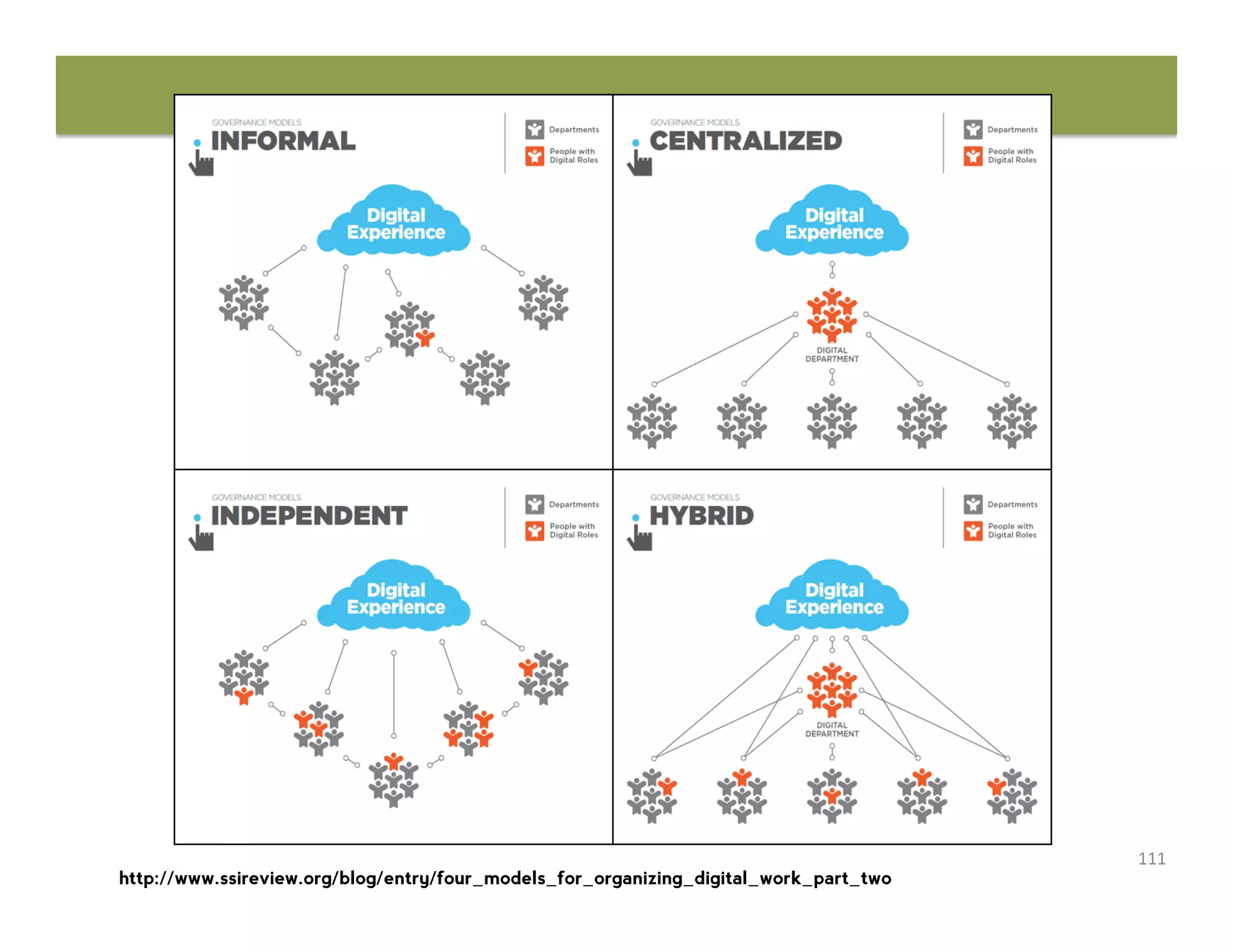
  h"p://www.ssireview.org/blog/entry/four_models_for_organizing_digital_work_part_two	
  
http://www.ssireview.org/blog/entry/four_models_for_organizing_digital_work_part_two
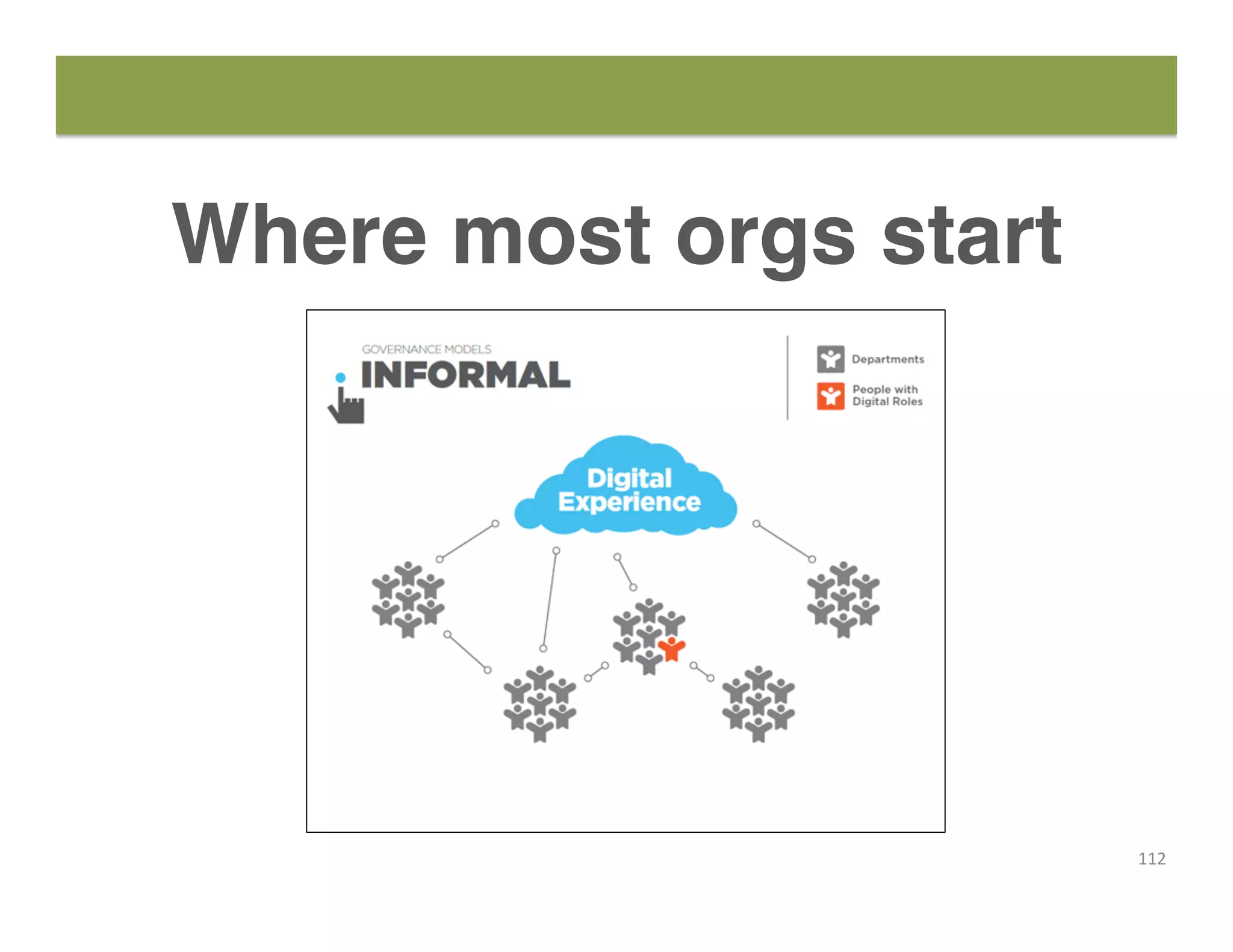
Where most orgs start
112	
  
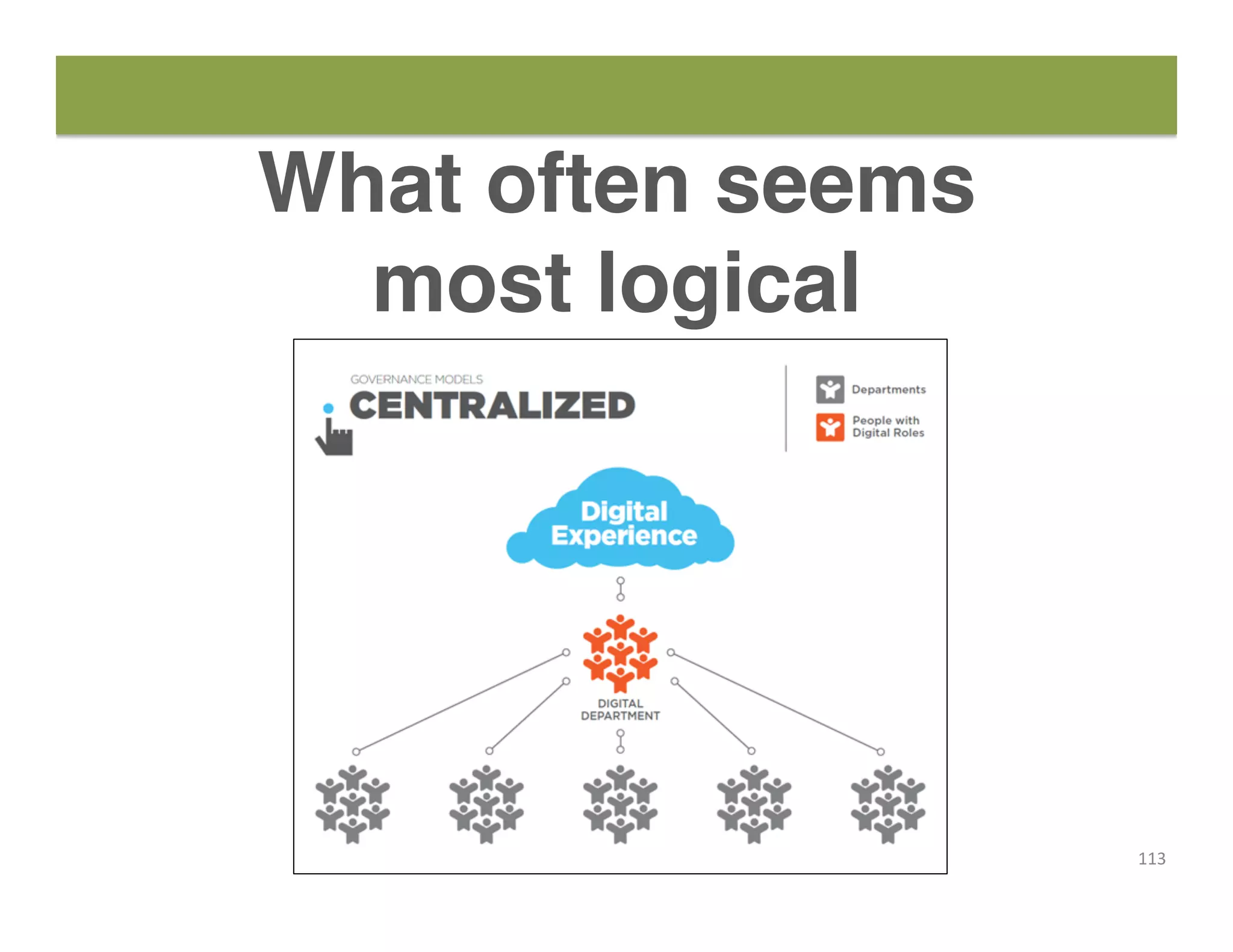
What often seems 

most logical
113	
  
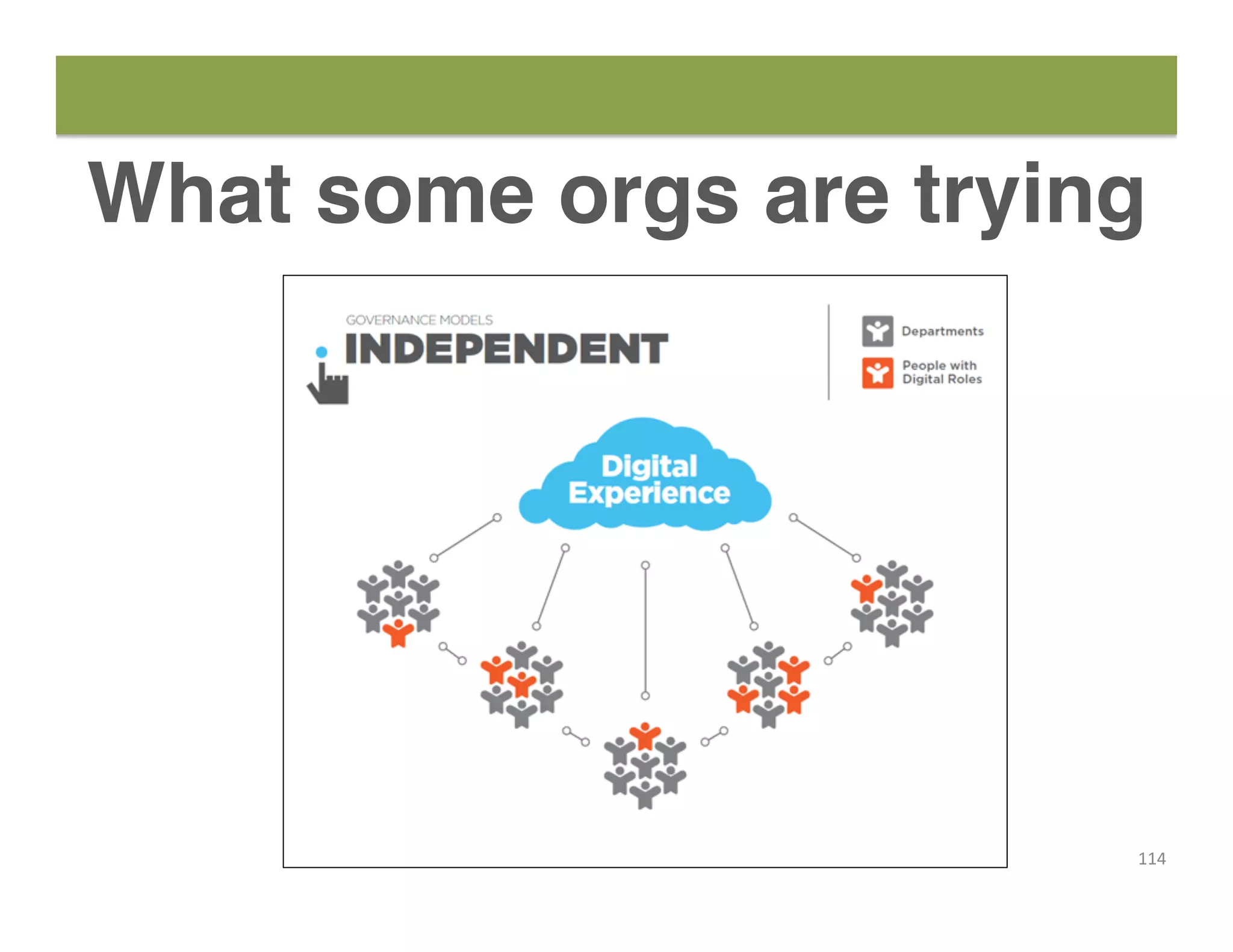
What some orgs are trying
114	
  
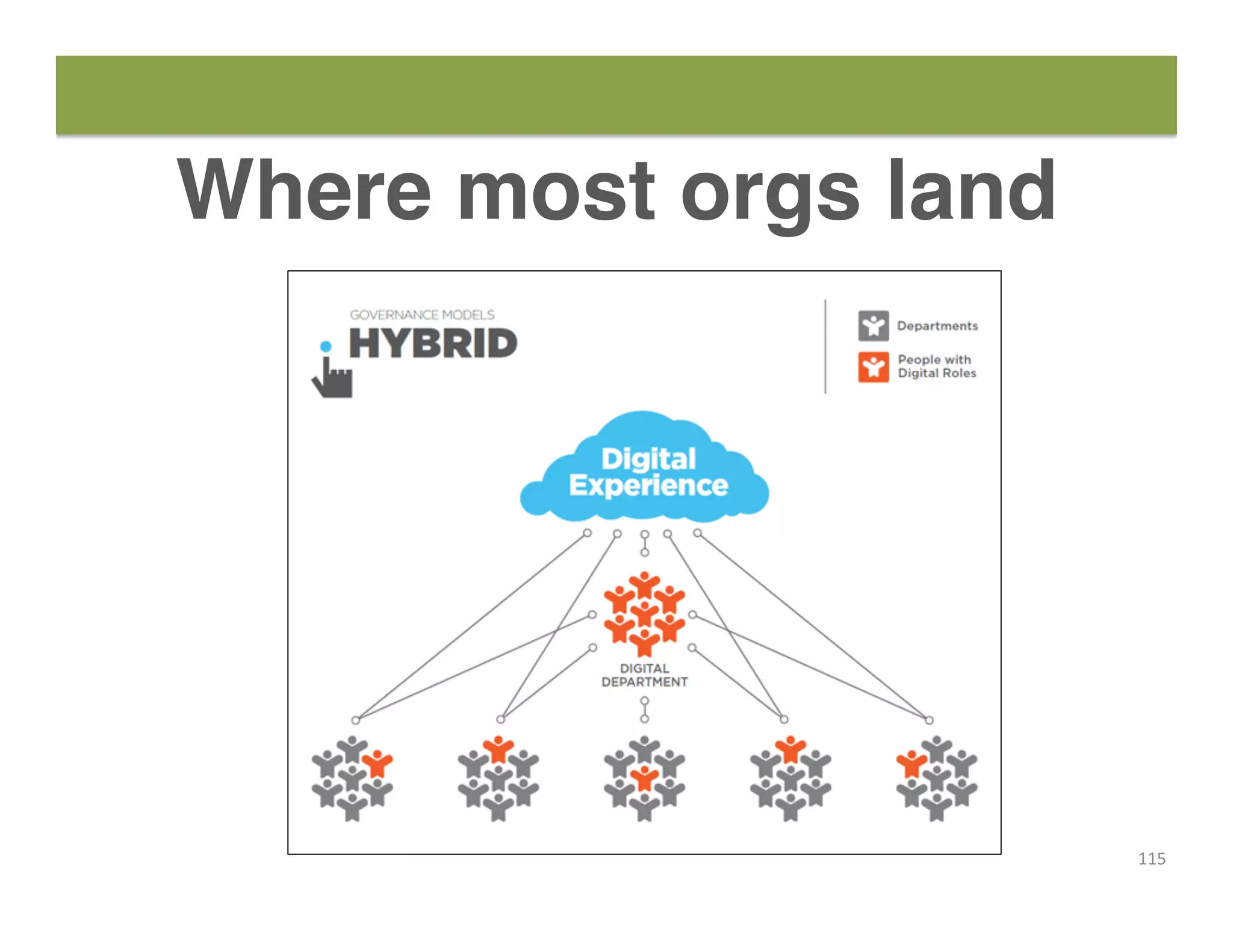
Where most orgs land
115	
  
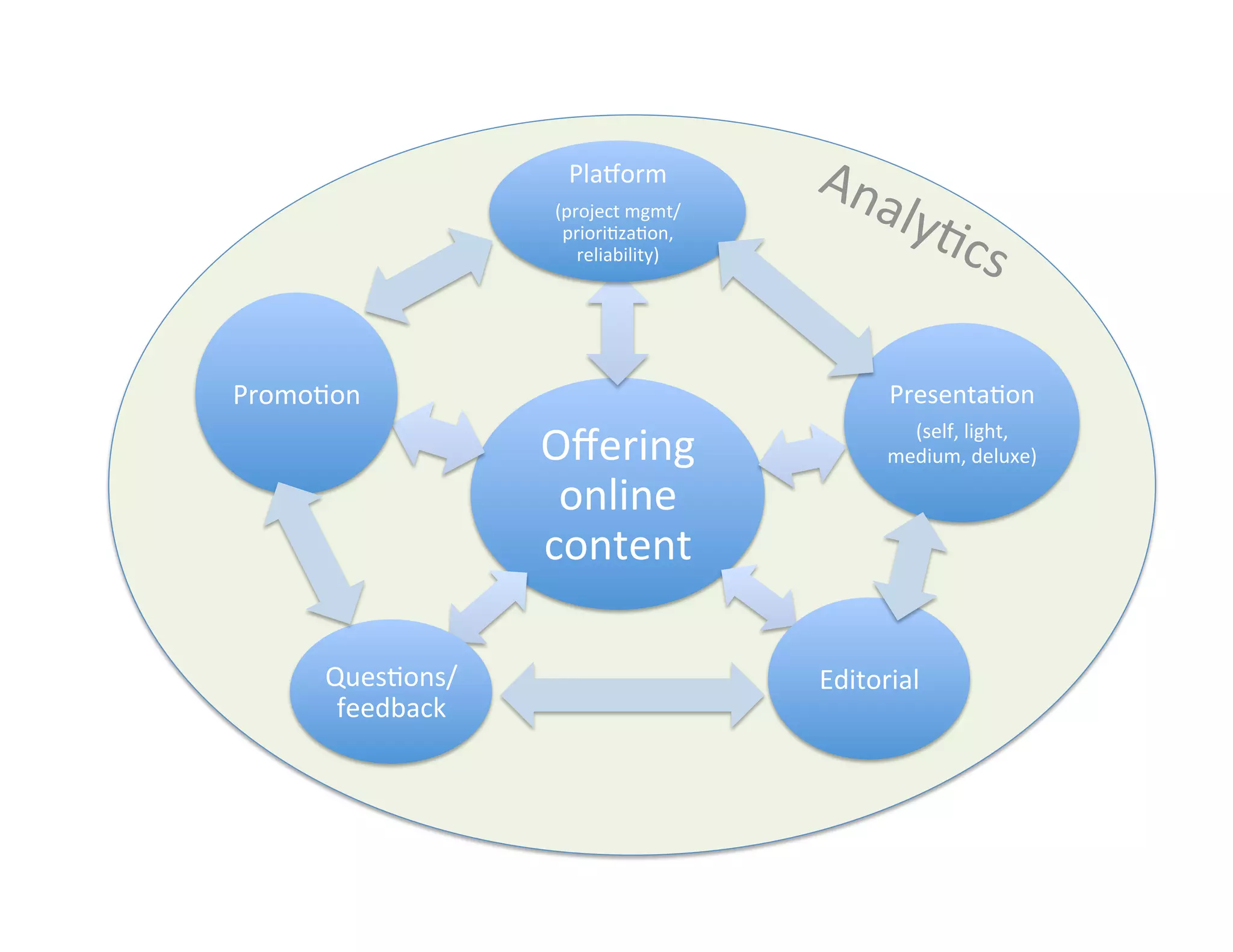
Offering	
  
online	
  
content	
  
Plagorm	
  
(project	
  mgmt/
priori8za8on,	
  
reliability)	
  
Presenta8on	
  
(self,	
  light,	
  
medium,	
  deluxe)	
  
Editorial	
  Ques8ons/	
  
feedback	
  
Promo8on	
  
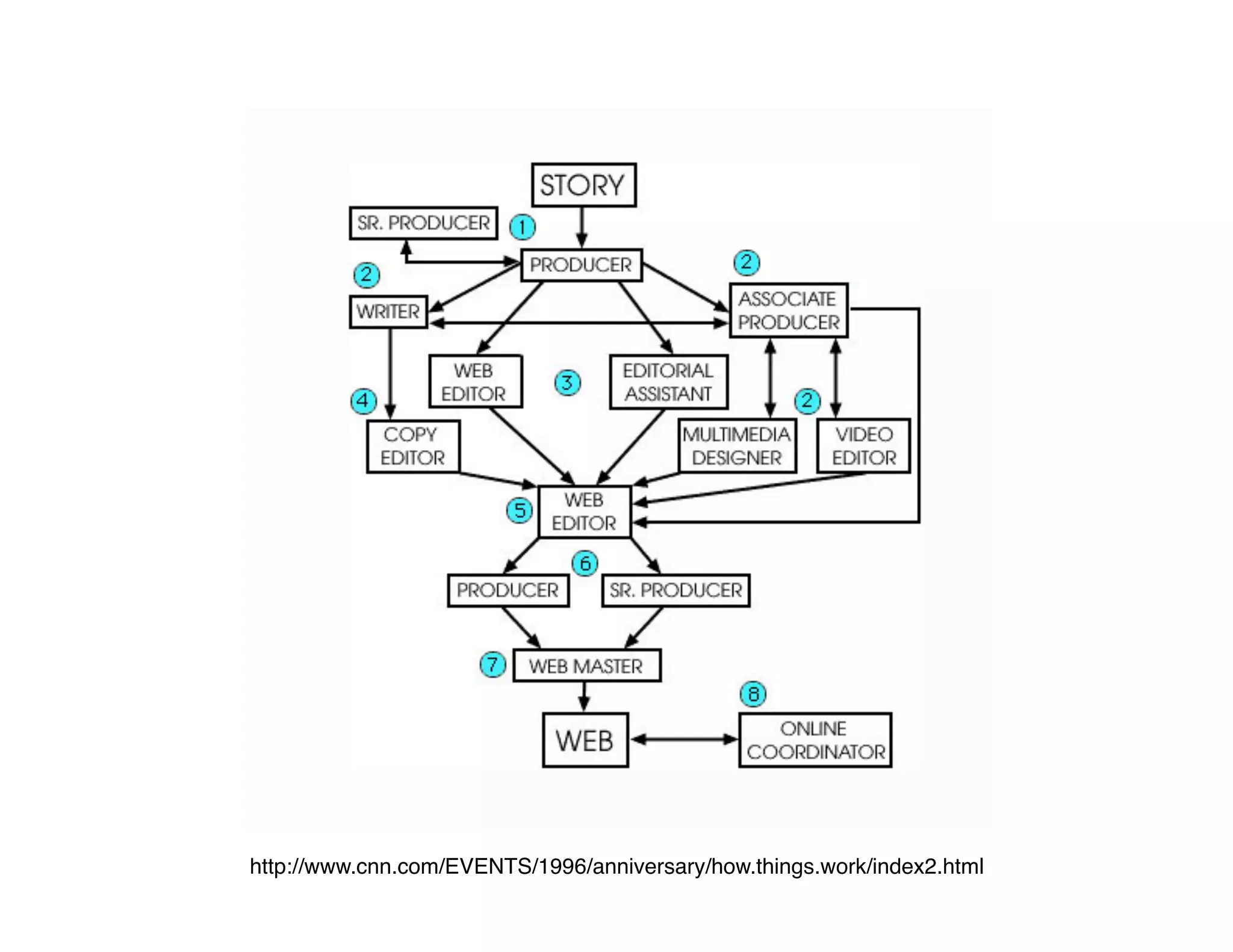
Workflow
http://www.cnn.com/EVENTS/1996/anniversary/how.things.work/index2.html
Content
Marketing and
Promotions
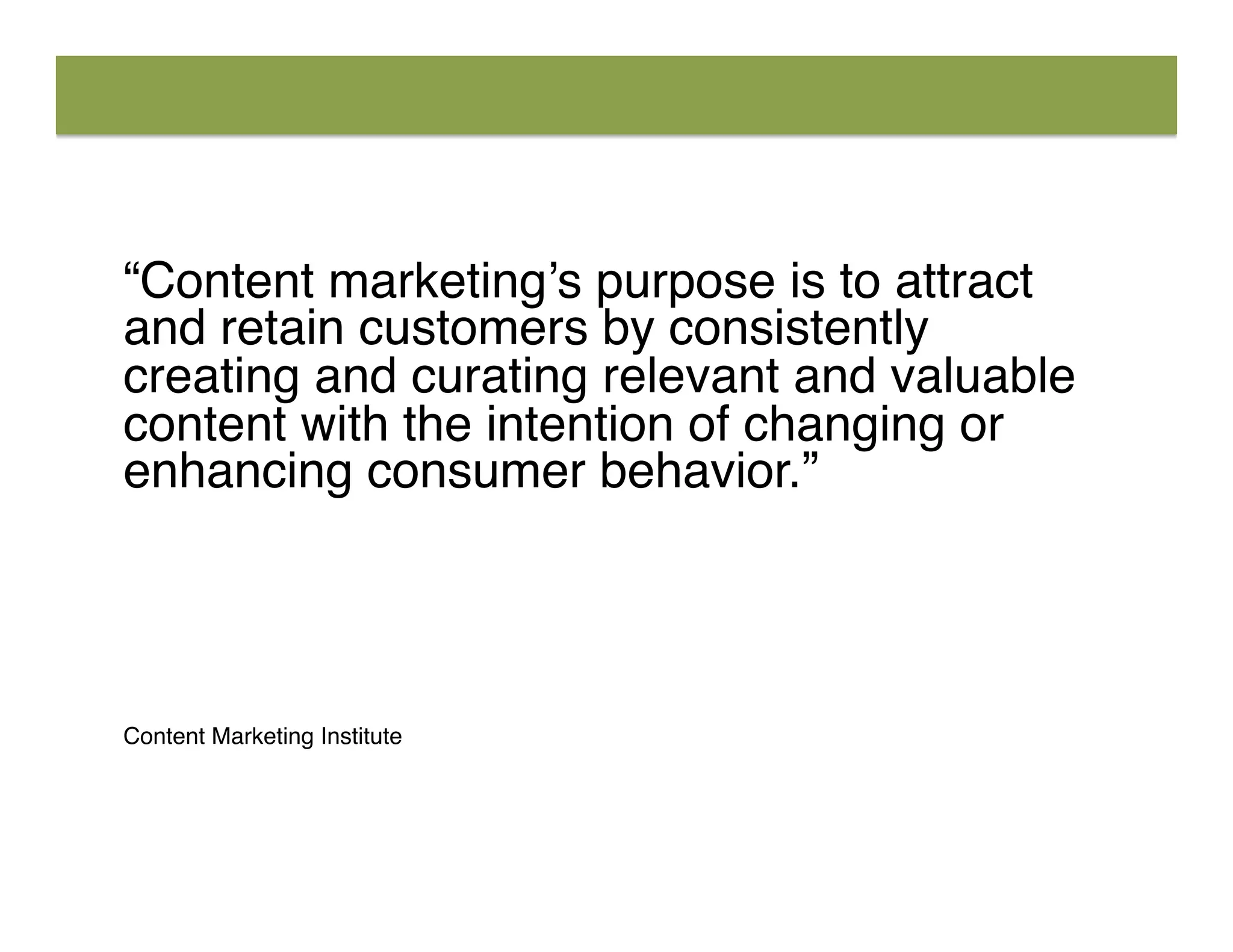
“Content marketing’s purpose is to attract
and retain customers by consistently
creating and curating relevant and valuable
content with the intention of changing or
enhancing consumer behavior.”


Content Marketing Institute
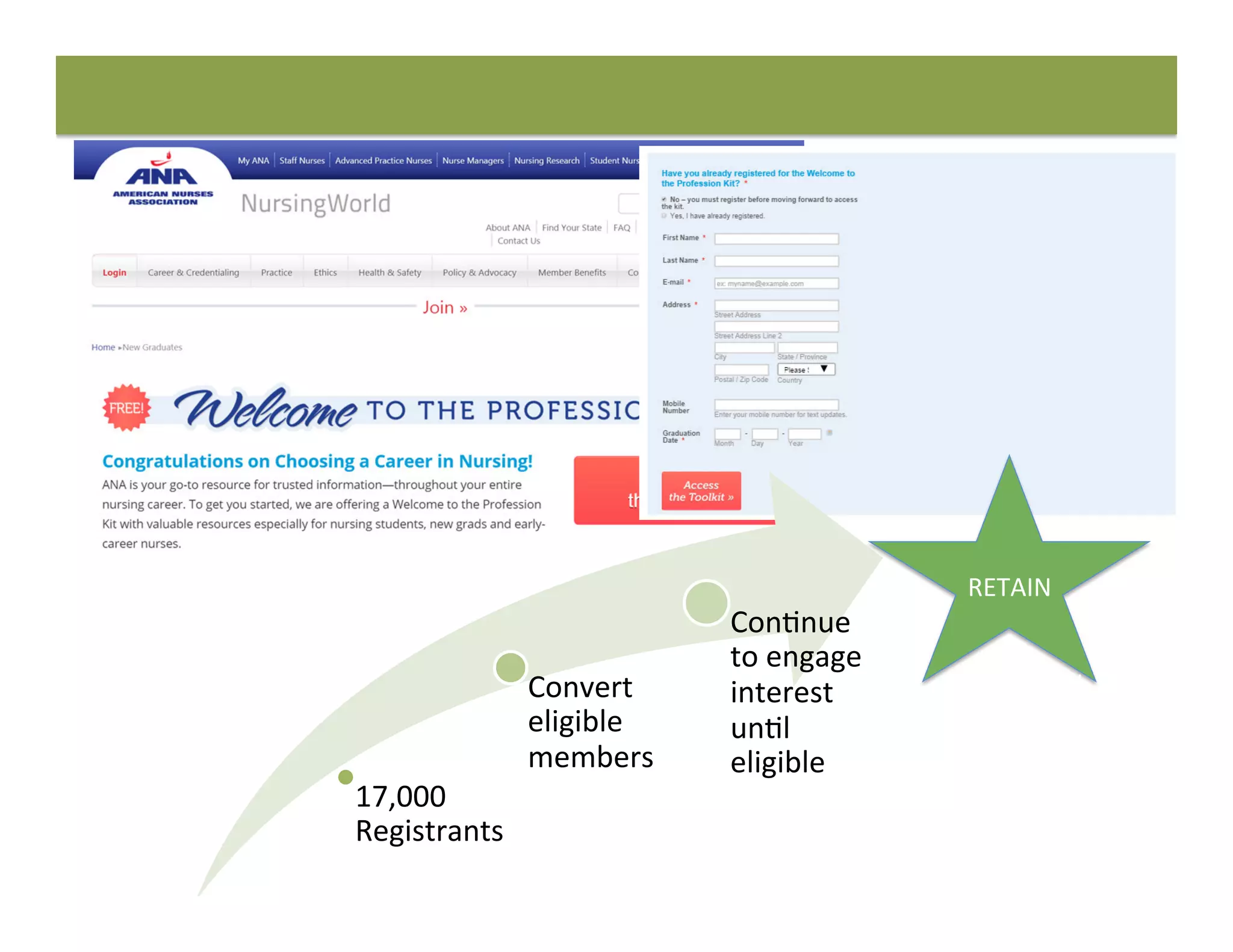
17,000	
  
Registrants	
  
Convert	
  
eligible	
  
members	
  
Con8nue	
  
to	
  engage	
  
interest	
  
un8l	
  
eligible	
  	
  
RETAIN	
  
RETAIN	
  
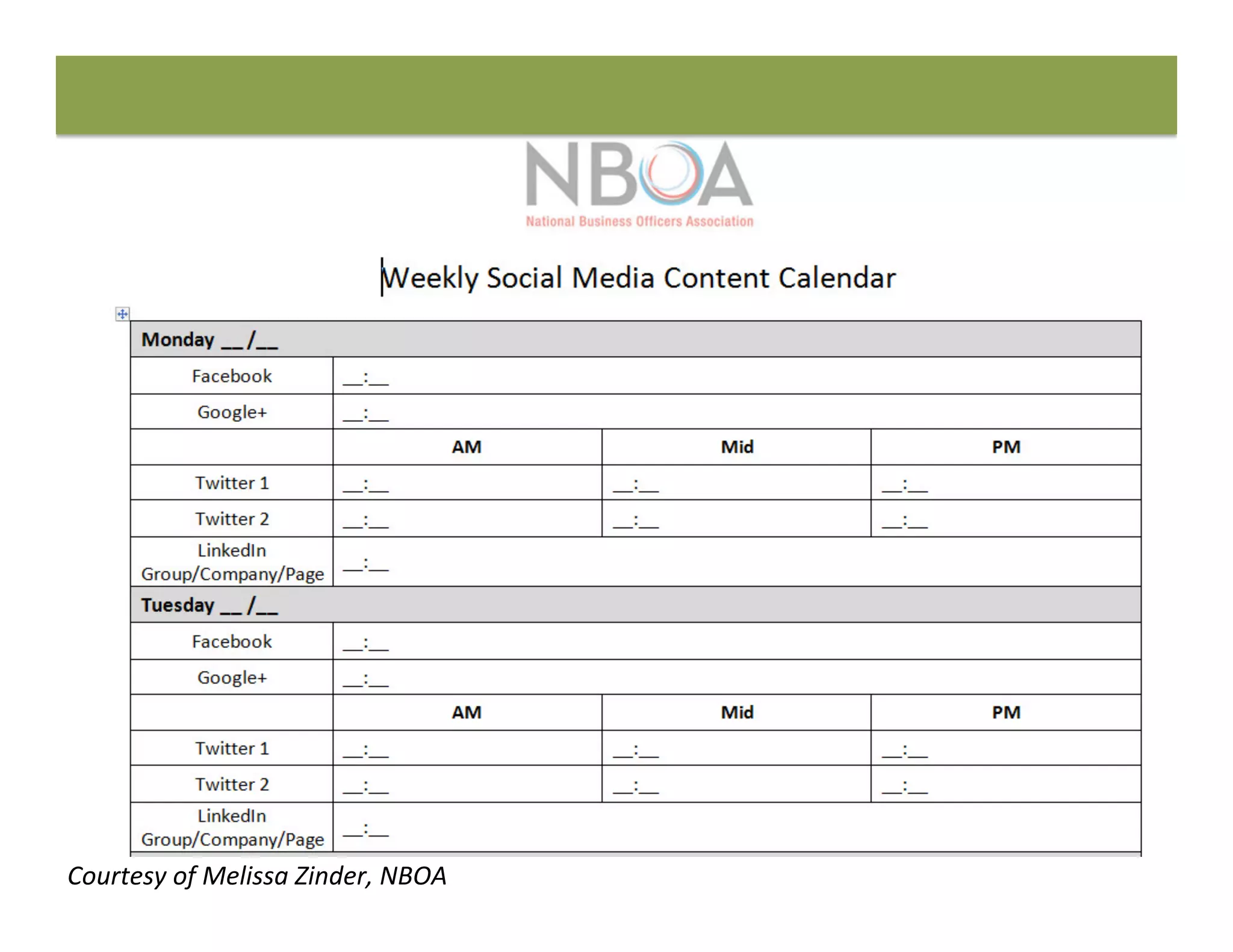
Courtesy	
  of	
  Melissa	
  Zinder,	
  NBOA	
  
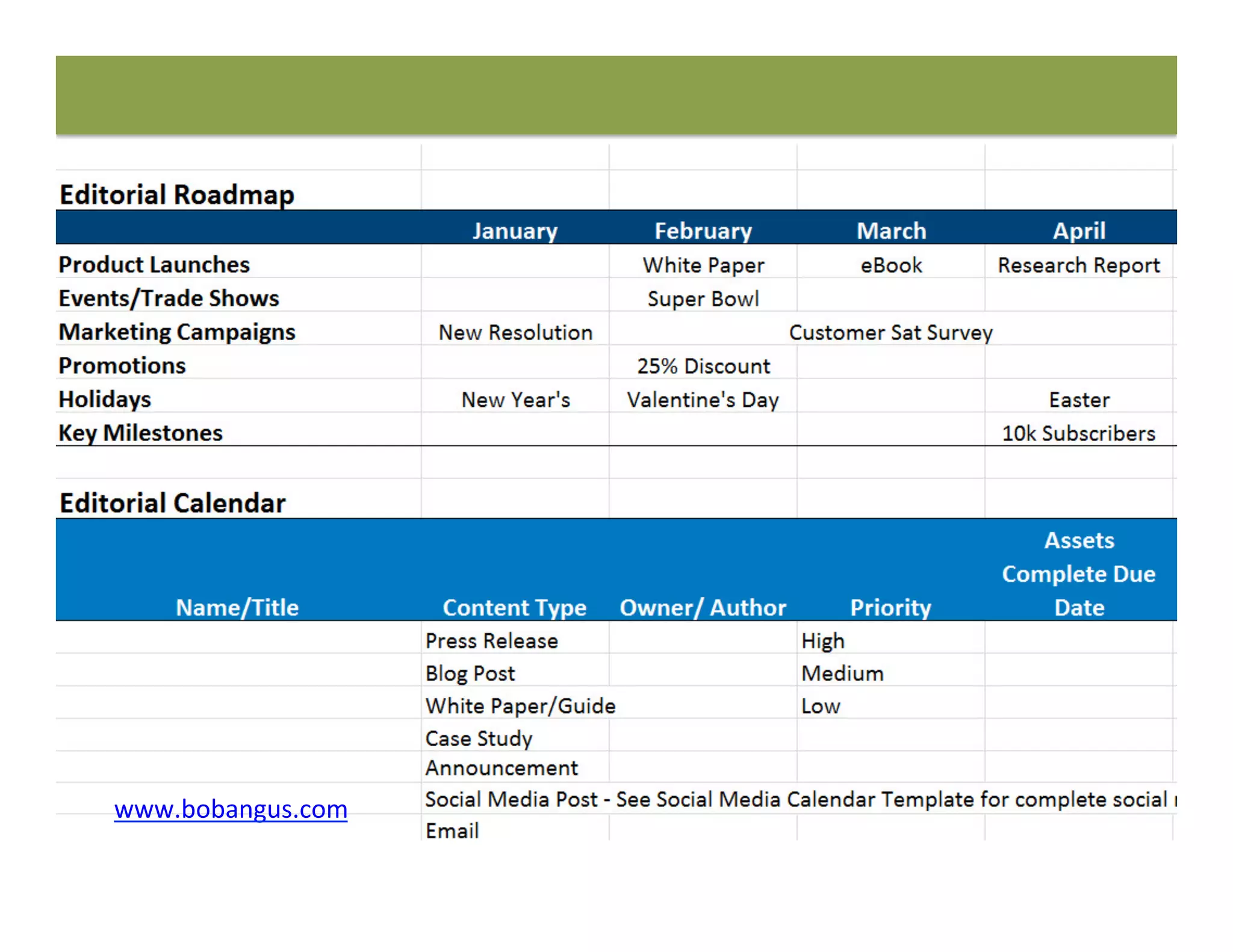
www.bobangus.com 	
  	
  
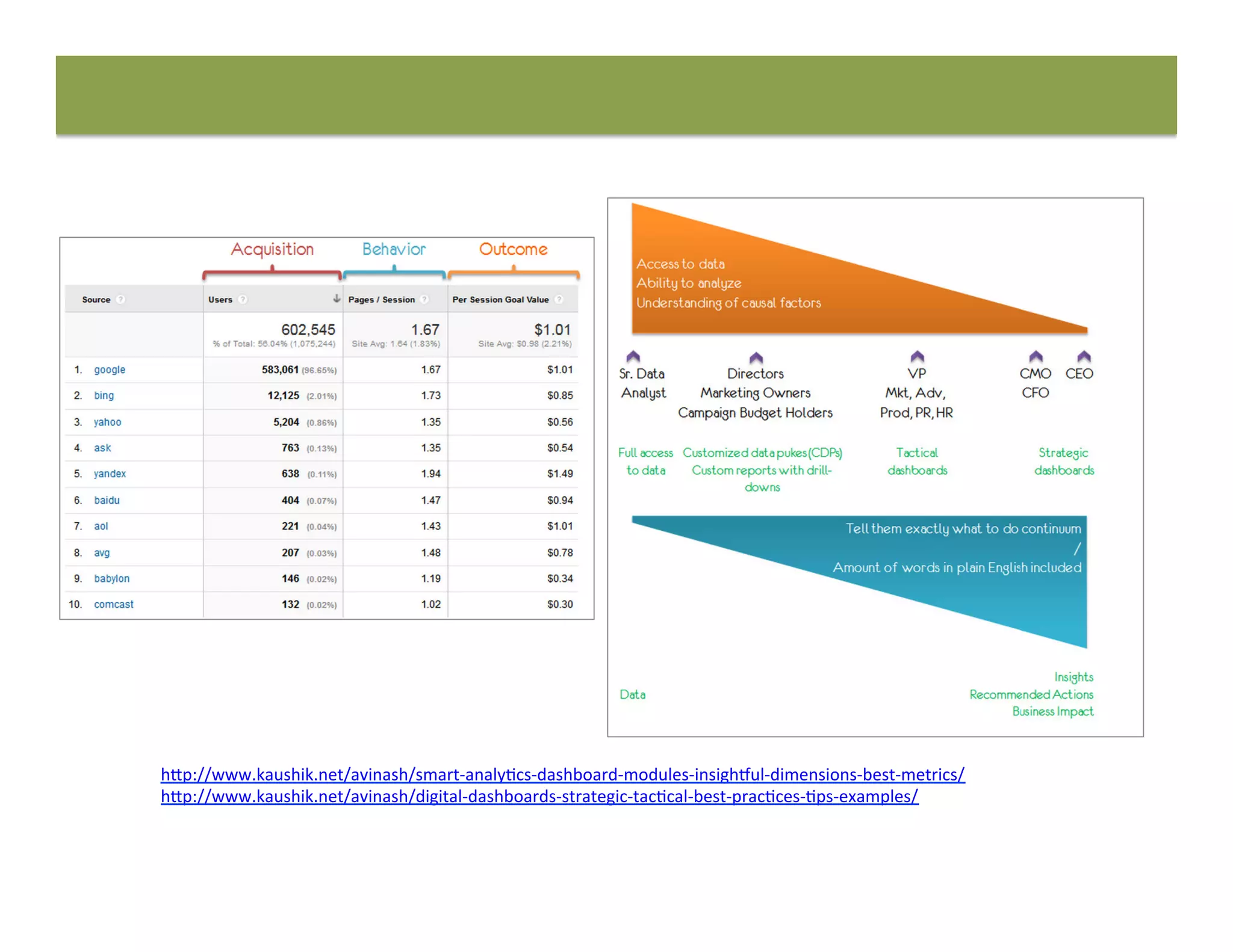
h"p://www.kaushik.net/avinash/smart-­‐analy8cs-­‐dashboard-­‐modules-­‐insighgul-­‐dimensions-­‐best-­‐metrics/	
  
h"p://www.kaushik.net/avinash/digital-­‐dashboards-­‐strategic-­‐tac8cal-­‐best-­‐prac8ces-­‐8ps-­‐examples/	


127	
  h"p://www.ssireview.org/blog/entry/four_models_for_organizing_digital_work_part_two	
  
Handoff
and
Next
Steps
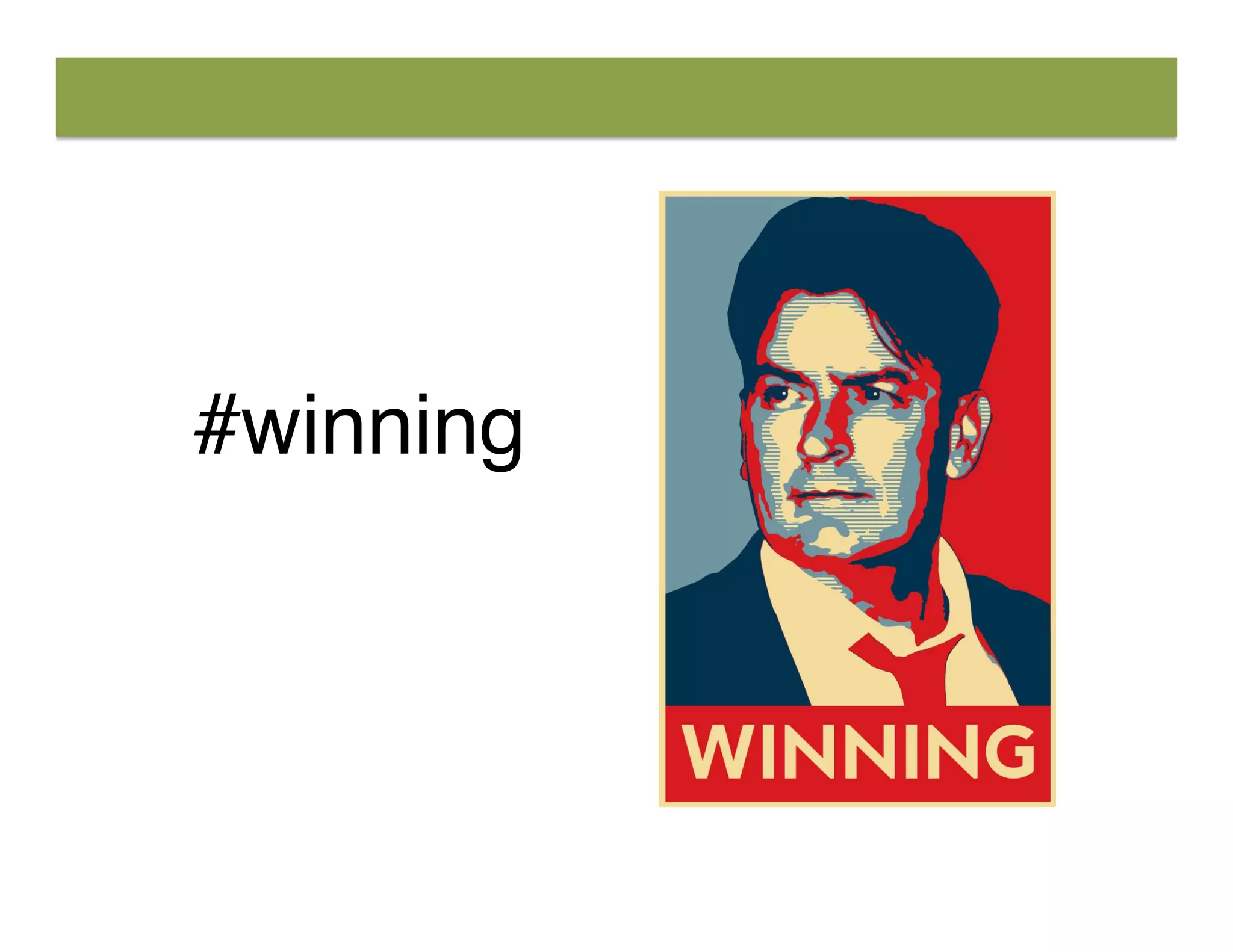
#winning
Strategic nagging
Patient but persistent repetition of
a message
Have a plan
Don’t wait 

for permission
Thank you!
Carrie Hane Dennison
carriehd@gmail.com @carriehd
Dina Lewis, CAE
dina@distilledlogic.net @dinalew
Hilary Marsh
hilary@contentcompany.biz @hilarymarsh
Resources
•  http://www.customerfocuscalculator.com
•  http://blog.siteimprove.com/web-governance-blog/the-
hierarchy-of-content-needs-a-new-model-for-creating-
and-assessing-content
•  Letting Go of the Words, Ginny Redish
•  Don’t Make Me Think, Steve Krug
•  Web Analytics: An Hour A Day, Avinash Kaushik
Workbook
•  http://www.contentcompany.biz/workbook

Content strategy roadmap - ASAE Tech2015