Chapter 3 –Heredity and Variation
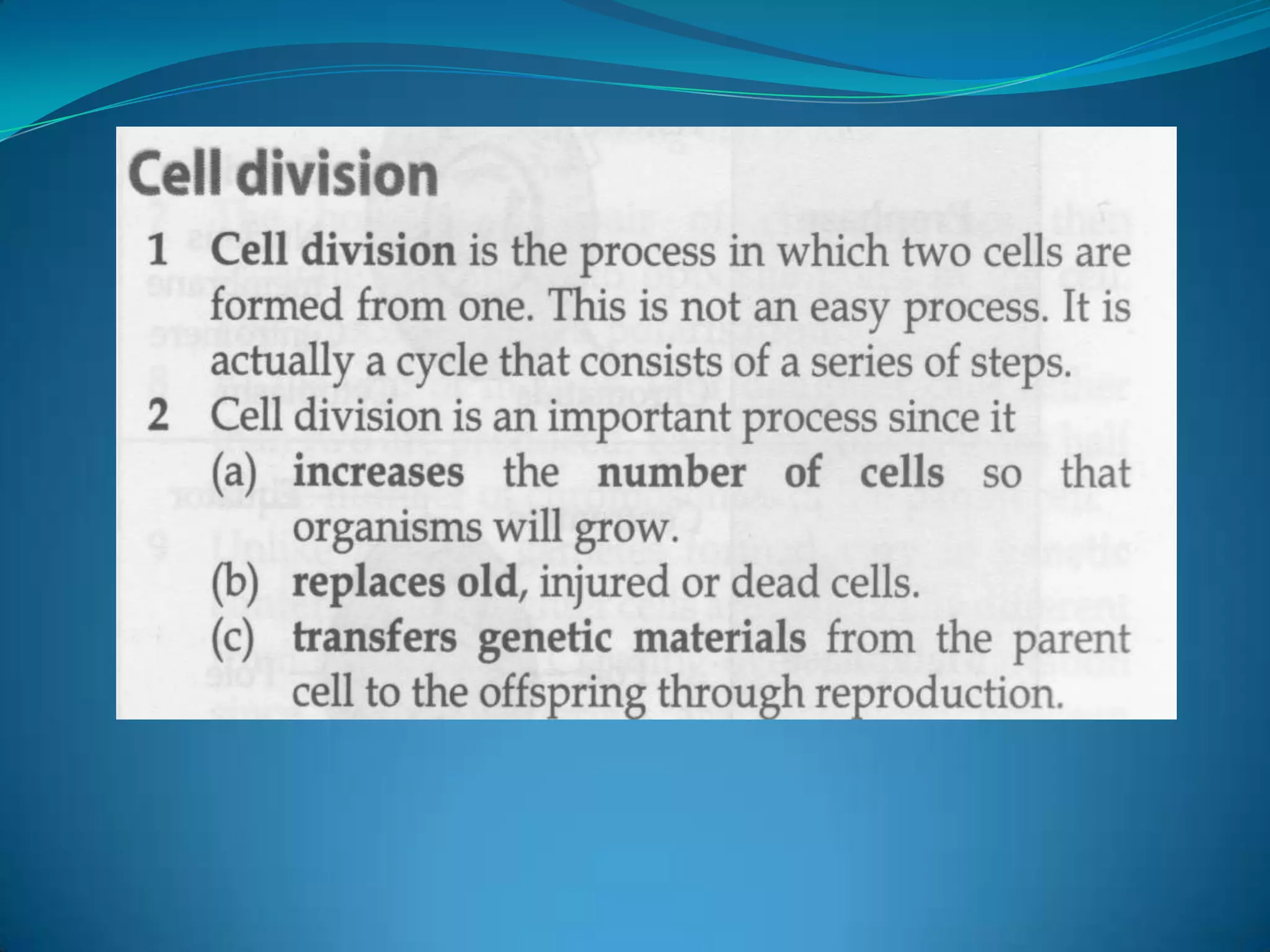
3.1 – Cell divisionAll living organisms grow and reproduce.
Since living organisms are made up of cells, this means that cells must be able to grow and reproduce.
Cells reproduce by dividing and passing on their genes to 'daughter" cells.
This process must be very precisely controlled so that no vital information is lost.
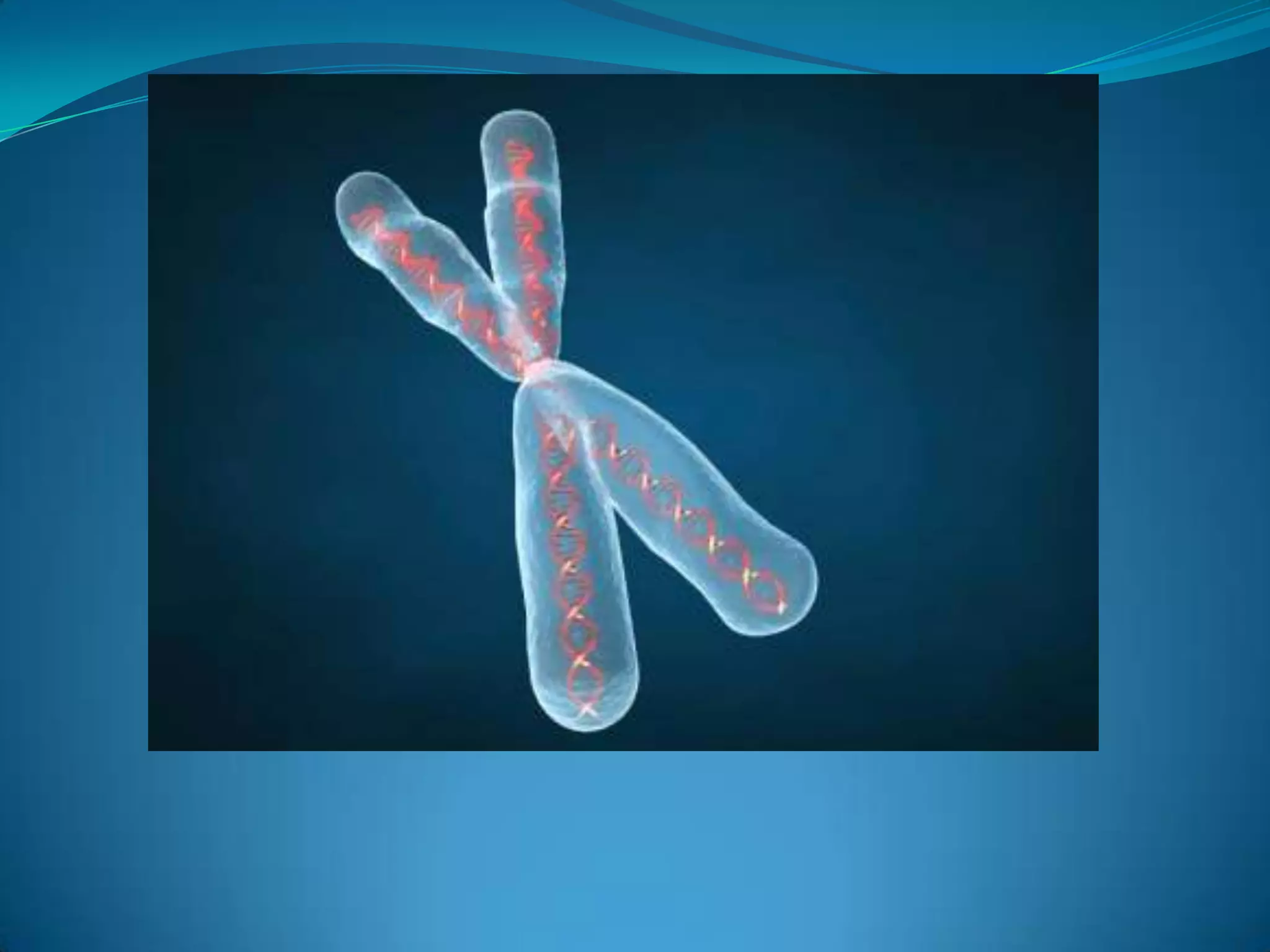
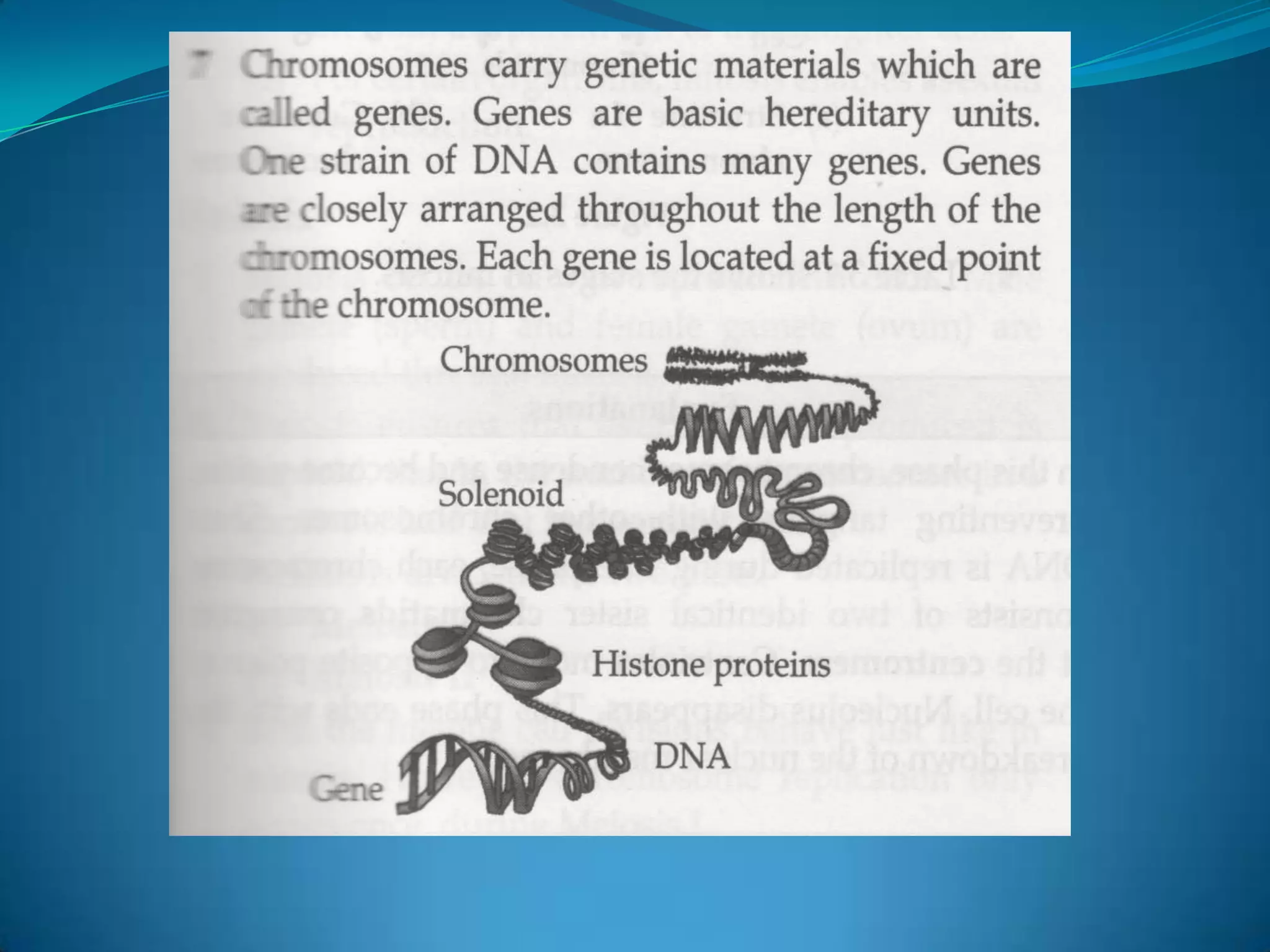
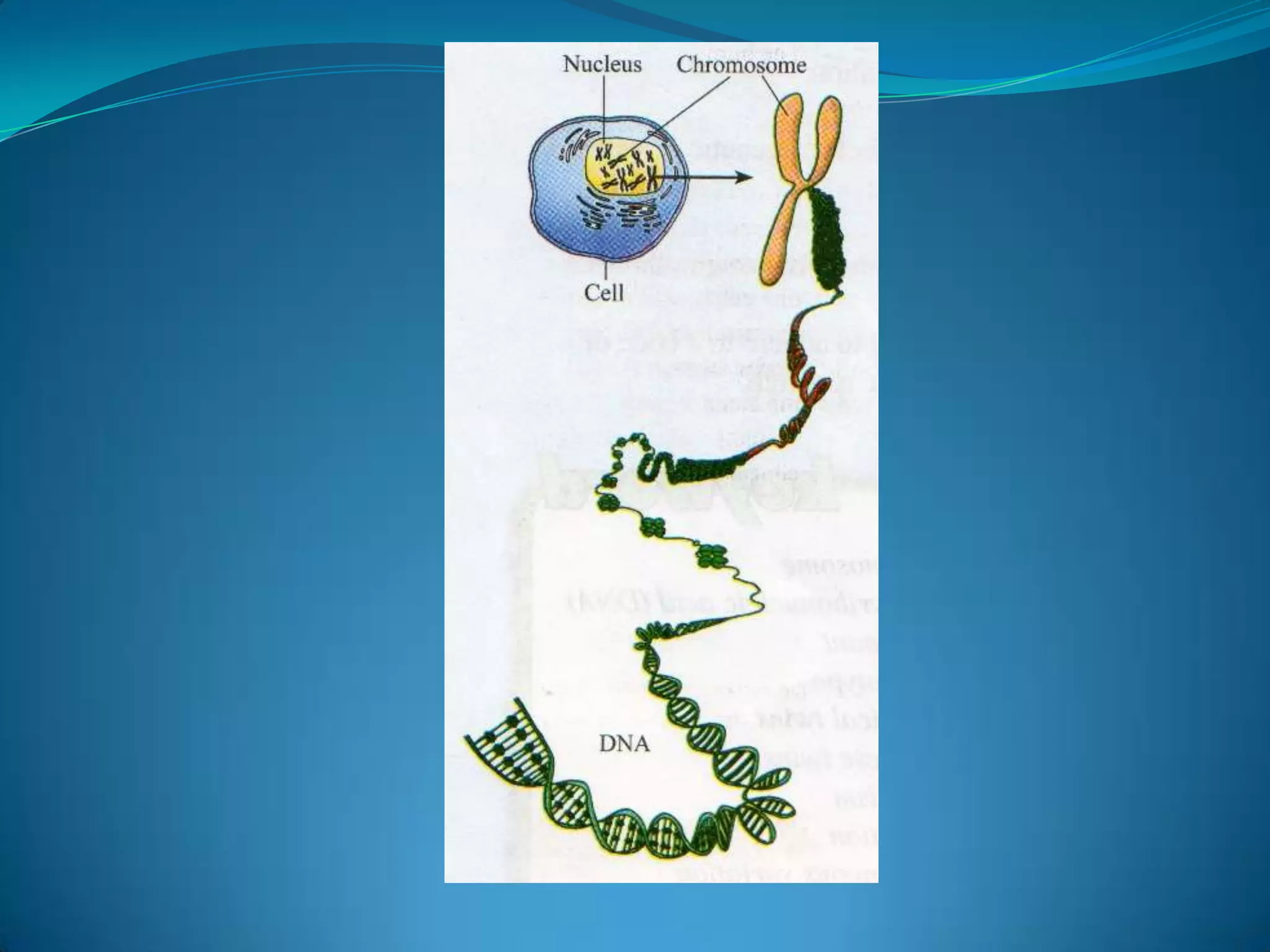
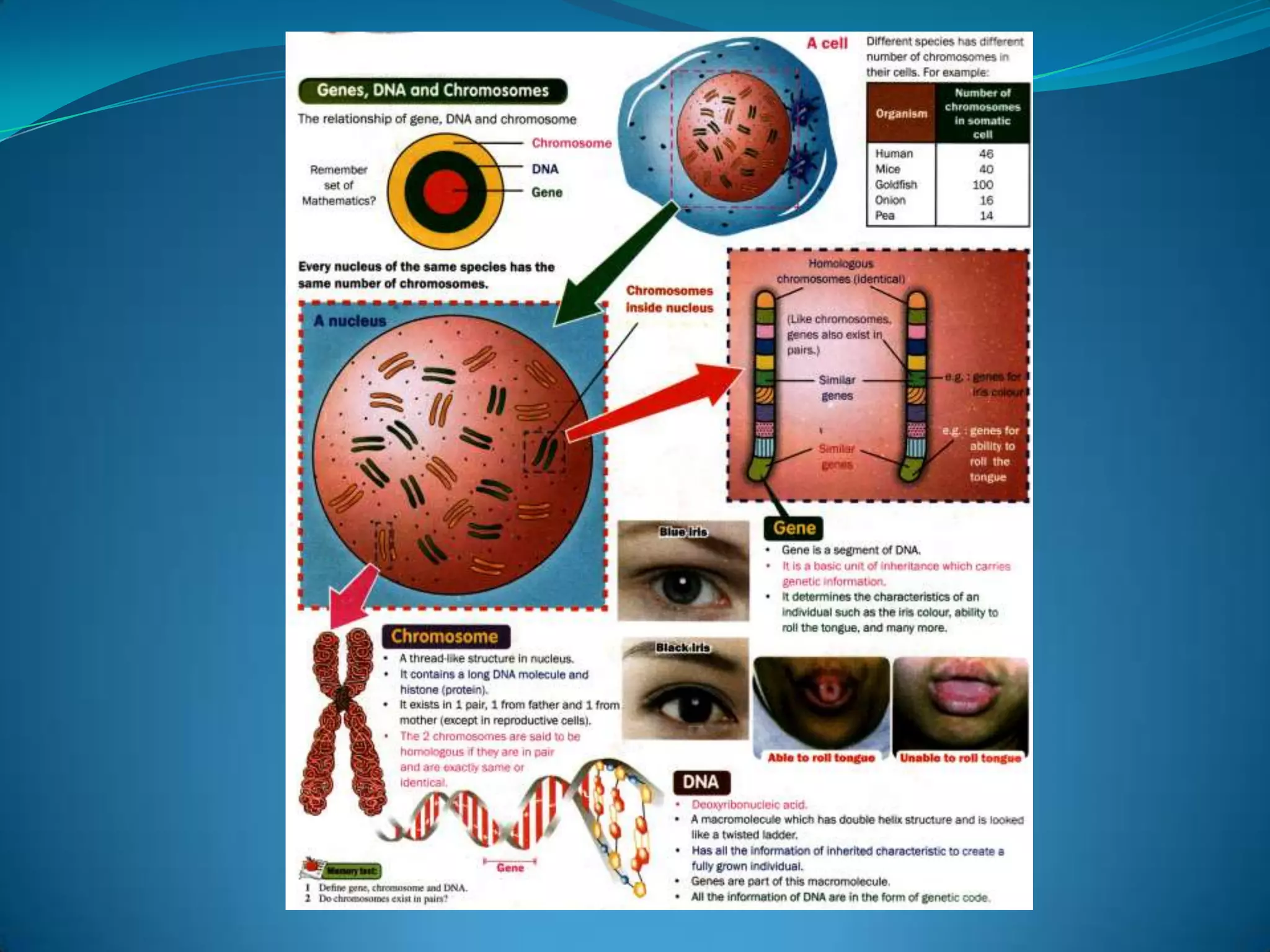
Each cell contains its own nucleus which controls the cell's activities, it does this through the genetic material, DNA which acts as a set of instruction, or code, for life.
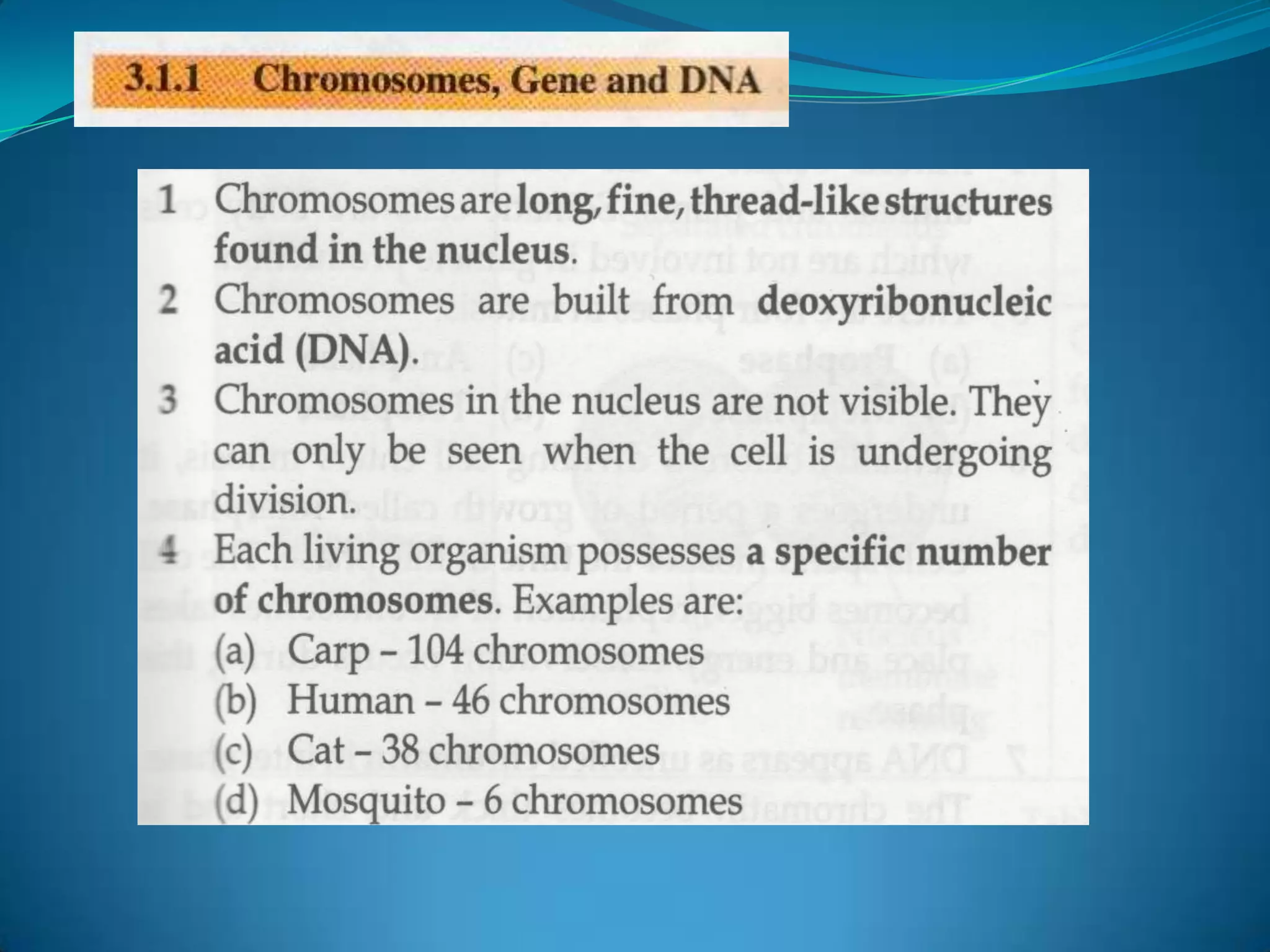
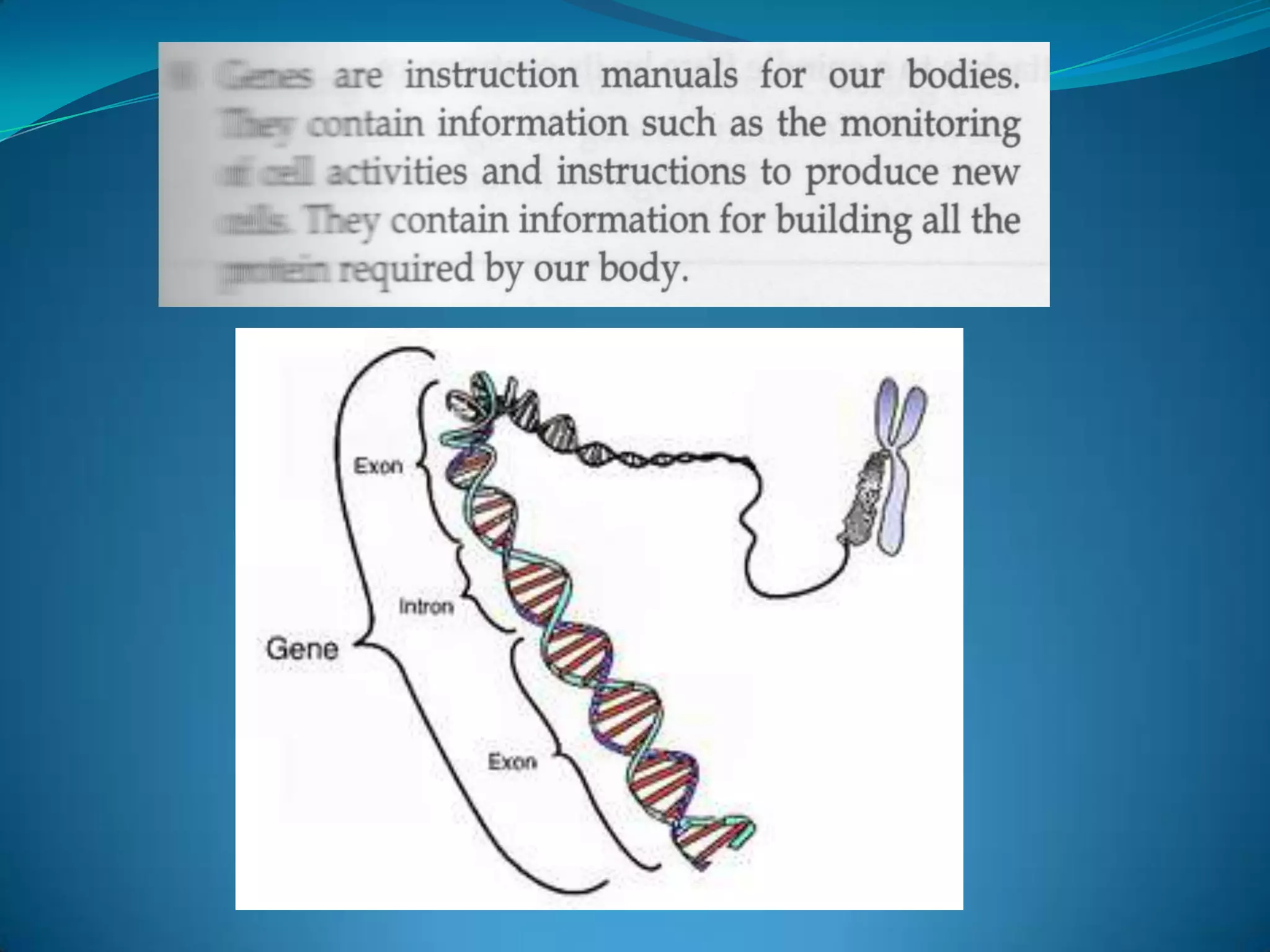
Genes are sections of DNA that code for the production of protein.
The DNA of an organism may contain anywhere from a dozen genes, as in a virus, to tens of thousands of genes, as in higher organisms like humans.
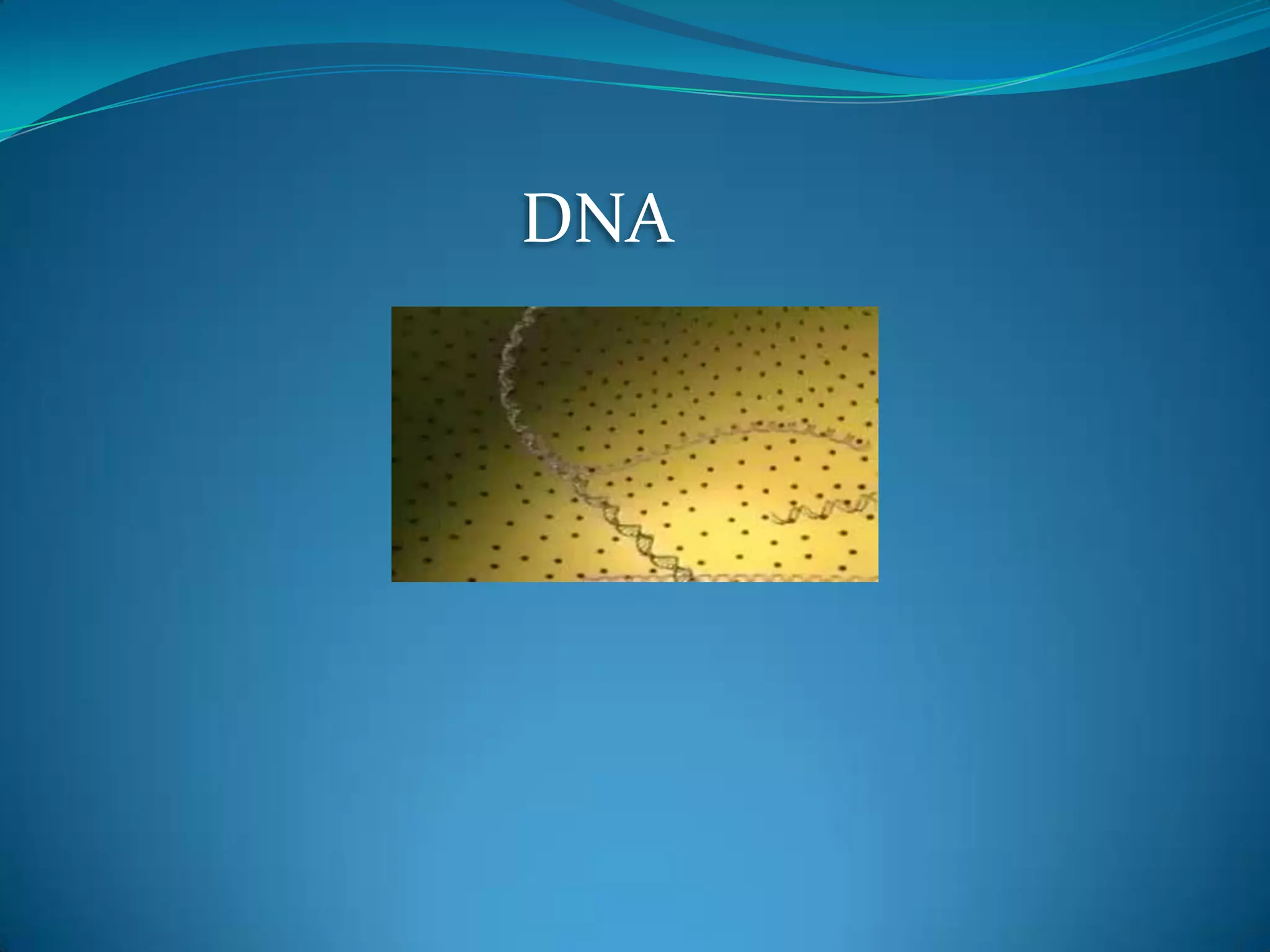
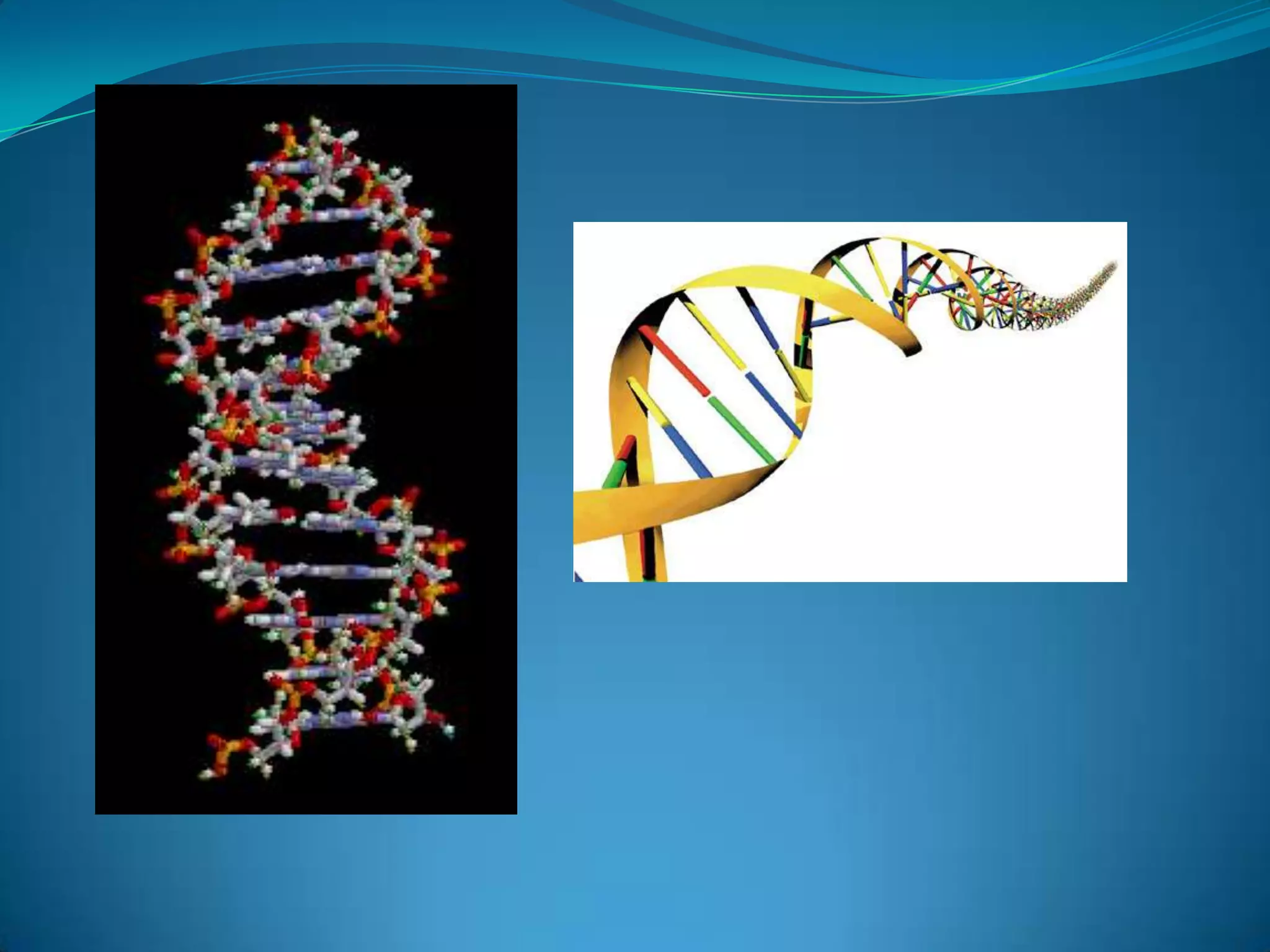
Deoxyribonucleic acids, DNA is a double helix.
DNA duplex molecule is made up of a series of genes to encode genetic information.
These determine the individual characteristics of anorganism.
DNA
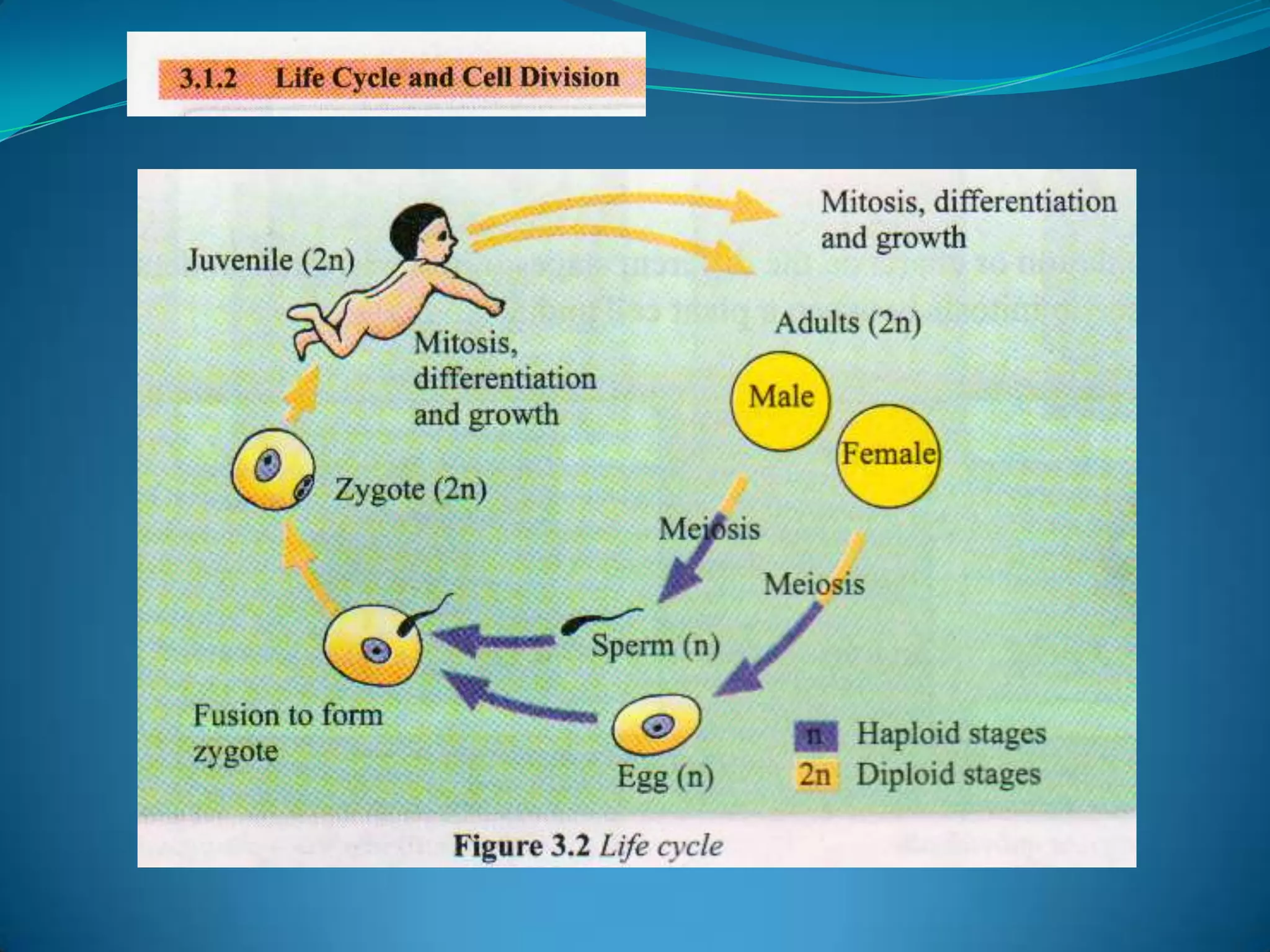
Figure 3.2 above shows a brief summary of the life cycle of an animal, such as a human.
Two requirements must be satisfied i.e. growth and sexual reproduction.
During growth, a diploid (2n) zygote (one cell) grows into a multicellular diploid adult.
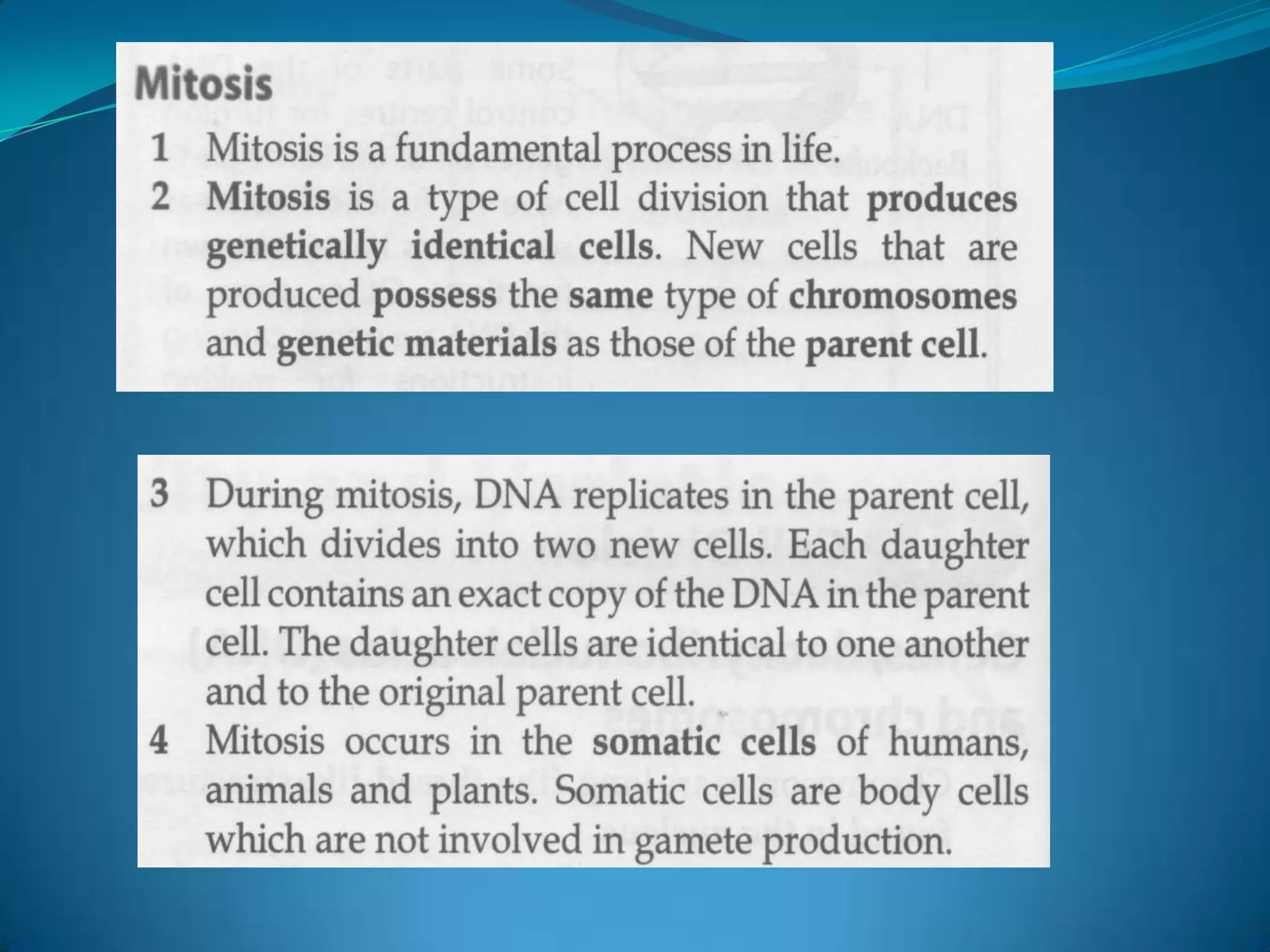
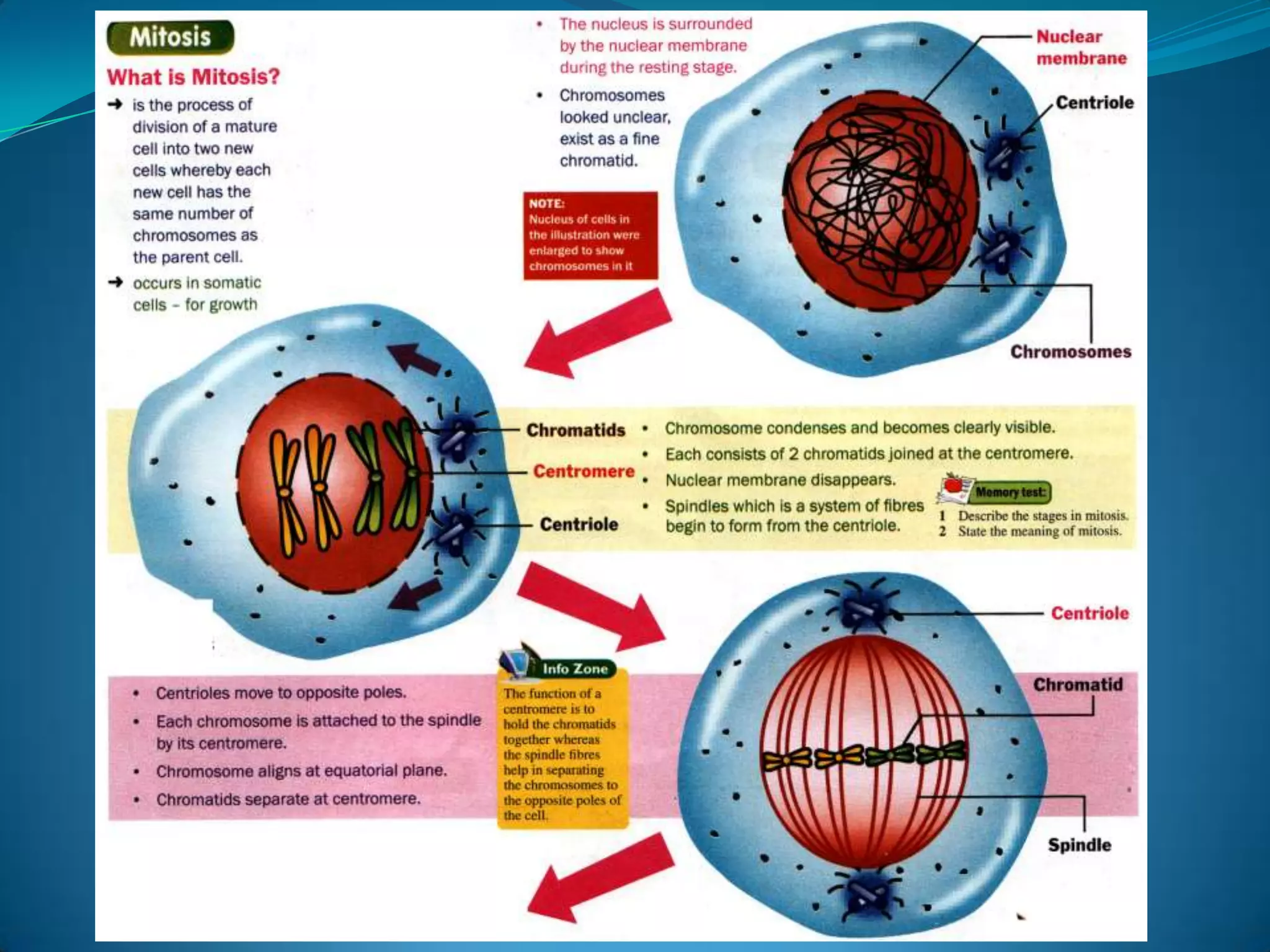
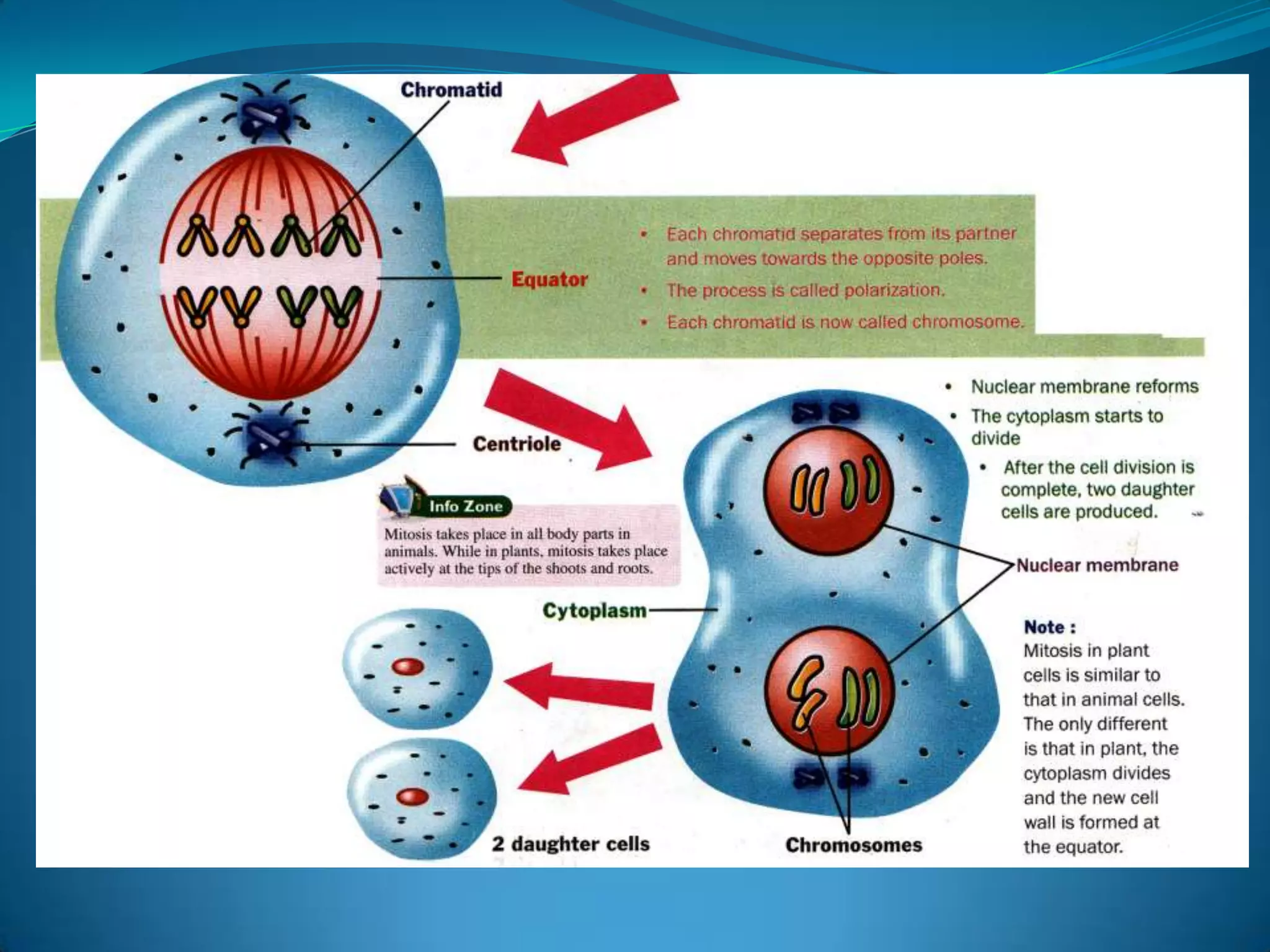
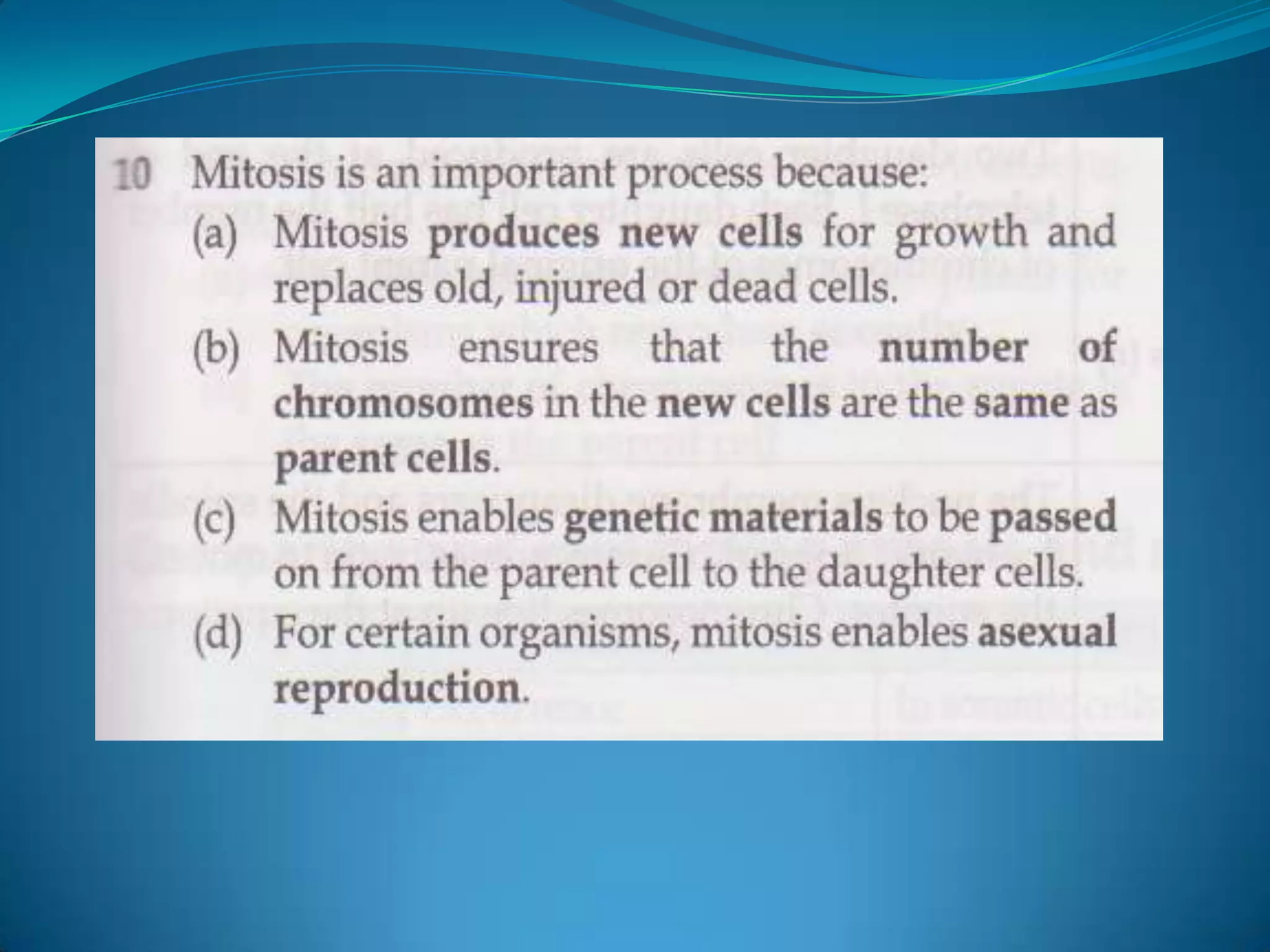
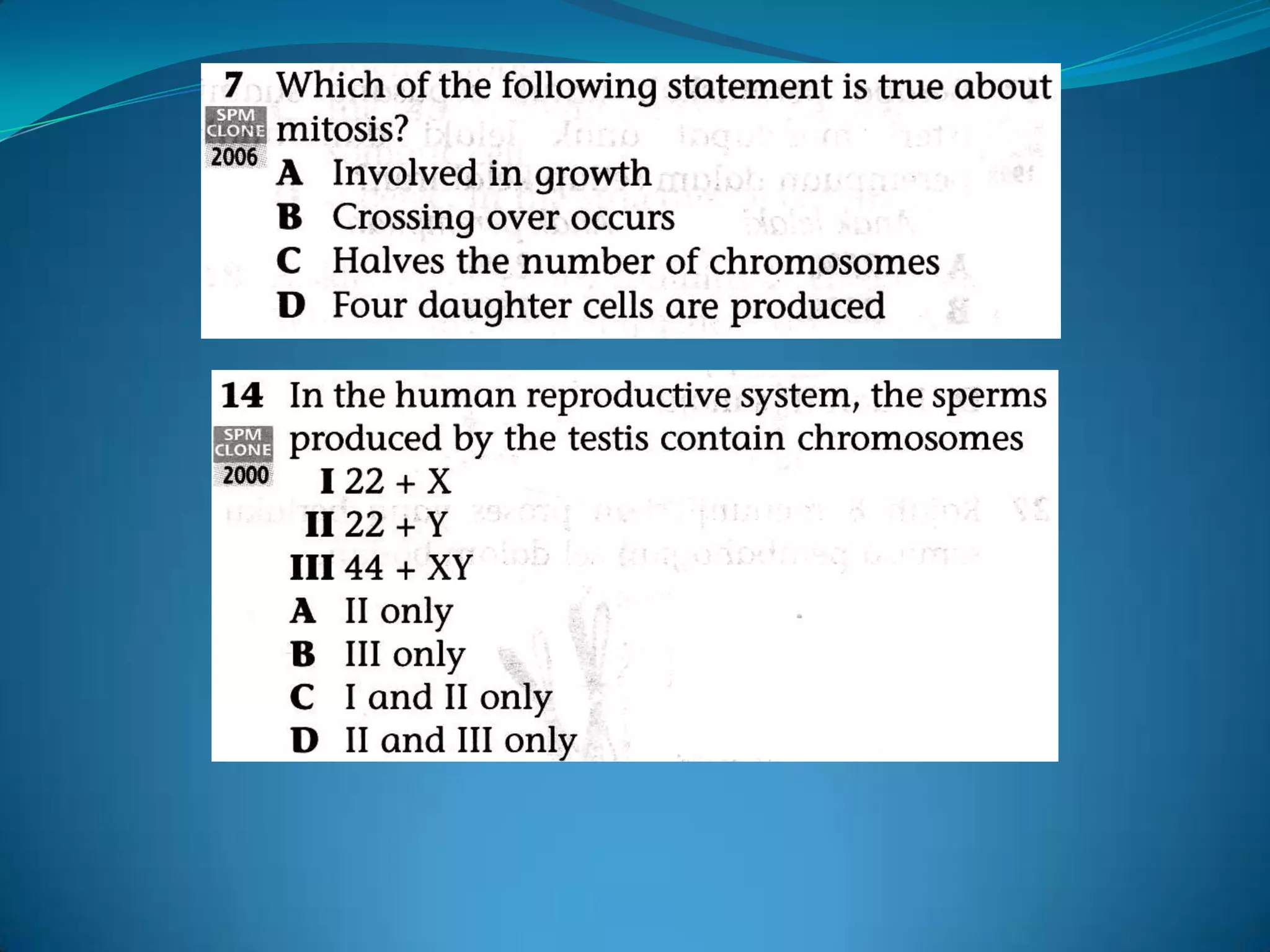
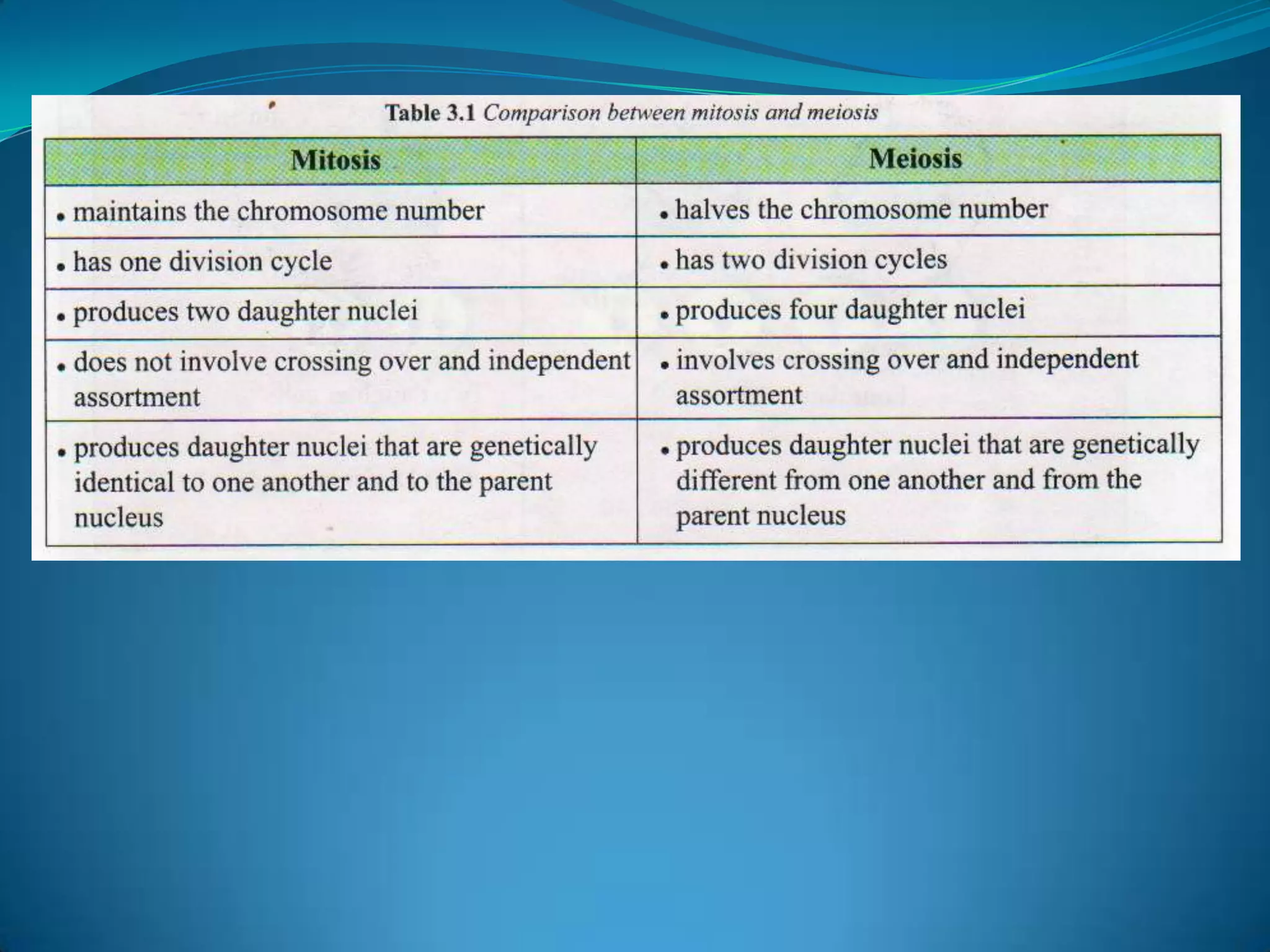
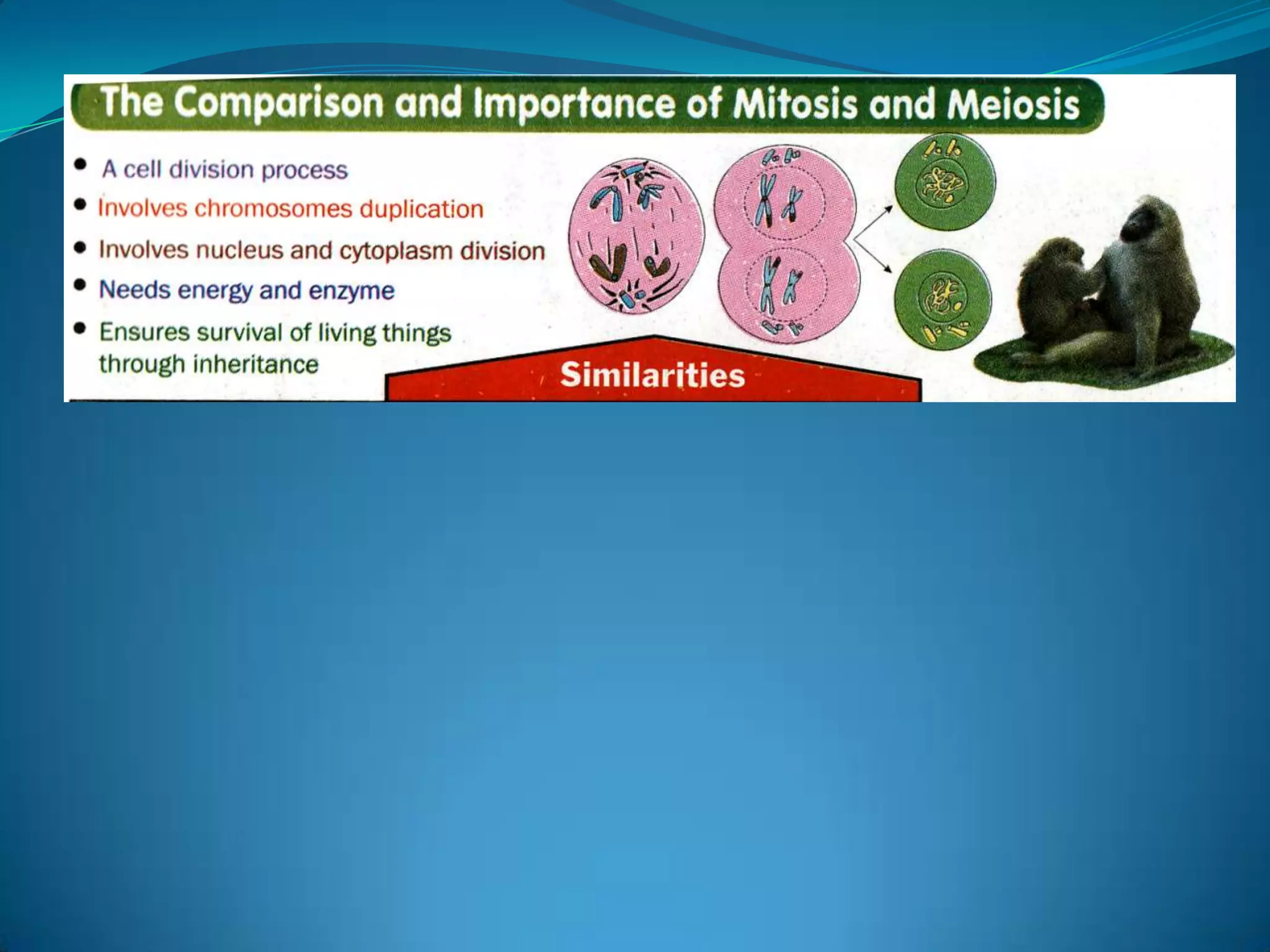
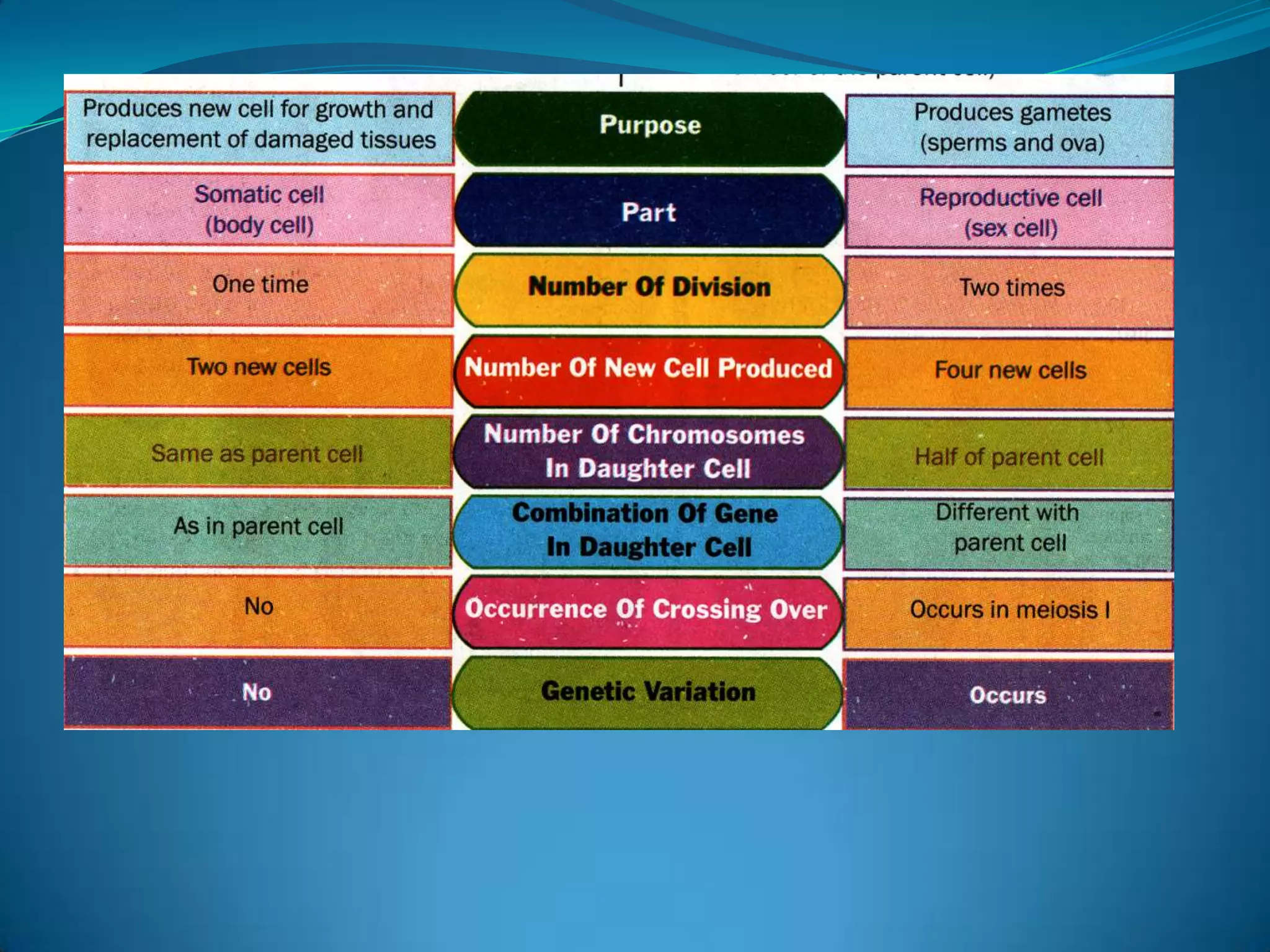
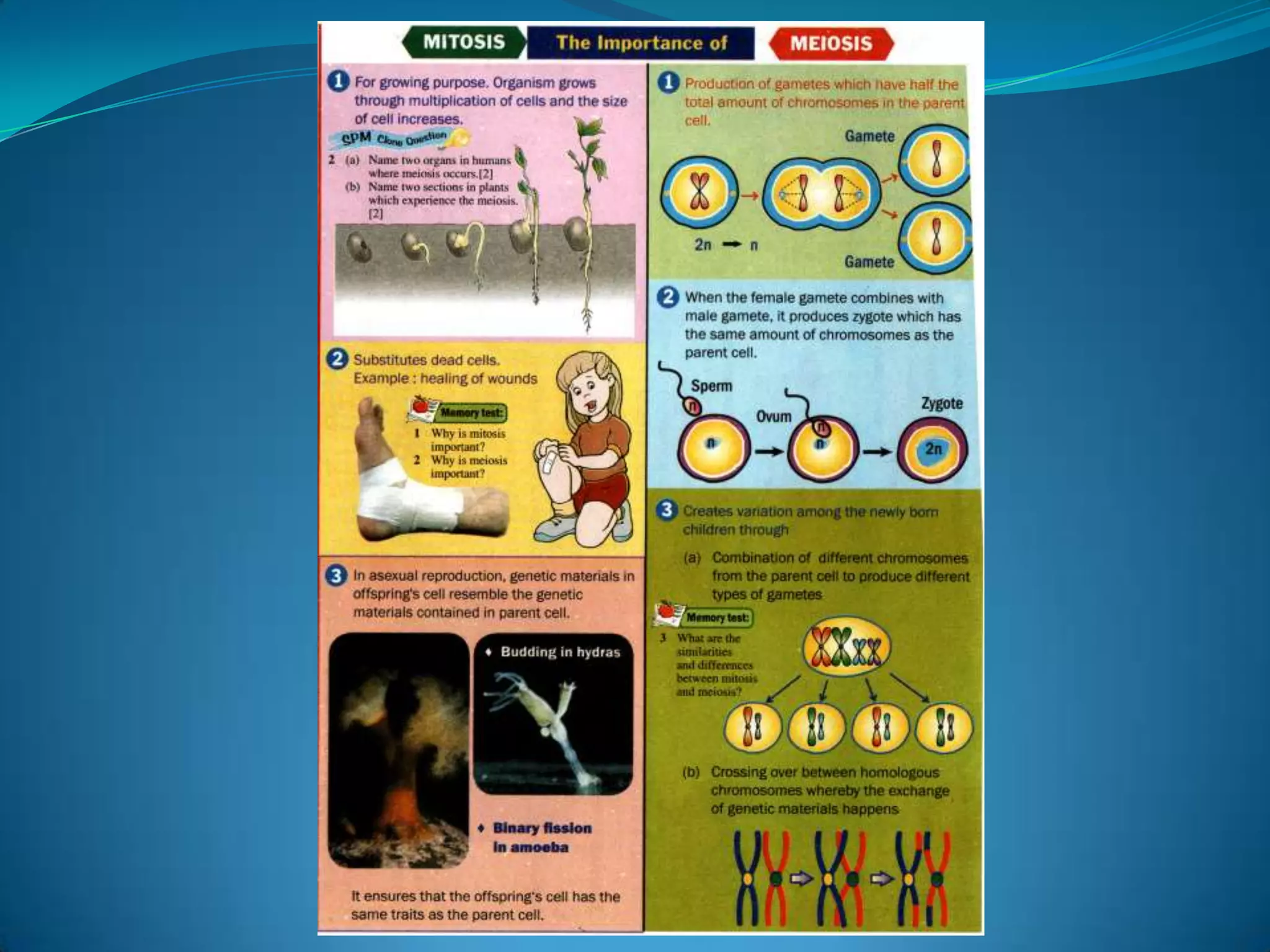
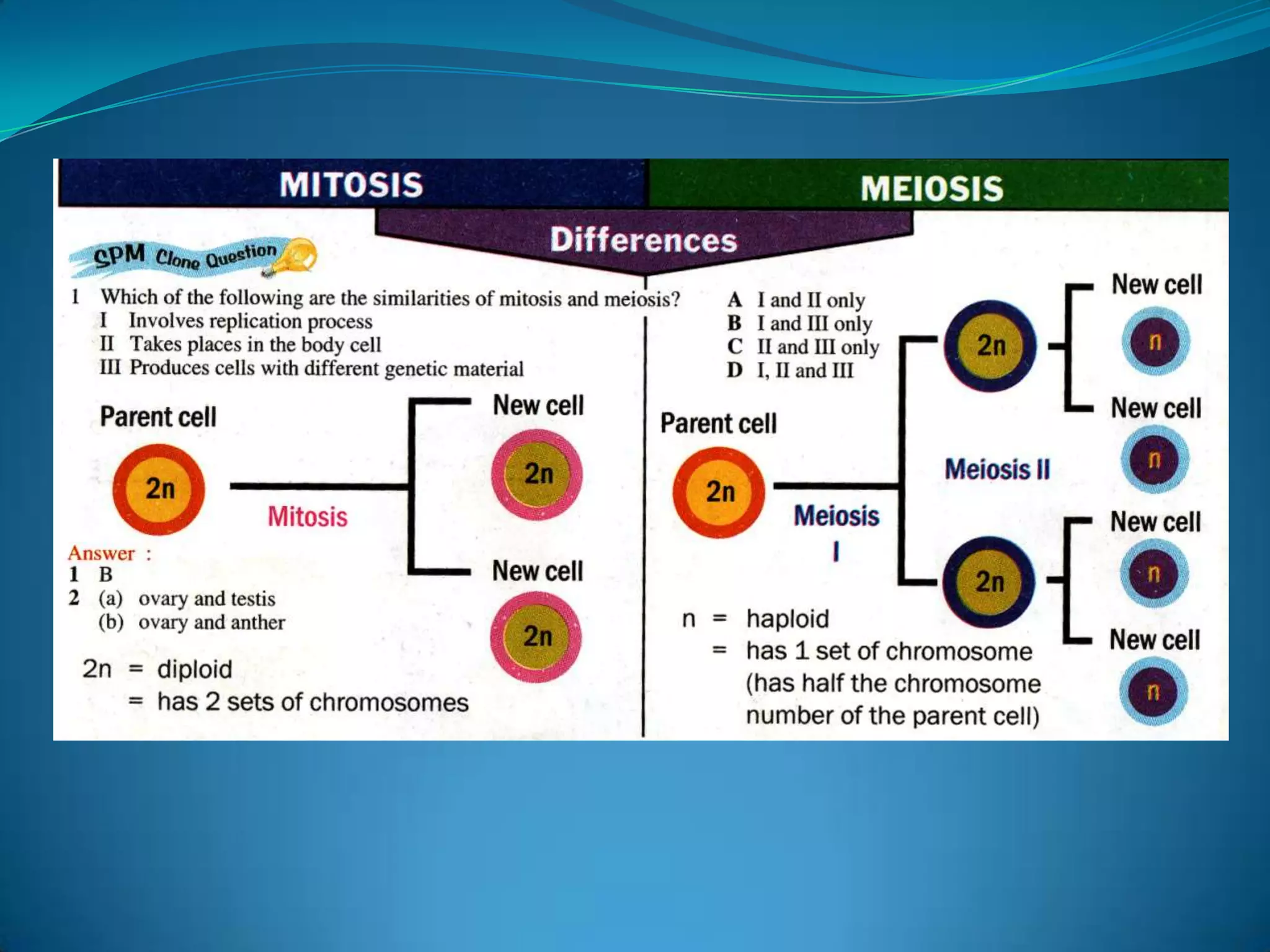
The type of nuclear division that occurs here is called mitosis.
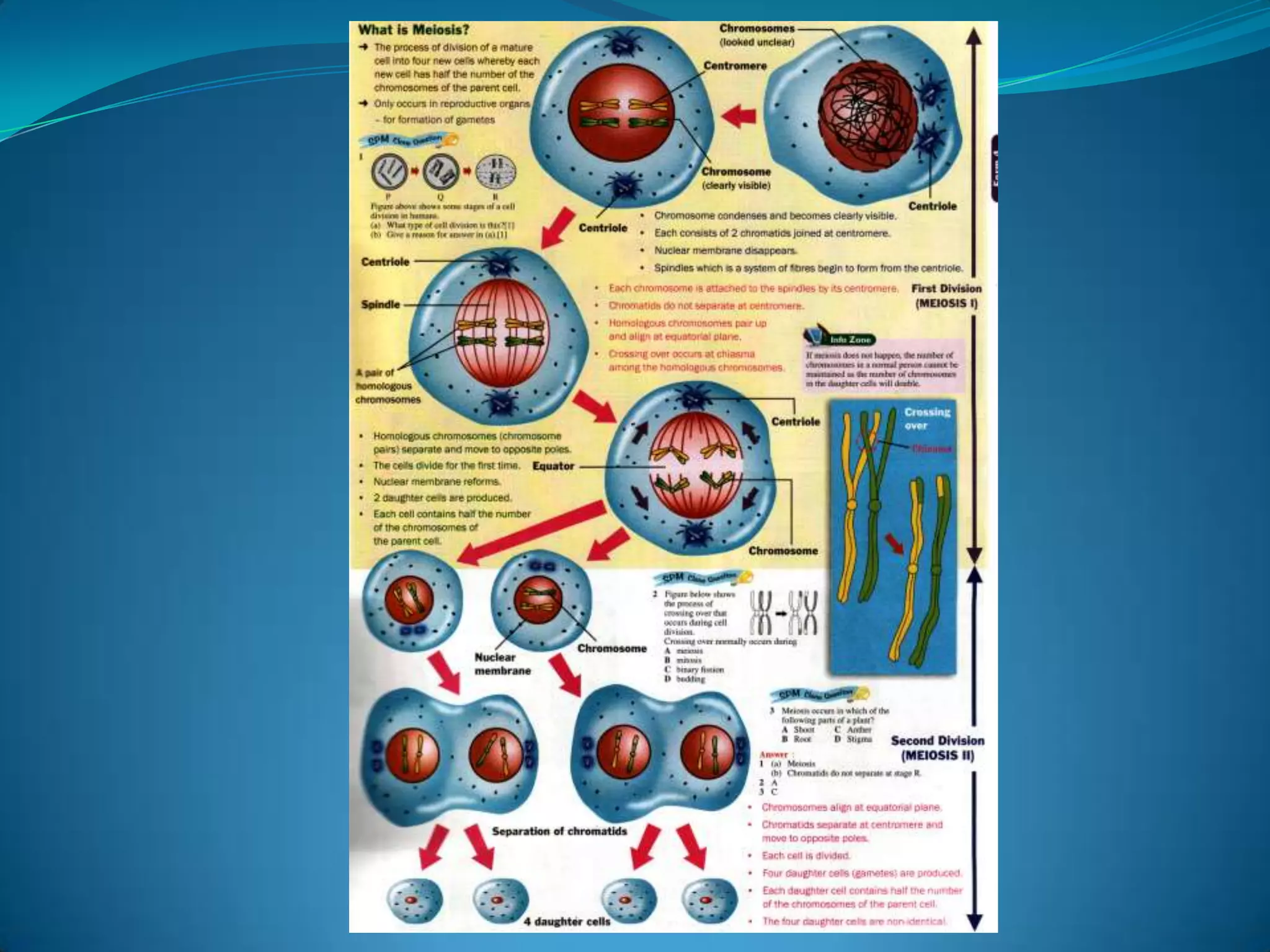
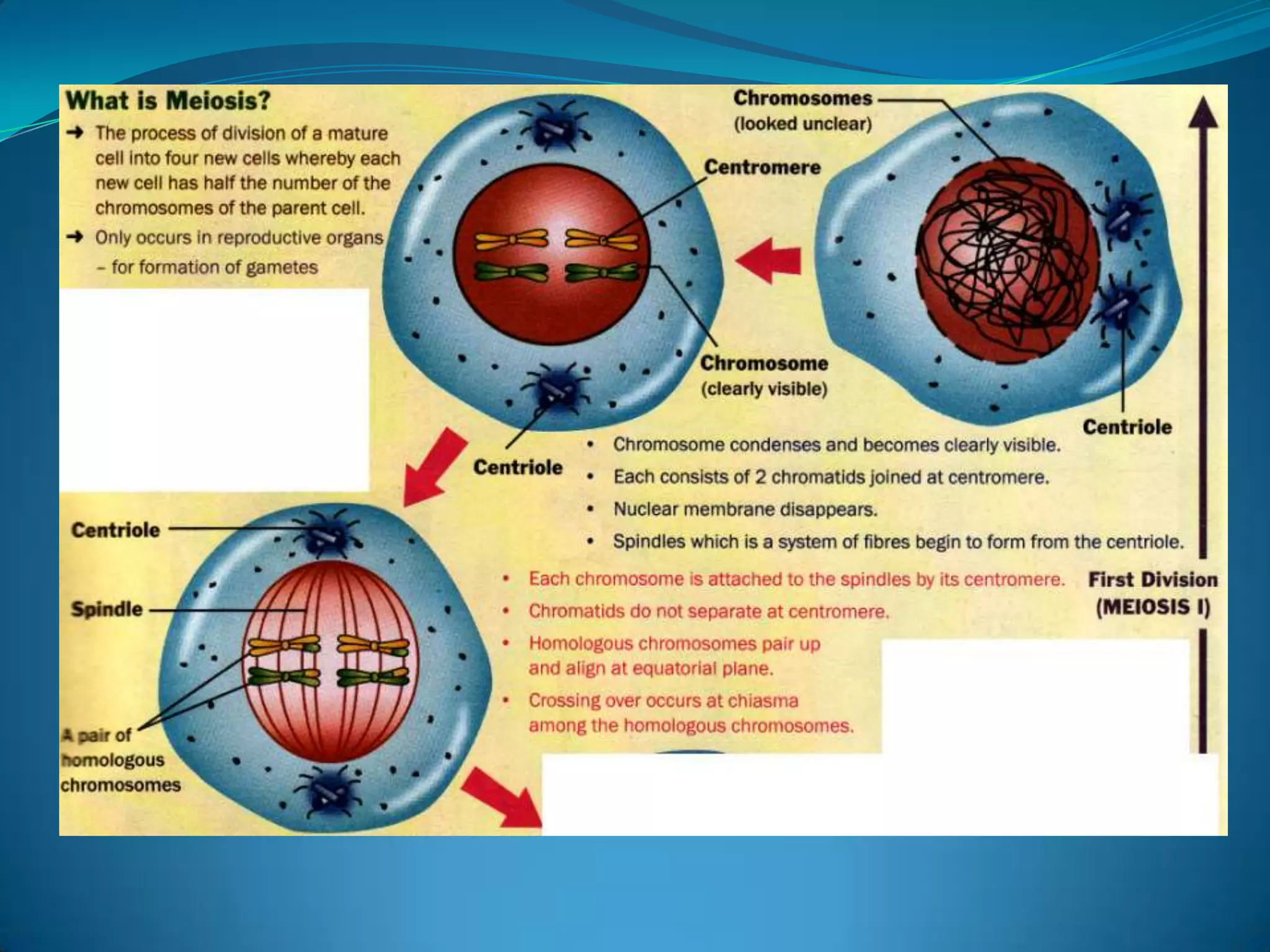
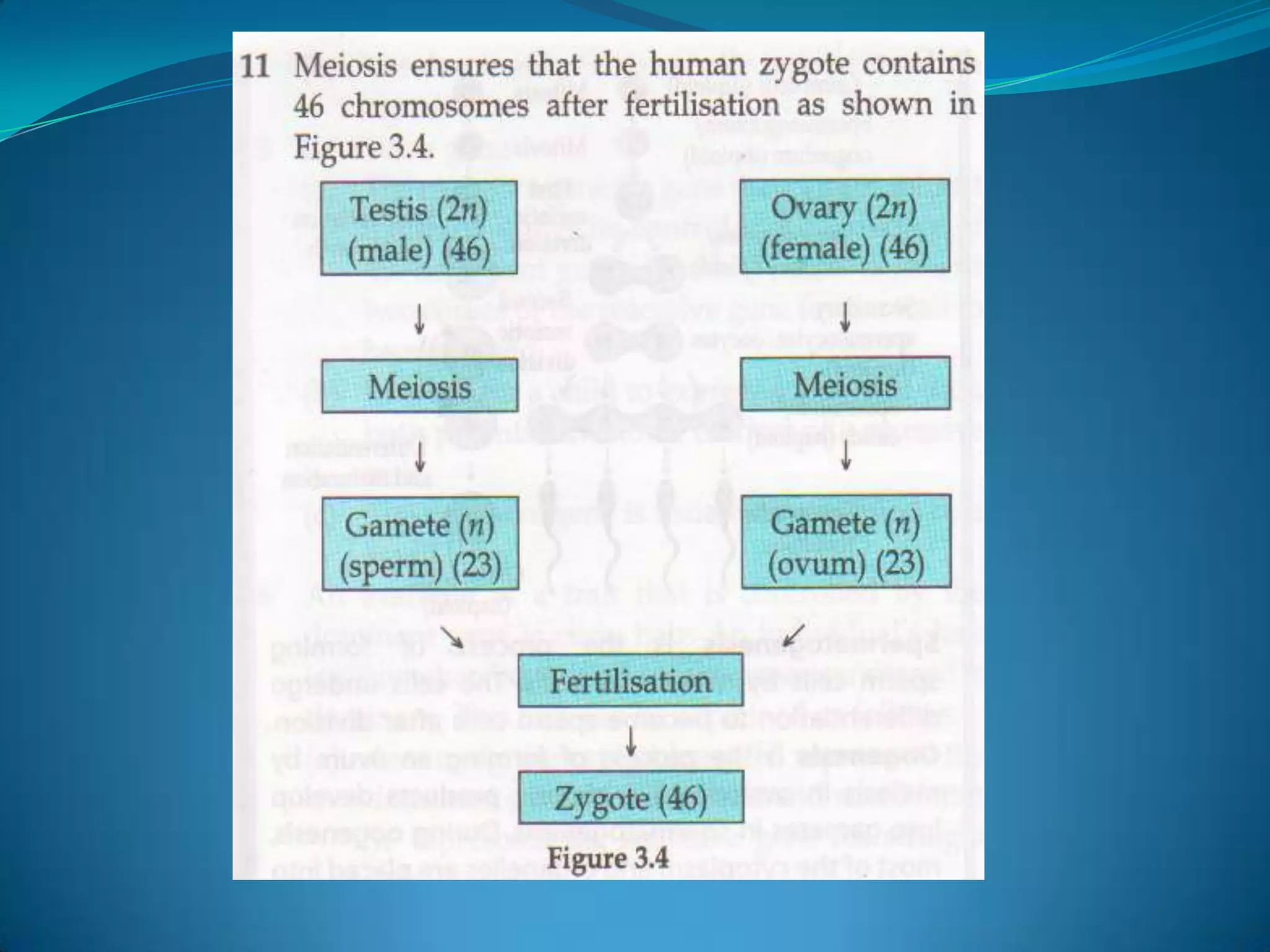
During sexual reproduction, haploid (n) gametes which contain only one set of chromosomes are produced.
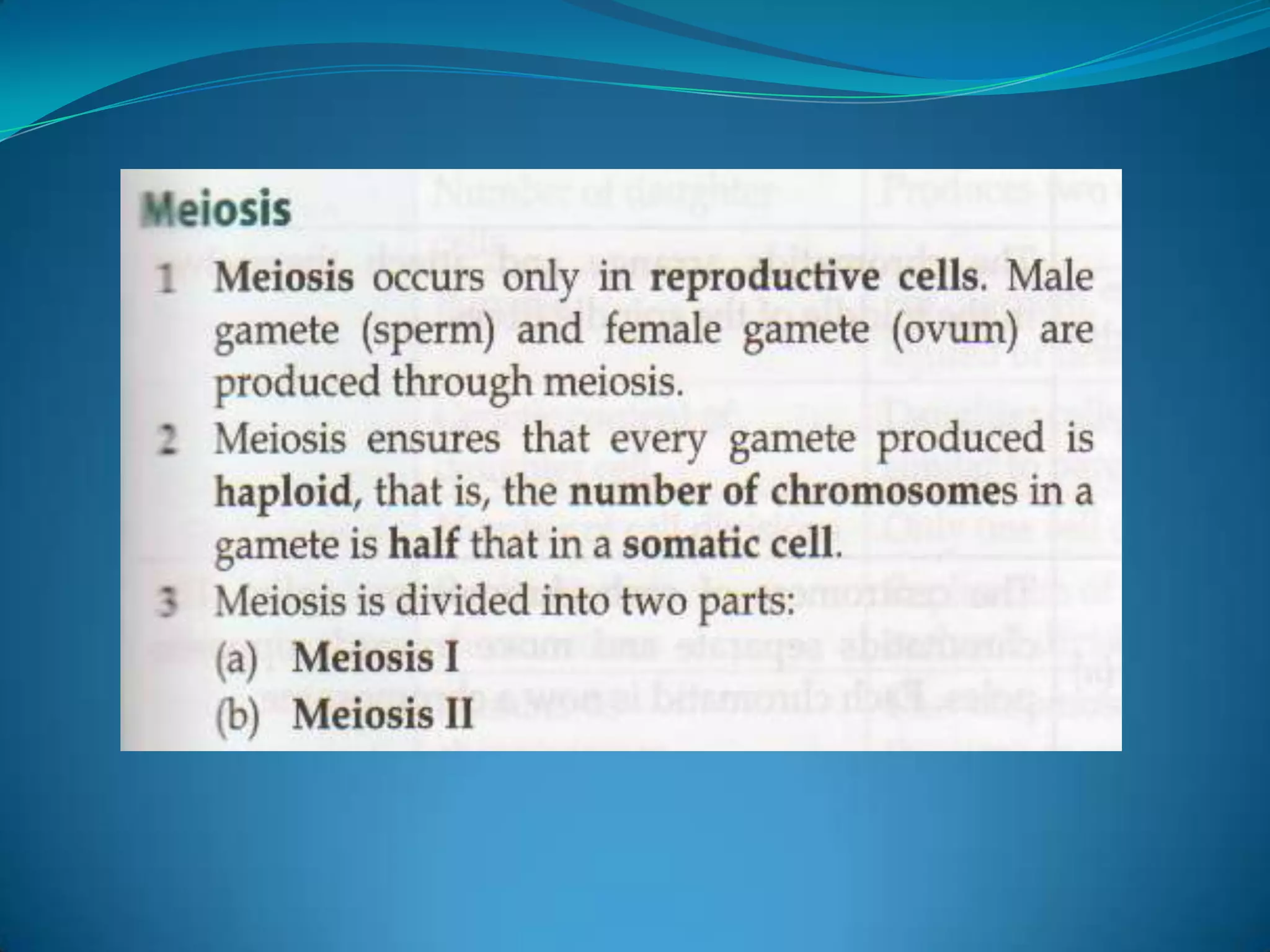
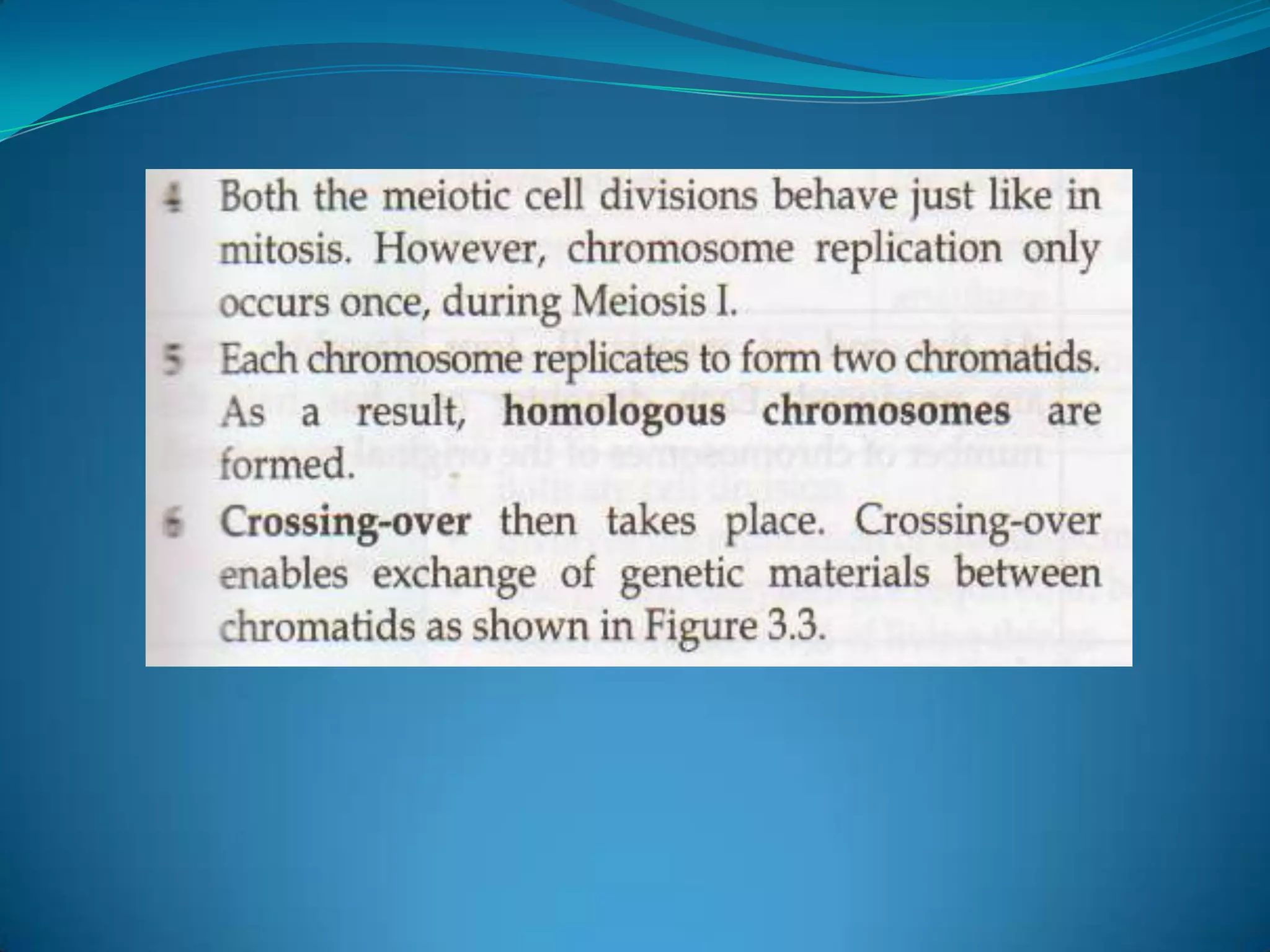
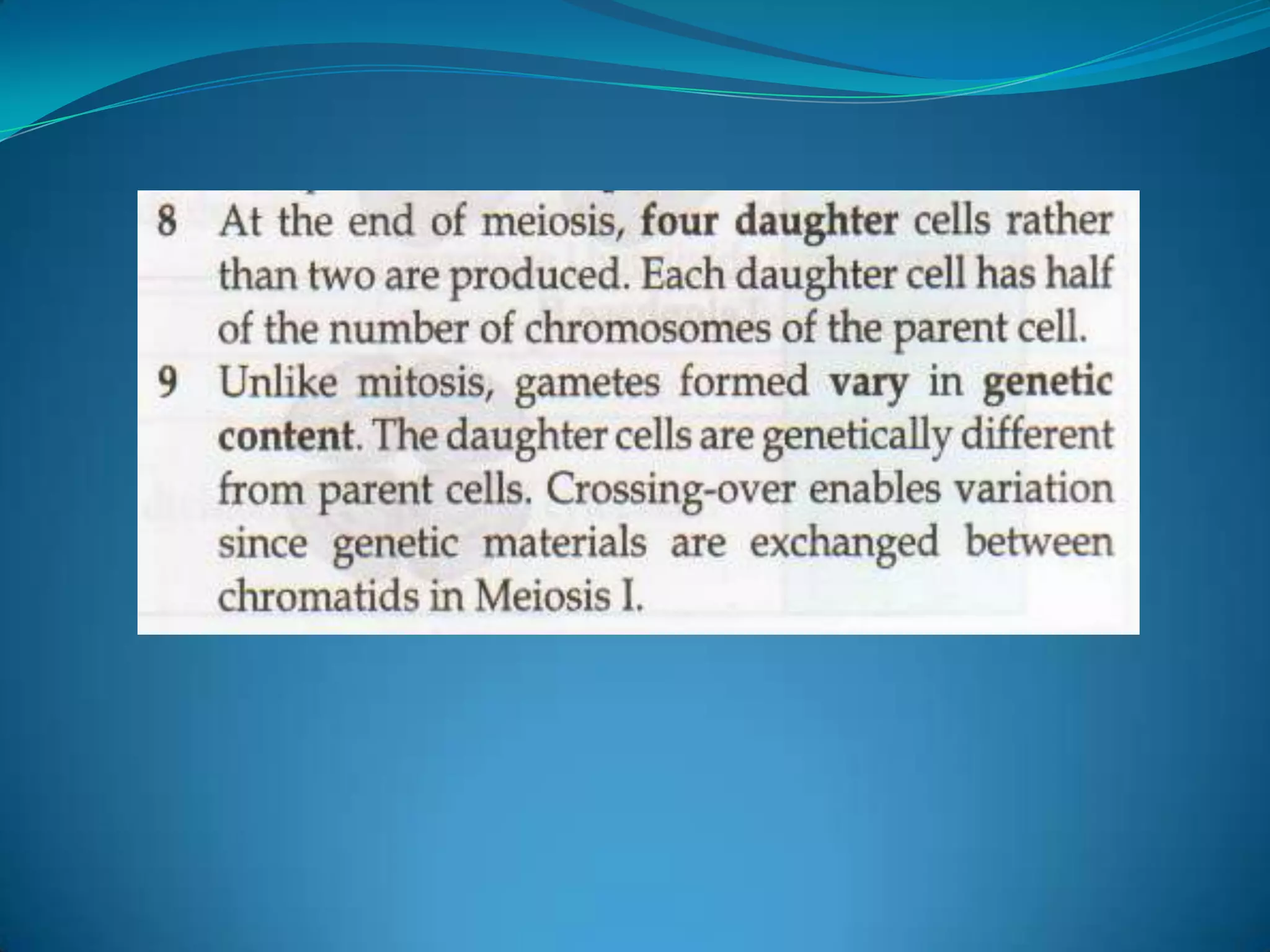
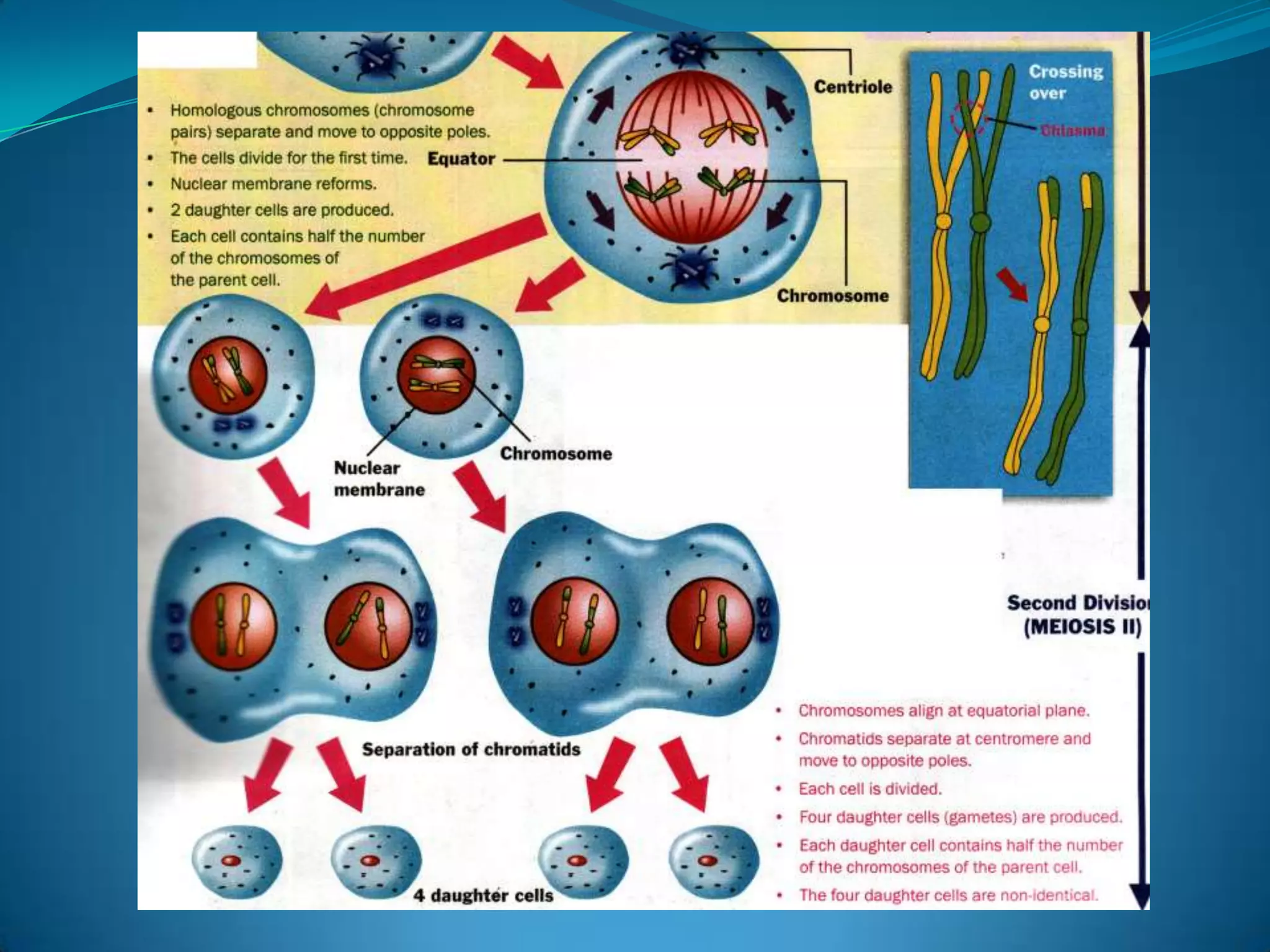
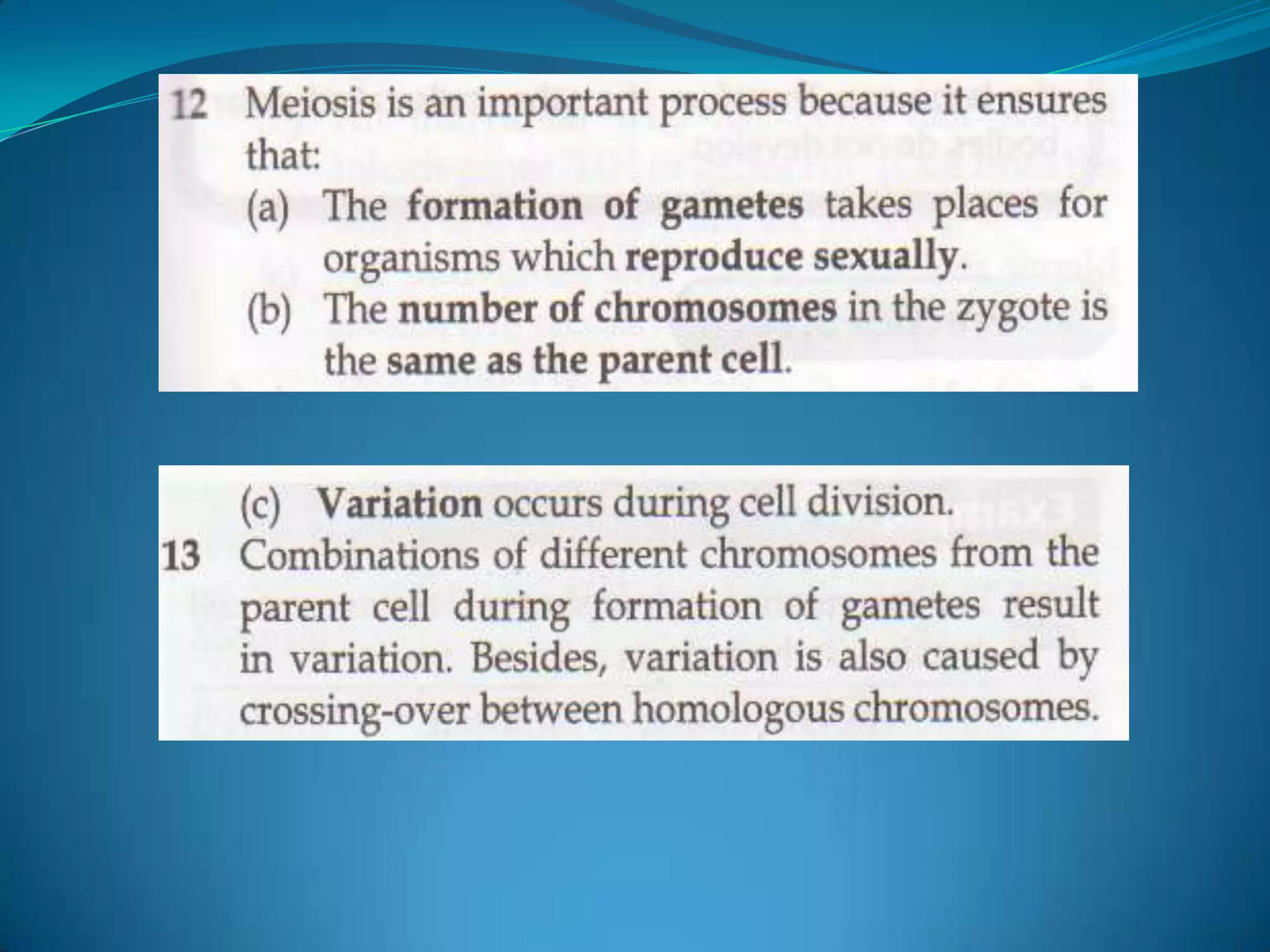
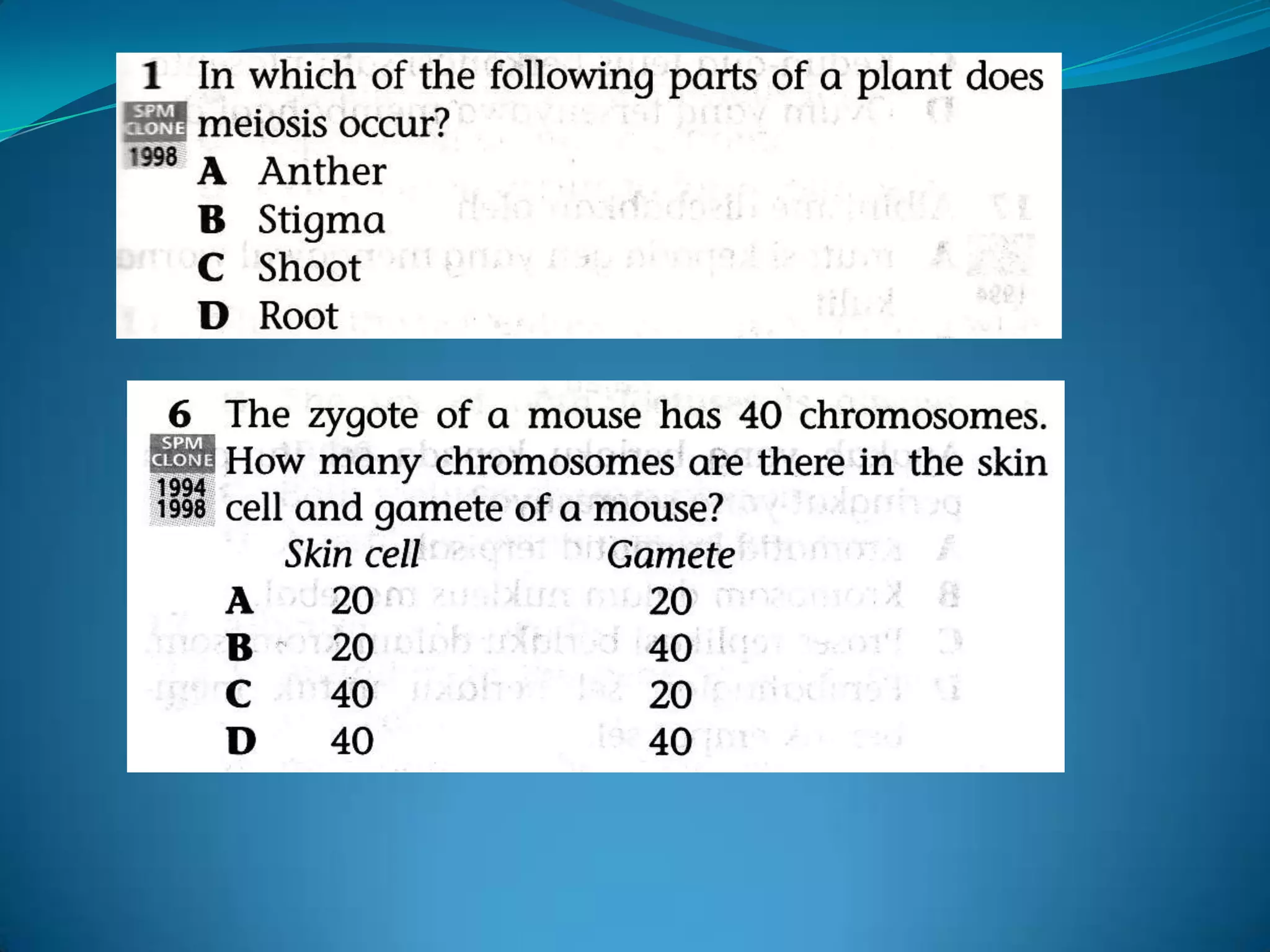
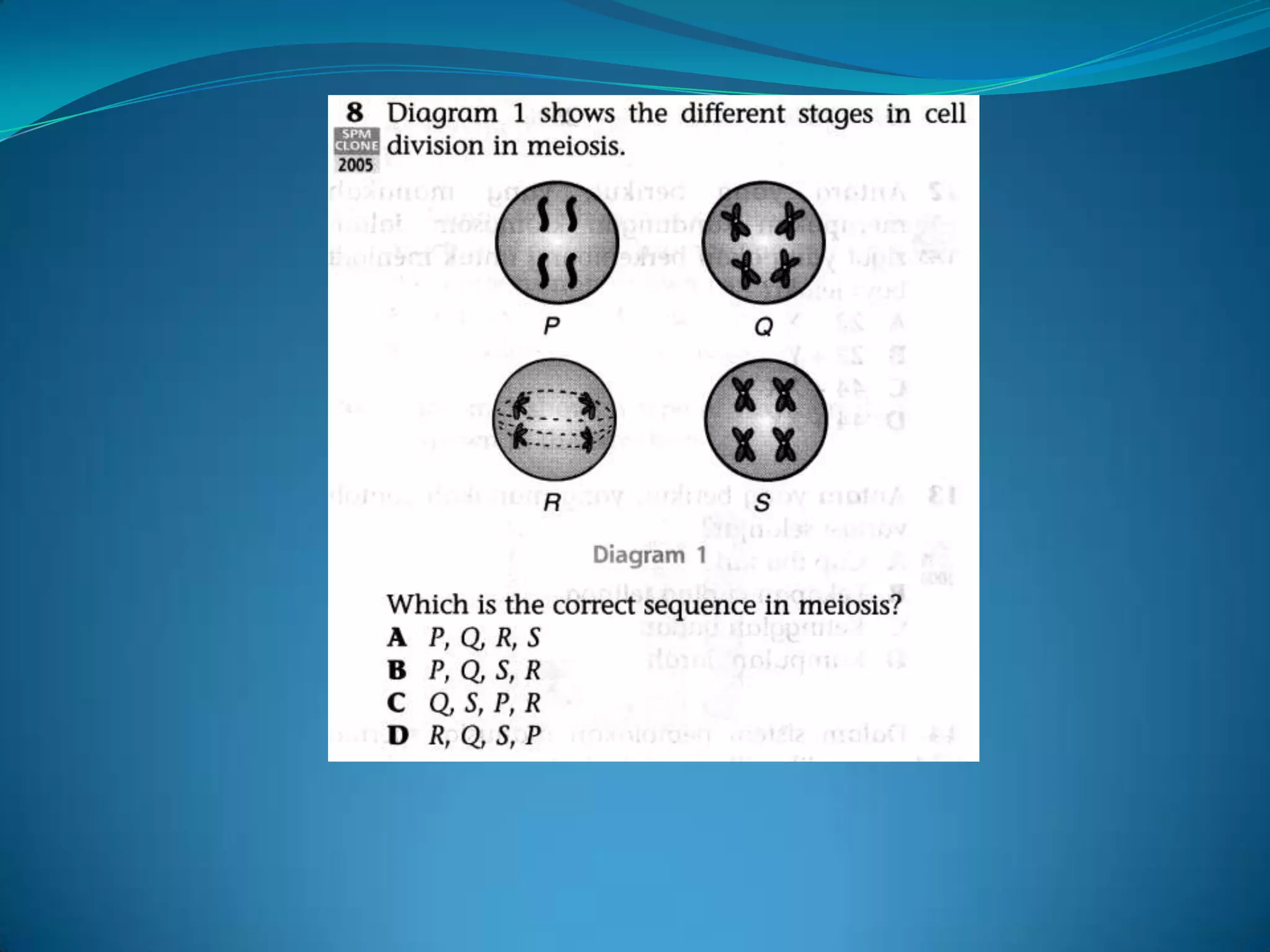
The type of nuclear division that halves the chromosome number is called meiosis.
MITOSIS
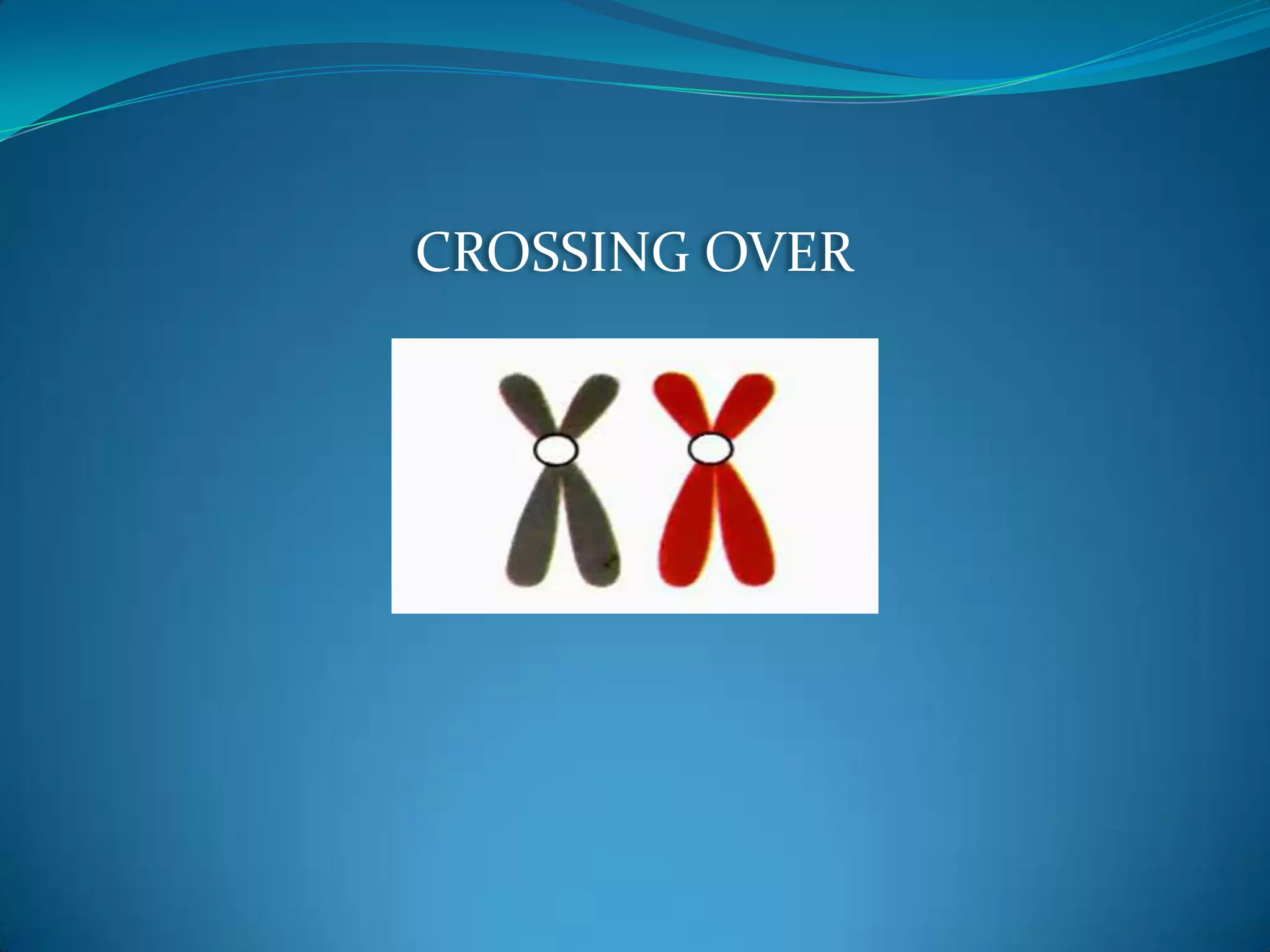
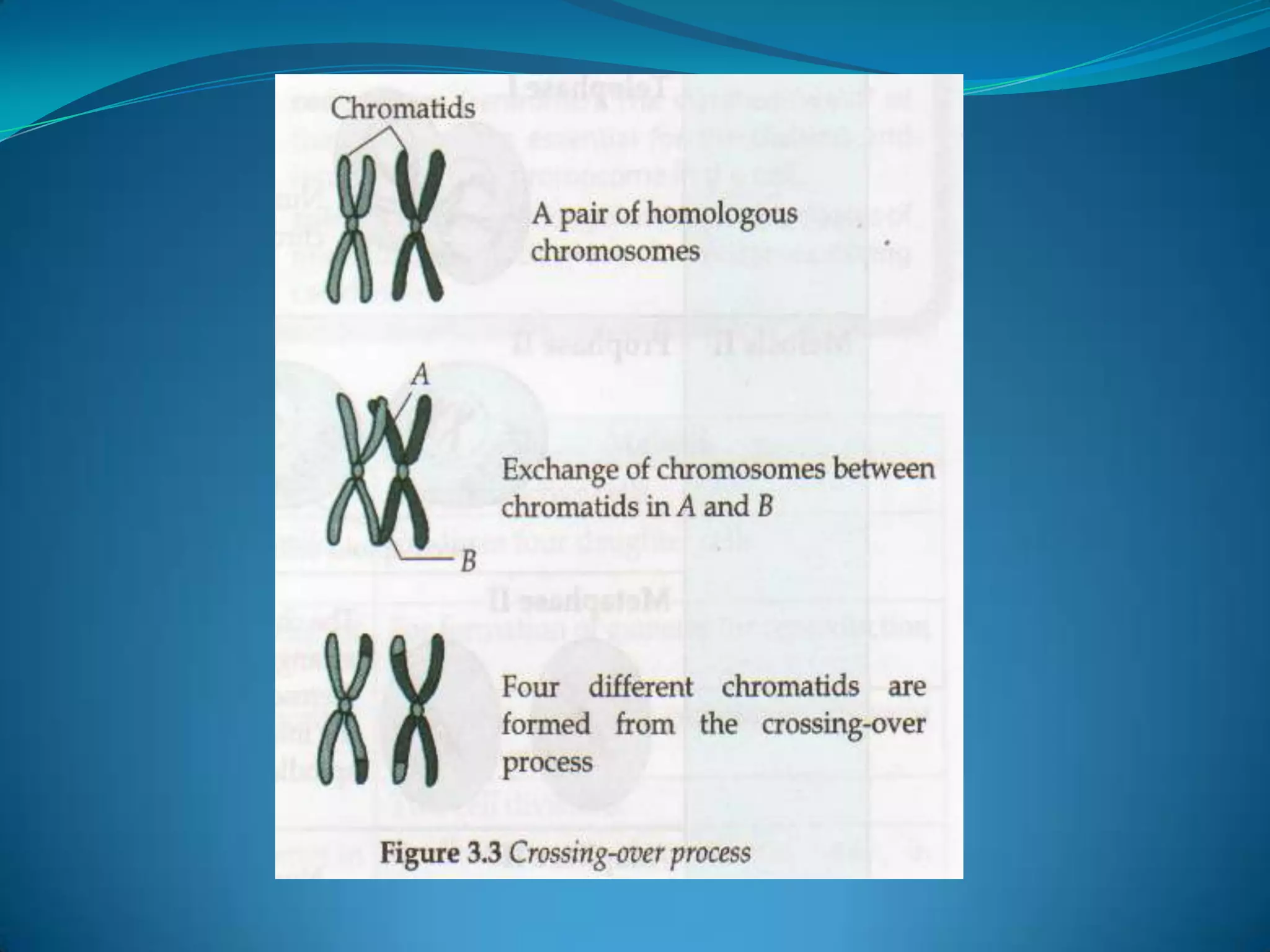
CROSSING OVER
MEIOSIS
Bab 3 F 4 Part 1awal

Bab 3 F 4 Part 1awal