Prevention of early-onset
GBS disease
CDC, 2010.
Prof. Aboubakr Elnashar
Benha university, Egypt
Aboubar Elnashar
Incidence
Asymptomatic carriage of GBS:
Common.
10-30% of all pregnant women
Organism
Streptococcus agalactiae:
Gram-positive
Colonize the lower GIT &
Spread to the genitourinary tract
Aboubar Elnashar
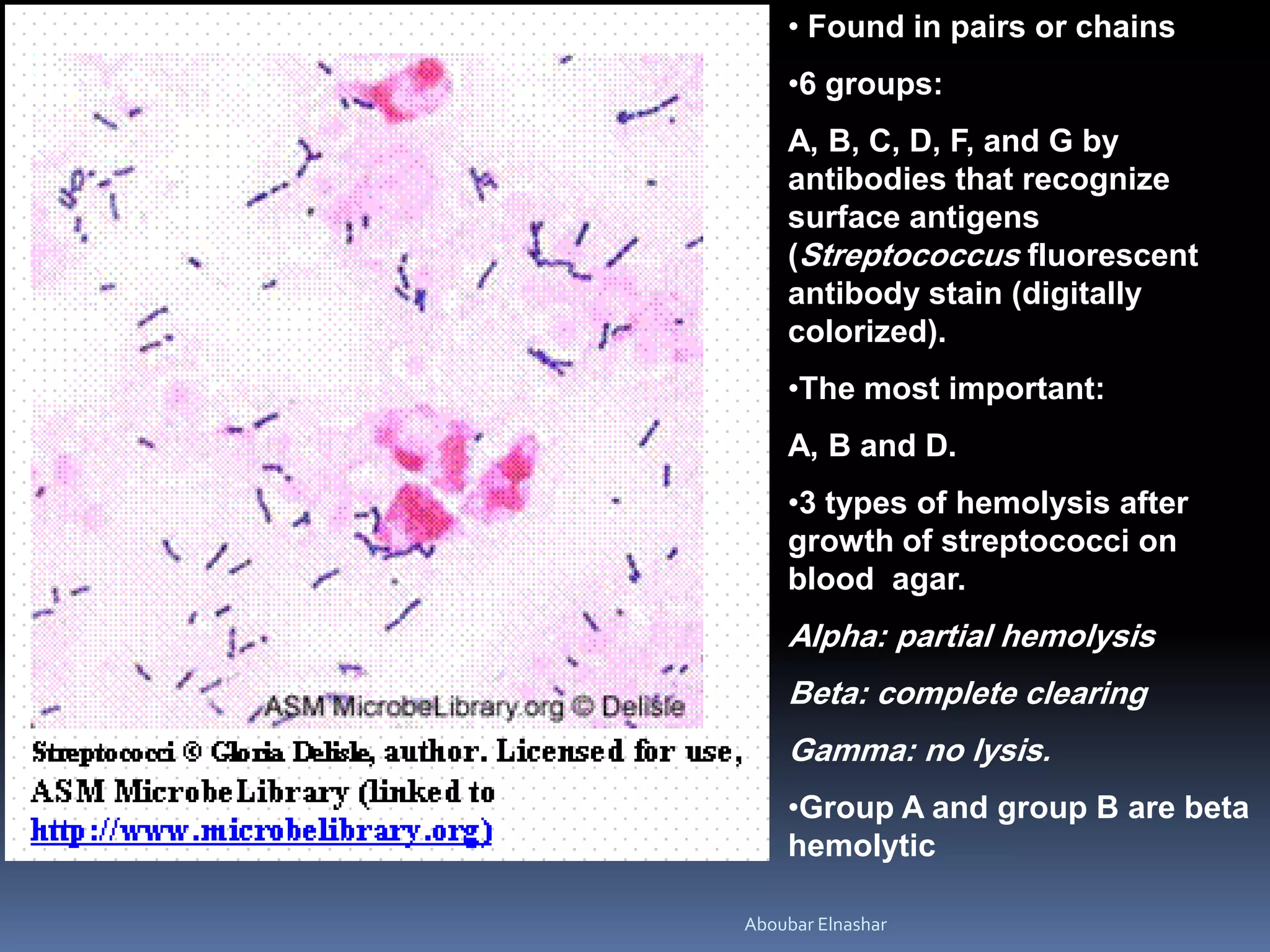
• Found in pairs or chains
•6 groups:
A, B, C, D, F, and G by
antibodies that recognize
surface antigens
(Streptococcus fluorescent
antibody stain (digitally
colorized).
•The most important:
A, B and D.
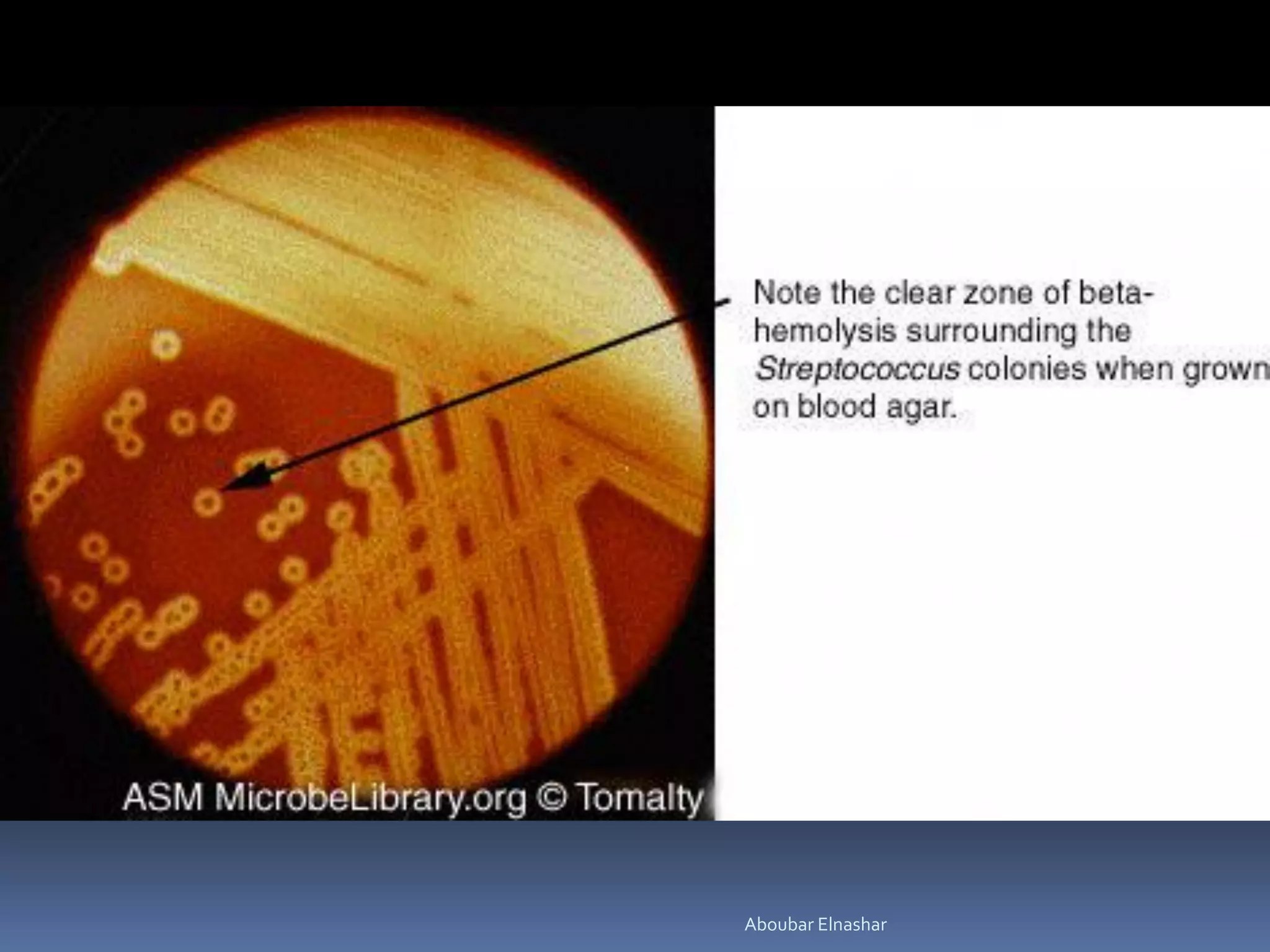
•3 types of hemolysis after
growth of streptococci on
blood agar.
Alpha: partial hemolysis
Beta: complete clearing
Gamma: no lysis.
•Group A and group B are beta
hemolytic
Aboubar Elnashar
Aboubar Elnashar
Complications
1.PTL
2.Premature ROM
3.Chorioamnionitis
4.Puerperal sepsis
5.Postpartum osteomylitis & mastitis.
6.Fetal & neonatal infections
Aboubar Elnashar
Neonatal sepsis
USA:
GBS is the leading cause of neonatal
bacterial sepsis
UK:
GBS is the most frequent cause of
neonatal severe early onset infection
(0.5/1000 births).
There is controversy about its
prevention Aboubar Elnashar
Early onset disease
(<7 days of age)
Usually 6 -12 hrs after
birth
80% of GBS disease in
newborn
Respiratory distress,
apnea & shock.
It should be DD from
RDS
Mortality: 25%.
Long term neurological
sequalae
Late onset disease
1 w or more after
birth
Meningitis
Mortality rate:
less than early onset
Neurological
sequalae:
common
Aboubar Elnashar
Indications of intrapartum GBS prophylaxis
1. Previous infant with invasive GBS disease
2. GBS bacteriuria during any trimester of the current
pregnancy*
3. Positive GBS vaginal-rectal screening culture in
late gestation† during current pregnancy*
4. Unknown GBS status at the onset of labor (culture
not done, incomplete, or results unknown) and any of
the following:
– Delivery at <37 weeks’ gestation§
– Amniotic membrane rupture ≥18 hours
– Intrapartum temperature ≥100.4°F (≥38.0°C)¶
– Intrapartum NAAT** positive for GBS
Aboubar Elnashar
Intrapartum GBS prophylaxis not indicated
1. Colonization with GBS during a previous
pregnancy (unless an indication for GBS prophylaxis
is present for current pregnancy)
2. GBS bacteriuria during previous pregnancy
(unless an indication for GBS prophylaxis is present
for current pregnancy)
3. Negative vaginal and rectal GBS screening culture
in late gestation† during the current pregnancy,
regardless of intrapartum risk factors
4. Cesarean delivery performed before onset of labor
on a woman with intact amniotic membranes,
regardless of GBS colonization status or gestational
age
Aboubar Elnashar
Screening strategy
• Women with GBS isolated from the urine at any
time during the current pregnancy or who had a
previous infant with invasive GBS disease should
receive intrapartum antibiotic prophylaxis and do not
need third trimester screening for GBS colonization
(AII).
Women with symptomatic or asymptomatic GBS
urinary tract infection detected during pregnancy
should be treated according to current standards of
care for urinary tract infection during pregnancy and
should receive intrapartum antibiotic prophylaxis to
prevent early-onset GBS disease (AIII).
Aboubar Elnashar
•All other pregnant women should be screened at
35–37 weeks’ gestation for vaginal and rectal GBS
colonization (AII).
Aboubar Elnashar
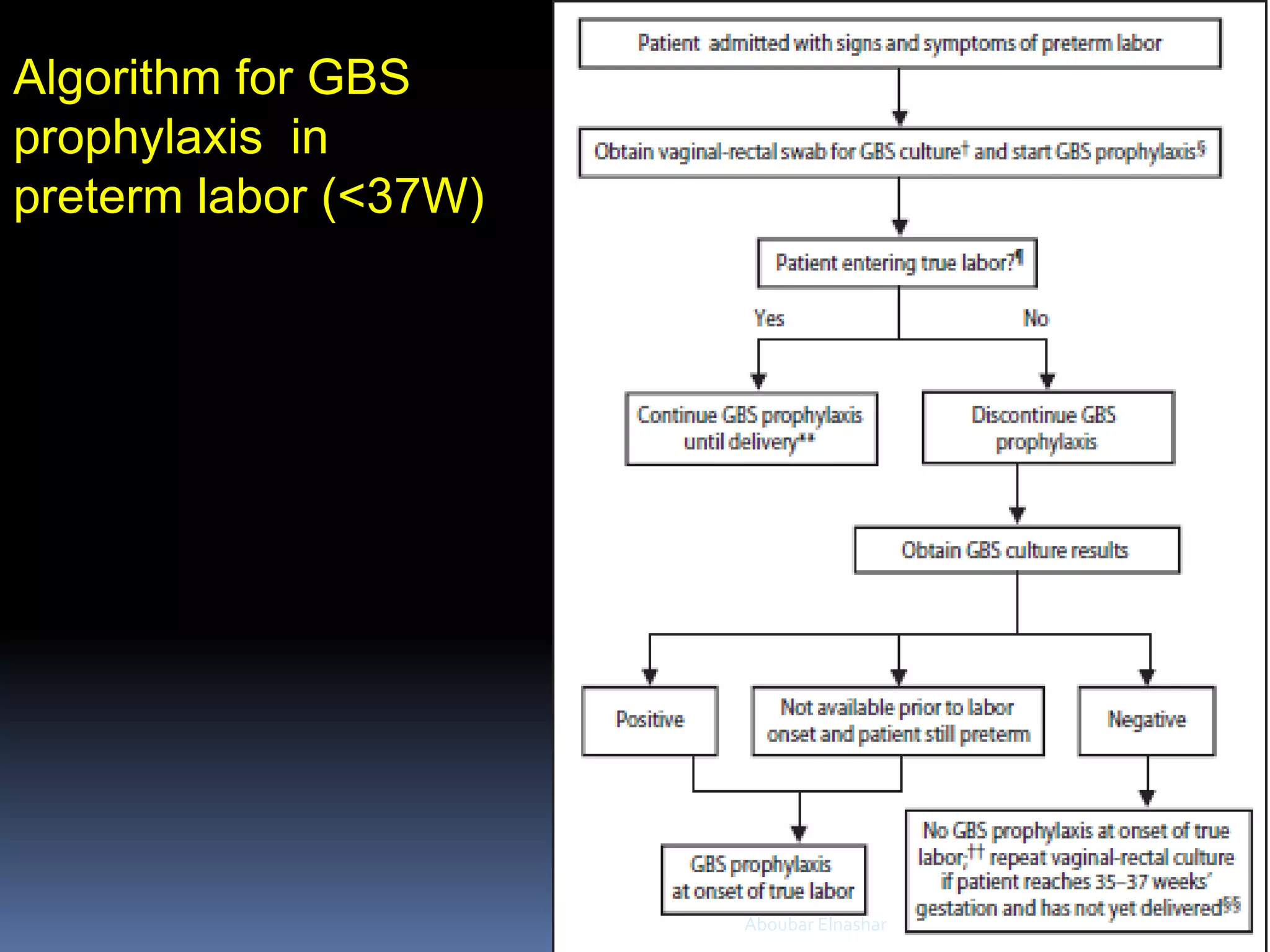
Algorithm for GBS
prophylaxis in
preterm labor (<37W)
Aboubar Elnashar
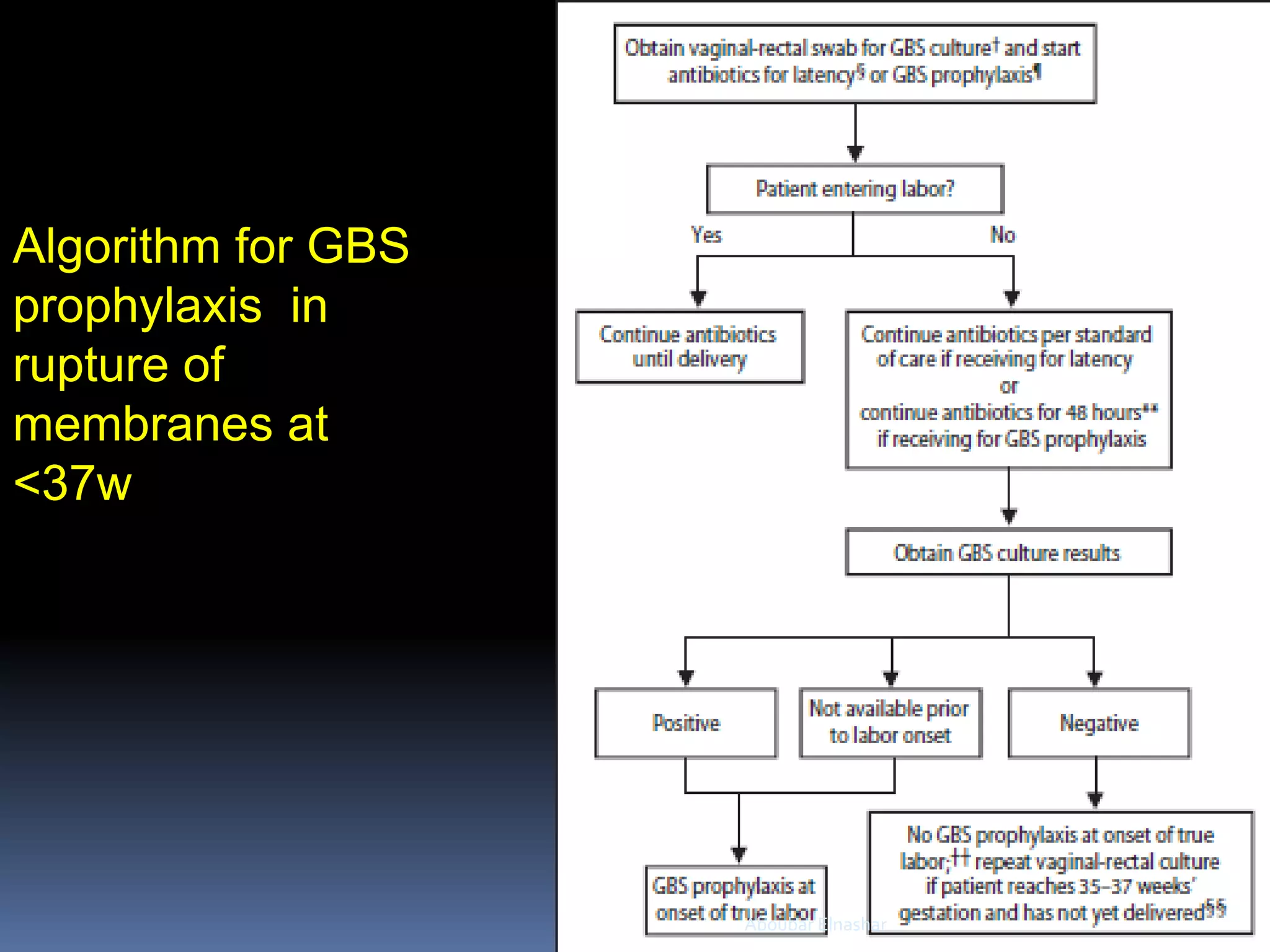
Algorithm for GBS
prophylaxis in
rupture of
membranes at
<37w
Aboubar Elnashar
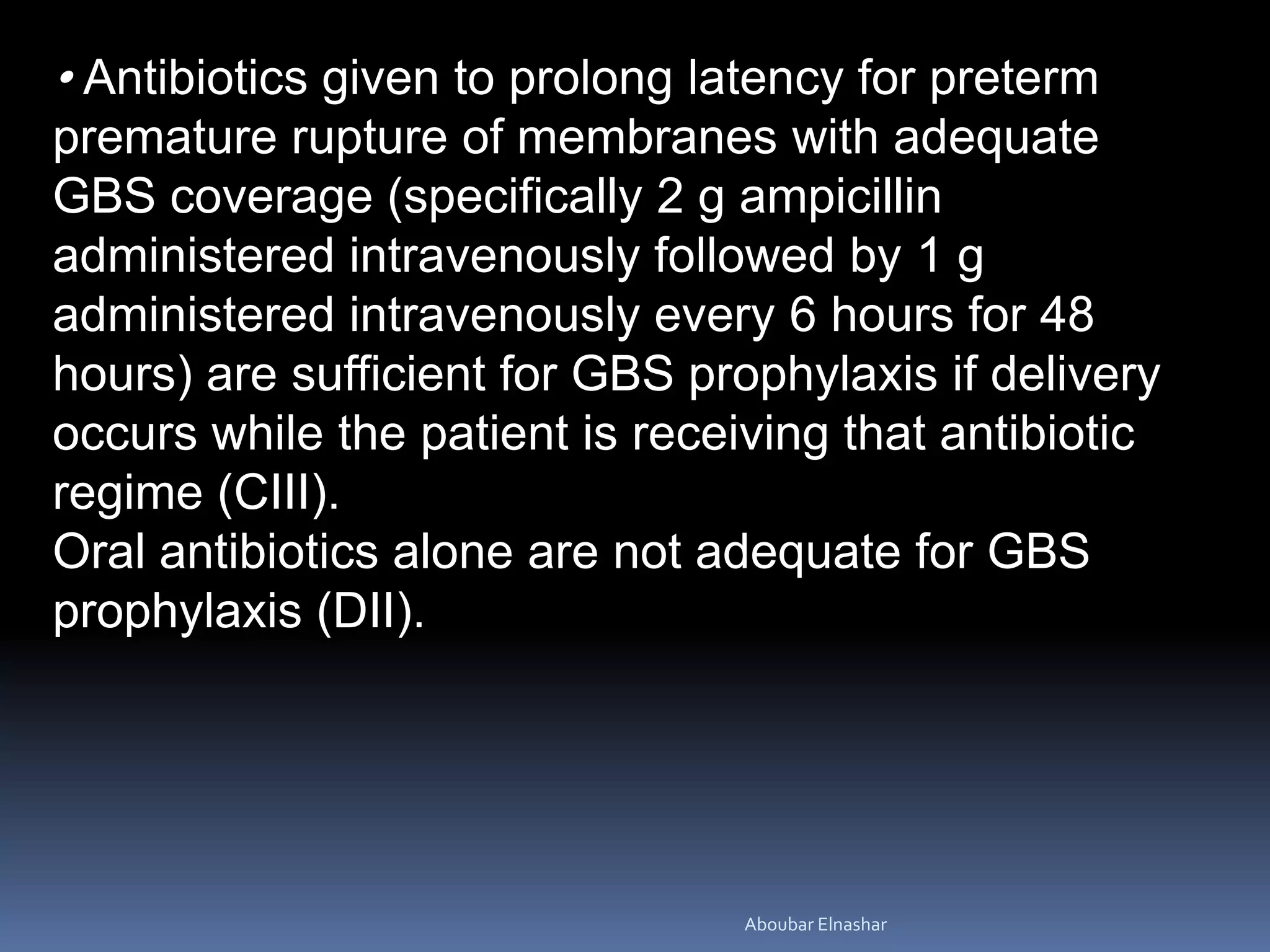
• Antibiotics given to prolong latency for preterm
premature rupture of membranes with adequate
GBS coverage (specifically 2 g ampicillin
administered intravenously followed by 1 g
administered intravenously every 6 hours for 48
hours) are sufficient for GBS prophylaxis if delivery
occurs while the patient is receiving that antibiotic
regime (CIII).
Oral antibiotics alone are not adequate for GBS
prophylaxis (DII).
Aboubar Elnashar
Identification of GBS bacteriuria in pregnant
women
• Routine screening for asymptomatic bacteriuria is
recommended in pregnant women, and laboratories
should screen urine culture specimens for the
presence of GBS in concentrations of 104 colony-
forming units (cfu)/ml or greater.
• Laboratories should identify GBS when present at
≥104 cfu/ml in pure culture or mixed with a second
microorganism.
Aboubar Elnashar
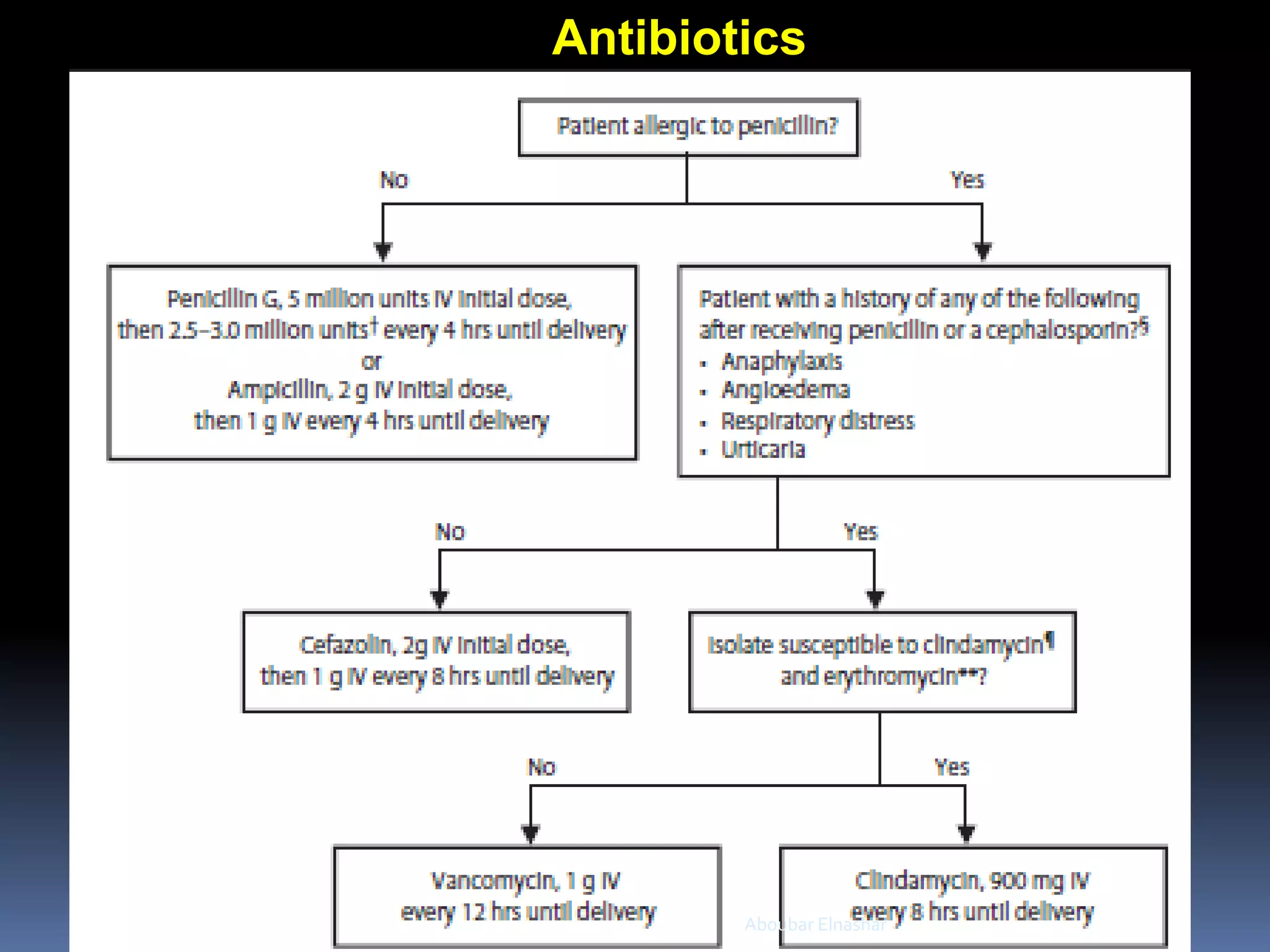
Antibiotics
Aboubar Elnashar
Thank you
Aboubakr ElnasharAboubar Elnashar

Prevention of early-onset GBS disease

  • 1.
    Prevention of early-onset GBSdisease CDC, 2010. Prof. Aboubakr Elnashar Benha university, Egypt Aboubar Elnashar
  • 2.
    Incidence Asymptomatic carriage ofGBS: Common. 10-30% of all pregnant women Organism Streptococcus agalactiae: Gram-positive Colonize the lower GIT & Spread to the genitourinary tract Aboubar Elnashar
  • 3.
    • Found inpairs or chains •6 groups: A, B, C, D, F, and G by antibodies that recognize surface antigens (Streptococcus fluorescent antibody stain (digitally colorized). •The most important: A, B and D. •3 types of hemolysis after growth of streptococci on blood agar. Alpha: partial hemolysis Beta: complete clearing Gamma: no lysis. •Group A and group B are beta hemolytic Aboubar Elnashar
  • 4.
  • 5.
    Complications 1.PTL 2.Premature ROM 3.Chorioamnionitis 4.Puerperal sepsis 5.Postpartumosteomylitis & mastitis. 6.Fetal & neonatal infections Aboubar Elnashar
  • 6.
    Neonatal sepsis USA: GBS isthe leading cause of neonatal bacterial sepsis UK: GBS is the most frequent cause of neonatal severe early onset infection (0.5/1000 births). There is controversy about its prevention Aboubar Elnashar
  • 7.
    Early onset disease (<7days of age) Usually 6 -12 hrs after birth 80% of GBS disease in newborn Respiratory distress, apnea & shock. It should be DD from RDS Mortality: 25%. Long term neurological sequalae Late onset disease 1 w or more after birth Meningitis Mortality rate: less than early onset Neurological sequalae: common Aboubar Elnashar
  • 8.
    Indications of intrapartumGBS prophylaxis 1. Previous infant with invasive GBS disease 2. GBS bacteriuria during any trimester of the current pregnancy* 3. Positive GBS vaginal-rectal screening culture in late gestation† during current pregnancy* 4. Unknown GBS status at the onset of labor (culture not done, incomplete, or results unknown) and any of the following: – Delivery at <37 weeks’ gestation§ – Amniotic membrane rupture ≥18 hours – Intrapartum temperature ≥100.4°F (≥38.0°C)¶ – Intrapartum NAAT** positive for GBS Aboubar Elnashar
  • 9.
    Intrapartum GBS prophylaxisnot indicated 1. Colonization with GBS during a previous pregnancy (unless an indication for GBS prophylaxis is present for current pregnancy) 2. GBS bacteriuria during previous pregnancy (unless an indication for GBS prophylaxis is present for current pregnancy) 3. Negative vaginal and rectal GBS screening culture in late gestation† during the current pregnancy, regardless of intrapartum risk factors 4. Cesarean delivery performed before onset of labor on a woman with intact amniotic membranes, regardless of GBS colonization status or gestational age Aboubar Elnashar
  • 10.
    Screening strategy • Womenwith GBS isolated from the urine at any time during the current pregnancy or who had a previous infant with invasive GBS disease should receive intrapartum antibiotic prophylaxis and do not need third trimester screening for GBS colonization (AII). Women with symptomatic or asymptomatic GBS urinary tract infection detected during pregnancy should be treated according to current standards of care for urinary tract infection during pregnancy and should receive intrapartum antibiotic prophylaxis to prevent early-onset GBS disease (AIII). Aboubar Elnashar
  • 11.
    •All other pregnantwomen should be screened at 35–37 weeks’ gestation for vaginal and rectal GBS colonization (AII). Aboubar Elnashar
  • 12.
    Algorithm for GBS prophylaxisin preterm labor (<37W) Aboubar Elnashar
  • 13.
    Algorithm for GBS prophylaxisin rupture of membranes at <37w Aboubar Elnashar
  • 14.
    • Antibiotics givento prolong latency for preterm premature rupture of membranes with adequate GBS coverage (specifically 2 g ampicillin administered intravenously followed by 1 g administered intravenously every 6 hours for 48 hours) are sufficient for GBS prophylaxis if delivery occurs while the patient is receiving that antibiotic regime (CIII). Oral antibiotics alone are not adequate for GBS prophylaxis (DII). Aboubar Elnashar
  • 15.
    Identification of GBSbacteriuria in pregnant women • Routine screening for asymptomatic bacteriuria is recommended in pregnant women, and laboratories should screen urine culture specimens for the presence of GBS in concentrations of 104 colony- forming units (cfu)/ml or greater. • Laboratories should identify GBS when present at ≥104 cfu/ml in pure culture or mixed with a second microorganism. Aboubar Elnashar
  • 16.
  • 17.