ENCODING AND DECODING
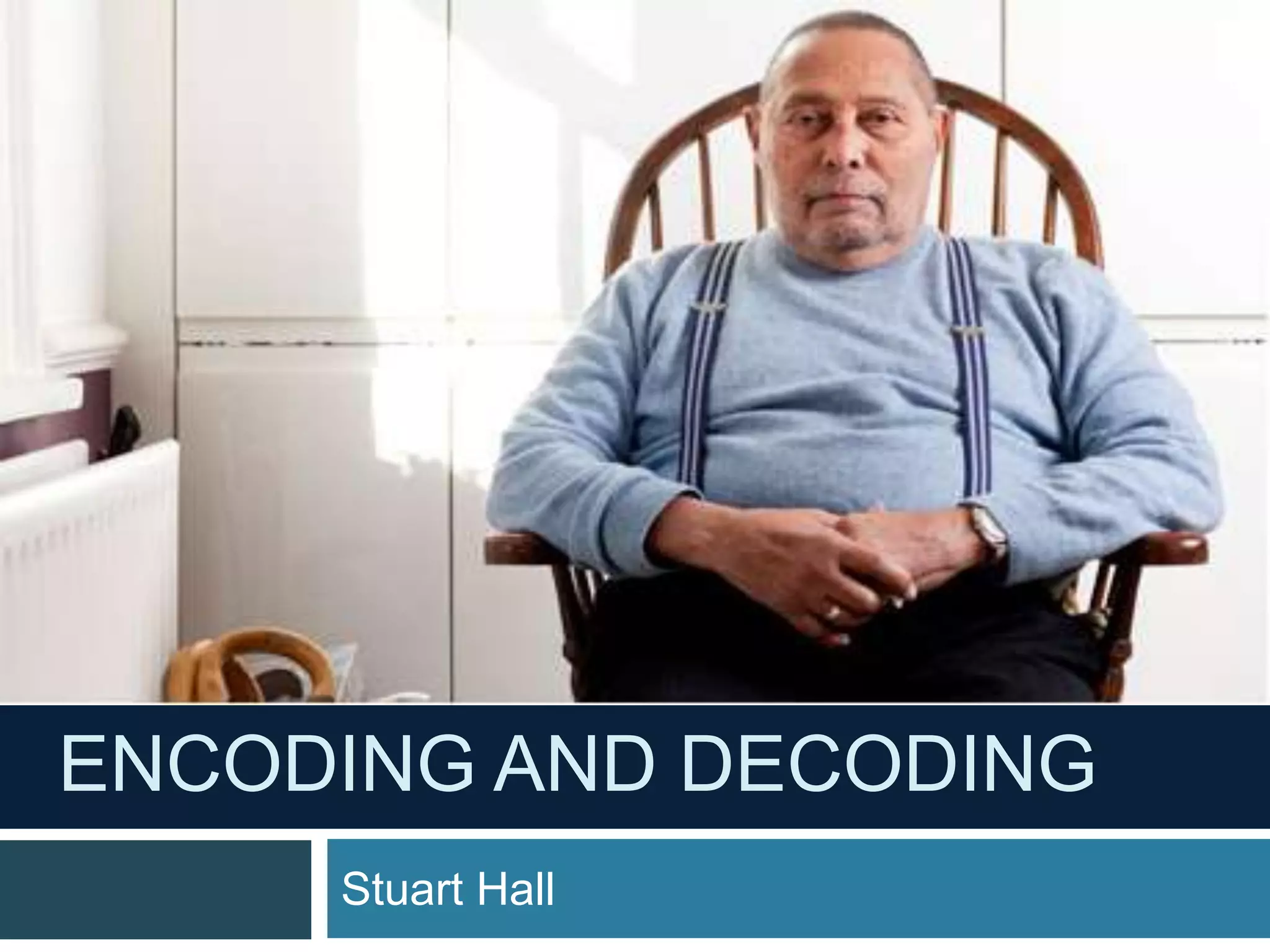
Stuart Hall
BIOGRAPHY
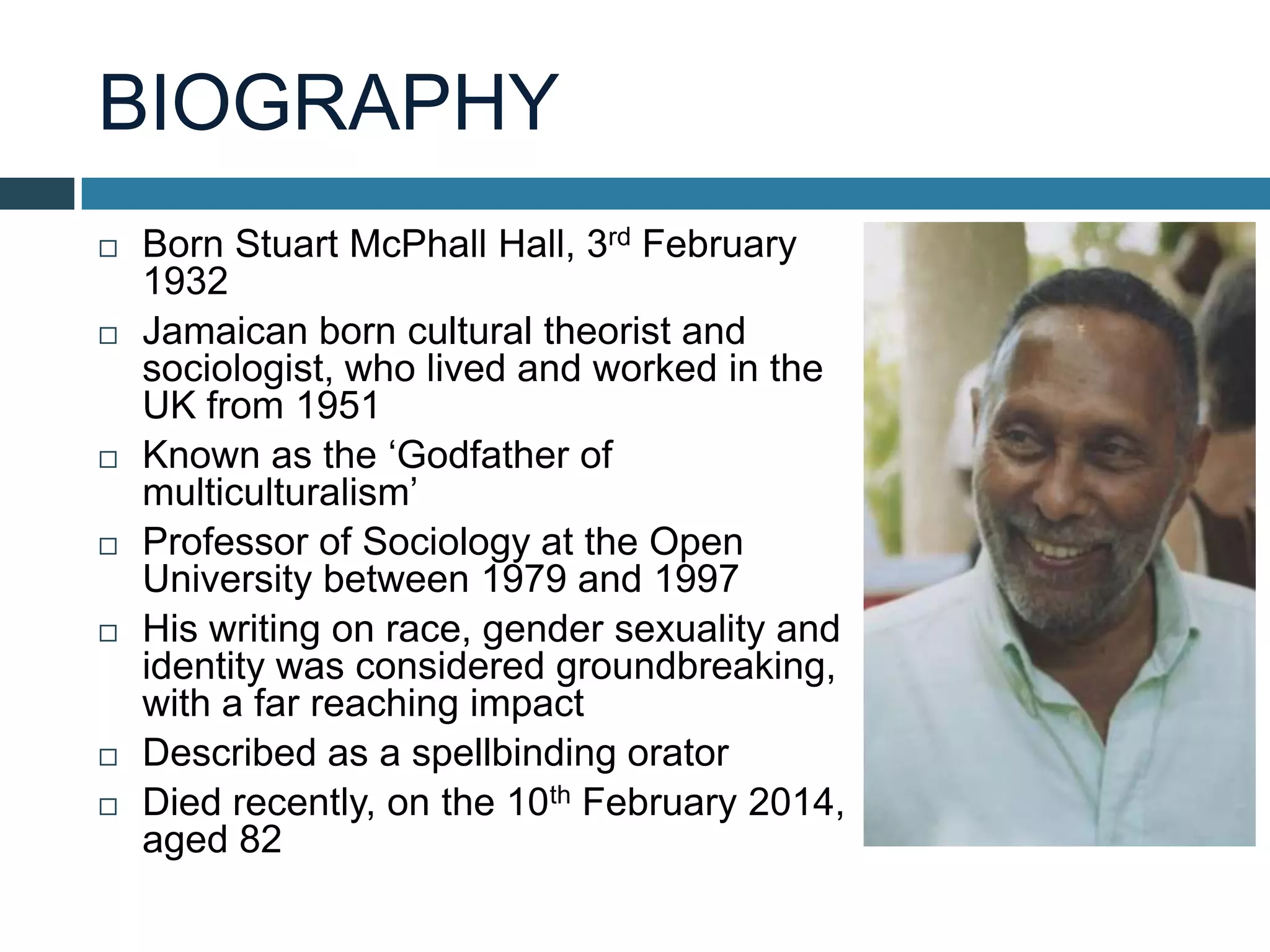
 Born Stuart McPhall Hall, 3rd February
1932
 Jamaican born cultural theorist and
sociologist, who lived and worked in the
UK from 1951
 Known as the „Godfather of
multiculturalism‟
 Professor of Sociology at the Open
University between 1979 and 1997
 His writing on race, gender sexuality and
identity was considered groundbreaking,
with a far reaching impact
 Described as a spellbinding orator
 Died recently, on the 10th February 2014,
aged 82
IDEAS
 People interpret media texts in different ways,
depending on their cultural background,
economic standings and personal experiences
 Also argues that audience members can play
an active role in decoding the messages of the
text and are capable of changing these
messages themselves
POSSIBLE AUDIENCE
RESPONSES
 DOMINANT: Seen as the hegemonic
response, people share the code and
preferred reading
 NEGOTIATED: They accept what the text is
saying and adapt it according to their social
background
 OPPOSITIONAL: When they understand the
text, but reject the message, they come from
an oppositional position
EXAMPLE
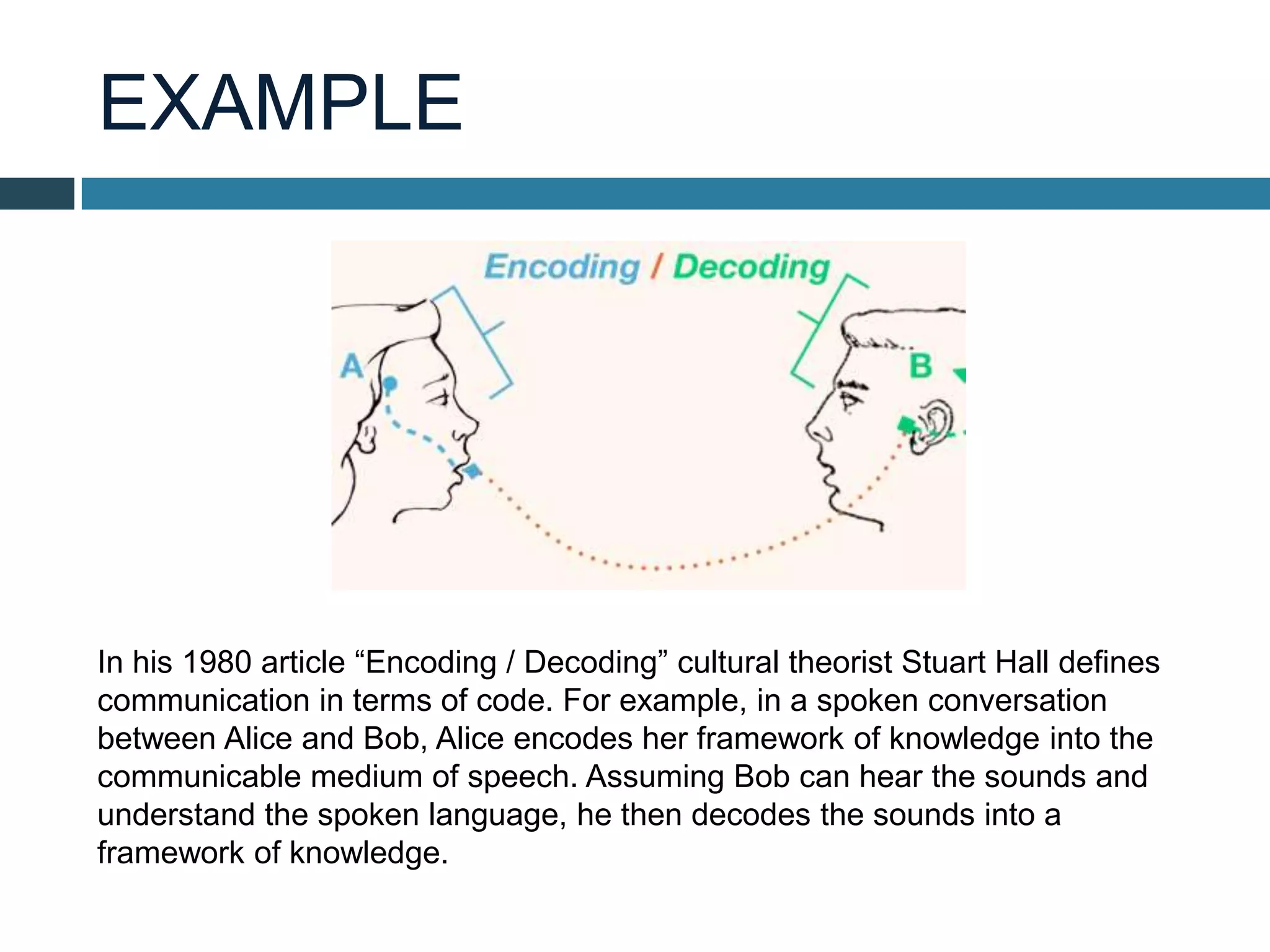
In his 1980 article “Encoding / Decoding” cultural theorist Stuart Hall defines
communication in terms of code. For example, in a spoken conversation
between Alice and Bob, Alice encodes her framework of knowledge into the
communicable medium of speech. Assuming Bob can hear the sounds and
understand the spoken language, he then decodes the sounds into a
framework of knowledge.
COURSEWORK EXAMPLE
 There is a scene where trainers are found in the hedges.
They signify that a teenage person is missing, that there is
danger in the woods.
 This is an example of meaning coded in the mise-en-scene
 Depending on their backgrounds, the audience will have their
own readings into this. OUR TRAILER IS CONSTRUCTED
FROM A TEENAGE PERSPECTIVE, so:
 TEENAGERS: Might see this as a very real threat on
themselves (This would be DOMINANT)
 OLD PEOPLE: Might see this as a hysterical, exaggerated
portrayal of teenagers being removed from society
(OPPOSITIONAL)
 MIDDLE CLASS: Maybe they would see this as a very real
threat, but also the removal of teenagers/putting them back in
their place (NEGOTIATED)

Stuart hall encoding decoding

  • 1.
  • 2.
    BIOGRAPHY  Born StuartMcPhall Hall, 3rd February 1932  Jamaican born cultural theorist and sociologist, who lived and worked in the UK from 1951  Known as the „Godfather of multiculturalism‟  Professor of Sociology at the Open University between 1979 and 1997  His writing on race, gender sexuality and identity was considered groundbreaking, with a far reaching impact  Described as a spellbinding orator  Died recently, on the 10th February 2014, aged 82
  • 3.
    IDEAS  People interpretmedia texts in different ways, depending on their cultural background, economic standings and personal experiences  Also argues that audience members can play an active role in decoding the messages of the text and are capable of changing these messages themselves
  • 4.
    POSSIBLE AUDIENCE RESPONSES  DOMINANT:Seen as the hegemonic response, people share the code and preferred reading  NEGOTIATED: They accept what the text is saying and adapt it according to their social background  OPPOSITIONAL: When they understand the text, but reject the message, they come from an oppositional position
  • 5.
    EXAMPLE In his 1980article “Encoding / Decoding” cultural theorist Stuart Hall defines communication in terms of code. For example, in a spoken conversation between Alice and Bob, Alice encodes her framework of knowledge into the communicable medium of speech. Assuming Bob can hear the sounds and understand the spoken language, he then decodes the sounds into a framework of knowledge.
  • 6.
    COURSEWORK EXAMPLE  Thereis a scene where trainers are found in the hedges. They signify that a teenage person is missing, that there is danger in the woods.  This is an example of meaning coded in the mise-en-scene  Depending on their backgrounds, the audience will have their own readings into this. OUR TRAILER IS CONSTRUCTED FROM A TEENAGE PERSPECTIVE, so:  TEENAGERS: Might see this as a very real threat on themselves (This would be DOMINANT)  OLD PEOPLE: Might see this as a hysterical, exaggerated portrayal of teenagers being removed from society (OPPOSITIONAL)  MIDDLE CLASS: Maybe they would see this as a very real threat, but also the removal of teenagers/putting them back in their place (NEGOTIATED)