Downloaded 79 times
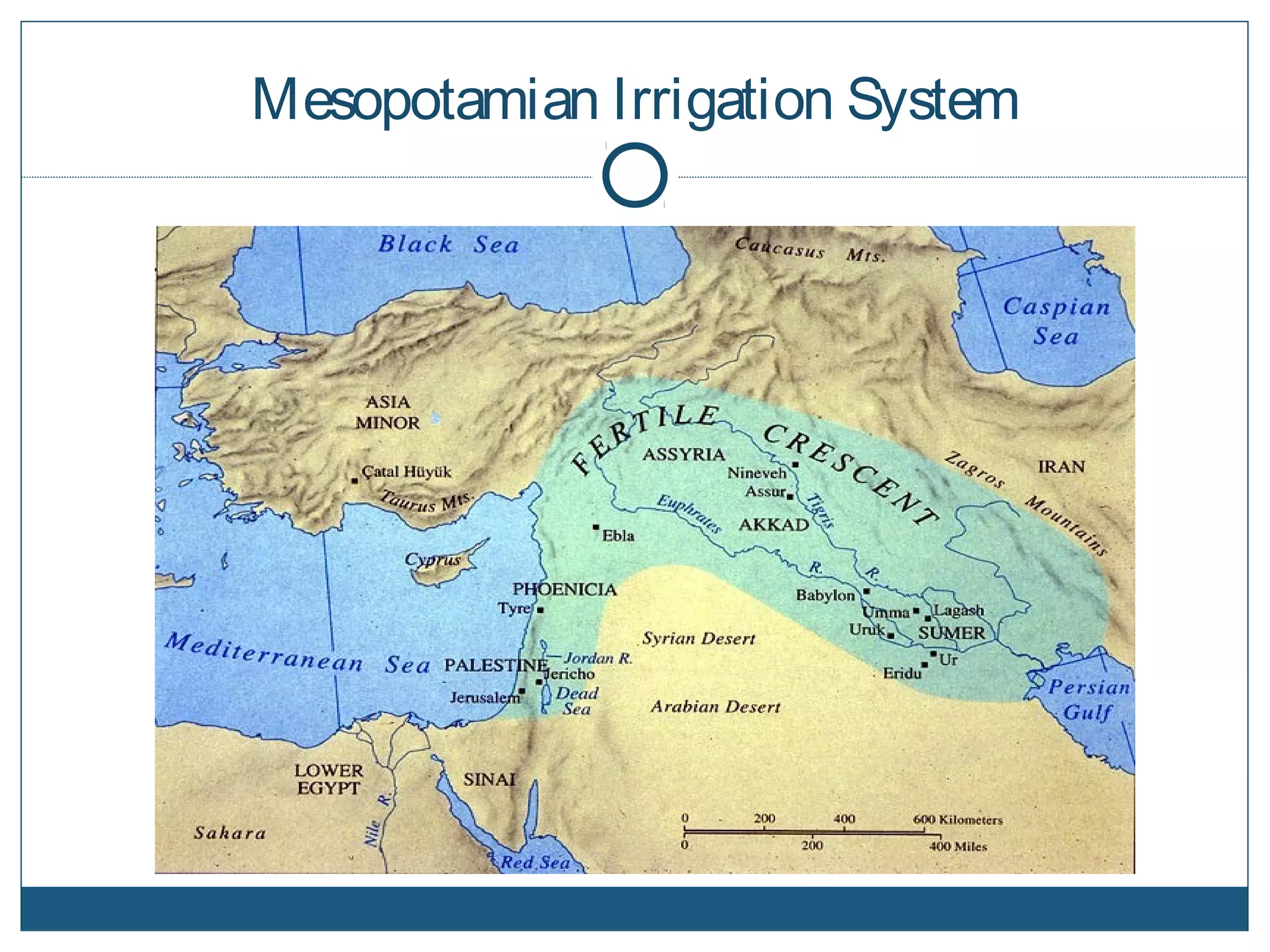
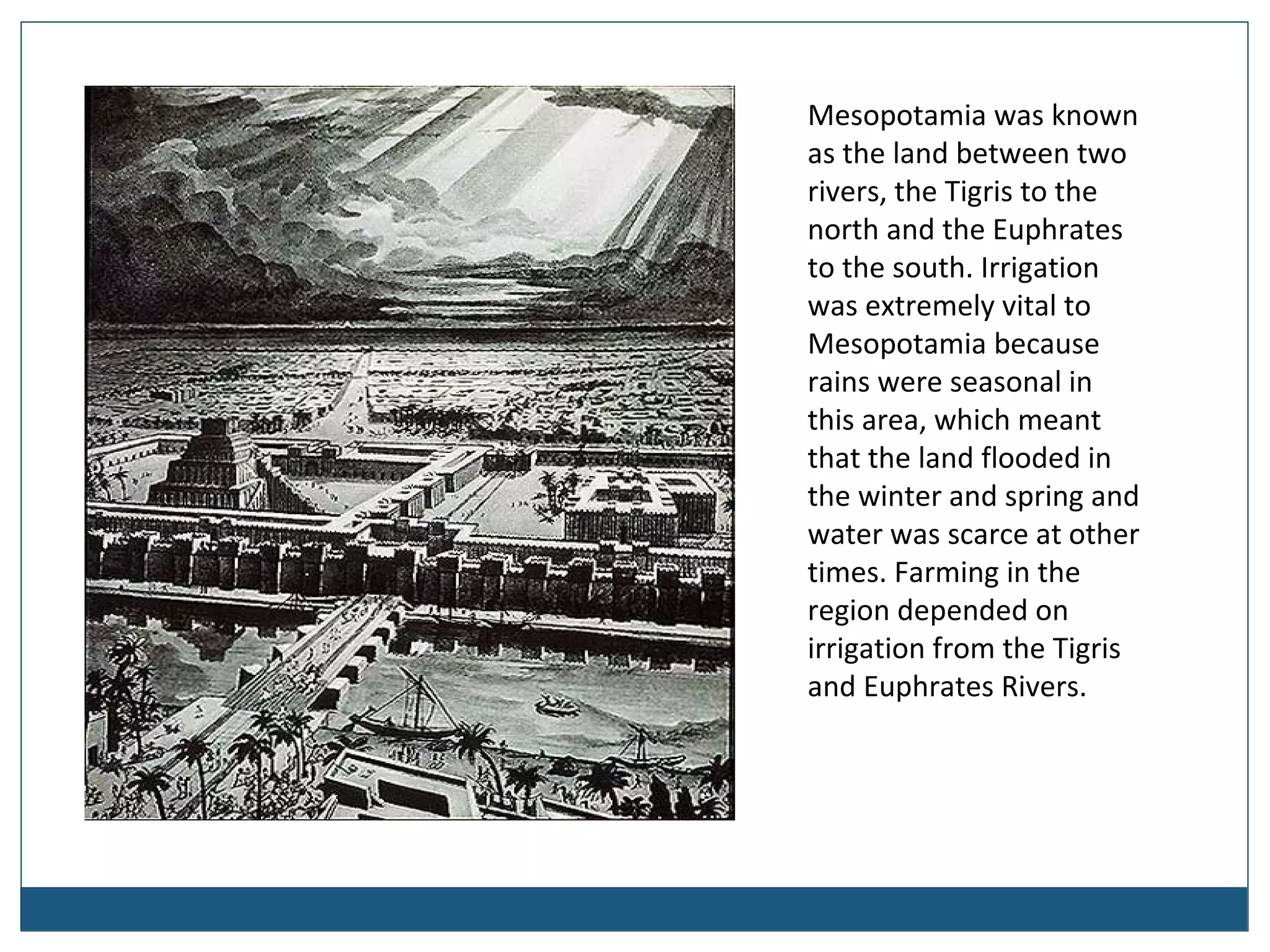
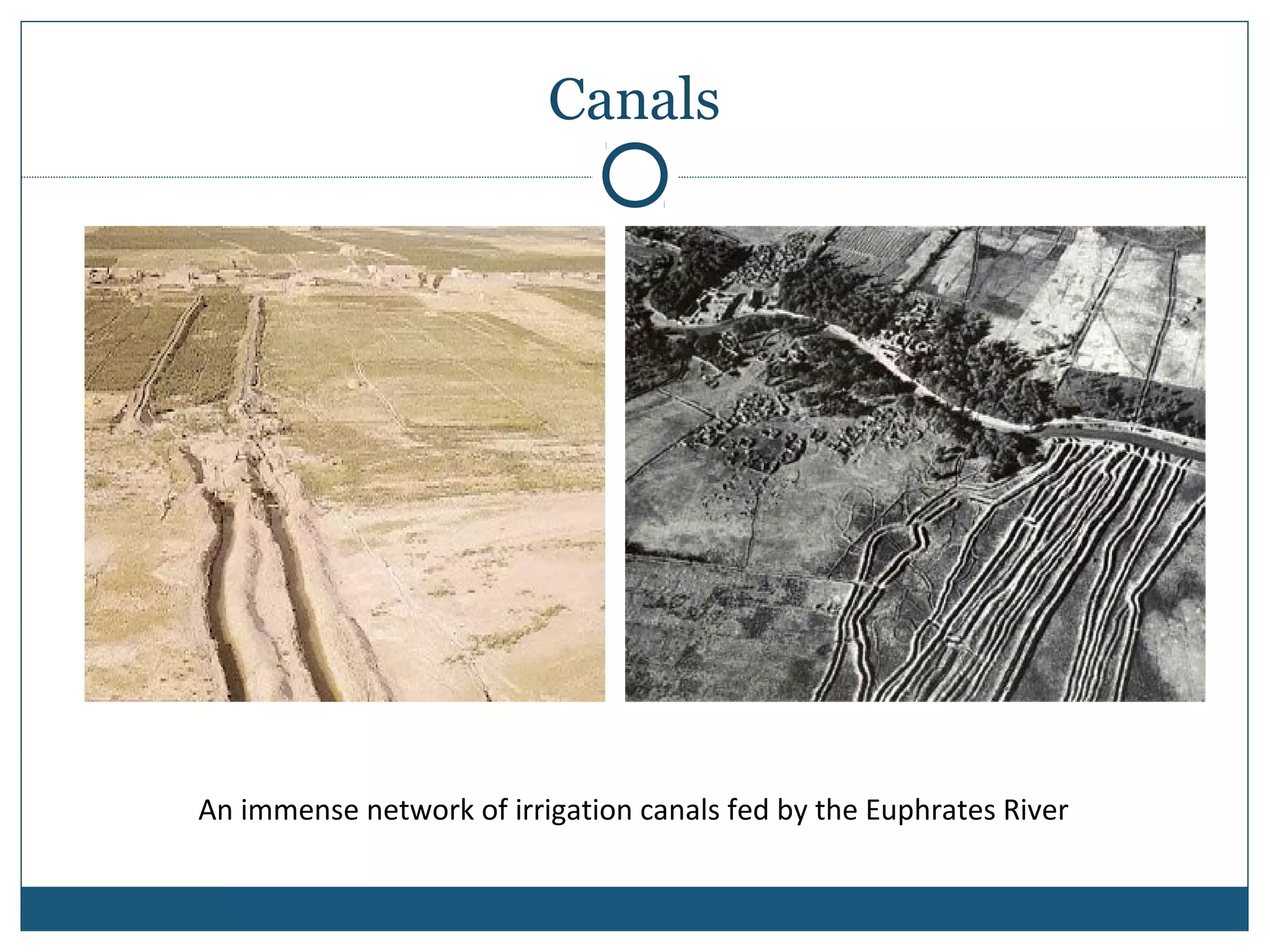
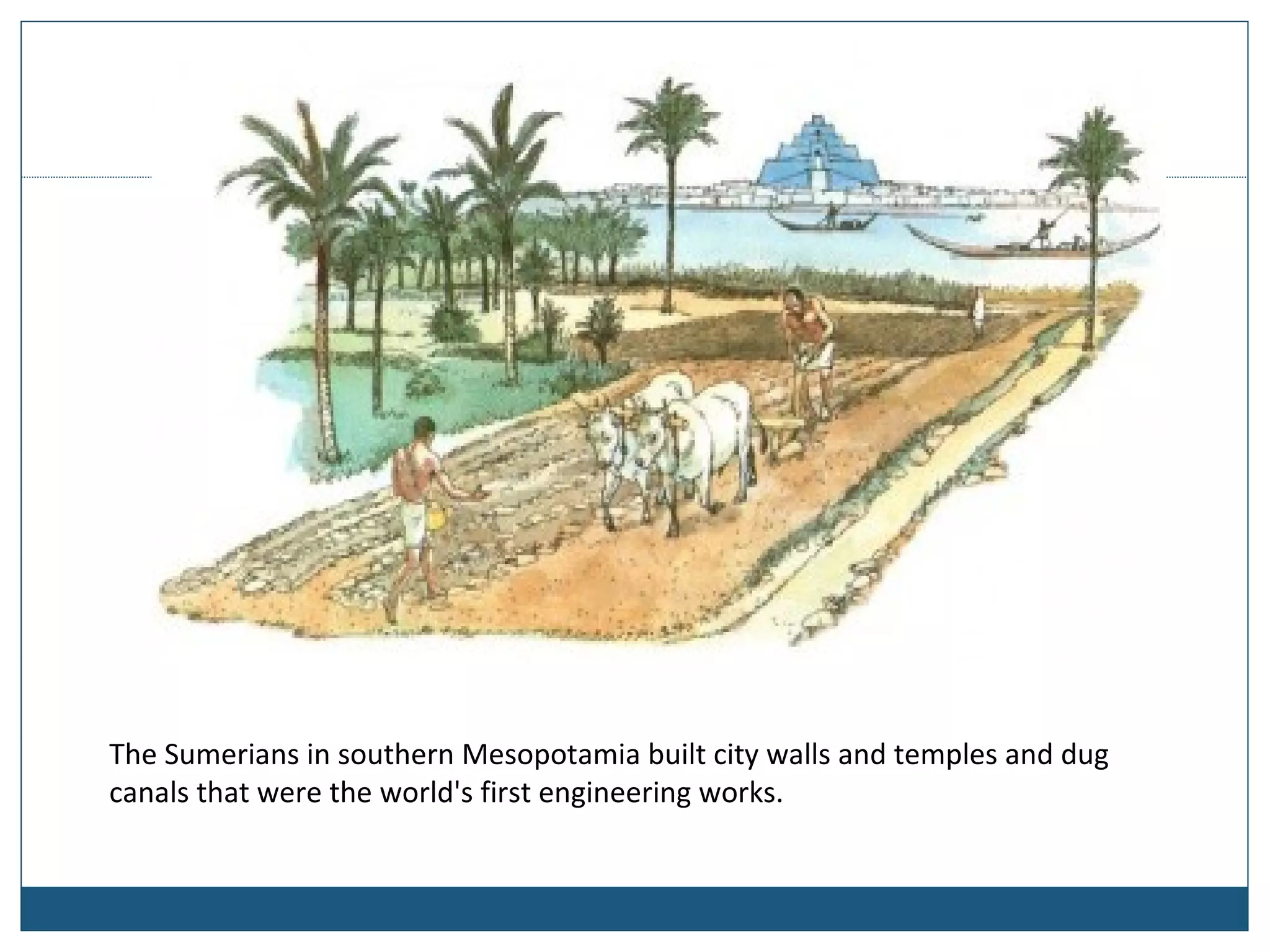
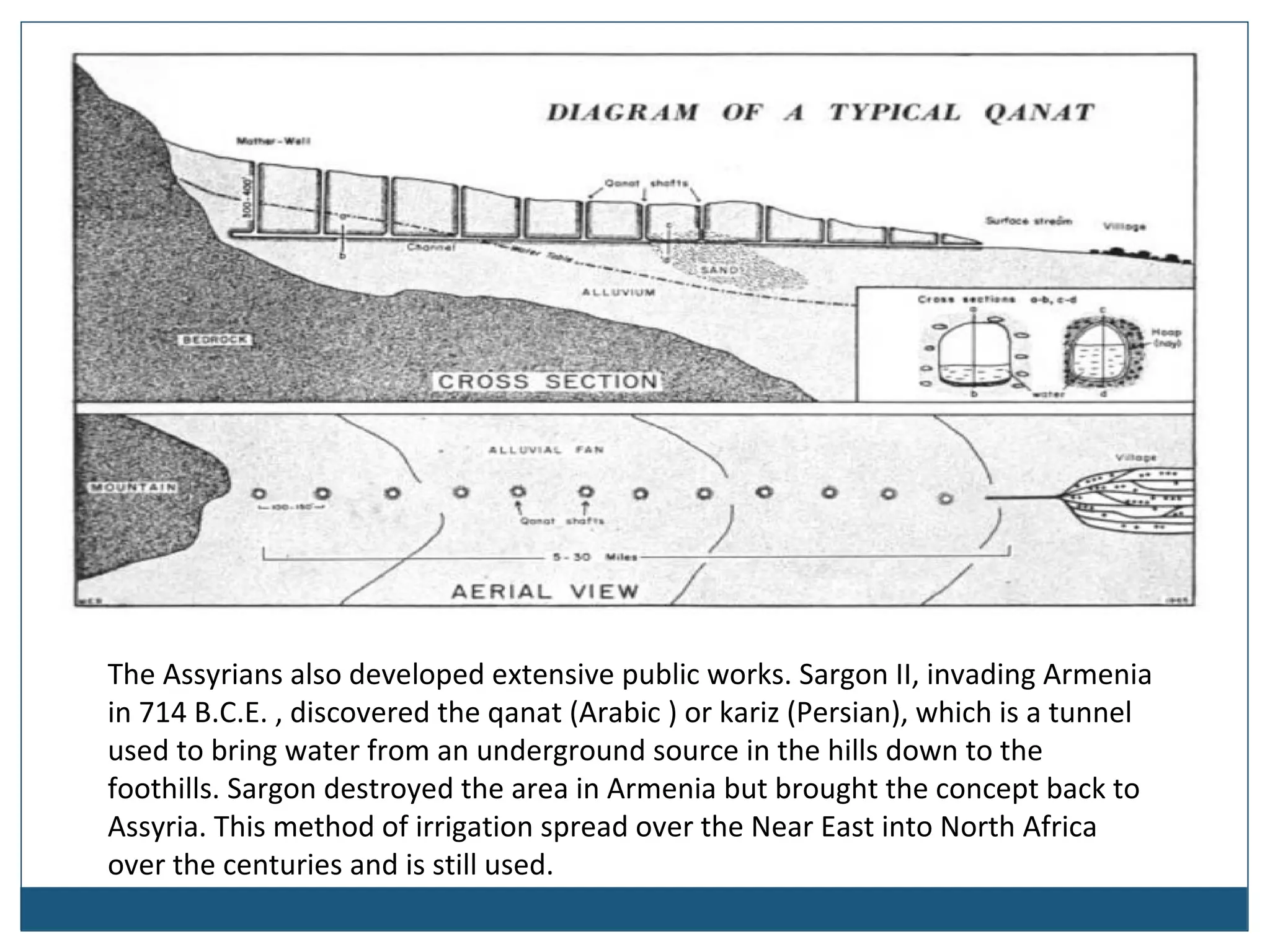


Mesopotamian irrigation was vital for farming in the region. The Sumerians built an immense network of irrigation canals fed by the Euphrates River to water their crops. They also constructed city walls, temples, and other early engineering works. Later, the Assyrians further developed public works projects and adopted a new tunnel irrigation method called qanats from Armenia that brought underground water to foothills. Irrigation was crucial for Mesopotamian agriculture due to seasonal rainfall patterns that otherwise left the land dry part of the year.


