Mission Manzanita – Xylococcus bicolor

(Zy-low-COCK-us BY-color)

Family: Ericaceae (Heath Family)
Native to: Coastal S. CA (Los Angeles to San Diego Co.) & Catalina Isl.; on dry sunny slopes in
coastal chaparral below 2,000' elevation.

large woody shrub
mature height: 6-10 ft.
mature width: 6-10 ft.
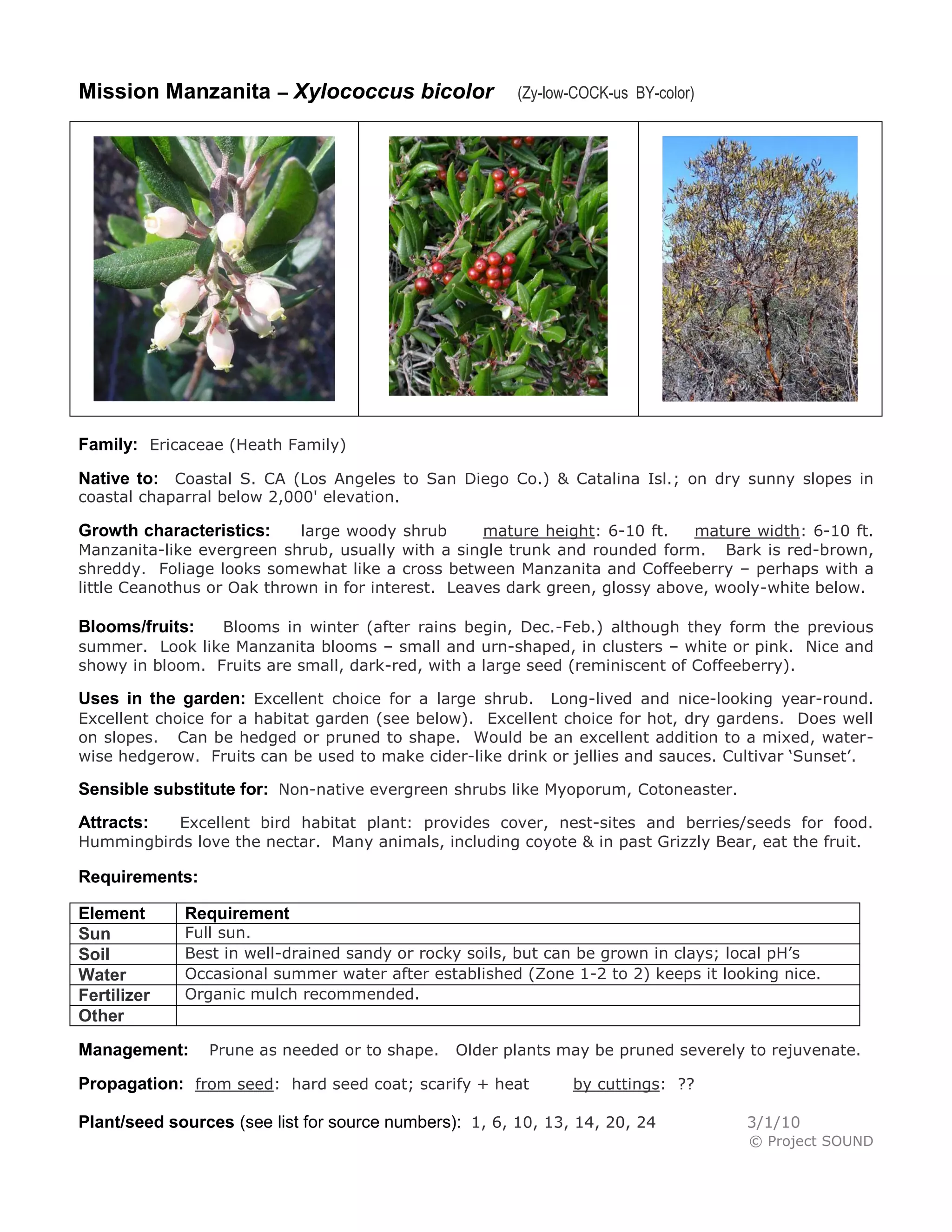
Manzanita-like evergreen shrub, usually with a single trunk and rounded form. Bark is red-brown,
shreddy. Foliage looks somewhat like a cross between Manzanita and Coffeeberry – perhaps with a
little Ceanothus or Oak thrown in for interest. Leaves dark green, glossy above, wooly-white below.

Growth characteristics:

Blooms in winter (after rains begin, Dec.-Feb.) although they form the previous
summer. Look like Manzanita blooms – small and urn-shaped, in clusters – white or pink. Nice and
showy in bloom. Fruits are small, dark-red, with a large seed (reminiscent of Coffeeberry).

Blooms/fruits:

Uses in the garden: Excellent choice for a large shrub. Long-lived and nice-looking year-round.
Excellent choice for a habitat garden (see below). Excellent choice for hot, dry gardens. Does well
on slopes. Can be hedged or pruned to shape. Would be an excellent addition to a mixed, waterwise hedgerow. Fruits can be used to make cider-like drink or jellies and sauces. Cultivar ‘Sunset’.

Sensible substitute for: Non-native evergreen shrubs like Myoporum, Cotoneaster.
Excellent bird habitat plant: provides cover, nest-sites and berries/seeds for food.
Hummingbirds love the nectar. Many animals, including coyote & in past Grizzly Bear, eat the fruit.

Attracts:

Requirements:
Element
Sun
Soil
Water
Fertilizer
Other

Requirement

Full sun.
Best in well-drained sandy or rocky soils, but can be grown in clays; local pH’s
Occasional summer water after established (Zone 1-2 to 2) keeps it looking nice.
Organic mulch recommended.

Management:

Prune as needed or to shape.

Older plants may be pruned severely to rejuvenate.

Propagation: from seed: hard seed coat; scarify + heat

by cuttings: ??

Plant/seed sources (see list for source numbers): 1, 6, 10, 13, 14, 20, 24

3/1/10
© Project SOUND

Xylococcus bicolor

  • 1.
    Mission Manzanita –Xylococcus bicolor (Zy-low-COCK-us BY-color) Family: Ericaceae (Heath Family) Native to: Coastal S. CA (Los Angeles to San Diego Co.) & Catalina Isl.; on dry sunny slopes in coastal chaparral below 2,000' elevation. large woody shrub mature height: 6-10 ft. mature width: 6-10 ft. Manzanita-like evergreen shrub, usually with a single trunk and rounded form. Bark is red-brown, shreddy. Foliage looks somewhat like a cross between Manzanita and Coffeeberry – perhaps with a little Ceanothus or Oak thrown in for interest. Leaves dark green, glossy above, wooly-white below. Growth characteristics: Blooms in winter (after rains begin, Dec.-Feb.) although they form the previous summer. Look like Manzanita blooms – small and urn-shaped, in clusters – white or pink. Nice and showy in bloom. Fruits are small, dark-red, with a large seed (reminiscent of Coffeeberry). Blooms/fruits: Uses in the garden: Excellent choice for a large shrub. Long-lived and nice-looking year-round. Excellent choice for a habitat garden (see below). Excellent choice for hot, dry gardens. Does well on slopes. Can be hedged or pruned to shape. Would be an excellent addition to a mixed, waterwise hedgerow. Fruits can be used to make cider-like drink or jellies and sauces. Cultivar ‘Sunset’. Sensible substitute for: Non-native evergreen shrubs like Myoporum, Cotoneaster. Excellent bird habitat plant: provides cover, nest-sites and berries/seeds for food. Hummingbirds love the nectar. Many animals, including coyote & in past Grizzly Bear, eat the fruit. Attracts: Requirements: Element Sun Soil Water Fertilizer Other Requirement Full sun. Best in well-drained sandy or rocky soils, but can be grown in clays; local pH’s Occasional summer water after established (Zone 1-2 to 2) keeps it looking nice. Organic mulch recommended. Management: Prune as needed or to shape. Older plants may be pruned severely to rejuvenate. Propagation: from seed: hard seed coat; scarify + heat by cuttings: ?? Plant/seed sources (see list for source numbers): 1, 6, 10, 13, 14, 20, 24 3/1/10 © Project SOUND