Krishantha Jayasundara
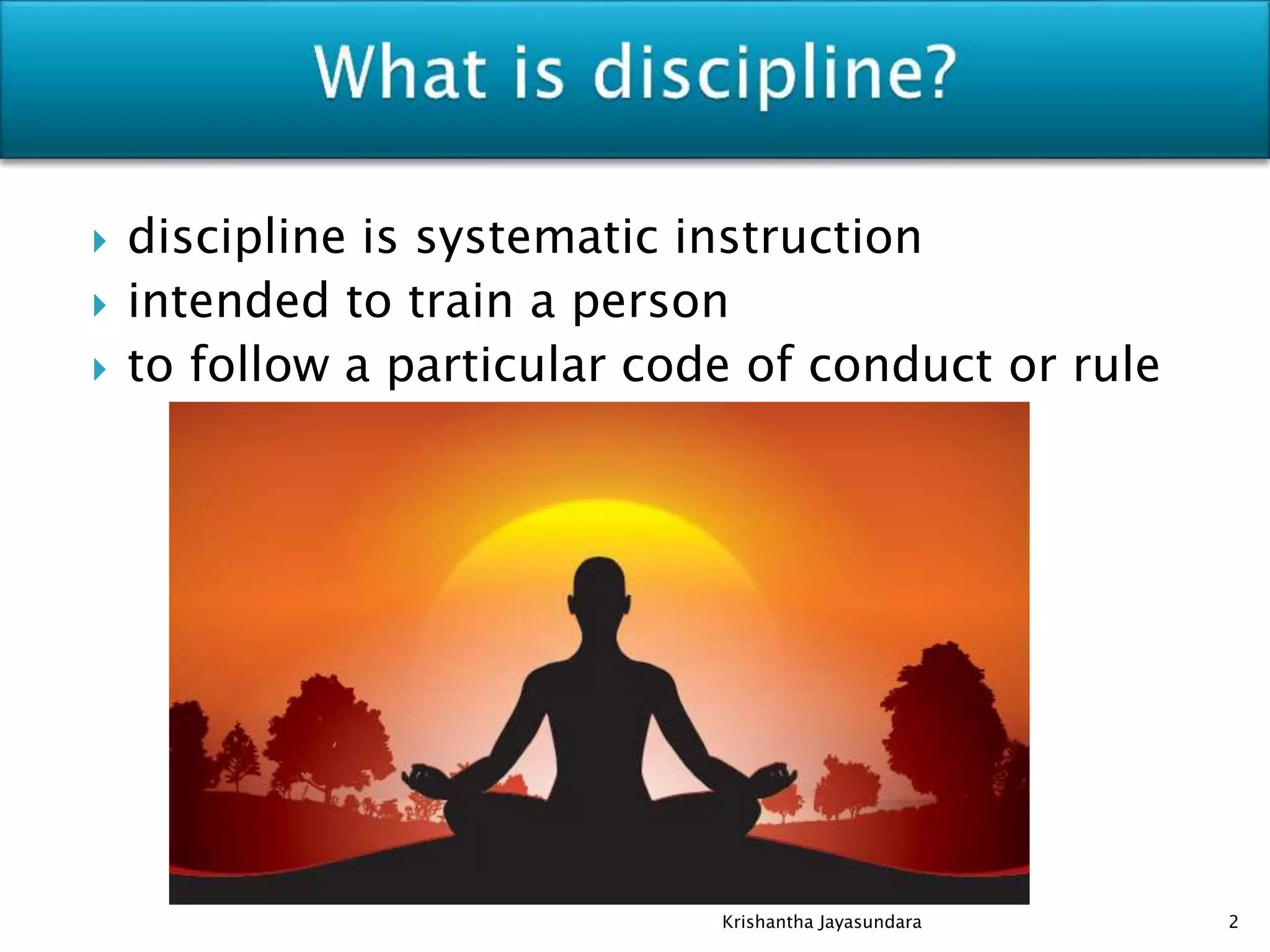
 discipline is systematic instruction
 intended to train a person
 to follow a particular code of conduct or rule
2Krishantha Jayasundara
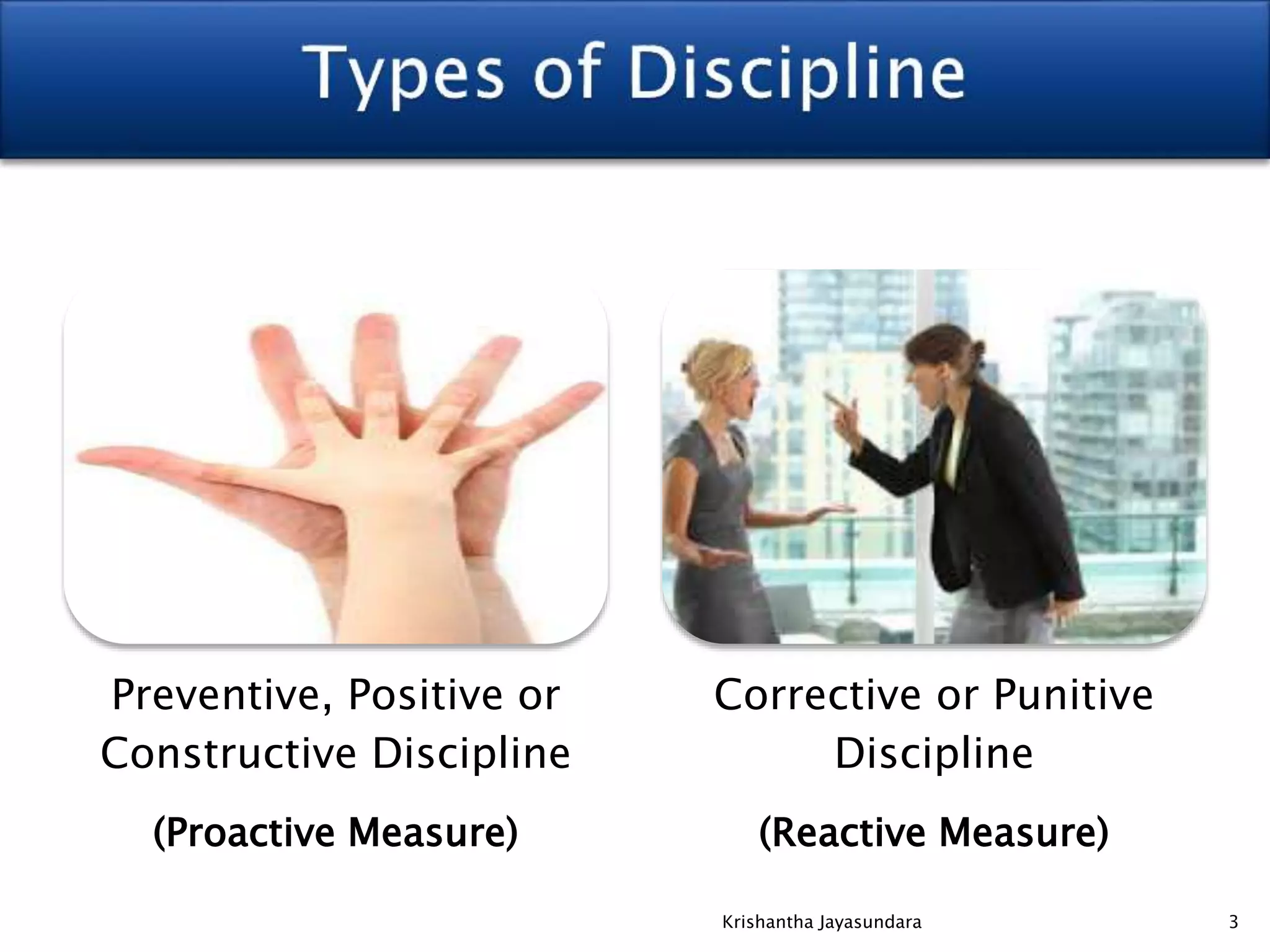
Preventive, Positive or
Constructive Discipline
(Proactive Measure)
Corrective or Punitive
Discipline
(Reactive Measure)
3Krishantha Jayasundara
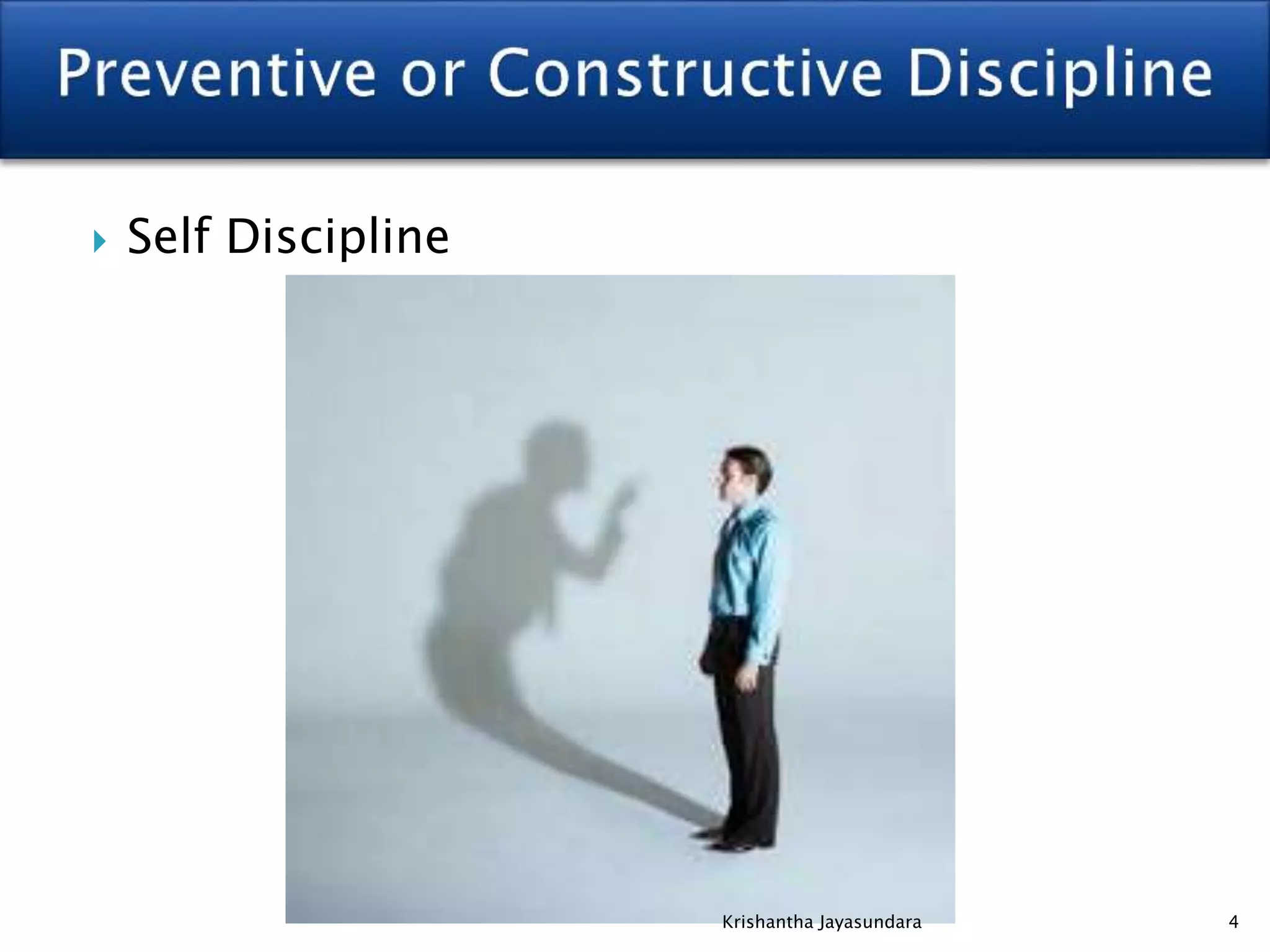
 Self Discipline
4Krishantha Jayasundara
Hot Stove Theory
5Krishantha Jayasundara
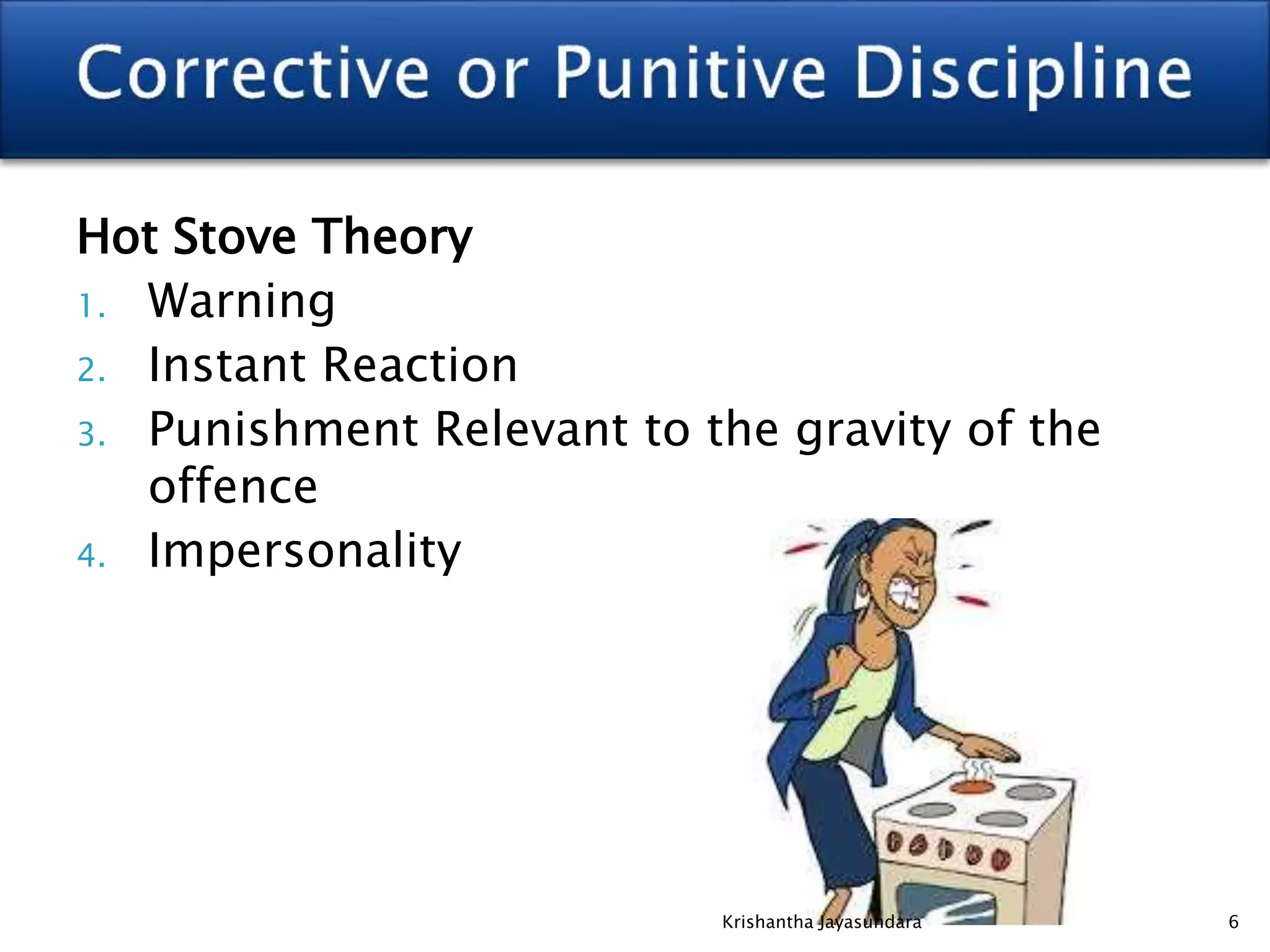
Hot Stove Theory
1. Warning
2. Instant Reaction
3. Punishment Relevant to the gravity of the
offence
4. Impersonality
6Krishantha Jayasundara
7Krishantha Jayasundara
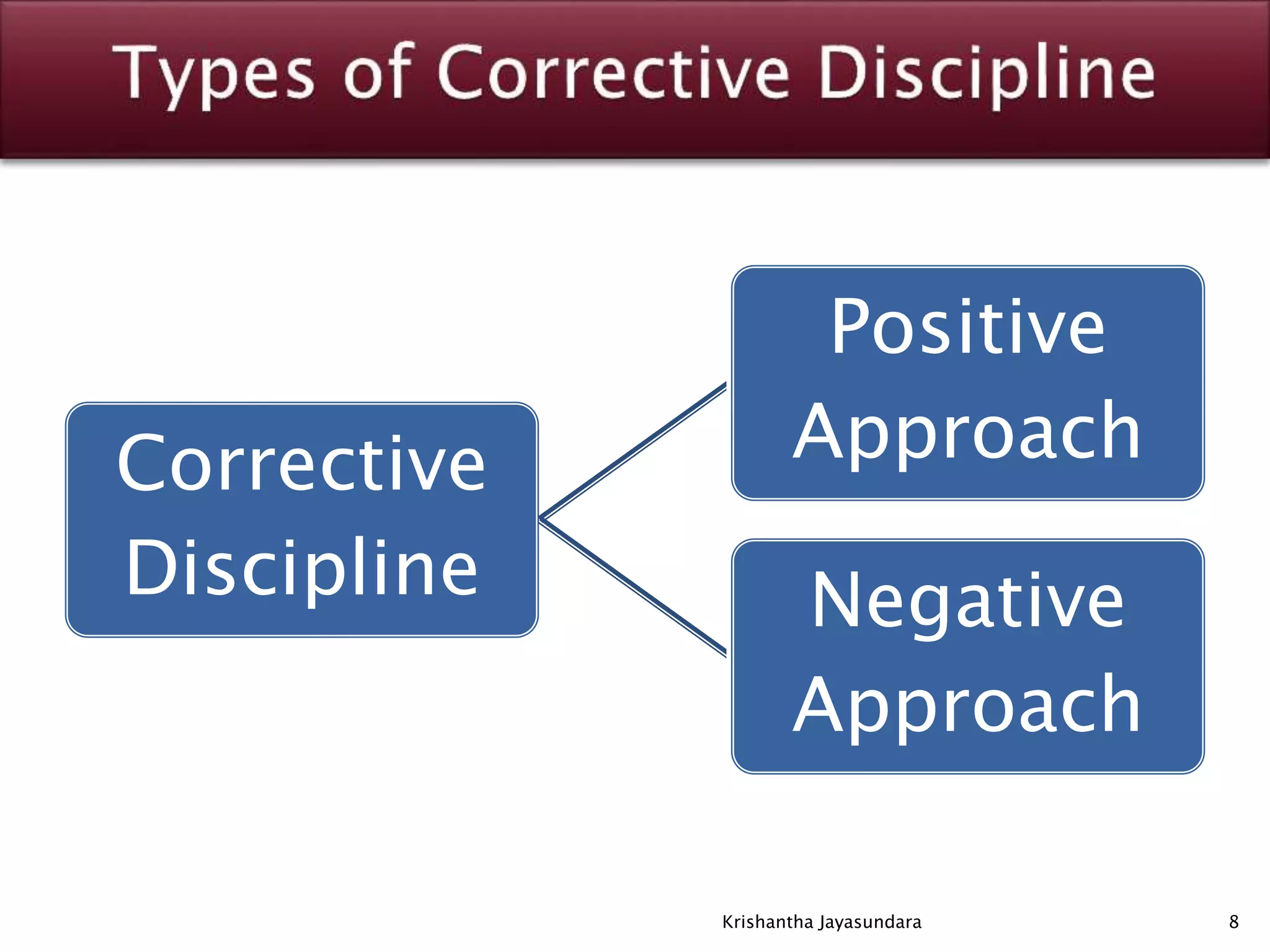
Corrective
Discipline
Positive
Approach
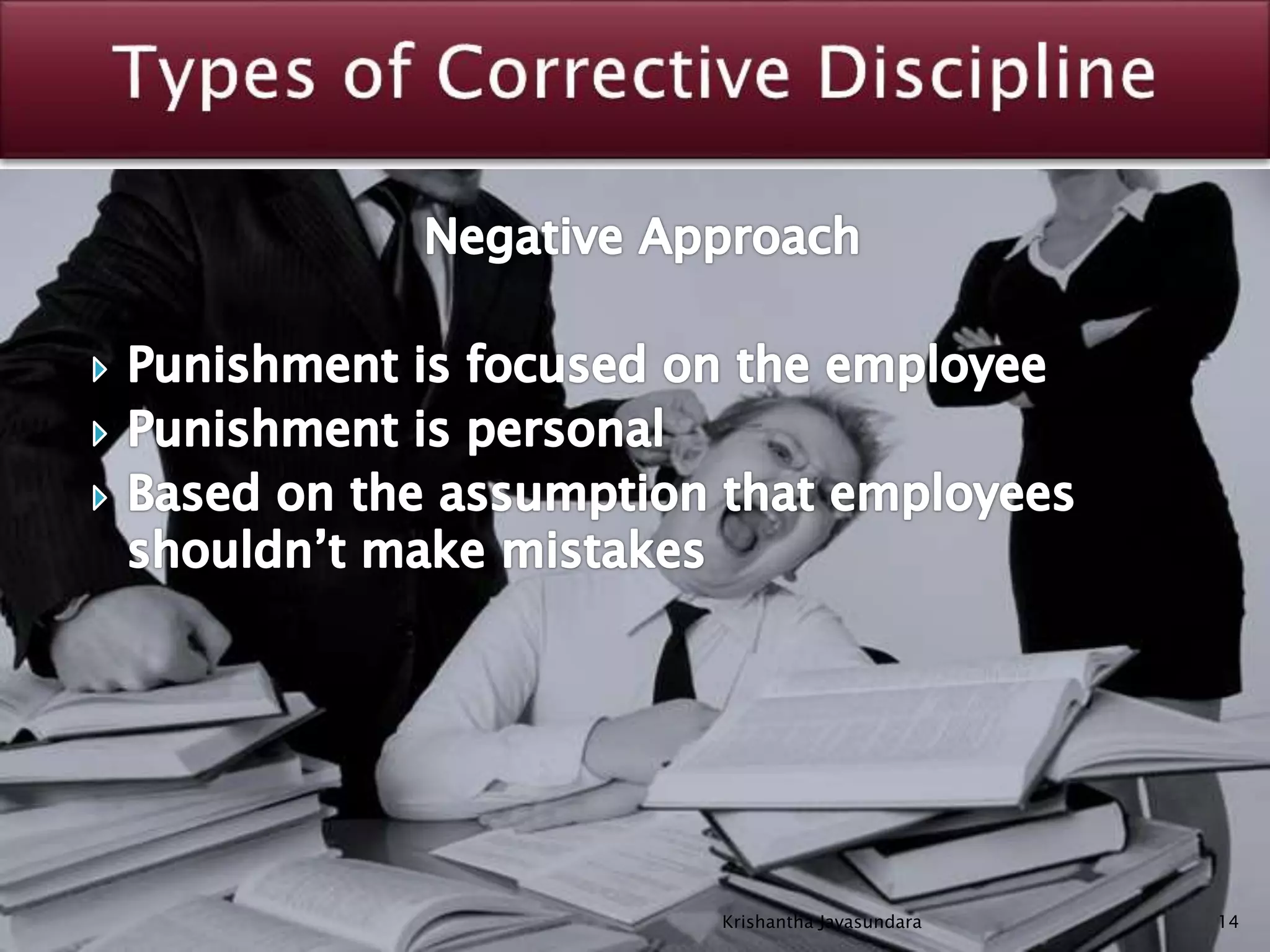
Negative
Approach
8Krishantha Jayasundara
Positive Approach
1. Sandwich Model
2. Progressive Discipline-Reformation
Approach
9Krishantha Jayasundara
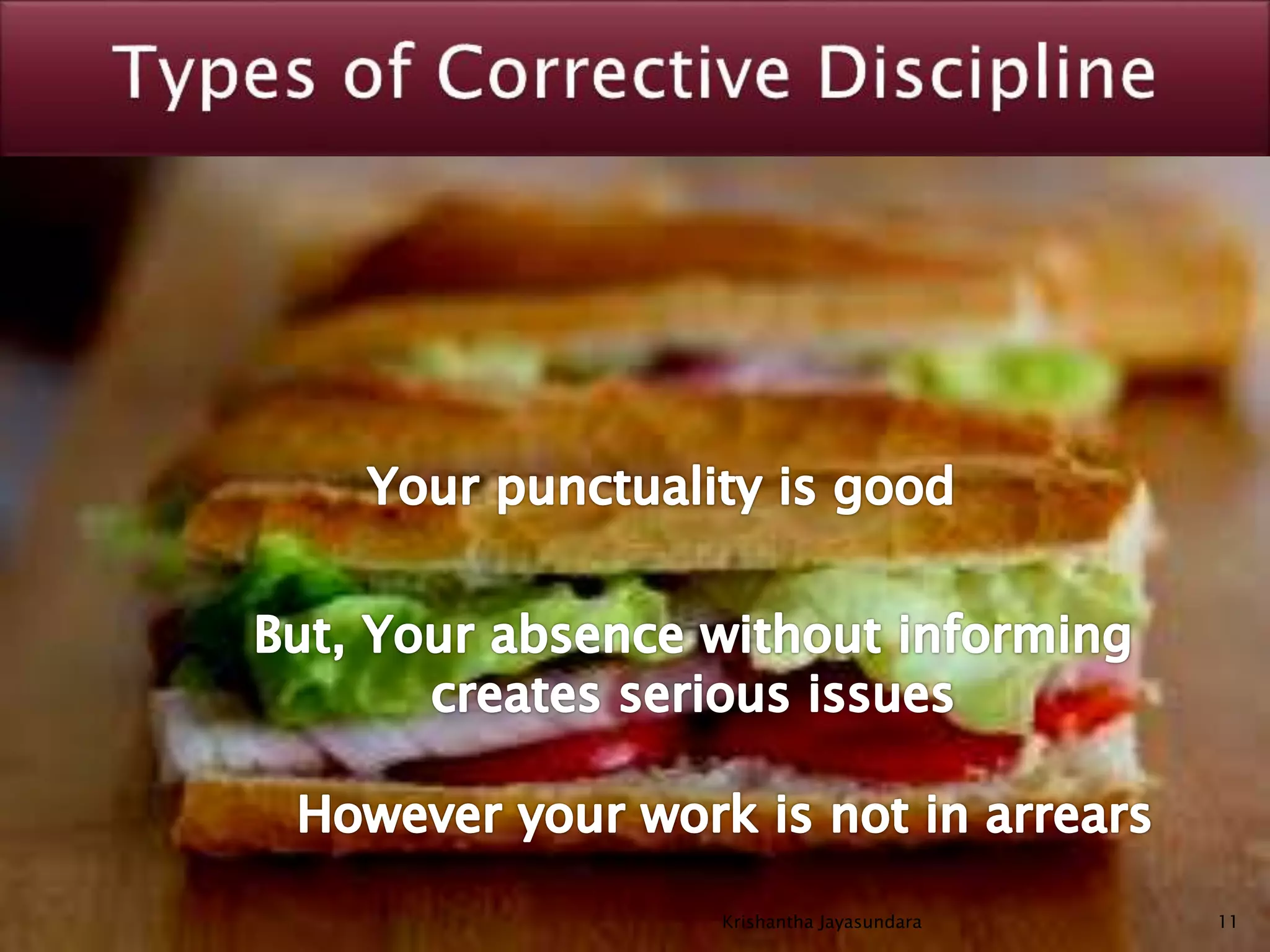
Positive Approach
Sandwich Model
 An undesirable behaviour is explained/
criticized to the employee in between two
good behavioral manners
10Krishantha Jayasundara
11Krishantha Jayasundara
Positive Approach
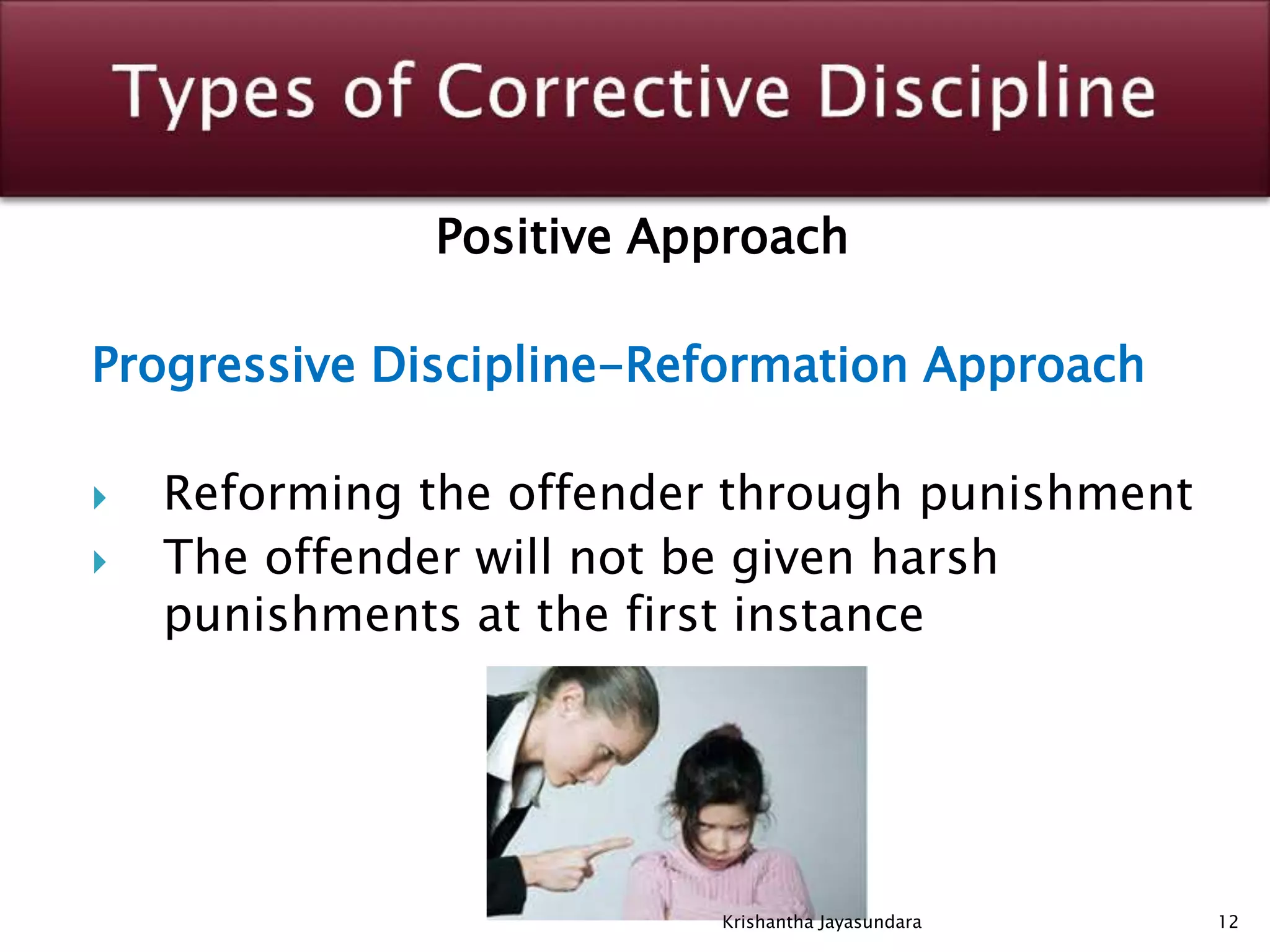
Progressive Discipline-Reformation Approach
 Reforming the offender through punishment
 The offender will not be given harsh
punishments at the first instance
12Krishantha Jayasundara
Positive Approach
Progressive Discipline-Reformation Approach
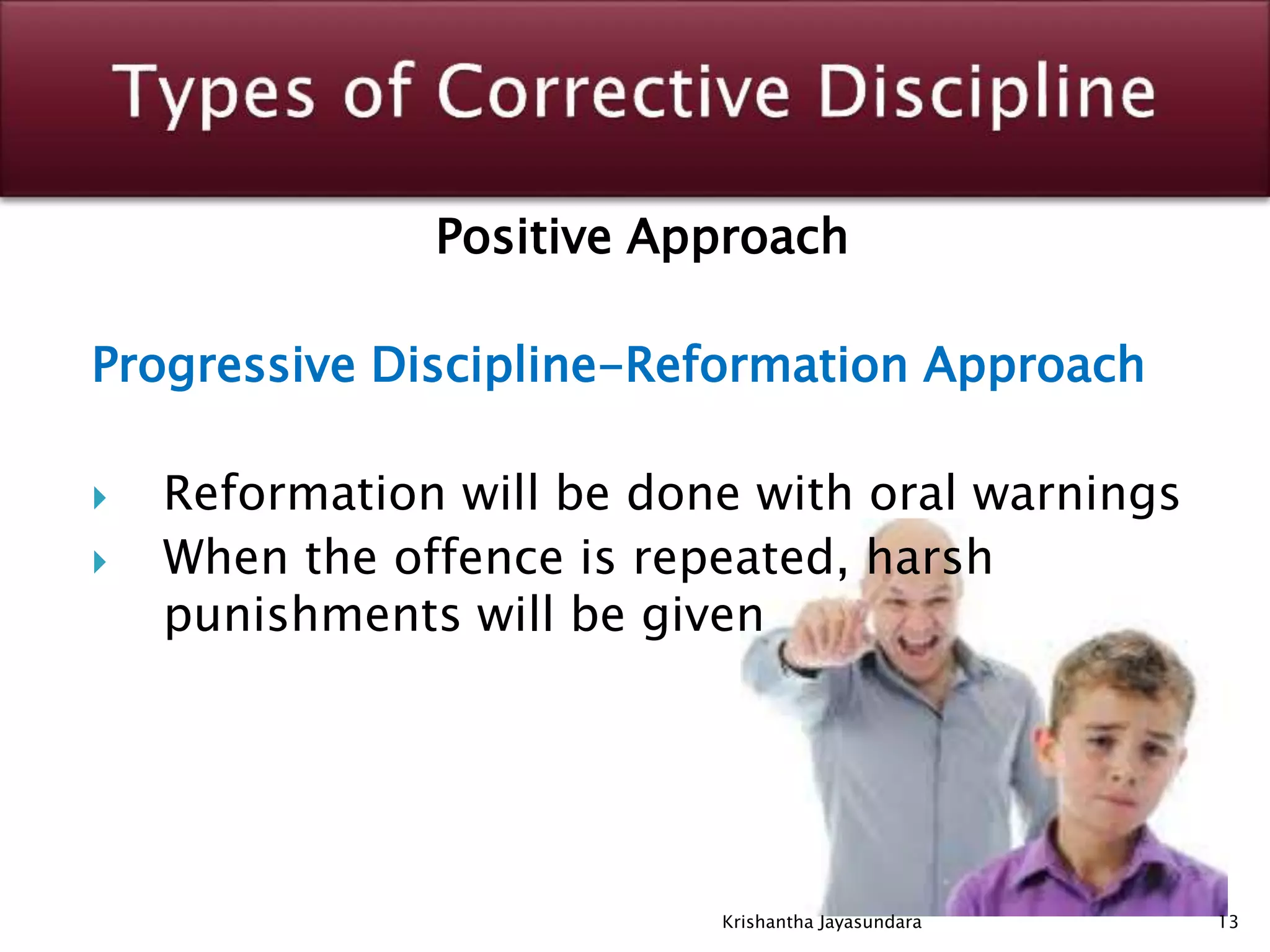
 Reformation will be done with oral warnings
 When the offence is repeated, harsh
punishments will be given
13Krishantha Jayasundara
14Krishantha Jayasundara
 Principles of Natural Justice (Listening to the
other side of the story)
15Krishantha Jayasundara
 Fairness to all parties
16Krishantha Jayasundara
 Parity-punishment should be equal to the
offence
17Krishantha Jayasundara
 Bona-fide – disciplinary actions should be
taken in good faith
18Krishantha Jayasundara
 Mala-fide (disciplinary actions shouldn’t be
initiated with ulterior motives)
19Krishantha Jayasundara
 Requirement to avoid delays
20Krishantha Jayasundara
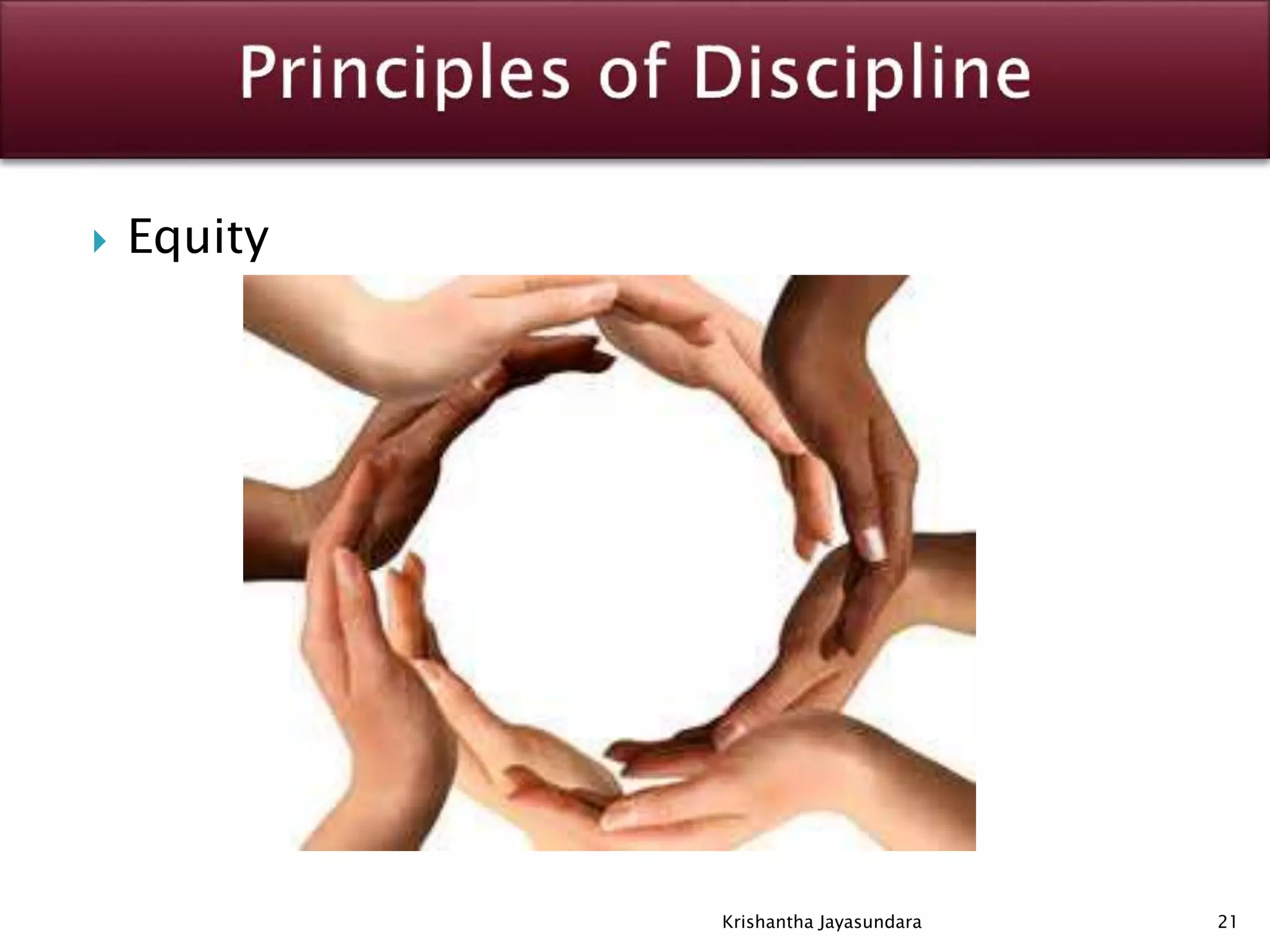
 Equity
21Krishantha Jayasundara
 To correct the behaviour of employees.
22Krishantha Jayasundara
 To maintain peace and order in the
organization.
23Krishantha Jayasundara
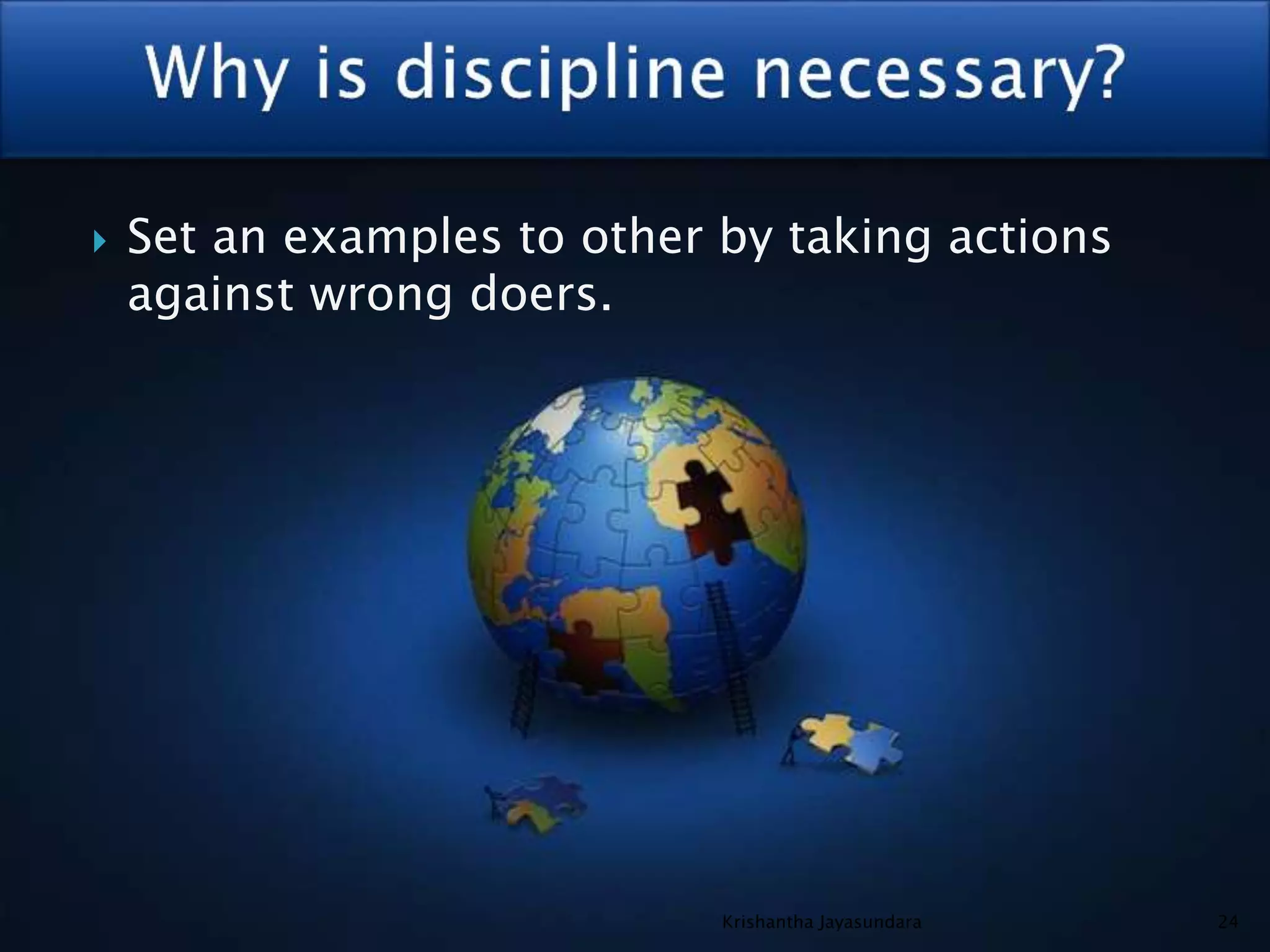
 Set an examples to other by taking actions
against wrong doers.
24Krishantha Jayasundara
 For smooth functioning of the
organization
25Krishantha Jayasundara
 For productivity, effectiveness, efficiency,
existence, growth, and success of the
organization.
26Krishantha Jayasundara
 Violation of the expected behaviour of the
employee.
27Krishantha Jayasundara
 Going against the accepted norms and
behavioural rules.
28Krishantha Jayasundara
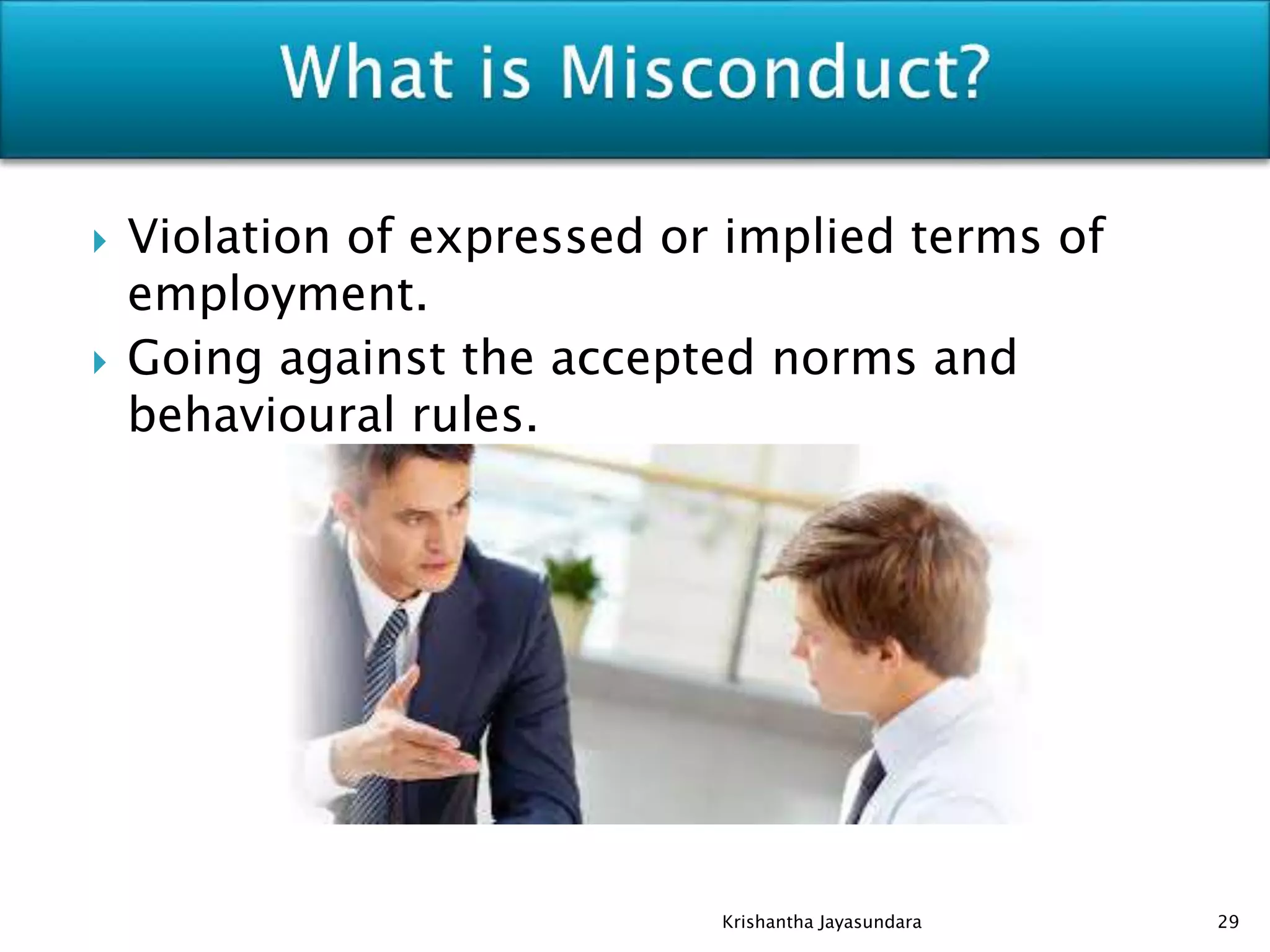
 Violation of expressed or implied terms of
employment.
 Going against the accepted norms and
behavioural rules.
29Krishantha Jayasundara
 Terms clearly stated in the letter of
appointment
 Rules and regulations
 Duties and responsibilities
30Krishantha Jayasundara
 Terms that are not clearly stated
 The employees are supposed to know these
terms.
31Krishantha Jayasundara
 Faithfulness and honesty
32Krishantha Jayasundara
 Good performance at work
33Krishantha Jayasundara
 Obedience
34Krishantha Jayasundara
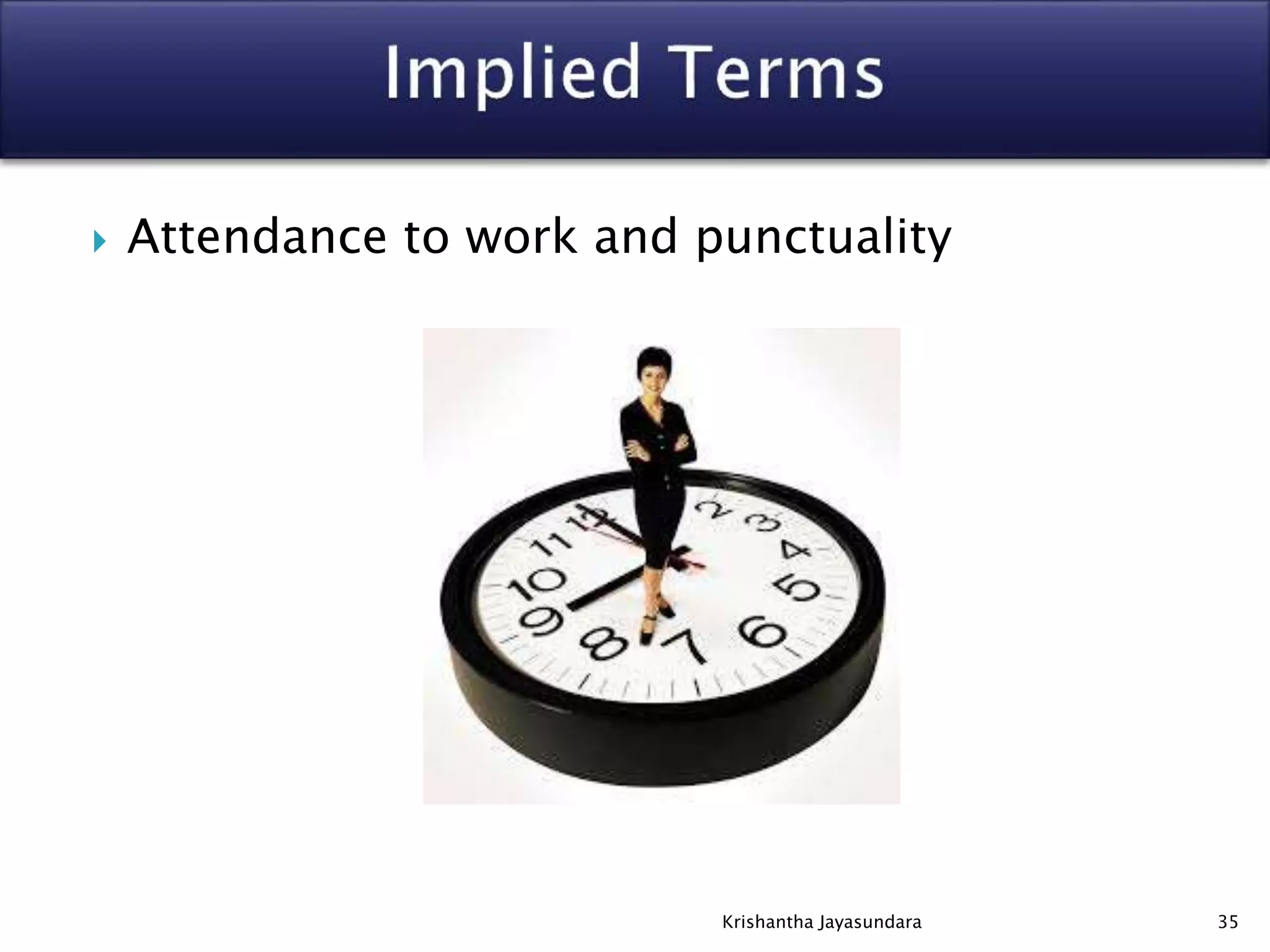
 Attendance to work and punctuality
35Krishantha Jayasundara
 Respecting the employer
36Krishantha Jayasundara
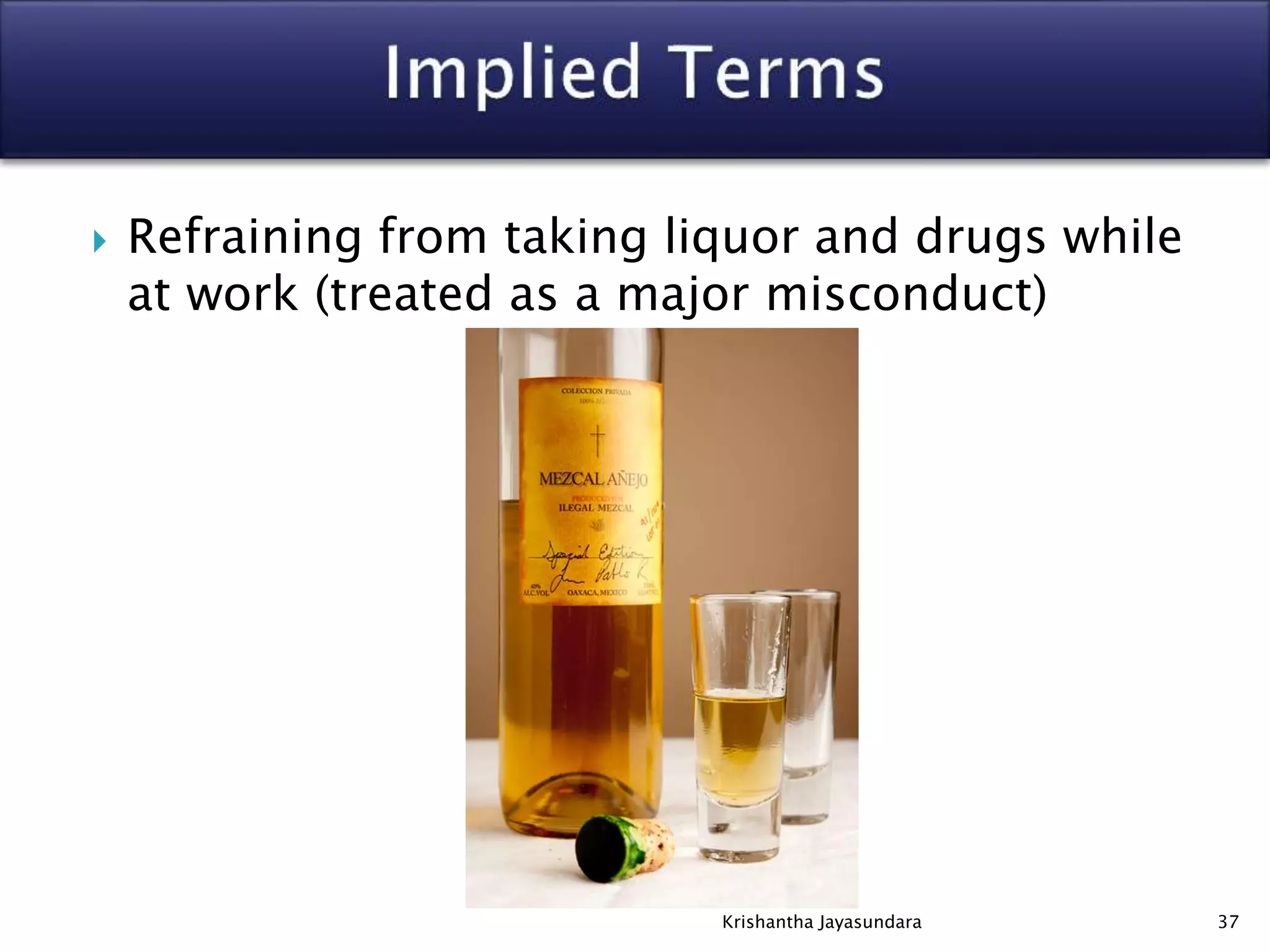
 Refraining from taking liquor and drugs while
at work (treated as a major misconduct)
37Krishantha Jayasundara
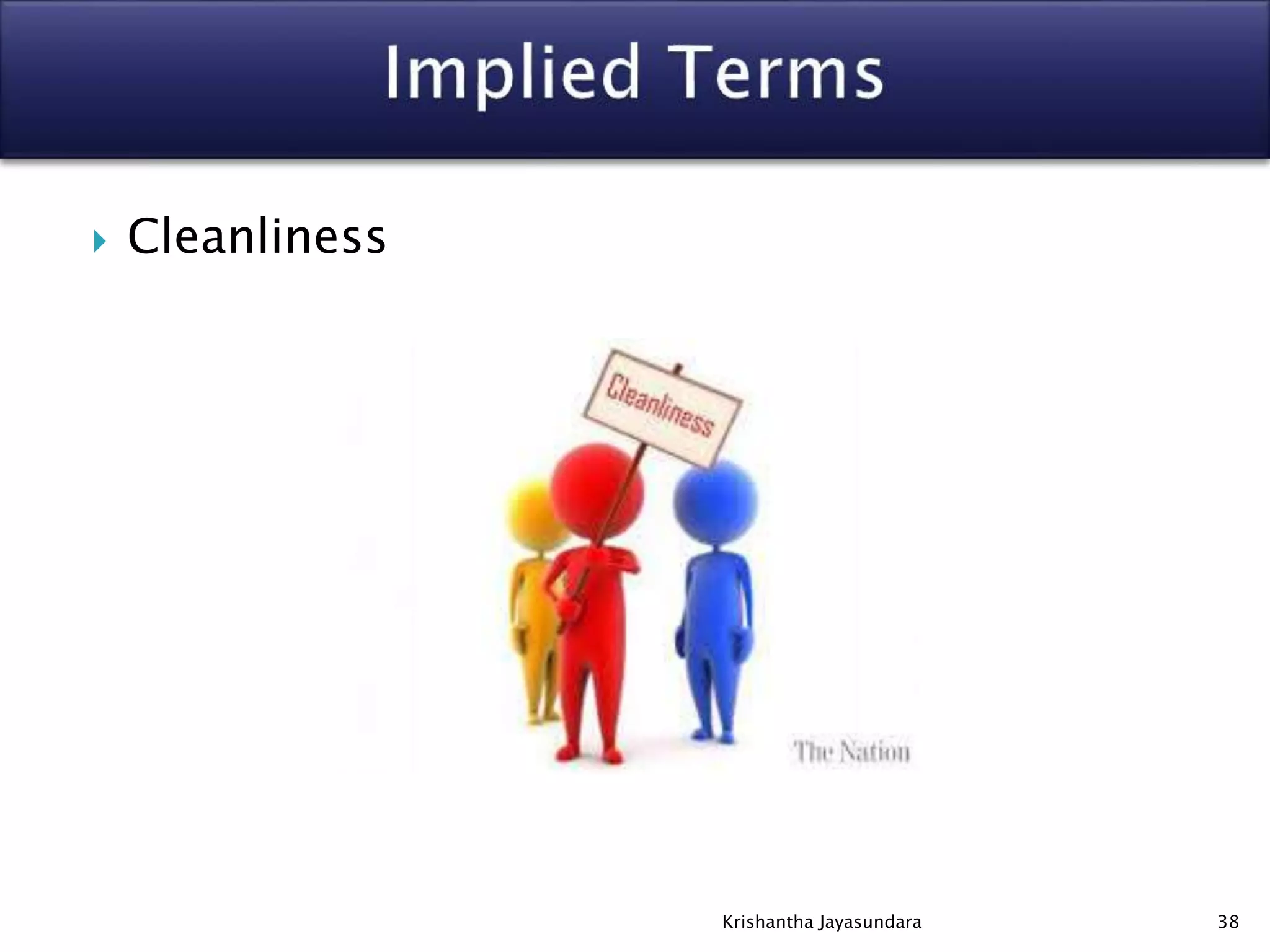
 Cleanliness
38Krishantha Jayasundara
 Transferability
39Krishantha Jayasundara
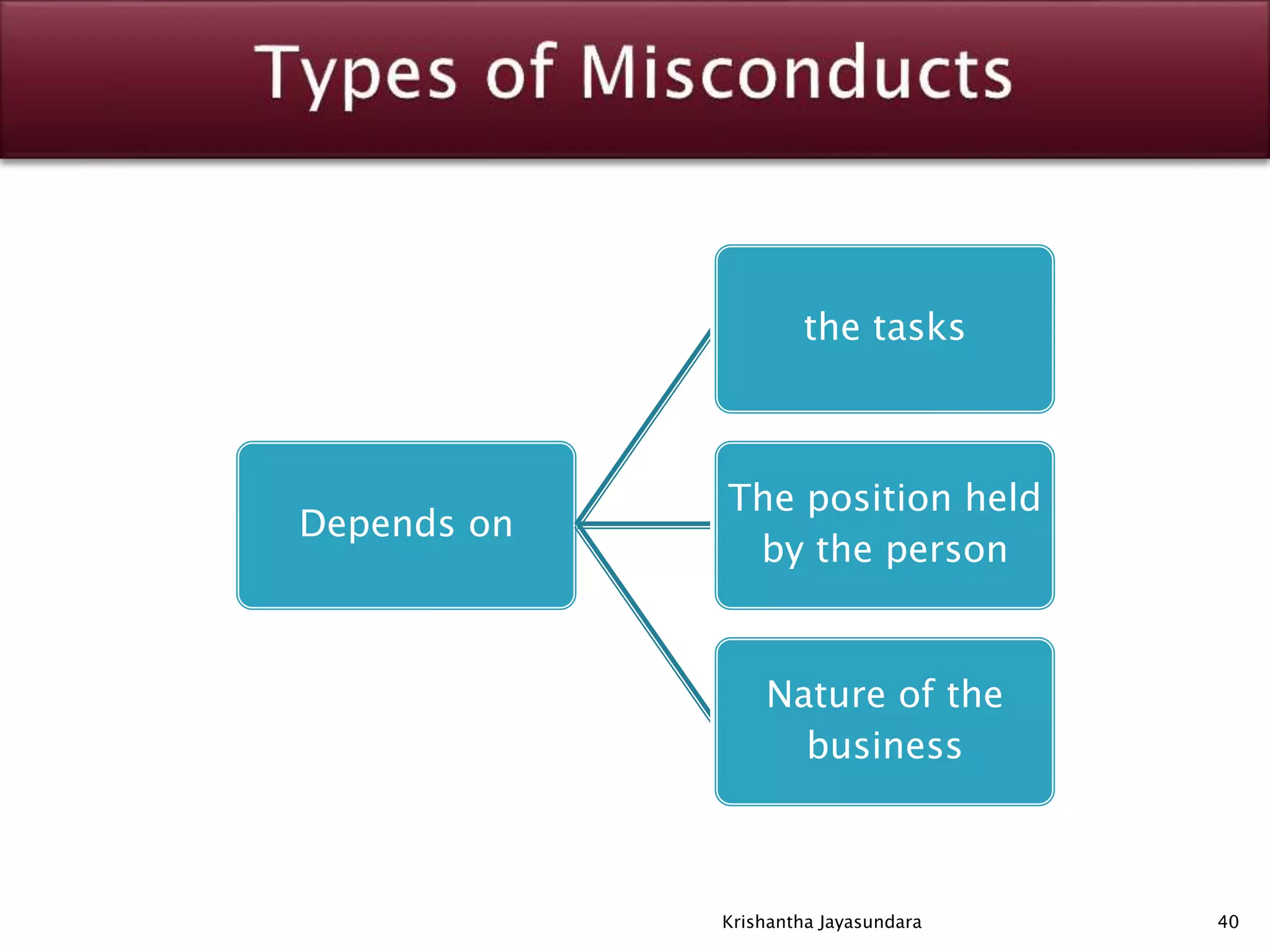
Depends on
the tasks
The position held
by the person
Nature of the
business
40Krishantha Jayasundara
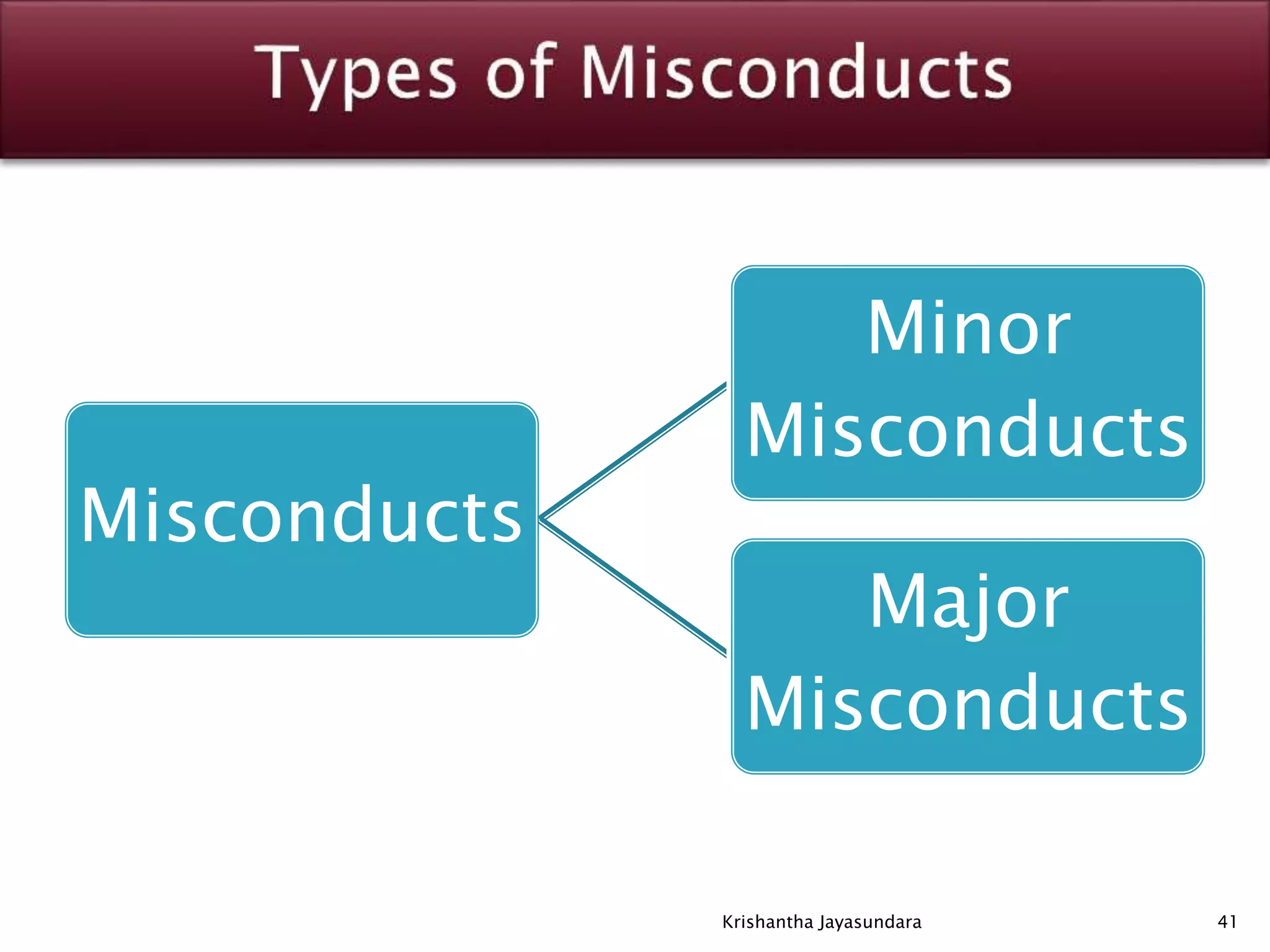
Misconducts
Minor
Misconducts
Major
Misconducts
41Krishantha Jayasundara
 Acts of indiscipline which are not serious in
nature
 Result in simple disciplinary actions
42Krishantha Jayasundara
 Absence without prior permission
43Krishantha Jayasundara
 Being found straying from workplace without
a reason
44Krishantha Jayasundara
 Breaching any rule of instruction to be
followed for the establishment of order and
cleanliness
45Krishantha Jayasundara
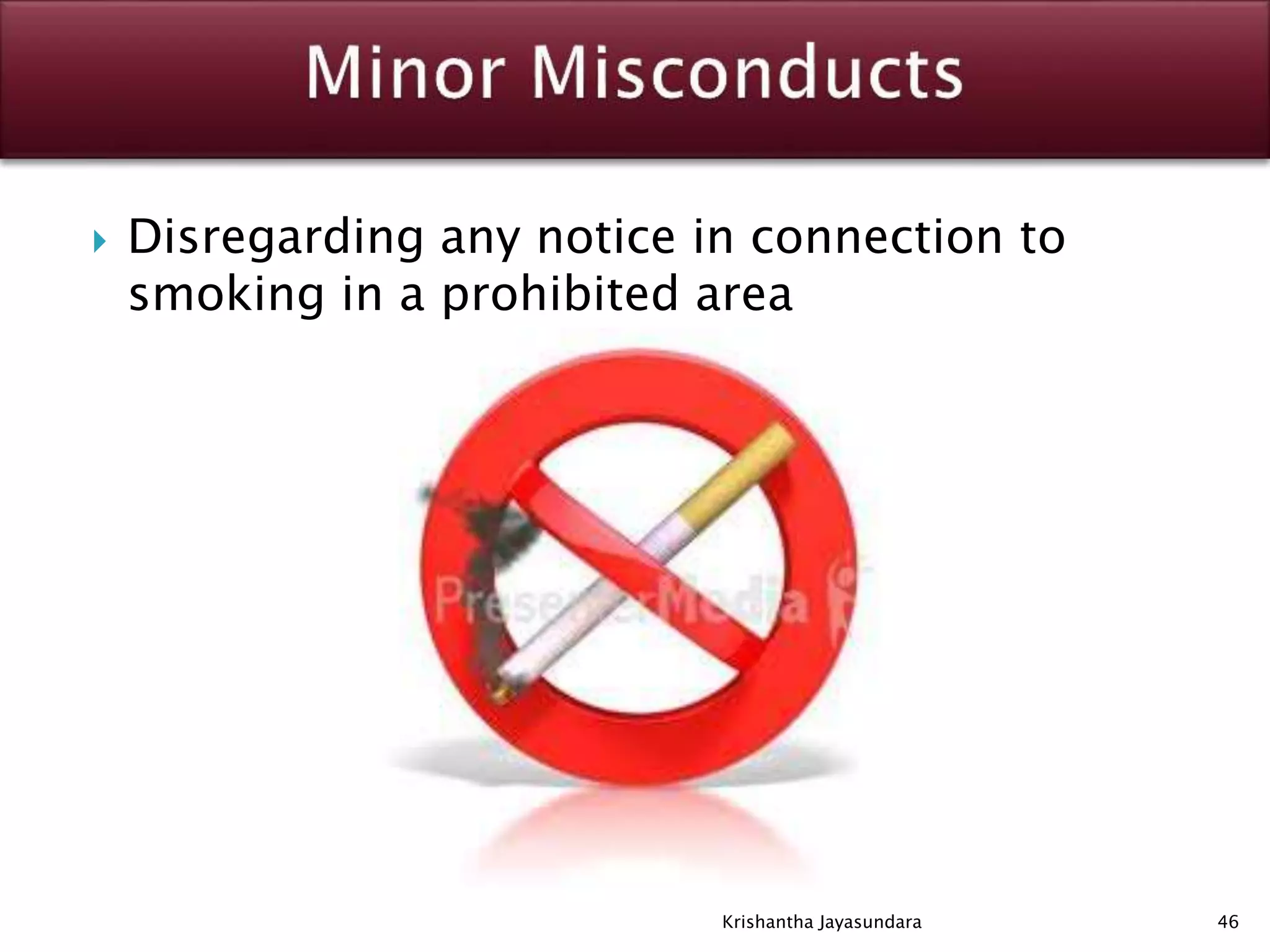
 Disregarding any notice in connection to
smoking in a prohibited area
46Krishantha Jayasundara
 Exceeding the stipulated time for meal
intervals
47Krishantha Jayasundara
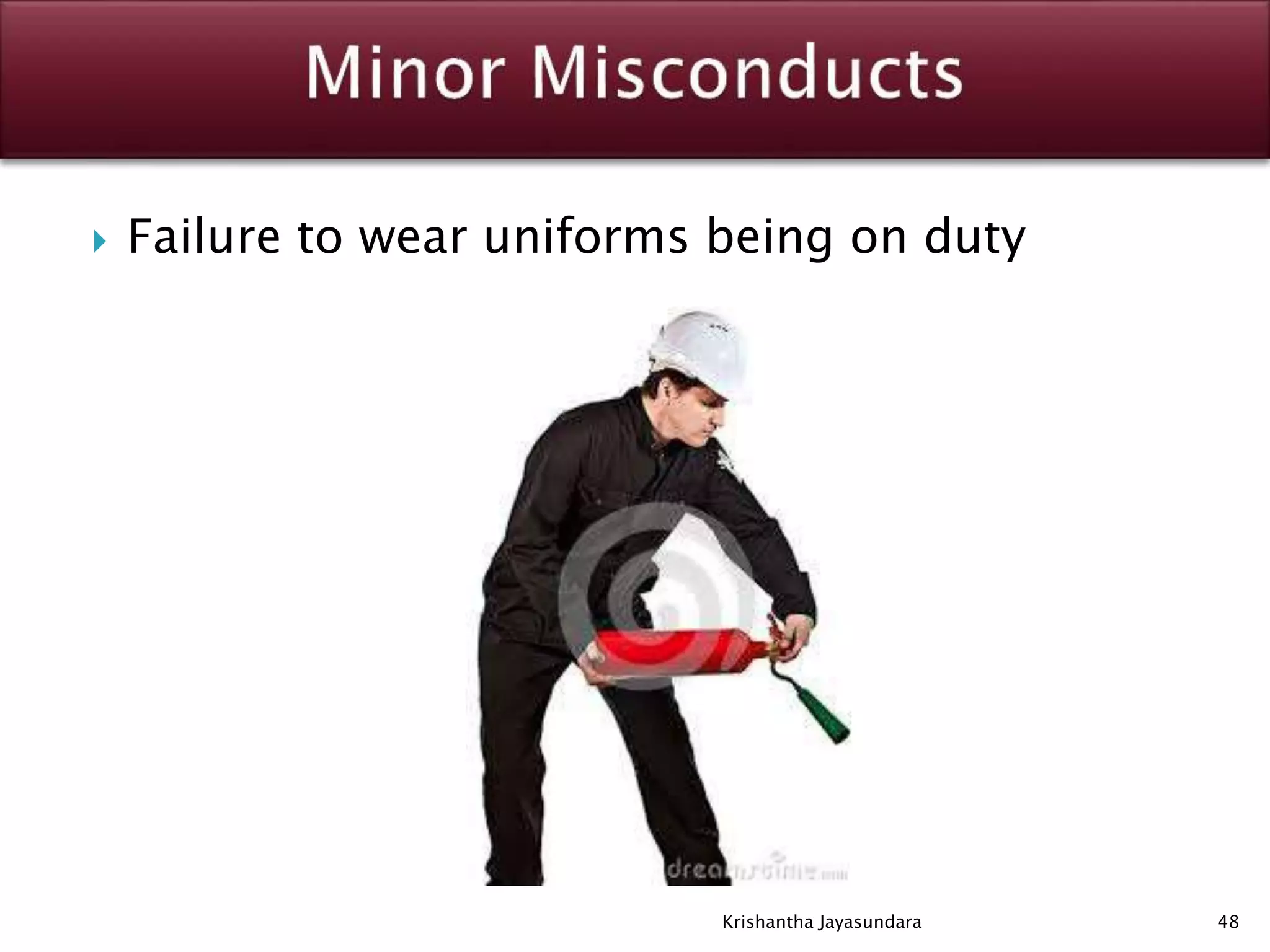
 Failure to wear uniforms being on duty
48Krishantha Jayasundara
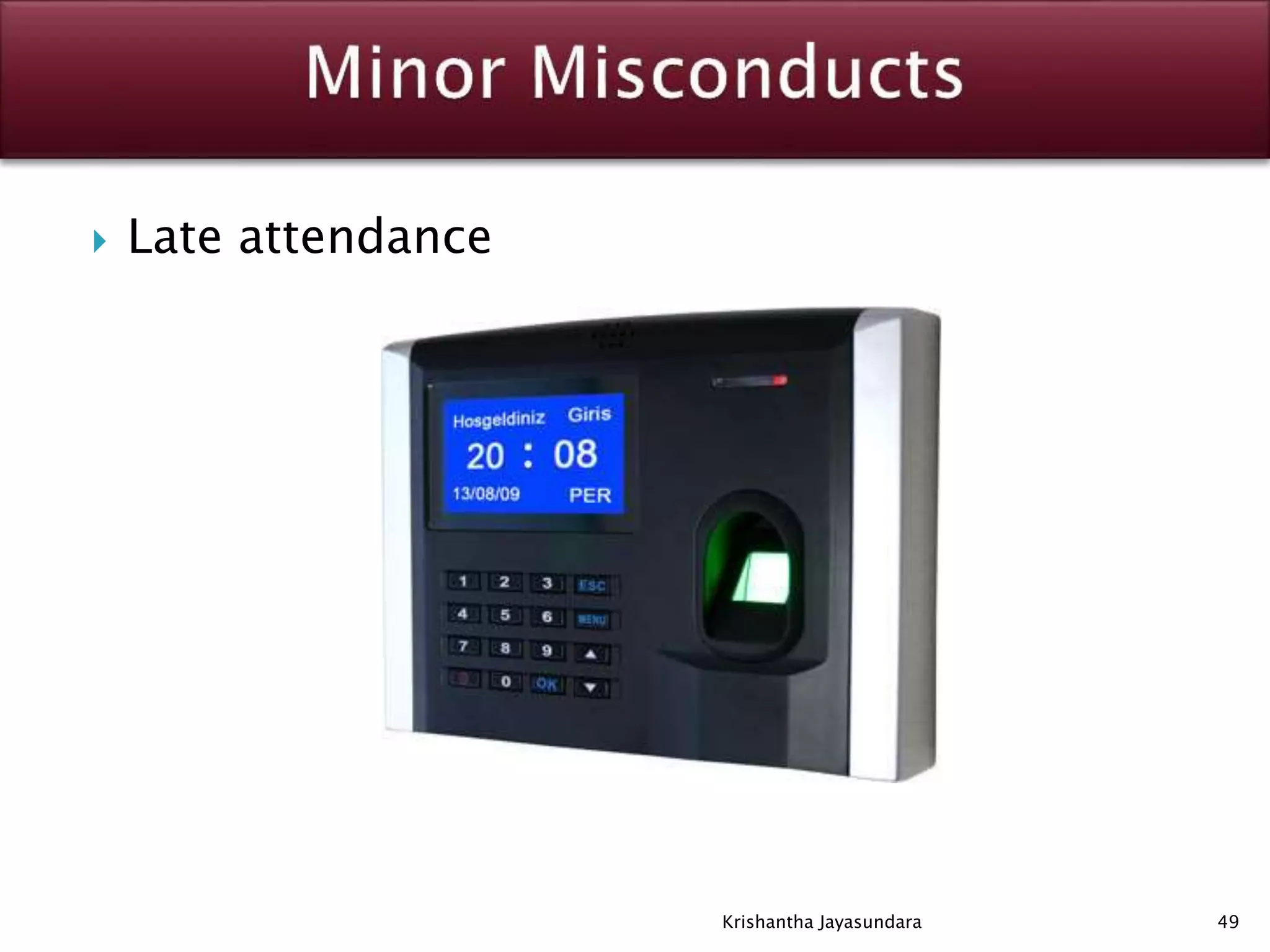
 Late attendance
49Krishantha Jayasundara
 Deserting workplace without permission
50Krishantha Jayasundara
 Malingering - Avoiding duty or work by
pretending to be incapacitated
51Krishantha Jayasundara
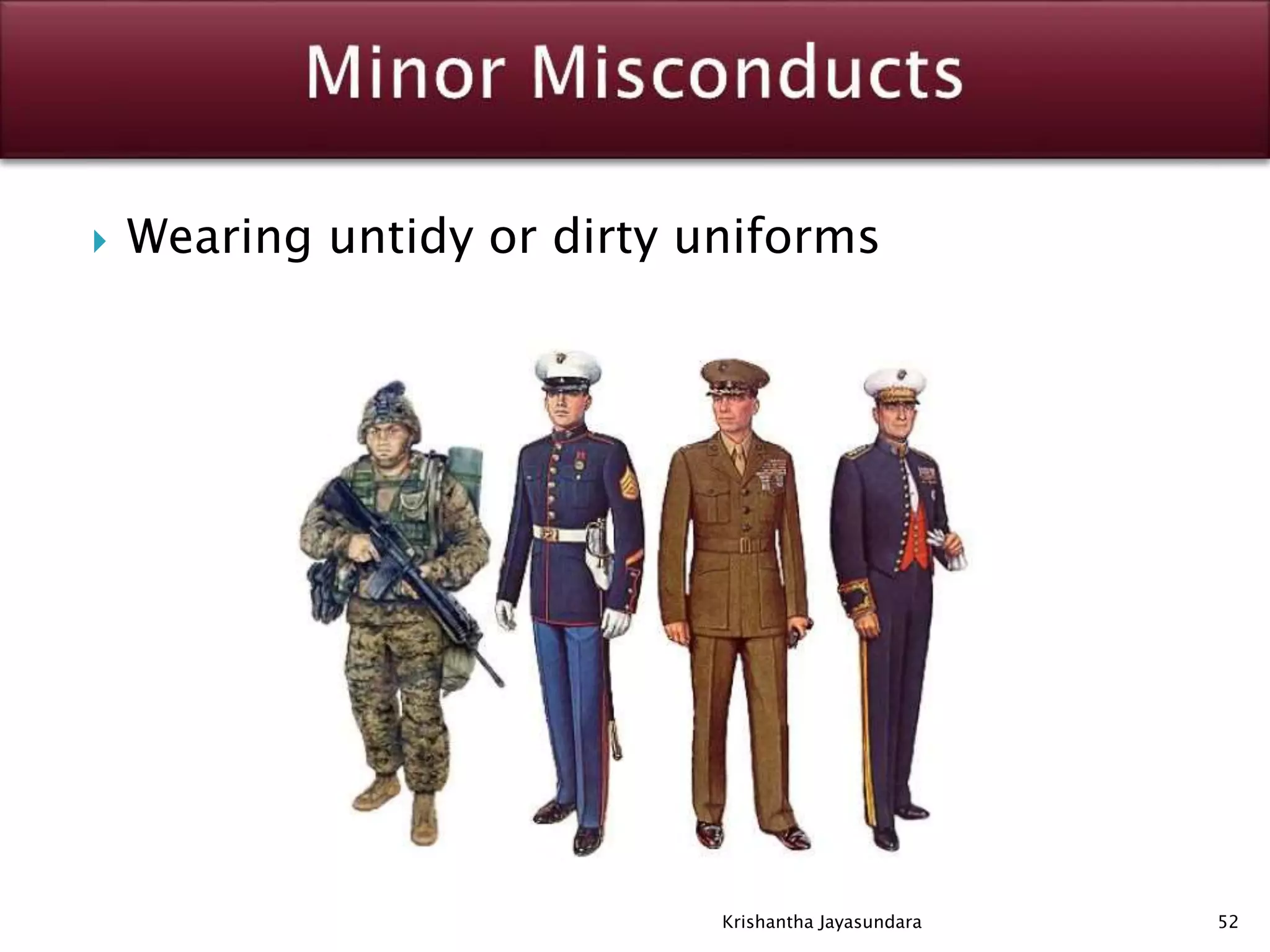
 Wearing untidy or dirty uniforms
52Krishantha Jayasundara
 Acts of misconducts which are of serious
nature
 The gravity of punishment is really high
53Krishantha Jayasundara
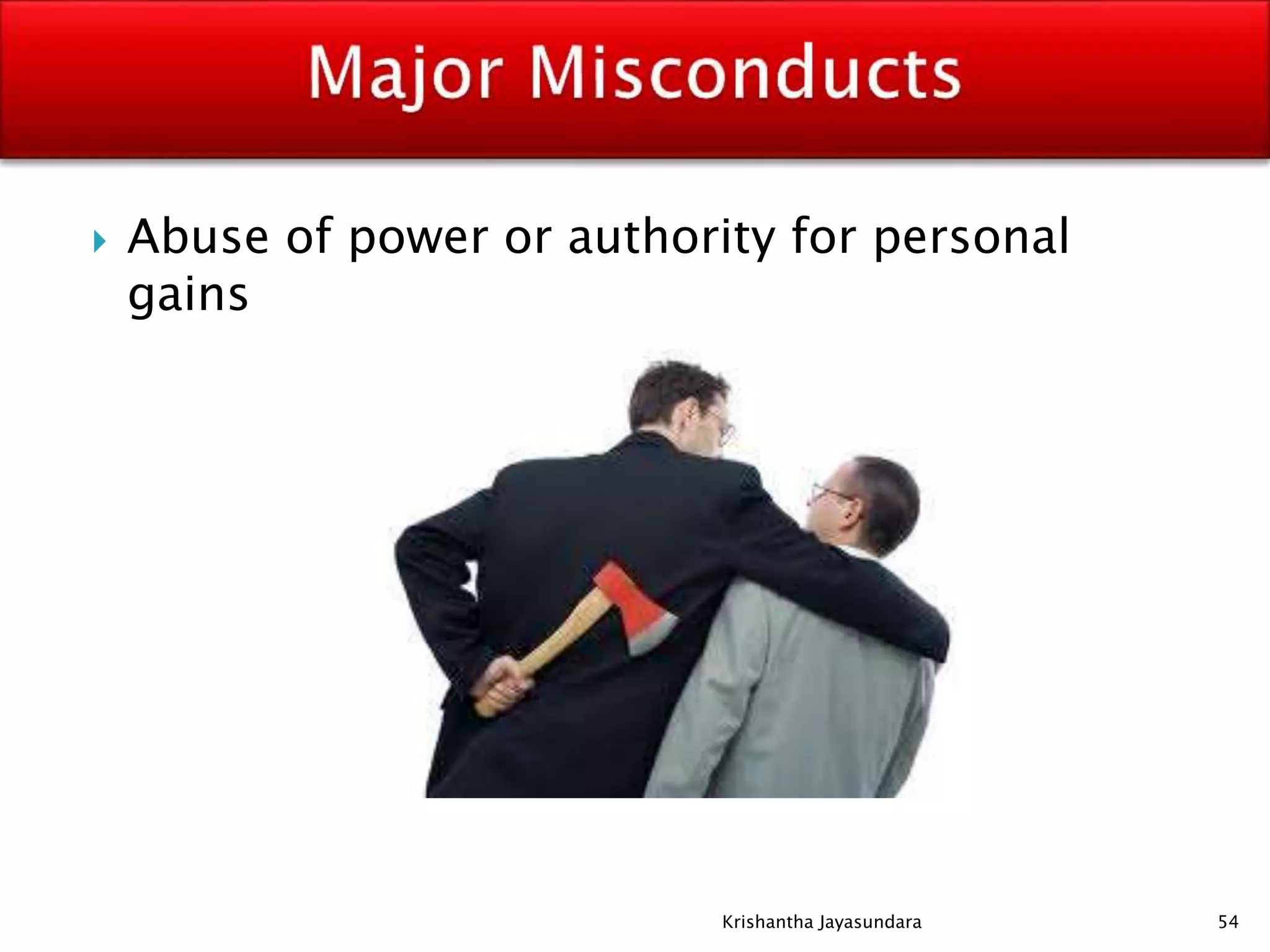
 Abuse of power or authority for personal
gains
54Krishantha Jayasundara
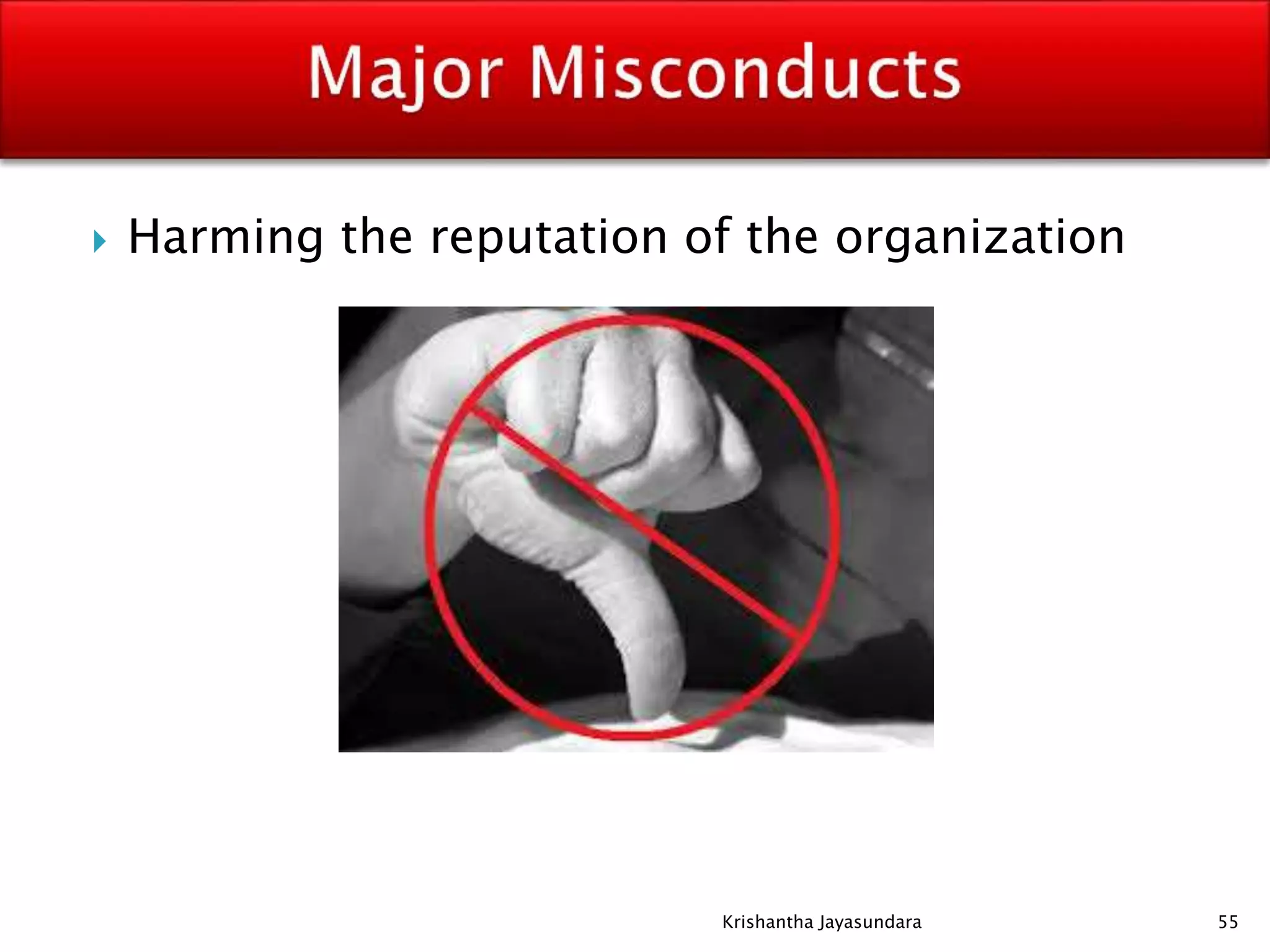
 Harming the reputation of the organization
55Krishantha Jayasundara
 Acting in collusion with competitors,
suppliers, customers.
56Krishantha Jayasundara
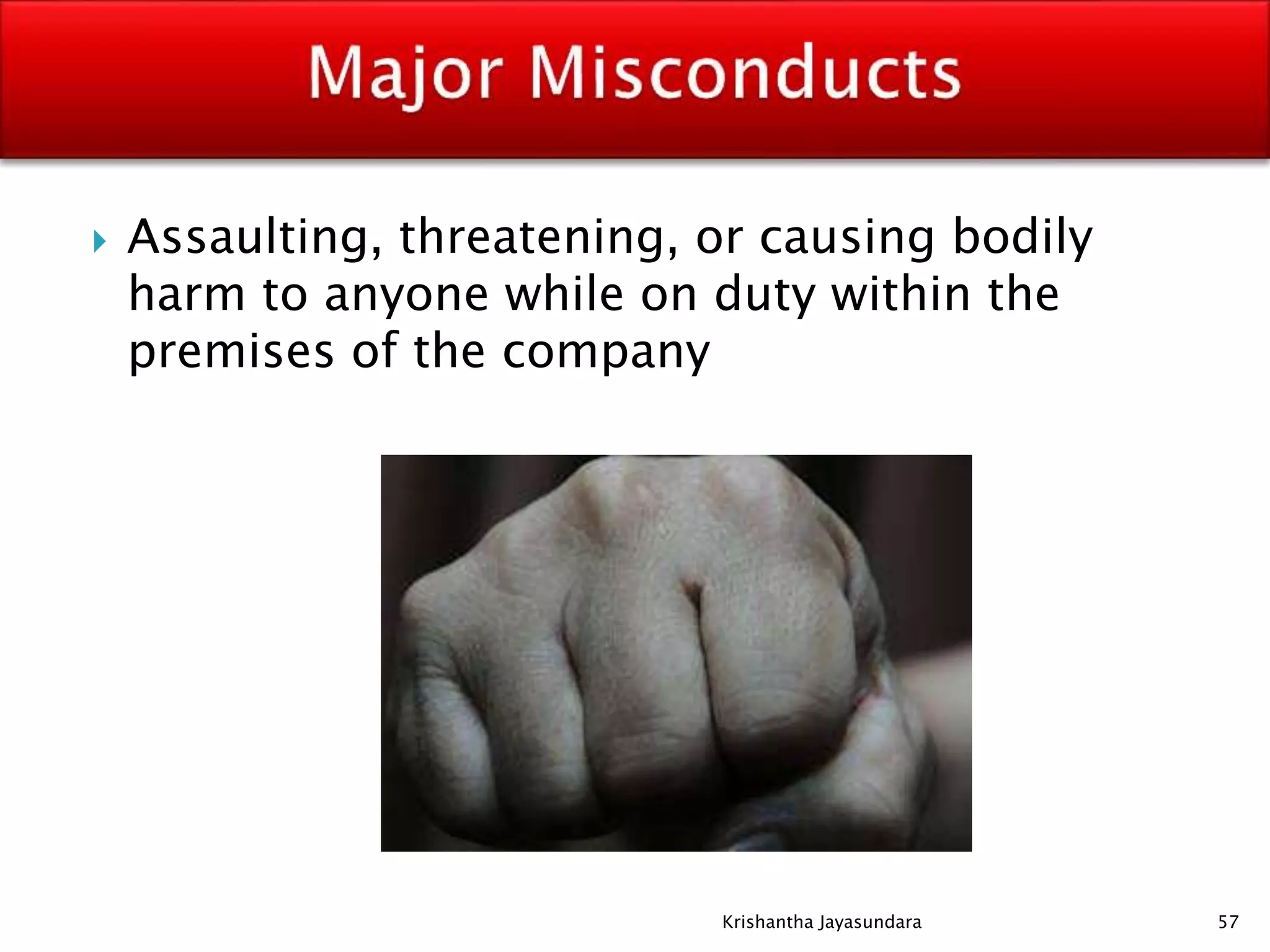
 Assaulting, threatening, or causing bodily
harm to anyone while on duty within the
premises of the company
57Krishantha Jayasundara
 Insubordination
 Insubordination is the act of
willfully disobeying your superior.
 Refusing to perform an action that is unethical or
illegal is not insubordination.
 Refusing to perform an action that is not within
the scope of authority is not insubordination.
58Krishantha Jayasundara
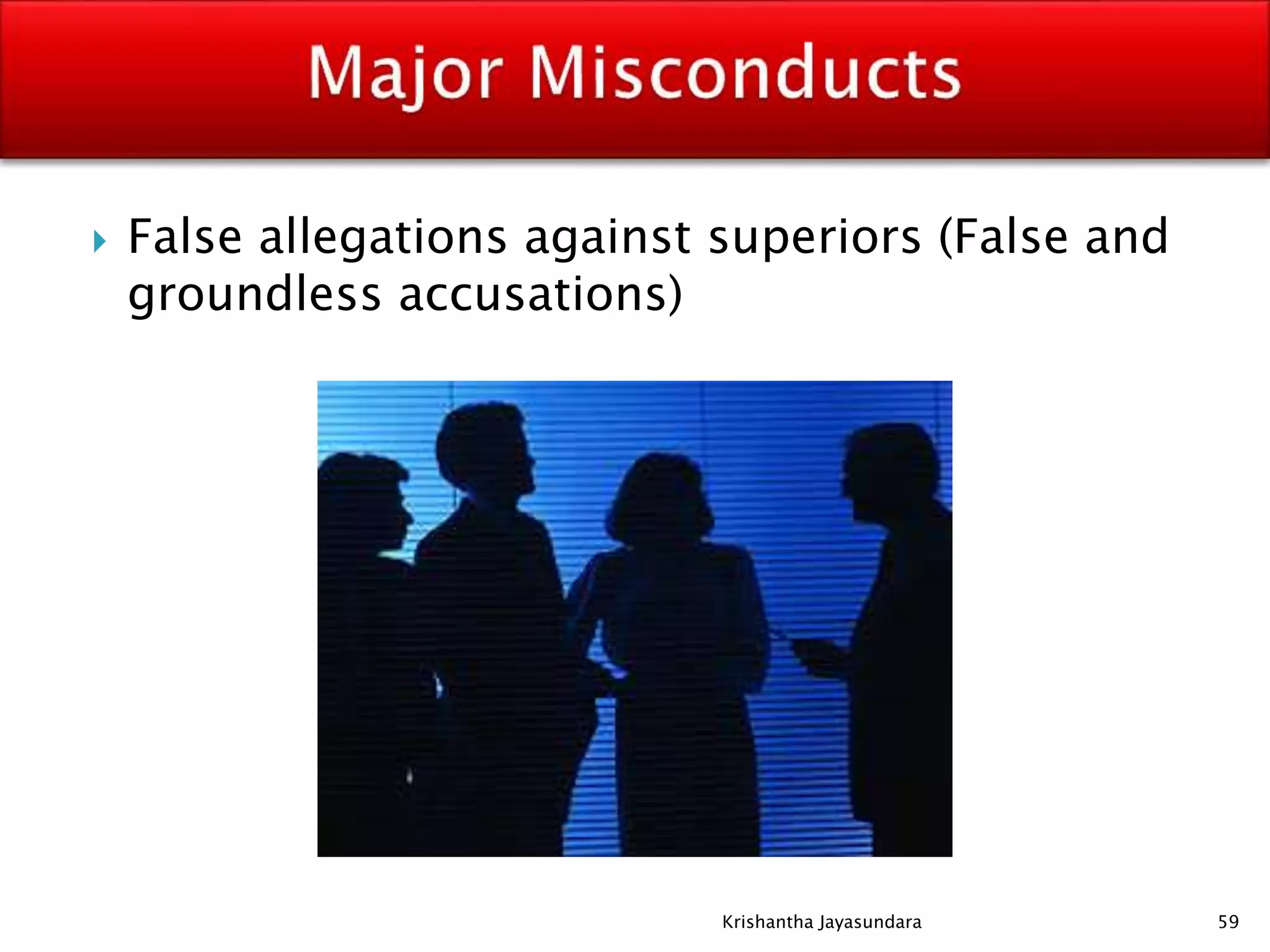
 False allegations against superiors (False and
groundless accusations)
59Krishantha Jayasundara
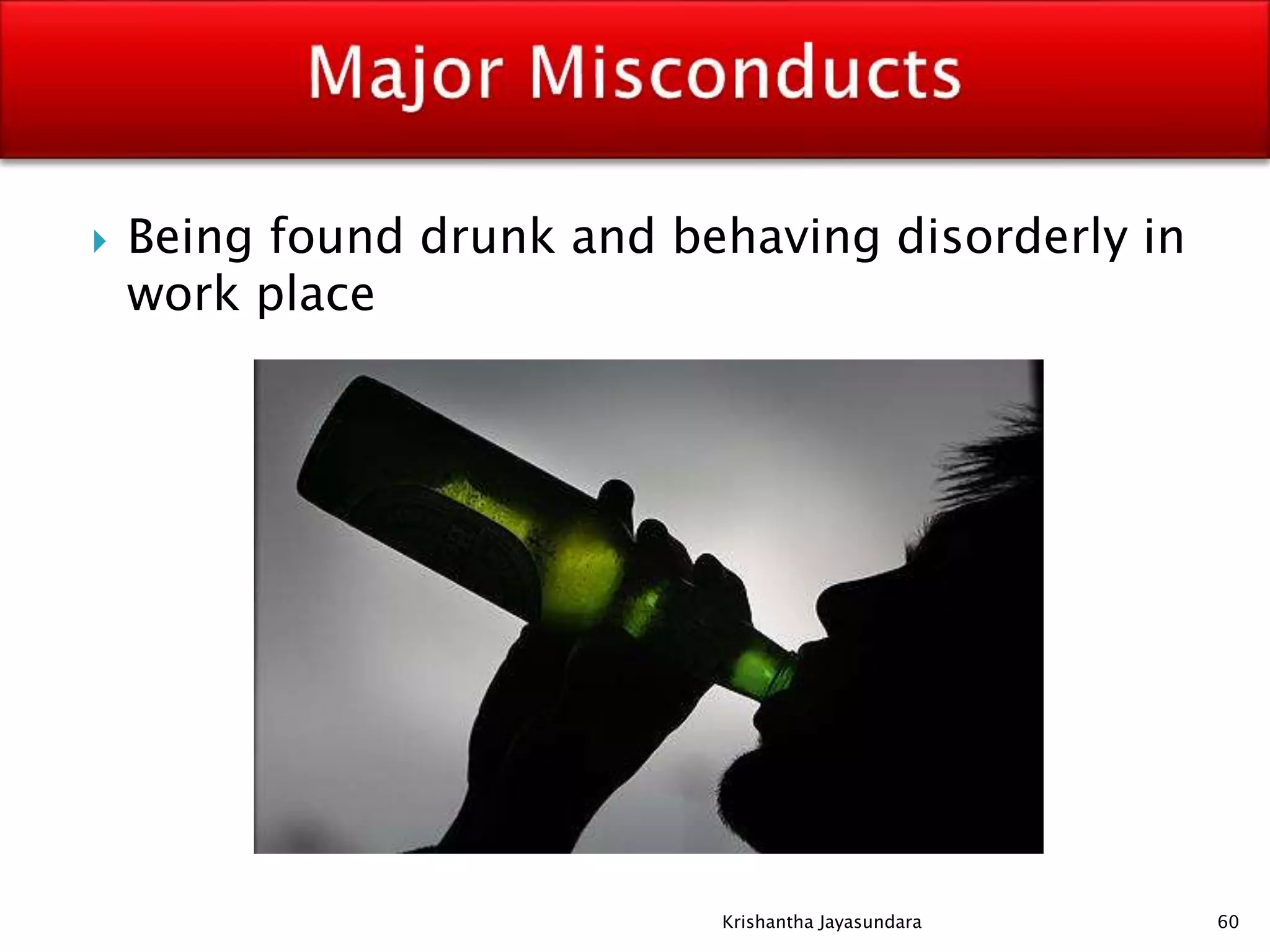
 Being found drunk and behaving disorderly in
work place
60Krishantha Jayasundara
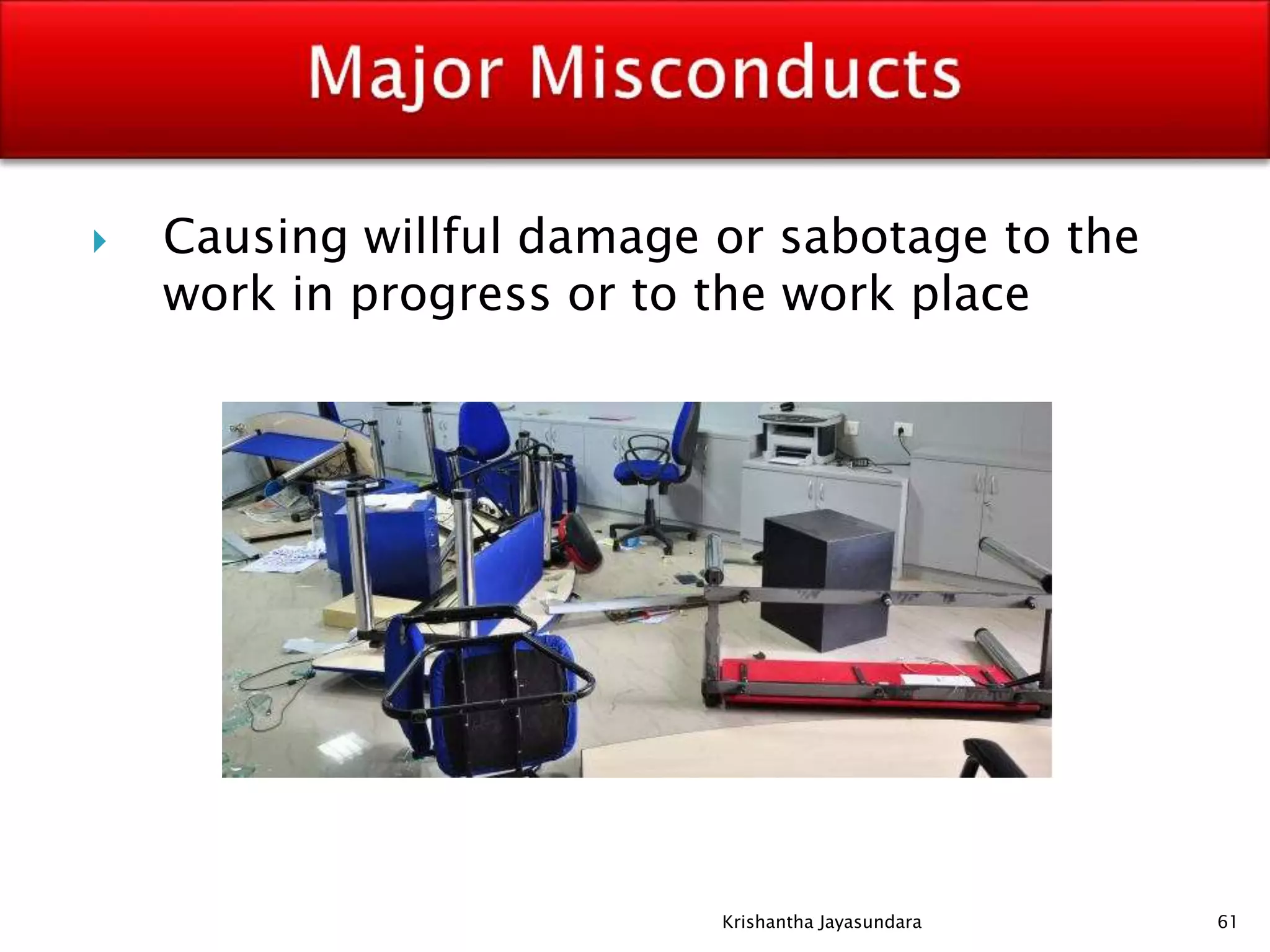
 Causing willful damage or sabotage to the
work in progress or to the work place
61Krishantha Jayasundara
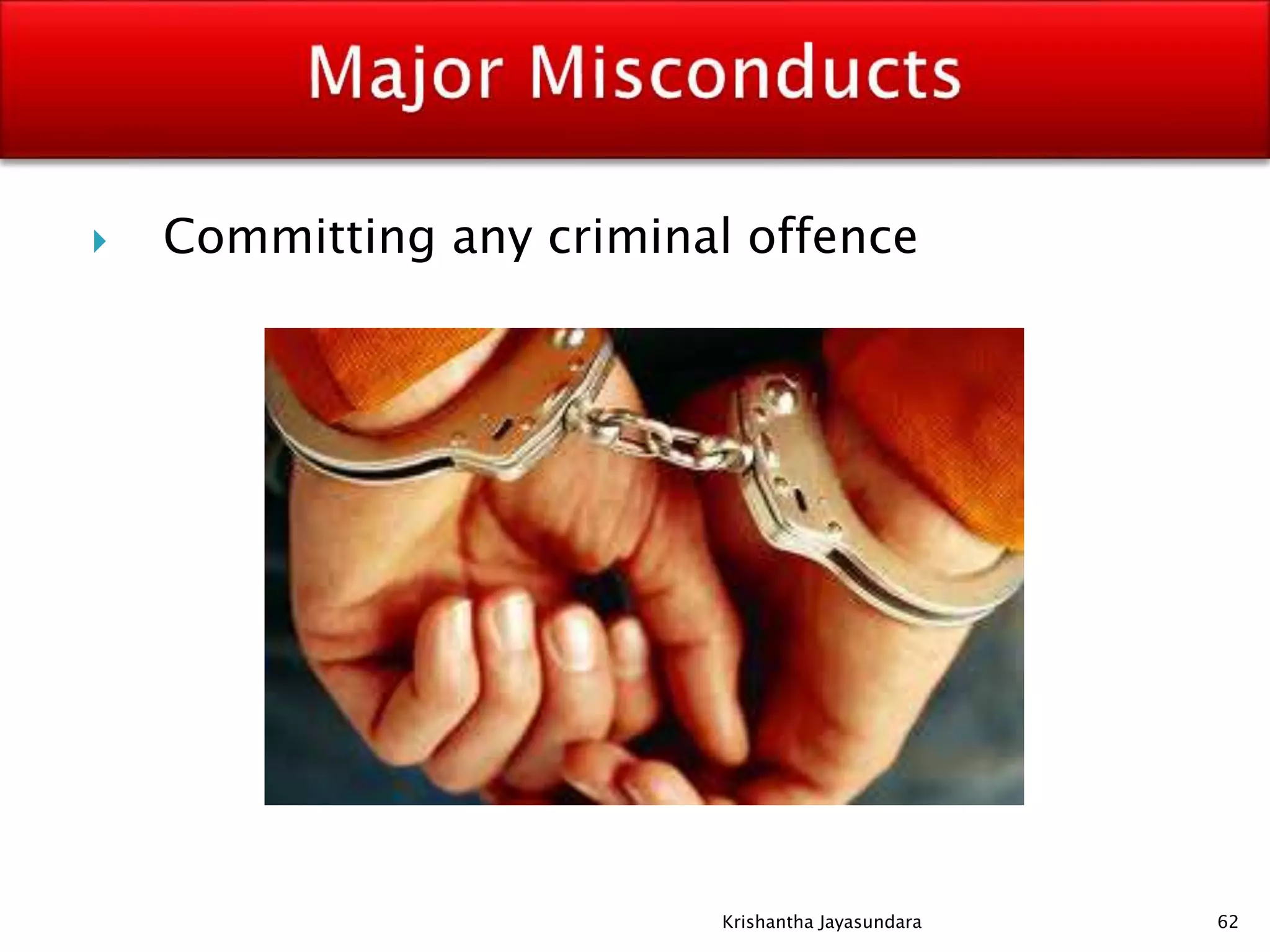
 Committing any criminal offence
62Krishantha Jayasundara
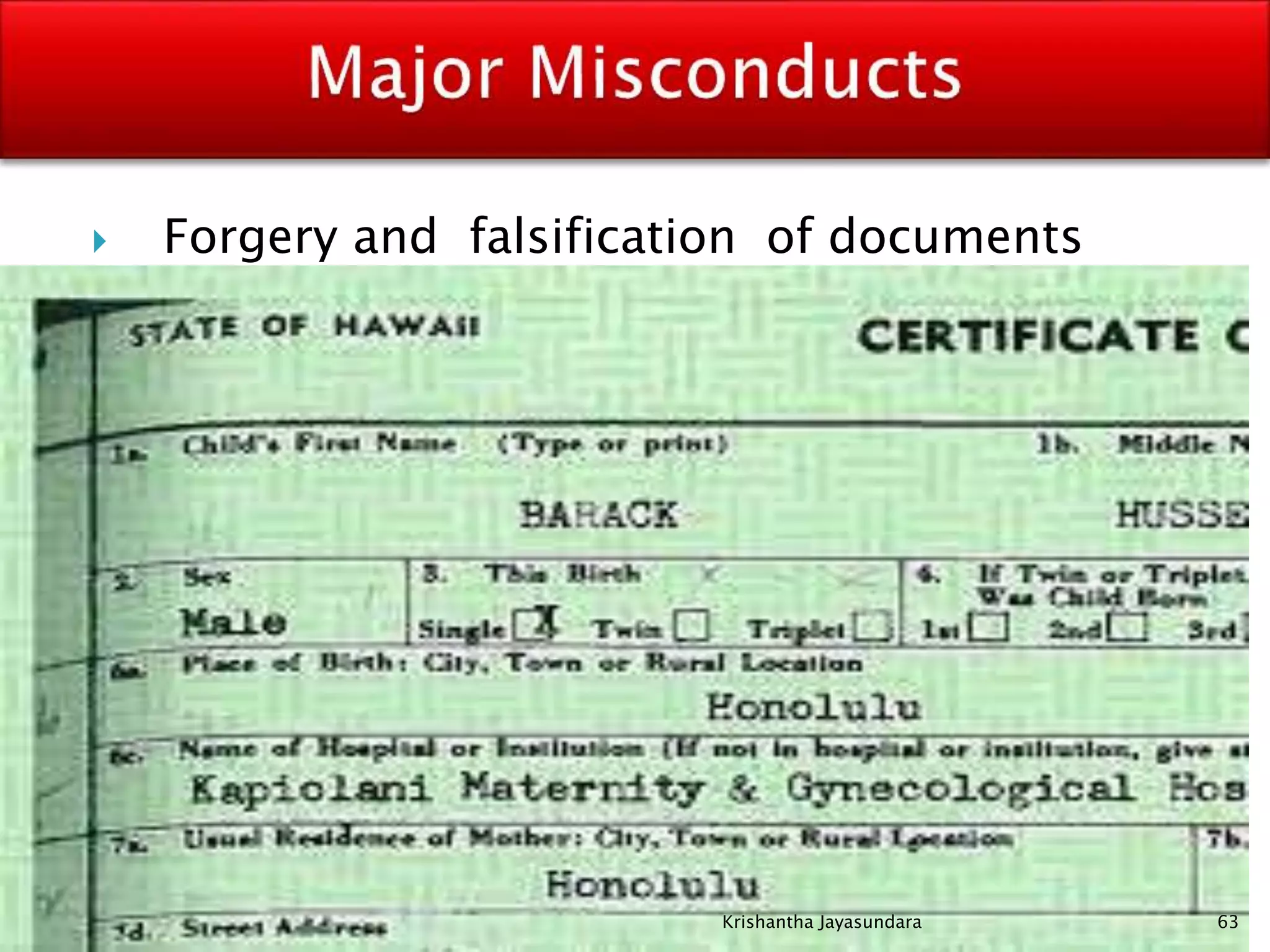
 Forgery and falsification of documents
63Krishantha Jayasundara
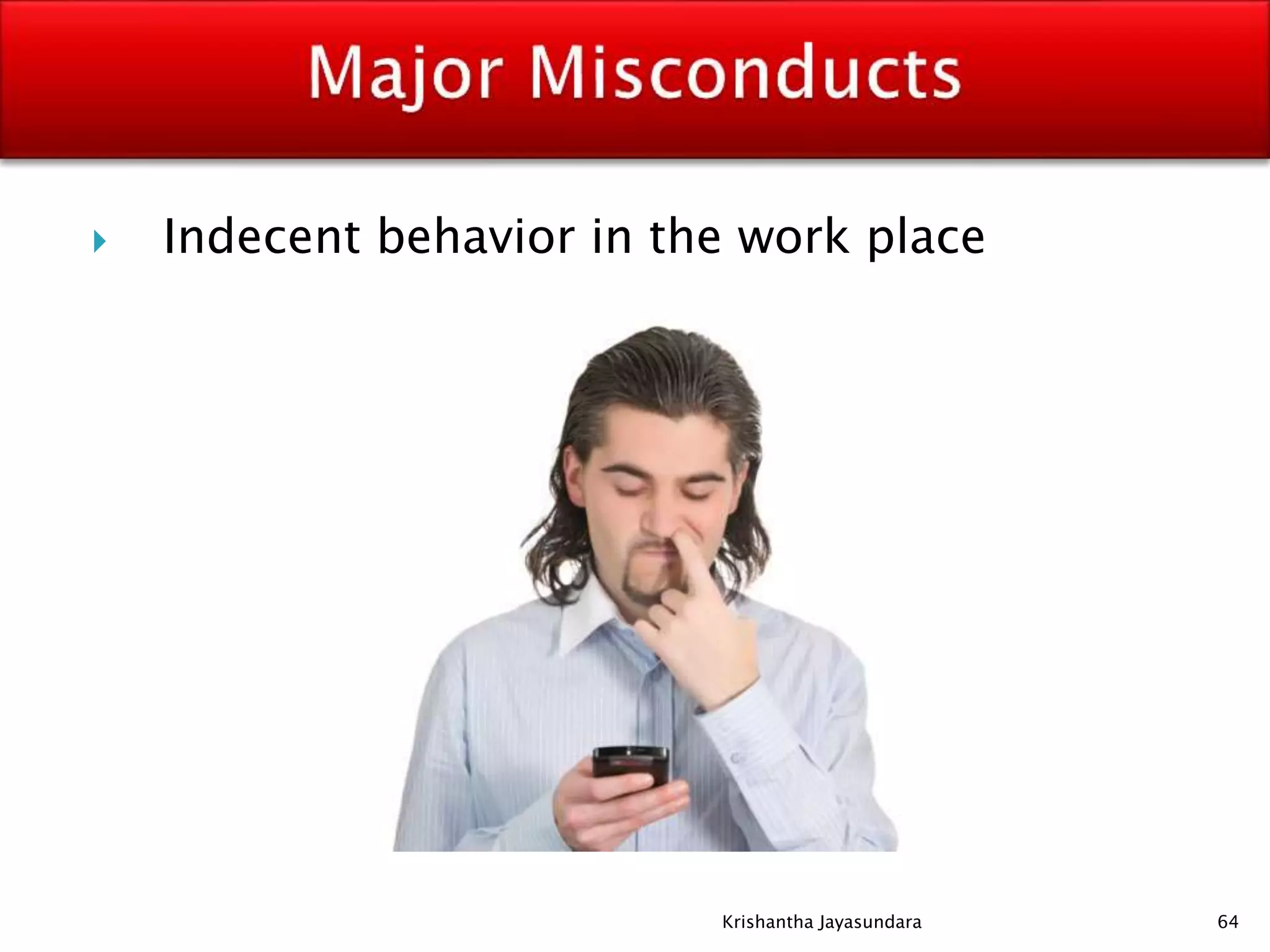
 Indecent behavior in the work place
64Krishantha Jayasundara
 Issue of unlawful instructions or orders to
the subordinates
65Krishantha Jayasundara
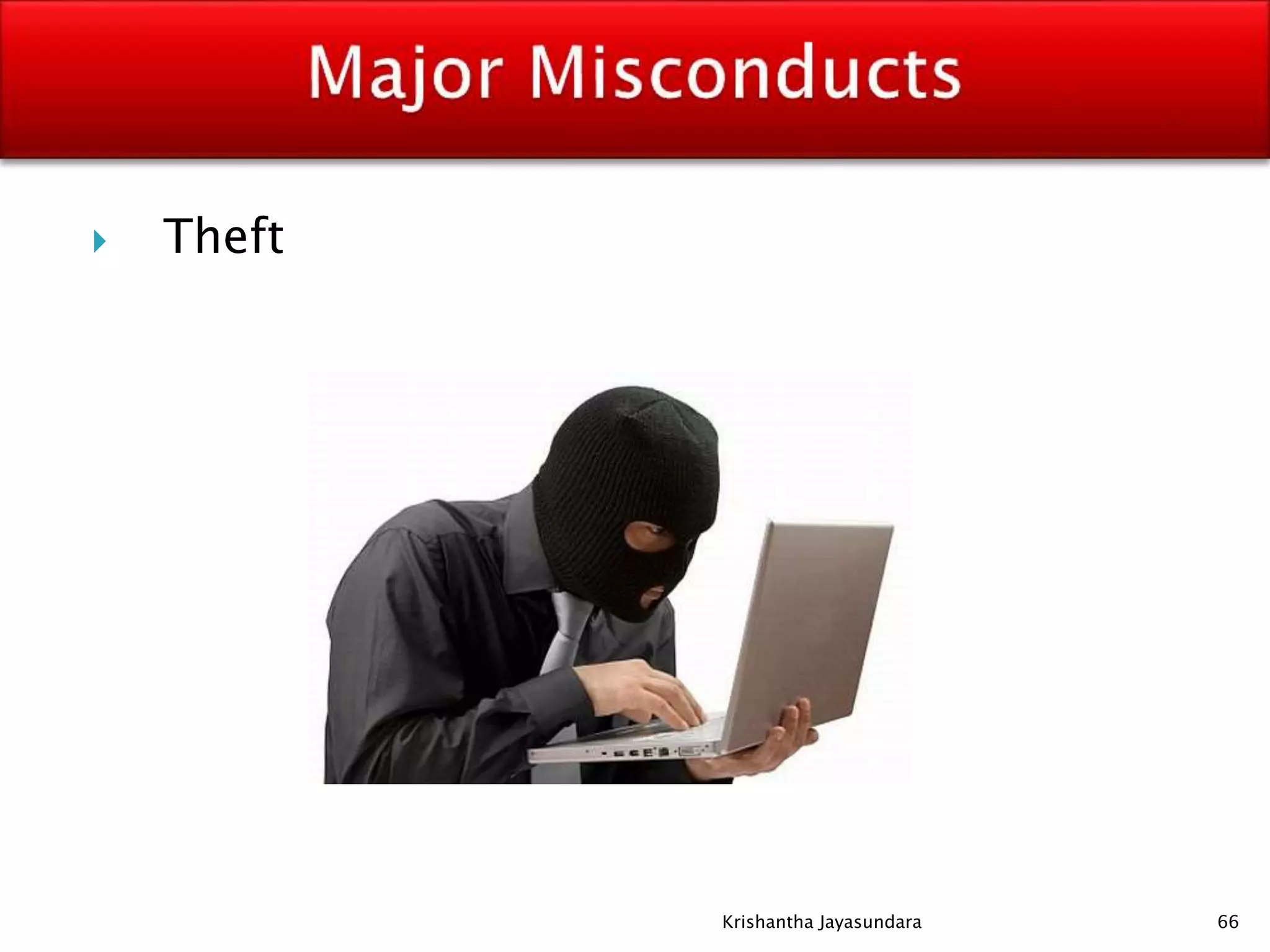
 Theft
66Krishantha Jayasundara
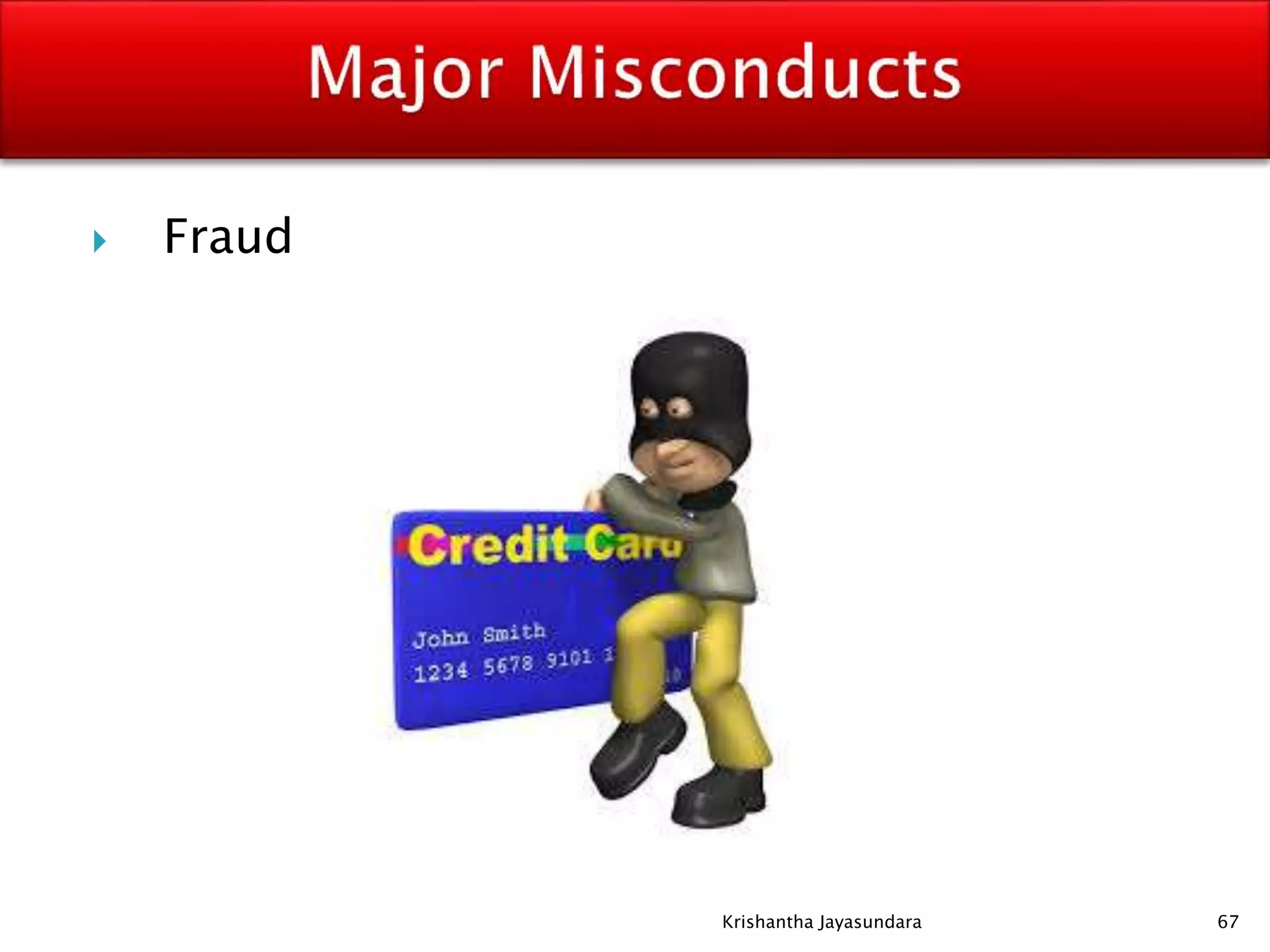
 Fraud
67Krishantha Jayasundara
 Dishonesty
68Krishantha Jayasundara
 Misappropriation -The fraudulent
(deceiving) appropriation of funds or
property entrusted to your care but actually
owned by someone else
69Krishantha Jayasundara
 Refusal to carry out essential or urgent work
70Krishantha Jayasundara
 Repetition of any minor offence
71Krishantha Jayasundara
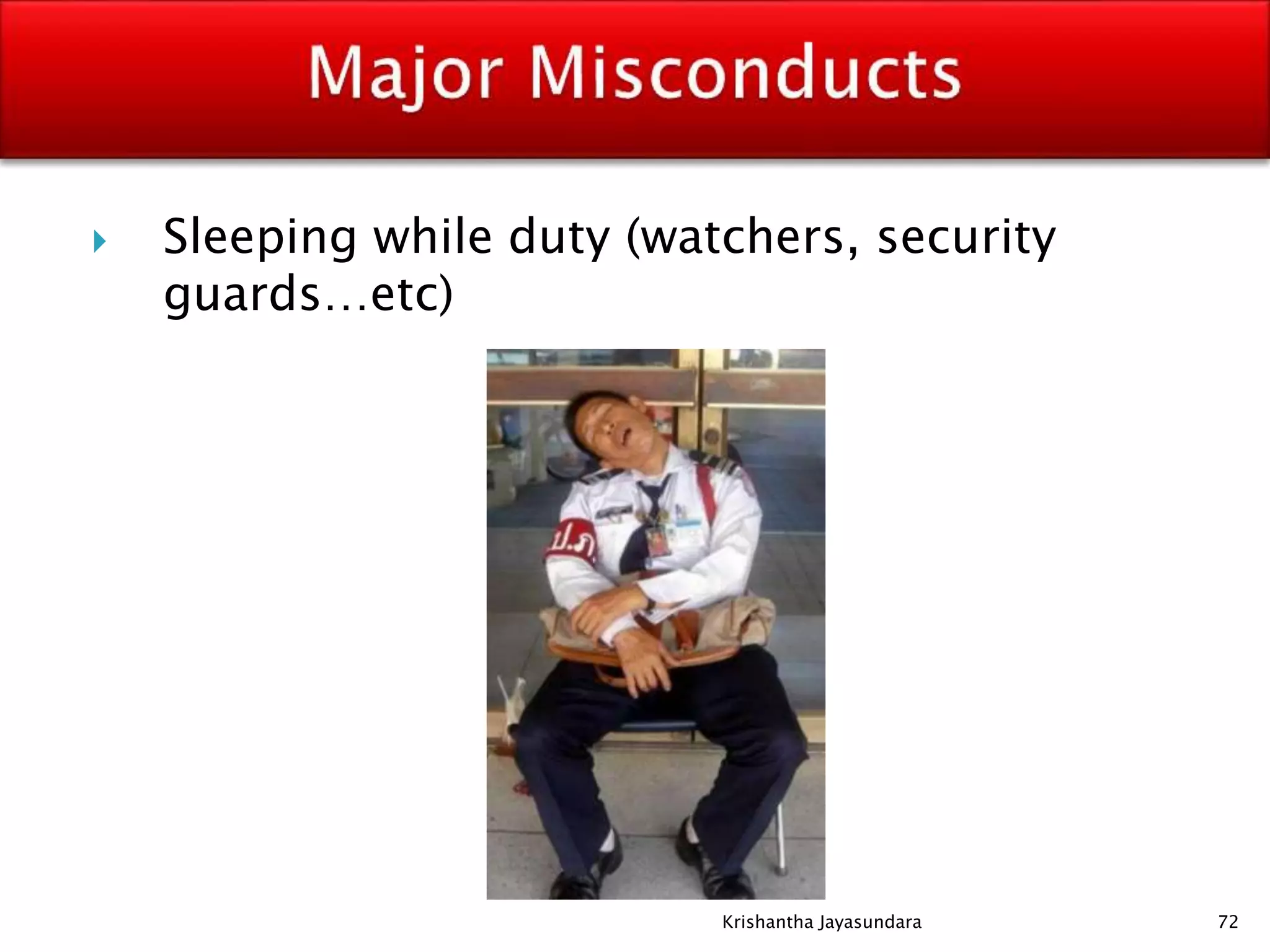
 Sleeping while duty (watchers, security
guards…etc)
72Krishantha Jayasundara
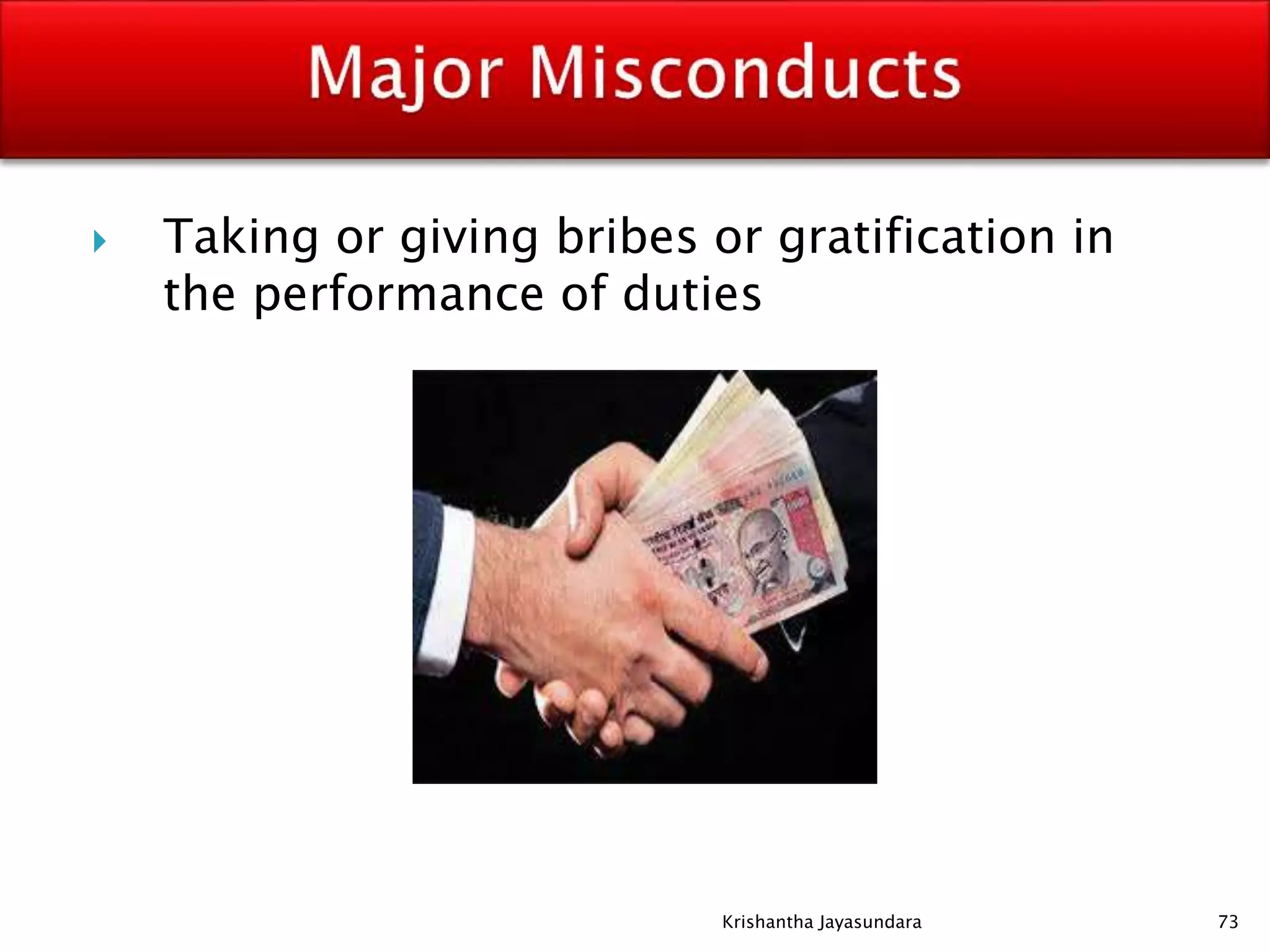
 Taking or giving bribes or gratification in
the performance of duties
73Krishantha Jayasundara
 Go slow
74Krishantha Jayasundara
 Negligence of the responsibilities officers
75Krishantha Jayasundara
76Krishantha Jayasundara
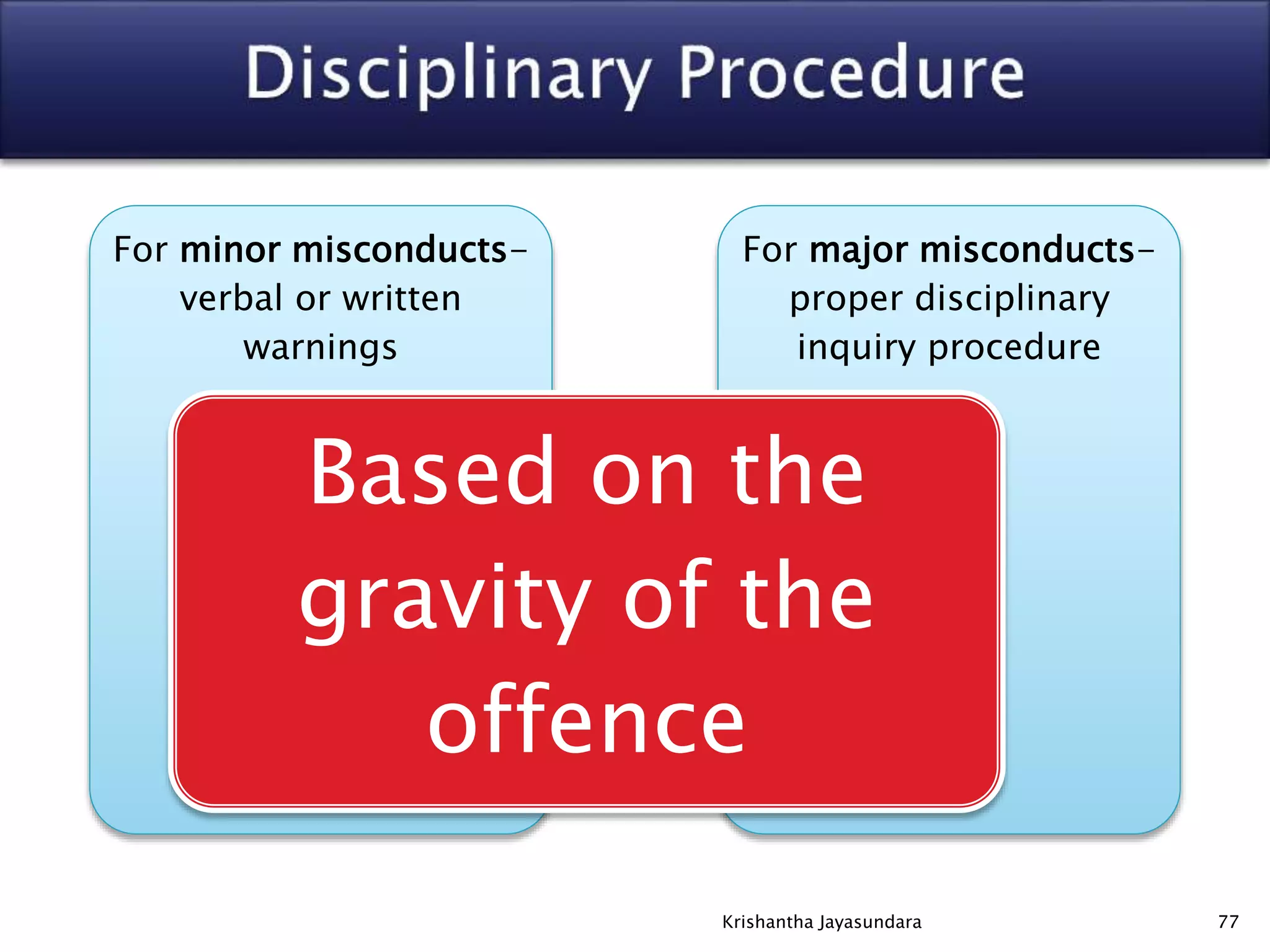
For major misconducts-
proper disciplinary
inquiry procedure
For minor misconducts-
verbal or written
warnings
Based on the
gravity of the
offence
77Krishantha Jayasundara
78Krishantha Jayasundara
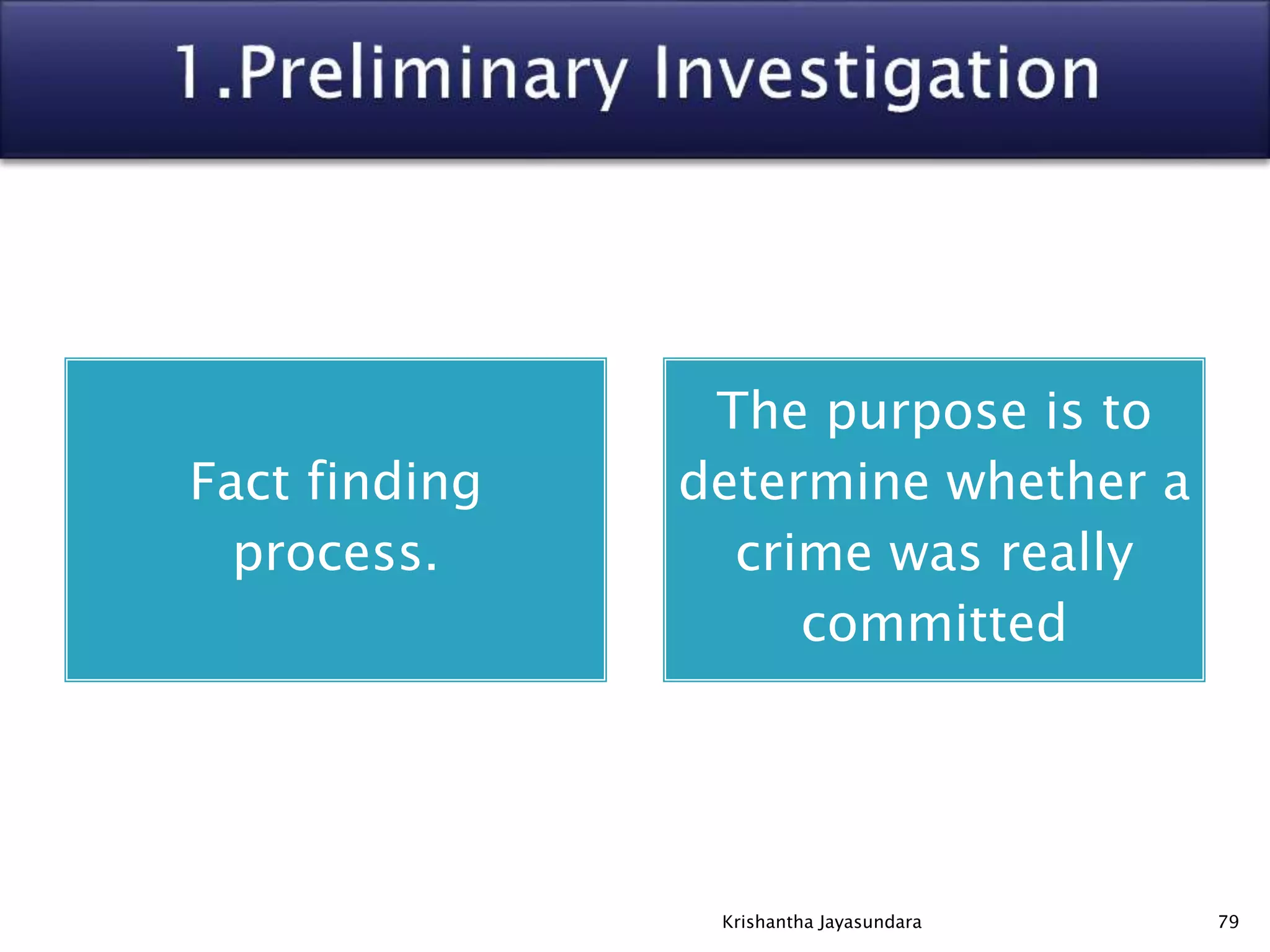
Fact finding
process.
The purpose is to
determine whether a
crime was really
committed
79Krishantha Jayasundara
There are no accused
at this stages but
there may be
suspects
Management
appoints an impartial
officer to carry out
the investigation
80Krishantha Jayasundara
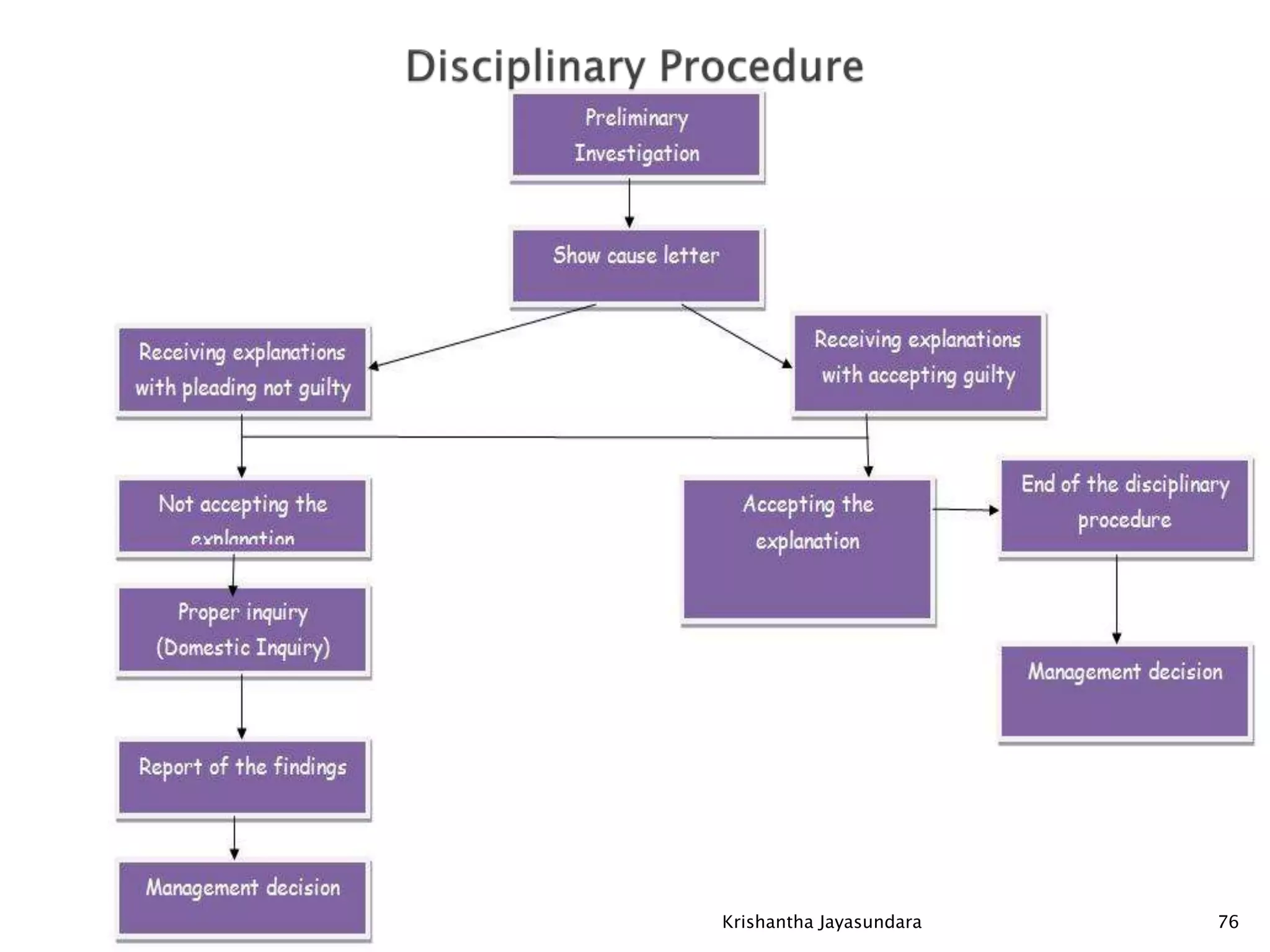
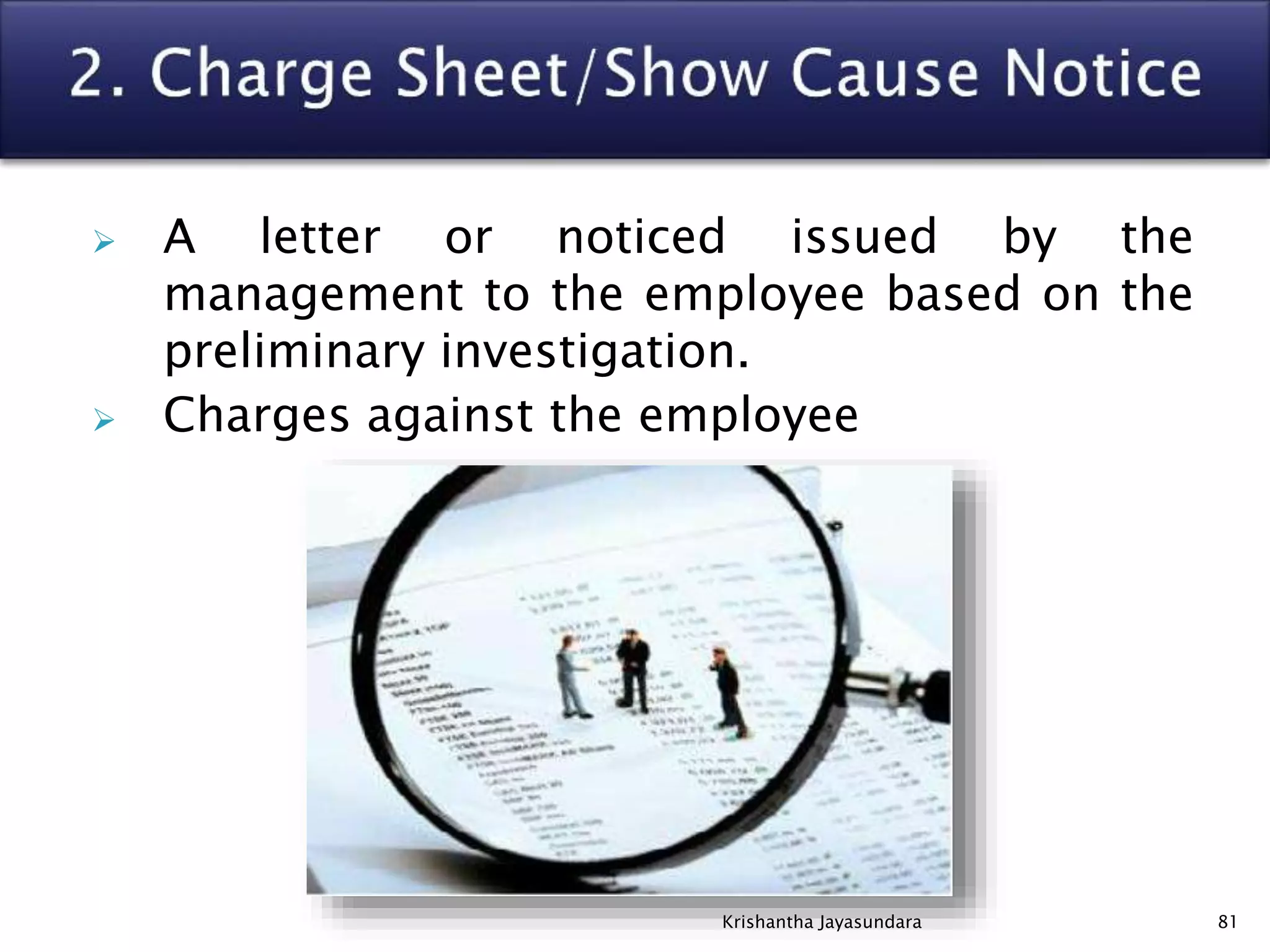
 A letter or noticed issued by the
management to the employee based on the
preliminary investigation.
 Charges against the employee
81Krishantha Jayasundara
 Brief description of the charge, date, time,
place, incident…etc
82Krishantha Jayasundara
 Specify the time limit to reply
83Krishantha Jayasundara
 The charges to which the employee should
provide written explanations
84Krishantha Jayasundara
 Opportunity for the employee to examine any
documents
85Krishantha Jayasundara
 Actions to be taken, if no reply is received
within the specific time period.
86Krishantha Jayasundara
 Employees reply to the show cause notice
87Krishantha Jayasundara
 Management can either accept it or reject it
88Krishantha Jayasundara
 If the response is not satisfactory, the
employer will move to the more formal
domestic inquiry
89Krishantha Jayasundara
90Krishantha Jayasundara
 Should be carried out as soon as possible
following accusations of misconduct
 All activities should be formalized and
recorded in full.
91Krishantha Jayasundara
 The investigating officers should be
unconnected to the incident
92Krishantha Jayasundara
 The employee should be given full
opportunity to state their own case and
present evidence in their favor.
93Krishantha Jayasundara
 Union representatives or colleagues should
be allowed to sit in during the process if the
employer requests their presence
94Krishantha Jayasundara
 Domestic inquiry is purely an information-
gathering exercise
95Krishantha Jayasundara
 The panel’s task is gathering the evidence
(not making decisions over guilt or
punishment)
96Krishantha Jayasundara
 Their final report is sent to the relevant
parties, often senior leaders, who then decide
on the appropriate course of action.
97Krishantha Jayasundara
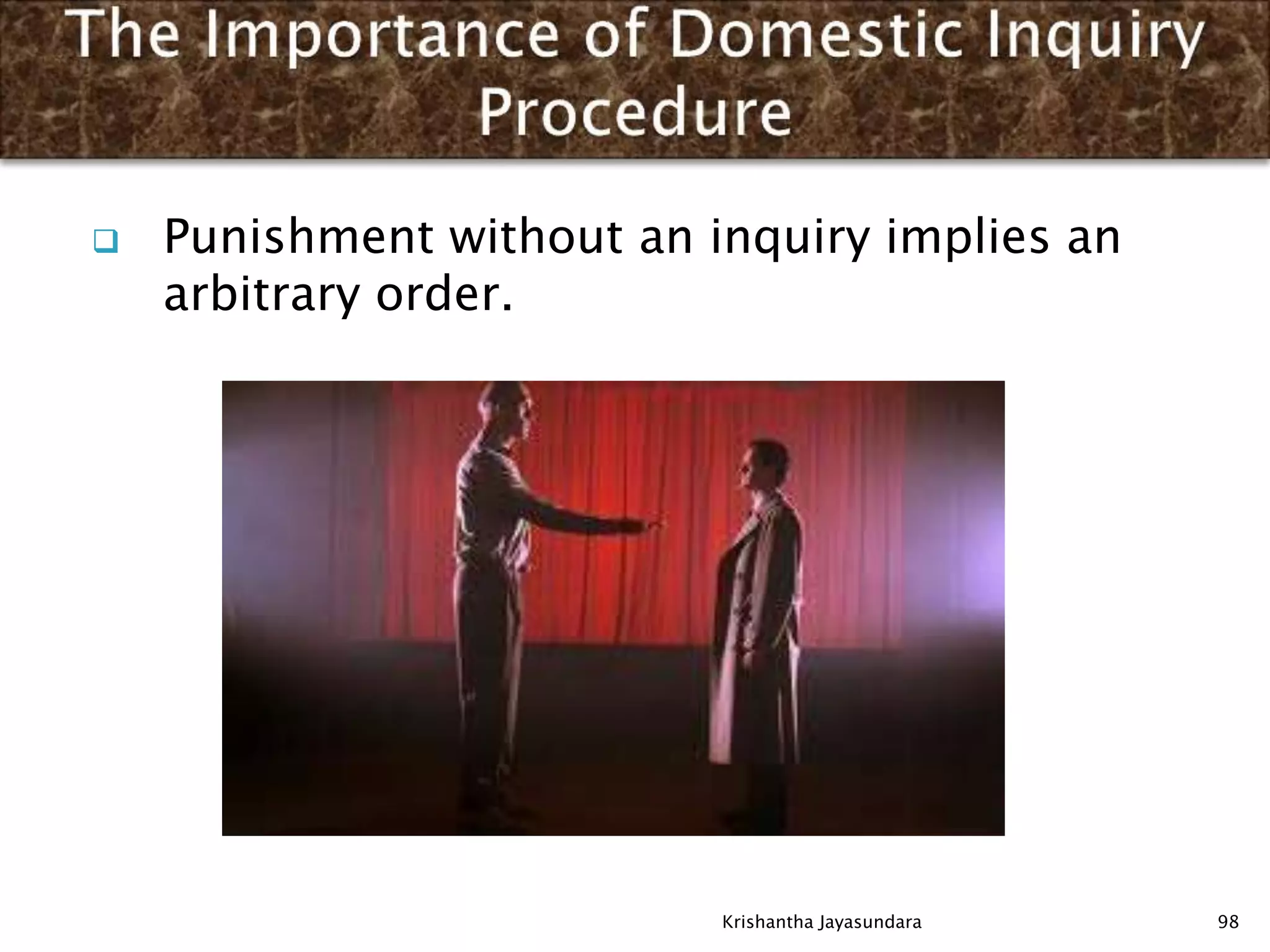
 Punishment without an inquiry implies an
arbitrary order.
98Krishantha Jayasundara
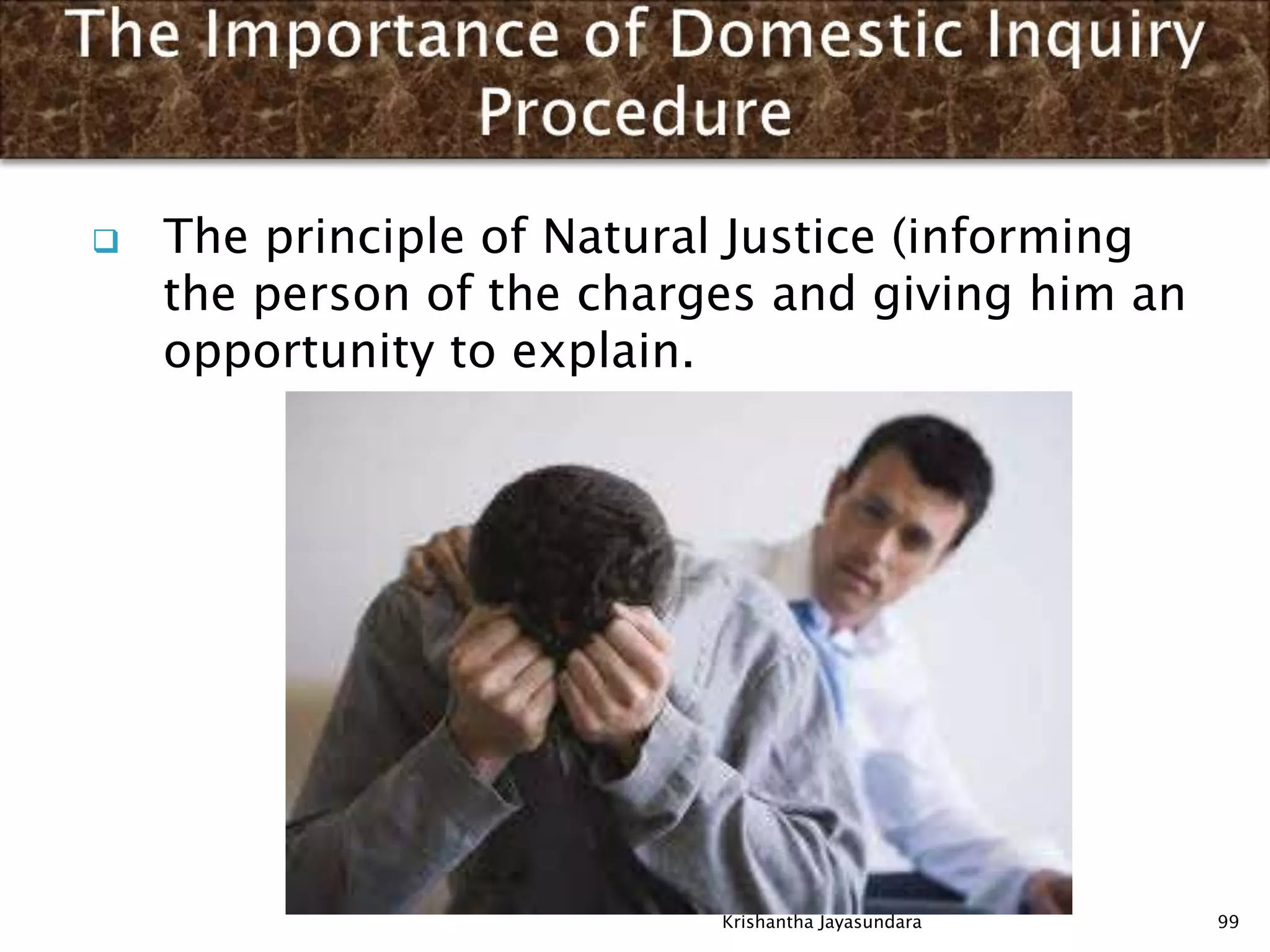
 The principle of Natural Justice (informing
the person of the charges and giving him an
opportunity to explain.
99Krishantha Jayasundara
 To record the available evidence against the
accused to prevent him from changing the
story before a labor tribunal
10
0Krishantha Jayasundara
 Recorded evidence can be presented before the
labour tribunal when the witness is out of reach
10
1Krishantha Jayasundara
10
2Krishantha Jayasundara
 The final report submitted to the
management by the inquiring officer
mentioning conclusions against each charge
10
3Krishantha Jayasundara
 Findings must be based on evidence led at
the inquiry
10
4Krishantha Jayasundara
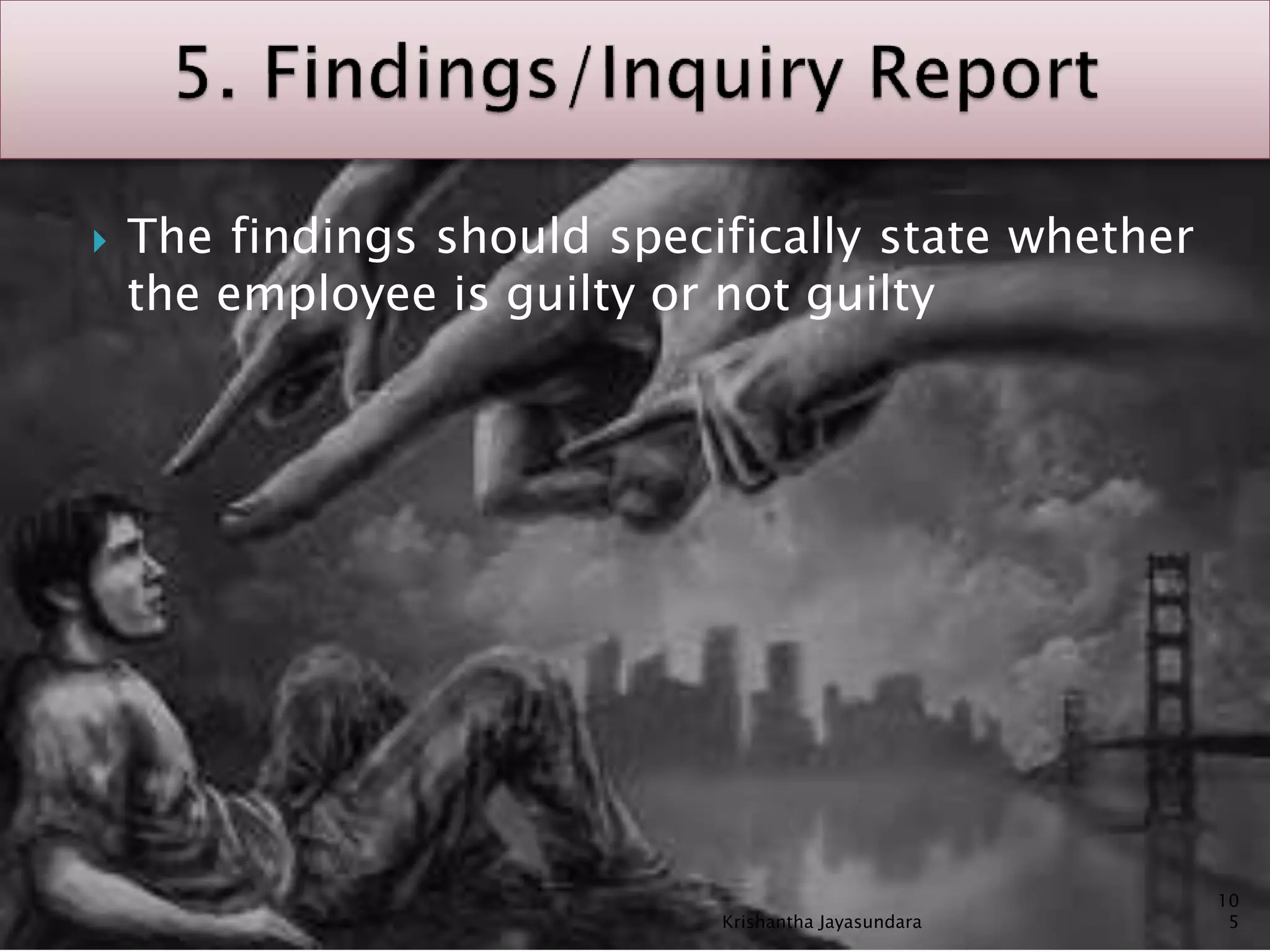
 The findings should specifically state whether
the employee is guilty or not guilty
10
5Krishantha Jayasundara
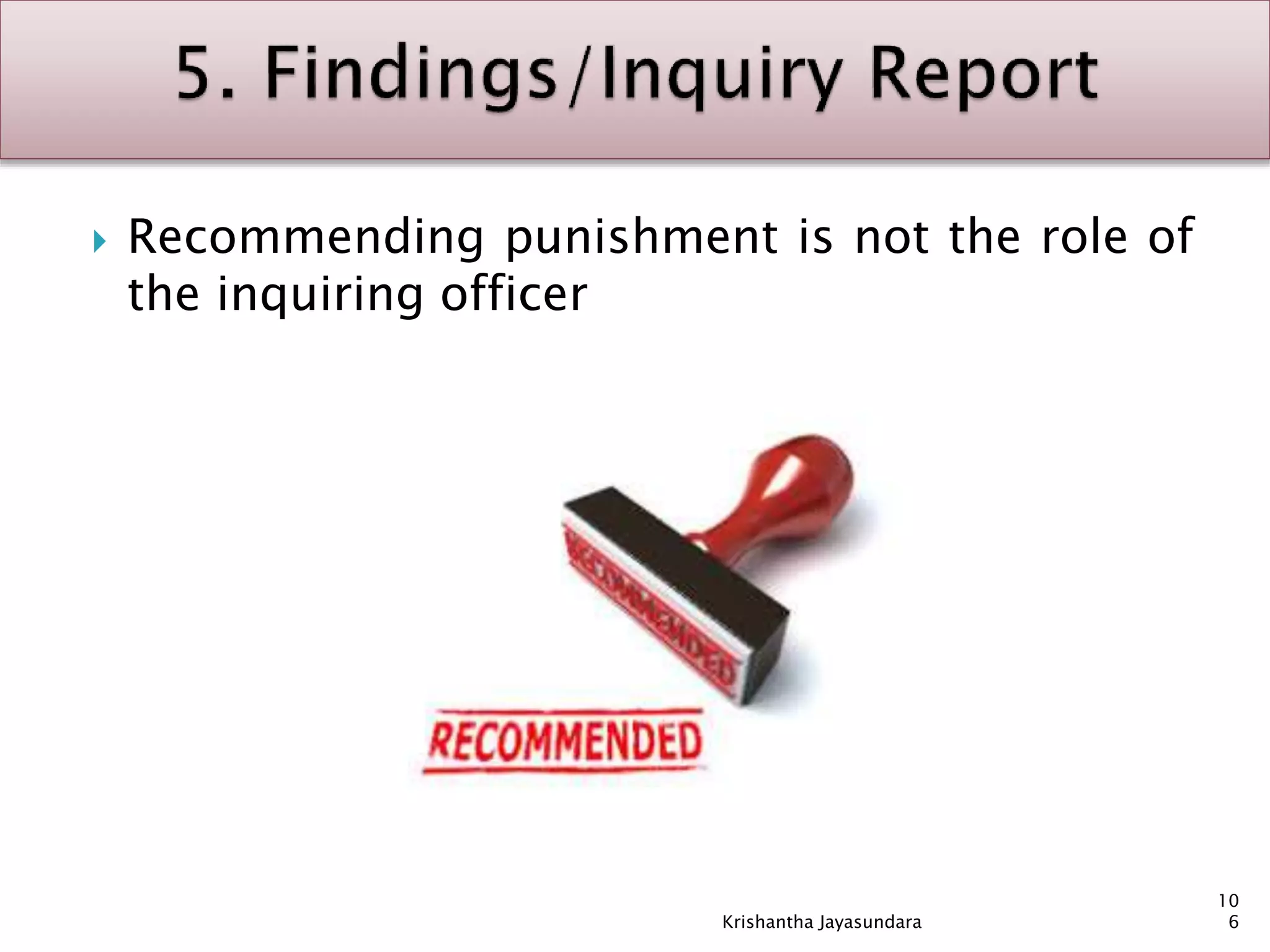
 Recommending punishment is not the role of
the inquiring officer
10
6Krishantha Jayasundara
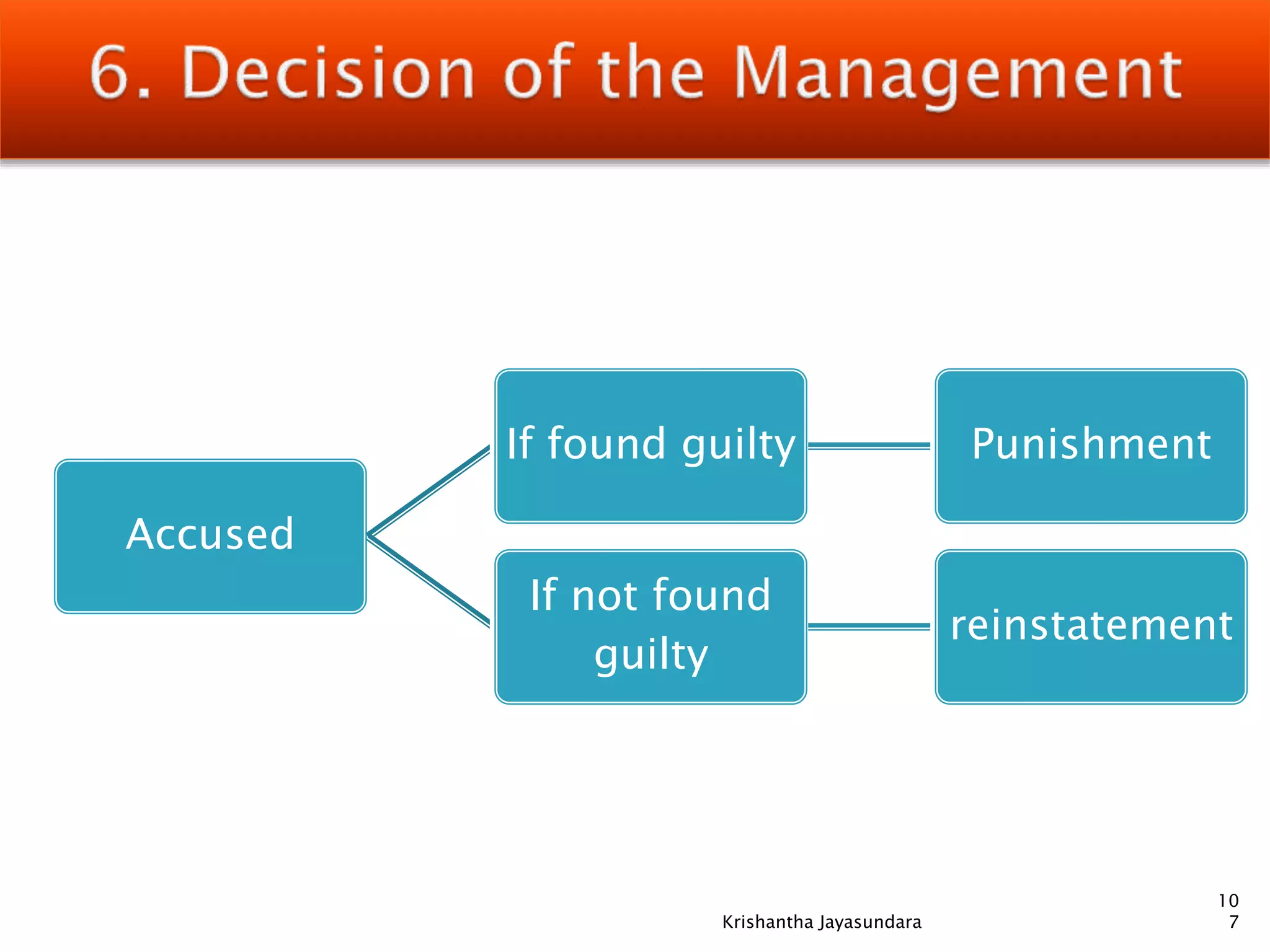
Accused
If found guilty Punishment
If not found
guilty
reinstatement
10
7Krishantha Jayasundara
 Oral Warnings-how to prevent the recurrence
of committed misconduct in future.
10
8Krishantha Jayasundara
 Written Warnings
 When oral warnings fails to achieve the
desired behaviour.
 First step in progressive discipline
10
9Krishantha Jayasundara
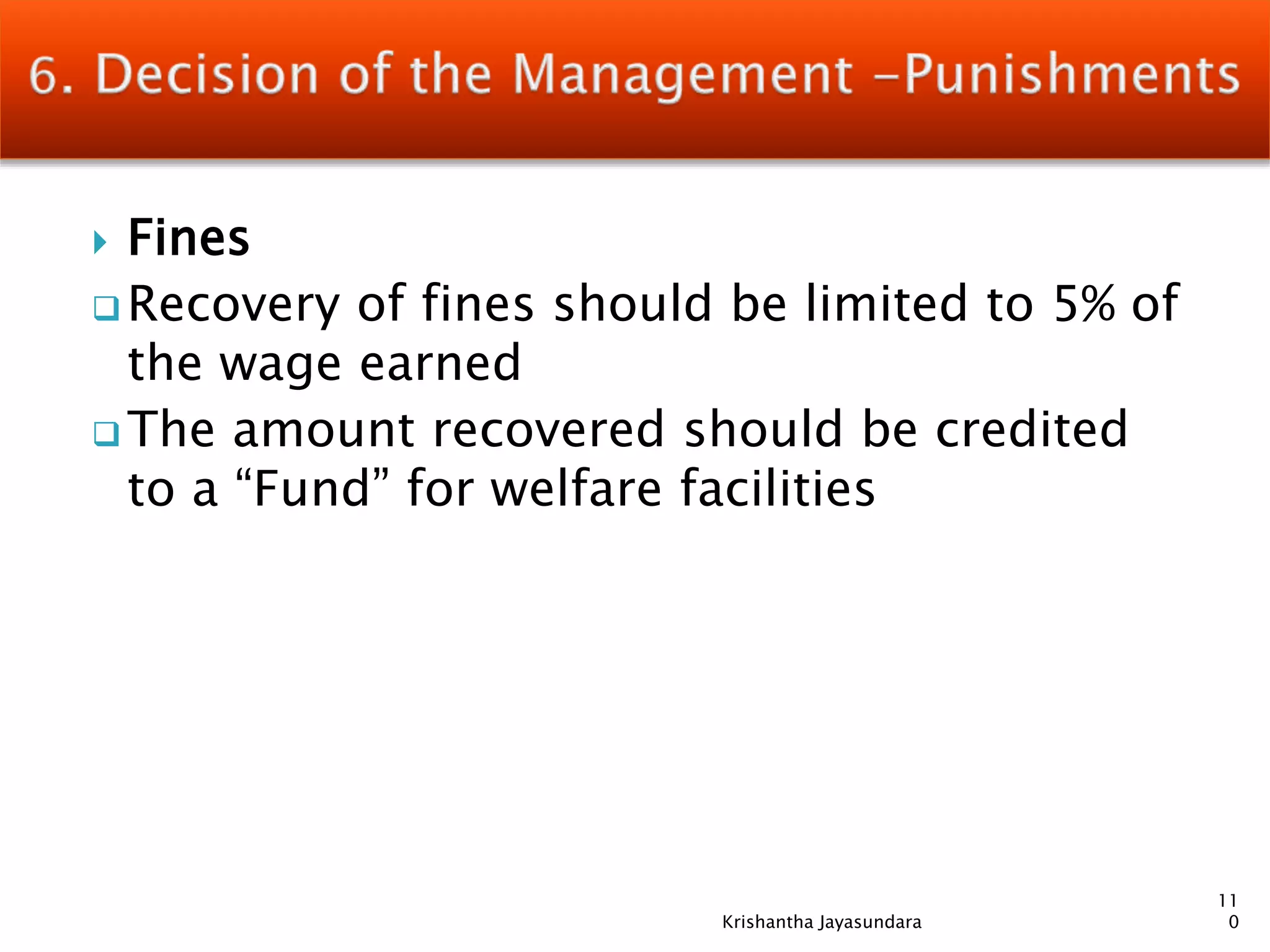
 Fines
 Recovery of fines should be limited to 5% of
the wage earned
 The amount recovered should be credited
to a “Fund” for welfare facilities
11
0Krishantha Jayasundara
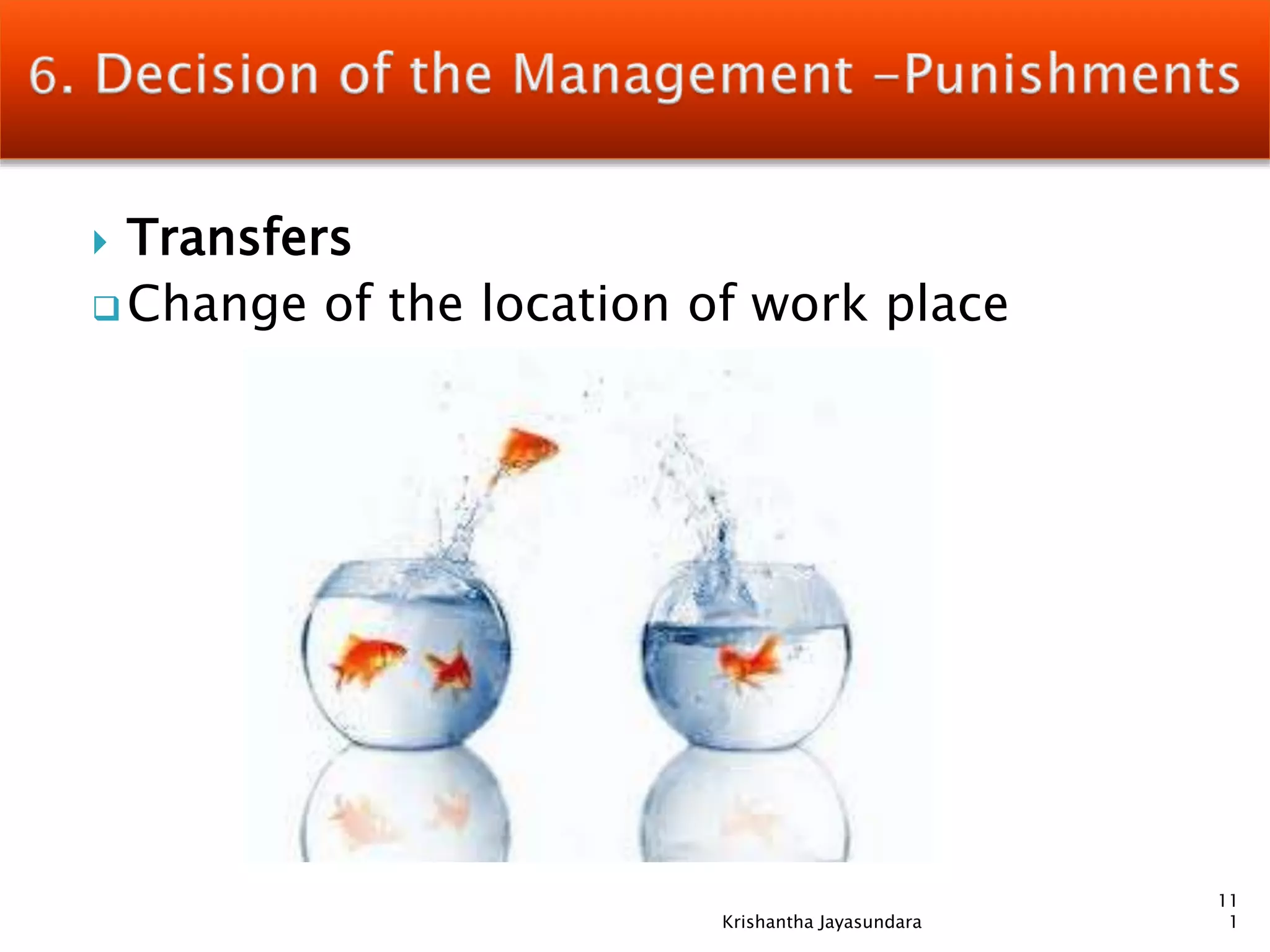
 Transfers
 Change of the location of work place
11
1Krishantha Jayasundara
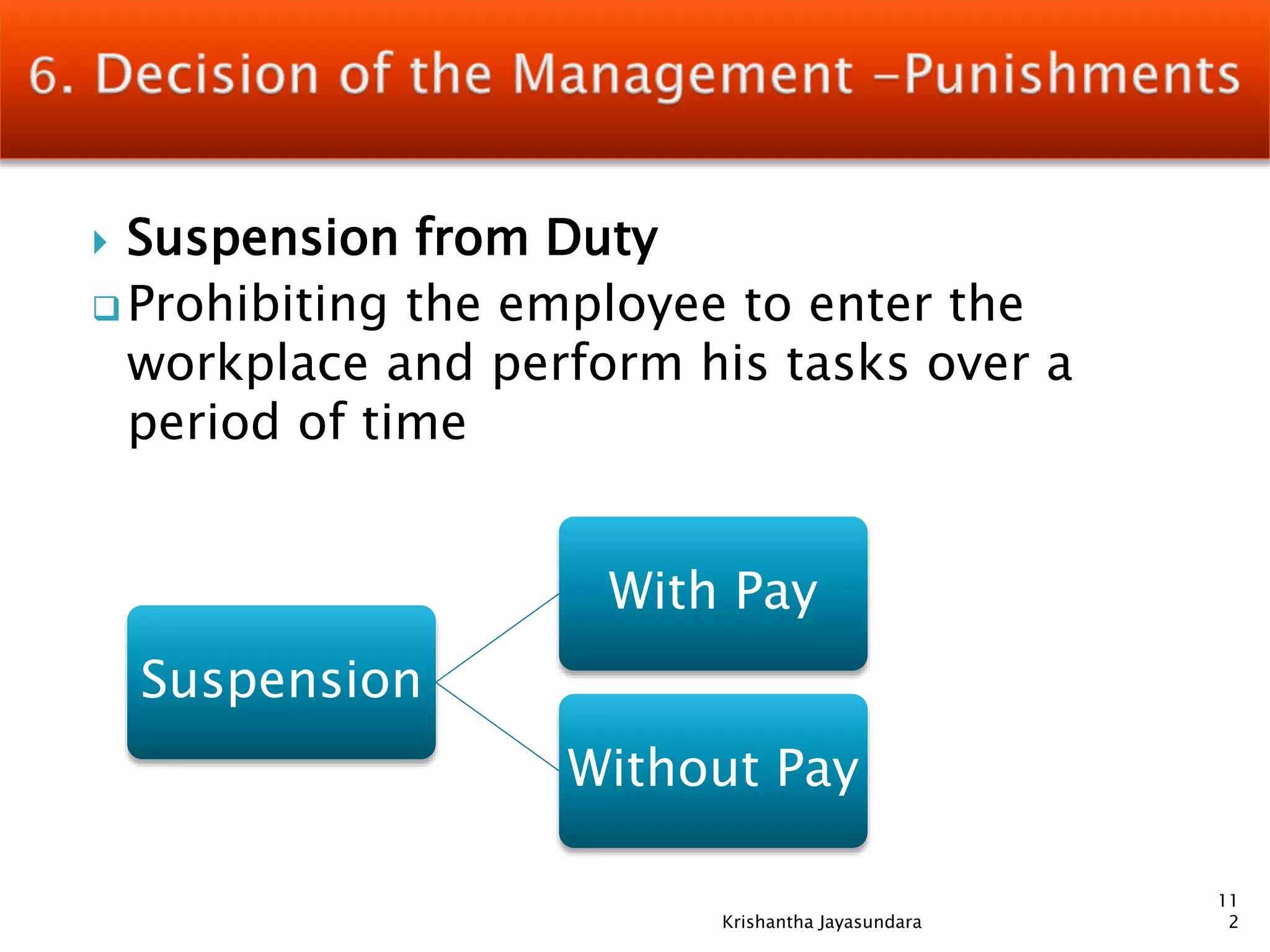
 Suspension from Duty
 Prohibiting the employee to enter the
workplace and perform his tasks over a
period of time
Suspension
With Pay
Without Pay
11
2Krishantha Jayasundara
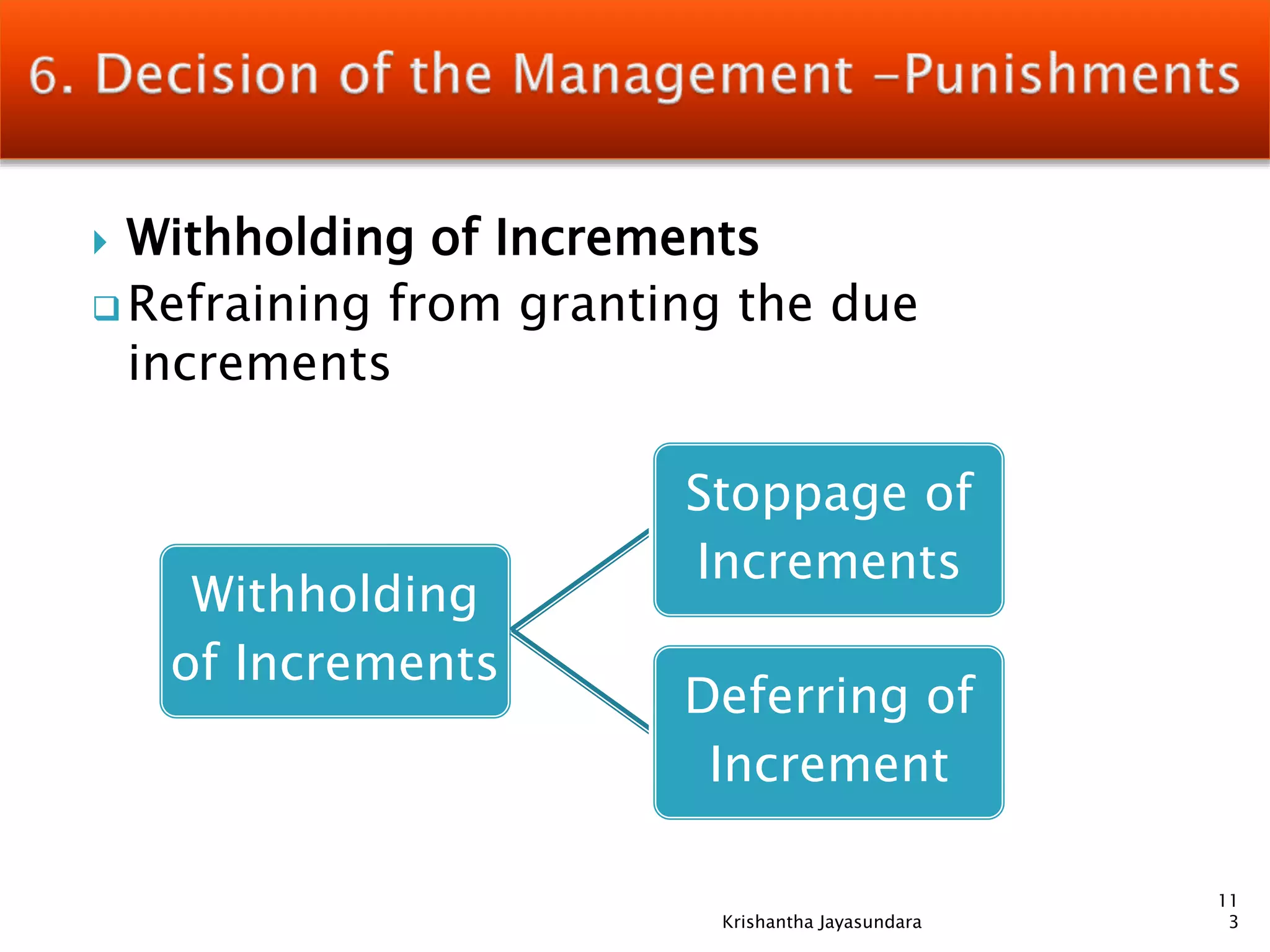
 Withholding of Increments
 Refraining from granting the due
increments
Withholding
of Increments
Stoppage of
Increments
Deferring of
Increment
11
3Krishantha Jayasundara
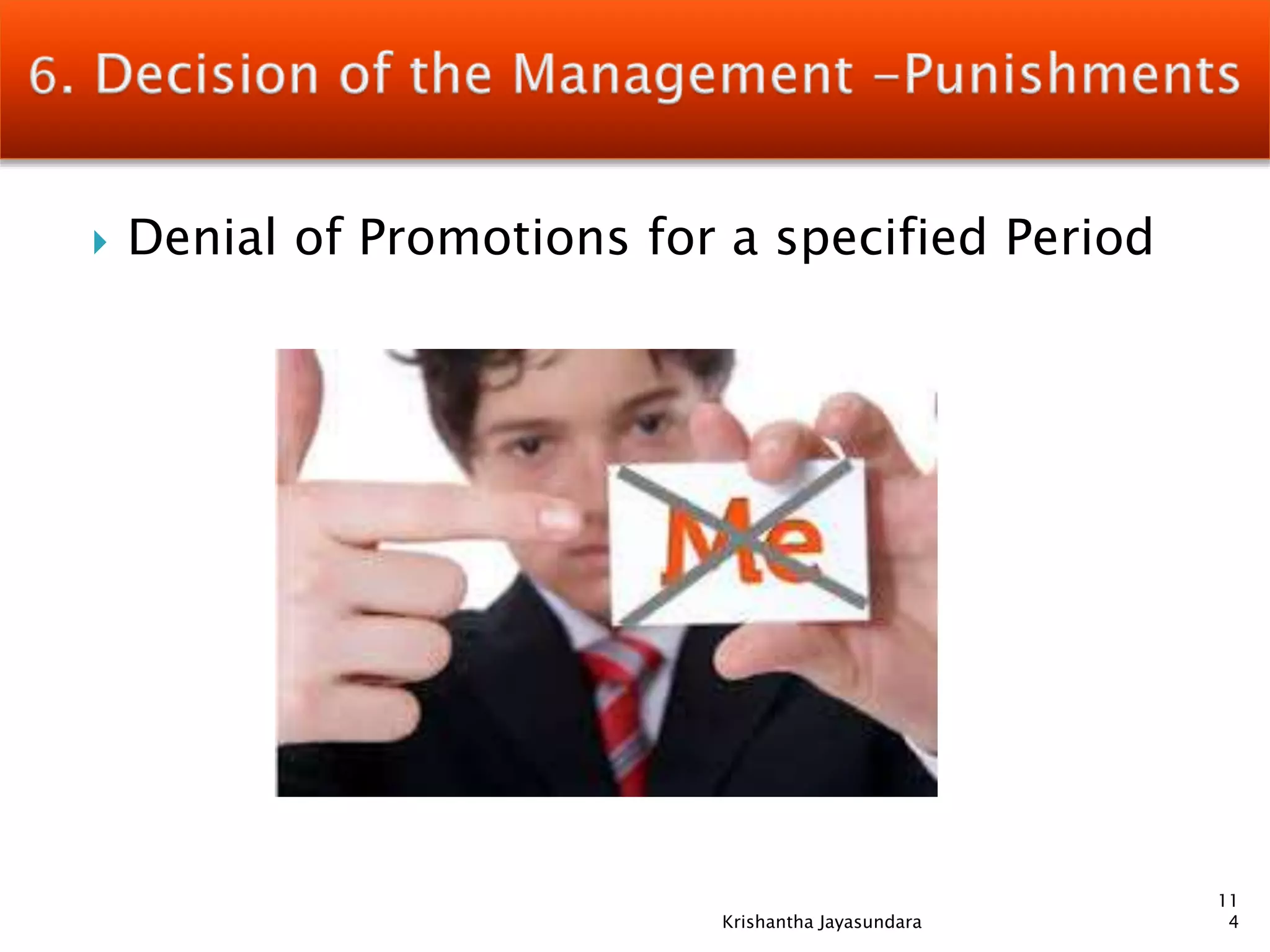
 Denial of Promotions for a specified Period
11
4Krishantha Jayasundara
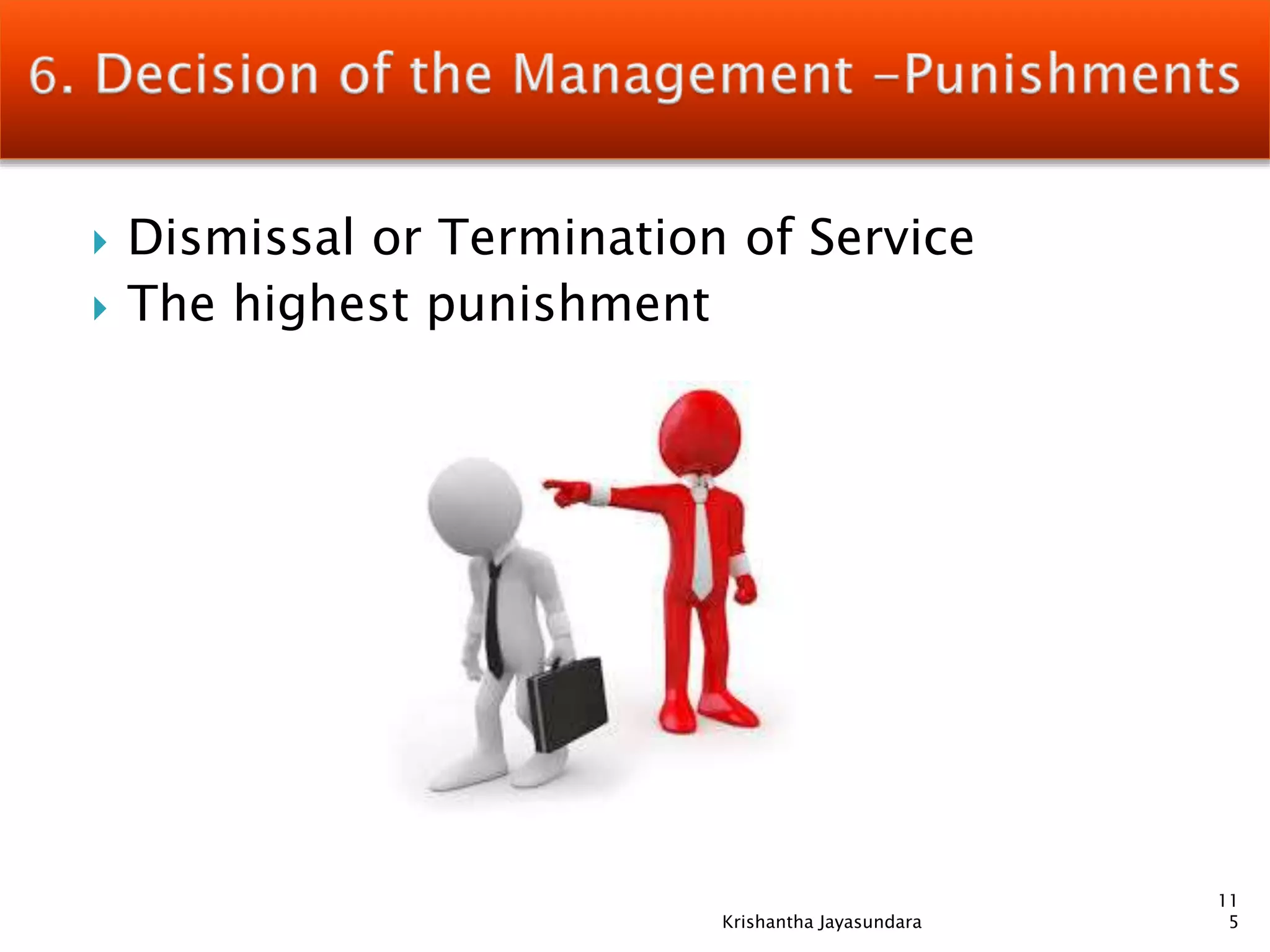
 Dismissal or Termination of Service
 The highest punishment
11
5Krishantha Jayasundara
All the punishments should be
communicated to the employee in
writing
11
6Krishantha Jayasundara
Krishantha Jayasundara
11
7

Employee misconduct & disciplinary procedure