TATION 
AARHUS 
UNIVERSITY 
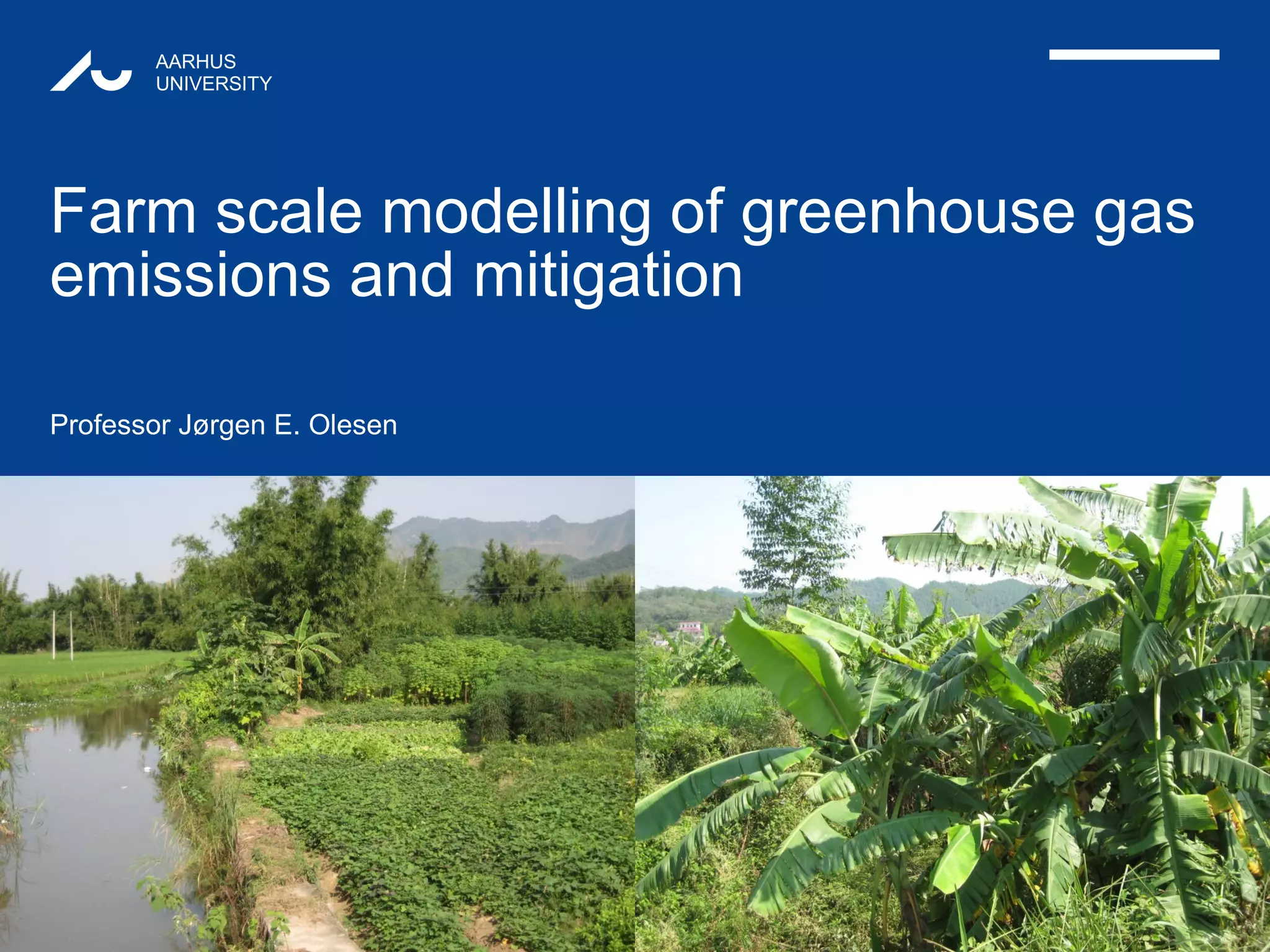
Farm scale modelling of greenhouse gas emissions and mitigation 
Professor Jørgen E. Olesen 
1
AARHUS 
UNIVERSITY 
Activities 
›DK projects: farm scale modelling of mitigation potentials for organic farmers, farm scale modelling of mitigation in intensive livestock and crop farms 
›AnimalChange: farm scale modelling in Europe and developing countries of emissions, mitigation and adaptation 
›South China (Kaiping): Carbon and nitrogen cycling in different traditional farming systems to estimate enviromental (and GHG) load 
›Vietnam (completed): Emissions of greenhouse gases from various types of smallholder farmers (different ethnic groups)
AARHUS 
UNIVERSITY 
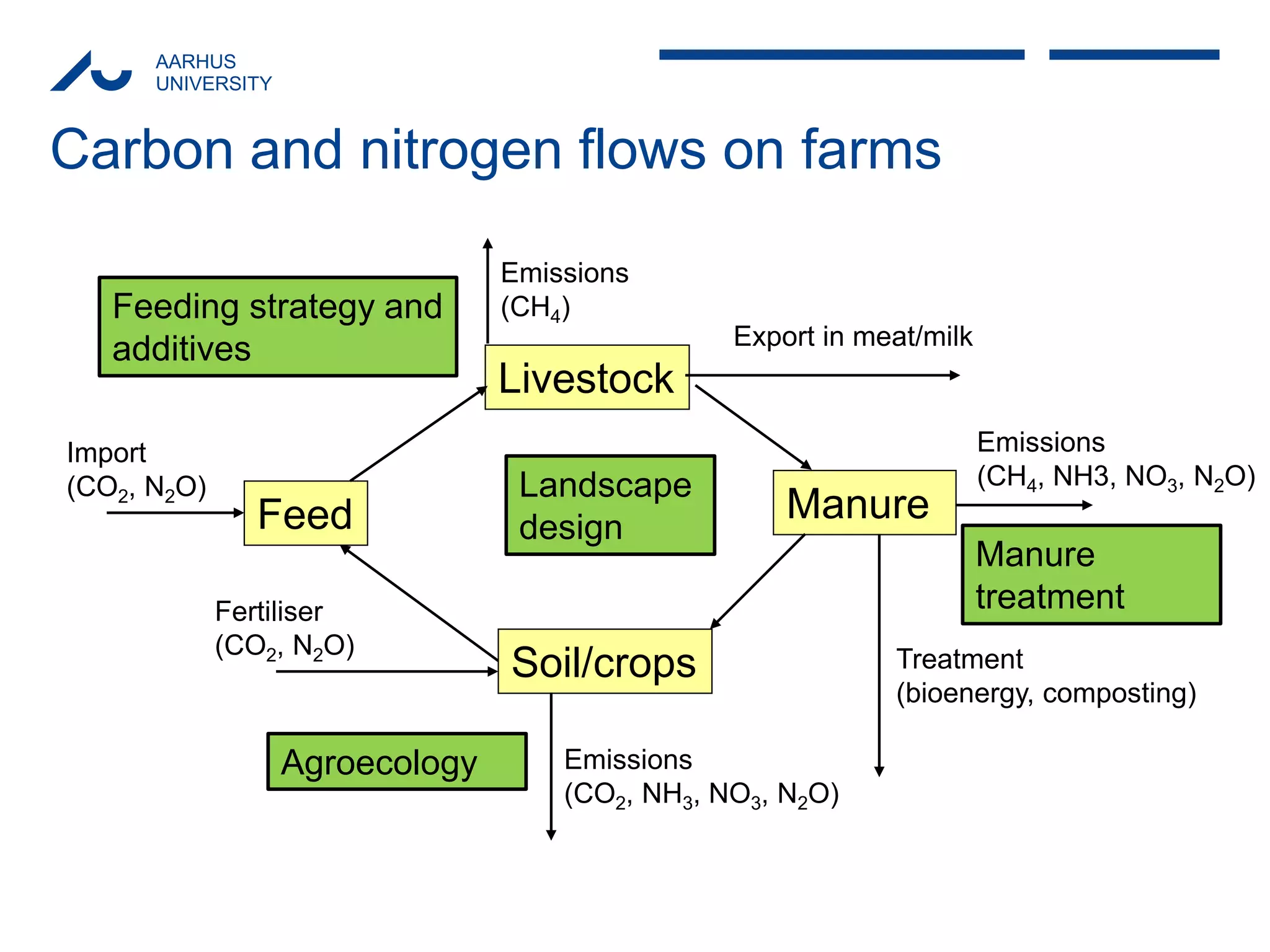
Carbon and nitrogen flows on farms 
Feed 
Livestock 
Soil/crops 
Manure Import (CO2, N2O) 
Export in meat/milk 
Treatment 
(bioenergy, composting) 
Emissions 
(CH4, NH3, NO3, N2O) 
Emissions 
(CO2, NH3, NO3, N2O) 
Fertiliser 
(CO2, N2O) Emissions (CH4) 
Agroecology 
Feeding strategy and additives 
Manure treatment 
Landscape design
AARHUS 
UNIVERSITY 
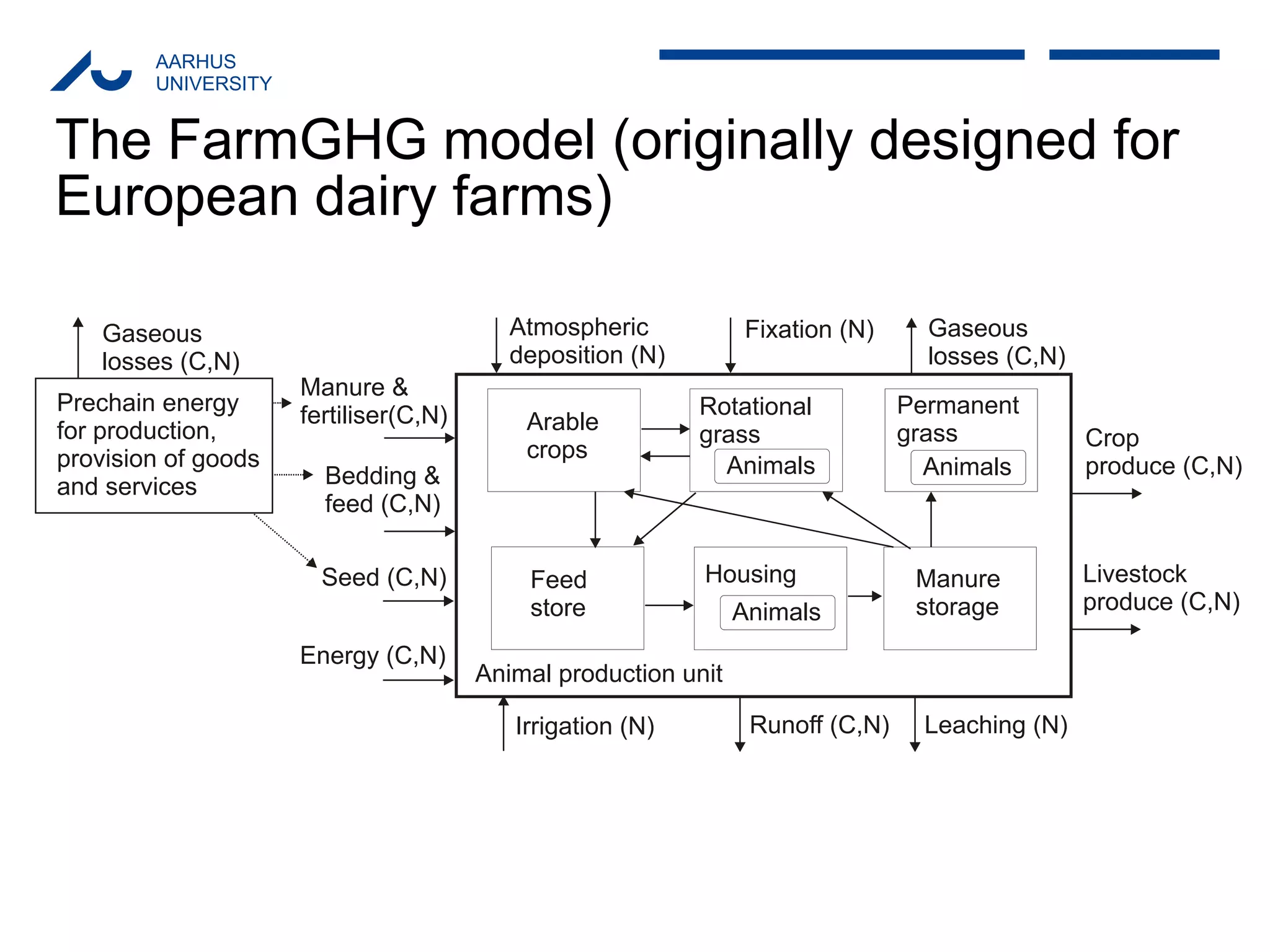
The FarmGHG model (originally designed for European dairy farms)
AARHUS 
UNIVERSITY 
Data needed for modelling farm GHGs 
›Imports of goods (and energy) to the farm (and to the household) 
›Farm land allocations (permanent crops, arable crops, ponds, non- utilised area) 
›Farm livestock (stocks and flows of animals) 
›Crop management (crop type, timing of sowing/harvesting, fertilisation, crop protection) 
›Livestock management (feeding, breeding, milking, slaughtering, timing) 
›Crop and livestock production (yield) – if not modelled by the model
AARHUS 
UNIVERSITY 
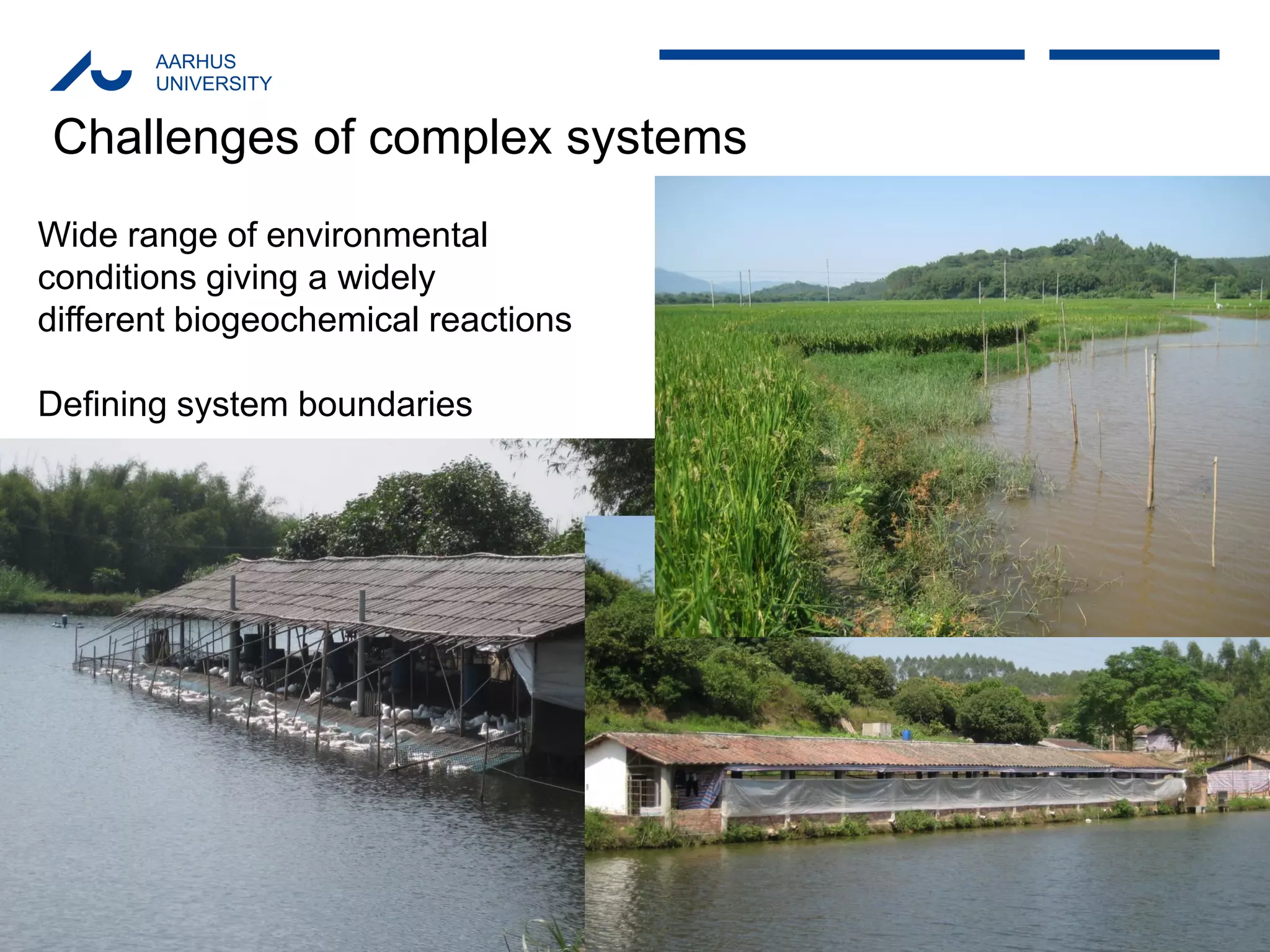
Challenges of complex systems 
Wide range of environmental 
conditions giving a widely 
different biogeochemical reactions 
Defining system boundaries
AARHUS 
UNIVERSITY 
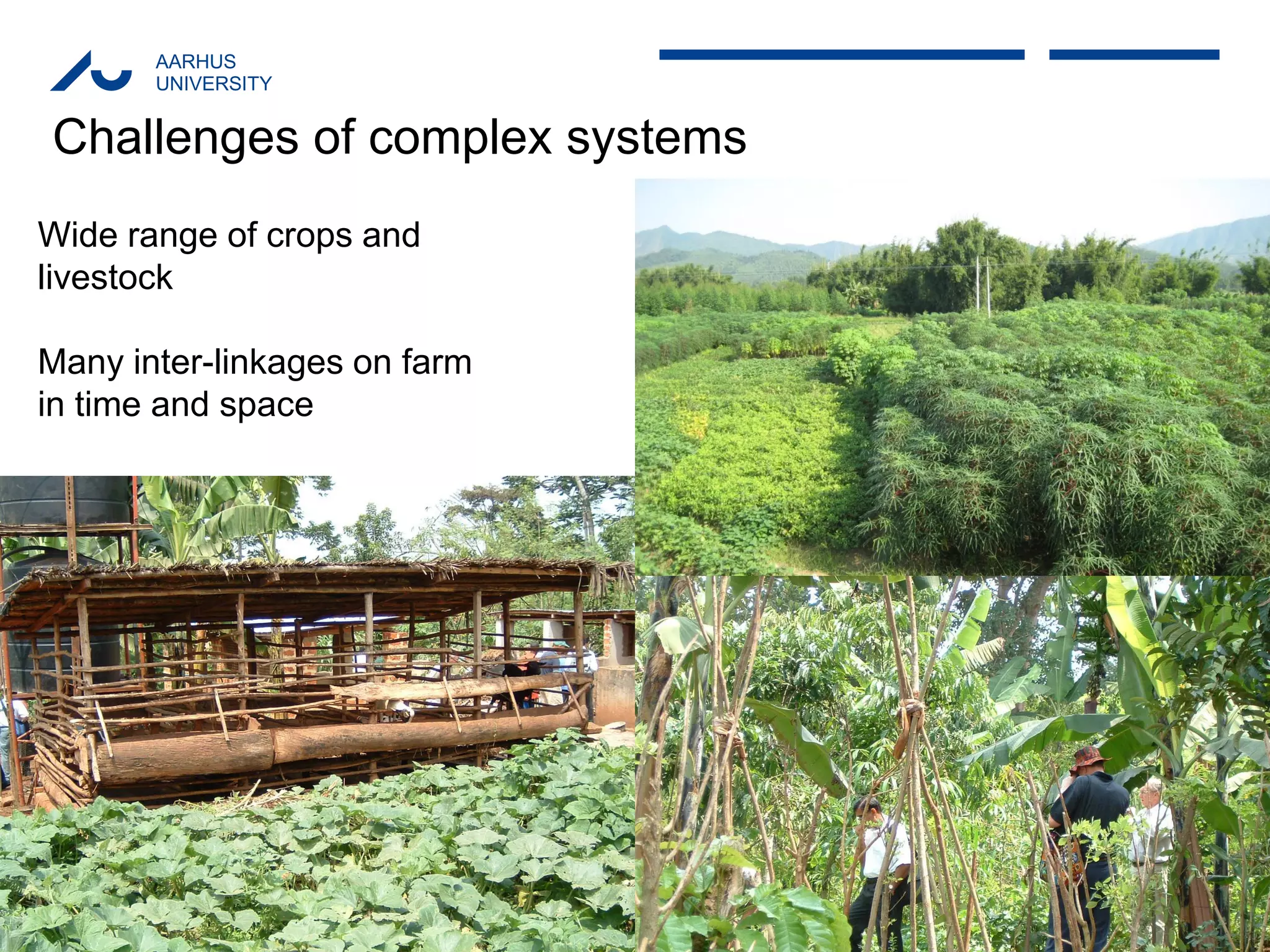
Challenges of complex systems 
Wide range of crops and 
livestock 
Many inter-linkages on farm 
in time and space
AARHUS 
UNIVERSITY 
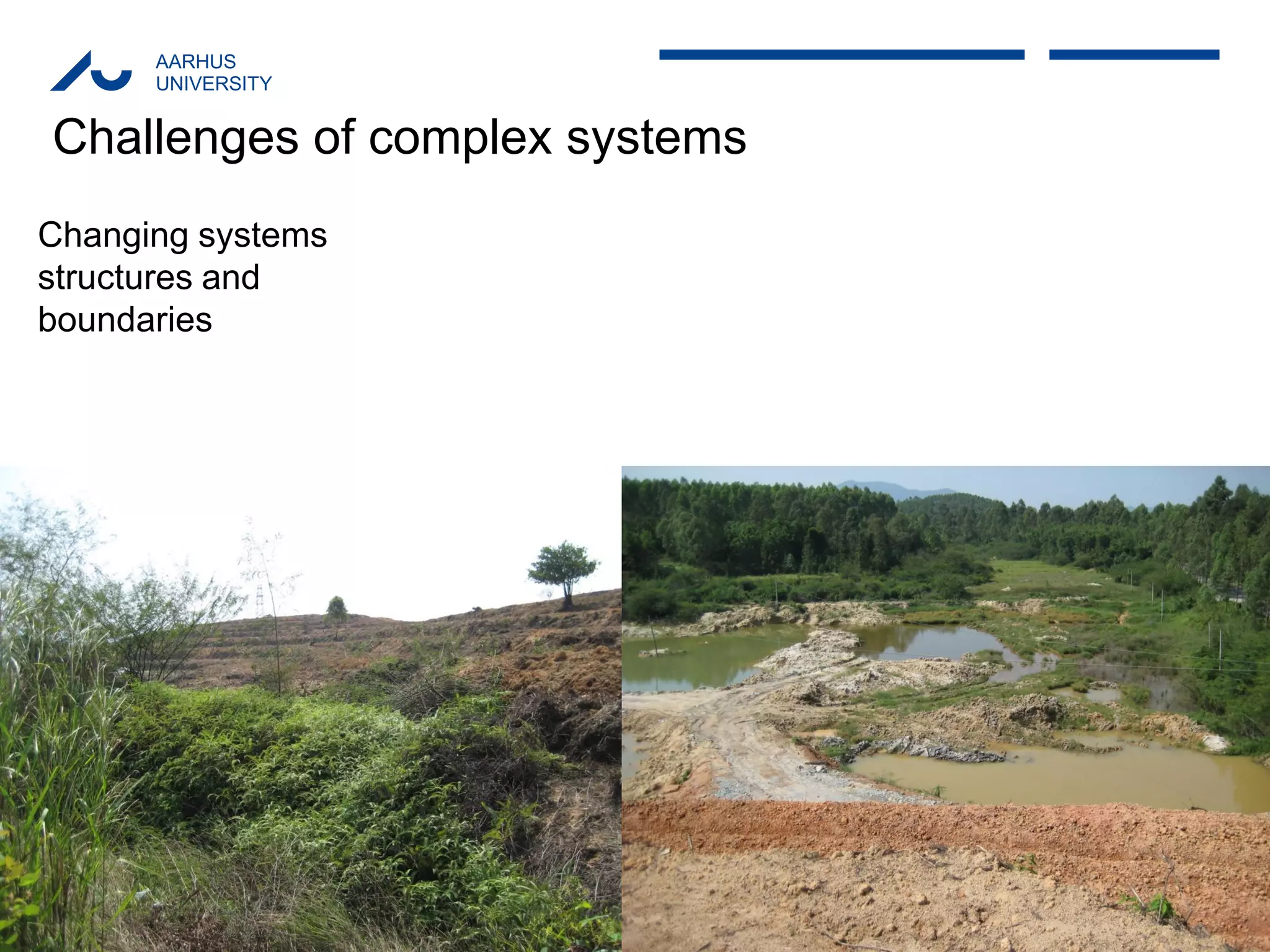
Challenges of complex systems 
Changing systems 
structures and 
boundaries
AARHUS 
UNIVERSITY 
Need for simplification 
›Properly define farm (system) boundaries (e.g. by land, structures, buildings) 
›Define main structures on the farm (crops, livestock, manure storages, ponds) and their interlinkages 
›Get good data for imports and exports to/from the farm 
›Focus on the main crops and animals on the farm and get data on their extent and management
AARHUS 
UNIVERSITY 
Estimating emissions 
›Modelling flows of carbon and nitrogen 
›Nitrogen inputs in fertilisers, manure and biological fixation 
›Plant productivity 
›Animal efficiency 
›Animal waste management 
›Modelling emissions of methane and nitrous oxide 
›IPCC emission factor approach 
›Biogeochemical models 
›Modelling (changes in) carbon stocks 
›Vegetation models 
›Soil models (simple or complex)
AARHUS 
UNIVERSITY 
Data sources 
›Remote sensing 
›Land allocation 
›Vegetation duration and development 
›Farm surveys 
›Trade in and out of the farm 
›Crop area and management 
›Livestock numbers and management 
›Manure managment 
›Monitoring 
›Production at regional scale 
›C and N flows at the landscape (rivers, non-agricultural land) 
›Literature and controlled experiments
AARHUS 
UNIVERSITY 
Challenges and gaps 
›Define farm system boundary (allow for changing boundaries) 
›Develop flexible and modular tool for linking farm C and N flows 
›Design simple protocol for quantifying stocks and flows of C and N between main farm components and the outside (standard, actual) 
›Incorporate emission modelling (flexible tier) with C+N flows – sensitive to enviroment and management 
›Allow for assessment of mitigation (and adaptation) options 
›Issues: 
›Accounting and verification of activity data in complex systems 
›Uncertainty assessments 
›We do not scientifically understand many of these complex systems

Olesen Aarhus methods ws oct 2011

  • 1.
    TATION AARHUS UNIVERSITY Farm scale modelling of greenhouse gas emissions and mitigation Professor Jørgen E. Olesen 1
  • 2.
    AARHUS UNIVERSITY Activities ›DK projects: farm scale modelling of mitigation potentials for organic farmers, farm scale modelling of mitigation in intensive livestock and crop farms ›AnimalChange: farm scale modelling in Europe and developing countries of emissions, mitigation and adaptation ›South China (Kaiping): Carbon and nitrogen cycling in different traditional farming systems to estimate enviromental (and GHG) load ›Vietnam (completed): Emissions of greenhouse gases from various types of smallholder farmers (different ethnic groups)
  • 3.
    AARHUS UNIVERSITY Carbonand nitrogen flows on farms Feed Livestock Soil/crops Manure Import (CO2, N2O) Export in meat/milk Treatment (bioenergy, composting) Emissions (CH4, NH3, NO3, N2O) Emissions (CO2, NH3, NO3, N2O) Fertiliser (CO2, N2O) Emissions (CH4) Agroecology Feeding strategy and additives Manure treatment Landscape design
  • 4.
    AARHUS UNIVERSITY TheFarmGHG model (originally designed for European dairy farms)
  • 5.
    AARHUS UNIVERSITY Dataneeded for modelling farm GHGs ›Imports of goods (and energy) to the farm (and to the household) ›Farm land allocations (permanent crops, arable crops, ponds, non- utilised area) ›Farm livestock (stocks and flows of animals) ›Crop management (crop type, timing of sowing/harvesting, fertilisation, crop protection) ›Livestock management (feeding, breeding, milking, slaughtering, timing) ›Crop and livestock production (yield) – if not modelled by the model
  • 6.
    AARHUS UNIVERSITY Challengesof complex systems Wide range of environmental conditions giving a widely different biogeochemical reactions Defining system boundaries
  • 7.
    AARHUS UNIVERSITY Challengesof complex systems Wide range of crops and livestock Many inter-linkages on farm in time and space
  • 8.
    AARHUS UNIVERSITY Challengesof complex systems Changing systems structures and boundaries
  • 9.
    AARHUS UNIVERSITY Needfor simplification ›Properly define farm (system) boundaries (e.g. by land, structures, buildings) ›Define main structures on the farm (crops, livestock, manure storages, ponds) and their interlinkages ›Get good data for imports and exports to/from the farm ›Focus on the main crops and animals on the farm and get data on their extent and management
  • 10.
    AARHUS UNIVERSITY Estimatingemissions ›Modelling flows of carbon and nitrogen ›Nitrogen inputs in fertilisers, manure and biological fixation ›Plant productivity ›Animal efficiency ›Animal waste management ›Modelling emissions of methane and nitrous oxide ›IPCC emission factor approach ›Biogeochemical models ›Modelling (changes in) carbon stocks ›Vegetation models ›Soil models (simple or complex)
  • 11.
    AARHUS UNIVERSITY Datasources ›Remote sensing ›Land allocation ›Vegetation duration and development ›Farm surveys ›Trade in and out of the farm ›Crop area and management ›Livestock numbers and management ›Manure managment ›Monitoring ›Production at regional scale ›C and N flows at the landscape (rivers, non-agricultural land) ›Literature and controlled experiments
  • 12.
    AARHUS UNIVERSITY Challengesand gaps ›Define farm system boundary (allow for changing boundaries) ›Develop flexible and modular tool for linking farm C and N flows ›Design simple protocol for quantifying stocks and flows of C and N between main farm components and the outside (standard, actual) ›Incorporate emission modelling (flexible tier) with C+N flows – sensitive to enviroment and management ›Allow for assessment of mitigation (and adaptation) options ›Issues: ›Accounting and verification of activity data in complex systems ›Uncertainty assessments ›We do not scientifically understand many of these complex systems