This document provides instruction on how to properly use the verbs "do", "does", and "did" in sentences. It explains that "do" is used for singular subjects, "does" is used for plural subjects, and "did" is the past tense form. Examples are provided to demonstrate the correct usage of these verbs in different contexts like checking homework, asking questions, and giving reminders. Readers are taught the formula of using the base verb form after "do", "does", or "did". Common errors are highlighted and the document ensures understanding through additional examples and recaps.
In this document
Powered by AI
Introduction to using DO, DOES, and DID with examples for classroom statements, homework, and reminders.
Explanation of rules for using DO, DOES, and DID, including subject-verb agreement and practice sentences.
Practice exercises for using DO, DOES, and DID in sentences, along with error identification and correction.
Choose the statementthat you
usually use in class. Choose the
letter of your answer.
3.
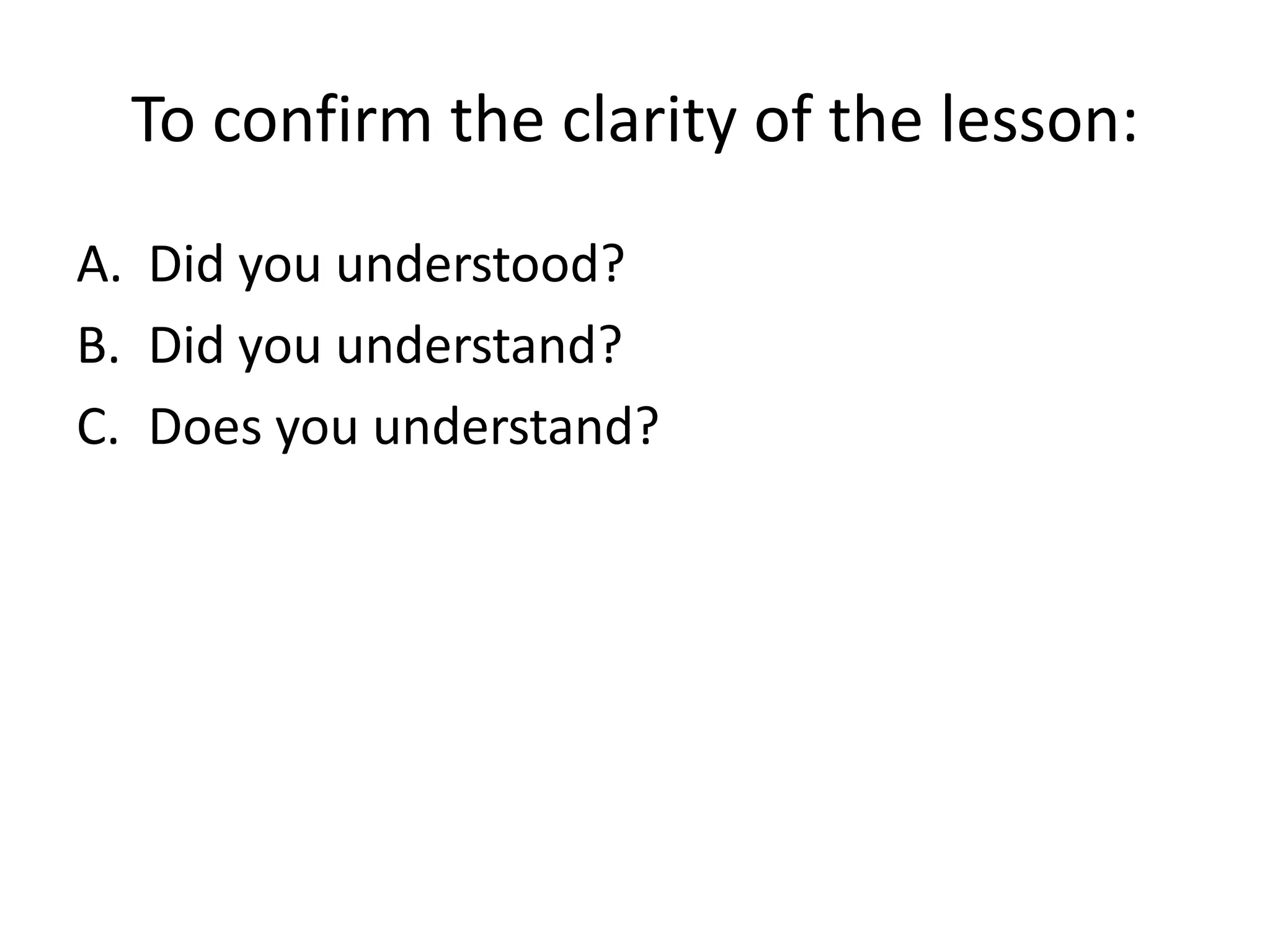
To confirm theclarity of the lesson:
A. Did you understood?
B. Did you understand?
C. Does you understand?
4.
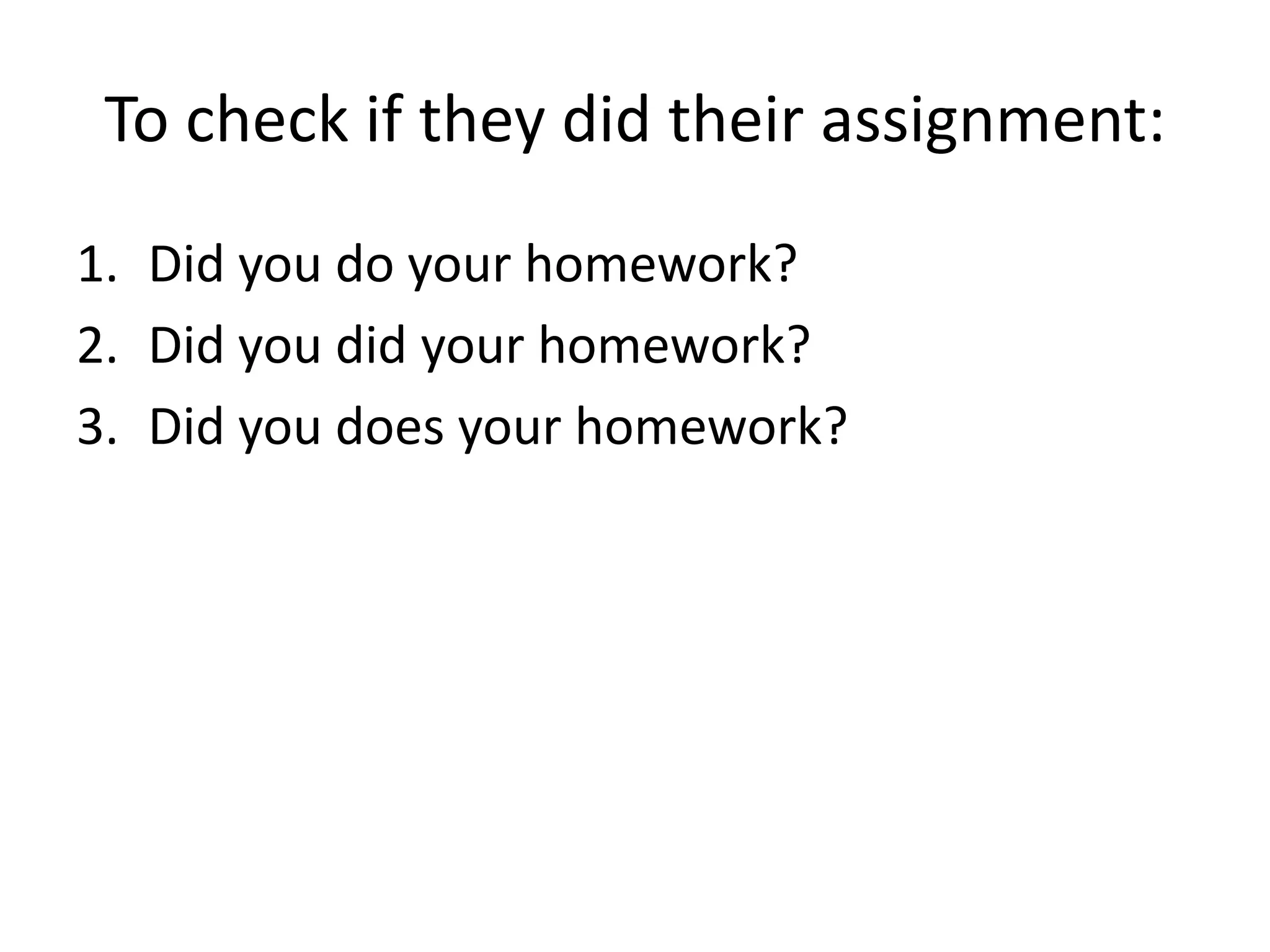
To check ifthey did their assignment:
1. Did you do your homework?
2. Did you did your homework?
3. Did you does your homework?
5.
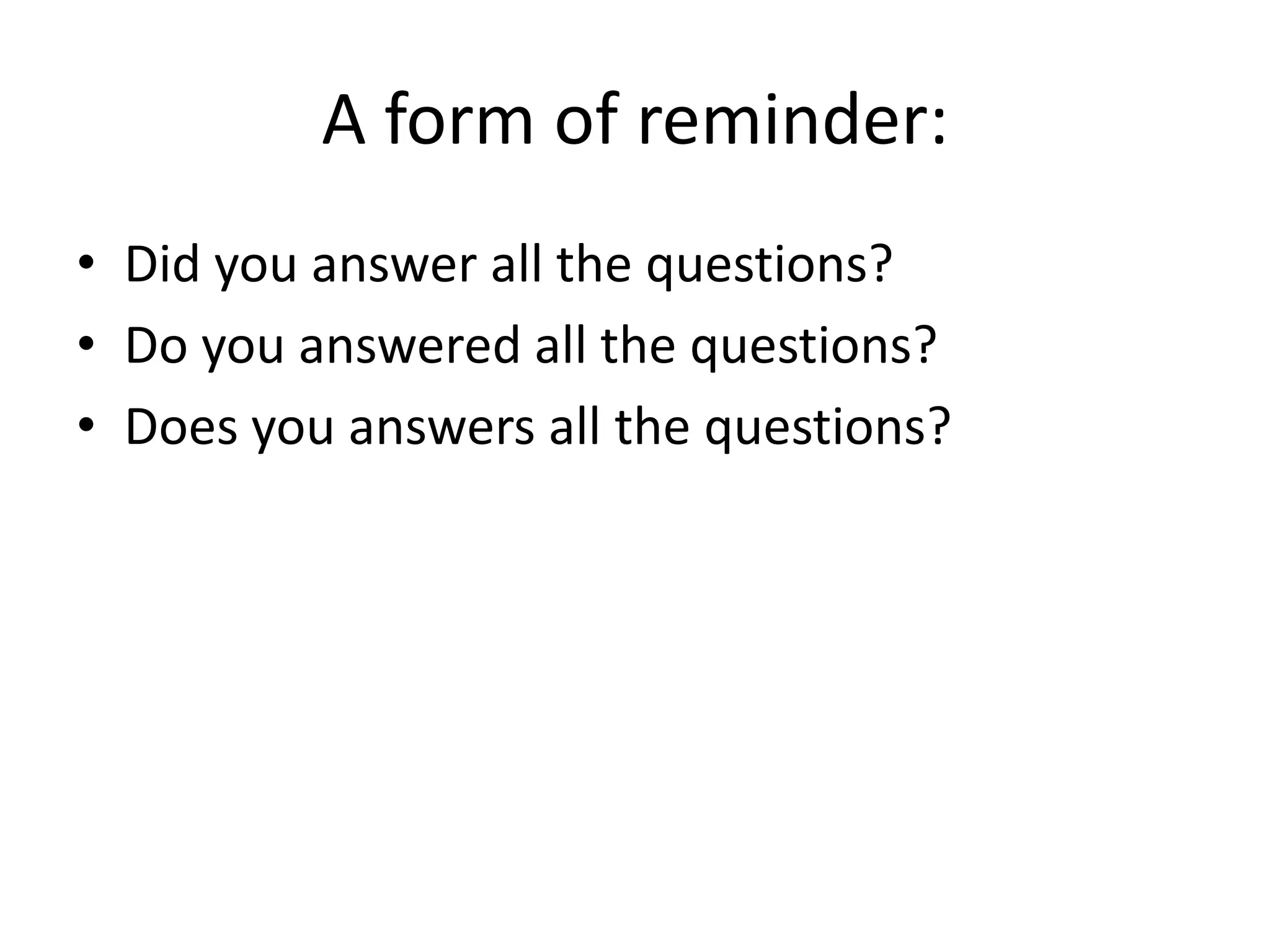
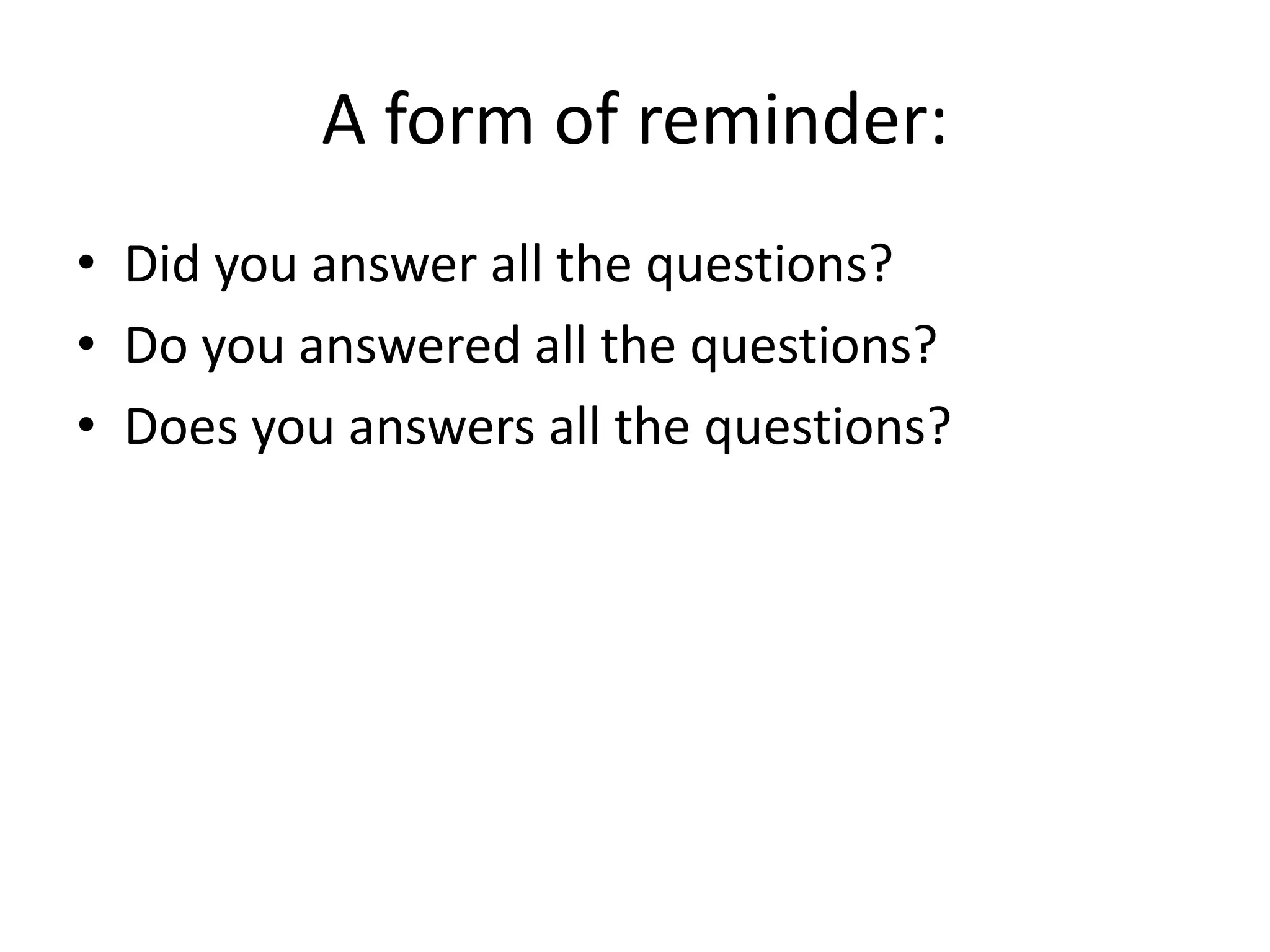
A form ofreminder:
• Did you answer all the questions?
• Do you answered all the questions?
• Does you answers all the questions?
6.
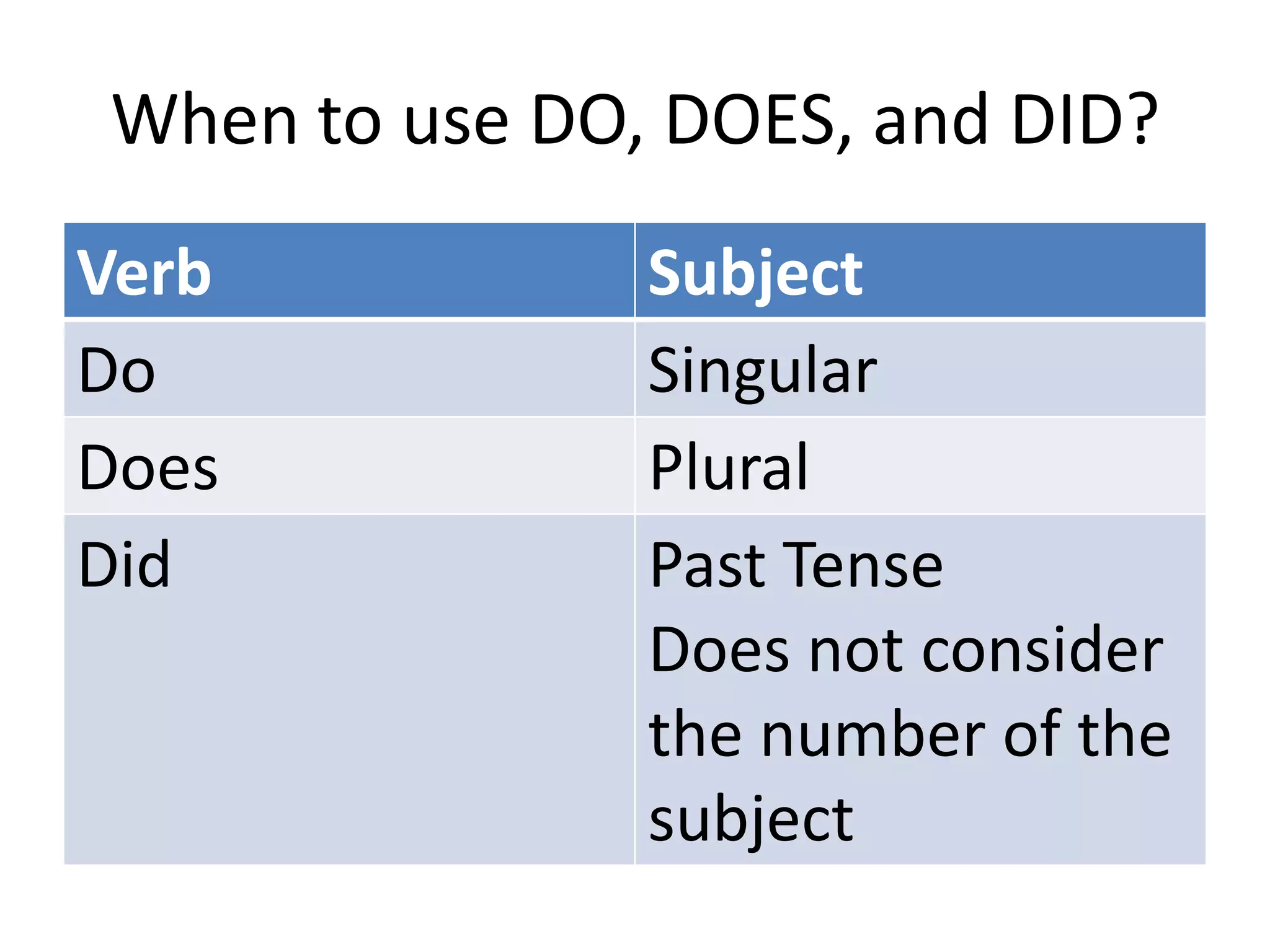
When to useDO, DOES, and DID?
Verb Subject
Do Singular
Does Plural
Did Past Tense
Does not consider
the number of the
subject
7.
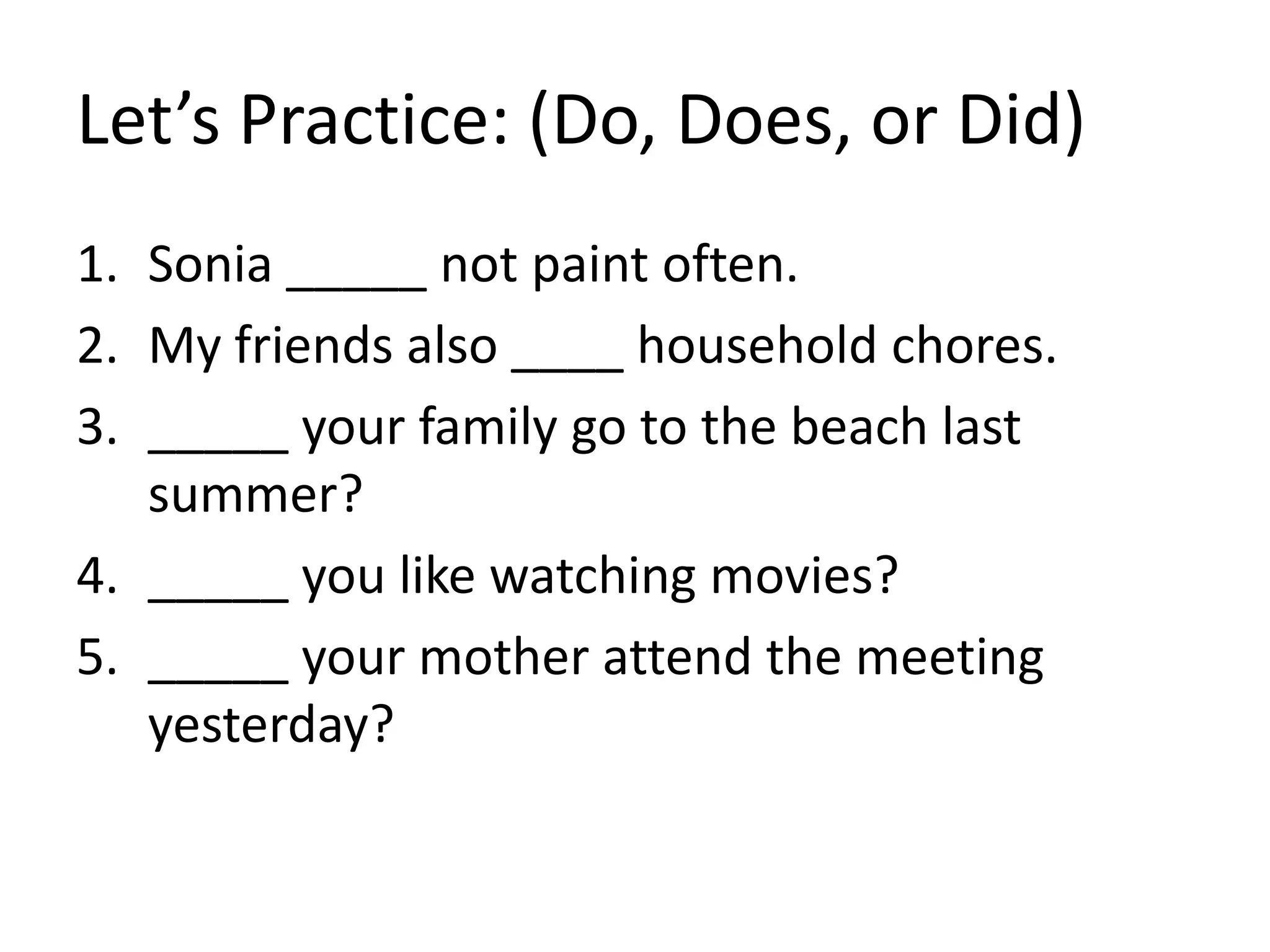
Let’s Practice: (Do,Does, or Did)
1. Sonia _____ not paint often.
2. My friends also ____ household chores.
3. _____ your family go to the beach last
summer?
4. _____ you like watching movies?
5. _____ your mother attend the meeting
yesterday?
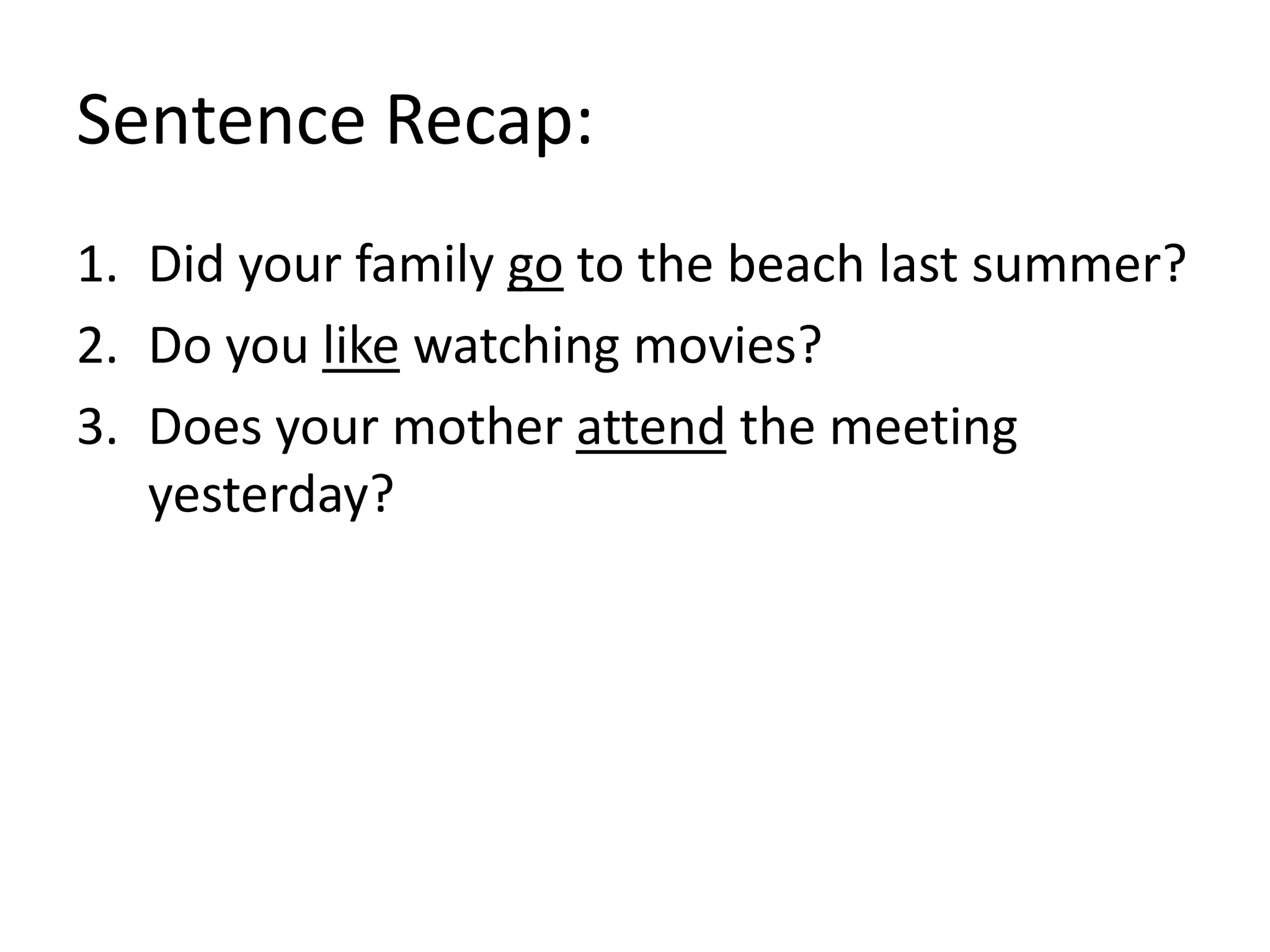
Sentence Recap:
1. Didyour family go to the beach last summer?
2. Do you like watching movies?
3. Does your mother attend the meeting
yesterday?
10.
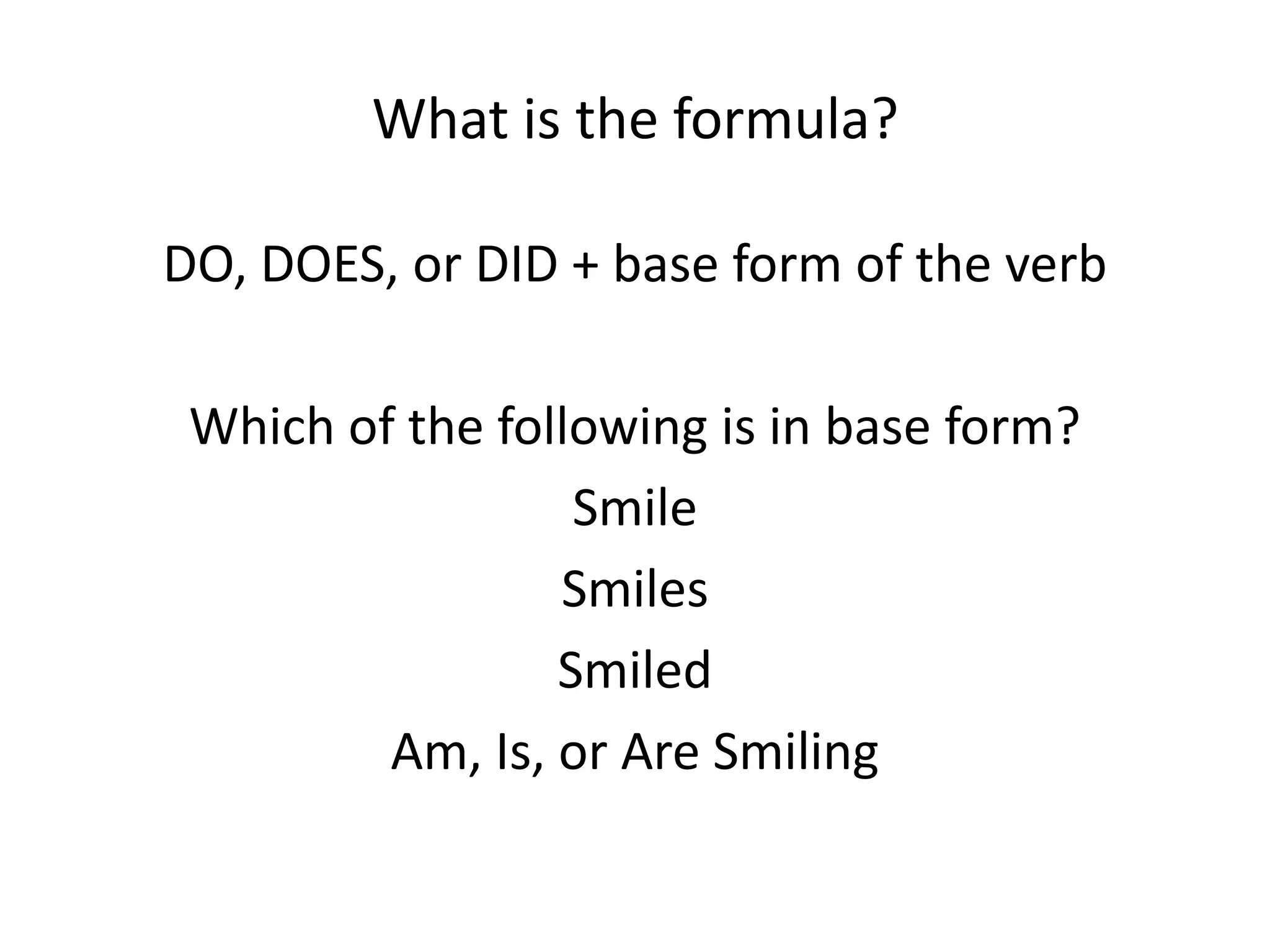
What is theformula?
DO, DOES, or DID + base form of the verb
Which of the following is in base form?
Smile
Smiles
Smiled
Am, Is, or Are Smiling
11.
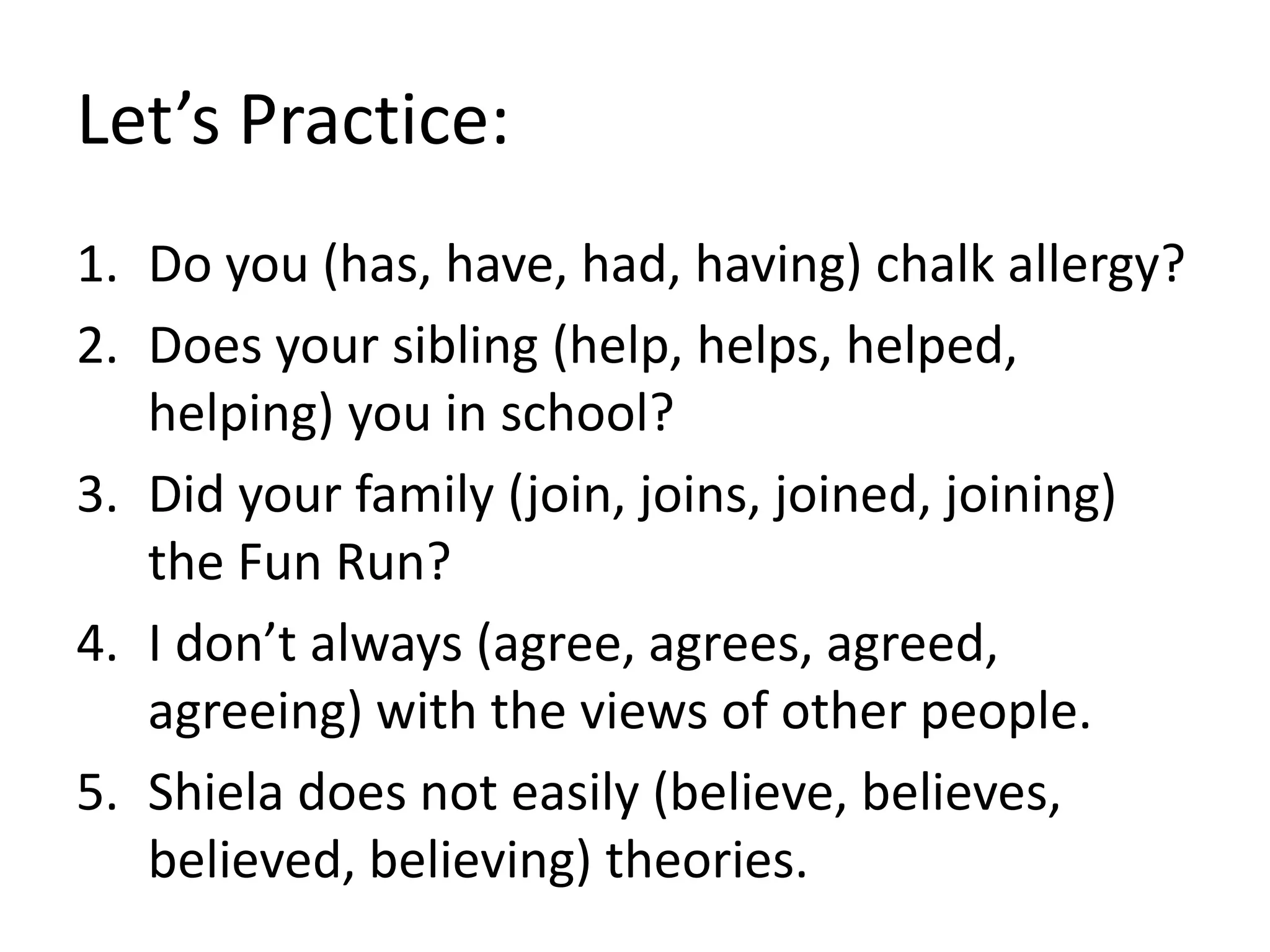
Let’s Practice:
1. Doyou (has, have, had, having) chalk allergy?
2. Does your sibling (help, helps, helped,
helping) you in school?
3. Did your family (join, joins, joined, joining)
the Fun Run?
4. I don’t always (agree, agrees, agreed,
agreeing) with the views of other people.
5. Shiela does not easily (believe, believes,
believed, believing) theories.
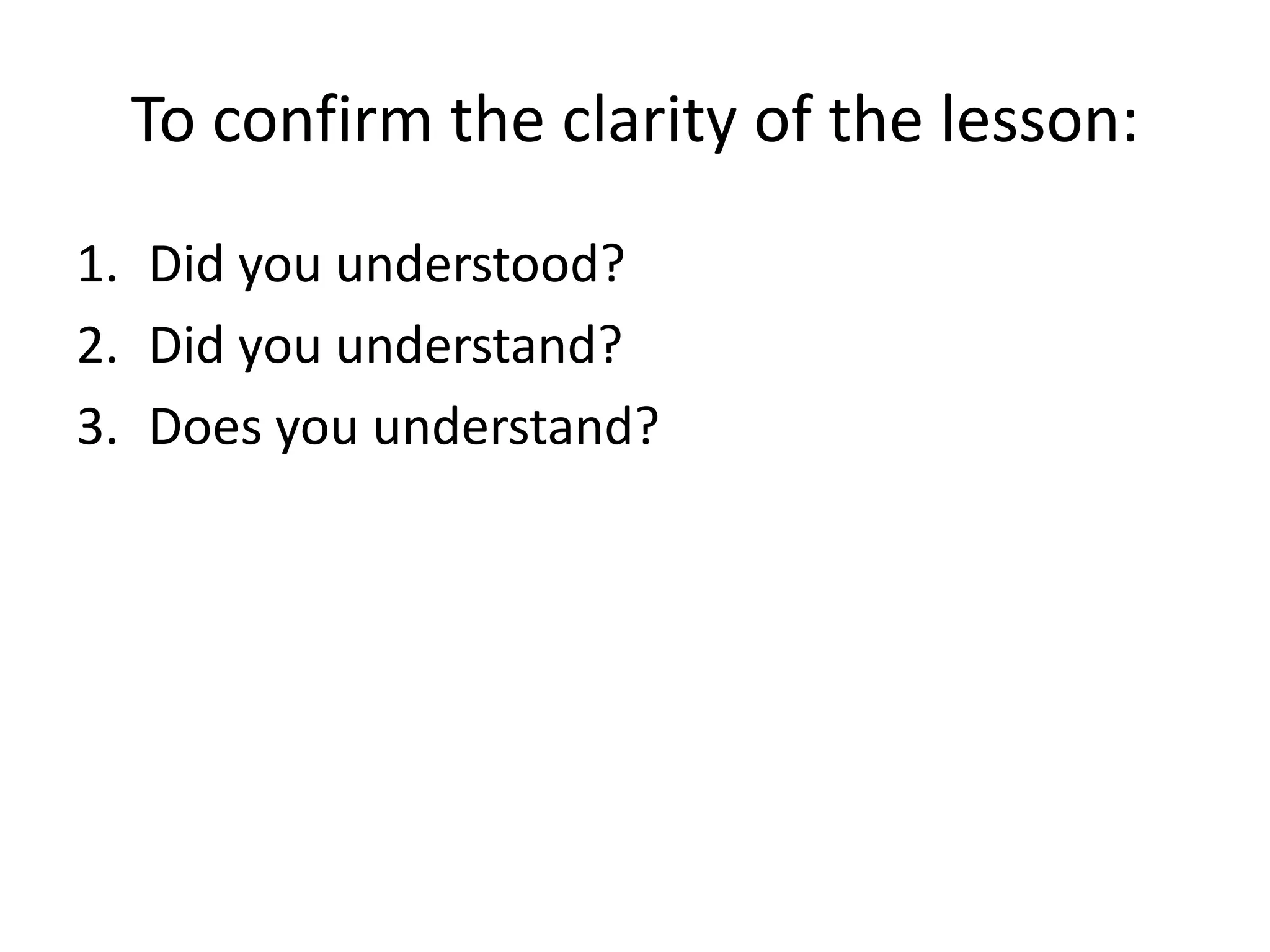
To confirm theclarity of the lesson:
1. Did you understood?
2. Did you understand?
3. Does you understand?
14.
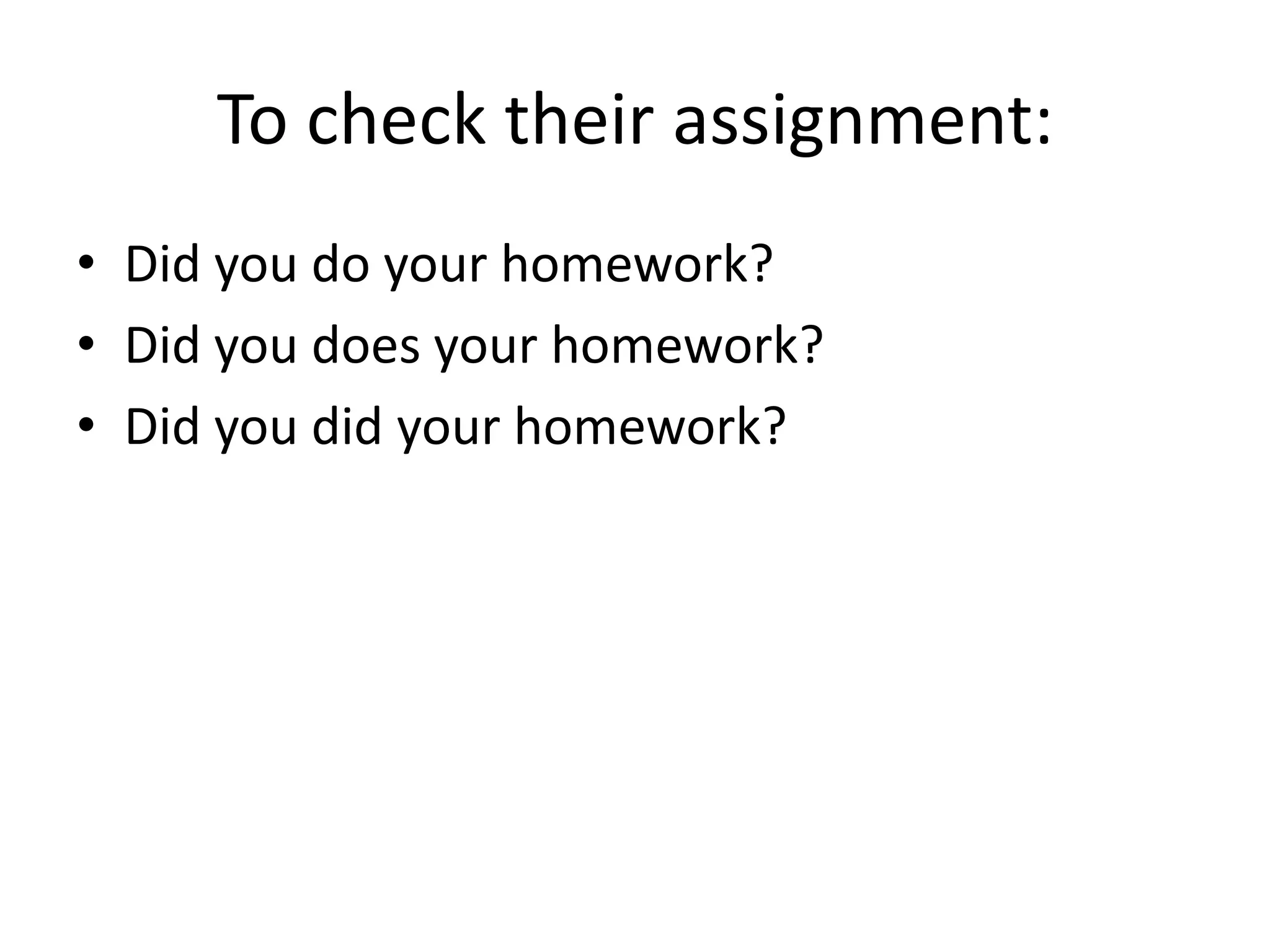
To check theirassignment:
• Did you do your homework?
• Did you does your homework?
• Did you did your homework?
15.
A form ofreminder:
• Did you answer all the questions?
• Do you answered all the questions?
• Does you answers all the questions?
16.
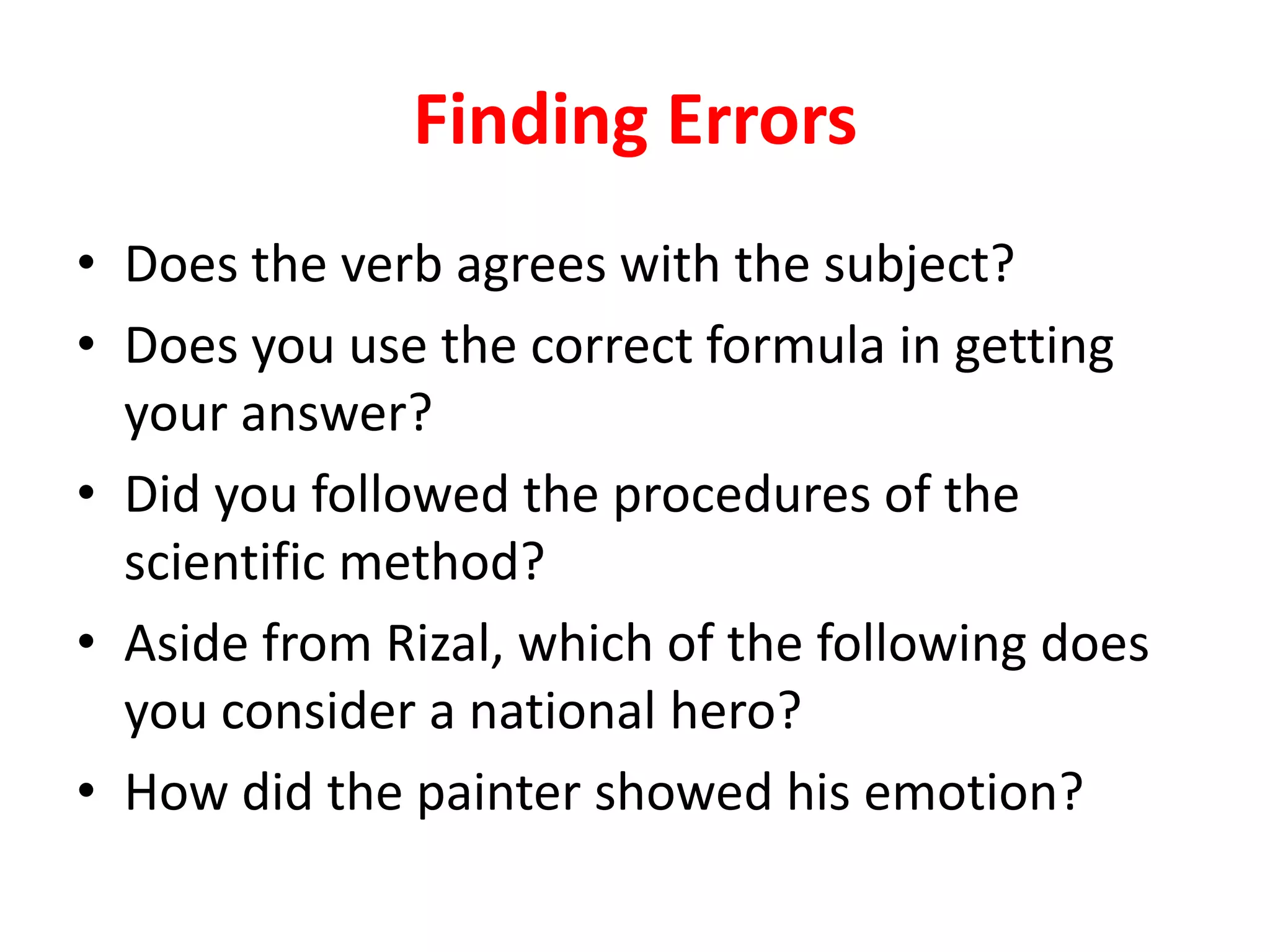
Finding Errors
• Doesthe verb agrees with the subject?
• Does you use the correct formula in getting
your answer?
• Did you followed the procedures of the
scientific method?
• Aside from Rizal, which of the following does
you consider a national hero?
• How did the painter showed his emotion?





![Simple present[1]](https://cdn.slidesharecdn.com/ss_thumbnails/simplepresent1-120928191157-phpapp01-thumbnail.jpg?width=640&height=640&fit=bounds)


![Questions questions[1]](https://cdn.slidesharecdn.com/ss_thumbnails/questionsquestions1-121007092336-phpapp01-thumbnail.jpg?width=640&height=640&fit=bounds)


