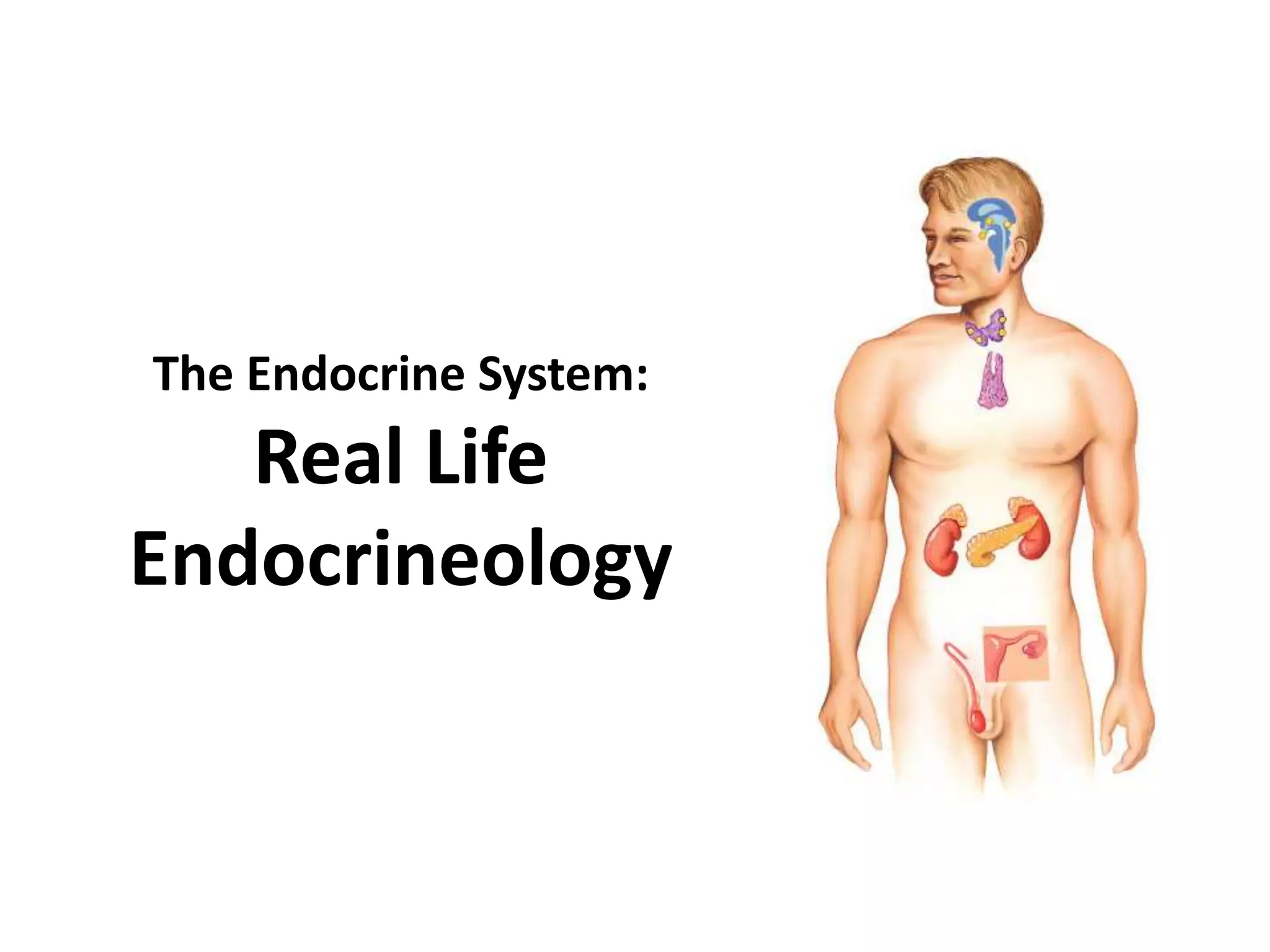
The Endocrine System:
Real Life
Endocrineology
Endocrinology
• Endocrinology the branch of physiology and
medicine concerned with endocrine glands and
hormones.
• Endocrinologists are specially trained
physicians who diagnose diseases related to the
glands. The diseases they are trained to treat
often affect other parts of the body beyond
glands.
Endocrine Diseases
• Type 1 diabetes
• Hyperthyroidism
• Hypothyroidism
• Low
Testosterone
• Growth Hormone
Deficiency
• Hashimoto’s
Thyroiditis
• Addison’s
Disease
• Grave’s Disease
Type-1 Diabetes
Description: a form of diabetes mellitus that results from the autoimmune destruction
of the insulin-producing beta cells in the pancreas.
Symptoms:
The classical symptoms of type 1 diabetes include: excessive urination, increased
thirst, dry mouth, increased hunger, fatigue, and weight loss.
Gland and Hormones Involved:
Pancreas: a long, flat gland in abdomen behind stomach. It produces enzymes into
the small intestine to help with digestion. It also contains clusters of cells called islets
Insulin: a hormone produced in the pancreas by the islets of Langerhans that
regulates the amount of glucose in the blood. The lack of insulin causes a form of
diabetes
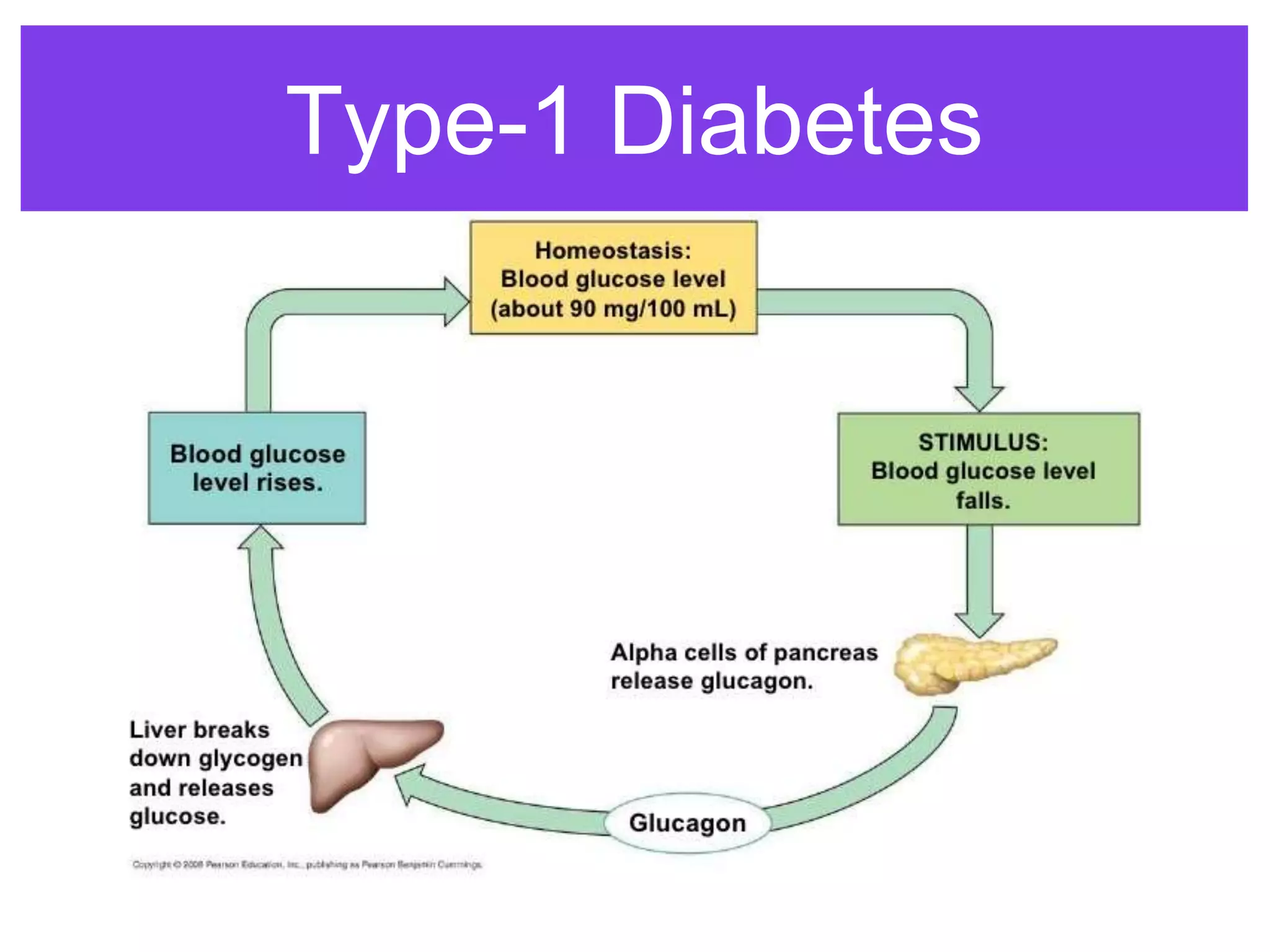
Glucagon: made by islet cells (alpha cells) in the pancreas, controls the production of
glucose and another fuel, ketones, in the liver.
Treatment Options: There is no cure for type-1 diabetes. The replacement insulin is
administered by injection using a syringe or an insulin pump, which delivers the
insulin under the skin.
Type-1 Diabetes
• Work in groups of 4 to research
• Choose one endocrine disorder.
• Research using the iPads
• Complete your endocrinologist’s report
• Prepare short presentation
W
O
R
K
T
O
G
E
T
H
E
R
Finally…Exit Slip
• Turn in Endocrinologist worksheet –
must include model of feedback loop
that regulates the specific endocrine
disease.

Endocrine system - endocrinologists

  • 1.
    The Endocrine System: RealLife Endocrineology
  • 2.
    Endocrinology • Endocrinology thebranch of physiology and medicine concerned with endocrine glands and hormones. • Endocrinologists are specially trained physicians who diagnose diseases related to the glands. The diseases they are trained to treat often affect other parts of the body beyond glands.
  • 3.
    Endocrine Diseases • Type1 diabetes • Hyperthyroidism • Hypothyroidism • Low Testosterone • Growth Hormone Deficiency • Hashimoto’s Thyroiditis • Addison’s Disease • Grave’s Disease
  • 4.
    Type-1 Diabetes Description: aform of diabetes mellitus that results from the autoimmune destruction of the insulin-producing beta cells in the pancreas. Symptoms: The classical symptoms of type 1 diabetes include: excessive urination, increased thirst, dry mouth, increased hunger, fatigue, and weight loss. Gland and Hormones Involved: Pancreas: a long, flat gland in abdomen behind stomach. It produces enzymes into the small intestine to help with digestion. It also contains clusters of cells called islets Insulin: a hormone produced in the pancreas by the islets of Langerhans that regulates the amount of glucose in the blood. The lack of insulin causes a form of diabetes Glucagon: made by islet cells (alpha cells) in the pancreas, controls the production of glucose and another fuel, ketones, in the liver. Treatment Options: There is no cure for type-1 diabetes. The replacement insulin is administered by injection using a syringe or an insulin pump, which delivers the insulin under the skin.
  • 5.
  • 6.
    • Work ingroups of 4 to research • Choose one endocrine disorder. • Research using the iPads • Complete your endocrinologist’s report • Prepare short presentation W O R K T O G E T H E R
  • 7.
    Finally…Exit Slip • Turnin Endocrinologist worksheet – must include model of feedback loop that regulates the specific endocrine disease.