The psychodynamic approach explains aggression through frustration and the satisfaction of drives. Freud believed we have a death instinct that is satisfied through aggression. When goals are difficult to achieve or blocked by others, it can lead to frustration and aggression according to the Frustration-Aggression Hypothesis. This aggression may be directed at an easy target like a scapegoat. Not all frustration leads to aggression though, as past experiences and social factors also influence the response.
Psychodynamic Explanation ofAggression Objective : To understand how, according to the psychodynamic approach, frustration can lead to aggression. Starter : How is the limbic system linked to aggression? Give an example of what could happen when such a thing occurs? (hint: Charles Whitman).
2.
You have 10mins to complete your mind map on the biological explanation.
3.
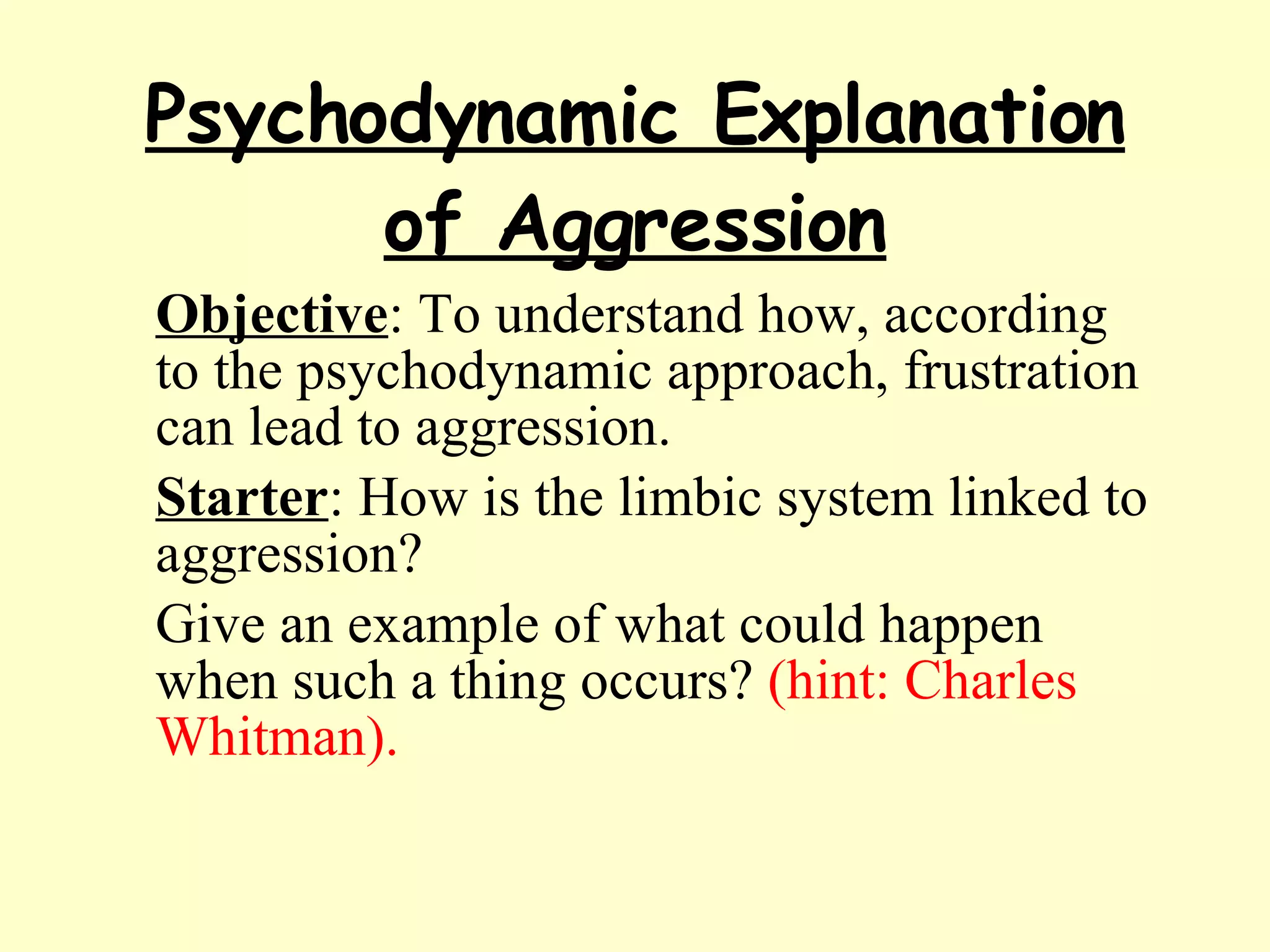
Psychodynamic explanation ofAggression Freud believed that we all have a death instinct. And aggression is the drive that allows us to satisfy it. He believed we have to satisfy our ego, while still keeping our super ego happy. Ego = The part of our personality that tries to satisfy our urges Superego = The moral part of our personality
4.
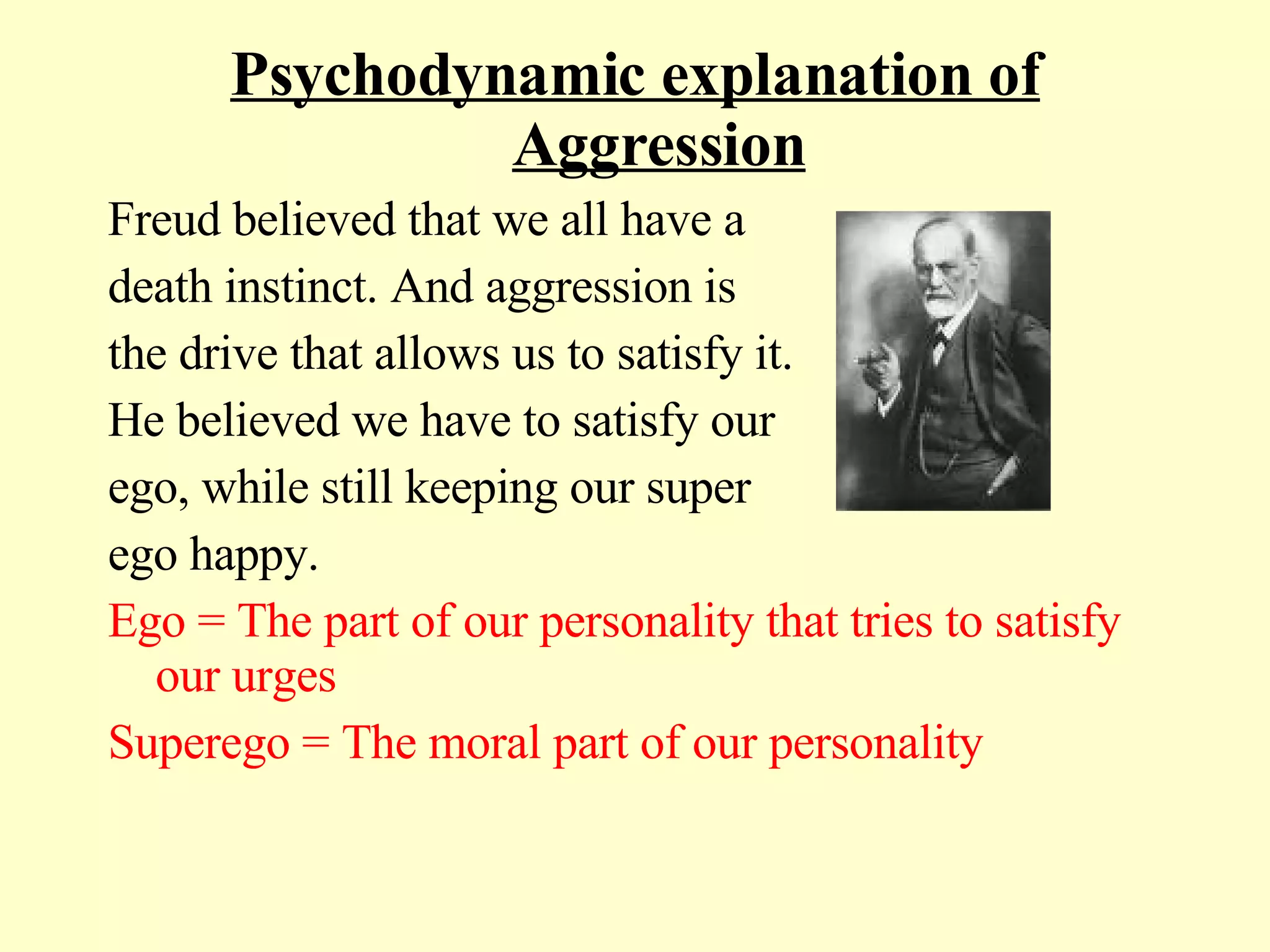
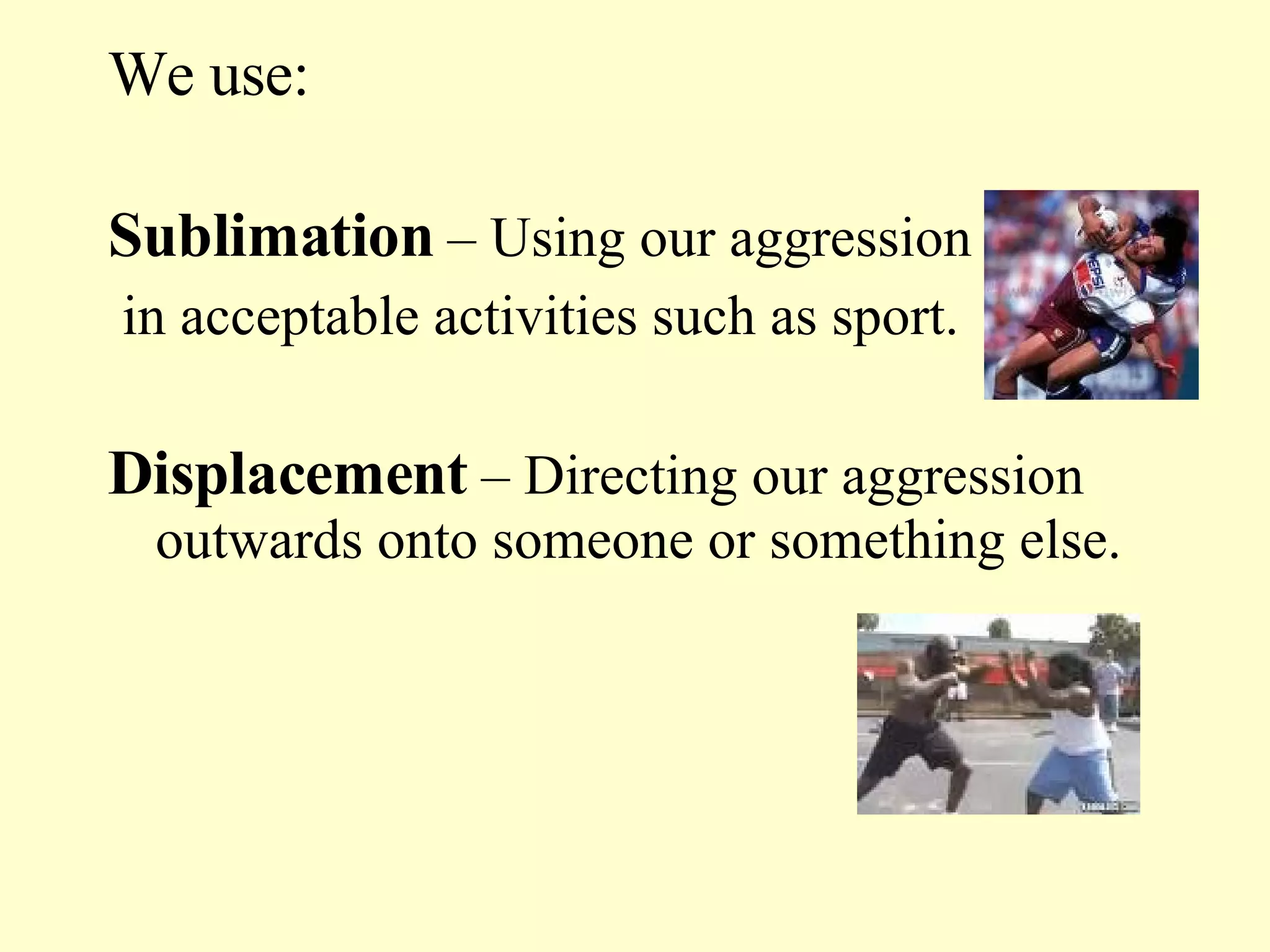
We use: Sublimation – Using our aggression in acceptable activities such as sport. Displacement – Directing our aggression outwards onto someone or something else.
5.
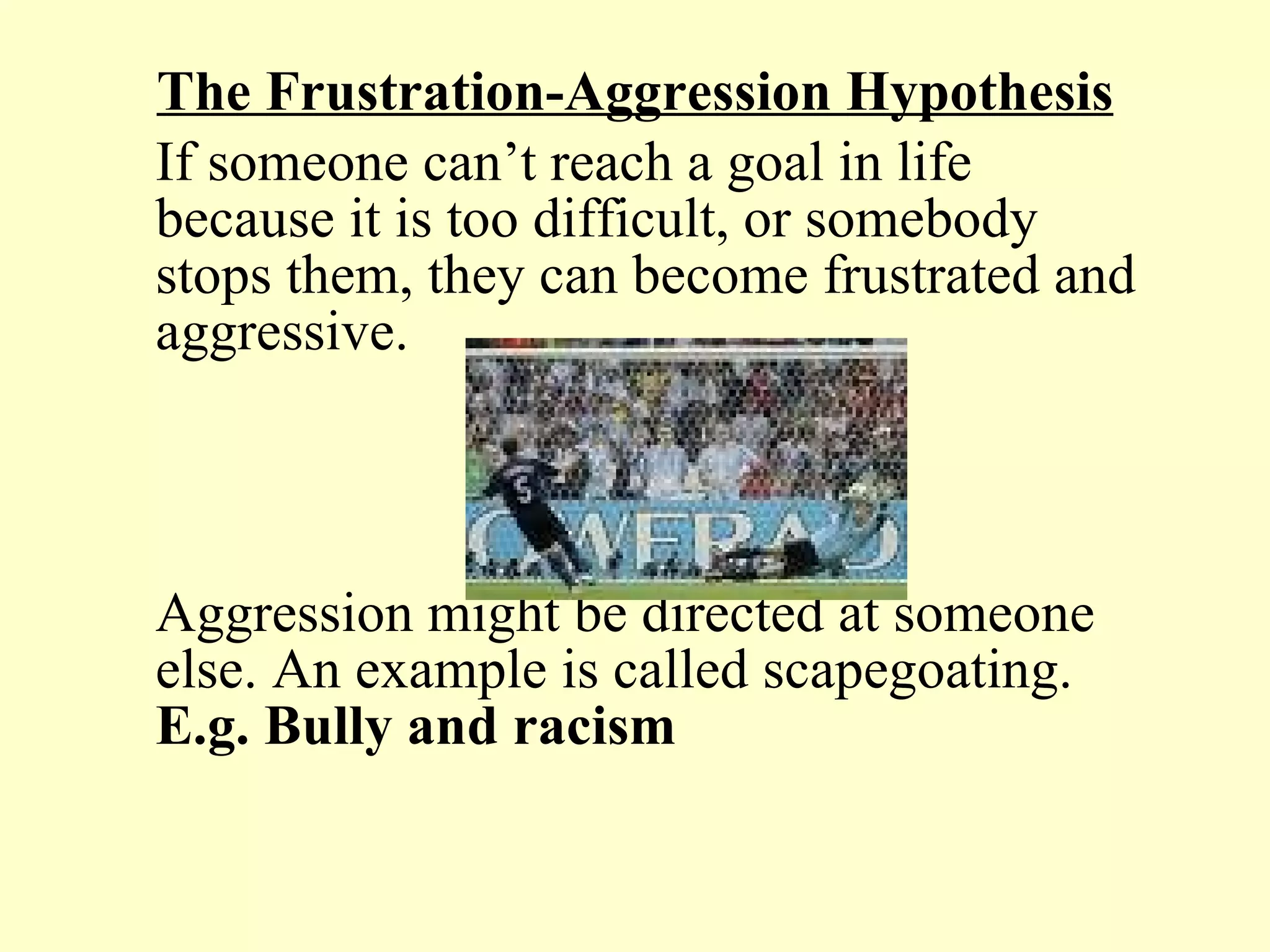
The Frustration-Aggression HypothesisIf someone can’t reach a goal in life because it is too difficult, or somebody stops them, they can become frustrated and aggressive. Aggression might be directed at someone else. An example is called scapegoating. E.g. Bully and racism
6.
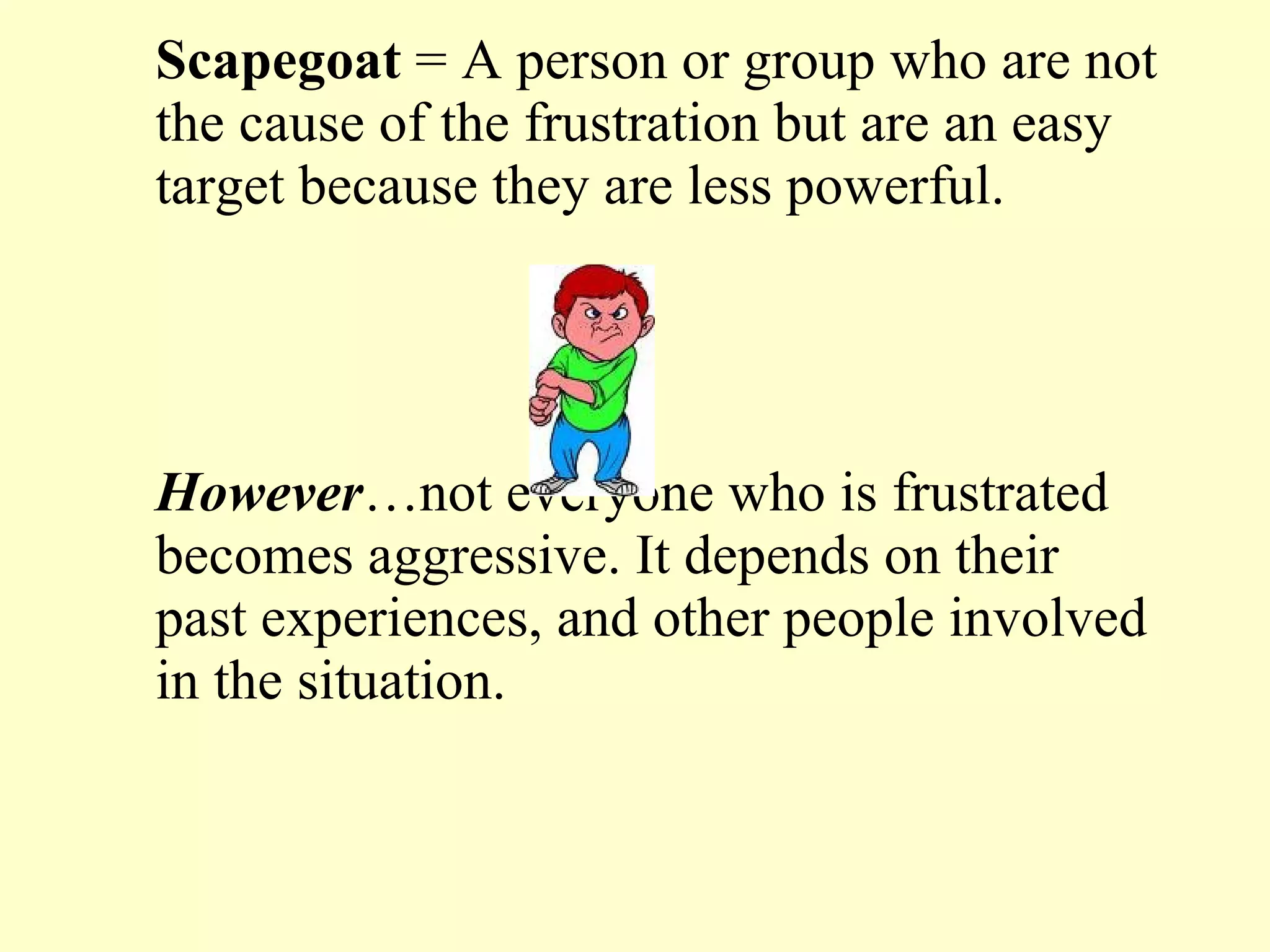
Scapegoat =A person or group who are not the cause of the frustration but are an easy target because they are less powerful. However …not everyone who is frustrated becomes aggressive. It depends on their past experiences, and other people involved in the situation.
7.
Leonard Berowitz Study(1968) Berkowitz argued that frustration does not lead directly to aggression, but does make people feel angry. This anger then makes people aggressive. A confederate was told to make a participant angry. The participant was given the opportunity to administer an mild electric shock to the confederate.
8.
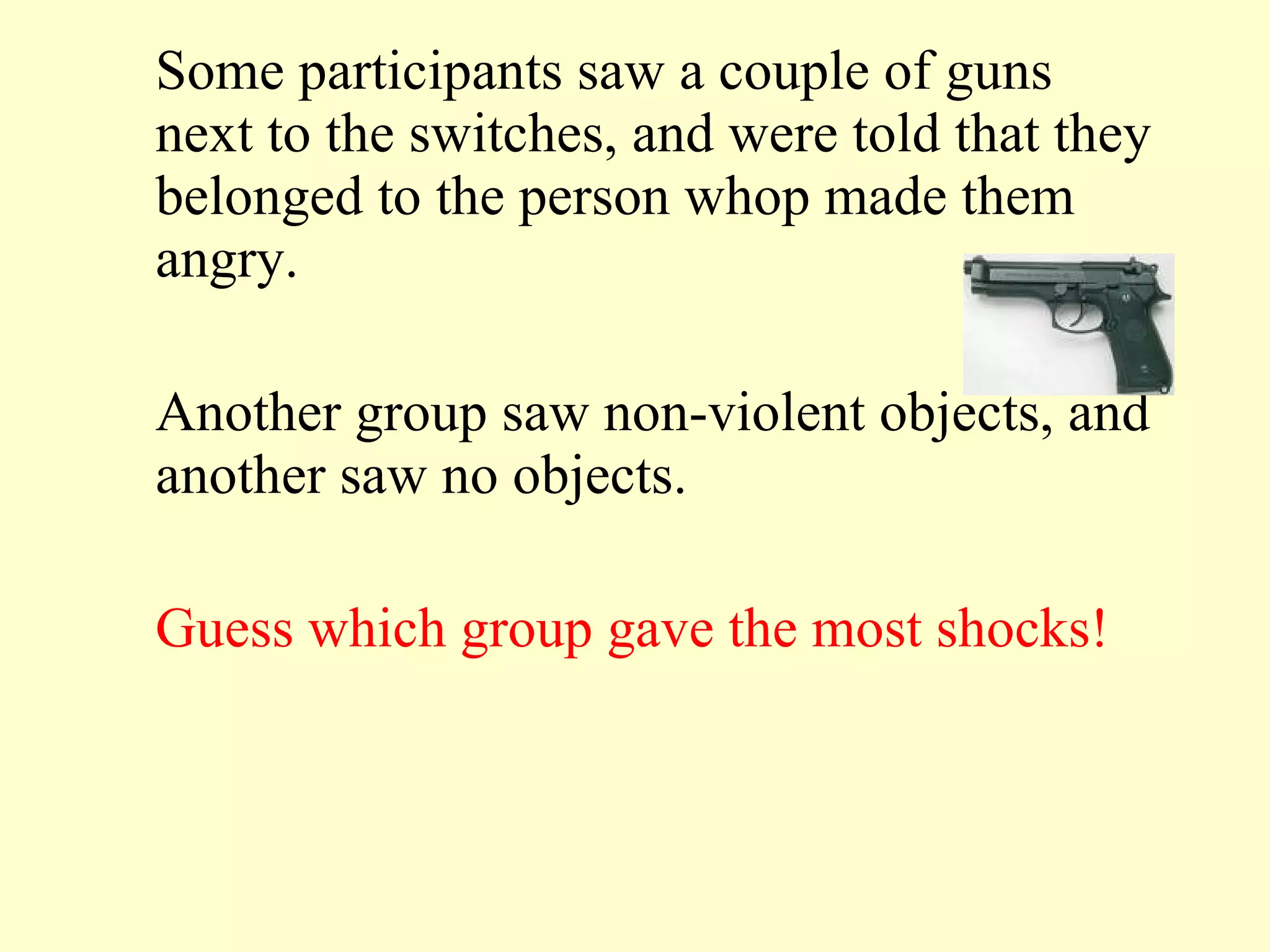
Some participants sawa couple of guns next to the switches, and were told that they belonged to the person whop made them angry. Another group saw non-violent objects, and another saw no objects. Guess which group gave the most shocks!
9.
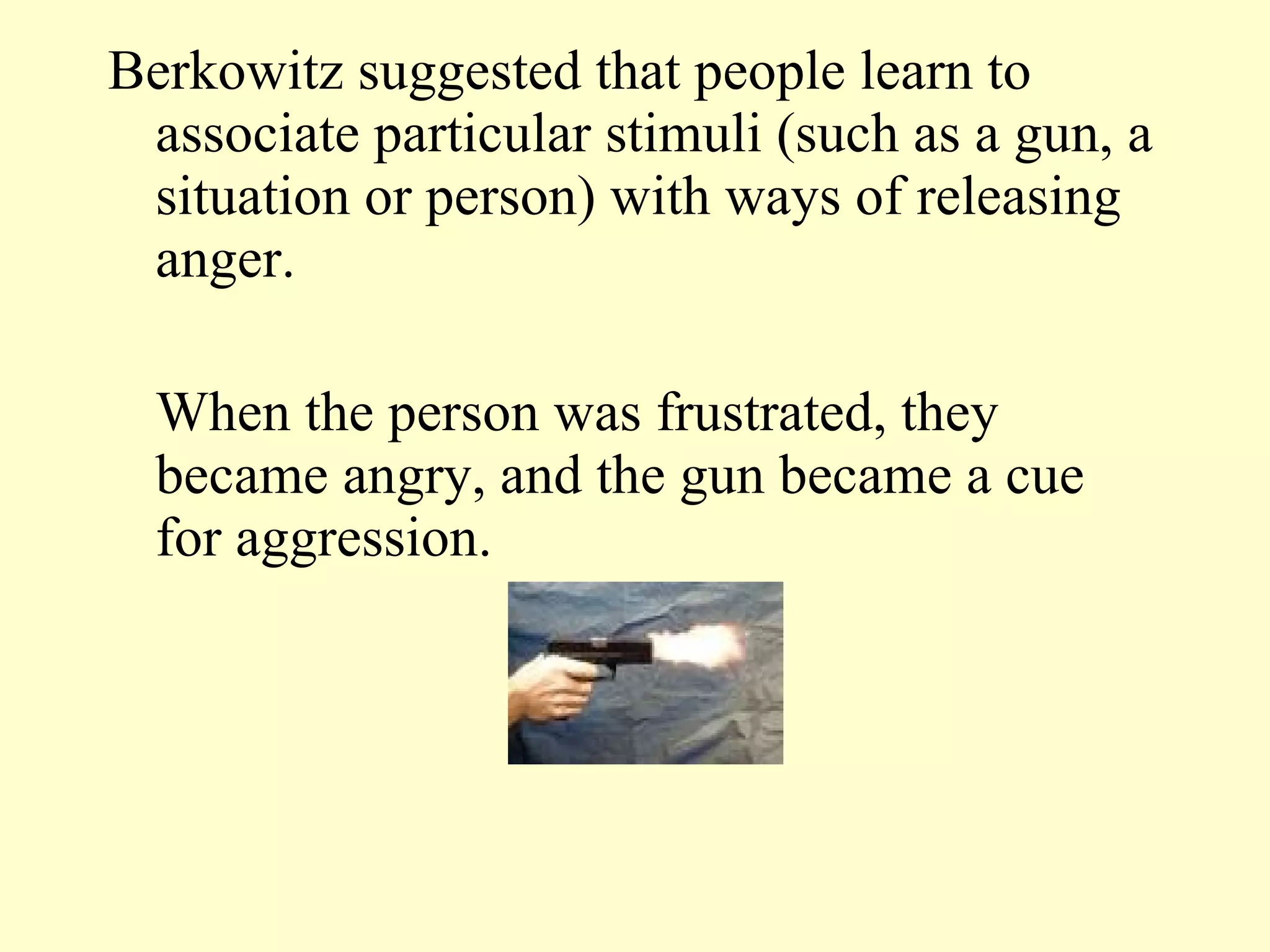
Berkowitz suggested thatpeople learn to associate particular stimuli (such as a gun, a situation or person) with ways of releasing anger. When the person was frustrated, they became angry, and the gun became a cue for aggression.
10.
Can you completethe A.P.F.C. for Berkowitz’s experiment? Aim : Procedure : Findings : Conclusion :
11.
Extension : 1)How can we reduce aggression? 2) Create a multiple choice quiz or crossword on: The Ethological explanation The Biological explanation The Psychodynamic explanation



![Social process[1]](https://cdn.slidesharecdn.com/ss_thumbnails/socialprocess1-200513101442-thumbnail.jpg?width=640&height=640&fit=bounds)


![Vibe Coding vs. Spec-Driven Development [Free Meetup]](https://cdn.slidesharecdn.com/ss_thumbnails/vibecodingvsspecdrivendevelopment-251209105622-43f455e7-thumbnail.jpg?width=640&height=640&fit=bounds)


