Workshop Overview
1. Introduction to Today’s theme
2. Participant go-around
3. Mini-lecture on Visual Communication
4. Task 1: Deconstruct/Reconstruct
--BREAK--
5. Task 2: Mapping Connection Online/Offline
6. Task 3: Visual Comm on a Budget
Provoke
Feeling
Create
Connection
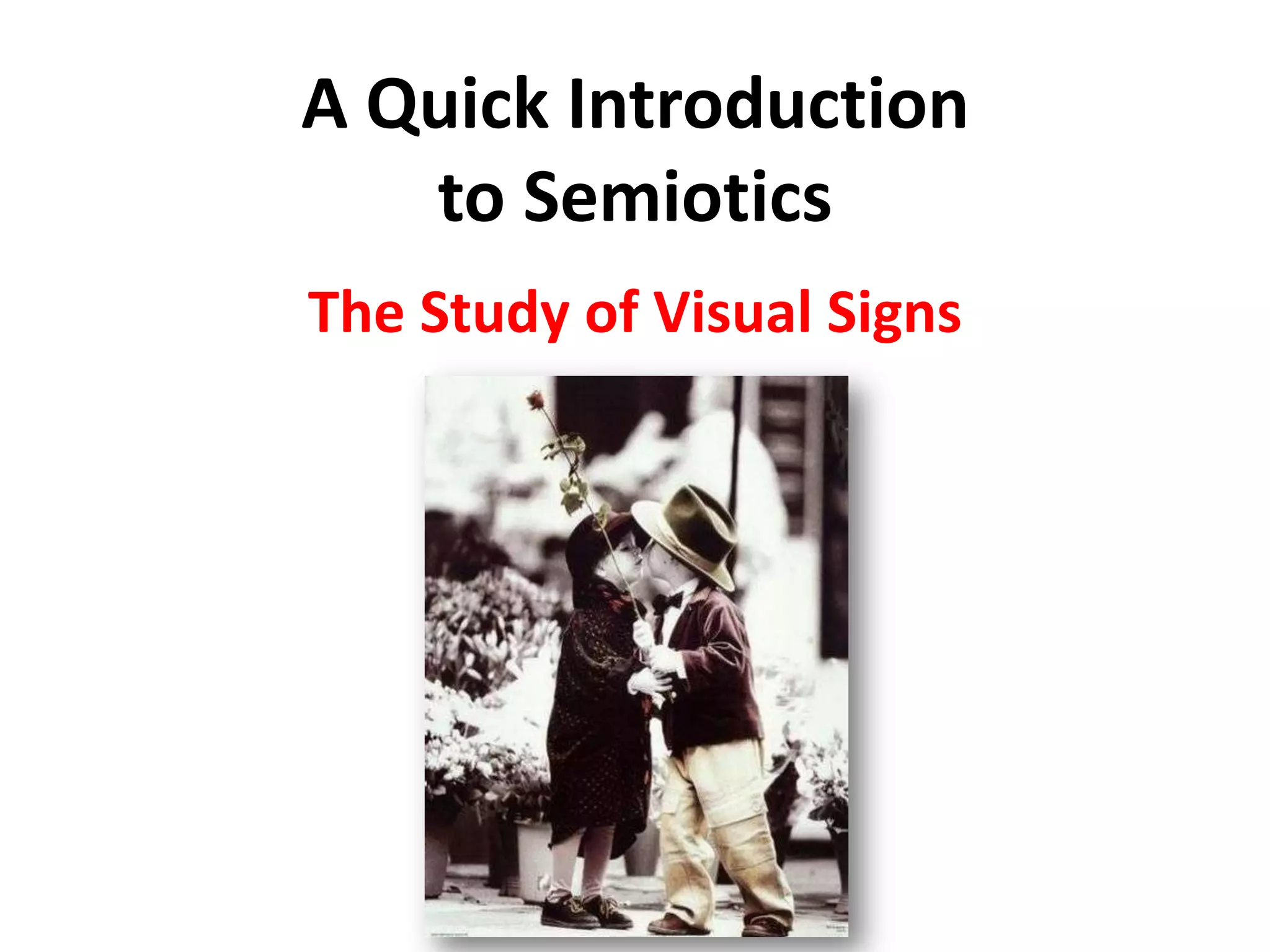
A Quick Introduction
to Semiotics
The Study of Visual Signs
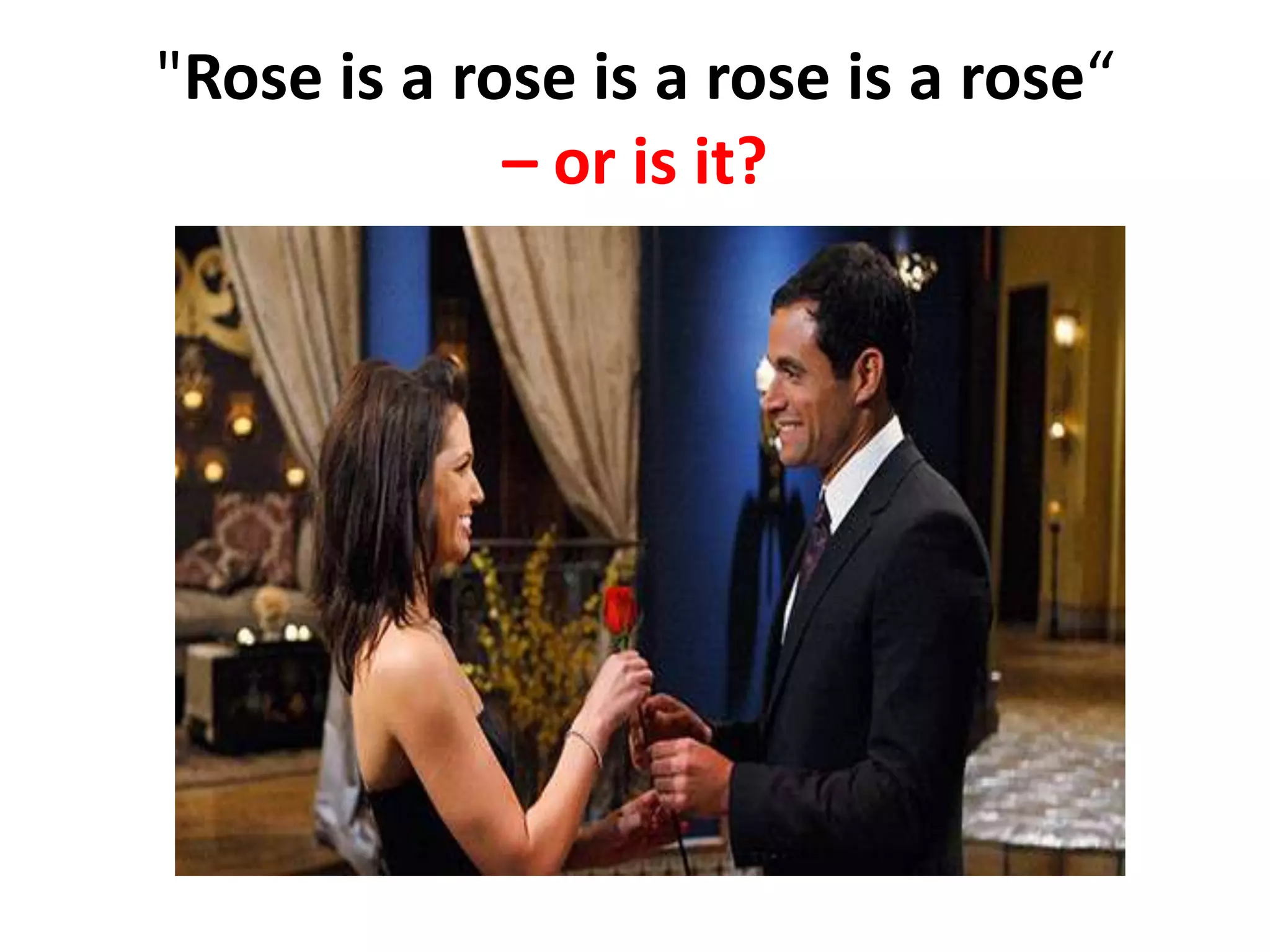
"Rose is a rose is a rose is a rose“
– or is it?
• Denotation – describe an image as simply as
possible. What Barthes called 'the first order of
signs'.
• Connotation – emotions, values and
associations that the sign gives rise to. What
Barthes called 'the second order of signs.'
Two Levels of Meaning
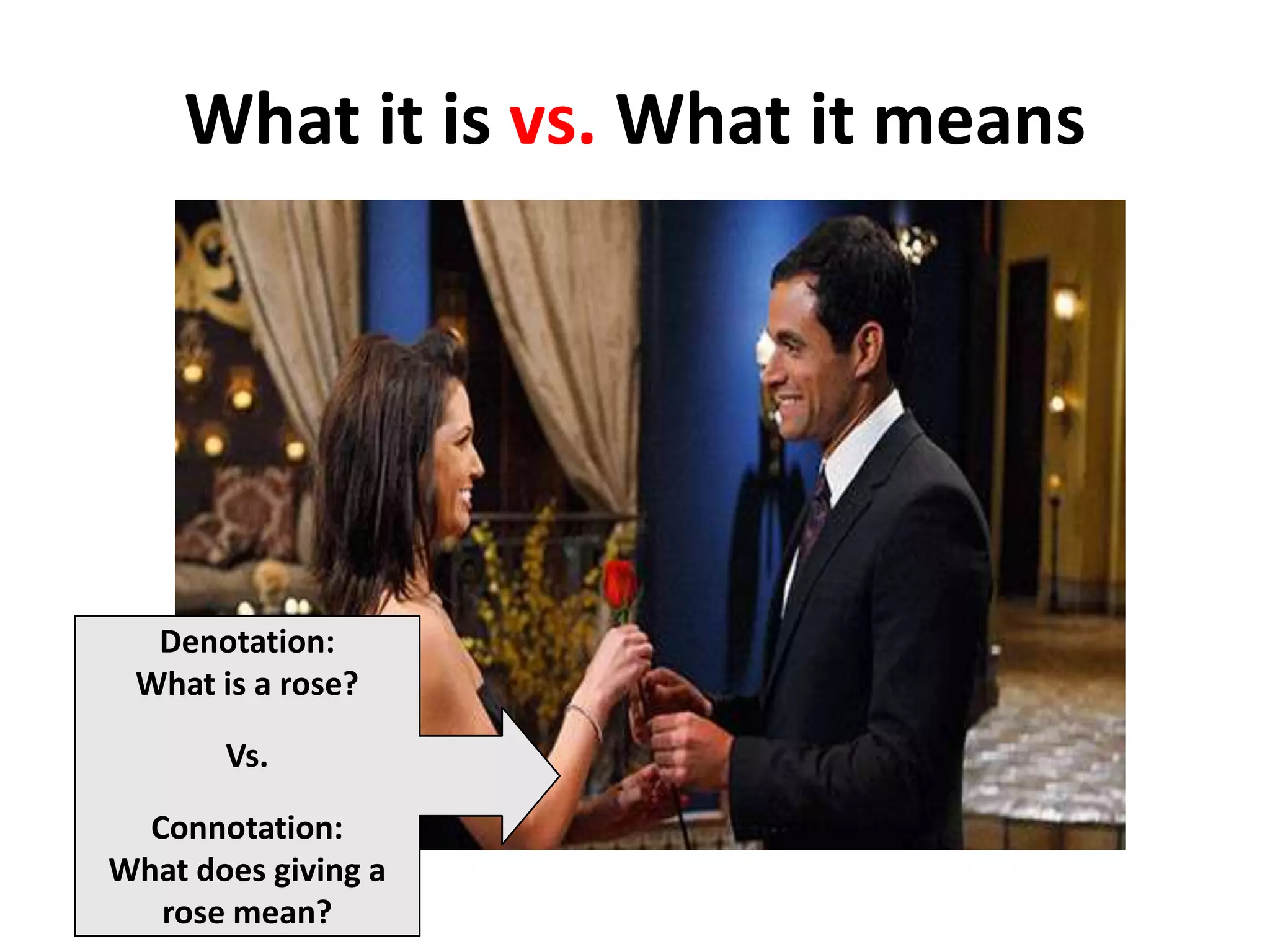
Denotation:
What is a rose?
Vs.
Connotation:
What does giving a
rose mean?
What it is vs. What it means
What makes up Meaning
•Text – the signs that make up the image
•Audience – the targeted receivers of the
image
•Context – where the text is positioned or
located more broadly
•Intertextuality – references in the text to
other texts
•Captions/anchorage – what attaches
meanings, limiting polysemic possibilities.
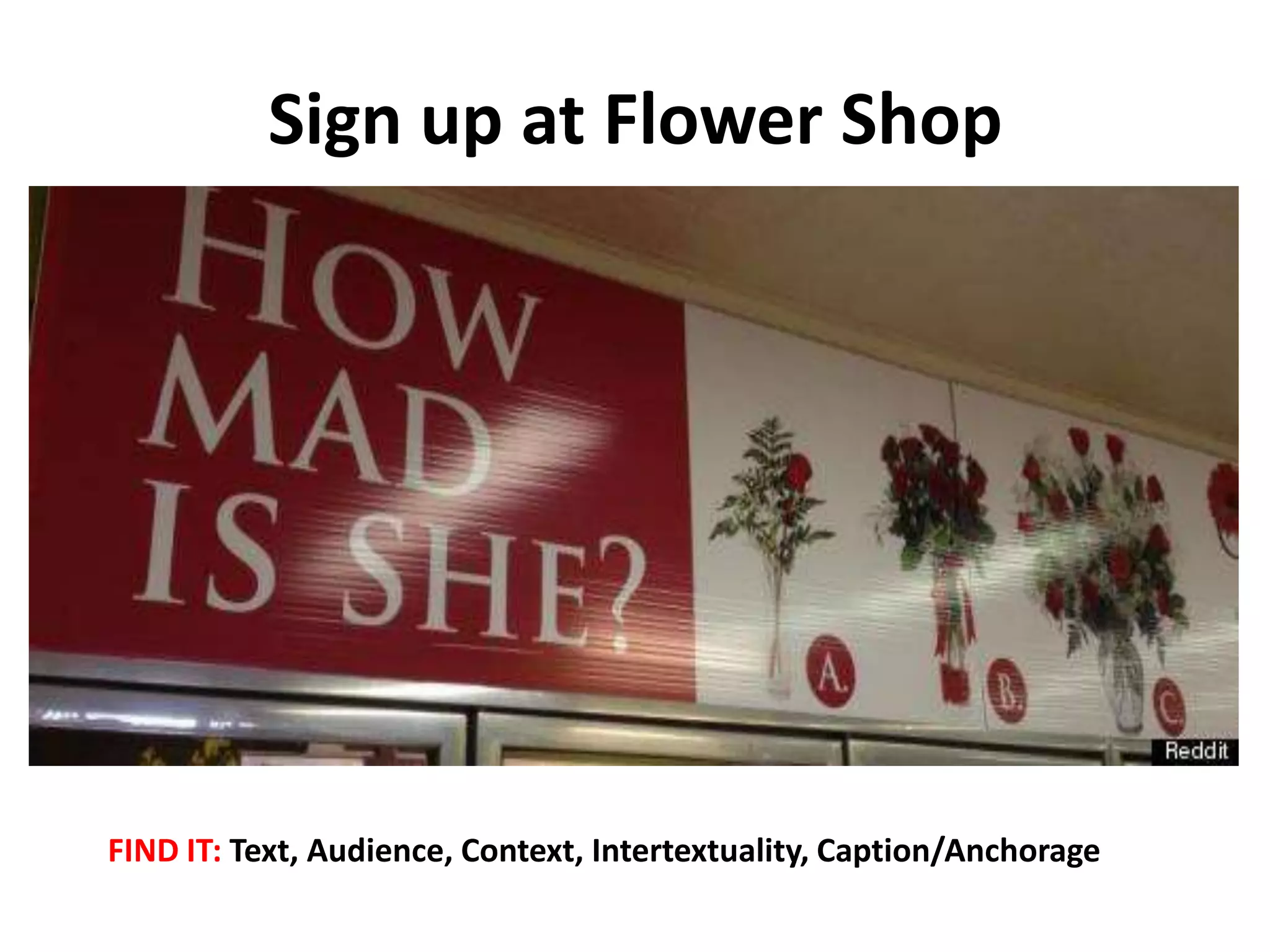
Sign up at Flower Shop
FIND IT: Text, Audience, Context, Intertextuality, Caption/Anchorage
Provoke
Feeling
Create
Connection
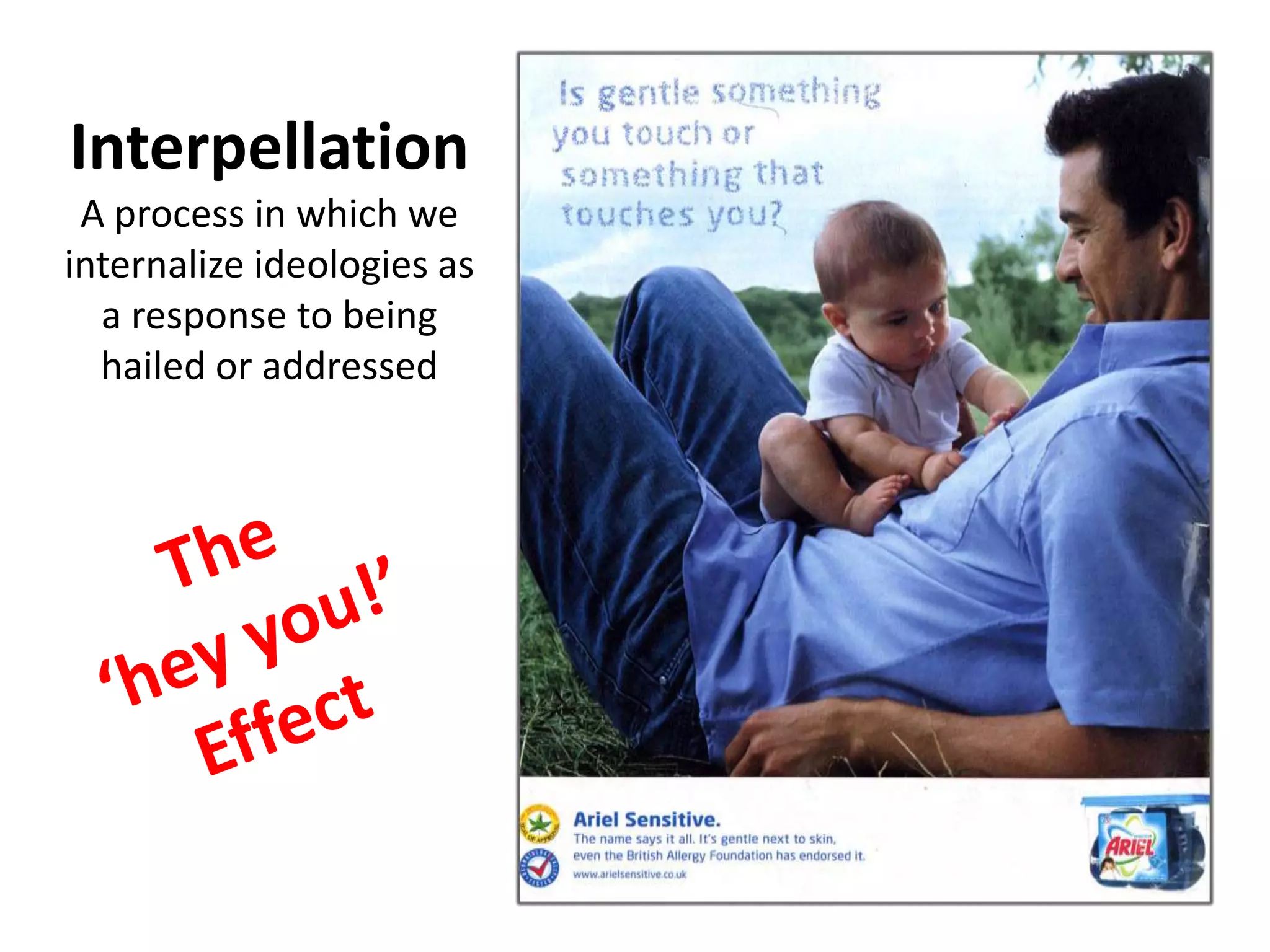
Interpellation
A process in which we
internalize ideologies as
a response to being
hailed or addressed
Provoke
Feeling
Create
Connection
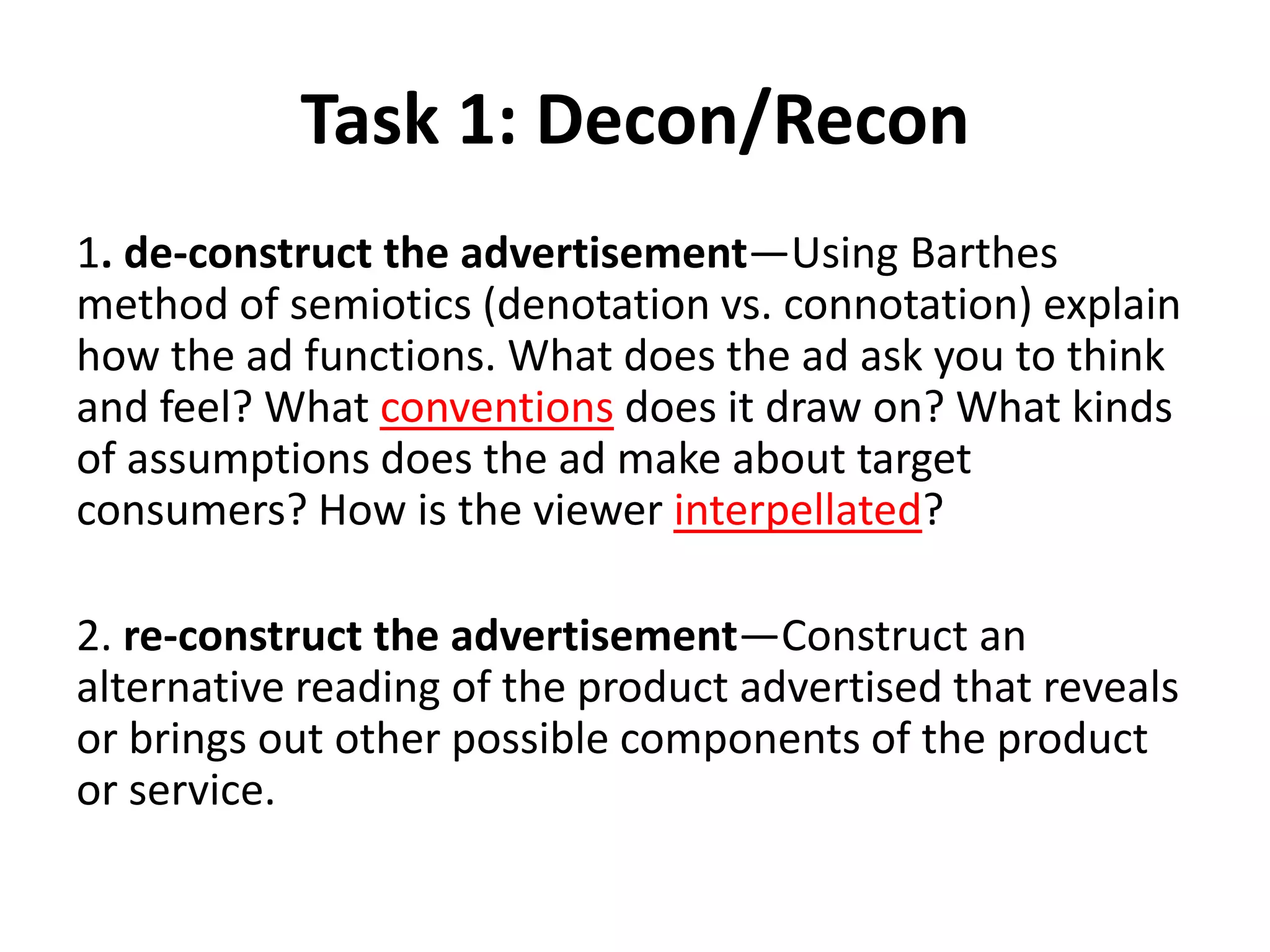
Task 1: Decon/Recon
1. de-construct the advertisement—Using Barthes
method of semiotics (denotation vs. connotation) explain
how the ad functions. What does the ad ask you to think
and feel? What conventions does it draw on? What kinds
of assumptions does the ad make about target
consumers? How is the viewer interpellated?
2. re-construct the advertisement—Construct an
alternative reading of the product advertised that reveals
or brings out other possible components of the product
or service.
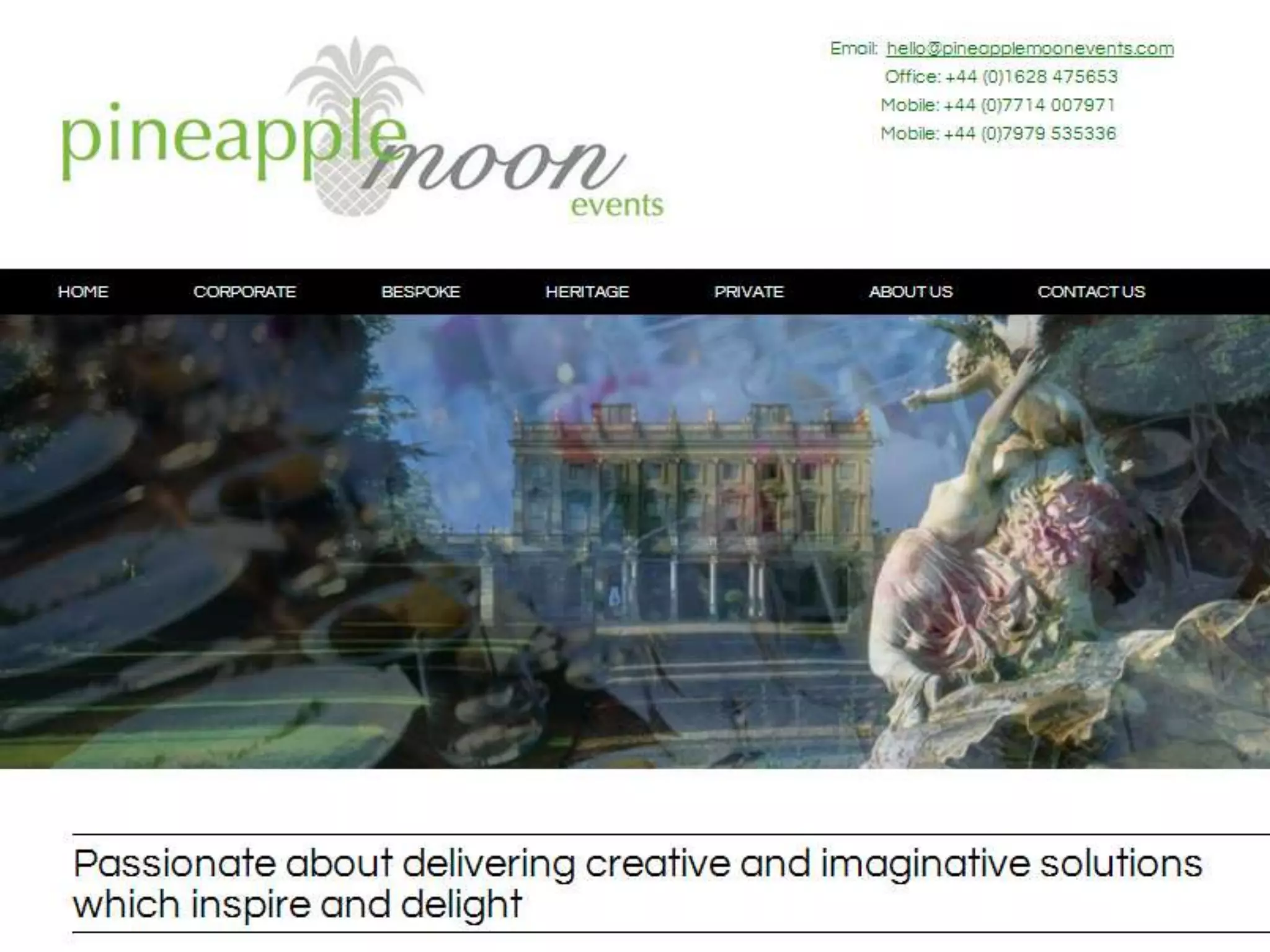
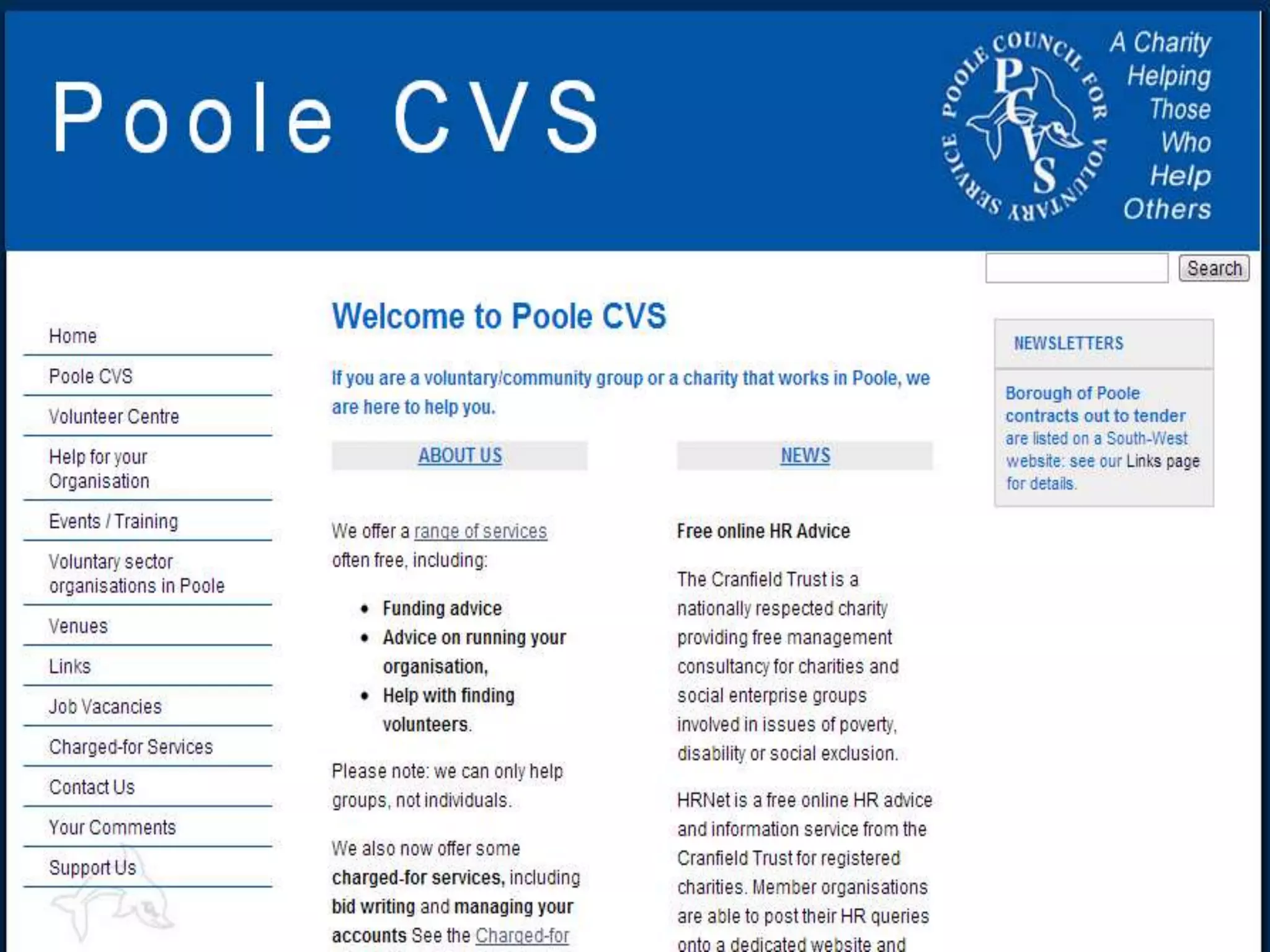
Task 2: Mapping Connection
Online/Offline
HSBC
SHELTER
CLIMATE CAMP
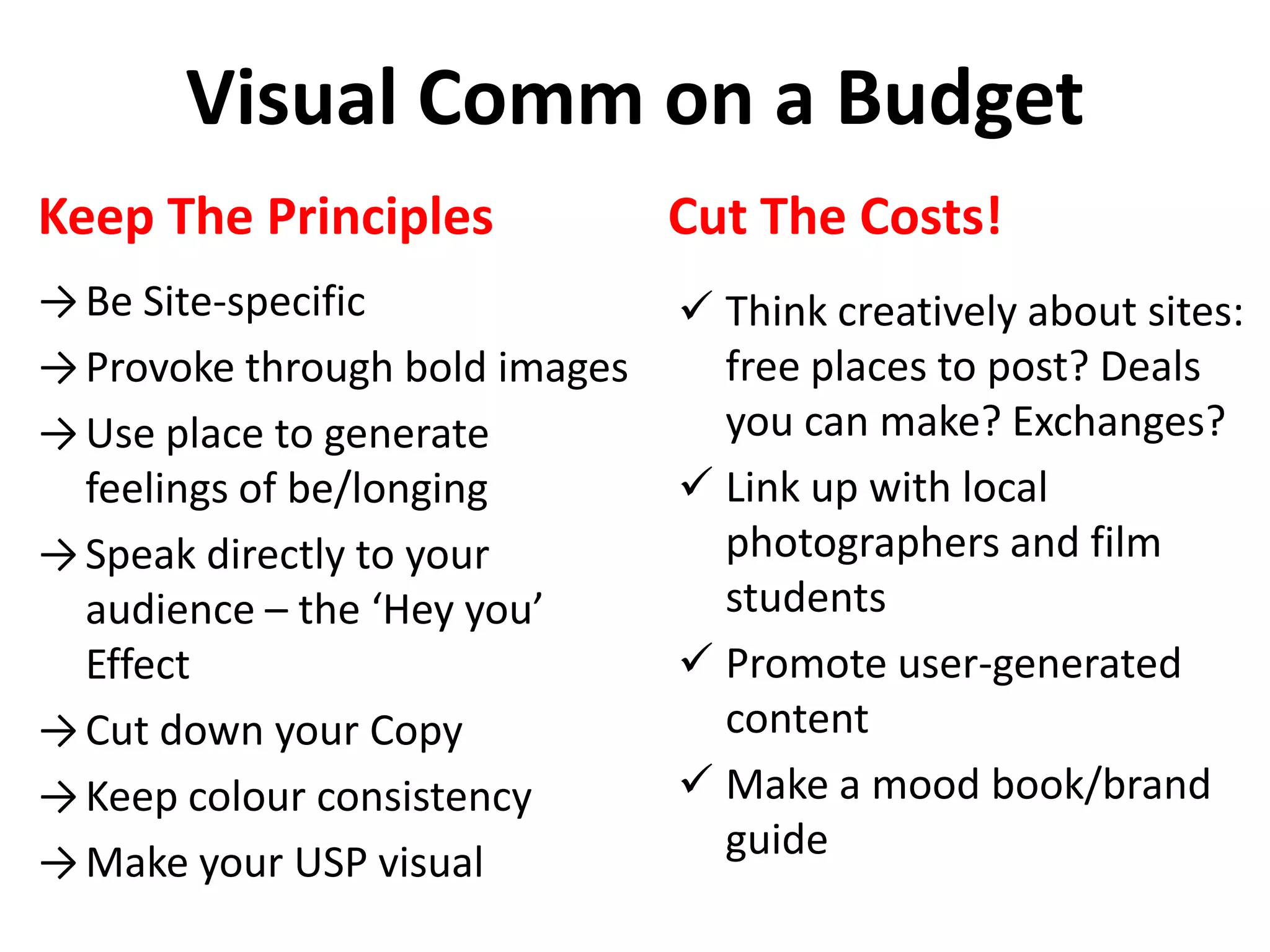
Visual Comm on a Budget
Keep The Principles
→Be Site-specific
→Provoke through bold images
→Use place to generate
feelings of be/longing
→Speak directly to your
audience – the ‘Hey you’
Effect
→Cut down your Copy
→Keep colour consistency
→Make your USP visual
Cut The Costs!
 Think creatively about sites:
free places to post? Deals
you can make? Exchanges?
 Link up with local
photographers and film
students
 Promote user-generated
content
 Make a mood book/brand
guide

Third Sector Skills_Visual communication_Festival of Learning

  • 1.
    Workshop Overview 1. Introductionto Today’s theme 2. Participant go-around 3. Mini-lecture on Visual Communication 4. Task 1: Deconstruct/Reconstruct --BREAK-- 5. Task 2: Mapping Connection Online/Offline 6. Task 3: Visual Comm on a Budget
  • 4.
  • 5.
    A Quick Introduction toSemiotics The Study of Visual Signs
  • 6.
    "Rose is arose is a rose is a rose“ – or is it?
  • 7.
    • Denotation –describe an image as simply as possible. What Barthes called 'the first order of signs'. • Connotation – emotions, values and associations that the sign gives rise to. What Barthes called 'the second order of signs.' Two Levels of Meaning
  • 8.
    Denotation: What is arose? Vs. Connotation: What does giving a rose mean? What it is vs. What it means
  • 9.
    What makes upMeaning •Text – the signs that make up the image •Audience – the targeted receivers of the image •Context – where the text is positioned or located more broadly •Intertextuality – references in the text to other texts •Captions/anchorage – what attaches meanings, limiting polysemic possibilities.
  • 10.
    Sign up atFlower Shop FIND IT: Text, Audience, Context, Intertextuality, Caption/Anchorage
  • 11.
  • 12.
    Interpellation A process inwhich we internalize ideologies as a response to being hailed or addressed
  • 14.
  • 15.
    Task 1: Decon/Recon 1.de-construct the advertisement—Using Barthes method of semiotics (denotation vs. connotation) explain how the ad functions. What does the ad ask you to think and feel? What conventions does it draw on? What kinds of assumptions does the ad make about target consumers? How is the viewer interpellated? 2. re-construct the advertisement—Construct an alternative reading of the product advertised that reveals or brings out other possible components of the product or service.
  • 16.
    Task 2: MappingConnection Online/Offline
  • 19.
  • 20.
  • 21.
  • 22.
    Visual Comm ona Budget Keep The Principles →Be Site-specific →Provoke through bold images →Use place to generate feelings of be/longing →Speak directly to your audience – the ‘Hey you’ Effect →Cut down your Copy →Keep colour consistency →Make your USP visual Cut The Costs!  Think creatively about sites: free places to post? Deals you can make? Exchanges?  Link up with local photographers and film students  Promote user-generated content  Make a mood book/brand guide