Downloaded 387 times


Capacity planning in the cloud presents new challenges compared to traditional systems. Cloud resources are priced based on usage so capacity can be dynamically scaled without long lead times. However, cloud systems are distributed across data centers so visibility and control is reduced. Monitoring tools need to be stateless to handle cloud volatility and gather metrics without predefined assets.
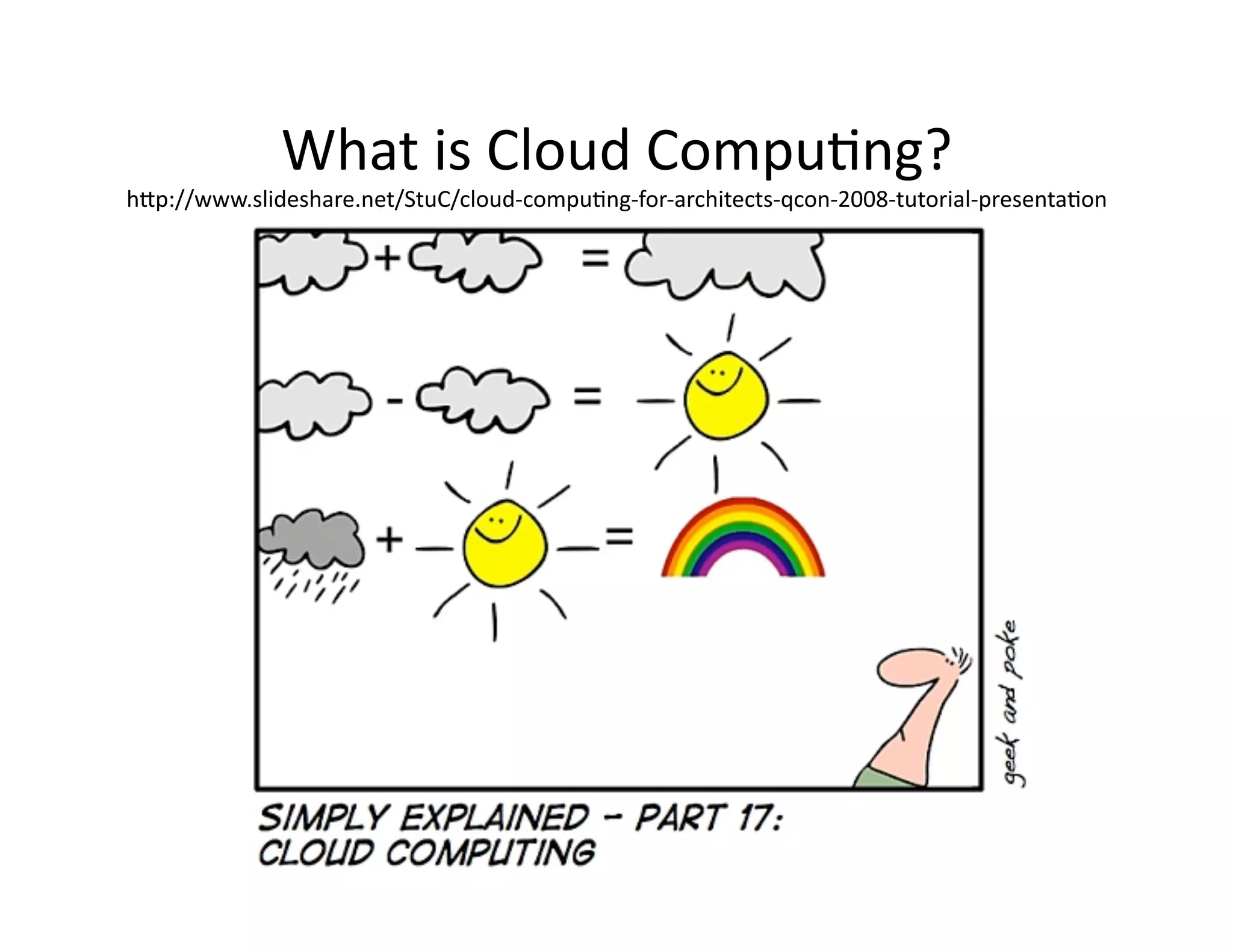
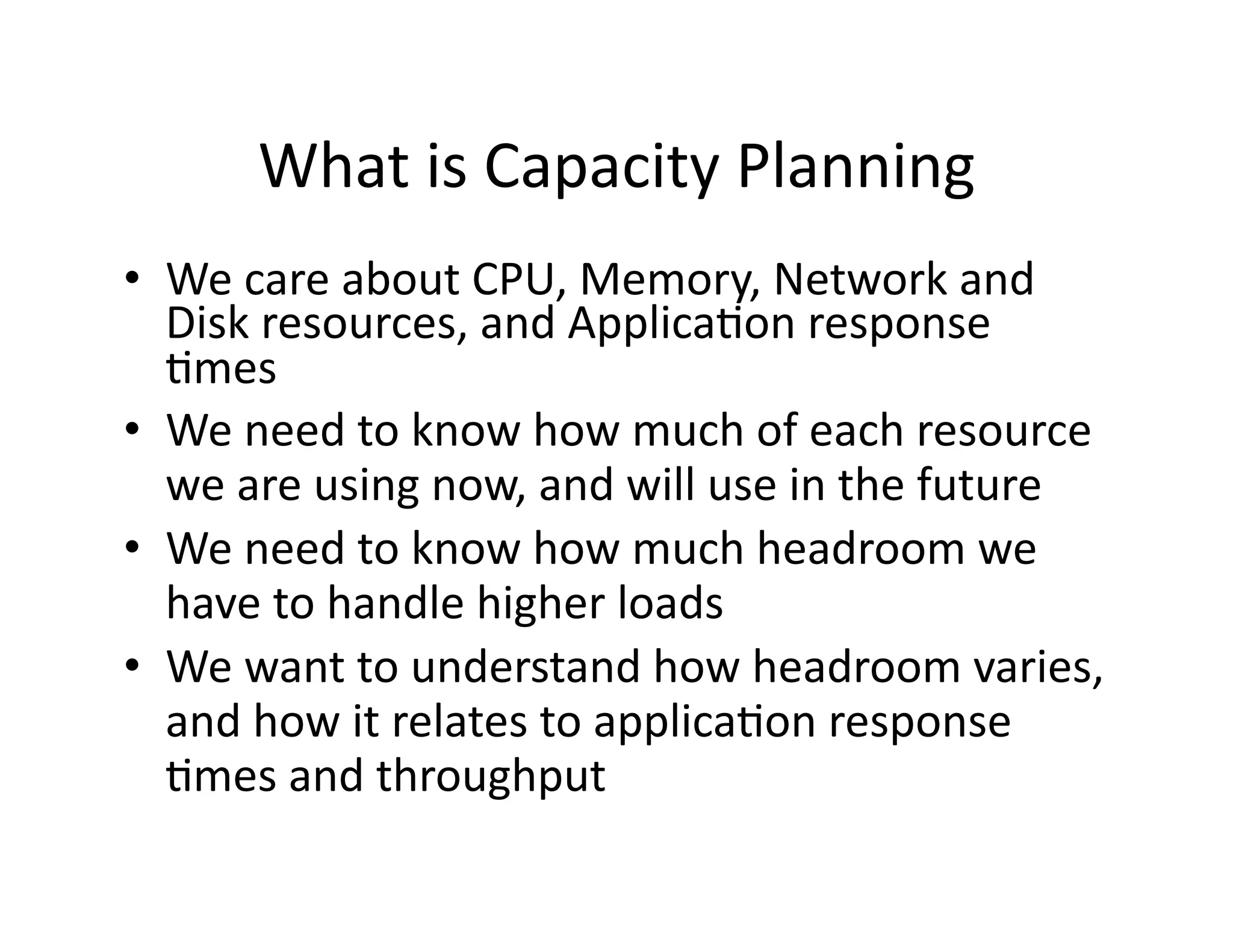
Overview of Cloud Computing and Capacity Planning. Focus on resources such as CPU, Memory, Network, Disk, and application response times.
Detailing what capacity planning involves, such as monitoring current resource usage and understanding future load requirements.
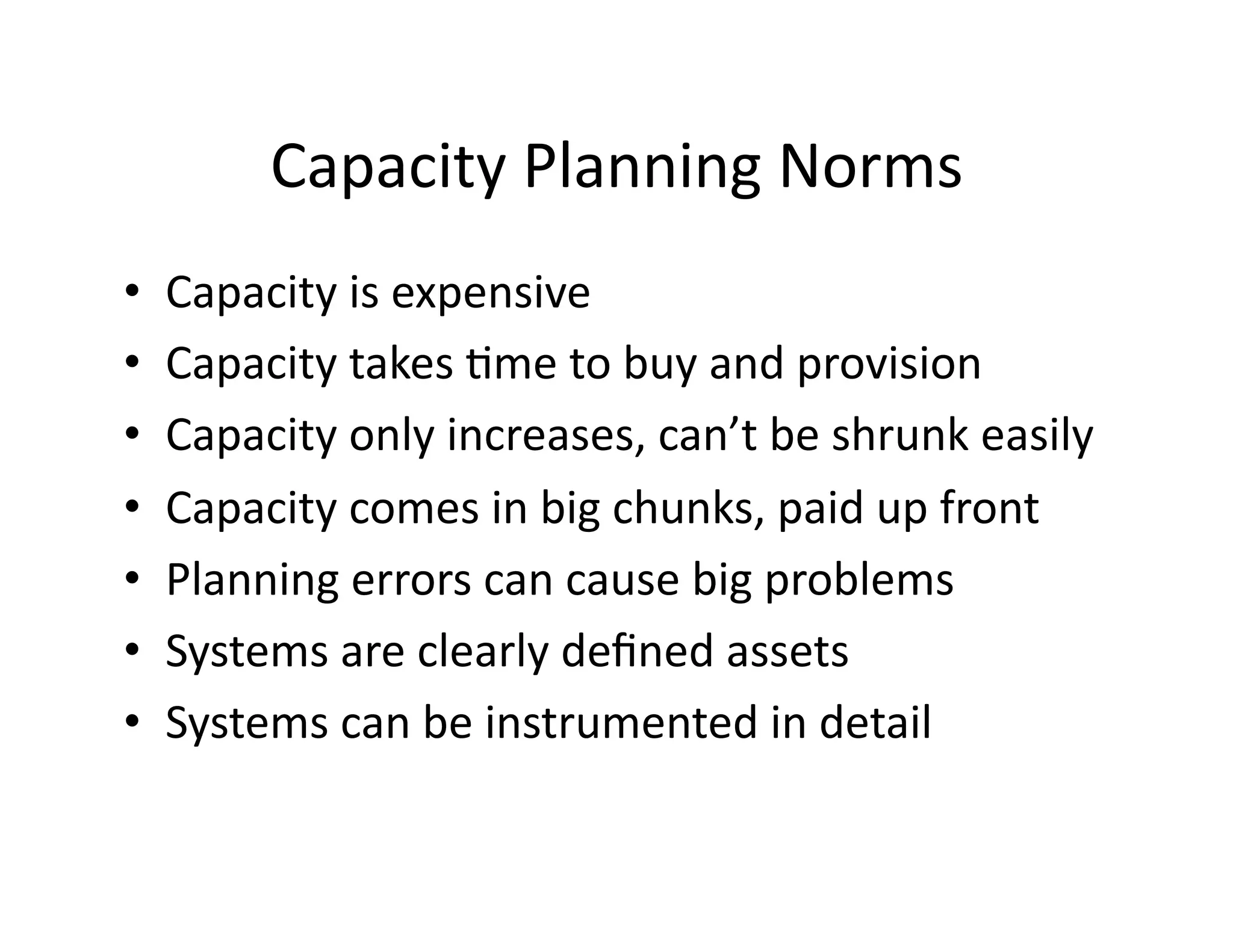
Key norms in capacity planning include resource cost, provisioning time, and consequences of planning errors.
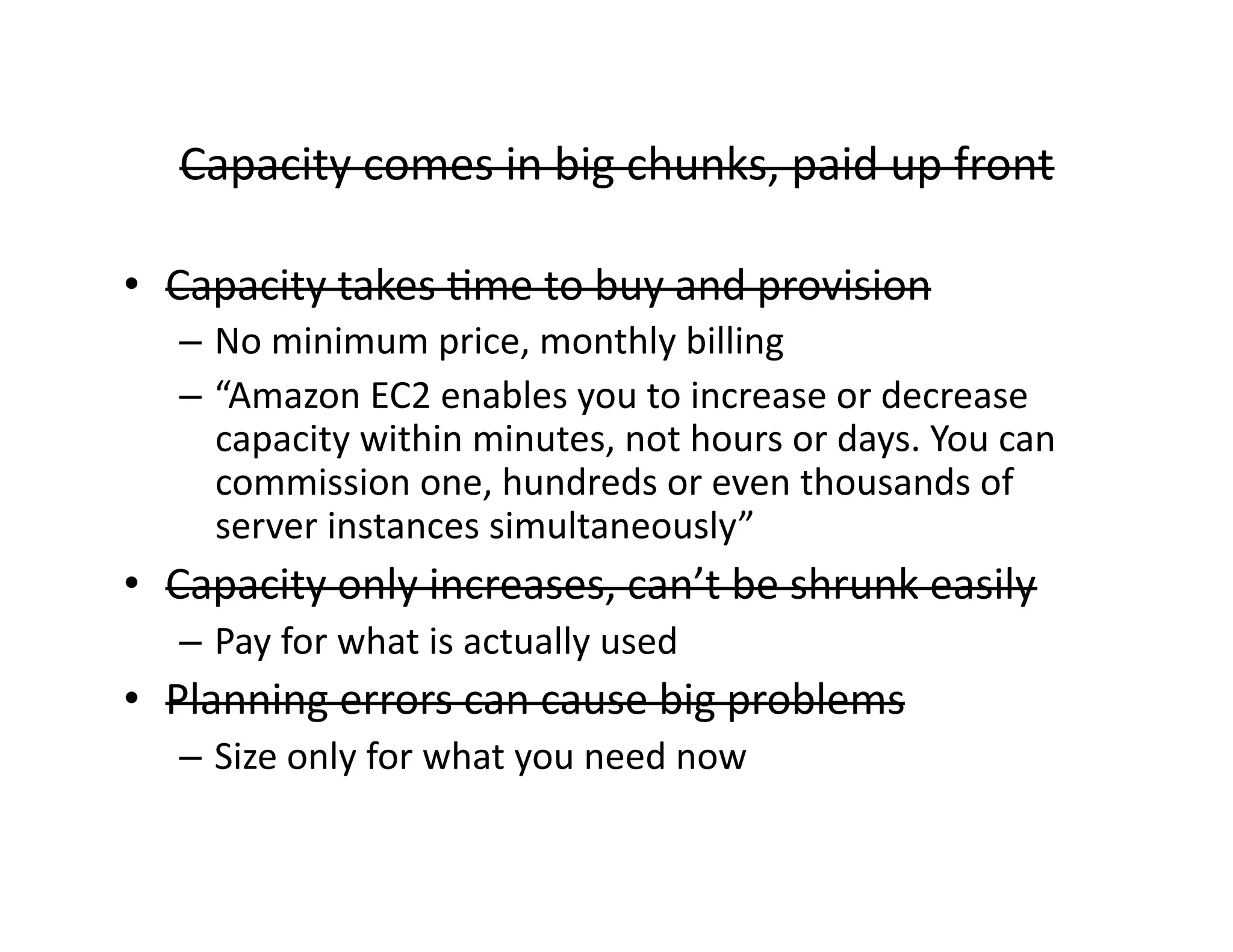
Reiterates that capacity is expensive and difficult to scale down, highlighting provision flexibility and the definition of systems as assets.
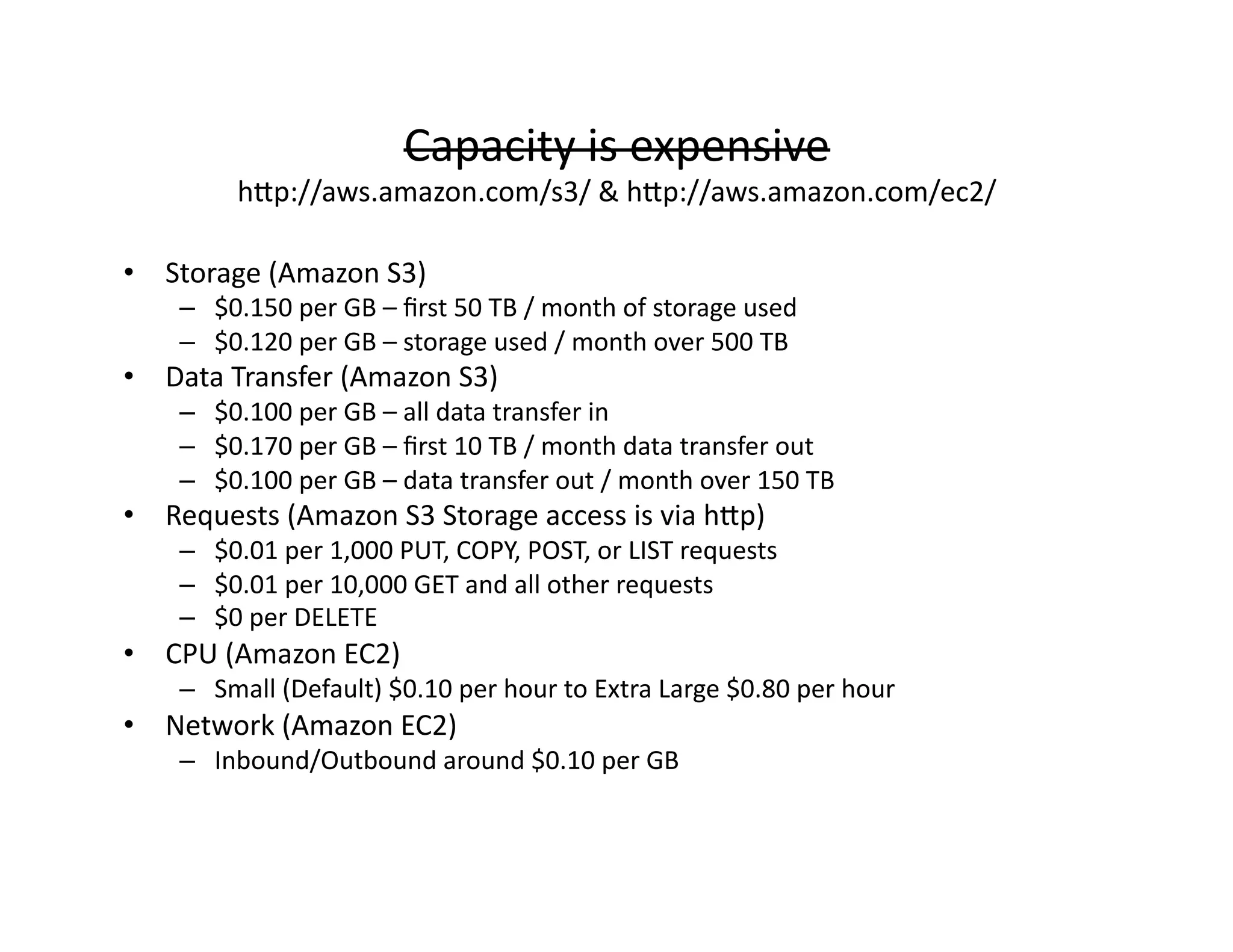
Detailed costs associated with Amazon storage and EC2 instances, emphasizing per GB costs and request rates.
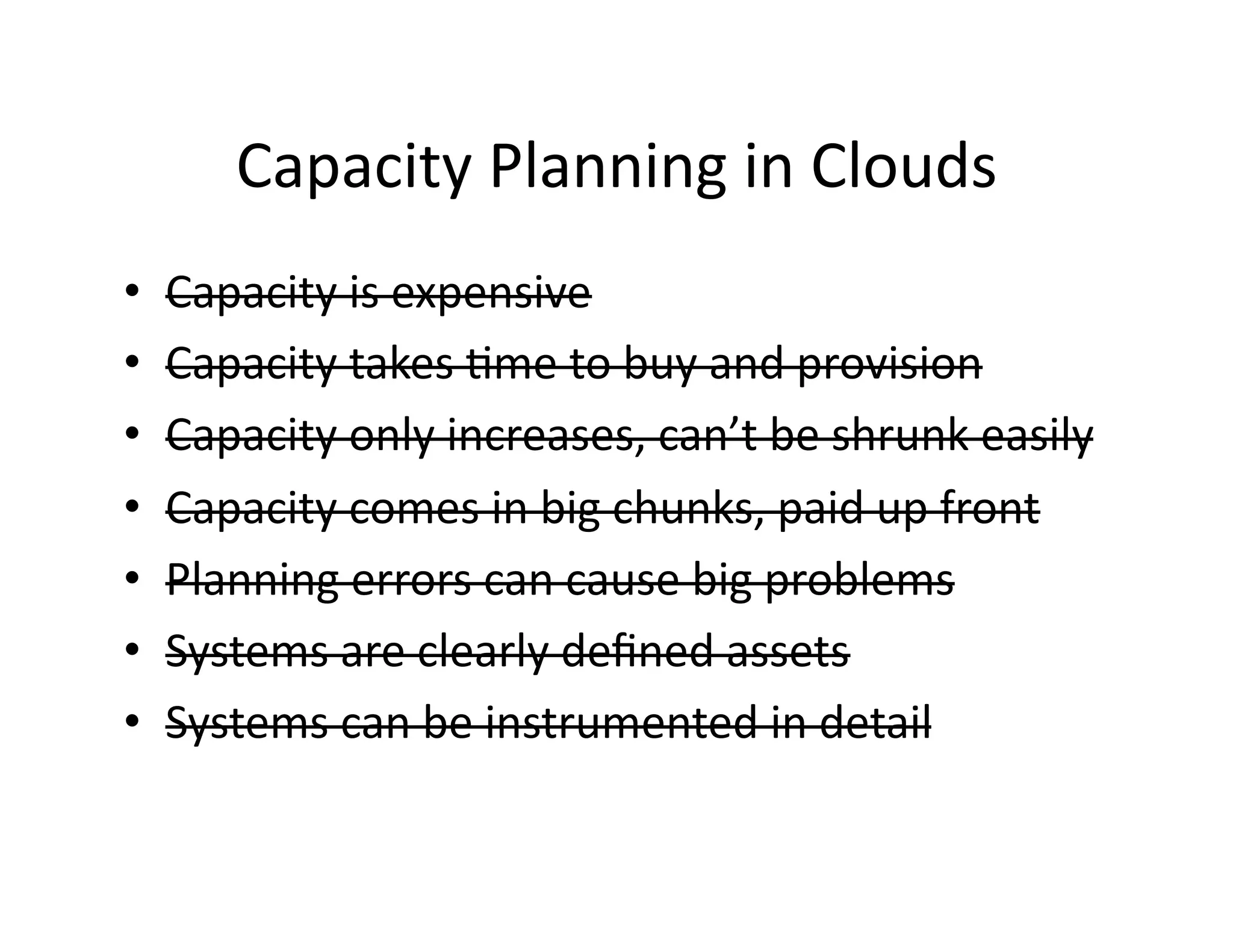
Explains characteristics of capacity in the cloud, emphasizing immediate scalability, the necessity to pay for usage, and avoiding overprovisioning.
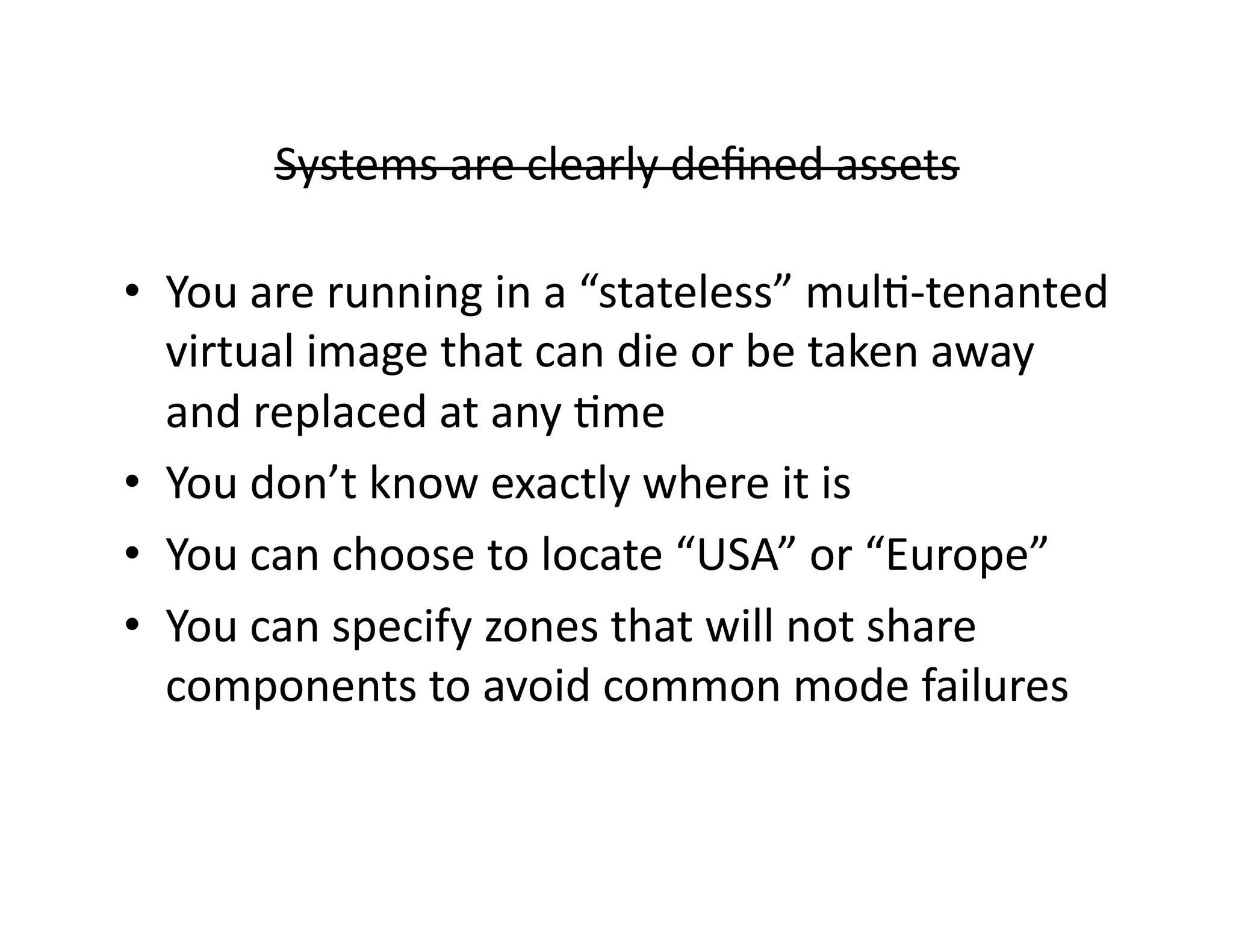
Describes the nature of cloud systems as stateless and multi-tenant, with needs for careful location selection to avoid failures.
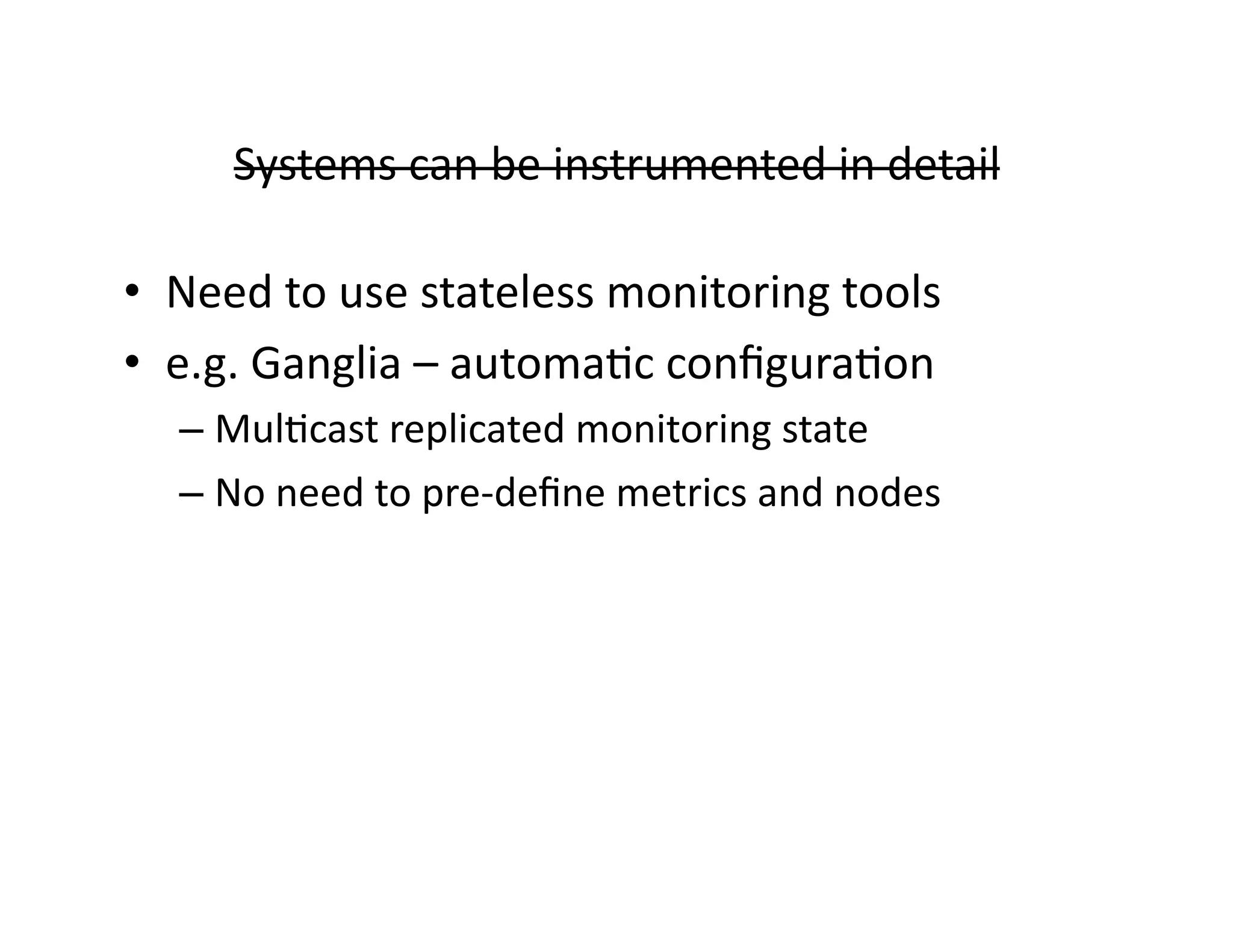
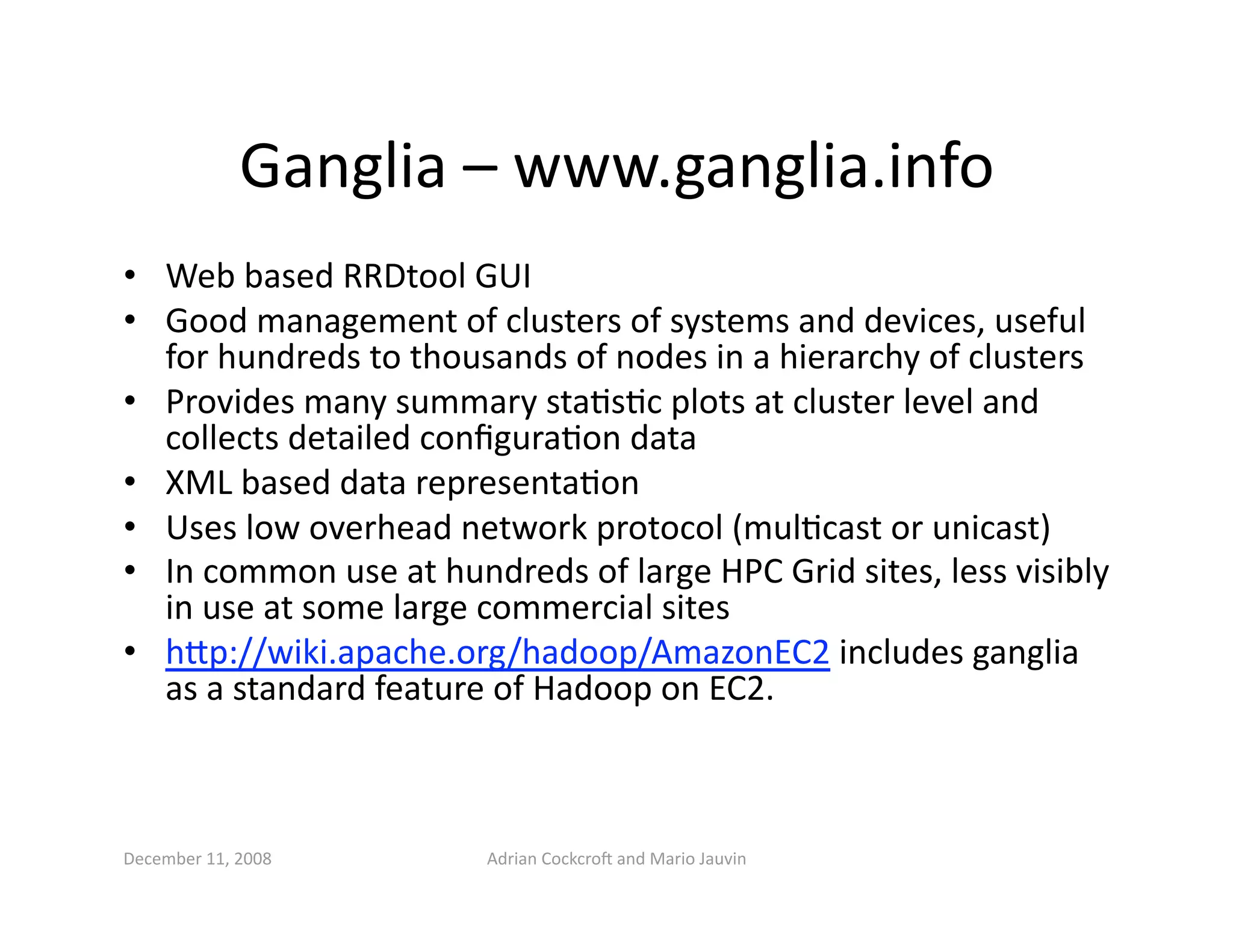
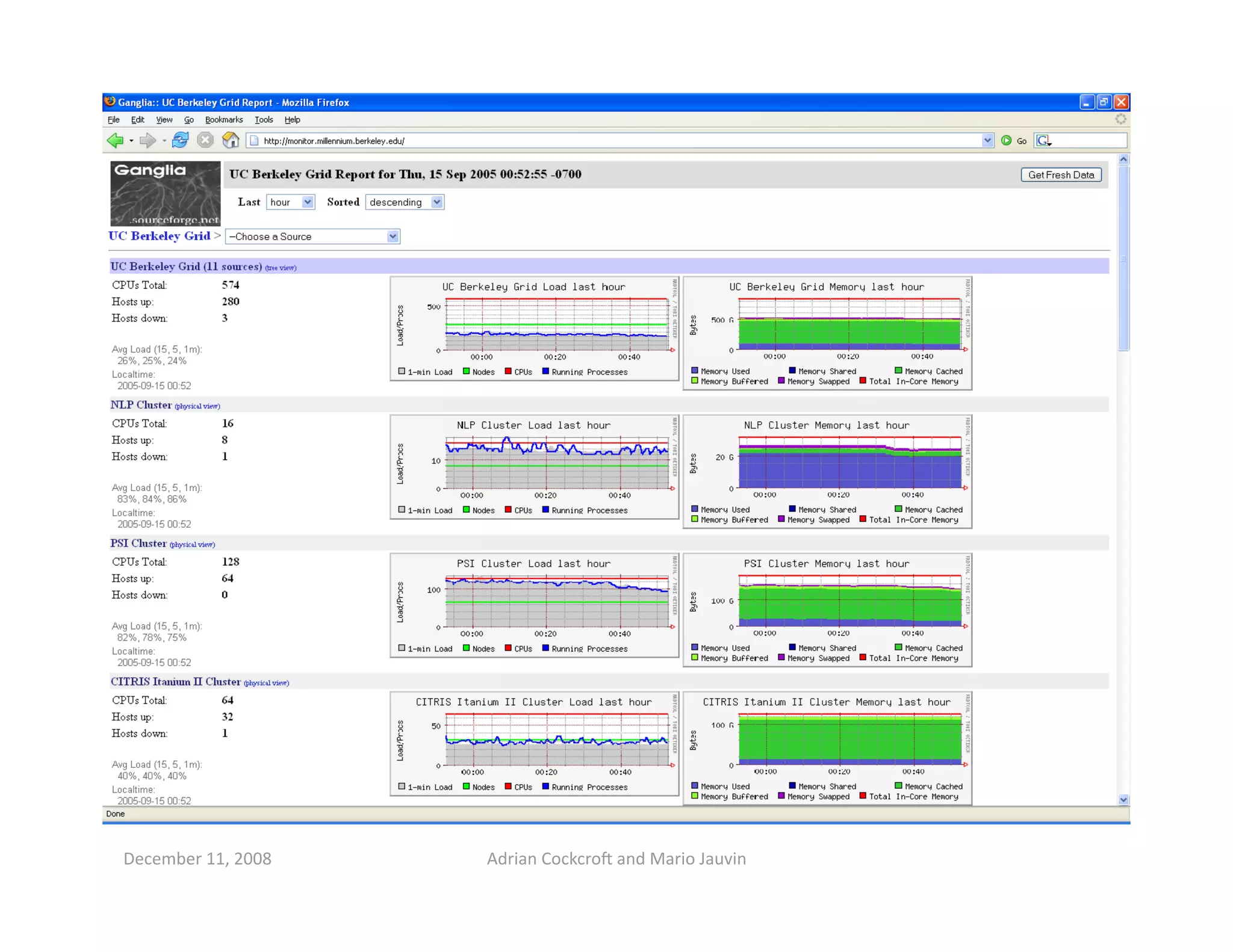
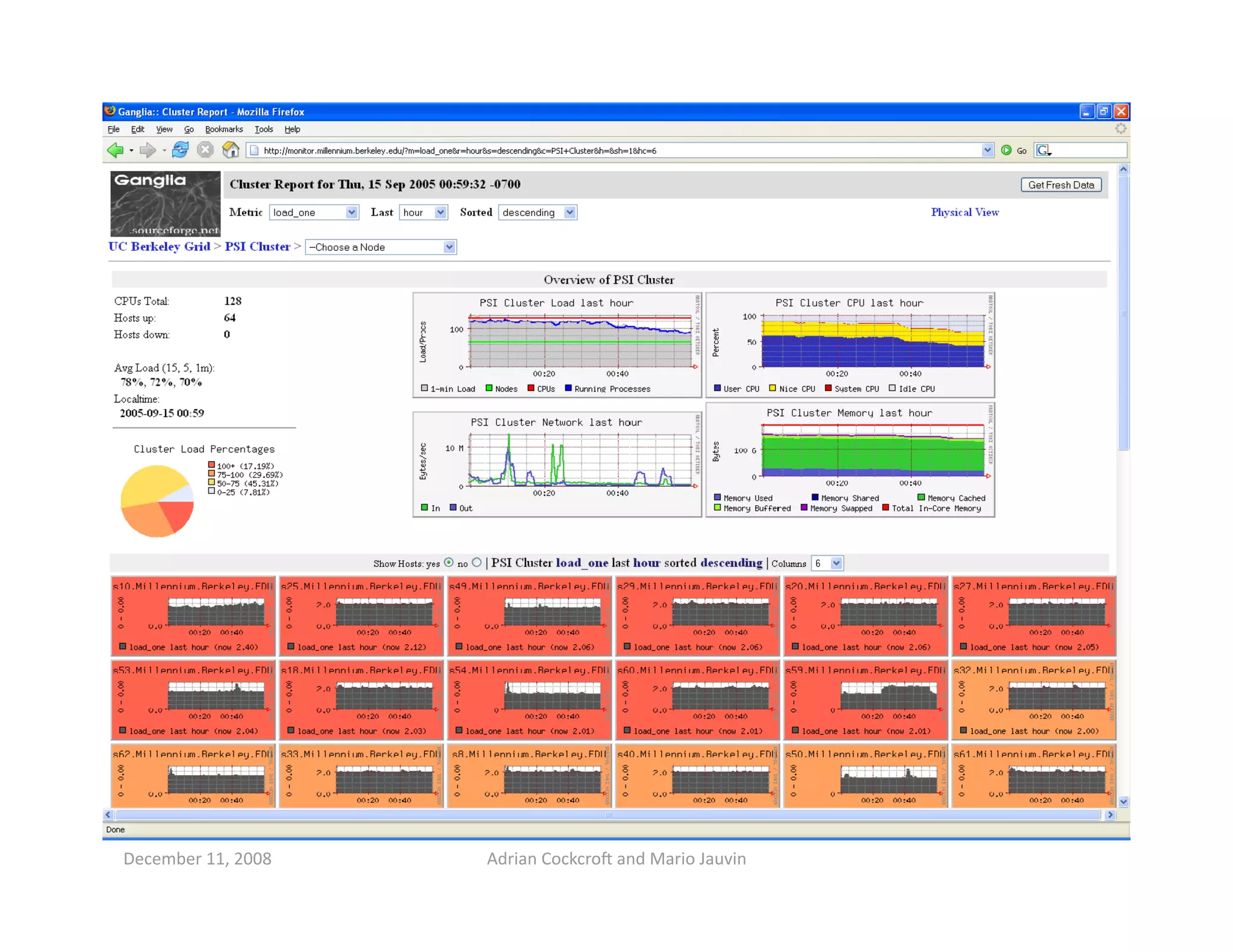
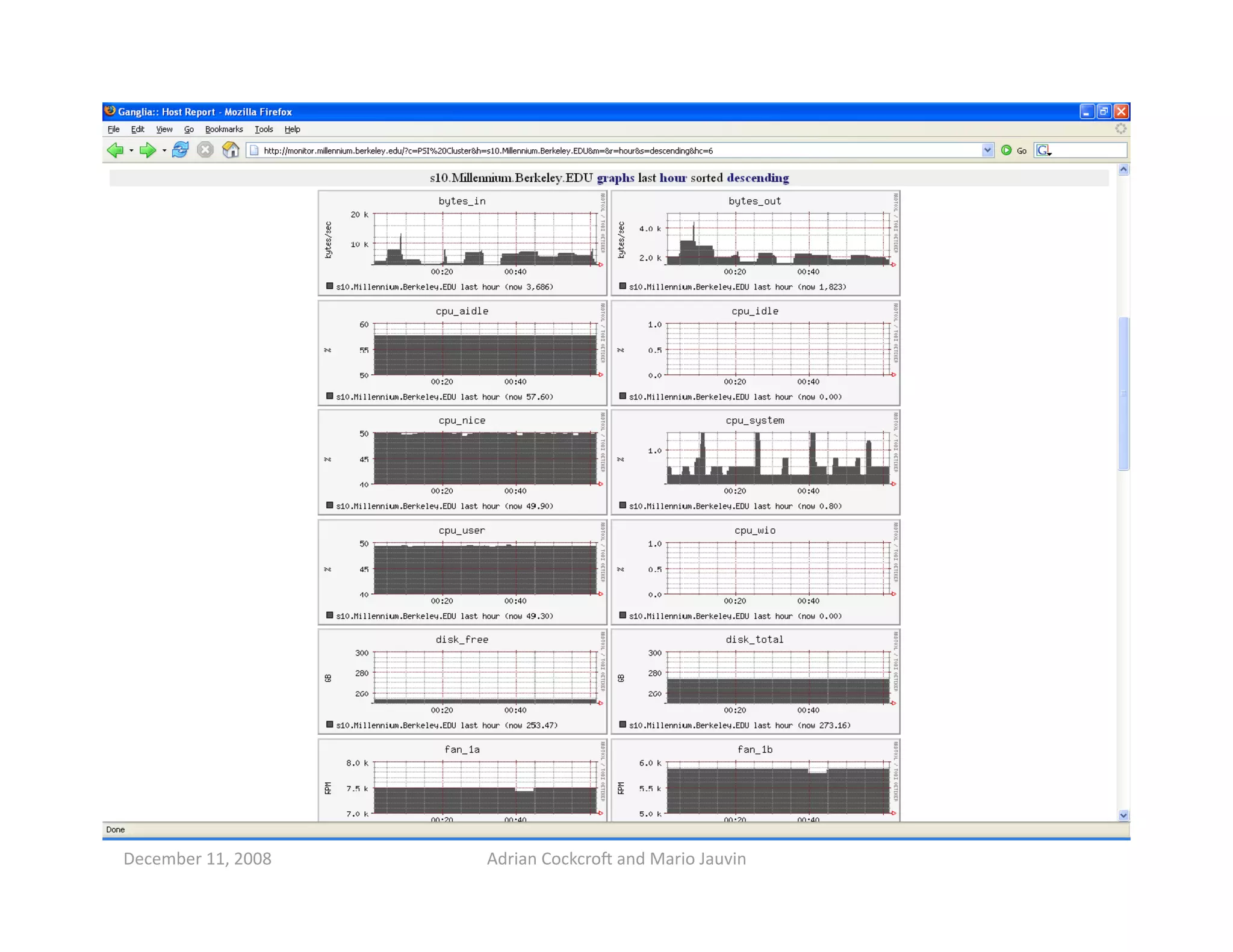
The use of monitoring tools such as Ganglia for detailed configuration management and metrics collection across systems.


