Agility – it’s a path
Continuous Improvement. Competitive Advantage.
Ken Schwaber & Gunther Verheyen
Scrum.org
July 2013
© Scrum.org. All Rights Reserved. 22
1. An enterprise’s ability to take advantage of
opportunities, respond to challenges, and to do so while
controlling risk.
2. To be quick and nimble.
Definition of Agility (n.)
© Scrum.org. All Rights Reserved. 33
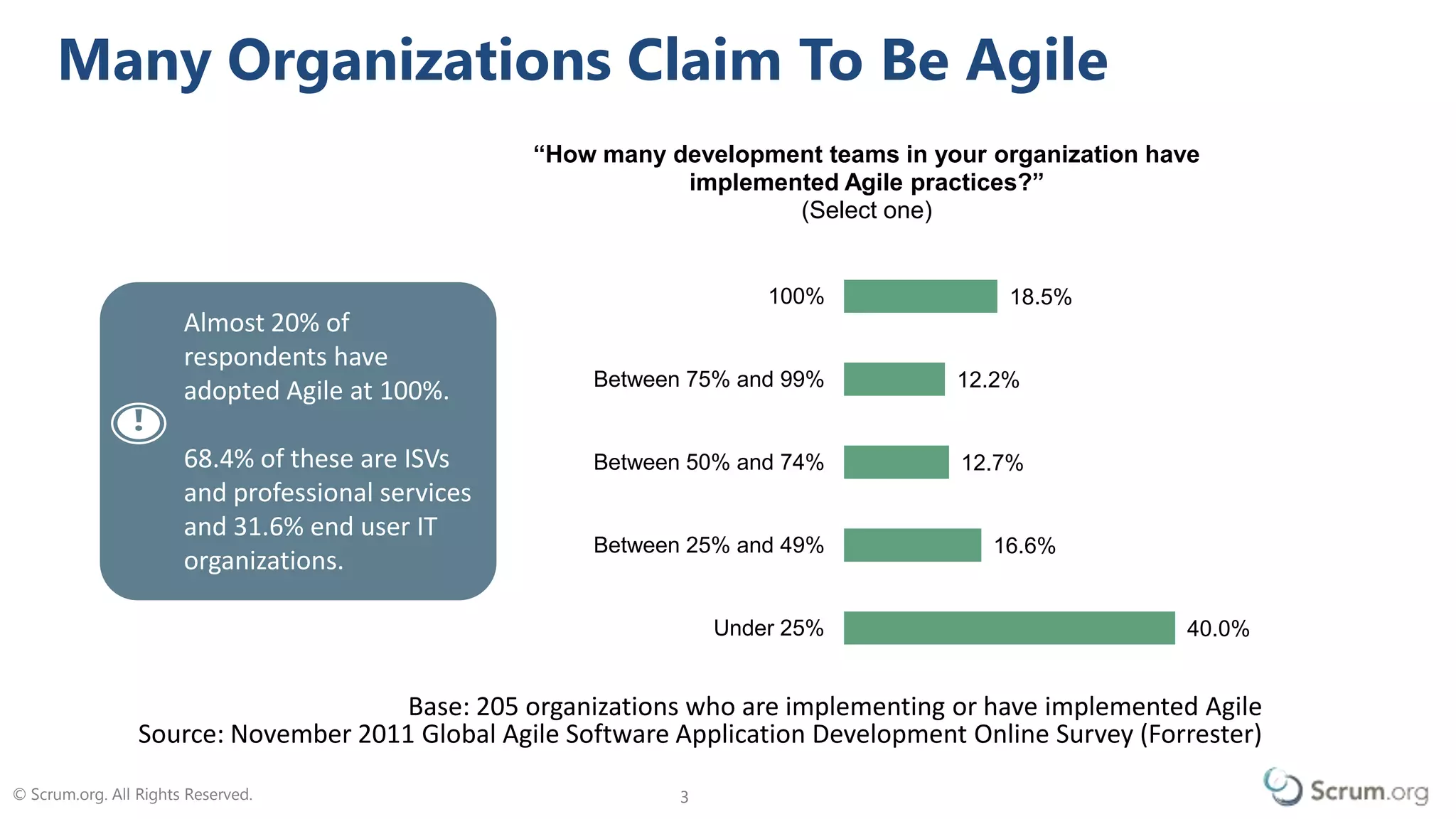
40.0%
16.6%
12.7%
12.2%
18.5%
Under 25%
Between 25% and 49%
Between 50% and 74%
Between 75% and 99%
100%
“How many development teams in your organization have
implemented Agile practices?”
(Select one)
Base: 205 organizations who are implementing or have implemented Agile
Source: November 2011 Global Agile Software Application Development Online Survey (Forrester)
Almost 20% of
respondents have
adopted Agile at 100%.
68.4% of these are ISVs
and professional services
and 31.6% end user IT
organizations.
Many Organizations Claim To Be Agile
© Scrum.org. All Rights Reserved. 44
• Organizations are desperate to be agile.
• Scrum is a foundation for organizational agility.
• Agility can be gained by organizations progressively
refocusing their business functions.
Assertions
© Scrum.org. All Rights Reserved. 5
MIN
5
Where are you on the Path to Agility?
Raise your hand if:
• You are agile?
• Becoming Agile?
• Have been told to be Agile and are going to start soon?
• Agile is not in your immediate horizon?
Exercise 3
© Scrum.org. All Rights Reserved. 66
• Volatility is likely to remain a constant … it will continue to
roil traditional business and operating models for some
time to come.
• To be competitive, companies must respond quickly and
nimbly to the changing environment ... their ability to
respond to market movements is core to sustainability.
Change Is The Only Constant
Source: The Economist “Organisational agility: how businesses can survive and thrive in turbulent times” (2009)
© Scrum.org. All Rights Reserved. 77
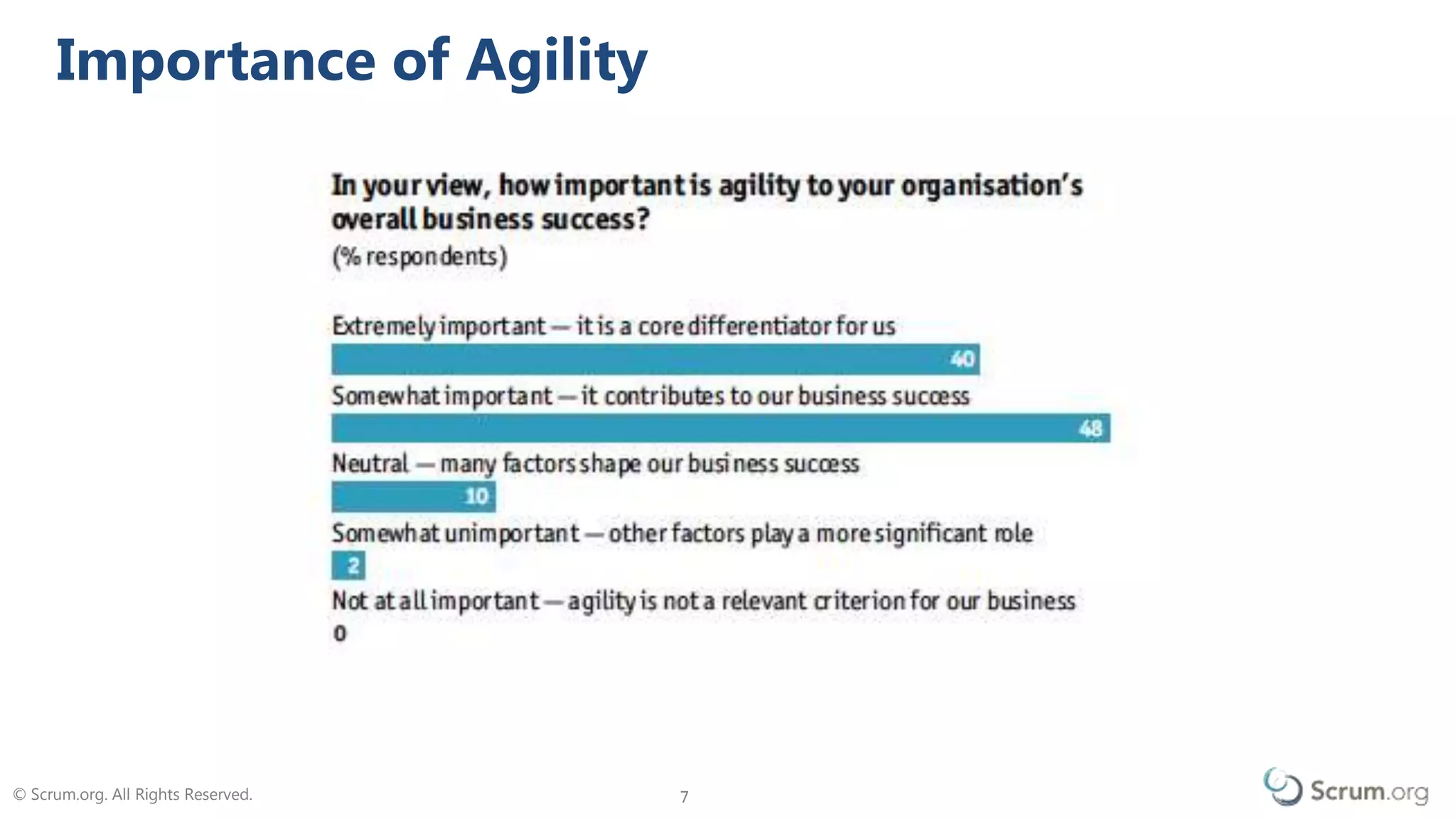
Importance of Agility
Source: The Economist “Organisational agility: how businesses can survive and thrive in turbulent times” (2009)
© Scrum.org. All Rights Reserved. 8
MIN
8
How do you know if your organization is
becoming more agile?
Exercise 2
© Scrum.org. All Rights Reserved. 99
• <$1,000
• <$10,000
• <$100,000
• >$100,000
• You don’t know
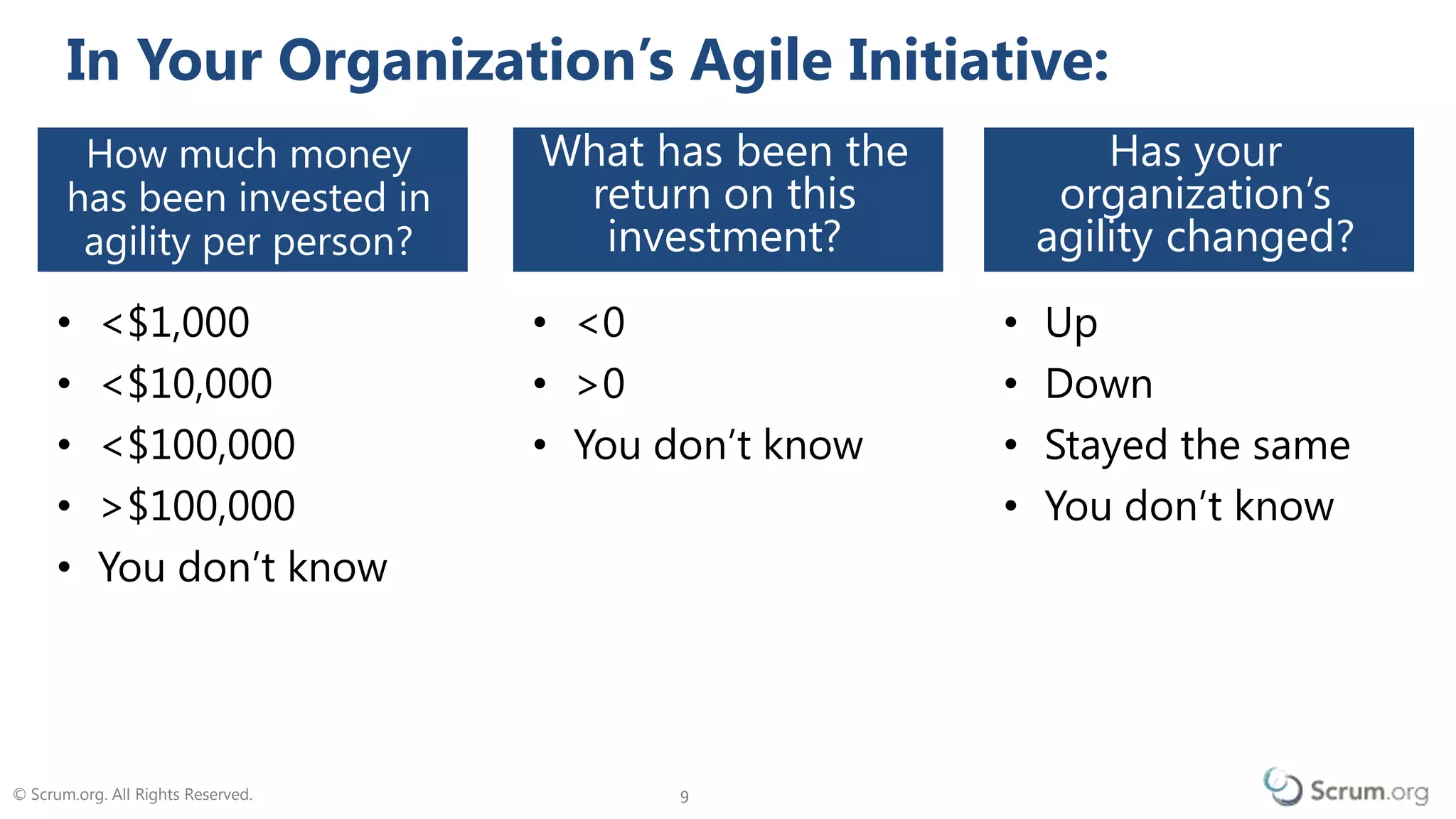
How much money
has been invested in
agility per person?
• Up
• Down
• Stayed the same
• You don’t know
Has your
organization’s
agility changed?
• <0
• >0
• You don’t know
What has been the
return on this
investment?
In Your Organization’s Agile Initiative:
© Scrum.org. All Rights Reserved. 10
MIN
10
What is your approach to becoming
Agile?
Exercise 2
© Scrum.org. All Rights Reserved. 1111
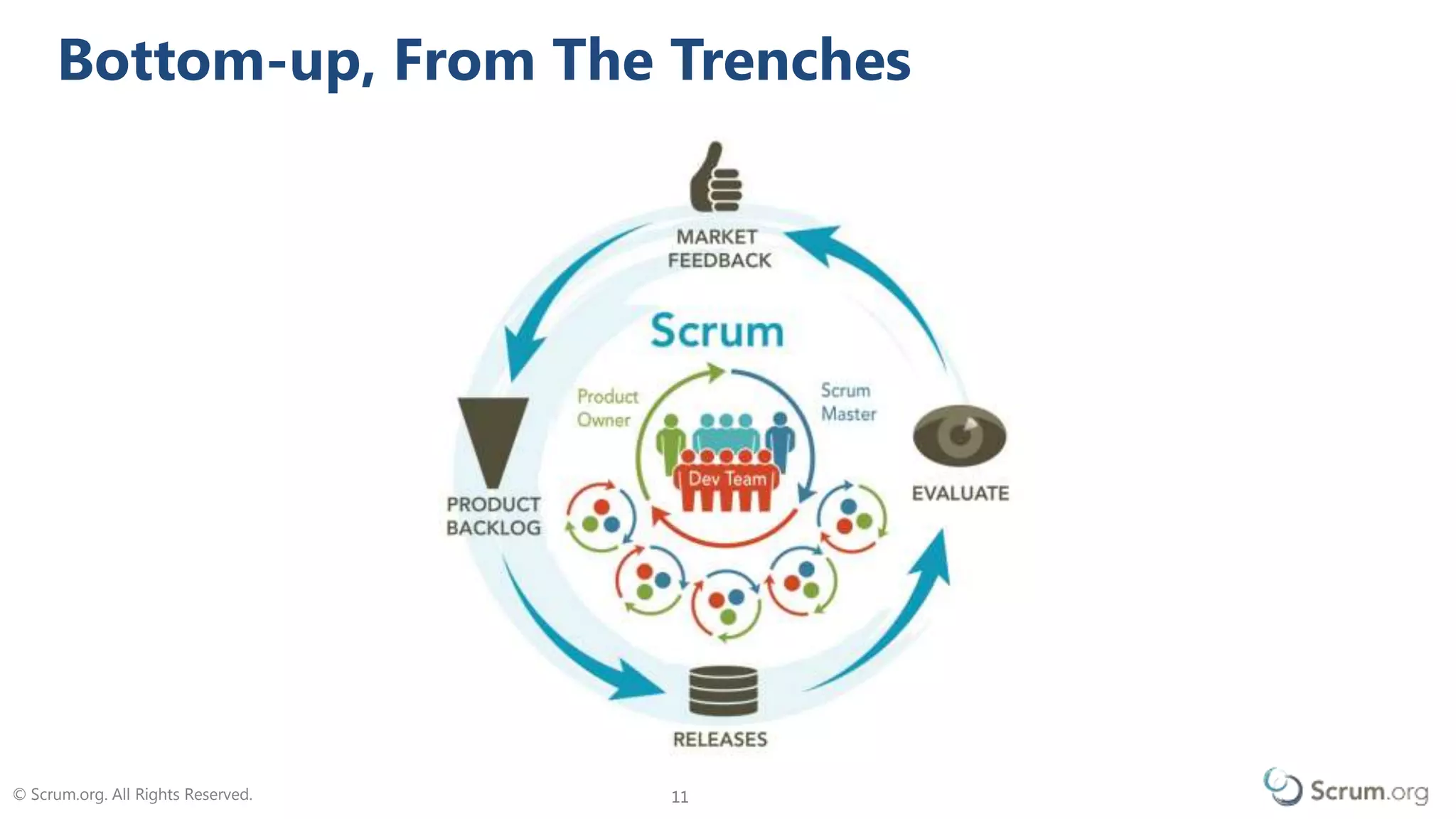
Bottom-up, From The Trenches
© Scrum.org. All Rights Reserved. 1212
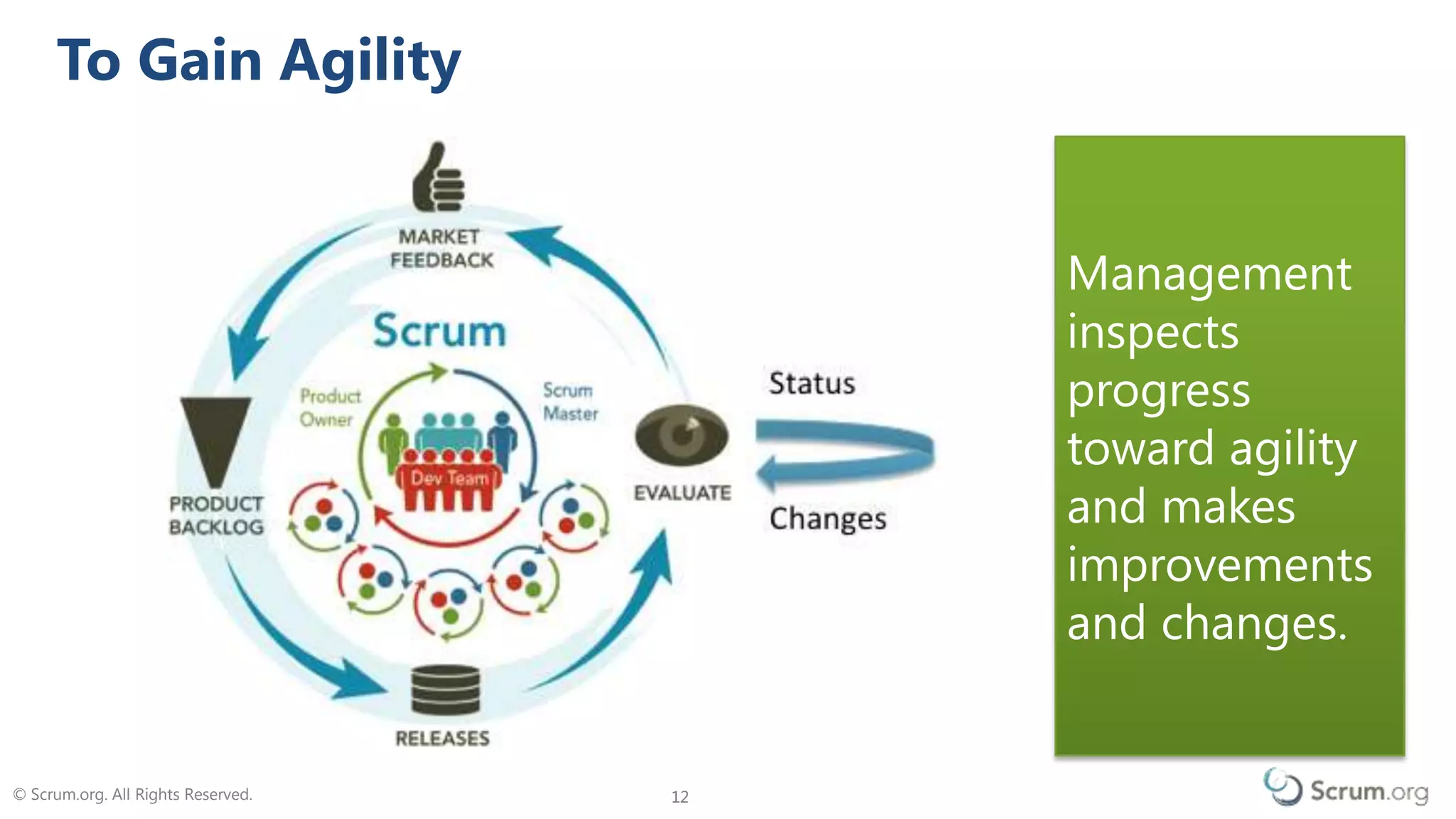
To Gain Agility
Management
inspects
progress
toward agility
and makes
improvements
and changes.
© Scrum.org. All Rights Reserved. 1313
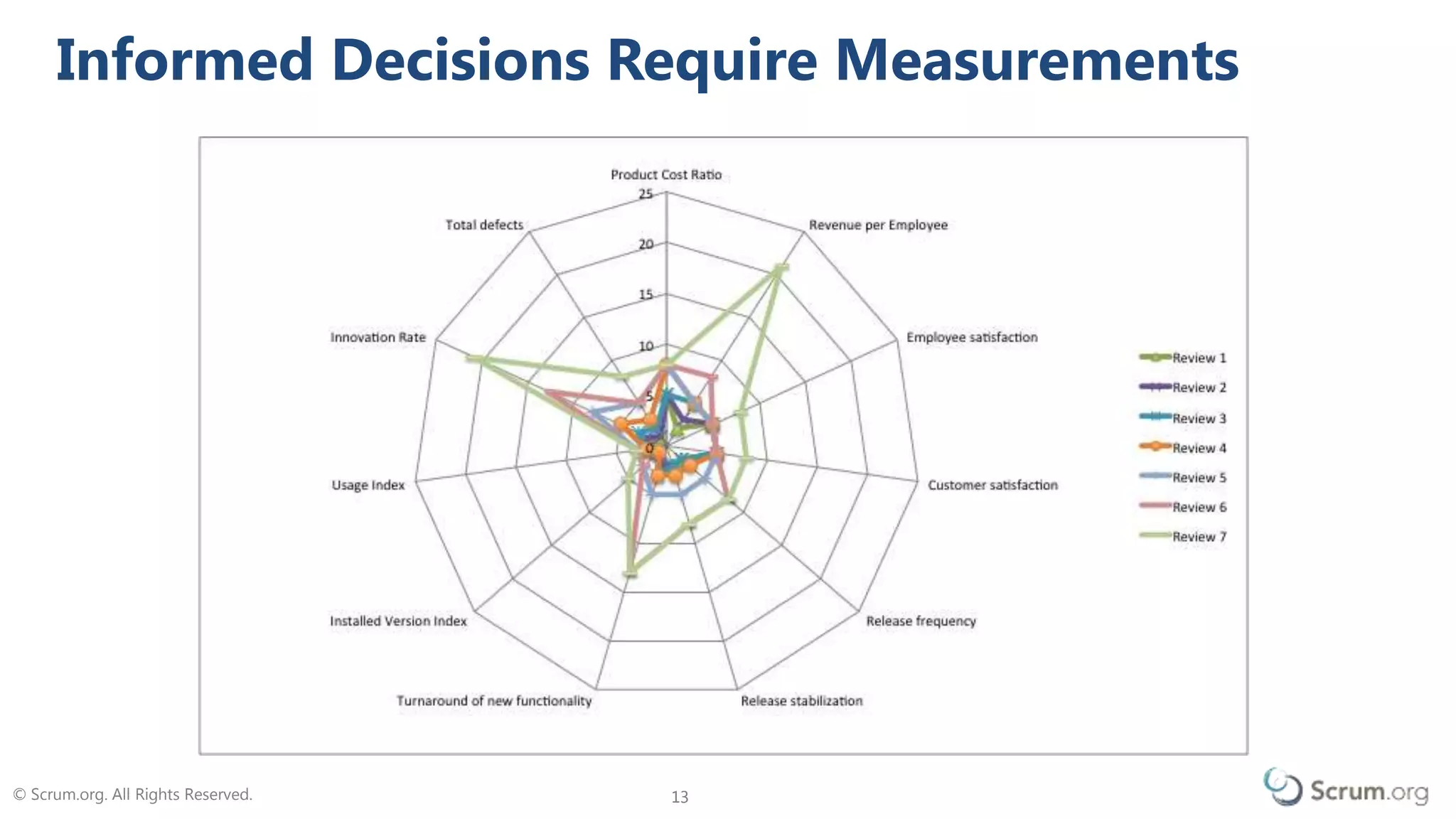
Informed Decisions Require Measurements
© Scrum.org. All Rights Reserved. 1414
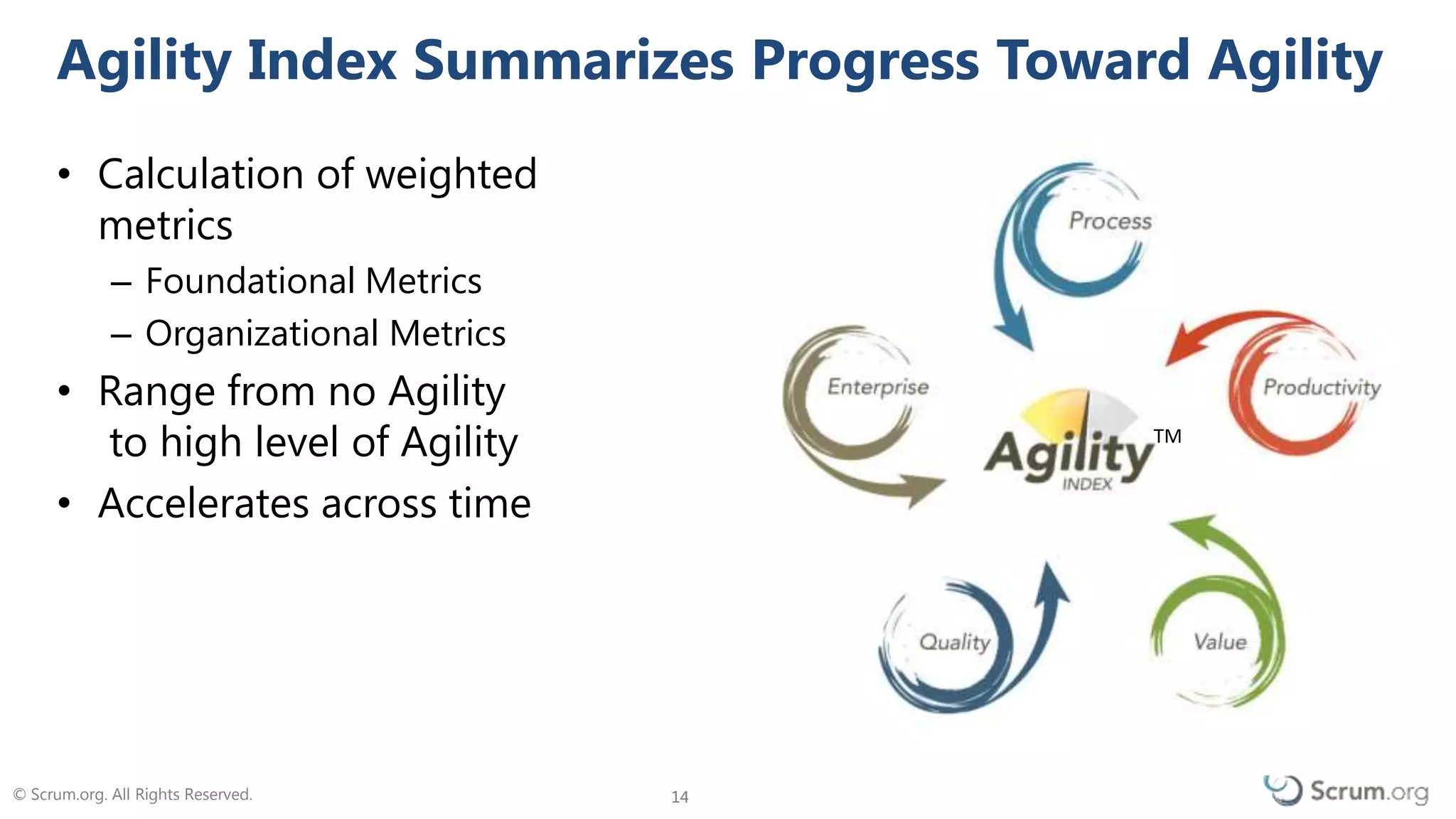
• Calculation of weighted metrics
– Foundational Metrics
– Organizational Metrics
• visualizes incremental change of
agility
• Range from low Agility
to high level of Agility
• Accelerates across time
Agility Index Summarizes Progress Toward Agility
TM
© Scrum.org. All Rights Reserved. 1515
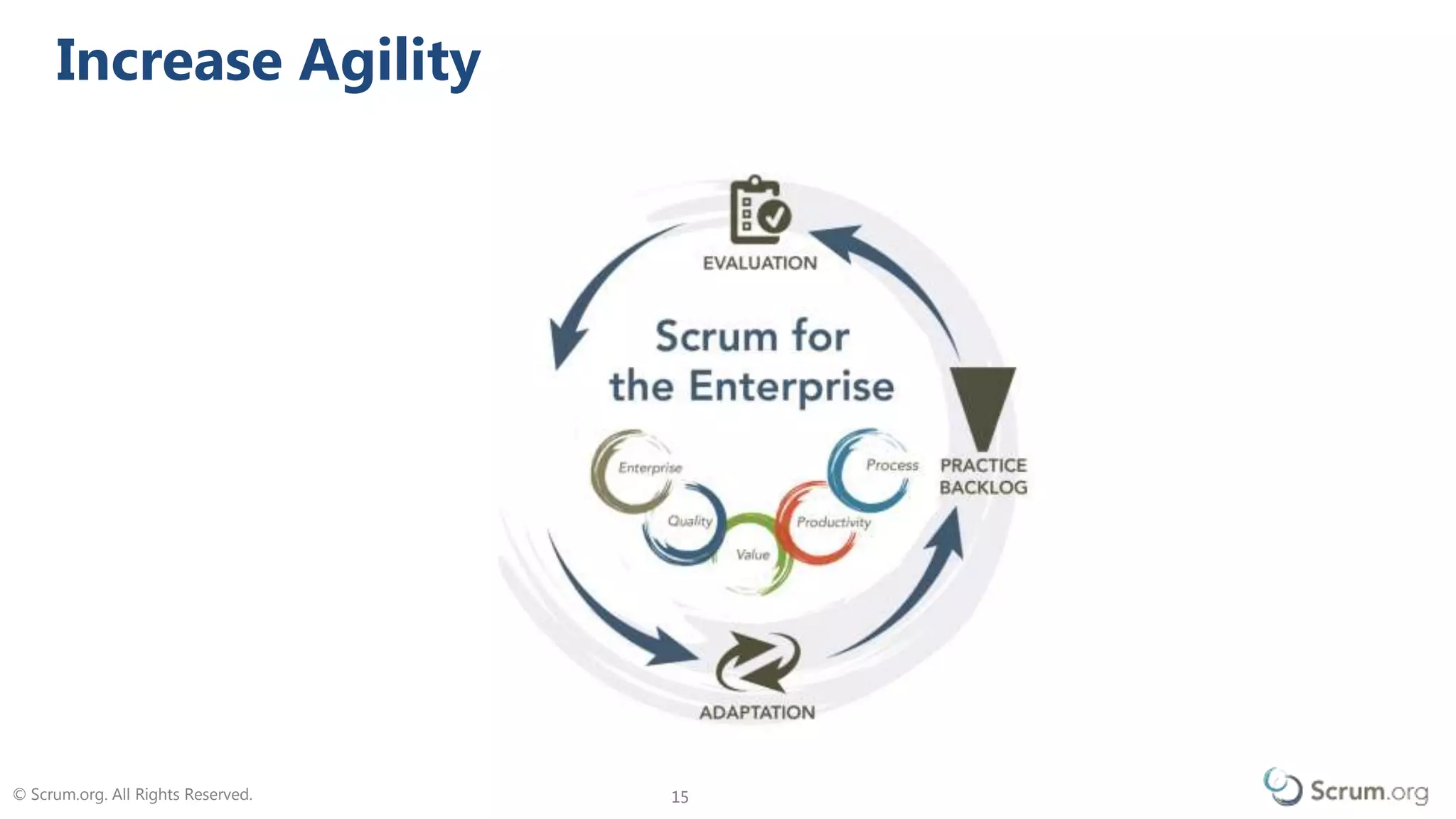
Increase Agility
TM
© Scrum.org. All Rights Reserved. 1616
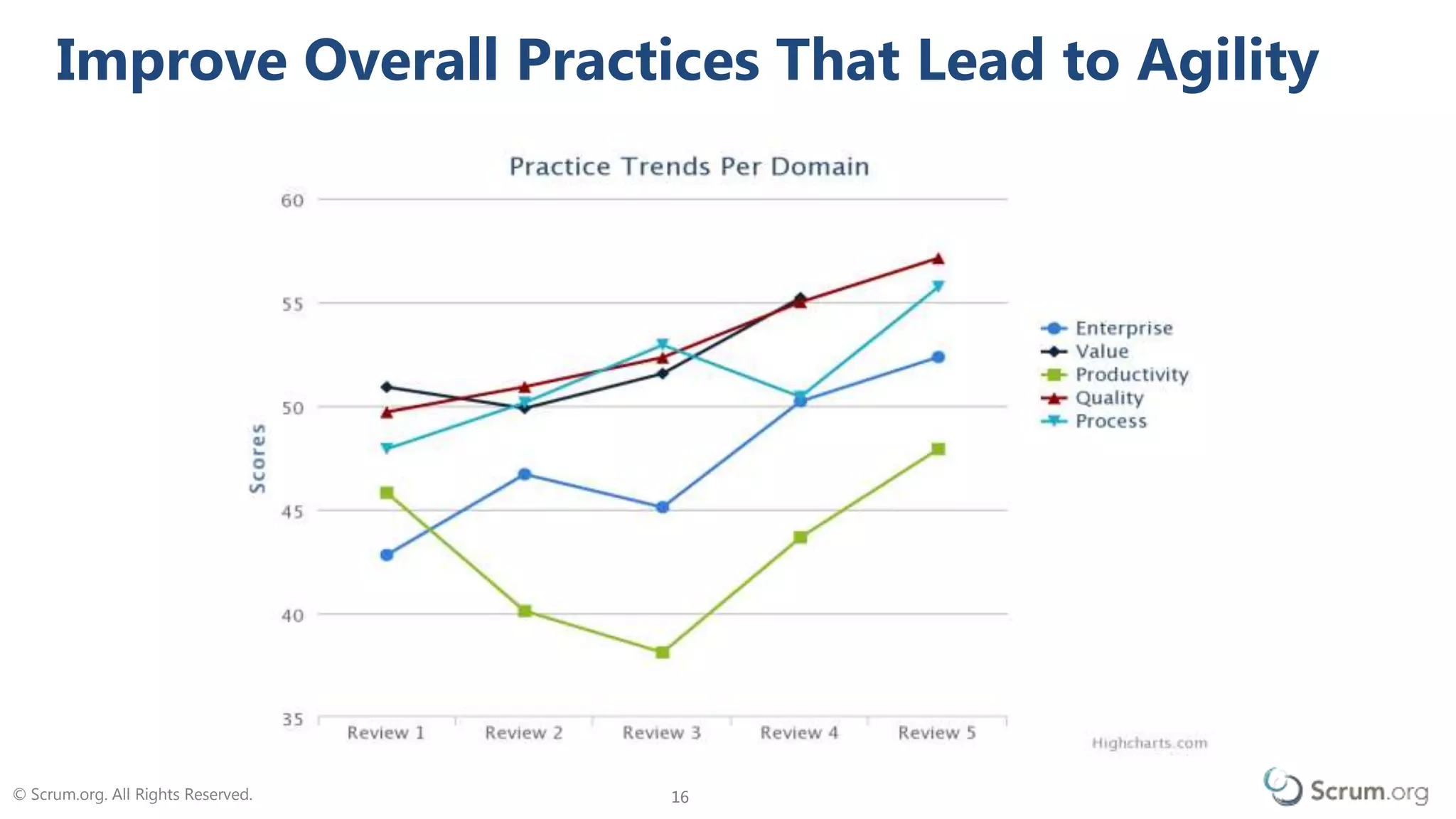
Improve Overall Practices That Lead to Agility
© Scrum.org. All Rights Reserved. 1717
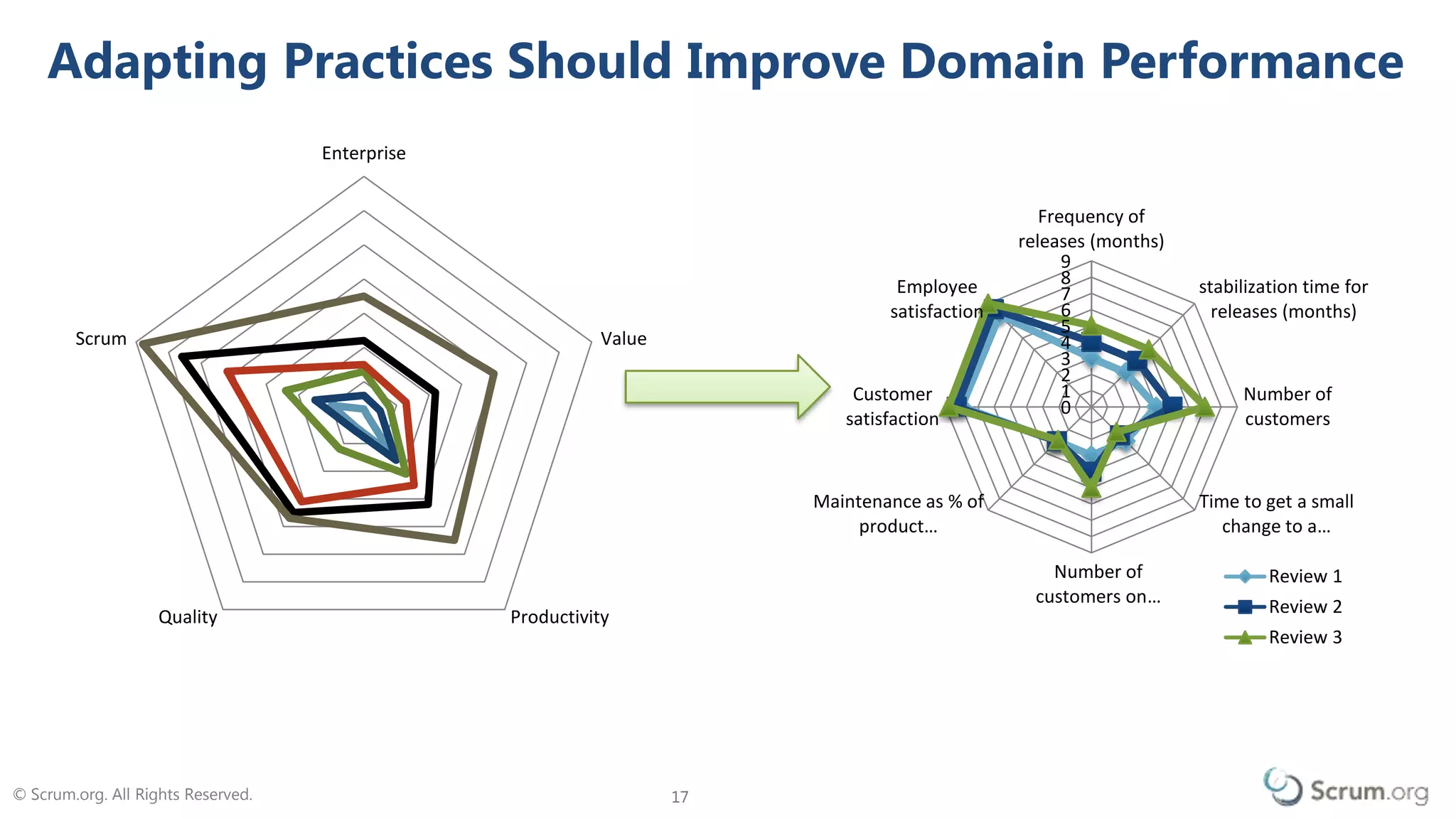
Adapting Practices Should Improve Domain Performance
Enterprise
Value
ProductivityQuality
Scrum
0
1
2
3
4
5
6
7
8
9
Frequency of
releases (months)
stabilization time for
releases (months)
Number of
customers
Time to get a small
change to a…
Number of
customers on…
Maintenance as % of
product…
Customer
satisfaction
Employee
satisfaction
Review 1
Review 2
Review 3
© Scrum.org. All Rights Reserved. 1818
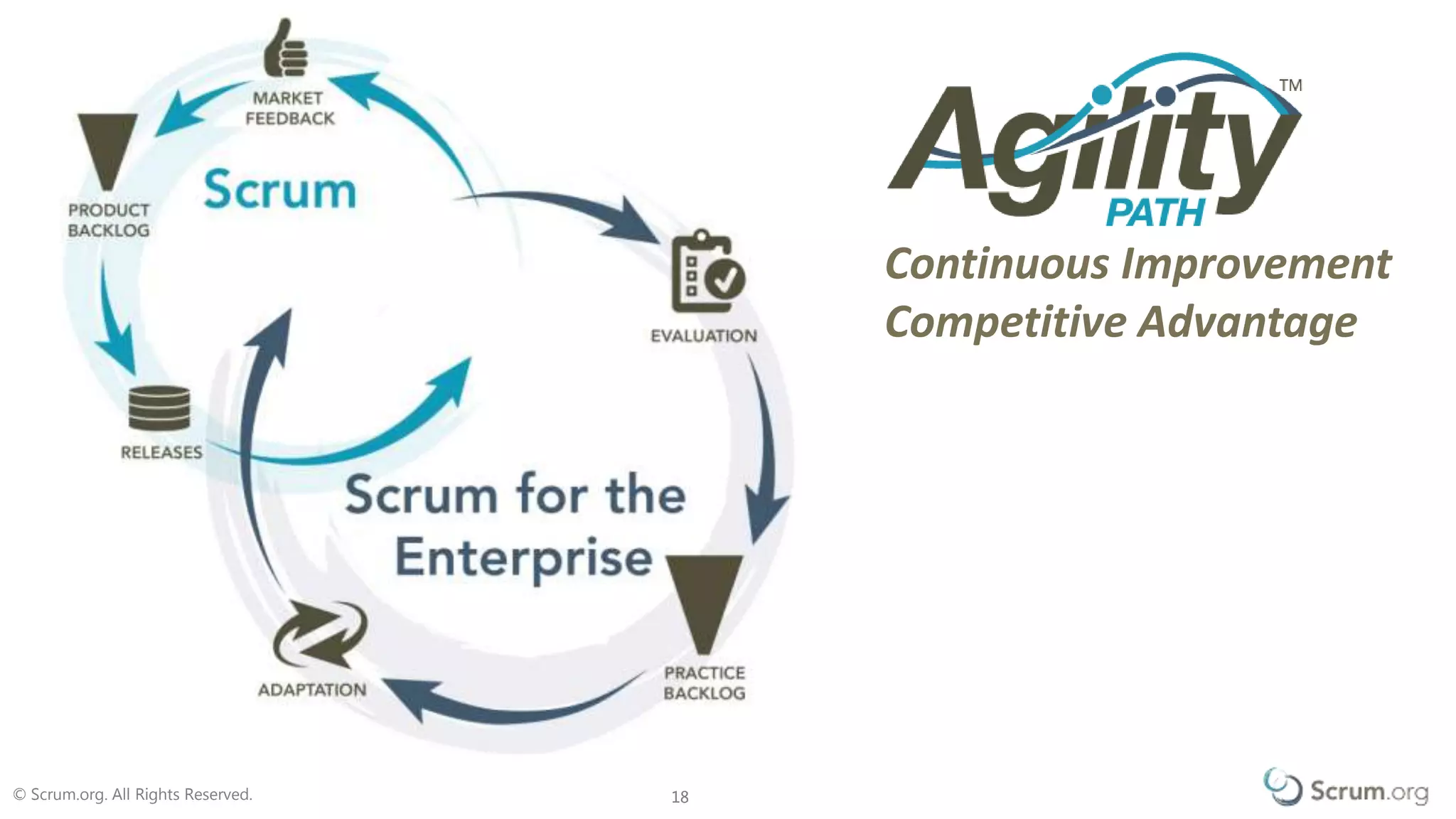
Continuous Improvement
Competitive Advantage
© Scrum.org. All Rights Reserved. 1919
Questions
THANK
YOU

Agility Path

  • 1.
    Agility – it’sa path Continuous Improvement. Competitive Advantage. Ken Schwaber & Gunther Verheyen Scrum.org July 2013
  • 2.
    © Scrum.org. AllRights Reserved. 22 1. An enterprise’s ability to take advantage of opportunities, respond to challenges, and to do so while controlling risk. 2. To be quick and nimble. Definition of Agility (n.)
  • 3.
    © Scrum.org. AllRights Reserved. 33 40.0% 16.6% 12.7% 12.2% 18.5% Under 25% Between 25% and 49% Between 50% and 74% Between 75% and 99% 100% “How many development teams in your organization have implemented Agile practices?” (Select one) Base: 205 organizations who are implementing or have implemented Agile Source: November 2011 Global Agile Software Application Development Online Survey (Forrester) Almost 20% of respondents have adopted Agile at 100%. 68.4% of these are ISVs and professional services and 31.6% end user IT organizations. Many Organizations Claim To Be Agile
  • 4.
    © Scrum.org. AllRights Reserved. 44 • Organizations are desperate to be agile. • Scrum is a foundation for organizational agility. • Agility can be gained by organizations progressively refocusing their business functions. Assertions
  • 5.
    © Scrum.org. AllRights Reserved. 5 MIN 5 Where are you on the Path to Agility? Raise your hand if: • You are agile? • Becoming Agile? • Have been told to be Agile and are going to start soon? • Agile is not in your immediate horizon? Exercise 3
  • 6.
    © Scrum.org. AllRights Reserved. 66 • Volatility is likely to remain a constant … it will continue to roil traditional business and operating models for some time to come. • To be competitive, companies must respond quickly and nimbly to the changing environment ... their ability to respond to market movements is core to sustainability. Change Is The Only Constant Source: The Economist “Organisational agility: how businesses can survive and thrive in turbulent times” (2009)
  • 7.
    © Scrum.org. AllRights Reserved. 77 Importance of Agility Source: The Economist “Organisational agility: how businesses can survive and thrive in turbulent times” (2009)
  • 8.
    © Scrum.org. AllRights Reserved. 8 MIN 8 How do you know if your organization is becoming more agile? Exercise 2
  • 9.
    © Scrum.org. AllRights Reserved. 99 • <$1,000 • <$10,000 • <$100,000 • >$100,000 • You don’t know How much money has been invested in agility per person? • Up • Down • Stayed the same • You don’t know Has your organization’s agility changed? • <0 • >0 • You don’t know What has been the return on this investment? In Your Organization’s Agile Initiative:
  • 10.
    © Scrum.org. AllRights Reserved. 10 MIN 10 What is your approach to becoming Agile? Exercise 2
  • 11.
    © Scrum.org. AllRights Reserved. 1111 Bottom-up, From The Trenches
  • 12.
    © Scrum.org. AllRights Reserved. 1212 To Gain Agility Management inspects progress toward agility and makes improvements and changes.
  • 13.
    © Scrum.org. AllRights Reserved. 1313 Informed Decisions Require Measurements
  • 14.
    © Scrum.org. AllRights Reserved. 1414 • Calculation of weighted metrics – Foundational Metrics – Organizational Metrics • visualizes incremental change of agility • Range from low Agility to high level of Agility • Accelerates across time Agility Index Summarizes Progress Toward Agility TM
  • 15.
    © Scrum.org. AllRights Reserved. 1515 Increase Agility TM
  • 16.
    © Scrum.org. AllRights Reserved. 1616 Improve Overall Practices That Lead to Agility
  • 17.
    © Scrum.org. AllRights Reserved. 1717 Adapting Practices Should Improve Domain Performance Enterprise Value ProductivityQuality Scrum 0 1 2 3 4 5 6 7 8 9 Frequency of releases (months) stabilization time for releases (months) Number of customers Time to get a small change to a… Number of customers on… Maintenance as % of product… Customer satisfaction Employee satisfaction Review 1 Review 2 Review 3
  • 18.
    © Scrum.org. AllRights Reserved. 1818 Continuous Improvement Competitive Advantage
  • 19.
    © Scrum.org. AllRights Reserved. 1919 Questions THANK YOU

Editor's Notes

  • #2 Scrum – Success ends with the middle managementAccording to industry analysts ‘the methods wars are over and scrum has won’ with Scrum becoming the de-facto Agile process of choice for most organizations. But its adoption is neither complete nor as effective as it could be with Scrum being forced into organizations that are neither adaptive nor Agile in nature.  The long-term success of Scrum rests with changing the organizations that it operates in. It rests with changing the middle management practices, processes and mindset. In this talk Ken Schwaber, co-creator of Scrum discusses what agility means to organizations and why middle management is so important to organizations staying on course towards this goal. He will introduce a new management approach, Enterprise Scrum, which provides practical advice how organizations can initiate and manage change towards agility.
  • #3 D
  • #8 D
  • #18 D