By: Stephanie, Sanea and Adriana
 
Refers to electronically capturing,  recording, processing (manipulating) storing,  transmitting, and displaying a sequence of  still images recorded many times a second to produce scenes in motion.  It is in a format that can be presented on television ( or on any video supporting device for that matter).  A video mainly consists of: Still images ( image frames) Audio Source: Webopedia.com and Wikipedia.com
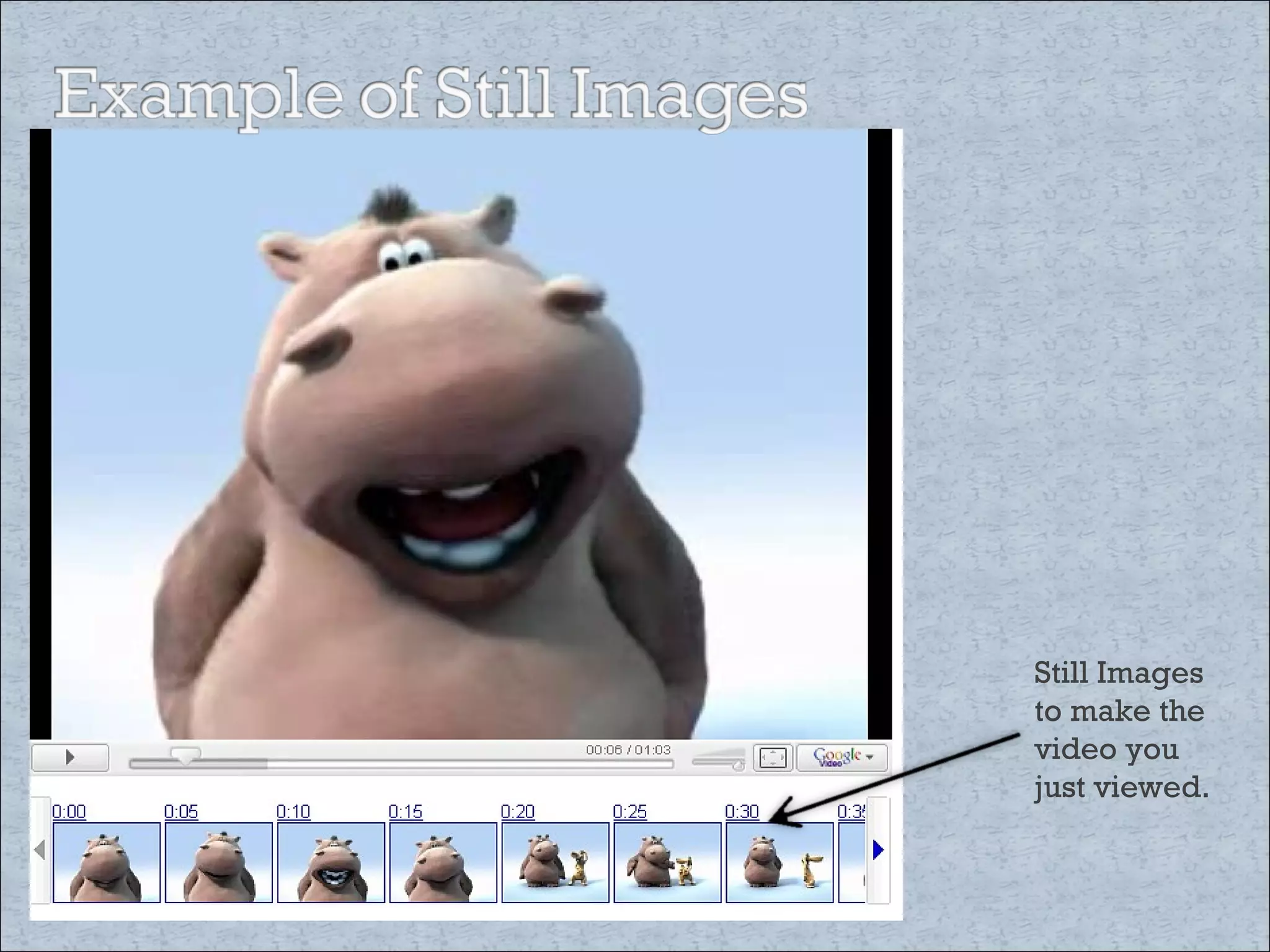
Still Images to make the video you just viewed.
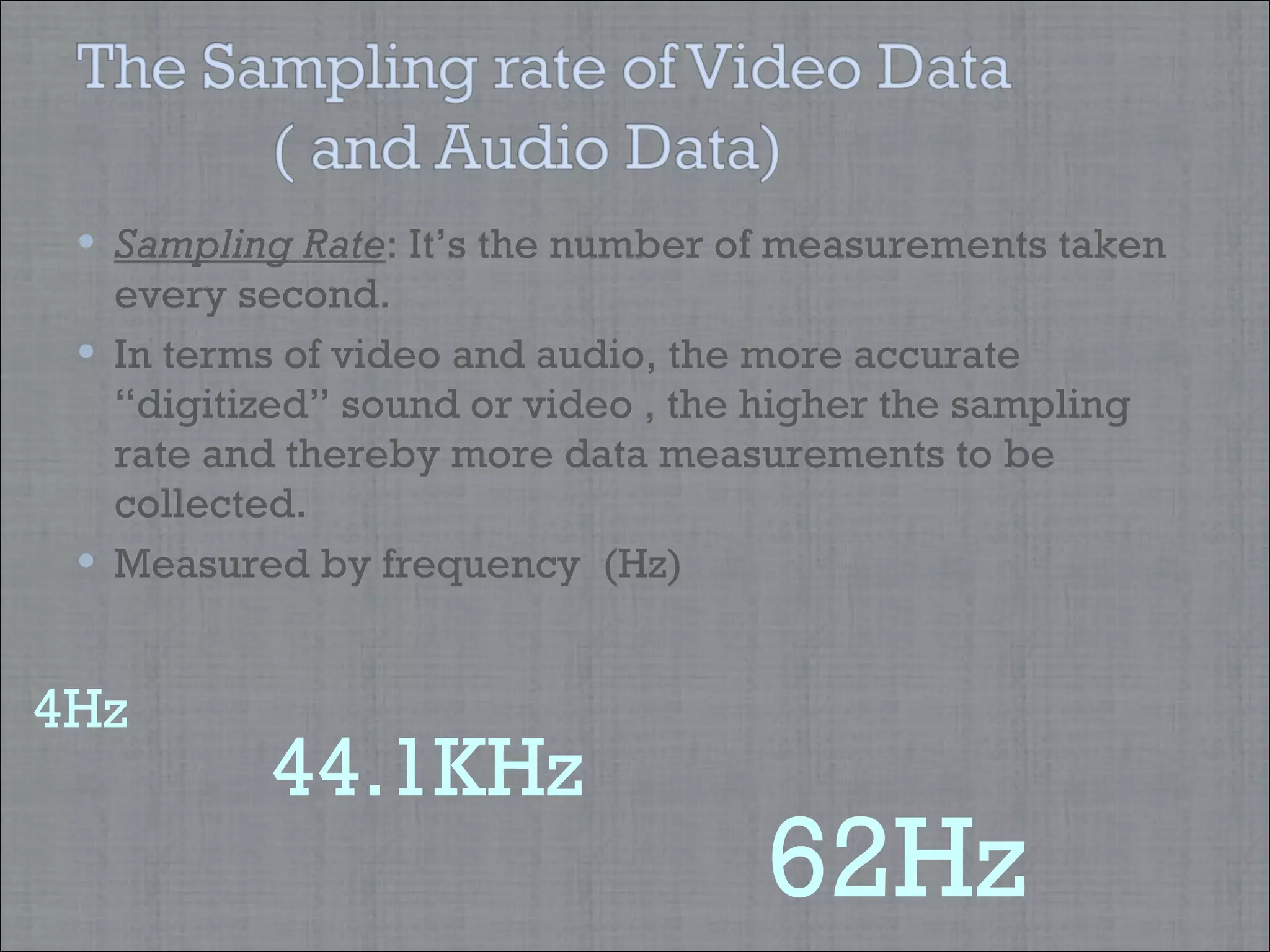
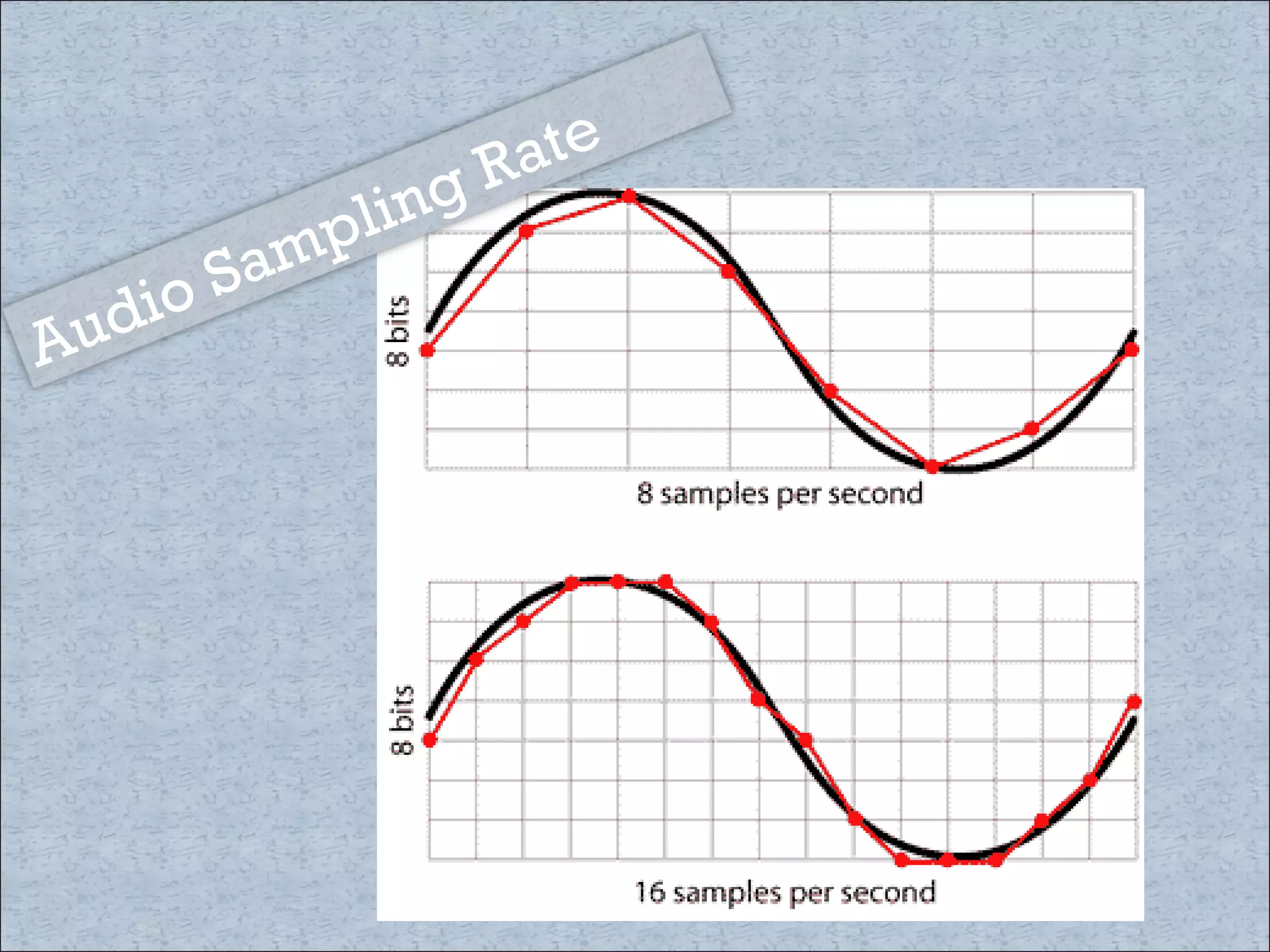
Sampling Rate : It’s the number of measurements taken every second. In terms of video and audio, the more accurate “digitized” sound or video , the higher the sampling rate and thereby more data measurements to be collected.  Measured by frequency  (Hz)  44.1KHz 62Hz 4Hz
Audio Sampling Rate
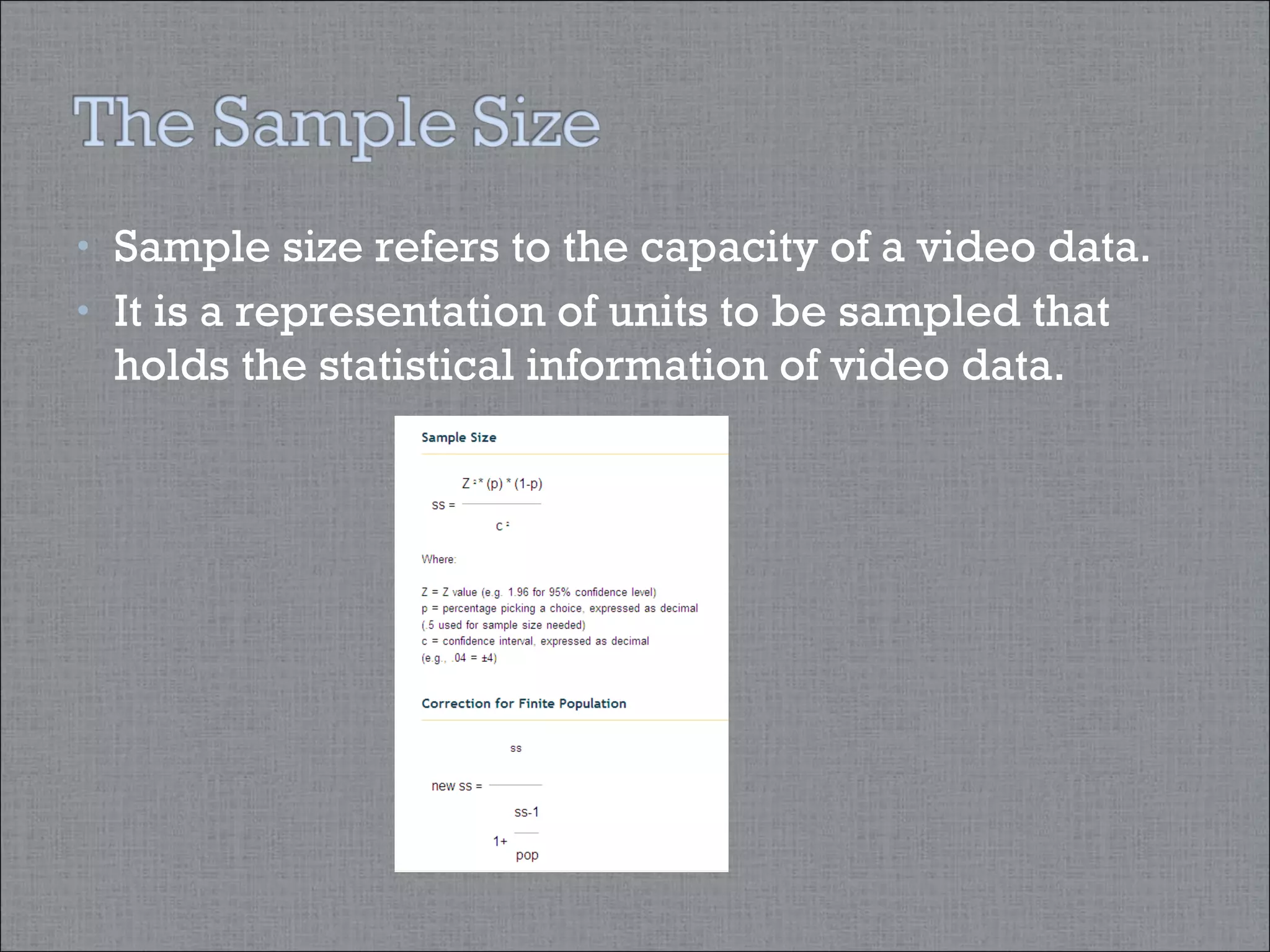
Sample size refers to the capacity of a video data. It is a representation of units to be sampled that holds the statistical information of video data.
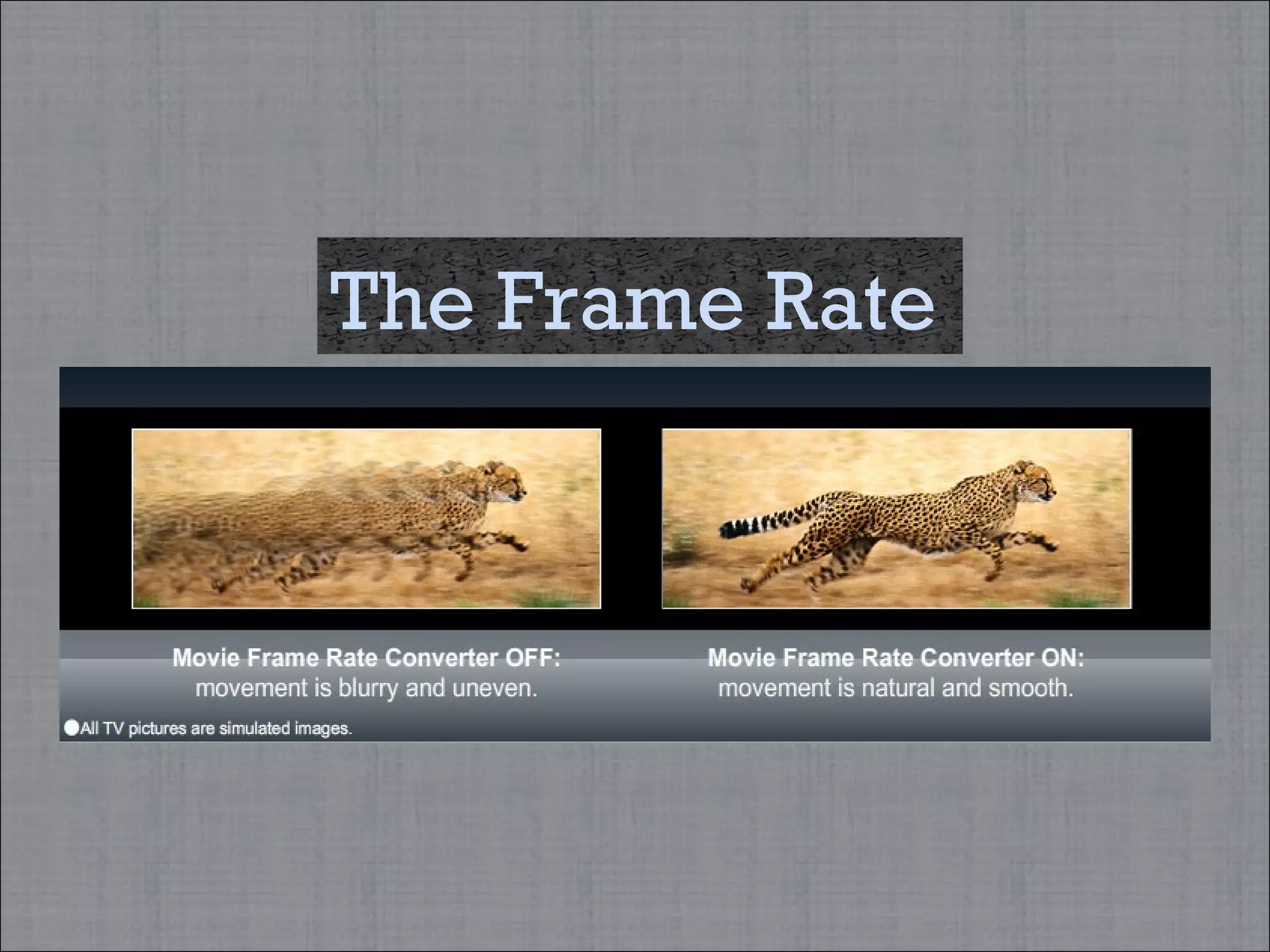
Frame Rate:  The Frequency [rate] at which an imaging device produces “unique” consecutive images called frames.  Source: Wikipedia.com In short, frame rate are the number of frames which are shown in a second.  There are a number of different frame rates which are used in television, movies etc… They include: i- stands for “interlaced fields” , so 50i= 25 frames p- stands for “noninterlaced fields”. So 50p= 50 frames * Interlaced: Increase quality of video without  bandwidth 50i  30p   25p   50p  60i
The Frame Rate
V ideo data consists of the main components of framework- images being recorded into still frames and the recording of audio through a microphone in the camera. Video data is a representation of images that move or change. This also includes the various forms of animation. Video data is a sequence of measurements which includes the color and brightness that is been detected by individual light collection points in a digital video camera or video signal through a traditional video camera or VCR. The measurements of  video data characterizes the pixels of an image in a single frame.  This may reach up to 30 frames of data per second that is been processed. The process of video data makes it the most complicated and largest of the 5 data types.
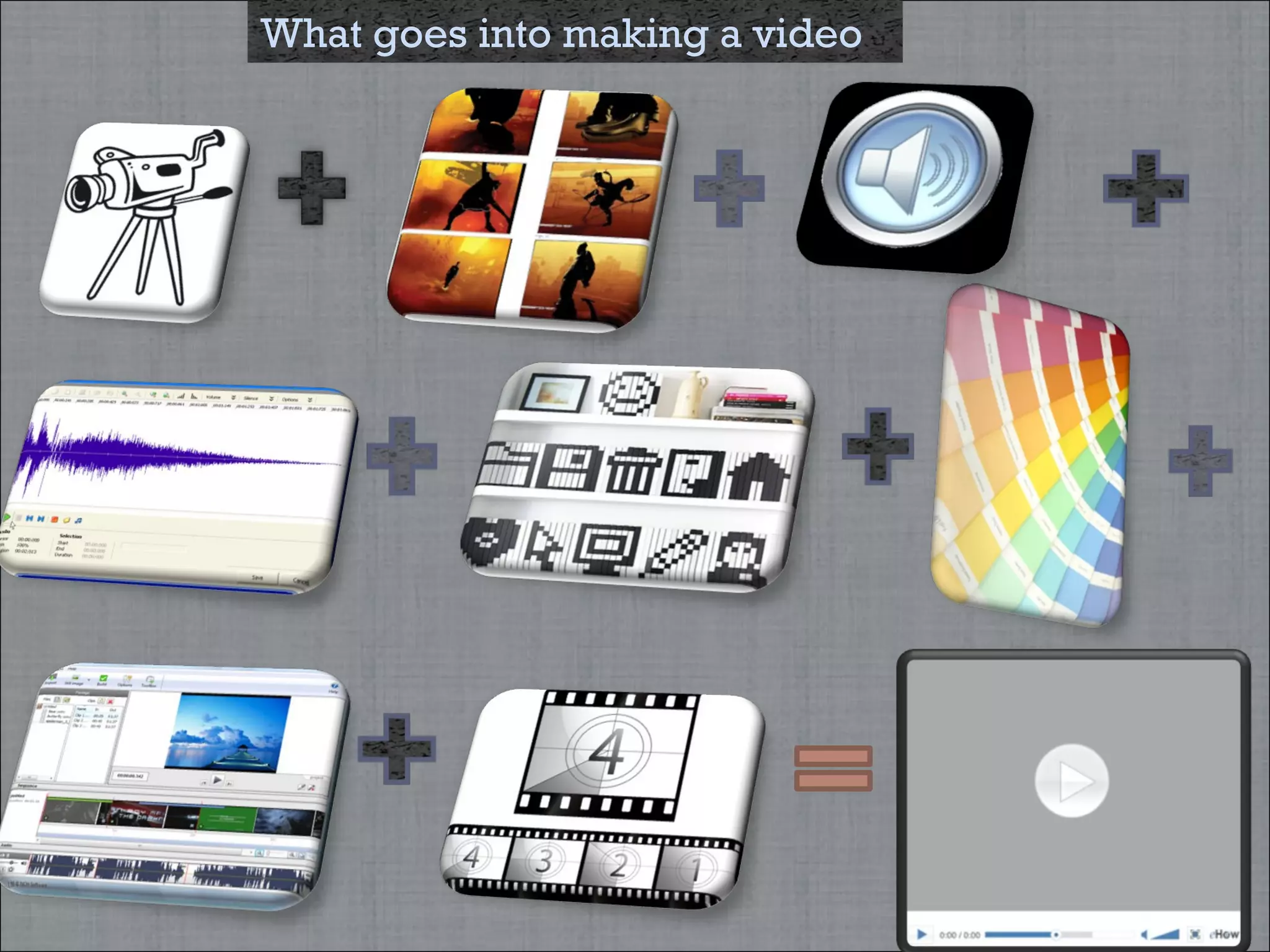
What goes into making a video
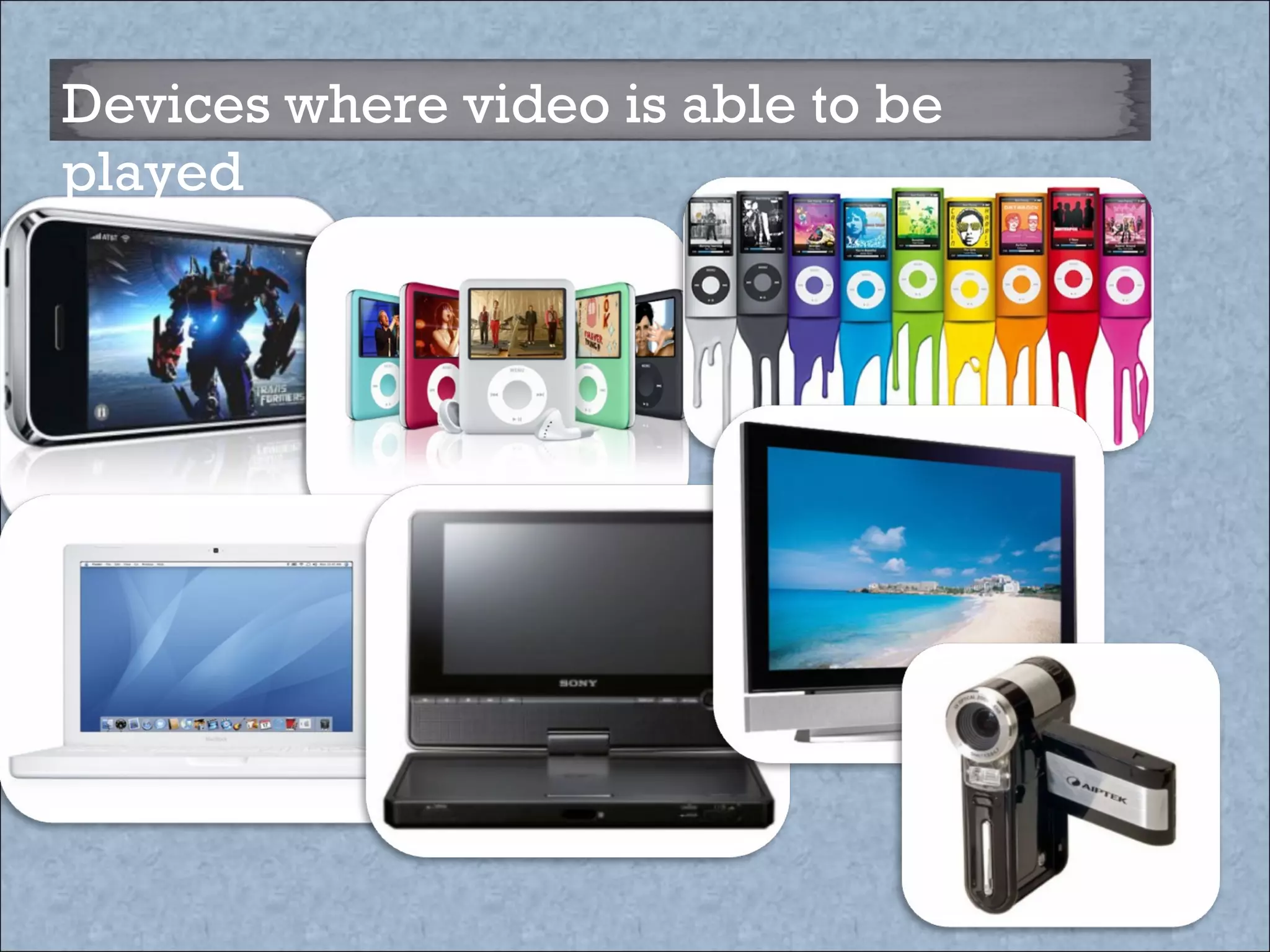
Devices where video is able to be played
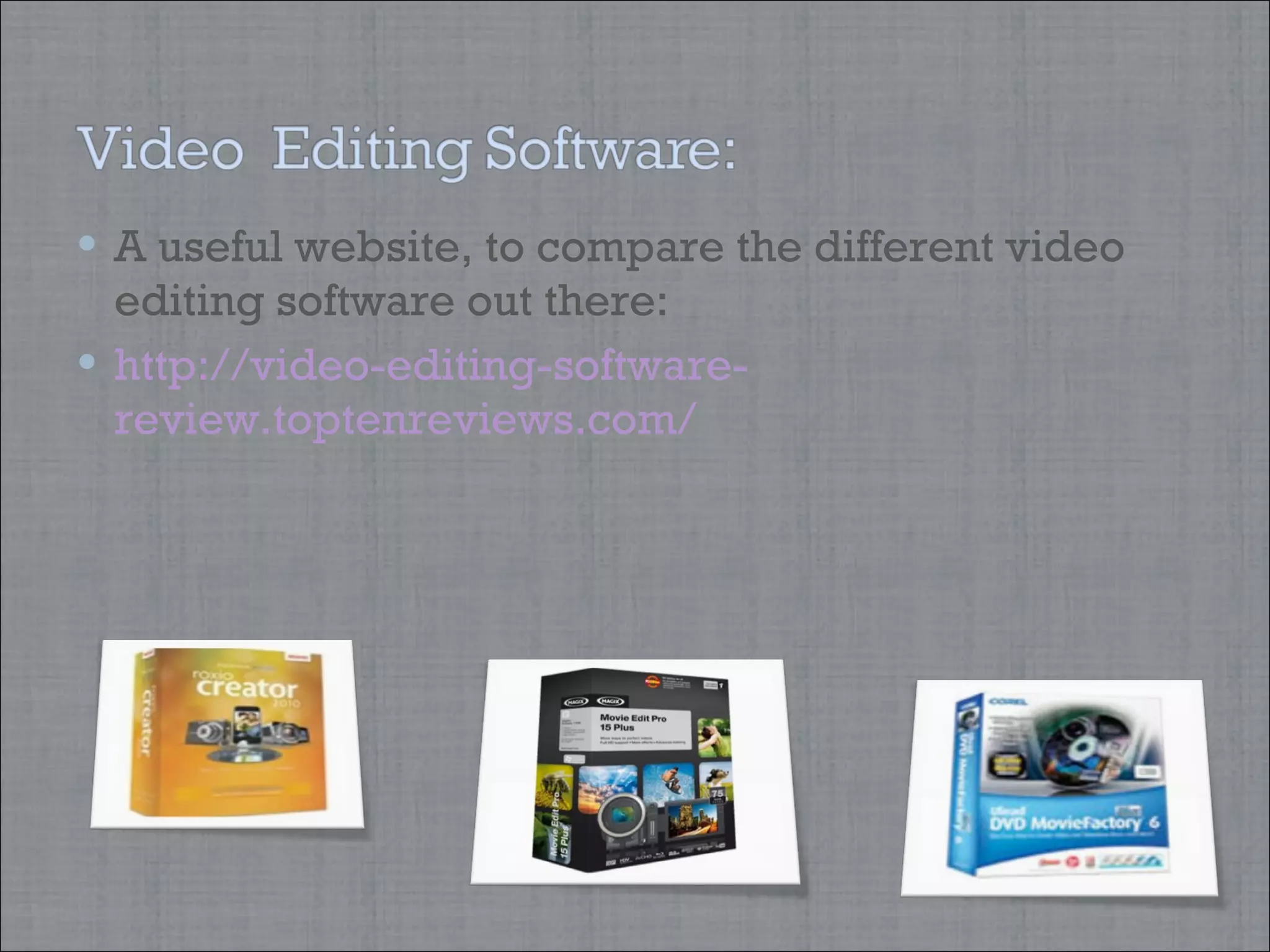
A useful website, to compare the different video editing software out there:  http://video-editing-software- review.toptenreviews.com /
By: Sanea Stephanie  & Adriana

Video Data

  • 1.
  • 2.
  • 3.
    Refers to electronicallycapturing, recording, processing (manipulating) storing, transmitting, and displaying a sequence of still images recorded many times a second to produce scenes in motion. It is in a format that can be presented on television ( or on any video supporting device for that matter). A video mainly consists of: Still images ( image frames) Audio Source: Webopedia.com and Wikipedia.com
  • 4.
    Still Images tomake the video you just viewed.
  • 5.
    Sampling Rate :It’s the number of measurements taken every second. In terms of video and audio, the more accurate “digitized” sound or video , the higher the sampling rate and thereby more data measurements to be collected. Measured by frequency (Hz) 44.1KHz 62Hz 4Hz
  • 6.
  • 7.
    Sample size refersto the capacity of a video data. It is a representation of units to be sampled that holds the statistical information of video data.
  • 8.
    Frame Rate: The Frequency [rate] at which an imaging device produces “unique” consecutive images called frames. Source: Wikipedia.com In short, frame rate are the number of frames which are shown in a second. There are a number of different frame rates which are used in television, movies etc… They include: i- stands for “interlaced fields” , so 50i= 25 frames p- stands for “noninterlaced fields”. So 50p= 50 frames * Interlaced: Increase quality of video without bandwidth 50i 30p 25p 50p 60i
  • 9.
  • 10.
    V ideo dataconsists of the main components of framework- images being recorded into still frames and the recording of audio through a microphone in the camera. Video data is a representation of images that move or change. This also includes the various forms of animation. Video data is a sequence of measurements which includes the color and brightness that is been detected by individual light collection points in a digital video camera or video signal through a traditional video camera or VCR. The measurements of video data characterizes the pixels of an image in a single frame. This may reach up to 30 frames of data per second that is been processed. The process of video data makes it the most complicated and largest of the 5 data types.
  • 11.
    What goes intomaking a video
  • 12.
    Devices where videois able to be played
  • 13.
    A useful website,to compare the different video editing software out there: http://video-editing-software- review.toptenreviews.com /
  • 14.