Creating a Literacy Rich
       Classroom


      By: Ashley Presley and Tania Molina
We love
                  Literacy!!


   A “literacy-rich” classroom provides
students with a wide variety of texts that
    include oral, print, and other media
     communication. The classroom is
designed to not only enhance the language
   learning process but also in order to
create a warm and comfortable transition
   for any student immerging into a new
                  language.
Elements of a Literacy Rich
               Classroom:
♥   The classroom has Visual Appeal                with attractive posters,
    charts and "word-walls" at students’ eye-level.
♥   Classroom has labels with words and pictures                    on all
    supplies, materials, learning centers and objects.
♥   List of classroom rules is posted              (using pictures, words,
    objects and photographs)
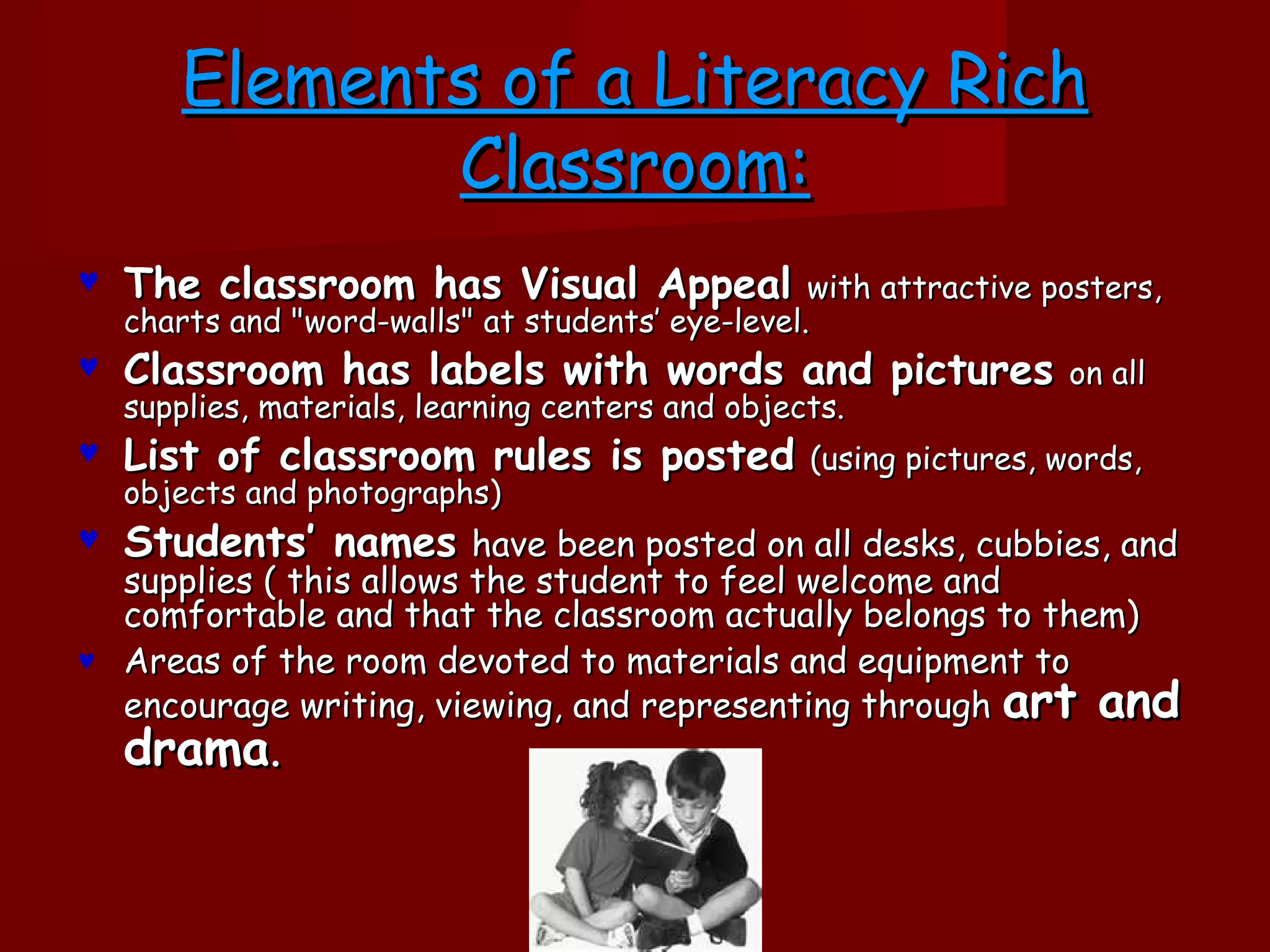
♥   Students’ names have been posted on all desks, cubbies, and
  supplies ( this allows the student to feel welcome and
  comfortable and that the classroom actually belongs to them)
♥ Areas of the room devoted to materials and equipment to
  encourage writing, viewing, and representing through art and
    drama.
Elements Continued…
♥   A large and accessible Reading Center                    where students
    have immediate access to a variety of printed materials ( age
    appropriate books, poetry, dictionaries, menus, recipes, labels, signs,
    printed directions, student work, alphabet displays)
♥   An Audio Center         where students are exposed to music or story
    CD’s for a variety of written text and sounds.
♥   Student-published books will be on bookshelves, student
    artwork and other representations will be displayed, and works-in-progress
    will be evident.
♥   Student-made books or posters that display
  photographs with captions provide a record of past shared
  experiences and successes.
♥ A Writing Center which offers a variety of media such as:
  (letter stamps, large writing charts, graphs, pockets charts,
  enlarged recipe cards, write-on boards)
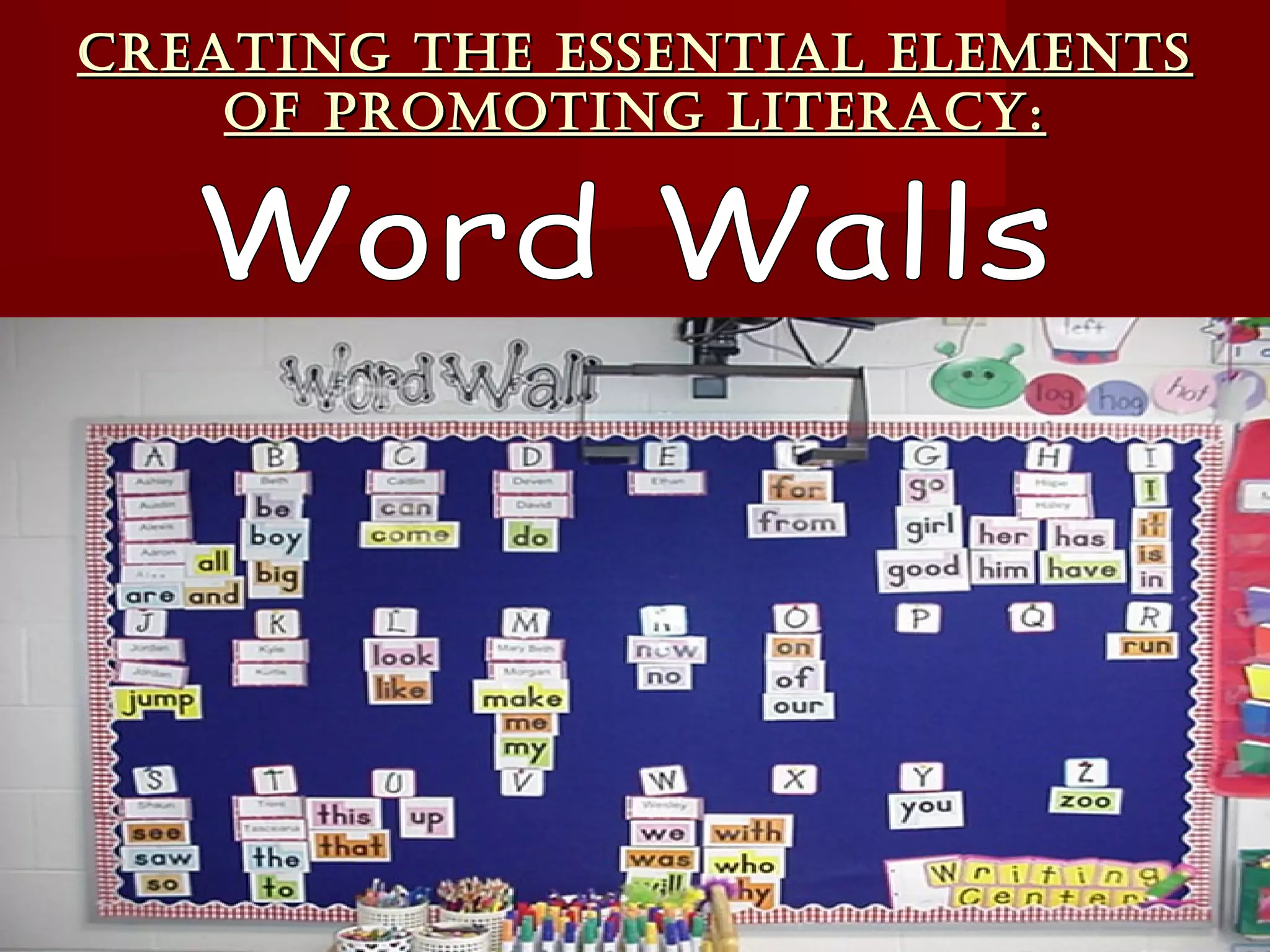
A Wall on which to display important texts,
    high-frequency words and newly learned
  vocabulary. Many teachers begin their word
   wall by adding the name of all the students
  which helps students feel important. Word
   walls enable students to have an easy visual
 reference to every day words and vocabulary
to which they can use in their written and oral
  language. Teachers should add words to wall
       along with the students every week.
Creating the essential elements
    of Promoting literaCy:
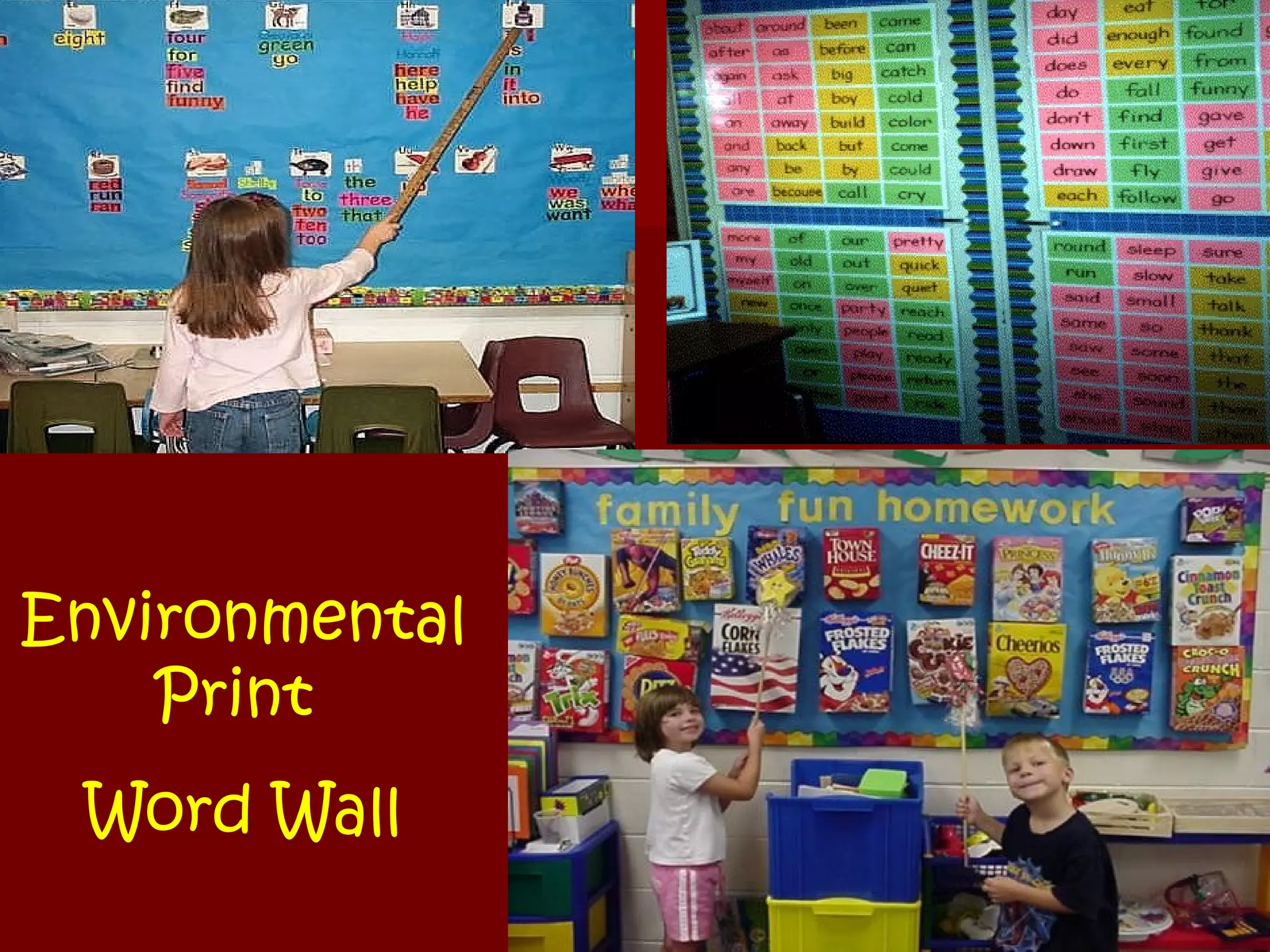
Environmental
    Print
 Word Wall
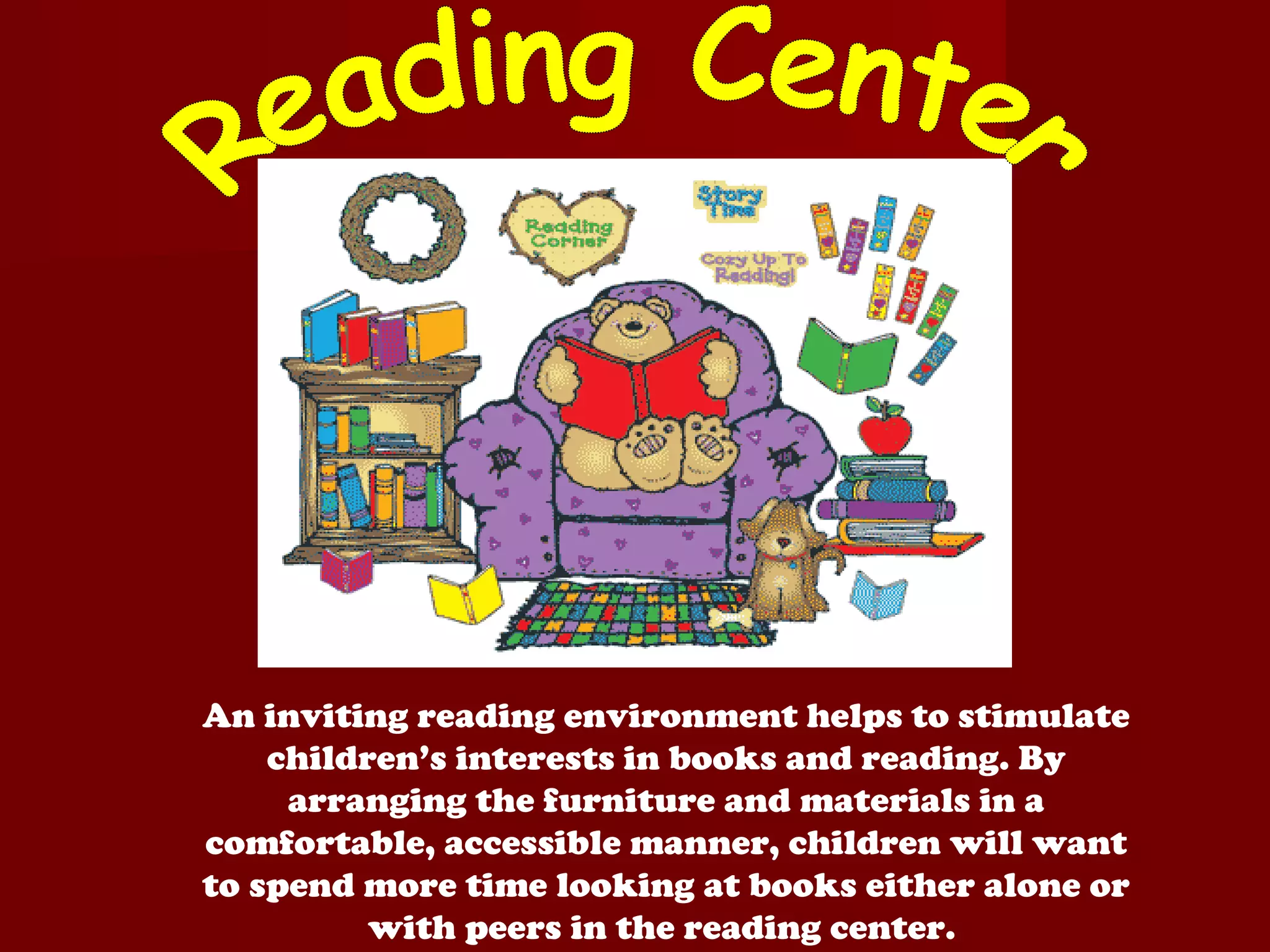
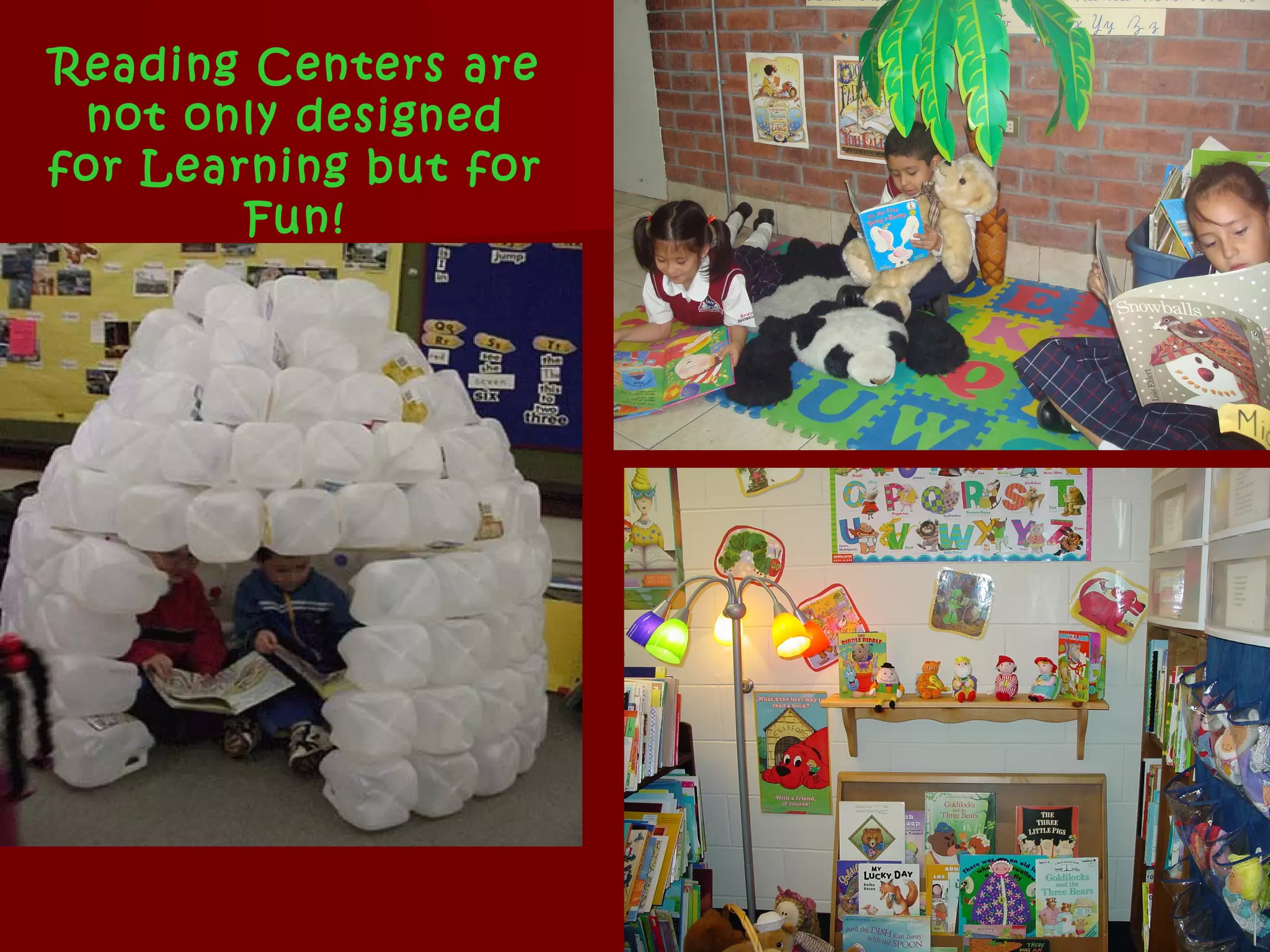
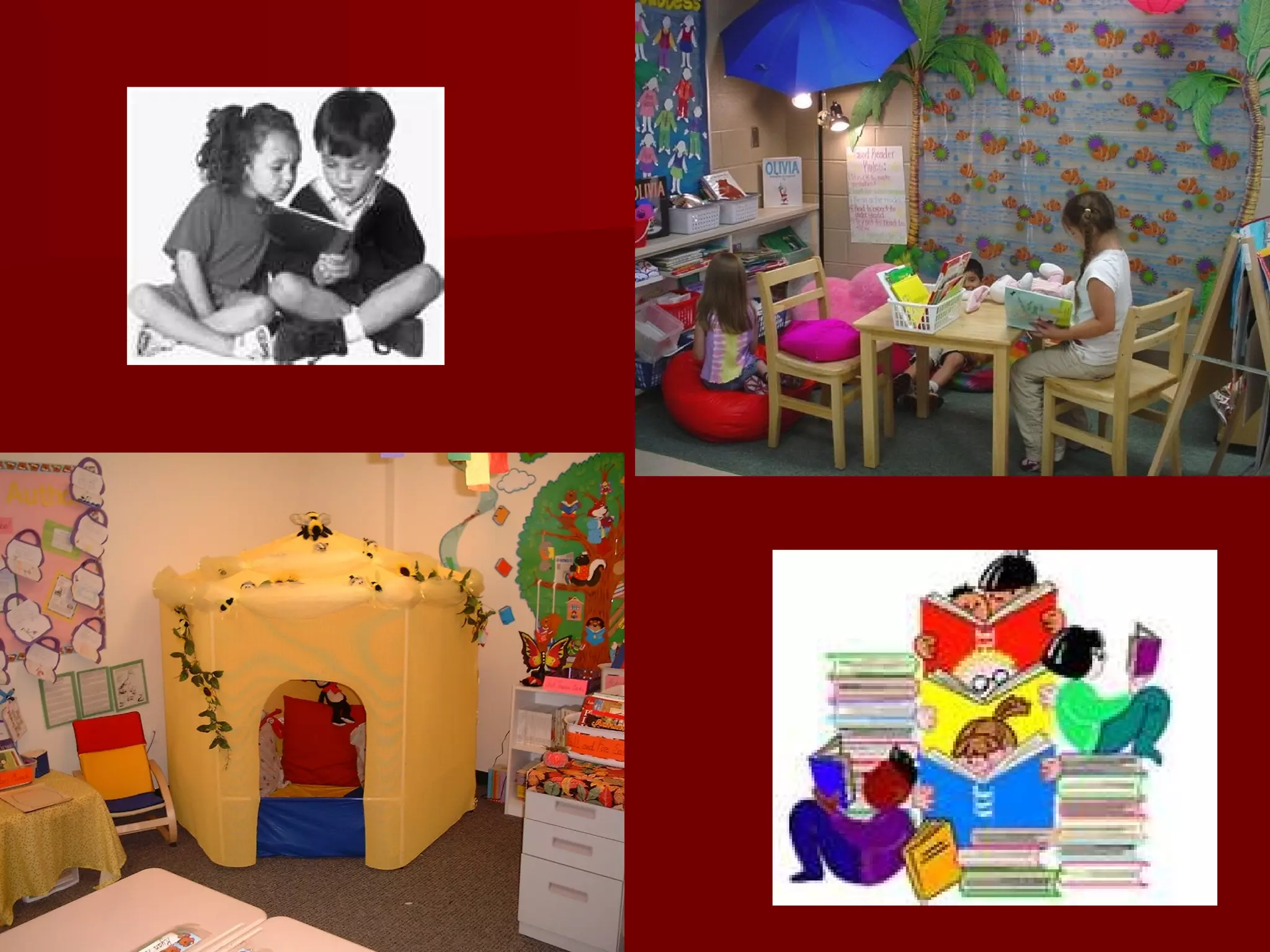
An inviting reading environment helps to stimulate
    children’s interests in books and reading. By
     arranging the furniture and materials in a
comfortable, accessible manner, children will want
to spend more time looking at books either alone or
          with peers in the reading center.
Reading Centers are
 not only designed
for Learning but for
        Fun!
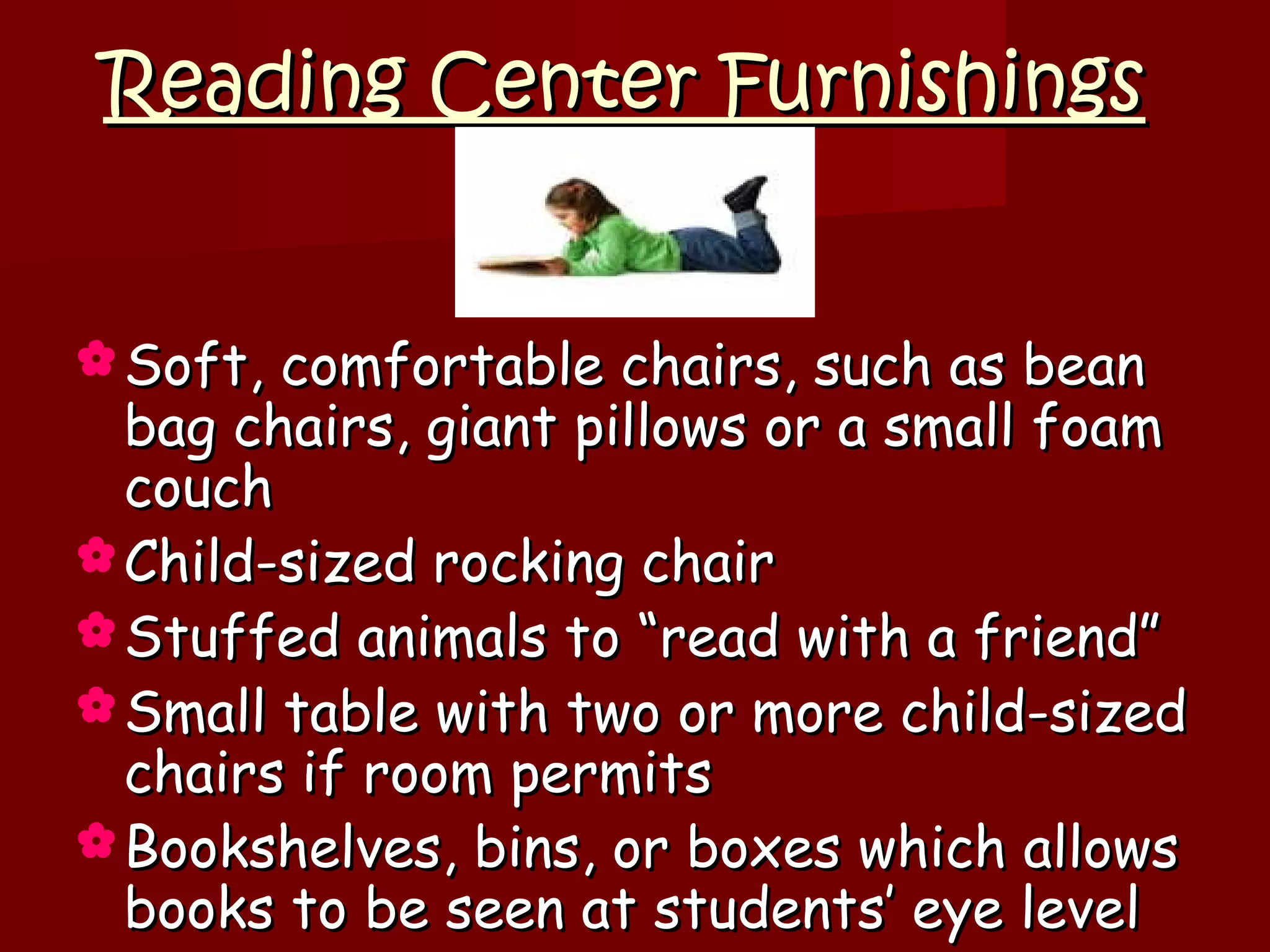
Reading Center Furnishings


 Soft, comfortable chairs, such as bean
  bag chairs, giant pillows or a small foam
  couch
 Child-sized rocking chair
 Stuffed animals to “read with a friend”
 Small table with two or more child-sized
  chairs if room permits
 Bookshelves, bins, or boxes which allows
  books to be seen at students’ eye level
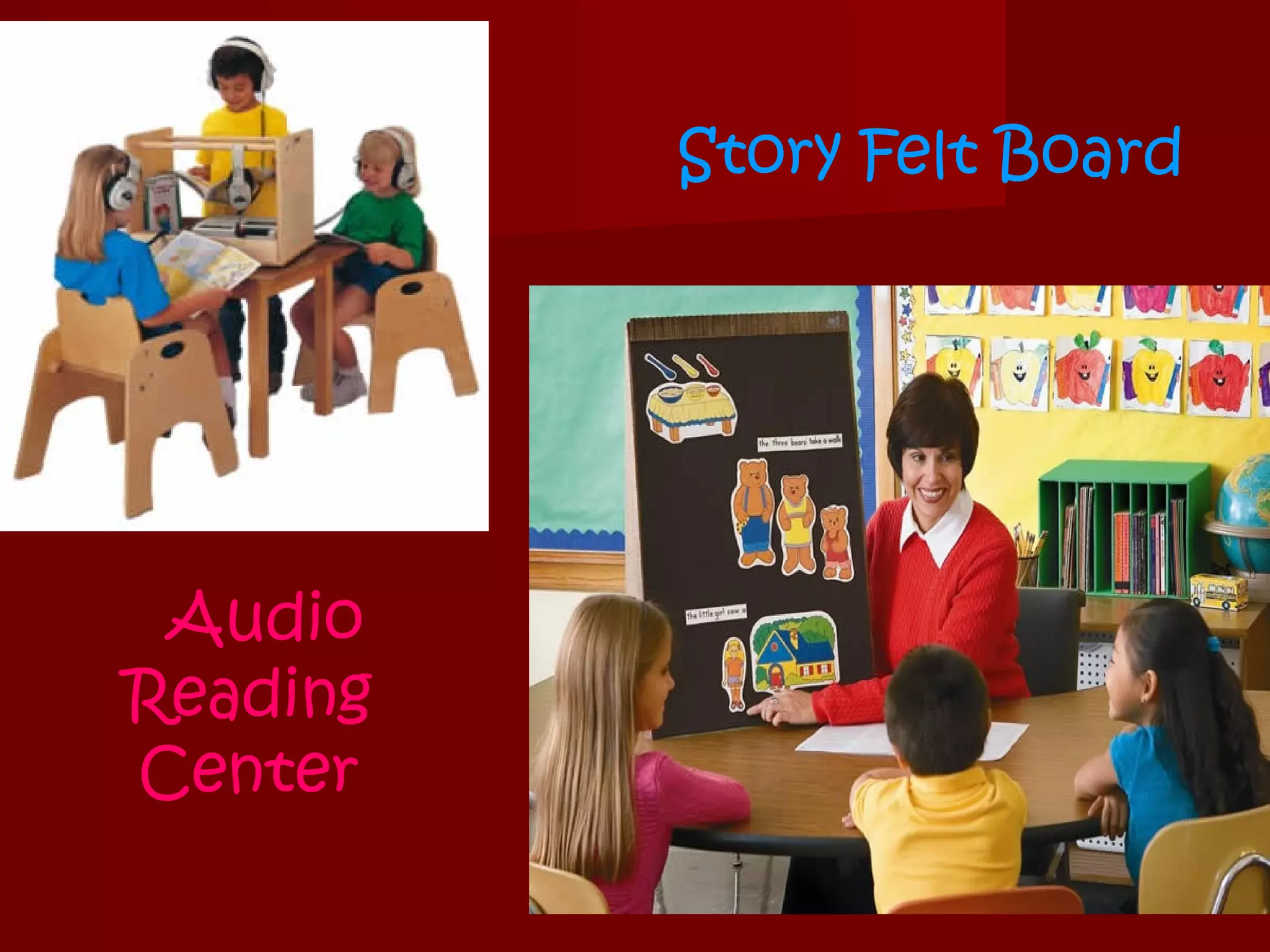
Story Felt Board


 Audio
Reading
Center
Reading Center Materials and
         Equipment
 Head sets, tape recorders, CD players, and recorded books
 Story Felt board and flannel story pieces
 Magnetic board and magnetic story pieces


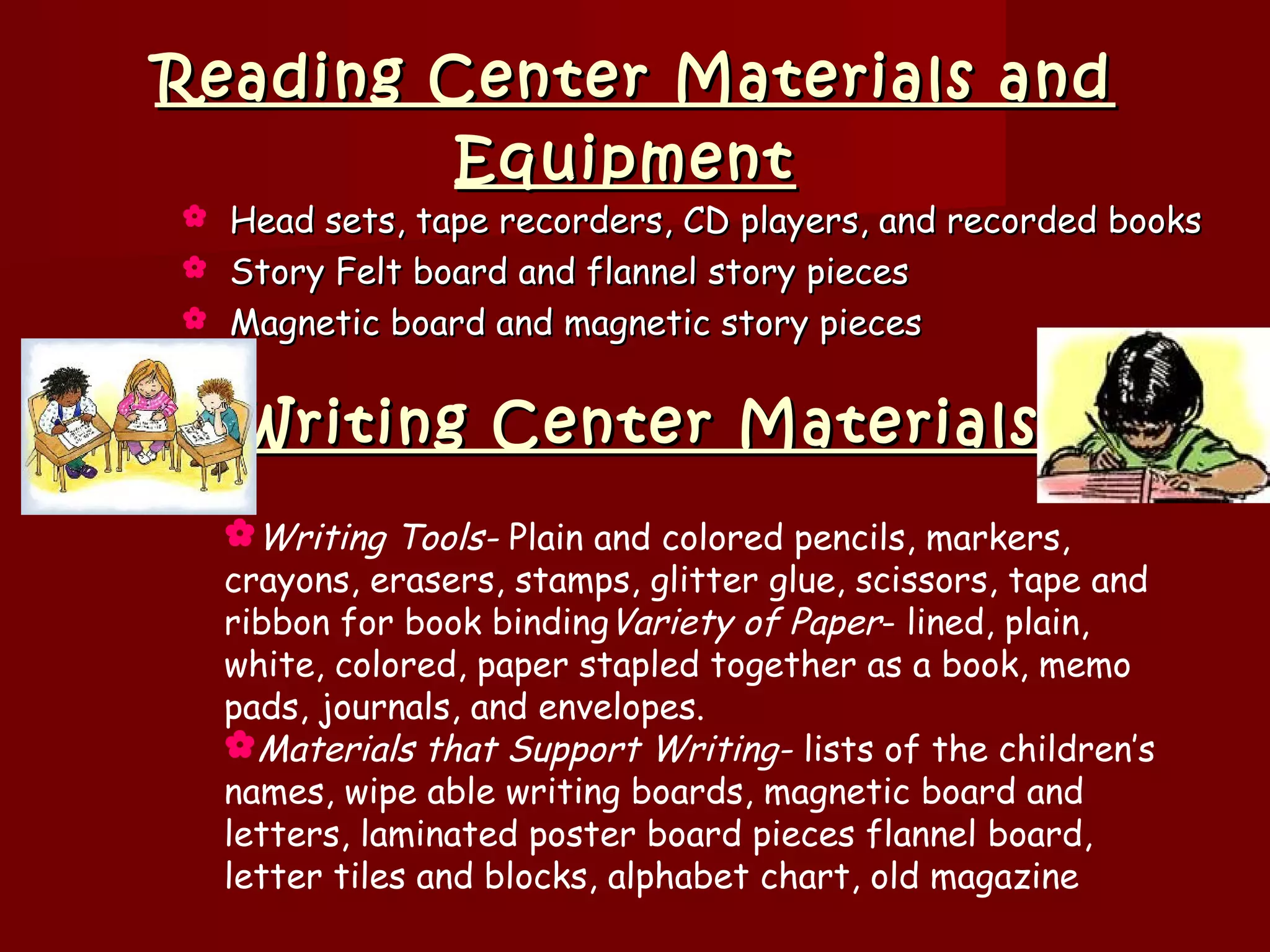
    Writing Center Materials
    Writing Tools- Plain and colored pencils, markers,
    crayons, erasers, stamps, glitter glue, scissors, tape and
    ribbon for book bindingVariety of Paper- lined, plain,
    white, colored, paper stapled together as a book, memo
    pads, journals, and envelopes.
    Materials that Support Writing- lists of the children’s
    names, wipe able writing boards, magnetic board and
    letters, laminated poster board pieces flannel board,
    letter tiles and blocks, alphabet chart, old magazine
A literacy-rich environment is important for all students
        but the most beneficial literacy experience for
         students at all grades is to be read to daily.
     Read-aloud and Guided Reading sessions
   introduce students to the world of texts beyond their
      own reading level and give them access to ideas,
     places, and characters they might otherwise never
    meet. They also help students become familiar with
              story language and text structure.
 Students who have been read to will adopt and adapt
     to the language of books when they write, retell a
      story, share information, represent a character or
      event, dramatize a scene, or create a storyboard.
Guided Reading and Read Alouds
Pre-Reading (Introducing the Book):
  Parts of a book- Front Cover, Back, Spine, Pages
  What is a title? Where can I find it?
  What is an Author? Where can I find the Author?
  What is an Illustrator?
  What do you see on the front cover?
  What do you think this story will be about?
  What genre do you think this story will be?
Reading the Story
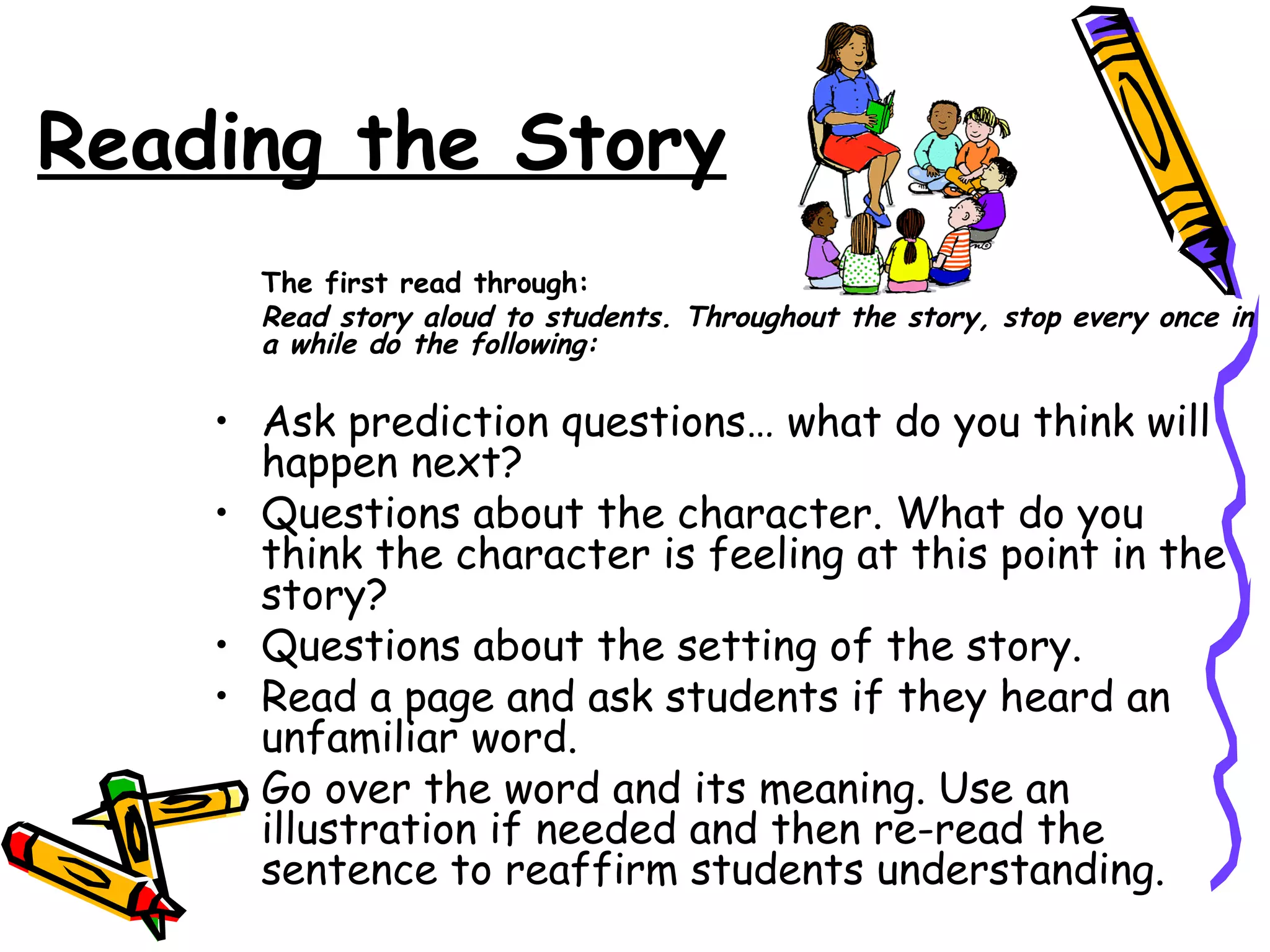
      The first read through:
      Read story aloud to students. Throughout the story, stop every once in
      a while do the following:

    • Ask prediction questions… what do you think will
      happen next?
    • Questions about the character. What do you
      think the character is feeling at this point in the
      story?
    • Questions about the setting of the story.
    • Read a page and ask students if they heard an
      unfamiliar word.
    • Go over the word and its meaning. Use an
      illustration if needed and then re-read the
      sentence to reaffirm students understanding.
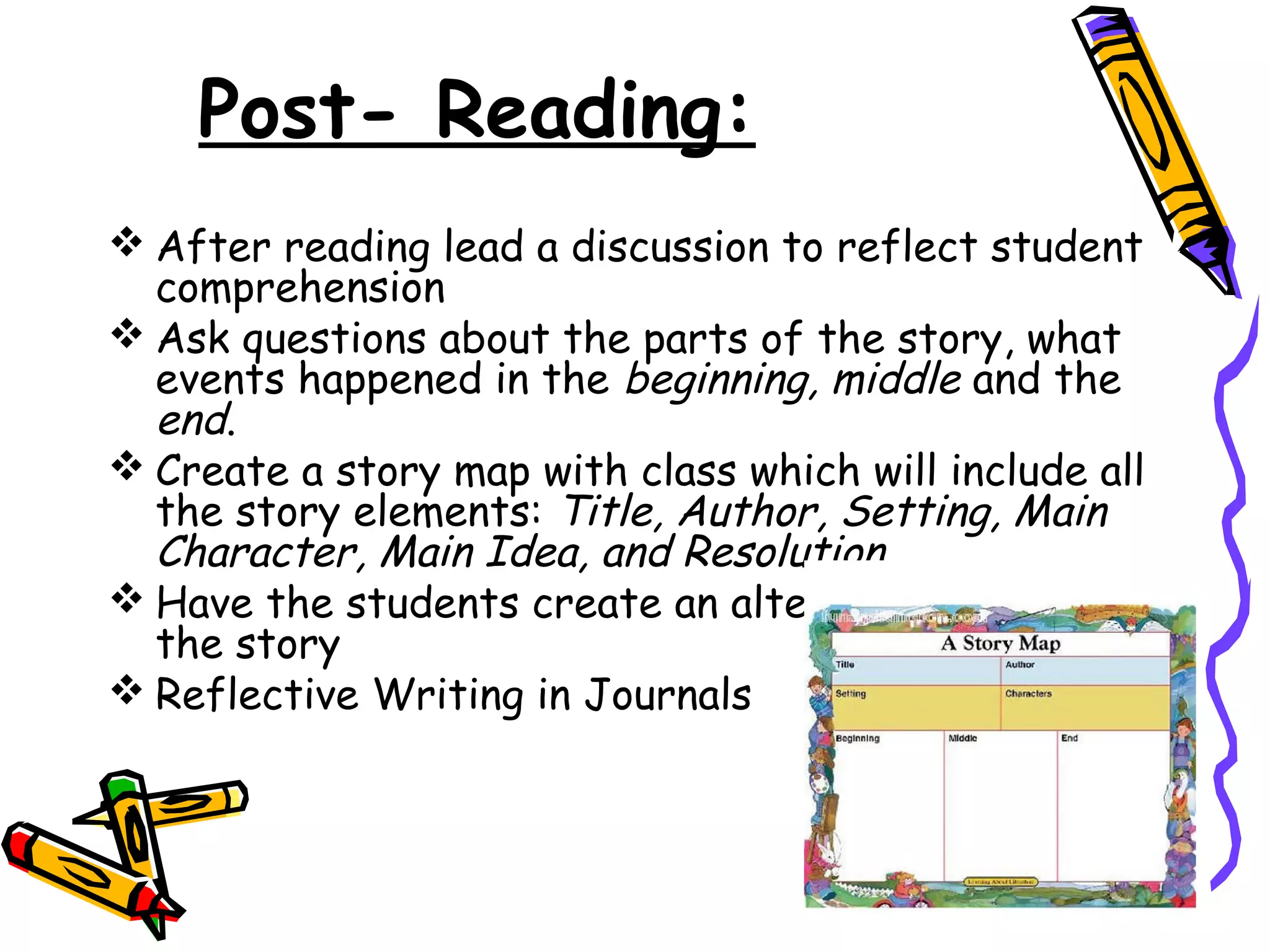
Post- Reading:
 After reading lead a discussion to reflect student
  comprehension
 Ask questions about the parts of the story, what
  events happened in the beginning, middle and the
  end.
 Create a story map with class which will include all
  the story elements: Title, Author, Setting, Main
  Character, Main Idea, and Resolution
 Have the students create an alternate ending to
  the story
 Reflective Writing in Journals
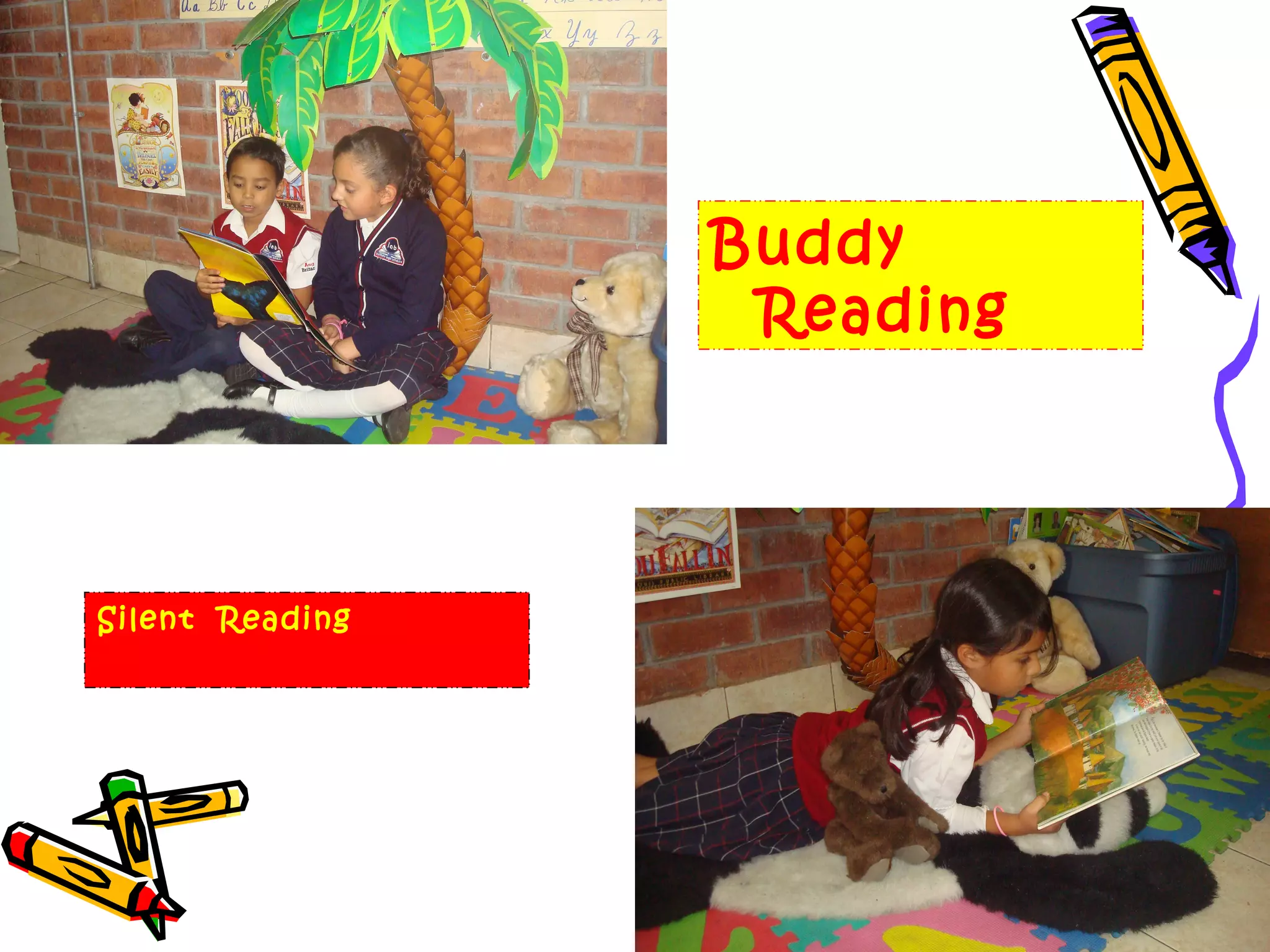
Buddy
                  Reading


Silent Reading
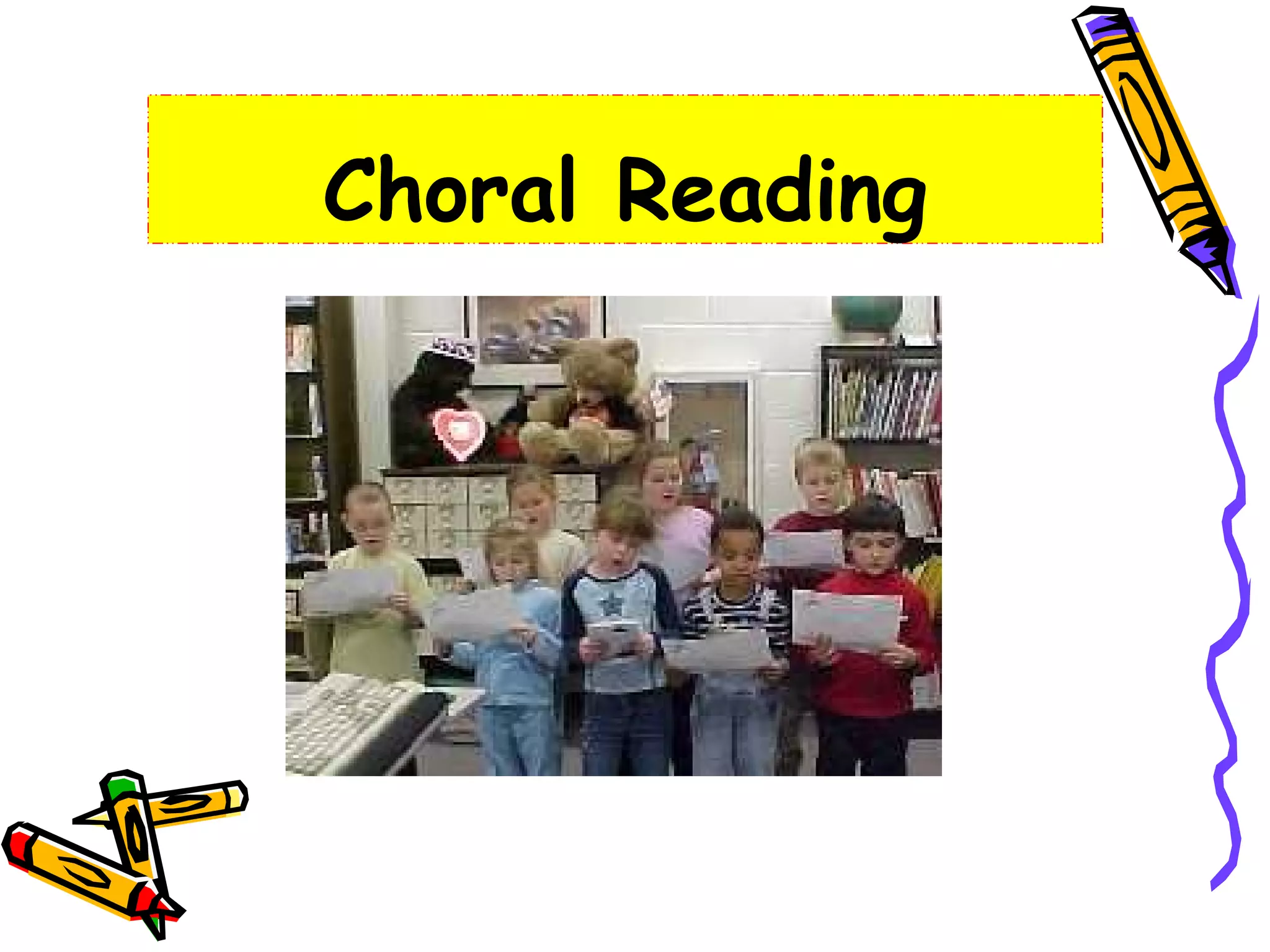
Choral Reading
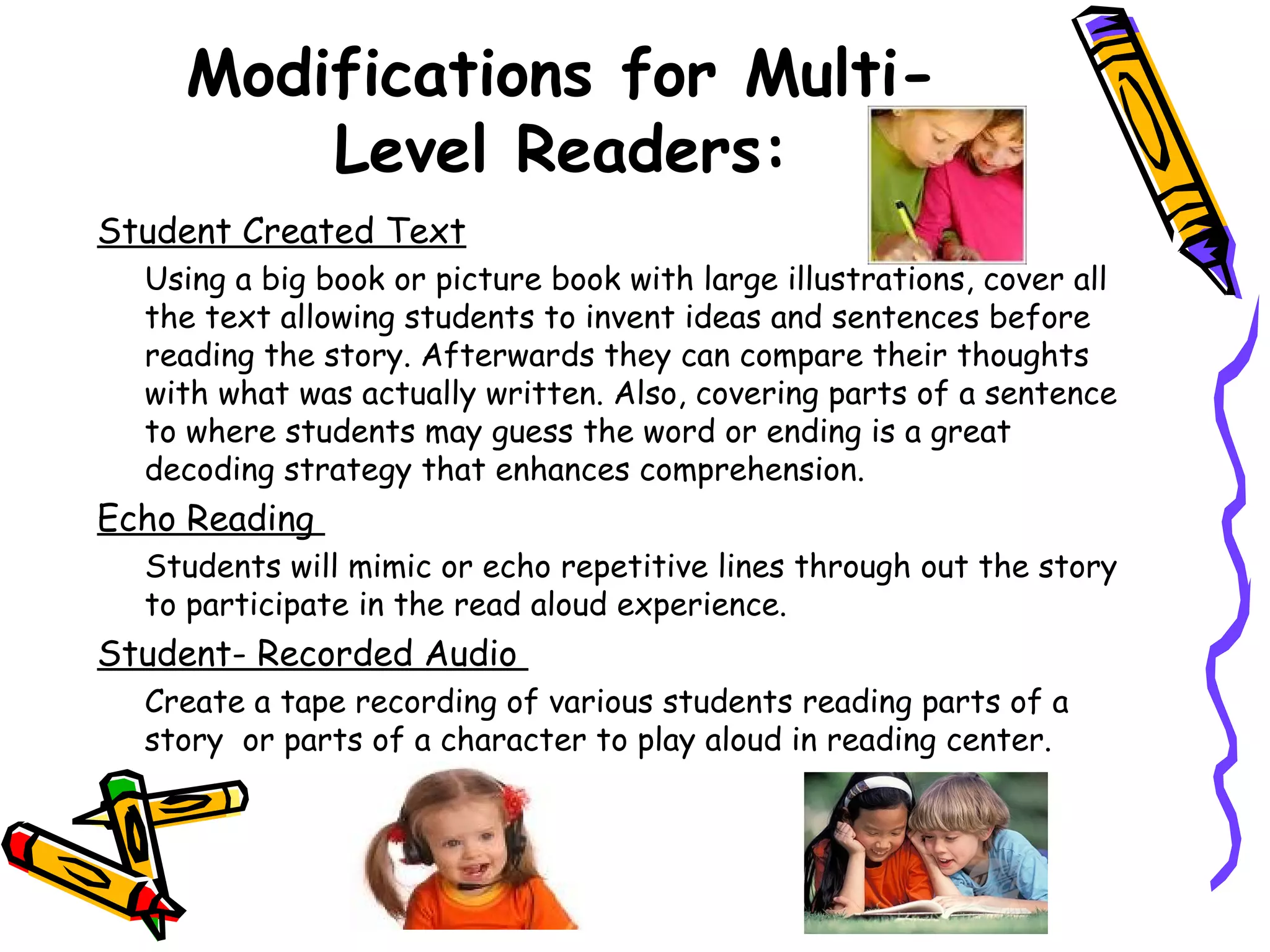
Modifications for Multi-
        Level Readers:
Student Created Text
  Using a big book or picture book with large illustrations, cover all
  the text allowing students to invent ideas and sentences before
  reading the story. Afterwards they can compare their thoughts
  with what was actually written. Also, covering parts of a sentence
  to where students may guess the word or ending is a great
  decoding strategy that enhances comprehension.
Echo Reading
  Students will mimic or echo repetitive lines through out the story
  to participate in the read aloud experience.
Student- Recorded Audio
  Create a tape recording of various students reading parts of a
  story or parts of a character to play aloud in reading center.
Dramatizing the Story
  Students are natural actors, so using drawings, puppets are
  recyclable costumes are a fun way of allowing the students
  to live out the story.


Word Study
  Find unfamiliar text with students. Clap out syllables and
  first sound out the word, then act out or illustrate the
  meaning. Discuss if the word may fit into a word or rhyming
  family ( cat, bat, sat). Add the newly learned vocabulary to
  the word wall display.

Como incrementar la lectura en los niños

  • 1.
    Creating a LiteracyRich Classroom By: Ashley Presley and Tania Molina
  • 2.
    We love Literacy!! A “literacy-rich” classroom provides students with a wide variety of texts that include oral, print, and other media communication. The classroom is designed to not only enhance the language learning process but also in order to create a warm and comfortable transition for any student immerging into a new language.
  • 3.
    Elements of aLiteracy Rich Classroom: ♥ The classroom has Visual Appeal with attractive posters, charts and "word-walls" at students’ eye-level. ♥ Classroom has labels with words and pictures on all supplies, materials, learning centers and objects. ♥ List of classroom rules is posted (using pictures, words, objects and photographs) ♥ Students’ names have been posted on all desks, cubbies, and supplies ( this allows the student to feel welcome and comfortable and that the classroom actually belongs to them) ♥ Areas of the room devoted to materials and equipment to encourage writing, viewing, and representing through art and drama.
  • 4.
    Elements Continued… ♥ A large and accessible Reading Center where students have immediate access to a variety of printed materials ( age appropriate books, poetry, dictionaries, menus, recipes, labels, signs, printed directions, student work, alphabet displays) ♥ An Audio Center where students are exposed to music or story CD’s for a variety of written text and sounds. ♥ Student-published books will be on bookshelves, student artwork and other representations will be displayed, and works-in-progress will be evident. ♥ Student-made books or posters that display photographs with captions provide a record of past shared experiences and successes. ♥ A Writing Center which offers a variety of media such as: (letter stamps, large writing charts, graphs, pockets charts, enlarged recipe cards, write-on boards)
  • 5.
    A Wall onwhich to display important texts, high-frequency words and newly learned vocabulary. Many teachers begin their word wall by adding the name of all the students which helps students feel important. Word walls enable students to have an easy visual reference to every day words and vocabulary to which they can use in their written and oral language. Teachers should add words to wall along with the students every week.
  • 6.
    Creating the essentialelements of Promoting literaCy:
  • 7.
    Environmental Print Word Wall
  • 8.
    An inviting readingenvironment helps to stimulate children’s interests in books and reading. By arranging the furniture and materials in a comfortable, accessible manner, children will want to spend more time looking at books either alone or with peers in the reading center.
  • 9.
    Reading Centers are not only designed for Learning but for Fun!
  • 11.
    Reading Center Furnishings Soft, comfortable chairs, such as bean bag chairs, giant pillows or a small foam couch  Child-sized rocking chair  Stuffed animals to “read with a friend”  Small table with two or more child-sized chairs if room permits  Bookshelves, bins, or boxes which allows books to be seen at students’ eye level
  • 12.
    Story Felt Board Audio Reading Center
  • 13.
    Reading Center Materialsand Equipment  Head sets, tape recorders, CD players, and recorded books  Story Felt board and flannel story pieces  Magnetic board and magnetic story pieces Writing Center Materials Writing Tools- Plain and colored pencils, markers, crayons, erasers, stamps, glitter glue, scissors, tape and ribbon for book bindingVariety of Paper- lined, plain, white, colored, paper stapled together as a book, memo pads, journals, and envelopes. Materials that Support Writing- lists of the children’s names, wipe able writing boards, magnetic board and letters, laminated poster board pieces flannel board, letter tiles and blocks, alphabet chart, old magazine
  • 14.
    A literacy-rich environmentis important for all students but the most beneficial literacy experience for students at all grades is to be read to daily. Read-aloud and Guided Reading sessions introduce students to the world of texts beyond their own reading level and give them access to ideas, places, and characters they might otherwise never meet. They also help students become familiar with story language and text structure. Students who have been read to will adopt and adapt to the language of books when they write, retell a story, share information, represent a character or event, dramatize a scene, or create a storyboard.
  • 15.
    Guided Reading andRead Alouds Pre-Reading (Introducing the Book): Parts of a book- Front Cover, Back, Spine, Pages What is a title? Where can I find it? What is an Author? Where can I find the Author? What is an Illustrator? What do you see on the front cover? What do you think this story will be about? What genre do you think this story will be?
  • 16.
    Reading the Story The first read through: Read story aloud to students. Throughout the story, stop every once in a while do the following: • Ask prediction questions… what do you think will happen next? • Questions about the character. What do you think the character is feeling at this point in the story? • Questions about the setting of the story. • Read a page and ask students if they heard an unfamiliar word. • Go over the word and its meaning. Use an illustration if needed and then re-read the sentence to reaffirm students understanding.
  • 17.
    Post- Reading:  Afterreading lead a discussion to reflect student comprehension  Ask questions about the parts of the story, what events happened in the beginning, middle and the end.  Create a story map with class which will include all the story elements: Title, Author, Setting, Main Character, Main Idea, and Resolution  Have the students create an alternate ending to the story  Reflective Writing in Journals
  • 18.
    Buddy Reading Silent Reading
  • 19.
  • 20.
    Modifications for Multi- Level Readers: Student Created Text Using a big book or picture book with large illustrations, cover all the text allowing students to invent ideas and sentences before reading the story. Afterwards they can compare their thoughts with what was actually written. Also, covering parts of a sentence to where students may guess the word or ending is a great decoding strategy that enhances comprehension. Echo Reading Students will mimic or echo repetitive lines through out the story to participate in the read aloud experience. Student- Recorded Audio Create a tape recording of various students reading parts of a story or parts of a character to play aloud in reading center.
  • 21.
    Dramatizing the Story Students are natural actors, so using drawings, puppets are recyclable costumes are a fun way of allowing the students to live out the story. Word Study Find unfamiliar text with students. Clap out syllables and first sound out the word, then act out or illustrate the meaning. Discuss if the word may fit into a word or rhyming family ( cat, bat, sat). Add the newly learned vocabulary to the word wall display.