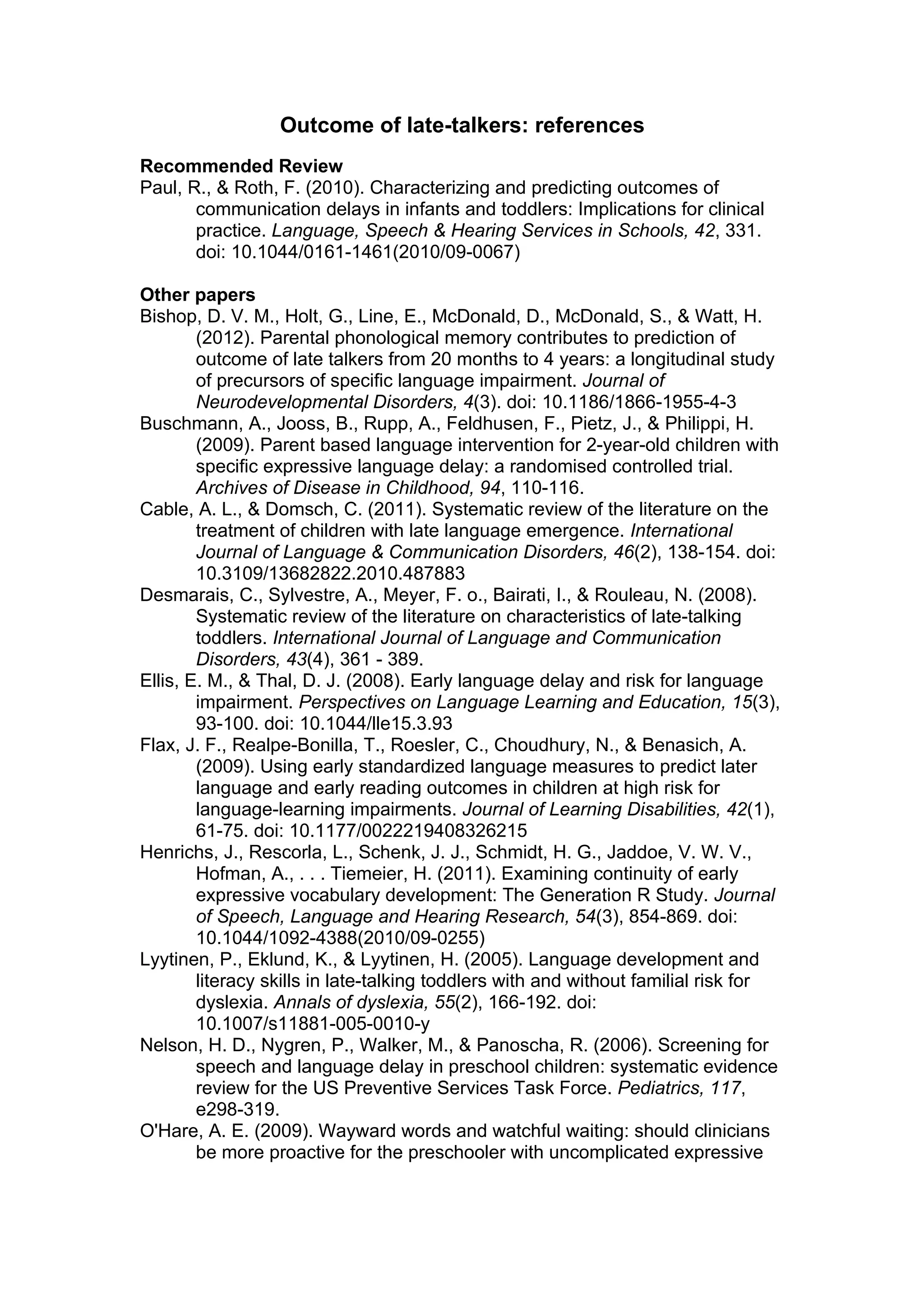
Outcome of late-talkers: references
Recommended Review
Paul, R., & Roth, F. (2010). Characterizing and predicting outcomes of
       communication delays in infants and toddlers: Implications for clinical
       practice. Language, Speech & Hearing Services in Schools, 42, 331.
       doi: 10.1044/0161-1461(2010/09-0067)

Other papers
Bishop, D. V. M., Holt, G., Line, E., McDonald, D., McDonald, S., & Watt, H.
        (2012). Parental phonological memory contributes to prediction of
        outcome of late talkers from 20 months to 4 years: a longitudinal study
        of precursors of specific language impairment. Journal of
        Neurodevelopmental Disorders, 4(3). doi: 10.1186/1866-1955-4-3
Buschmann, A., Jooss, B., Rupp, A., Feldhusen, F., Pietz, J., & Philippi, H.
        (2009). Parent based language intervention for 2-year-old children with
        specific expressive language delay: a randomised controlled trial.
        Archives of Disease in Childhood, 94, 110-116.
Cable, A. L., & Domsch, C. (2011). Systematic review of the literature on the
        treatment of children with late language emergence. International
        Journal of Language & Communication Disorders, 46(2), 138-154. doi:
        10.3109/13682822.2010.487883
Desmarais, C., Sylvestre, A., Meyer, F. o., Bairati, I., & Rouleau, N. (2008).
        Systematic review of the literature on characteristics of late-talking
        toddlers. International Journal of Language and Communication
        Disorders, 43(4), 361 - 389.
Ellis, E. M., & Thal, D. J. (2008). Early language delay and risk for language
        impairment. Perspectives on Language Learning and Education, 15(3),
        93-100. doi: 10.1044/lle15.3.93
Flax, J. F., Realpe-Bonilla, T., Roesler, C., Choudhury, N., & Benasich, A.
        (2009). Using early standardized language measures to predict later
        language and early reading outcomes in children at high risk for
        language-learning impairments. Journal of Learning Disabilities, 42(1),
        61-75. doi: 10.1177/0022219408326215
Henrichs, J., Rescorla, L., Schenk, J. J., Schmidt, H. G., Jaddoe, V. W. V.,
        Hofman, A., . . . Tiemeier, H. (2011). Examining continuity of early
        expressive vocabulary development: The Generation R Study. Journal
        of Speech, Language and Hearing Research, 54(3), 854-869. doi:
        10.1044/1092-4388(2010/09-0255)
Lyytinen, P., Eklund, K., & Lyytinen, H. (2005). Language development and
        literacy skills in late-talking toddlers with and without familial risk for
        dyslexia. Annals of dyslexia, 55(2), 166-192. doi:
        10.1007/s11881-005-0010-y
Nelson, H. D., Nygren, P., Walker, M., & Panoscha, R. (2006). Screening for
        speech and language delay in preschool children: systematic evidence
        review for the US Preventive Services Task Force. Pediatrics, 117,
        e298-319.
O'Hare, A. E. (2009). Wayward words and watchful waiting: should clinicians
        be more proactive for the preschooler with uncomplicated expressive
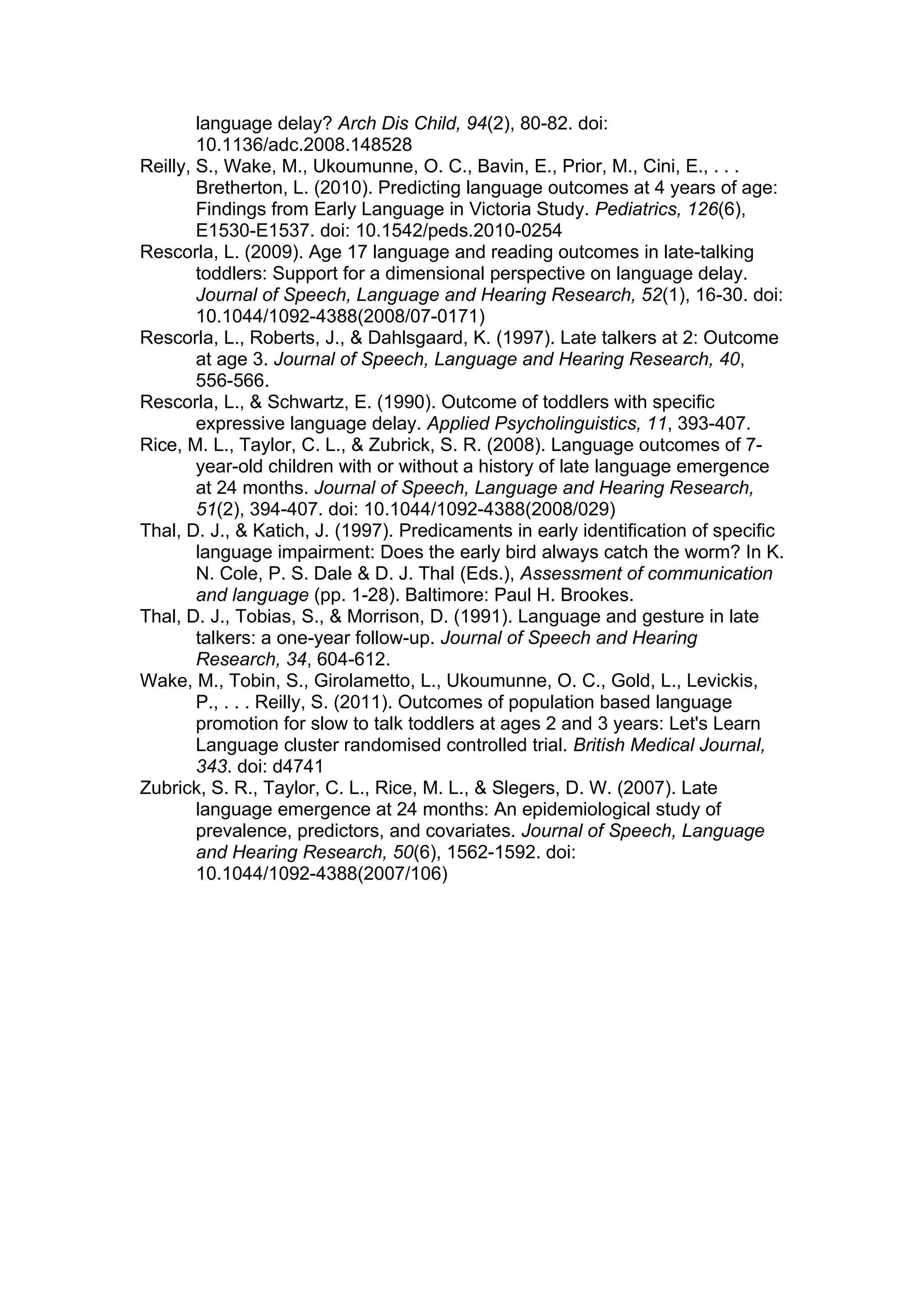
language delay? Arch Dis Child, 94(2), 80-82. doi:
        10.1136/adc.2008.148528
Reilly, S., Wake, M., Ukoumunne, O. C., Bavin, E., Prior, M., Cini, E., . . .
        Bretherton, L. (2010). Predicting language outcomes at 4 years of age:
        Findings from Early Language in Victoria Study. Pediatrics, 126(6),
        E1530-E1537. doi: 10.1542/peds.2010-0254
Rescorla, L. (2009). Age 17 language and reading outcomes in late-talking
        toddlers: Support for a dimensional perspective on language delay.
        Journal of Speech, Language and Hearing Research, 52(1), 16-30. doi:
        10.1044/1092-4388(2008/07-0171)
Rescorla, L., Roberts, J., & Dahlsgaard, K. (1997). Late talkers at 2: Outcome
        at age 3. Journal of Speech, Language and Hearing Research, 40,
        556-566.
Rescorla, L., & Schwartz, E. (1990). Outcome of toddlers with specific
        expressive language delay. Applied Psycholinguistics, 11, 393-407.
Rice, M. L., Taylor, C. L., & Zubrick, S. R. (2008). Language outcomes of 7-
        year-old children with or without a history of late language emergence
        at 24 months. Journal of Speech, Language and Hearing Research,
        51(2), 394-407. doi: 10.1044/1092-4388(2008/029)
Thal, D. J., & Katich, J. (1997). Predicaments in early identification of specific
        language impairment: Does the early bird always catch the worm? In K.
        N. Cole, P. S. Dale & D. J. Thal (Eds.), Assessment of communication
        and language (pp. 1-28). Baltimore: Paul H. Brookes.
Thal, D. J., Tobias, S., & Morrison, D. (1991). Language and gesture in late
        talkers: a one-year follow-up. Journal of Speech and Hearing
        Research, 34, 604-612.
Wake, M., Tobin, S., Girolametto, L., Ukoumunne, O. C., Gold, L., Levickis,
        P., . . . Reilly, S. (2011). Outcomes of population based language
        promotion for slow to talk toddlers at ages 2 and 3 years: Let's Learn
        Language cluster randomised controlled trial. British Medical Journal,
        343. doi: d4741
Zubrick, S. R., Taylor, C. L., Rice, M. L., & Slegers, D. W. (2007). Late
        language emergence at 24 months: An epidemiological study of
        prevalence, predictors, and covariates. Journal of Speech, Language
        and Hearing Research, 50(6), 1562-1592. doi:
        10.1044/1092-4388(2007/106)

References for 'late talkers' video and slides

  • 1.
    Outcome of late-talkers:references Recommended Review Paul, R., & Roth, F. (2010). Characterizing and predicting outcomes of communication delays in infants and toddlers: Implications for clinical practice. Language, Speech & Hearing Services in Schools, 42, 331. doi: 10.1044/0161-1461(2010/09-0067) Other papers Bishop, D. V. M., Holt, G., Line, E., McDonald, D., McDonald, S., & Watt, H. (2012). Parental phonological memory contributes to prediction of outcome of late talkers from 20 months to 4 years: a longitudinal study of precursors of specific language impairment. Journal of Neurodevelopmental Disorders, 4(3). doi: 10.1186/1866-1955-4-3 Buschmann, A., Jooss, B., Rupp, A., Feldhusen, F., Pietz, J., & Philippi, H. (2009). Parent based language intervention for 2-year-old children with specific expressive language delay: a randomised controlled trial. Archives of Disease in Childhood, 94, 110-116. Cable, A. L., & Domsch, C. (2011). Systematic review of the literature on the treatment of children with late language emergence. International Journal of Language & Communication Disorders, 46(2), 138-154. doi: 10.3109/13682822.2010.487883 Desmarais, C., Sylvestre, A., Meyer, F. o., Bairati, I., & Rouleau, N. (2008). Systematic review of the literature on characteristics of late-talking toddlers. International Journal of Language and Communication Disorders, 43(4), 361 - 389. Ellis, E. M., & Thal, D. J. (2008). Early language delay and risk for language impairment. Perspectives on Language Learning and Education, 15(3), 93-100. doi: 10.1044/lle15.3.93 Flax, J. F., Realpe-Bonilla, T., Roesler, C., Choudhury, N., & Benasich, A. (2009). Using early standardized language measures to predict later language and early reading outcomes in children at high risk for language-learning impairments. Journal of Learning Disabilities, 42(1), 61-75. doi: 10.1177/0022219408326215 Henrichs, J., Rescorla, L., Schenk, J. J., Schmidt, H. G., Jaddoe, V. W. V., Hofman, A., . . . Tiemeier, H. (2011). Examining continuity of early expressive vocabulary development: The Generation R Study. Journal of Speech, Language and Hearing Research, 54(3), 854-869. doi: 10.1044/1092-4388(2010/09-0255) Lyytinen, P., Eklund, K., & Lyytinen, H. (2005). Language development and literacy skills in late-talking toddlers with and without familial risk for dyslexia. Annals of dyslexia, 55(2), 166-192. doi: 10.1007/s11881-005-0010-y Nelson, H. D., Nygren, P., Walker, M., & Panoscha, R. (2006). Screening for speech and language delay in preschool children: systematic evidence review for the US Preventive Services Task Force. Pediatrics, 117, e298-319. O'Hare, A. E. (2009). Wayward words and watchful waiting: should clinicians be more proactive for the preschooler with uncomplicated expressive
  • 2.
    language delay? ArchDis Child, 94(2), 80-82. doi: 10.1136/adc.2008.148528 Reilly, S., Wake, M., Ukoumunne, O. C., Bavin, E., Prior, M., Cini, E., . . . Bretherton, L. (2010). Predicting language outcomes at 4 years of age: Findings from Early Language in Victoria Study. Pediatrics, 126(6), E1530-E1537. doi: 10.1542/peds.2010-0254 Rescorla, L. (2009). Age 17 language and reading outcomes in late-talking toddlers: Support for a dimensional perspective on language delay. Journal of Speech, Language and Hearing Research, 52(1), 16-30. doi: 10.1044/1092-4388(2008/07-0171) Rescorla, L., Roberts, J., & Dahlsgaard, K. (1997). Late talkers at 2: Outcome at age 3. Journal of Speech, Language and Hearing Research, 40, 556-566. Rescorla, L., & Schwartz, E. (1990). Outcome of toddlers with specific expressive language delay. Applied Psycholinguistics, 11, 393-407. Rice, M. L., Taylor, C. L., & Zubrick, S. R. (2008). Language outcomes of 7- year-old children with or without a history of late language emergence at 24 months. Journal of Speech, Language and Hearing Research, 51(2), 394-407. doi: 10.1044/1092-4388(2008/029) Thal, D. J., & Katich, J. (1997). Predicaments in early identification of specific language impairment: Does the early bird always catch the worm? In K. N. Cole, P. S. Dale & D. J. Thal (Eds.), Assessment of communication and language (pp. 1-28). Baltimore: Paul H. Brookes. Thal, D. J., Tobias, S., & Morrison, D. (1991). Language and gesture in late talkers: a one-year follow-up. Journal of Speech and Hearing Research, 34, 604-612. Wake, M., Tobin, S., Girolametto, L., Ukoumunne, O. C., Gold, L., Levickis, P., . . . Reilly, S. (2011). Outcomes of population based language promotion for slow to talk toddlers at ages 2 and 3 years: Let's Learn Language cluster randomised controlled trial. British Medical Journal, 343. doi: d4741 Zubrick, S. R., Taylor, C. L., Rice, M. L., & Slegers, D. W. (2007). Late language emergence at 24 months: An epidemiological study of prevalence, predictors, and covariates. Journal of Speech, Language and Hearing Research, 50(6), 1562-1592. doi: 10.1044/1092-4388(2007/106)