Organizational Development An Overview of the OD Process
Definition Planned change effort involving systematic diagnosis of the total organization that is managed from the top to increase the organizational effectiveness and health of the overall system (Beckhard, 1969, pp. 9-10)
Approach Empowerment through the articulation of the change agent's values designed to facilitate visioning, organizational learning and problem solving in the interests of a collaborative management of the organization's culture (French and Bell, 1995, p. 28) a humanistic approach that utilises Action Research as a mode of enquiry.
Themes Human relations approach, where the focus was on man's social needs and ways of meeting them to increase motivation and organization productivity. (Beckhard, 1969, p. 2). Human engineering, to rationalize the way work was done; the way the work-force was utilized to increase the output; and the productivity of the goods and services produced.
OD  Structural Change Technological Change Behavioral Change
The first half of the twentieth century Unprecedented growth of large-scale formal organizations which developed hierarchical, technical and "social" machinery.  OD became informed in an ad hoc way by a generation of "social technicians" preoccupied with organizational improvement and efficiency within organizations characterized by standardization, routinization and impersonality.
The first half of the twentieth century key themes of organizational behavior  motivation and morale leadership behavior  communication skills  teamwork  job enrichment enlargement or empowerment.
1980s The excellence movement furthered the cause of innovation and entrepreneurship within organizations and argued the need to think ahead to a post-industrial future.  Bureaucratic stability was a thing of the past and flexible organizations became the future driven by turbulent economic environments.  McKinsey 7-S framework became, for a while, the vehicle to transform the culture of organizations. OD in the form of managing change and empowerment became the ultimate goal.
1990s Most organizations were beginning to experience one of the most disruptive and dramatic types of organizational change strategies to have hit the world headlines.  Downsizing/Rightsizing.
The last 20 years movement from centralisation to decentralisation;  a focus on the flexible firm by disaggregating or outsourcing;  a movement from long-term strategic planning to short-term tactical planning;  the emergence of downsizing and restructuring with the team as the central mechanism for innovation and change;  the movement from training (typifying the division of labour) to organizational learning, personal growth and development. The advancement in IT has opened new possibilities.
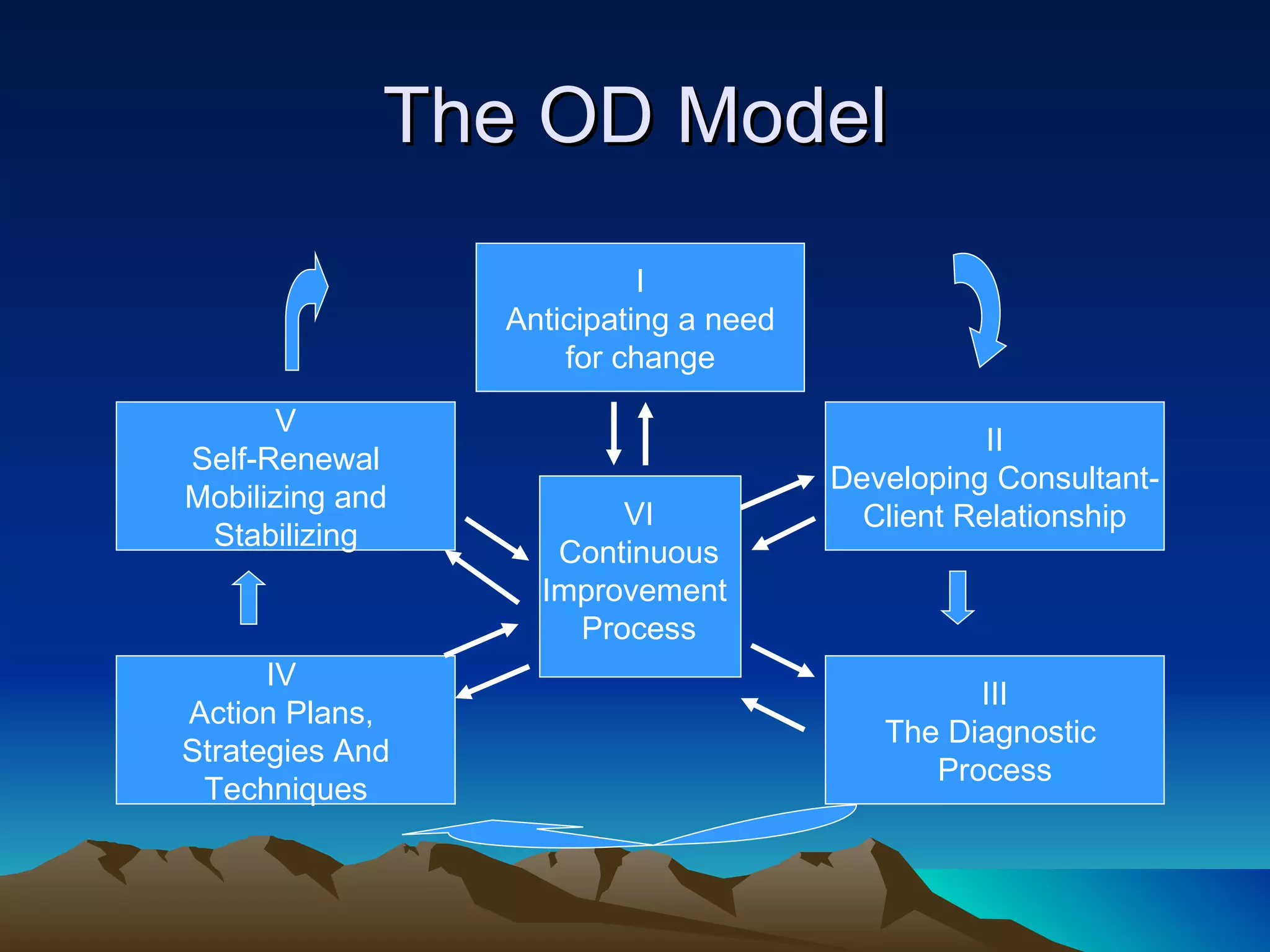
The OD Model I Anticipating a need for change II Developing Consultant- Client Relationship III The Diagnostic  Process IV  Action Plans,  Strategies And Techniques V Self-Renewal Mobilizing and Stabilizing VI Continuous Improvement  Process
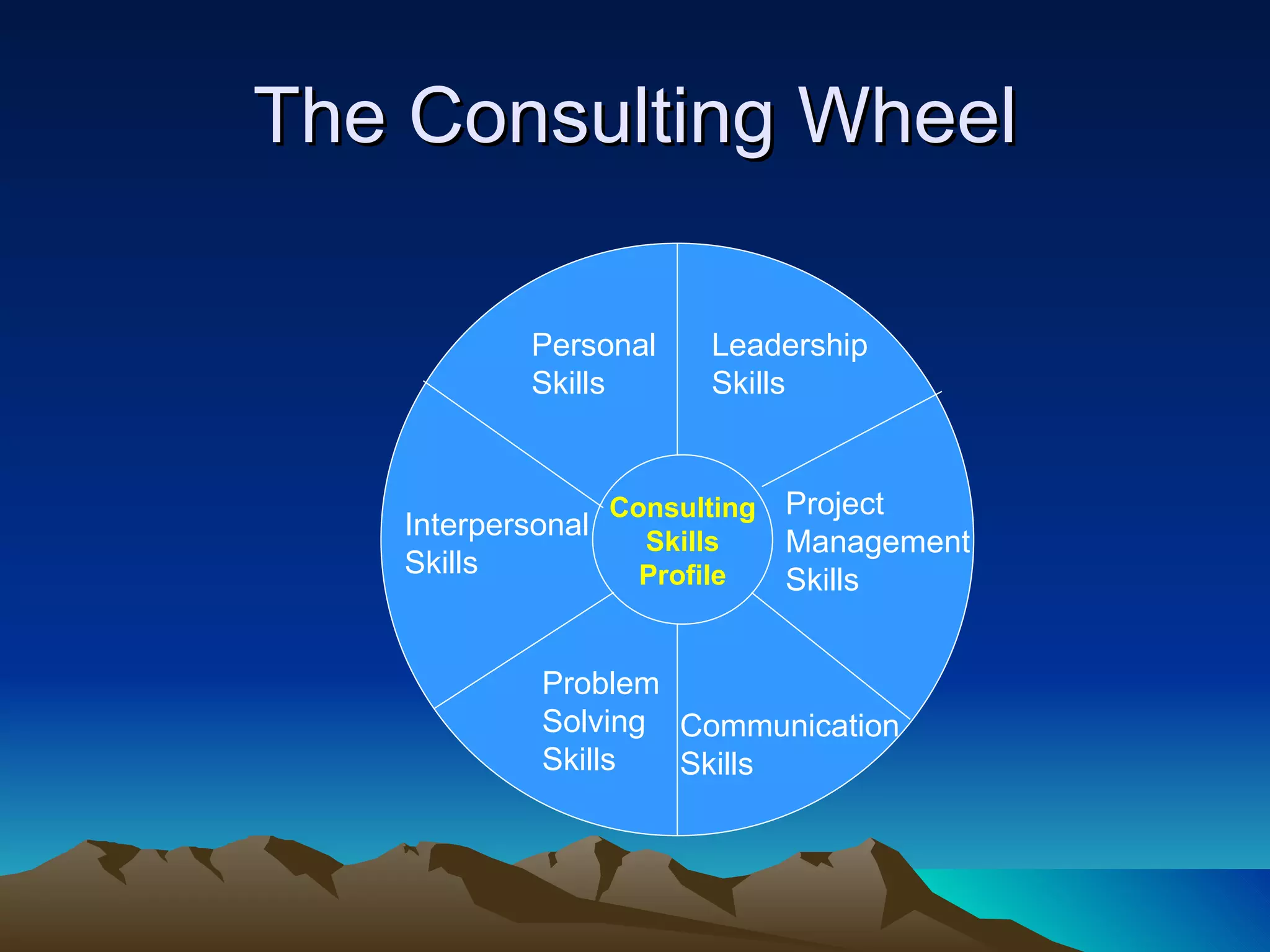
The Consulting Wheel Consulting Skills Profile Personal Skills Leadership Skills Project Management Skills Interpersonal Skills Problem Solving Skills Communication Skills
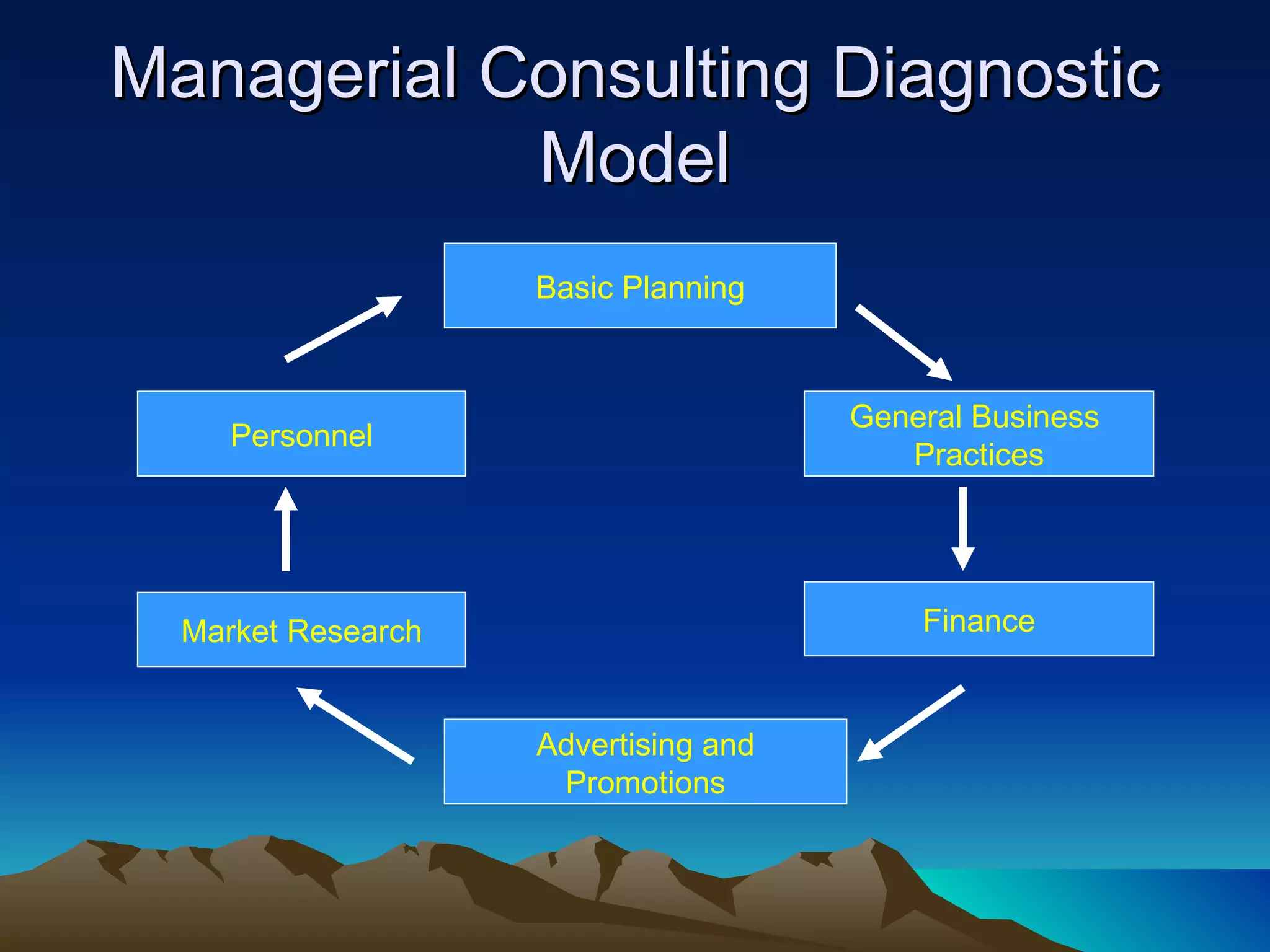
Managerial Consulting Diagnostic Model Basic Planning Personnel General Business  Practices Market Research Finance Advertising and Promotions
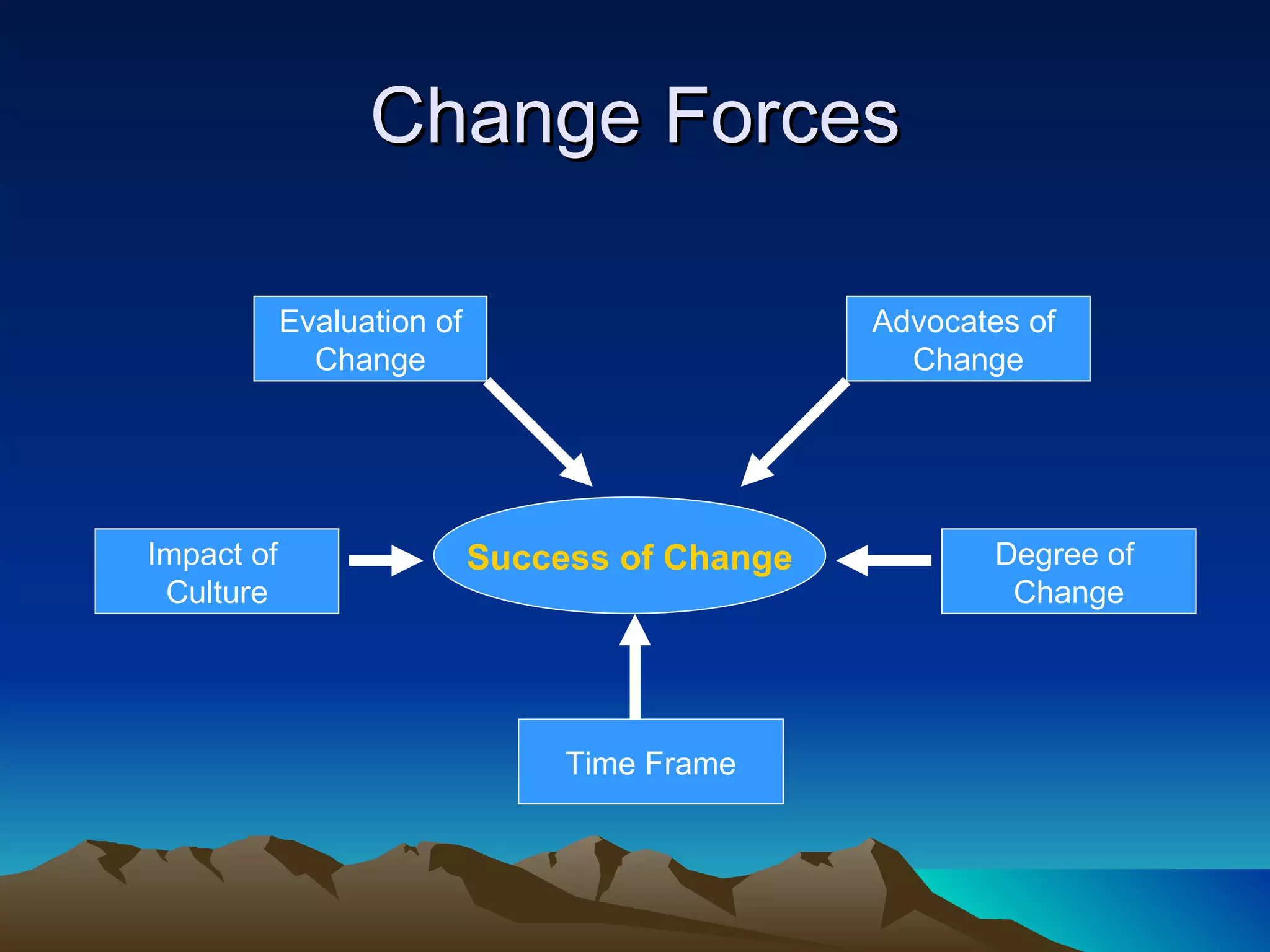
Change Forces Success of Change Evaluation of Change Advocates of  Change Degree of  Change Time Frame Impact of  Culture
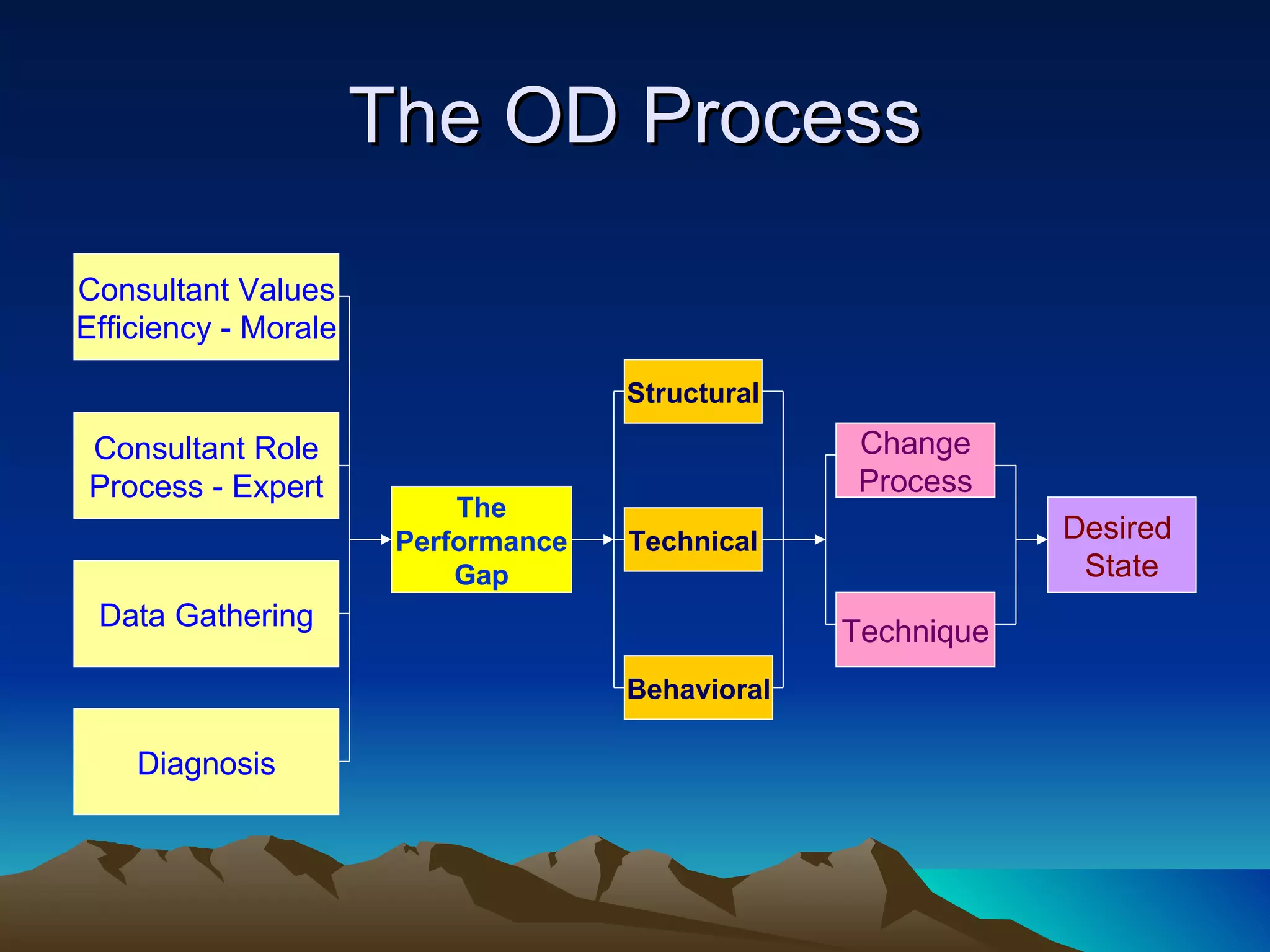
The OD Process Consultant Values Efficiency - Morale Consultant Role Process - Expert Data Gathering Diagnosis The Performance Gap Structural Behavioral Technical Change Process Technique Desired  State
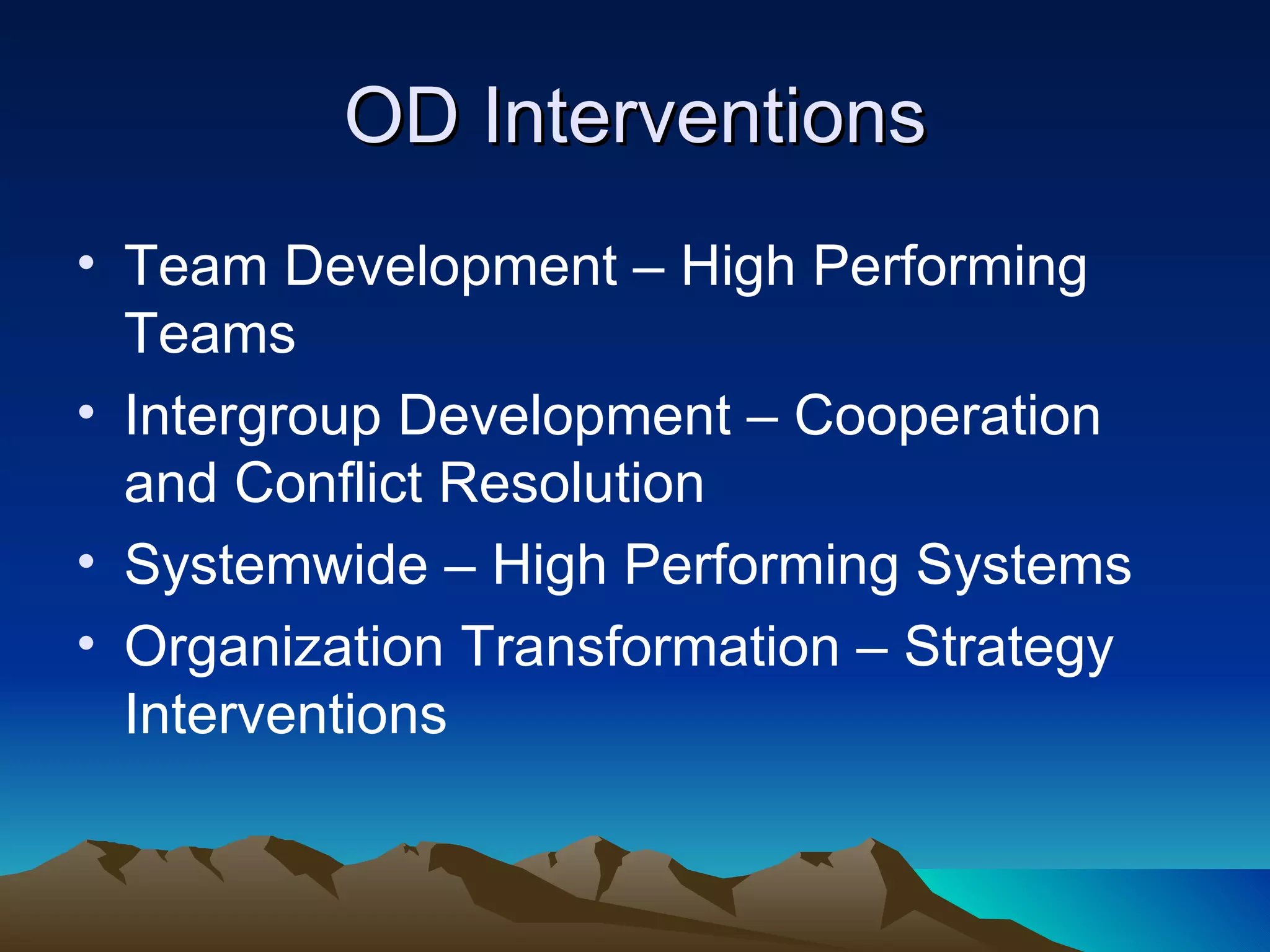
OD Interventions Team Development – High Performing Teams Intergroup Development – Cooperation and Conflict Resolution Systemwide – High Performing Systems Organization Transformation – Strategy Interventions

Organizational development overview

  • 1.
    Organizational Development AnOverview of the OD Process
  • 2.
    Definition Planned changeeffort involving systematic diagnosis of the total organization that is managed from the top to increase the organizational effectiveness and health of the overall system (Beckhard, 1969, pp. 9-10)
  • 3.
    Approach Empowerment throughthe articulation of the change agent's values designed to facilitate visioning, organizational learning and problem solving in the interests of a collaborative management of the organization's culture (French and Bell, 1995, p. 28) a humanistic approach that utilises Action Research as a mode of enquiry.
  • 4.
    Themes Human relationsapproach, where the focus was on man's social needs and ways of meeting them to increase motivation and organization productivity. (Beckhard, 1969, p. 2). Human engineering, to rationalize the way work was done; the way the work-force was utilized to increase the output; and the productivity of the goods and services produced.
  • 5.
    OD StructuralChange Technological Change Behavioral Change
  • 6.
    The first halfof the twentieth century Unprecedented growth of large-scale formal organizations which developed hierarchical, technical and "social" machinery. OD became informed in an ad hoc way by a generation of "social technicians" preoccupied with organizational improvement and efficiency within organizations characterized by standardization, routinization and impersonality.
  • 7.
    The first halfof the twentieth century key themes of organizational behavior motivation and morale leadership behavior communication skills teamwork job enrichment enlargement or empowerment.
  • 8.
    1980s The excellencemovement furthered the cause of innovation and entrepreneurship within organizations and argued the need to think ahead to a post-industrial future. Bureaucratic stability was a thing of the past and flexible organizations became the future driven by turbulent economic environments. McKinsey 7-S framework became, for a while, the vehicle to transform the culture of organizations. OD in the form of managing change and empowerment became the ultimate goal.
  • 9.
    1990s Most organizationswere beginning to experience one of the most disruptive and dramatic types of organizational change strategies to have hit the world headlines. Downsizing/Rightsizing.
  • 10.
    The last 20years movement from centralisation to decentralisation; a focus on the flexible firm by disaggregating or outsourcing; a movement from long-term strategic planning to short-term tactical planning; the emergence of downsizing and restructuring with the team as the central mechanism for innovation and change; the movement from training (typifying the division of labour) to organizational learning, personal growth and development. The advancement in IT has opened new possibilities.
  • 11.
    The OD ModelI Anticipating a need for change II Developing Consultant- Client Relationship III The Diagnostic Process IV Action Plans, Strategies And Techniques V Self-Renewal Mobilizing and Stabilizing VI Continuous Improvement Process
  • 12.
    The Consulting WheelConsulting Skills Profile Personal Skills Leadership Skills Project Management Skills Interpersonal Skills Problem Solving Skills Communication Skills
  • 13.
    Managerial Consulting DiagnosticModel Basic Planning Personnel General Business Practices Market Research Finance Advertising and Promotions
  • 14.
    Change Forces Successof Change Evaluation of Change Advocates of Change Degree of Change Time Frame Impact of Culture
  • 15.
    The OD ProcessConsultant Values Efficiency - Morale Consultant Role Process - Expert Data Gathering Diagnosis The Performance Gap Structural Behavioral Technical Change Process Technique Desired State
  • 16.
    OD Interventions TeamDevelopment – High Performing Teams Intergroup Development – Cooperation and Conflict Resolution Systemwide – High Performing Systems Organization Transformation – Strategy Interventions