This document discusses work, energy, and power. It defines work, kinetic energy, gravitational potential energy, and average power. It describes the work-energy theorem, the principle of conservation of mechanical energy, and how energy can be transferred between different forms but not created or destroyed based on the principle of conservation of energy. Examples are provided to demonstrate how to calculate work, kinetic energy, gravitational potential energy, and changes in speed and energy based on these principles.
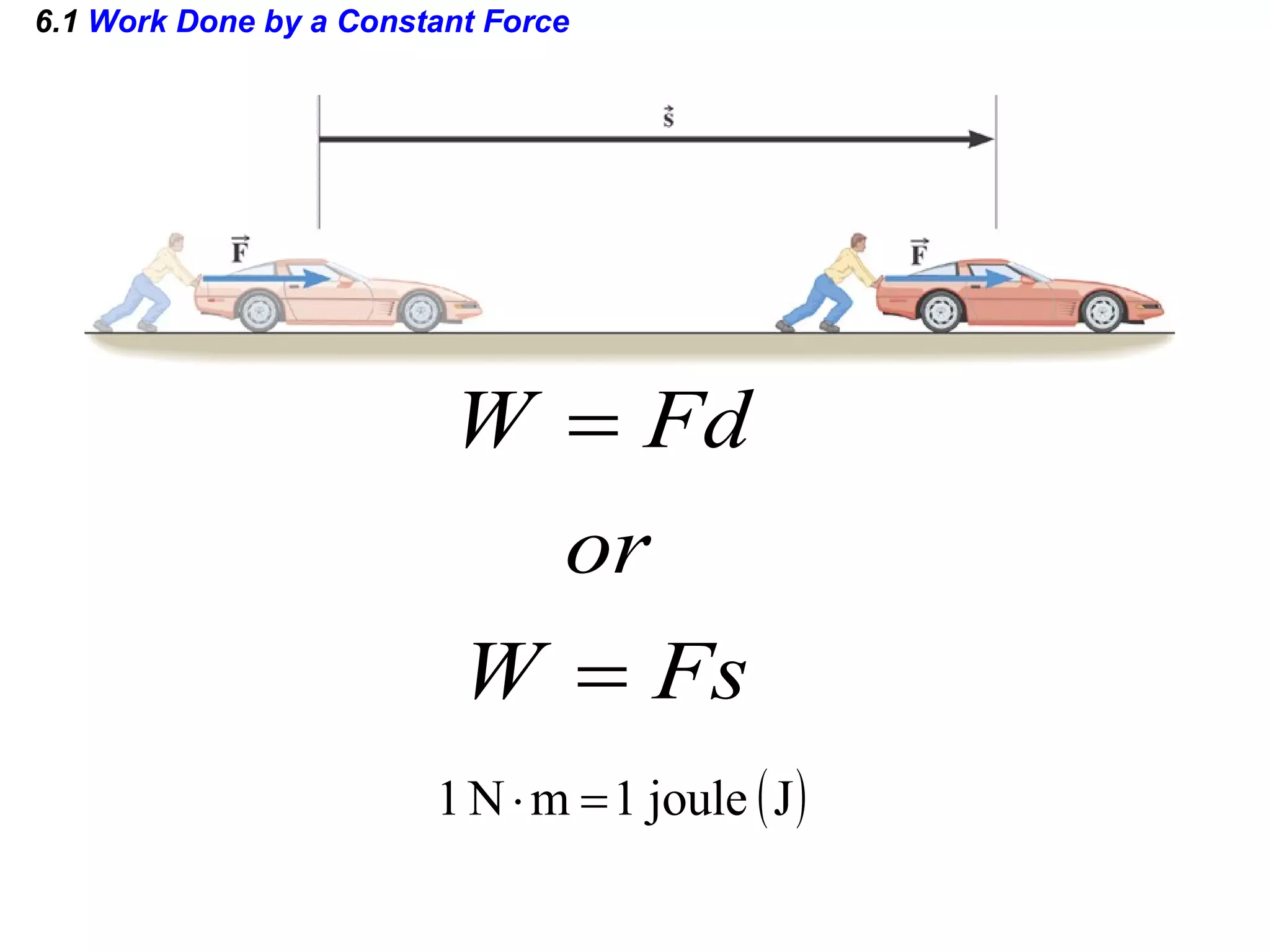
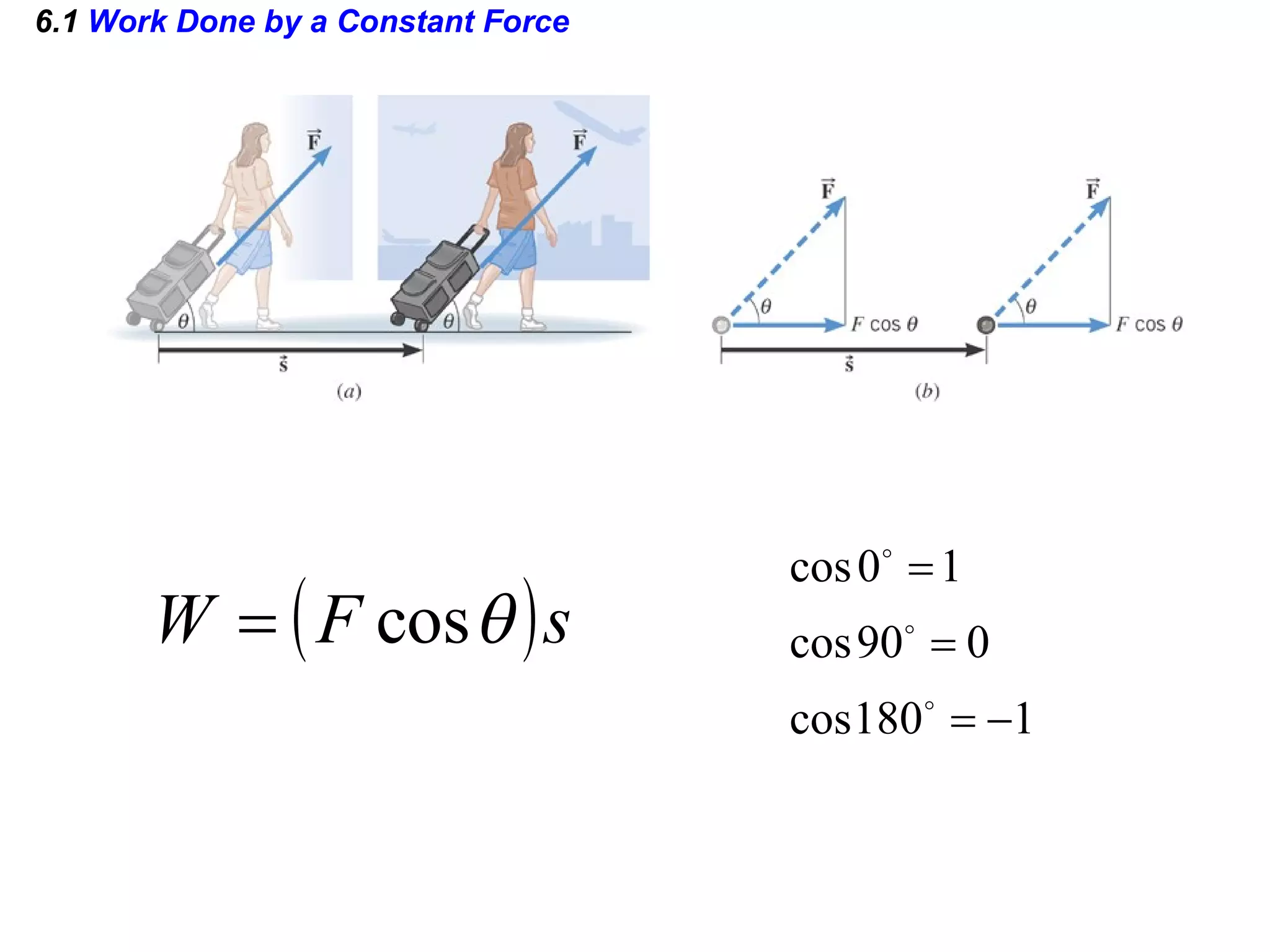
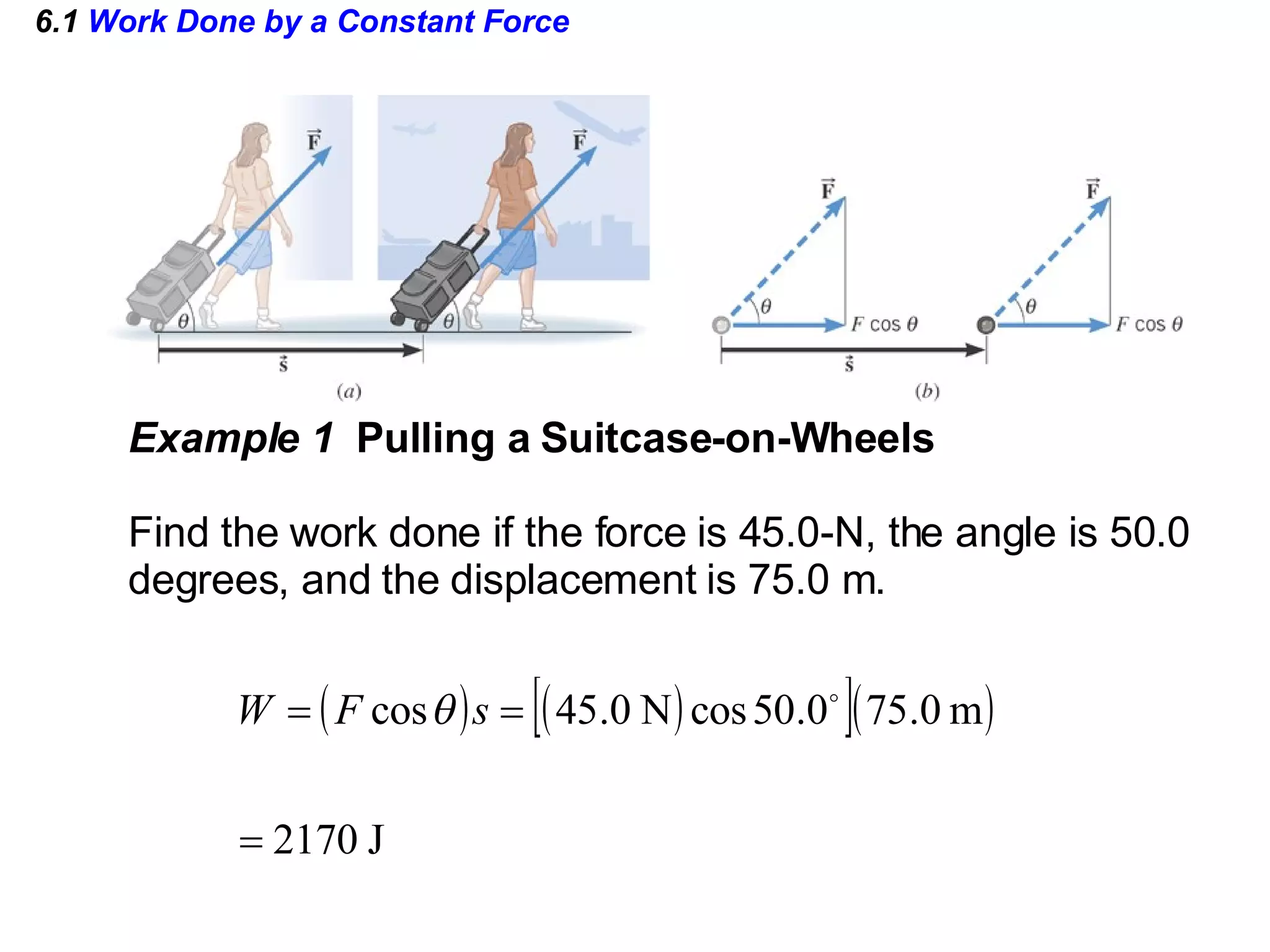
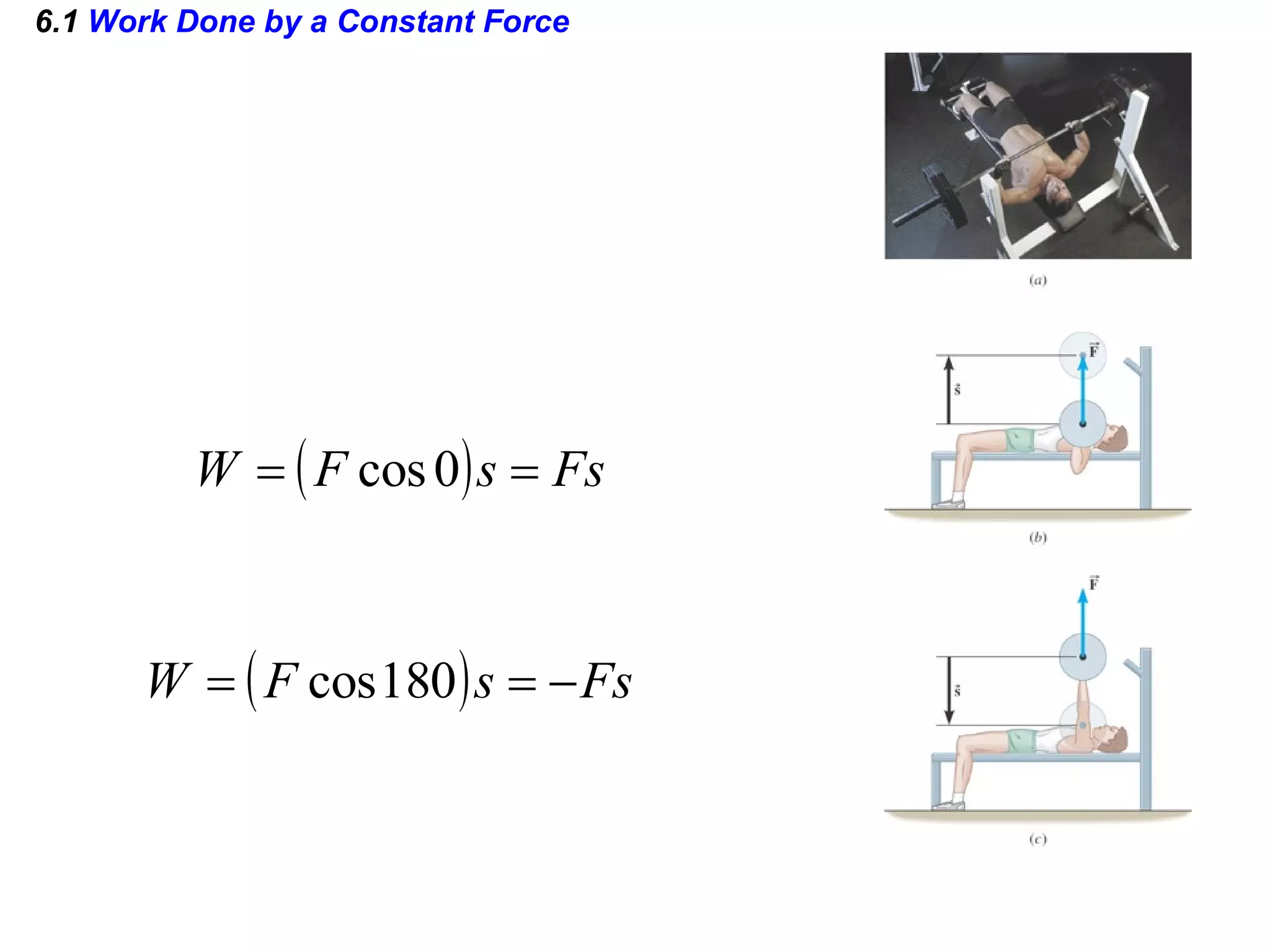
6.1 WorkDone by a Constant Force Example 1 Pulling a Suitcase-on-Wheels Find the work done if the force is 45.0-N, the angle is 50.0 degrees, and the displacement is 75.0 m.
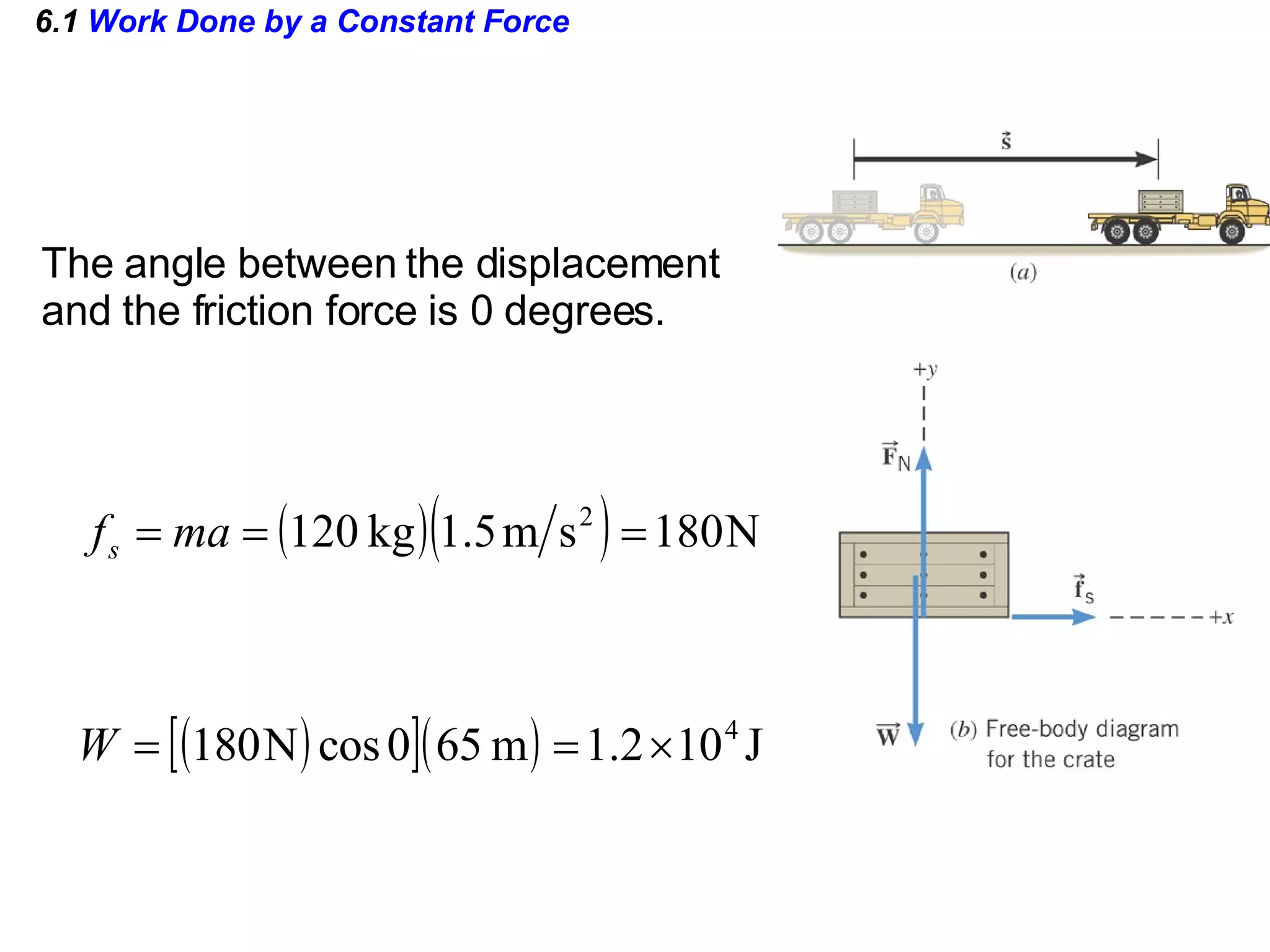
6.1 WorkDone by a Constant Force Example 3 Accelerating a Crate The truck is accelerating at a rate of +1.50 m/s 2 . The mass of the crate is 120-kg and it does not slip. The magnitude of the displacement is 65 m. What is the total work done on the crate by all of the forces acting on it?
7.
6.1 WorkDone by a Constant Force The angle between the displacement and the friction force is 0 degrees.
8.
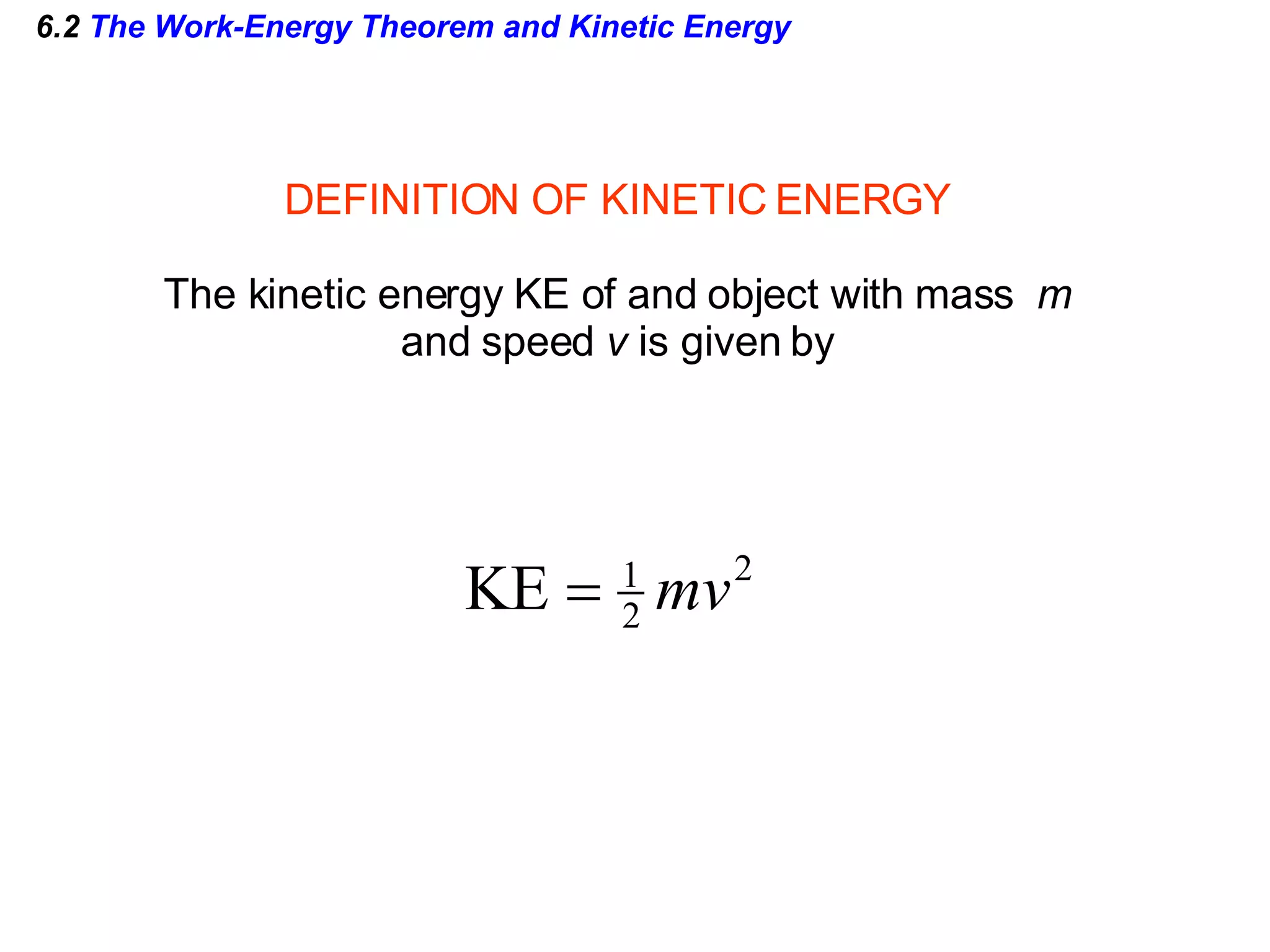
6.2 TheWork-Energy Theorem and Kinetic Energy DEFINITION OF KINETIC ENERGY The kinetic energy KE of and object with mass m and speed v is given by
9.
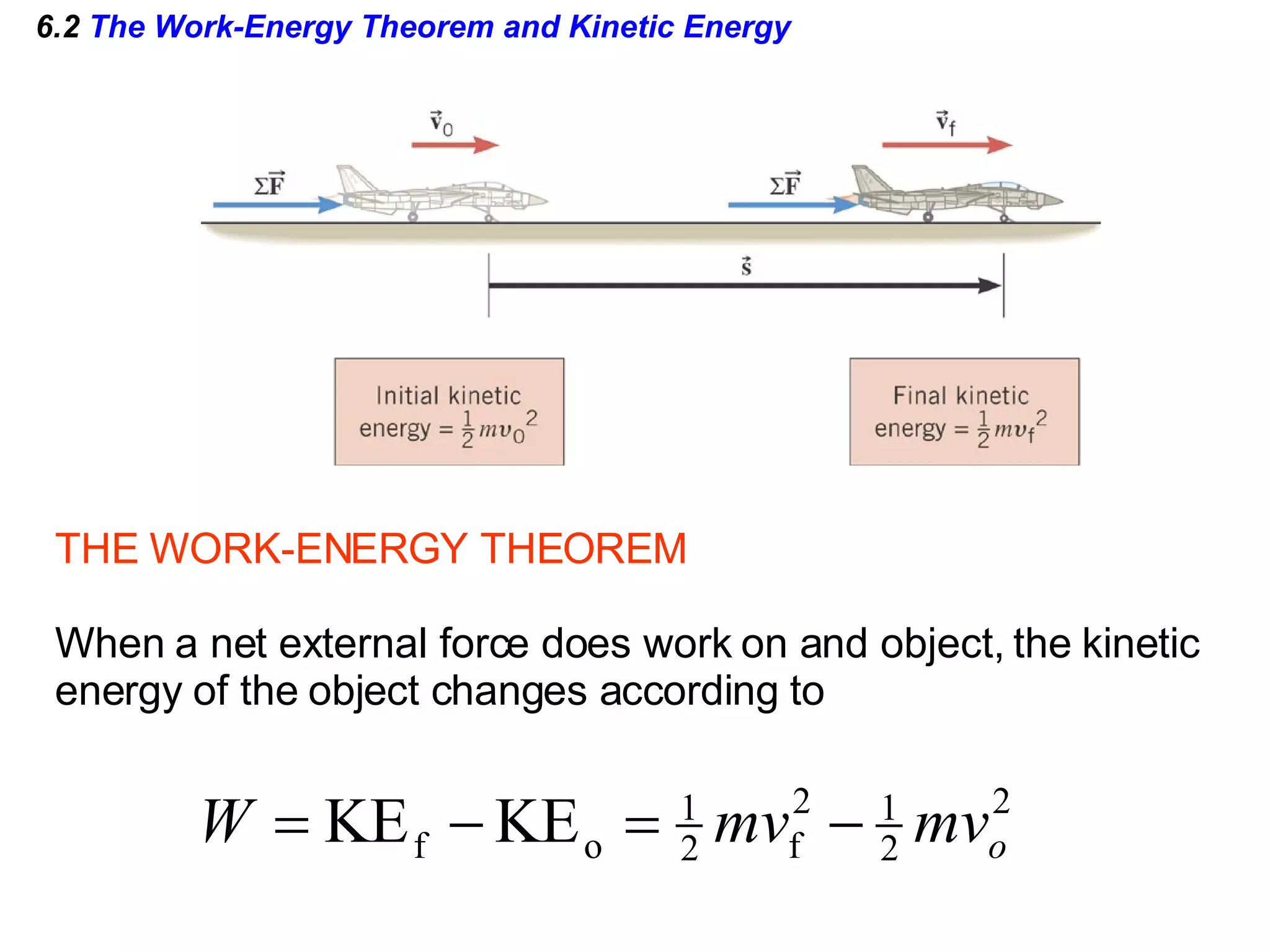
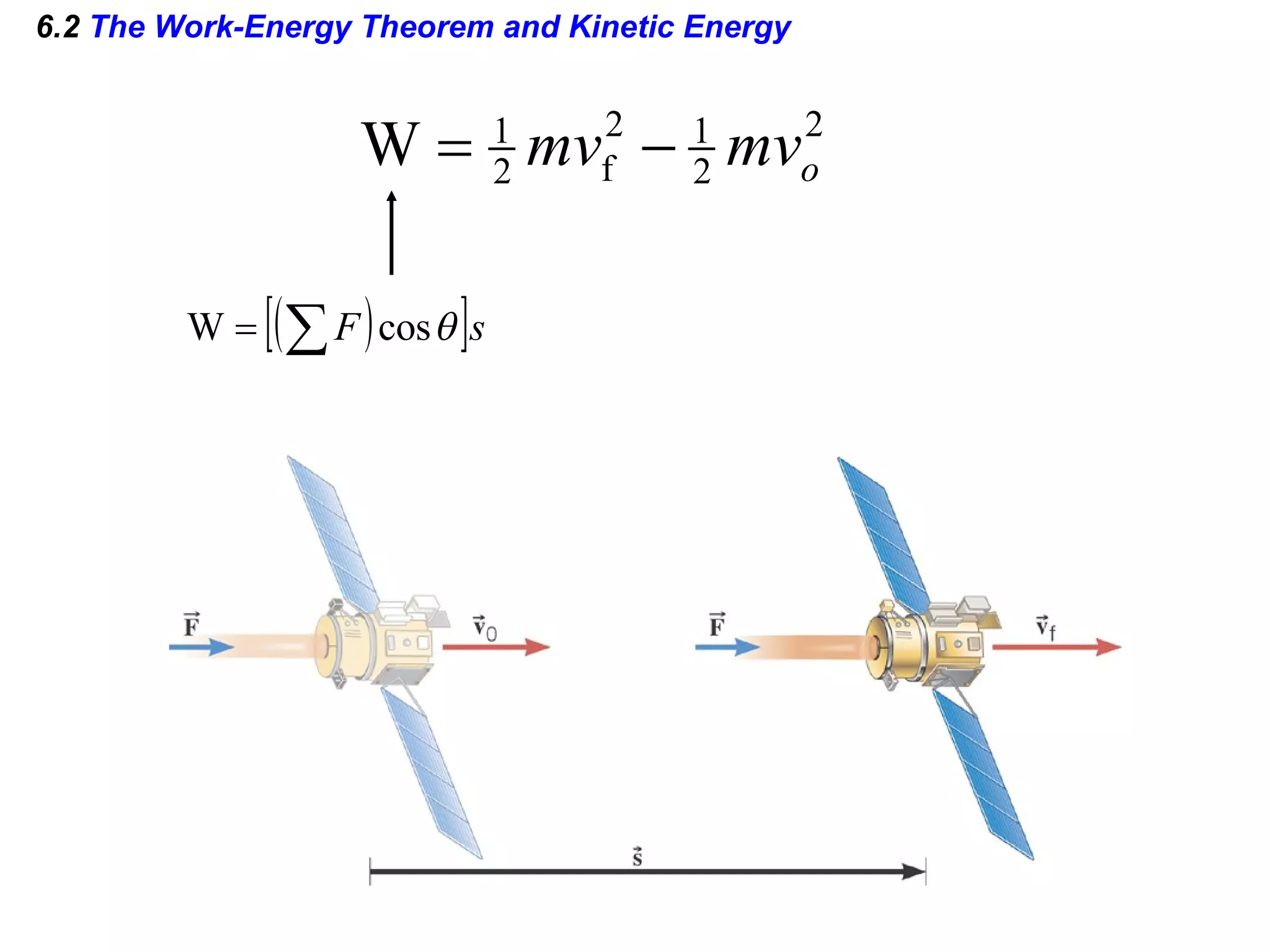
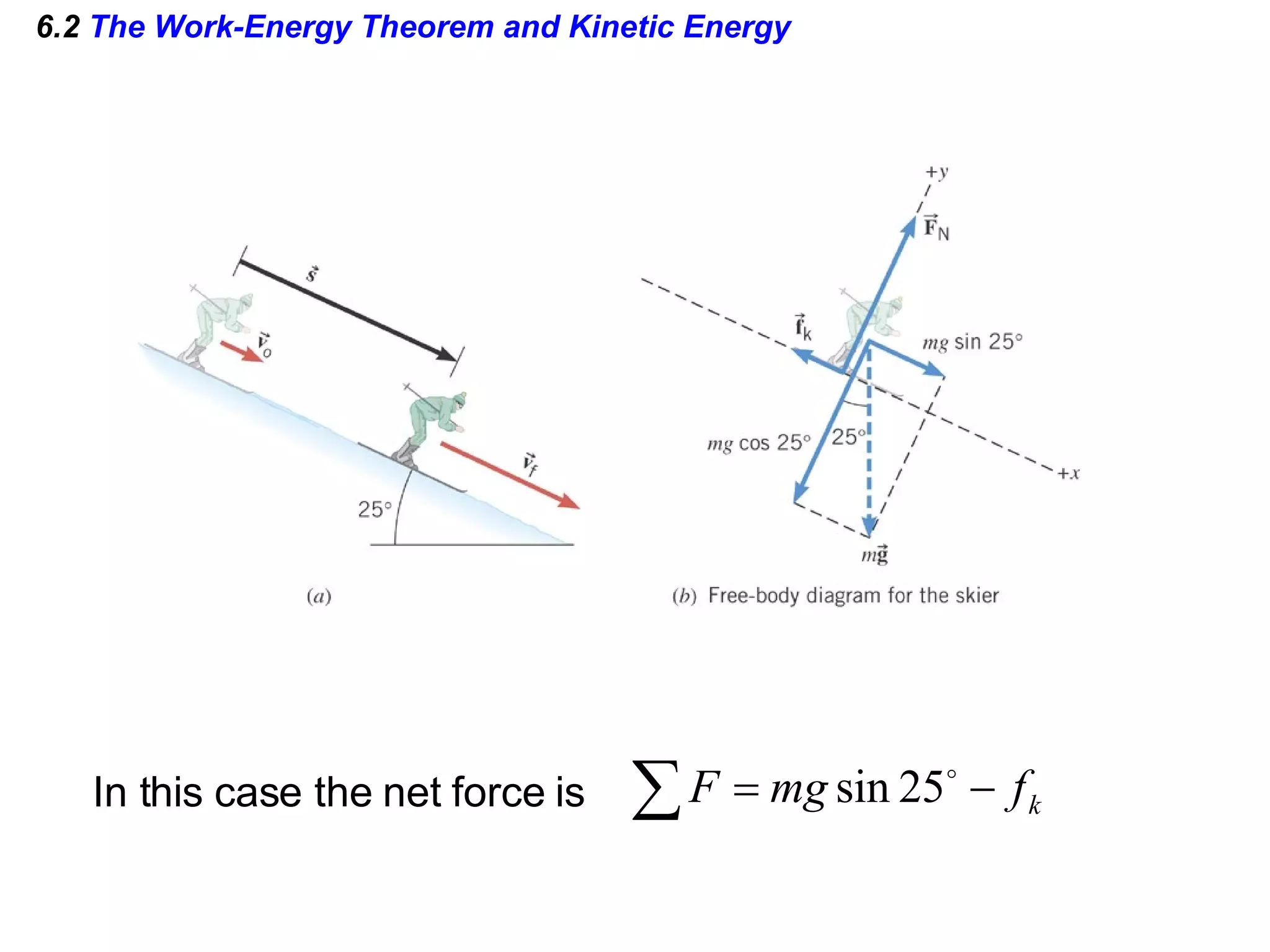
6.2 TheWork-Energy Theorem and Kinetic Energy THE WORK-ENERGY THEOREM When a net external force does work on and object, the kinetic energy of the object changes according to
10.
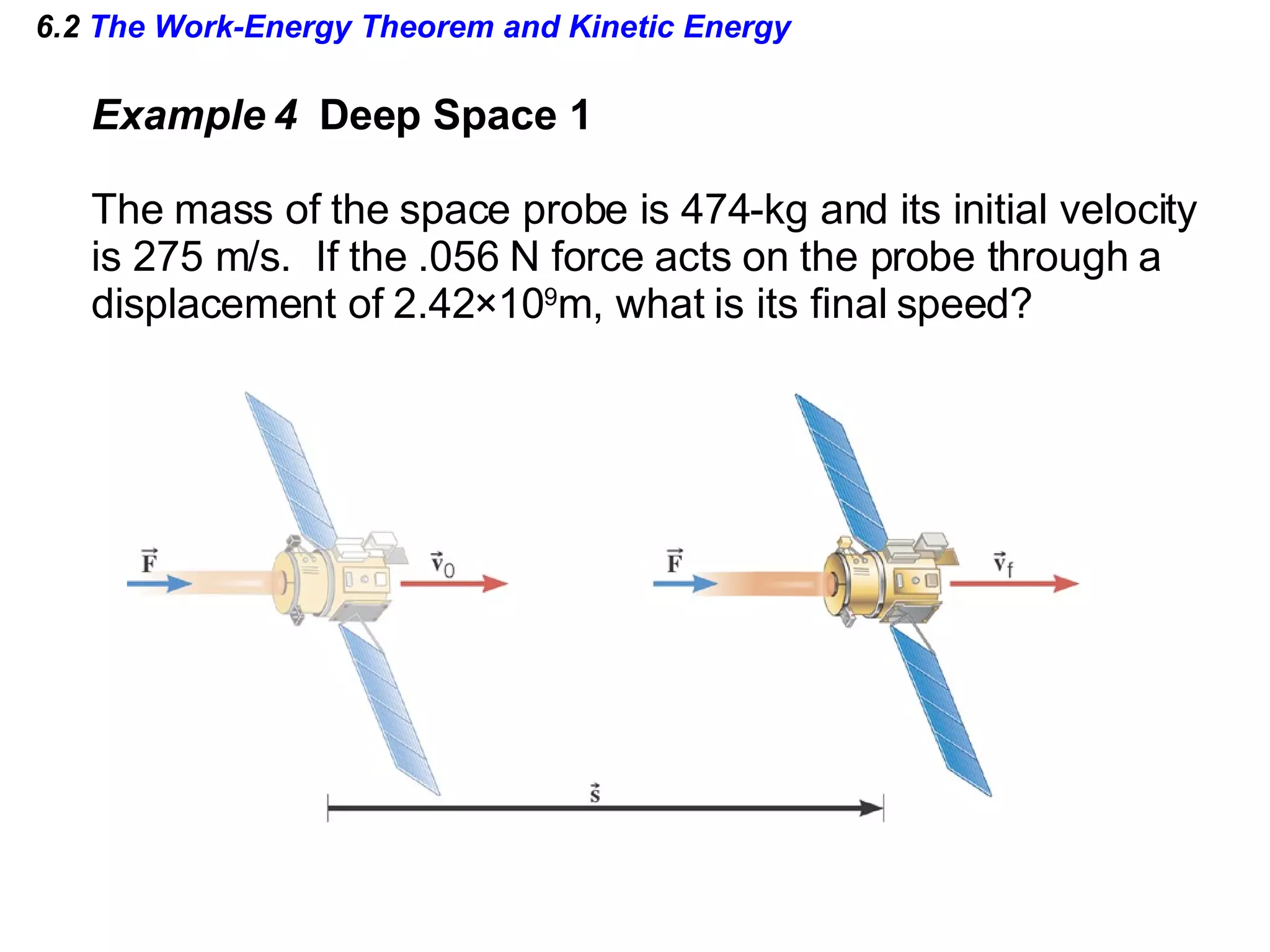
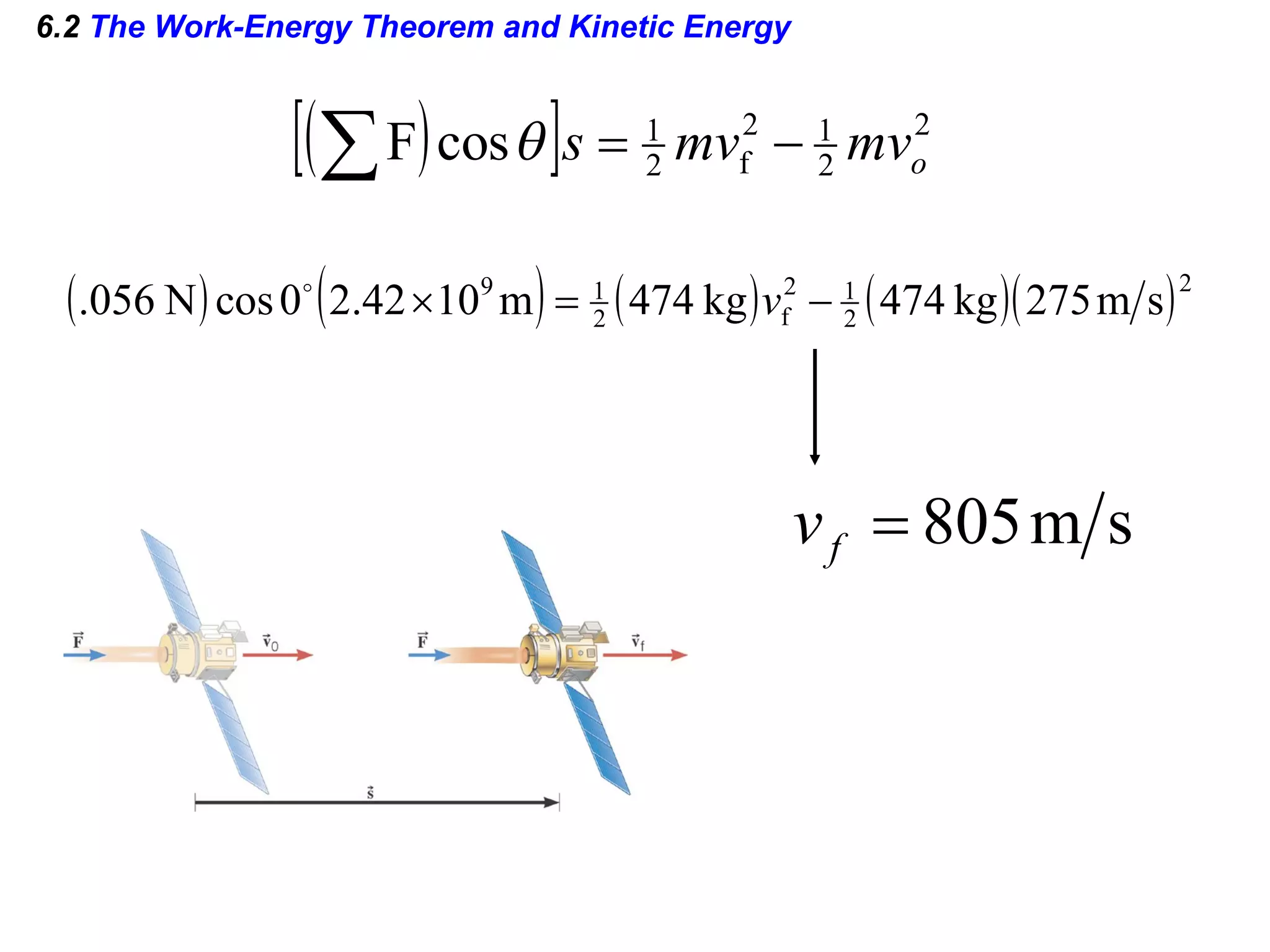
6.2 TheWork-Energy Theorem and Kinetic Energy Example 4 Deep Space 1 The mass of the space probe is 474-kg and its initial velocity is 275 m/s. If the .056 N force acts on the probe through a displacement of 2.42 ×10 9 m, what is its final speed?
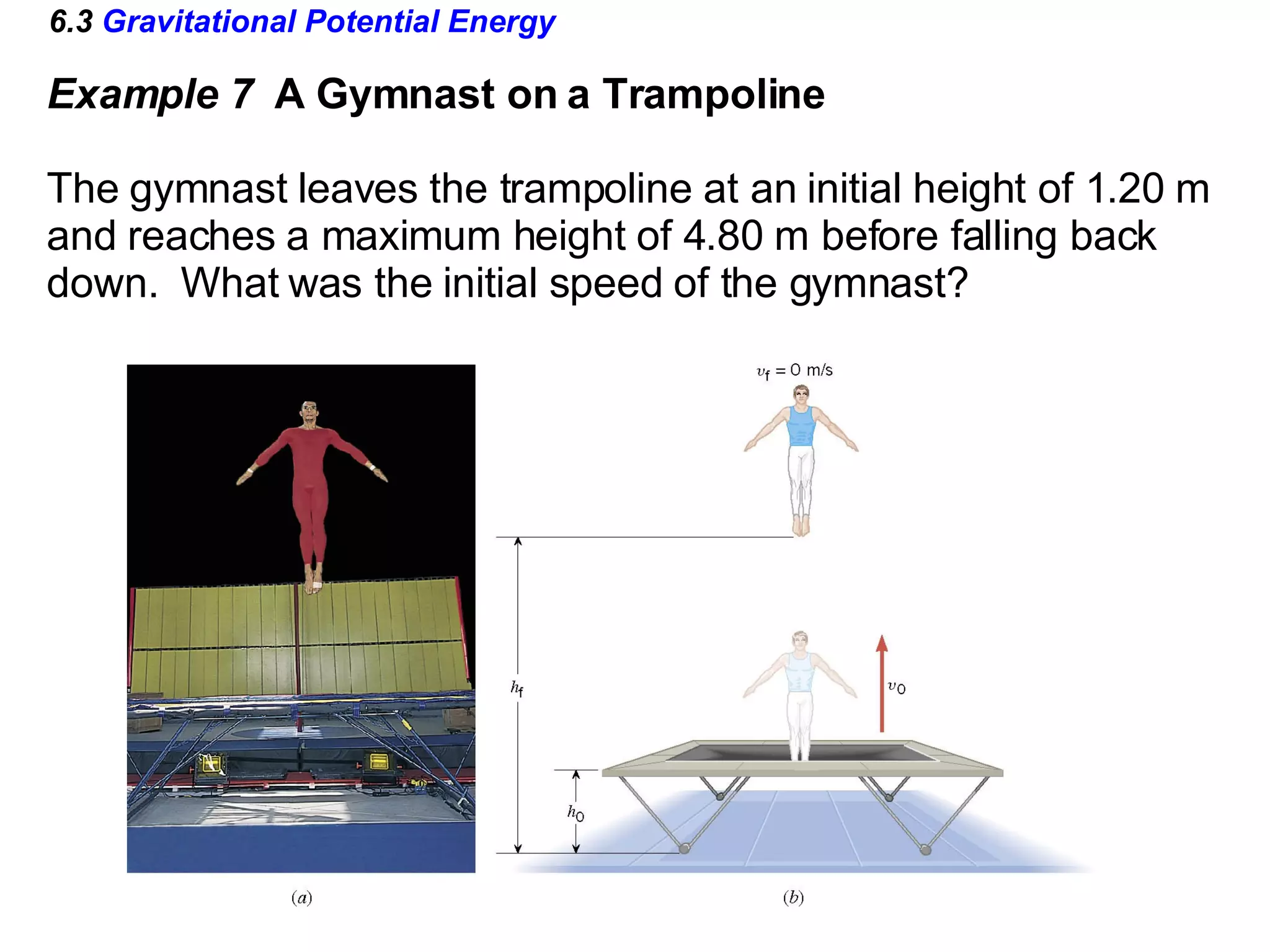
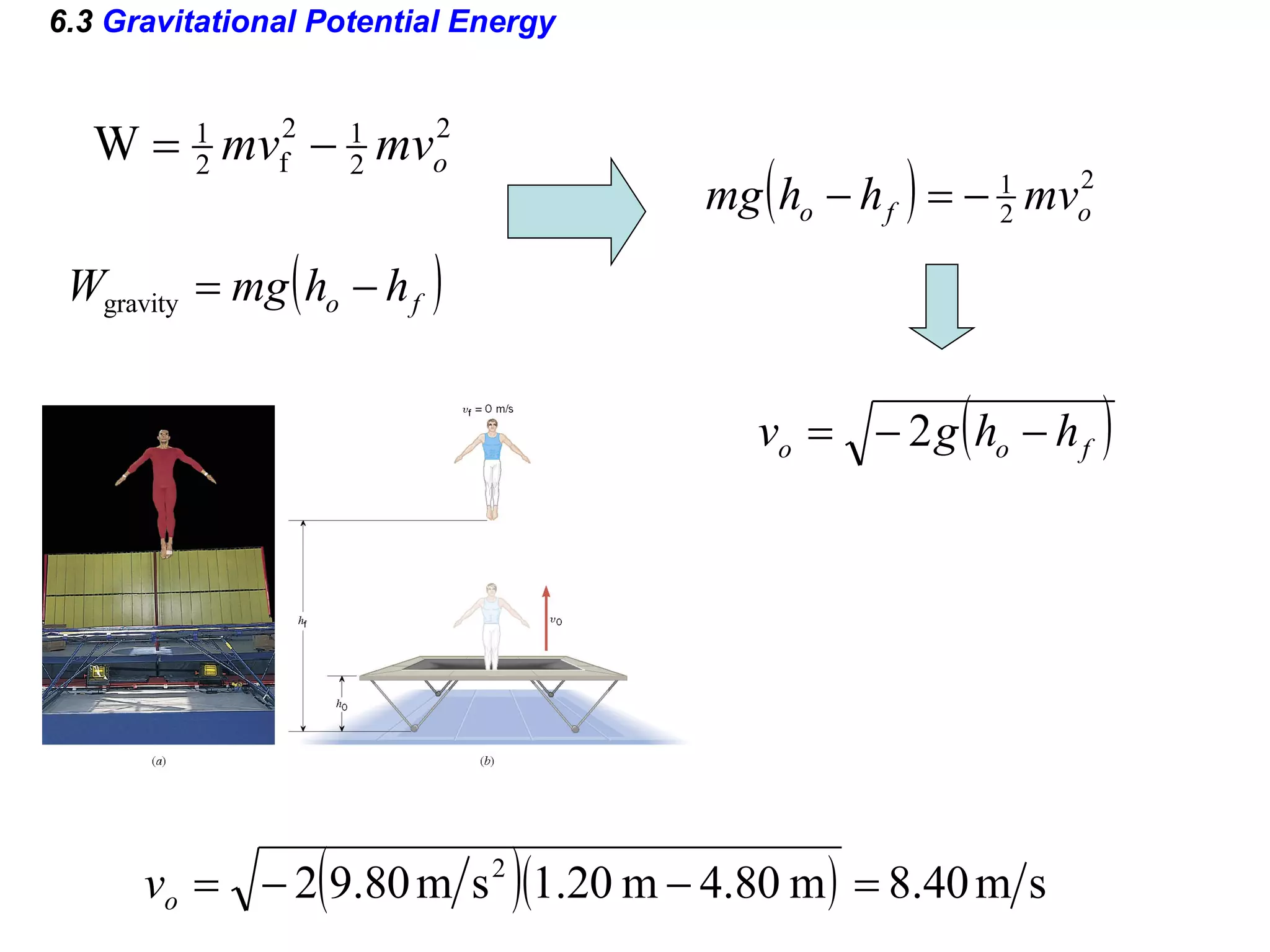
6.3 GravitationalPotential Energy Example 7 A Gymnast on a Trampoline The gymnast leaves the trampoline at an initial height of 1.20 m and reaches a maximum height of 4.80 m before falling back down. What was the initial speed of the gymnast?
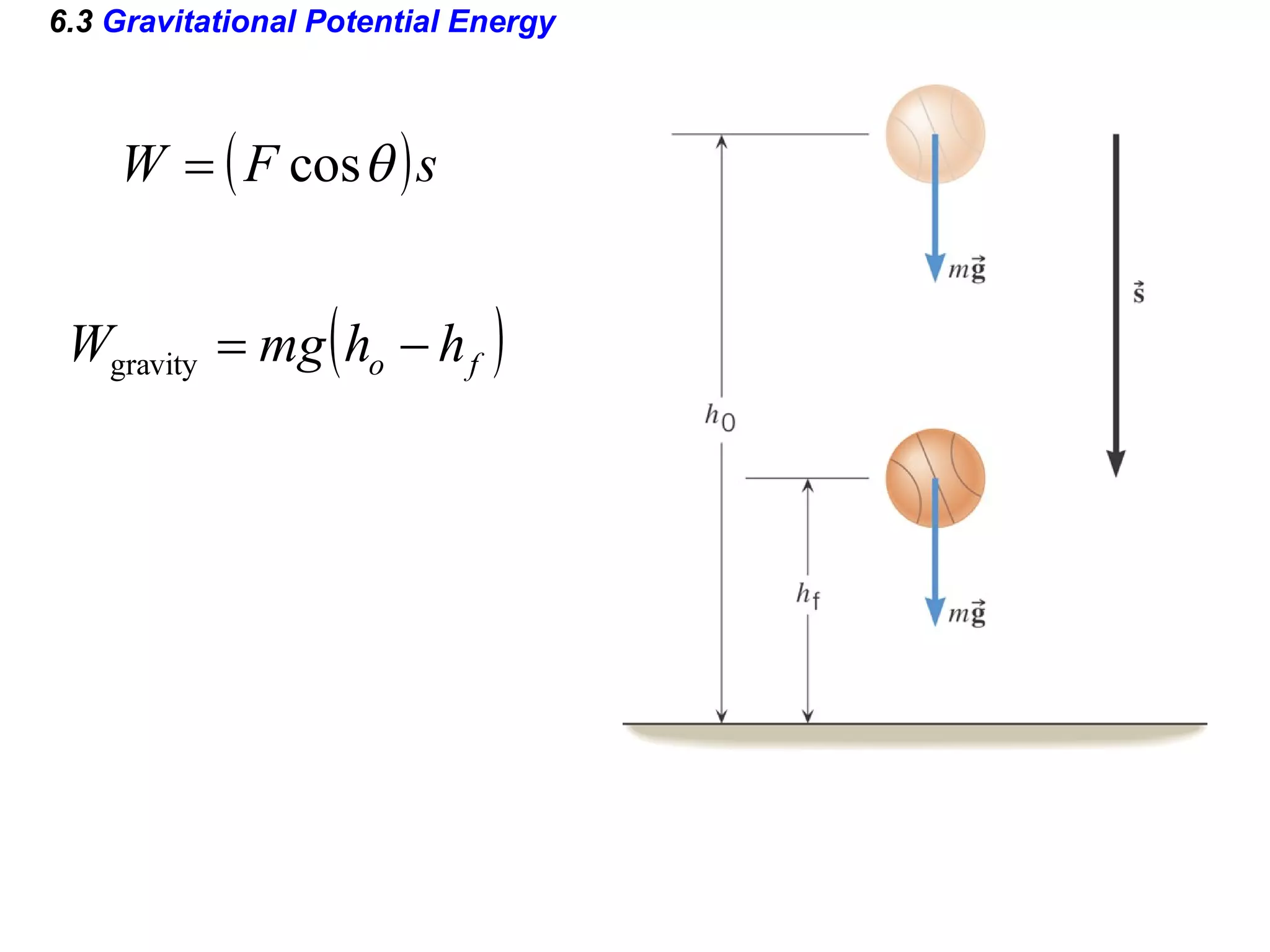
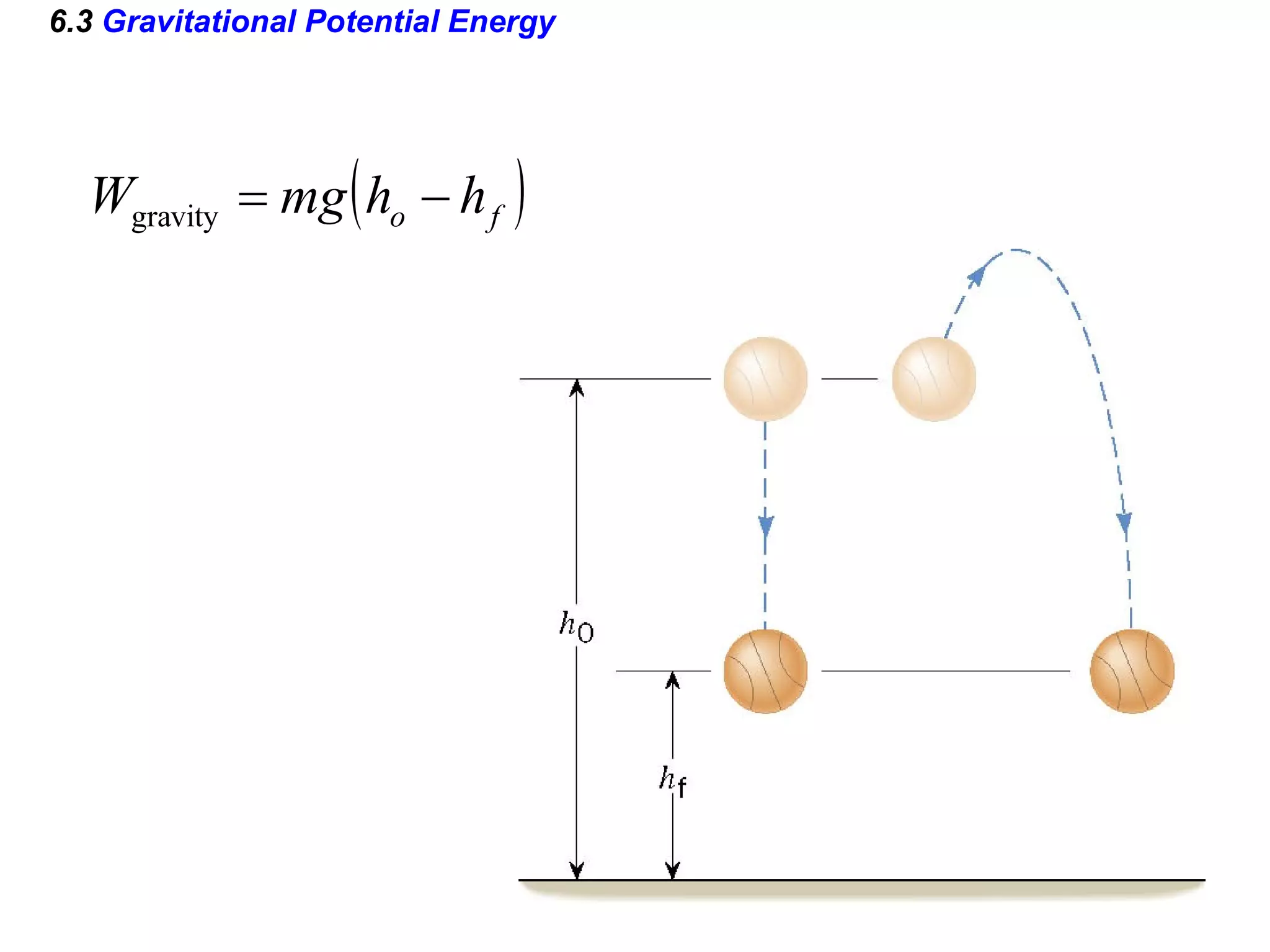
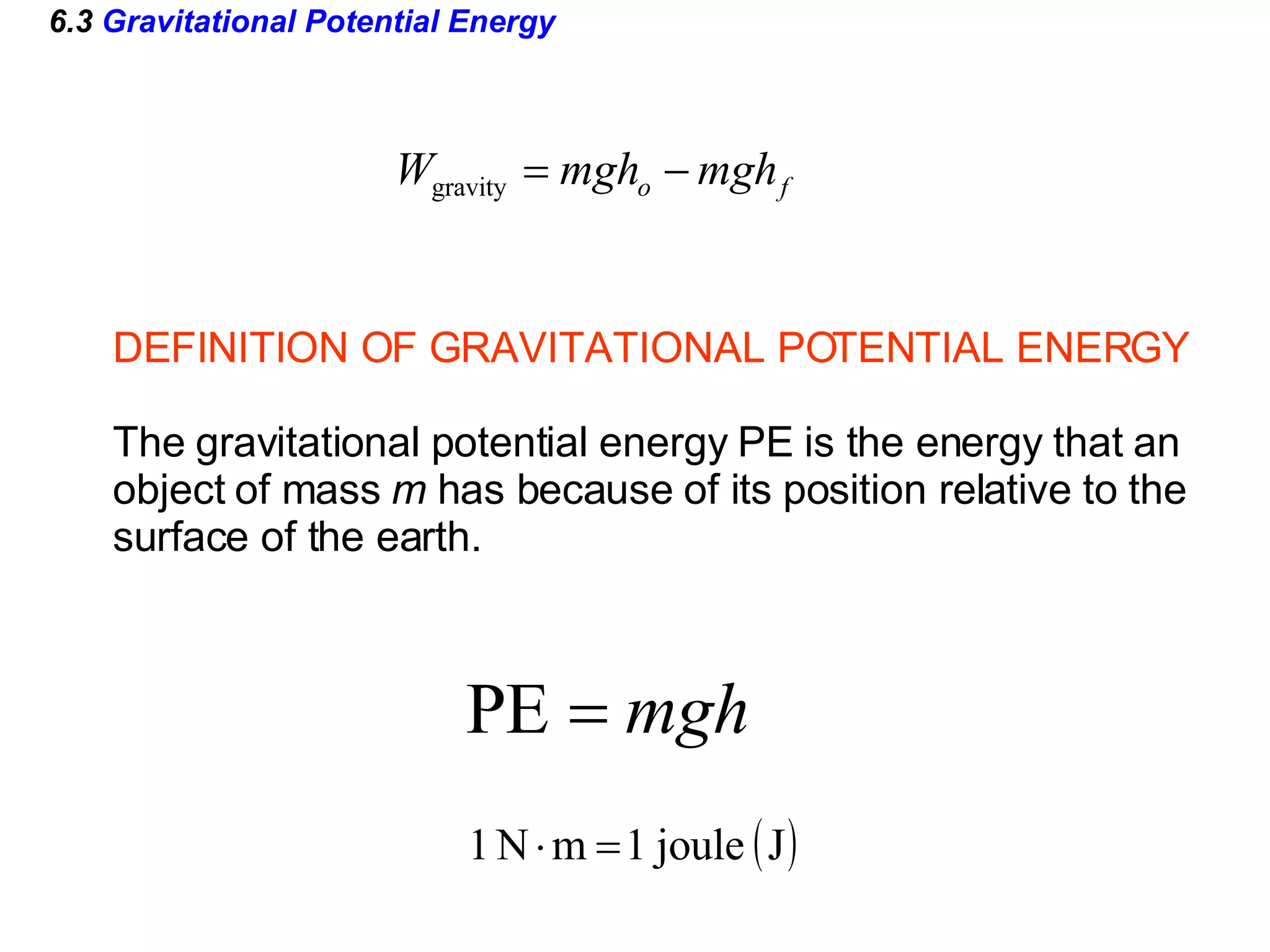
6.3 GravitationalPotential Energy DEFINITION OF GRAVITATIONAL POTENTIAL ENERGY The gravitational potential energy PE is the energy that an object of mass m has because of its position relative to the surface of the earth.
19.
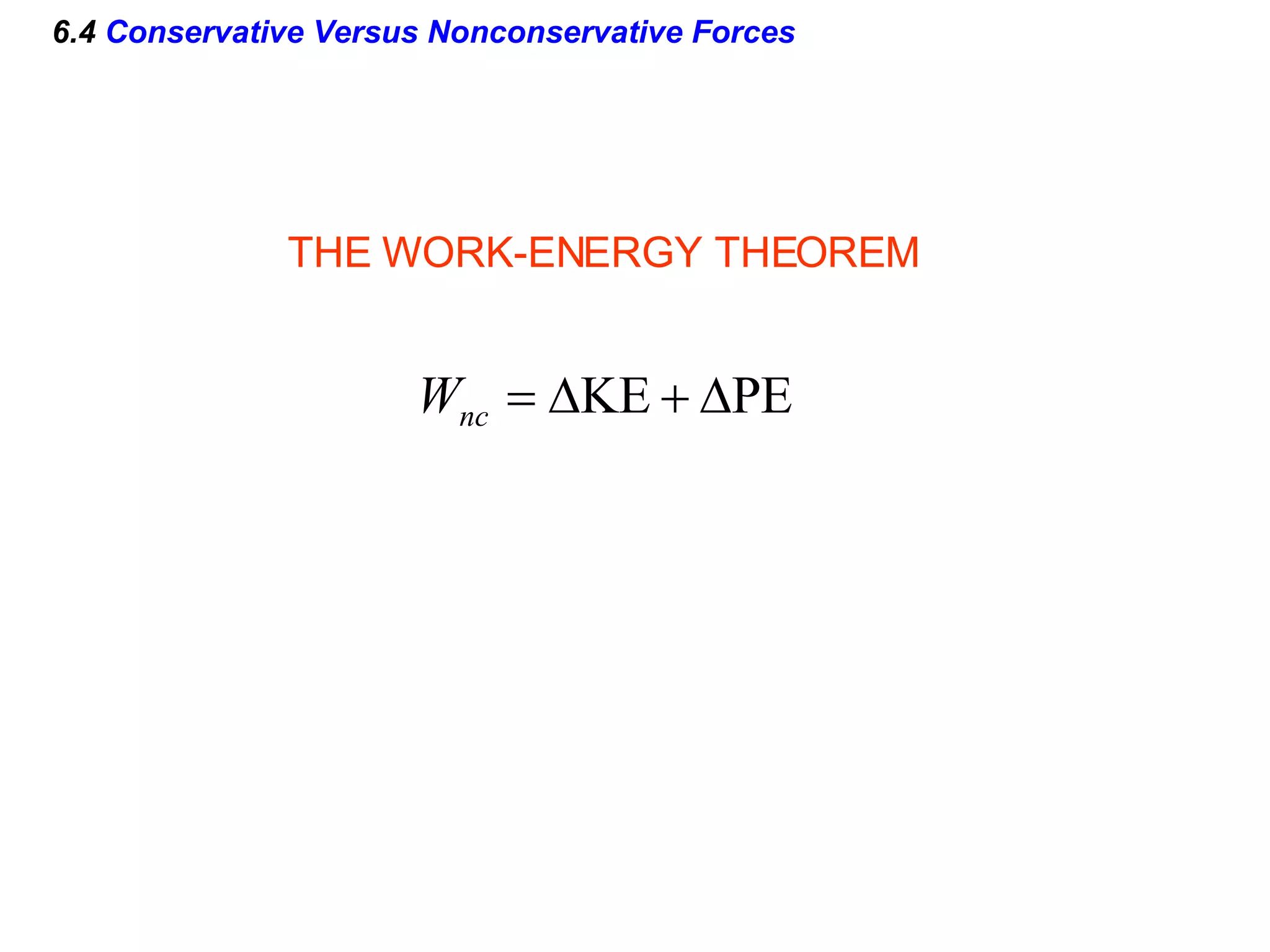
6.4 ConservativeVersus Nonconservative Forces THE WORK-ENERGY THEOREM
20.
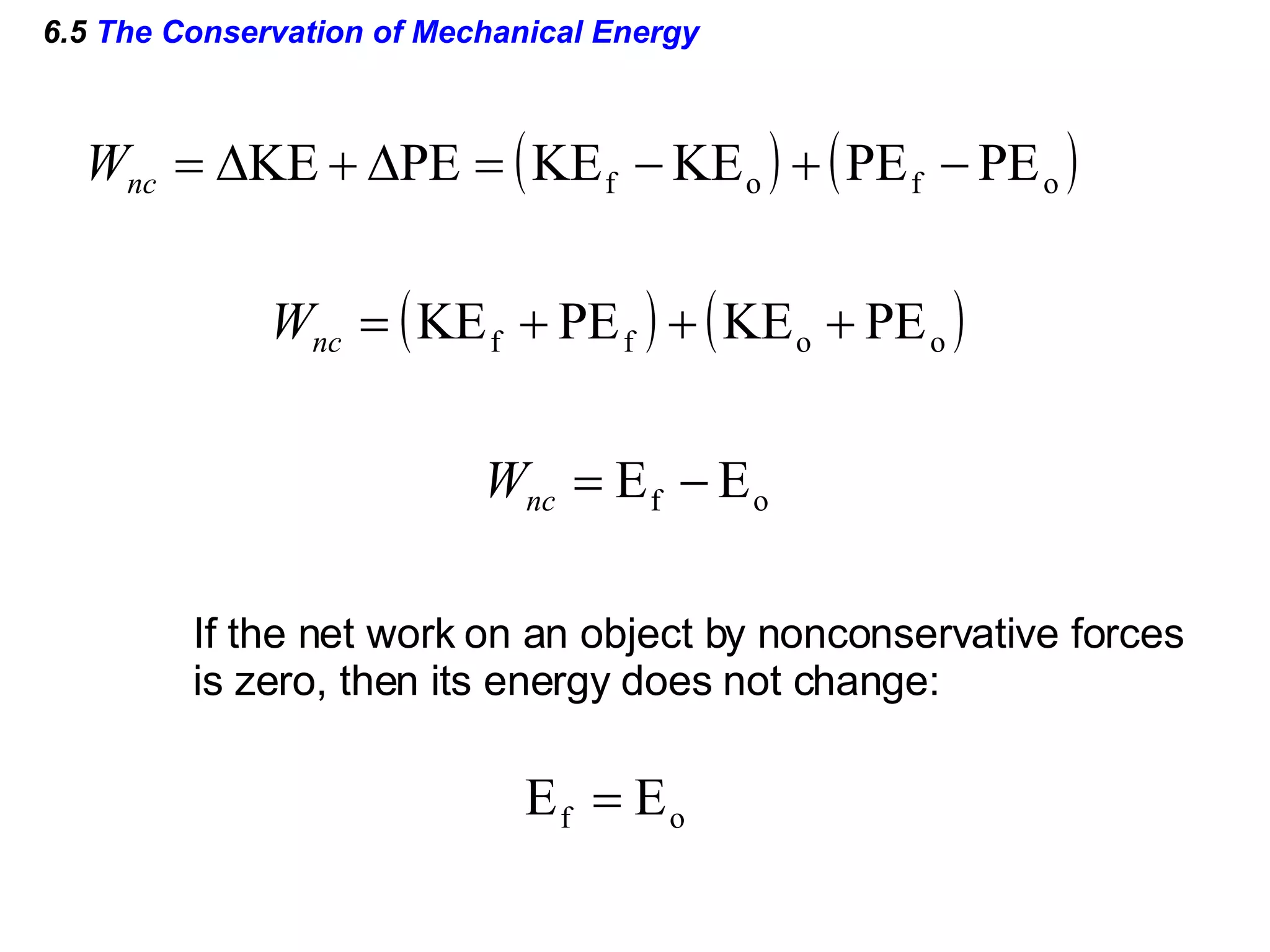
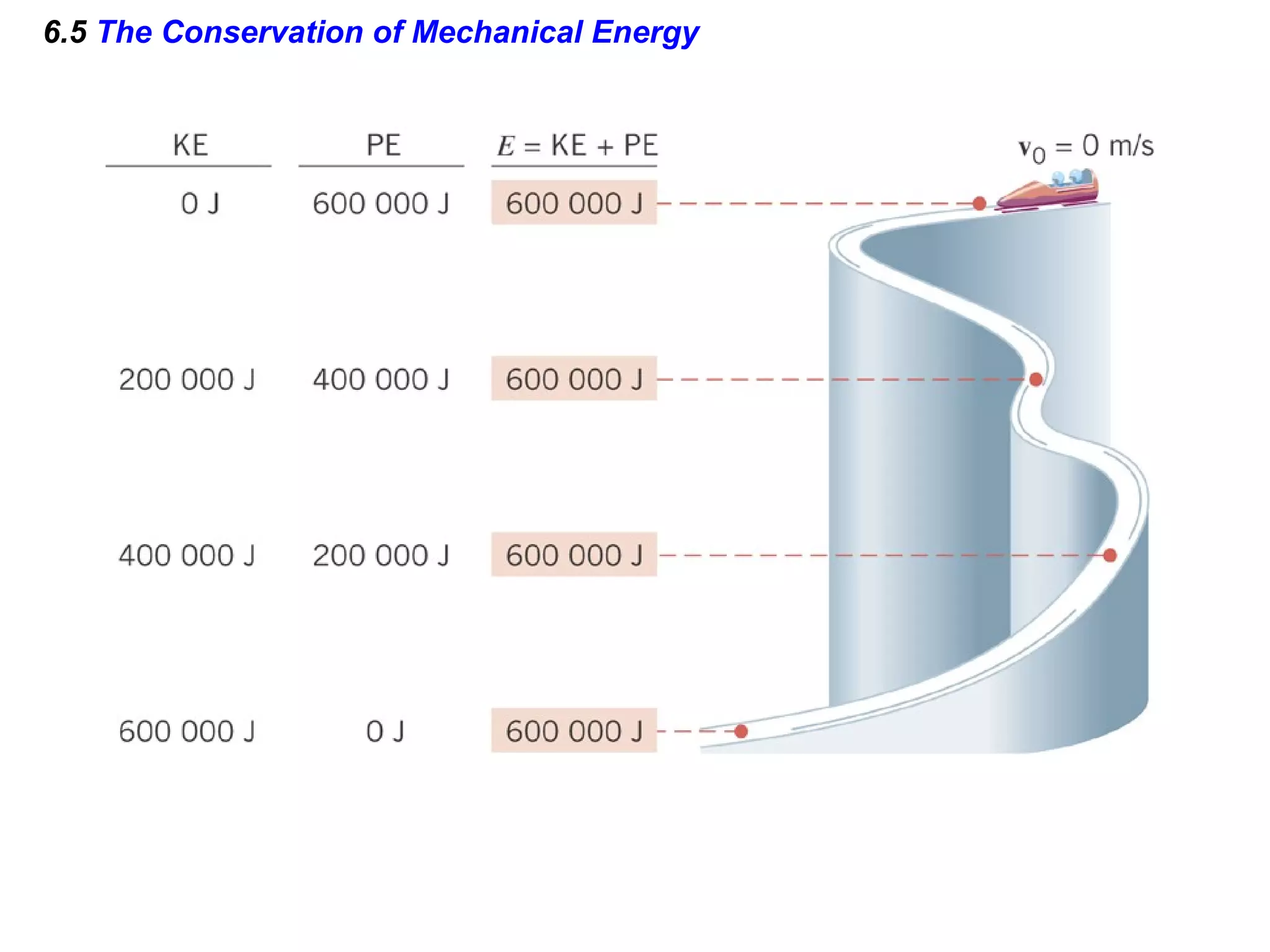
6.5 TheConservation of Mechanical Energy If the net work on an object by nonconservative forces is zero, then its energy does not change:
21.
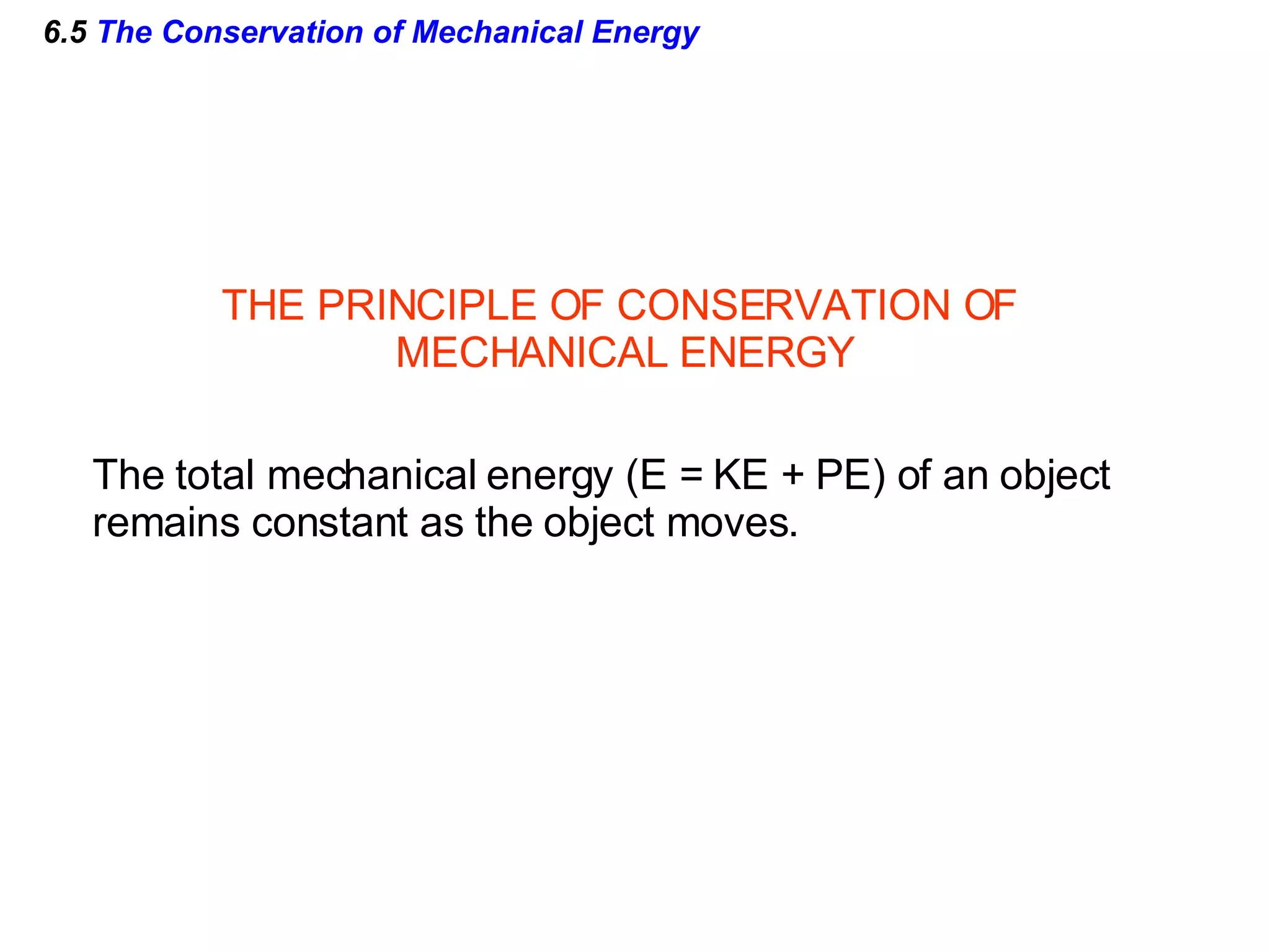
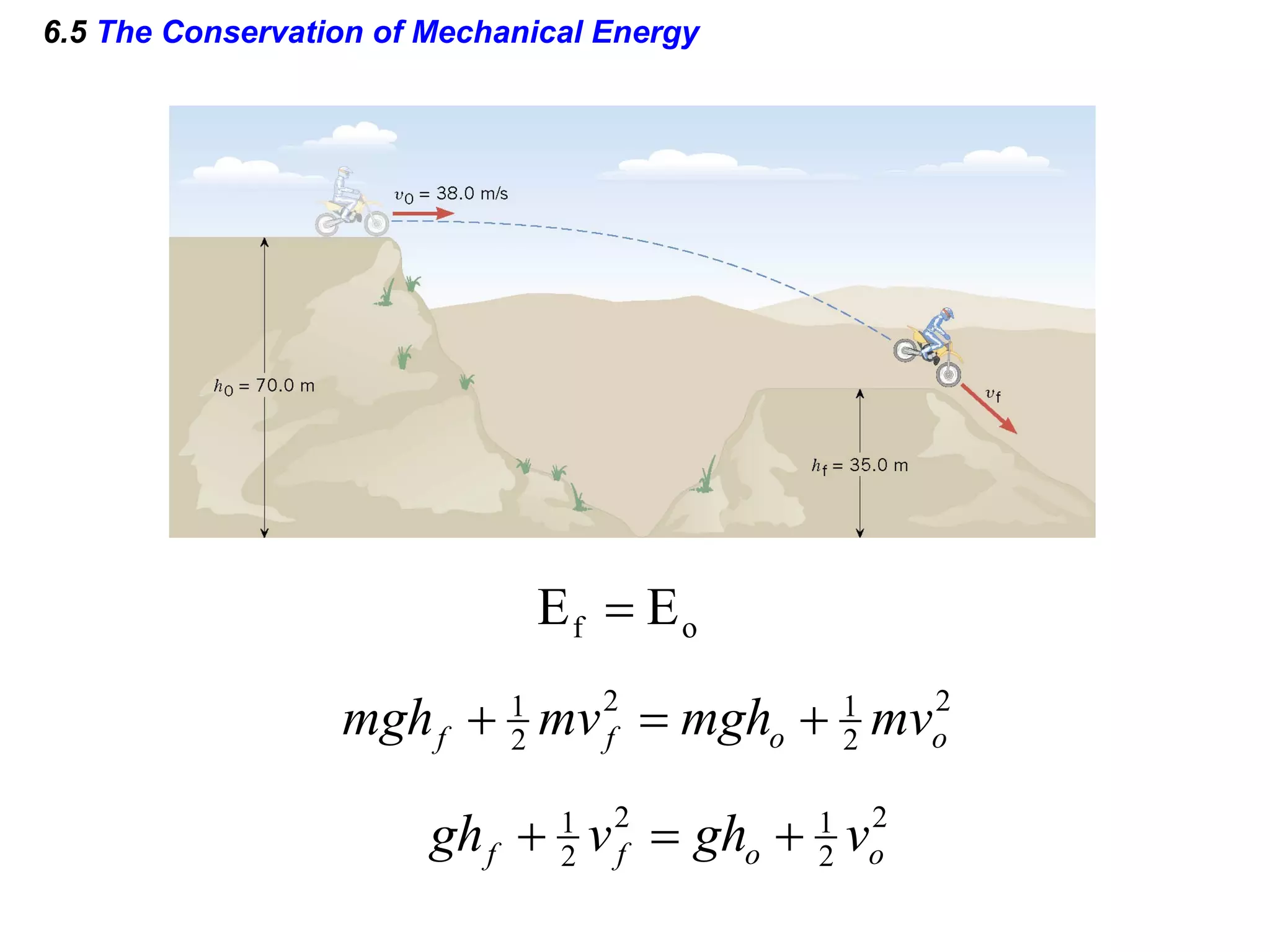
6.5 TheConservation of Mechanical Energy THE PRINCIPLE OF CONSERVATION OF MECHANICAL ENERGY The total mechanical energy (E = KE + PE) of an object remains constant as the object moves.
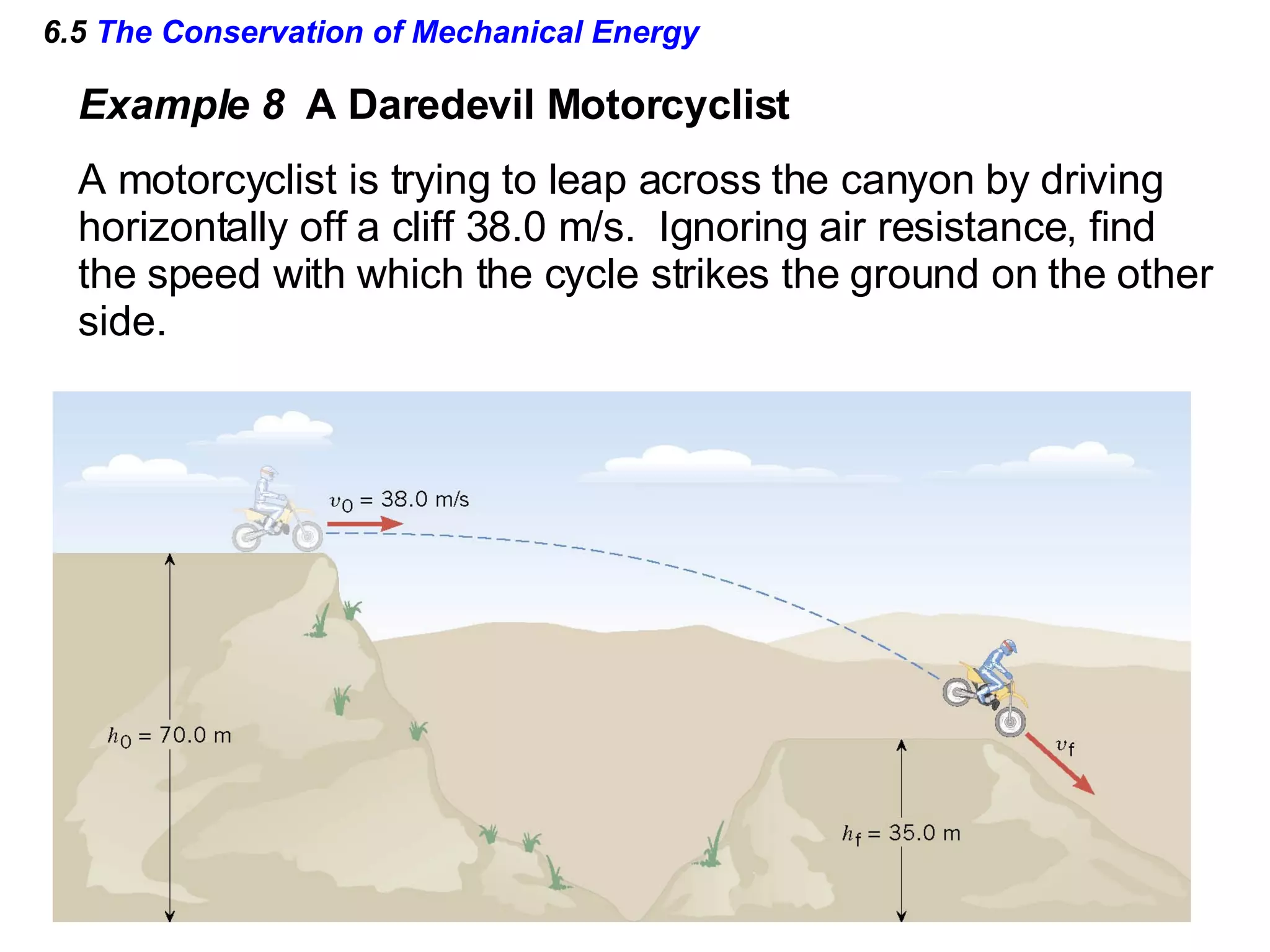
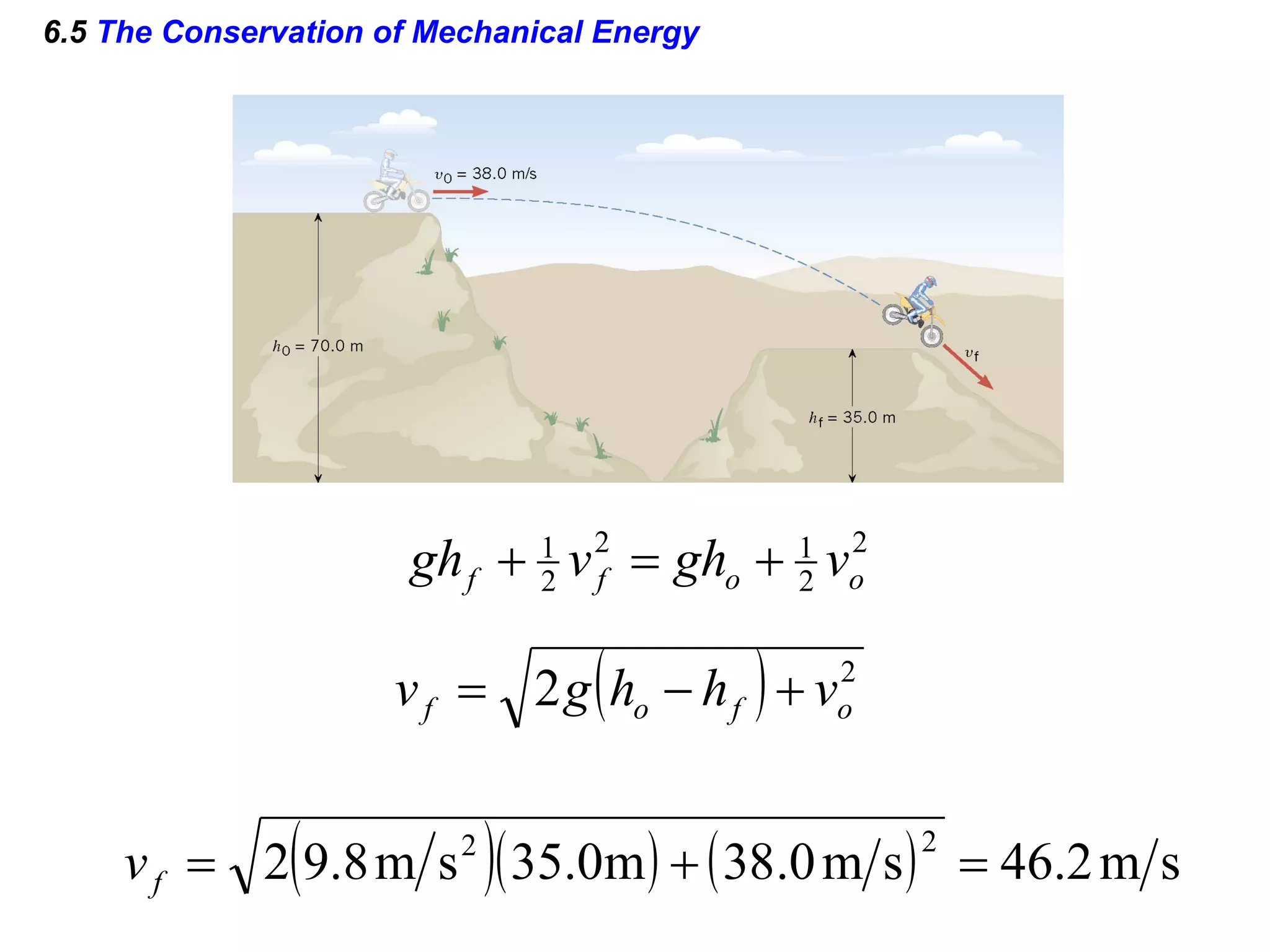
6.5 TheConservation of Mechanical Energy Example 8 A Daredevil Motorcyclist A motorcyclist is trying to leap across the canyon by driving horizontally off a cliff 38.0 m/s. Ignoring air resistance, find the speed with which the cycle strikes the ground on the other side.
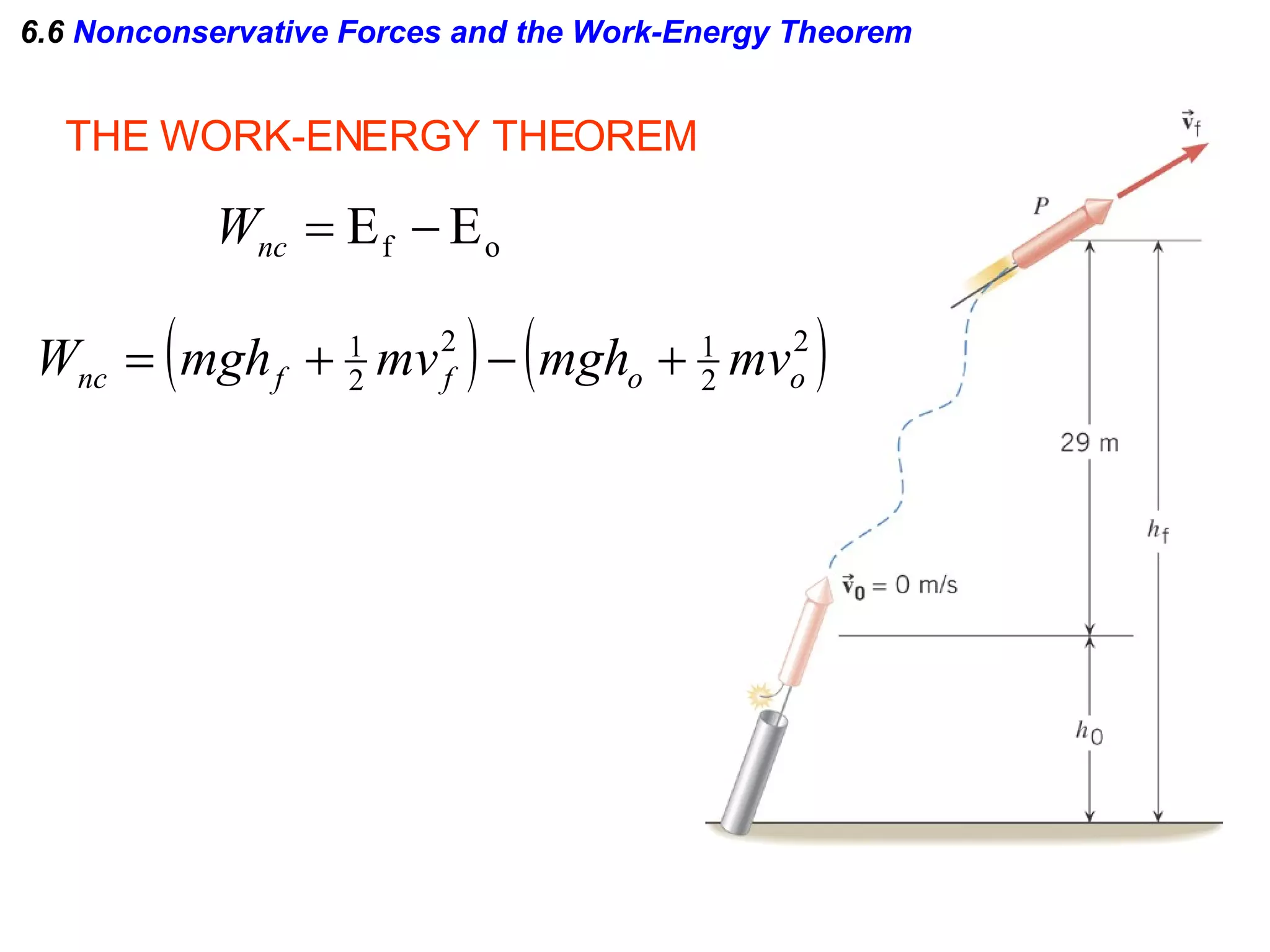
6.6 NonconservativeForces and the Work-Energy Theorem THE WORK-ENERGY THEOREM
27.
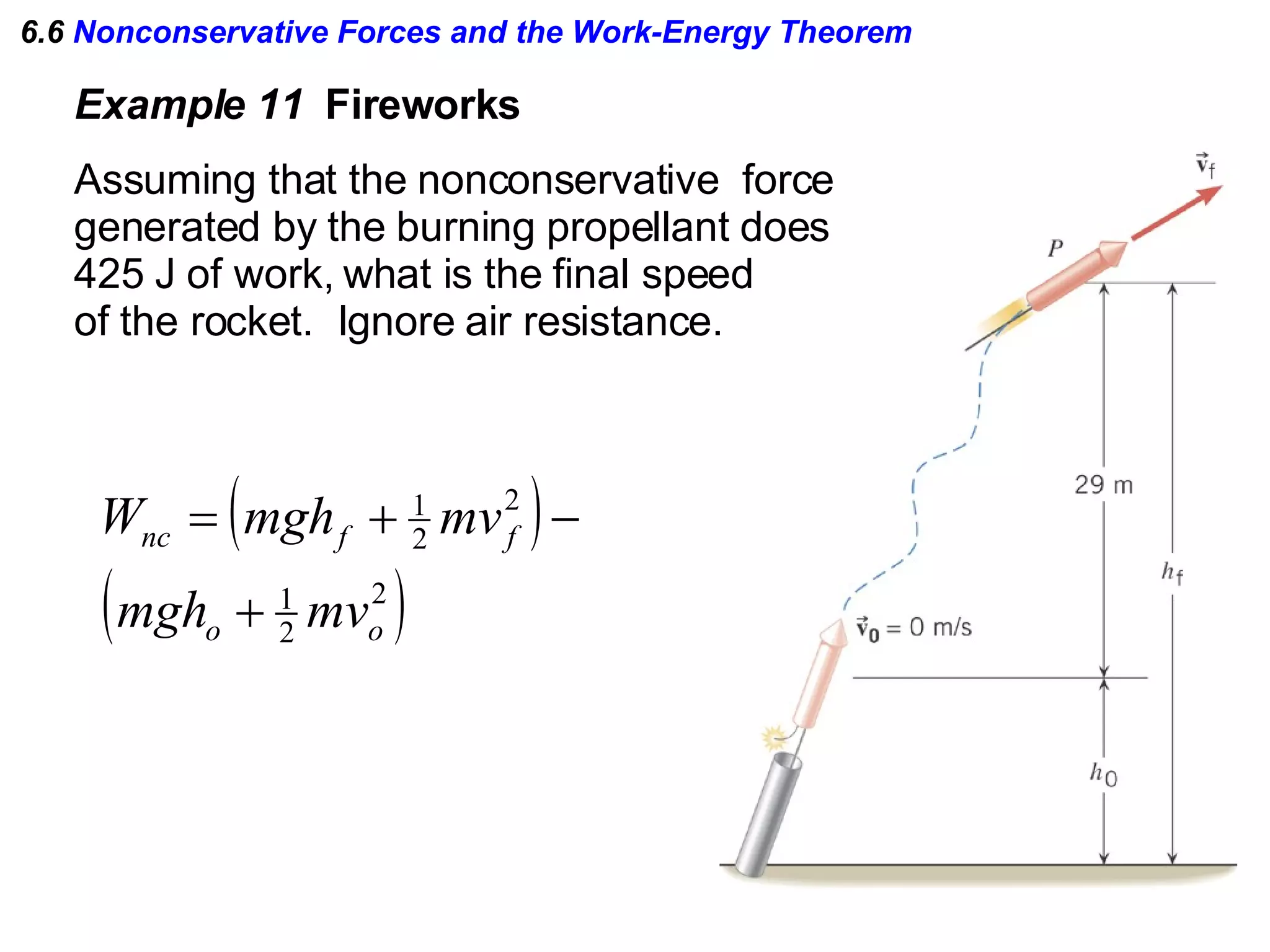
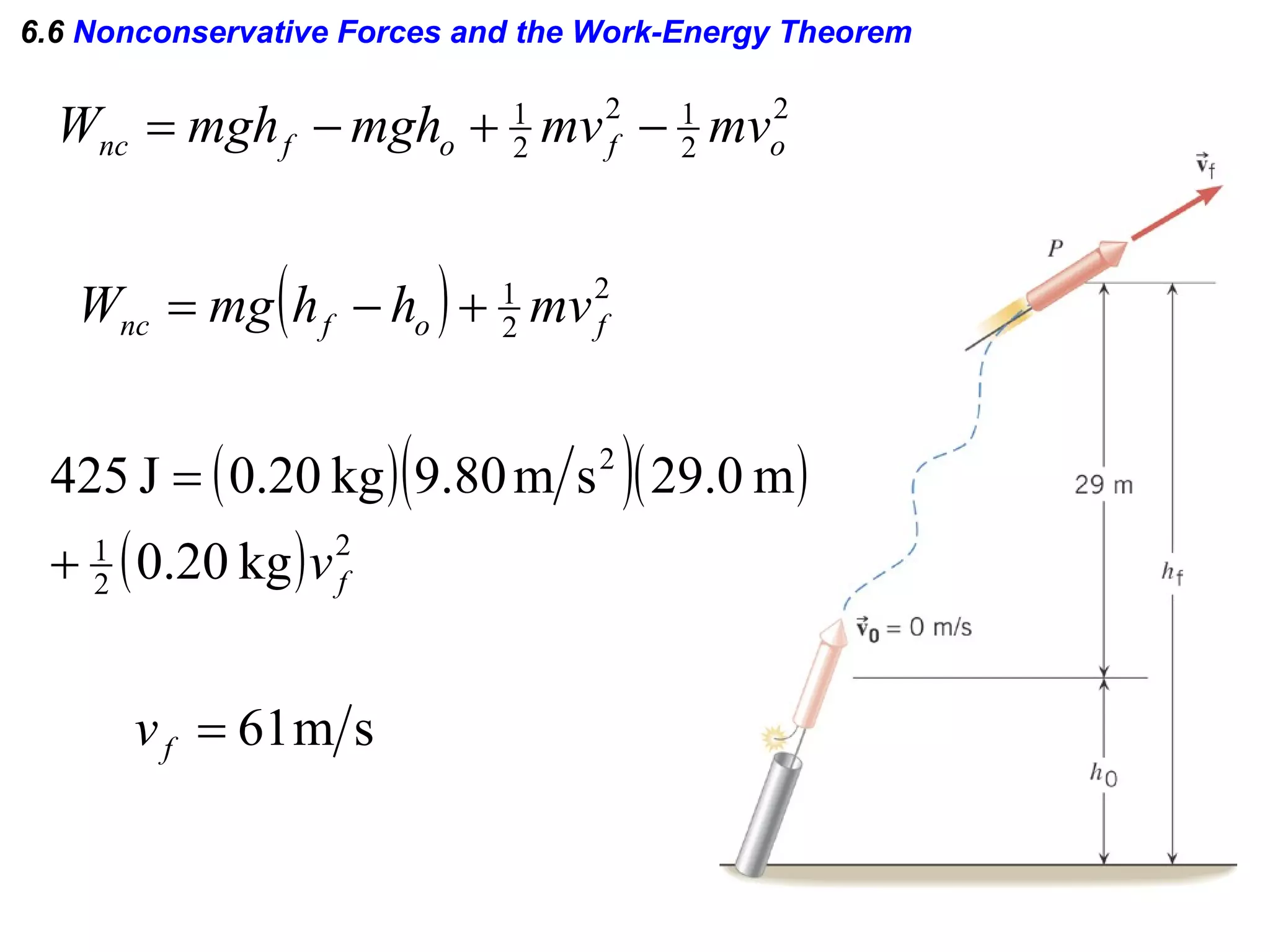
6.6 NonconservativeForces and the Work-Energy Theorem Example 11 Fireworks Assuming that the nonconservative force generated by the burning propellant does 425 J of work, what is the final speed of the rocket. Ignore air resistance.
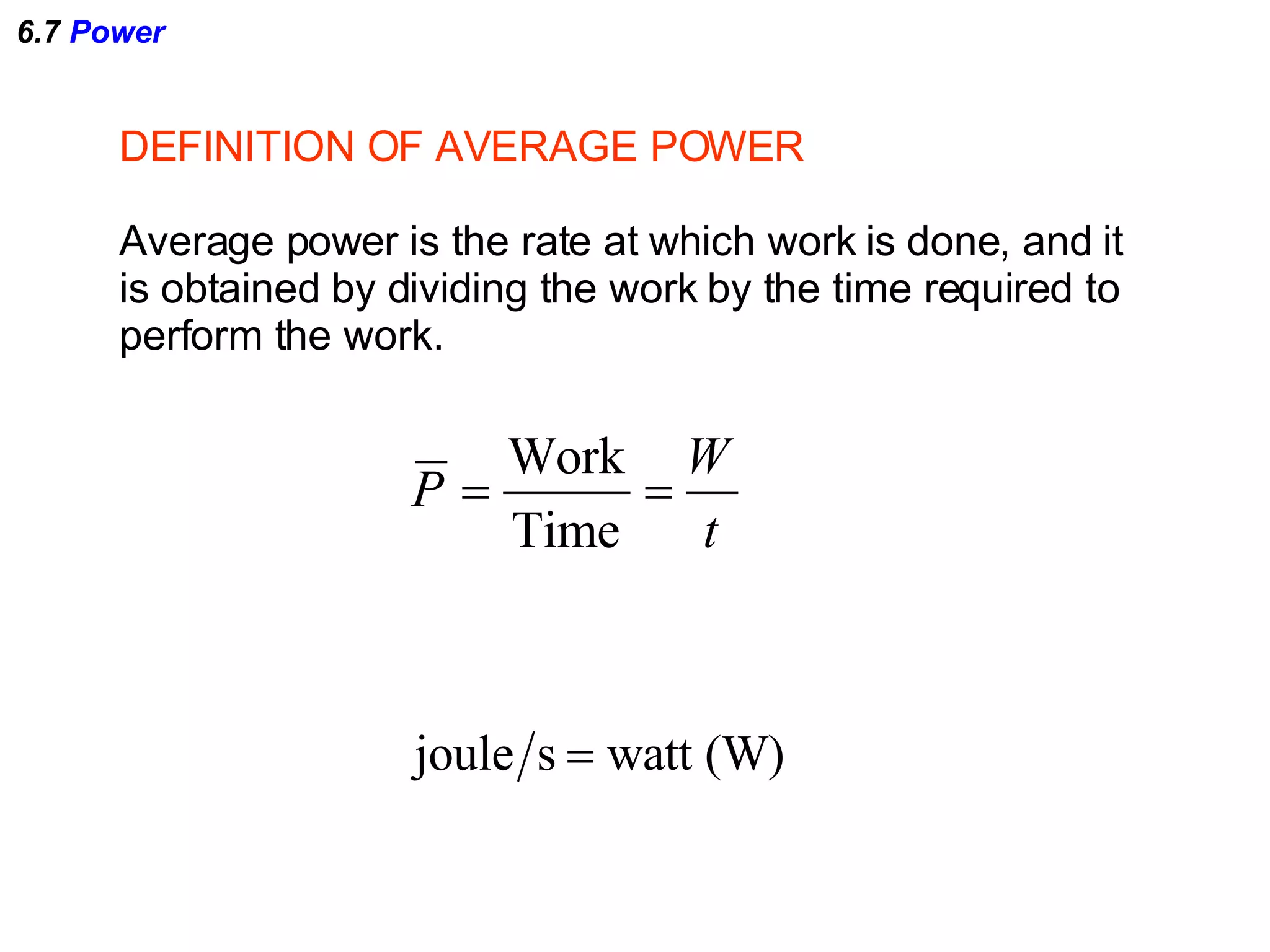
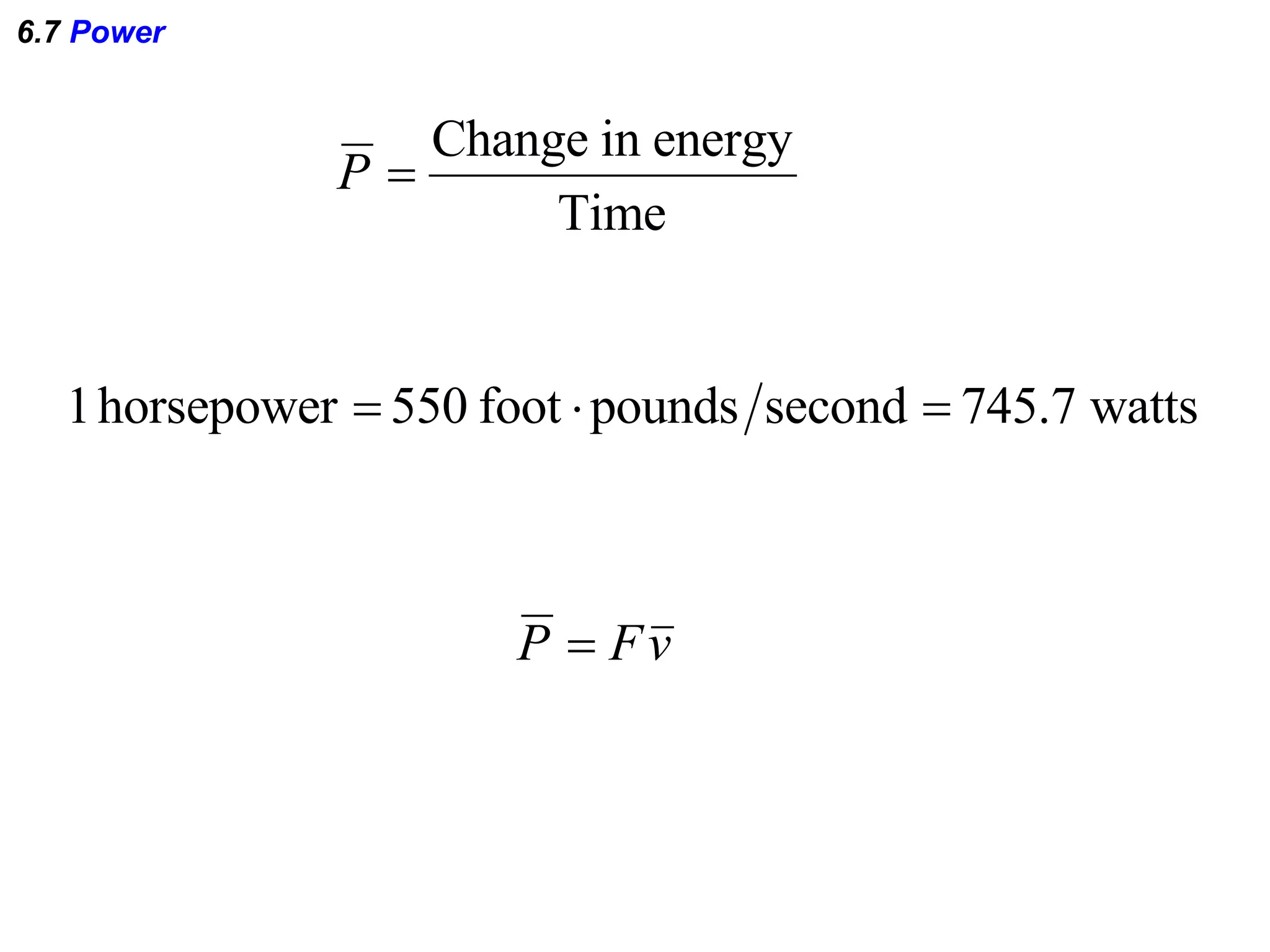
6.7 PowerDEFINITION OF AVERAGE POWER Average power is the rate at which work is done, and it is obtained by dividing the work by the time required to perform the work.
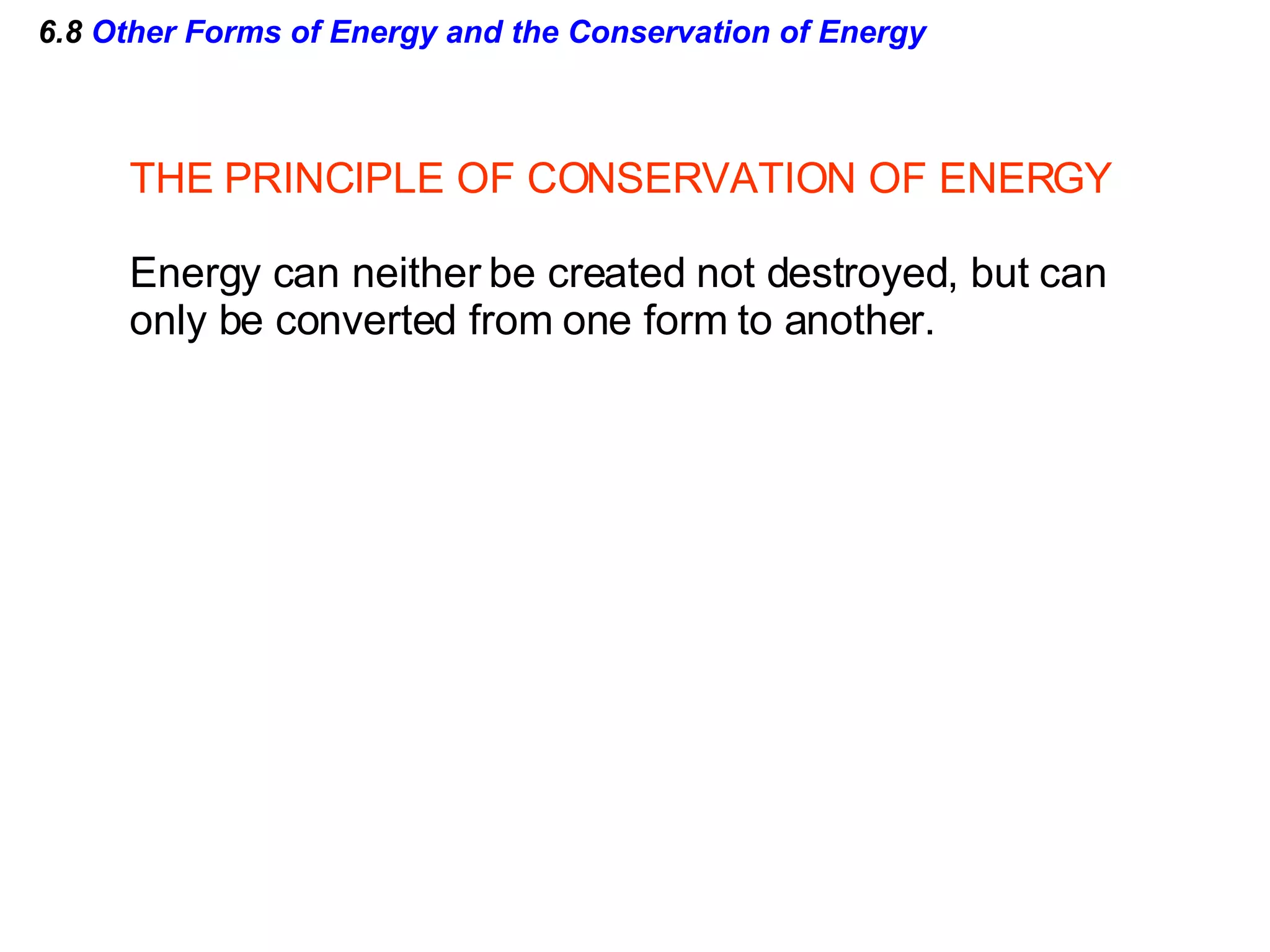
6.8 OtherForms of Energy and the Conservation of Energy THE PRINCIPLE OF CONSERVATION OF ENERGY Energy can neither be created not destroyed, but can only be converted from one form to another.



![Work and Energy.pptx [repaired]](https://cdn.slidesharecdn.com/ss_thumbnails/workandenergy-170708073752-thumbnail.jpg?width=640&height=640&fit=bounds)


