Business models for open data Jonathan Raper CEO, Placr
Building open data business models Understand the economic fundamentals Define the value-add Get access Build right partnerships Develop services Package & price Examples?
Economic fundamentals Open data has no scarcity Everyone can get it: what gives you an advantage? Sale properties determined by licensing terms Differences between OGL, CC-BY and public domain Distribution dependent on release platform Static= download; dynamic data needs a platform Authority of data depends on creator validation Does the owner ‘kitemark’ the data? Data creator set policies so you need to lobby them Business development in politics…
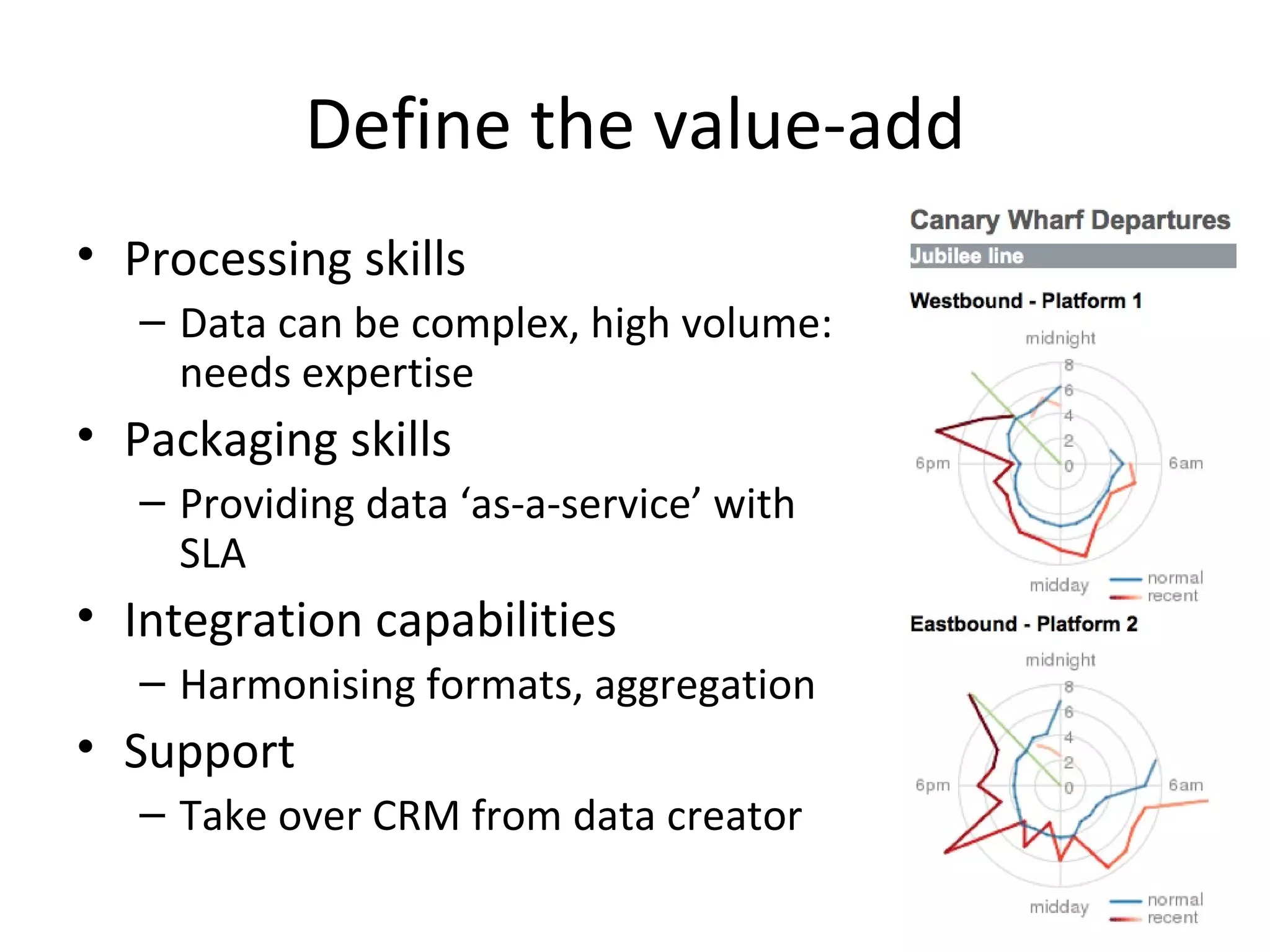
Define the value-add Processing skills Data can be complex, high volume: needs expertise Packaging skills Providing data ‘as-a-service’ with SLA Integration capabilities Harmonising formats, aggregation Support Take over CRM from data creator
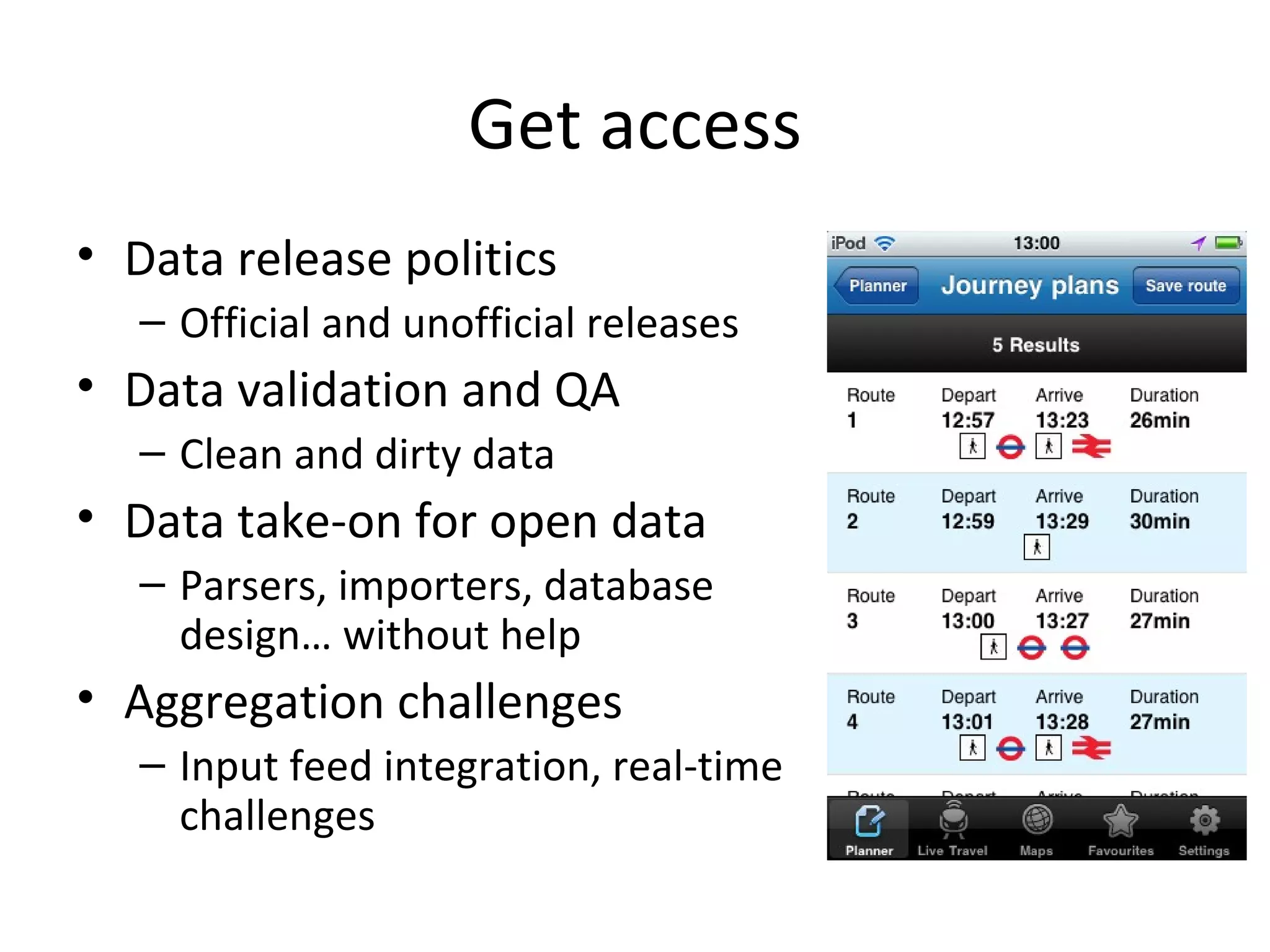
Get access Data release politics Official and unofficial releases Data validation and QA Clean and dirty data Data take-on for open data Parsers, importers, database design… without help Aggregation challenges Input feed integration, real-time challenges
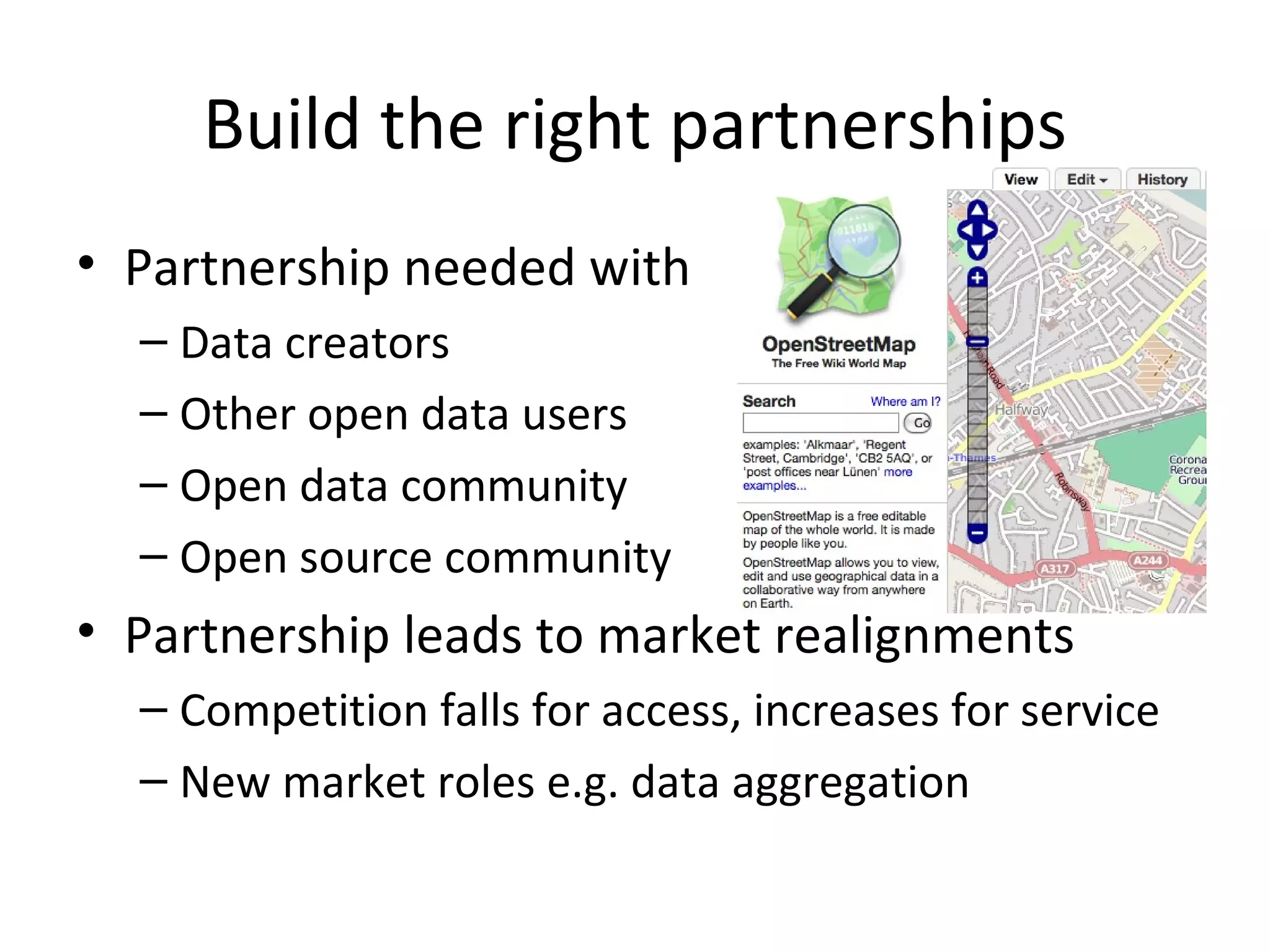
Build the right partnerships Partnership needed with Data creators Other open data users Open data community Open source community Partnership leads to market realignments Competition falls for access, increases for service New market roles e.g. data aggregation
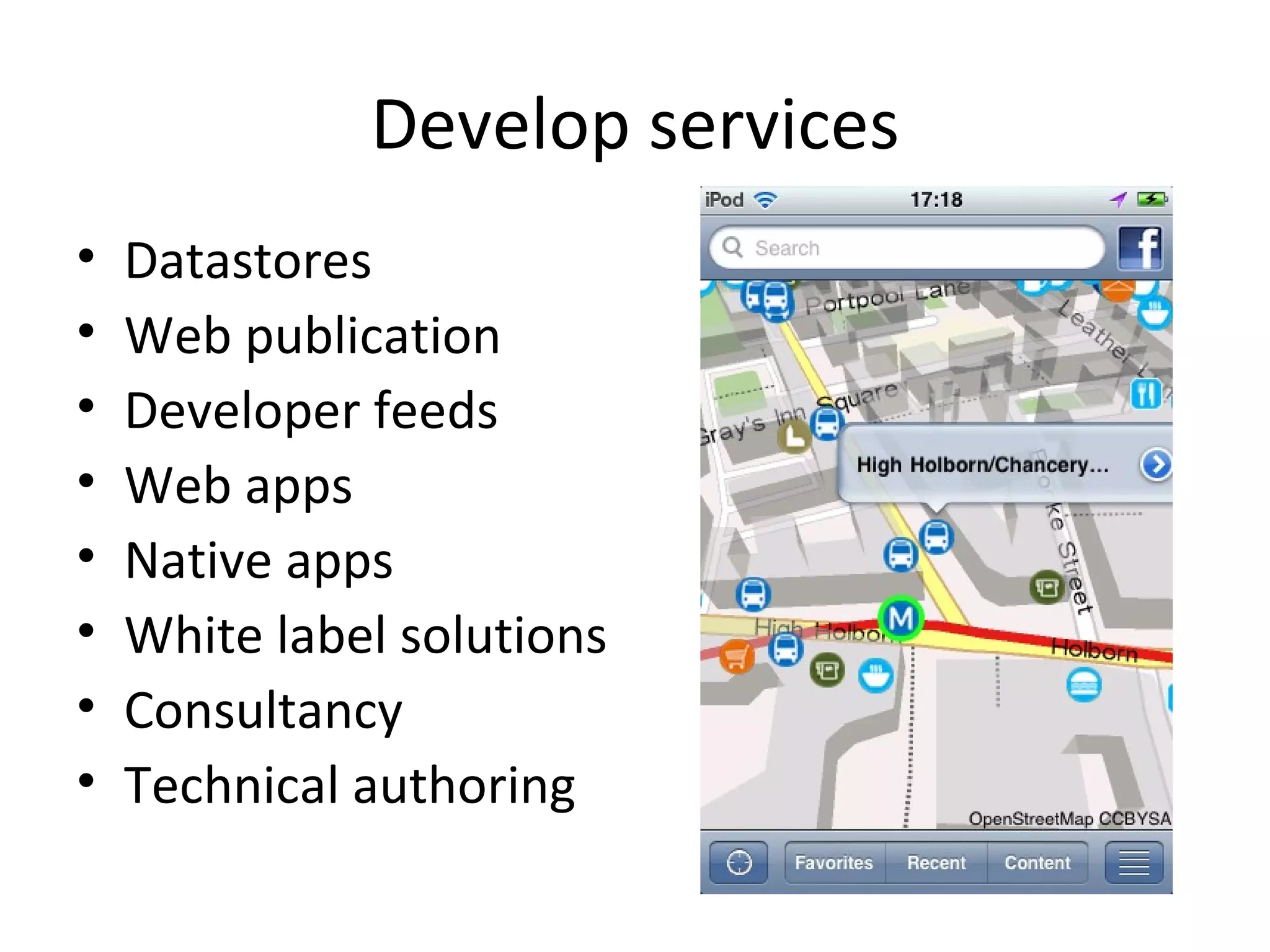
Develop services Datastores Web publication Developer feeds Web apps Native apps White label solutions Consultancy Technical authoring
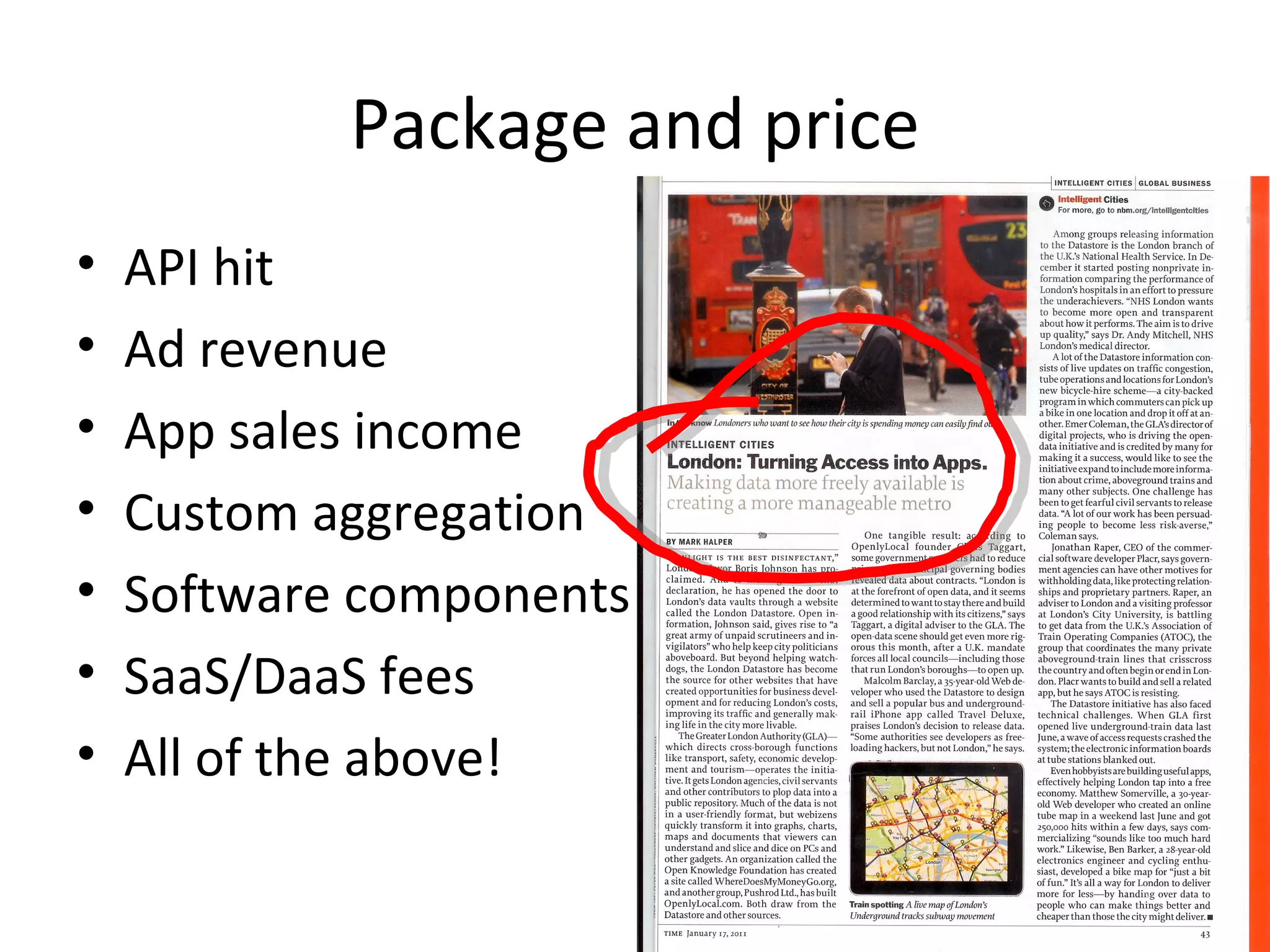
Package and price API hit Ad revenue App sales income Custom aggregation Software components SaaS/DaaS fees All of the above!
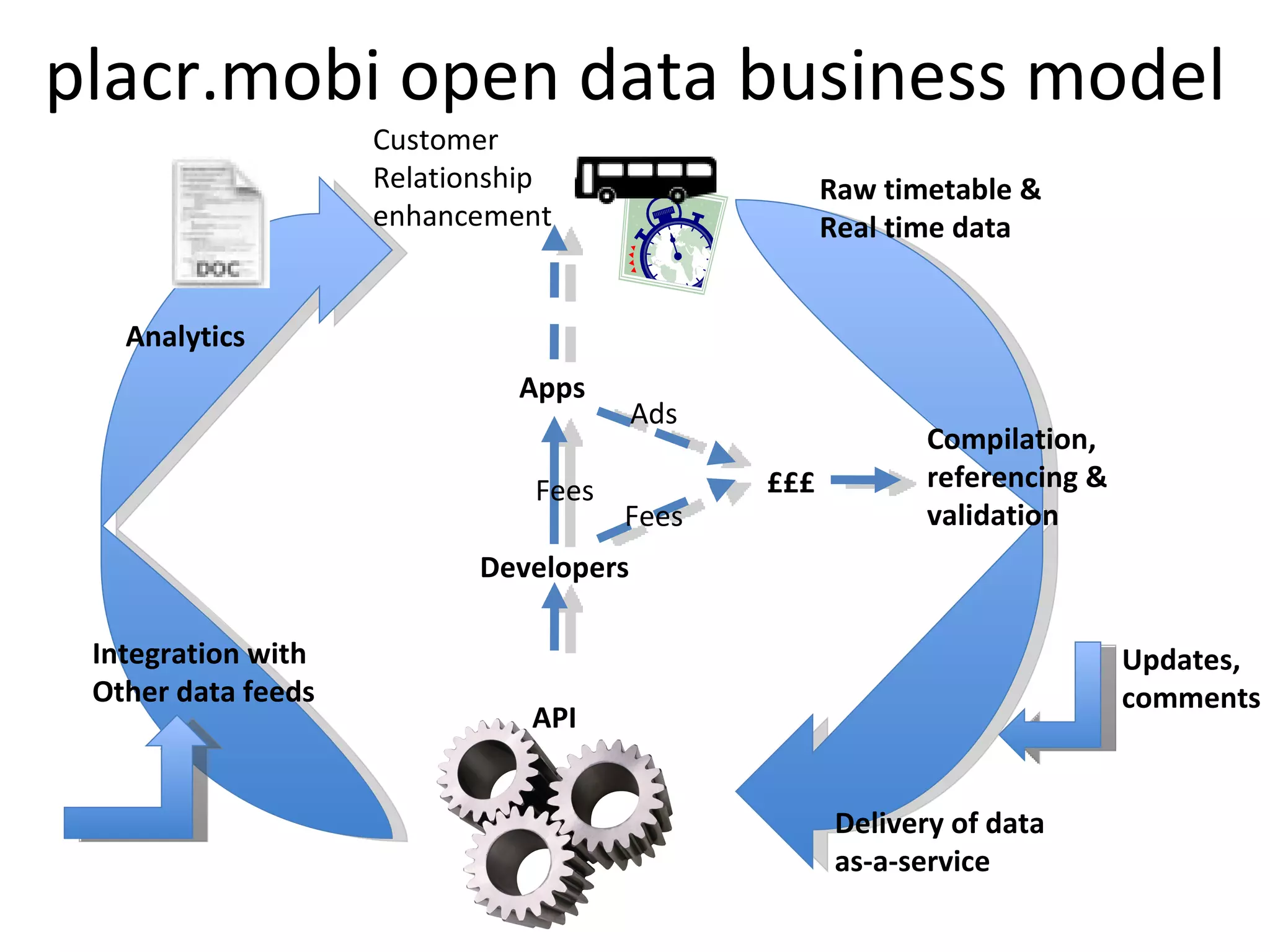
placr.mobi open data business model Fees Analytics Integration with Other data feeds API Apps £££ Developers Ads Fees Customer Relationship enhancement Compilation, referencing & validation Delivery of data as-a-service Raw timetable & Real time data Updates, comments
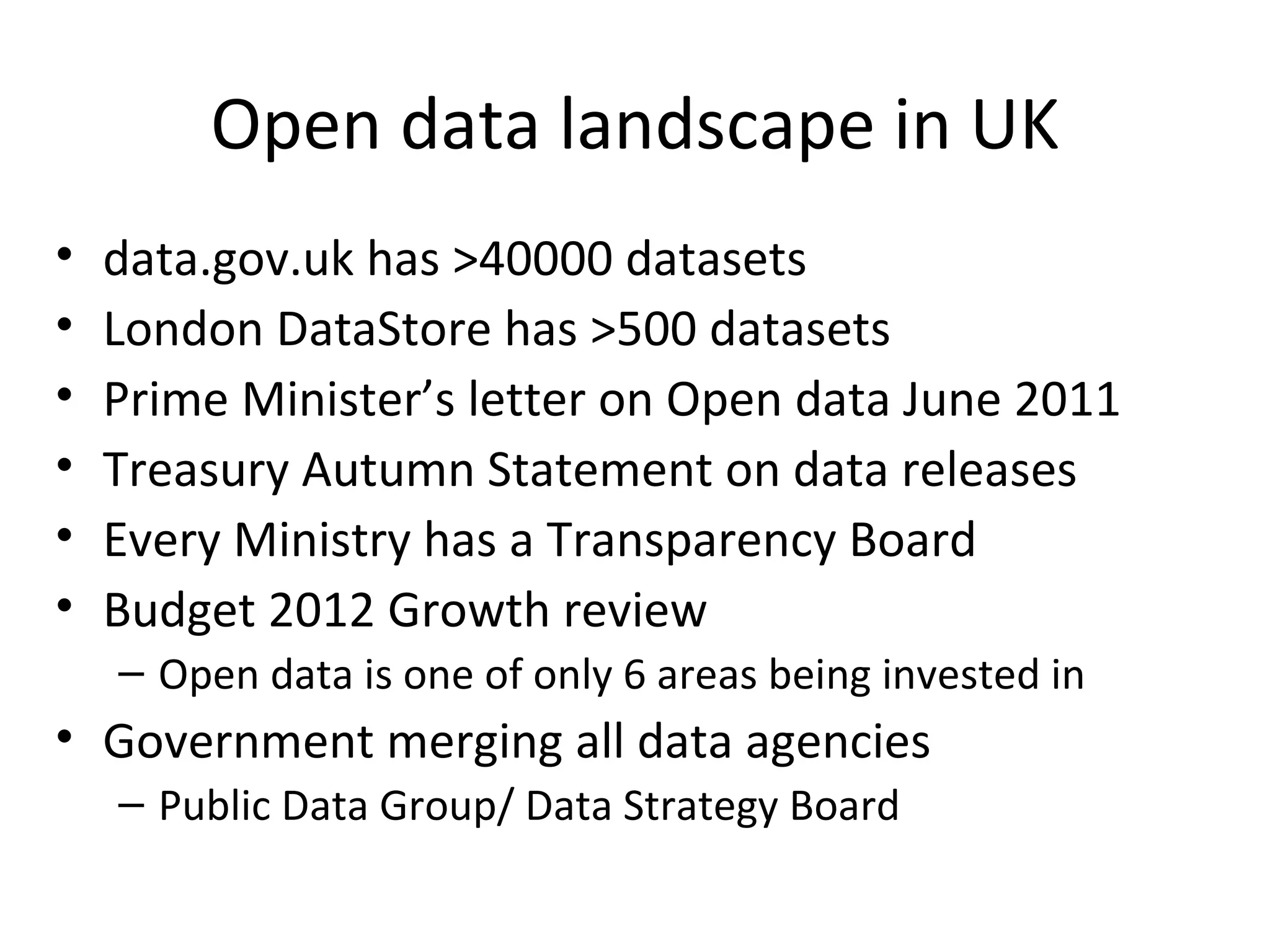
Open data landscape in UK data.gov.uk has >40000 datasets London DataStore has >500 datasets Prime Minister’s letter on Open data June 2011 Treasury Autumn Statement on data releases Every Ministry has a Transparency Board Budget 2012 Growth review Open data is one of only 6 areas being invested in Government merging all data agencies Public Data Group/ Data Strategy Board
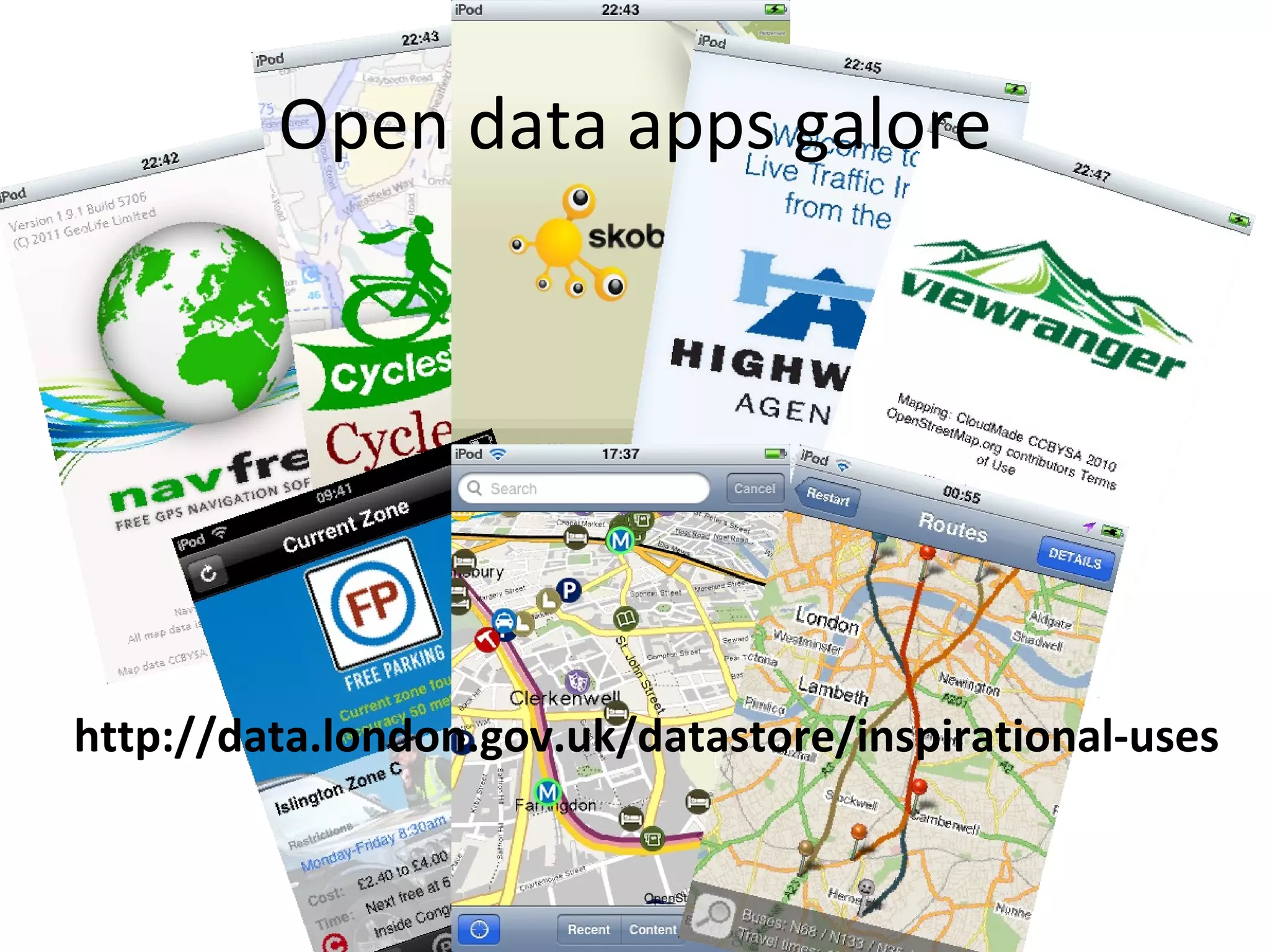
Open data apps galore http://data.london.gov.uk/datastore/inspirational-uses
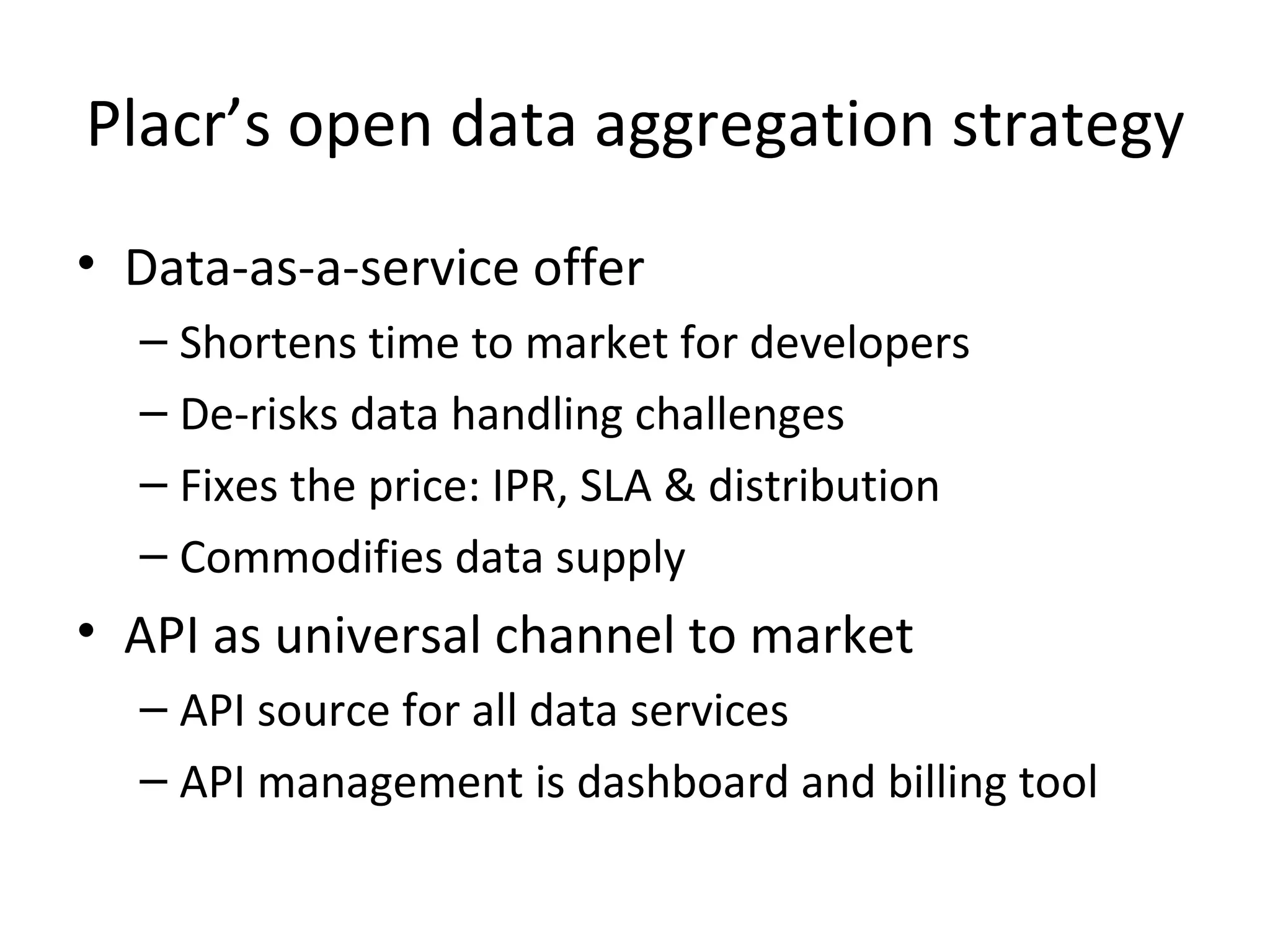
Placr’s open data aggregation strategy Data-as-a-service offer Shortens time to market for developers De-risks data handling challenges Fixes the price: IPR, SLA & distribution Commodifies data supply API as universal channel to market API source for all data services API management is dashboard and billing tool
Contact http://www.placr.co.uk/ [email_address] @madprof http://www.slideshare.net/madprof

Irish Software Association/ Open Data Bisiness Models

  • 1.
    Business models foropen data Jonathan Raper CEO, Placr
  • 2.
    Building open databusiness models Understand the economic fundamentals Define the value-add Get access Build right partnerships Develop services Package & price Examples?
  • 3.
    Economic fundamentals Opendata has no scarcity Everyone can get it: what gives you an advantage? Sale properties determined by licensing terms Differences between OGL, CC-BY and public domain Distribution dependent on release platform Static= download; dynamic data needs a platform Authority of data depends on creator validation Does the owner ‘kitemark’ the data? Data creator set policies so you need to lobby them Business development in politics…
  • 4.
    Define the value-addProcessing skills Data can be complex, high volume: needs expertise Packaging skills Providing data ‘as-a-service’ with SLA Integration capabilities Harmonising formats, aggregation Support Take over CRM from data creator
  • 5.
    Get access Datarelease politics Official and unofficial releases Data validation and QA Clean and dirty data Data take-on for open data Parsers, importers, database design… without help Aggregation challenges Input feed integration, real-time challenges
  • 6.
    Build the rightpartnerships Partnership needed with Data creators Other open data users Open data community Open source community Partnership leads to market realignments Competition falls for access, increases for service New market roles e.g. data aggregation
  • 7.
    Develop services DatastoresWeb publication Developer feeds Web apps Native apps White label solutions Consultancy Technical authoring
  • 8.
    Package and priceAPI hit Ad revenue App sales income Custom aggregation Software components SaaS/DaaS fees All of the above!
  • 9.
    placr.mobi open databusiness model Fees Analytics Integration with Other data feeds API Apps £££ Developers Ads Fees Customer Relationship enhancement Compilation, referencing & validation Delivery of data as-a-service Raw timetable & Real time data Updates, comments
  • 10.
    Open data landscapein UK data.gov.uk has >40000 datasets London DataStore has >500 datasets Prime Minister’s letter on Open data June 2011 Treasury Autumn Statement on data releases Every Ministry has a Transparency Board Budget 2012 Growth review Open data is one of only 6 areas being invested in Government merging all data agencies Public Data Group/ Data Strategy Board
  • 11.
    Open data appsgalore http://data.london.gov.uk/datastore/inspirational-uses
  • 12.
    Placr’s open dataaggregation strategy Data-as-a-service offer Shortens time to market for developers De-risks data handling challenges Fixes the price: IPR, SLA & distribution Commodifies data supply API as universal channel to market API source for all data services API management is dashboard and billing tool
  • 13.
    Contact http://www.placr.co.uk/ [email_address]@madprof http://www.slideshare.net/madprof