Download as PDF, PPTX



The document discusses Cilium, a networking and security solution for containerized environments utilizing BPF and XDP technologies to optimize networking performance and security. It highlights the challenges of managing networks with millions of endpoints and presents architectural strategies for efficient policy enforcement, task mobility, and address allocation. Key features include global IPv6 addressing, decoupling policy specification from addressing, and extensive runtime capabilities for scalability and extensibility.
Introduction to Cilium as a project focused on networking and security for containers utilizing BPF and XDP.
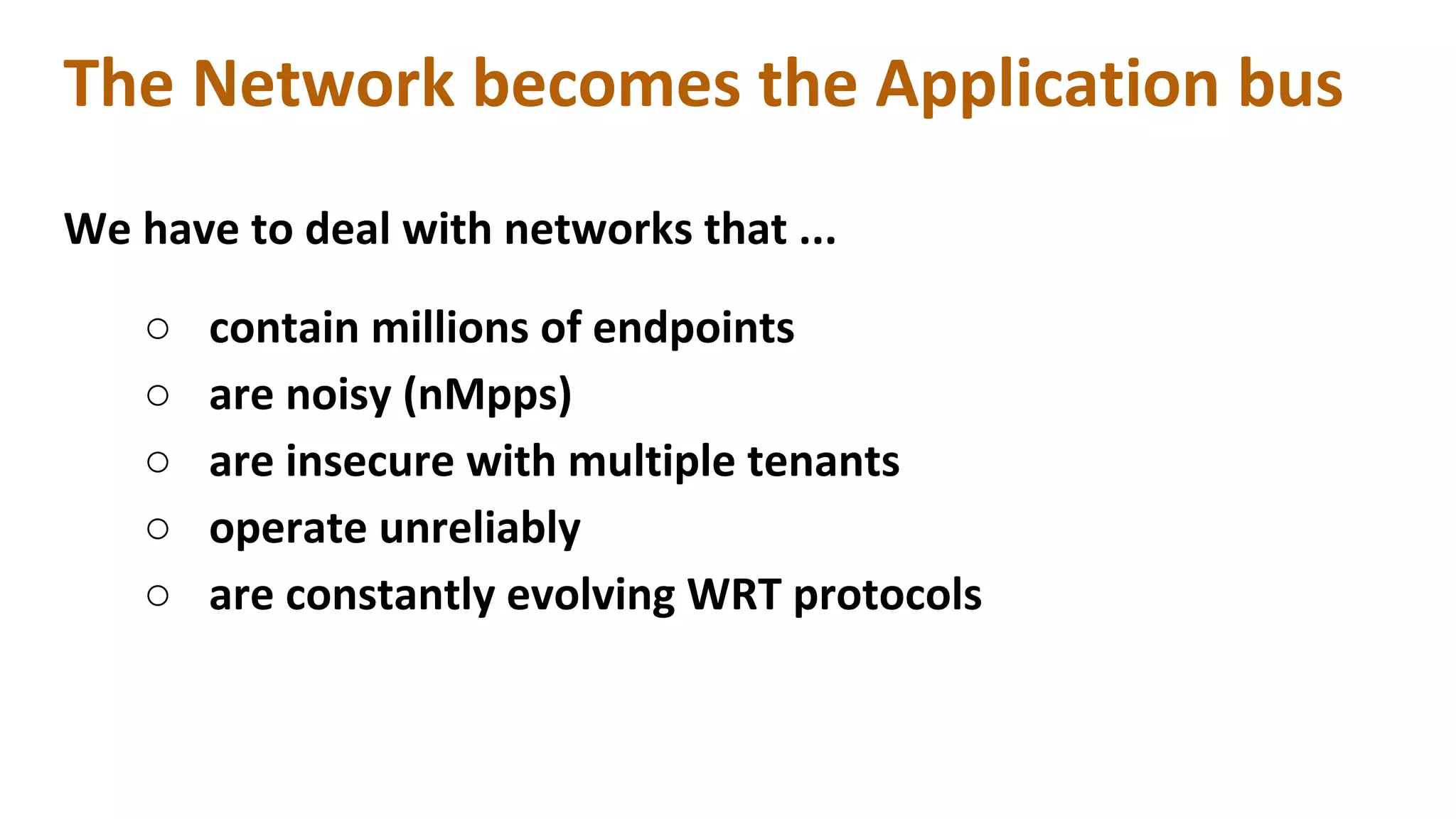
Discusses the challenges faced by networks today, including scalability, security issues, and protocol evolution.
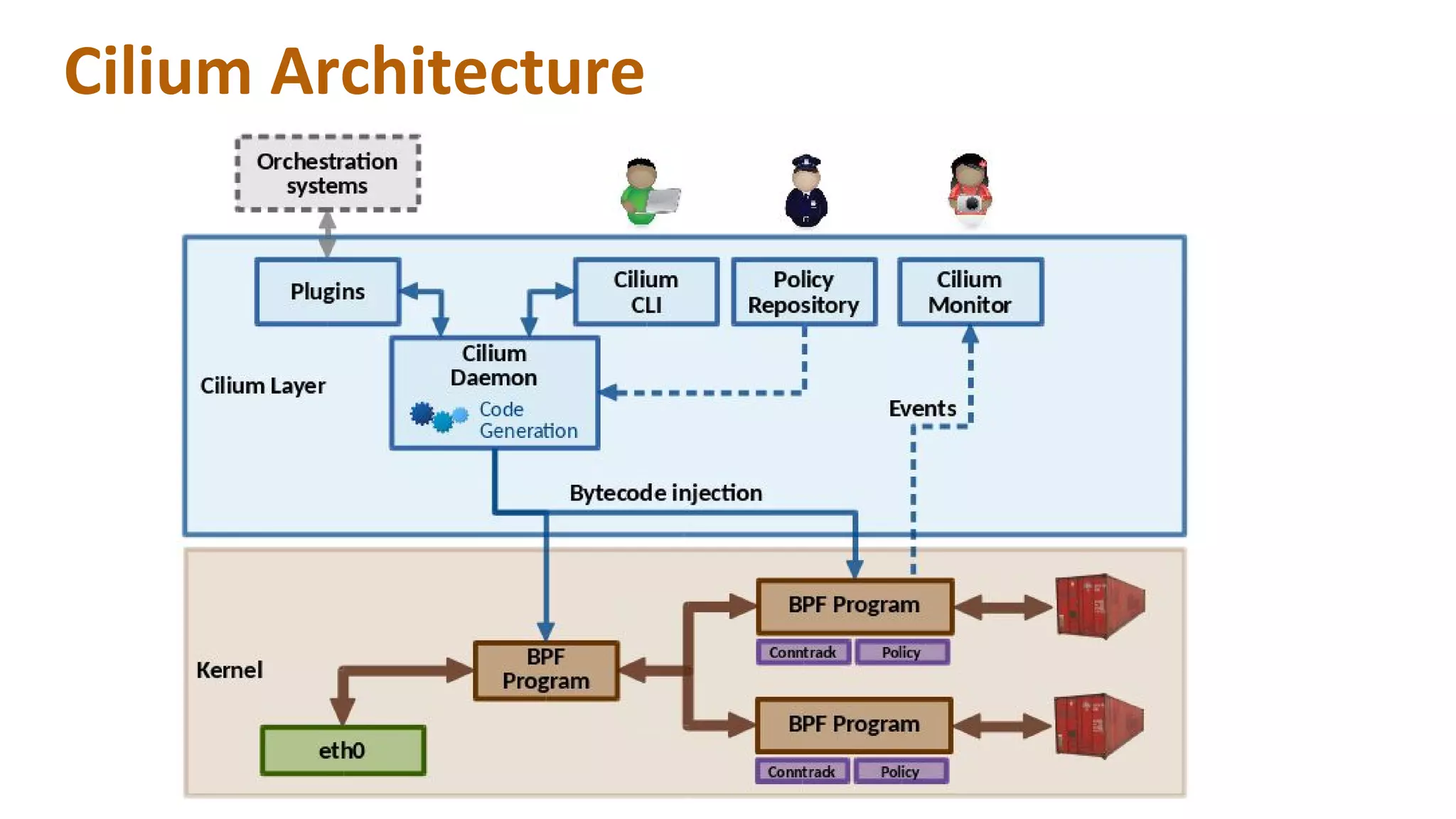
Presentation of Cilium's underlying architecture.
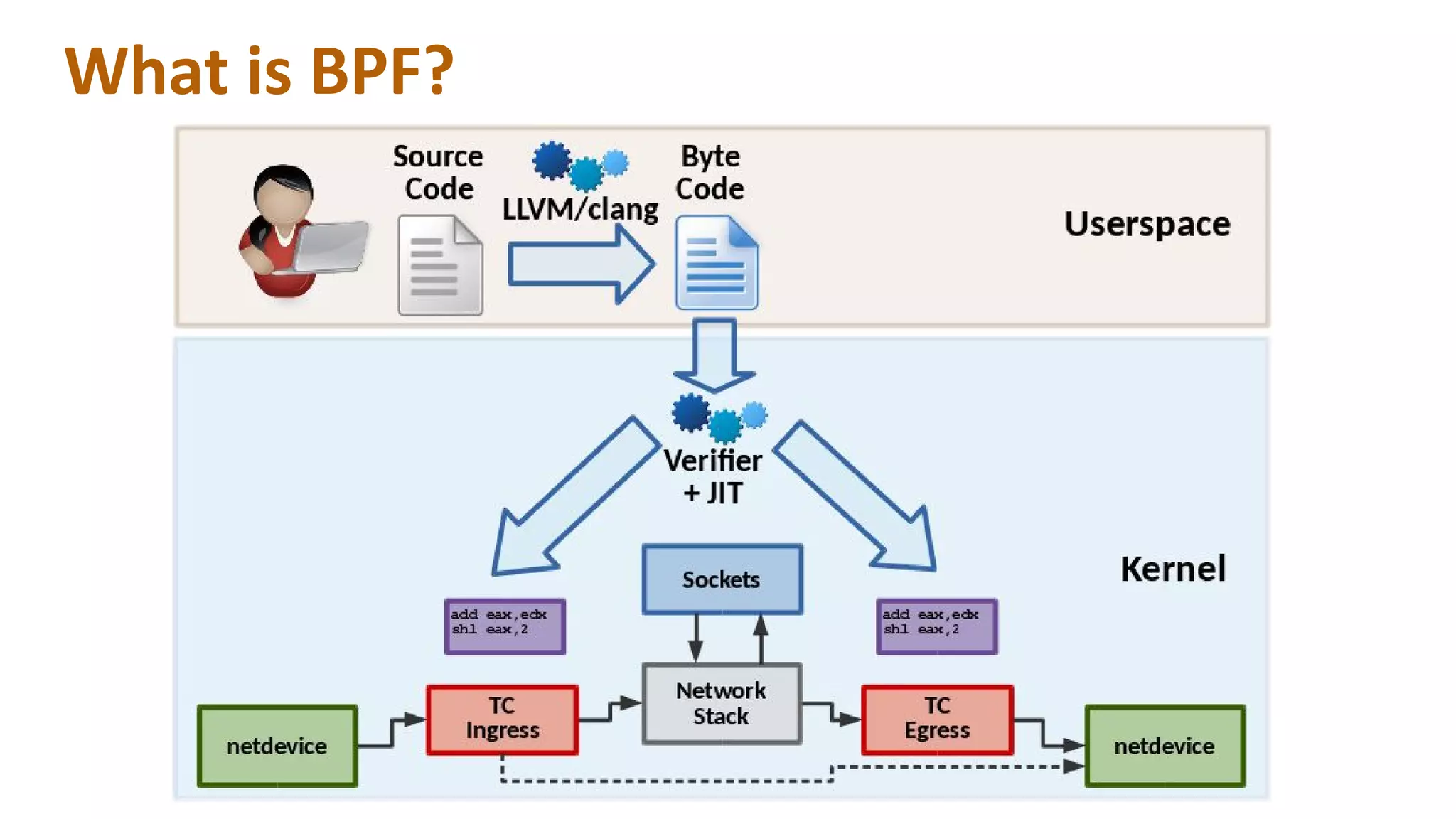
Introduction to BPF (Berkeley Packet Filter) and its role in network performance.
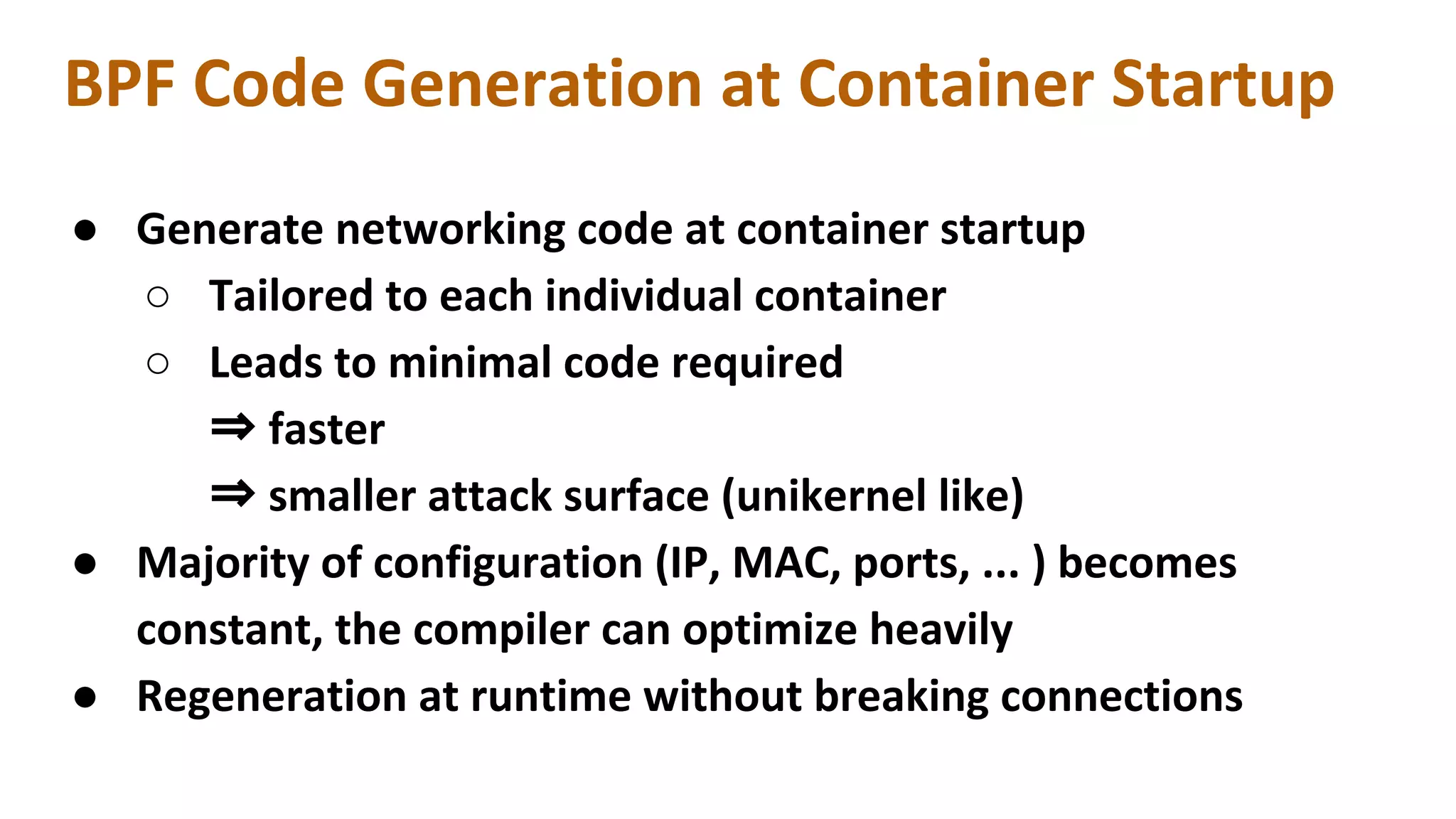
Describes how BPF code is generated at container startup for efficiency and security.
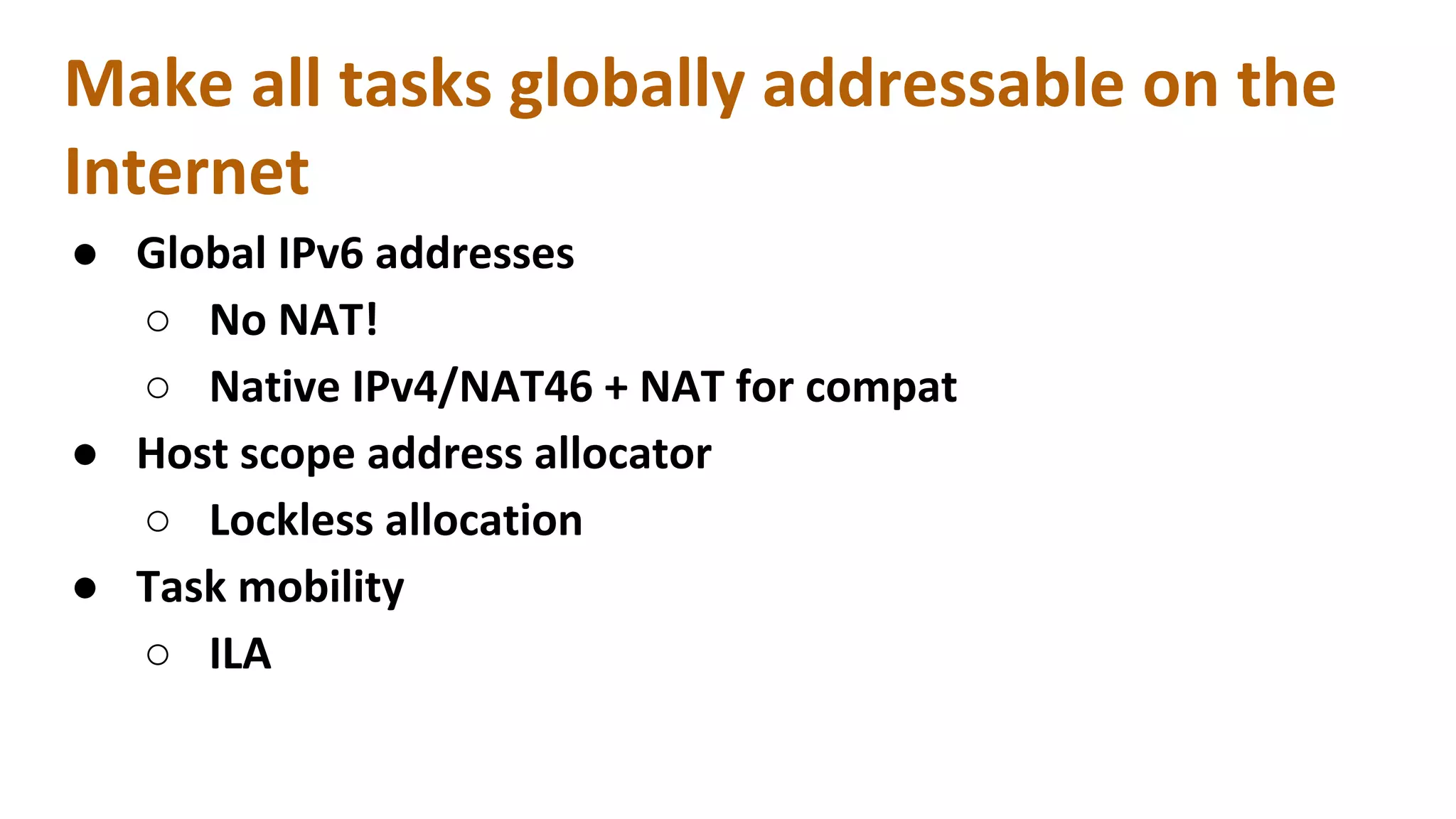
Implementation of global IPv6 addresses to eliminate NAT and enhance task mobility.
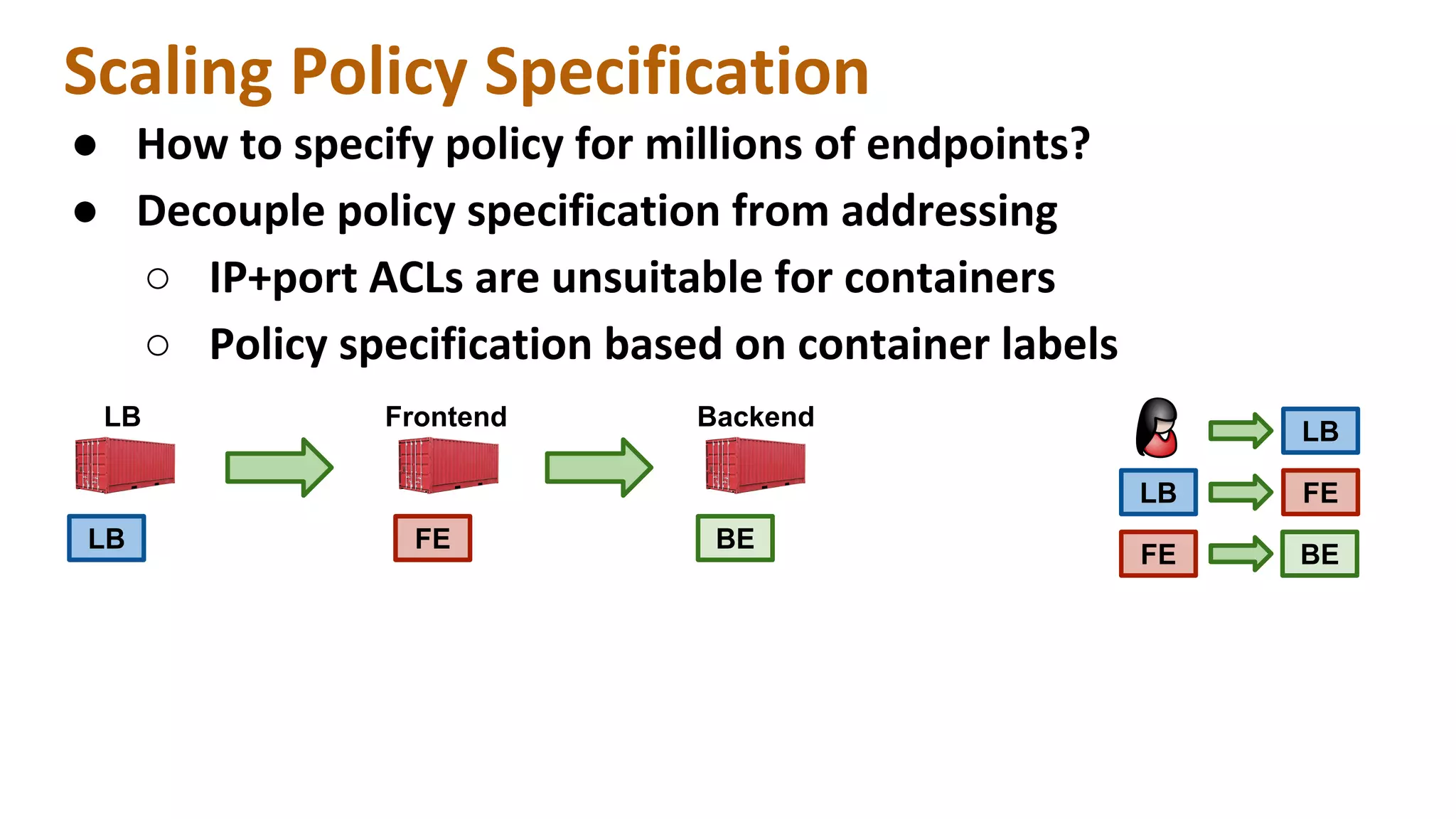
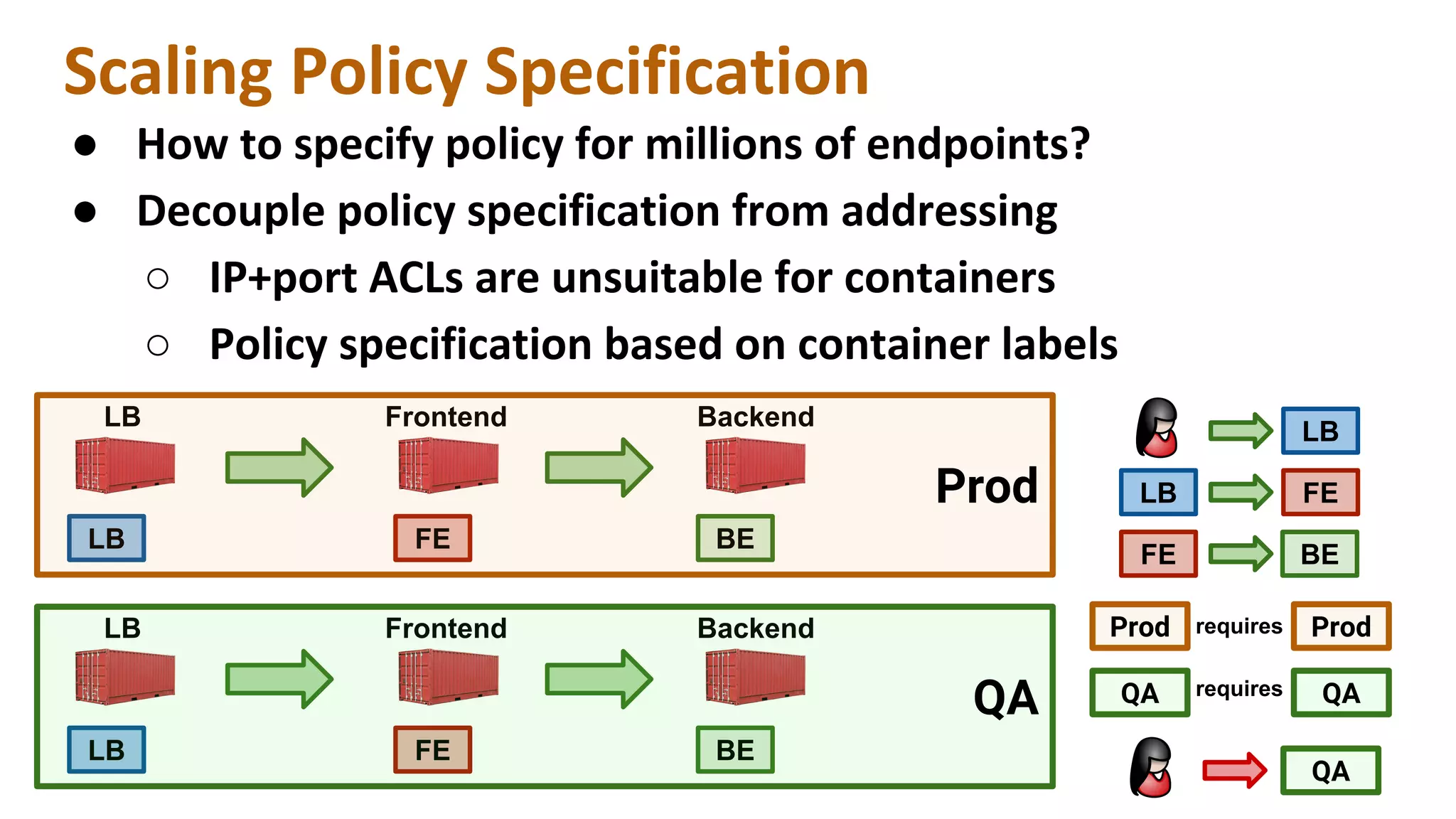
Methods for specifying policies across millions of endpoints using container labels rather than IP and ports.
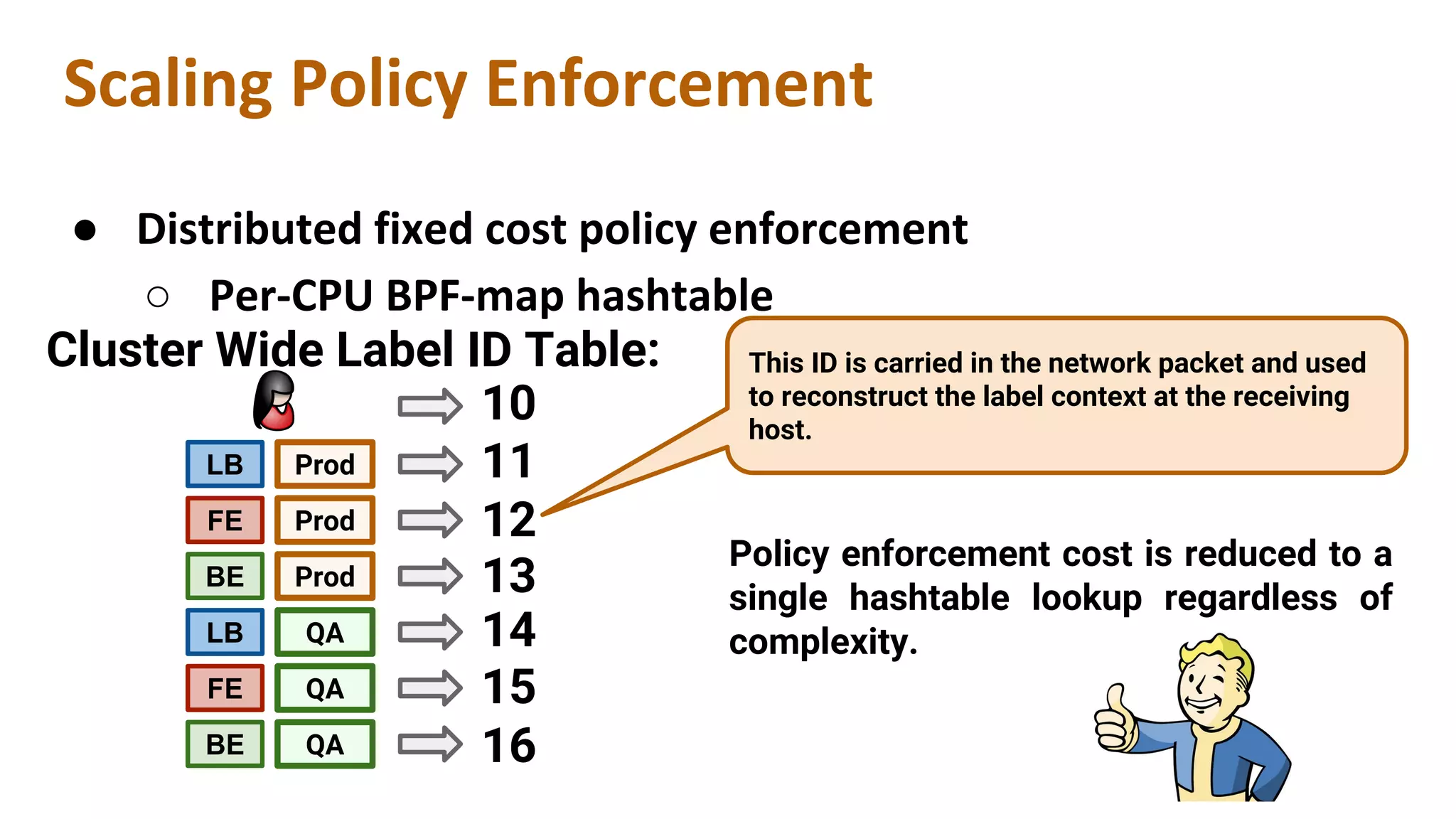
Details on how policy enforcement is executed efficiently using distributed tables.
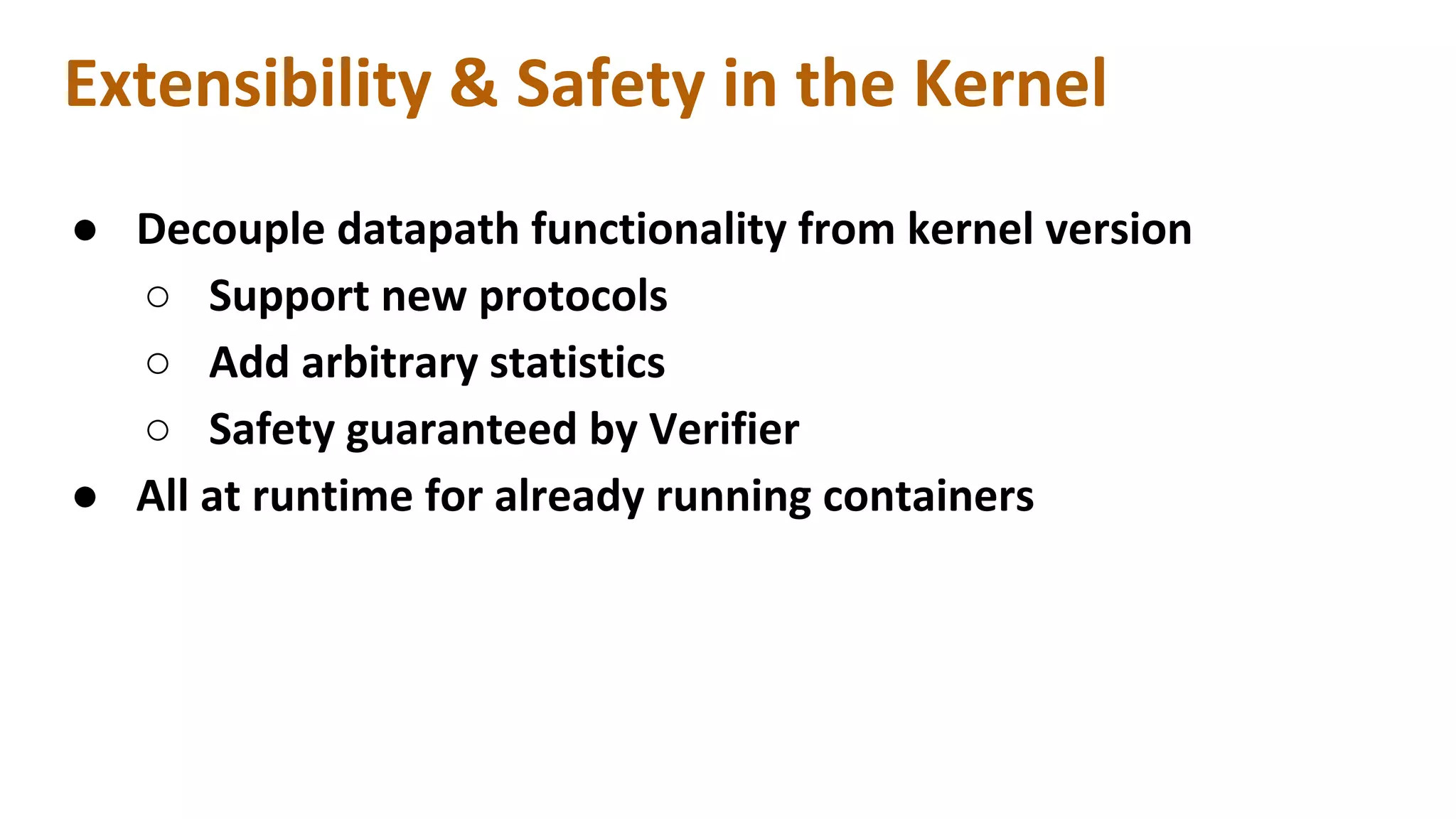
How Cilium ensures extensibility and safety in the kernel while maintaining runtime capability.
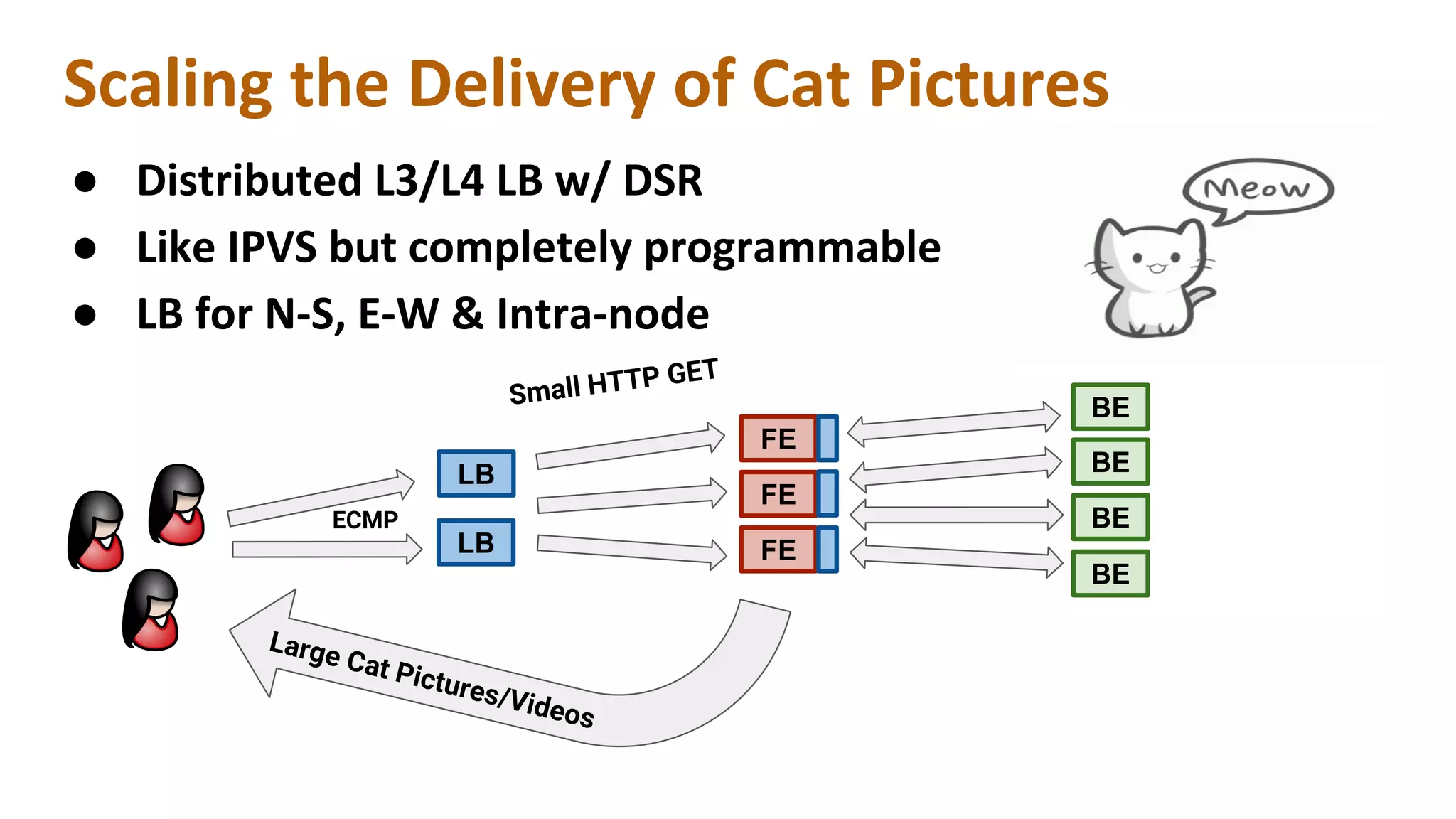
Overview of distributed load balancing for various workloads, including diverse media types.
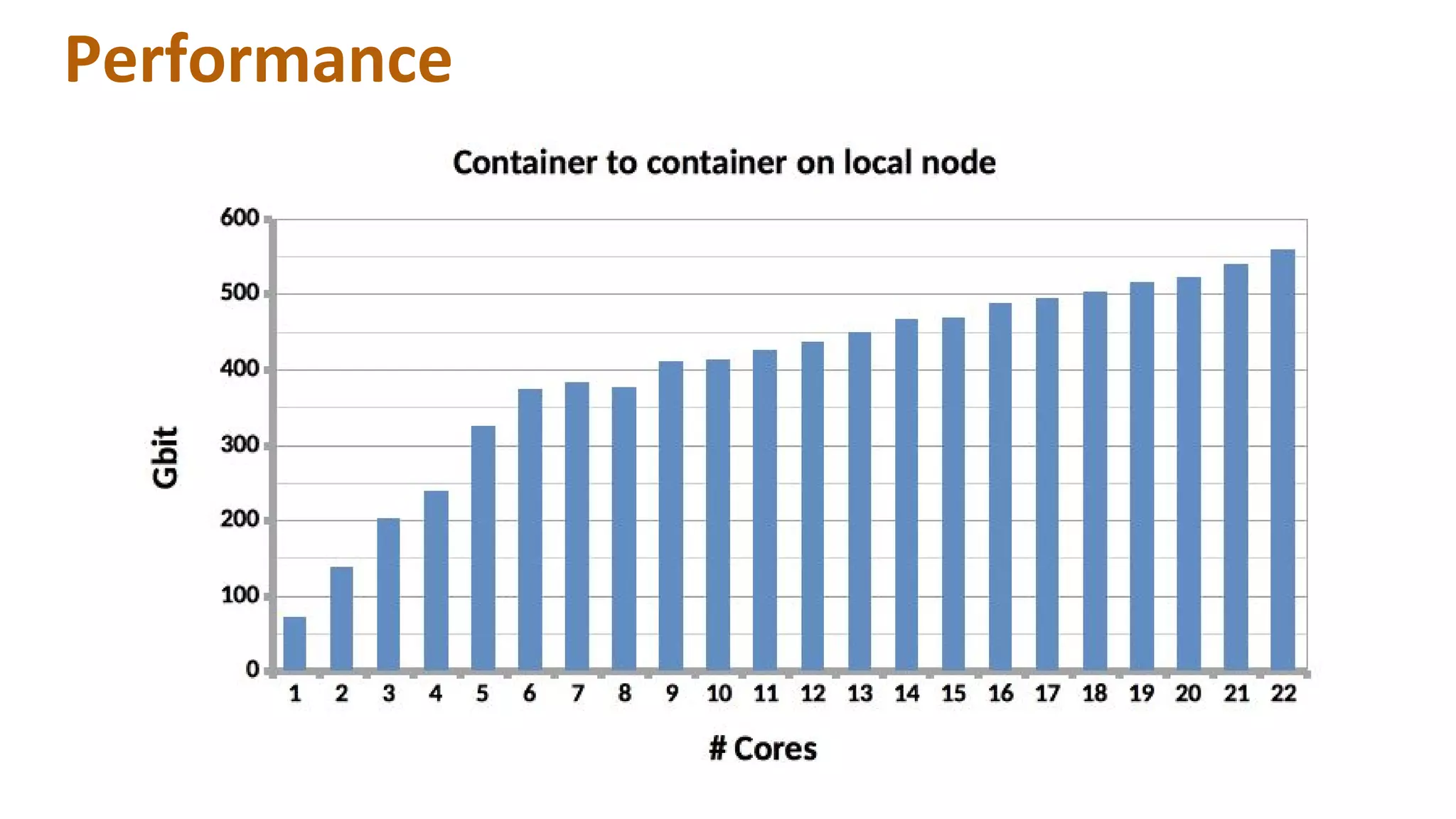
Discussion on the performance metrics of Cilium.
Practical demonstration showcasing the functionalities of Cilium.
Engagement tools and resources for further participation in the Cilium project.
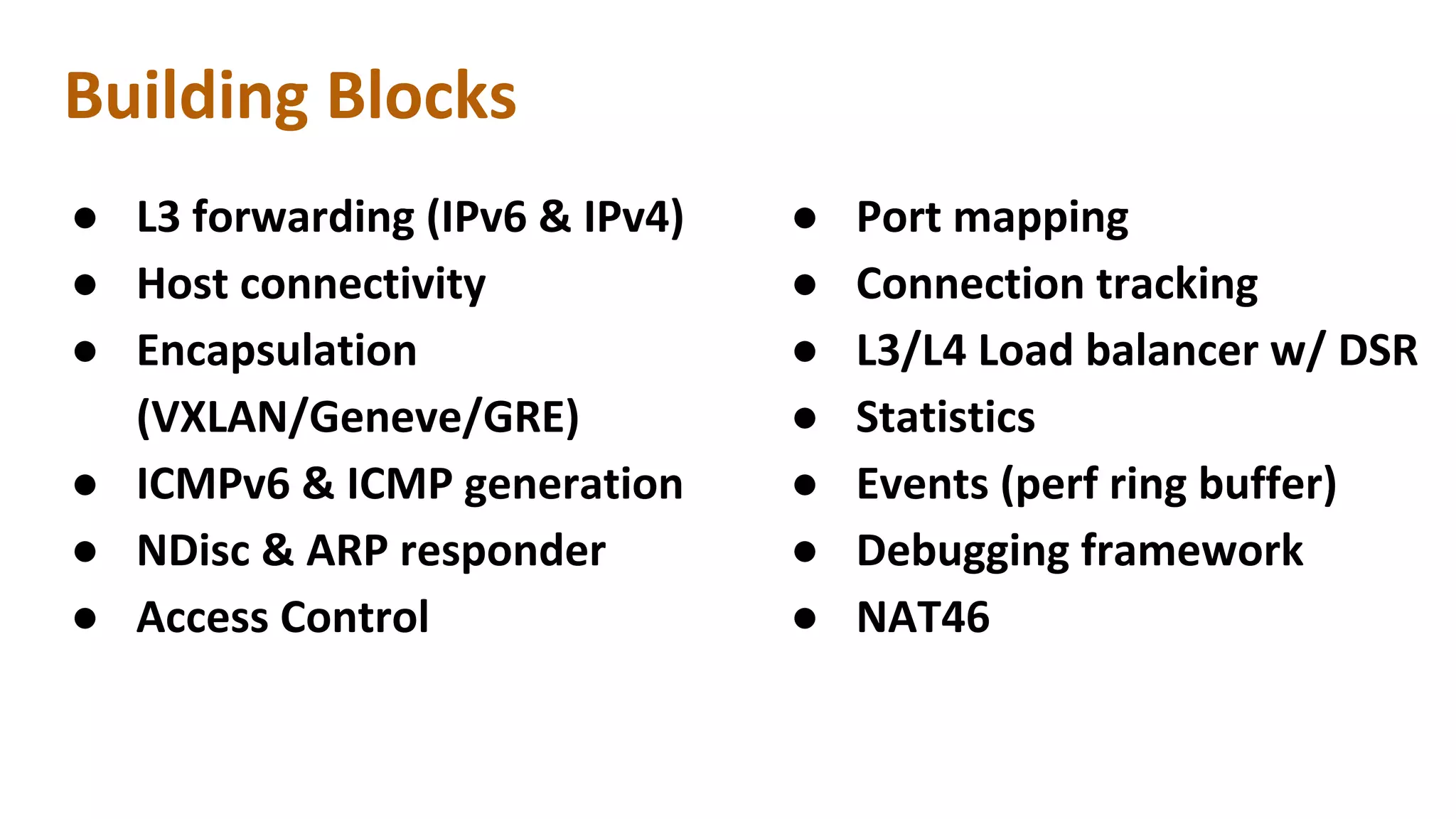
Highlights various features of Cilium, including forwarding, connectivity, control mechanisms, and load balancing.


![[MeetUp][2nd] 오리뎅이의_쿠버네티스_네트워킹_v1.2](https://cdn.slidesharecdn.com/ss_thumbnails/3-191220022100-thumbnail.jpg?width=640&height=640&fit=bounds)


![[MeetUp][1st] 오리뎅이의_쿠버네티스_네트워킹](https://cdn.slidesharecdn.com/ss_thumbnails/3-191024235922-thumbnail.jpg?width=640&height=640&fit=bounds)


