Is there an optimal exercise stimulus for mitochondrial adaptations?
The document discusses the effects of exercise on mitochondrial adaptations, highlighting the roles of training volume and intensity in promoting mitochondrial biogenesis and respiration. It references various studies and terminologies related to mitochondrial changes, such as citrate synthase activity and lactate threshold. Conclusively, it emphasizes the significant relationship between exercise characteristics and nuclear factors like PGC-1α and p53 in influencing mitochondrial content and function.
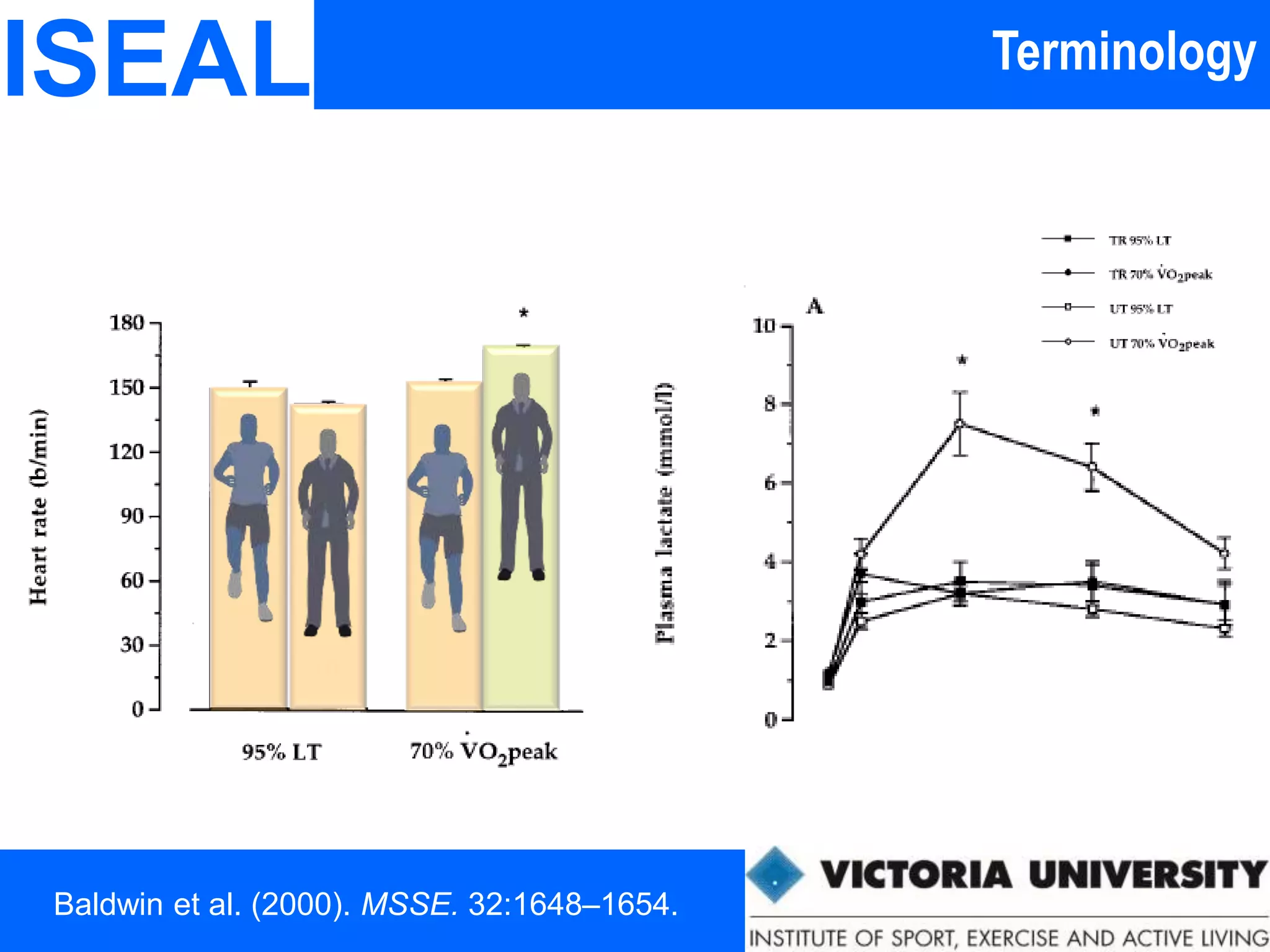
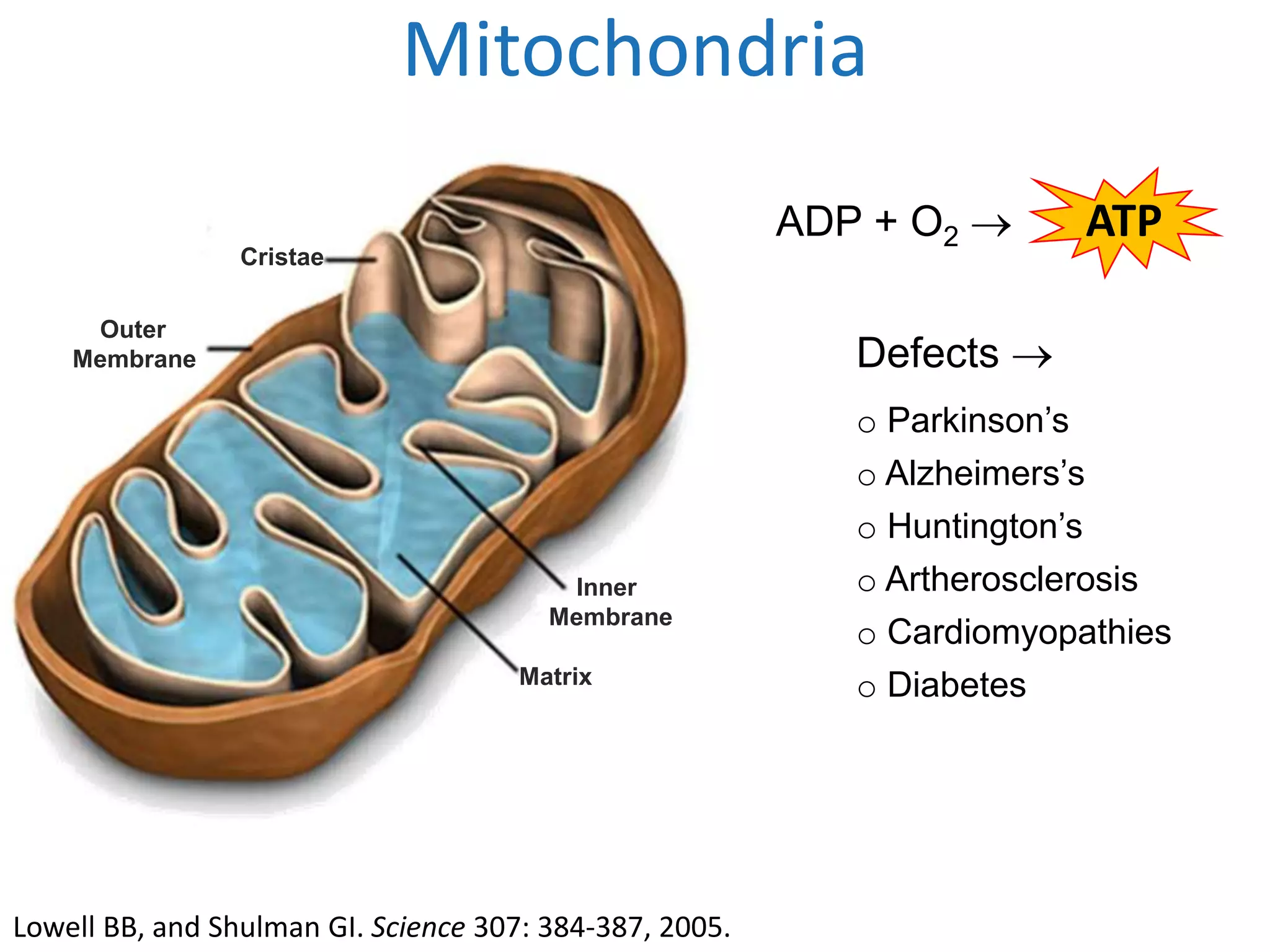
Overview of mitochondrial structure and significance, mentioning defects related to diseases and the role of mitochondrial biogenesis during exercise. Definitions of exercise, training, and mitochondrial biogenesis, including metrics like Lactate Threshold and Citrate Synthase.
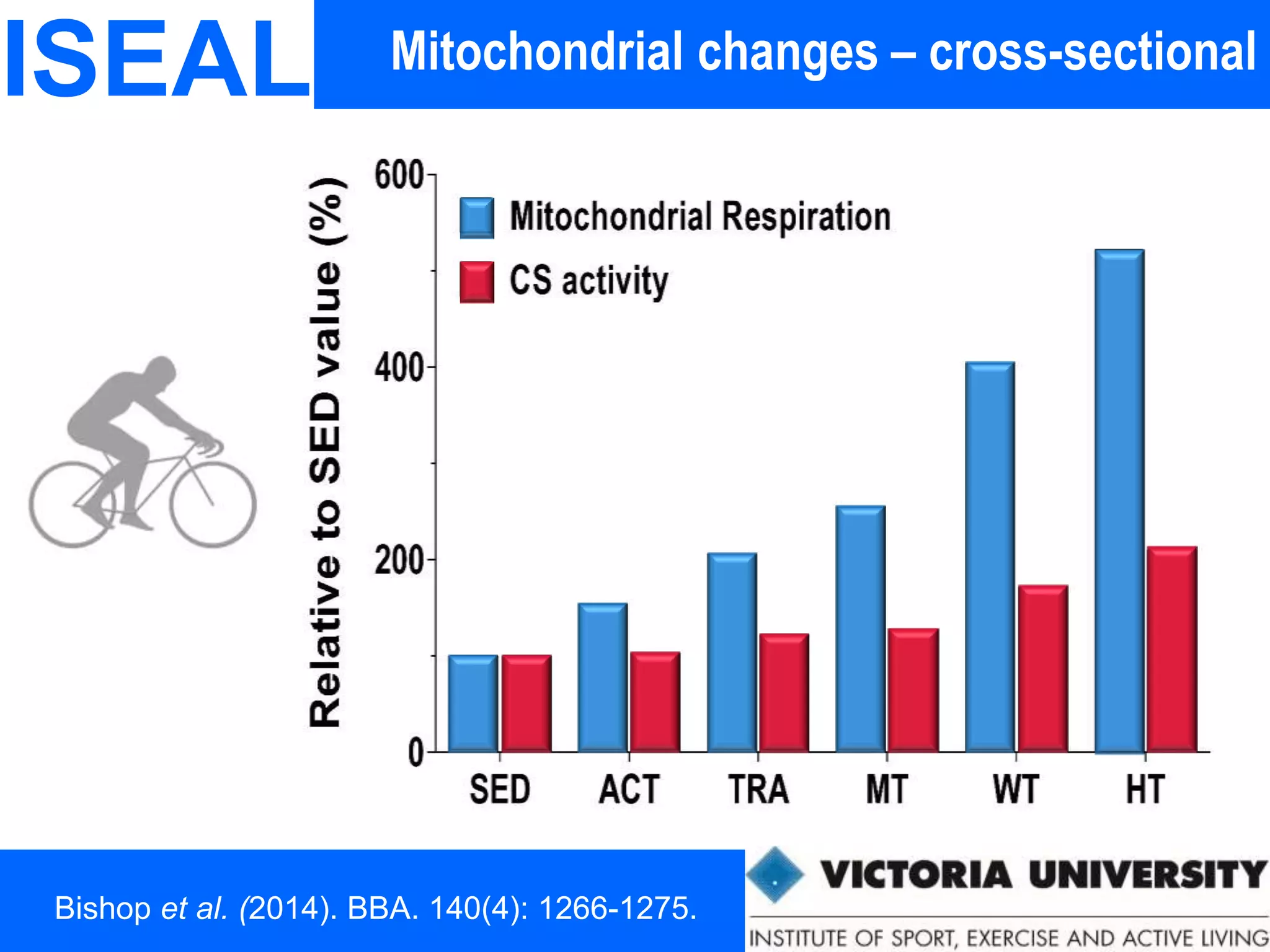
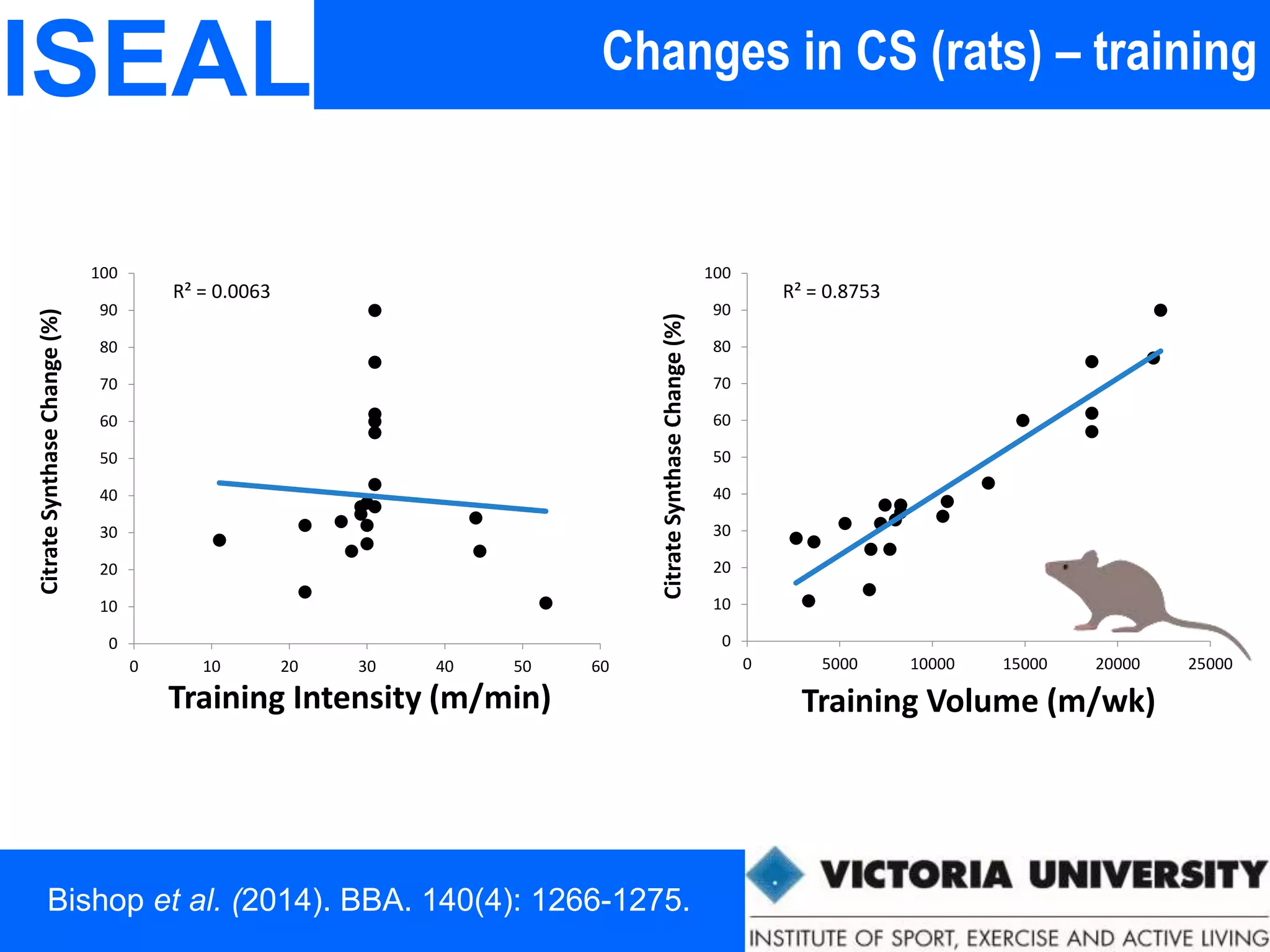
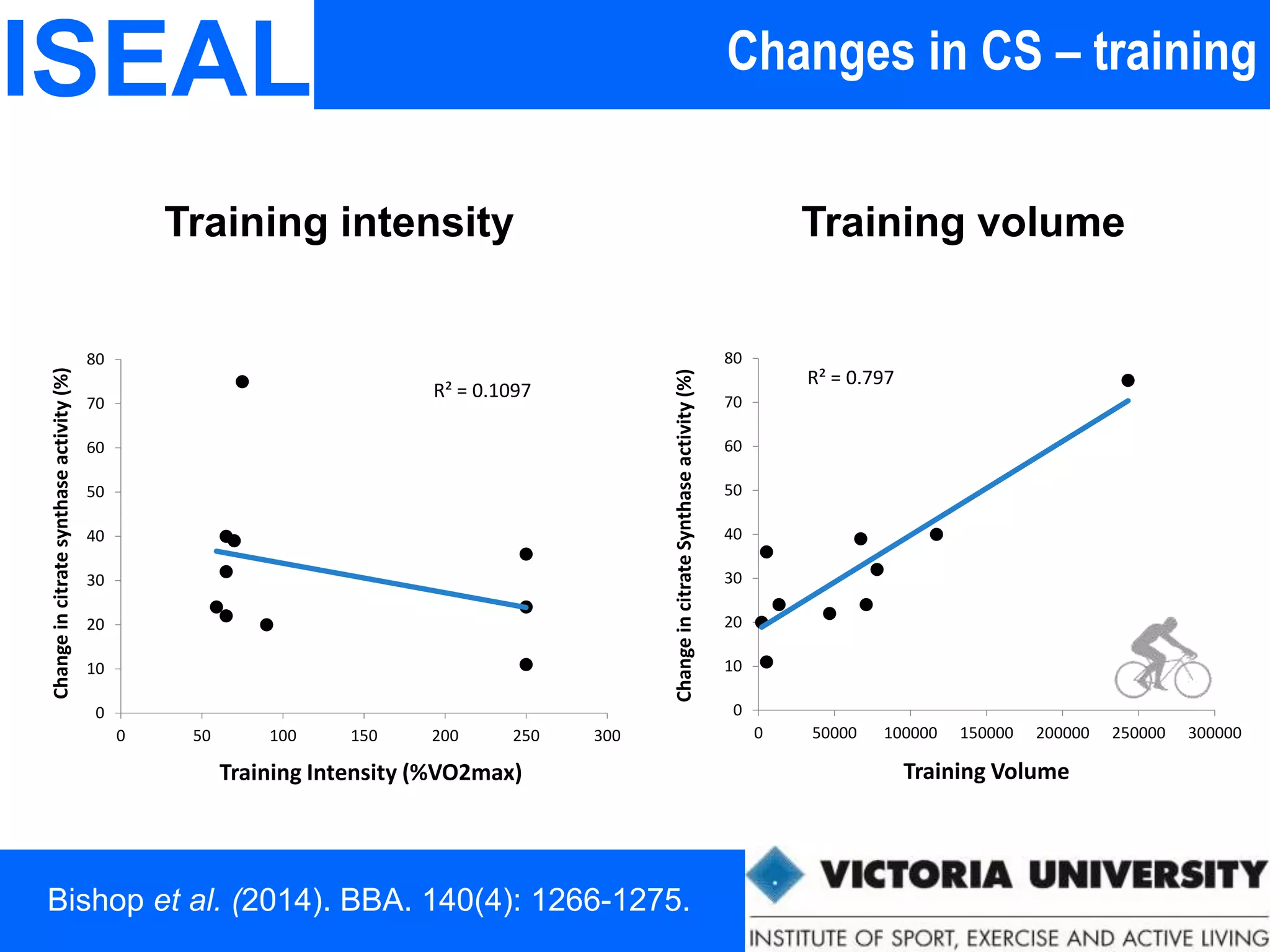
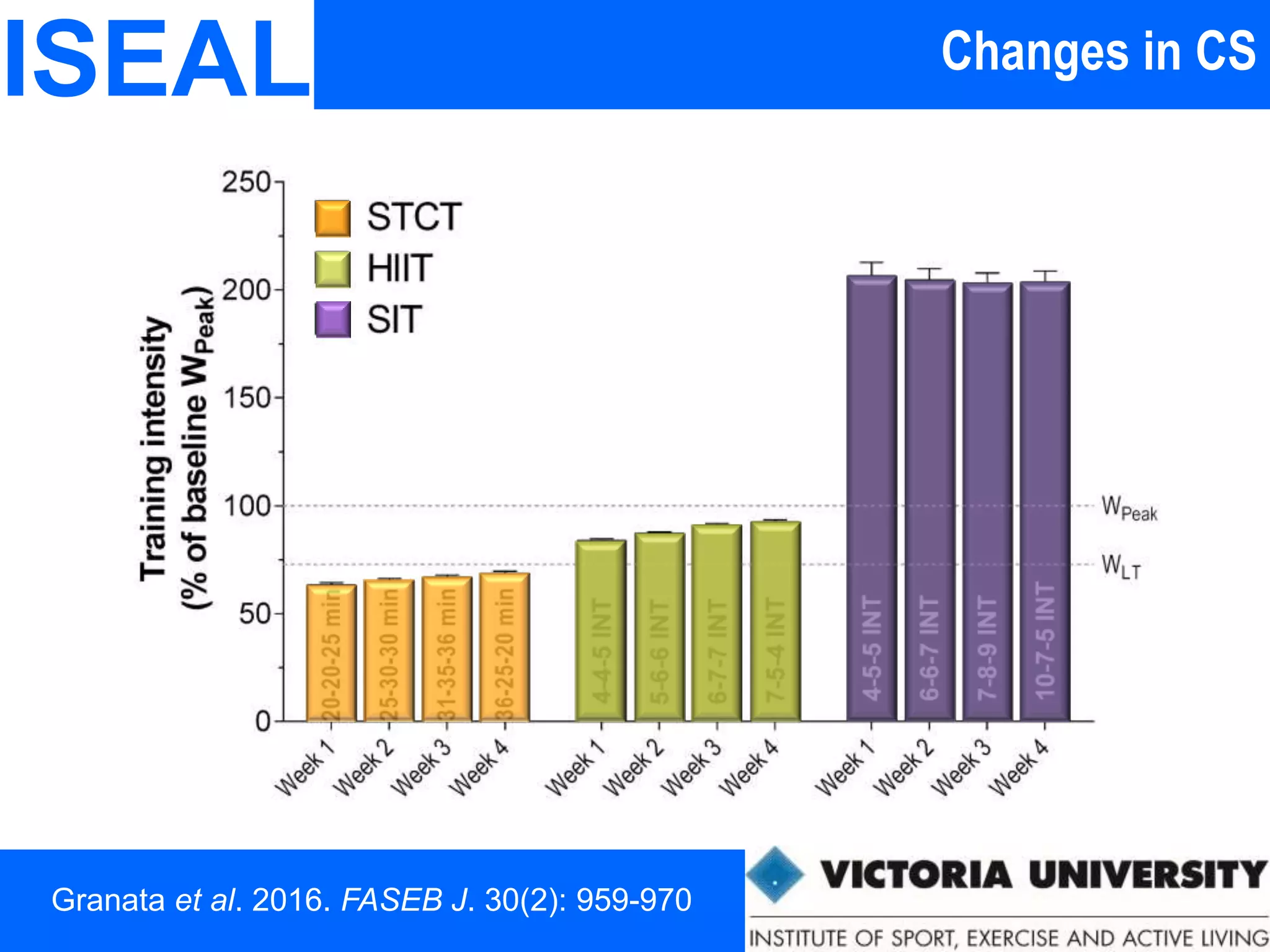
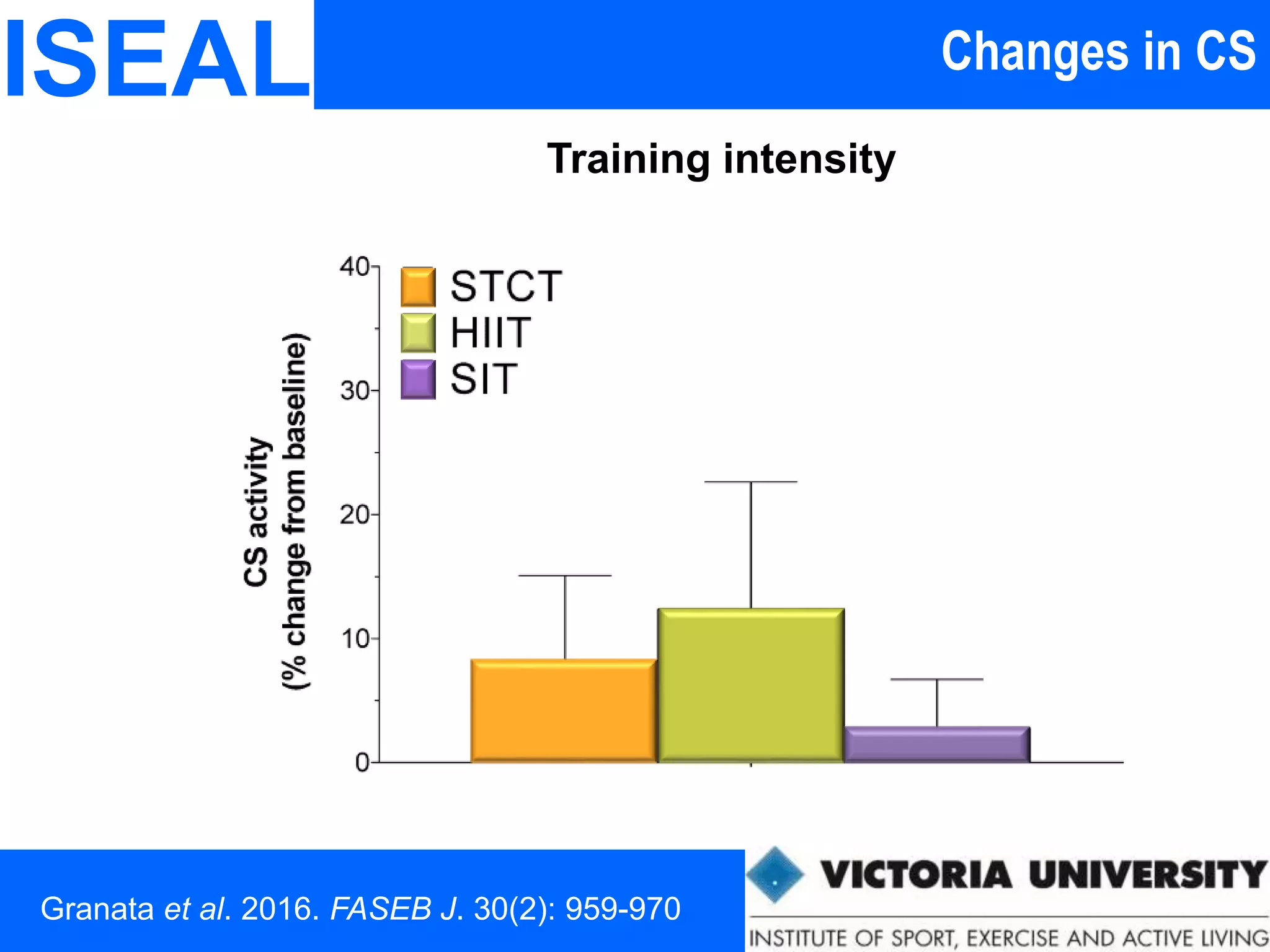
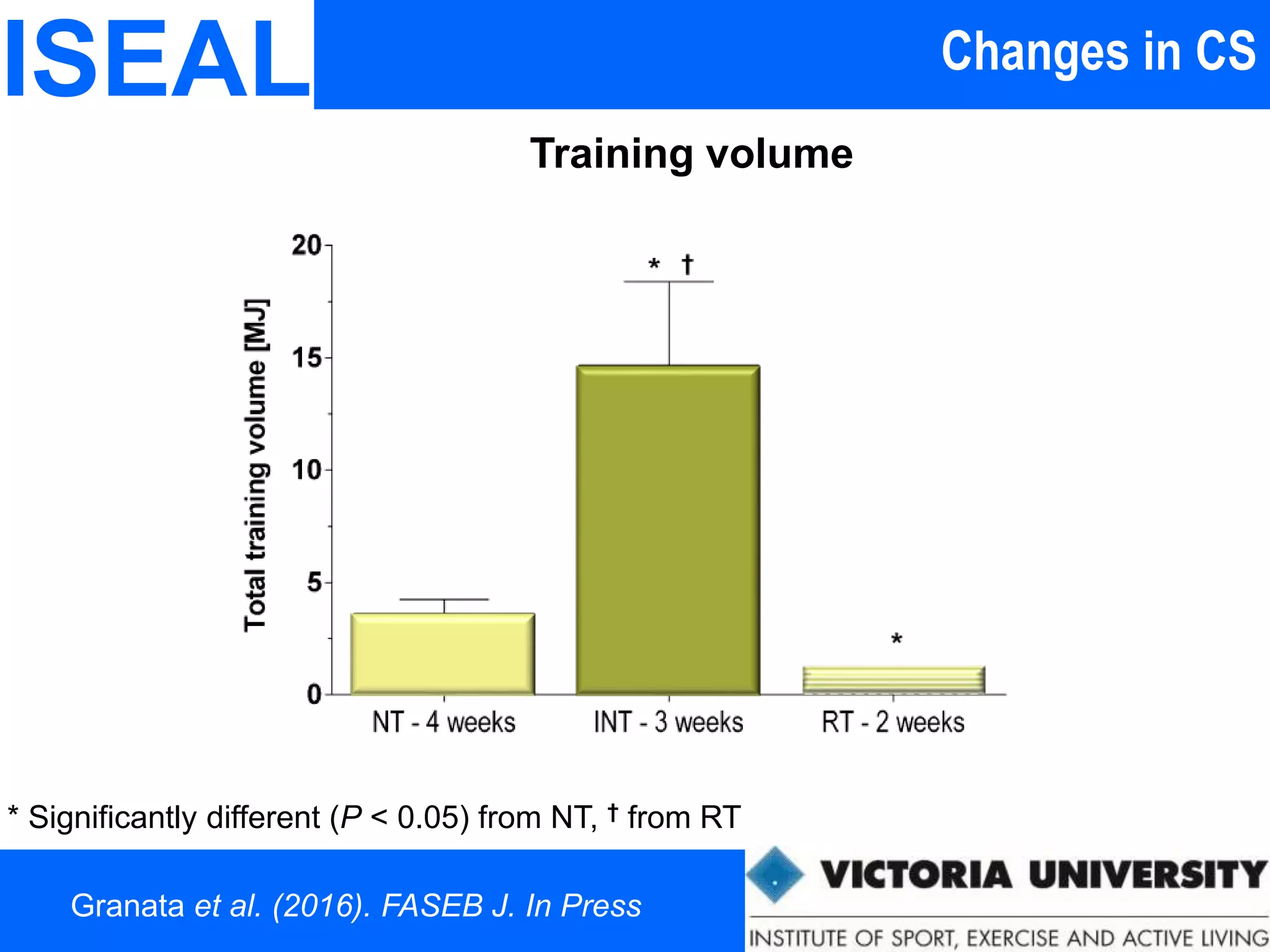
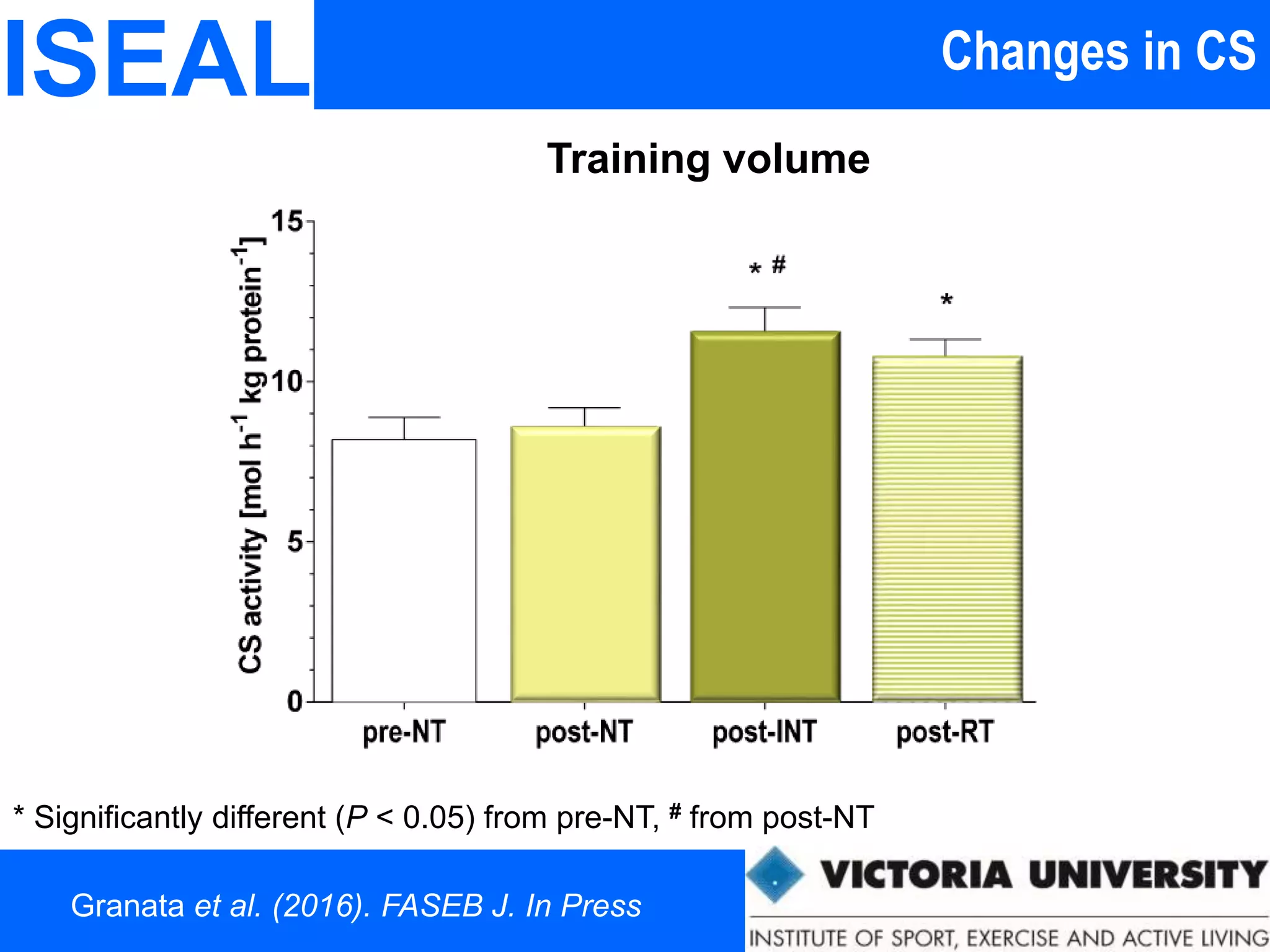
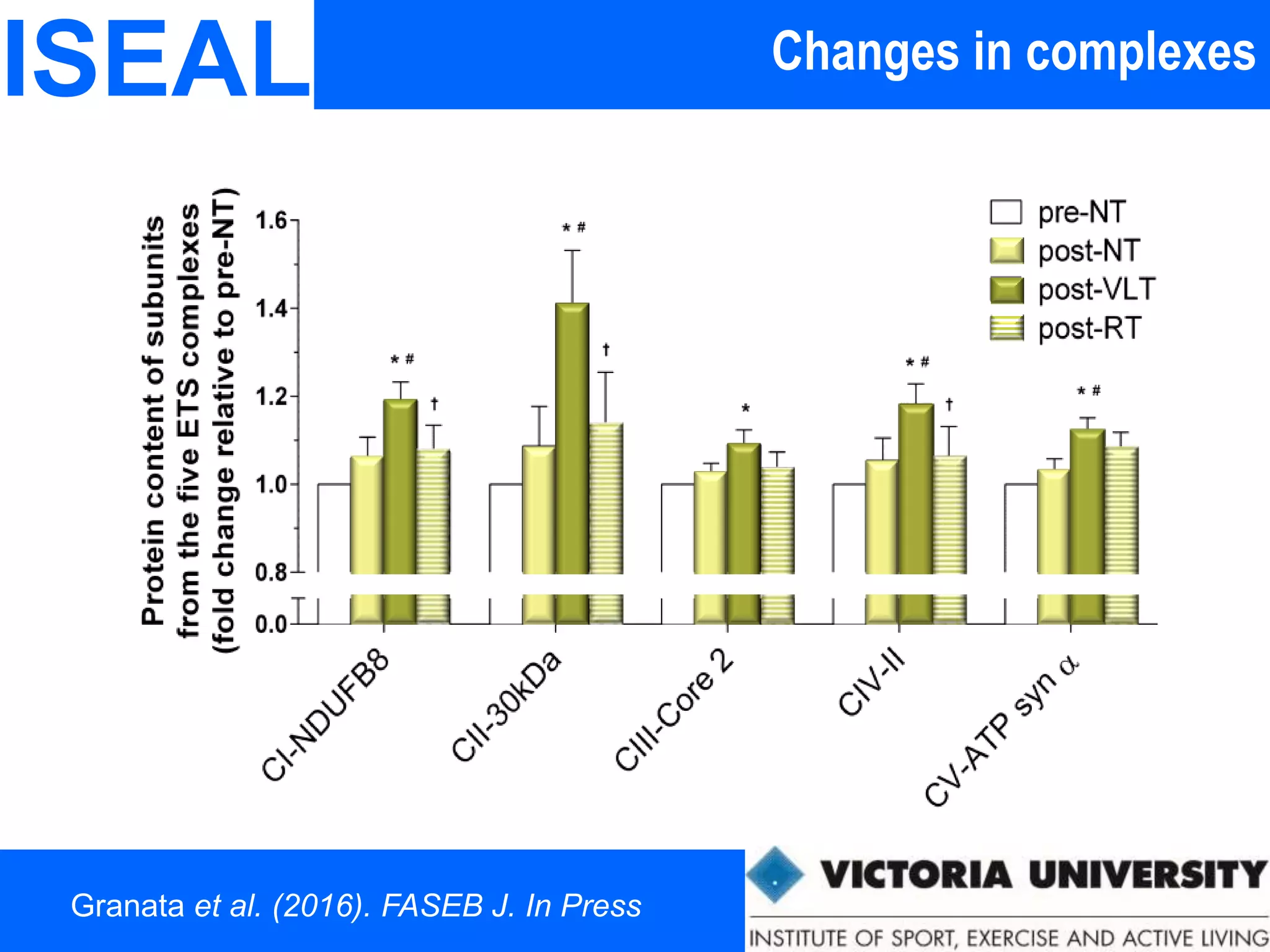
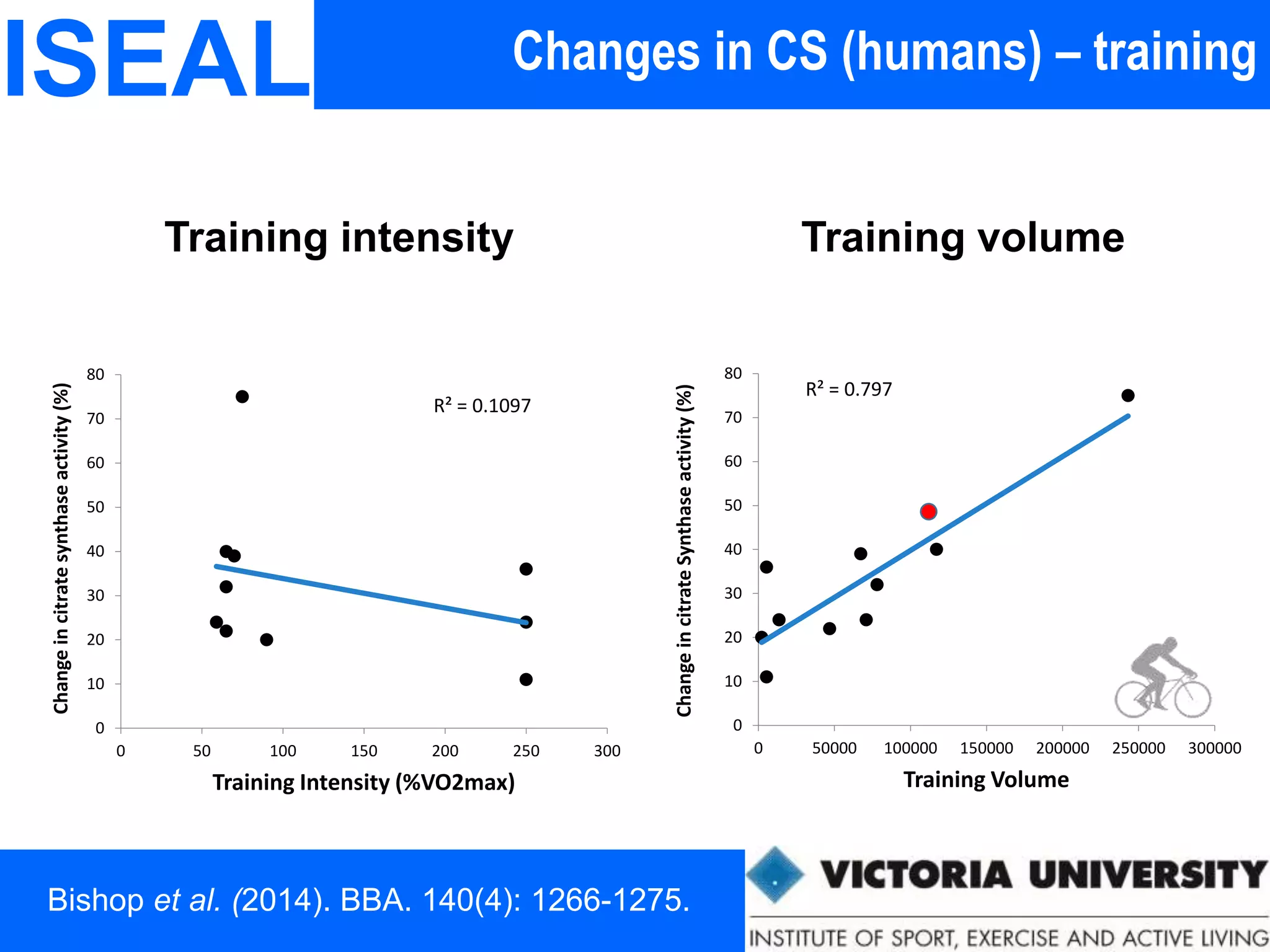
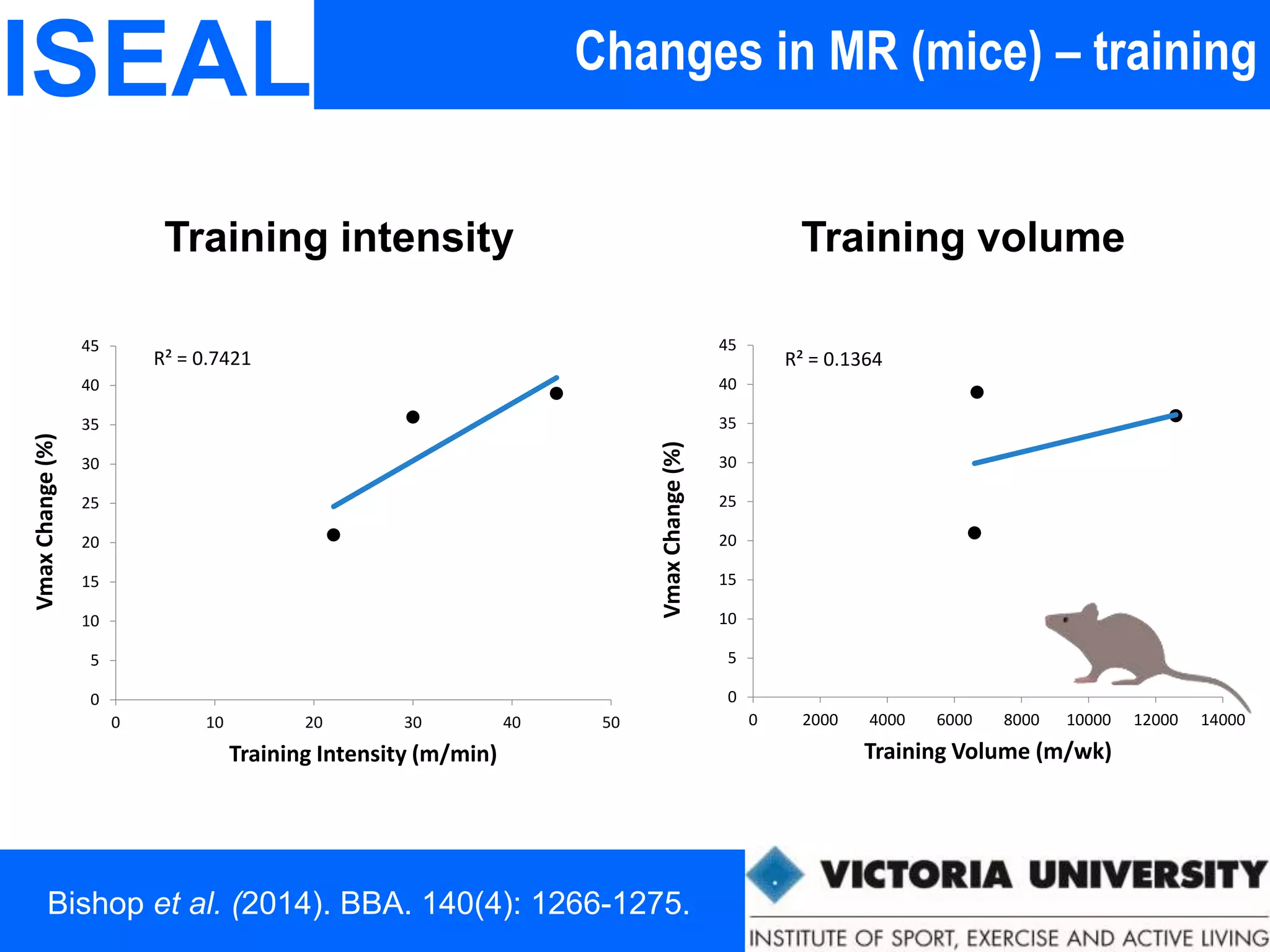
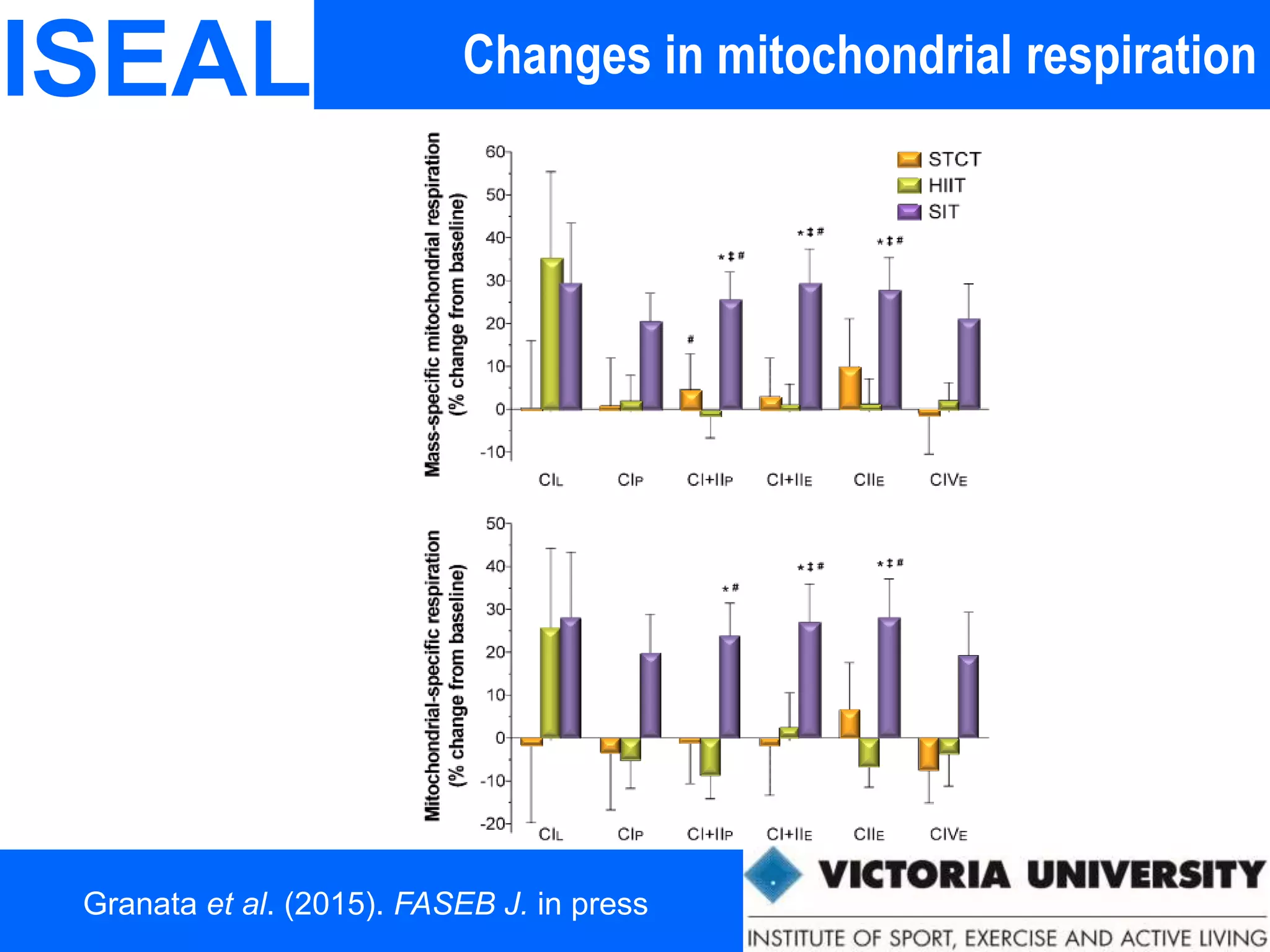
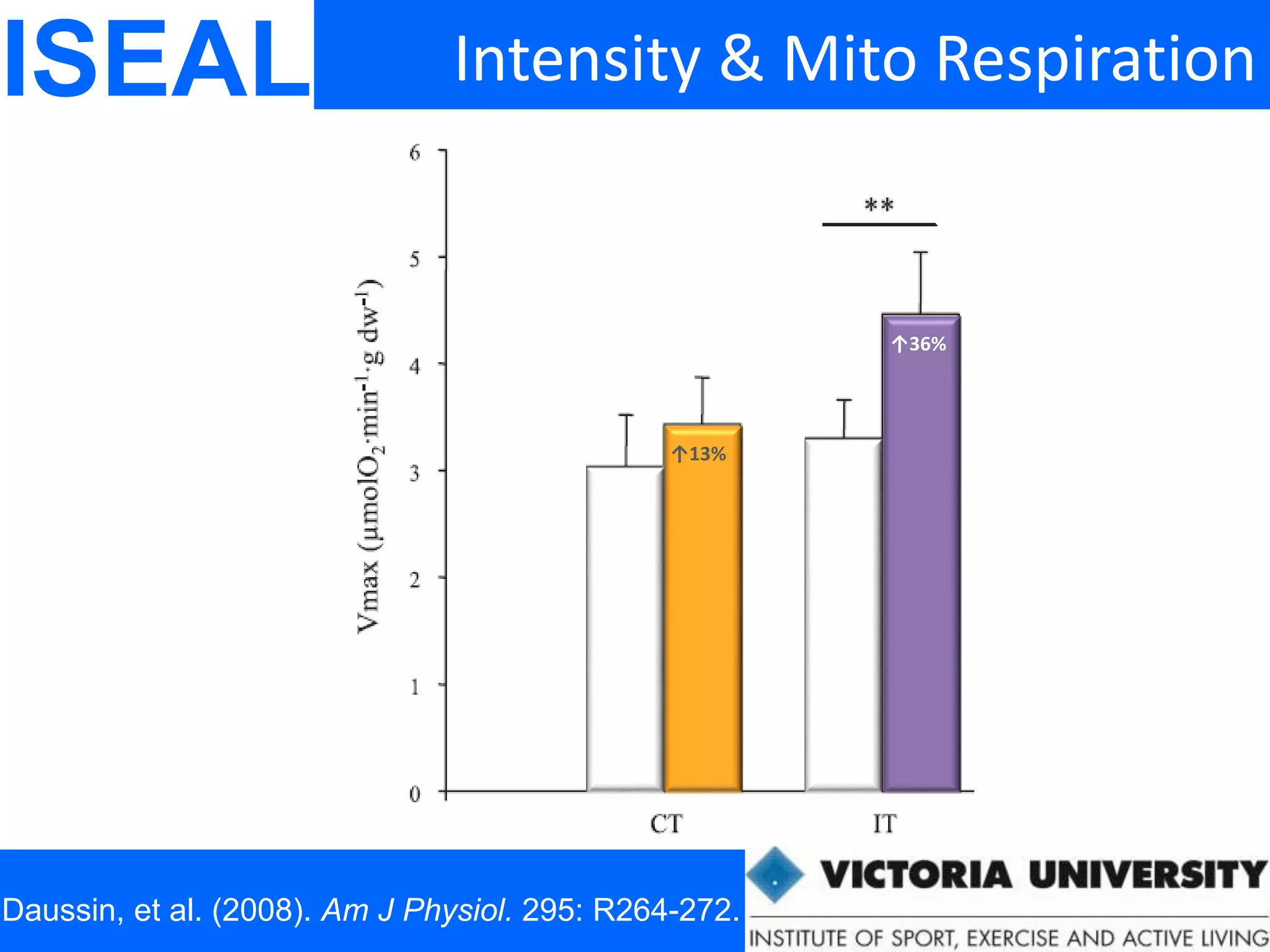
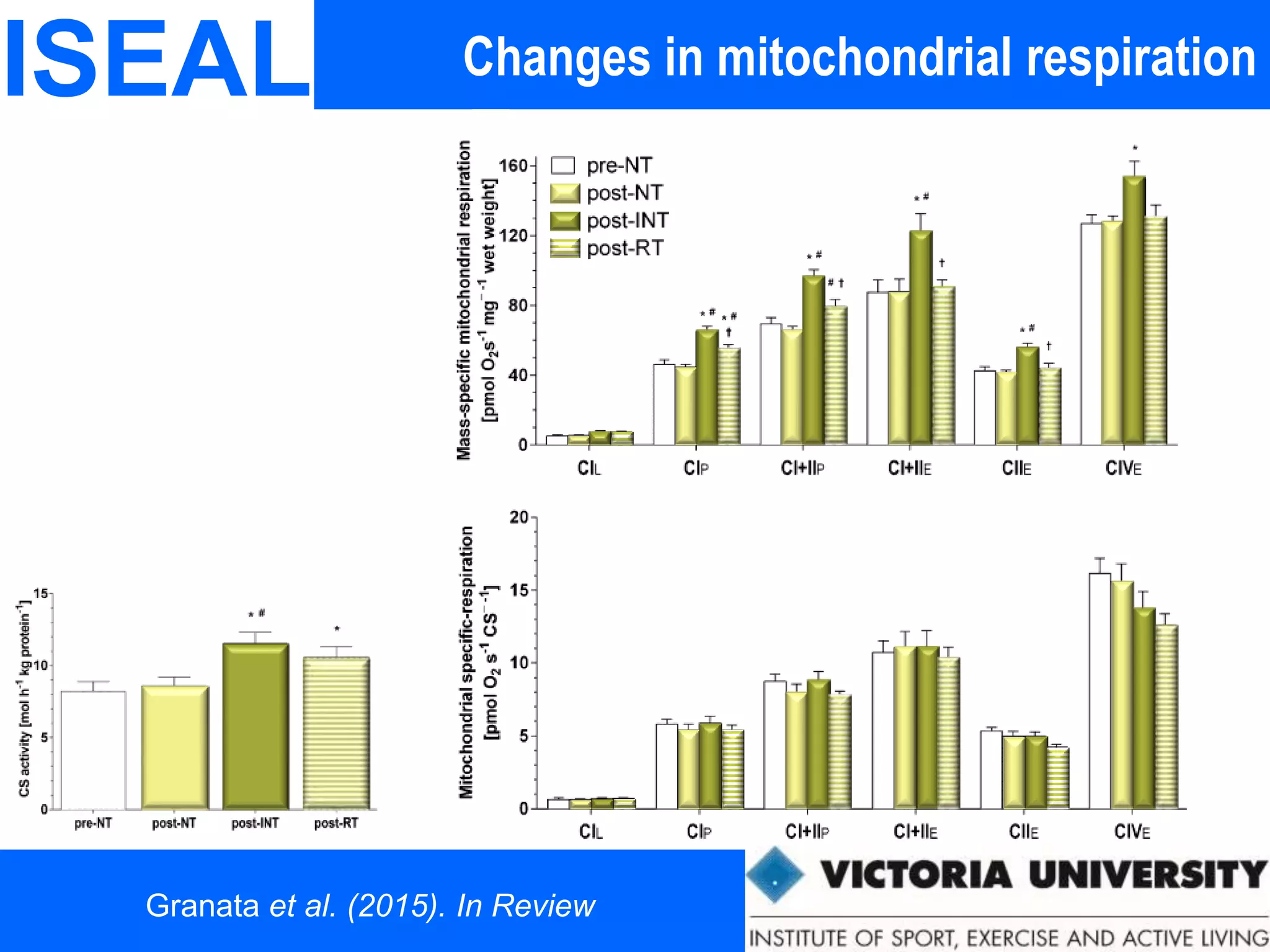
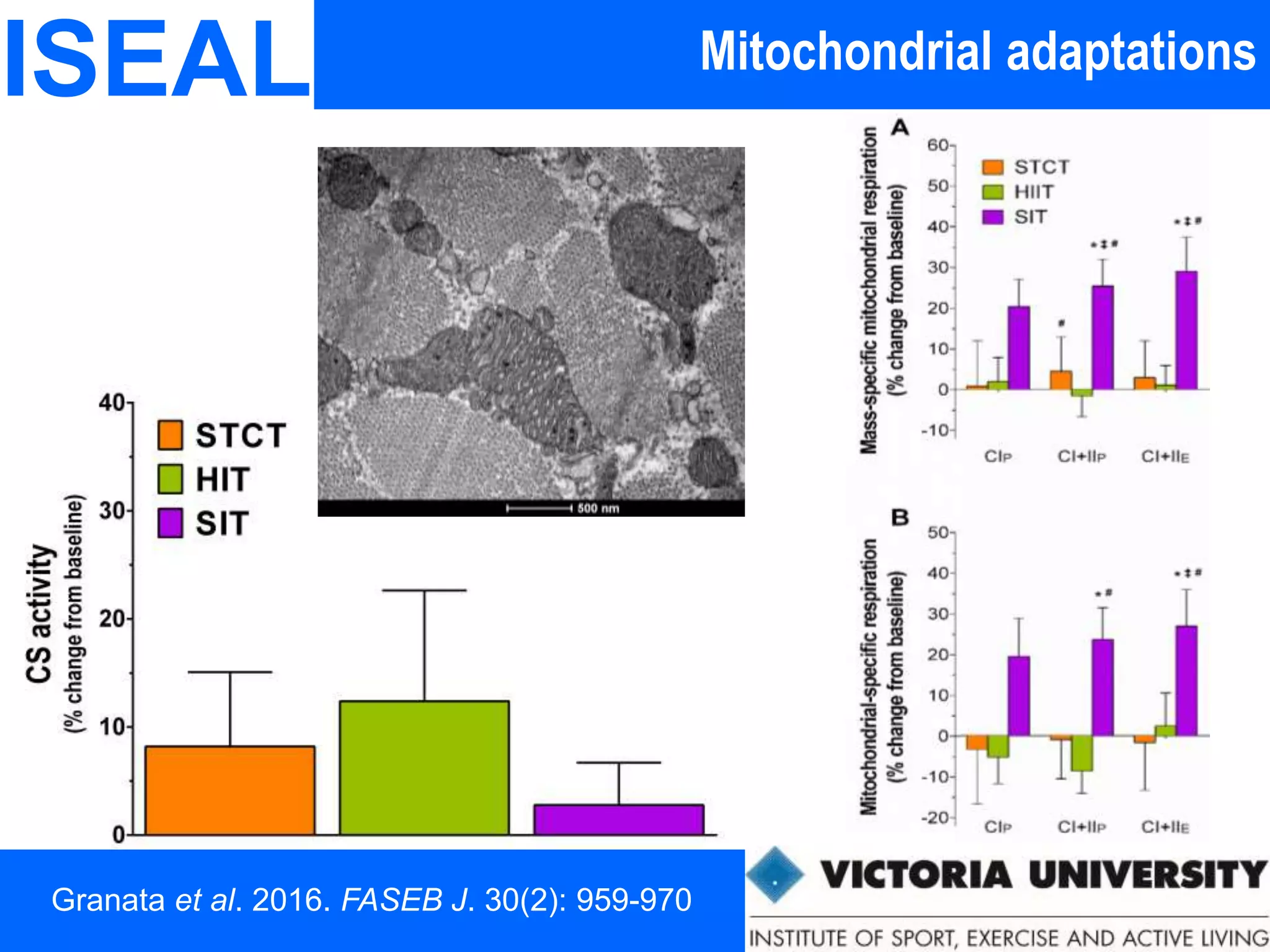
Details of mitochondrial changes due to training intensity and volume, illustrating correlation with Citrate Synthase activity and mitochondrial respiration.
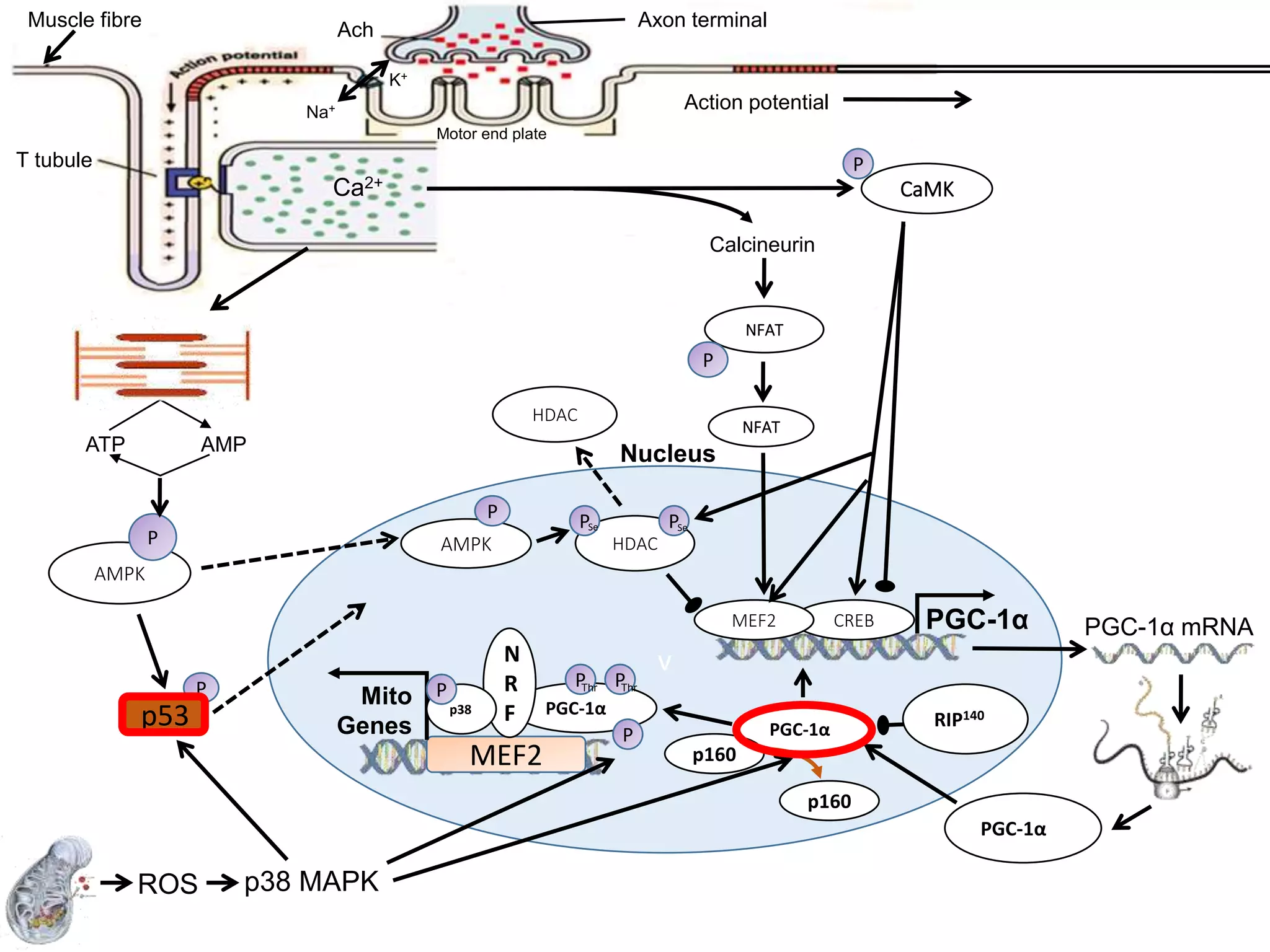
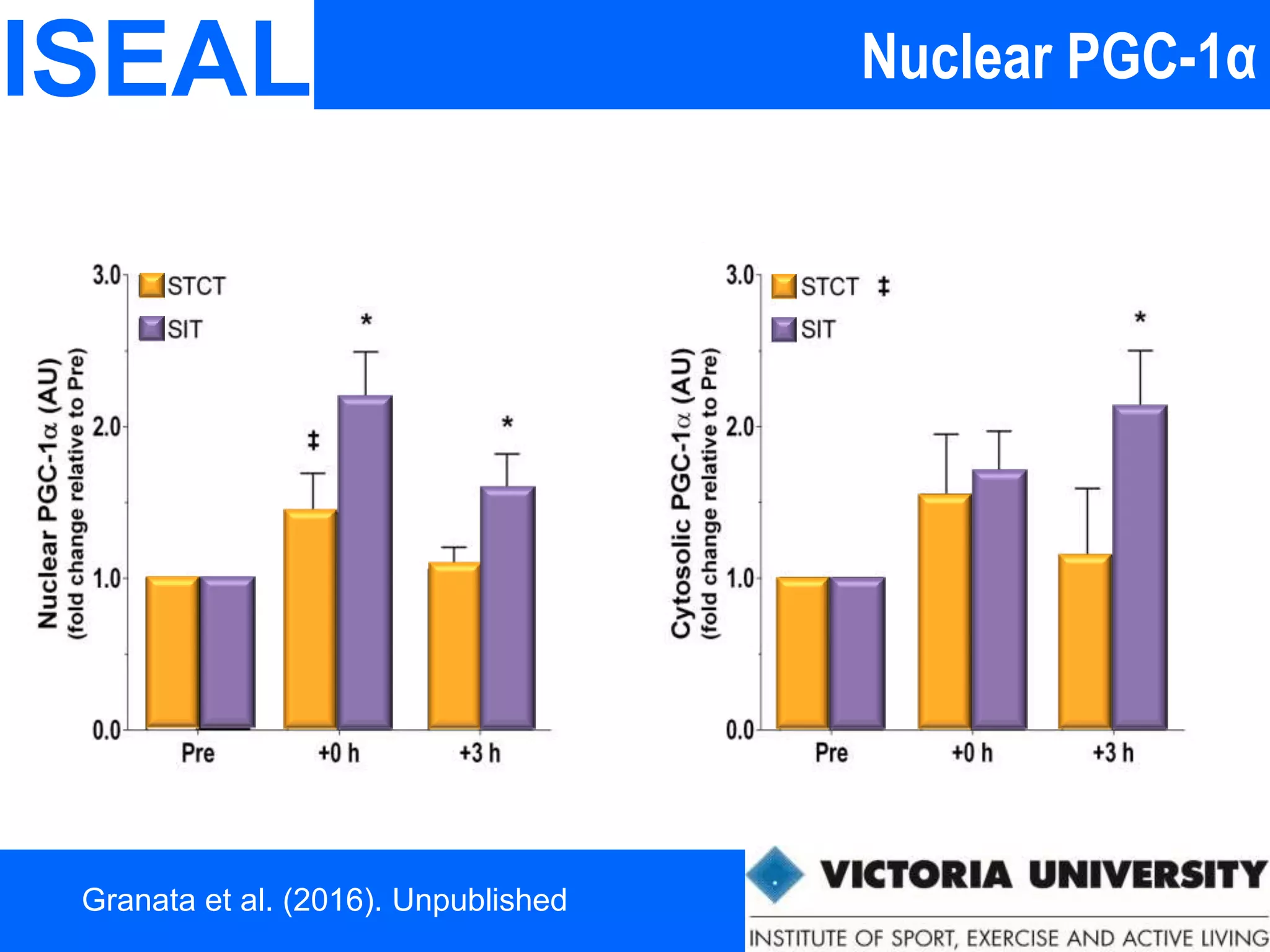
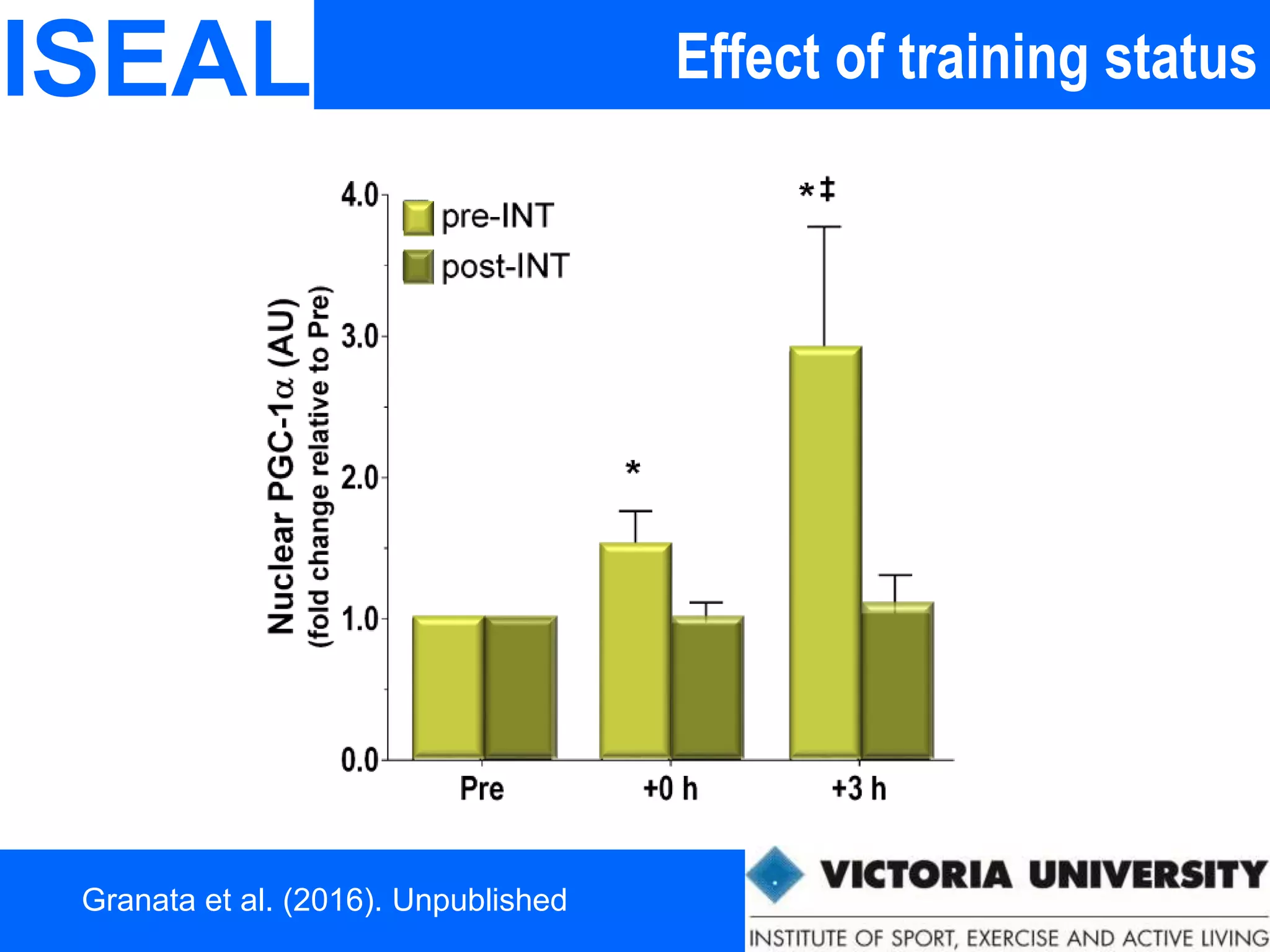
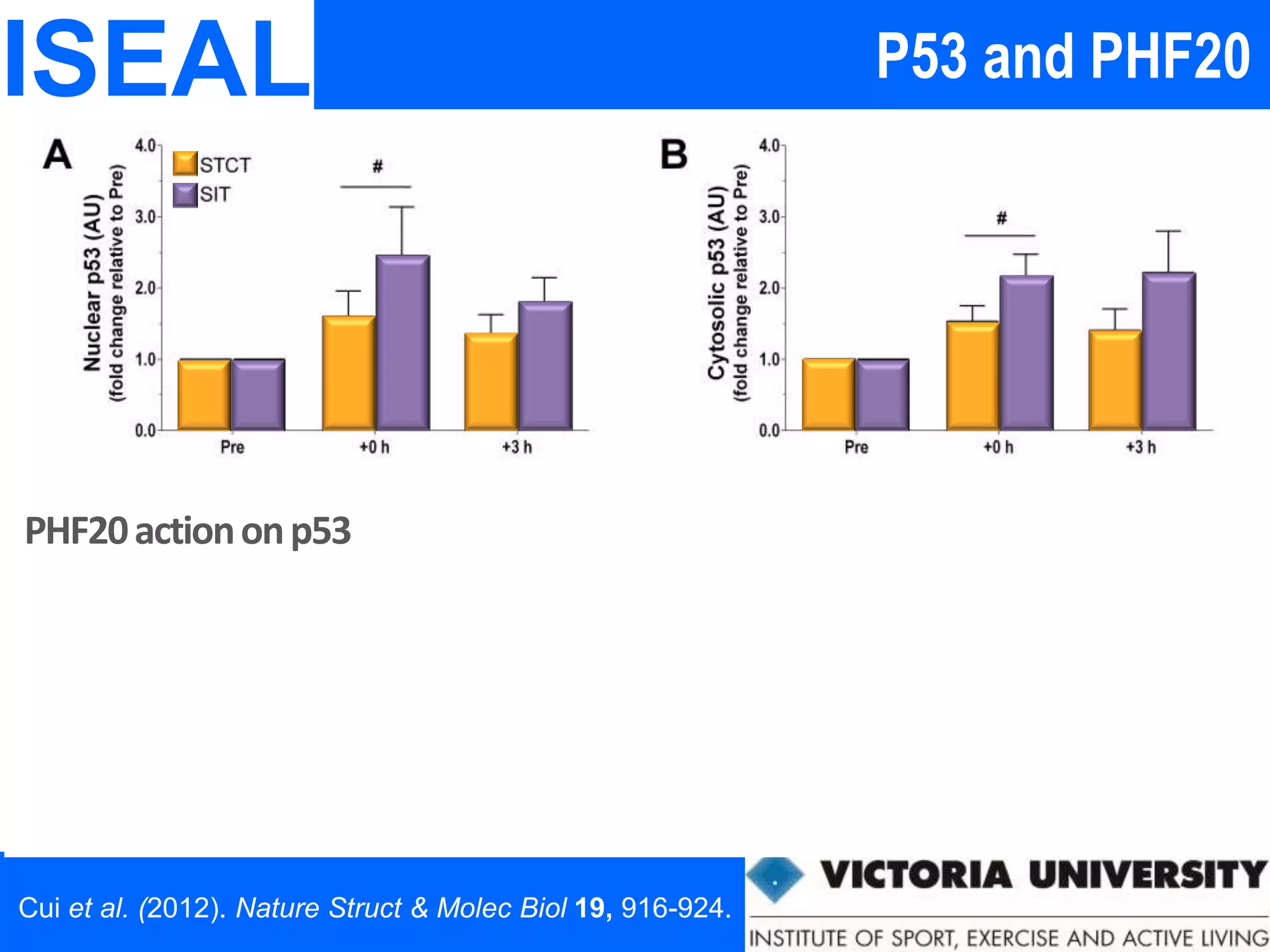
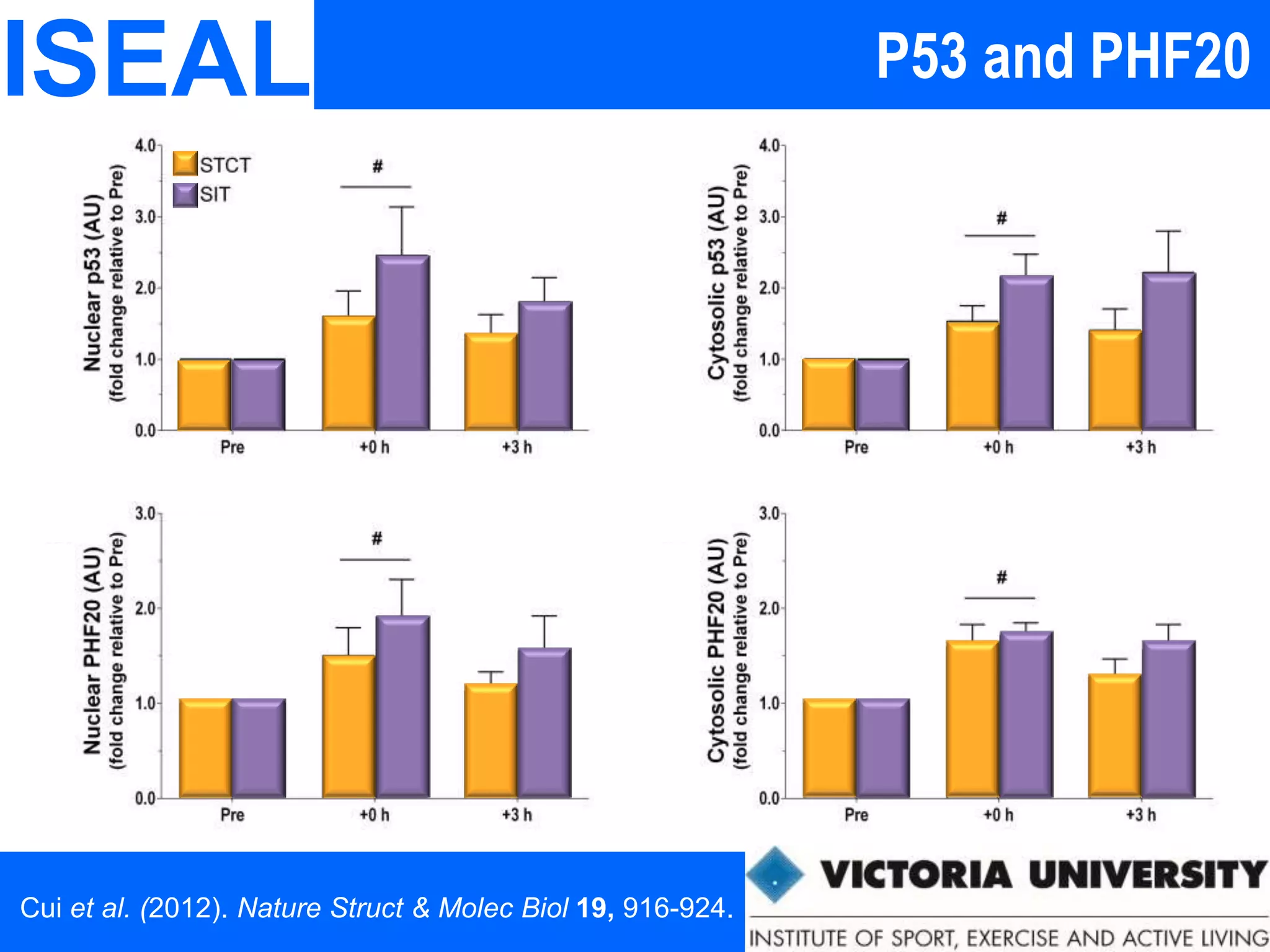
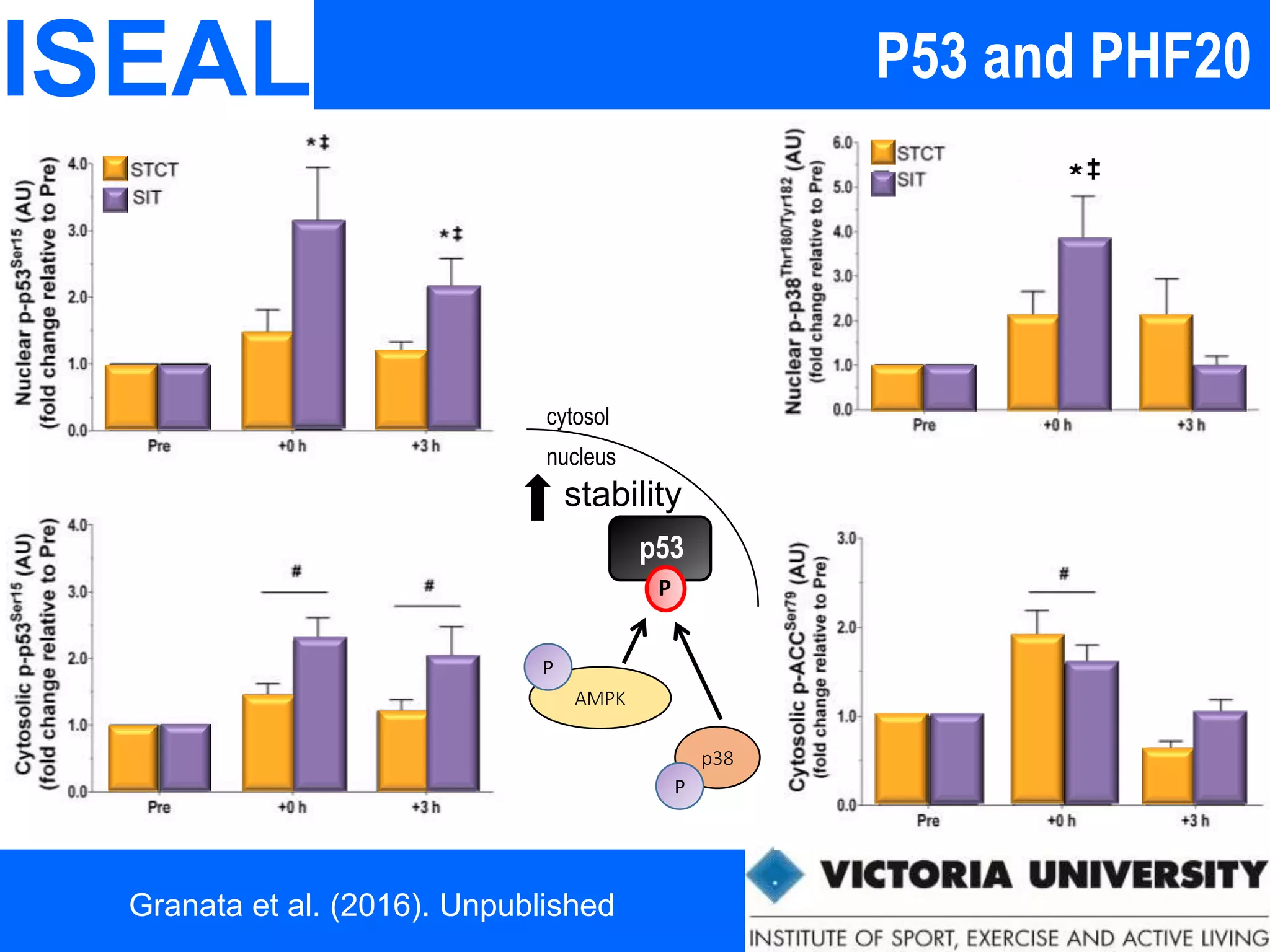
Factors influencing PGC-1α and regulatory interactions, showcasing the role of stress response and mitochondrial gene expression.
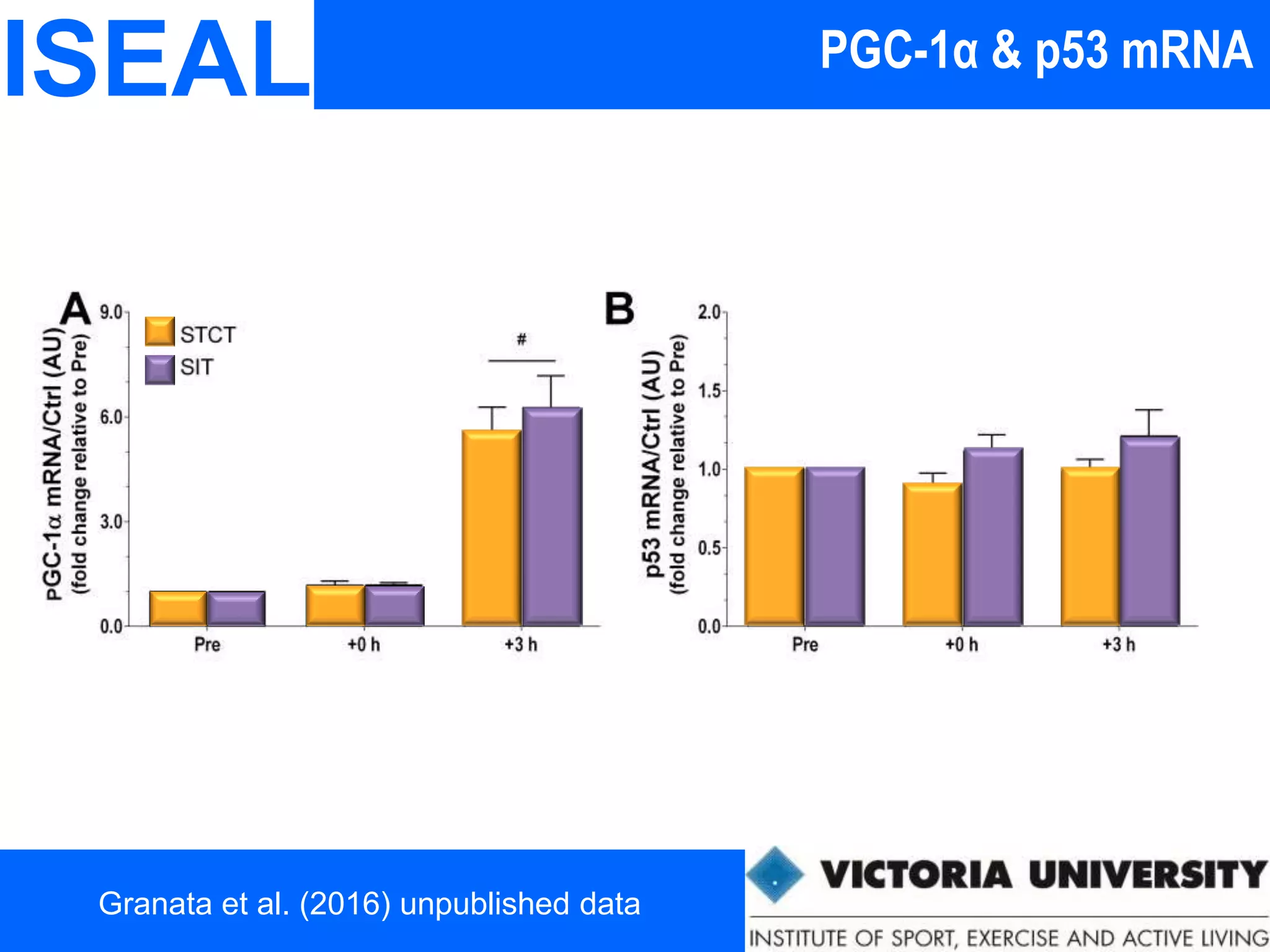
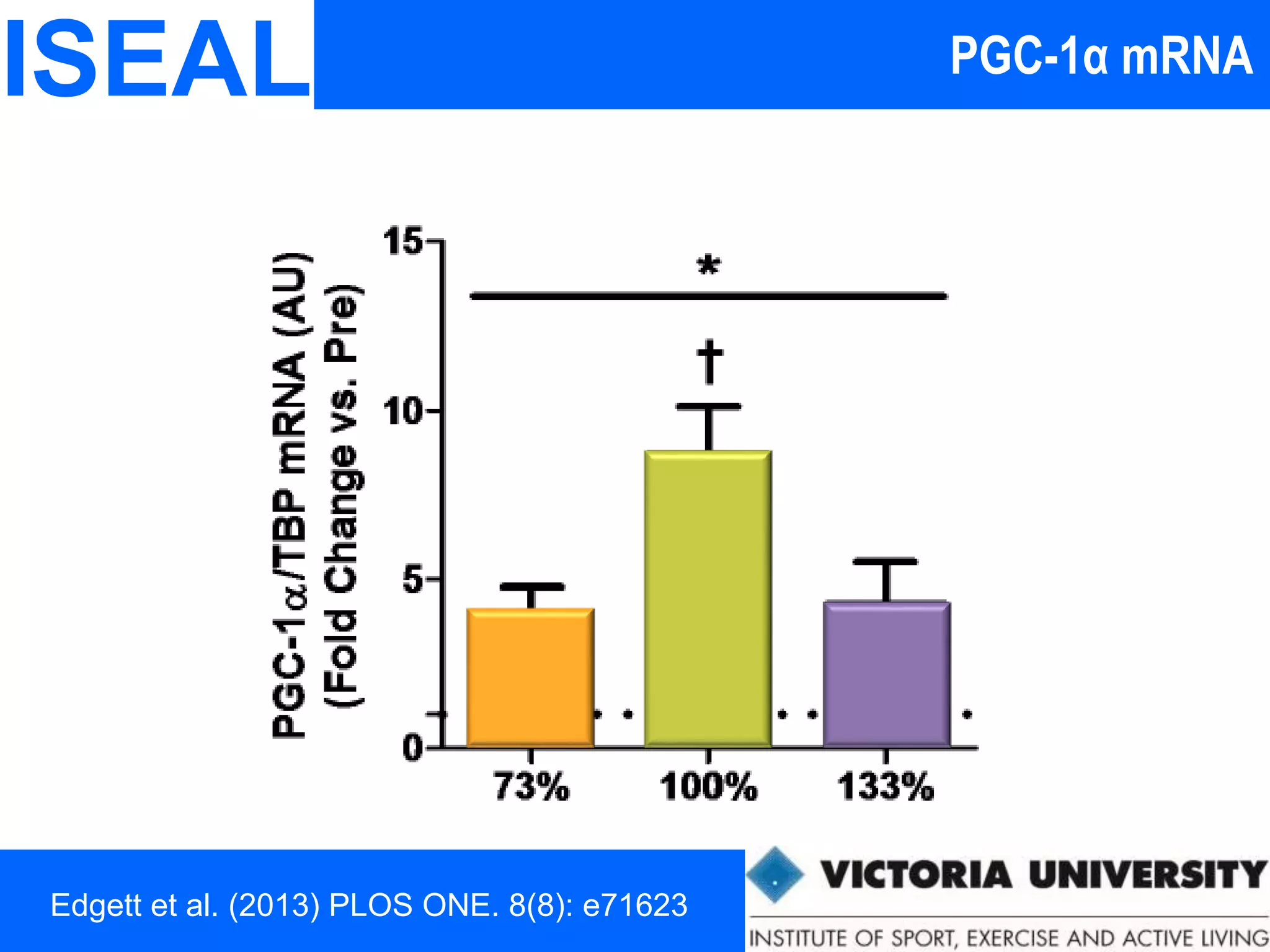
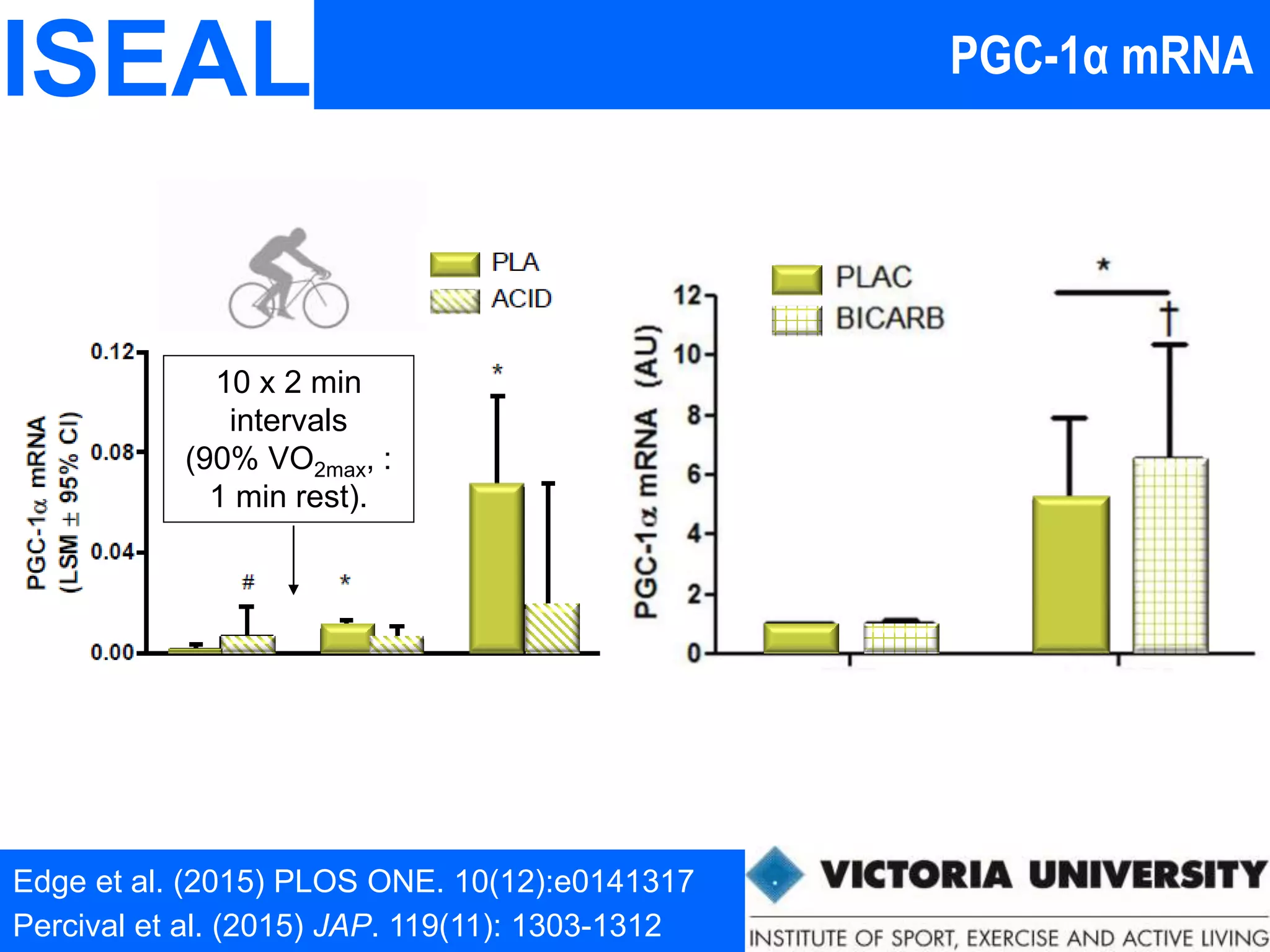
Exercise training volume essential for mitochondrial content; training intensity affects respiration and influences related nuclear factors.
Exercise-induced changes inmitochondrial
content and mitochondrial respiration
Does antioxidant supplementation promote
or impede skeletal muscle mitochondrial
biogenesis?
Autophagy and exercise-induced
mitochondrial biogenesis
Overview
4.
DefinitionsISEAL
Miller, K.L. (2012).Am J Physiol . 302: E496-499.
• Exercise: one-bout of exercise
• Training: a series of exercise bouts
• Mitochondrial biogenesis:
• the making of new mitochondrial components
• it has been suggested that only measurements of the synthesis
rates of mitochondrial proteins are indicative of mitochondrial
biogenesis
ISEAL
Granata et al.(2015). FASEB J. in press
Changes in mitochondrial respiration
22.
ISEAL Intensity &Mito Respiration
Daussin, et al. (2008). Am J Physiol. 295: R264-272.
↑36%
↑13%
23.
ISEAL Changes inmitochondrial respiration
Granata et al. (2015). In Review
24.
p160
RIP
140
v
PGC-1α mRNACREBMEF2 PGC-1α
AMPATP
AMPK
PAMPK
P
PGC-1α
MEF2
Mito
Genes
Nucleus
PGC-1α
PGC-1α
p160
ROS p38 MAPK
N
R
Fp38
P P PThr Thr
HDAC
P PSe Se
NFAT
HDAC
RIP140
p160
P
CaMK
P
Calcineurin
NFAT
P
T tubule
Muscle fibre
Action potential
Axon terminalAch
Motor end plate
Na+
K+
Ca2+
P
p53
ConclusionsISEAL
• Exercise trainingvolume key for
mitochondrial content (citrate synthase)
• Exercise and training intensity key for
mitochondrial respiration)
• May be related to exercise-dependent
effects on nuclear PGC-1α and p53
![TerminologyISEAL
Bishop, D.J., Skinner, T. (2014). Lactate Threshold.
In: “ESSA student manual for Health, Exercise and Sport Assessment”.
0
2
4
6
8
10
12
14
16
18
20
8.5 10 11.5 13 14.5 16 17.5 19 20.5
Treadmill Speed (km/h)
[lactate]
Lactate inflection
Lactate threshold](https://image.slidesharecdn.com/bishopacsm2016-160603005702/75/Is-there-an-optimal-exercise-stimulus-for-mitochondrial-adaptations-6-2048.jpg)
![0
2
4
6
8
10
12
14
16
18
20
[lactate]
Treadmill Speed (km/h)
8.5 10 11.5 13 14.5 16 17.5 19 20.5
L1
L2
L3
L4
L5
(HIT)
LI
LT
L6
(SIT)
Wpeak
Terminology - LTISEAL
Bishop, D.J., Skinner, T. (2014). Lactate Threshold.
In: “ESSA student manual for Health, Exercise and Sport Assessment”.](https://image.slidesharecdn.com/bishopacsm2016-160603005702/75/Is-there-an-optimal-exercise-stimulus-for-mitochondrial-adaptations-7-2048.jpg)
![0
5
10
15
20
25
50 55 60 65 70 80 90 100
% VO2max
[lactate]
High LT
Low LT
L3
L3L2
L5
TerminologyISEAL
Bishop, D.J., Skinner, T. (2014). Lactate Threshold.
In: “ESSA student manual for Health, Exercise and Sport Assessment”.](https://image.slidesharecdn.com/bishopacsm2016-160603005702/75/Is-there-an-optimal-exercise-stimulus-for-mitochondrial-adaptations-8-2048.jpg)